

#plasma
plasma
24.9M vues
333,045 mentions
Populaire
Récents

·
--
Baissier
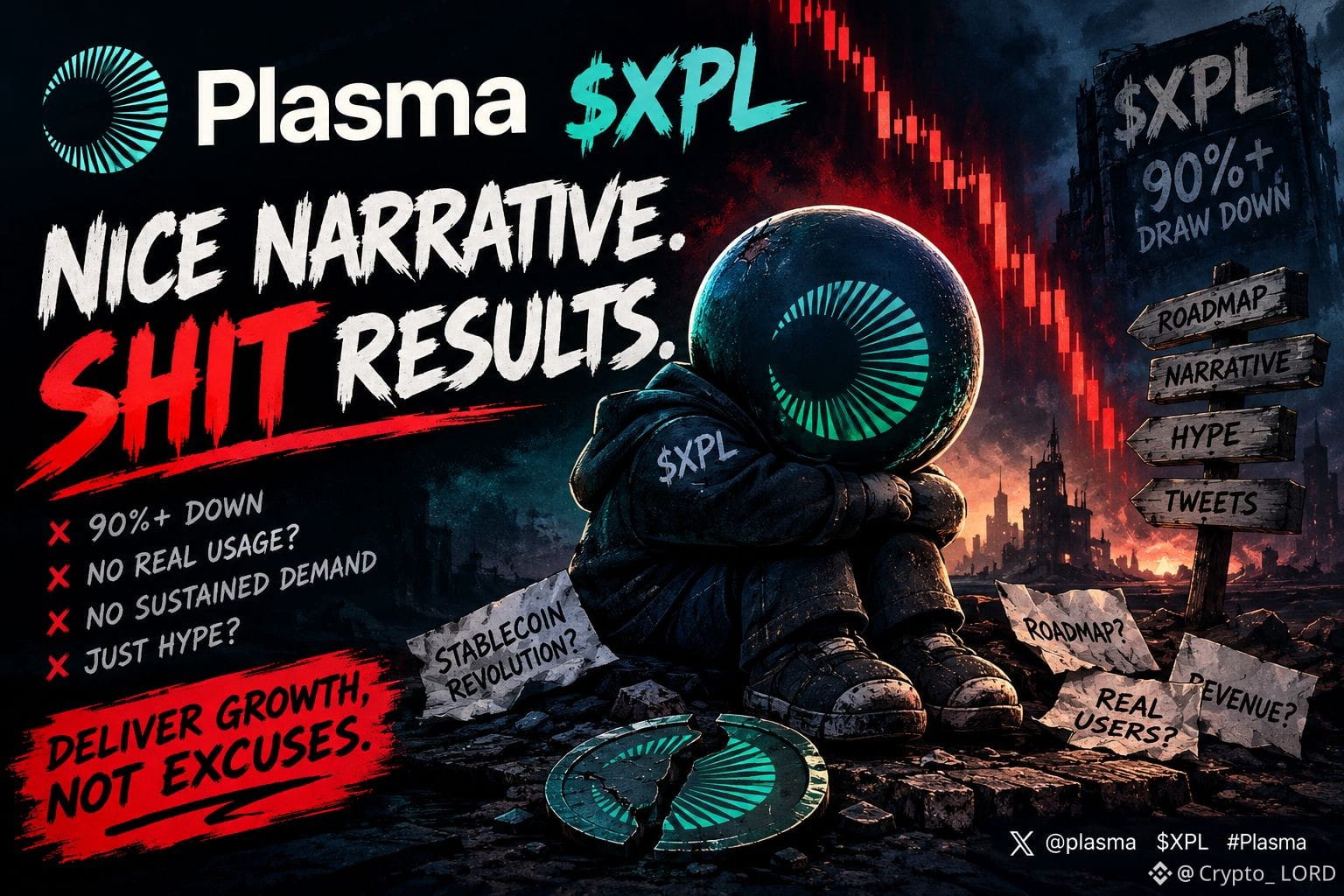
$XPL is proof that a fancy narrative can wear a billion-dollar valuation while the chart looks like a crime scene. 💀
90%+ down, holders drowning, and somehow the biggest product is still HOPIUM.
Stablecoin revolution? Cool. Now show sustainable demand, real revenue, and price action that doesn't look like a permanent exit liquidity event.
A roadmap won't save your bags. Tweets won't create demand. And “long-term vision” isn't a magic spell to stop bleeding.
@Plasma $XPL #Plasma $BMT
{spot}(EPICUSDT)
{spot}(BMTUSDT)
$XPL is proof that a fancy narrative can wear a billion-dollar valuation while the chart looks like a crime scene. 💀
90%+ down, holders drowning, and somehow the biggest product is still HOPIUM.
Stablecoin revolution? Cool. Now show sustainable demand, real revenue, and price action that doesn't look like a permanent exit liquidity event.
A roadmap won't save your bags. Tweets won't create demand. And “long-term vision” isn't a magic spell to stop bleeding.
@Plasma $XPL #Plasma $BMT
90%+ down, holders drowning, and somehow the biggest product is still HOPIUM.
Stablecoin revolution? Cool. Now show sustainable demand, real revenue, and price action that doesn't look like a permanent exit liquidity event.
A roadmap won't save your bags. Tweets won't create demand. And “long-term vision” isn't a magic spell to stop bleeding.
@Plasma $XPL #Plasma $BMT
708

·
--
🔓 $XPL: se viene el unlock de 227M — vendo antes que se diluya
El 25 de octubre Plasma libera 227 millones de XPL (unos $17.9M, 5% del circulante). El precio ya cotiza 4.8% bajo su EMA50 de 4h ($0.07915), con los vendedores al mando.
Con un unlock golpeando la puerta, la zona es el techo que nadie quiere cruzar.
¿Hay plata entrando? El Open Interest se encoge 1.31% ($35.6M) y el volumen va 5.6% bajo su promedio: no.
¿Los grandes están comprando? 77.9% de las top posiciones en futuros están long, con el precio cayendo.
¿Paga esperar? El funding está positivo (+0.00002378): mientras esperan, el funding paga al lado corto.
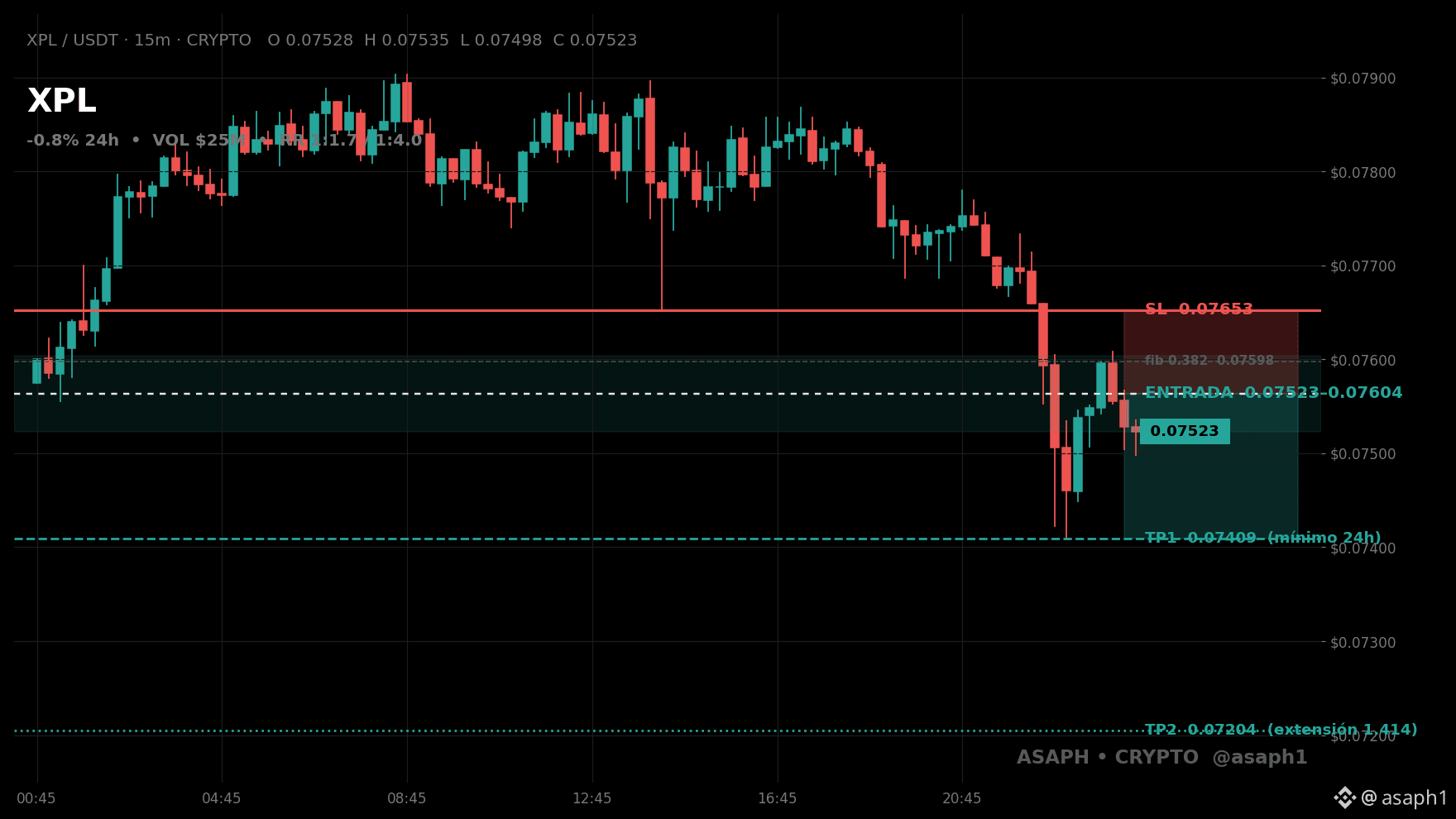
📊 SEÑAL XPL — SHORT
📍 Precio ahora: $0.07523
🎯 Zona: $0.07523–$0.07604 (dist. 0.0%)
Si el precio toca la zona → entrada con orden límite, 50% al precio actual y 50% en $0.07604.
Si entra → 🛑 stop loss en $0.076526 (-1.18%), confirmado ANTES de entrar; riesgo 2% del capital.
Si baja → ✅ TP1 $0.07409 (el soporte, mínimo 24h): primer take profit, se cobra el 50% y el stop se mueve a mi entrada.
Si sigue → 🏁 TP2 $0.07204484 (extensión 1.414): el hueco que deja el unlock.
R/R: 1:1.73 · 1:4.03
⏳ Válida: próximas 2h / mientras aguante $0.076526
¿XPL pierde los $0.07409 antes del unlock o aguanta hasta el 25?
precio en vivo aquí 👇 XPL
XPL #Plasma #Unlock #Trading
Esto es un plan, no consejo financiero.
🔓 $XPL : se viene el unlock de 227M — vendo antes que se diluya
El 25 de octubre Plasma libera 227 millones de XPL (unos $17.9M, 5% del circulante). El precio ya cotiza 4.8% bajo su EMA50 de 4h ($0.07915), con los vendedores al mando.
Con un unlock golpeando la puerta, la zona es el techo que nadie quiere cruzar.
¿Hay plata entrando? El Open Interest se encoge 1.31% ($35.6M) y el volumen va 5.6% bajo su promedio: no.
¿Los grandes están comprando? 77.9% de las top posiciones en futuros están long, con el precio cayendo.
¿Paga esperar? El funding está positivo (+0.00002378): mientras esperan, el funding paga al lado corto.
📊 SEÑAL XPL — SHORT
📍 Precio ahora: $0.07523
🎯 Zona: $0.07523–$0.07604 (dist. 0.0%)
Si el precio toca la zona → entrada con orden límite, 50% al precio actual y 50% en $0.07604.
Si entra → 🛑 stop loss en $0.076526 (-1.18%), confirmado ANTES de entrar; riesgo 2% del capital.
Si baja → ✅ TP1 $0.07409 (el soporte, mínimo 24h): primer take profit, se cobra el 50% y el stop se mueve a mi entrada.
Si sigue → 🏁 TP2 $0.07204484 (extensión 1.414): el hueco que deja el unlock.
R/R: 1:1.73 · 1:4.03
⏳ Válida: próximas 2h / mientras aguante $0.076526
¿XPL pierde los $0.07409 antes del unlock o aguanta hasta el 25?
precio en vivo aquí 👇 XPL
XPL #Plasma #Unlock #Trading
Esto es un plan, no consejo financiero.
El 25 de octubre Plasma libera 227 millones de XPL (unos $17.9M, 5% del circulante). El precio ya cotiza 4.8% bajo su EMA50 de 4h ($0.07915), con los vendedores al mando.
Con un unlock golpeando la puerta, la zona es el techo que nadie quiere cruzar.
¿Hay plata entrando? El Open Interest se encoge 1.31% ($35.6M) y el volumen va 5.6% bajo su promedio: no.
¿Los grandes están comprando? 77.9% de las top posiciones en futuros están long, con el precio cayendo.
¿Paga esperar? El funding está positivo (+0.00002378): mientras esperan, el funding paga al lado corto.
📊 SEÑAL XPL — SHORT
📍 Precio ahora: $0.07523
🎯 Zona: $0.07523–$0.07604 (dist. 0.0%)
Si el precio toca la zona → entrada con orden límite, 50% al precio actual y 50% en $0.07604.
Si entra → 🛑 stop loss en $0.076526 (-1.18%), confirmado ANTES de entrar; riesgo 2% del capital.
Si baja → ✅ TP1 $0.07409 (el soporte, mínimo 24h): primer take profit, se cobra el 50% y el stop se mueve a mi entrada.
Si sigue → 🏁 TP2 $0.07204484 (extensión 1.414): el hueco que deja el unlock.
R/R: 1:1.73 · 1:4.03
⏳ Válida: próximas 2h / mientras aguante $0.076526
¿XPL pierde los $0.07409 antes del unlock o aguanta hasta el 25?
precio en vivo aquí 👇 XPL
XPL #Plasma #Unlock #Trading
Esto es un plan, no consejo financiero.
56

·
--
227.78 million tokens. One date. A monthly habit.
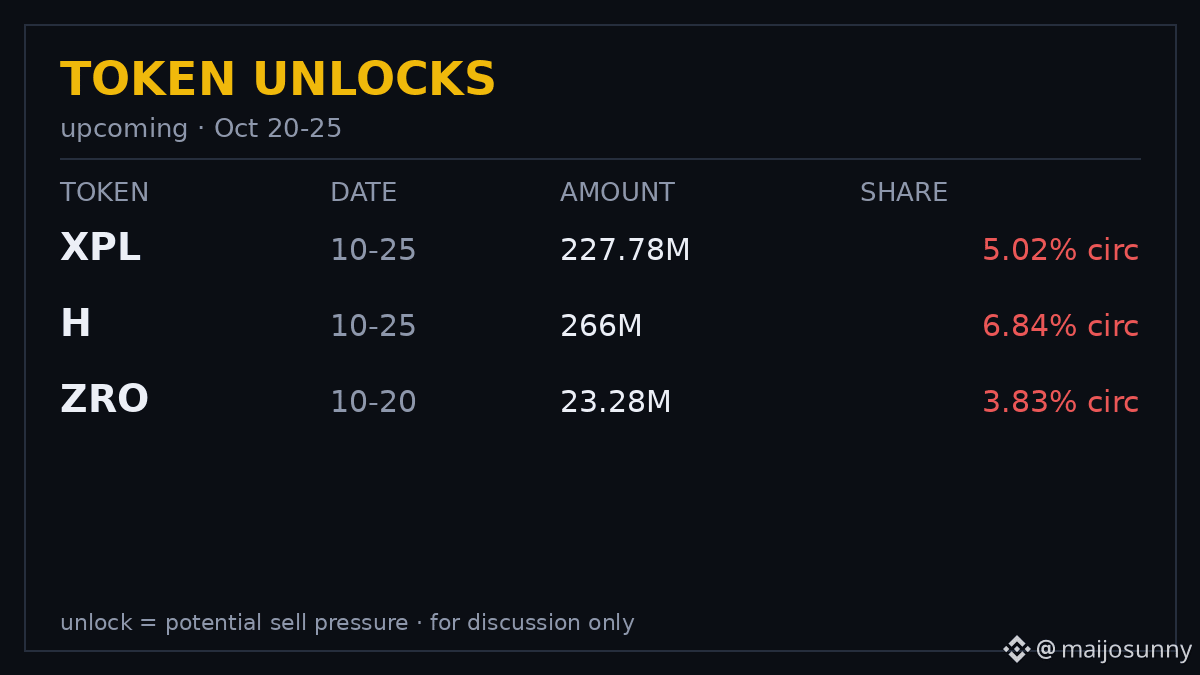
Plasma unlocks 227.78M $XPL on Oct 25 — worth ~$17.5M at today's price, equal to 5.02% of released supply (Tokenomist).
The split tells you where the flow pressure comes from: 88.89M to Ecosystem & Growth, 69.44M to investors, 69.44M to the team. All cliff-vested, all landing at once.
Why it matters: this isn't a one-off headline. It's a schedule. Plasma runs the same 227.78M release every single month through September 2028 — a monthly drip into a ~4.53B circulating base. A one-time unlock gets priced and fades; a monthly one rewires expectations. That's the second-order effect: the market doesn't reprice "5% once," it reprices "5% every month for two years."
Counterpoint, from the data: past XPL unlocks have shown low volatility in the 7 days after release (Tokenomist). And Oct 25 is a crowded lane — LayerZero's ZRO unlocked 23.28M (~$43M) today, and Humanity's H adds 266M (~$15M) on the same day. XPL's 5.02% sits mid-pack, not as the outlier.
The number that matters isn't the dollar figure — it's the recipient mix and the repeat cadence. Watch on-chain claims on Oct 25, not the headline. Which tranche moves first — ecosystem grants or investor wallets?
Not financial advice. DYOR.
#TokenUnlocks #Plasma
227.78 million tokens. One date. A monthly habit.
Plasma unlocks 227.78M $XPL on Oct 25 — worth ~$17.5M at today's price, equal to 5.02% of released supply (Tokenomist).
The split tells you where the flow pressure comes from: 88.89M to Ecosystem & Growth, 69.44M to investors, 69.44M to the team. All cliff-vested, all landing at once.
Why it matters: this isn't a one-off headline. It's a schedule. Plasma runs the same 227.78M release every single month through September 2028 — a monthly drip into a ~4.53B circulating base. A one-time unlock gets priced and fades; a monthly one rewires expectations. That's the second-order effect: the market doesn't reprice "5% once," it reprices "5% every month for two years."
Counterpoint, from the data: past XPL unlocks have shown low volatility in the 7 days after release (Tokenomist). And Oct 25 is a crowded lane — LayerZero's ZRO unlocked 23.28M (~$43M) today, and Humanity's H adds 266M (~$15M) on the same day. XPL's 5.02% sits mid-pack, not as the outlier.
The number that matters isn't the dollar figure — it's the recipient mix and the repeat cadence. Watch on-chain claims on Oct 25, not the headline. Which tranche moves first — ecosystem grants or investor wallets?
Not financial advice. DYOR.
#TokenUnlocks #Plasma
Plasma unlocks 227.78M $XPL on Oct 25 — worth ~$17.5M at today's price, equal to 5.02% of released supply (Tokenomist).
The split tells you where the flow pressure comes from: 88.89M to Ecosystem & Growth, 69.44M to investors, 69.44M to the team. All cliff-vested, all landing at once.
Why it matters: this isn't a one-off headline. It's a schedule. Plasma runs the same 227.78M release every single month through September 2028 — a monthly drip into a ~4.53B circulating base. A one-time unlock gets priced and fades; a monthly one rewires expectations. That's the second-order effect: the market doesn't reprice "5% once," it reprices "5% every month for two years."
Counterpoint, from the data: past XPL unlocks have shown low volatility in the 7 days after release (Tokenomist). And Oct 25 is a crowded lane — LayerZero's ZRO unlocked 23.28M (~$43M) today, and Humanity's H adds 266M (~$15M) on the same day. XPL's 5.02% sits mid-pack, not as the outlier.
The number that matters isn't the dollar figure — it's the recipient mix and the repeat cadence. Watch on-chain claims on Oct 25, not the headline. Which tranche moves first — ecosystem grants or investor wallets?
Not financial advice. DYOR.
#TokenUnlocks #Plasma
513


·
--
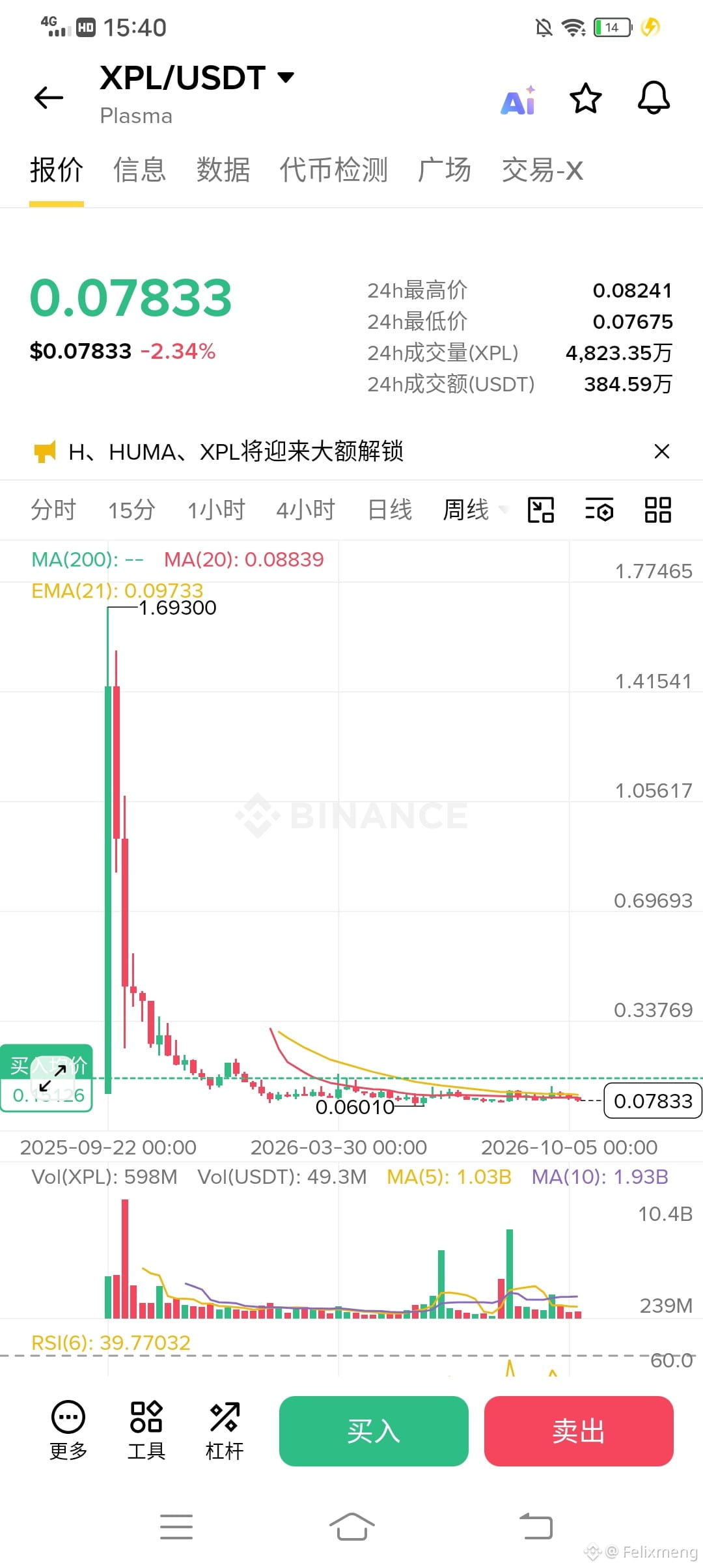
Stripe y Plasma diseñan tarjetas para gastar en varias monedas
Plasma anunció el 15 de octubre de 2026, a las 09:20 ET, una colaboración con Stripe para desarrollar tarjetas respaldadas por stablecoins. Participa como socio de diseño: el comunicado describe funciones previstas, sin fijar una fecha de lanzamiento general.
La ampliación contempla USD, BRL, EUR, MXN y COP, y cita OUSD entre las stablecoins compatibles previstas. La idea es poder gastar, por ejemplo, euros directamente, evitando pasar primero por dólares. Reducir conversiones es un objetivo; no equivale a garantizar costes de cambio nulos.
Los más de 30 países citados corresponden al alcance actual de la infraestructura de Stripe. Superar los 100 en 2027 es un plan. Estas cifras no confirman que la nueva experiencia esté disponible para cualquier residente.
La selección automática del saldo apropiado al pagar también se presenta como una función en desarrollo. Conviene distinguirla de Plasma One, la cuenta y tarjeta que Plasma ya ofrece.
Plasma advierte en su web que los saldos en stablecoins no son depósitos bancarios y están sujetos a riesgos y restricciones geográficas. La disponibilidad, las comisiones y las condiciones de cada servicio siguen siendo relevantes.
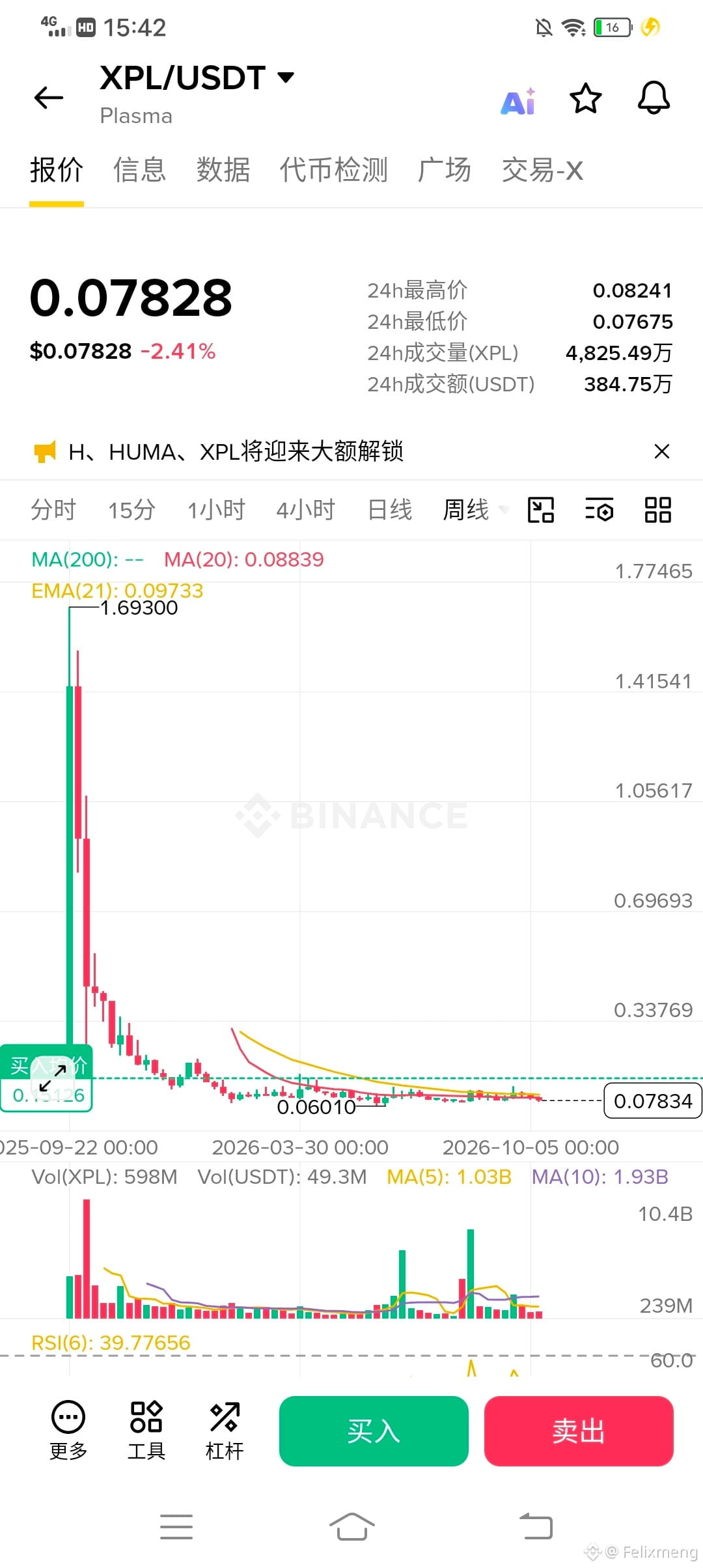
Lectura de mercado: XPL, token nativo de la red Plasma, cotizaba en Binance a 0,08180 USDT (-3,90% en 24 h), con 5,18 millones de USDT de volumen en 24 horas en XPL/USDT, a las 01:45 UTC del 17/10. El acuerdo no cuantifica demanda adicional para XPL. El desarrollo de un producto de pagos y la valoración de su token deben analizarse por separado.
Fuentes: comunicado de Plasma en GlobeNewswire; web de Plasma; datos públicos de Binance.
$XPL $OUSD $USDT
Contenido Educativo. No asesoramiento financiero.
#Plasma #Stripe #Stablecoins #PagosDigitales #Multidivisa
Stripe y Plasma diseñan tarjetas para gastar en varias monedas
Plasma anunció el 15 de octubre de 2026, a las 09:20 ET, una colaboración con Stripe para desarrollar tarjetas respaldadas por stablecoins. Participa como socio de diseño: el comunicado describe funciones previstas, sin fijar una fecha de lanzamiento general.
La ampliación contempla USD, BRL, EUR, MXN y COP, y cita OUSD entre las stablecoins compatibles previstas. La idea es poder gastar, por ejemplo, euros directamente, evitando pasar primero por dólares. Reducir conversiones es un objetivo; no equivale a garantizar costes de cambio nulos.
Los más de 30 países citados corresponden al alcance actual de la infraestructura de Stripe. Superar los 100 en 2027 es un plan. Estas cifras no confirman que la nueva experiencia esté disponible para cualquier residente.
La selección automática del saldo apropiado al pagar también se presenta como una función en desarrollo. Conviene distinguirla de Plasma One, la cuenta y tarjeta que Plasma ya ofrece.
Plasma advierte en su web que los saldos en stablecoins no son depósitos bancarios y están sujetos a riesgos y restricciones geográficas. La disponibilidad, las comisiones y las condiciones de cada servicio siguen siendo relevantes.
Lectura de mercado: XPL, token nativo de la red Plasma, cotizaba en Binance a 0,08180 USDT (-3,90% en 24 h), con 5,18 millones de USDT de volumen en 24 horas en XPL/USDT, a las 01:45 UTC del 17/10. El acuerdo no cuantifica demanda adicional para XPL. El desarrollo de un producto de pagos y la valoración de su token deben analizarse por separado.
Fuentes: comunicado de Plasma en GlobeNewswire; web de Plasma; datos públicos de Binance.
$XPL $OUSD $USDT
Contenido Educativo. No asesoramiento financiero.
#Plasma #Stripe #Stablecoins #PagosDigitales #Multidivisa
Plasma anunció el 15 de octubre de 2026, a las 09:20 ET, una colaboración con Stripe para desarrollar tarjetas respaldadas por stablecoins. Participa como socio de diseño: el comunicado describe funciones previstas, sin fijar una fecha de lanzamiento general.
La ampliación contempla USD, BRL, EUR, MXN y COP, y cita OUSD entre las stablecoins compatibles previstas. La idea es poder gastar, por ejemplo, euros directamente, evitando pasar primero por dólares. Reducir conversiones es un objetivo; no equivale a garantizar costes de cambio nulos.
Los más de 30 países citados corresponden al alcance actual de la infraestructura de Stripe. Superar los 100 en 2027 es un plan. Estas cifras no confirman que la nueva experiencia esté disponible para cualquier residente.
La selección automática del saldo apropiado al pagar también se presenta como una función en desarrollo. Conviene distinguirla de Plasma One, la cuenta y tarjeta que Plasma ya ofrece.
Plasma advierte en su web que los saldos en stablecoins no son depósitos bancarios y están sujetos a riesgos y restricciones geográficas. La disponibilidad, las comisiones y las condiciones de cada servicio siguen siendo relevantes.
Lectura de mercado: XPL, token nativo de la red Plasma, cotizaba en Binance a 0,08180 USDT (-3,90% en 24 h), con 5,18 millones de USDT de volumen en 24 horas en XPL/USDT, a las 01:45 UTC del 17/10. El acuerdo no cuantifica demanda adicional para XPL. El desarrollo de un producto de pagos y la valoración de su token deben analizarse por separado.
Fuentes: comunicado de Plasma en GlobeNewswire; web de Plasma; datos públicos de Binance.
$XPL $OUSD $USDT
Contenido Educativo. No asesoramiento financiero.
#Plasma #Stripe #Stablecoins #PagosDigitales #Multidivisa

174

·
--
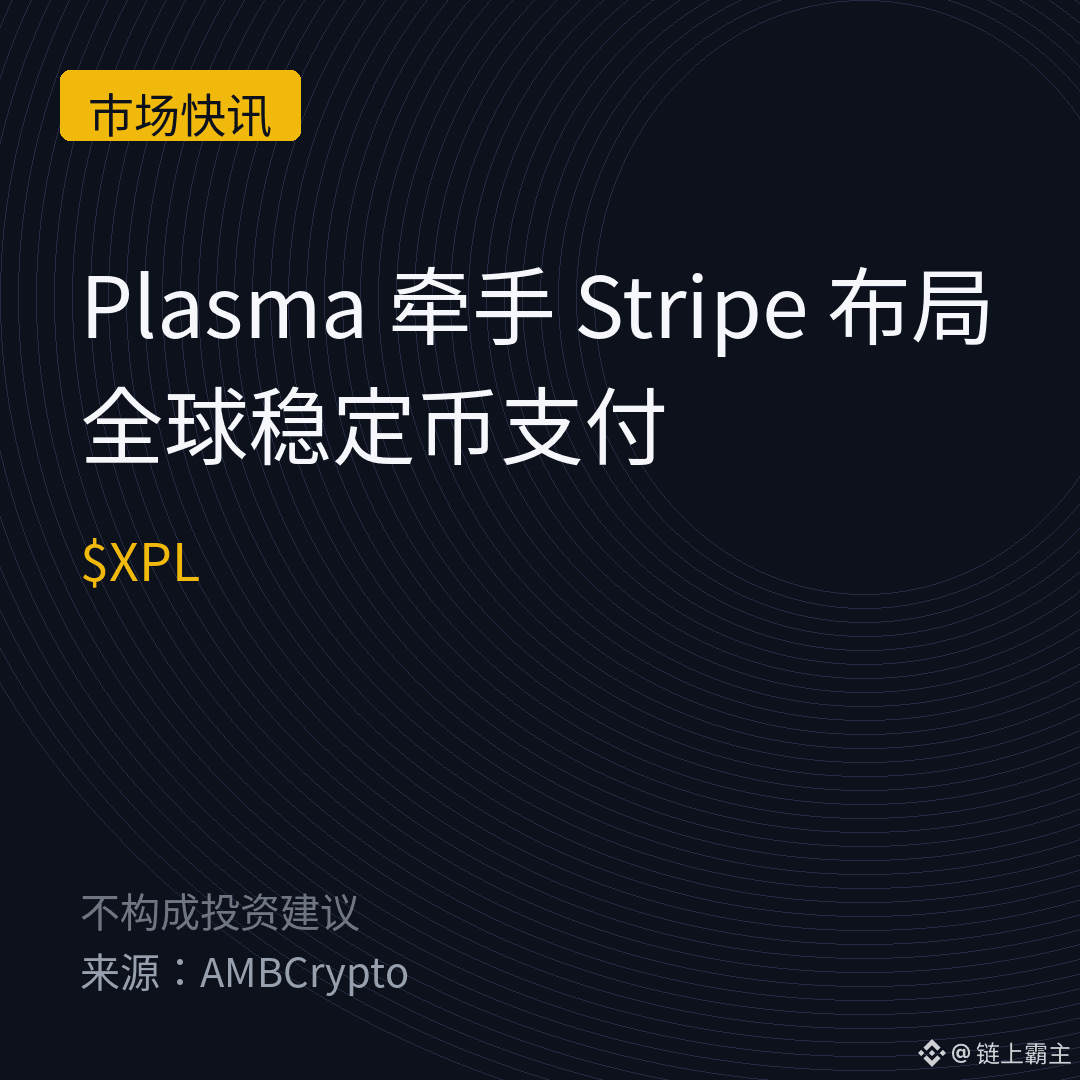
Plasma 宣布与支付巨头 Stripe 达成合作,联合打造稳定币多币种支付卡,目标覆盖全球 100 多个市场。合作消息公布后,$XPL 单日上涨约 10.9%,24 小时交易量激增 65.51% 至 1.14 亿美元,衍生品交易量也大涨近一倍。Plasma 的支付网络目前已覆盖 30 多个国家。不过从技术面看,XPL 上方 0.09 美元一带仍面临阻力,RSI 指标低于 50 显示短期买盘力量仍偏弱。
(来源:AMBCrypto)
⚠️风险提示:以上为市场信息分享,不构成投资建议;投资有风险,入市需谨慎。
#Plasma #Stripe
Plasma 宣布与支付巨头 Stripe 达成合作,联合打造稳定币多币种支付卡,目标覆盖全球 100 多个市场。合作消息公布后,$XPL 单日上涨约 10.9%,24 小时交易量激增 65.51% 至 1.14 亿美元,衍生品交易量也大涨近一倍。Plasma 的支付网络目前已覆盖 30 多个国家。不过从技术面看,XPL 上方 0.09 美元一带仍面临阻力,RSI 指标低于 50 显示短期买盘力量仍偏弱。
(来源:AMBCrypto)
⚠️风险提示:以上为市场信息分享,不构成投资建议;投资有风险,入市需谨慎。
#Plasma #Stripe
(来源:AMBCrypto)
⚠️风险提示:以上为市场信息分享,不构成投资建议;投资有风险,入市需谨慎。
#Plasma #Stripe
503

·
--
Vérifié
🔥 BIG NEWS: STRIPE × PLASMA ARE MAKING CRYPTO PAYMENTS GLOBAL! 🌍💳
$AGT
🚀 Multi-currency stablecoin cards aim to let users spend across borders without expensive currency conversions.
$SIREN
💰 Lower fees?
⚡ Faster payments?
🌎 Borderless spending?
$ICNT
Could stablecoin cards become the future of global payments?
Would you use a stablecoin card instead of your traditional bank card? 👀
#Stripe #Plasma #Stablecoins #Crypto
🔥 BIG NEWS: STRIPE × PLASMA ARE MAKING CRYPTO PAYMENTS GLOBAL! 🌍💳
$AGT
🚀 Multi-currency stablecoin cards aim to let users spend across borders without expensive currency conversions.
$SIREN
💰 Lower fees?
⚡ Faster payments?
🌎 Borderless spending?
$ICNT
Could stablecoin cards become the future of global payments?
Would you use a stablecoin card instead of your traditional bank card? 👀
#Stripe #Plasma #Stablecoins #Crypto
$AGT
🚀 Multi-currency stablecoin cards aim to let users spend across borders without expensive currency conversions.
$SIREN
💰 Lower fees?
⚡ Faster payments?
🌎 Borderless spending?
$ICNT
Could stablecoin cards become the future of global payments?
Would you use a stablecoin card instead of your traditional bank card? 👀
#Stripe #Plasma #Stablecoins #Crypto


1
677

【说点大实话:研究完 $XPL 的底层逻辑,我终于解开了这个困惑!】
讲真,最近刷币安广场看到满屏都在聊 $XPL ,起初我也犯迷糊:现在公链和叙事这么多,为什么偏偏是它能跑出来?
相信不少朋友和我一样,最怕看那种AI批量生成的官话套话。今天我就从咱们普通交易者和参与者的「真实困惑点」出发,用大白话扒一扒 $XPL 到底在玩什么狠活:
1️⃣ 先看盘面与核心坐标(别盲目冲):
• 现价 $0.122 | 市值约 $2.2亿 | TVL 超 $9亿 | 支撑 $0.115 / 阻力 $0.138
很多人只看涨跌,却忽略了背后的承接结构。目前这个位置,下方支撑带买盘非常扎实。
2️⃣ 它到底解决了什么真痛点?(车架改装比喻)
• 核心杀手锏:稳定币专属 Layer1 (PlasmaBFT共识 <1秒出块) + 内置 Paymaster 实现 USDT 零费转账 + ZK隐私
打个通俗的比方:如果把传统公链比作油耗高、堵车慢的老旧燃油车,$XPL 干的事就是直接在成熟底盘上焊了一套涡轮增压+智能驾驶模块!不是花架子,而是实打实帮用户省成本、提效率。
3️⃣ 咱们普通人现在怎么参与最稳?
• 如果你是做创作者任务台冲榜:记得先去活动页点报名!每天认真写 1 篇短帖 + 1 篇长文(多发不计分),再用 502U 买卖一笔拿满 8 分高性价比交易分;
• 如果你是二级看盘交易:严格围绕支撑位低吸,跌破支撑果断止损,不跟行情谈恋爱。
先打动自己,才能打动读者。这篇实操笔记建议先收藏,免得操作时找不到北!DYOR!
@Plasma Chain #Plasma #币安广场创作者任务台
【说点大实话:研究完 $XPL 的底层逻辑,我终于解开了这个困惑!】
讲真,最近刷币安广场看到满屏都在聊 $XPL ,起初我也犯迷糊:现在公链和叙事这么多,为什么偏偏是它能跑出来?
相信不少朋友和我一样,最怕看那种AI批量生成的官话套话。今天我就从咱们普通交易者和参与者的「真实困惑点」出发,用大白话扒一扒 $XPL 到底在玩什么狠活:
1️⃣ 先看盘面与核心坐标(别盲目冲):
• 现价 $0.122 | 市值约 $2.2亿 | TVL 超 $9亿 | 支撑 $0.115 / 阻力 $0.138
很多人只看涨跌,却忽略了背后的承接结构。目前这个位置,下方支撑带买盘非常扎实。
2️⃣ 它到底解决了什么真痛点?(车架改装比喻)
• 核心杀手锏:稳定币专属 Layer1 (PlasmaBFT共识 <1秒出块) + 内置 Paymaster 实现 USDT 零费转账 + ZK隐私
打个通俗的比方:如果把传统公链比作油耗高、堵车慢的老旧燃油车,$XPL 干的事就是直接在成熟底盘上焊了一套涡轮增压+智能驾驶模块!不是花架子,而是实打实帮用户省成本、提效率。
3️⃣ 咱们普通人现在怎么参与最稳?
• 如果你是做创作者任务台冲榜:记得先去活动页点报名!每天认真写 1 篇短帖 + 1 篇长文(多发不计分),再用 502U 买卖一笔拿满 8 分高性价比交易分;
• 如果你是二级看盘交易:严格围绕支撑位低吸,跌破支撑果断止损,不跟行情谈恋爱。
先打动自己,才能打动读者。这篇实操笔记建议先收藏,免得操作时找不到北!DYOR!
@Plasma Chain #Plasma #币安广场创作者任务台
讲真,最近刷币安广场看到满屏都在聊 $XPL ,起初我也犯迷糊:现在公链和叙事这么多,为什么偏偏是它能跑出来?
相信不少朋友和我一样,最怕看那种AI批量生成的官话套话。今天我就从咱们普通交易者和参与者的「真实困惑点」出发,用大白话扒一扒 $XPL 到底在玩什么狠活:
1️⃣ 先看盘面与核心坐标(别盲目冲):
• 现价 $0.122 | 市值约 $2.2亿 | TVL 超 $9亿 | 支撑 $0.115 / 阻力 $0.138
很多人只看涨跌,却忽略了背后的承接结构。目前这个位置,下方支撑带买盘非常扎实。
2️⃣ 它到底解决了什么真痛点?(车架改装比喻)
• 核心杀手锏:稳定币专属 Layer1 (PlasmaBFT共识 <1秒出块) + 内置 Paymaster 实现 USDT 零费转账 + ZK隐私
打个通俗的比方:如果把传统公链比作油耗高、堵车慢的老旧燃油车,$XPL 干的事就是直接在成熟底盘上焊了一套涡轮增压+智能驾驶模块!不是花架子,而是实打实帮用户省成本、提效率。
3️⃣ 咱们普通人现在怎么参与最稳?
• 如果你是做创作者任务台冲榜:记得先去活动页点报名!每天认真写 1 篇短帖 + 1 篇长文(多发不计分),再用 502U 买卖一笔拿满 8 分高性价比交易分;
• 如果你是二级看盘交易:严格围绕支撑位低吸,跌破支撑果断止损,不跟行情谈恋爱。
先打动自己,才能打动读者。这篇实操笔记建议先收藏,免得操作时找不到北!DYOR!
@Plasma Chain #Plasma #币安广场创作者任务台
371

·
--
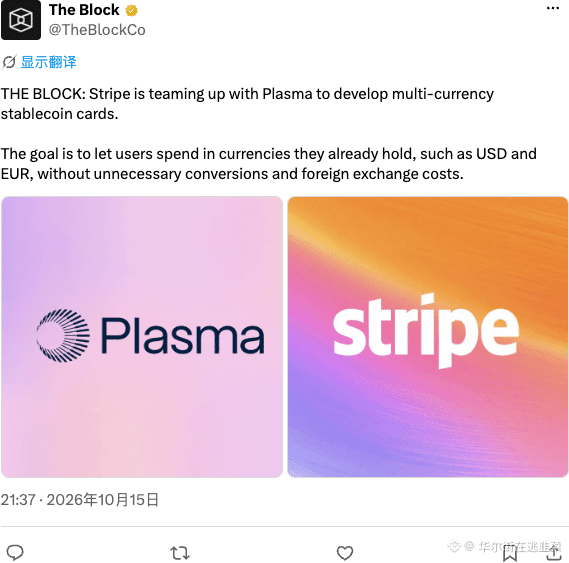
Stripe亲自下场做稳定币卡,还拉上Plasma。目标很直白——让你手里的USD、EUR直接花,跳过换汇和手续费。
这不是概念,是支付巨头在补链上最后一块短板。稳定币从炒到用,又近了一步。受益的不是某个币,是整个赛道的基础设施。
$USDC $EUR #Stablecoin #Plasma
Stripe亲自下场做稳定币卡,还拉上Plasma。目标很直白——让你手里的USD、EUR直接花,跳过换汇和手续费。
这不是概念,是支付巨头在补链上最后一块短板。稳定币从炒到用,又近了一步。受益的不是某个币,是整个赛道的基础设施。
$USDC $EUR #Stablecoin #Plasma
这不是概念,是支付巨头在补链上最后一块短板。稳定币从炒到用,又近了一步。受益的不是某个币,是整个赛道的基础设施。
$USDC $EUR #Stablecoin #Plasma
38
【币安广场刷屏的 $XPL 、 $VANRY 和 $DUSK 到底在玩什么?一文扒透三大 Layer1 的「车架改装术」!】
最近在币安广场创作者任务台冲榜,我发现一个很有意思的困惑点:
以前我们聊 Layer1 公链,脑子里只有比特币和以太坊。怎么突然冒出 $XPL (@Plasma Chain #Plasma )、$VANRY 和 $DUSK 一堆新 Layer1?为什么它们不去老老实实做 Layer2,非要自己买地盖楼?
仔细扒完技术文档我才恍然大悟:它们全都是【EVM 兼容 + 垂直领域狠活改装】!
如果把以太坊的 EVM(虚拟机)比作一副成熟的标准汽车底盘,这几个项目就是买下标准底盘后,针对不同痛点焊上了专属涡轮:
1️⃣ 主角拆解:$XPL —— 给公链装上「免费油箱」的稳定币保镖
• 核心数据与位置:现价 $0.122 | 市值约 $2.2亿 | TVL 超 $9亿 | 支撑 $0.115 / 阻力 $0.138
• 改装狠活:稳定币专属 Layer1 (PlasmaBFT共识 <1秒出块) + 内置 Paymaster 实现 USDT 零费转账 + ZK隐私
标准 EVM 最痛的是高峰期 Gas 费贵得肉疼,而 $XPL 基于 PlasmaBFT 共识(出块<1秒,TPS 1000+),直接在底层内置了 Paymaster 代付系统与自定义 Gas Token。用它转 USDT 直接零手续费,再叠加上 ZK-snarks 隐私模块,直接戳中全球跨境汇款与 RWA 支付的最大痛点!
2️⃣ 横向撕逼 PK:谁的护城河更深?
• 论支付落地实用性:$XPL 零费转账最接地气,TVL 与稳定币存款体量扎实;
• 论 AI 前瞻叙事:$VANRY 用 Neutron 语义内存 + Kayon 链上推理把 AI 塞进合约;
• 论机构合规隐私:$DUSK 用 ZK 电路死磕欧盟 MiCA 法规与证券上链。
💡 个人总结:
Layer2 只是租房打补丁,而像 $XPL 这样从 Layer1 底层重写支付规则才是真买地盖楼。看懂底层逻辑再参与任务台与二级博弈,才能既拿满广场创作积分,又守住本金安全。DYOR!
@Plasma Chain #Plasma #币安广场创作者任务台
【币安广场刷屏的 $XPL 、 $VANRY 和 $DUSK 到底在玩什么?一文扒透三大 Layer1 的「车架改装术」!】
最近在币安广场创作者任务台冲榜,我发现一个很有意思的困惑点:
以前我们聊 Layer1 公链,脑子里只有比特币和以太坊。怎么突然冒出 $XPL (@Plasma Chain #Plasma )、$VANRY 和 $DUSK 一堆新 Layer1?为什么它们不去老老实实做 Layer2,非要自己买地盖楼?
仔细扒完技术文档我才恍然大悟:它们全都是【EVM 兼容 + 垂直领域狠活改装】!
如果把以太坊的 EVM(虚拟机)比作一副成熟的标准汽车底盘,这几个项目就是买下标准底盘后,针对不同痛点焊上了专属涡轮:
1️⃣ 主角拆解:$XPL —— 给公链装上「免费油箱」的稳定币保镖
• 核心数据与位置:现价 $0.122 | 市值约 $2.2亿 | TVL 超 $9亿 | 支撑 $0.115 / 阻力 $0.138
• 改装狠活:稳定币专属 Layer1 (PlasmaBFT共识 <1秒出块) + 内置 Paymaster 实现 USDT 零费转账 + ZK隐私
标准 EVM 最痛的是高峰期 Gas 费贵得肉疼,而 $XPL 基于 PlasmaBFT 共识(出块<1秒,TPS 1000+),直接在底层内置了 Paymaster 代付系统与自定义 Gas Token。用它转 USDT 直接零手续费,再叠加上 ZK-snarks 隐私模块,直接戳中全球跨境汇款与 RWA 支付的最大痛点!
2️⃣ 横向撕逼 PK:谁的护城河更深?
• 论支付落地实用性:$XPL 零费转账最接地气,TVL 与稳定币存款体量扎实;
• 论 AI 前瞻叙事:$VANRY 用 Neutron 语义内存 + Kayon 链上推理把 AI 塞进合约;
• 论机构合规隐私:$DUSK 用 ZK 电路死磕欧盟 MiCA 法规与证券上链。
💡 个人总结:
Layer2 只是租房打补丁,而像 $XPL 这样从 Layer1 底层重写支付规则才是真买地盖楼。看懂底层逻辑再参与任务台与二级博弈,才能既拿满广场创作积分,又守住本金安全。DYOR!
@Plasma Chain #Plasma #币安广场创作者任务台
最近在币安广场创作者任务台冲榜,我发现一个很有意思的困惑点:
以前我们聊 Layer1 公链,脑子里只有比特币和以太坊。怎么突然冒出 $XPL (@Plasma Chain #Plasma )、$VANRY 和 $DUSK 一堆新 Layer1?为什么它们不去老老实实做 Layer2,非要自己买地盖楼?
仔细扒完技术文档我才恍然大悟:它们全都是【EVM 兼容 + 垂直领域狠活改装】!
如果把以太坊的 EVM(虚拟机)比作一副成熟的标准汽车底盘,这几个项目就是买下标准底盘后,针对不同痛点焊上了专属涡轮:
1️⃣ 主角拆解:$XPL —— 给公链装上「免费油箱」的稳定币保镖
• 核心数据与位置:现价 $0.122 | 市值约 $2.2亿 | TVL 超 $9亿 | 支撑 $0.115 / 阻力 $0.138
• 改装狠活:稳定币专属 Layer1 (PlasmaBFT共识 <1秒出块) + 内置 Paymaster 实现 USDT 零费转账 + ZK隐私
标准 EVM 最痛的是高峰期 Gas 费贵得肉疼,而 $XPL 基于 PlasmaBFT 共识(出块<1秒,TPS 1000+),直接在底层内置了 Paymaster 代付系统与自定义 Gas Token。用它转 USDT 直接零手续费,再叠加上 ZK-snarks 隐私模块,直接戳中全球跨境汇款与 RWA 支付的最大痛点!
2️⃣ 横向撕逼 PK:谁的护城河更深?
• 论支付落地实用性:$XPL 零费转账最接地气,TVL 与稳定币存款体量扎实;
• 论 AI 前瞻叙事:$VANRY 用 Neutron 语义内存 + Kayon 链上推理把 AI 塞进合约;
• 论机构合规隐私:$DUSK 用 ZK 电路死磕欧盟 MiCA 法规与证券上链。
💡 个人总结:
Layer2 只是租房打补丁,而像 $XPL 这样从 Layer1 底层重写支付规则才是真买地盖楼。看懂底层逻辑再参与任务台与二级博弈,才能既拿满广场创作积分,又守住本金安全。DYOR!
@Plasma Chain #Plasma #币安广场创作者任务台
466

·
--
Plasma розганяється не на жарт 🚀
За останні 30 днів пропозиція USDe від Ethena на Plasma підскочила одразу на 61,9% і досягла $559,11 млн.
Завдяки цьому Plasma обігнала Solana ($491,30 млн) і стала друге за величиною мережею для USDe після Ethereum.
Схоже, капітал потроху перетікає в нові екосистеми.Як гадаєте, Plasma втримає цей темп чи Solana поверне позиції?
#ethena #Plasma
#LedgerPausesCryptoBilisSales
#XRPLedgerPatchesXRPCreationBug
$XPL
{future}(XPLUSDT)
$ENA
{future}(ENAUSDT)
Plasma розганяється не на жарт 🚀
За останні 30 днів пропозиція USDe від Ethena на Plasma підскочила одразу на 61,9% і досягла $559,11 млн.
Завдяки цьому Plasma обігнала Solana ($491,30 млн) і стала друге за величиною мережею для USDe після Ethereum.
Схоже, капітал потроху перетікає в нові екосистеми.Як гадаєте, Plasma втримає цей темп чи Solana поверне позиції?
#ethena #Plasma
#LedgerPausesCryptoBilisSales
#XRPLedgerPatchesXRPCreationBug
$XPL
$ENA
За останні 30 днів пропозиція USDe від Ethena на Plasma підскочила одразу на 61,9% і досягла $559,11 млн.
Завдяки цьому Plasma обігнала Solana ($491,30 млн) і стала друге за величиною мережею для USDe після Ethereum.
Схоже, капітал потроху перетікає в нові екосистеми.Як гадаєте, Plasma втримає цей темп чи Solana поверне позиції?
#ethena #Plasma
#LedgerPausesCryptoBilisSales
#XRPLedgerPatchesXRPCreationBug
$XPL
$ENA
1
16
618

·
--
Haussier
Partiellement vrai
Plasma تتقدم بقوة في سوق USDe!
ارتفع إمداد عملة USDe التابعة لـ @Ethena_Labs على شبكة Plasma بنسبة 61.9% خلال 30 يومًا، ليصل إلى 559.11 مليون دولار.
وبهذا، أصبحت @Plasma ثاني أكبر شبكة من حيث إمداد USDe بعد Ethereum، متقدمةً على Solana التي تسجل 491.30 مليون دولار.
ما الذي يستحق المتابعة؟ هذا النمو يعكس توسع حضور USDe عبر الشبكات، ويجعل متابعة السيولة وحجم الاستخدام الفعلي على Plasma أكثر أهمية.
هل تستطيع Plasma مواصلة هذا النمو خلال الفترة المقبلة؟
#Ethena #USDe #Plasma #defi
Plasma تتقدم بقوة في سوق USDe!
ارتفع إمداد عملة USDe التابعة لـ @Ethena Labs على شبكة Plasma بنسبة 61.9% خلال 30 يومًا، ليصل إلى 559.11 مليون دولار.
وبهذا، أصبحت @Plasma ثاني أكبر شبكة من حيث إمداد USDe بعد Ethereum، متقدمةً على Solana التي تسجل 491.30 مليون دولار.
ما الذي يستحق المتابعة؟ هذا النمو يعكس توسع حضور USDe عبر الشبكات، ويجعل متابعة السيولة وحجم الاستخدام الفعلي على Plasma أكثر أهمية.
هل تستطيع Plasma مواصلة هذا النمو خلال الفترة المقبلة؟
#Ethena #USDe #Plasma #defi
ارتفع إمداد عملة USDe التابعة لـ @Ethena Labs على شبكة Plasma بنسبة 61.9% خلال 30 يومًا، ليصل إلى 559.11 مليون دولار.
وبهذا، أصبحت @Plasma ثاني أكبر شبكة من حيث إمداد USDe بعد Ethereum، متقدمةً على Solana التي تسجل 491.30 مليون دولار.
ما الذي يستحق المتابعة؟ هذا النمو يعكس توسع حضور USDe عبر الشبكات، ويجعل متابعة السيولة وحجم الاستخدام الفعلي على Plasma أكثر أهمية.
هل تستطيع Plasma مواصلة هذا النمو خلال الفترة المقبلة؟
#Ethena #USDe #Plasma #defi

1
2
136

·
--
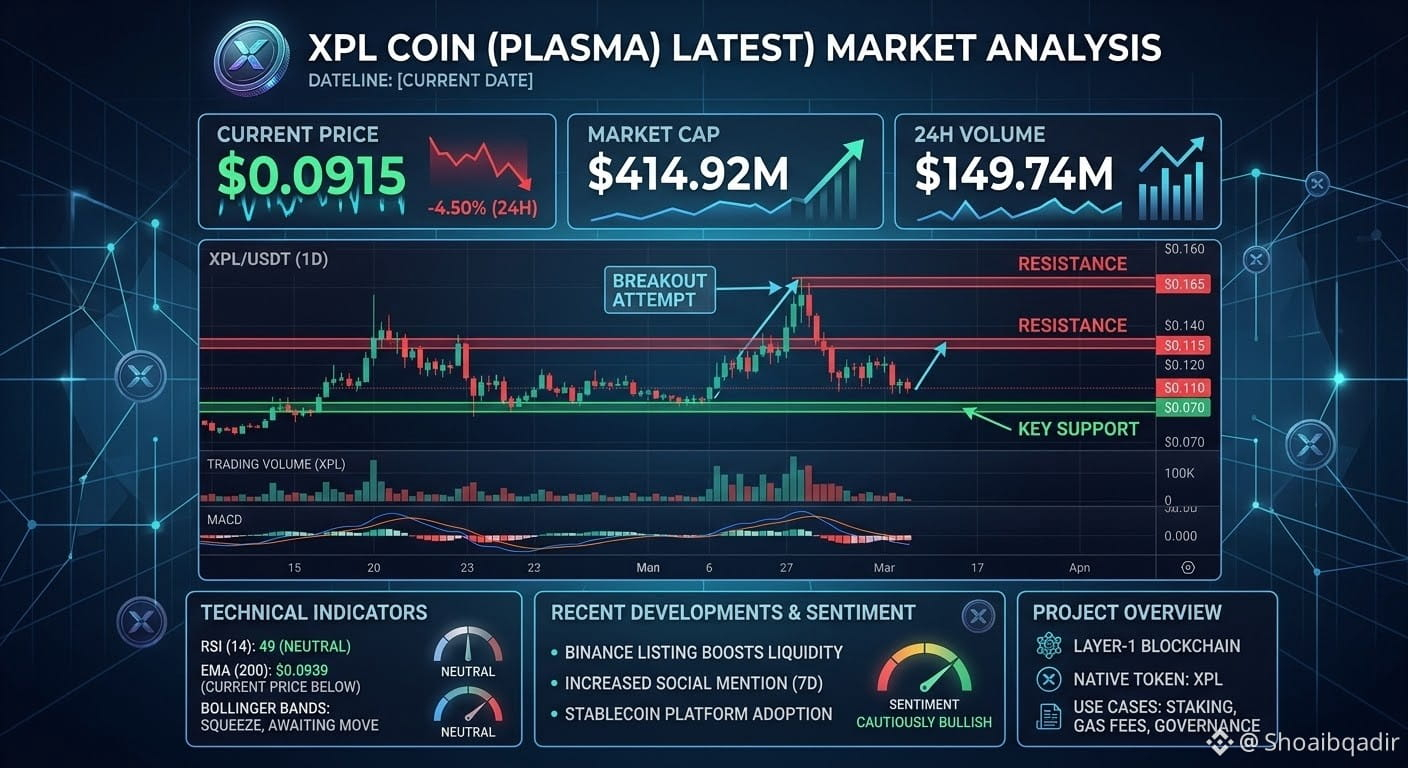
🚨 $XPL
{spot}(XPLUSDT)
(Plasma) — Latest Market Analysis | October 7, 2026
Current Price: ~$0.087
24H Trend: Bearish 📉
Market Cap: ~$395M
24H Volume: ~$76M
🔎 Technical View
XPL is currently trading under short-term selling pressure after failing to maintain the $0.09 level.
Key Support: $0.085
If this support holds, XPL could attempt a recovery toward:
🎯 $0.090 → $0.095 → $0.100
However, a clear break below $0.085 could increase downside pressure, with the next potential area around $0.080.
📈 Bullish Scenario:
A strong move above $0.095 could improve short-term momentum and open the way toward $0.10–$0.12.
📉 Bearish Scenario:
If $0.085 breaks with strong selling volume, XPL could retest the $0.080 area.
💡 Fundamental View
Plasma is a Layer-1 blockchain focused on high-volume, low-cost stablecoin payments. Its stablecoin-focused narrative remains one of the main reasons traders are watching XPL.
⚠️ Risk: XPL remains a highly volatile asset. Traders should watch Bitcoin's direction, trading volume, support levels, and overall altcoin market sentiment.
Overall Outlook: NEUTRAL → CAUTIOUSLY BULLISH above $0.095
Not financial advice. Always do your own research before trading.
#XPL #Plasma #CryptocurrencyWealth #BinanceHerYerde nce #Altcoins #CryptoAnalysis #trading
🚨 $XPL
(Plasma) — Latest Market Analysis | October 7, 2026
Current Price: ~$0.087
24H Trend: Bearish 📉
Market Cap: ~$395M
24H Volume: ~$76M
🔎 Technical View
XPL is currently trading under short-term selling pressure after failing to maintain the $0.09 level.
Key Support: $0.085
If this support holds, XPL could attempt a recovery toward:
🎯 $0.090 → $0.095 → $0.100
However, a clear break below $0.085 could increase downside pressure, with the next potential area around $0.080.
📈 Bullish Scenario:
A strong move above $0.095 could improve short-term momentum and open the way toward $0.10–$0.12.
📉 Bearish Scenario:
If $0.085 breaks with strong selling volume, XPL could retest the $0.080 area.
💡 Fundamental View
Plasma is a Layer-1 blockchain focused on high-volume, low-cost stablecoin payments. Its stablecoin-focused narrative remains one of the main reasons traders are watching XPL.
⚠️ Risk: XPL remains a highly volatile asset. Traders should watch Bitcoin's direction, trading volume, support levels, and overall altcoin market sentiment.
Overall Outlook: NEUTRAL → CAUTIOUSLY BULLISH above $0.095
Not financial advice. Always do your own research before trading.
#XPL #Plasma #CryptocurrencyWealth #BinanceHerYerde nce #Altcoins #CryptoAnalysis #trading
(Plasma) — Latest Market Analysis | October 7, 2026
Current Price: ~$0.087
24H Trend: Bearish 📉
Market Cap: ~$395M
24H Volume: ~$76M
🔎 Technical View
XPL is currently trading under short-term selling pressure after failing to maintain the $0.09 level.
Key Support: $0.085
If this support holds, XPL could attempt a recovery toward:
🎯 $0.090 → $0.095 → $0.100
However, a clear break below $0.085 could increase downside pressure, with the next potential area around $0.080.
📈 Bullish Scenario:
A strong move above $0.095 could improve short-term momentum and open the way toward $0.10–$0.12.
📉 Bearish Scenario:
If $0.085 breaks with strong selling volume, XPL could retest the $0.080 area.
💡 Fundamental View
Plasma is a Layer-1 blockchain focused on high-volume, low-cost stablecoin payments. Its stablecoin-focused narrative remains one of the main reasons traders are watching XPL.
⚠️ Risk: XPL remains a highly volatile asset. Traders should watch Bitcoin's direction, trading volume, support levels, and overall altcoin market sentiment.
Overall Outlook: NEUTRAL → CAUTIOUSLY BULLISH above $0.095
Not financial advice. Always do your own research before trading.
#XPL #Plasma #CryptocurrencyWealth #BinanceHerYerde nce #Altcoins #CryptoAnalysis #trading
453

·
--
Article
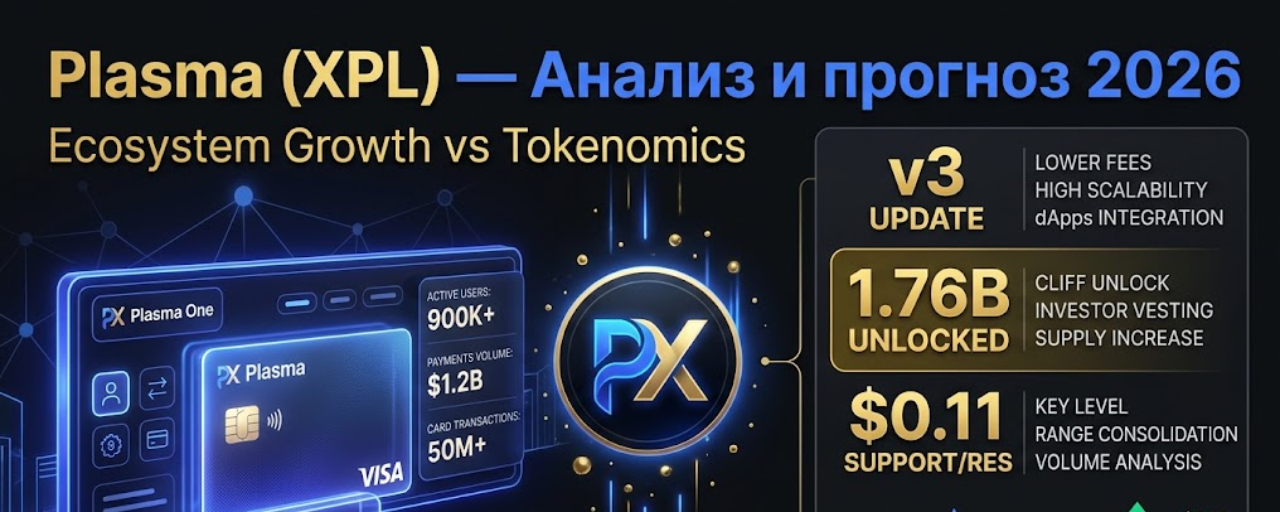
Разбор Plasma (XPL): Стоит ли покупать монету прямо сейчас?Сеть Plasma и её нативный токен $XPL продолжают привлекать внимание сообщества благодаря узкой специализации — созданию высокомасштабируемой инфраструктуры для платежей в стейблкоинах и интеграции с необанкингом.
Приводим подробный разбор фундаментальных факторов, последней аналитики и возможных сценариев движения цены XPL.
📌 Главные новости и фундаментальные драйверы
1. Технические обновления и рост экосистемы
Обновление v3:
Внедрение протокола Plasma v3 позволило существенно снизить комиссии и повысить скорость транзакций для dApps.
Запуск Plasma One:
Запуск необанка со встроенной поддержкой Visa и стейблкоинов стимулирует органический спрос на XPL как базовый актив для газа и стейкинга.
Ончейн-активность:
Объем стейблкоинов в сети превышает $900M+, а количество активных пользователей продолжает расти.
2. Давление со стороны токеномики (Разблокировки & Инфляция)
Масштабные разблокировки:
В третьем квартале прошёл крупнейший клифф-разблок (Cliff Unlock) для инвесторов и команды (~1.76 млрд XPL), который увеличил циркулирующее предложение более чем на 60%.
Стейкинг и инфляция:
Запуск PoS-валидаторов принес доходность держателям, но также задействовал годовую инфляцию на уровне 5% (с постепенным снижением до 3%).
📊 Технический обзор и ключевые уровни
На данный момент XPL торгуется в районе $0.094 – $0.096. Актив закрепился выше скользящих средних MA50/EMA50, что указывает на попытки формирования локального восходящего тренда.
Поддержка: $0.088 – $0.090 (зона консолидации), ключевой уровень — $0.060.
Сопротивление: $0.110 (первый локальный барьер), далее — $0.150 и $0.250.
📈 Сценарии движения цены XPL
1. 🟢 Бычий сценарий (Успешное поглощение предложения)
Условие: Закрепление цены выше уровня $0.110 на высоких объемах торгов.
Драйверы: Быстрый рост транзакционного объема в сервисе Plasma One, сжигание комиссий, перекрывающее инфляцию, и общий позитивный тренд на рынке альткоинов.
Цели: $0.15 ➔ $0.25 ➔ $0.35.
2. 🟡 Базовый сценарий (Консолидация и накопление)
Условие: Удержание диапазона $0.088 – $0.110.
Драйверы: Рынок постепенно переваривает предложение после сентябрьского разблока. Покупатели удерживают важные уровни поддержки, но для импульса вверх пока не хватает ликвидности.
Цели: Торговля во флэте вокруг $0.095 – $0.100.
3. 🔴 Медвежий сценарий (Давление продавцов)
Условие: Пробой поддержки $0.088 вниз на фоне негативного фона на широком рынке.
Драйверы: Фиксация прибыли инвесторами после разблокировки токенов и слабая динамика привлечения новых пользователей.
Цели: Откат к уровням $0.075 и повторный тест минимумов на уровне $0.060.
💡 Итог для трейдеров и инвесторов
Plasma (XPL) демонстрирует сильную фундаментальную базу в сфере платежных решений и стейблкоинов.
Однако инвесторам следует учитывать высокое давление со стороны разблокированных токенов.
Следите за пробоем ключевого уровня $0.110 для входа в бычий тренд и соблюдайте риски.
{future}(XPLUSDT)
#Plasma #CryptoNews #priceprediction #CryptoAnalysis
Разбор Plasma (XPL): Стоит ли покупать монету прямо сейчас?
Сеть Plasma и её нативный токен $XPL продолжают привлекать внимание сообщества благодаря узкой специализации — созданию высокомасштабируемой инфраструктуры для платежей в стейблкоинах и интеграции с необанкингом.
Приводим подробный разбор фундаментальных факторов, последней аналитики и возможных сценариев движения цены XPL.
📌 Главные новости и фундаментальные драйверы
1. Технические обновления и рост экосистемы
Обновление v3:
Внедрение протокола Plasma v3 позволило существенно снизить комиссии и повысить скорость транзакций для dApps.
Запуск Plasma One:
Запуск необанка со встроенной поддержкой Visa и стейблкоинов стимулирует органический спрос на XPL как базовый актив для газа и стейкинга.
Ончейн-активность:
Объем стейблкоинов в сети превышает $900M+, а количество активных пользователей продолжает расти.
2. Давление со стороны токеномики (Разблокировки & Инфляция)
Масштабные разблокировки:
В третьем квартале прошёл крупнейший клифф-разблок (Cliff Unlock) для инвесторов и команды (~1.76 млрд XPL), который увеличил циркулирующее предложение более чем на 60%.
Стейкинг и инфляция:
Запуск PoS-валидаторов принес доходность держателям, но также задействовал годовую инфляцию на уровне 5% (с постепенным снижением до 3%).
📊 Технический обзор и ключевые уровни
На данный момент XPL торгуется в районе $0.094 – $0.096. Актив закрепился выше скользящих средних MA50/EMA50, что указывает на попытки формирования локального восходящего тренда.
Поддержка: $0.088 – $0.090 (зона консолидации), ключевой уровень — $0.060.
Сопротивление: $0.110 (первый локальный барьер), далее — $0.150 и $0.250.
📈 Сценарии движения цены XPL
1. 🟢 Бычий сценарий (Успешное поглощение предложения)
Условие: Закрепление цены выше уровня $0.110 на высоких объемах торгов.
Драйверы: Быстрый рост транзакционного объема в сервисе Plasma One, сжигание комиссий, перекрывающее инфляцию, и общий позитивный тренд на рынке альткоинов.
Цели: $0.15 ➔ $0.25 ➔ $0.35.
2. 🟡 Базовый сценарий (Консолидация и накопление)
Условие: Удержание диапазона $0.088 – $0.110.
Драйверы: Рынок постепенно переваривает предложение после сентябрьского разблока. Покупатели удерживают важные уровни поддержки, но для импульса вверх пока не хватает ликвидности.
Цели: Торговля во флэте вокруг $0.095 – $0.100.
3. 🔴 Медвежий сценарий (Давление продавцов)
Условие: Пробой поддержки $0.088 вниз на фоне негативного фона на широком рынке.
Драйверы: Фиксация прибыли инвесторами после разблокировки токенов и слабая динамика привлечения новых пользователей.
Цели: Откат к уровням $0.075 и повторный тест минимумов на уровне $0.060.
💡 Итог для трейдеров и инвесторов
Plasma (XPL) демонстрирует сильную фундаментальную базу в сфере платежных решений и стейблкоинов.
Однако инвесторам следует учитывать высокое давление со стороны разблокированных токенов.
Следите за пробоем ключевого уровня $0.110 для входа в бычий тренд и соблюдайте риски.
#Plasma #CryptoNews #priceprediction #CryptoAnalysis
Приводим подробный разбор фундаментальных факторов, последней аналитики и возможных сценариев движения цены XPL.
📌 Главные новости и фундаментальные драйверы
1. Технические обновления и рост экосистемы
Обновление v3:
Внедрение протокола Plasma v3 позволило существенно снизить комиссии и повысить скорость транзакций для dApps.
Запуск Plasma One:
Запуск необанка со встроенной поддержкой Visa и стейблкоинов стимулирует органический спрос на XPL как базовый актив для газа и стейкинга.
Ончейн-активность:
Объем стейблкоинов в сети превышает $900M+, а количество активных пользователей продолжает расти.
2. Давление со стороны токеномики (Разблокировки & Инфляция)
Масштабные разблокировки:
В третьем квартале прошёл крупнейший клифф-разблок (Cliff Unlock) для инвесторов и команды (~1.76 млрд XPL), который увеличил циркулирующее предложение более чем на 60%.
Стейкинг и инфляция:
Запуск PoS-валидаторов принес доходность держателям, но также задействовал годовую инфляцию на уровне 5% (с постепенным снижением до 3%).
📊 Технический обзор и ключевые уровни
На данный момент XPL торгуется в районе $0.094 – $0.096. Актив закрепился выше скользящих средних MA50/EMA50, что указывает на попытки формирования локального восходящего тренда.
Поддержка: $0.088 – $0.090 (зона консолидации), ключевой уровень — $0.060.
Сопротивление: $0.110 (первый локальный барьер), далее — $0.150 и $0.250.
📈 Сценарии движения цены XPL
1. 🟢 Бычий сценарий (Успешное поглощение предложения)
Условие: Закрепление цены выше уровня $0.110 на высоких объемах торгов.
Драйверы: Быстрый рост транзакционного объема в сервисе Plasma One, сжигание комиссий, перекрывающее инфляцию, и общий позитивный тренд на рынке альткоинов.
Цели: $0.15 ➔ $0.25 ➔ $0.35.
2. 🟡 Базовый сценарий (Консолидация и накопление)
Условие: Удержание диапазона $0.088 – $0.110.
Драйверы: Рынок постепенно переваривает предложение после сентябрьского разблока. Покупатели удерживают важные уровни поддержки, но для импульса вверх пока не хватает ликвидности.
Цели: Торговля во флэте вокруг $0.095 – $0.100.
3. 🔴 Медвежий сценарий (Давление продавцов)
Условие: Пробой поддержки $0.088 вниз на фоне негативного фона на широком рынке.
Драйверы: Фиксация прибыли инвесторами после разблокировки токенов и слабая динамика привлечения новых пользователей.
Цели: Откат к уровням $0.075 и повторный тест минимумов на уровне $0.060.
💡 Итог для трейдеров и инвесторов
Plasma (XPL) демонстрирует сильную фундаментальную базу в сфере платежных решений и стейблкоинов.
Однако инвесторам следует учитывать высокое давление со стороны разблокированных токенов.
Следите за пробоем ключевого уровня $0.110 для входа в бычий тренд и соблюдайте риски.
#Plasma #CryptoNews #priceprediction #CryptoAnalysis
95

·
--
#Plasma $XPL
I have been following the development of @plasma closely, and it’s exciting to see how the project is building real utility in the blockchain space. Plasma focuses on scalability, efficiency, and long-term growth, which are critical for mass adoption. The $XPL token plays an important role in the ecosystem by supporting network operations and community participation. I believe #plasma has strong potential as the ecosystem continues to expand.
#Plasma $XPL
I have been following the development of @plasma closely, and it’s exciting to see how the project is building real utility in the blockchain space. Plasma focuses on scalability, efficiency, and long-term growth, which are critical for mass adoption. The $XPL token plays an important role in the ecosystem by supporting network operations and community participation. I believe #plasma has strong potential as the ecosystem continues to expand.
I have been following the development of @plasma closely, and it’s exciting to see how the project is building real utility in the blockchain space. Plasma focuses on scalability, efficiency, and long-term growth, which are critical for mass adoption. The $XPL token plays an important role in the ecosystem by supporting network operations and community participation. I believe #plasma has strong potential as the ecosystem continues to expand.
590


Most of the discussion around $XPL right now is focused on the 1.76B-token unlock.
But I think the more interesting question is what that supply event meets underneath it.
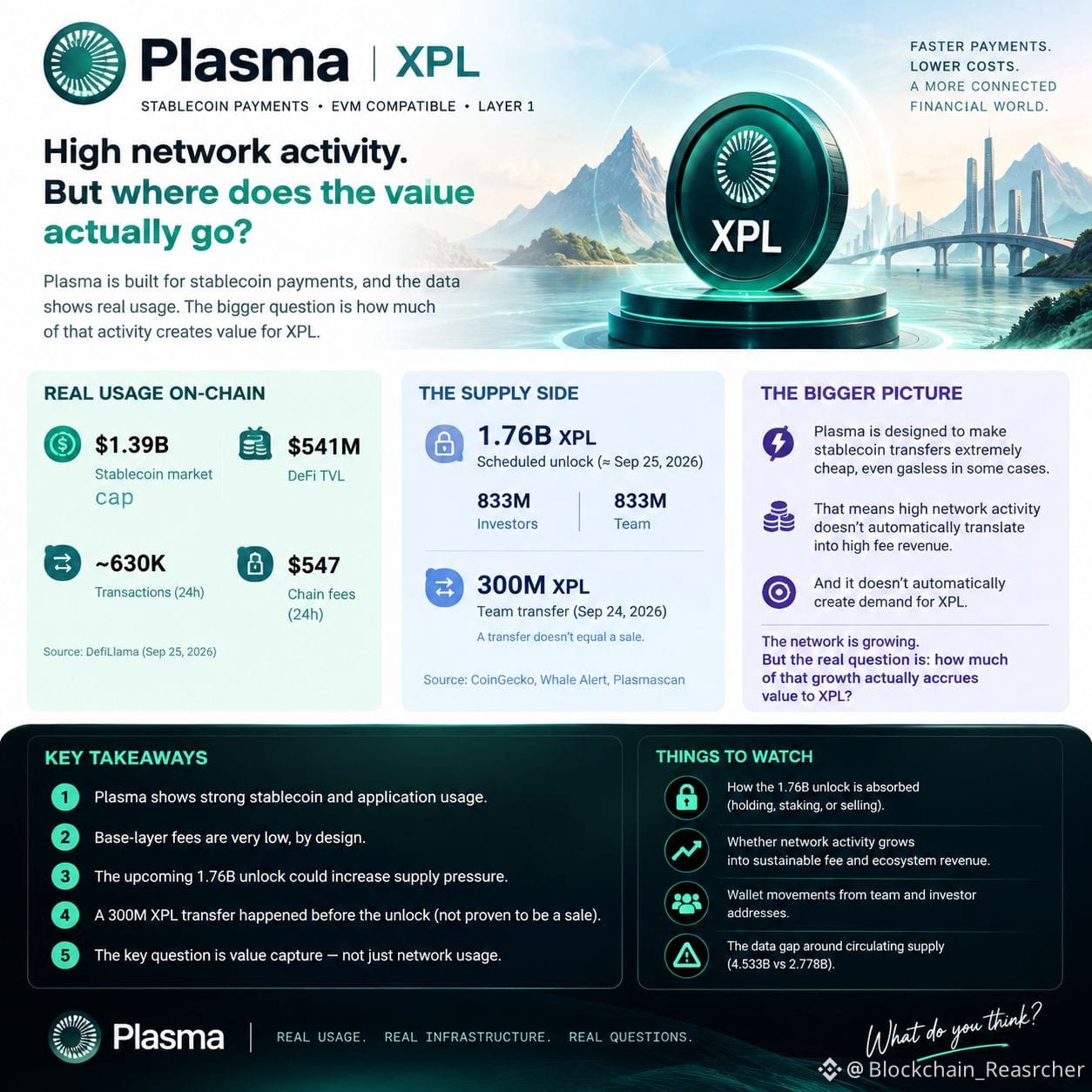
Plasma is currently carrying roughly $1.39B in stablecoins, around $541M in DeFi TVL, and about 630K transactions in 24 hours. Yet reported base-layer fees are only around $547 for the day.
That contrast says a lot about Plasma’s design.
The chain is built to make stablecoin transfers extremely cheap, even abstracting gas away from users in some cases. So high activity does not automatically translate into high fee revenue — and network usage does not automatically translate into equivalent demand for XPL.
Then comes the supply side.
Around 1.76B XPL is scheduled around the September 25 unlock, including roughly 833M for investors and another 833M for the team. Just one day earlier, a 300M XPL transfer from a Plasma Team-labelled wallet was recorded.
That is significant.
But a transfer is not a sale. Without evidence of exchange deposits or actual selling, calling it sell pressure would be speculation.
And this is where Plasma gets interesting: the network can show meaningful stablecoin usage while the token faces expanding supply and relatively weak direct fee capture.
So the key question may not be whether Plasma is being used.
It clearly is.
The harder question is: how much of that growing network activity actually accrues value to XPL?
$XPL #Plasma @Plasma
{future}(XPLUSDT)
Most of the discussion around $XPL right now is focused on the 1.76B-token unlock.
But I think the more interesting question is what that supply event meets underneath it.
Plasma is currently carrying roughly $1.39B in stablecoins, around $541M in DeFi TVL, and about 630K transactions in 24 hours. Yet reported base-layer fees are only around $547 for the day.
That contrast says a lot about Plasma’s design.
The chain is built to make stablecoin transfers extremely cheap, even abstracting gas away from users in some cases. So high activity does not automatically translate into high fee revenue — and network usage does not automatically translate into equivalent demand for XPL.
Then comes the supply side.
Around 1.76B XPL is scheduled around the September 25 unlock, including roughly 833M for investors and another 833M for the team. Just one day earlier, a 300M XPL transfer from a Plasma Team-labelled wallet was recorded.
That is significant.
But a transfer is not a sale. Without evidence of exchange deposits or actual selling, calling it sell pressure would be speculation.
And this is where Plasma gets interesting: the network can show meaningful stablecoin usage while the token faces expanding supply and relatively weak direct fee capture.
So the key question may not be whether Plasma is being used.
It clearly is.
The harder question is: how much of that growing network activity actually accrues value to XPL?
$XPL #Plasma @Plasma
But I think the more interesting question is what that supply event meets underneath it.
Plasma is currently carrying roughly $1.39B in stablecoins, around $541M in DeFi TVL, and about 630K transactions in 24 hours. Yet reported base-layer fees are only around $547 for the day.
That contrast says a lot about Plasma’s design.
The chain is built to make stablecoin transfers extremely cheap, even abstracting gas away from users in some cases. So high activity does not automatically translate into high fee revenue — and network usage does not automatically translate into equivalent demand for XPL.
Then comes the supply side.
Around 1.76B XPL is scheduled around the September 25 unlock, including roughly 833M for investors and another 833M for the team. Just one day earlier, a 300M XPL transfer from a Plasma Team-labelled wallet was recorded.
That is significant.
But a transfer is not a sale. Without evidence of exchange deposits or actual selling, calling it sell pressure would be speculation.
And this is where Plasma gets interesting: the network can show meaningful stablecoin usage while the token faces expanding supply and relatively weak direct fee capture.
So the key question may not be whether Plasma is being used.
It clearly is.
The harder question is: how much of that growing network activity actually accrues value to XPL?
$XPL #Plasma @Plasma
419

·
--
Vérifié
@Plasma
The Future of Stablecoin Payments: Plasma ($XPL) 🚀
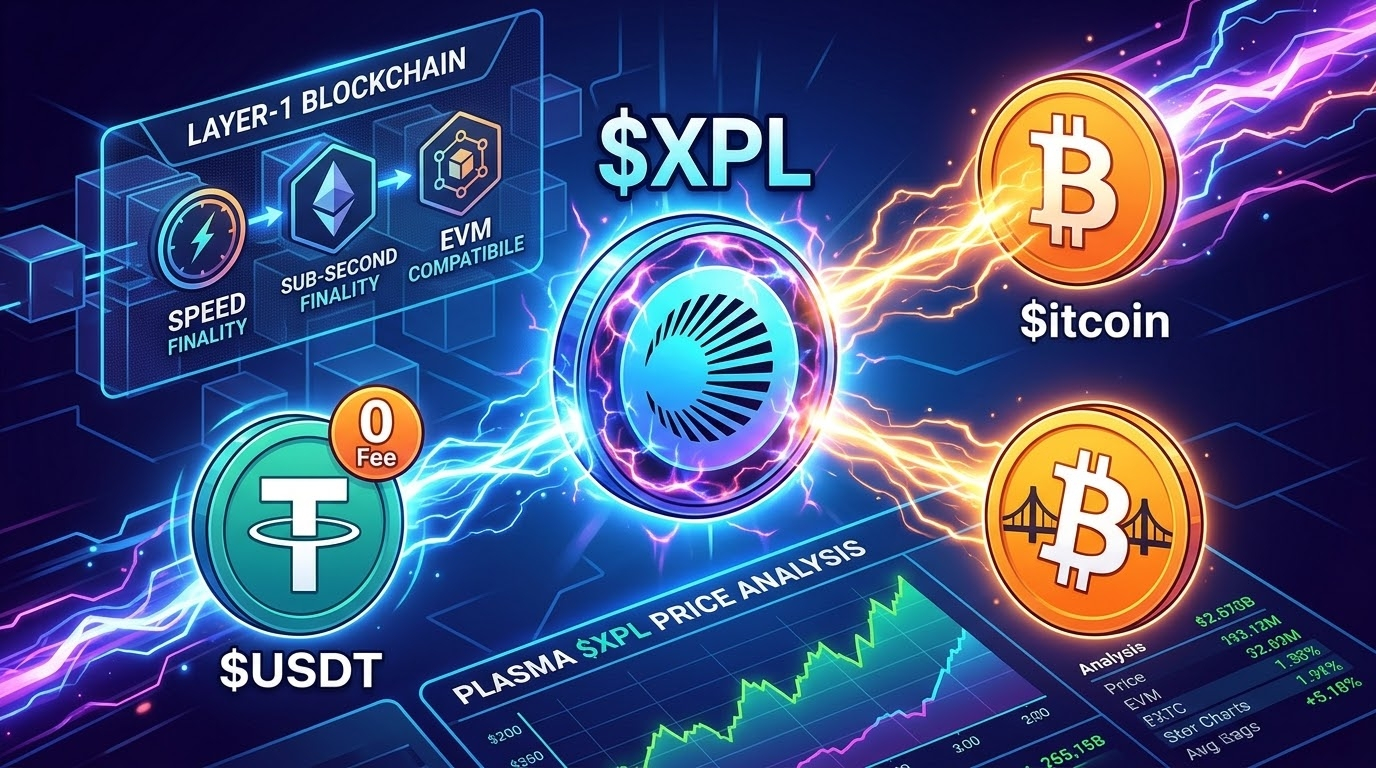
Global payments are evolving, and Plasma ($XPL) is leading the charge as a purpose-built Layer-1 blockchain engineered specifically for stablecoin settlements. By combining sub-second finality via PlasmaBFT with full EVM compatibility, Plasma eliminates the traditional friction of moving digital dollars on-chain.
Its hallmark innovation? Zero-fee $USDT transfers powered by protocol-level paymasters, alongside a trust-minimized Bitcoin bridge. The $XPL
{future}(XPLUSDT)
XPL token sits at the center of this economy—securing the Proof-of-Stake consensus, fueling complex smart contracts, and benefiting from EIP-1559 fee burns as network adoption grows. Backed by institutional giants, Plasma bridges traditional finance with Web3 speed.
XPL/USDT Analysis
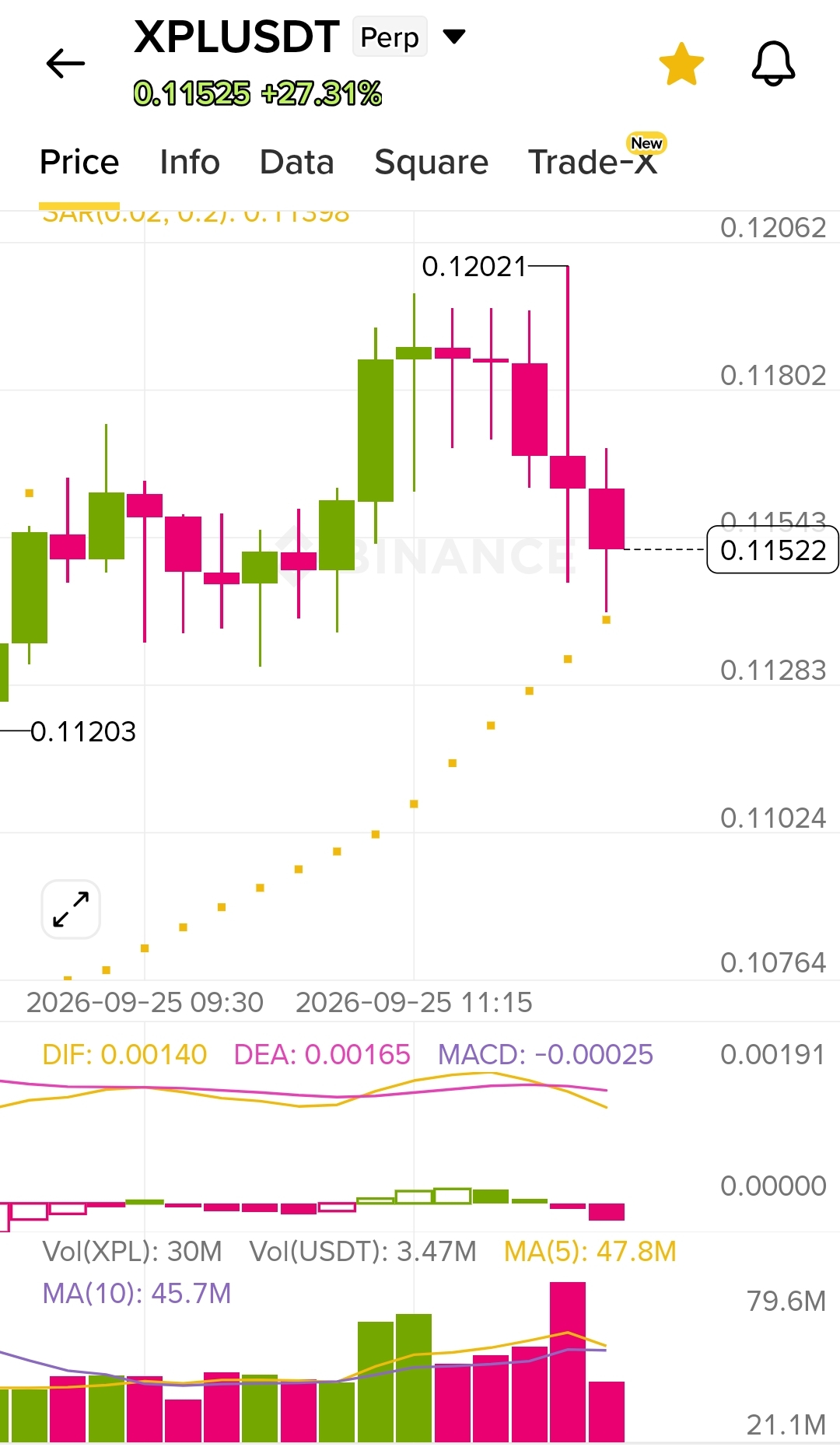
Current Price: $0.11522 (+27.31%)
Trend: Retracting from localized high of $0.12021 after a strong bullish run.
SAR: Dots below price confirm active uptrend support around $0.1130.
MACD: Bearish crossover (DIF 0.00140 < DEA 0.00165) signals short-term cooling/consolidation.
#Plasma
#Write2Earn!
#CFTCUpdatesGuidanceOnTokenizedAssets
$QNT
{future}(QNTUSDT)
$AR
{future}(ARUSDT)
#TradeHere☝️🤗
@Plasma
The Future of Stablecoin Payments: Plasma ($XPL ) 🚀
Global payments are evolving, and Plasma ($XPL ) is leading the charge as a purpose-built Layer-1 blockchain engineered specifically for stablecoin settlements. By combining sub-second finality via PlasmaBFT with full EVM compatibility, Plasma eliminates the traditional friction of moving digital dollars on-chain.
Its hallmark innovation? Zero-fee $USDT transfers powered by protocol-level paymasters, alongside a trust-minimized Bitcoin bridge. The $XPL
XPL token sits at the center of this economy—securing the Proof-of-Stake consensus, fueling complex smart contracts, and benefiting from EIP-1559 fee burns as network adoption grows. Backed by institutional giants, Plasma bridges traditional finance with Web3 speed.
XPL/USDT Analysis
Current Price: $0.11522 (+27.31%)
Trend: Retracting from localized high of $0.12021 after a strong bullish run.
SAR: Dots below price confirm active uptrend support around $0.1130.
MACD: Bearish crossover (DIF 0.00140 < DEA 0.00165) signals short-term cooling/consolidation.
#Plasma
#Write2Earn!
#CFTCUpdatesGuidanceOnTokenizedAssets
$QNT
$AR
#TradeHere☝️🤗
The Future of Stablecoin Payments: Plasma ($XPL ) 🚀
Global payments are evolving, and Plasma ($XPL ) is leading the charge as a purpose-built Layer-1 blockchain engineered specifically for stablecoin settlements. By combining sub-second finality via PlasmaBFT with full EVM compatibility, Plasma eliminates the traditional friction of moving digital dollars on-chain.
Its hallmark innovation? Zero-fee $USDT transfers powered by protocol-level paymasters, alongside a trust-minimized Bitcoin bridge. The $XPL
XPL token sits at the center of this economy—securing the Proof-of-Stake consensus, fueling complex smart contracts, and benefiting from EIP-1559 fee burns as network adoption grows. Backed by institutional giants, Plasma bridges traditional finance with Web3 speed.
XPL/USDT Analysis
Current Price: $0.11522 (+27.31%)
Trend: Retracting from localized high of $0.12021 after a strong bullish run.
SAR: Dots below price confirm active uptrend support around $0.1130.
MACD: Bearish crossover (DIF 0.00140 < DEA 0.00165) signals short-term cooling/consolidation.
#Plasma
#Write2Earn!
#CFTCUpdatesGuidanceOnTokenizedAssets
$QNT
$AR
#TradeHere☝️🤗
4
10
971

·
--
Haussier
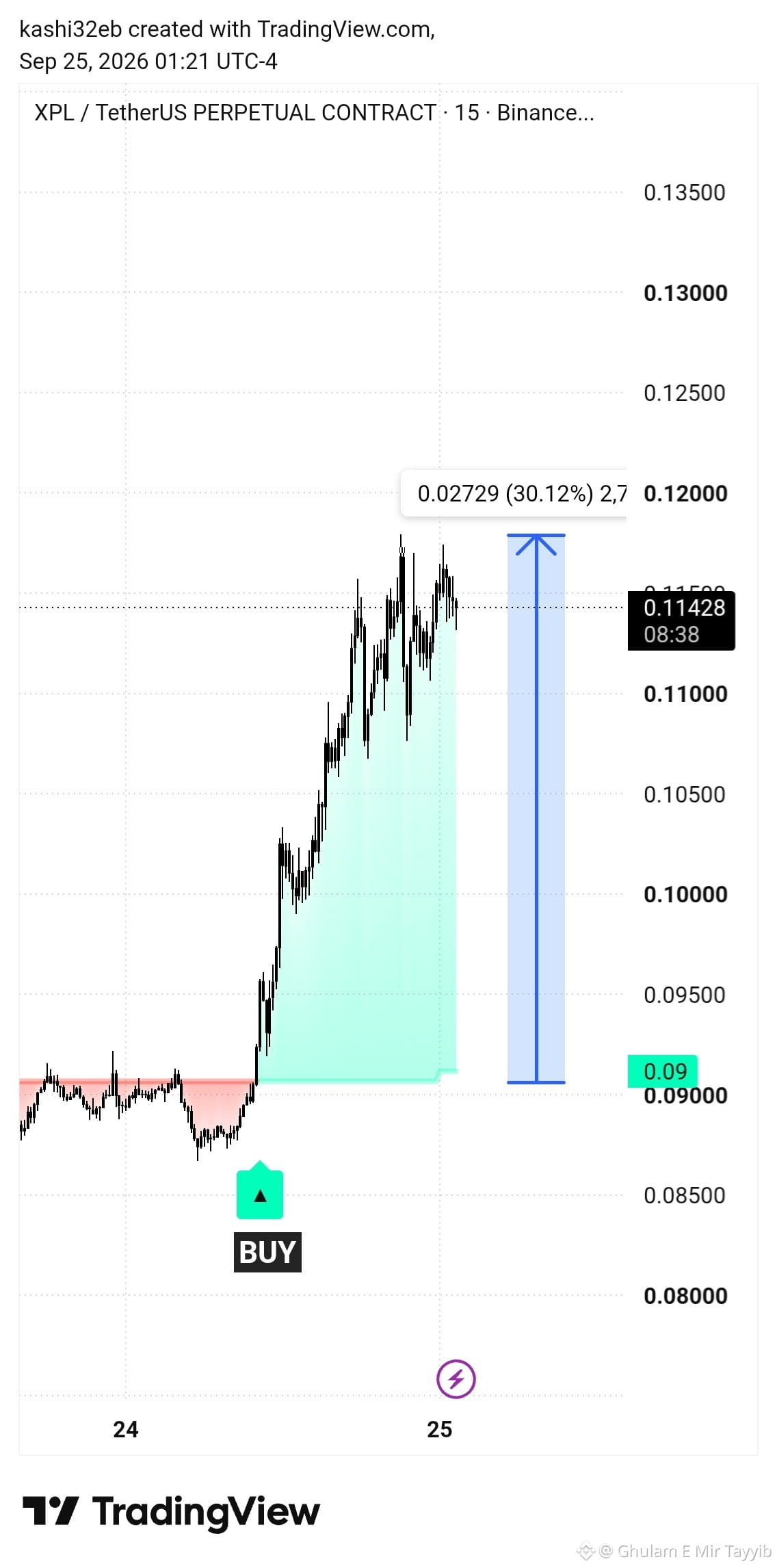
$XPL just pumped 30% from breakout — moving from $0.09 to highs near $0.114, even with today's token unlock in play! 🚀
Plasma is building a payments-focused chain, and this surge shows demand absorbing new supply with ease — a bullish signal for the project's momentum.
👉 Unlock dump or fresh breakout? What's your read?
#XPL #Plasma #BinanceTopGainer
{future}(XPLUSDT)
$XPL just pumped 30% from breakout — moving from $0.09 to highs near $0.114, even with today's token unlock in play! 🚀
Plasma is building a payments-focused chain, and this surge shows demand absorbing new supply with ease — a bullish signal for the project's momentum.
👉 Unlock dump or fresh breakout? What's your read?
#XPL #Plasma #BinanceTopGainer
Plasma is building a payments-focused chain, and this surge shows demand absorbing new supply with ease — a bullish signal for the project's momentum.
👉 Unlock dump or fresh breakout? What's your read?
#XPL #Plasma #BinanceTopGainer
1
123

·
--
Haussier
$XPL Rebounds +22%! Seed Gainer Solid Support Base — Parabolic SAR Trailing Floor at $0.10782 Targeting $0.11805 Peak Retest?
Demonstrating strong bullish consolidation in the Seed gainer list on Binance with an impressive 40.99M USDT (392.57M XPL) trading volume backing, $XPL (Plasma) has established a solid support floor, posting a +22.56% daily gain! After rebounding off its 0.08681 low to test a 24-hour peak high of 0.11805, price action completed a healthy cooling-off phase and is now consolidating near 0.11154.
Trade Bias: Bullish Continuation / Scalp Rebound
Entry Zone: 0.10900 – 0.11200 (Accumulate long positions near trailing SAR support floor)
Targets: 0.11805 ➡️ 0.12600 ➡️ 0.13500
Stop Loss: Below 0.10500
Technically, the 15m chart displays a textbook dip-buying opportunity following a bounce off the 0.10592 swing bottom. Parabolic SAR trailing dots sit directly beneath price action to lock dynamic floor support at 0.10782, while RSI (6) has cleanly reset down to a balanced 43.84. This indicator reset provides buyers with prime room for another upward breakout. A decisive 15m candle close above 0.11400 will clear the runway for a full retest of the 0.11805 peak high.
Are you buying this support rebound... or waiting for a breakout confirmation above 0.11400?
Trade Now $XPL
{spot}(XPLUSDT)
#XPL #Plasma #cryptotrading #cryptosignals
$XPL Rebounds +22%! Seed Gainer Solid Support Base — Parabolic SAR Trailing Floor at $0.10782 Targeting $0.11805 Peak Retest?
Demonstrating strong bullish consolidation in the Seed gainer list on Binance with an impressive 40.99M USDT (392.57M XPL) trading volume backing, $XPL (Plasma) has established a solid support floor, posting a +22.56% daily gain! After rebounding off its 0.08681 low to test a 24-hour peak high of 0.11805, price action completed a healthy cooling-off phase and is now consolidating near 0.11154.
Trade Bias: Bullish Continuation / Scalp Rebound
Entry Zone: 0.10900 – 0.11200 (Accumulate long positions near trailing SAR support floor)
Targets: 0.11805 ➡️ 0.12600 ➡️ 0.13500
Stop Loss: Below 0.10500
Technically, the 15m chart displays a textbook dip-buying opportunity following a bounce off the 0.10592 swing bottom. Parabolic SAR trailing dots sit directly beneath price action to lock dynamic floor support at 0.10782, while RSI (6) has cleanly reset down to a balanced 43.84. This indicator reset provides buyers with prime room for another upward breakout. A decisive 15m candle close above 0.11400 will clear the runway for a full retest of the 0.11805 peak high.
Are you buying this support rebound... or waiting for a breakout confirmation above 0.11400?
Trade Now $XPL
#XPL #Plasma #cryptotrading #cryptosignals
Demonstrating strong bullish consolidation in the Seed gainer list on Binance with an impressive 40.99M USDT (392.57M XPL) trading volume backing, $XPL (Plasma) has established a solid support floor, posting a +22.56% daily gain! After rebounding off its 0.08681 low to test a 24-hour peak high of 0.11805, price action completed a healthy cooling-off phase and is now consolidating near 0.11154.
Trade Bias: Bullish Continuation / Scalp Rebound
Entry Zone: 0.10900 – 0.11200 (Accumulate long positions near trailing SAR support floor)
Targets: 0.11805 ➡️ 0.12600 ➡️ 0.13500
Stop Loss: Below 0.10500
Technically, the 15m chart displays a textbook dip-buying opportunity following a bounce off the 0.10592 swing bottom. Parabolic SAR trailing dots sit directly beneath price action to lock dynamic floor support at 0.10782, while RSI (6) has cleanly reset down to a balanced 43.84. This indicator reset provides buyers with prime room for another upward breakout. A decisive 15m candle close above 0.11400 will clear the runway for a full retest of the 0.11805 peak high.
Are you buying this support rebound... or waiting for a breakout confirmation above 0.11400?
Trade Now $XPL
#XPL #Plasma #cryptotrading #cryptosignals
1
141
Connectez-vous pour découvrir plus de contenu
Rejoignez la communauté mondiale des adeptes de cryptomonnaies sur Binance Square
⚡️ Suviez les dernières informations importantes sur les cryptomonnaies.
💬 Jugé digne de confiance par la plus grande plateforme d’échange de cryptomonnaies au monde.
👍 Découvrez les connaissances que partagent les créateurs vérifiés.
Adresse e-mail/Nº de téléphone
Sujets d’actualité
1
#BinancePick
3.2M vues
157,454 mentions
2
#EarningsSeason
5.4M vues
26,264 mentions
3
#BitmineAdds10452ETH
0 vues
4 mentions
4
#SouthKoreaConsidersEducationTaxOnCryptoExchanges
131 vues
22 mentions
5
#OCCUrgesCommunityBanksToEnterStablecoinPayments
56 vues
13 mentions
6
#RippleWinsFullApprovalAsNationalTrustBank
62 vues
15 mentions
7
#AkashSelectsSolanaAsMigrationTarget
0 vues
0 mentions
8
#OndoToOpenSubscriptionsForOpenAIPreIPOTokenizedNotes
5 vues
3 mentions
9
#AnthropicTTMRevenueGrewAbout1200%
42,780 vues
506 mentions
10
#AnthropicS1ExpectedToday
35,025 vues
396 mentions