
#educational_post
educational_post
737,352 vues
1,121 mentions
Populaire
Récents

Article
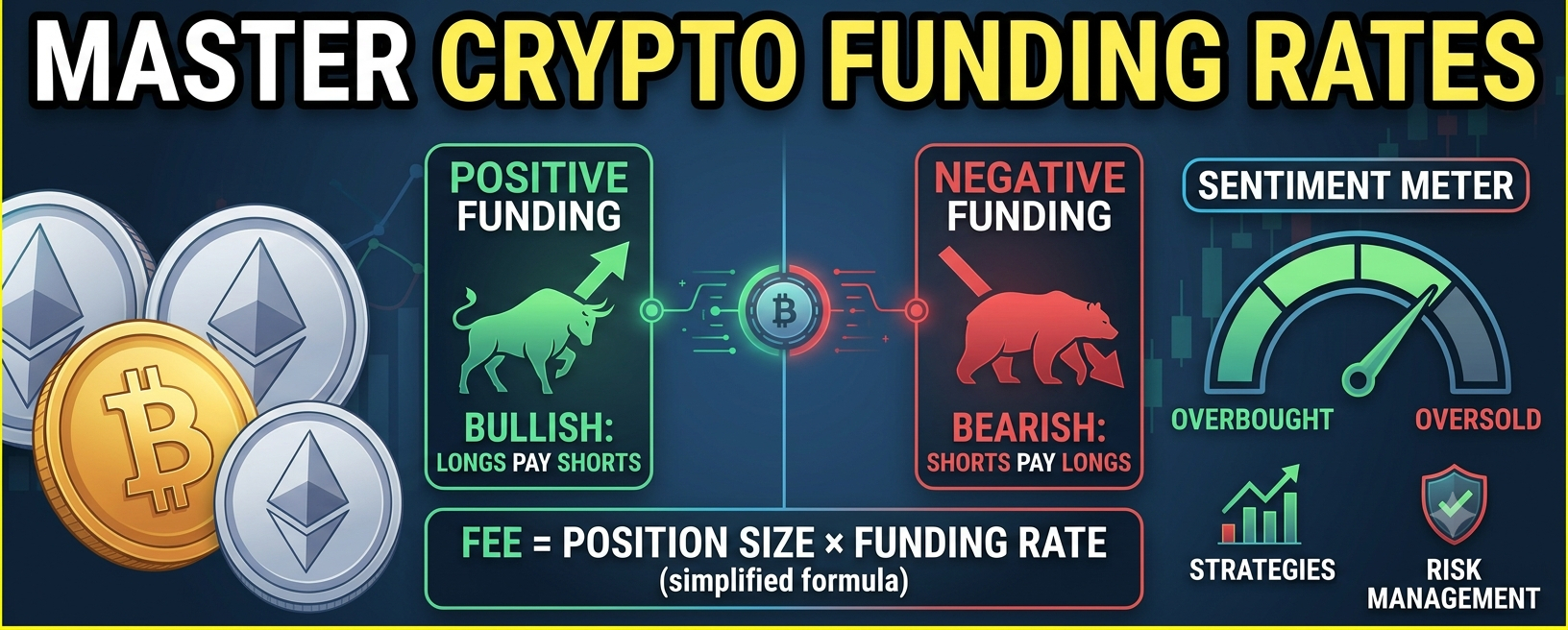
🚀Quel est le taux de financement dans le trading crypto ? Un guide complet et professionnel 📈1️⃣ Introduction (définition de base) 💡
📊 Le Taux de financement est un mécanisme essentiel dans le trading de Futures perpétuels en crypto.
🔄 Il s’agit de paiements périodiques échangés directement entre les traders Long et Short.
⚡ Son objectif principal est de maintenir le prix des Futures perpétuels étroitement aligné sur le prix du marché Spot.
🎯 La plateforme ne collecte ni ne conserve cette commission : elle est transférée directement entre les traders.
📉 Trader sans comprendre le taux de financement peut entraîner des pertes inattendues.
2️⃣ Différence entre le marché Spot et le marché Futures ⚖️
🚀Quel est le taux de financement dans le trading crypto ? Un guide complet et professionnel 📈
1️⃣ Introduction (définition de base) 💡
📊 Le Taux de financement est un mécanisme essentiel dans le trading de Futures perpétuels en crypto.
🔄 Il s’agit de paiements périodiques échangés directement entre les traders Long et Short.
⚡ Son objectif principal est de maintenir le prix des Futures perpétuels étroitement aligné sur le prix du marché Spot.
🎯 La plateforme ne collecte ni ne conserve cette commission : elle est transférée directement entre les traders.
📉 Trader sans comprendre le taux de financement peut entraîner des pertes inattendues.
2️⃣ Différence entre le marché Spot et le marché Futures ⚖️
📊 Le Taux de financement est un mécanisme essentiel dans le trading de Futures perpétuels en crypto.
🔄 Il s’agit de paiements périodiques échangés directement entre les traders Long et Short.
⚡ Son objectif principal est de maintenir le prix des Futures perpétuels étroitement aligné sur le prix du marché Spot.
🎯 La plateforme ne collecte ni ne conserve cette commission : elle est transférée directement entre les traders.
📉 Trader sans comprendre le taux de financement peut entraîner des pertes inattendues.
2️⃣ Différence entre le marché Spot et le marché Futures ⚖️
210

·
--
#5 Erreurs Fatales que Tout Trader Crypto Doit Éviter:
Le marché des cryptomonnaies offre des opportunités constantes, mais trader sans plan solide revient souvent cher. Que vous soyez débutant ou que vous trading sur Binance depuis un certain temps, maîtriser ces cinq erreurs protégera votre capital et améliorera vos résultats sur le long terme.
Acheter par FOMO (Peur de manquer) : Entrer dans une position au plus haut d’une tendance uniquement parce que la devise est en vogue finit souvent en pertes. Attendez des zones de support, des corrections ou des confirmations techniques avant de prendre position.
Trader sans Stop Loss : Le Stop Loss ne limite pas vos gains, il protège votre liquidité. Définissez votre niveau maximal de tolérance au risque avant d’ouvrir toute opération.
Abuser de l’effet de levier : Utiliser un levier élevé (x20, x50 ou plus) réduit drastiquement votre marge d’erreur. Si vous tradez des Futures, privilégiez des niveaux bas (x2 à x5) et gérez la marge avec prudence.
Ne pas diversifier le portefeuille : Garder 100% des fonds sur une seule thématique ou un seul altcoin à faible capitalisation augmente votre exposition aux chutes sévères. Structurez une répartition équilibrée entre actifs majeurs (comme BTC et ETH), projets avec des fondamentaux et liquidité, et des stablecoins.
Vous laisser guider par les émotions : L’impatience après une perte mène souvent au revenge trading (trader par vengeance pour récupérer rapidement). Acceptez les pertes maîtrisées comme faisant partie du processus et respectez votre stratégie initiale.
💡 Règle d’or : En trading, la constance et la préservation du capital passent toujours avant le gain rapide.
#Binance #cryptouniverseofficial #TradingShot #educational_post #Web3
#5 Erreurs Fatales que Tout Trader Crypto Doit Éviter:
Le marché des cryptomonnaies offre des opportunités constantes, mais trader sans plan solide revient souvent cher. Que vous soyez débutant ou que vous trading sur Binance depuis un certain temps, maîtriser ces cinq erreurs protégera votre capital et améliorera vos résultats sur le long terme.
Acheter par FOMO (Peur de manquer) : Entrer dans une position au plus haut d’une tendance uniquement parce que la devise est en vogue finit souvent en pertes. Attendez des zones de support, des corrections ou des confirmations techniques avant de prendre position.
Trader sans Stop Loss : Le Stop Loss ne limite pas vos gains, il protège votre liquidité. Définissez votre niveau maximal de tolérance au risque avant d’ouvrir toute opération.
Abuser de l’effet de levier : Utiliser un levier élevé (x20, x50 ou plus) réduit drastiquement votre marge d’erreur. Si vous tradez des Futures, privilégiez des niveaux bas (x2 à x5) et gérez la marge avec prudence.
Ne pas diversifier le portefeuille : Garder 100% des fonds sur une seule thématique ou un seul altcoin à faible capitalisation augmente votre exposition aux chutes sévères. Structurez une répartition équilibrée entre actifs majeurs (comme BTC et ETH), projets avec des fondamentaux et liquidité, et des stablecoins.
Vous laisser guider par les émotions : L’impatience après une perte mène souvent au revenge trading (trader par vengeance pour récupérer rapidement). Acceptez les pertes maîtrisées comme faisant partie du processus et respectez votre stratégie initiale.
💡 Règle d’or : En trading, la constance et la préservation du capital passent toujours avant le gain rapide.
#Binance #cryptouniverseofficial #TradingShot #educational_post #Web3
Le marché des cryptomonnaies offre des opportunités constantes, mais trader sans plan solide revient souvent cher. Que vous soyez débutant ou que vous trading sur Binance depuis un certain temps, maîtriser ces cinq erreurs protégera votre capital et améliorera vos résultats sur le long terme.
Acheter par FOMO (Peur de manquer) : Entrer dans une position au plus haut d’une tendance uniquement parce que la devise est en vogue finit souvent en pertes. Attendez des zones de support, des corrections ou des confirmations techniques avant de prendre position.
Trader sans Stop Loss : Le Stop Loss ne limite pas vos gains, il protège votre liquidité. Définissez votre niveau maximal de tolérance au risque avant d’ouvrir toute opération.
Abuser de l’effet de levier : Utiliser un levier élevé (x20, x50 ou plus) réduit drastiquement votre marge d’erreur. Si vous tradez des Futures, privilégiez des niveaux bas (x2 à x5) et gérez la marge avec prudence.
Ne pas diversifier le portefeuille : Garder 100% des fonds sur une seule thématique ou un seul altcoin à faible capitalisation augmente votre exposition aux chutes sévères. Structurez une répartition équilibrée entre actifs majeurs (comme BTC et ETH), projets avec des fondamentaux et liquidité, et des stablecoins.
Vous laisser guider par les émotions : L’impatience après une perte mène souvent au revenge trading (trader par vengeance pour récupérer rapidement). Acceptez les pertes maîtrisées comme faisant partie du processus et respectez votre stratégie initiale.
💡 Règle d’or : En trading, la constance et la préservation du capital passent toujours avant le gain rapide.
#Binance #cryptouniverseofficial #TradingShot #educational_post #Web3
86

·
--
Article
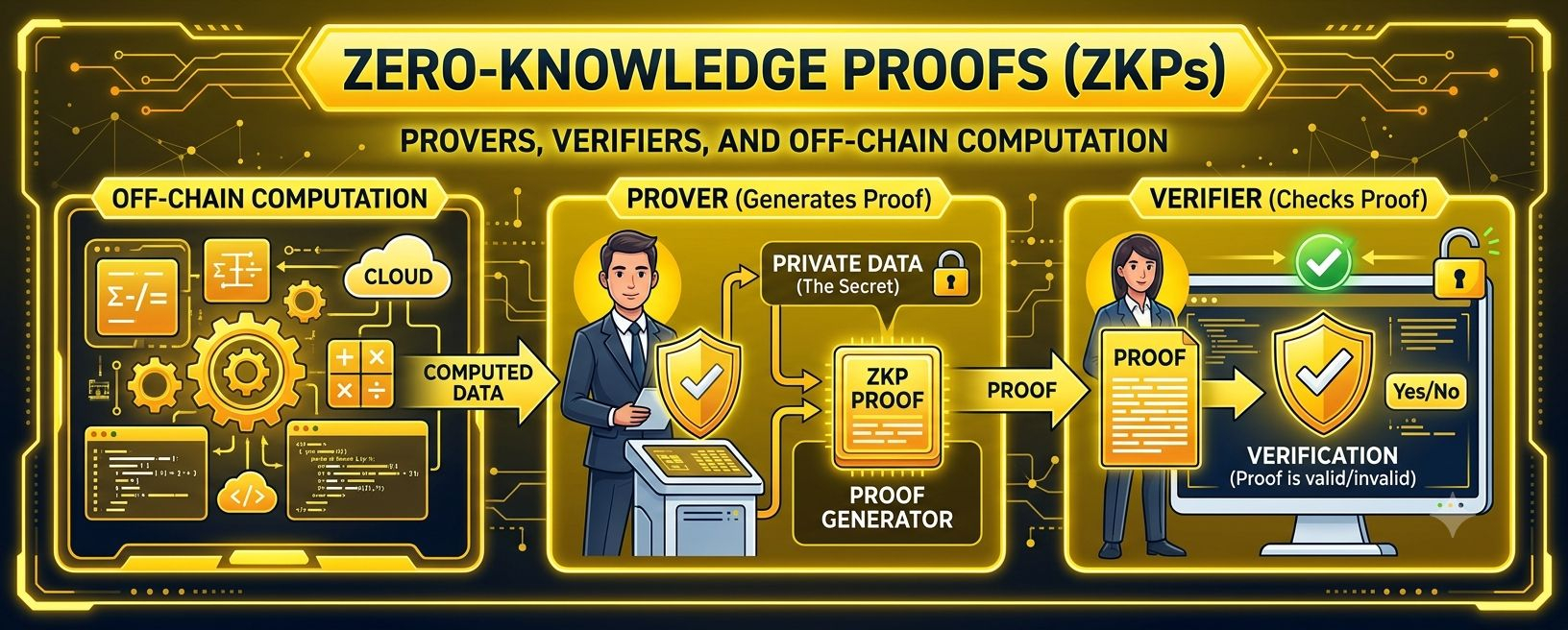
Preuves à divulgation nulle de connaissance (ZKP) — Provers, Verifiers et calcul hors chaîneComment une partie peut-elle prouver qu’un calcul est correct sans révéler les données sous-jacentes ni réexécuter la tâche ?
Les preuves à divulgation nulle de connaissance (ZKP) représentent une primitive cryptographique fondamentale permettant le calcul vérifiable. Elles permettent à un Prover de convaincre mathématiquement un Verifier qu’une affirmation est vraie sans divulguer d’informations sensibles ni obliger le Verifier à répéter l’exécution sous-jacente.
---
Le cycle Prover / Verifier étape par étape
1. Exécution du calcul (hors chaîne)
Le Prover exécute des calculs complexes hors chaîne (par exemple, regrouper 10 000 transactions de rollup en une seule modification d’état).
Preuves à divulgation nulle de connaissance (ZKP) — Provers, Verifiers et calcul hors chaîne
Comment une partie peut-elle prouver qu’un calcul est correct sans révéler les données sous-jacentes ni réexécuter la tâche ?
Les preuves à divulgation nulle de connaissance (ZKP) représentent une primitive cryptographique fondamentale permettant le calcul vérifiable. Elles permettent à un Prover de convaincre mathématiquement un Verifier qu’une affirmation est vraie sans divulguer d’informations sensibles ni obliger le Verifier à répéter l’exécution sous-jacente.
---
Le cycle Prover / Verifier étape par étape
1. Exécution du calcul (hors chaîne)
Le Prover exécute des calculs complexes hors chaîne (par exemple, regrouper 10 000 transactions de rollup en une seule modification d’état).
Les preuves à divulgation nulle de connaissance (ZKP) représentent une primitive cryptographique fondamentale permettant le calcul vérifiable. Elles permettent à un Prover de convaincre mathématiquement un Verifier qu’une affirmation est vraie sans divulguer d’informations sensibles ni obliger le Verifier à répéter l’exécution sous-jacente.
---
Le cycle Prover / Verifier étape par étape
1. Exécution du calcul (hors chaîne)
Le Prover exécute des calculs complexes hors chaîne (par exemple, regrouper 10 000 transactions de rollup en une seule modification d’état).
1
71
·
--
Article
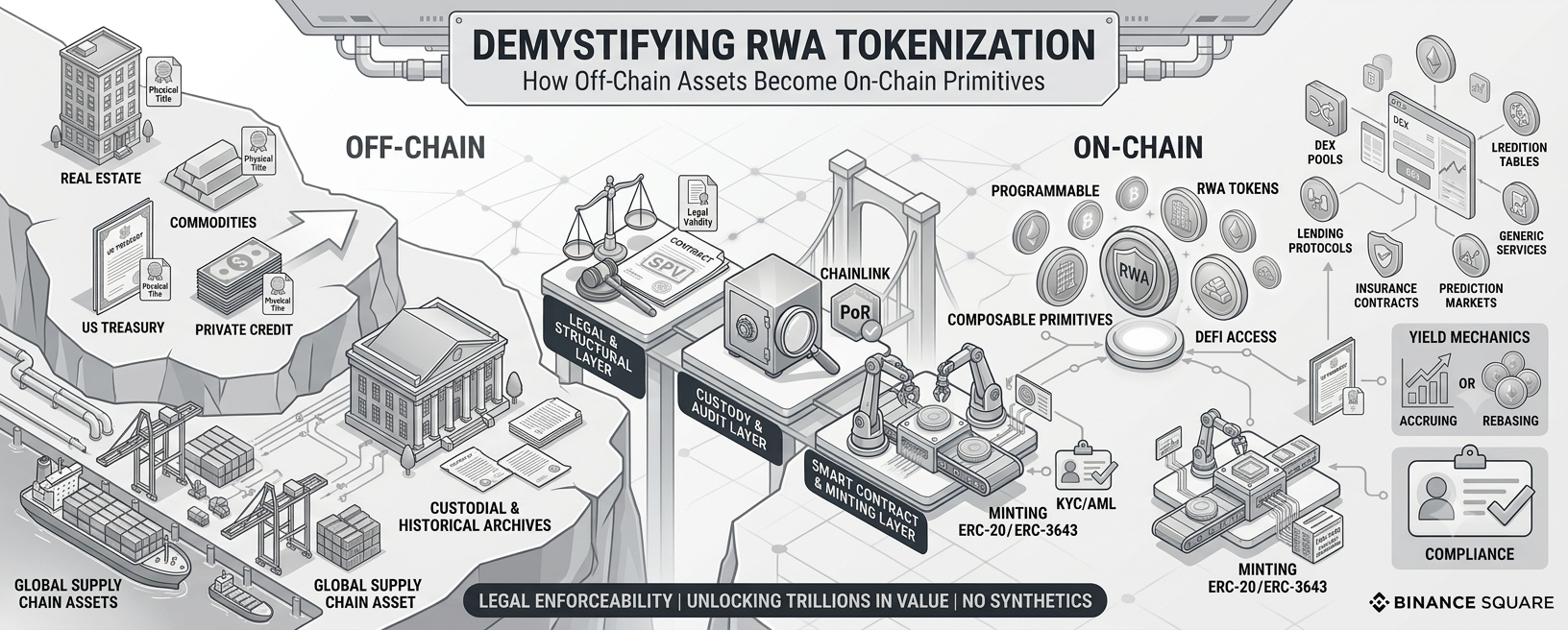
Démystifier la tokenisation des RWA — Comment les actifs hors chaîne deviennent des primitives on-chainComment les actifs physiques et traditionnels passent-ils sur les registres de blockchain sans perdre leur validité juridique ?
La tokenisation d’actifs du monde réel (RWA) relie le titre physique, les cadres juridiques et l’exécution par contrats intelligents. Plutôt que de créer des créances synthétiques, les protocoles RWA modernes construisent des représentations numériques juridiquement opposables d’actifs sous-jacents hors chaîne, tels que les bons du Trésor américains, le crédit privé et les matières premières.
---
Les quatre couches d’architecture de la tokenisation des RWA
1. Couche Juridique et Structurelle
Un véhicule ad hoc (SPV) ou un émetteur de fonds agréé détient le titre de l’actif hors chaîne. Le token représente un droit contractuel explicite—comme une participation bénéficiaire, une obligation de dette ou une détention fractionnée au sein du SPV.
Démystifier la tokenisation des RWA — Comment les actifs hors chaîne deviennent des primitives on-chain
Comment les actifs physiques et traditionnels passent-ils sur les registres de blockchain sans perdre leur validité juridique ?
La tokenisation d’actifs du monde réel (RWA) relie le titre physique, les cadres juridiques et l’exécution par contrats intelligents. Plutôt que de créer des créances synthétiques, les protocoles RWA modernes construisent des représentations numériques juridiquement opposables d’actifs sous-jacents hors chaîne, tels que les bons du Trésor américains, le crédit privé et les matières premières.
---
Les quatre couches d’architecture de la tokenisation des RWA
1. Couche Juridique et Structurelle
Un véhicule ad hoc (SPV) ou un émetteur de fonds agréé détient le titre de l’actif hors chaîne. Le token représente un droit contractuel explicite—comme une participation bénéficiaire, une obligation de dette ou une détention fractionnée au sein du SPV.
La tokenisation d’actifs du monde réel (RWA) relie le titre physique, les cadres juridiques et l’exécution par contrats intelligents. Plutôt que de créer des créances synthétiques, les protocoles RWA modernes construisent des représentations numériques juridiquement opposables d’actifs sous-jacents hors chaîne, tels que les bons du Trésor américains, le crédit privé et les matières premières.
---
Les quatre couches d’architecture de la tokenisation des RWA
1. Couche Juridique et Structurelle
Un véhicule ad hoc (SPV) ou un émetteur de fonds agréé détient le titre de l’actif hors chaîne. Le token représente un droit contractuel explicite—comme une participation bénéficiaire, une obligation de dette ou une détention fractionnée au sein du SPV.
2
260
·
--
Article
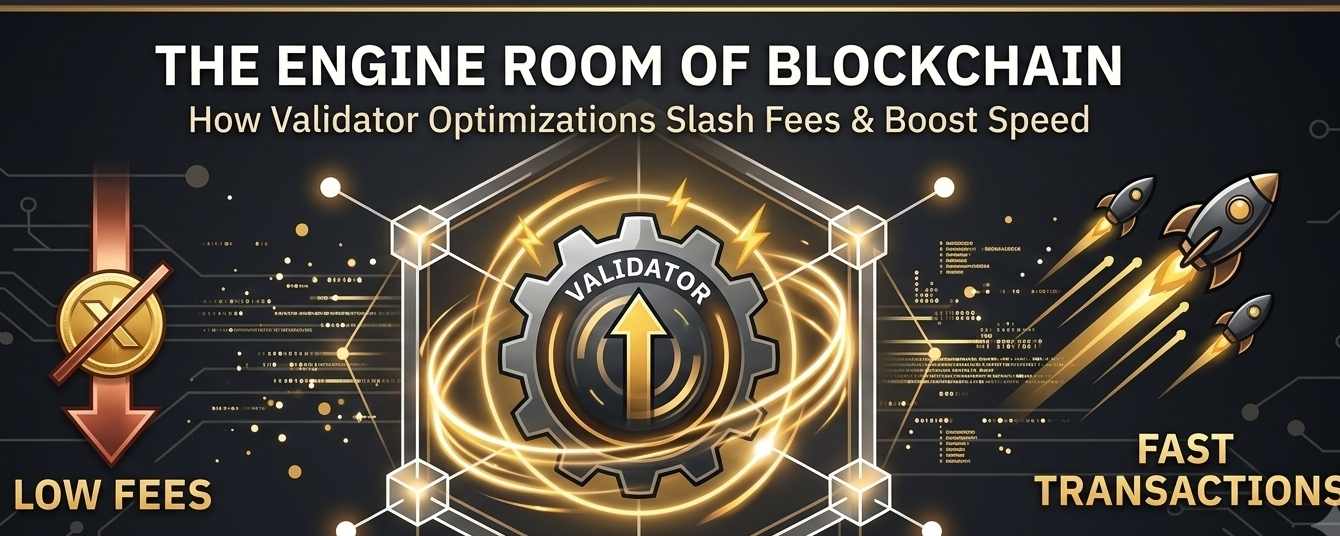
La salle des machines de la blockchain : comment les optimisations des validateurs réduisent les frais & augmentent la vitesseLa scalabilité d’une blockchain est souvent attribuée à tort uniquement à la taille des blocs. En réalité, le vrai goulot d’étranglement—et la clé pour débloquer des performances supérieures—se trouve dans l’architecture logicielle des clients de nœuds. Des refontes d’infrastructure récentes, telles que les mises à jour du validateur Agave de Solana et les forks de clients en cours d’Ethereum, montrent que l’efficacité au niveau du code est le principal moteur de la réduction des coûts et de l’augmentation du débit.
Les principaux leviers techniques pour optimiser le réseau
· Réduction des frais d’« état rent » et du stockage
Les blockchains maintiennent une empreinte d’état massive sur l’ensemble des nœuds. Les mises à jour modernes des clients, comme celles du validateur Agave, ont révolutionné la mise en index et la logique de stockage de l’état. En réduisant les surcharges de mémoire, ces optimisations ont permis de diminuer les frais d’« état rent » jusqu’à 90 %, rendant la participation au réseau nettement moins coûteuse pour les validateurs comme pour les utilisateurs finaux.
La salle des machines de la blockchain : comment les optimisations des validateurs réduisent les frais & augmentent la vitesse
La scalabilité d’une blockchain est souvent attribuée à tort uniquement à la taille des blocs. En réalité, le vrai goulot d’étranglement—et la clé pour débloquer des performances supérieures—se trouve dans l’architecture logicielle des clients de nœuds. Des refontes d’infrastructure récentes, telles que les mises à jour du validateur Agave de Solana et les forks de clients en cours d’Ethereum, montrent que l’efficacité au niveau du code est le principal moteur de la réduction des coûts et de l’augmentation du débit.
Les principaux leviers techniques pour optimiser le réseau
· Réduction des frais d’« état rent » et du stockage
Les blockchains maintiennent une empreinte d’état massive sur l’ensemble des nœuds. Les mises à jour modernes des clients, comme celles du validateur Agave, ont révolutionné la mise en index et la logique de stockage de l’état. En réduisant les surcharges de mémoire, ces optimisations ont permis de diminuer les frais d’« état rent » jusqu’à 90 %, rendant la participation au réseau nettement moins coûteuse pour les validateurs comme pour les utilisateurs finaux.
Les principaux leviers techniques pour optimiser le réseau
· Réduction des frais d’« état rent » et du stockage
Les blockchains maintiennent une empreinte d’état massive sur l’ensemble des nœuds. Les mises à jour modernes des clients, comme celles du validateur Agave, ont révolutionné la mise en index et la logique de stockage de l’état. En réduisant les surcharges de mémoire, ces optimisations ont permis de diminuer les frais d’« état rent » jusqu’à 90 %, rendant la participation au réseau nettement moins coûteuse pour les validateurs comme pour les utilisateurs finaux.
1
53

Le secret avec des petits montants : privilégier le pourcentage (%) plutôt que les dollars 🧠📊
Quand tu trades avec une marge faible (ex. 0,40 $ USDT), l’objectif n’est pas de devenir riche en une seule transaction, mais de construire une habitude et de la discipline :
Concentre-toi sur le ROI (%): Un +4% ou +10% constant vaut plus que de chercher un trade « miraculeux ».
Contrôle de l’effet de levier : Utiliser des niveaux modérés permet d’éviter des liquidations rapides face aux mèches de volatilité.
Respecter le plan : La discipline que tu construis avec 2 $ USDT est la même qui te protégera quand tu géreras un capital plus important.
👇 Qu’est-ce qui vous paraît le plus difficile pour gérer des opérations de petite taille ? Commentez ci-dessous !
#educational_post
Le secret avec des petits montants : privilégier le pourcentage (%) plutôt que les dollars 🧠📊
Quand tu trades avec une marge faible (ex. 0,40 $ USDT), l’objectif n’est pas de devenir riche en une seule transaction, mais de construire une habitude et de la discipline :
Concentre-toi sur le ROI (%): Un +4% ou +10% constant vaut plus que de chercher un trade « miraculeux ».
Contrôle de l’effet de levier : Utiliser des niveaux modérés permet d’éviter des liquidations rapides face aux mèches de volatilité.
Respecter le plan : La discipline que tu construis avec 2 $ USDT est la même qui te protégera quand tu géreras un capital plus important.
👇 Qu’est-ce qui vous paraît le plus difficile pour gérer des opérations de petite taille ? Commentez ci-dessous !
#educational_post
Quand tu trades avec une marge faible (ex. 0,40 $ USDT), l’objectif n’est pas de devenir riche en une seule transaction, mais de construire une habitude et de la discipline :
Concentre-toi sur le ROI (%): Un +4% ou +10% constant vaut plus que de chercher un trade « miraculeux ».
Contrôle de l’effet de levier : Utiliser des niveaux modérés permet d’éviter des liquidations rapides face aux mèches de volatilité.
Respecter le plan : La discipline que tu construis avec 2 $ USDT est la même qui te protégera quand tu géreras un capital plus important.
👇 Qu’est-ce qui vous paraît le plus difficile pour gérer des opérations de petite taille ? Commentez ci-dessous !
#educational_post
90

·
--
Article
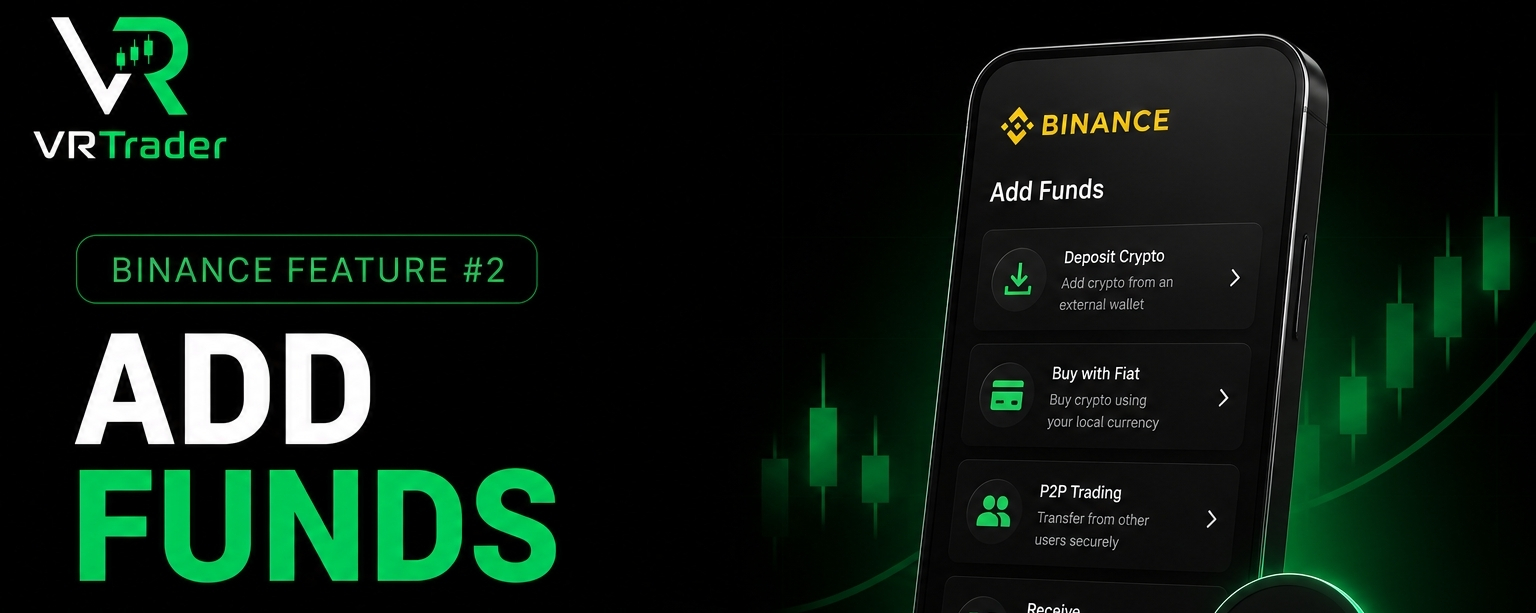
Fonctionnalité Binance n°2 : Ajouter des fonds
(Matériel du quiz)Avant de pouvoir trader, investir ou gagner des récompenses sur Binance, vous devez approvisionner votre compte.
La fonctionnalité Ajouter des fonds est le point de départ de chaque aventure crypto. Elle vous propose plusieurs façons de déposer de l’argent ou des cryptomonnaies sur votre compte Binance, en toute sécurité et facilement.
Voyons comment cela fonctionne.
[ Entraînement & Récompenses : Quiz 🧠
Recevez une formation liée au trading et gagnez des récompenses en crypto 🎉
Rejoignez le quiz à venir. Sujet : "Ajouter des fonds"
Une façon amusante d’apprendre ✨ ]
Qu’est-ce que l’ajout de fonds ?
La section Ajouter des fonds vous permet d’ajouter des actifs à votre compte Binance à l’aide de différentes méthodes, selon votre pays et l’option de paiement de votre choix.
Fonctionnalité Binance n°2 : Ajouter des fonds (Matériel du quiz)
Avant de pouvoir trader, investir ou gagner des récompenses sur Binance, vous devez approvisionner votre compte.
La fonctionnalité Ajouter des fonds est le point de départ de chaque aventure crypto. Elle vous propose plusieurs façons de déposer de l’argent ou des cryptomonnaies sur votre compte Binance, en toute sécurité et facilement.
Voyons comment cela fonctionne.
[ Entraînement & Récompenses : Quiz 🧠
Recevez une formation liée au trading et gagnez des récompenses en crypto 🎉
Rejoignez le quiz à venir. Sujet : "Ajouter des fonds"
Une façon amusante d’apprendre ✨ ]
Qu’est-ce que l’ajout de fonds ?
La section Ajouter des fonds vous permet d’ajouter des actifs à votre compte Binance à l’aide de différentes méthodes, selon votre pays et l’option de paiement de votre choix.
La fonctionnalité Ajouter des fonds est le point de départ de chaque aventure crypto. Elle vous propose plusieurs façons de déposer de l’argent ou des cryptomonnaies sur votre compte Binance, en toute sécurité et facilement.
Voyons comment cela fonctionne.
[ Entraînement & Récompenses : Quiz 🧠
Recevez une formation liée au trading et gagnez des récompenses en crypto 🎉
Rejoignez le quiz à venir. Sujet : "Ajouter des fonds"
Une façon amusante d’apprendre ✨ ]
Qu’est-ce que l’ajout de fonds ?
La section Ajouter des fonds vous permet d’ajouter des actifs à votre compte Binance à l’aide de différentes méthodes, selon votre pays et l’option de paiement de votre choix.
708
5
32
708

·
--
FVG
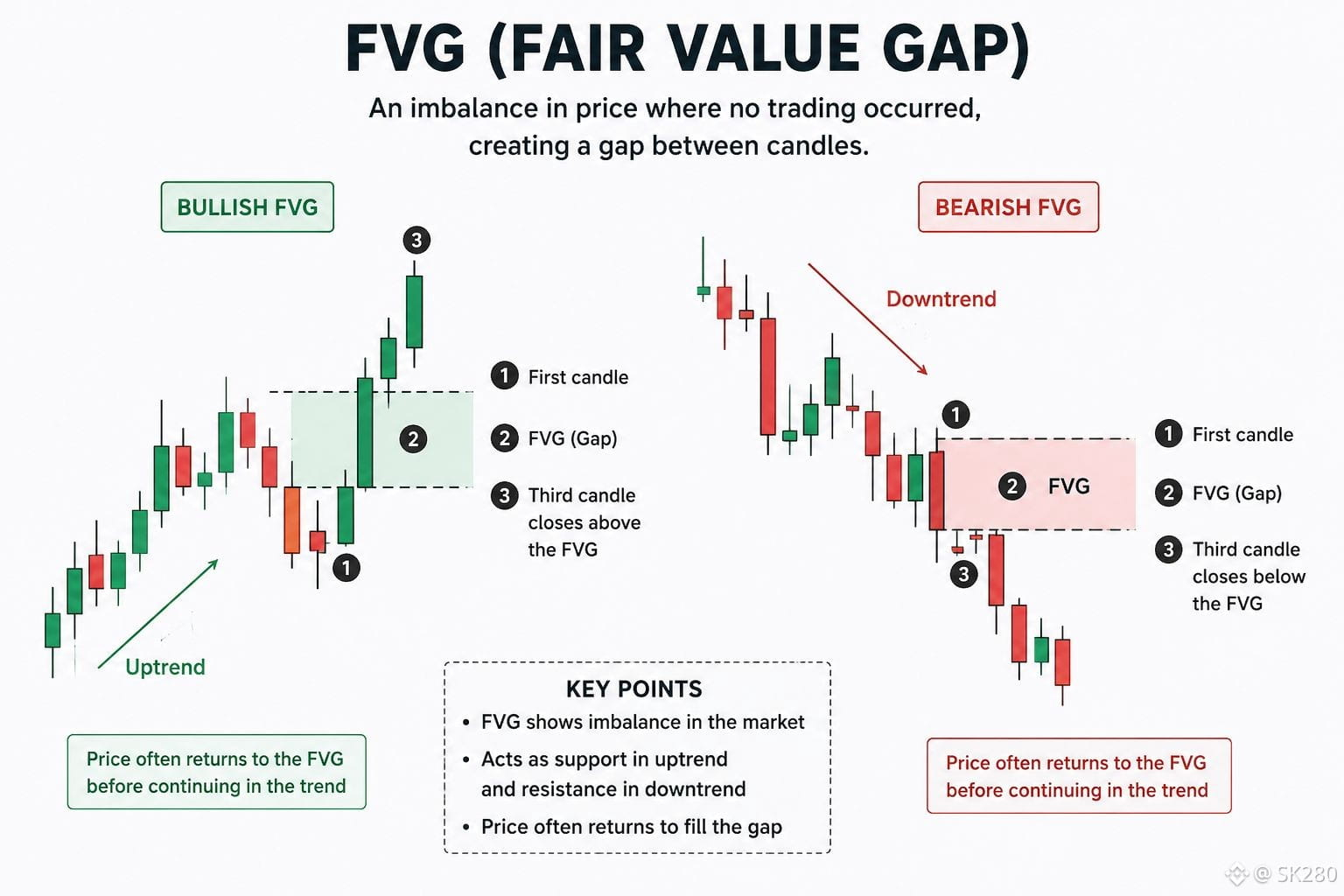
La stratégie de Fair Value Gap est l'une des meilleures stratégies dans le monde du trading. Ici, je vous donne un conseil pro gratuit si vous tradez #FVG . Comme vous le savez, nous attendons un rejet et ensuite une bougie de momentum, rappelez-vous, cette bougie de momentum doit avoir un volume inférieur à celui de la bougie précédente. Cela augmente vos chances de gagner à 90%.
#educational_post #SkillPays
FVG
La stratégie de Fair Value Gap est l'une des meilleures stratégies dans le monde du trading. Ici, je vous donne un conseil pro gratuit si vous tradez #FVG . Comme vous le savez, nous attendons un rejet et ensuite une bougie de momentum, rappelez-vous, cette bougie de momentum doit avoir un volume inférieur à celui de la bougie précédente. Cela augmente vos chances de gagner à 90%.
#educational_post #SkillPays
La stratégie de Fair Value Gap est l'une des meilleures stratégies dans le monde du trading. Ici, je vous donne un conseil pro gratuit si vous tradez #FVG . Comme vous le savez, nous attendons un rejet et ensuite une bougie de momentum, rappelez-vous, cette bougie de momentum doit avoir un volume inférieur à celui de la bougie précédente. Cela augmente vos chances de gagner à 90%.
#educational_post #SkillPays
193

Voir la traduction
wallets crypto : où stocker tes actifs en sécuritéMaintenant que tu sais lire le marché, il est temps de t'équiper avec les bons outils — à commencer par le plus fondamental : le wallet (portefeuille crypto).
📌 WALLET CUSTODIAL (sur un exchange)
→ Tes cryptos sont gérées par la plateforme (Binance, etc.)
→ Simple à utiliser, aucune clé à gérer toi-même
→ Mais : "not your keys, not your coins" — tu dépends entièrement de la plateforme
📌 WALLET NON-CUSTODIAL (tu détiens tes clés)
→ Toi seul possèdes la seed phrase (12 ou 24 mots)
→ Plus de responsabilité, mais un contrôle réel sur tes fonds
→ Exemples : Trust Wallet, MetaMask, Ledger
📌 HOT WALLET vs COLD WALLET
→ Hot wallet : connecté à internet (app, navigateur) — pratique pour l'usage quotidien
→ Cold wallet : hors-ligne (clé physique) — pour la sécurité et l'épargne long terme
💡 Règle simple à retenir :
→ Petits montants, usage actif → hot wallet
→ Montants importants, épargne long terme → cold wallet
⚠️ Quel que soit le wallet choisi : ta seed phrase ne se partage jamais, ne se tape jamais sur un site, et ne se prend jamais en photo sur ton téléphone.
Demain : comment vérifier une transaction toi-même, sans faire confiance à personne — grâce aux explorateurs de blockchain.
#educational_post #bitcoin #cryptouniverseofficial
wallets crypto : où stocker tes actifs en sécurité
Maintenant que tu sais lire le marché, il est temps de t'équiper avec les bons outils — à commencer par le plus fondamental : le wallet (portefeuille crypto).
📌 WALLET CUSTODIAL (sur un exchange)
→ Tes cryptos sont gérées par la plateforme (Binance, etc.)
→ Simple à utiliser, aucune clé à gérer toi-même
→ Mais : "not your keys, not your coins" — tu dépends entièrement de la plateforme
📌 WALLET NON-CUSTODIAL (tu détiens tes clés)
→ Toi seul possèdes la seed phrase (12 ou 24 mots)
→ Plus de responsabilité, mais un contrôle réel sur tes fonds
→ Exemples : Trust Wallet, MetaMask, Ledger
📌 HOT WALLET vs COLD WALLET
→ Hot wallet : connecté à internet (app, navigateur) — pratique pour l'usage quotidien
→ Cold wallet : hors-ligne (clé physique) — pour la sécurité et l'épargne long terme
💡 Règle simple à retenir :
→ Petits montants, usage actif → hot wallet
→ Montants importants, épargne long terme → cold wallet
⚠️ Quel que soit le wallet choisi : ta seed phrase ne se partage jamais, ne se tape jamais sur un site, et ne se prend jamais en photo sur ton téléphone.
Demain : comment vérifier une transaction toi-même, sans faire confiance à personne — grâce aux explorateurs de blockchain.
#educational_post #bitcoin #cryptouniverseofficial
📌 WALLET CUSTODIAL (sur un exchange)
→ Tes cryptos sont gérées par la plateforme (Binance, etc.)
→ Simple à utiliser, aucune clé à gérer toi-même
→ Mais : "not your keys, not your coins" — tu dépends entièrement de la plateforme
📌 WALLET NON-CUSTODIAL (tu détiens tes clés)
→ Toi seul possèdes la seed phrase (12 ou 24 mots)
→ Plus de responsabilité, mais un contrôle réel sur tes fonds
→ Exemples : Trust Wallet, MetaMask, Ledger
📌 HOT WALLET vs COLD WALLET
→ Hot wallet : connecté à internet (app, navigateur) — pratique pour l'usage quotidien
→ Cold wallet : hors-ligne (clé physique) — pour la sécurité et l'épargne long terme
💡 Règle simple à retenir :
→ Petits montants, usage actif → hot wallet
→ Montants importants, épargne long terme → cold wallet
⚠️ Quel que soit le wallet choisi : ta seed phrase ne se partage jamais, ne se tape jamais sur un site, et ne se prend jamais en photo sur ton téléphone.
Demain : comment vérifier une transaction toi-même, sans faire confiance à personne — grâce aux explorateurs de blockchain.
#educational_post #bitcoin #cryptouniverseofficial
1
1
216

·
--
#Binance #educational_post $NVDAB $BTC $BNB
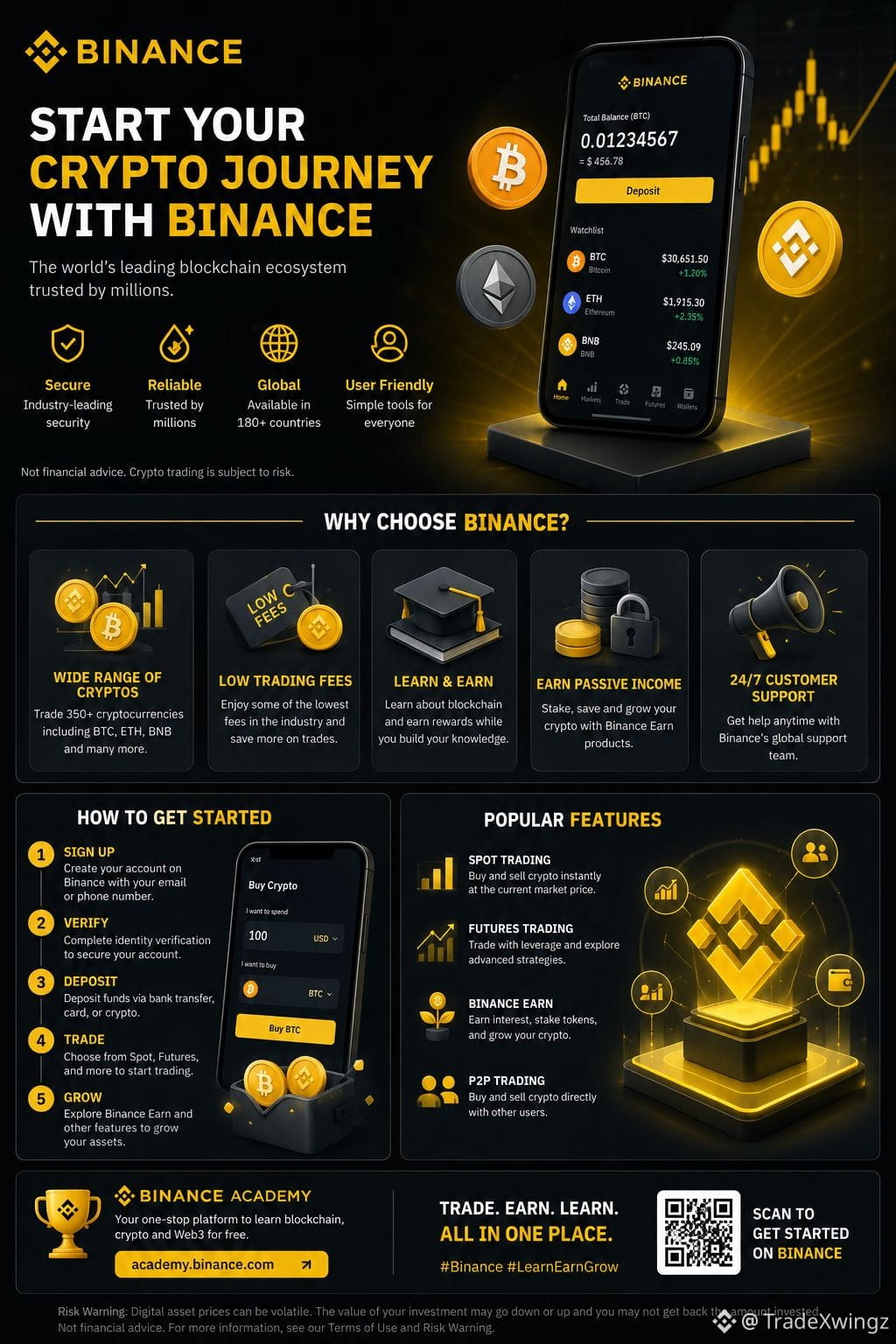
🚀 **Commencez votre aventure crypto avec Binance !** 📚
Comprendre la cryptomonnaie est la première étape pour prendre des décisions financières éclairées. Dans cet article éducatif, vous apprendrez :
✅ Ce qu’est Binance et comment il fonctionne
✅ Comment créer et sécuriser votre compte
✅ Les bases du Spot Trading, de Binance Earn et du P2P Trading
✅ Des conseils de sécurité essentiels pour protéger vos actifs numériques
✅ Pourquoi l’apprentissage continu est important avant d’investir
Rappelez-vous : **Le savoir vient avant l’investissement.** Faites toujours vos propres recherches (DYOR), comprenez les risques et n’investissez jamais plus que ce que vous pouvez vous permettre de perdre.
💡 Apprendre aujourd’hui peut vous aider à prendre de meilleures décisions demain.
#Binance #BinanceCreatorChallenge #BinanceAcademy #CryptoEducation #Blockchain #Web3 #LearnCrypto #DYOR #FinancialEducation #CryptoBasics
#Binance #educational_post $NVDAB $BTC $BNB
🚀 **Commencez votre aventure crypto avec Binance !** 📚
Comprendre la cryptomonnaie est la première étape pour prendre des décisions financières éclairées. Dans cet article éducatif, vous apprendrez :
✅ Ce qu’est Binance et comment il fonctionne
✅ Comment créer et sécuriser votre compte
✅ Les bases du Spot Trading, de Binance Earn et du P2P Trading
✅ Des conseils de sécurité essentiels pour protéger vos actifs numériques
✅ Pourquoi l’apprentissage continu est important avant d’investir
Rappelez-vous : **Le savoir vient avant l’investissement.** Faites toujours vos propres recherches (DYOR), comprenez les risques et n’investissez jamais plus que ce que vous pouvez vous permettre de perdre.
💡 Apprendre aujourd’hui peut vous aider à prendre de meilleures décisions demain.
#Binance #BinanceCreatorChallenge #BinanceAcademy #CryptoEducation #Blockchain #Web3 #LearnCrypto #DYOR #FinancialEducation #CryptoBasics
🚀 **Commencez votre aventure crypto avec Binance !** 📚
Comprendre la cryptomonnaie est la première étape pour prendre des décisions financières éclairées. Dans cet article éducatif, vous apprendrez :
✅ Ce qu’est Binance et comment il fonctionne
✅ Comment créer et sécuriser votre compte
✅ Les bases du Spot Trading, de Binance Earn et du P2P Trading
✅ Des conseils de sécurité essentiels pour protéger vos actifs numériques
✅ Pourquoi l’apprentissage continu est important avant d’investir
Rappelez-vous : **Le savoir vient avant l’investissement.** Faites toujours vos propres recherches (DYOR), comprenez les risques et n’investissez jamais plus que ce que vous pouvez vous permettre de perdre.
💡 Apprendre aujourd’hui peut vous aider à prendre de meilleures décisions demain.
#Binance #BinanceCreatorChallenge #BinanceAcademy #CryptoEducation #Blockchain #Web3 #LearnCrypto #DYOR #FinancialEducation #CryptoBasics
110

·
--
Article
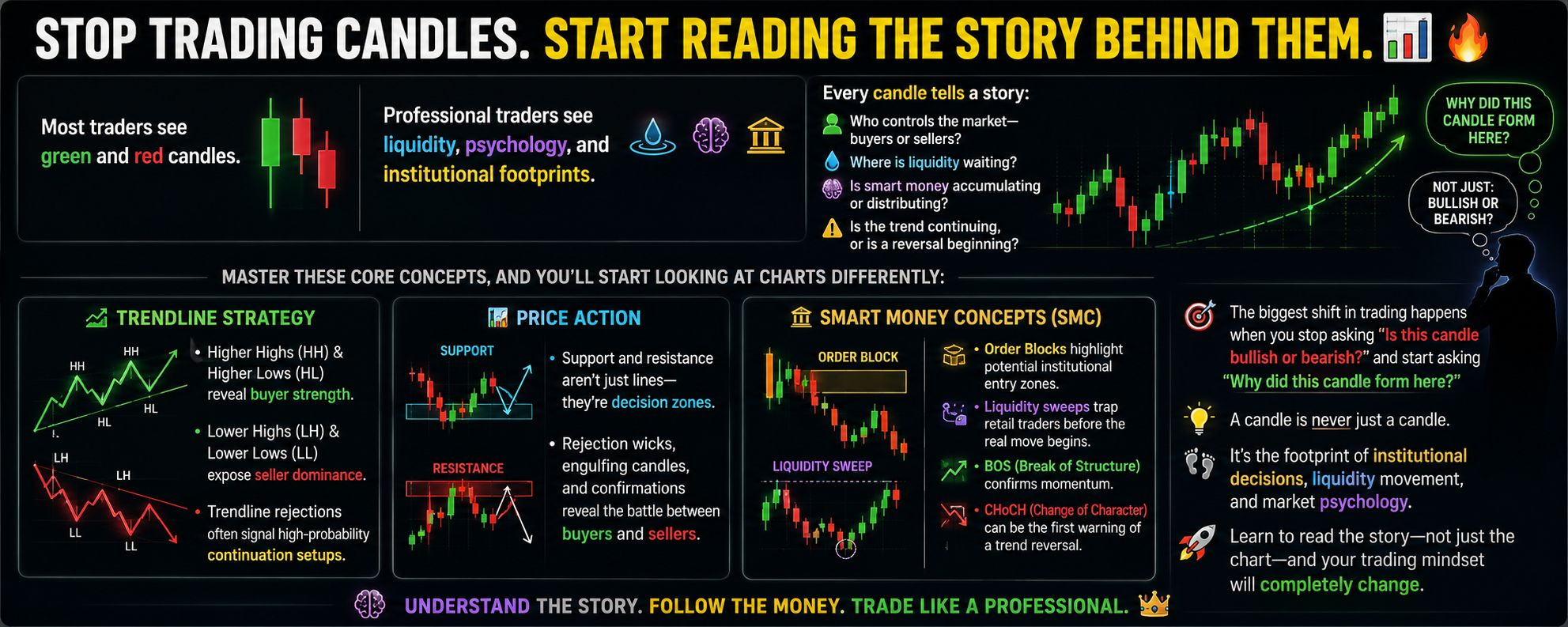
Arrêtez de trader les bougies. Commencez à lire l’histoire qui se cache derrière elles. 📊🔥La plupart des traders voient des bougies vertes et rouges.
Les traders professionnels voient la liquidité, la psychologie et les traces des institutions. 💡
Chaque bougie raconte une histoire :
🔹 Qui contrôle le marché — les acheteurs ou les vendeurs ?
🔹 Où la liquidité attend-elle ?
🔹 L’argent intelligent s’accumule-t-il ou se distribue-t-il ?
🔹 La tendance se poursuit-elle, ou un retournement commence-t-il ?
Maîtrisez ces concepts essentiels, et vous commencerez à regarder les graphiques autrement :
📈 Stratégie de ligne de tendance
• Des plus hauts plus élevés (HH) & des plus bas plus élevés (HL) révèlent la force des acheteurs.
• Des plus hauts plus bas (LH) & des plus bas plus bas (LL) mettent en évidence la domination des vendeurs.
Arrêtez de trader les bougies. Commencez à lire l’histoire qui se cache derrière elles. 📊🔥
La plupart des traders voient des bougies vertes et rouges.
Les traders professionnels voient la liquidité, la psychologie et les traces des institutions. 💡
Chaque bougie raconte une histoire :
🔹 Qui contrôle le marché — les acheteurs ou les vendeurs ?
🔹 Où la liquidité attend-elle ?
🔹 L’argent intelligent s’accumule-t-il ou se distribue-t-il ?
🔹 La tendance se poursuit-elle, ou un retournement commence-t-il ?
Maîtrisez ces concepts essentiels, et vous commencerez à regarder les graphiques autrement :
📈 Stratégie de ligne de tendance
• Des plus hauts plus élevés (HH) & des plus bas plus élevés (HL) révèlent la force des acheteurs.
• Des plus hauts plus bas (LH) & des plus bas plus bas (LL) mettent en évidence la domination des vendeurs.
Les traders professionnels voient la liquidité, la psychologie et les traces des institutions. 💡
Chaque bougie raconte une histoire :
🔹 Qui contrôle le marché — les acheteurs ou les vendeurs ?
🔹 Où la liquidité attend-elle ?
🔹 L’argent intelligent s’accumule-t-il ou se distribue-t-il ?
🔹 La tendance se poursuit-elle, ou un retournement commence-t-il ?
Maîtrisez ces concepts essentiels, et vous commencerez à regarder les graphiques autrement :
📈 Stratégie de ligne de tendance
• Des plus hauts plus élevés (HH) & des plus bas plus élevés (HL) révèlent la force des acheteurs.
• Des plus hauts plus bas (LH) & des plus bas plus bas (LL) mettent en évidence la domination des vendeurs.
2
220

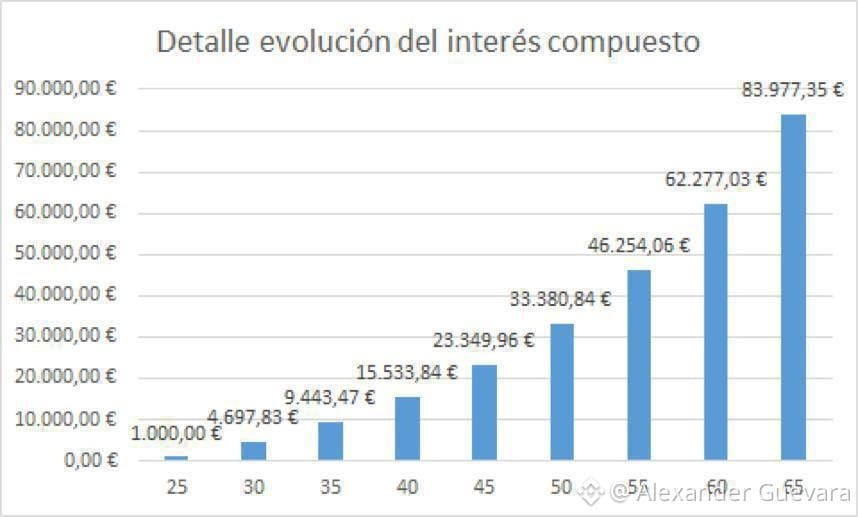
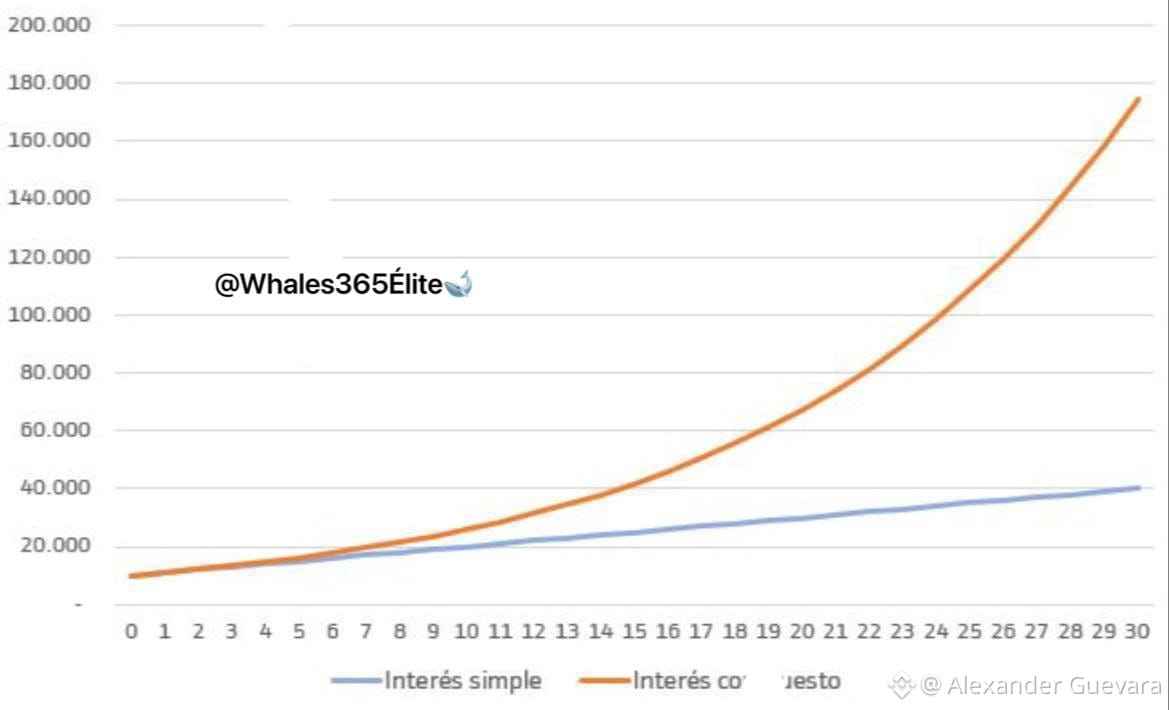
🐳:Intérêt composé
Au début, le capital ressemble à une petite boule de neige et plus le temps passe, plus la masse augmente et plus la rapidité avec laquelle elle grandit est grande : c’est ce qu’on appelle l’effet boule de neige ❄️
La croissance exponentielle grâce aux intérêts composés est une force considérable que l’on peut exploiter dans le trading automatique
Pour cela, il faut réinvestir, déposer davantage pour augmenter la taille du compte et opérer avec des montants de plus en plus importants ↗️
Un facteur clé que chacun peut exploiter !
💹 Ne retire pas rapidement : laisse ton compte grandir pour qu’il devienne grand
Les intérêts composés sont un facteur très important dans le monde du trading.
Grâce à cela, même en partant de zéro, en accumulant et en réinvestissant, on peut atteindre de grands montants avec le temps 💰
Les clés de l’intérêt composé, ce qui peut changer votre vie, lire 📑👨🏫
#educational_post #EducationalContent #market #estrategia #BinanceSquare $BTC $ETH $POP
🐳:Intérêt composé
Au début, le capital ressemble à une petite boule de neige et plus le temps passe, plus la masse augmente et plus la rapidité avec laquelle elle grandit est grande : c’est ce qu’on appelle l’effet boule de neige ❄️
La croissance exponentielle grâce aux intérêts composés est une force considérable que l’on peut exploiter dans le trading automatique
Pour cela, il faut réinvestir, déposer davantage pour augmenter la taille du compte et opérer avec des montants de plus en plus importants ↗️
Un facteur clé que chacun peut exploiter !
💹 Ne retire pas rapidement : laisse ton compte grandir pour qu’il devienne grand
Les intérêts composés sont un facteur très important dans le monde du trading.
Grâce à cela, même en partant de zéro, en accumulant et en réinvestissant, on peut atteindre de grands montants avec le temps 💰
Les clés de l’intérêt composé, ce qui peut changer votre vie, lire 📑👨🏫
#educational_post #EducationalContent #market #estrategia #BinanceSquare $BTC $ETH $POP
Au début, le capital ressemble à une petite boule de neige et plus le temps passe, plus la masse augmente et plus la rapidité avec laquelle elle grandit est grande : c’est ce qu’on appelle l’effet boule de neige ❄️
La croissance exponentielle grâce aux intérêts composés est une force considérable que l’on peut exploiter dans le trading automatique
Pour cela, il faut réinvestir, déposer davantage pour augmenter la taille du compte et opérer avec des montants de plus en plus importants ↗️
Un facteur clé que chacun peut exploiter !
💹 Ne retire pas rapidement : laisse ton compte grandir pour qu’il devienne grand
Les intérêts composés sont un facteur très important dans le monde du trading.
Grâce à cela, même en partant de zéro, en accumulant et en réinvestissant, on peut atteindre de grands montants avec le temps 💰
Les clés de l’intérêt composé, ce qui peut changer votre vie, lire 📑👨🏫
#educational_post #EducationalContent #market #estrategia #BinanceSquare $BTC $ETH $POP

3
168

Comment Je Trouve Les Meilleures Pièces À Trader Parmi La Liste Des PerdantsLa plupart des débutants voient une pièce qui chute de 10 % et pensent immédiatement que c'est une opportunité d'achat. Je pensais comme ça aussi. J'ai appris à mes dépens que toutes les pièces rouges ne rebondissent pas.
Après avoir perdu de l'argent sur les mauvaises pièces, j'ai développé une méthode simple. Maintenant, je ne choisis que des pièces qui montrent des signes spécifiques avant d'entrer. Laisse-moi te dire exactement ce que je recherche.
Étape Un — Trouver La Bonne Taille de Chute
Ouvre les futurs Binance et trie par changement sur 24 heures, du plus bas au plus haut. Ignore les pièces qui ont chuté de plus de 20 pour cent. Ce sont des zones de danger. Ignore les pièces qui ont chuté de moins de 5 pour cent. Pas assez d'opportunité. Le bon créneau, ce sont les pièces qui ont chuté de 8 à 15 pour cent. Une baisse suffisante pour créer un rebond, pas assez pour continuer à chuter indéfiniment.
Comment Je Trouve Les Meilleures Pièces À Trader Parmi La Liste Des Perdants
La plupart des débutants voient une pièce qui chute de 10 % et pensent immédiatement que c'est une opportunité d'achat. Je pensais comme ça aussi. J'ai appris à mes dépens que toutes les pièces rouges ne rebondissent pas.
Après avoir perdu de l'argent sur les mauvaises pièces, j'ai développé une méthode simple. Maintenant, je ne choisis que des pièces qui montrent des signes spécifiques avant d'entrer. Laisse-moi te dire exactement ce que je recherche.
Étape Un — Trouver La Bonne Taille de Chute
Ouvre les futurs Binance et trie par changement sur 24 heures, du plus bas au plus haut. Ignore les pièces qui ont chuté de plus de 20 pour cent. Ce sont des zones de danger. Ignore les pièces qui ont chuté de moins de 5 pour cent. Pas assez d'opportunité. Le bon créneau, ce sont les pièces qui ont chuté de 8 à 15 pour cent. Une baisse suffisante pour créer un rebond, pas assez pour continuer à chuter indéfiniment.
Après avoir perdu de l'argent sur les mauvaises pièces, j'ai développé une méthode simple. Maintenant, je ne choisis que des pièces qui montrent des signes spécifiques avant d'entrer. Laisse-moi te dire exactement ce que je recherche.
Étape Un — Trouver La Bonne Taille de Chute
Ouvre les futurs Binance et trie par changement sur 24 heures, du plus bas au plus haut. Ignore les pièces qui ont chuté de plus de 20 pour cent. Ce sont des zones de danger. Ignore les pièces qui ont chuté de moins de 5 pour cent. Pas assez d'opportunité. Le bon créneau, ce sont les pièces qui ont chuté de 8 à 15 pour cent. Une baisse suffisante pour créer un rebond, pas assez pour continuer à chuter indéfiniment.
343

La Magie des Intérêts Composés :
Chaque centime contribue à la construction d’un portefeuille 📈 de
Beaucoup espèrent porter un "coup de chance" sur le marché pour voir leur capital grandir, mais la véritable santé financière se construit de manière constante et progressive. 🧘♀️✨
Voir le portefeuille grandir centime après centime (+0,04 USDT aujourd’hui) peut sembler un pas minime, mais en finance, la constance est tout :
Effet Boule de Neige : Les rendements quotidiens générés sur des produits flexibles comme Binance Earn s’ajoutent au capital de base, créant des intérêts sur les intérêts.
Contrôle Émotionnel : Maintenir une stratégie d’accumulation passive permet d’éviter le stress lié à la volatilité quotidienne et de protéger ton capital principal.
Vision des Objectifs : Définir un chiffre cible avec une date claire te permet de mesurer les progrès réels et de rester concentré sans t’écarter du plan.
La clé n’est pas la vitesse à laquelle tu avances, mais la solidité avec laquelle tu protèges et multiplies chaque ressource. 🪙📊
#Binance #educational_post #BinanceSquareFamily #InterestRateDecision #CPIReport
La Magie des Intérêts Composés :
Chaque centime contribue à la construction d’un portefeuille 📈 de
Beaucoup espèrent porter un "coup de chance" sur le marché pour voir leur capital grandir, mais la véritable santé financière se construit de manière constante et progressive. 🧘♀️✨
Voir le portefeuille grandir centime après centime (+0,04 USDT aujourd’hui) peut sembler un pas minime, mais en finance, la constance est tout :
Effet Boule de Neige : Les rendements quotidiens générés sur des produits flexibles comme Binance Earn s’ajoutent au capital de base, créant des intérêts sur les intérêts.
Contrôle Émotionnel : Maintenir une stratégie d’accumulation passive permet d’éviter le stress lié à la volatilité quotidienne et de protéger ton capital principal.
Vision des Objectifs : Définir un chiffre cible avec une date claire te permet de mesurer les progrès réels et de rester concentré sans t’écarter du plan.
La clé n’est pas la vitesse à laquelle tu avances, mais la solidité avec laquelle tu protèges et multiplies chaque ressource. 🪙📊
#Binance #educational_post #BinanceSquareFamily #InterestRateDecision #CPIReport
Chaque centime contribue à la construction d’un portefeuille 📈 de
Beaucoup espèrent porter un "coup de chance" sur le marché pour voir leur capital grandir, mais la véritable santé financière se construit de manière constante et progressive. 🧘♀️✨
Voir le portefeuille grandir centime après centime (+0,04 USDT aujourd’hui) peut sembler un pas minime, mais en finance, la constance est tout :
Effet Boule de Neige : Les rendements quotidiens générés sur des produits flexibles comme Binance Earn s’ajoutent au capital de base, créant des intérêts sur les intérêts.
Contrôle Émotionnel : Maintenir une stratégie d’accumulation passive permet d’éviter le stress lié à la volatilité quotidienne et de protéger ton capital principal.
Vision des Objectifs : Définir un chiffre cible avec une date claire te permet de mesurer les progrès réels et de rester concentré sans t’écarter du plan.
La clé n’est pas la vitesse à laquelle tu avances, mais la solidité avec laquelle tu protèges et multiplies chaque ressource. 🪙📊
#Binance #educational_post #BinanceSquareFamily #InterestRateDecision #CPIReport

116

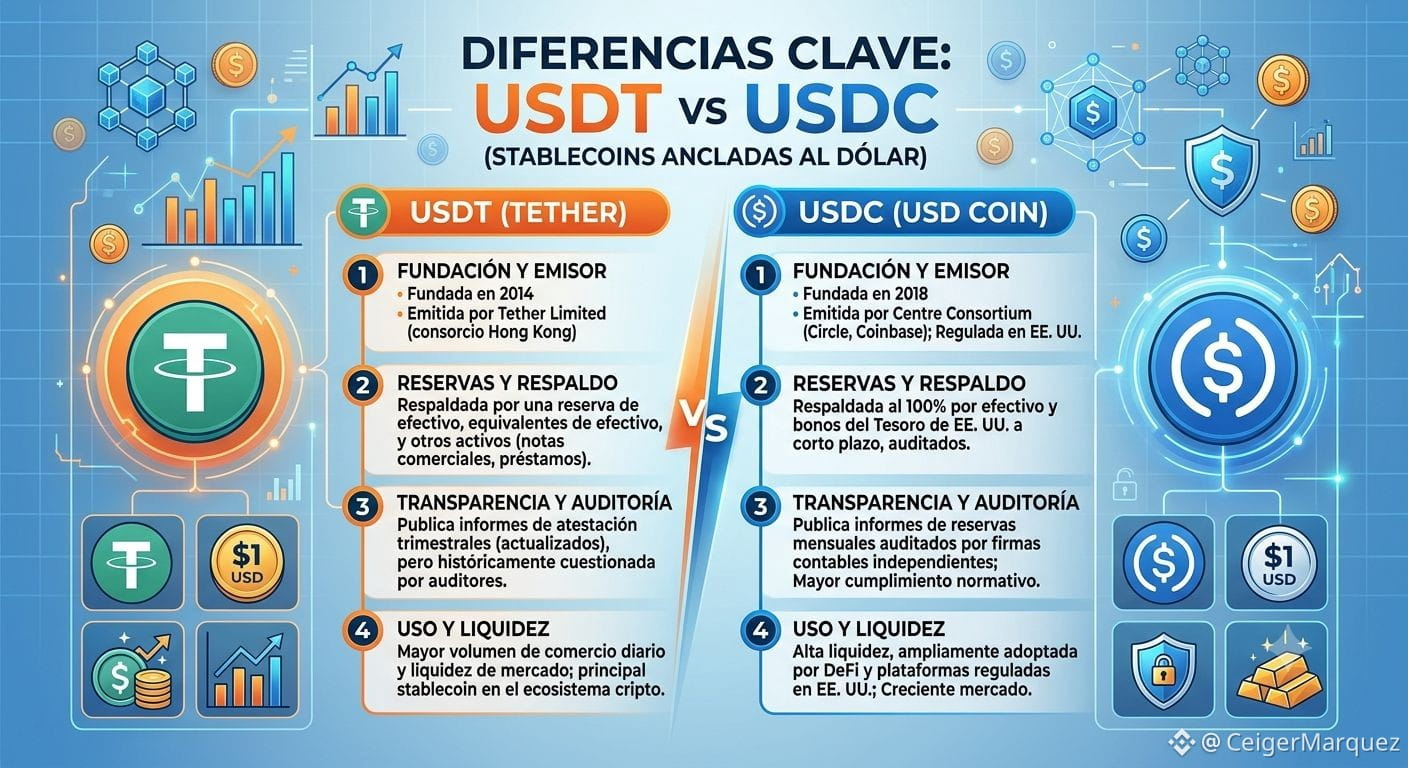
Les stablecoins sont la meilleure option pour les pays pour lutter contre l’inflation. La réplique du dollar est la meilleure option pour épargner en ces temps. À l’avenir, ce sera l’option de tous les plus importants. Comme
$USDT : (ou tether) est une monnaie stable (stablecoin) dont la valeur est conçue pour rester toujours liée au dollar américain dans une proportion de 1 à 1
$USDC (usd coin) est une monnaie numérique ou stablecoin dont la valeur est liée au dollar américain dans une proportion de 1 à 1
#Ahorroafuturo #BinanceLatam #educational_post
Les stablecoins sont la meilleure option pour les pays pour lutter contre l’inflation. La réplique du dollar est la meilleure option pour épargner en ces temps. À l’avenir, ce sera l’option de tous les plus importants. Comme
$USDT : (ou tether) est une monnaie stable (stablecoin) dont la valeur est conçue pour rester toujours liée au dollar américain dans une proportion de 1 à 1
$USDC (usd coin) est une monnaie numérique ou stablecoin dont la valeur est liée au dollar américain dans une proportion de 1 à 1
#Ahorroafuturo #BinanceLatam #educational_post
$USDT : (ou tether) est une monnaie stable (stablecoin) dont la valeur est conçue pour rester toujours liée au dollar américain dans une proportion de 1 à 1
$USDC (usd coin) est une monnaie numérique ou stablecoin dont la valeur est liée au dollar américain dans une proportion de 1 à 1
#Ahorroafuturo #BinanceLatam #educational_post
107

·
--
$BTC Beaucoup de gens voient Bitcoin monter et pensent immédiatement : « achetons maintenant. »
Mais le trading intelligent ne consiste pas à courir après chaque bougie verte.
En ce moment, BTC évolue autour de la zone des 80K $. L’important à comprendre est qu’une cassure de résistance n’a de sens que si le prix peut rester au-dessus. �
CoinGecko +1
Si BTC casse la résistance et se maintient → les acheteurs peuvent garder le contrôle.
S’il est de nouveau rejeté → un repli vers le support est parfaitement normal.
Leçon : ne courez pas après le mouvement. Attendez la confirmation et gérez toujours votre risque.
#Bitcoin #SquareBinance #educational_post
{future}(BTCUSDT)
$BTC Beaucoup de gens voient Bitcoin monter et pensent immédiatement : « achetons maintenant. »
Mais le trading intelligent ne consiste pas à courir après chaque bougie verte.
En ce moment, BTC évolue autour de la zone des 80K $. L’important à comprendre est qu’une cassure de résistance n’a de sens que si le prix peut rester au-dessus. �
CoinGecko +1
Si BTC casse la résistance et se maintient → les acheteurs peuvent garder le contrôle.
S’il est de nouveau rejeté → un repli vers le support est parfaitement normal.
Leçon : ne courez pas après le mouvement. Attendez la confirmation et gérez toujours votre risque.
#Bitcoin #SquareBinance #educational_post
Mais le trading intelligent ne consiste pas à courir après chaque bougie verte.
En ce moment, BTC évolue autour de la zone des 80K $. L’important à comprendre est qu’une cassure de résistance n’a de sens que si le prix peut rester au-dessus. �
CoinGecko +1
Si BTC casse la résistance et se maintient → les acheteurs peuvent garder le contrôle.
S’il est de nouveau rejeté → un repli vers le support est parfaitement normal.
Leçon : ne courez pas après le mouvement. Attendez la confirmation et gérez toujours votre risque.
#Bitcoin #SquareBinance #educational_post
55
·
--
Article
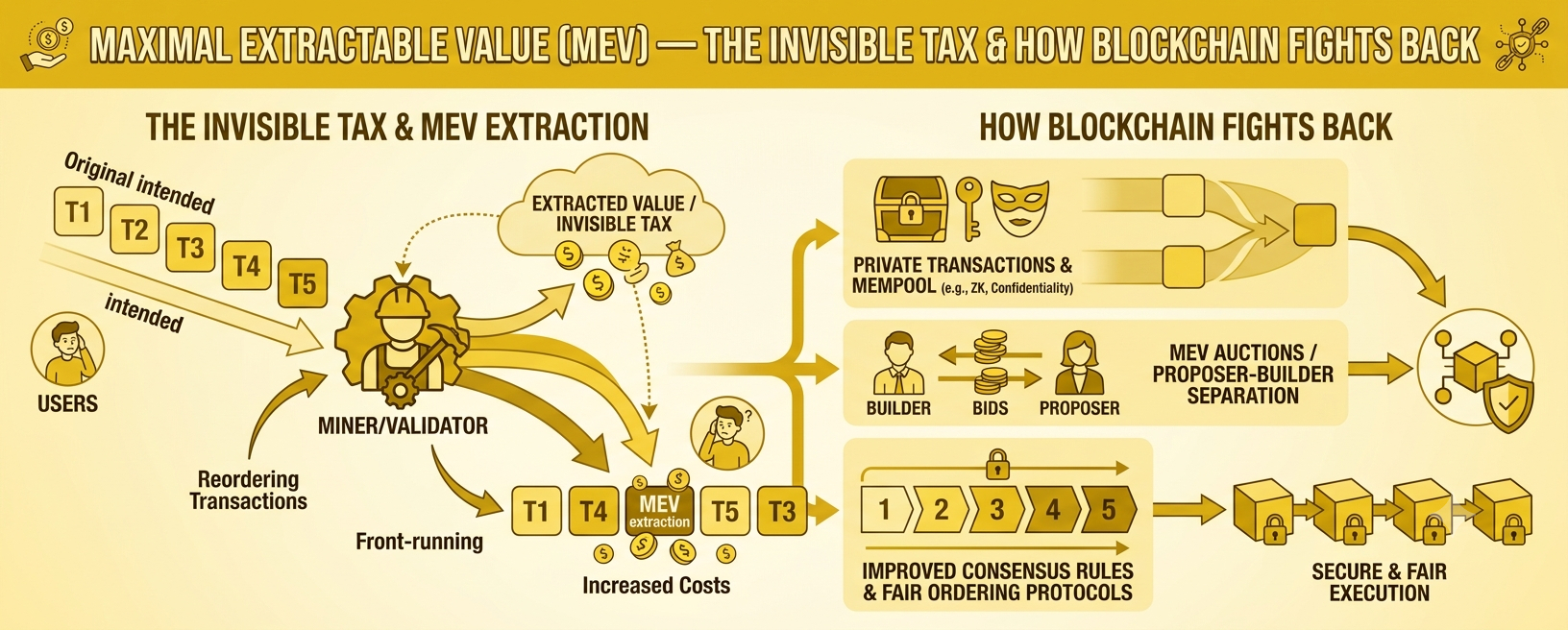
Valeur extractible maximale (MEV) — La taxe invisible & comment la blockchain ripostePourquoi les traders obtiennent-ils parfois de moins bonnes conditions que prévu, même lorsqu’ils définissent des limites de slippage ?
La valeur extractible maximale (MEV) désigne le profit que les producteurs de blocs (validateurs) et les robots automatisés extraient en réordonnant, en insérant ou en censurant des transactions en attente dans un mempool public. Souvent appelée « taxe invisible » de la finance décentralisée, la MEV transforme l’ordonnancement des transactions en une guerre d’enchères algorithmique — qui affecte directement la ligne de rentabilité de chaque utilisateur DeFi.
---
L’écosystème de la séparation Proposer-Builder (PBS)
Valeur extractible maximale (MEV) — La taxe invisible & comment la blockchain riposte
Pourquoi les traders obtiennent-ils parfois de moins bonnes conditions que prévu, même lorsqu’ils définissent des limites de slippage ?
La valeur extractible maximale (MEV) désigne le profit que les producteurs de blocs (validateurs) et les robots automatisés extraient en réordonnant, en insérant ou en censurant des transactions en attente dans un mempool public. Souvent appelée « taxe invisible » de la finance décentralisée, la MEV transforme l’ordonnancement des transactions en une guerre d’enchères algorithmique — qui affecte directement la ligne de rentabilité de chaque utilisateur DeFi.
---
L’écosystème de la séparation Proposer-Builder (PBS)
La valeur extractible maximale (MEV) désigne le profit que les producteurs de blocs (validateurs) et les robots automatisés extraient en réordonnant, en insérant ou en censurant des transactions en attente dans un mempool public. Souvent appelée « taxe invisible » de la finance décentralisée, la MEV transforme l’ordonnancement des transactions en une guerre d’enchères algorithmique — qui affecte directement la ligne de rentabilité de chaque utilisateur DeFi.
---
L’écosystème de la séparation Proposer-Builder (PBS)
1
5

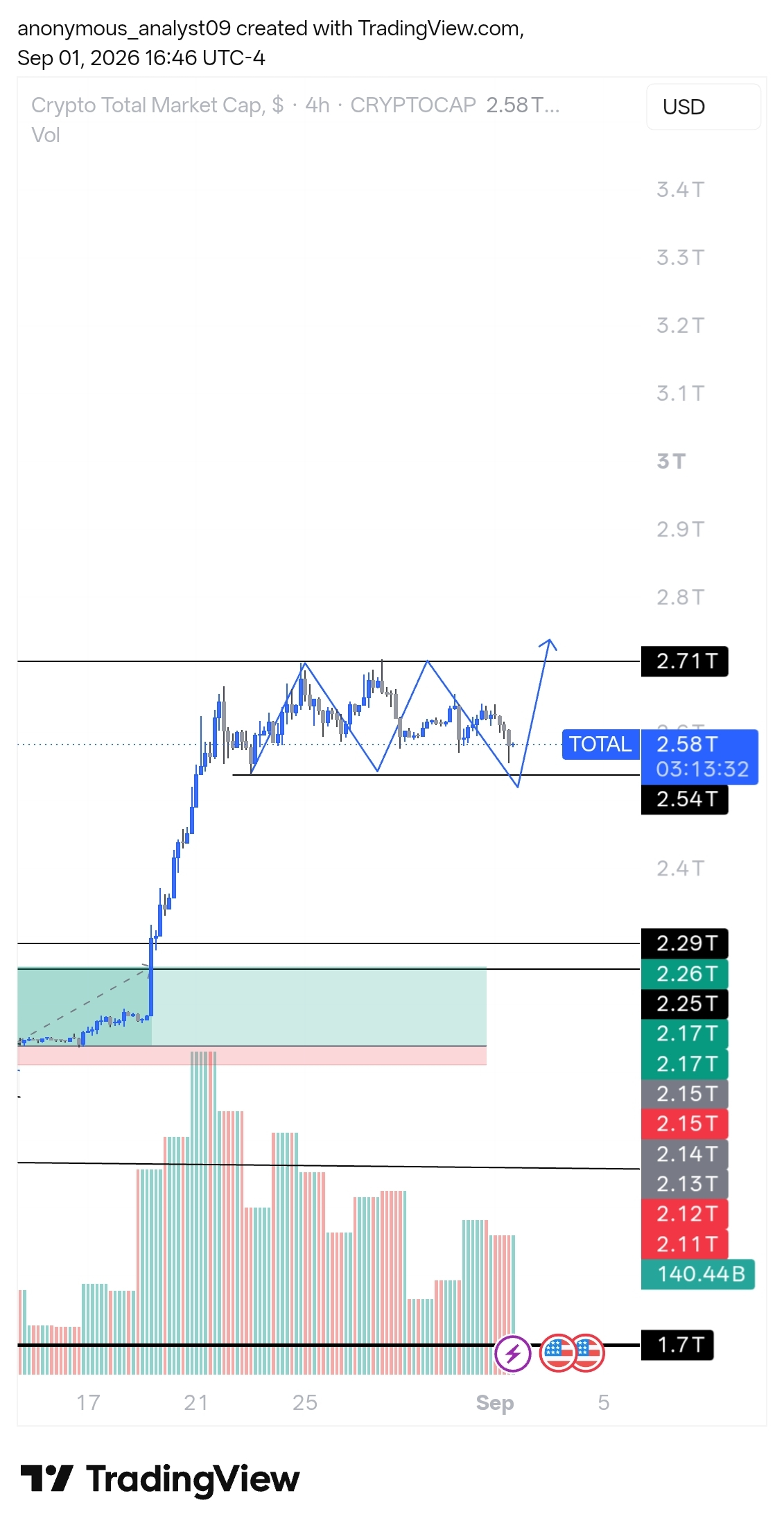
Capitalisation totale du marché crypto en 4H : comparaison de l’évolution du setup RBR ! 🚀
Voici une évaluation technique côte à côte de l’évolution de notre figure Rally-Base-Rally (RBR) sur la capitalisation totale du marché crypto en 4 heures (CRYPTOCAP), depuis le début de la semaine jusqu’à la dernière mise à jour du graphique :
📉 Phase 1 (Graphique de gauche - 1 sept.) : L’action des prix oscillait près de 2,58 T, traçant les limites structurelles initiales entre le support à 2,54 T et la résistance à 2,71 T, tout en construisant la base de consolidation.
📈 Phase 2 (Graphique de droite - 3 sept.) : Le marché a успешно complété la chasse à la liquidité jusqu’à la borne inférieure, a rebondi vigoureusement et grimpe désormais activement vers 2,64 T, confirmant que la structure de continuation RBR progresse exactement comme prévu.
🎯 Prochain jalon macro : Avec le retour du momentum au sein de la base, l’attention reste concentrée sur une poussée complète visant à franchir la principale résistance supérieure à 2,71 T.
💡 Perspectives de marché :
Les zones d’accumulation sur des unités de temps supérieures comme celle-ci éliminent les mains faibles avant les expansions majeures. Le maintien du niveau de base à 2,54 T préserve entièrement le biais haussier du scénario RBR pour l’ensemble du marché crypto.
#educational_post #cryptooinsigts
Capitalisation totale du marché crypto en 4H : comparaison de l’évolution du setup RBR ! 🚀
Voici une évaluation technique côte à côte de l’évolution de notre figure Rally-Base-Rally (RBR) sur la capitalisation totale du marché crypto en 4 heures (CRYPTOCAP), depuis le début de la semaine jusqu’à la dernière mise à jour du graphique :
📉 Phase 1 (Graphique de gauche - 1 sept.) : L’action des prix oscillait près de 2,58 T, traçant les limites structurelles initiales entre le support à 2,54 T et la résistance à 2,71 T, tout en construisant la base de consolidation.
📈 Phase 2 (Graphique de droite - 3 sept.) : Le marché a успешно complété la chasse à la liquidité jusqu’à la borne inférieure, a rebondi vigoureusement et grimpe désormais activement vers 2,64 T, confirmant que la structure de continuation RBR progresse exactement comme prévu.
🎯 Prochain jalon macro : Avec le retour du momentum au sein de la base, l’attention reste concentrée sur une poussée complète visant à franchir la principale résistance supérieure à 2,71 T.
💡 Perspectives de marché :
Les zones d’accumulation sur des unités de temps supérieures comme celle-ci éliminent les mains faibles avant les expansions majeures. Le maintien du niveau de base à 2,54 T préserve entièrement le biais haussier du scénario RBR pour l’ensemble du marché crypto.
#educational_post #cryptooinsigts
Voici une évaluation technique côte à côte de l’évolution de notre figure Rally-Base-Rally (RBR) sur la capitalisation totale du marché crypto en 4 heures (CRYPTOCAP), depuis le début de la semaine jusqu’à la dernière mise à jour du graphique :
📉 Phase 1 (Graphique de gauche - 1 sept.) : L’action des prix oscillait près de 2,58 T, traçant les limites structurelles initiales entre le support à 2,54 T et la résistance à 2,71 T, tout en construisant la base de consolidation.
📈 Phase 2 (Graphique de droite - 3 sept.) : Le marché a успешно complété la chasse à la liquidité jusqu’à la borne inférieure, a rebondi vigoureusement et grimpe désormais activement vers 2,64 T, confirmant que la structure de continuation RBR progresse exactement comme prévu.
🎯 Prochain jalon macro : Avec le retour du momentum au sein de la base, l’attention reste concentrée sur une poussée complète visant à franchir la principale résistance supérieure à 2,71 T.
💡 Perspectives de marché :
Les zones d’accumulation sur des unités de temps supérieures comme celle-ci éliminent les mains faibles avant les expansions majeures. Le maintien du niveau de base à 2,54 T préserve entièrement le biais haussier du scénario RBR pour l’ensemble du marché crypto.
#educational_post #cryptooinsigts
Hanan-Crypto Analyst
·
--
Cap boursière totale de la crypto-monnaie (4H) : Mise en place pour la prochaine étape de type Rally-Base-Rally (RBR) ! 🚀
Le dernier graphique sur 4 heures de la capitalisation boursière totale de la crypto-monnaie (CRYPTOCAP) révèle un schéma de continuation typique, après sa poussée macro agressive.
📐 Structure de marché & Consolidation : Après le puissant mouvement impulsif en direction de la zone de résistance des 2,71 T, la capitalisation totale a construit une consolidation saine et structurée, comprise entre 2,54 T et 2,71 T.
🎯 Dynamique Rally-Base-Rally (RBR) : L’action des prix affiche actuellement une configuration classique de Rally-Base-Rally (RBR). Après avoir achevé le rally initial, le marché forme actuellement la phase d’accumulation « Base » autour de 2,58 T.
📈 Expansion projetée : Une fois que cette base sur un horizon plus élevé aura digéré avec succès le reste de la liquidité côté vendeurs, nous nous attendons à ce que le déclencheur de cassure lance la prochaine phase impulsive « Rally », en dépassant le plafond des 2,71 T et en s’étendant vers des valorisations plus élevées.
💡 Point de vue stratégique :
La construction d’une base sur un horizon plus élevé est un indicateur haussier d’accumulation plutôt que de distribution. Cette consolidation prépare le terrain pour une poussée synchronisée à la hausse sur les principaux actifs et les altcoins.
Contrôlez votre risque avec rigueur et restez positionné pendant que le marché se prépare pour la prochaine étape à la hausse
Le dernier graphique sur 4 heures de la capitalisation boursière totale de la crypto-monnaie (CRYPTOCAP) révèle un schéma de continuation typique, après sa poussée macro agressive.
📐 Structure de marché & Consolidation : Après le puissant mouvement impulsif en direction de la zone de résistance des 2,71 T, la capitalisation totale a construit une consolidation saine et structurée, comprise entre 2,54 T et 2,71 T.
🎯 Dynamique Rally-Base-Rally (RBR) : L’action des prix affiche actuellement une configuration classique de Rally-Base-Rally (RBR). Après avoir achevé le rally initial, le marché forme actuellement la phase d’accumulation « Base » autour de 2,58 T.
📈 Expansion projetée : Une fois que cette base sur un horizon plus élevé aura digéré avec succès le reste de la liquidité côté vendeurs, nous nous attendons à ce que le déclencheur de cassure lance la prochaine phase impulsive « Rally », en dépassant le plafond des 2,71 T et en s’étendant vers des valorisations plus élevées.
💡 Point de vue stratégique :
La construction d’une base sur un horizon plus élevé est un indicateur haussier d’accumulation plutôt que de distribution. Cette consolidation prépare le terrain pour une poussée synchronisée à la hausse sur les principaux actifs et les altcoins.
Contrôlez votre risque avec rigueur et restez positionné pendant que le marché se prépare pour la prochaine étape à la hausse
1
63
Trading sur 30 j de 156.1 USDT en $BTC
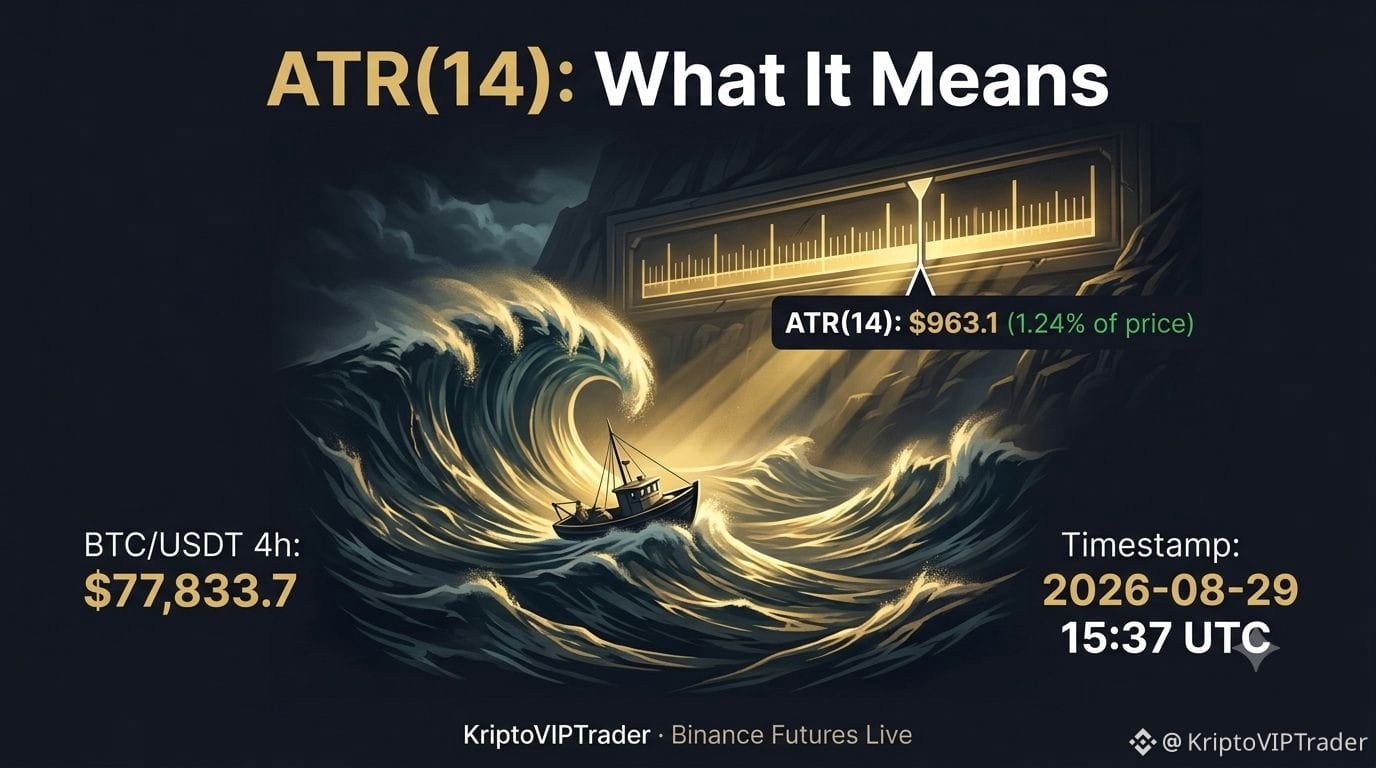
Le Bitcoin effectue un repli, en baisse de 1,69 % sur les dernières 24 heures, mais l’action réelle se situe dans la volatilité. Oubliez la direction un instant. La Moyenne des Fourchettes Réelles (ATR) sur le graphique 4 heures vous indique à quel point le marché bouge. Cet indicateur n’a cure de savoir si l’on monte ou si l’on descend ; il ne fait que mesurer l’énergie pure de chaque bougie de 4H. À l’heure actuelle, cette valeur s’établit à 963,1 $ (soit 1,24 % du prix). Toutes les quatre heures, le Bitcoin accumule près de mille dollars de force sans direction. Dans ce type de houle, la moindre petite ondulation peut donner l’impression d’une énorme vague. Ce n’est pas qu du bruit : c’est la vraie amplitude du marché.
$BTC #4HATR #Write2Earn #educational_post
{spot}(BTCUSDT)
Le Bitcoin effectue un repli, en baisse de 1,69 % sur les dernières 24 heures, mais l’action réelle se situe dans la volatilité. Oubliez la direction un instant. La Moyenne des Fourchettes Réelles (ATR) sur le graphique 4 heures vous indique à quel point le marché bouge. Cet indicateur n’a cure de savoir si l’on monte ou si l’on descend ; il ne fait que mesurer l’énergie pure de chaque bougie de 4H. À l’heure actuelle, cette valeur s’établit à 963,1 $ (soit 1,24 % du prix). Toutes les quatre heures, le Bitcoin accumule près de mille dollars de force sans direction. Dans ce type de houle, la moindre petite ondulation peut donner l’impression d’une énorme vague. Ce n’est pas qu du bruit : c’est la vraie amplitude du marché.
$BTC #4HATR #Write2Earn #educational_post
$BTC #4HATR #Write2Earn #educational_post
1
21

·
--
Haussier
$DCA (Dollar Cost Averaging) est le code triche ultime pour des gains à long terme. Vous n’avez pas besoin d’un énorme solde bancaire pour commencer à constituer un sérieux portefeuille de crypto — il vous faut juste de la régularité et de la discipline. Vous empilez chaque semaine ? 📊 #HODL #Altcoins #BinanceSquare #educational_post
$DCA (Dollar Cost Averaging) est le code triche ultime pour des gains à long terme. Vous n’avez pas besoin d’un énorme solde bancaire pour commencer à constituer un sérieux portefeuille de crypto — il vous faut juste de la régularité et de la discipline. Vous empilez chaque semaine ? 📊 #HODL #Altcoins #BinanceSquare #educational_post

67
Connectez-vous pour découvrir plus de contenu
Rejoignez la communauté mondiale des adeptes de cryptomonnaies sur Binance Square
⚡️ Suviez les dernières informations importantes sur les cryptomonnaies.
💬 Jugé digne de confiance par la plus grande plateforme d’échange de cryptomonnaies au monde.
👍 Découvrez les connaissances que partagent les créateurs vérifiés.
Adresse e-mail/Nº de téléphone
Sujets d’actualité
1
#ClarityActFacesProceduralVoteSept15
2,181 vues
69 mentions
2
#US2YearYieldRisesTo4.61%
8,991 vues
213 mentions
3
#US10YearTreasuryYieldNears5%
4,990 vues
126 mentions
4
#CryptoLiquidations$674MIn24H
4,895 vues
57 mentions
5
#TokenizedStockHoldersUp619.1%
7,616 vues
171 mentions
6
#RevolutConfirmsFakeGovEmailDataBreach
25,030 vues
468 mentions
7
#CanadaOSFISaysTokenizedDepositsEqualTraditionalDeposits
1,284 vues
48 mentions
8
#USBankCompletesCrossBorderPaymentPilotOnStellar
28,302 vues
684 mentions
9
#NvidiaInTalksToInvestUpTo$10BInAnthropicIPO
2,332 vues
57 mentions
10
#EtherRalliesAsBearishBetsLiquidate
42,069 vues
865 mentions