

#chainlink
chainlink
7M vues
17,598 mentions
Populaire
Récents

·
--
CHAINLINK (LINK): INSTITUTIONAL TOKENIZATION IS BACK IN FOCUS
Chainlink ($LINK) remains an important project to watch as traditional finance explores blockchain infrastructure and tokenized assets.
One upcoming event is Link:NYC on October 29, featuring participants associated with DTCC, Swift, CFTC, and Fidelity. The event could bring fresh attention to how blockchain infrastructure connects traditional financial markets with on-chain systems.
However, institutional interest does not automatically translate into immediate buying pressure for LINK.
WHAT TRADERS SHOULD WATCH
Chainlink's long-term narrative depends on adoption of its oracle services, cross-chain infrastructure, and tokenization-related solutions. In the short term, broader crypto sentiment and the Federal Reserve's upcoming decision could influence price action.
POTENTIAL ENTRY AREA
Watch the nearest confirmed support zone on the LINK/USDT chart rather than entering solely because of the upcoming event.
CONFIRMATION: Look for a bullish market structure shift on the 5M or 15M timeframe, supported by stronger buying volume.
INVALIDATION: Reassess the bullish scenario if price breaks support and fails to reclaim it.
MARKET SIGNAL: MIXED
The institutional narrative is constructive, but the event itself is not a guaranteed price catalyst. Wait for price confirmation before making a decision.
Will institutional tokenization become a major driver for LINK, or is the market already pricing in the narrative?
#Chainlink #LINK #RWA #cryptotrading $LINK
{future}(LINKUSDT)
CHAINLINK (LINK): INSTITUTIONAL TOKENIZATION IS BACK IN FOCUS
Chainlink ($LINK ) remains an important project to watch as traditional finance explores blockchain infrastructure and tokenized assets.
One upcoming event is Link:NYC on October 29, featuring participants associated with DTCC, Swift, CFTC, and Fidelity. The event could bring fresh attention to how blockchain infrastructure connects traditional financial markets with on-chain systems.
However, institutional interest does not automatically translate into immediate buying pressure for LINK.
WHAT TRADERS SHOULD WATCH
Chainlink's long-term narrative depends on adoption of its oracle services, cross-chain infrastructure, and tokenization-related solutions. In the short term, broader crypto sentiment and the Federal Reserve's upcoming decision could influence price action.
POTENTIAL ENTRY AREA
Watch the nearest confirmed support zone on the LINK/USDT chart rather than entering solely because of the upcoming event.
CONFIRMATION: Look for a bullish market structure shift on the 5M or 15M timeframe, supported by stronger buying volume.
INVALIDATION: Reassess the bullish scenario if price breaks support and fails to reclaim it.
MARKET SIGNAL: MIXED
The institutional narrative is constructive, but the event itself is not a guaranteed price catalyst. Wait for price confirmation before making a decision.
Will institutional tokenization become a major driver for LINK, or is the market already pricing in the narrative?
#Chainlink #LINK #RWA #cryptotrading $LINK
Chainlink ($LINK ) remains an important project to watch as traditional finance explores blockchain infrastructure and tokenized assets.
One upcoming event is Link:NYC on October 29, featuring participants associated with DTCC, Swift, CFTC, and Fidelity. The event could bring fresh attention to how blockchain infrastructure connects traditional financial markets with on-chain systems.
However, institutional interest does not automatically translate into immediate buying pressure for LINK.
WHAT TRADERS SHOULD WATCH
Chainlink's long-term narrative depends on adoption of its oracle services, cross-chain infrastructure, and tokenization-related solutions. In the short term, broader crypto sentiment and the Federal Reserve's upcoming decision could influence price action.
POTENTIAL ENTRY AREA
Watch the nearest confirmed support zone on the LINK/USDT chart rather than entering solely because of the upcoming event.
CONFIRMATION: Look for a bullish market structure shift on the 5M or 15M timeframe, supported by stronger buying volume.
INVALIDATION: Reassess the bullish scenario if price breaks support and fails to reclaim it.
MARKET SIGNAL: MIXED
The institutional narrative is constructive, but the event itself is not a guaranteed price catalyst. Wait for price confirmation before making a decision.
Will institutional tokenization become a major driver for LINK, or is the market already pricing in the narrative?
#Chainlink #LINK #RWA #cryptotrading $LINK
170

🔗 CHAINLINK: THE VALUE OF INFRASTRUCTURE.
Crypto investors often focus on the applications users can see.
But behind many blockchain applications lies a more fundamental challenge: connecting smart contracts with reliable external information and other systems.
This is where Chainlink’s oracle infrastructure becomes relevant.
As tokenized assets and blockchain-based financial products develop, reliable data delivery and interoperability could become increasingly important.
However, here’s the distinction investors must understand:
Growing demand for blockchain infrastructure does not automatically translate into rising LINK prices.
The investment case depends on adoption, network economics, competition, and the mechanisms through which LINK captures value.
#LINK #Chainlink #Blockchain #RWA
🔗 CHAINLINK: THE VALUE OF INFRASTRUCTURE.
Crypto investors often focus on the applications users can see.
But behind many blockchain applications lies a more fundamental challenge: connecting smart contracts with reliable external information and other systems.
This is where Chainlink’s oracle infrastructure becomes relevant.
As tokenized assets and blockchain-based financial products develop, reliable data delivery and interoperability could become increasingly important.
However, here’s the distinction investors must understand:
Growing demand for blockchain infrastructure does not automatically translate into rising LINK prices.
The investment case depends on adoption, network economics, competition, and the mechanisms through which LINK captures value.
#LINK #Chainlink #Blockchain #RWA
Crypto investors often focus on the applications users can see.
But behind many blockchain applications lies a more fundamental challenge: connecting smart contracts with reliable external information and other systems.
This is where Chainlink’s oracle infrastructure becomes relevant.
As tokenized assets and blockchain-based financial products develop, reliable data delivery and interoperability could become increasingly important.
However, here’s the distinction investors must understand:
Growing demand for blockchain infrastructure does not automatically translate into rising LINK prices.
The investment case depends on adoption, network economics, competition, and the mechanisms through which LINK captures value.
#LINK #Chainlink #Blockchain #RWA
71

·
--
Baissier
$LINK
{spot}(LINKUSDT)
$LINK is calm at 11.352, down 0.41%. Calm is when smart money builds positions. 🔗
Market view: Sideways and stable, coiling for a decision.
Support: 10.80 / 10.20
Resistance: 11.90 / 12.80
Short term: A clean break above 11.90 opens the door.
Mid term: Accumulation range, so patience pays.
Long term: Oracle infrastructure demand is a solid narrative.
🎯 Targets: T1 11.90 | T2 12.80 | T3 14.00
Stop idea: Below 10.60
💡 Pro tip: Wait for a candle close above resistance, not just a wick. Wicks lie.
#LINK #Chainlink #Binance
$LINK
$LINK is calm at 11.352, down 0.41%. Calm is when smart money builds positions. 🔗
Market view: Sideways and stable, coiling for a decision.
Support: 10.80 / 10.20
Resistance: 11.90 / 12.80
Short term: A clean break above 11.90 opens the door.
Mid term: Accumulation range, so patience pays.
Long term: Oracle infrastructure demand is a solid narrative.
🎯 Targets: T1 11.90 | T2 12.80 | T3 14.00
Stop idea: Below 10.60
💡 Pro tip: Wait for a candle close above resistance, not just a wick. Wicks lie.
#LINK #Chainlink #Binance
$LINK is calm at 11.352, down 0.41%. Calm is when smart money builds positions. 🔗
Market view: Sideways and stable, coiling for a decision.
Support: 10.80 / 10.20
Resistance: 11.90 / 12.80
Short term: A clean break above 11.90 opens the door.
Mid term: Accumulation range, so patience pays.
Long term: Oracle infrastructure demand is a solid narrative.
🎯 Targets: T1 11.90 | T2 12.80 | T3 14.00
Stop idea: Below 10.60
💡 Pro tip: Wait for a candle close above resistance, not just a wick. Wicks lie.
#LINK #Chainlink #Binance
139
·
--
🔗 CHAINLINK UPDATE: LINK spot ETFs recorded no net flows for six consecutive trading days through October 26, according to reported data.
A return of inflows could signal renewed institutional interest.
$LINK
{future}(LINKUSDT)
{spot}(LINKUSDT)
#Chainlink #LINK
🔗 CHAINLINK UPDATE: LINK spot ETFs recorded no net flows for six consecutive trading days through October 26, according to reported data.
A return of inflows could signal renewed institutional interest.
$LINK
#Chainlink #LINK
A return of inflows could signal renewed institutional interest.
$LINK
#Chainlink #LINK

178

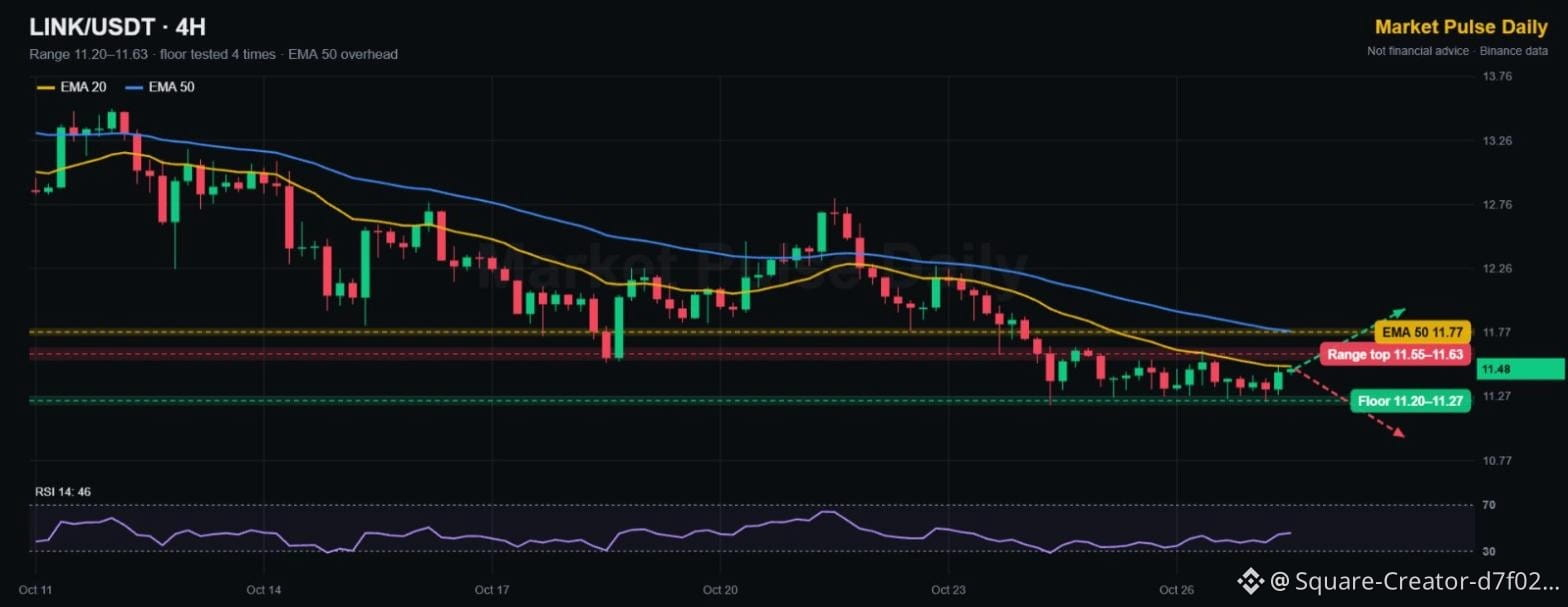
$LINK has defended 11.20 four times in 3 days. The tightest range on the chart 📏
Structure (4H):
• Floor at 11.20–11.27, tested Oct 24, 25, 26 and today
• Ceiling at 11.55–11.63
• Price stuck between EMA 20 (11.50) and EMA 50 (11.77)
Momentum: RSI 46, flat. The market is waiting for a trigger.
Range plan for $LINK :
🟢 4H close above 11.63 → EMA 50 at 11.77, then 12.00
🔴 4H close below 11.20 → range breaks, next stop around 10.95
Inside the range, buying the floor and selling the ceiling works until it doesn't. Four tests of one level usually weakens it.
Which side breaks first for $LINK ? 👇
NFA
#LINK #Chainlink #TechnicalAnalysis
No Binance account yet? Get 20% of your trading fees back 👉 [Sign up on Binance](https://www.binance.com/register?ref=TGCSTKKM)
$LINK has defended 11.20 four times in 3 days. The tightest range on the chart 📏
Structure (4H):
• Floor at 11.20–11.27, tested Oct 24, 25, 26 and today
• Ceiling at 11.55–11.63
• Price stuck between EMA 20 (11.50) and EMA 50 (11.77)
Momentum: RSI 46, flat. The market is waiting for a trigger.
Range plan for $LINK :
🟢 4H close above 11.63 → EMA 50 at 11.77, then 12.00
🔴 4H close below 11.20 → range breaks, next stop around 10.95
Inside the range, buying the floor and selling the ceiling works until it doesn't. Four tests of one level usually weakens it.
Which side breaks first for $LINK ? 👇
NFA
#LINK #Chainlink #TechnicalAnalysis
No Binance account yet? Get 20% of your trading fees back 👉 Sign up on Binance
Structure (4H):
• Floor at 11.20–11.27, tested Oct 24, 25, 26 and today
• Ceiling at 11.55–11.63
• Price stuck between EMA 20 (11.50) and EMA 50 (11.77)
Momentum: RSI 46, flat. The market is waiting for a trigger.
Range plan for $LINK :
🟢 4H close above 11.63 → EMA 50 at 11.77, then 12.00
🔴 4H close below 11.20 → range breaks, next stop around 10.95
Inside the range, buying the floor and selling the ceiling works until it doesn't. Four tests of one level usually weakens it.
Which side breaks first for $LINK ? 👇
NFA
#LINK #Chainlink #TechnicalAnalysis
No Binance account yet? Get 20% of your trading fees back 👉 Sign up on Binance
37

·
--
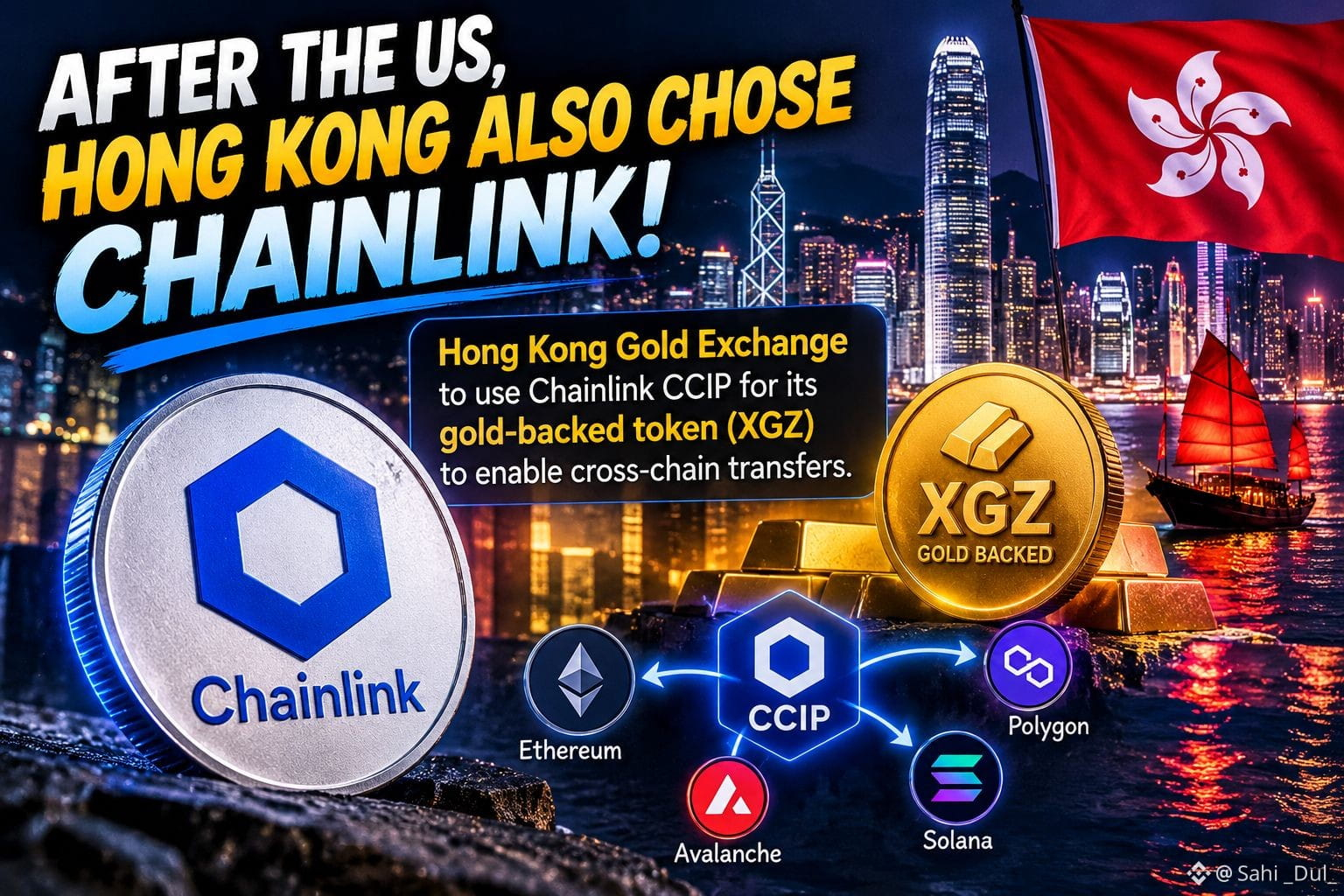
First the US, now Hong Kong? 👀
Chainlink is getting another big use case as the Hong Kong Gold Exchange prepares to use CCIP for its gold-backed token.
Real-world assets moving across blockchains… this is the kind of crypto adoption worth watching. 🔗
Is LINK underrated, or is the market already pricing this in?
#Chainlink #LINK #RWA #crypto
First the US, now Hong Kong? 👀
Chainlink is getting another big use case as the Hong Kong Gold Exchange prepares to use CCIP for its gold-backed token.
Real-world assets moving across blockchains… this is the kind of crypto adoption worth watching. 🔗
Is LINK underrated, or is the market already pricing this in?
#Chainlink #LINK #RWA #crypto
Chainlink is getting another big use case as the Hong Kong Gold Exchange prepares to use CCIP for its gold-backed token.
Real-world assets moving across blockchains… this is the kind of crypto adoption worth watching. 🔗
Is LINK underrated, or is the market already pricing this in?
#Chainlink #LINK #RWA #crypto
1
95
$LINK has tested 11.20 four times in 3 days. Floors don't last forever, but this one is stubborn 🧱
Structure (4H):
• Floor: 11.20 to 11.27 (11.20, 11.26, 11.27, 11.23)
• Lid: 11.55 to 11.63, the last two bounce highs
• Price 11.50, right on EMA 20 (11.51). EMA 50 at 11.78
• RSI 46.8. Down 5.8% on the week
Quadruple tests usually mean one of two things: absorption (big buyer) or exhaustion (floor about to give). Volume on the break tells you which.
Levels for $LINK :
🟢 4H close above 11.63 → 11.78 (EMA 50), then 12.28
🔴 4H close below 11.20 → floor breaks, 10.80 next
Range play: longs near 11.25 with a stop under 11.15, trim at 11.60.
Where are you buying $LINK ? 👇
NFA
#Chainlink #Altcoins #TradingSignals
No Binance account yet? Get 20% of your trading fees back 👉 [Sign up on Binance](https://www.binance.com/register?ref=TGCSTKKM)
$LINK has tested 11.20 four times in 3 days. Floors don't last forever, but this one is stubborn 🧱
Structure (4H):
• Floor: 11.20 to 11.27 (11.20, 11.26, 11.27, 11.23)
• Lid: 11.55 to 11.63, the last two bounce highs
• Price 11.50, right on EMA 20 (11.51). EMA 50 at 11.78
• RSI 46.8. Down 5.8% on the week
Quadruple tests usually mean one of two things: absorption (big buyer) or exhaustion (floor about to give). Volume on the break tells you which.
Levels for $LINK :
🟢 4H close above 11.63 → 11.78 (EMA 50), then 12.28
🔴 4H close below 11.20 → floor breaks, 10.80 next
Range play: longs near 11.25 with a stop under 11.15, trim at 11.60.
Where are you buying $LINK ? 👇
NFA
#Chainlink #Altcoins #TradingSignals
No Binance account yet? Get 20% of your trading fees back 👉 Sign up on Binance
Structure (4H):
• Floor: 11.20 to 11.27 (11.20, 11.26, 11.27, 11.23)
• Lid: 11.55 to 11.63, the last two bounce highs
• Price 11.50, right on EMA 20 (11.51). EMA 50 at 11.78
• RSI 46.8. Down 5.8% on the week
Quadruple tests usually mean one of two things: absorption (big buyer) or exhaustion (floor about to give). Volume on the break tells you which.
Levels for $LINK :
🟢 4H close above 11.63 → 11.78 (EMA 50), then 12.28
🔴 4H close below 11.20 → floor breaks, 10.80 next
Range play: longs near 11.25 with a stop under 11.15, trim at 11.60.
Where are you buying $LINK ? 👇
NFA
#Chainlink #Altcoins #TradingSignals
No Binance account yet? Get 20% of your trading fees back 👉 Sign up on Binance
19


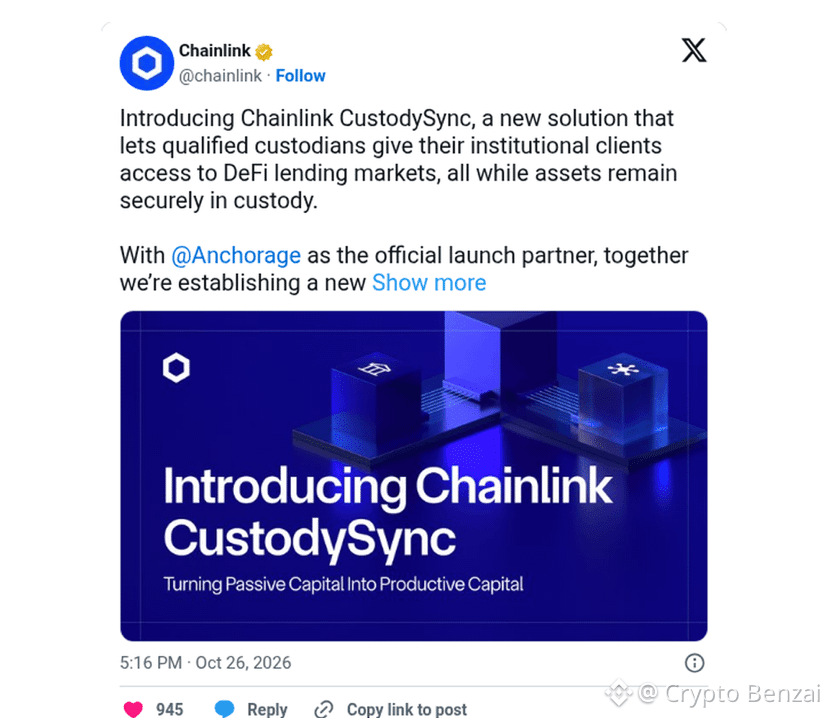
Chainlink opens DeFi lending to custodied money
$LINK news: Chainlink launched CustodySync, with Anchorage Digital as the first qualified custodian. Institutions can now tap DeFi lending while their assets stay in regulated custody. Proof of Reserve and shared price data keep both sides in sync, so loans don't get liquidated on bad numbers. DeFi lending holds $80B+, while custody holds about $700B.
How much of that $700B ever moves?
#Chainlink #DEFI #LINK
{spot}(LINKUSDT)
Chainlink opens DeFi lending to custodied money
$LINK news: Chainlink launched CustodySync, with Anchorage Digital as the first qualified custodian. Institutions can now tap DeFi lending while their assets stay in regulated custody. Proof of Reserve and shared price data keep both sides in sync, so loans don't get liquidated on bad numbers. DeFi lending holds $80B+, while custody holds about $700B.
How much of that $700B ever moves?
#Chainlink #DEFI #LINK
$LINK news: Chainlink launched CustodySync, with Anchorage Digital as the first qualified custodian. Institutions can now tap DeFi lending while their assets stay in regulated custody. Proof of Reserve and shared price data keep both sides in sync, so loans don't get liquidated on bad numbers. DeFi lending holds $80B+, while custody holds about $700B.
How much of that $700B ever moves?
#Chainlink #DEFI #LINK
26
·
--
🔍 $LINK Quick Analysis
Live Binance data for $LINK/USDT:
Price: $11.4480
Change: -0.82%
High: $11.5480
Low: $11.2280
Volume: $15.70M
Are you watching volume or price action?
#Chainlink #LINK
🔍 $LINK Quick Analysis
Live Binance data for $LINK /USDT:
Price: $11.4480
Change: -0.82%
High: $11.5480
Low: $11.2280
Volume: $15.70M
Are you watching volume or price action?
#Chainlink #LINK
Live Binance data for $LINK /USDT:
Price: $11.4480
Change: -0.82%
High: $11.5480
Low: $11.2280
Volume: $15.70M
Are you watching volume or price action?
#Chainlink #LINK
63

·
--
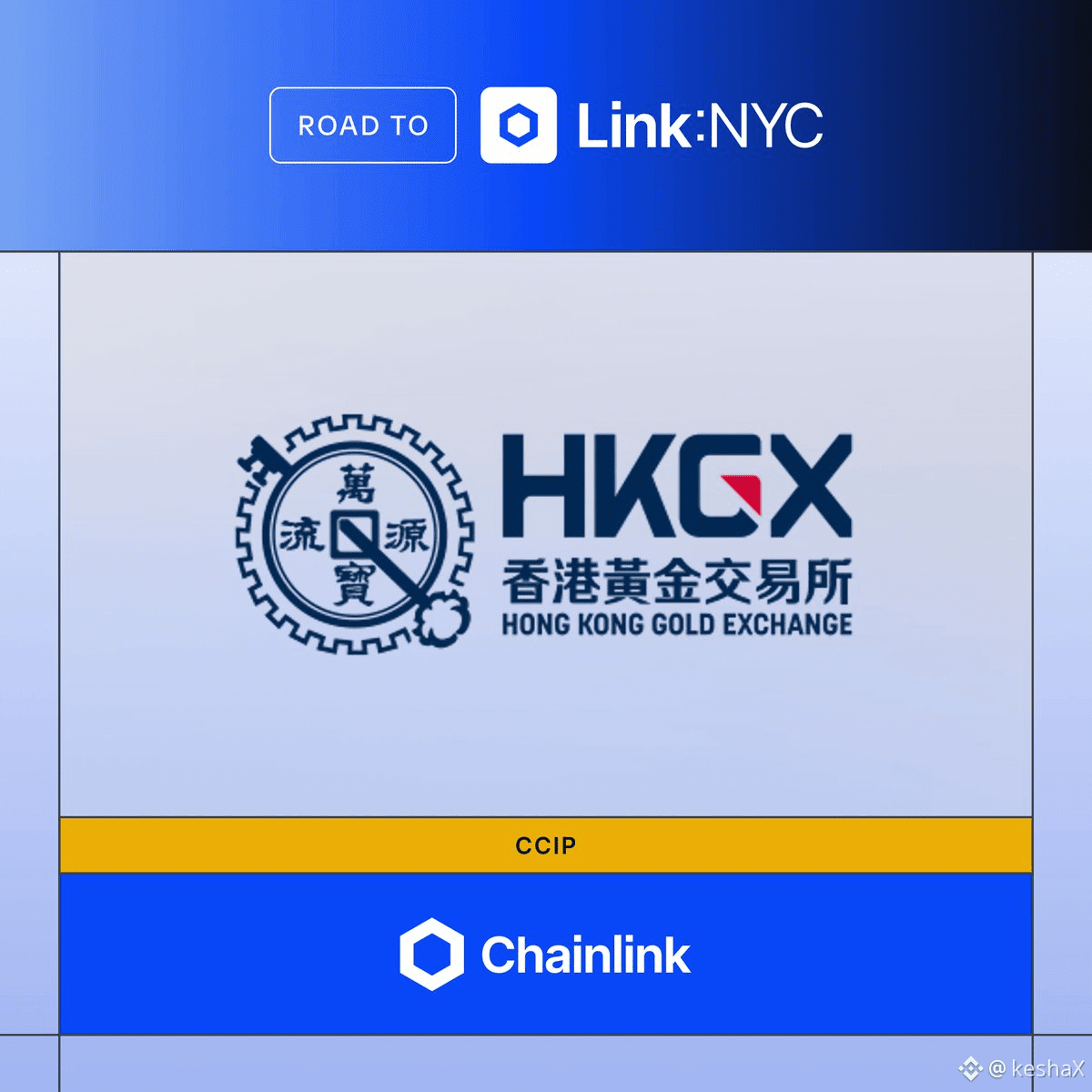
🥇 A GOLD EXCHANGE FROM 1910 JUST PLUGGED INTO $LINK. THE TOKEN IS TINY
The Hong Kong Gold Exchange, the world's fourth-largest gold trading venue by volume, is bringing its gold-backed XGZ token to Chainlink CCIP.
→ Each XGZ is 1 gram of 99.99% gold, redeemable from 1,000 tokens (1 kg)
→ About 39,000 XGZ are in circulation, roughly a $5M market cap
→ XGZ lives on Ethereum today, CCIP is meant to let it move across chains
→ No target chains or launch date announced yet
Meanwhile LINK sits at $11.27, its lowest price of the past 30 days (CoinGecko).
My take: huge brand, small deal for now. 39 kg of gold will not move LINK. What matters is whether HKGX members start issuing real size onchain. Signal, not a catalyst.
Your read?
A) Real RWA signal for LINK
B) Headline hype
{spot}(LINKUSDT)
#Chainlink #LINK #RWA #Tokenization #Gold
🥇 A GOLD EXCHANGE FROM 1910 JUST PLUGGED INTO $LINK. THE TOKEN IS TINY
The Hong Kong Gold Exchange, the world's fourth-largest gold trading venue by volume, is bringing its gold-backed XGZ token to Chainlink CCIP.
→ Each XGZ is 1 gram of 99.99% gold, redeemable from 1,000 tokens (1 kg)
→ About 39,000 XGZ are in circulation, roughly a $5M market cap
→ XGZ lives on Ethereum today, CCIP is meant to let it move across chains
→ No target chains or launch date announced yet
Meanwhile LINK sits at $11.27, its lowest price of the past 30 days (CoinGecko).
My take: huge brand, small deal for now. 39 kg of gold will not move LINK. What matters is whether HKGX members start issuing real size onchain. Signal, not a catalyst.
Your read?
A) Real RWA signal for LINK
B) Headline hype
#Chainlink #LINK #RWA #Tokenization #Gold
The Hong Kong Gold Exchange, the world's fourth-largest gold trading venue by volume, is bringing its gold-backed XGZ token to Chainlink CCIP.
→ Each XGZ is 1 gram of 99.99% gold, redeemable from 1,000 tokens (1 kg)
→ About 39,000 XGZ are in circulation, roughly a $5M market cap
→ XGZ lives on Ethereum today, CCIP is meant to let it move across chains
→ No target chains or launch date announced yet
Meanwhile LINK sits at $11.27, its lowest price of the past 30 days (CoinGecko).
My take: huge brand, small deal for now. 39 kg of gold will not move LINK. What matters is whether HKGX members start issuing real size onchain. Signal, not a catalyst.
Your read?
A) Real RWA signal for LINK
B) Headline hype
#Chainlink #LINK #RWA #Tokenization #Gold
1
144

·
--
Baissier
$LINK
{spot}(LINKUSDT)
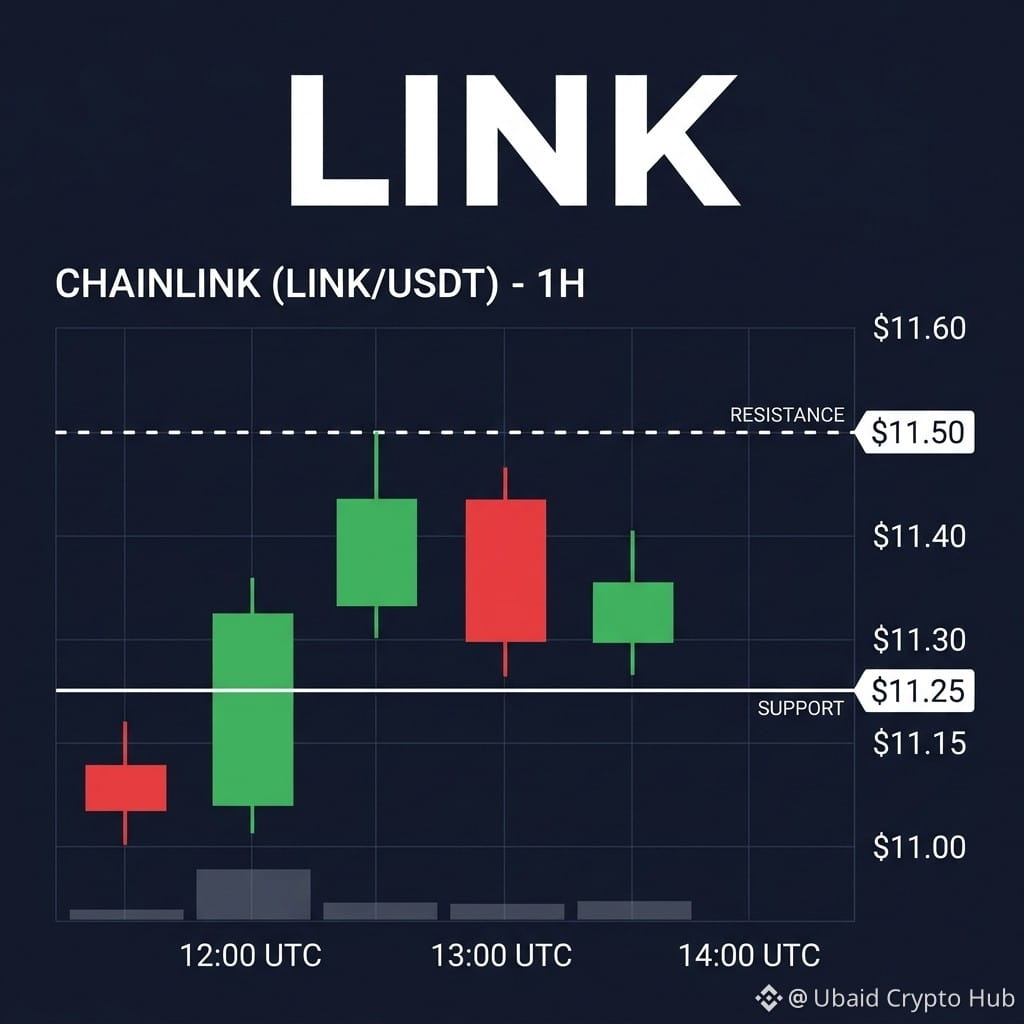
— Can Chainlink recover above $11.50?
LINK is trading near $11.326, down approximately 0.98% over 24 hours. Sellers currently have a slight short-term edge.
Support: $11.25
Resistance: $11.50, then $11.63
Holding support could allow a rebound attempt. A confirmed break below $11.25 may signal further weakness. Watch volume and candle closes before drawing conclusions.
Would you wait for a recovery above $11.50 or watch the support zone first?
#LINK #Chainlink #cryptotrading
$LINK
— Can Chainlink recover above $11.50?
LINK is trading near $11.326, down approximately 0.98% over 24 hours. Sellers currently have a slight short-term edge.
Support: $11.25
Resistance: $11.50, then $11.63
Holding support could allow a rebound attempt. A confirmed break below $11.25 may signal further weakness. Watch volume and candle closes before drawing conclusions.
Would you wait for a recovery above $11.50 or watch the support zone first?
#LINK #Chainlink #cryptotrading
— Can Chainlink recover above $11.50?
LINK is trading near $11.326, down approximately 0.98% over 24 hours. Sellers currently have a slight short-term edge.
Support: $11.25
Resistance: $11.50, then $11.63
Holding support could allow a rebound attempt. A confirmed break below $11.25 may signal further weakness. Watch volume and candle closes before drawing conclusions.
Would you wait for a recovery above $11.50 or watch the support zone first?
#LINK #Chainlink #cryptotrading
95

🇭🇰 TODAY: Hong Kong Gold Exchange, the world’s fourth-largest gold trading venue by volume, is integrating Chainlink CCIP to let its gold-backed XGZ token move across blockchains.
#Chainlink $LINK
🇭🇰 TODAY: Hong Kong Gold Exchange, the world’s fourth-largest gold trading venue by volume, is integrating Chainlink CCIP to let its gold-backed XGZ token move across blockchains.
#Chainlink $LINK
#Chainlink $LINK

81

·
--
Haussier
Chainlink Targets $700 Billion in Custodied Crypto Assets With New DeFi Lending Solution
#Chainlink #LINK #ChainlinkUpdate #LINK🔥🔥🔥 $LINK
{spot}(LINKUSDT)
Read Here: https://altcoinsanalysis.com/chainlink-targets-700-billion-in-custodied-crypto-assets-with-new-defi-lending-solution/
Chainlink Targets $700 Billion in Custodied Crypto Assets With New DeFi Lending Solution
#Chainlink #LINK #ChainlinkUpdate #LINK🔥🔥🔥 $LINK
Read Here: https://altcoinsanalysis.com/chainlink-targets-700-billion-in-custodied-crypto-assets-with-new-defi-lending-solution/
#Chainlink #LINK #ChainlinkUpdate #LINK🔥🔥🔥 $LINK
Read Here: https://altcoinsanalysis.com/chainlink-targets-700-billion-in-custodied-crypto-assets-with-new-defi-lending-solution/
59
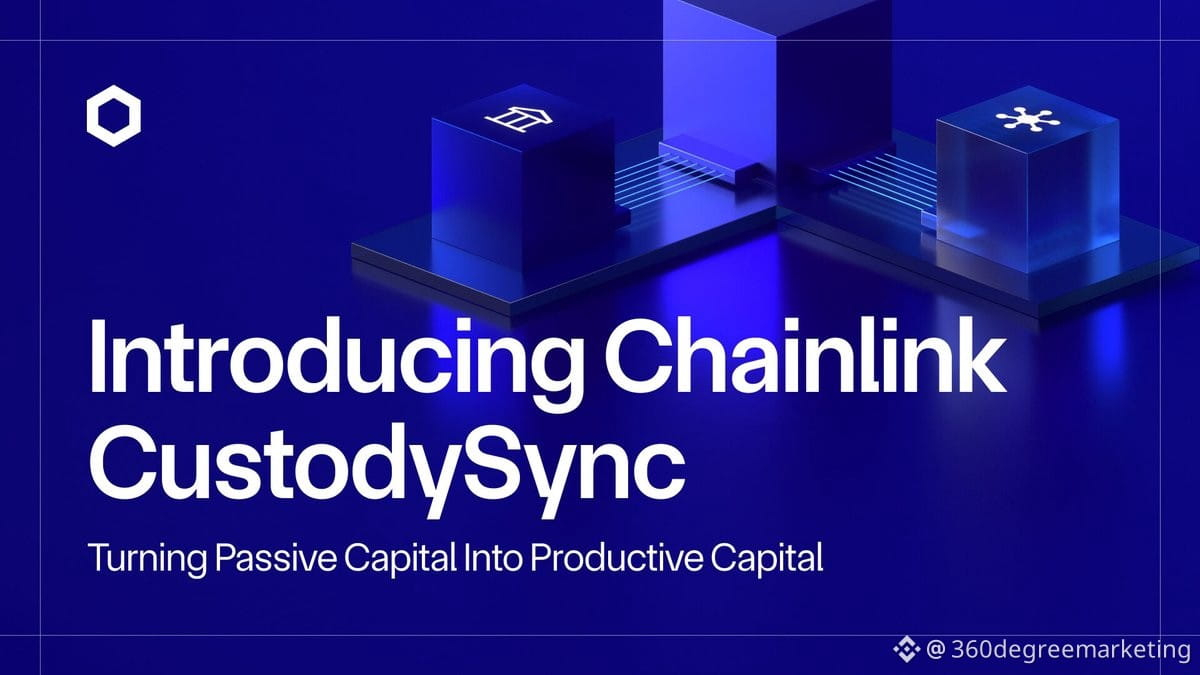
⚡ NEW: Chainlink just launched CustodySync, which lets institutions borrow against crypto in DeFi lending markets while the assets stay with a regulated custodian.
Anchorage Digital is the launch partner.
#Chainlink $LINK
⚡ NEW: Chainlink just launched CustodySync, which lets institutions borrow against crypto in DeFi lending markets while the assets stay with a regulated custodian.
Anchorage Digital is the launch partner.
#Chainlink $LINK
Anchorage Digital is the launch partner.
#Chainlink $LINK
127

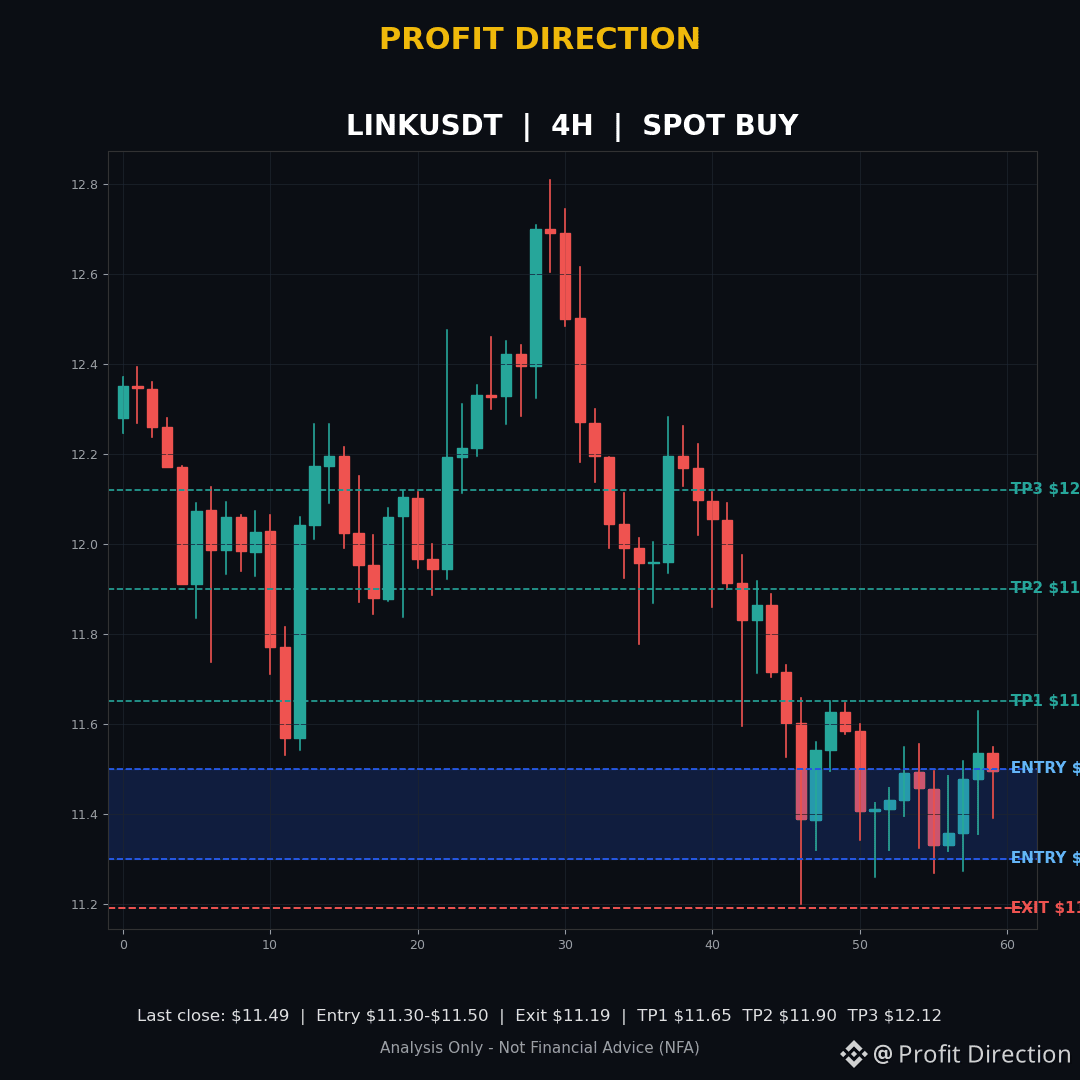
🚀 LINKUSDT | SPOT BUY
📍 Entry Zone: $11.30–$11.50
🚪 Exit (Invalidation): $11.19
🎯 TP1: $11.65
🎯 TP2: $11.90
🎯 TP3: $12.12
⚖️ R:R: 1:1.19 to TP1 | 1:2.38 to TP2 | 1:3.43 to TP3 (midpoint $11.40)
⏱️ TF: 4H
📊 Reason: LINK has held the $11.20–$11.32 base on repeated 4H tests (lows $11.20, $11.26, $11.27, $11.31, $11.32) after pulling back from $12.28, and price is consolidating near $11.50 while BTC holds near $80,000 ahead of the Fed decision on Oct 28. Invalidation: a 4H close below $11.19, under the recent $11.20 swing low. This is a spot idea, no leverage. Note: the Fed decision is due Oct 28, so macro volatility can invalidate this setup quickly.
⚠️ Analysis Only — Not Financial Advice (NFA). Trading involves risk.
Follow Profit Direction for more signals, best signals and market updates. Share your opinion in the comments.
#LINK #LINKUSDT #Chainlink #CryptoTrading
🚀 LINKUSDT | SPOT BUY
📍 Entry Zone: $11.30–$11.50
🚪 Exit (Invalidation): $11.19
🎯 TP1: $11.65
🎯 TP2: $11.90
🎯 TP3: $12.12
⚖️ R:R: 1:1.19 to TP1 | 1:2.38 to TP2 | 1:3.43 to TP3 (midpoint $11.40)
⏱️ TF: 4H
📊 Reason: LINK has held the $11.20–$11.32 base on repeated 4H tests (lows $11.20, $11.26, $11.27, $11.31, $11.32) after pulling back from $12.28, and price is consolidating near $11.50 while BTC holds near $80,000 ahead of the Fed decision on Oct 28. Invalidation: a 4H close below $11.19, under the recent $11.20 swing low. This is a spot idea, no leverage. Note: the Fed decision is due Oct 28, so macro volatility can invalidate this setup quickly.
⚠️ Analysis Only — Not Financial Advice (NFA). Trading involves risk.
Follow Profit Direction for more signals, best signals and market updates. Share your opinion in the comments.
#LINK #LINKUSDT #Chainlink #CryptoTrading
📍 Entry Zone: $11.30–$11.50
🚪 Exit (Invalidation): $11.19
🎯 TP1: $11.65
🎯 TP2: $11.90
🎯 TP3: $12.12
⚖️ R:R: 1:1.19 to TP1 | 1:2.38 to TP2 | 1:3.43 to TP3 (midpoint $11.40)
⏱️ TF: 4H
📊 Reason: LINK has held the $11.20–$11.32 base on repeated 4H tests (lows $11.20, $11.26, $11.27, $11.31, $11.32) after pulling back from $12.28, and price is consolidating near $11.50 while BTC holds near $80,000 ahead of the Fed decision on Oct 28. Invalidation: a 4H close below $11.19, under the recent $11.20 swing low. This is a spot idea, no leverage. Note: the Fed decision is due Oct 28, so macro volatility can invalidate this setup quickly.
⚠️ Analysis Only — Not Financial Advice (NFA). Trading involves risk.
Follow Profit Direction for more signals, best signals and market updates. Share your opinion in the comments.
#LINK #LINKUSDT #Chainlink #CryptoTrading
35
Chainlink just gave institutions a way into DeFi lending without handing over their keys — with Anchorage as its inaugural launch partner.
I've been tracking the custody problem for a while: big funds want DeFi yield, but moving assets out of a regulated custodian is usually a non-starter. CustodySync, introduced today, flips that. Anchorage keeps hold of the collateral while Chainlink's Proof of Reserve publishes the custody balances on-chain, and tokenized receipts backed by those holdings can then be used as collateral in DeFi lending. Both sides price the loans off the same Chainlink data, so the custodian's books and the protocol's loan-to-value maths read from one sheet, and a designated collateral agent handles liquidation if a position slips.
Here's the part I'm not glossing over: no launch markets, asset list, or volumes were named yet. This is plumbing, not a flow number — the test is whether other custodians actually plug in, or whether Anchorage stays a party of one. The tape isn't reacting yet either: $LINK sits near $11.45, down about 0.5% in 24 hours.
Do you think custodied DeFi borrowing becomes a real lane for institutions, or does it stay a neat demo?
Not financial advice. Do your own research.
$LINK
#Chainlink #DeFi #Custody #Anchorage #InstitutionalAdoption
Chainlink just gave institutions a way into DeFi lending without handing over their keys — with Anchorage as its inaugural launch partner.
I've been tracking the custody problem for a while: big funds want DeFi yield, but moving assets out of a regulated custodian is usually a non-starter. CustodySync, introduced today, flips that. Anchorage keeps hold of the collateral while Chainlink's Proof of Reserve publishes the custody balances on-chain, and tokenized receipts backed by those holdings can then be used as collateral in DeFi lending. Both sides price the loans off the same Chainlink data, so the custodian's books and the protocol's loan-to-value maths read from one sheet, and a designated collateral agent handles liquidation if a position slips.
Here's the part I'm not glossing over: no launch markets, asset list, or volumes were named yet. This is plumbing, not a flow number — the test is whether other custodians actually plug in, or whether Anchorage stays a party of one. The tape isn't reacting yet either: $LINK sits near $11.45, down about 0.5% in 24 hours.
Do you think custodied DeFi borrowing becomes a real lane for institutions, or does it stay a neat demo?
Not financial advice. Do your own research.
$LINK
#Chainlink #DeFi #Custody #Anchorage #InstitutionalAdoption
I've been tracking the custody problem for a while: big funds want DeFi yield, but moving assets out of a regulated custodian is usually a non-starter. CustodySync, introduced today, flips that. Anchorage keeps hold of the collateral while Chainlink's Proof of Reserve publishes the custody balances on-chain, and tokenized receipts backed by those holdings can then be used as collateral in DeFi lending. Both sides price the loans off the same Chainlink data, so the custodian's books and the protocol's loan-to-value maths read from one sheet, and a designated collateral agent handles liquidation if a position slips.
Here's the part I'm not glossing over: no launch markets, asset list, or volumes were named yet. This is plumbing, not a flow number — the test is whether other custodians actually plug in, or whether Anchorage stays a party of one. The tape isn't reacting yet either: $LINK sits near $11.45, down about 0.5% in 24 hours.
Do you think custodied DeFi borrowing becomes a real lane for institutions, or does it stay a neat demo?
Not financial advice. Do your own research.
$LINK
#Chainlink #DeFi #Custody #Anchorage #InstitutionalAdoption

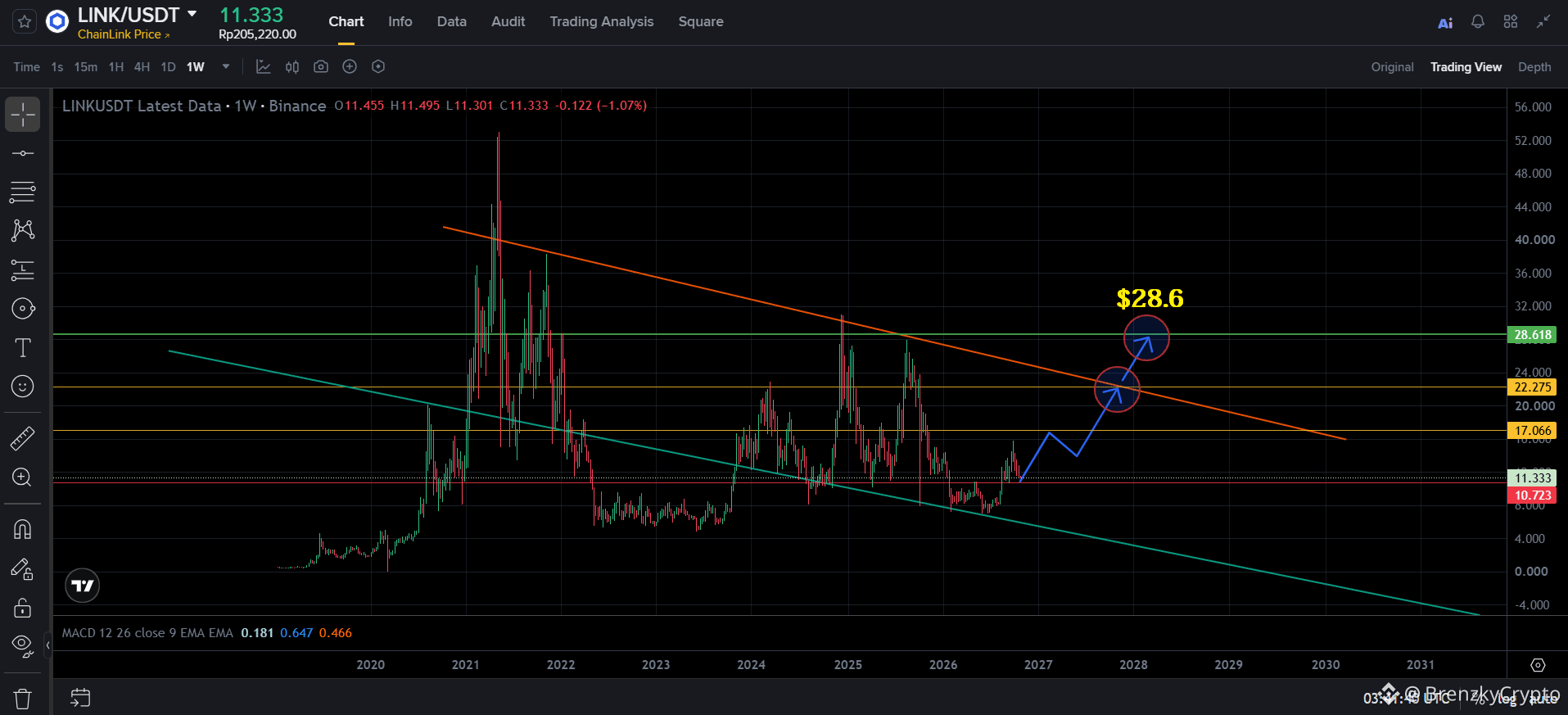
$LINK looks promising for this cycle to climb back to its previous cycle ATH near $28.6 with +150% potential gain if its successfully Breaks the downtrend line at $22.3.
what you guys think? drop your thoughts 👇
#LINK #Chainlink
{spot}(LINKUSDT)
$LINK looks promising for this cycle to climb back to its previous cycle ATH near $28.6 with +150% potential gain if its successfully Breaks the downtrend line at $22.3.
what you guys think? drop your thoughts 👇
#LINK #Chainlink
what you guys think? drop your thoughts 👇
#LINK #Chainlink
321

·
--
$LINK or $XRP for the next leg? Only one.
I’m taking $LINK. @chainlink is at $11.44, up 1.29%, but this move still looks fragile: 4h RSI is 39 and volume is only 0.3x the 20d average. 🧊
Price sits below the 20d and 50d MAs. Bearish stack. Funding is positive at 0.003%, so longs are already paying while momentum barely moves. I’d want $LINK to reclaim $12 before getting aggressive. 📉
Which side are you taking?
#Chainlink #DeFi #Crypto
$LINK or $XRP for the next leg? Only one.
I’m taking $LINK . @chainlink is at $11.44, up 1.29%, but this move still looks fragile: 4h RSI is 39 and volume is only 0.3x the 20d average. 🧊
Price sits below the 20d and 50d MAs. Bearish stack. Funding is positive at 0.003%, so longs are already paying while momentum barely moves. I’d want $LINK to reclaim $12 before getting aggressive. 📉
Which side are you taking?
#Chainlink #DeFi #Crypto
I’m taking $LINK . @chainlink is at $11.44, up 1.29%, but this move still looks fragile: 4h RSI is 39 and volume is only 0.3x the 20d average. 🧊
Price sits below the 20d and 50d MAs. Bearish stack. Funding is positive at 0.003%, so longs are already paying while momentum barely moves. I’d want $LINK to reclaim $12 before getting aggressive. 📉
Which side are you taking?
#Chainlink #DeFi #Crypto
9

·
--
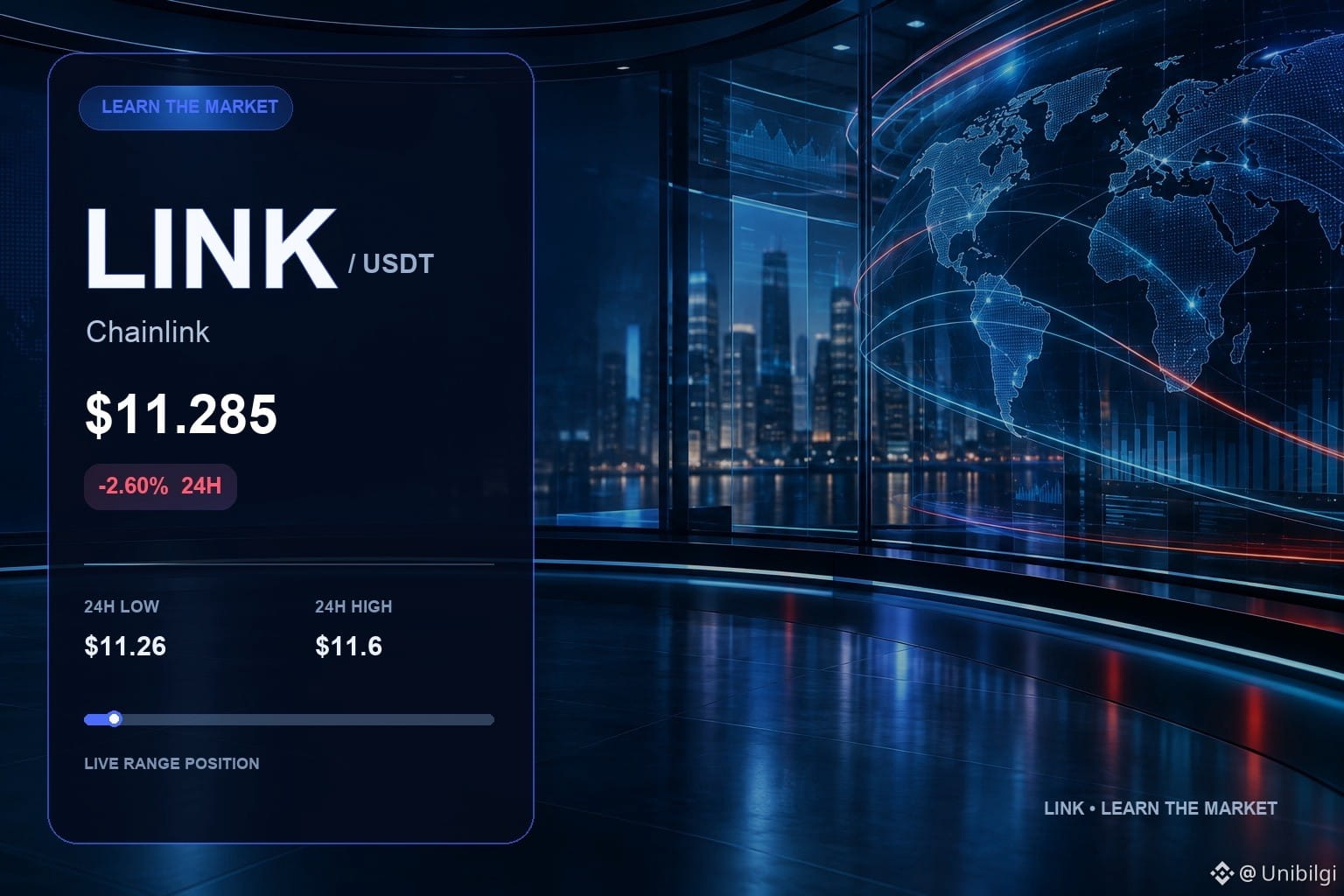
Quick market flash on $LINK today. 📊
1. Current price sits at $11.285.
2. 24h change shows a pull back of -2.598%.
3. Daily bounds range from a high of $11.6 to a low of $11.26.
Here is a quick lesson on support levels. 🧠 When price trades near its 24h low of $11.26, traders look to see if buyers defend that floor. If support holds, price stays within the range; if it breaks, new support must be found.
Takeaway: Use key price floors to evaluate market structure before acting. Not financial advice, so please DYOR. 💡
#Chainlink #CryptoEducation #Write2Earn #CryptoTrading
Quick market flash on $LINK today. 📊
1. Current price sits at $11.285.
2. 24h change shows a pull back of -2.598%.
3. Daily bounds range from a high of $11.6 to a low of $11.26.
Here is a quick lesson on support levels. 🧠 When price trades near its 24h low of $11.26, traders look to see if buyers defend that floor. If support holds, price stays within the range; if it breaks, new support must be found.
Takeaway: Use key price floors to evaluate market structure before acting. Not financial advice, so please DYOR. 💡
#Chainlink #CryptoEducation #Write2Earn #CryptoTrading
1. Current price sits at $11.285.
2. 24h change shows a pull back of -2.598%.
3. Daily bounds range from a high of $11.6 to a low of $11.26.
Here is a quick lesson on support levels. 🧠 When price trades near its 24h low of $11.26, traders look to see if buyers defend that floor. If support holds, price stays within the range; if it breaks, new support must be found.
Takeaway: Use key price floors to evaluate market structure before acting. Not financial advice, so please DYOR. 💡
#Chainlink #CryptoEducation #Write2Earn #CryptoTrading
80

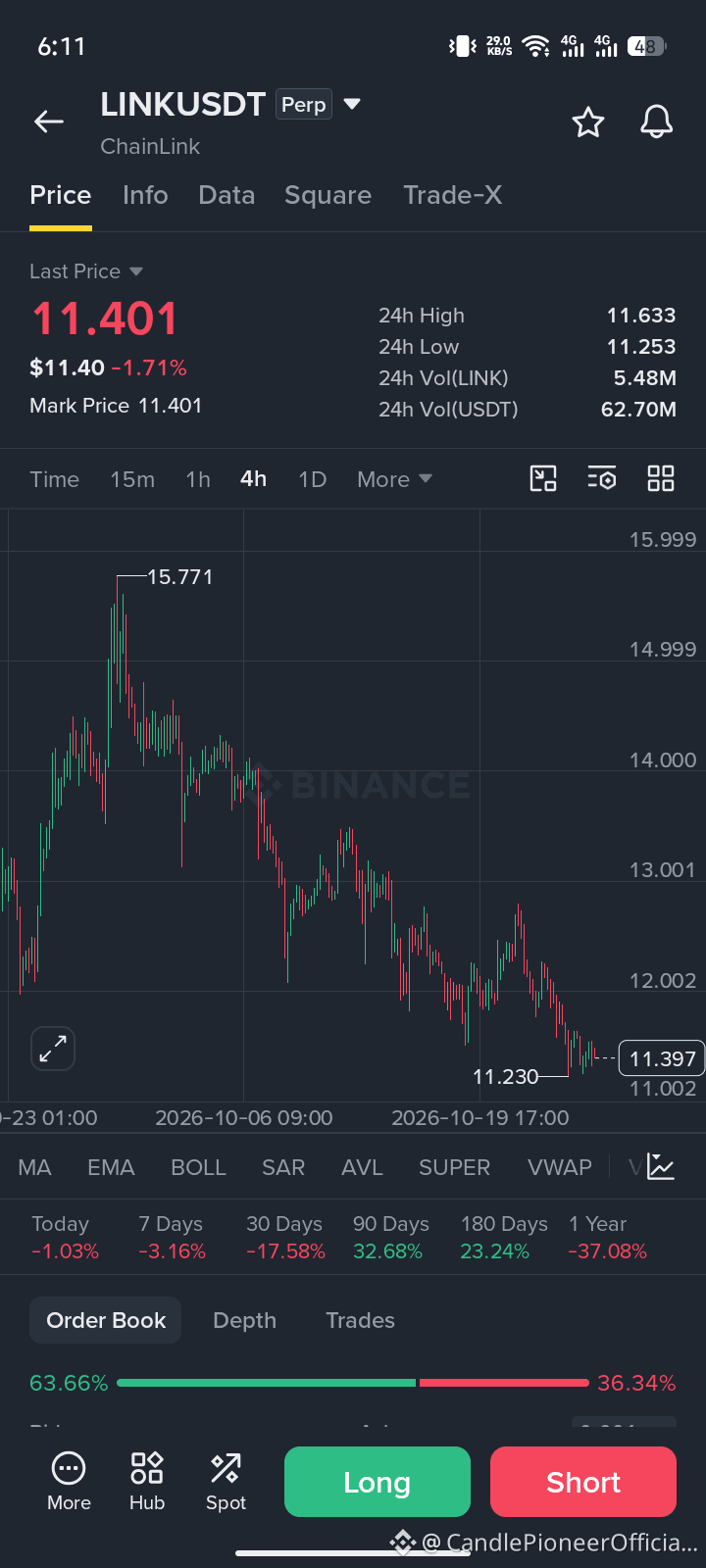
$LINK Testing Major Support Zone..📉🔥 11.230 To 11.401.. What A Key Rebound Level ‼️ That Heavy Drop Cleared Out The Weak Hands 🟢 13.500 Next Chapter..!! 🎯
Don't Blink !! 🎯
#BinancePick
#Chainlink
#cryptotrading
{future}(LINKUSDT)
$LINK Testing Major Support Zone..📉🔥 11.230 To 11.401.. What A Key Rebound Level ‼️ That Heavy Drop Cleared Out The Weak Hands 🟢 13.500 Next Chapter..!! 🎯
Don't Blink !! 🎯
#BinancePick
#Chainlink
#cryptotrading
Don't Blink !! 🎯
#BinancePick
#Chainlink
#cryptotrading
1
152
Connectez-vous pour découvrir plus de contenu
Rejoignez la communauté mondiale des adeptes de cryptomonnaies sur Binance Square
⚡️ Suviez les dernières informations importantes sur les cryptomonnaies.
💬 Jugé digne de confiance par la plus grande plateforme d’échange de cryptomonnaies au monde.
👍 Découvrez les connaissances que partagent les créateurs vérifiés.
Adresse e-mail/Nº de téléphone
Sujets d’actualité
1
#CanMicrosoftDeliverOnAI
98,238 vues
813 mentions
2
#CanGoogleDefindItsCore
47,026 vues
591 mentions
3
#FOMCWatch
9.1M vues
28,031 mentions
4
#EthereumDropsBelow$2300
11,467 vues
161 mentions
5
#BitcoinSlipsBelow$80KAgain
32,015 vues
126 mentions
6
#ThailandLaunchesWORPTStablecoinToQRPaymentApp
66,288 vues
821 mentions
7
#StrategySkipsBitcoinPurchasesSpends$205MOnSTRCBuybacks
12,470 vues
99 mentions
8
#BitmineAdds10452ETH
113,722 vues
1,233 mentions
9
#SouthKoreaConsidersEducationTaxOnCryptoExchanges
70,191 vues
861 mentions
10
#OCCUrgesCommunityBanksToEnterStablecoinPayments
45,982 vues
612 mentions