
#web3infrastructure
web3infrastructure
207,944 vues
2,969 mentions
Populaire
Récents

·
--
Imaginez ceci : vous vous connectez à votre terminal de trading pendant une volatilité maximale, pour constater que la session a été interrompue parce que votre navigateur a effacé de manière agressive des cookies locaux essentiels.
La plupart des traders se focalisent sur le slippage et la congestion réseau, mais passent complètement à côté du rôle fondamental de l’architecture de session, qui protège à la fois la vitesse d’exécution et les identifiants de sécurité lors des mouvements critiques du marché.
Quand on observe les couches d’infrastructure entre Web3 et les bourses, les fonctions de données de session essentielles fonctionnent un peu comme les battements de cœur des validateurs sur des réseaux tels que $SOL , ou encore comme le suivi de l’état de consensus sur $ETH. Sans des cookies essentiels persistants, des fonctionnalités comme l’authentification API basée sur la session, la persistance du 2FA et les préférences de confidentialité sans PII (zéro donnée personnelle identifiable) cessent de fonctionner immédiatement. C’est comme essayer d’acheminer un swap rapide via un protocole décentralisé tout en bloquant le stockage d’état nécessaire pour vérifier l’adresse de portefeuille à laquelle vous êtes connecté.
De même que $BNB chain repose sur des paramètres de validateurs essentiels et non négociables pour maintenir les blocs en mouvement, les interfaces modernes nécessitent ces cookies strictement fonctionnels uniquement pour conserver votre connexion active et vos paramètres utilisateur, sans jamais toucher à vos données personnelles.
À quelle fréquence vérifiez-vous votre navigateur et vos paramètres de confidentialité avant de trader des événements à forte volatilité ?
#CryptoSecurity #Web3Infrastructure #TradingTips
Imaginez ceci : vous vous connectez à votre terminal de trading pendant une volatilité maximale, pour constater que la session a été interrompue parce que votre navigateur a effacé de manière agressive des cookies locaux essentiels.
La plupart des traders se focalisent sur le slippage et la congestion réseau, mais passent complètement à côté du rôle fondamental de l’architecture de session, qui protège à la fois la vitesse d’exécution et les identifiants de sécurité lors des mouvements critiques du marché.
Quand on observe les couches d’infrastructure entre Web3 et les bourses, les fonctions de données de session essentielles fonctionnent un peu comme les battements de cœur des validateurs sur des réseaux tels que $SOL , ou encore comme le suivi de l’état de consensus sur $ETH . Sans des cookies essentiels persistants, des fonctionnalités comme l’authentification API basée sur la session, la persistance du 2FA et les préférences de confidentialité sans PII (zéro donnée personnelle identifiable) cessent de fonctionner immédiatement. C’est comme essayer d’acheminer un swap rapide via un protocole décentralisé tout en bloquant le stockage d’état nécessaire pour vérifier l’adresse de portefeuille à laquelle vous êtes connecté.
De même que $BNB chain repose sur des paramètres de validateurs essentiels et non négociables pour maintenir les blocs en mouvement, les interfaces modernes nécessitent ces cookies strictement fonctionnels uniquement pour conserver votre connexion active et vos paramètres utilisateur, sans jamais toucher à vos données personnelles.
À quelle fréquence vérifiez-vous votre navigateur et vos paramètres de confidentialité avant de trader des événements à forte volatilité ?
#CryptoSecurity #Web3Infrastructure #TradingTips
La plupart des traders se focalisent sur le slippage et la congestion réseau, mais passent complètement à côté du rôle fondamental de l’architecture de session, qui protège à la fois la vitesse d’exécution et les identifiants de sécurité lors des mouvements critiques du marché.
Quand on observe les couches d’infrastructure entre Web3 et les bourses, les fonctions de données de session essentielles fonctionnent un peu comme les battements de cœur des validateurs sur des réseaux tels que $SOL , ou encore comme le suivi de l’état de consensus sur $ETH . Sans des cookies essentiels persistants, des fonctionnalités comme l’authentification API basée sur la session, la persistance du 2FA et les préférences de confidentialité sans PII (zéro donnée personnelle identifiable) cessent de fonctionner immédiatement. C’est comme essayer d’acheminer un swap rapide via un protocole décentralisé tout en bloquant le stockage d’état nécessaire pour vérifier l’adresse de portefeuille à laquelle vous êtes connecté.
De même que $BNB chain repose sur des paramètres de validateurs essentiels et non négociables pour maintenir les blocs en mouvement, les interfaces modernes nécessitent ces cookies strictement fonctionnels uniquement pour conserver votre connexion active et vos paramètres utilisateur, sans jamais toucher à vos données personnelles.
À quelle fréquence vérifiez-vous votre navigateur et vos paramètres de confidentialité avant de trader des événements à forte volatilité ?
#CryptoSecurity #Web3Infrastructure #TradingTips

15

·
--
Avez-vous déjà entendu parler du concept de Pons dans la crypto ? En anatomie, le pont (pons) est une structure vitale du tronc cérébral qui relie le cerveau au corps, servant d’autoroute de communication. Dans l’espace Web3 qui évolue rapidement, nous voyons émerger un Pons numérique : une infrastructure cruciale reliant l’intelligence artificielle, les réseaux d’infrastructure physique décentralisée (DePIN) et les protocoles inter-chaînes.
À mesure que le marché crypto arrive à maturité, l’attention se déplace des blockchains de couche 1 isolées vers une interopérabilité fluide. C’est là que le concept de Pons devient particulièrement pertinent. Les ponts inter-chaînes et les protocoles d’interopérabilité agissent comme des connecteurs neuronaux du monde décentralisé. Sans ces ponts, la liquidité reste fragmentée et les écosystèmes ne peuvent pas évoluer.
De plus, avec l’essor massif des projets crypto pilotés par l’IA, le besoin d’un Pons pour le Web3 est plus urgent que jamais. Les agents d’IA décentralisée nécessitent des canaux de communication fluides pour partager des données, exécuter des smart contracts sur différentes chaînes et accéder à la puissance de calcul fournie par les réseaux DePIN. Les protocoles qui construisent ces voies de communication à haut débit et sécurisées constituent, en quelque sorte, le tronc cérébral du futur superordinateur mondial.
Pour les investisseurs et développeurs avisés, suivre ces protocoles de connexion est essentiel. Même si les réseaux de couche 1 très médiatisés monopolisent l’attention, l’infrastructure qui les relie recèle souvent le plus grand potentiel encore inexploité. Que vous cherchiez des géants de l’interopérabilité ou des réseaux émergents de routage IA-décentralisé, le Pons du Web3 est là où se trouve la véritable utilité.
Gardez un œil sur les connecteurs. L’avenir de la crypto ne consiste pas seulement à construire des cerveaux plus puissants, mais à veiller à ce qu’ils soient parfaitement câblés.
Quels sont vos protocoles de bridging ou de connectivité préférés dans le Web3 en ce moment ? Dites-le nous en commentaire.
#Web3Infrastructure #CryptoBridges #Interoperability
Avez-vous déjà entendu parler du concept de Pons dans la crypto ? En anatomie, le pont (pons) est une structure vitale du tronc cérébral qui relie le cerveau au corps, servant d’autoroute de communication. Dans l’espace Web3 qui évolue rapidement, nous voyons émerger un Pons numérique : une infrastructure cruciale reliant l’intelligence artificielle, les réseaux d’infrastructure physique décentralisée (DePIN) et les protocoles inter-chaînes.
À mesure que le marché crypto arrive à maturité, l’attention se déplace des blockchains de couche 1 isolées vers une interopérabilité fluide. C’est là que le concept de Pons devient particulièrement pertinent. Les ponts inter-chaînes et les protocoles d’interopérabilité agissent comme des connecteurs neuronaux du monde décentralisé. Sans ces ponts, la liquidité reste fragmentée et les écosystèmes ne peuvent pas évoluer.
De plus, avec l’essor massif des projets crypto pilotés par l’IA, le besoin d’un Pons pour le Web3 est plus urgent que jamais. Les agents d’IA décentralisée nécessitent des canaux de communication fluides pour partager des données, exécuter des smart contracts sur différentes chaînes et accéder à la puissance de calcul fournie par les réseaux DePIN. Les protocoles qui construisent ces voies de communication à haut débit et sécurisées constituent, en quelque sorte, le tronc cérébral du futur superordinateur mondial.
Pour les investisseurs et développeurs avisés, suivre ces protocoles de connexion est essentiel. Même si les réseaux de couche 1 très médiatisés monopolisent l’attention, l’infrastructure qui les relie recèle souvent le plus grand potentiel encore inexploité. Que vous cherchiez des géants de l’interopérabilité ou des réseaux émergents de routage IA-décentralisé, le Pons du Web3 est là où se trouve la véritable utilité.
Gardez un œil sur les connecteurs. L’avenir de la crypto ne consiste pas seulement à construire des cerveaux plus puissants, mais à veiller à ce qu’ils soient parfaitement câblés.
Quels sont vos protocoles de bridging ou de connectivité préférés dans le Web3 en ce moment ? Dites-le nous en commentaire.
#Web3Infrastructure #CryptoBridges #Interoperability
À mesure que le marché crypto arrive à maturité, l’attention se déplace des blockchains de couche 1 isolées vers une interopérabilité fluide. C’est là que le concept de Pons devient particulièrement pertinent. Les ponts inter-chaînes et les protocoles d’interopérabilité agissent comme des connecteurs neuronaux du monde décentralisé. Sans ces ponts, la liquidité reste fragmentée et les écosystèmes ne peuvent pas évoluer.
De plus, avec l’essor massif des projets crypto pilotés par l’IA, le besoin d’un Pons pour le Web3 est plus urgent que jamais. Les agents d’IA décentralisée nécessitent des canaux de communication fluides pour partager des données, exécuter des smart contracts sur différentes chaînes et accéder à la puissance de calcul fournie par les réseaux DePIN. Les protocoles qui construisent ces voies de communication à haut débit et sécurisées constituent, en quelque sorte, le tronc cérébral du futur superordinateur mondial.
Pour les investisseurs et développeurs avisés, suivre ces protocoles de connexion est essentiel. Même si les réseaux de couche 1 très médiatisés monopolisent l’attention, l’infrastructure qui les relie recèle souvent le plus grand potentiel encore inexploité. Que vous cherchiez des géants de l’interopérabilité ou des réseaux émergents de routage IA-décentralisé, le Pons du Web3 est là où se trouve la véritable utilité.
Gardez un œil sur les connecteurs. L’avenir de la crypto ne consiste pas seulement à construire des cerveaux plus puissants, mais à veiller à ce qu’ils soient parfaitement câblés.
Quels sont vos protocoles de bridging ou de connectivité préférés dans le Web3 en ce moment ? Dites-le nous en commentaire.
#Web3Infrastructure #CryptoBridges #Interoperability
44

·
--
#Write2Earn
🚀 L’avenir des registres quantiques-classiques est là.
Que se passe-t-il lorsque vous intégrez directement la physique des manifolds quantiques en temps réel dans la validation de l’état d’un registre distribué ?
Nous avons construit en toute discrétion, et nos premiers résultats de simulation montrent que notre système de blockchain quantique à théorie hybride des champs quantiques fractals géométriques (GFQFT) est au point :
⚡ 107,6+ TPS de débit mesuré lors de tests de stress simultanés
⏱️ 9,29 ms de latence moyenne par transaction
🛡️ 100 % de précision de classification contre les adversaires (38/38 transactions légitimes acceptées, 62/62 vecteurs d’attaque rejetés avec zéro faux positifs)
🌐 Intégration native ISO 20022 pour les données de règlement interbancaire institutionnel
Au lieu de compter uniquement sur des calculs lourds en énergie, notre cadre introduit une « porte d’admissibilité » physique informée par la physique afin de vérifier la faisabilité des transactions au niveau du manifold avant l’engagement dans le registre.
Sécurité assistée par le quantique. Vitesse de règlement institutionnel. ZÉRO GASPILLAGE DE MINAGE.
Les voies de validation Mainnet/QPU sont activement en cours.
Qui est prêt pour la prochaine évolution de l’infrastructure Web3 ? 👇
#QuantumComputingRevolution #blockchain #fintech #ISO20022 #Web3Infrastructure
Votez ci-dessous et partagez vos idées en commentaire ! Quel est le plus gros inconvénient des mécanismes actuels de consensus de blockchain ?
#Write2Earn
🚀 L’avenir des registres quantiques-classiques est là.
Que se passe-t-il lorsque vous intégrez directement la physique des manifolds quantiques en temps réel dans la validation de l’état d’un registre distribué ?
Nous avons construit en toute discrétion, et nos premiers résultats de simulation montrent que notre système de blockchain quantique à théorie hybride des champs quantiques fractals géométriques (GFQFT) est au point :
⚡ 107,6+ TPS de débit mesuré lors de tests de stress simultanés
⏱️ 9,29 ms de latence moyenne par transaction
🛡️ 100 % de précision de classification contre les adversaires (38/38 transactions légitimes acceptées, 62/62 vecteurs d’attaque rejetés avec zéro faux positifs)
🌐 Intégration native ISO 20022 pour les données de règlement interbancaire institutionnel
Au lieu de compter uniquement sur des calculs lourds en énergie, notre cadre introduit une « porte d’admissibilité » physique informée par la physique afin de vérifier la faisabilité des transactions au niveau du manifold avant l’engagement dans le registre.
Sécurité assistée par le quantique. Vitesse de règlement institutionnel. ZÉRO GASPILLAGE DE MINAGE.
Les voies de validation Mainnet/QPU sont activement en cours.
Qui est prêt pour la prochaine évolution de l’infrastructure Web3 ? 👇
#QuantumComputingRevolution #blockchain #fintech #ISO20022 #Web3Infrastructure
Votez ci-dessous et partagez vos idées en commentaire ! Quel est le plus gros inconvénient des mécanismes actuels de consensus de blockchain ?
🚀 L’avenir des registres quantiques-classiques est là.
Que se passe-t-il lorsque vous intégrez directement la physique des manifolds quantiques en temps réel dans la validation de l’état d’un registre distribué ?
Nous avons construit en toute discrétion, et nos premiers résultats de simulation montrent que notre système de blockchain quantique à théorie hybride des champs quantiques fractals géométriques (GFQFT) est au point :
⚡ 107,6+ TPS de débit mesuré lors de tests de stress simultanés
⏱️ 9,29 ms de latence moyenne par transaction
🛡️ 100 % de précision de classification contre les adversaires (38/38 transactions légitimes acceptées, 62/62 vecteurs d’attaque rejetés avec zéro faux positifs)
🌐 Intégration native ISO 20022 pour les données de règlement interbancaire institutionnel
Au lieu de compter uniquement sur des calculs lourds en énergie, notre cadre introduit une « porte d’admissibilité » physique informée par la physique afin de vérifier la faisabilité des transactions au niveau du manifold avant l’engagement dans le registre.
Sécurité assistée par le quantique. Vitesse de règlement institutionnel. ZÉRO GASPILLAGE DE MINAGE.
Les voies de validation Mainnet/QPU sont activement en cours.
Qui est prêt pour la prochaine évolution de l’infrastructure Web3 ? 👇
#QuantumComputingRevolution #blockchain #fintech #ISO20022 #Web3Infrastructure
Votez ci-dessous et partagez vos idées en commentaire ! Quel est le plus gros inconvénient des mécanismes actuels de consensus de blockchain ?
Excessive Energy Waste (PoW)
Cap. Central/Lockups (POS)
Latency/Scalability Bottleneck
Post-Quantum Attacks
1 jour(s) restant(s)
64

·
--
Haussier
$LINK n’est pas juste un autre altcoin dans un portefeuille ; c’est la couche d’infrastructure indispensable qui fait le pont entre la finance traditionnelle et les systèmes décentralisés.
Alors que le capital de détail poursuit des cycles de hype de courte durée, l’adoption institutionnelle des actifs du monde réel tokenisés (RWAs) et de la messagerie interchaînes via CCIP repose fortement sur des réseaux d’oracles sécurisés et décentralisés.
Construire une position durable signifie regarder au-delà de la volatilité quotidienne et se concentrer sur l’utilité fondamentale du réseau.
Lorsque votre thèse s’appuie sur l’indispensabilité du protocole plutôt que sur l’action des prix, la patience devient votre plus grand avantage.
#Chainlink #CryptoStrategy #Web3Infrastructure #SmartContracts
{spot}(LINKUSDT)
$LINK n’est pas juste un autre altcoin dans un portefeuille ; c’est la couche d’infrastructure indispensable qui fait le pont entre la finance traditionnelle et les systèmes décentralisés.
Alors que le capital de détail poursuit des cycles de hype de courte durée, l’adoption institutionnelle des actifs du monde réel tokenisés (RWAs) et de la messagerie interchaînes via CCIP repose fortement sur des réseaux d’oracles sécurisés et décentralisés.
Construire une position durable signifie regarder au-delà de la volatilité quotidienne et se concentrer sur l’utilité fondamentale du réseau.
Lorsque votre thèse s’appuie sur l’indispensabilité du protocole plutôt que sur l’action des prix, la patience devient votre plus grand avantage.
#Chainlink #CryptoStrategy #Web3Infrastructure #SmartContracts
Alors que le capital de détail poursuit des cycles de hype de courte durée, l’adoption institutionnelle des actifs du monde réel tokenisés (RWAs) et de la messagerie interchaînes via CCIP repose fortement sur des réseaux d’oracles sécurisés et décentralisés.
Construire une position durable signifie regarder au-delà de la volatilité quotidienne et se concentrer sur l’utilité fondamentale du réseau.
Lorsque votre thèse s’appuie sur l’indispensabilité du protocole plutôt que sur l’action des prix, la patience devient votre plus grand avantage.
#Chainlink #CryptoStrategy #Web3Infrastructure #SmartContracts
1
95

·
--
L’infrastructure d’IA est en train de devenir silencieusement le récit le plus important dans la cryptomonnaie — et la plupart des traders restent concentrés sur l’évolution des prix plutôt que sur la construction en dessous.
Voici le changement à surveiller : les agents d’IA ont besoin de rails de calcul persistants et sans permission. Ils ont besoin de portefeuilles qu’ils contrôlent, de canaux de paiement qu’ils peuvent ouvrir de manière autonome, et de couches de règlement qui ne requièrent pas l’approbation humaine à chaque étape. C’est exactement ce que décrit l’infrastructure crypto.
$ETH est déjà utilisé comme couche de règlement pour les premiers frameworks d’agents d’IA. La conception à faible latence et à haut débit de $SOL en fait le choix naturel pour les micropaiements machine-à-machine. $BNB La structure de frais de Chain attire des dApps natives de l’IA qui doivent exécuter des milliers de micro-transactions par session.
La thèse n’est pas compliquée : l’IA génère une demande pour l’argent programmable. La crypto, c’est de l’argent programmable. La convergence n’est pas hypothétique — elle est déjà en production dans des dizaines de projets qui ne feront pas la une tant qu’ils ne seront pas trop gros pour être ignorés.
Les équipes qui construisent dès maintenant une infrastructure financière native de l’IA n’attendent pas un signal de marché haussier. Elles construisent parce que l’outillage est enfin prêt. Historiquement, c’est un moment très intéressant pour prêter attention.
#CryptoAI #AIAgents #Web3Infrastructure #BinanceSquare
L’infrastructure d’IA est en train de devenir silencieusement le récit le plus important dans la cryptomonnaie — et la plupart des traders restent concentrés sur l’évolution des prix plutôt que sur la construction en dessous.
Voici le changement à surveiller : les agents d’IA ont besoin de rails de calcul persistants et sans permission. Ils ont besoin de portefeuilles qu’ils contrôlent, de canaux de paiement qu’ils peuvent ouvrir de manière autonome, et de couches de règlement qui ne requièrent pas l’approbation humaine à chaque étape. C’est exactement ce que décrit l’infrastructure crypto.
$ETH est déjà utilisé comme couche de règlement pour les premiers frameworks d’agents d’IA. La conception à faible latence et à haut débit de $SOL en fait le choix naturel pour les micropaiements machine-à-machine. $BNB La structure de frais de Chain attire des dApps natives de l’IA qui doivent exécuter des milliers de micro-transactions par session.
La thèse n’est pas compliquée : l’IA génère une demande pour l’argent programmable. La crypto, c’est de l’argent programmable. La convergence n’est pas hypothétique — elle est déjà en production dans des dizaines de projets qui ne feront pas la une tant qu’ils ne seront pas trop gros pour être ignorés.
Les équipes qui construisent dès maintenant une infrastructure financière native de l’IA n’attendent pas un signal de marché haussier. Elles construisent parce que l’outillage est enfin prêt. Historiquement, c’est un moment très intéressant pour prêter attention.
#CryptoAI #AIAgents #Web3Infrastructure #BinanceSquare
Voici le changement à surveiller : les agents d’IA ont besoin de rails de calcul persistants et sans permission. Ils ont besoin de portefeuilles qu’ils contrôlent, de canaux de paiement qu’ils peuvent ouvrir de manière autonome, et de couches de règlement qui ne requièrent pas l’approbation humaine à chaque étape. C’est exactement ce que décrit l’infrastructure crypto.
$ETH est déjà utilisé comme couche de règlement pour les premiers frameworks d’agents d’IA. La conception à faible latence et à haut débit de $SOL en fait le choix naturel pour les micropaiements machine-à-machine. $BNB La structure de frais de Chain attire des dApps natives de l’IA qui doivent exécuter des milliers de micro-transactions par session.
La thèse n’est pas compliquée : l’IA génère une demande pour l’argent programmable. La crypto, c’est de l’argent programmable. La convergence n’est pas hypothétique — elle est déjà en production dans des dizaines de projets qui ne feront pas la une tant qu’ils ne seront pas trop gros pour être ignorés.
Les équipes qui construisent dès maintenant une infrastructure financière native de l’IA n’attendent pas un signal de marché haussier. Elles construisent parce que l’outillage est enfin prêt. Historiquement, c’est un moment très intéressant pour prêter attention.
#CryptoAI #AIAgents #Web3Infrastructure #BinanceSquare
69

Avez-vous remarqué à quel point la plupart des traders s’obsèdent sur les opportunités de calcul direct, tout en ignorant l’infrastructure qui imprime tranquillement des milliards ?
Trop d’investisseurs particuliers finissent par se retrouver avec la facture sur des tokens crypto IA très volatils, parce qu’ils suivent l’engouement du retail au lieu de suivre où circule réellement le chiffre d’affaires des entreprises. Quand vous vous laissez happer par la FOMO pour des pièces de narratif à faible liquidité sans vérifier les pipelines technologiques sous-jacents, vous finissez presque toujours par acheter la sortie de quelqu’un d’autre.
Regardez $AVGO comme un cas d’école de la manière dont l’infrastructure sérieuse capte la valeur. Wall Street s’attend à environ 29,4 Md$ de revenus et à un BPA proche de 3,24 $ pour le T3, mais les chiffres mis en avant ne font qu’effleurer la surface. Broadcom avait auparavant guidé vers environ 16 Md$ rien qu’en revenus de semi-conducteurs liés à l’IA, portés par une demande des entreprises en forte hausse pour des accélérateurs IA sur mesure.
Cette transition des entreprises, du calcul générique vers des puces sur mesure spécialisées, est essentielle pour les réseaux de calcul décentralisés comme $RENDER , et pour les protocoles de pipeline de données tels que $NEAR. Alors que les géants de la tech construisent du matériel IA propriétaire, l’effet de retombées détermine directement quels protocoles décentralisés survivront grâce à une utilité réelle plutôt qu’à une simple spéculation.
Pensez-vous que les réseaux d’IA décentralisés peuvent capter la demande des entreprises, ou bien que les géants du matériel traditionnel domineront l’ensemble de la pile ?
#AI #CryptoAnalysis #Web3Infrastructure
Avez-vous remarqué à quel point la plupart des traders s’obsèdent sur les opportunités de calcul direct, tout en ignorant l’infrastructure qui imprime tranquillement des milliards ?
Trop d’investisseurs particuliers finissent par se retrouver avec la facture sur des tokens crypto IA très volatils, parce qu’ils suivent l’engouement du retail au lieu de suivre où circule réellement le chiffre d’affaires des entreprises. Quand vous vous laissez happer par la FOMO pour des pièces de narratif à faible liquidité sans vérifier les pipelines technologiques sous-jacents, vous finissez presque toujours par acheter la sortie de quelqu’un d’autre.
Regardez $AVGO comme un cas d’école de la manière dont l’infrastructure sérieuse capte la valeur. Wall Street s’attend à environ 29,4 Md$ de revenus et à un BPA proche de 3,24 $ pour le T3, mais les chiffres mis en avant ne font qu’effleurer la surface. Broadcom avait auparavant guidé vers environ 16 Md$ rien qu’en revenus de semi-conducteurs liés à l’IA, portés par une demande des entreprises en forte hausse pour des accélérateurs IA sur mesure.
Cette transition des entreprises, du calcul générique vers des puces sur mesure spécialisées, est essentielle pour les réseaux de calcul décentralisés comme $RENDER , et pour les protocoles de pipeline de données tels que $NEAR . Alors que les géants de la tech construisent du matériel IA propriétaire, l’effet de retombées détermine directement quels protocoles décentralisés survivront grâce à une utilité réelle plutôt qu’à une simple spéculation.
Pensez-vous que les réseaux d’IA décentralisés peuvent capter la demande des entreprises, ou bien que les géants du matériel traditionnel domineront l’ensemble de la pile ?
#AI #CryptoAnalysis #Web3Infrastructure
Trop d’investisseurs particuliers finissent par se retrouver avec la facture sur des tokens crypto IA très volatils, parce qu’ils suivent l’engouement du retail au lieu de suivre où circule réellement le chiffre d’affaires des entreprises. Quand vous vous laissez happer par la FOMO pour des pièces de narratif à faible liquidité sans vérifier les pipelines technologiques sous-jacents, vous finissez presque toujours par acheter la sortie de quelqu’un d’autre.
Regardez $AVGO comme un cas d’école de la manière dont l’infrastructure sérieuse capte la valeur. Wall Street s’attend à environ 29,4 Md$ de revenus et à un BPA proche de 3,24 $ pour le T3, mais les chiffres mis en avant ne font qu’effleurer la surface. Broadcom avait auparavant guidé vers environ 16 Md$ rien qu’en revenus de semi-conducteurs liés à l’IA, portés par une demande des entreprises en forte hausse pour des accélérateurs IA sur mesure.
Cette transition des entreprises, du calcul générique vers des puces sur mesure spécialisées, est essentielle pour les réseaux de calcul décentralisés comme $RENDER , et pour les protocoles de pipeline de données tels que $NEAR . Alors que les géants de la tech construisent du matériel IA propriétaire, l’effet de retombées détermine directement quels protocoles décentralisés survivront grâce à une utilité réelle plutôt qu’à une simple spéculation.
Pensez-vous que les réseaux d’IA décentralisés peuvent capter la demande des entreprises, ou bien que les géants du matériel traditionnel domineront l’ensemble de la pile ?
#AI #CryptoAnalysis #Web3Infrastructure

43

🚨 LA MENACE DE FRICcion DES CENTRES DE DONNÉES MET EN PÉRIL LE CLOUD CENTRALISÉ ALORS QUE $0G SE PRÉPARE À UNE RECONQUÊTE DÉCENTRALISÉE ⚡
Serrage des vis réglementaires sur les géants de la tech centralisée obligeant les infrastructures Web3 à opérer un virage brutal vers des réseaux de données souverains. 📊 Alors que les centres de données traditionnels font face à un feu croisé croissant, des protocoles décentralisés de calcul et de disponibilité des données comme $HEMI , $0G et $SKR entrent dans une phase massive de découverte de la valorisation.
Le capital intelligent anticipe déjà ce changement d’architecture, en prévoyant de fortes rotations de capitaux hors des dépendances du cloud historique vers des alternatives sans confiance. ⚡ Attendez-vous à une volatilité marquée à mesure que les flux d’ordres réévalueront les protocoles qui se positionnent comme les piliers robustes du prochain cycle d’infrastructure. 💬 À quelle vitesse pensez-vous que les protocoles Web3 vont se découpler totalement des fournisseurs de cloud centralisés traditionnels ? 👇
⚠️ Ceci ne constitue pas un conseil financier. Gérez toujours votre risque. 🛡️
🏷️ #0G #HEMI #SKR #Crypto #Web3Infrastructure
⚡ 💎
🚨 LA MENACE DE FRICcion DES CENTRES DE DONNÉES MET EN PÉRIL LE CLOUD CENTRALISÉ ALORS QUE $0G SE PRÉPARE À UNE RECONQUÊTE DÉCENTRALISÉE ⚡
Serrage des vis réglementaires sur les géants de la tech centralisée obligeant les infrastructures Web3 à opérer un virage brutal vers des réseaux de données souverains. 📊 Alors que les centres de données traditionnels font face à un feu croisé croissant, des protocoles décentralisés de calcul et de disponibilité des données comme $HEMI , $0G et $SKR entrent dans une phase massive de découverte de la valorisation.
Le capital intelligent anticipe déjà ce changement d’architecture, en prévoyant de fortes rotations de capitaux hors des dépendances du cloud historique vers des alternatives sans confiance. ⚡ Attendez-vous à une volatilité marquée à mesure que les flux d’ordres réévalueront les protocoles qui se positionnent comme les piliers robustes du prochain cycle d’infrastructure. 💬 À quelle vitesse pensez-vous que les protocoles Web3 vont se découpler totalement des fournisseurs de cloud centralisés traditionnels ? 👇
⚠️ Ceci ne constitue pas un conseil financier. Gérez toujours votre risque. 🛡️
🏷️ #0G #HEMI #SKR #Crypto #Web3Infrastructure
⚡ 💎
Serrage des vis réglementaires sur les géants de la tech centralisée obligeant les infrastructures Web3 à opérer un virage brutal vers des réseaux de données souverains. 📊 Alors que les centres de données traditionnels font face à un feu croisé croissant, des protocoles décentralisés de calcul et de disponibilité des données comme $HEMI , $0G et $SKR entrent dans une phase massive de découverte de la valorisation.
Le capital intelligent anticipe déjà ce changement d’architecture, en prévoyant de fortes rotations de capitaux hors des dépendances du cloud historique vers des alternatives sans confiance. ⚡ Attendez-vous à une volatilité marquée à mesure que les flux d’ordres réévalueront les protocoles qui se positionnent comme les piliers robustes du prochain cycle d’infrastructure. 💬 À quelle vitesse pensez-vous que les protocoles Web3 vont se découpler totalement des fournisseurs de cloud centralisés traditionnels ? 👇
⚠️ Ceci ne constitue pas un conseil financier. Gérez toujours votre risque. 🛡️
🏷️ #0G #HEMI #SKR #Crypto #Web3Infrastructure
⚡ 💎


201

·
--
L’industrie de la cryptographie passe de la « croissance sauvage » à la « gestion réglementée », et l’infrastructure de la fiscalité et des taxes est la plateforme la plus essentielle de ce voyage.
FinTax vient de finaliser un tour de table de démarrage (seed), co-investi par Amber Group et PUNDI AI. L’entreprise se consacre à fournir aux utilisateurs de la cryptographie une solution complète en comptabilité et fiscalité. Chaque transaction on-chain doit pouvoir être retracée, et chaque détenteur de tokens doit pouvoir aborder sereinement ses déclarations fiscales.
Alors que la conformité des plateformes d’échange, les audits DeFi et la fiscalité des revenus issus des NFT sont progressivement inclus dans le champ de la réglementation, un outil capable de relier les données des portefeuilles, de classer automatiquement les catégories d’actifs et de générer des rapports fiscaux conformes n’est plus seulement un plus — c’est l’infrastructure permettant aux utilisateurs de la cryptographie de quitter les zones grises pour entrer dans des opérations sous le soleil.
Il est intéressant de surveiller les équipes entrepreneuriales qui explorent cette direction.#CryptoTax #Web3Infrastructure
L’industrie de la cryptographie passe de la « croissance sauvage » à la « gestion réglementée », et l’infrastructure de la fiscalité et des taxes est la plateforme la plus essentielle de ce voyage.
FinTax vient de finaliser un tour de table de démarrage (seed), co-investi par Amber Group et PUNDI AI. L’entreprise se consacre à fournir aux utilisateurs de la cryptographie une solution complète en comptabilité et fiscalité. Chaque transaction on-chain doit pouvoir être retracée, et chaque détenteur de tokens doit pouvoir aborder sereinement ses déclarations fiscales.
Alors que la conformité des plateformes d’échange, les audits DeFi et la fiscalité des revenus issus des NFT sont progressivement inclus dans le champ de la réglementation, un outil capable de relier les données des portefeuilles, de classer automatiquement les catégories d’actifs et de générer des rapports fiscaux conformes n’est plus seulement un plus — c’est l’infrastructure permettant aux utilisateurs de la cryptographie de quitter les zones grises pour entrer dans des opérations sous le soleil.
Il est intéressant de surveiller les équipes entrepreneuriales qui explorent cette direction.#CryptoTax #Web3Infrastructure
FinTax vient de finaliser un tour de table de démarrage (seed), co-investi par Amber Group et PUNDI AI. L’entreprise se consacre à fournir aux utilisateurs de la cryptographie une solution complète en comptabilité et fiscalité. Chaque transaction on-chain doit pouvoir être retracée, et chaque détenteur de tokens doit pouvoir aborder sereinement ses déclarations fiscales.
Alors que la conformité des plateformes d’échange, les audits DeFi et la fiscalité des revenus issus des NFT sont progressivement inclus dans le champ de la réglementation, un outil capable de relier les données des portefeuilles, de classer automatiquement les catégories d’actifs et de générer des rapports fiscaux conformes n’est plus seulement un plus — c’est l’infrastructure permettant aux utilisateurs de la cryptographie de quitter les zones grises pour entrer dans des opérations sous le soleil.
Il est intéressant de surveiller les équipes entrepreneuriales qui explorent cette direction.#CryptoTax #Web3Infrastructure
8
·
--
Les agents IA n’ont pas besoin de comptes bancaires. Ils ont besoin d’argent programmable.
Alors que les systèmes d’IA autonomes passent de la recherche au déploiement dans le monde réel, un goulot d’étranglement revient sans cesse : l’infrastructure de paiement. La finance traditionnelle a été conçue pour les humains — KYC, retards ACH, relevés mensuels. Rien de tout cela ne fonctionne quand une IA doit payer des calculs, des données ou des appels d’API en quelques millisecondes.
C’est là que $ETH, $SOL et $BNB commencent à ressembler moins à des actifs spéculatifs qu’à une infrastructure critique.
Les paiements on-chain sont sans autorisation. Un agent IA peut détenir un portefeuille, recevoir des revenus, payer ses dépenses et régler des contrats — sans codemandeur humain ni validation bancaire. $ETH Les smart contracts peuvent encoder la logique métier. $SOL Ils gèrent le débit. $BNB Ils couvrent les micro-paiements à coût quasi nul sur la BNB Chain.
La question n’est pas de savoir si les agents IA utiliseront la crypto. La première vague le fait déjà. La question est : quels réseaux deviendront les rails par défaut.
Les réseaux qui gagneront cette course ne remporteront pas seulement l’adoption des développeurs — ils remporteront l’adoption par les machines. Et à grande échelle, le volume de transactions des machines dépassera largement tout ce que les traders particuliers n’ont jamais déplacé.
L’économie de l’IA a besoin d’argent qui circule à la vitesse de l’IA. Adoptez la bonne position.
#AIcrypto #Web3Infrastructure #BlockchainAdoption #CryptoInsights
Les agents IA n’ont pas besoin de comptes bancaires. Ils ont besoin d’argent programmable.
Alors que les systèmes d’IA autonomes passent de la recherche au déploiement dans le monde réel, un goulot d’étranglement revient sans cesse : l’infrastructure de paiement. La finance traditionnelle a été conçue pour les humains — KYC, retards ACH, relevés mensuels. Rien de tout cela ne fonctionne quand une IA doit payer des calculs, des données ou des appels d’API en quelques millisecondes.
C’est là que $ETH , $SOL et $BNB commencent à ressembler moins à des actifs spéculatifs qu’à une infrastructure critique.
Les paiements on-chain sont sans autorisation. Un agent IA peut détenir un portefeuille, recevoir des revenus, payer ses dépenses et régler des contrats — sans codemandeur humain ni validation bancaire. $ETH Les smart contracts peuvent encoder la logique métier. $SOL Ils gèrent le débit. $BNB Ils couvrent les micro-paiements à coût quasi nul sur la BNB Chain.
La question n’est pas de savoir si les agents IA utiliseront la crypto. La première vague le fait déjà. La question est : quels réseaux deviendront les rails par défaut.
Les réseaux qui gagneront cette course ne remporteront pas seulement l’adoption des développeurs — ils remporteront l’adoption par les machines. Et à grande échelle, le volume de transactions des machines dépassera largement tout ce que les traders particuliers n’ont jamais déplacé.
L’économie de l’IA a besoin d’argent qui circule à la vitesse de l’IA. Adoptez la bonne position.
#AIcrypto #Web3Infrastructure #BlockchainAdoption #CryptoInsights
Alors que les systèmes d’IA autonomes passent de la recherche au déploiement dans le monde réel, un goulot d’étranglement revient sans cesse : l’infrastructure de paiement. La finance traditionnelle a été conçue pour les humains — KYC, retards ACH, relevés mensuels. Rien de tout cela ne fonctionne quand une IA doit payer des calculs, des données ou des appels d’API en quelques millisecondes.
C’est là que $ETH , $SOL et $BNB commencent à ressembler moins à des actifs spéculatifs qu’à une infrastructure critique.
Les paiements on-chain sont sans autorisation. Un agent IA peut détenir un portefeuille, recevoir des revenus, payer ses dépenses et régler des contrats — sans codemandeur humain ni validation bancaire. $ETH Les smart contracts peuvent encoder la logique métier. $SOL Ils gèrent le débit. $BNB Ils couvrent les micro-paiements à coût quasi nul sur la BNB Chain.
La question n’est pas de savoir si les agents IA utiliseront la crypto. La première vague le fait déjà. La question est : quels réseaux deviendront les rails par défaut.
Les réseaux qui gagneront cette course ne remporteront pas seulement l’adoption des développeurs — ils remporteront l’adoption par les machines. Et à grande échelle, le volume de transactions des machines dépassera largement tout ce que les traders particuliers n’ont jamais déplacé.
L’économie de l’IA a besoin d’argent qui circule à la vitesse de l’IA. Adoptez la bonne position.
#AIcrypto #Web3Infrastructure #BlockchainAdoption #CryptoInsights
51
·
--
La prochaine vague d’adoption de la crypto ne viendra ni des particuliers ni des institutions : elle viendra des machines.
Les agents IA exécutent déjà des transactions, gèrent des portefeuilles et acheminent des paiements de manière autonome. La question n’est plus de savoir si l’IA va utiliser la crypto. La question est de savoir quelle infrastructure capte le plus grand volume généré par les machines.
Les agents IA ont besoin de rails de règlement rapides, bon marché, programmables et résistants à la censure. La banque traditionnelle n’a jamais été conçue pour des acteurs non humains. Les stablecoins et les réseaux de contrats intelligents, oui. Le GENIUS Act a légitimé l’infrastructure des stablecoins au moment même où le déploiement des agents IA s’accélère — cette convergence est la vraie opportunité.
$ETH leads s’appuie sur la composabilité des contrats intelligents et l’abstraction de compte, ce qui en fait la couche naturelle de coordination des agents IA. $BNB alimente une monnaie programmable à grande échelle grâce aux intégrations IA de BNB Chain. $SOL ajoute un débit élevé et des frais inférieurs à un centime, idéaux pour des boucles de micropaiements.
Les machines ne se soucient pas des variations de prix. Elles se soucient de la disponibilité, de la vitesse de finalité et de la prévisibilité des frais. Positionnez-vous en conséquence.
#AIAgents #Web3Infrastructure #CryptoAI #BinanceSquare
La prochaine vague d’adoption de la crypto ne viendra ni des particuliers ni des institutions : elle viendra des machines.
Les agents IA exécutent déjà des transactions, gèrent des portefeuilles et acheminent des paiements de manière autonome. La question n’est plus de savoir si l’IA va utiliser la crypto. La question est de savoir quelle infrastructure capte le plus grand volume généré par les machines.
Les agents IA ont besoin de rails de règlement rapides, bon marché, programmables et résistants à la censure. La banque traditionnelle n’a jamais été conçue pour des acteurs non humains. Les stablecoins et les réseaux de contrats intelligents, oui. Le GENIUS Act a légitimé l’infrastructure des stablecoins au moment même où le déploiement des agents IA s’accélère — cette convergence est la vraie opportunité.
$ETH leads s’appuie sur la composabilité des contrats intelligents et l’abstraction de compte, ce qui en fait la couche naturelle de coordination des agents IA. $BNB alimente une monnaie programmable à grande échelle grâce aux intégrations IA de BNB Chain. $SOL ajoute un débit élevé et des frais inférieurs à un centime, idéaux pour des boucles de micropaiements.
Les machines ne se soucient pas des variations de prix. Elles se soucient de la disponibilité, de la vitesse de finalité et de la prévisibilité des frais. Positionnez-vous en conséquence.
#AIAgents #Web3Infrastructure #CryptoAI #BinanceSquare
Les agents IA exécutent déjà des transactions, gèrent des portefeuilles et acheminent des paiements de manière autonome. La question n’est plus de savoir si l’IA va utiliser la crypto. La question est de savoir quelle infrastructure capte le plus grand volume généré par les machines.
Les agents IA ont besoin de rails de règlement rapides, bon marché, programmables et résistants à la censure. La banque traditionnelle n’a jamais été conçue pour des acteurs non humains. Les stablecoins et les réseaux de contrats intelligents, oui. Le GENIUS Act a légitimé l’infrastructure des stablecoins au moment même où le déploiement des agents IA s’accélère — cette convergence est la vraie opportunité.
$ETH leads s’appuie sur la composabilité des contrats intelligents et l’abstraction de compte, ce qui en fait la couche naturelle de coordination des agents IA. $BNB alimente une monnaie programmable à grande échelle grâce aux intégrations IA de BNB Chain. $SOL ajoute un débit élevé et des frais inférieurs à un centime, idéaux pour des boucles de micropaiements.
Les machines ne se soucient pas des variations de prix. Elles se soucient de la disponibilité, de la vitesse de finalité et de la prévisibilité des frais. Positionnez-vous en conséquence.
#AIAgents #Web3Infrastructure #CryptoAI #BinanceSquare
1
112
·
--
Les agents IA ne se contentent pas d’utiliser la cryptomonnaie : ils sont de plus en plus conçus autour d’elle.
La plupart des discussions sur la crypto portent sur ce que les humains font avec les blockchains : échanger, stocker, emprunter. Mais un basculement rapide est en cours. Des agents IA autonomes ont besoin d’une monnaie programmable et sans permission pour fonctionner à grande échelle — et l’infrastructure crypto est la seule pile logicielle construite pour cela.
Réfléchissez à ce dont un agent IA a réellement besoin pour fonctionner de façon autonome : des micropaiements sans les frictions liées au KYC, l’exécution déterministe de contrats intelligents, des règlements multi-parties sans confiance, et des primitives financières composables qu’il peut appeler comme du code. La finance traditionnelle n’offre rien de tout cela. Ethereum et Solana servent déjà de terrain d’essai — les frameworks d’agents déploient des portefeuilles, signent des transactions et interagissent avec des protocoles DeFi sans aucune intervention humaine.
Les chaînes à faibles frais, avec des environnements d’exécution personnalisables, se positionnent comme une infrastructure pour les déploiements d’agents IA en entreprise. Ce n’est pas spéculatif — des économies d’agents qui se versent des paiements en stablecoins tournent déjà sur des testnets.
Pour les détenteurs, la conséquence est claire : les chaînes dotées de comptes programmables, d’une exécution peu coûteuse et d’outils de développement solides ne sont plus seulement des opportunités DeFi. Elles deviennent des opportunités d’infrastructure pour l’IA. Cette double courbe de demande est l’une des dynamiques les plus sous-évaluées dans la crypto en ce moment.
L’IA + la crypto ne sont pas un simple récit. C’est une convergence. Les chaînes qui remporteront ce chevauchement ressembleront à quelque chose de très différent dans 24 mois.
$ETH $BNB $SOL
#CryptoAI #Web3Infrastructure #AIAgents #BinanceSquare
Les agents IA ne se contentent pas d’utiliser la cryptomonnaie : ils sont de plus en plus conçus autour d’elle.
La plupart des discussions sur la crypto portent sur ce que les humains font avec les blockchains : échanger, stocker, emprunter. Mais un basculement rapide est en cours. Des agents IA autonomes ont besoin d’une monnaie programmable et sans permission pour fonctionner à grande échelle — et l’infrastructure crypto est la seule pile logicielle construite pour cela.
Réfléchissez à ce dont un agent IA a réellement besoin pour fonctionner de façon autonome : des micropaiements sans les frictions liées au KYC, l’exécution déterministe de contrats intelligents, des règlements multi-parties sans confiance, et des primitives financières composables qu’il peut appeler comme du code. La finance traditionnelle n’offre rien de tout cela. Ethereum et Solana servent déjà de terrain d’essai — les frameworks d’agents déploient des portefeuilles, signent des transactions et interagissent avec des protocoles DeFi sans aucune intervention humaine.
Les chaînes à faibles frais, avec des environnements d’exécution personnalisables, se positionnent comme une infrastructure pour les déploiements d’agents IA en entreprise. Ce n’est pas spéculatif — des économies d’agents qui se versent des paiements en stablecoins tournent déjà sur des testnets.
Pour les détenteurs, la conséquence est claire : les chaînes dotées de comptes programmables, d’une exécution peu coûteuse et d’outils de développement solides ne sont plus seulement des opportunités DeFi. Elles deviennent des opportunités d’infrastructure pour l’IA. Cette double courbe de demande est l’une des dynamiques les plus sous-évaluées dans la crypto en ce moment.
L’IA + la crypto ne sont pas un simple récit. C’est une convergence. Les chaînes qui remporteront ce chevauchement ressembleront à quelque chose de très différent dans 24 mois.
$ETH $BNB $SOL
#CryptoAI #Web3Infrastructure #AIAgents #BinanceSquare
La plupart des discussions sur la crypto portent sur ce que les humains font avec les blockchains : échanger, stocker, emprunter. Mais un basculement rapide est en cours. Des agents IA autonomes ont besoin d’une monnaie programmable et sans permission pour fonctionner à grande échelle — et l’infrastructure crypto est la seule pile logicielle construite pour cela.
Réfléchissez à ce dont un agent IA a réellement besoin pour fonctionner de façon autonome : des micropaiements sans les frictions liées au KYC, l’exécution déterministe de contrats intelligents, des règlements multi-parties sans confiance, et des primitives financières composables qu’il peut appeler comme du code. La finance traditionnelle n’offre rien de tout cela. Ethereum et Solana servent déjà de terrain d’essai — les frameworks d’agents déploient des portefeuilles, signent des transactions et interagissent avec des protocoles DeFi sans aucune intervention humaine.
Les chaînes à faibles frais, avec des environnements d’exécution personnalisables, se positionnent comme une infrastructure pour les déploiements d’agents IA en entreprise. Ce n’est pas spéculatif — des économies d’agents qui se versent des paiements en stablecoins tournent déjà sur des testnets.
Pour les détenteurs, la conséquence est claire : les chaînes dotées de comptes programmables, d’une exécution peu coûteuse et d’outils de développement solides ne sont plus seulement des opportunités DeFi. Elles deviennent des opportunités d’infrastructure pour l’IA. Cette double courbe de demande est l’une des dynamiques les plus sous-évaluées dans la crypto en ce moment.
L’IA + la crypto ne sont pas un simple récit. C’est une convergence. Les chaînes qui remporteront ce chevauchement ressembleront à quelque chose de très différent dans 24 mois.
$ETH $BNB $SOL
#CryptoAI #Web3Infrastructure #AIAgents #BinanceSquare
56
·
--
Le secteur DePIN (réseaux d’infrastructures physiques décentralisés) connaît un essor fulgurant, et un projet construit discrètement une énorme révolution : Acurast. Alors que l’informatique cloud traditionnelle s’appuie sur d’immenses centres de données énergivores contrôlés par de grands acteurs centralisés, Acurast adopte une approche radicalement différente. Il exploite la puissance de calcul de quelque chose que vous avez probablement déjà sous la main : de vieux smartphones.
En revalorisant des téléphones mobiles hors service, Acurast met en place un cloud décentralisé et sans serveurs. Mais comment garantit-il la sécurité ? Le secret réside dans les modules de sécurité matérielle (Hardware Security Modules) et les environnements d’exécution de confiance (Trusted Execution Environments, TEEs) déjà intégrés aux processeurs mobiles modernes. Cette sécurité au niveau matériel garantit que le calcul est totalement inviolable, sans besoin de confiance. Personne, même pas le propriétaire du téléphone, ne peut modifier l’exécution du code.
Ce dispositif crée une situation gagnant-gagnant-gagnant. D’abord, il est très rentable, ce qui abaisse considérablement le seuil d’entrée pour les développeurs par rapport aux services cloud Web2 traditionnels. Ensuite, il est hautement durable : il redonne vie aux déchets électroniques au lieu de construire de gigantesques fermes de serveurs. Enfin, il offre une décentralisation réelle, en répartissant la puissance de calcul à l’échelle mondiale via des milliers d’appareils mobiles individuels.
Pour les développeurs, Acurast ouvre d’innombrables possibilités. Du déploiement d’oracles décentralisés à l’exécution de calculs complexes hors chaîne et à la récupération d’API Web2 de manière sécurisée, il agit comme une couche d’exécution universelle. C’est un environnement zéro confiance, où les développeurs n’ont pas besoin de faire confiance à un intermédiaire centralisé.
Alors que Web3 continue de se rapprocher des infrastructures du monde réel, des projets DePIN comme Acurast prouvent que les réseaux décentralisés peuvent être plus rapides, moins coûteux et plus sécurisés que les solutions traditionnelles. Gardez un œil sur ce secteur, car la demande de calcul décentralisé ne cesse de croître.
#DePIN #Acurast #Web3Infrastructure
Le secteur DePIN (réseaux d’infrastructures physiques décentralisés) connaît un essor fulgurant, et un projet construit discrètement une énorme révolution : Acurast. Alors que l’informatique cloud traditionnelle s’appuie sur d’immenses centres de données énergivores contrôlés par de grands acteurs centralisés, Acurast adopte une approche radicalement différente. Il exploite la puissance de calcul de quelque chose que vous avez probablement déjà sous la main : de vieux smartphones.
En revalorisant des téléphones mobiles hors service, Acurast met en place un cloud décentralisé et sans serveurs. Mais comment garantit-il la sécurité ? Le secret réside dans les modules de sécurité matérielle (Hardware Security Modules) et les environnements d’exécution de confiance (Trusted Execution Environments, TEEs) déjà intégrés aux processeurs mobiles modernes. Cette sécurité au niveau matériel garantit que le calcul est totalement inviolable, sans besoin de confiance. Personne, même pas le propriétaire du téléphone, ne peut modifier l’exécution du code.
Ce dispositif crée une situation gagnant-gagnant-gagnant. D’abord, il est très rentable, ce qui abaisse considérablement le seuil d’entrée pour les développeurs par rapport aux services cloud Web2 traditionnels. Ensuite, il est hautement durable : il redonne vie aux déchets électroniques au lieu de construire de gigantesques fermes de serveurs. Enfin, il offre une décentralisation réelle, en répartissant la puissance de calcul à l’échelle mondiale via des milliers d’appareils mobiles individuels.
Pour les développeurs, Acurast ouvre d’innombrables possibilités. Du déploiement d’oracles décentralisés à l’exécution de calculs complexes hors chaîne et à la récupération d’API Web2 de manière sécurisée, il agit comme une couche d’exécution universelle. C’est un environnement zéro confiance, où les développeurs n’ont pas besoin de faire confiance à un intermédiaire centralisé.
Alors que Web3 continue de se rapprocher des infrastructures du monde réel, des projets DePIN comme Acurast prouvent que les réseaux décentralisés peuvent être plus rapides, moins coûteux et plus sécurisés que les solutions traditionnelles. Gardez un œil sur ce secteur, car la demande de calcul décentralisé ne cesse de croître.
#DePIN #Acurast #Web3Infrastructure
En revalorisant des téléphones mobiles hors service, Acurast met en place un cloud décentralisé et sans serveurs. Mais comment garantit-il la sécurité ? Le secret réside dans les modules de sécurité matérielle (Hardware Security Modules) et les environnements d’exécution de confiance (Trusted Execution Environments, TEEs) déjà intégrés aux processeurs mobiles modernes. Cette sécurité au niveau matériel garantit que le calcul est totalement inviolable, sans besoin de confiance. Personne, même pas le propriétaire du téléphone, ne peut modifier l’exécution du code.
Ce dispositif crée une situation gagnant-gagnant-gagnant. D’abord, il est très rentable, ce qui abaisse considérablement le seuil d’entrée pour les développeurs par rapport aux services cloud Web2 traditionnels. Ensuite, il est hautement durable : il redonne vie aux déchets électroniques au lieu de construire de gigantesques fermes de serveurs. Enfin, il offre une décentralisation réelle, en répartissant la puissance de calcul à l’échelle mondiale via des milliers d’appareils mobiles individuels.
Pour les développeurs, Acurast ouvre d’innombrables possibilités. Du déploiement d’oracles décentralisés à l’exécution de calculs complexes hors chaîne et à la récupération d’API Web2 de manière sécurisée, il agit comme une couche d’exécution universelle. C’est un environnement zéro confiance, où les développeurs n’ont pas besoin de faire confiance à un intermédiaire centralisé.
Alors que Web3 continue de se rapprocher des infrastructures du monde réel, des projets DePIN comme Acurast prouvent que les réseaux décentralisés peuvent être plus rapides, moins coûteux et plus sécurisés que les solutions traditionnelles. Gardez un œil sur ce secteur, car la demande de calcul décentralisé ne cesse de croître.
#DePIN #Acurast #Web3Infrastructure
86

·
--
L'évolution de la blockchain IA : Pourquoi @OpenLedger réécrit les règles de l'économie des donnéesL'intersection de l'intelligence artificielle (IA) et des réseaux d'infrastructure physique décentralisée (DePIN) est sans doute la narrative la plus explosive dans le Web3 aujourd'hui. Alors que le développement traditionnel de l'IA reste fortement contrôlé par des monopoles technologiques centralisés, un changement de paradigme se produit sur la blockchain. À la tête de cette initiative se trouve @OpenLedger, la première blockchain native à l'IA au monde conçue spécifiquement pour démocratiser, sécuriser et monétiser l'ensemble du cycle de vie de l'IA.
Résoudre la crise de l'IA centralisée
En ce moment, les LLMs polyvalents font face à de gros obstacles : risques de manipulation des données, manque de transparence dans les modèles d'entraînement, et aucune récompense pour les communautés qui créent réellement les données. @Openledger change la donne en introduisant un cadre Layer 2 compatible EVM qui rend les données, modèles et agents d'IA entièrement liquides, traçables et composables.
L'évolution de la blockchain IA : Pourquoi @OpenLedger réécrit les règles de l'économie des données
L'intersection de l'intelligence artificielle (IA) et des réseaux d'infrastructure physique décentralisée (DePIN) est sans doute la narrative la plus explosive dans le Web3 aujourd'hui. Alors que le développement traditionnel de l'IA reste fortement contrôlé par des monopoles technologiques centralisés, un changement de paradigme se produit sur la blockchain. À la tête de cette initiative se trouve @OpenLedger, la première blockchain native à l'IA au monde conçue spécifiquement pour démocratiser, sécuriser et monétiser l'ensemble du cycle de vie de l'IA.
Résoudre la crise de l'IA centralisée
En ce moment, les LLMs polyvalents font face à de gros obstacles : risques de manipulation des données, manque de transparence dans les modèles d'entraînement, et aucune récompense pour les communautés qui créent réellement les données. @OpenLedger change la donne en introduisant un cadre Layer 2 compatible EVM qui rend les données, modèles et agents d'IA entièrement liquides, traçables et composables.
Résoudre la crise de l'IA centralisée
En ce moment, les LLMs polyvalents font face à de gros obstacles : risques de manipulation des données, manque de transparence dans les modèles d'entraînement, et aucune récompense pour les communautés qui créent réellement les données. @OpenLedger change la donne en introduisant un cadre Layer 2 compatible EVM qui rend les données, modèles et agents d'IA entièrement liquides, traçables et composables.
67

·
--
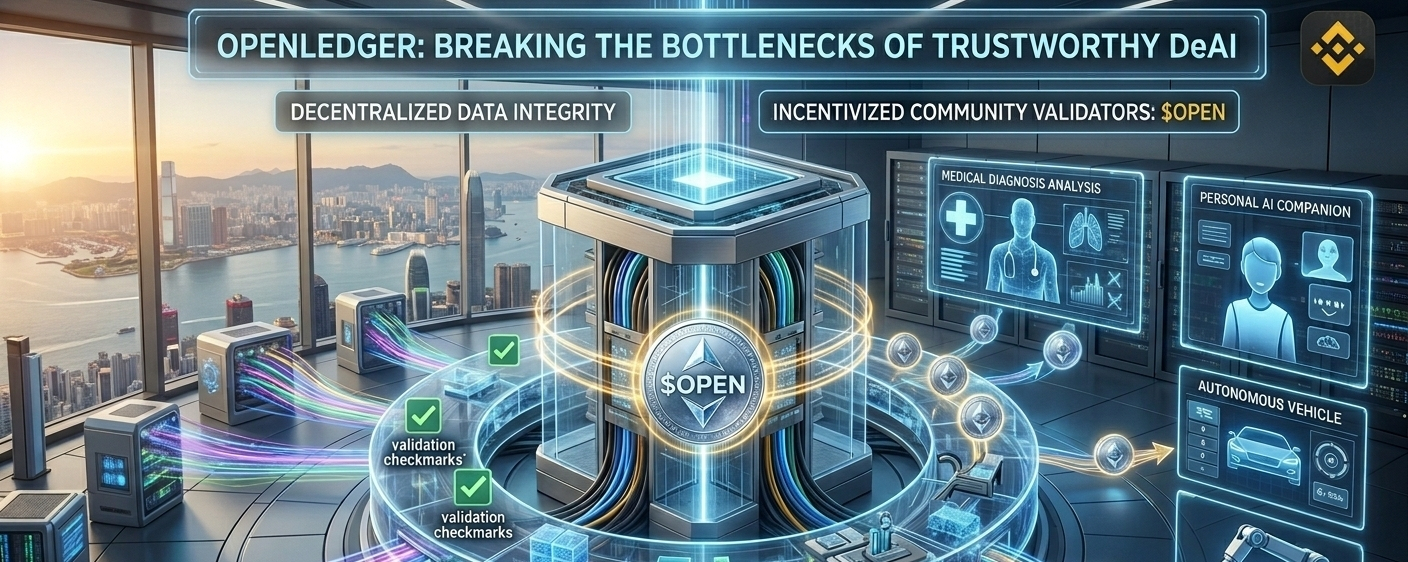
Article
Le Plan pour une IA Autonome : Débloquer des Données Vérifiées sur OpenLedgerAlors que l'Intelligence Artificielle continue son ascension rapide, l'industrie fait face à une crise fondamentale : la confiance. Les dépôts de données centralisés, où se trouvent actuellement les données d'entraînement de l'IA, sont opaques et vulnérables aux biais et à la manipulation. Cela crée des modèles IA qui peuvent être compromis ou produire des 'hallucinations' nuisibles. Un écosystème IA véritablement décentralisé (DeAI) ne peut fonctionner sans une base de données fiable qui soit à la fois sécurisée et auditable. Nous avons besoin d'un moyen de vérifier la chaîne d'approvisionnement des données.
C'est précisément là que @Openledger entre en jeu, se positionnant comme l'infrastructure fondamentale pour l'IA Décentralisée. Plutôt qu'un simple dApp, OpenLedger construit des pipelines de données spécialisés conçus spécifiquement pour l'entraînement des modèles DeAI. Il utilise un réseau décentralisé de validateurs pour crowdsourcer, nettoyer et vérifier les données avant qu'elles n'atteignent les modèles IA. Cela crée un historique de provenance des données vérifiable cryptographiquement, garantissant que chaque information utilisée pour l'entraînement est de haute intégrité et authentique.
Le Plan pour une IA Autonome : Débloquer des Données Vérifiées sur OpenLedger
Alors que l'Intelligence Artificielle continue son ascension rapide, l'industrie fait face à une crise fondamentale : la confiance. Les dépôts de données centralisés, où se trouvent actuellement les données d'entraînement de l'IA, sont opaques et vulnérables aux biais et à la manipulation. Cela crée des modèles IA qui peuvent être compromis ou produire des 'hallucinations' nuisibles. Un écosystème IA véritablement décentralisé (DeAI) ne peut fonctionner sans une base de données fiable qui soit à la fois sécurisée et auditable. Nous avons besoin d'un moyen de vérifier la chaîne d'approvisionnement des données.
C'est précisément là que @OpenLedger entre en jeu, se positionnant comme l'infrastructure fondamentale pour l'IA Décentralisée. Plutôt qu'un simple dApp, OpenLedger construit des pipelines de données spécialisés conçus spécifiquement pour l'entraînement des modèles DeAI. Il utilise un réseau décentralisé de validateurs pour crowdsourcer, nettoyer et vérifier les données avant qu'elles n'atteignent les modèles IA. Cela crée un historique de provenance des données vérifiable cryptographiquement, garantissant que chaque information utilisée pour l'entraînement est de haute intégrité et authentique.
C'est précisément là que @OpenLedger entre en jeu, se positionnant comme l'infrastructure fondamentale pour l'IA Décentralisée. Plutôt qu'un simple dApp, OpenLedger construit des pipelines de données spécialisés conçus spécifiquement pour l'entraînement des modèles DeAI. Il utilise un réseau décentralisé de validateurs pour crowdsourcer, nettoyer et vérifier les données avant qu'elles n'atteignent les modèles IA. Cela crée un historique de provenance des données vérifiable cryptographiquement, garantissant que chaque information utilisée pour l'entraînement est de haute intégrité et authentique.
63
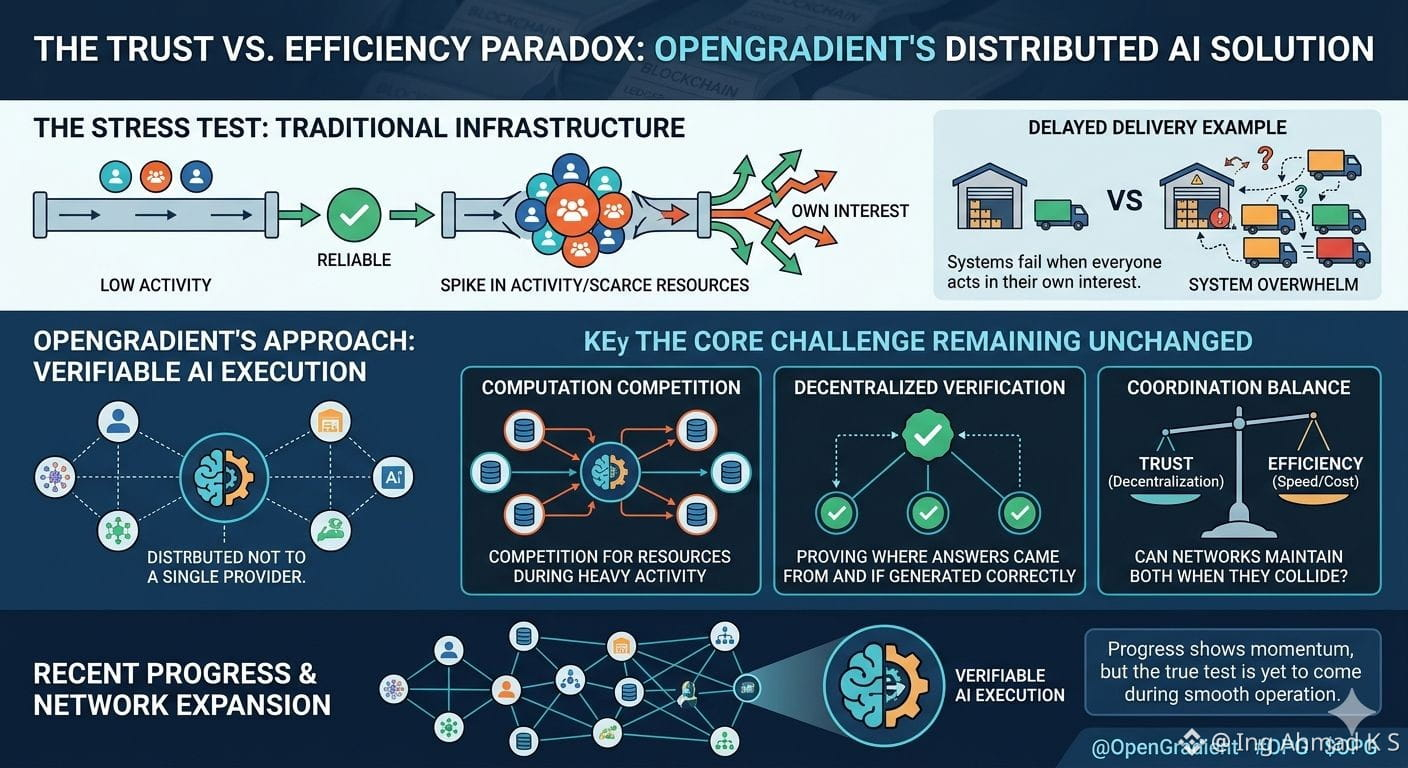
🌩️ Le Test de Stress : Pourquoi l'Infrastructure AI Vérifiable est le Flex Ultime pour le Web3
La plupart des infrastructures Web3 semblent impeccables lorsque le réseau est calme. Mais on sait tous ce qui se passe lorsque les frais de gaz explosent, que l'activité décolle, et que tout le monde se rue vers la sortie en même temps. La nature humaine prend le dessus, les systèmes se bloquent, et les hypothèses théoriques s'effondrent.
C'est exactement le chaos que @OpenGradient (#OPG) est conçu pour endurer.
🤖 Aller au-delà de « l'IA Distribuée »
OpenGradient ne se contente pas de balancer des modèles d'IA sur un réseau en espérant le meilleur. Il s'attaque au véritable goulot d'étranglement : la vérification décentralisée.
Pensez-y comme à un énorme réseau de livraison global. Lorsque la demande est faible, tout arrive à temps. Mais quand une énorme vague frappe, les entrepôts se remplissent, les chauffeurs sont reroutés, et de petites inefficacités déclenchent un effondrement total du système.
Dans le monde de l'IA, cet « effondrement » ressemble à des goulets d'étranglement computationnels et à une confiance brisée. À mesure que les applications décentralisées (dApps) se développent, juste obtenir une réponse d'un modèle d'IA ne suffit pas. Vous devez prouver :
D'où vient cette réponse.
Comment elle a été générée.
Qu'aucun fournisseur unique n'a manipulé le résultat.
⚖️ Le Paradoxe Ultime du Crypto : Confiance vs. Efficacité
Les récentes avancées techniques d'OpenGradient montrent un élan sérieux dans l'exécution de l'IA vérifiable et l'expansion du réseau. Mais le véritable défi pour $OPG reste le défi ultime pour le Web3 : Un réseau peut-il maintenir une confiance absolue sans sacrifier l'hyper-efficacité ?
En général, ces deux objectifs évoluent dans des directions opposées. Lorsque la prochaine grande montée du marché entrera en collision avec ces systèmes, nous verrons quels réseaux sont réellement construits pour l'avenir, et lesquels se contentaient de profiter du calme.
Gardez un œil sur la couche d'infrastructure.
Quelles sont vos pensées sur l'intersection de l'IA et de la vérification décentralisée ? Laissez vos commentaires ci-dessous ! 👇
#OPG $OPG #IA #DeFi #Web3Infrastructure
🌩️ Le Test de Stress : Pourquoi l'Infrastructure AI Vérifiable est le Flex Ultime pour le Web3
La plupart des infrastructures Web3 semblent impeccables lorsque le réseau est calme. Mais on sait tous ce qui se passe lorsque les frais de gaz explosent, que l'activité décolle, et que tout le monde se rue vers la sortie en même temps. La nature humaine prend le dessus, les systèmes se bloquent, et les hypothèses théoriques s'effondrent.
C'est exactement le chaos que @OpenGradient (#OPG) est conçu pour endurer.
🤖 Aller au-delà de « l'IA Distribuée »
OpenGradient ne se contente pas de balancer des modèles d'IA sur un réseau en espérant le meilleur. Il s'attaque au véritable goulot d'étranglement : la vérification décentralisée.
Pensez-y comme à un énorme réseau de livraison global. Lorsque la demande est faible, tout arrive à temps. Mais quand une énorme vague frappe, les entrepôts se remplissent, les chauffeurs sont reroutés, et de petites inefficacités déclenchent un effondrement total du système.
Dans le monde de l'IA, cet « effondrement » ressemble à des goulets d'étranglement computationnels et à une confiance brisée. À mesure que les applications décentralisées (dApps) se développent, juste obtenir une réponse d'un modèle d'IA ne suffit pas. Vous devez prouver :
D'où vient cette réponse.
Comment elle a été générée.
Qu'aucun fournisseur unique n'a manipulé le résultat.
⚖️ Le Paradoxe Ultime du Crypto : Confiance vs. Efficacité
Les récentes avancées techniques d'OpenGradient montrent un élan sérieux dans l'exécution de l'IA vérifiable et l'expansion du réseau. Mais le véritable défi pour $OPG reste le défi ultime pour le Web3 : Un réseau peut-il maintenir une confiance absolue sans sacrifier l'hyper-efficacité ?
En général, ces deux objectifs évoluent dans des directions opposées. Lorsque la prochaine grande montée du marché entrera en collision avec ces systèmes, nous verrons quels réseaux sont réellement construits pour l'avenir, et lesquels se contentaient de profiter du calme.
Gardez un œil sur la couche d'infrastructure.
Quelles sont vos pensées sur l'intersection de l'IA et de la vérification décentralisée ? Laissez vos commentaires ci-dessous ! 👇
#OPG $OPG #IA #DeFi #Web3Infrastructure
La plupart des infrastructures Web3 semblent impeccables lorsque le réseau est calme. Mais on sait tous ce qui se passe lorsque les frais de gaz explosent, que l'activité décolle, et que tout le monde se rue vers la sortie en même temps. La nature humaine prend le dessus, les systèmes se bloquent, et les hypothèses théoriques s'effondrent.
C'est exactement le chaos que @OpenGradient (#OPG) est conçu pour endurer.
🤖 Aller au-delà de « l'IA Distribuée »
OpenGradient ne se contente pas de balancer des modèles d'IA sur un réseau en espérant le meilleur. Il s'attaque au véritable goulot d'étranglement : la vérification décentralisée.
Pensez-y comme à un énorme réseau de livraison global. Lorsque la demande est faible, tout arrive à temps. Mais quand une énorme vague frappe, les entrepôts se remplissent, les chauffeurs sont reroutés, et de petites inefficacités déclenchent un effondrement total du système.
Dans le monde de l'IA, cet « effondrement » ressemble à des goulets d'étranglement computationnels et à une confiance brisée. À mesure que les applications décentralisées (dApps) se développent, juste obtenir une réponse d'un modèle d'IA ne suffit pas. Vous devez prouver :
D'où vient cette réponse.
Comment elle a été générée.
Qu'aucun fournisseur unique n'a manipulé le résultat.
⚖️ Le Paradoxe Ultime du Crypto : Confiance vs. Efficacité
Les récentes avancées techniques d'OpenGradient montrent un élan sérieux dans l'exécution de l'IA vérifiable et l'expansion du réseau. Mais le véritable défi pour $OPG reste le défi ultime pour le Web3 : Un réseau peut-il maintenir une confiance absolue sans sacrifier l'hyper-efficacité ?
En général, ces deux objectifs évoluent dans des directions opposées. Lorsque la prochaine grande montée du marché entrera en collision avec ces systèmes, nous verrons quels réseaux sont réellement construits pour l'avenir, et lesquels se contentaient de profiter du calme.
Gardez un œil sur la couche d'infrastructure.
Quelles sont vos pensées sur l'intersection de l'IA et de la vérification décentralisée ? Laissez vos commentaires ci-dessous ! 👇
#OPG $OPG #IA #DeFi #Web3Infrastructure
5
1
101

Le marché est complètement distrait par le bruit à court terme, mais la vraie richesse se construit en se concentrant sur une infrastructure solide. C’est exactement pour cela que @NewtonProtocol est dans mon viseur en ce moment.
Ils résolvent discrètement d’importantes problématiques d’évolutivité Web3 avec leur Mainnet Beta. Pas d’hype IA vide, uniquement une exécution technologique pure.
Accumulez-vous $NEWT avant que le reste du marché ne se réveille ? Dites-moi vos objectifs ci-dessous ! 👇
$NEWT #Newt #Web3Infrastructure #MainnetBeta #Crypto
Le marché est complètement distrait par le bruit à court terme, mais la vraie richesse se construit en se concentrant sur une infrastructure solide. C’est exactement pour cela que @NewtonProtocol est dans mon viseur en ce moment.
Ils résolvent discrètement d’importantes problématiques d’évolutivité Web3 avec leur Mainnet Beta. Pas d’hype IA vide, uniquement une exécution technologique pure.
Accumulez-vous $NEWT avant que le reste du marché ne se réveille ? Dites-moi vos objectifs ci-dessous ! 👇
$NEWT #Newt #Web3Infrastructure #MainnetBeta #Crypto
Ils résolvent discrètement d’importantes problématiques d’évolutivité Web3 avec leur Mainnet Beta. Pas d’hype IA vide, uniquement une exécution technologique pure.
Accumulez-vous $NEWT avant que le reste du marché ne se réveille ? Dites-moi vos objectifs ci-dessous ! 👇
$NEWT #Newt #Web3Infrastructure #MainnetBeta #Crypto
1
96

·
--
Le passage à l’automatisation de bout en chaîne avance à toute vitesse, mais la rapidité ne sert à rien si la sécurité et la conformité sont laissées de côté. C’est pourquoi le lancement récent de la Newton Mainnet Beta par @NewtonProtocol constitue une étape majeure pour l’écosystème Web3.
Au lieu d’une surveillance réactive après transaction, ils mettent en place une véritable architecture « conformité-as-code ». En combinant des politiques programmables, des preuves à connaissance nulle (ZKPs) et des rollups sécurisés, elle évalue et autorise les transactions avant même qu’elles n’atteignent la couche de règlement. Pour les développeurs utilisant VaultKit afin de déployer des stratégies complexes pilotées par l’IA ou des coffres institutionnels, cela offre un environnement d’exécution inviolable qui applique des règles de risque strictes, de manière transparente.
C’est incroyablement excitant de voir le jeton $NEWT trouver une utilité concrète au sein d’un écosystème en conditions réelles qui comble l’écart entre des agents d’IA intelligents et l’infrastructure de la finance décentralisée.
#Newt #MainnetBeta #Web3Infrastructure
Le passage à l’automatisation de bout en chaîne avance à toute vitesse, mais la rapidité ne sert à rien si la sécurité et la conformité sont laissées de côté. C’est pourquoi le lancement récent de la Newton Mainnet Beta par @NewtonProtocol constitue une étape majeure pour l’écosystème Web3.
Au lieu d’une surveillance réactive après transaction, ils mettent en place une véritable architecture « conformité-as-code ». En combinant des politiques programmables, des preuves à connaissance nulle (ZKPs) et des rollups sécurisés, elle évalue et autorise les transactions avant même qu’elles n’atteignent la couche de règlement. Pour les développeurs utilisant VaultKit afin de déployer des stratégies complexes pilotées par l’IA ou des coffres institutionnels, cela offre un environnement d’exécution inviolable qui applique des règles de risque strictes, de manière transparente.
C’est incroyablement excitant de voir le jeton $NEWT trouver une utilité concrète au sein d’un écosystème en conditions réelles qui comble l’écart entre des agents d’IA intelligents et l’infrastructure de la finance décentralisée.
#Newt #MainnetBeta #Web3Infrastructure
Au lieu d’une surveillance réactive après transaction, ils mettent en place une véritable architecture « conformité-as-code ». En combinant des politiques programmables, des preuves à connaissance nulle (ZKPs) et des rollups sécurisés, elle évalue et autorise les transactions avant même qu’elles n’atteignent la couche de règlement. Pour les développeurs utilisant VaultKit afin de déployer des stratégies complexes pilotées par l’IA ou des coffres institutionnels, cela offre un environnement d’exécution inviolable qui applique des règles de risque strictes, de manière transparente.
C’est incroyablement excitant de voir le jeton $NEWT trouver une utilité concrète au sein d’un écosystème en conditions réelles qui comble l’écart entre des agents d’IA intelligents et l’infrastructure de la finance décentralisée.
#Newt #MainnetBeta #Web3Infrastructure
2
74
·
--
Article
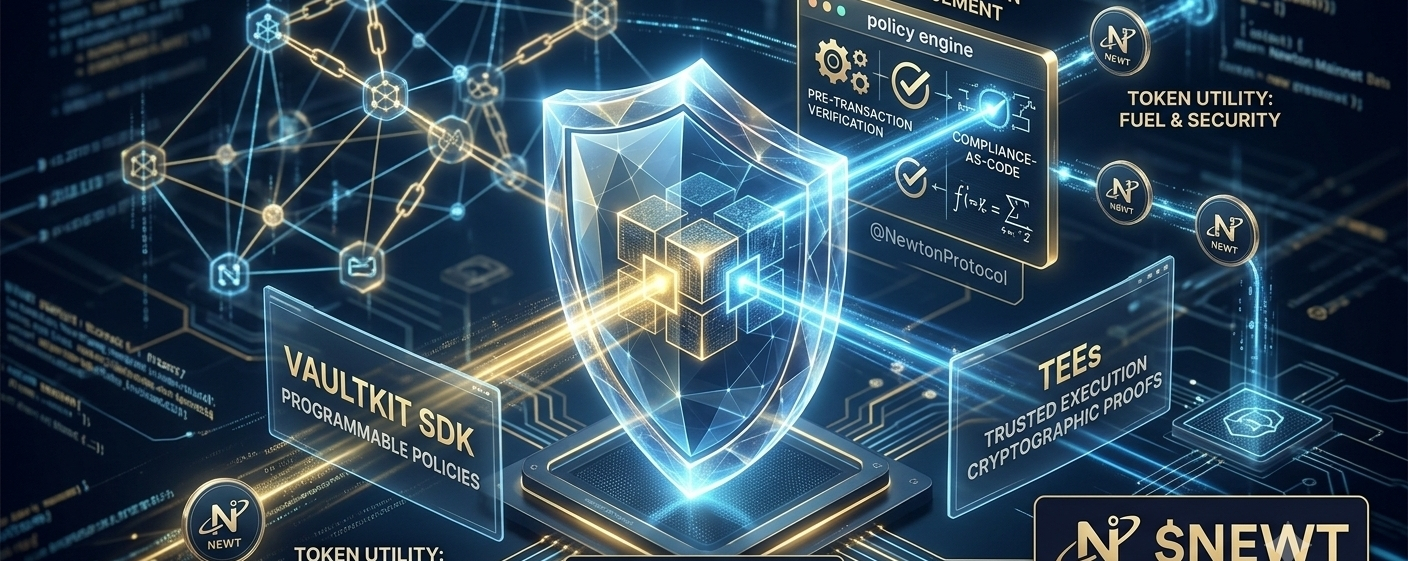
🔒 Sécurité redéfinie : à l’intérieur du moteur d’application avant transaction de Newton Mainnet Beta##
La plus grande vulnérabilité dans l’écosystème Web3 et DeFi actuel est que la gestion des risques et la conformité se produisent toujours *après coup* (post-transaction). Mais la seule façon définitive d’empêcher les exploitations de contrats intelligents et les violations de politiques est de les bloquer avant qu’ils n’écrivent jamais dans la blockchain.
L’équipe chez @NewtonProtocol résout ce défaut fondamental avec le lancement de la **Newton Mainnet Beta**, en introduisant une architecture on-chain révolutionnaire conçue pour une sécurité absolue.
### 🛠️ Les piliers de l’infrastructure de pré-exécution
🔒 Sécurité redéfinie : à l’intérieur du moteur d’application avant transaction de Newton Mainnet Beta
##
La plus grande vulnérabilité dans l’écosystème Web3 et DeFi actuel est que la gestion des risques et la conformité se produisent toujours *après coup* (post-transaction). Mais la seule façon définitive d’empêcher les exploitations de contrats intelligents et les violations de politiques est de les bloquer avant qu’ils n’écrivent jamais dans la blockchain.
L’équipe chez @NewtonProtocol résout ce défaut fondamental avec le lancement de la **Newton Mainnet Beta**, en introduisant une architecture on-chain révolutionnaire conçue pour une sécurité absolue.
### 🛠️ Les piliers de l’infrastructure de pré-exécution
La plus grande vulnérabilité dans l’écosystème Web3 et DeFi actuel est que la gestion des risques et la conformité se produisent toujours *après coup* (post-transaction). Mais la seule façon définitive d’empêcher les exploitations de contrats intelligents et les violations de politiques est de les bloquer avant qu’ils n’écrivent jamais dans la blockchain.
L’équipe chez @NewtonProtocol résout ce défaut fondamental avec le lancement de la **Newton Mainnet Beta**, en introduisant une architecture on-chain révolutionnaire conçue pour une sécurité absolue.
### 🛠️ Les piliers de l’infrastructure de pré-exécution
10
2
108

·
--
Libérer la liquidité Bitcoin en sommeil tout en conservant la garde totale de ses actifs est un véritable tournant pour la finance décentralisée. Les Trustless Bitcoin Vaults (TBV) développés par @babylonlabs_io BabylonLabs_io offrent une architecture de sécurité révolutionnaire qui permet aux détenteurs de BTC de percevoir un rendement de staking natif sans renoncer au contrôle de leurs actifs ni dépendre de prestataires de garde tiers risqués. En intégrant des time-locks cryptographiques et des mécanismes de sécurité avec slashing, le réseau permet aux participants de l’écosystème Baby de faire évoluer la sécurité de type Proof-of-Stake de manière fluide. Comprendre comment les TBV relient la sécurité de Bitcoin à des usages plus larges de Web3 est essentiel pour l’avenir de la génération de rendement décentralisé. 🔒⚡
#baby $BABY #BitcoinStaking #DeFi: #Web3Infrastructure
Libérer la liquidité Bitcoin en sommeil tout en conservant la garde totale de ses actifs est un véritable tournant pour la finance décentralisée. Les Trustless Bitcoin Vaults (TBV) développés par @BabylonLabs_io BabylonLabs_io offrent une architecture de sécurité révolutionnaire qui permet aux détenteurs de BTC de percevoir un rendement de staking natif sans renoncer au contrôle de leurs actifs ni dépendre de prestataires de garde tiers risqués. En intégrant des time-locks cryptographiques et des mécanismes de sécurité avec slashing, le réseau permet aux participants de l’écosystème Baby de faire évoluer la sécurité de type Proof-of-Stake de manière fluide. Comprendre comment les TBV relient la sécurité de Bitcoin à des usages plus larges de Web3 est essentiel pour l’avenir de la génération de rendement décentralisé. 🔒⚡
#baby $BABY #BitcoinStaking #DeFi: #Web3Infrastructure
#baby $BABY #BitcoinStaking #DeFi: #Web3Infrastructure
86

·
--
Haussier
Vérifié
Open Circle est un projet de @Openledger conçu pour construire une gouvernance et une infrastructure de données décentralisées.
Le Web3 n'a pas seulement besoin de finance décentralisée, il a aussi besoin de nouvelles façons de posséder, valider et utiliser les données. Développer les fondations de la gouvernance des données décentralisées est le principal objectif du projet Open Circle - OpenLedger est à la pointe.
Pourquoi est-ce important pour l'écosystème Web3 ?
Les données sont l'un des actifs les plus précieux de l'économie numérique d'aujourd'hui. Les méthodes actuelles de gestion des données échouent toutes à être transparentes et décentralisées. Grâce à Open Circle, nous développons une plateforme collaborative qui inclut des développeurs, des producteurs de données et des opérateurs de réseau pour établir un pipeline de données ouvert pour créer de NOUVELLES opportunités de gestion des données.
Fonctionnalités clés de $OPEN Circle
>> Infrastructure de données décentralisée : Les dépôts de données ne seront plus contrôlés par quelques fournisseurs de cloud dominants/innovateurs avec des options limitées pour accéder et utiliser les données.
>> Écosystème collaboratif : Open Circle créera une connexion entre tous ceux qui participent à la création de NOUVEAUX pipelines de données.
>> Conformité et normes basées sur la pratique : Open Circle soutiendra les applications pratiques et une technologie translucide plutôt que le battage médiatique et le jargon.
À mesure que la technologie blockchain mûrit chaque jour, le développement de projets liés à l'infrastructure pour soutenir davantage la croissance de l'écosystème Web3 deviendra finalement critique pour l'avenir du marché Web3. Être informé des nouveaux projets d'infrastructure sera vital pour trouver et capitaliser sur l'utilité du nouveau Web3.
Avertissement : DYOR.
#Web3Infrastructure #DecentralizedData #cryptoeducation #DataSovereignty #openledger $OPEN
{spot}(OPENUSDT)
Open Circle est un projet de @OpenLedger conçu pour construire une gouvernance et une infrastructure de données décentralisées.
Le Web3 n'a pas seulement besoin de finance décentralisée, il a aussi besoin de nouvelles façons de posséder, valider et utiliser les données. Développer les fondations de la gouvernance des données décentralisées est le principal objectif du projet Open Circle - OpenLedger est à la pointe.
Pourquoi est-ce important pour l'écosystème Web3 ?
Les données sont l'un des actifs les plus précieux de l'économie numérique d'aujourd'hui. Les méthodes actuelles de gestion des données échouent toutes à être transparentes et décentralisées. Grâce à Open Circle, nous développons une plateforme collaborative qui inclut des développeurs, des producteurs de données et des opérateurs de réseau pour établir un pipeline de données ouvert pour créer de NOUVELLES opportunités de gestion des données.
Fonctionnalités clés de $OPEN Circle
>> Infrastructure de données décentralisée : Les dépôts de données ne seront plus contrôlés par quelques fournisseurs de cloud dominants/innovateurs avec des options limitées pour accéder et utiliser les données.
>> Écosystème collaboratif : Open Circle créera une connexion entre tous ceux qui participent à la création de NOUVEAUX pipelines de données.
>> Conformité et normes basées sur la pratique : Open Circle soutiendra les applications pratiques et une technologie translucide plutôt que le battage médiatique et le jargon.
À mesure que la technologie blockchain mûrit chaque jour, le développement de projets liés à l'infrastructure pour soutenir davantage la croissance de l'écosystème Web3 deviendra finalement critique pour l'avenir du marché Web3. Être informé des nouveaux projets d'infrastructure sera vital pour trouver et capitaliser sur l'utilité du nouveau Web3.
Avertissement : DYOR.
#Web3Infrastructure #DecentralizedData #cryptoeducation #DataSovereignty #openledger $OPEN
Le Web3 n'a pas seulement besoin de finance décentralisée, il a aussi besoin de nouvelles façons de posséder, valider et utiliser les données. Développer les fondations de la gouvernance des données décentralisées est le principal objectif du projet Open Circle - OpenLedger est à la pointe.
Pourquoi est-ce important pour l'écosystème Web3 ?
Les données sont l'un des actifs les plus précieux de l'économie numérique d'aujourd'hui. Les méthodes actuelles de gestion des données échouent toutes à être transparentes et décentralisées. Grâce à Open Circle, nous développons une plateforme collaborative qui inclut des développeurs, des producteurs de données et des opérateurs de réseau pour établir un pipeline de données ouvert pour créer de NOUVELLES opportunités de gestion des données.
Fonctionnalités clés de $OPEN Circle
>> Infrastructure de données décentralisée : Les dépôts de données ne seront plus contrôlés par quelques fournisseurs de cloud dominants/innovateurs avec des options limitées pour accéder et utiliser les données.
>> Écosystème collaboratif : Open Circle créera une connexion entre tous ceux qui participent à la création de NOUVEAUX pipelines de données.
>> Conformité et normes basées sur la pratique : Open Circle soutiendra les applications pratiques et une technologie translucide plutôt que le battage médiatique et le jargon.
À mesure que la technologie blockchain mûrit chaque jour, le développement de projets liés à l'infrastructure pour soutenir davantage la croissance de l'écosystème Web3 deviendra finalement critique pour l'avenir du marché Web3. Être informé des nouveaux projets d'infrastructure sera vital pour trouver et capitaliser sur l'utilité du nouveau Web3.
Avertissement : DYOR.
#Web3Infrastructure #DecentralizedData #cryptoeducation #DataSovereignty #openledger $OPEN
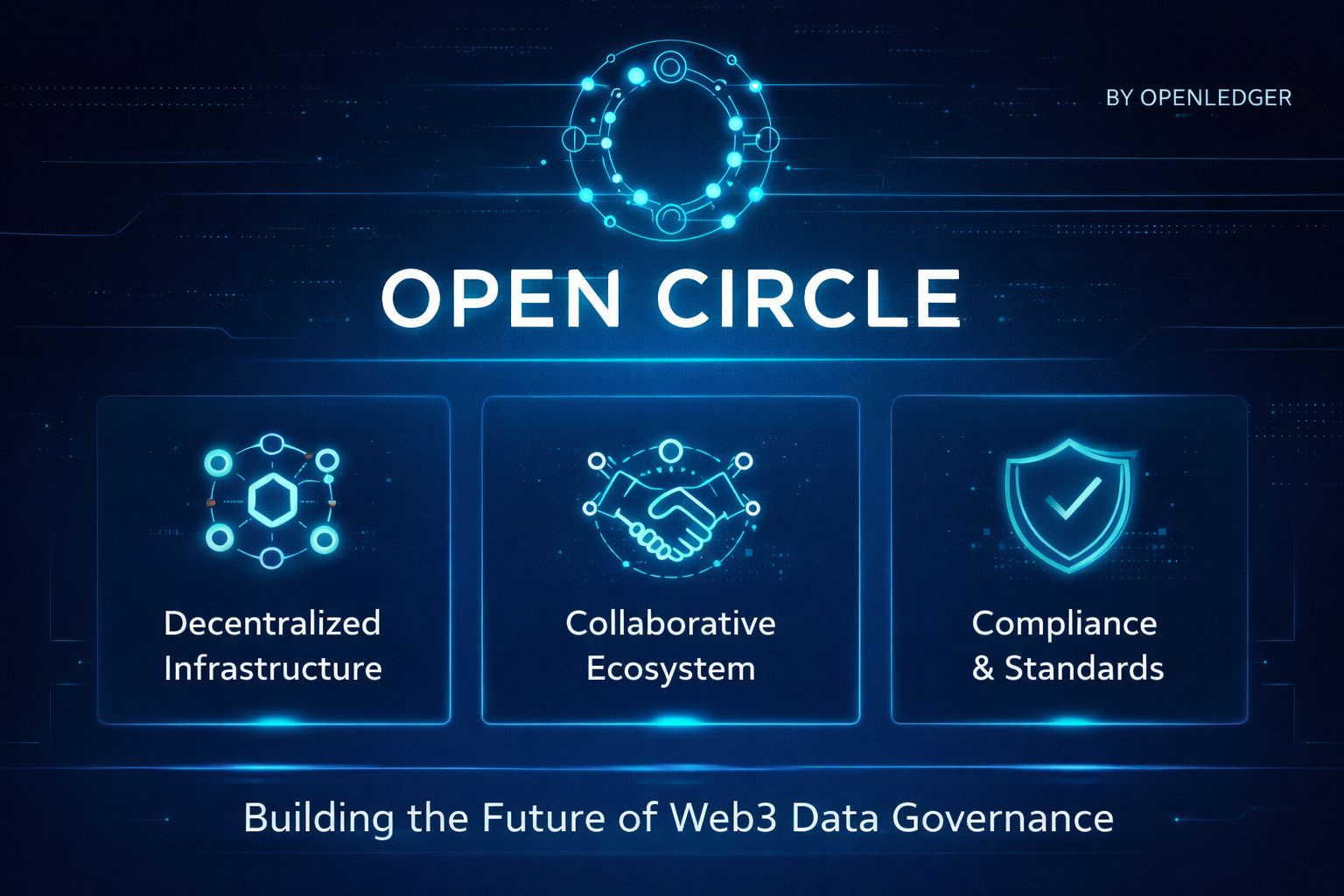
46
43
949
Connectez-vous pour découvrir plus de contenu
Rejoignez la communauté mondiale des adeptes de cryptomonnaies sur Binance Square
⚡️ Suviez les dernières informations importantes sur les cryptomonnaies.
💬 Jugé digne de confiance par la plus grande plateforme d’échange de cryptomonnaies au monde.
👍 Découvrez les connaissances que partagent les créateurs vérifiés.
Adresse e-mail/Nº de téléphone
Sujets d’actualité
1
#AnthropicCEOCallsForAISlowdown
61,631 vues
832 mentions
2
#BitcoinThirdSingleBlockReorgInFourWeeks
1,062 vues
86 mentions
3
#BitcoinDropsToIntradayLow$76367
0 vues
0 mentions
4
#LSKSurgesOver515%In24Hours
1,199 vues
57 mentions
5
#ClarityActLawIn2026OddsRiseTo30%
0 vues
0 mentions
6
#KoreaCryptoTaxDelayPetitionMeetsReviewThreshold
0 vues
0 mentions
7
#EURequiresWalletMakersReportFlawsIn24Hours
277 vues
24 mentions
8
#ZcashNU7VoteEndsSeptember14
882 vues
40 mentions
9
#AnthropicChoosesNasdaqForPotentialIPO
30,302 vues
352 mentions
10
#SECReceivesGrayscaleLitecoinTrustETFFiling
192,362 vues
2,120 mentions