

#walrus
walrus
9M vues
363,873 mentions
Populaire
Récents

·
--
Baissier
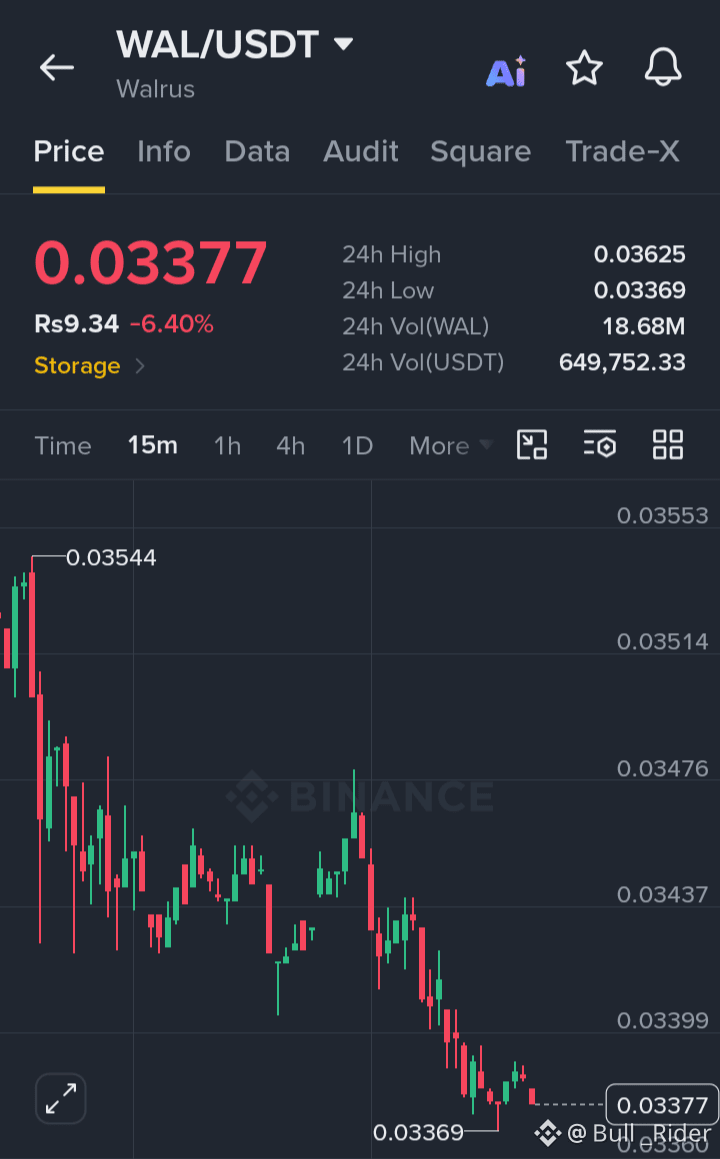
$WAL is showing signs of stabilization near support, with buyers watching the $0.03360–$0.03369 zone for a potential recovery. A breakout above resistance could open the door for further upside, while proper risk management remains essential.
Entry: 0.03377
TP1: 0.03437
TP2: 0.03514
TP3: 0.03625
SL: 0.03300
Buy and Trade $CFG
{future}(CFGUSDT)
$RLC
{future}(RLCUSDT)
{future}(WALUSDT)
#WAL #Walrus #Binance
$WAL is showing signs of stabilization near support, with buyers watching the $0.03360–$0.03369 zone for a potential recovery. A breakout above resistance could open the door for further upside, while proper risk management remains essential.
Entry: 0.03377
TP1: 0.03437
TP2: 0.03514
TP3: 0.03625
SL: 0.03300
Buy and Trade $CFG
$RLC
#WAL #Walrus #Binance
Entry: 0.03377
TP1: 0.03437
TP2: 0.03514
TP3: 0.03625
SL: 0.03300
Buy and Trade $CFG
$RLC
#WAL #Walrus #Binance
1
69

·
--
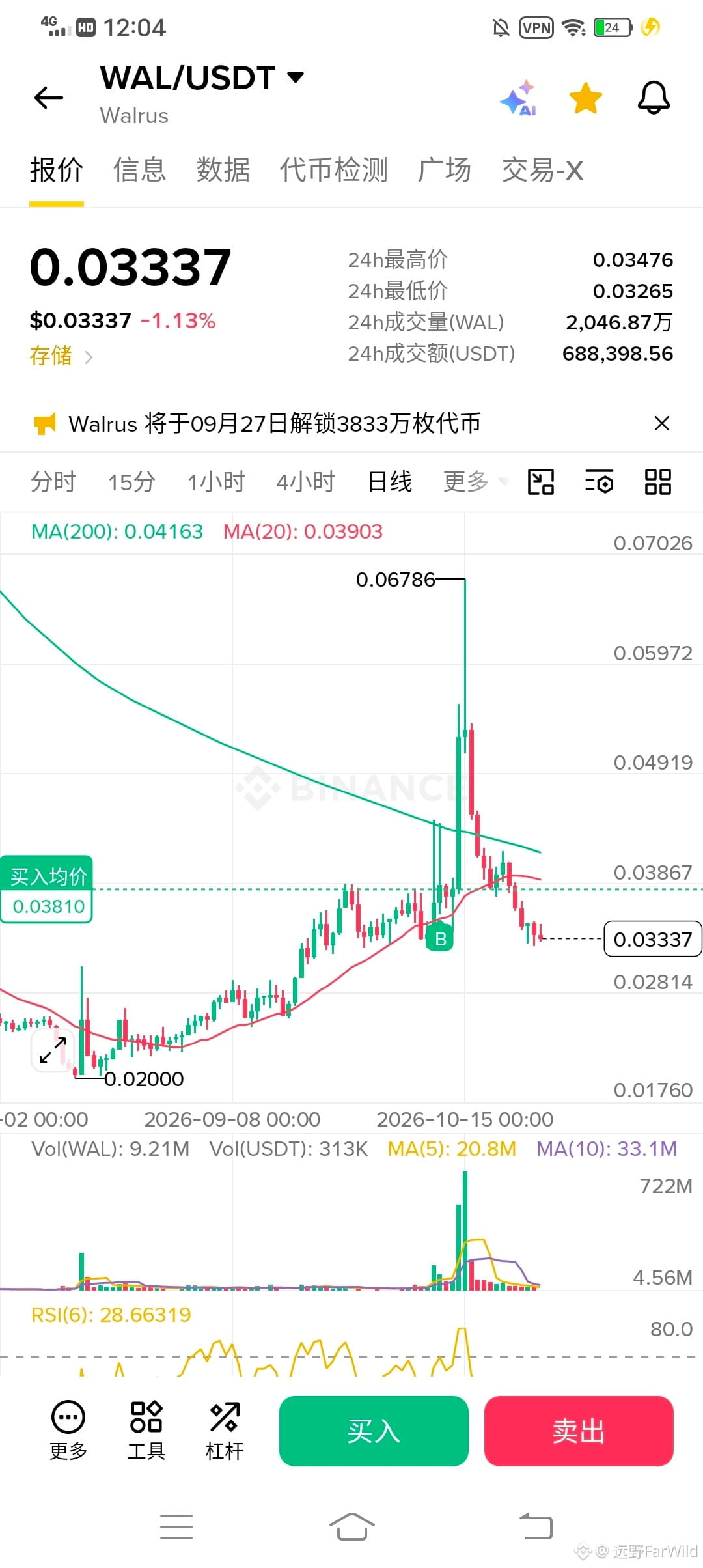
原来BNB想进攻存储这个赛道的,
不知道为什么后来没有进行下午,
存储现在是FIL顶着,但是FIL割死人啊。
wal是为ai代理做存储数据,代理取证服务的。
大家觉得wal还有希望吗?
现在感觉交易量低的吓人啊。
$WAL
{spot}(WALUSDT)
#walrus
原来BNB想进攻存储这个赛道的,
不知道为什么后来没有进行下午,
存储现在是FIL顶着,但是FIL割死人啊。
wal是为ai代理做存储数据,代理取证服务的。
大家觉得wal还有希望吗?
现在感觉交易量低的吓人啊。
$WAL
#walrus
不知道为什么后来没有进行下午,
存储现在是FIL顶着,但是FIL割死人啊。
wal是为ai代理做存储数据,代理取证服务的。
大家觉得wal还有希望吗?
现在感觉交易量低的吓人啊。
$WAL
#walrus
Feed-Creator-a56612906:
归零货别买
2
190


·
--
Haussier
🐋 WALRUS ($WAL) — AI və Web3 dünyasının məlumat infrastrukturu!
Gələcəyin kriptosu yalnız sürətli əməliyyatlardan ibarət deyil. Məlumatların təhlükəsiz saxlanması və əlçatan olması da böyük əhəmiyyət daşıyır. 🚀
🔹 Walrus nədir?
Sui blokçeyni üzərində qurulan Walrus, böyük həcmli məlumatların mərkəzsiz saxlanması və məlumat əlçatanlığı üçün yaradılmış protokoldur.
🔹 $WAL nə üçün istifadə olunur? ✅ Məlumat saxlama xərclərinin ödənilməsi
✅ Şəbəkənin təhlükəsizliyinə staking vasitəsilə töhfə
✅ Ekosistemin idarə edilməsində iştirak
🤖 Süni intellekt, Web3 tətbiqləri və rəqəmsal məlumat bazarları inkişaf etdikcə, belə infrastrukturlara maraq arta bilər.
📌 Əsas sual: Walrus texnologiyasını real istifadə və ekosistem tələbinə çevirə biləcəkmi?
Məncə, $WAL izləməyə dəyər layihələrdən biridir. Ancaq texnologiyanın perspektivli olması token qiymətinin mütləq yüksələcəyi demək deyil. Tokenomika, bazar tələbi və qiymət hərəkətləri diqqətlə araşdırılmalıdır.
💬 Sizcə, $WAL gələcəkdə Sui ekosisteminin əsas layihələrindən birinə çevrilə bilərmi? Fikrinizi şərhlərdə bölüşün!
@WalrusProtocol #Walrus #WAL
— QAZAXLİ3535 AİLESİ
⚠️ Bu paylaşım investisiya məsləhəti deyil. Kriptovalyutalar yüksək risk daşıyır. Araşdırmadan investisiya etməyin.
🐋 WALRUS ($WAL ) — AI və Web3 dünyasının məlumat infrastrukturu!
Gələcəyin kriptosu yalnız sürətli əməliyyatlardan ibarət deyil. Məlumatların təhlükəsiz saxlanması və əlçatan olması da böyük əhəmiyyət daşıyır. 🚀
🔹 Walrus nədir?
Sui blokçeyni üzərində qurulan Walrus, böyük həcmli məlumatların mərkəzsiz saxlanması və məlumat əlçatanlığı üçün yaradılmış protokoldur.
🔹 $WAL nə üçün istifadə olunur? ✅ Məlumat saxlama xərclərinin ödənilməsi
✅ Şəbəkənin təhlükəsizliyinə staking vasitəsilə töhfə
✅ Ekosistemin idarə edilməsində iştirak
🤖 Süni intellekt, Web3 tətbiqləri və rəqəmsal məlumat bazarları inkişaf etdikcə, belə infrastrukturlara maraq arta bilər.
📌 Əsas sual: Walrus texnologiyasını real istifadə və ekosistem tələbinə çevirə biləcəkmi?
Məncə, $WAL izləməyə dəyər layihələrdən biridir. Ancaq texnologiyanın perspektivli olması token qiymətinin mütləq yüksələcəyi demək deyil. Tokenomika, bazar tələbi və qiymət hərəkətləri diqqətlə araşdırılmalıdır.
💬 Sizcə, $WAL gələcəkdə Sui ekosisteminin əsas layihələrindən birinə çevrilə bilərmi? Fikrinizi şərhlərdə bölüşün!
@Walrus 🦭/acc #Walrus #WAL
— QAZAXLİ3535 AİLESİ
⚠️ Bu paylaşım investisiya məsləhəti deyil. Kriptovalyutalar yüksək risk daşıyır. Araşdırmadan investisiya etməyin.
Gələcəyin kriptosu yalnız sürətli əməliyyatlardan ibarət deyil. Məlumatların təhlükəsiz saxlanması və əlçatan olması da böyük əhəmiyyət daşıyır. 🚀
🔹 Walrus nədir?
Sui blokçeyni üzərində qurulan Walrus, böyük həcmli məlumatların mərkəzsiz saxlanması və məlumat əlçatanlığı üçün yaradılmış protokoldur.
🔹 $WAL nə üçün istifadə olunur? ✅ Məlumat saxlama xərclərinin ödənilməsi
✅ Şəbəkənin təhlükəsizliyinə staking vasitəsilə töhfə
✅ Ekosistemin idarə edilməsində iştirak
🤖 Süni intellekt, Web3 tətbiqləri və rəqəmsal məlumat bazarları inkişaf etdikcə, belə infrastrukturlara maraq arta bilər.
📌 Əsas sual: Walrus texnologiyasını real istifadə və ekosistem tələbinə çevirə biləcəkmi?
Məncə, $WAL izləməyə dəyər layihələrdən biridir. Ancaq texnologiyanın perspektivli olması token qiymətinin mütləq yüksələcəyi demək deyil. Tokenomika, bazar tələbi və qiymət hərəkətləri diqqətlə araşdırılmalıdır.
💬 Sizcə, $WAL gələcəkdə Sui ekosisteminin əsas layihələrindən birinə çevrilə bilərmi? Fikrinizi şərhlərdə bölüşün!
@Walrus 🦭/acc #Walrus #WAL
— QAZAXLİ3535 AİLESİ
⚠️ Bu paylaşım investisiya məsləhəti deyil. Kriptovalyutalar yüksək risk daşıyır. Araşdırmadan investisiya etməyin.
4
485
·
--
Bir LLM'den diğerine ajanınızı değiştirin ve oluşturduğu bağlam onunla birlikte gelmez. Yeni model sıfırdan başlar. Walrus Memory o belleği modeller arasında taşınabilir tutar. LLM'i değiştirin, öğrendiği her şeyi koruyun $WAL #walrus @WalrusProtocol
{spot}(WALUSDT)
Bir LLM'den diğerine ajanınızı değiştirin ve oluşturduğu bağlam onunla birlikte gelmez. Yeni model sıfırdan başlar. Walrus Memory o belleği modeller arasında taşınabilir tutar. LLM'i değiştirin, öğrendiği her şeyi koruyun $WAL #walrus @Walrus 🦭/acc
3
512
·
--
🔥 WAL/USDT — GİRİŞ ÜÇÜN DİQQƏTLİ OL! 📉📈
$WAL hazırda 0.04104 USDT ətrafındadır. 1 saatlıq qrafikdə qiymət əvvəlki yüksəlişdən sonra geri çəkilir və qısamüddətli trend hələ zəif görünür.
📊 TRADE PLANI —
🟢 Giriş zonası: 0.0400 – 0.0405
🎯 TP1: 0.0420
🎯 TP2: 0.0440
🛑 SL: 0.0393
Giriş təsdiqi: ✅ 0.0400 dəstəyinin qorunması
✅ 0.0410 üzərində güclü bağlanış
✅ Həcm artımının təsdiqi
⚠️ Qiymət 0.0398-dən aşağı düşərsə, tələsmə və yeni dəstək formalaşmasını gözlə.
📌 Texniki mənzərə: MA(7) = 0.04086, MA(25) = 0.04190, MA(99) = 0.04849. Qiymət MA(25) və MA(99)-dan aşağı olduğuna görə yüksəlişin təsdiqi hələ yoxdur.
💬 Səncə, $WAL yenidən 0.0440 səviyyəsinə yüksələ bilərmi? Fikrini şərhlərdə yaz!
⚠️ Bu plan göndərdiyin qrafikə əsaslanan texniki ssenaridir, canlı təsdiqlənmiş siqnal deyil. Kapitalın yalnız kiçik hissəsini riskə at və stop-loss istifadə et.
#WAL #Walrus @WalrusProtocol
🔥 WAL/USDT — GİRİŞ ÜÇÜN DİQQƏTLİ OL! 📉📈
$WAL hazırda 0.04104 USDT ətrafındadır. 1 saatlıq qrafikdə qiymət əvvəlki yüksəlişdən sonra geri çəkilir və qısamüddətli trend hələ zəif görünür.
📊 TRADE PLANI —
🟢 Giriş zonası: 0.0400 – 0.0405
🎯 TP1: 0.0420
🎯 TP2: 0.0440
🛑 SL: 0.0393
Giriş təsdiqi: ✅ 0.0400 dəstəyinin qorunması
✅ 0.0410 üzərində güclü bağlanış
✅ Həcm artımının təsdiqi
⚠️ Qiymət 0.0398-dən aşağı düşərsə, tələsmə və yeni dəstək formalaşmasını gözlə.
📌 Texniki mənzərə: MA(7) = 0.04086, MA(25) = 0.04190, MA(99) = 0.04849. Qiymət MA(25) və MA(99)-dan aşağı olduğuna görə yüksəlişin təsdiqi hələ yoxdur.
💬 Səncə, $WAL yenidən 0.0440 səviyyəsinə yüksələ bilərmi? Fikrini şərhlərdə yaz!
⚠️ Bu plan göndərdiyin qrafikə əsaslanan texniki ssenaridir, canlı təsdiqlənmiş siqnal deyil. Kapitalın yalnız kiçik hissəsini riskə at və stop-loss istifadə et.
#WAL #Walrus @Walrus 🦭/acc
$WAL hazırda 0.04104 USDT ətrafındadır. 1 saatlıq qrafikdə qiymət əvvəlki yüksəlişdən sonra geri çəkilir və qısamüddətli trend hələ zəif görünür.
📊 TRADE PLANI —
🟢 Giriş zonası: 0.0400 – 0.0405
🎯 TP1: 0.0420
🎯 TP2: 0.0440
🛑 SL: 0.0393
Giriş təsdiqi: ✅ 0.0400 dəstəyinin qorunması
✅ 0.0410 üzərində güclü bağlanış
✅ Həcm artımının təsdiqi
⚠️ Qiymət 0.0398-dən aşağı düşərsə, tələsmə və yeni dəstək formalaşmasını gözlə.
📌 Texniki mənzərə: MA(7) = 0.04086, MA(25) = 0.04190, MA(99) = 0.04849. Qiymət MA(25) və MA(99)-dan aşağı olduğuna görə yüksəlişin təsdiqi hələ yoxdur.
💬 Səncə, $WAL yenidən 0.0440 səviyyəsinə yüksələ bilərmi? Fikrini şərhlərdə yaz!
⚠️ Bu plan göndərdiyin qrafikə əsaslanan texniki ssenaridir, canlı təsdiqlənmiş siqnal deyil. Kapitalın yalnız kiçik hissəsini riskə at və stop-loss istifadə et.
#WAL #Walrus @Walrus 🦭/acc
1
332

·
--
🚨 $WALRUS ($WAL ) — October 17 Market Analysis 🐋📊
$WAL is facing short-term selling pressure after a strong recent rally. The key question now is whether buyers can defend support and push the price toward a recovery.
📍 Current Price: Around $0.043–$0.044
🟢 Support Zone: $0.0405–$0.0420
🔴 Resistance 1: $0.0459
🎯 Resistance 2: $0.0488
🚀 Next Upside Level: $0.0511
$WAL
{future}(WALUSDT)
Bullish Scenario: A strong breakout above $0.0459 with increasing volume could open the door toward $0.0488 and $0.0511.
Bearish Scenario: Losing the $0.0405 support could expose $0.0381 as the next level to watch.
📊 My Take: WAL is at a critical decision zone. A confirmed breakout could revive bullish momentum, but support must hold first. Watch volume and BTC direction before making a move.
Are you buying this dip, or waiting for confirmation? 👀
#wallet_Trust #Walrus
🚨 $WALRUS ($WAL ) — October 17 Market Analysis 🐋📊
$WAL is facing short-term selling pressure after a strong recent rally. The key question now is whether buyers can defend support and push the price toward a recovery.
📍 Current Price: Around $0.043–$0.044
🟢 Support Zone: $0.0405–$0.0420
🔴 Resistance 1: $0.0459
🎯 Resistance 2: $0.0488
🚀 Next Upside Level: $0.0511
$WAL
Bullish Scenario: A strong breakout above $0.0459 with increasing volume could open the door toward $0.0488 and $0.0511.
Bearish Scenario: Losing the $0.0405 support could expose $0.0381 as the next level to watch.
📊 My Take: WAL is at a critical decision zone. A confirmed breakout could revive bullish momentum, but support must hold first. Watch volume and BTC direction before making a move.
Are you buying this dip, or waiting for confirmation? 👀
#wallet_Trust #Walrus
$WAL is facing short-term selling pressure after a strong recent rally. The key question now is whether buyers can defend support and push the price toward a recovery.
📍 Current Price: Around $0.043–$0.044
🟢 Support Zone: $0.0405–$0.0420
🔴 Resistance 1: $0.0459
🎯 Resistance 2: $0.0488
🚀 Next Upside Level: $0.0511
$WAL
Bullish Scenario: A strong breakout above $0.0459 with increasing volume could open the door toward $0.0488 and $0.0511.
Bearish Scenario: Losing the $0.0405 support could expose $0.0381 as the next level to watch.
📊 My Take: WAL is at a critical decision zone. A confirmed breakout could revive bullish momentum, but support must hold first. Watch volume and BTC direction before making a move.
Are you buying this dip, or waiting for confirmation? 👀
#wallet_Trust #Walrus
328

·
--
Haussier
🚨 $WAL
{future}(WALUSDT)
— -20% DROP! IS A BOUNCE COMING, OR WILL SELLERS PUSH LOWER? 👀📉
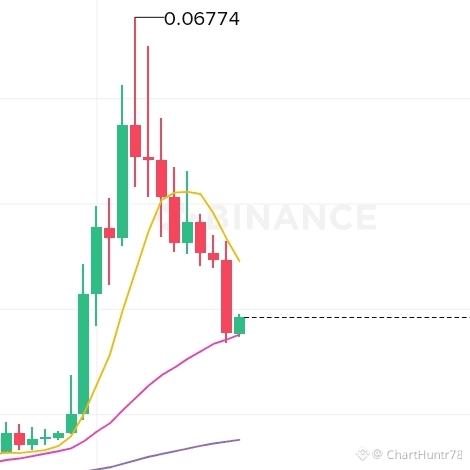
Walrus ($WAL) is facing heavy selling pressure after a sharp 20.33% decline in 24 hours. With trading activity surging, the next reaction around support could be crucial! ⚠️
💎 WALUSDT | Market Snapshot
💰 Current Price: $0.04656
📉 24H Change: -20.33%
🎯 24H High: $0.05964
📍 24H Low: $0.04477
🔥 24H Volume: 5.90B WAL
💵 Trading Volume: $313.74M USDT
🔍 Technical Breakdown
⚠️ MA(7): $0.05055 — price is below this level, showing short-term weakness.
✅ MA(25): $0.04535 — price is slightly above this level.
✅ MA(99): $0.03791 — price remains above the longer-term moving average.
The chart suggests short-term bearish pressure despite price holding above MA(25) and MA(99).
🎯 Key Levels to Watch
🔹 Immediate Support: $0.04477
🔹 Next Support Zone: $0.03969–$0.03791
🔹 Immediate Resistance: $0.04712–$0.05055
🔹 Major Resistance: $0.05456
🔹 Higher Resistance: $0.05964
🚀 Bullish Scenario: If buyers defend $0.04477 and reclaim $0.05055 with stronger volume, a recovery toward $0.05456 could become possible.
🐻 Bearish Scenario: A decisive break below $0.04477 could expose the lower support zone around $0.03969.
📌 My Strategy: Avoid blindly buying the dip. Wait for a confirmed reversal or a clear breakdown before making a decision. High volatility means risk management is essential.
🔥 What's next for $WAL — a relief bounce or another leg down?
👇 Share your analysis!
#WAL #Walrus #WALUSDT #BinanceSquare #CryptoAnalysis #Altcoins #TechnicalAnalysis #CryptoTrading #MarketUpdate #DYOR
🚨 $WAL
— -20% DROP! IS A BOUNCE COMING, OR WILL SELLERS PUSH LOWER? 👀📉
Walrus ($WAL ) is facing heavy selling pressure after a sharp 20.33% decline in 24 hours. With trading activity surging, the next reaction around support could be crucial! ⚠️
💎 WALUSDT | Market Snapshot
💰 Current Price: $0.04656
📉 24H Change: -20.33%
🎯 24H High: $0.05964
📍 24H Low: $0.04477
🔥 24H Volume: 5.90B WAL
💵 Trading Volume: $313.74M USDT
🔍 Technical Breakdown
⚠️ MA(7): $0.05055 — price is below this level, showing short-term weakness.
✅ MA(25): $0.04535 — price is slightly above this level.
✅ MA(99): $0.03791 — price remains above the longer-term moving average.
The chart suggests short-term bearish pressure despite price holding above MA(25) and MA(99).
🎯 Key Levels to Watch
🔹 Immediate Support: $0.04477
🔹 Next Support Zone: $0.03969–$0.03791
🔹 Immediate Resistance: $0.04712–$0.05055
🔹 Major Resistance: $0.05456
🔹 Higher Resistance: $0.05964
🚀 Bullish Scenario: If buyers defend $0.04477 and reclaim $0.05055 with stronger volume, a recovery toward $0.05456 could become possible.
🐻 Bearish Scenario: A decisive break below $0.04477 could expose the lower support zone around $0.03969.
📌 My Strategy: Avoid blindly buying the dip. Wait for a confirmed reversal or a clear breakdown before making a decision. High volatility means risk management is essential.
🔥 What's next for $WAL — a relief bounce or another leg down?
👇 Share your analysis!
#WAL #Walrus #WALUSDT #BinanceSquare #CryptoAnalysis #Altcoins #TechnicalAnalysis #CryptoTrading #MarketUpdate #DYOR
— -20% DROP! IS A BOUNCE COMING, OR WILL SELLERS PUSH LOWER? 👀📉
Walrus ($WAL ) is facing heavy selling pressure after a sharp 20.33% decline in 24 hours. With trading activity surging, the next reaction around support could be crucial! ⚠️
💎 WALUSDT | Market Snapshot
💰 Current Price: $0.04656
📉 24H Change: -20.33%
🎯 24H High: $0.05964
📍 24H Low: $0.04477
🔥 24H Volume: 5.90B WAL
💵 Trading Volume: $313.74M USDT
🔍 Technical Breakdown
⚠️ MA(7): $0.05055 — price is below this level, showing short-term weakness.
✅ MA(25): $0.04535 — price is slightly above this level.
✅ MA(99): $0.03791 — price remains above the longer-term moving average.
The chart suggests short-term bearish pressure despite price holding above MA(25) and MA(99).
🎯 Key Levels to Watch
🔹 Immediate Support: $0.04477
🔹 Next Support Zone: $0.03969–$0.03791
🔹 Immediate Resistance: $0.04712–$0.05055
🔹 Major Resistance: $0.05456
🔹 Higher Resistance: $0.05964
🚀 Bullish Scenario: If buyers defend $0.04477 and reclaim $0.05055 with stronger volume, a recovery toward $0.05456 could become possible.
🐻 Bearish Scenario: A decisive break below $0.04477 could expose the lower support zone around $0.03969.
📌 My Strategy: Avoid blindly buying the dip. Wait for a confirmed reversal or a clear breakdown before making a decision. High volatility means risk management is essential.
🔥 What's next for $WAL — a relief bounce or another leg down?
👇 Share your analysis!
#WAL #Walrus #WALUSDT #BinanceSquare #CryptoAnalysis #Altcoins #TechnicalAnalysis #CryptoTrading #MarketUpdate #DYOR
325

$WAL Just Broke Out, and the Shorts Got Squeezed 🚀
Up ~25% today and ~49% on the week, near $0.058 after DATA Network named Walrus its default storage. $5.67M in shorts were liquidated.
🔹 Support: $0.0559 (200-day average)
🔹 Resistance: $0.0658, then $0.075
🔹 Plan: don’t chase. Wait for a retest of $0.0559, with a stop-loss.
💬 Retest or run to $0.075? 👇
{future}(WALUSDT)
⚠️ Not financial advice. DYOR.
#WAL #Walrus #TechnicalAnalys #BinanceSquare
$WAL Just Broke Out, and the Shorts Got Squeezed 🚀
Up ~25% today and ~49% on the week, near $0.058 after DATA Network named Walrus its default storage. $5.67M in shorts were liquidated.
🔹 Support: $0.0559 (200-day average)
🔹 Resistance: $0.0658, then $0.075
🔹 Plan: don’t chase. Wait for a retest of $0.0559, with a stop-loss.
💬 Retest or run to $0.075? 👇
⚠️ Not financial advice. DYOR.
#WAL #Walrus #TechnicalAnalys #BinanceSquare
Up ~25% today and ~49% on the week, near $0.058 after DATA Network named Walrus its default storage. $5.67M in shorts were liquidated.
🔹 Support: $0.0559 (200-day average)
🔹 Resistance: $0.0658, then $0.075
🔹 Plan: don’t chase. Wait for a retest of $0.0559, with a stop-loss.
💬 Retest or run to $0.075? 👇
⚠️ Not financial advice. DYOR.
#WAL #Walrus #TechnicalAnalys #BinanceSquare
1
236
·
--
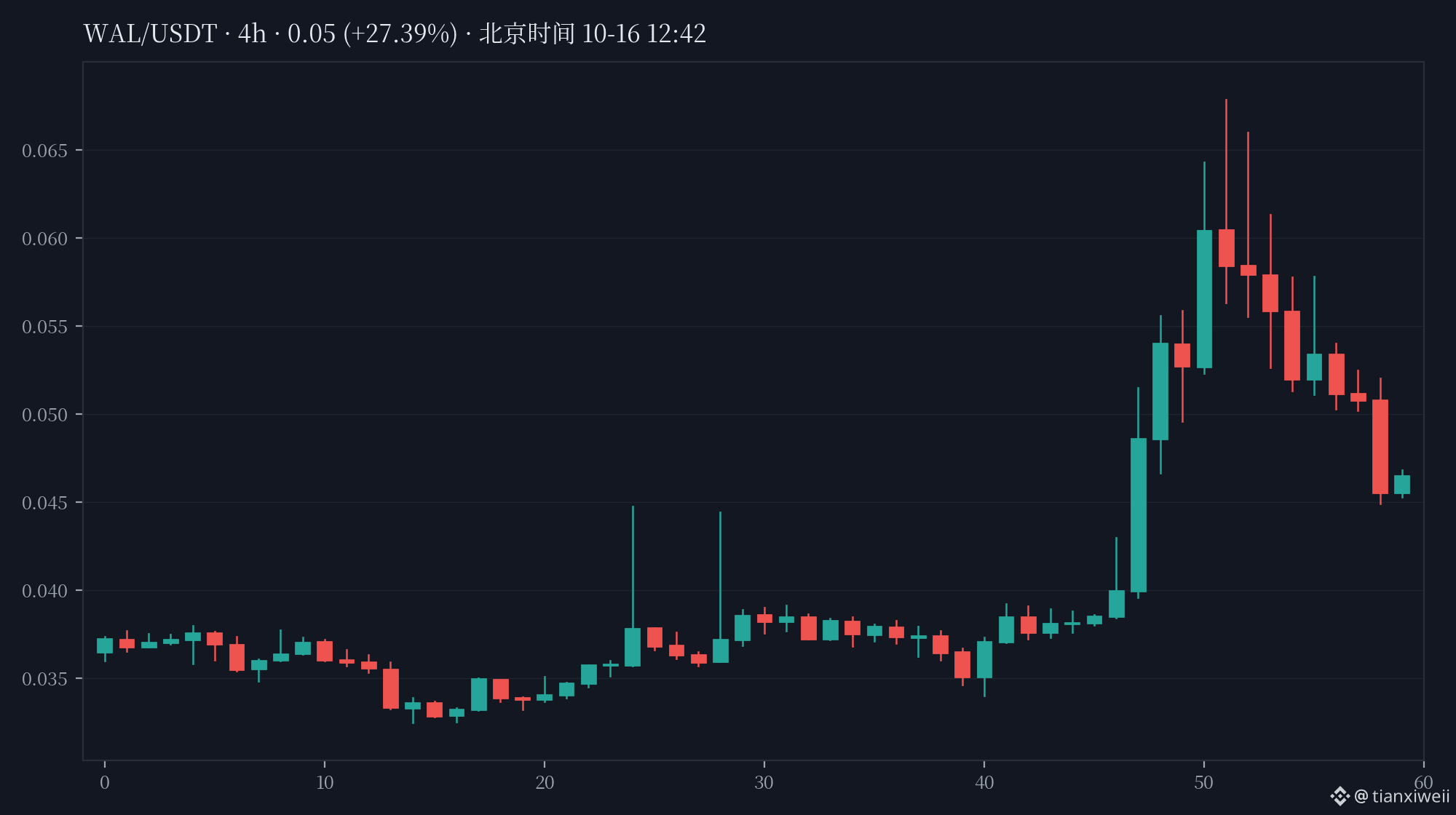
$WAL 见顶确认:守了约33小时的0.048,中午12点4小时收盘正式收在下面
先给结论:今早预警帖里定的确认口径,全部兑现了。
中午12:00,WAL那根4小时K线收在0.04554。这不是盘中插针——09:35那波瀑布先把0.048砸穿、最低探到0.04493,09:00那根1小时收盘0.04702已经预警过一次,现在4小时收盘也跟上,性质从“盘中跌破”变成“收盘确认”。
账算清楚:从10月15日凌晨高点0.06786算起,最大回撤约34%;发布前现货0.04655、24h约-21.3%,现货24h成交额约2009万USDT。同期 $BTC 还在82,000一带、24h约+0.6%,这波是WAL自己的退潮,不是大盘拖的。
为什么跌?到现在仍未找到明确新利空。推它暴涨的还是10月13日Sui基金会收购DATA Network那条旧消息,消息退潮、逼空燃料也早没了:OKX永续资金费率从最深约-0.48%收窄到约-0.074%,未平仓量约173万美元。空头不再拥挤,也意味着反抽别指望逼空来送。
接下来只看两个位:上方0.048已经从支撑变压力,放量收回并站稳,见顶判断才作废;反过来,4小时继续收在0.045下方,这轮行情就按结束处理,中间的反弹先当减仓窗口,不当抄底信号。从24h涨约70%到见顶确认,只用了一天半——这种逼空票,失效位到了就认,别跟它讲感情。
风险提示:跌深之后随时可能急反抽,追空同样危险;本文是行情记录,不构成投资建议。
二选一站队:0.048这次是真破了,还是今晚又能收回去——真见顶,还是能收回?
#WAL #Walrus #山寨币 #暴涨跟踪
$WAL 见顶确认:守了约33小时的0.048,中午12点4小时收盘正式收在下面
先给结论:今早预警帖里定的确认口径,全部兑现了。
中午12:00,WAL那根4小时K线收在0.04554。这不是盘中插针——09:35那波瀑布先把0.048砸穿、最低探到0.04493,09:00那根1小时收盘0.04702已经预警过一次,现在4小时收盘也跟上,性质从“盘中跌破”变成“收盘确认”。
账算清楚:从10月15日凌晨高点0.06786算起,最大回撤约34%;发布前现货0.04655、24h约-21.3%,现货24h成交额约2009万USDT。同期 $BTC 还在82,000一带、24h约+0.6%,这波是WAL自己的退潮,不是大盘拖的。
为什么跌?到现在仍未找到明确新利空。推它暴涨的还是10月13日Sui基金会收购DATA Network那条旧消息,消息退潮、逼空燃料也早没了:OKX永续资金费率从最深约-0.48%收窄到约-0.074%,未平仓量约173万美元。空头不再拥挤,也意味着反抽别指望逼空来送。
接下来只看两个位:上方0.048已经从支撑变压力,放量收回并站稳,见顶判断才作废;反过来,4小时继续收在0.045下方,这轮行情就按结束处理,中间的反弹先当减仓窗口,不当抄底信号。从24h涨约70%到见顶确认,只用了一天半——这种逼空票,失效位到了就认,别跟它讲感情。
风险提示:跌深之后随时可能急反抽,追空同样危险;本文是行情记录,不构成投资建议。
二选一站队:0.048这次是真破了,还是今晚又能收回去——真见顶,还是能收回?
#WAL #Walrus #山寨币 #暴涨跟踪
先给结论:今早预警帖里定的确认口径,全部兑现了。
中午12:00,WAL那根4小时K线收在0.04554。这不是盘中插针——09:35那波瀑布先把0.048砸穿、最低探到0.04493,09:00那根1小时收盘0.04702已经预警过一次,现在4小时收盘也跟上,性质从“盘中跌破”变成“收盘确认”。
账算清楚:从10月15日凌晨高点0.06786算起,最大回撤约34%;发布前现货0.04655、24h约-21.3%,现货24h成交额约2009万USDT。同期 $BTC 还在82,000一带、24h约+0.6%,这波是WAL自己的退潮,不是大盘拖的。
为什么跌?到现在仍未找到明确新利空。推它暴涨的还是10月13日Sui基金会收购DATA Network那条旧消息,消息退潮、逼空燃料也早没了:OKX永续资金费率从最深约-0.48%收窄到约-0.074%,未平仓量约173万美元。空头不再拥挤,也意味着反抽别指望逼空来送。
接下来只看两个位:上方0.048已经从支撑变压力,放量收回并站稳,见顶判断才作废;反过来,4小时继续收在0.045下方,这轮行情就按结束处理,中间的反弹先当减仓窗口,不当抄底信号。从24h涨约70%到见顶确认,只用了一天半——这种逼空票,失效位到了就认,别跟它讲感情。
风险提示:跌深之后随时可能急反抽,追空同样危险;本文是行情记录,不构成投资建议。
二选一站队:0.048这次是真破了,还是今晚又能收回去——真见顶,还是能收回?
#WAL #Walrus #山寨币 #暴涨跟踪
358

·
--
Baissier
📊 $WAL /USDT Trading Setup: Buy the Dip or Wait?
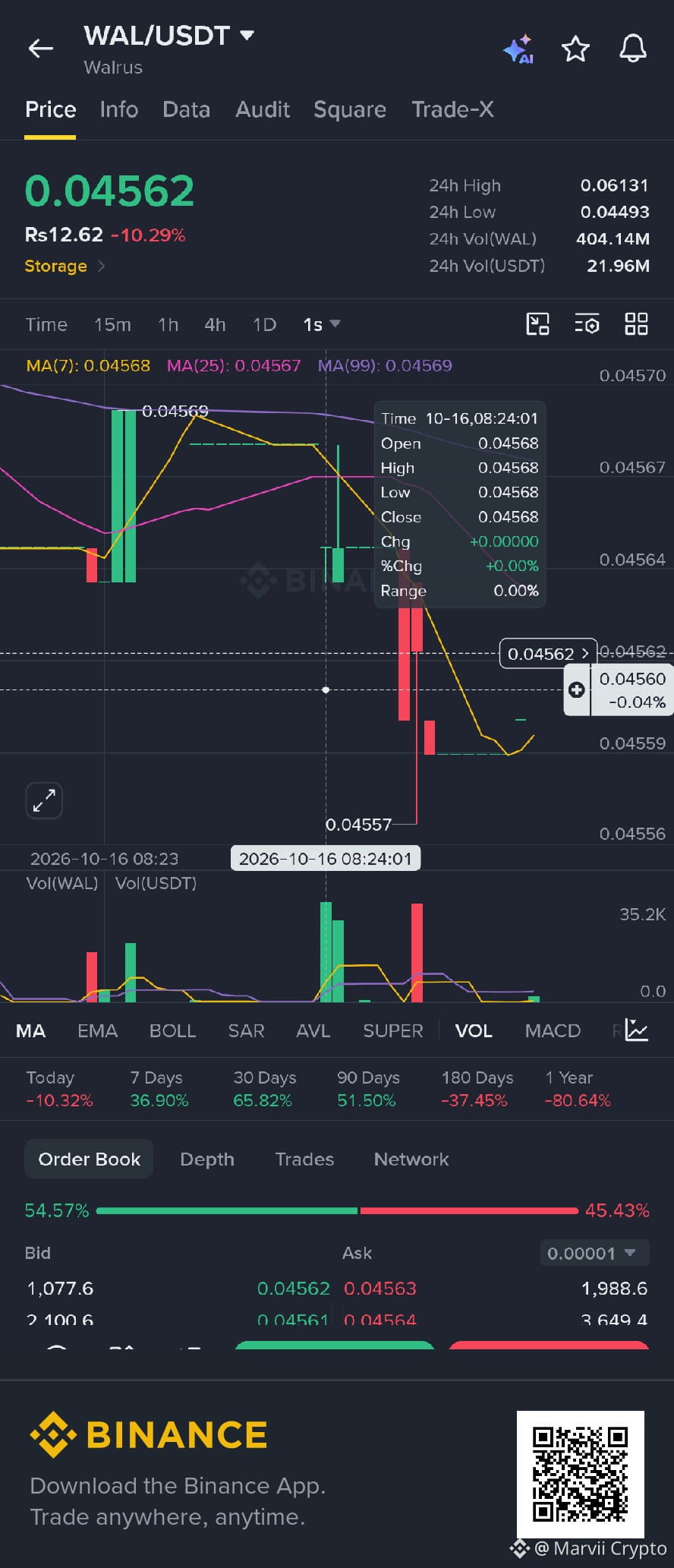
Walrus ($WAL) is currently trading at 0.04562, showing a daily drop of -10.29%. After a sharp correction, the price is testing a crucial short-term support level.
Here is a clean and clear trading strategy based on the current chart structure:
⚡ Trading Strategy
Entry Zone (Buy): $0.04550 - $0.04565 (Current support area)
Target 1 (Short-term): $0.04590
Target 2 (Mid-term): $0.04630
Target 3 (Breakout Target): $0.04700+
Stop Loss (Risk Management): $0.04520 (Strictly follow this if it breaks below recent lows)
Stop Loss (Risk Management): $0.04520 (Strictly follow this if it breaks below recent lows)
🔍 Market Insights
• Support & Resistance: 0.04557 ek immediate support ka kaam kar raha hai. Agar price yahan hold karti hai, toh ek quick relief bounce dekhne ko mil sakta hai.
• Volume Alert: Selling volume thoda kam ho raha hai, jo is baat ka ishara hai ke bears thak rahe hain aur bulls enter ho sakte hain.
⚠️ Disclaimer: Crypto trading involves high risk. Always manage your risk and do your own research (DYOR) before entering any trade!
#WALUSDT #CryptoTrading #BinanceSquare #TradingSignals #Walrus
{future}(WALUSDT)
📊 $WAL /USDT Trading Setup: Buy the Dip or Wait?
Walrus ($WAL ) is currently trading at 0.04562, showing a daily drop of -10.29%. After a sharp correction, the price is testing a crucial short-term support level.
Here is a clean and clear trading strategy based on the current chart structure:
⚡ Trading Strategy
Entry Zone (Buy): $0.04550 - $0.04565 (Current support area)
Target 1 (Short-term): $0.04590
Target 2 (Mid-term): $0.04630
Target 3 (Breakout Target): $0.04700+
Stop Loss (Risk Management): $0.04520 (Strictly follow this if it breaks below recent lows)
Stop Loss (Risk Management): $0.04520 (Strictly follow this if it breaks below recent lows)
🔍 Market Insights
• Support & Resistance: 0.04557 ek immediate support ka kaam kar raha hai. Agar price yahan hold karti hai, toh ek quick relief bounce dekhne ko mil sakta hai.
• Volume Alert: Selling volume thoda kam ho raha hai, jo is baat ka ishara hai ke bears thak rahe hain aur bulls enter ho sakte hain.
⚠️ Disclaimer: Crypto trading involves high risk. Always manage your risk and do your own research (DYOR) before entering any trade!
#WALUSDT #CryptoTrading #BinanceSquare #TradingSignals #Walrus
Walrus ($WAL ) is currently trading at 0.04562, showing a daily drop of -10.29%. After a sharp correction, the price is testing a crucial short-term support level.
Here is a clean and clear trading strategy based on the current chart structure:
⚡ Trading Strategy
Entry Zone (Buy): $0.04550 - $0.04565 (Current support area)
Target 1 (Short-term): $0.04590
Target 2 (Mid-term): $0.04630
Target 3 (Breakout Target): $0.04700+
Stop Loss (Risk Management): $0.04520 (Strictly follow this if it breaks below recent lows)
Stop Loss (Risk Management): $0.04520 (Strictly follow this if it breaks below recent lows)
🔍 Market Insights
• Support & Resistance: 0.04557 ek immediate support ka kaam kar raha hai. Agar price yahan hold karti hai, toh ek quick relief bounce dekhne ko mil sakta hai.
• Volume Alert: Selling volume thoda kam ho raha hai, jo is baat ka ishara hai ke bears thak rahe hain aur bulls enter ho sakte hain.
⚠️ Disclaimer: Crypto trading involves high risk. Always manage your risk and do your own research (DYOR) before entering any trade!
#WALUSDT #CryptoTrading #BinanceSquare #TradingSignals #Walrus
2
101

$WAL : LONG OR SHORT? 📈📉
🔹 Potential Catalyst: Growing demand for decentralized data infrastructure could support long-term adoption.
🔹 Bullish Setup: Sustained volume and a confirmed breakout may create a long opportunity.
🔹 Bearish Setup: After a sharp rally, profit-taking or a support breakdown could create downside risk.
⚠️ High volatility. No guaranteed profits. Manage risk carefully.
#WAL #Walrus #BinanceSquare r #CryptoAnalysis
{spot}(WALUSDT)
#Altcoins
$WAL : LONG OR SHORT? 📈📉
🔹 Potential Catalyst: Growing demand for decentralized data infrastructure could support long-term adoption.
🔹 Bullish Setup: Sustained volume and a confirmed breakout may create a long opportunity.
🔹 Bearish Setup: After a sharp rally, profit-taking or a support breakdown could create downside risk.
⚠️ High volatility. No guaranteed profits. Manage risk carefully.
#WAL #Walrus #BinanceSquare r #CryptoAnalysis
#Altcoins
🔹 Potential Catalyst: Growing demand for decentralized data infrastructure could support long-term adoption.
🔹 Bullish Setup: Sustained volume and a confirmed breakout may create a long opportunity.
🔹 Bearish Setup: After a sharp rally, profit-taking or a support breakdown could create downside risk.
⚠️ High volatility. No guaranteed profits. Manage risk carefully.
#WAL #Walrus #BinanceSquare r #CryptoAnalysis
#Altcoins
1
235
·
--
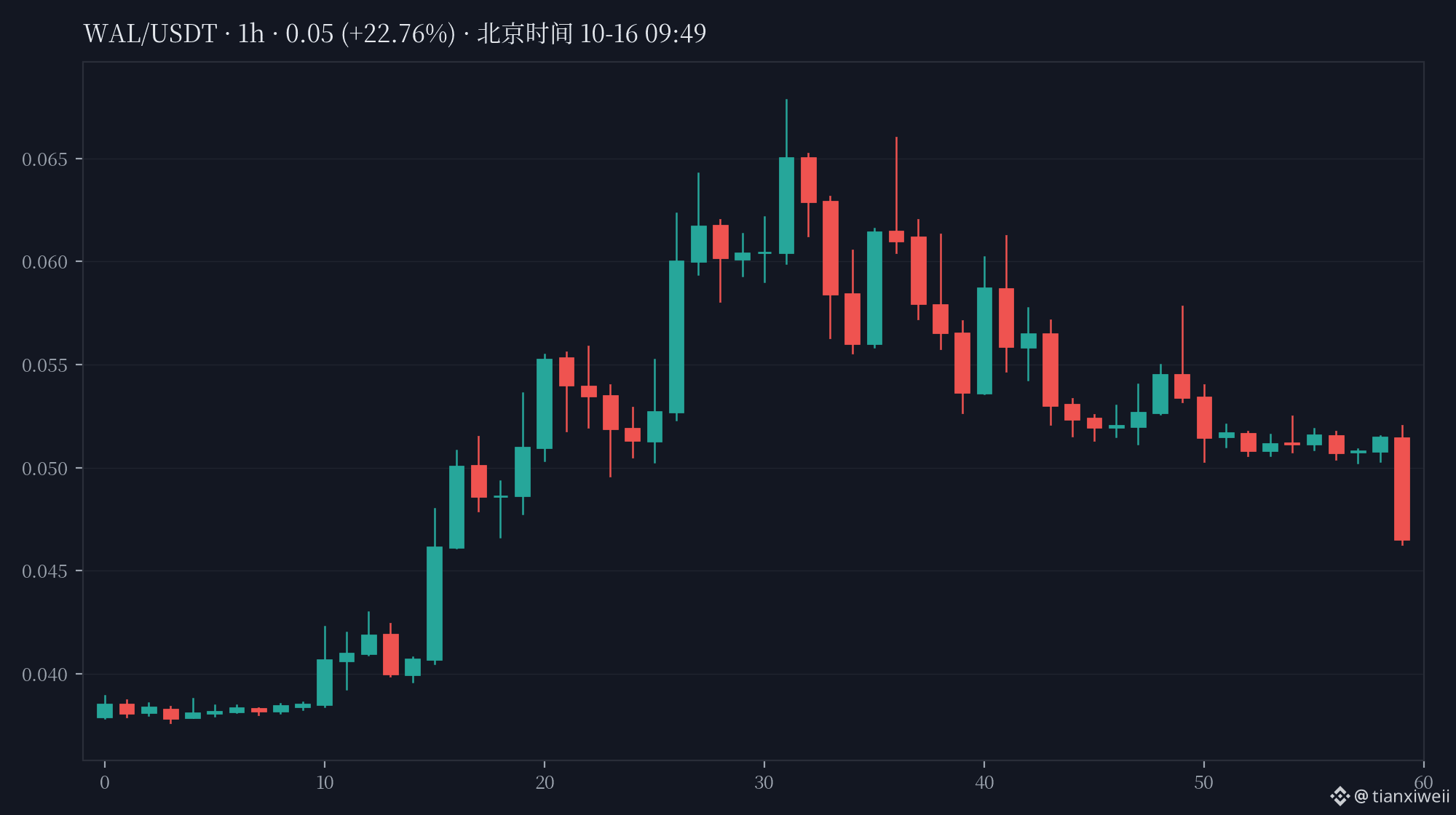
13分钟砸穿0.048,$WAL 守了33小时的最后防线破了
今早09:35之前,$WAL 还在0.051一带磨;09:35起直线跳水,09:41跌破0.048,09:45最低探到0.04629,发布前约0.0466,13分钟跌了约9%。从昨天凌晨高点0.06786算起,回撤已约31%,24h由涨转跌到-23%左右。
为什么说0.048重要:从10月15日凌晨第一篇跟踪起,这条线就是定下的大失效位——4h收盘跌破按见顶处理。这两天破位、假破位闹了几轮,价格始终没真正跌穿它;今天是第一次放量砸穿且没有立刻收回。量能对得上:09:30这根15分钟成交约38.8万USDT,是此前多根的3到10倍,不是无量阴跌。
结构也变了。OKX永续资金费率现在约-0.074%,比起昨天的-0.62%极值早就收窄一大截,逼空燃料在破位前就衰减完了,这波是现货抛压主导。同时 $BTC 还在8.21万一带、24h约+0.5%,不是大盘拖累,是WAL自己的故事退潮。催化方面今天未找到明确新利空,驱动仍是10月13日Sui收购DATA那条旧消息行情的了结;另有媒体提到10月26日还有解锁,那是后面的事,不是今早这根针的原因。
定性看收盘:10:00这根1h线、尤其12:00这根4h线收在0.048下方,见顶确认;如果快速放量收回0.048上方并站稳,就按假破位处理,这条预警作废。反弹先看0.048(已由支撑变压力),再往上是0.0555原区间下沿。也提醒一句:费率已不极端、低位又短时超卖,这个币昨天刚演过"破位一小时收回",在地板上追空同样容易被反抽打脸。
风险提示:小币种盘口薄、波动极端,以上只作复盘记录,不构成投资建议。你站哪边——0.048这次真见顶,还是又是假破位、一小时收回?
#WAL #Walrus #Sui #山寨币
13分钟砸穿0.048,$WAL 守了33小时的最后防线破了
今早09:35之前,$WAL 还在0.051一带磨;09:35起直线跳水,09:41跌破0.048,09:45最低探到0.04629,发布前约0.0466,13分钟跌了约9%。从昨天凌晨高点0.06786算起,回撤已约31%,24h由涨转跌到-23%左右。
为什么说0.048重要:从10月15日凌晨第一篇跟踪起,这条线就是定下的大失效位——4h收盘跌破按见顶处理。这两天破位、假破位闹了几轮,价格始终没真正跌穿它;今天是第一次放量砸穿且没有立刻收回。量能对得上:09:30这根15分钟成交约38.8万USDT,是此前多根的3到10倍,不是无量阴跌。
结构也变了。OKX永续资金费率现在约-0.074%,比起昨天的-0.62%极值早就收窄一大截,逼空燃料在破位前就衰减完了,这波是现货抛压主导。同时 $BTC 还在8.21万一带、24h约+0.5%,不是大盘拖累,是WAL自己的故事退潮。催化方面今天未找到明确新利空,驱动仍是10月13日Sui收购DATA那条旧消息行情的了结;另有媒体提到10月26日还有解锁,那是后面的事,不是今早这根针的原因。
定性看收盘:10:00这根1h线、尤其12:00这根4h线收在0.048下方,见顶确认;如果快速放量收回0.048上方并站稳,就按假破位处理,这条预警作废。反弹先看0.048(已由支撑变压力),再往上是0.0555原区间下沿。也提醒一句:费率已不极端、低位又短时超卖,这个币昨天刚演过"破位一小时收回",在地板上追空同样容易被反抽打脸。
风险提示:小币种盘口薄、波动极端,以上只作复盘记录,不构成投资建议。你站哪边——0.048这次真见顶,还是又是假破位、一小时收回?
#WAL #Walrus #Sui #山寨币
今早09:35之前,$WAL 还在0.051一带磨;09:35起直线跳水,09:41跌破0.048,09:45最低探到0.04629,发布前约0.0466,13分钟跌了约9%。从昨天凌晨高点0.06786算起,回撤已约31%,24h由涨转跌到-23%左右。
为什么说0.048重要:从10月15日凌晨第一篇跟踪起,这条线就是定下的大失效位——4h收盘跌破按见顶处理。这两天破位、假破位闹了几轮,价格始终没真正跌穿它;今天是第一次放量砸穿且没有立刻收回。量能对得上:09:30这根15分钟成交约38.8万USDT,是此前多根的3到10倍,不是无量阴跌。
结构也变了。OKX永续资金费率现在约-0.074%,比起昨天的-0.62%极值早就收窄一大截,逼空燃料在破位前就衰减完了,这波是现货抛压主导。同时 $BTC 还在8.21万一带、24h约+0.5%,不是大盘拖累,是WAL自己的故事退潮。催化方面今天未找到明确新利空,驱动仍是10月13日Sui收购DATA那条旧消息行情的了结;另有媒体提到10月26日还有解锁,那是后面的事,不是今早这根针的原因。
定性看收盘:10:00这根1h线、尤其12:00这根4h线收在0.048下方,见顶确认;如果快速放量收回0.048上方并站稳,就按假破位处理,这条预警作废。反弹先看0.048(已由支撑变压力),再往上是0.0555原区间下沿。也提醒一句:费率已不极端、低位又短时超卖,这个币昨天刚演过"破位一小时收回",在地板上追空同样容易被反抽打脸。
风险提示:小币种盘口薄、波动极端,以上只作复盘记录,不构成投资建议。你站哪边——0.048这次真见顶,还是又是假破位、一小时收回?
#WAL #Walrus #Sui #山寨币
270

·
--
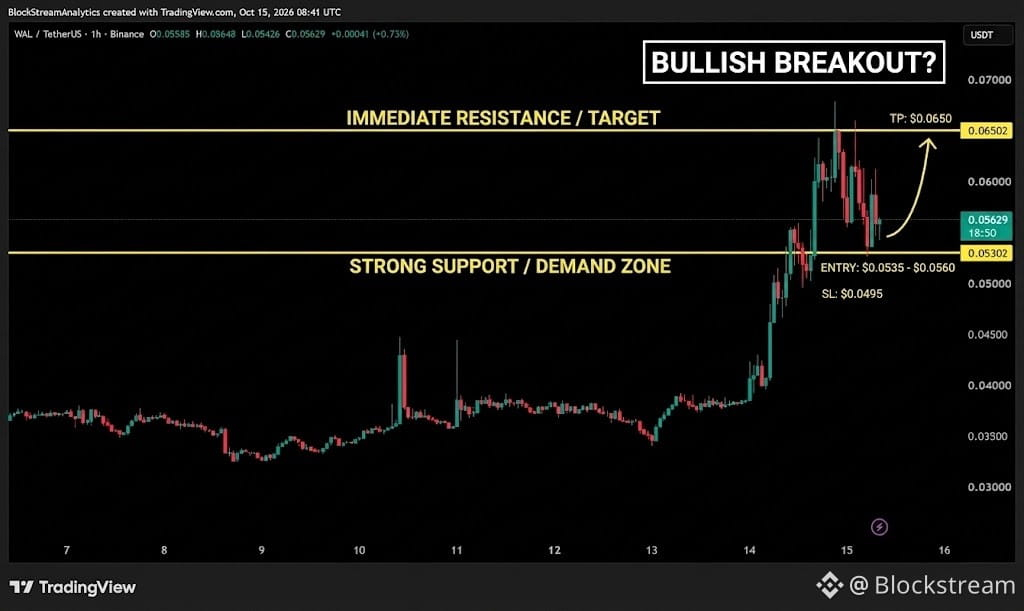
$WAL BREAKOUT CONSOLIDATION BEFORE THE NEXT LEG UP! READY TO CROSS $0.0650? 📈🚀
Entry: $0.0535 – $0.0560
TP1: $0.0610 | TP2: $0.0650 | TP3: $0.0710
SL: $0.0495
Walrus ($WAL) is holding strong bullish momentum near $0.0558 after a major impulse move. Respecting the $0.0530 support level keeps the bullish market structure intact for a continuation test toward $0.0650+.
Manage risk carefully on fast-moving top gainer setups!
👉 Click here to trade $WAL 📈
Follow for daily rapid trade setups!
{spot}(WALUSDT)
#walrus
$WAL BREAKOUT CONSOLIDATION BEFORE THE NEXT LEG UP! READY TO CROSS $0.0650? 📈🚀
Entry: $0.0535 – $0.0560
TP1: $0.0610 | TP2: $0.0650 | TP3: $0.0710
SL: $0.0495
Walrus ($WAL ) is holding strong bullish momentum near $0.0558 after a major impulse move. Respecting the $0.0530 support level keeps the bullish market structure intact for a continuation test toward $0.0650+.
Manage risk carefully on fast-moving top gainer setups!
👉 Click here to trade $WAL 📈
Follow for daily rapid trade setups!
#walrus
Entry: $0.0535 – $0.0560
TP1: $0.0610 | TP2: $0.0650 | TP3: $0.0710
SL: $0.0495
Walrus ($WAL ) is holding strong bullish momentum near $0.0558 after a major impulse move. Respecting the $0.0530 support level keeps the bullish market structure intact for a continuation test toward $0.0650+.
Manage risk carefully on fast-moving top gainer setups!
👉 Click here to trade $WAL 📈
Follow for daily rapid trade setups!
#walrus
1
1
71

·
--
🚀 WAL (Walrus) Coin Update — October 15, 2026
🔥 WAL is gaining attention in the crypto market!
W🚀 WAL (Walrus) Coin Update — October 15, 2026
🔥 $WAL is gaining attention in the crypto market!
Walrus is a decentralized data storage project focused on helping applications store and manage digital data efficiently.
📊 Market Insight: $WAL has recently shown strong price movement, attracting attention from crypto traders. However, high volatility can bring both opportunities and risks.
👀 What to Watch: Trading volume, market momentum, and key support and resistance levels.
⚠️ Always do your own research before making any trading decision. This is not financial advice.
#$WAL #Walrus #CryptoNews #BinanceSquare #Altcoins #CryptoAnalysis
{stock_us}(WAL.US)
🚀 WAL (Walrus) Coin Update — October 15, 2026 🔥 WAL is gaining attention in the crypto market! W
🚀 WAL (Walrus) Coin Update — October 15, 2026
🔥 $WAL is gaining attention in the crypto market!
Walrus is a decentralized data storage project focused on helping applications store and manage digital data efficiently.
📊 Market Insight: $WAL has recently shown strong price movement, attracting attention from crypto traders. However, high volatility can bring both opportunities and risks.
👀 What to Watch: Trading volume, market momentum, and key support and resistance levels.
⚠️ Always do your own research before making any trading decision. This is not financial advice.
#$WAL #Walrus #CryptoNews #BinanceSquare #Altcoins #CryptoAnalysis
🔥 $WAL is gaining attention in the crypto market!
Walrus is a decentralized data storage project focused on helping applications store and manage digital data efficiently.
📊 Market Insight: $WAL has recently shown strong price movement, attracting attention from crypto traders. However, high volatility can bring both opportunities and risks.
👀 What to Watch: Trading volume, market momentum, and key support and resistance levels.
⚠️ Always do your own research before making any trading decision. This is not financial advice.
#$WAL #Walrus #CryptoNews #BinanceSquare #Altcoins #CryptoAnalysis
203

·
--
💪 $WAL
{spot}(WALUSDT)
+46% — while the whole market bleeds
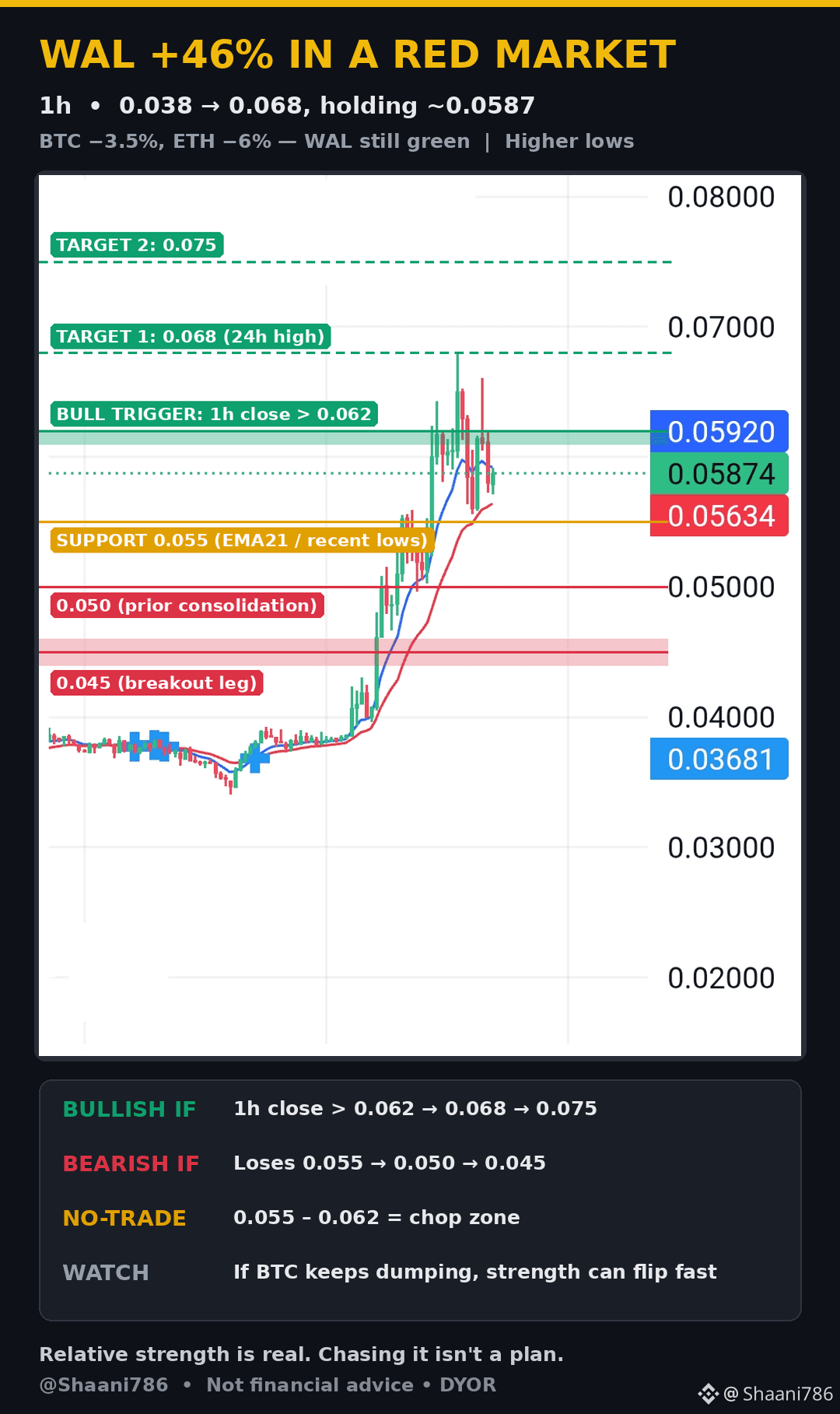
BTC −3.5%, ETH −6%, alts down 5–10%... and Walrus is green. WAL climbed in steps from $0.038 to $0.068 and is now holding ~$0.0587 with higher lows.
That's relative strength — buyers stepping in while everything else gets sold. But if BTC keeps dumping, even the strongest coins can flip fast.
📈 Bullish if: 1h close above $0.062 → $0.068 → $0.075
📉 Bearish if: loses $0.055 → $0.050 → $0.045
⏸️ $0.055 – $0.062 = chop zone, no trade
Relative strength is real. Chasing it isn't a plan. Wait for the level.
Is WAL the strongest coin this week? 👇
#WAL #Walrus #Write2Earn #altcoins
Not financial advice • DYOR
💪 $WAL
+46% — while the whole market bleeds
BTC −3.5%, ETH −6%, alts down 5–10%... and Walrus is green. WAL climbed in steps from $0.038 to $0.068 and is now holding ~$0.0587 with higher lows.
That's relative strength — buyers stepping in while everything else gets sold. But if BTC keeps dumping, even the strongest coins can flip fast.
📈 Bullish if: 1h close above $0.062 → $0.068 → $0.075
📉 Bearish if: loses $0.055 → $0.050 → $0.045
⏸️ $0.055 – $0.062 = chop zone, no trade
Relative strength is real. Chasing it isn't a plan. Wait for the level.
Is WAL the strongest coin this week? 👇
#WAL #Walrus #Write2Earn #altcoins
Not financial advice • DYOR
+46% — while the whole market bleeds
BTC −3.5%, ETH −6%, alts down 5–10%... and Walrus is green. WAL climbed in steps from $0.038 to $0.068 and is now holding ~$0.0587 with higher lows.
That's relative strength — buyers stepping in while everything else gets sold. But if BTC keeps dumping, even the strongest coins can flip fast.
📈 Bullish if: 1h close above $0.062 → $0.068 → $0.075
📉 Bearish if: loses $0.055 → $0.050 → $0.045
⏸️ $0.055 – $0.062 = chop zone, no trade
Relative strength is real. Chasing it isn't a plan. Wait for the level.
Is WAL the strongest coin this week? 👇
#WAL #Walrus #Write2Earn #altcoins
Not financial advice • DYOR
260

·
--
Baissier
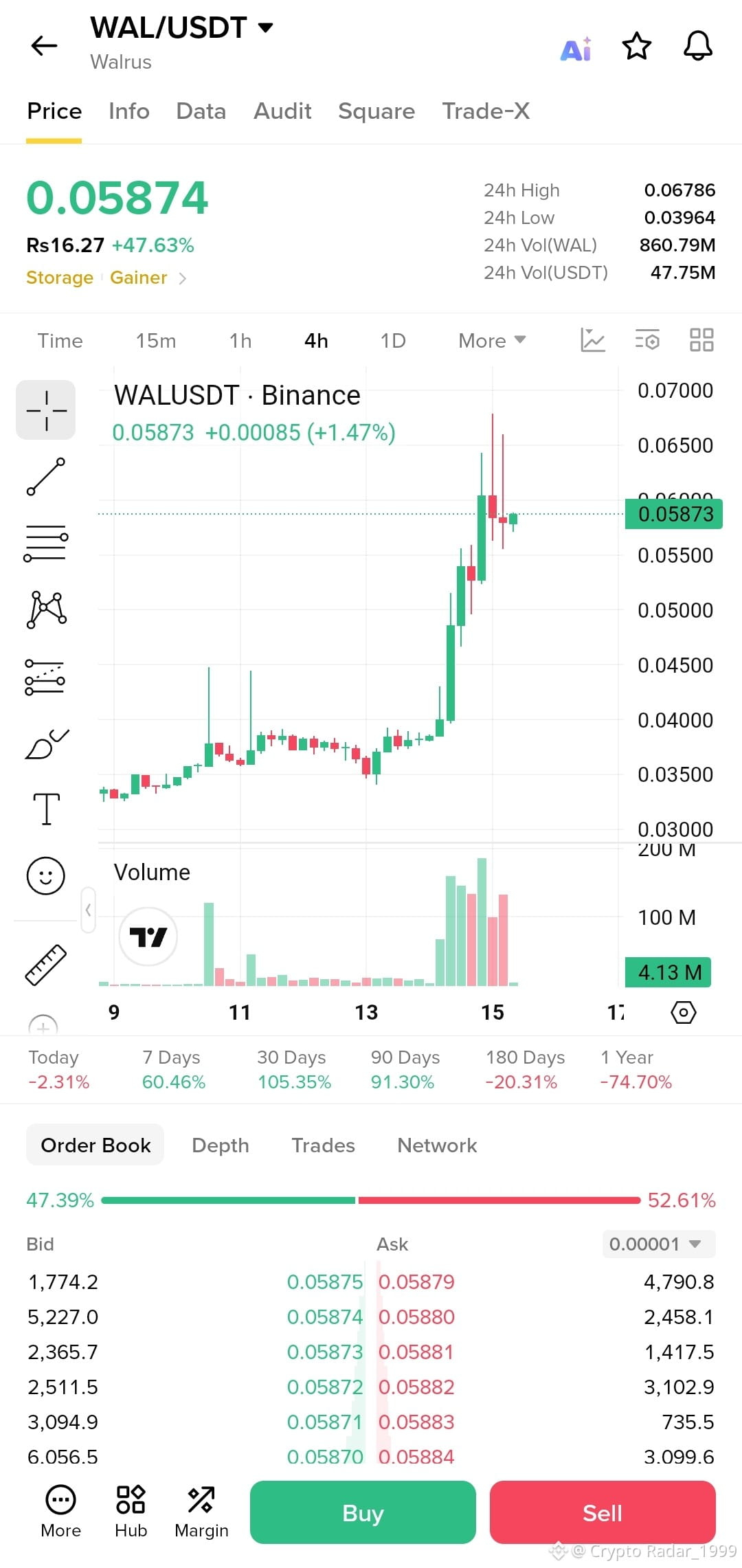
🚨 I JUST FOUND A CLEAN 4H SETUP ON $WAL L! 👀
Most will miss it. DON’T. 🎯
PULLBACK SETUP
📍 Entry: $0.0500–$0.0520
🛑 SL: $0.0470
🎯 TP1: $0.0540
🎯 TP2: $0.0570
🚀 TP3: $0.0600
$WAL 💎 $POWER
{future}(WALUSDT)
#WAL #Walrus #Crypto #Trading #BinanceSquare
🚨 I JUST FOUND A CLEAN 4H SETUP ON $WAL L! 👀
Most will miss it. DON’T. 🎯
PULLBACK SETUP
📍 Entry: $0.0500–$0.0520
🛑 SL: $0.0470
🎯 TP1: $0.0540
🎯 TP2: $0.0570
🚀 TP3: $0.0600
$WAL 💎 $POWER
#WAL #Walrus #Crypto #Trading #BinanceSquare
Most will miss it. DON’T. 🎯
PULLBACK SETUP
📍 Entry: $0.0500–$0.0520
🛑 SL: $0.0470
🎯 TP1: $0.0540
🎯 TP2: $0.0570
🚀 TP3: $0.0600
$WAL 💎 $POWER
#WAL #Walrus #Crypto #Trading #BinanceSquare
1
186

·
--
🚀 BINANCE TOP GAINER ALERT: $WAL (WALRUS)
🔥 Walrus ($WAL) is showing strong market momentum!
According to today's Binance market snapshot, WAL has gained approximately 53.38% in 24 hours.
📊 Why traders are watching WAL:
Strong upward price movement
High market attention
Significant 24-hour gain
Potential short-term trading opportunities
⚠️ Trading Strategy: Don't chase a green candle blindly!
Check the live WAL/USDT chart.
Wait for a possible pullback.
Look for confirmation before entering.
Always use Stop Loss.
Never risk money you cannot afford to lose.
💬 Question for traders: Do you think $WAL can continue its upward momentum, or will we see a correction?
👇 Share your analysis!
#WAL #walrus
{future}(WALUSDT)
#CryptoAnalysis #Altcoins! #CryptoMarket
🚀 BINANCE TOP GAINER ALERT: $WAL (WALRUS)
🔥 Walrus ($WAL) is showing strong market momentum!
According to today's Binance market snapshot, WAL has gained approximately 53.38% in 24 hours.
📊 Why traders are watching WAL:
Strong upward price movement
High market attention
Significant 24-hour gain
Potential short-term trading opportunities
⚠️ Trading Strategy: Don't chase a green candle blindly!
Check the live WAL/USDT chart.
Wait for a possible pullback.
Look for confirmation before entering.
Always use Stop Loss.
Never risk money you cannot afford to lose.
💬 Question for traders: Do you think $WAL can continue its upward momentum, or will we see a correction?
👇 Share your analysis!
#WAL #walrus
#CryptoAnalysis #Altcoins! #CryptoMarket
🔥 Walrus ($WAL) is showing strong market momentum!
According to today's Binance market snapshot, WAL has gained approximately 53.38% in 24 hours.
📊 Why traders are watching WAL:
Strong upward price movement
High market attention
Significant 24-hour gain
Potential short-term trading opportunities
⚠️ Trading Strategy: Don't chase a green candle blindly!
Check the live WAL/USDT chart.
Wait for a possible pullback.
Look for confirmation before entering.
Always use Stop Loss.
Never risk money you cannot afford to lose.
💬 Question for traders: Do you think $WAL can continue its upward momentum, or will we see a correction?
👇 Share your analysis!
#WAL #walrus
#CryptoAnalysis #Altcoins! #CryptoMarket

167

·
--
Vérifié

Article
Walrus Secures a $30 Million Boost as Sui Expands Its AI Data InfrastructureWalrus is gaining attention after Sui Foundation announced a planned $30 million investment in DATA Network, positioning Walrus as the network’s native storage layer for AI training data. The partnership aims to build a scalable and verifiable data supply chain that helps establish the origin, ownership, and authorized use of data used to train artificial intelligence models.
As part of the transition announced in October 2026, DATA Network plans to discontinue its independent blockchain and rebuild its protocol on Sui. Its Trace registry has reportedly recorded more than 250 million data contributions, while Walrus will provide decentralized storage for encrypted, immutable copies of source files. Sui will support programmable rights management and payments, helping connect data ownership with its permitted use.
The integration could strengthen WAL’s role in the growing intersection of decentralized storage and AI infrastructure. As DATA Network expands, demand for reliable storage could increase, creating opportunities for sustained network usage. However, the long-term impact on WAL will depend on whether the partnership generates recurring paid storage demand and measurable on-chain activity.
Overall, the investment and migration mark a significant step toward integrating Walrus into AI data infrastructure. The key question is whether this strategic partnership can translate into lasting adoption and sustainable demand for the WAL token. #walrus #sui $WAL
{future}(SUIUSDT)
{future}(WALUSDT)
Walrus Secures a $30 Million Boost as Sui Expands Its AI Data Infrastructure
Walrus is gaining attention after Sui Foundation announced a planned $30 million investment in DATA Network, positioning Walrus as the network’s native storage layer for AI training data. The partnership aims to build a scalable and verifiable data supply chain that helps establish the origin, ownership, and authorized use of data used to train artificial intelligence models.
As part of the transition announced in October 2026, DATA Network plans to discontinue its independent blockchain and rebuild its protocol on Sui. Its Trace registry has reportedly recorded more than 250 million data contributions, while Walrus will provide decentralized storage for encrypted, immutable copies of source files. Sui will support programmable rights management and payments, helping connect data ownership with its permitted use.
The integration could strengthen WAL’s role in the growing intersection of decentralized storage and AI infrastructure. As DATA Network expands, demand for reliable storage could increase, creating opportunities for sustained network usage. However, the long-term impact on WAL will depend on whether the partnership generates recurring paid storage demand and measurable on-chain activity.
Overall, the investment and migration mark a significant step toward integrating Walrus into AI data infrastructure. The key question is whether this strategic partnership can translate into lasting adoption and sustainable demand for the WAL token. #walrus #sui $WAL
As part of the transition announced in October 2026, DATA Network plans to discontinue its independent blockchain and rebuild its protocol on Sui. Its Trace registry has reportedly recorded more than 250 million data contributions, while Walrus will provide decentralized storage for encrypted, immutable copies of source files. Sui will support programmable rights management and payments, helping connect data ownership with its permitted use.
The integration could strengthen WAL’s role in the growing intersection of decentralized storage and AI infrastructure. As DATA Network expands, demand for reliable storage could increase, creating opportunities for sustained network usage. However, the long-term impact on WAL will depend on whether the partnership generates recurring paid storage demand and measurable on-chain activity.
Overall, the investment and migration mark a significant step toward integrating Walrus into AI data infrastructure. The key question is whether this strategic partnership can translate into lasting adoption and sustainable demand for the WAL token. #walrus #sui $WAL
1
8
694

·
--
Baissier
🚨 $WAL — AFTER A 44% SURGE, IS A PULLBACK COMING? 👀
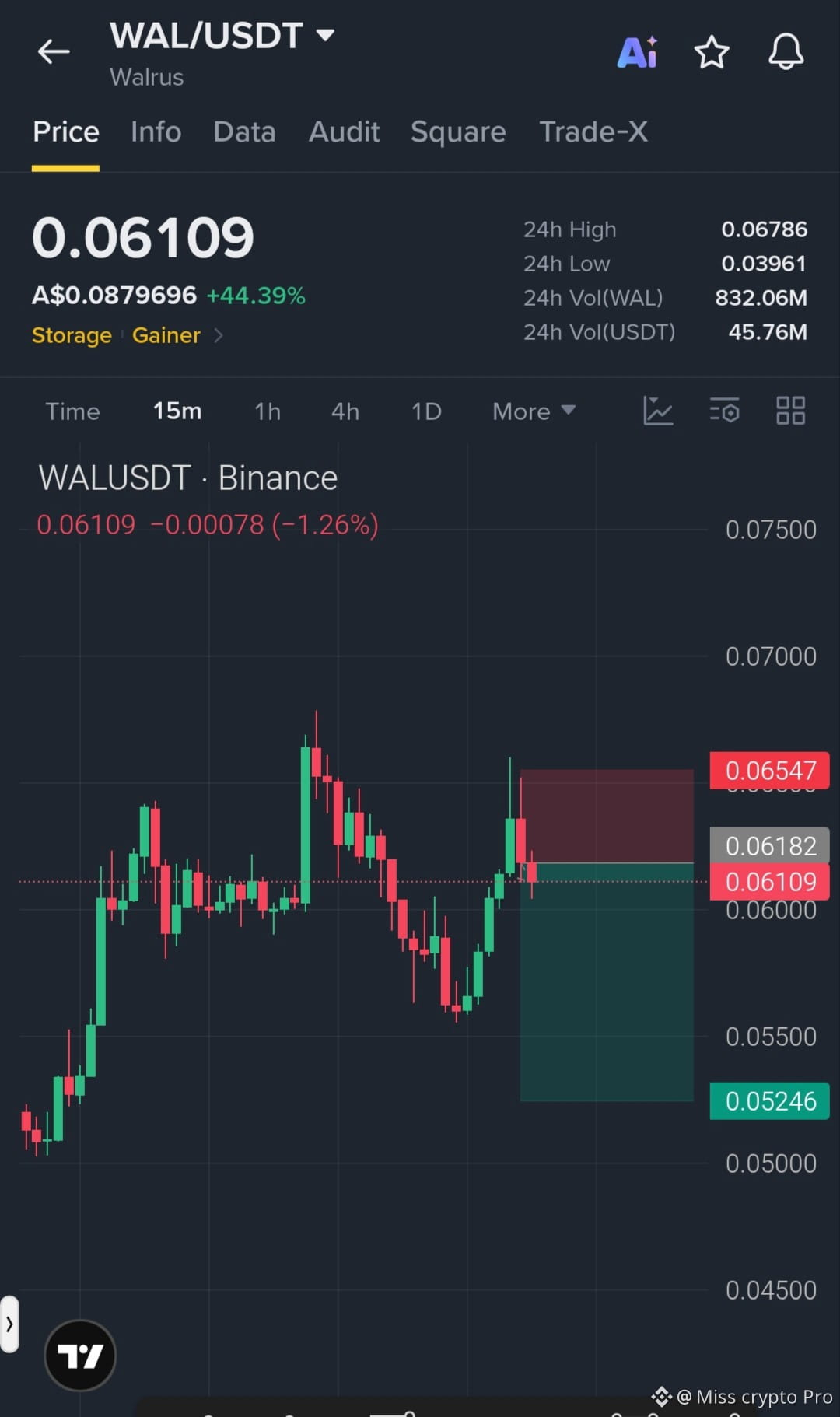
Trade Setup: SHORT (only if resistance holds)
Entry Zone: 0.06180 – 0.06300
TP1: 0.06000
TP2: 0.05750
TP3: 0.05500
SL: 0.06550
$WAL has surged 44.39% in 24 hours, but sellers are showing signs of pressure near current levels. A break below 0.06000 could trigger a deeper pullback, while strong buying may push price higher again.
Are you expecting a correction or another bullish breakout? 👇
Trade Here On $Walrus
👇
#WAL #Walrus #CryptoTrading #Binance
🚨 $WAL — AFTER A 44% SURGE, IS A PULLBACK COMING? 👀
Trade Setup: SHORT (only if resistance holds)
Entry Zone: 0.06180 – 0.06300
TP1: 0.06000
TP2: 0.05750
TP3: 0.05500
SL: 0.06550
$WAL has surged 44.39% in 24 hours, but sellers are showing signs of pressure near current levels. A break below 0.06000 could trigger a deeper pullback, while strong buying may push price higher again.
Are you expecting a correction or another bullish breakout? 👇
Trade Here On $Walrus
👇
#WAL #Walrus #CryptoTrading #Binance
Trade Setup: SHORT (only if resistance holds)
Entry Zone: 0.06180 – 0.06300
TP1: 0.06000
TP2: 0.05750
TP3: 0.05500
SL: 0.06550
$WAL has surged 44.39% in 24 hours, but sellers are showing signs of pressure near current levels. A break below 0.06000 could trigger a deeper pullback, while strong buying may push price higher again.
Are you expecting a correction or another bullish breakout? 👇
Trade Here On $Walrus
👇
#WAL #Walrus #CryptoTrading #Binance
2
104

·
--
$WAL Update 🔎 Can Walrus sustain its sharp rally?
💰 Price now: $0.06114 | 24h: +49.79%
📊 Market cap: $160.23M | Rank: #213
📈 24h range: $0.03961 – $0.06786
📰 What's happening:
WAL has surged nearly 50% in 24 hours, accompanied by a major increase in trading activity. The rally comes as Walrus gains attention for its role in decentralized data infrastructure and AI-related applications.
🔥 Key catalyst:
On October 12, 2026, Sui Foundation announced that DATA Network and its Trace registry are joining the Sui ecosystem, with Walrus becoming the default storage layer for DATA Foundation applications. This is a confirmed ecosystem development, not proof that it caused WAL's rally.
👀 Next step to watch:
🔴 Bearish case: A break below $0.0555 could expose the $0.0396 area.
🟢 Bullish case: Holding above $0.0584 and clearing $0.0616 could bring $0.0679 back into focus.
📝 My take:
Visit blockvia.cc for Signal Analysis
Not financial advice, DYOR ⚠️
#WAL #Walrus #CryptoNews #Sui #AI #CryptoMarket
$WAL Update 🔎 Can Walrus sustain its sharp rally?
💰 Price now: $0.06114 | 24h: +49.79%
📊 Market cap: $160.23M | Rank: #213
📈 24h range: $0.03961 – $0.06786
📰 What's happening:
WAL has surged nearly 50% in 24 hours, accompanied by a major increase in trading activity. The rally comes as Walrus gains attention for its role in decentralized data infrastructure and AI-related applications.
🔥 Key catalyst:
On October 12, 2026, Sui Foundation announced that DATA Network and its Trace registry are joining the Sui ecosystem, with Walrus becoming the default storage layer for DATA Foundation applications. This is a confirmed ecosystem development, not proof that it caused WAL's rally.
👀 Next step to watch:
🔴 Bearish case: A break below $0.0555 could expose the $0.0396 area.
🟢 Bullish case: Holding above $0.0584 and clearing $0.0616 could bring $0.0679 back into focus.
📝 My take:
Visit blockvia.cc for Signal Analysis
Not financial advice, DYOR ⚠️
#WAL #Walrus #CryptoNews #Sui #AI #CryptoMarket
💰 Price now: $0.06114 | 24h: +49.79%
📊 Market cap: $160.23M | Rank: #213
📈 24h range: $0.03961 – $0.06786
📰 What's happening:
WAL has surged nearly 50% in 24 hours, accompanied by a major increase in trading activity. The rally comes as Walrus gains attention for its role in decentralized data infrastructure and AI-related applications.
🔥 Key catalyst:
On October 12, 2026, Sui Foundation announced that DATA Network and its Trace registry are joining the Sui ecosystem, with Walrus becoming the default storage layer for DATA Foundation applications. This is a confirmed ecosystem development, not proof that it caused WAL's rally.
👀 Next step to watch:
🔴 Bearish case: A break below $0.0555 could expose the $0.0396 area.
🟢 Bullish case: Holding above $0.0584 and clearing $0.0616 could bring $0.0679 back into focus.
📝 My take:
Visit blockvia.cc for Signal Analysis
Not financial advice, DYOR ⚠️
#WAL #Walrus #CryptoNews #Sui #AI #CryptoMarket

1
370
Connectez-vous pour découvrir plus de contenu
Rejoignez la communauté mondiale des adeptes de cryptomonnaies sur Binance Square
⚡️ Suviez les dernières informations importantes sur les cryptomonnaies.
💬 Jugé digne de confiance par la plus grande plateforme d’échange de cryptomonnaies au monde.
👍 Découvrez les connaissances que partagent les créateurs vérifiés.
Adresse e-mail/Nº de téléphone
Sujets d’actualité
1
#CanMicrosoftDeliverOnAI
18,524 vues
360 mentions
2
#CanGoogleDefindItsCore
10,516 vues
280 mentions
3
#FOMCWatch
9M vues
27,508 mentions
4
#EthereumDropsBelow$2300
7,666 vues
129 mentions
5
#BitcoinSlipsBelow$80KAgain
22,091 vues
95 mentions
6
#ThailandLaunchesWORPTStablecoinToQRPaymentApp
41,048 vues
647 mentions
7
#StrategySkipsBitcoinPurchasesSpends$205MOnSTRCBuybacks
9,049 vues
89 mentions
8
#BitmineAdds10452ETH
82,151 vues
1,029 mentions
9
#SouthKoreaConsidersEducationTaxOnCryptoExchanges
43,543 vues
757 mentions
10
#OCCUrgesCommunityBanksToEnterStablecoinPayments
33,732 vues
533 mentions