
#mehrankhan
mehrankhan
68 vues
3 mentions
Populaire
Récents

·
--
🇺🇸🇮🇷 US–Iran Escalation: What It Means for Bitcoin, Gold, Oil & Global Markets
Global financial🇺🇸🇮🇷 US–Iran Escalation: What It Means for Bitcoin, Gold, Oil & Global Markets
Global financial markets are once again facing heightened geopolitical risk after the United States and Iran exchanged attacks around the strategically important Strait of Hormuz.
On Sunday, August 30, U.S. forces struck two Iranian launchers on Larak Island, located in the Strait of Hormuz. According to U.S. officials, the launchers were preparing for operations involving rockets and sea mines. Iran subsequently retaliated with attacks targeting U.S. military bases in Jordan.
The latest escalation comes as the broader US–Iran conflict enters its sixth month, while diplomatic efforts to resolve the situation and restore normal shipping through the Strait remain stalled.
For traders, the biggest concern isn't only the military confrontation itself. The potential impact on oil supply, inflation, interest rates, currencies, gold, Bitcoin and global equities could be far more important for financial markets.
🛢️ Oil Prices Surge Above $90
Oil was the first major market to react.
Brent crude rose above $90 per barrel, while WTI also moved higher following the latest attacks. Reuters reported Brent at around $90.31 and WTI around $85.23 during Monday's trading.
The key issue is the Strait of Hormuz, one of the world's most important energy routes.
Before the conflict, approximately one-fifth of global oil consumption passed through the Strait. Shipping activity has now been severely reduced, with visible commodity-vessel traffic falling to only about five vessels per day over the weekend.
A tanker was also reportedly struck by a projectile while travelling through the Strait, adding to concerns about the safety of commercial shipping.
Why does this matter?
If the disruption continues, traders could see sustained pressure on crude oil prices.
Higher oil prices can then feed into transportation, manufacturing and energy costs, potentially increasing inflation expectations.
And that's where the situation becomes particularly important for financial markets.
📈 The Inflation → Interest Rate Connection
A prolonged rise in oil prices could make the inflation outlook more complicated for central banks.
If energy prices remain elevated, central banks may have less room to ease monetary policy aggressively.
For traders, the potential chain reaction is:
US–Iran escalation → Strait of Hormuz disruption → Higher oil prices → Higher inflation expectations → Higher-for-longer rates → Pressure on risk assets
This doesn't guarantee that markets will follow this exact path, but it is one of the key scenarios investors are watching.
🟡 What Happens to Gold?
Gold remains one of the most closely watched assets during periods of geopolitical uncertainty.
However, traders should not assume that “war = gold automatically goes up.”
Gold is influenced by several factors simultaneously, including:
Geopolitical risk
U.S. dollar strength
Treasury yields
Inflation expectations
Federal Reserve policy
Investor demand for safe-haven assets
That means gold could receive support from geopolitical uncertainty while simultaneously facing pressure from rising yields or a stronger dollar.
For XAUUSD traders, the reaction of yields and the dollar may be just as important as the geopolitical headlines.
₿ What About Bitcoin?
Bitcoin presents an even more interesting situation.
The market continues to debate whether BTC should behave more like a risk asset or a digital safe-haven asset during geopolitical crises.
A sudden escalation can initially create a risk-off environment, potentially putting pressure on cryptocurrencies and equities.
However, if geopolitical tensions eventually increase concerns around inflation, currencies or traditional financial systems, Bitcoin could attract renewed attention from investors.
The important point is that Bitcoin's reaction needs to be observed rather than assumed.
Instead of automatically calling geopolitical escalation bullish or bearish for BTC, traders should watch:
Price action + liquidity + volume + market structure + the reaction of the dollar and Treasury yields.
📊 Global Markets Are Watching the Strait
The latest escalation is already affecting broader market sentiment.
Reuters reported that Asian and European equities came under pressure as oil prices rose and concerns about the Middle East conflict increased.
The Strait of Hormuz therefore remains one of the most important variables for markets right now.
If shipping conditions improve and diplomatic progress resumes, oil could come under pressure.
But if the situation deteriorates further, markets could price in a larger supply disruption and potentially higher inflation.
🚨 5 Things Traders Should Watch
1️⃣ Strait of Hormuz
This is arguably the biggest factor.
Watch shipping activity and any developments involving commercial vessels.
2️⃣ Crude Oil
Brent above $90 is an important psychological level.
A sustained move higher could increase inflation concerns.
3️⃣ Federal Reserve Expectations
Any increase in expectations for tighter monetary policy could influence:
BTC → Gold → NASDAQ → USD → Treasury yields
4️⃣ U.S. Dollar & Treasury Yields
These remain critical for understanding whether geopolitical uncertainty is creating a genuine safe-haven bid or simply triggering a broader risk-off move.
5️⃣ Bitcoin Market Structure
Instead of predicting BTC purely from headlines, traders should focus on whether Bitcoin can maintain important support levels and how price reacts to major liquidity zones.
🔥 Final Thoughts
The latest US–Iran escalation has once again pushed geopolitics to the center of financial markets.
The biggest concern for investors isn't simply whether another military exchange occurs.
The bigger question is:
What happens to the Strait of Hormuz and global energy supplies if tensions continue?
A prolonged disruption could keep oil prices elevated, increase inflation concerns and complicate monetary-policy decisions.
That could create significant volatility across Bitcoin, gold, forex, crude oil, indices and global equities.
For traders, this is a market where risk management matters more than prediction.
Don't trade every headline.
Watch the reaction.
Watch liquidity.
Watch the dollar.
Watch yields.
And most importantly, let price action confirm the narrative before taking a position.
US Iran conflict 2026, US Iran tensions, Iran war, Strait of Hormuz, Bitcoin news today, Bitcoin analysis, BTC price prediction, Bitcoin and Iran war, gold price today, XAUUSD analysis, oil price today, crude oil price, Brent crude, forex market news, crypto market update, geopolitical risk, Federal Reserve interest rates, global markets, cryptocurrency news, Bitcoin market analysis
#Bitcoin #BTC #CryptoNews #USIran #Iran #IranWar #StraitOfHormuz #Gold #XAUUSD #Oil #CrudeOil #Forex #CryptoMarket #BitcoinNews #MarketUpdate #Trading #Geopolitics #FederalReserve #TradingNews #MehranKhan
🇺🇸🇮🇷 US–Iran Escalation: What It Means for Bitcoin, Gold, Oil & Global Markets Global financial
🇺🇸🇮🇷 US–Iran Escalation: What It Means for Bitcoin, Gold, Oil & Global Markets
Global financial markets are once again facing heightened geopolitical risk after the United States and Iran exchanged attacks around the strategically important Strait of Hormuz.
On Sunday, August 30, U.S. forces struck two Iranian launchers on Larak Island, located in the Strait of Hormuz. According to U.S. officials, the launchers were preparing for operations involving rockets and sea mines. Iran subsequently retaliated with attacks targeting U.S. military bases in Jordan.
The latest escalation comes as the broader US–Iran conflict enters its sixth month, while diplomatic efforts to resolve the situation and restore normal shipping through the Strait remain stalled.
For traders, the biggest concern isn't only the military confrontation itself. The potential impact on oil supply, inflation, interest rates, currencies, gold, Bitcoin and global equities could be far more important for financial markets.
🛢️ Oil Prices Surge Above $90
Oil was the first major market to react.
Brent crude rose above $90 per barrel, while WTI also moved higher following the latest attacks. Reuters reported Brent at around $90.31 and WTI around $85.23 during Monday's trading.
The key issue is the Strait of Hormuz, one of the world's most important energy routes.
Before the conflict, approximately one-fifth of global oil consumption passed through the Strait. Shipping activity has now been severely reduced, with visible commodity-vessel traffic falling to only about five vessels per day over the weekend.
A tanker was also reportedly struck by a projectile while travelling through the Strait, adding to concerns about the safety of commercial shipping.
Why does this matter?
If the disruption continues, traders could see sustained pressure on crude oil prices.
Higher oil prices can then feed into transportation, manufacturing and energy costs, potentially increasing inflation expectations.
And that's where the situation becomes particularly important for financial markets.
📈 The Inflation → Interest Rate Connection
A prolonged rise in oil prices could make the inflation outlook more complicated for central banks.
If energy prices remain elevated, central banks may have less room to ease monetary policy aggressively.
For traders, the potential chain reaction is:
US–Iran escalation → Strait of Hormuz disruption → Higher oil prices → Higher inflation expectations → Higher-for-longer rates → Pressure on risk assets
This doesn't guarantee that markets will follow this exact path, but it is one of the key scenarios investors are watching.
🟡 What Happens to Gold?
Gold remains one of the most closely watched assets during periods of geopolitical uncertainty.
However, traders should not assume that “war = gold automatically goes up.”
Gold is influenced by several factors simultaneously, including:
Geopolitical risk
U.S. dollar strength
Treasury yields
Inflation expectations
Federal Reserve policy
Investor demand for safe-haven assets
That means gold could receive support from geopolitical uncertainty while simultaneously facing pressure from rising yields or a stronger dollar.
For XAUUSD traders, the reaction of yields and the dollar may be just as important as the geopolitical headlines.
₿ What About Bitcoin?
Bitcoin presents an even more interesting situation.
The market continues to debate whether BTC should behave more like a risk asset or a digital safe-haven asset during geopolitical crises.
A sudden escalation can initially create a risk-off environment, potentially putting pressure on cryptocurrencies and equities.
However, if geopolitical tensions eventually increase concerns around inflation, currencies or traditional financial systems, Bitcoin could attract renewed attention from investors.
The important point is that Bitcoin's reaction needs to be observed rather than assumed.
Instead of automatically calling geopolitical escalation bullish or bearish for BTC, traders should watch:
Price action + liquidity + volume + market structure + the reaction of the dollar and Treasury yields.
📊 Global Markets Are Watching the Strait
The latest escalation is already affecting broader market sentiment.
Reuters reported that Asian and European equities came under pressure as oil prices rose and concerns about the Middle East conflict increased.
The Strait of Hormuz therefore remains one of the most important variables for markets right now.
If shipping conditions improve and diplomatic progress resumes, oil could come under pressure.
But if the situation deteriorates further, markets could price in a larger supply disruption and potentially higher inflation.
🚨 5 Things Traders Should Watch
1️⃣ Strait of Hormuz
This is arguably the biggest factor.
Watch shipping activity and any developments involving commercial vessels.
2️⃣ Crude Oil
Brent above $90 is an important psychological level.
A sustained move higher could increase inflation concerns.
3️⃣ Federal Reserve Expectations
Any increase in expectations for tighter monetary policy could influence:
BTC → Gold → NASDAQ → USD → Treasury yields
4️⃣ U.S. Dollar & Treasury Yields
These remain critical for understanding whether geopolitical uncertainty is creating a genuine safe-haven bid or simply triggering a broader risk-off move.
5️⃣ Bitcoin Market Structure
Instead of predicting BTC purely from headlines, traders should focus on whether Bitcoin can maintain important support levels and how price reacts to major liquidity zones.
🔥 Final Thoughts
The latest US–Iran escalation has once again pushed geopolitics to the center of financial markets.
The biggest concern for investors isn't simply whether another military exchange occurs.
The bigger question is:
What happens to the Strait of Hormuz and global energy supplies if tensions continue?
A prolonged disruption could keep oil prices elevated, increase inflation concerns and complicate monetary-policy decisions.
That could create significant volatility across Bitcoin, gold, forex, crude oil, indices and global equities.
For traders, this is a market where risk management matters more than prediction.
Don't trade every headline.
Watch the reaction.
Watch liquidity.
Watch the dollar.
Watch yields.
And most importantly, let price action confirm the narrative before taking a position.
US Iran conflict 2026, US Iran tensions, Iran war, Strait of Hormuz, Bitcoin news today, Bitcoin analysis, BTC price prediction, Bitcoin and Iran war, gold price today, XAUUSD analysis, oil price today, crude oil price, Brent crude, forex market news, crypto market update, geopolitical risk, Federal Reserve interest rates, global markets, cryptocurrency news, Bitcoin market analysis
#Bitcoin #BTC #CryptoNews #USIran #Iran #IranWar #StraitOfHormuz #Gold #XAUUSD #Oil #CrudeOil #Forex #CryptoMarket #BitcoinNews #MarketUpdate #Trading #Geopolitics #FederalReserve #TradingNews #MehranKhan
Global financial markets are once again facing heightened geopolitical risk after the United States and Iran exchanged attacks around the strategically important Strait of Hormuz.
On Sunday, August 30, U.S. forces struck two Iranian launchers on Larak Island, located in the Strait of Hormuz. According to U.S. officials, the launchers were preparing for operations involving rockets and sea mines. Iran subsequently retaliated with attacks targeting U.S. military bases in Jordan.
The latest escalation comes as the broader US–Iran conflict enters its sixth month, while diplomatic efforts to resolve the situation and restore normal shipping through the Strait remain stalled.
For traders, the biggest concern isn't only the military confrontation itself. The potential impact on oil supply, inflation, interest rates, currencies, gold, Bitcoin and global equities could be far more important for financial markets.
🛢️ Oil Prices Surge Above $90
Oil was the first major market to react.
Brent crude rose above $90 per barrel, while WTI also moved higher following the latest attacks. Reuters reported Brent at around $90.31 and WTI around $85.23 during Monday's trading.
The key issue is the Strait of Hormuz, one of the world's most important energy routes.
Before the conflict, approximately one-fifth of global oil consumption passed through the Strait. Shipping activity has now been severely reduced, with visible commodity-vessel traffic falling to only about five vessels per day over the weekend.
A tanker was also reportedly struck by a projectile while travelling through the Strait, adding to concerns about the safety of commercial shipping.
Why does this matter?
If the disruption continues, traders could see sustained pressure on crude oil prices.
Higher oil prices can then feed into transportation, manufacturing and energy costs, potentially increasing inflation expectations.
And that's where the situation becomes particularly important for financial markets.
📈 The Inflation → Interest Rate Connection
A prolonged rise in oil prices could make the inflation outlook more complicated for central banks.
If energy prices remain elevated, central banks may have less room to ease monetary policy aggressively.
For traders, the potential chain reaction is:
US–Iran escalation → Strait of Hormuz disruption → Higher oil prices → Higher inflation expectations → Higher-for-longer rates → Pressure on risk assets
This doesn't guarantee that markets will follow this exact path, but it is one of the key scenarios investors are watching.
🟡 What Happens to Gold?
Gold remains one of the most closely watched assets during periods of geopolitical uncertainty.
However, traders should not assume that “war = gold automatically goes up.”
Gold is influenced by several factors simultaneously, including:
Geopolitical risk
U.S. dollar strength
Treasury yields
Inflation expectations
Federal Reserve policy
Investor demand for safe-haven assets
That means gold could receive support from geopolitical uncertainty while simultaneously facing pressure from rising yields or a stronger dollar.
For XAUUSD traders, the reaction of yields and the dollar may be just as important as the geopolitical headlines.
₿ What About Bitcoin?
Bitcoin presents an even more interesting situation.
The market continues to debate whether BTC should behave more like a risk asset or a digital safe-haven asset during geopolitical crises.
A sudden escalation can initially create a risk-off environment, potentially putting pressure on cryptocurrencies and equities.
However, if geopolitical tensions eventually increase concerns around inflation, currencies or traditional financial systems, Bitcoin could attract renewed attention from investors.
The important point is that Bitcoin's reaction needs to be observed rather than assumed.
Instead of automatically calling geopolitical escalation bullish or bearish for BTC, traders should watch:
Price action + liquidity + volume + market structure + the reaction of the dollar and Treasury yields.
📊 Global Markets Are Watching the Strait
The latest escalation is already affecting broader market sentiment.
Reuters reported that Asian and European equities came under pressure as oil prices rose and concerns about the Middle East conflict increased.
The Strait of Hormuz therefore remains one of the most important variables for markets right now.
If shipping conditions improve and diplomatic progress resumes, oil could come under pressure.
But if the situation deteriorates further, markets could price in a larger supply disruption and potentially higher inflation.
🚨 5 Things Traders Should Watch
1️⃣ Strait of Hormuz
This is arguably the biggest factor.
Watch shipping activity and any developments involving commercial vessels.
2️⃣ Crude Oil
Brent above $90 is an important psychological level.
A sustained move higher could increase inflation concerns.
3️⃣ Federal Reserve Expectations
Any increase in expectations for tighter monetary policy could influence:
BTC → Gold → NASDAQ → USD → Treasury yields
4️⃣ U.S. Dollar & Treasury Yields
These remain critical for understanding whether geopolitical uncertainty is creating a genuine safe-haven bid or simply triggering a broader risk-off move.
5️⃣ Bitcoin Market Structure
Instead of predicting BTC purely from headlines, traders should focus on whether Bitcoin can maintain important support levels and how price reacts to major liquidity zones.
🔥 Final Thoughts
The latest US–Iran escalation has once again pushed geopolitics to the center of financial markets.
The biggest concern for investors isn't simply whether another military exchange occurs.
The bigger question is:
What happens to the Strait of Hormuz and global energy supplies if tensions continue?
A prolonged disruption could keep oil prices elevated, increase inflation concerns and complicate monetary-policy decisions.
That could create significant volatility across Bitcoin, gold, forex, crude oil, indices and global equities.
For traders, this is a market where risk management matters more than prediction.
Don't trade every headline.
Watch the reaction.
Watch liquidity.
Watch the dollar.
Watch yields.
And most importantly, let price action confirm the narrative before taking a position.
US Iran conflict 2026, US Iran tensions, Iran war, Strait of Hormuz, Bitcoin news today, Bitcoin analysis, BTC price prediction, Bitcoin and Iran war, gold price today, XAUUSD analysis, oil price today, crude oil price, Brent crude, forex market news, crypto market update, geopolitical risk, Federal Reserve interest rates, global markets, cryptocurrency news, Bitcoin market analysis
#Bitcoin #BTC #CryptoNews #USIran #Iran #IranWar #StraitOfHormuz #Gold #XAUUSD #Oil #CrudeOil #Forex #CryptoMarket #BitcoinNews #MarketUpdate #Trading #Geopolitics #FederalReserve #TradingNews #MehranKhan
154
·
--
Article
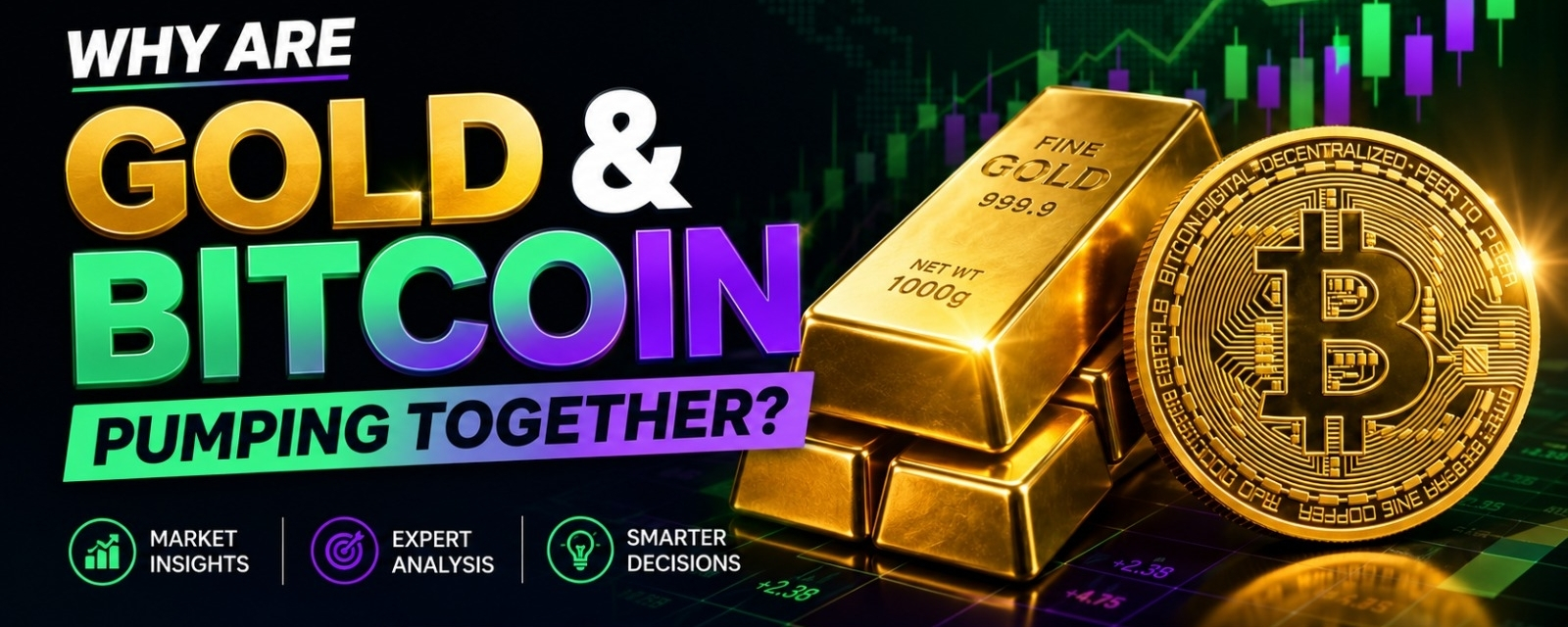
🚨 Why Are GOLD & Bitcoin Pumping Together?
Gold and Bitcoin are both making strong moves higher —🚨 Why Are GOLD & Bitcoin Pumping Together?
Gold and Bitcoin are both making strong moves higher — but what’s driving the rally?
The answer comes down to a mix of U.S. dollar weakness, Treasury-market volatility, fiscal concerns, liquidity expectations, and strong Bitcoin demand.
🟡 Why Is GOLD Pumping?
Gold is getting support from:
📉 U.S. Dollar weakness
📉 Expectations of easier financial conditions
🏦 U.S. Treasury buybacks
🌍 Geopolitical & economic uncertainty
🛡️ Safe-haven demand
Gold has pushed toward $4,560/oz, showing strong bullish momentum.
🟠 Why Is Bitcoin Pumping?
Bitcoin has some additional fuel behind its move:
🚀 Massive short squeeze
💰 Strong Bitcoin ETF inflows
📉 Weaker dollar & changing yield expectations
🏛️ Improving crypto-regulation sentiment
📈 Breakout above key technical levels
Billions of dollars in short positions were liquidated, adding significant buying pressure to BTC.
🔥 Why Are GOLD & BTC Moving Together?
The bigger picture is demand for scarce assets amid growing macro uncertainty.
Dollar Pressure → Fiscal Concerns → Demand for Scarce Assets → 🟡 GOLD + 🟠 BTC
However, Bitcoin's rally has also been amplified by leverage, so volatility could remain high.
🎯 What Should Traders Watch?
Keep an eye on:
DXY • U.S. Treasury Yields • BTC ETF Flows • BTC Support Levels • Gold Momentum
If the dollar remains weak and liquidity conditions stay supportive, GOLD and BTC could continue attracting buyers.
Bitcoin pumping, why Bitcoin is rising, BTC rally 2026, gold pumping, gold price 2026, XAUUSD analysis, Bitcoin ETF, Bitcoin short squeeze, BTCUSD, crypto market update, Gold and Bitcoin, DXY analysis, trading analysis.
#Bitcoin #X#Crypto #BTCUSD #CryptoNews #GoldPrice #Forex #Trading #CryptoTrading #TradersHub #MehranKhan
🚨 Why Are GOLD & Bitcoin Pumping Together? Gold and Bitcoin are both making strong moves higher —
🚨 Why Are GOLD & Bitcoin Pumping Together?
Gold and Bitcoin are both making strong moves higher — but what’s driving the rally?
The answer comes down to a mix of U.S. dollar weakness, Treasury-market volatility, fiscal concerns, liquidity expectations, and strong Bitcoin demand.
🟡 Why Is GOLD Pumping?
Gold is getting support from:
📉 U.S. Dollar weakness
📉 Expectations of easier financial conditions
🏦 U.S. Treasury buybacks
🌍 Geopolitical & economic uncertainty
🛡️ Safe-haven demand
Gold has pushed toward $4,560/oz, showing strong bullish momentum.
🟠 Why Is Bitcoin Pumping?
Bitcoin has some additional fuel behind its move:
🚀 Massive short squeeze
💰 Strong Bitcoin ETF inflows
📉 Weaker dollar & changing yield expectations
🏛️ Improving crypto-regulation sentiment
📈 Breakout above key technical levels
Billions of dollars in short positions were liquidated, adding significant buying pressure to BTC.
🔥 Why Are GOLD & BTC Moving Together?
The bigger picture is demand for scarce assets amid growing macro uncertainty.
Dollar Pressure → Fiscal Concerns → Demand for Scarce Assets → 🟡 GOLD + 🟠 BTC
However, Bitcoin's rally has also been amplified by leverage, so volatility could remain high.
🎯 What Should Traders Watch?
Keep an eye on:
DXY • U.S. Treasury Yields • BTC ETF Flows • BTC Support Levels • Gold Momentum
If the dollar remains weak and liquidity conditions stay supportive, GOLD and BTC could continue attracting buyers.
Bitcoin pumping, why Bitcoin is rising, BTC rally 2026, gold pumping, gold price 2026, XAUUSD analysis, Bitcoin ETF, Bitcoin short squeeze, BTCUSD, crypto market update, Gold and Bitcoin, DXY analysis, trading analysis.
#Bitcoin #X#Crypto #BTCUSD #CryptoNews #GoldPrice #Forex #Trading #CryptoTrading #TradersHub #MehranKhan
Gold and Bitcoin are both making strong moves higher — but what’s driving the rally?
The answer comes down to a mix of U.S. dollar weakness, Treasury-market volatility, fiscal concerns, liquidity expectations, and strong Bitcoin demand.
🟡 Why Is GOLD Pumping?
Gold is getting support from:
📉 U.S. Dollar weakness
📉 Expectations of easier financial conditions
🏦 U.S. Treasury buybacks
🌍 Geopolitical & economic uncertainty
🛡️ Safe-haven demand
Gold has pushed toward $4,560/oz, showing strong bullish momentum.
🟠 Why Is Bitcoin Pumping?
Bitcoin has some additional fuel behind its move:
🚀 Massive short squeeze
💰 Strong Bitcoin ETF inflows
📉 Weaker dollar & changing yield expectations
🏛️ Improving crypto-regulation sentiment
📈 Breakout above key technical levels
Billions of dollars in short positions were liquidated, adding significant buying pressure to BTC.
🔥 Why Are GOLD & BTC Moving Together?
The bigger picture is demand for scarce assets amid growing macro uncertainty.
Dollar Pressure → Fiscal Concerns → Demand for Scarce Assets → 🟡 GOLD + 🟠 BTC
However, Bitcoin's rally has also been amplified by leverage, so volatility could remain high.
🎯 What Should Traders Watch?
Keep an eye on:
DXY • U.S. Treasury Yields • BTC ETF Flows • BTC Support Levels • Gold Momentum
If the dollar remains weak and liquidity conditions stay supportive, GOLD and BTC could continue attracting buyers.
Bitcoin pumping, why Bitcoin is rising, BTC rally 2026, gold pumping, gold price 2026, XAUUSD analysis, Bitcoin ETF, Bitcoin short squeeze, BTCUSD, crypto market update, Gold and Bitcoin, DXY analysis, trading analysis.
#Bitcoin #X#Crypto #BTCUSD #CryptoNews #GoldPrice #Forex #Trading #CryptoTrading #TradersHub #MehranKhan
185
Connectez-vous pour découvrir plus de contenu
Rejoignez la communauté mondiale des adeptes de cryptomonnaies sur Binance Square
⚡️ Suviez les dernières informations importantes sur les cryptomonnaies.
💬 Jugé digne de confiance par la plus grande plateforme d’échange de cryptomonnaies au monde.
👍 Découvrez les connaissances que partagent les créateurs vérifiés.
Adresse e-mail/Nº de téléphone
Sujets d’actualité
1
#RussiaStartsLargeScaleDigitalRubleRolloutSep1
19,038 vues
477 mentions
2
#BitcoinUp23%InAugustOutperformingGoldAndStocks
30,616 vues
852 mentions
3
#BitcoinHolds$78K
19,834 vues
172 mentions
4
#SaylorHintsStrategyBitcoinBuy
2M vues
10,717 mentions
5
#IranStrikesUSBasesInJordan
22,695 vues
349 mentions
6
#LNGTankersStayOutOfHormuz
13,798 vues
301 mentions
7
#SaudiArabiaSeeksAbout$8BLoan
1,830 vues
22 mentions
8
#TankerHitsMinesInStraitOfHormuz
34,649 vues
560 mentions
9
#USCanadaTradeWarDeepens
21,707 vues
382 mentions
10
#ChinaPropertyStocksJumpOnNewMortgageRules
8,303 vues
237 mentions