

#fogo
fogo
10M vues
127,983 mentions
Populaire
Récents

Article
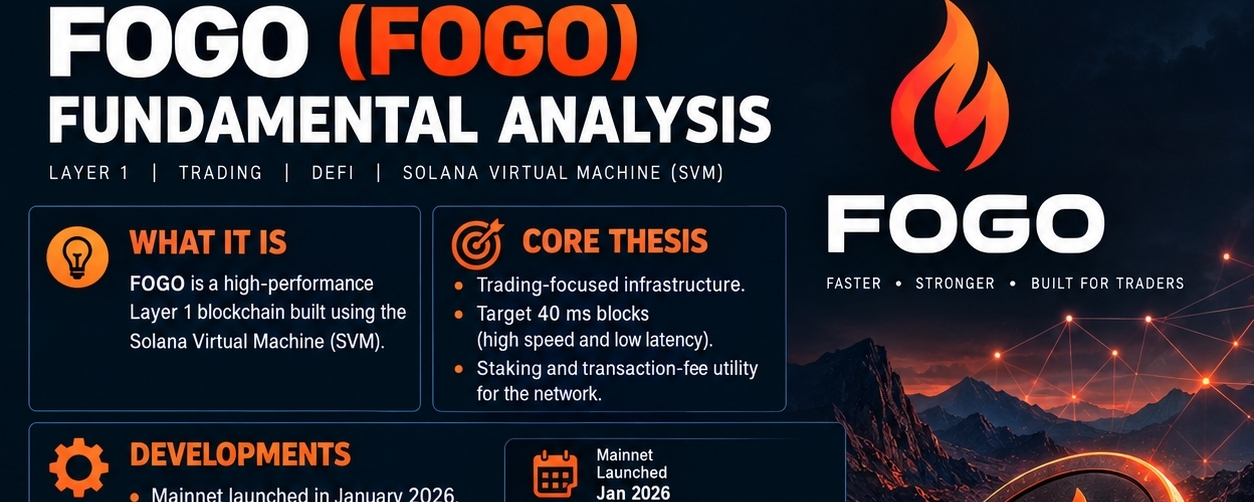
Fogo The Coin of Future$FOGO (@fogo ) is a high-performance Layer 1 blockchain built around the Solana Virtual Machine (SVM), focusing on fast transactions, low latency, and DeFi infrastructure.
📌 Key Fundamentals
🔹 SVM-based blockchain technology
🔹 Focus on high-speed trading and DeFi applications
🔹 Potential growth through ecosystem expansion and developer adoption
🔹 Token utility includes transaction fees and staking
🗺️ Roadmap to Watch
✅ Ecosystem growth and new dApps
✅ More liquidity and real network activity
✅ Security improvements and decentralization
✅ Sustainable long-term token demand
⚠️ Risks to Consider
Token unlocks, inflation, competition, security concerns, and actual user adoption could affect FOGO’s long-term performance.
📊 My Take: FOGO has an interesting technological vision, but its long-term success will depend on real adoption, network reliability, and sustainable ecosystem growth.
💬 **What do you think about FOGO? Is it a promising long-term project or a high-risk investment?
#fogo #strategyBTCPurrchase #predictionMarketsCFTCBBacking #fogo #Binance #CryptoCrash #Trading
Fogo The Coin of Future
$FOGO (@Fogo Official ) is a high-performance Layer 1 blockchain built around the Solana Virtual Machine (SVM), focusing on fast transactions, low latency, and DeFi infrastructure.
📌 Key Fundamentals
🔹 SVM-based blockchain technology
🔹 Focus on high-speed trading and DeFi applications
🔹 Potential growth through ecosystem expansion and developer adoption
🔹 Token utility includes transaction fees and staking
🗺️ Roadmap to Watch
✅ Ecosystem growth and new dApps
✅ More liquidity and real network activity
✅ Security improvements and decentralization
✅ Sustainable long-term token demand
⚠️ Risks to Consider
Token unlocks, inflation, competition, security concerns, and actual user adoption could affect FOGO’s long-term performance.
📊 My Take: FOGO has an interesting technological vision, but its long-term success will depend on real adoption, network reliability, and sustainable ecosystem growth.
💬 **What do you think about FOGO? Is it a promising long-term project or a high-risk investment?
#fogo #strategyBTCPurrchase #predictionMarketsCFTCBBacking #fogo #Binance #CryptoCrash #Trading
📌 Key Fundamentals
🔹 SVM-based blockchain technology
🔹 Focus on high-speed trading and DeFi applications
🔹 Potential growth through ecosystem expansion and developer adoption
🔹 Token utility includes transaction fees and staking
🗺️ Roadmap to Watch
✅ Ecosystem growth and new dApps
✅ More liquidity and real network activity
✅ Security improvements and decentralization
✅ Sustainable long-term token demand
⚠️ Risks to Consider
Token unlocks, inflation, competition, security concerns, and actual user adoption could affect FOGO’s long-term performance.
📊 My Take: FOGO has an interesting technological vision, but its long-term success will depend on real adoption, network reliability, and sustainable ecosystem growth.
💬 **What do you think about FOGO? Is it a promising long-term project or a high-risk investment?
#fogo #strategyBTCPurrchase #predictionMarketsCFTCBBacking #fogo #Binance #CryptoCrash #Trading
bauntung batuah:
Ur mom
1
638

·
--
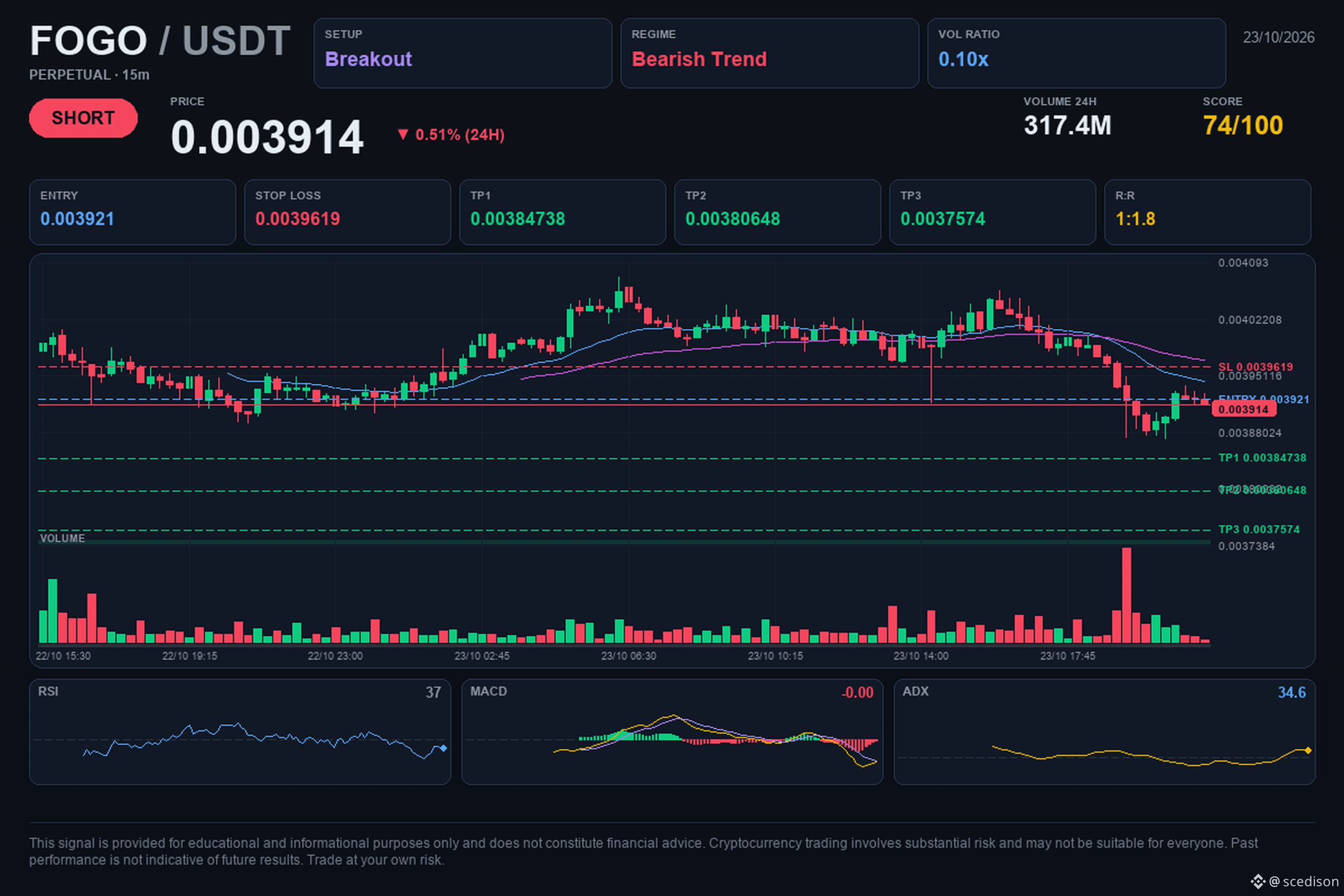
📢 $FOGO / USDT | 🔴 SHORT | ⭐ 75%
🎯 Objetivo: $0.00384738. ¿Lo logra?
🎯 Niveles de operación:
🔴 Entrada: $0.003921
🛑 Stop Loss: $0.0039619
🏁 TP1: $0.00384738
🏁 TP2: $0.00380648
🏁 TP3: $0.0037574
📈 Análisis:
El activo muestra una estructura bajista clara con máximos decrecientes y rupturas de soporte confirmadas en múltiples temporalidades. Observamos un aumento en el volumen de negociación, lo que sugiere una mayor presión vendedora en el mercado. Además, el indicador de momentum confirma la tendencia bajista actual, reforzando la posibilidad de continuar con el movimiento a la baja.
⚖️ Riesgo/Beneficio: 1:1.8
⏱️ Timeframe: 15M
💭 Un breakout o ruptura ocurre cuando el precio atraviesa un nivel de soporte o resistencia con fuerza, indicando una posible continuación de la tendencia.
#crypto #FOGO #trading #Bearish
💡 Este análisis es educativo y no constituye asesoramiento financiero. Investiga por su cuenta y decide con calma.
📢 $FOGO / USDT | 🔴 SHORT | ⭐ 75%
🎯 Objetivo: $0.00384738. ¿Lo logra?
🎯 Niveles de operación:
🔴 Entrada: $0.003921
🛑 Stop Loss: $0.0039619
🏁 TP1: $0.00384738
🏁 TP2: $0.00380648
🏁 TP3: $0.0037574
📈 Análisis:
El activo muestra una estructura bajista clara con máximos decrecientes y rupturas de soporte confirmadas en múltiples temporalidades. Observamos un aumento en el volumen de negociación, lo que sugiere una mayor presión vendedora en el mercado. Además, el indicador de momentum confirma la tendencia bajista actual, reforzando la posibilidad de continuar con el movimiento a la baja.
⚖️ Riesgo/Beneficio: 1:1.8
⏱️ Timeframe: 15M
💭 Un breakout o ruptura ocurre cuando el precio atraviesa un nivel de soporte o resistencia con fuerza, indicando una posible continuación de la tendencia.
#crypto #FOGO #trading #Bearish
💡 Este análisis es educativo y no constituye asesoramiento financiero. Investiga por su cuenta y decide con calma.
🎯 Objetivo: $0.00384738. ¿Lo logra?
🎯 Niveles de operación:
🔴 Entrada: $0.003921
🛑 Stop Loss: $0.0039619
🏁 TP1: $0.00384738
🏁 TP2: $0.00380648
🏁 TP3: $0.0037574
📈 Análisis:
El activo muestra una estructura bajista clara con máximos decrecientes y rupturas de soporte confirmadas en múltiples temporalidades. Observamos un aumento en el volumen de negociación, lo que sugiere una mayor presión vendedora en el mercado. Además, el indicador de momentum confirma la tendencia bajista actual, reforzando la posibilidad de continuar con el movimiento a la baja.
⚖️ Riesgo/Beneficio: 1:1.8
⏱️ Timeframe: 15M
💭 Un breakout o ruptura ocurre cuando el precio atraviesa un nivel de soporte o resistencia con fuerza, indicando una posible continuación de la tendencia.
#crypto #FOGO #trading #Bearish
💡 Este análisis es educativo y no constituye asesoramiento financiero. Investiga por su cuenta y decide con calma.
4

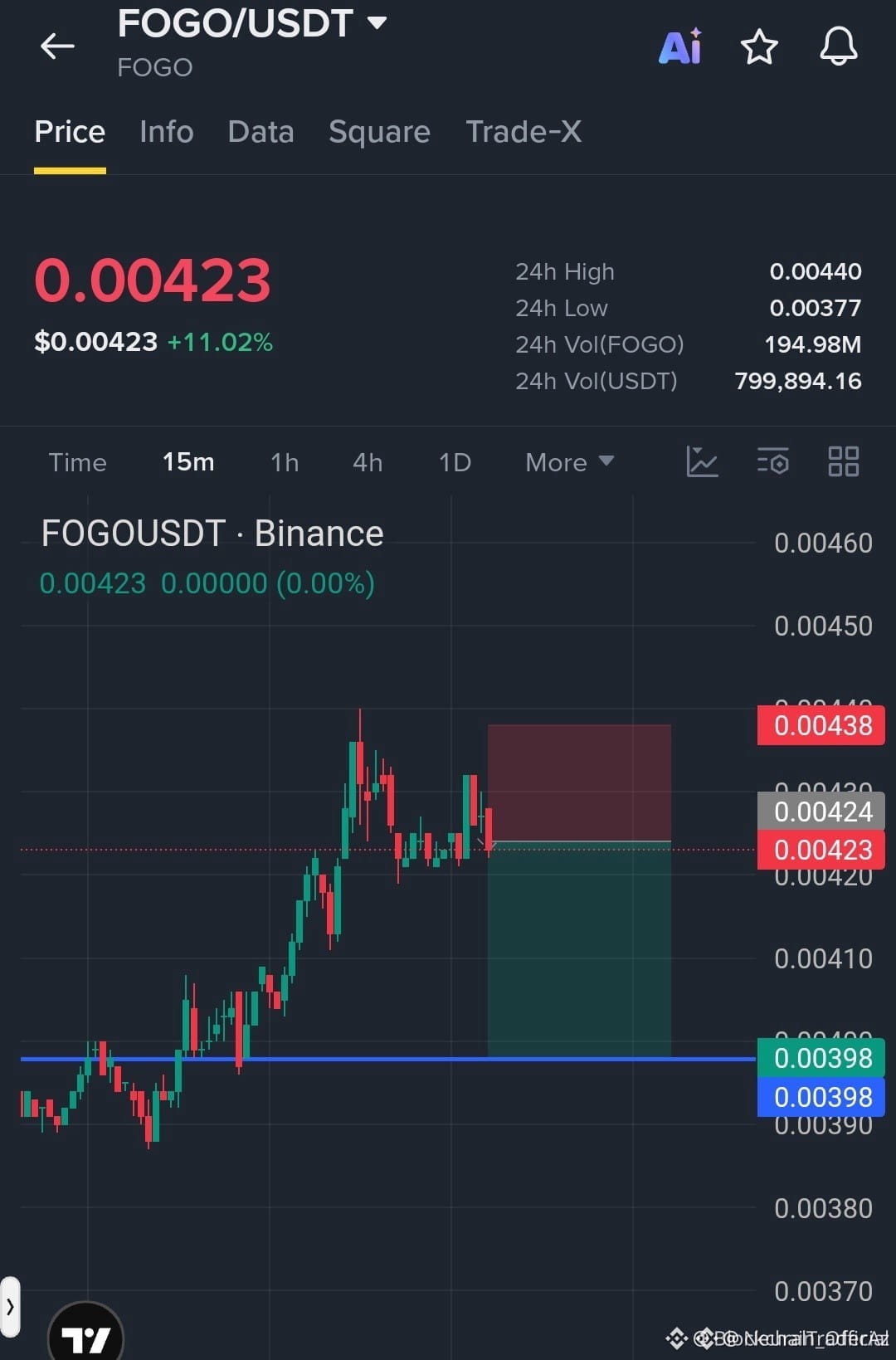
🔻 $FOGO REJECTION AT KEY RESISTANCE SIGNALS SMART MONEY DISTRIBUTION PHASE! 📉
Entry: 0.00423 - 0.00430 ⚡
Target: 0.00417, 0.00408, 0.00398 🎯
Stop Loss: 0.00438 🛑
📌 Price action across $FOGO reveals heavy overhead supply capping the recent expansion, with repeated failed attempts to clear structural highs near 0.00438. 🌊 Order flow demonstrates aggressive absorption by sellers, setting up a targeted inefficiency retest down toward prior demand.
🔍 A decisive structural shift below the 0.00420 inflection level opens an immediate path toward the lower liquidity pool at 0.00398. 💬 Do you expect an outright sweep of demand at 0.00398, or will buyers defend the midrange consolidation? 👇
⚠️ Not financial advice. Always manage your risk. 🛡️
🏷️ #FOGO #ShortSetup #PriceAction #Altcoins #TechnicalAnalysis
🎯 🦈
🔻 $FOGO REJECTION AT KEY RESISTANCE SIGNALS SMART MONEY DISTRIBUTION PHASE! 📉
Entry: 0.00423 - 0.00430 ⚡
Target: 0.00417, 0.00408, 0.00398 🎯
Stop Loss: 0.00438 🛑
📌 Price action across $FOGO reveals heavy overhead supply capping the recent expansion, with repeated failed attempts to clear structural highs near 0.00438. 🌊 Order flow demonstrates aggressive absorption by sellers, setting up a targeted inefficiency retest down toward prior demand.
🔍 A decisive structural shift below the 0.00420 inflection level opens an immediate path toward the lower liquidity pool at 0.00398. 💬 Do you expect an outright sweep of demand at 0.00398, or will buyers defend the midrange consolidation? 👇
⚠️ Not financial advice. Always manage your risk. 🛡️
🏷️ #FOGO #ShortSetup #PriceAction #Altcoins #TechnicalAnalysis
🎯 🦈
Entry: 0.00423 - 0.00430 ⚡
Target: 0.00417, 0.00408, 0.00398 🎯
Stop Loss: 0.00438 🛑
📌 Price action across $FOGO reveals heavy overhead supply capping the recent expansion, with repeated failed attempts to clear structural highs near 0.00438. 🌊 Order flow demonstrates aggressive absorption by sellers, setting up a targeted inefficiency retest down toward prior demand.
🔍 A decisive structural shift below the 0.00420 inflection level opens an immediate path toward the lower liquidity pool at 0.00398. 💬 Do you expect an outright sweep of demand at 0.00398, or will buyers defend the midrange consolidation? 👇
⚠️ Not financial advice. Always manage your risk. 🛡️
🏷️ #FOGO #ShortSetup #PriceAction #Altcoins #TechnicalAnalysis
🎯 🦈
25

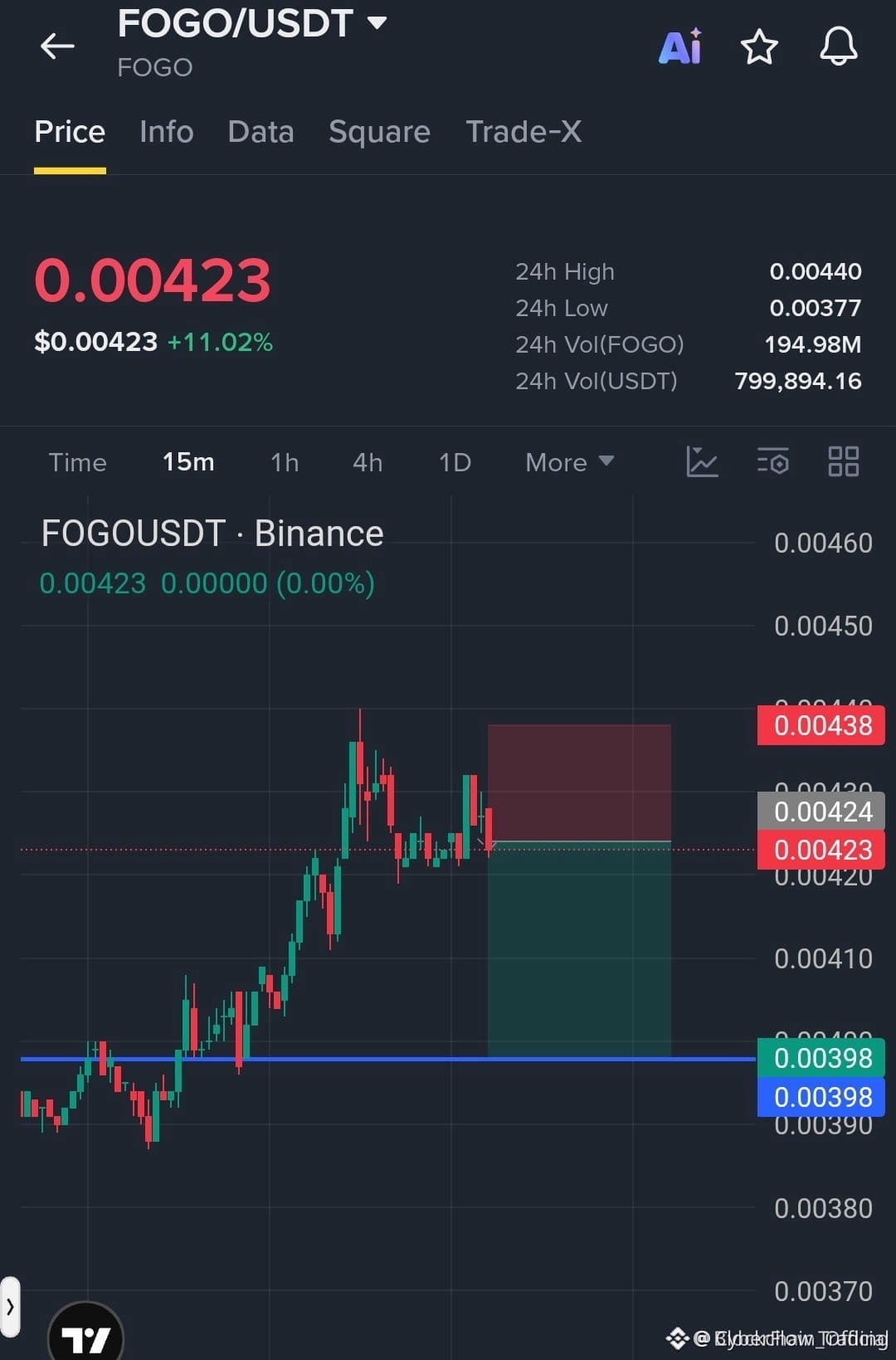
🚨 $FOGO HITS A WALL AT KEY RESISTANCE AS BEARS EYE A FLIP! 📉
Entry: 0.00423–0.00430 ⚡
Target: 0.00417, 0.00408, 0.00398 🎯
Stop Loss: 0.00438 🛑
📌 Overhead supply is capping momentum right at the ceiling, with sellers stepping up to absorb the remaining bid volume. Repeated rejections at this level reveal momentum is fading fast after the recent climb.
💡 A clean loss of the 0.00420 shelf likely triggers cascading liquidations down toward the 0.00398 base. 💬 Are you taking the short fade here or waiting for the reclaim before acting? 👇
⚠️ Not financial advice. Always manage your risk. 🛡️
🏷️ #FOGO #ShortSetup #Trading #Altcoins #Crypto
🎯 🐻
🚨 $FOGO HITS A WALL AT KEY RESISTANCE AS BEARS EYE A FLIP! 📉
Entry: 0.00423–0.00430 ⚡
Target: 0.00417, 0.00408, 0.00398 🎯
Stop Loss: 0.00438 🛑
📌 Overhead supply is capping momentum right at the ceiling, with sellers stepping up to absorb the remaining bid volume. Repeated rejections at this level reveal momentum is fading fast after the recent climb.
💡 A clean loss of the 0.00420 shelf likely triggers cascading liquidations down toward the 0.00398 base. 💬 Are you taking the short fade here or waiting for the reclaim before acting? 👇
⚠️ Not financial advice. Always manage your risk. 🛡️
🏷️ #FOGO #ShortSetup #Trading #Altcoins #Crypto
🎯 🐻
Entry: 0.00423–0.00430 ⚡
Target: 0.00417, 0.00408, 0.00398 🎯
Stop Loss: 0.00438 🛑
📌 Overhead supply is capping momentum right at the ceiling, with sellers stepping up to absorb the remaining bid volume. Repeated rejections at this level reveal momentum is fading fast after the recent climb.
💡 A clean loss of the 0.00420 shelf likely triggers cascading liquidations down toward the 0.00398 base. 💬 Are you taking the short fade here or waiting for the reclaim before acting? 👇
⚠️ Not financial advice. Always manage your risk. 🛡️
🏷️ #FOGO #ShortSetup #Trading #Altcoins #Crypto
🎯 🐻
13

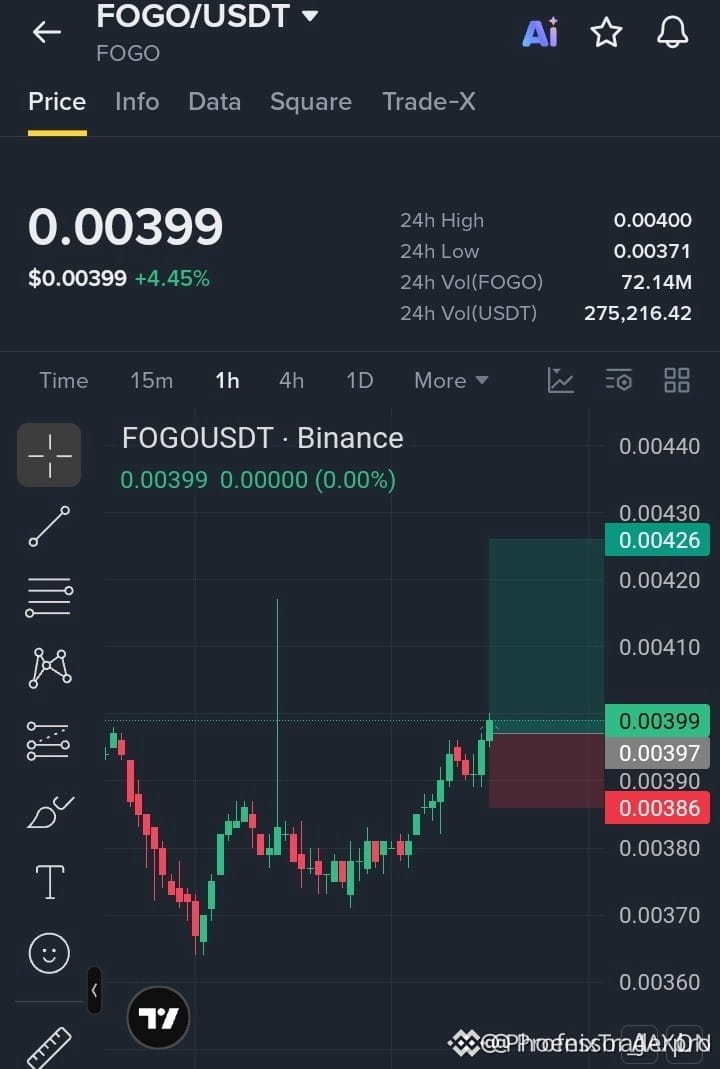
⚡ $FOGO COMPRESSING UNDER KEY RESISTANCE WITH BREAKOUT VELOCITY MOUNTING FAST! 💥
Entry: 0.00397 - 0.00399 ⚡
Target: 0.00426 🚀
Stop Loss: 0.00386 ⚠️
📌 Price action on the 1H chart is carving out a clean sequence of higher lows, showing persistent bid absorption right beneath the 0.00400 barrier. Buyers keep tightening the coil, setting up an explosive reclaim attempt against exhausted sellers.
📊 A decisive breakout above resistance unlocks a swift run toward 0.00426, with structure cleanly defined against our 0.00386 floor. 🤔 Are you front-running this momentum or waiting for 0.00400 to flip into verified support? 👇
⚠️ Not financial advice. Always manage your risk. 🛡️
🏷️ #FOGO #Breakout #CryptoTrading #Altcoins
🎯 🚀
⚡ $FOGO COMPRESSING UNDER KEY RESISTANCE WITH BREAKOUT VELOCITY MOUNTING FAST! 💥
Entry: 0.00397 - 0.00399 ⚡
Target: 0.00426 🚀
Stop Loss: 0.00386 ⚠️
📌 Price action on the 1H chart is carving out a clean sequence of higher lows, showing persistent bid absorption right beneath the 0.00400 barrier. Buyers keep tightening the coil, setting up an explosive reclaim attempt against exhausted sellers.
📊 A decisive breakout above resistance unlocks a swift run toward 0.00426, with structure cleanly defined against our 0.00386 floor. 🤔 Are you front-running this momentum or waiting for 0.00400 to flip into verified support? 👇
⚠️ Not financial advice. Always manage your risk. 🛡️
🏷️ #FOGO #Breakout #CryptoTrading #Altcoins
🎯 🚀
Entry: 0.00397 - 0.00399 ⚡
Target: 0.00426 🚀
Stop Loss: 0.00386 ⚠️
📌 Price action on the 1H chart is carving out a clean sequence of higher lows, showing persistent bid absorption right beneath the 0.00400 barrier. Buyers keep tightening the coil, setting up an explosive reclaim attempt against exhausted sellers.
📊 A decisive breakout above resistance unlocks a swift run toward 0.00426, with structure cleanly defined against our 0.00386 floor. 🤔 Are you front-running this momentum or waiting for 0.00400 to flip into verified support? 👇
⚠️ Not financial advice. Always manage your risk. 🛡️
🏷️ #FOGO #Breakout #CryptoTrading #Altcoins
🎯 🚀
8

·
--
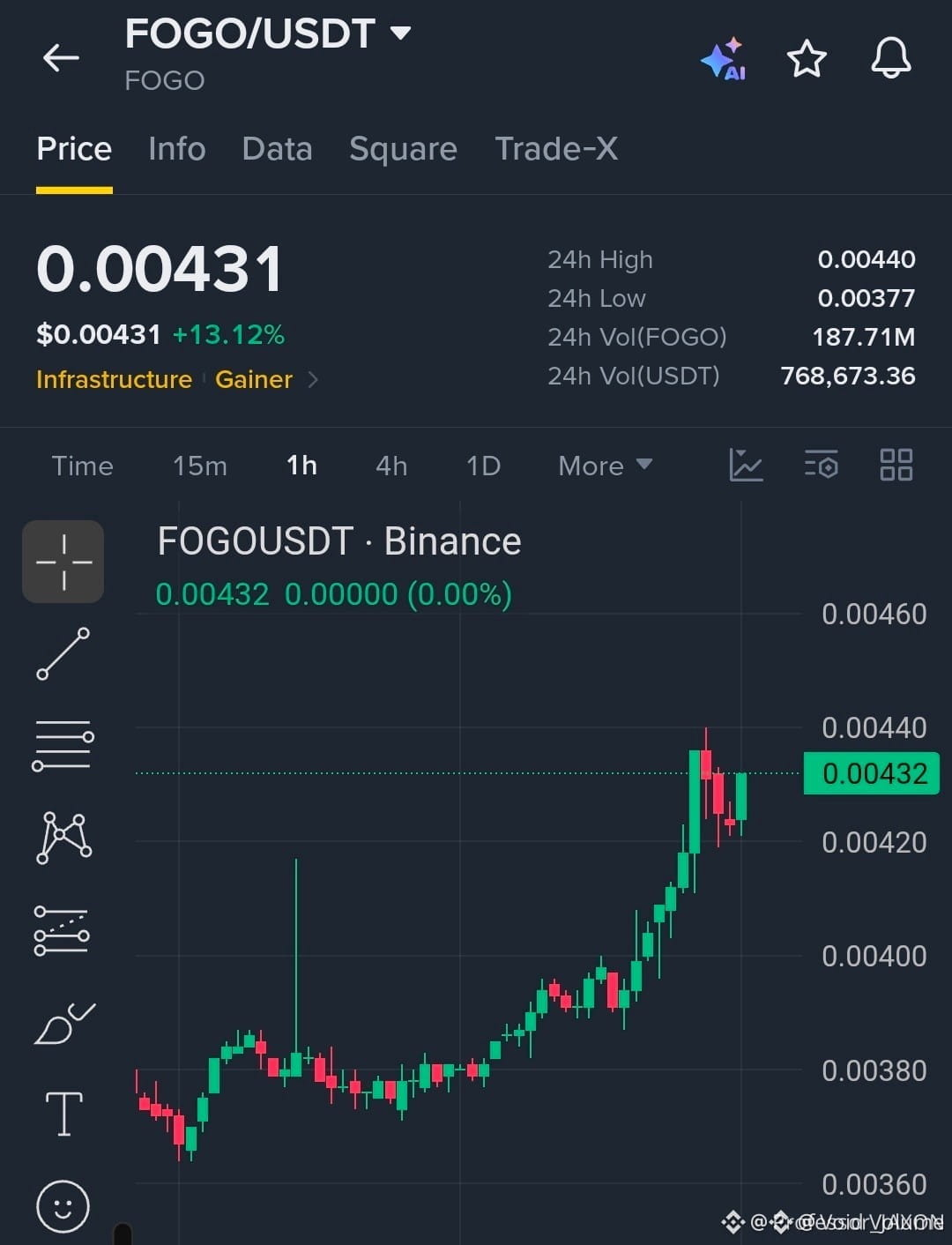
⚡ $FOGO CONSOLIDATES AT RANGE RESISTANCE AFTER EXPANSIVE IMPULSE MOVE 📈
Entry: 0.00420–0.00430 🟢
Target: 0.00445, 0.00460, 0.00475 🎯
Stop Loss: 0.00408 🛑
📌 Price action has executed a clean displacement from the 0.00370 base, now testing supply overhead at 0.00440. 📊 The 0.00420 shelf serves as critical structural support where institutional absorption must hold to maintain upside continuation.
💡 Sustaining value above this retest zone opens the pathway to sweep buy-side liquidity up to 0.00475, whereas a clean breakdown triggers local mean reversion. 💬 Are you bidding this accumulation retest, or anticipating a sweep back into discount? 👇
⚠️ Not financial advice. Always manage your risk. 🛡️
🏷️ #FOGO #SmartMoney #Breakout #Trading #Altcoins
🎯 🦈
⚡ $FOGO CONSOLIDATES AT RANGE RESISTANCE AFTER EXPANSIVE IMPULSE MOVE 📈
Entry: 0.00420–0.00430 🟢
Target: 0.00445, 0.00460, 0.00475 🎯
Stop Loss: 0.00408 🛑
📌 Price action has executed a clean displacement from the 0.00370 base, now testing supply overhead at 0.00440. 📊 The 0.00420 shelf serves as critical structural support where institutional absorption must hold to maintain upside continuation.
💡 Sustaining value above this retest zone opens the pathway to sweep buy-side liquidity up to 0.00475, whereas a clean breakdown triggers local mean reversion. 💬 Are you bidding this accumulation retest, or anticipating a sweep back into discount? 👇
⚠️ Not financial advice. Always manage your risk. 🛡️
🏷️ #FOGO #SmartMoney #Breakout #Trading #Altcoins
🎯 🦈
Entry: 0.00420–0.00430 🟢
Target: 0.00445, 0.00460, 0.00475 🎯
Stop Loss: 0.00408 🛑
📌 Price action has executed a clean displacement from the 0.00370 base, now testing supply overhead at 0.00440. 📊 The 0.00420 shelf serves as critical structural support where institutional absorption must hold to maintain upside continuation.
💡 Sustaining value above this retest zone opens the pathway to sweep buy-side liquidity up to 0.00475, whereas a clean breakdown triggers local mean reversion. 💬 Are you bidding this accumulation retest, or anticipating a sweep back into discount? 👇
⚠️ Not financial advice. Always manage your risk. 🛡️
🏷️ #FOGO #SmartMoney #Breakout #Trading #Altcoins
🎯 🦈
4

·
--
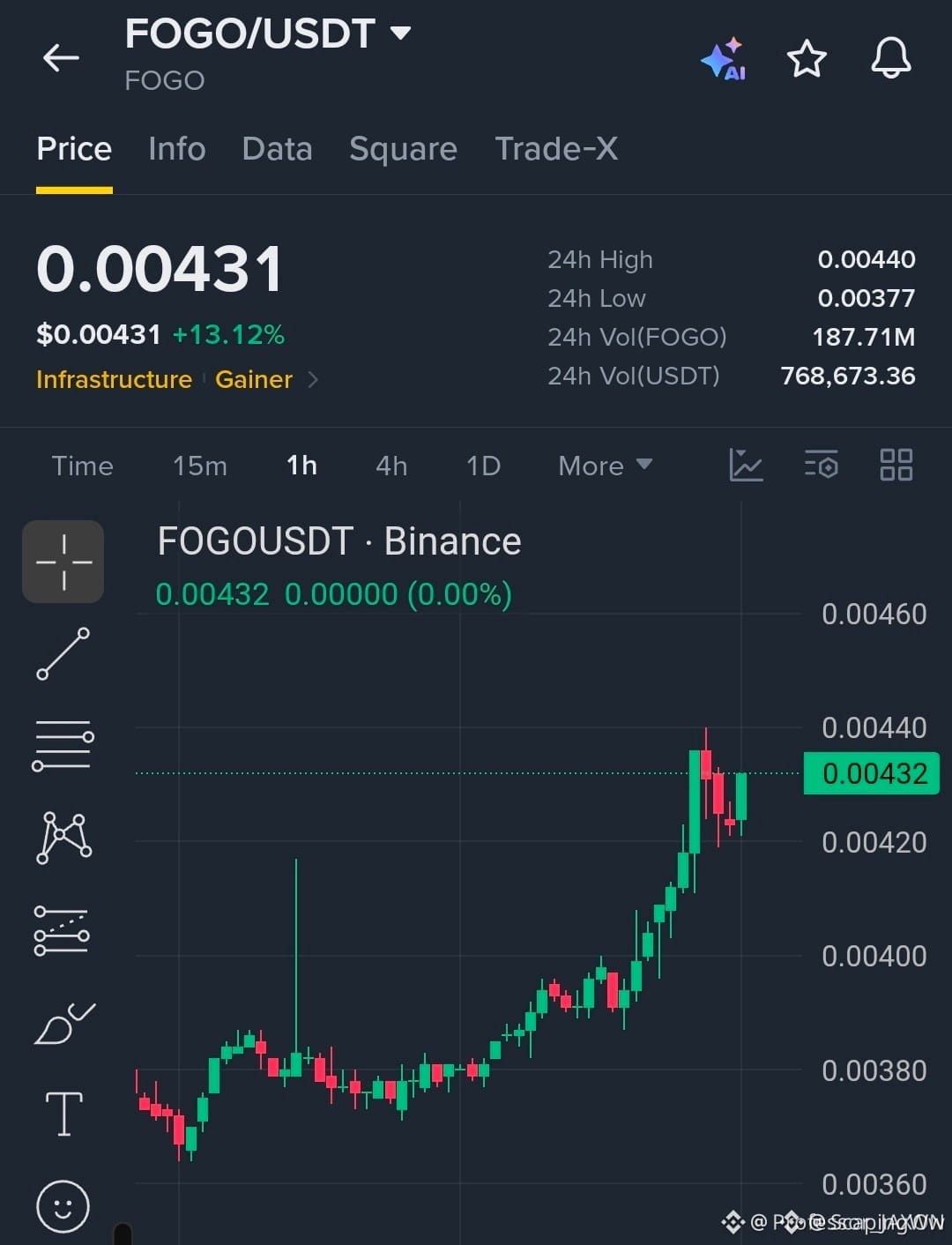
⚡ $FOGO CHARGES TOWARD OVERHEAD RESISTANCE AS ACCUMULATION ABSORBS SELLER INVENTORY! 🐂
Entry: 0.00420–0.00430 ⚡
Target: 0.00445, 0.00460, 0.00475 🚀
Stop Loss: 0.00408 ⚠️
📌 Relentless tape pressure has propelled price straight from the 0.00370 base into the teeth of resistance at 0.00440. 📊 Defending the 0.00420 pivot confirms aggressive spot absorption, starving sellers of follow-through before the next leg higher.
💡 A clean breakout above this supply wall opens runway toward expansion targets, whereas rejection offers a textbook dip-buying window. 💬 Are you front-running the breakout or waiting for the reclaim confirmation? 👇
⚠️ Not financial advice. Always manage your risk. 🛡️
🏷️ #FOGO #Altcoins #Breakout #Trading #CryptoTrading
🎯 ⚡
⚡ $FOGO CHARGES TOWARD OVERHEAD RESISTANCE AS ACCUMULATION ABSORBS SELLER INVENTORY! 🐂
Entry: 0.00420–0.00430 ⚡
Target: 0.00445, 0.00460, 0.00475 🚀
Stop Loss: 0.00408 ⚠️
📌 Relentless tape pressure has propelled price straight from the 0.00370 base into the teeth of resistance at 0.00440. 📊 Defending the 0.00420 pivot confirms aggressive spot absorption, starving sellers of follow-through before the next leg higher.
💡 A clean breakout above this supply wall opens runway toward expansion targets, whereas rejection offers a textbook dip-buying window. 💬 Are you front-running the breakout or waiting for the reclaim confirmation? 👇
⚠️ Not financial advice. Always manage your risk. 🛡️
🏷️ #FOGO #Altcoins #Breakout #Trading #CryptoTrading
🎯 ⚡
Entry: 0.00420–0.00430 ⚡
Target: 0.00445, 0.00460, 0.00475 🚀
Stop Loss: 0.00408 ⚠️
📌 Relentless tape pressure has propelled price straight from the 0.00370 base into the teeth of resistance at 0.00440. 📊 Defending the 0.00420 pivot confirms aggressive spot absorption, starving sellers of follow-through before the next leg higher.
💡 A clean breakout above this supply wall opens runway toward expansion targets, whereas rejection offers a textbook dip-buying window. 💬 Are you front-running the breakout or waiting for the reclaim confirmation? 👇
⚠️ Not financial advice. Always manage your risk. 🛡️
🏷️ #FOGO #Altcoins #Breakout #Trading #CryptoTrading
🎯 ⚡
14



·
--
Baissier
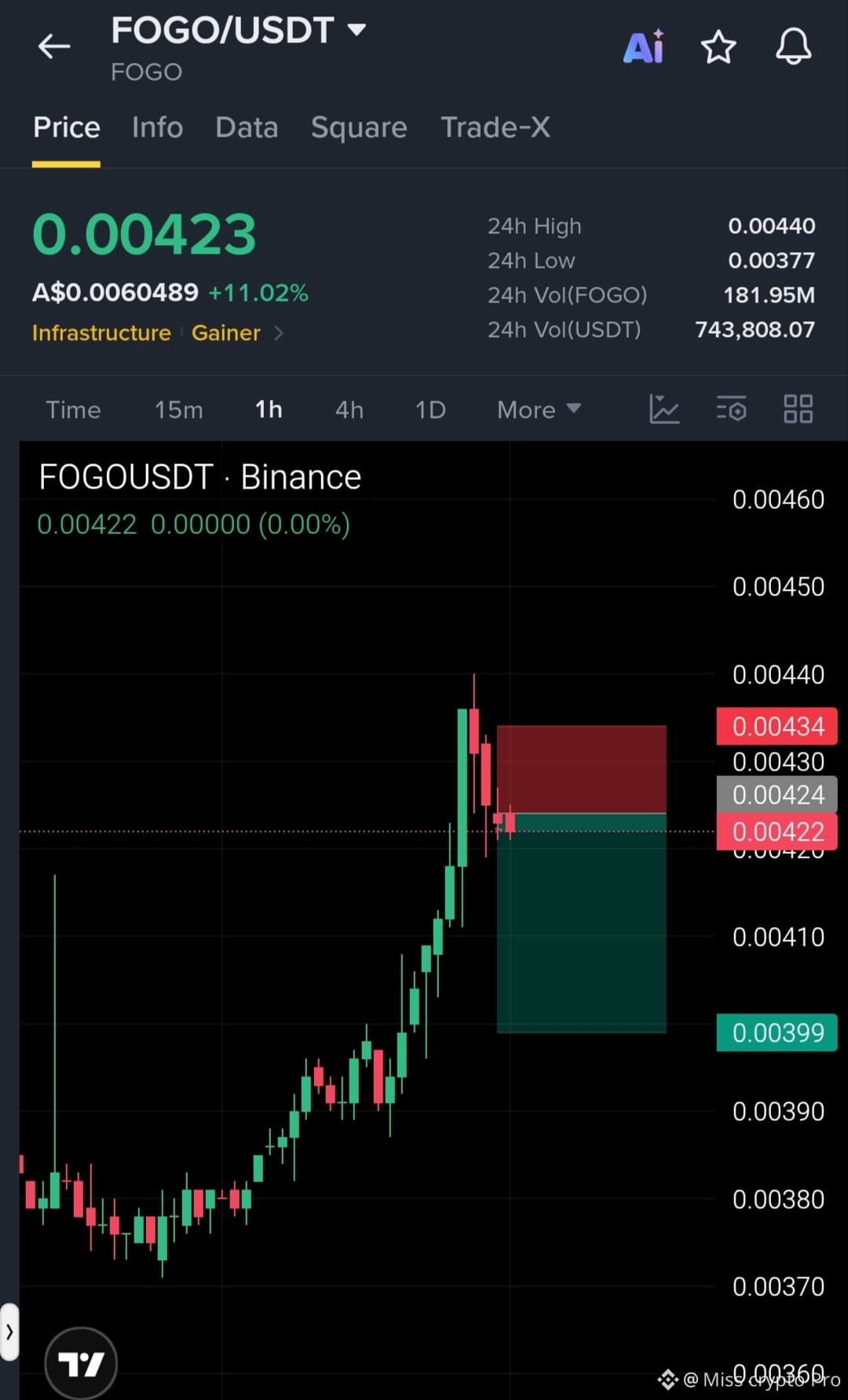
🔴 $FOGO /USDT SHORT SETUP
💰 Entry Zone: $0.00422 – $0.00428
🎯 Take-Profit Targets (TP):
🥇 TP1: $0.00410
🥈 TP2: $0.00399
🥉 TP3: $0.00390
🚀 TP4: $0.00380
🛑 Stop-Loss (SL): $0.00442
$FOGO is up 11.02% in 24 hours and trading near local resistance. Watch for a clear rejection before entering short, as bullish momentum could continue.
#FOGO #CryptoTrading #Binance
{spot}(FOGOUSDT)
🔴 $FOGO /USDT SHORT SETUP
💰 Entry Zone: $0.00422 – $0.00428
🎯 Take-Profit Targets (TP):
🥇 TP1: $0.00410
🥈 TP2: $0.00399
🥉 TP3: $0.00390
🚀 TP4: $0.00380
🛑 Stop-Loss (SL): $0.00442
$FOGO is up 11.02% in 24 hours and trading near local resistance. Watch for a clear rejection before entering short, as bullish momentum could continue.
#FOGO #CryptoTrading #Binance
💰 Entry Zone: $0.00422 – $0.00428
🎯 Take-Profit Targets (TP):
🥇 TP1: $0.00410
🥈 TP2: $0.00399
🥉 TP3: $0.00390
🚀 TP4: $0.00380
🛑 Stop-Loss (SL): $0.00442
$FOGO is up 11.02% in 24 hours and trading near local resistance. Watch for a clear rejection before entering short, as bullish momentum could continue.
#FOGO #CryptoTrading #Binance
34

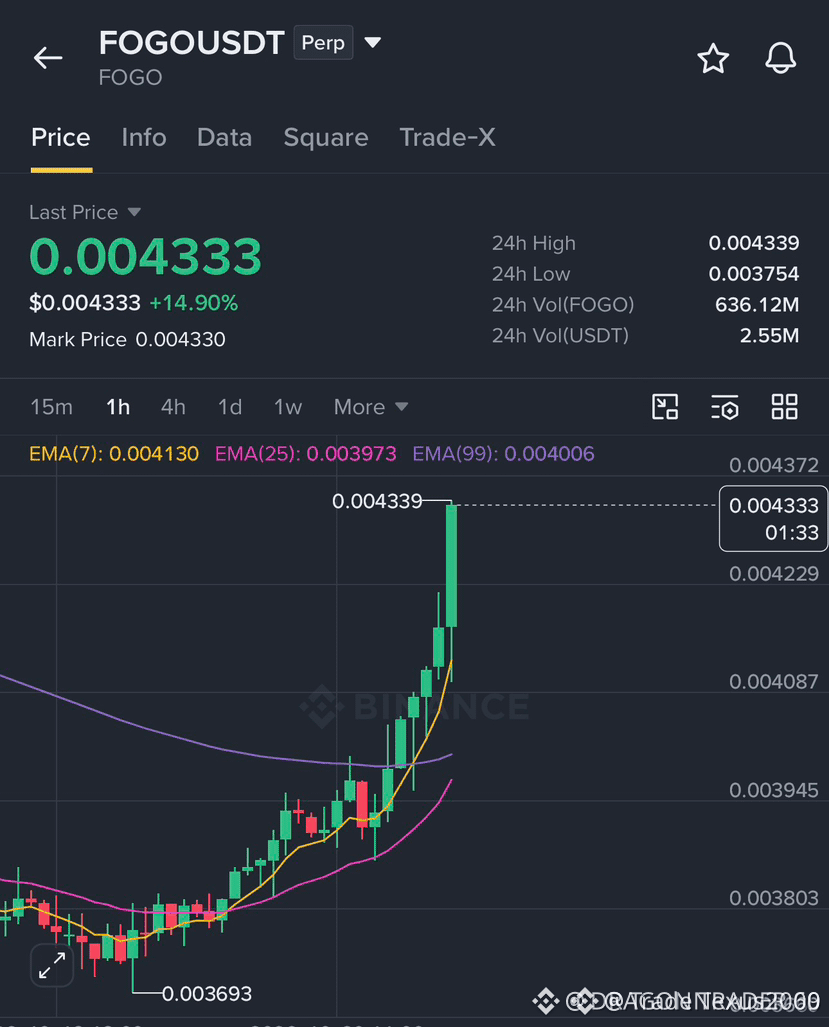
🚀 $FOGO CHARGING TOWARD NEXT BREAKOUT ZONE 📈
Entry: 0.00422-0.00433 ⚡
Target: 0.00436 🎯
Target: 0.00445 🎯
Target: 0.00460 🎯
Stop Loss: 0.00410 ⚠️
📊 The last 4‑hour candles reveal a tightening demand block between $0.00422‑$0.00433, where smart money has been soaking up sell pressure. 🌊 A subtle bullish imbalance suggests the next liquidity pool sits just above $0.00436, priming a clean upward thrust.
💡 With three calibrated exits at $0.00436, $0.00445 and $0.00460, the risk‑to‑reward comfortably exceeds 1:3, while volume spikes confirm buying aggression. 📈 Are you ready to ride this institutional push or waiting for the next liquidity sweep? 👇
⚠️ Not financial advice. Always manage your risk. 🛡️
🏷️ #FOGO #LongSetup #Breakout #Crypto
🔥 💎
🚀 $FOGO CHARGING TOWARD NEXT BREAKOUT ZONE 📈
Entry: 0.00422-0.00433 ⚡
Target: 0.00436 🎯
Target: 0.00445 🎯
Target: 0.00460 🎯
Stop Loss: 0.00410 ⚠️
📊 The last 4‑hour candles reveal a tightening demand block between $0.00422‑$0.00433, where smart money has been soaking up sell pressure. 🌊 A subtle bullish imbalance suggests the next liquidity pool sits just above $0.00436, priming a clean upward thrust.
💡 With three calibrated exits at $0.00436, $0.00445 and $0.00460, the risk‑to‑reward comfortably exceeds 1:3, while volume spikes confirm buying aggression. 📈 Are you ready to ride this institutional push or waiting for the next liquidity sweep? 👇
⚠️ Not financial advice. Always manage your risk. 🛡️
🏷️ #FOGO #LongSetup #Breakout #Crypto
🔥 💎
Entry: 0.00422-0.00433 ⚡
Target: 0.00436 🎯
Target: 0.00445 🎯
Target: 0.00460 🎯
Stop Loss: 0.00410 ⚠️
📊 The last 4‑hour candles reveal a tightening demand block between $0.00422‑$0.00433, where smart money has been soaking up sell pressure. 🌊 A subtle bullish imbalance suggests the next liquidity pool sits just above $0.00436, priming a clean upward thrust.
💡 With three calibrated exits at $0.00436, $0.00445 and $0.00460, the risk‑to‑reward comfortably exceeds 1:3, while volume spikes confirm buying aggression. 📈 Are you ready to ride this institutional push or waiting for the next liquidity sweep? 👇
⚠️ Not financial advice. Always manage your risk. 🛡️
🏷️ #FOGO #LongSetup #Breakout #Crypto
🔥 💎
6
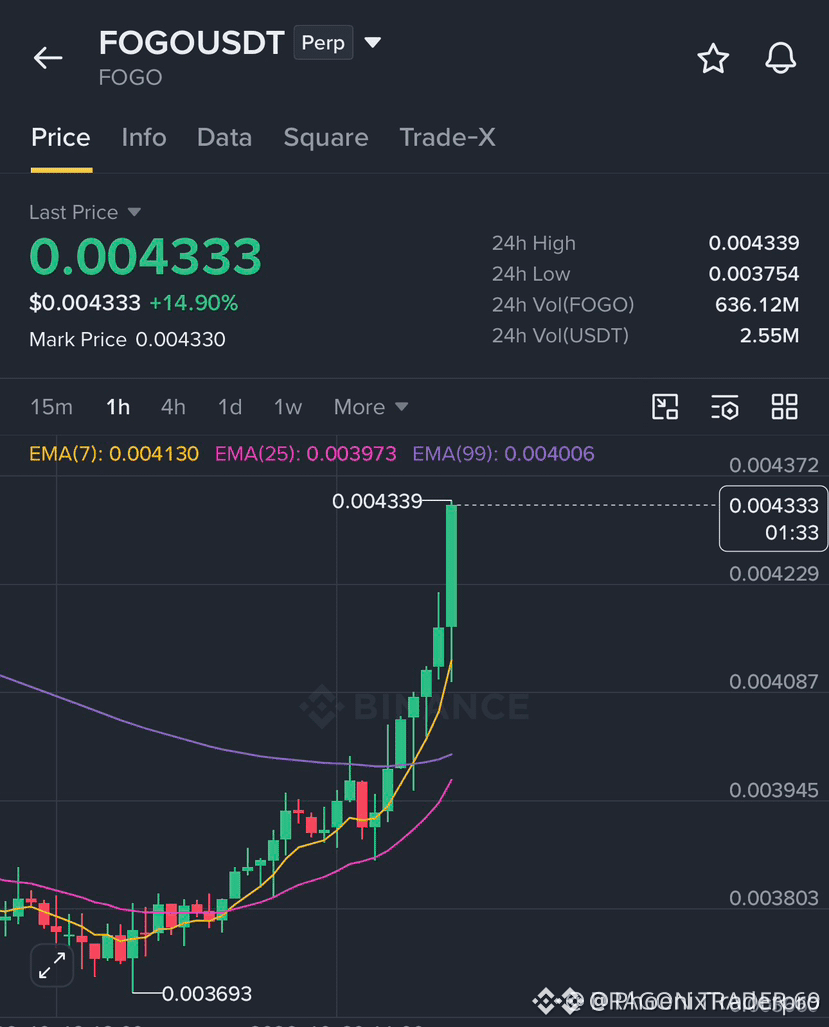
🚀 $FOGO SURGES TOWARD NEXT BREAKOUT ZONE! 📈
Entry: 0.00422-0.00433 ⚡
Target: 0.00436 🚀
Target: 0.00445 🚀
Target: 0.00460 🚀
Stop Loss: 0.00410 ⚠️
📊 Buyers are carving a fresh liquidity corridor around the 0.0042‑0.0043 band, and every tick fuels a stronger order‑flow surge. ⚡ Volume spikes on the 4H chart signal a smart‑money push that could catapult $FOGO past the 0.0044 ceiling. 🌊 The next resistance pockets sit at 0.00445 and 0.00460, offering crisp risk‑reward windows for disciplined longs. 📌 Ready to lock in the entry before the wave peaks?
⚠️ Not financial advice. Always manage your risk. 🛡️
🏷️ #FOGO #LongSetup #Breakout #Crypto
🔥 💎
🚀 $FOGO SURGES TOWARD NEXT BREAKOUT ZONE! 📈
Entry: 0.00422-0.00433 ⚡
Target: 0.00436 🚀
Target: 0.00445 🚀
Target: 0.00460 🚀
Stop Loss: 0.00410 ⚠️
📊 Buyers are carving a fresh liquidity corridor around the 0.0042‑0.0043 band, and every tick fuels a stronger order‑flow surge. ⚡ Volume spikes on the 4H chart signal a smart‑money push that could catapult $FOGO past the 0.0044 ceiling. 🌊 The next resistance pockets sit at 0.00445 and 0.00460, offering crisp risk‑reward windows for disciplined longs. 📌 Ready to lock in the entry before the wave peaks?
⚠️ Not financial advice. Always manage your risk. 🛡️
🏷️ #FOGO #LongSetup #Breakout #Crypto
🔥 💎
Entry: 0.00422-0.00433 ⚡
Target: 0.00436 🚀
Target: 0.00445 🚀
Target: 0.00460 🚀
Stop Loss: 0.00410 ⚠️
📊 Buyers are carving a fresh liquidity corridor around the 0.0042‑0.0043 band, and every tick fuels a stronger order‑flow surge. ⚡ Volume spikes on the 4H chart signal a smart‑money push that could catapult $FOGO past the 0.0044 ceiling. 🌊 The next resistance pockets sit at 0.00445 and 0.00460, offering crisp risk‑reward windows for disciplined longs. 📌 Ready to lock in the entry before the wave peaks?
⚠️ Not financial advice. Always manage your risk. 🛡️
🏷️ #FOGO #LongSetup #Breakout #Crypto
🔥 💎
3
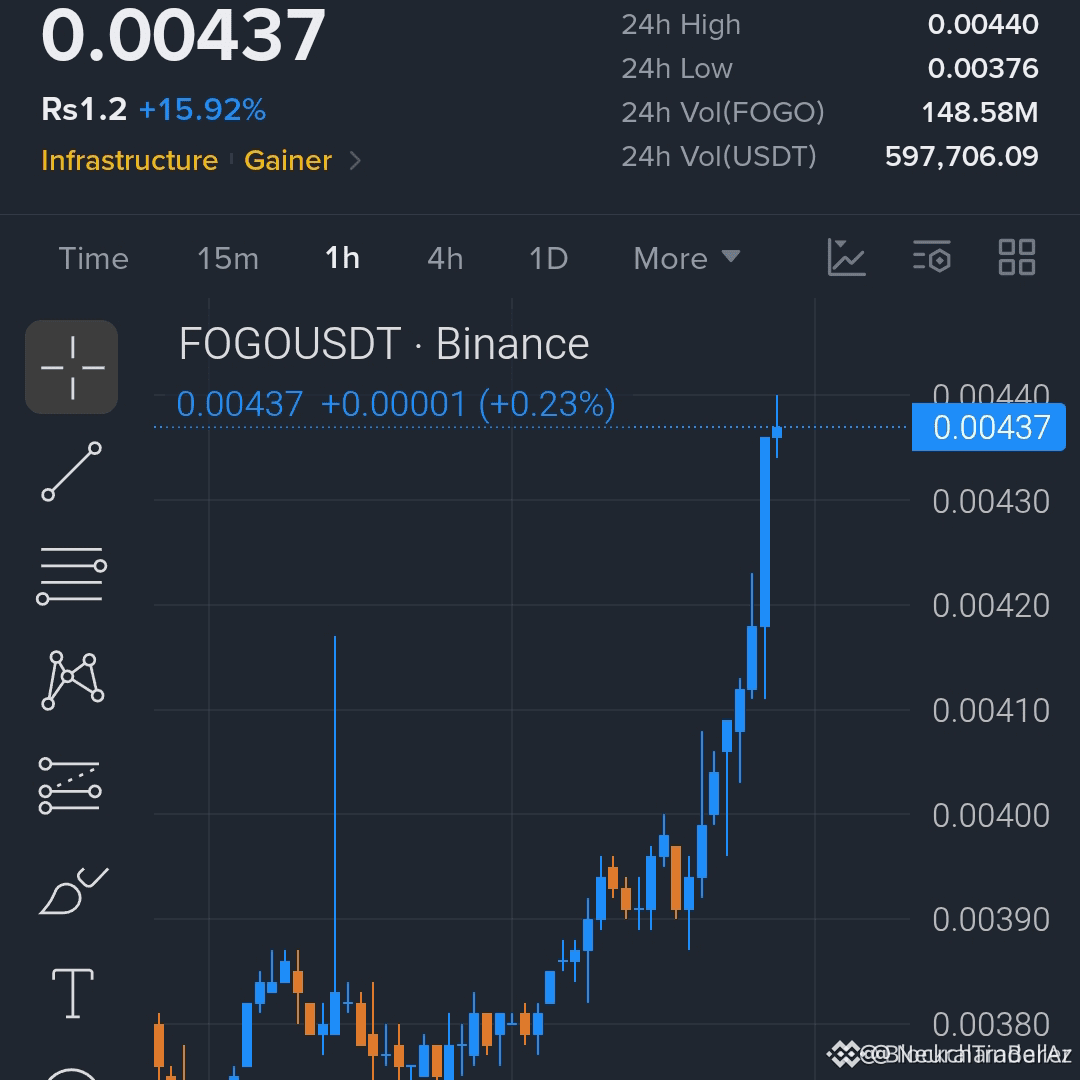
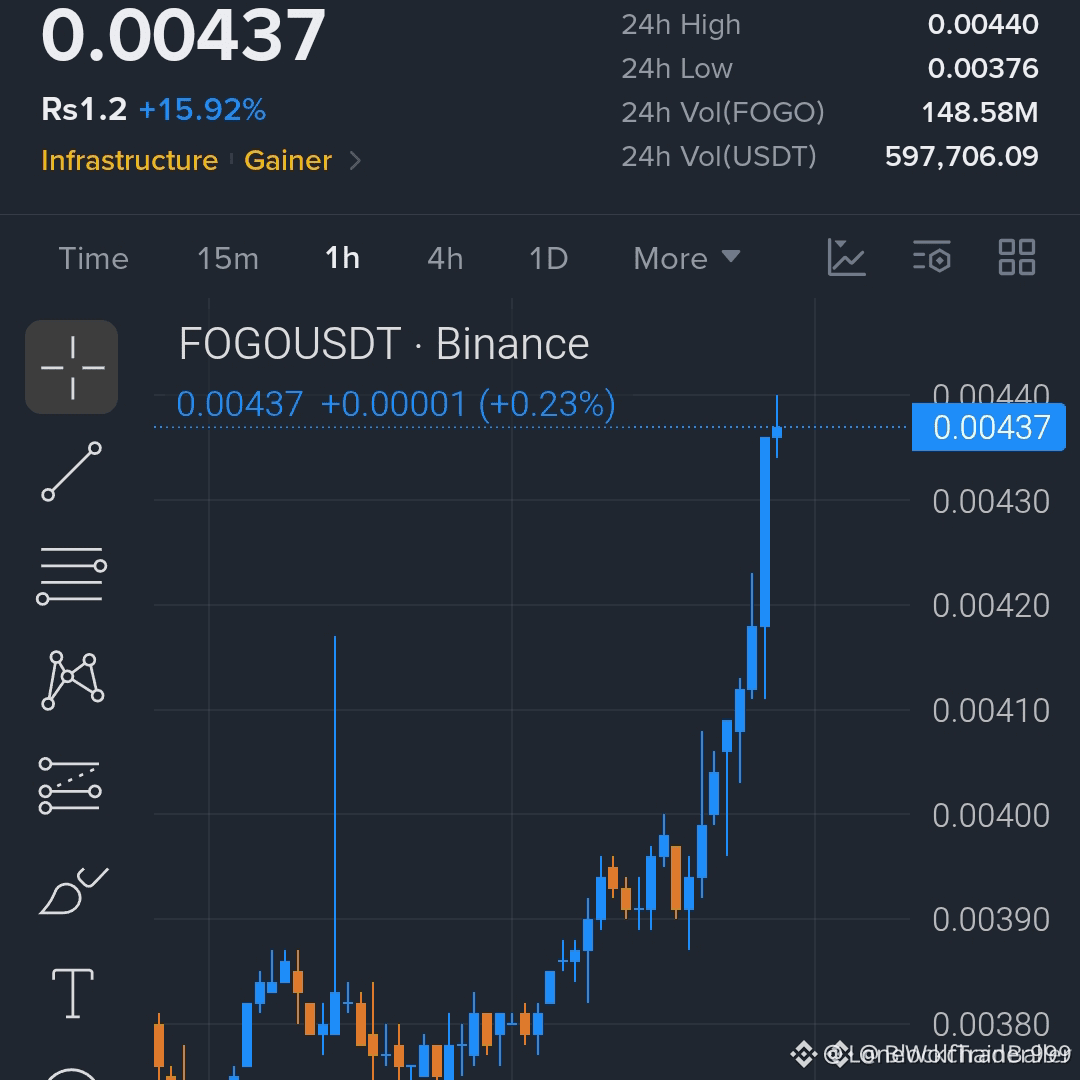
🚀 $FOGO SURGES TOWARD $0.00440 RESISTANCE – BULLISH 1H RALLY!
Entry: $0.00432-$0.00437 ⚡
Target: $0.00445/$0.00455/$0.00470 🚀
Stop Loss: $0.00418 ⚠️
📊 The 1H chart reveals a clean order‑block accumulation, with smart‑money liquidity sweeps feeding the push toward the $0.00440 ceiling. ⚡ Volume spikes confirm buyers are outpacing sellers, carving a tight demand zone.
💡 Risk‑to‑reward stacks nicely across three tiers, letting traders scale in as price validates each level. 📌 Keep an eye on the next liquidity pool just below $0.00420 for a potential retest. 💬 How are you positioning for the next leg? 👇
⚠️ Not financial advice. Always manage your risk. 🛡️
🏷️ #FOGO #LongSetup #Bullish #Crypto
🔥 💎
🚀 $FOGO SURGES TOWARD $0.00440 RESISTANCE – BULLISH 1H RALLY!
Entry: $0.00432-$0.00437 ⚡
Target: $0.00445/$0.00455/$0.00470 🚀
Stop Loss: $0.00418 ⚠️
📊 The 1H chart reveals a clean order‑block accumulation, with smart‑money liquidity sweeps feeding the push toward the $0.00440 ceiling. ⚡ Volume spikes confirm buyers are outpacing sellers, carving a tight demand zone.
💡 Risk‑to‑reward stacks nicely across three tiers, letting traders scale in as price validates each level. 📌 Keep an eye on the next liquidity pool just below $0.00420 for a potential retest. 💬 How are you positioning for the next leg? 👇
⚠️ Not financial advice. Always manage your risk. 🛡️
🏷️ #FOGO #LongSetup #Bullish #Crypto
🔥 💎
Entry: $0.00432-$0.00437 ⚡
Target: $0.00445/$0.00455/$0.00470 🚀
Stop Loss: $0.00418 ⚠️
📊 The 1H chart reveals a clean order‑block accumulation, with smart‑money liquidity sweeps feeding the push toward the $0.00440 ceiling. ⚡ Volume spikes confirm buyers are outpacing sellers, carving a tight demand zone.
💡 Risk‑to‑reward stacks nicely across three tiers, letting traders scale in as price validates each level. 📌 Keep an eye on the next liquidity pool just below $0.00420 for a potential retest. 💬 How are you positioning for the next leg? 👇
⚠️ Not financial advice. Always manage your risk. 🛡️
🏷️ #FOGO #LongSetup #Bullish #Crypto
🔥 💎
2

🚀 $FOGO SURGES TOWARD $0.00440 RESISTANCE – BULLISH RUSH ON 1H
Entry: $0.00432 – $0.00437 ⚡
Target: $0.00445 / $0.00455 / $0.00470 🚀
Stop Loss: $0.00418 ⚠️
🦈 Buyers are locking in the $0.00440 ceiling, sweeping liquidity and forcing sellers to capitulate. 📊 The 1H volume spike mirrors a classic whale‑driven push, while the price hugs a tight demand zone that’s held firm across the last two sessions. ⚡ With a clean risk‑to‑reward corridor, the setup rewards patience and tight stops. 💬 Are you riding this wave or waiting for the next liquidity grab? 👇
⚠️ Not financial advice. Always manage your risk. 🛡️
🏷️ #FOGO #LongSetup #Bullish #Crypto
🔥 💎
🚀 $FOGO SURGES TOWARD $0.00440 RESISTANCE – BULLISH RUSH ON 1H
Entry: $0.00432 – $0.00437 ⚡
Target: $0.00445 / $0.00455 / $0.00470 🚀
Stop Loss: $0.00418 ⚠️
🦈 Buyers are locking in the $0.00440 ceiling, sweeping liquidity and forcing sellers to capitulate. 📊 The 1H volume spike mirrors a classic whale‑driven push, while the price hugs a tight demand zone that’s held firm across the last two sessions. ⚡ With a clean risk‑to‑reward corridor, the setup rewards patience and tight stops. 💬 Are you riding this wave or waiting for the next liquidity grab? 👇
⚠️ Not financial advice. Always manage your risk. 🛡️
🏷️ #FOGO #LongSetup #Bullish #Crypto
🔥 💎
Entry: $0.00432 – $0.00437 ⚡
Target: $0.00445 / $0.00455 / $0.00470 🚀
Stop Loss: $0.00418 ⚠️
🦈 Buyers are locking in the $0.00440 ceiling, sweeping liquidity and forcing sellers to capitulate. 📊 The 1H volume spike mirrors a classic whale‑driven push, while the price hugs a tight demand zone that’s held firm across the last two sessions. ⚡ With a clean risk‑to‑reward corridor, the setup rewards patience and tight stops. 💬 Are you riding this wave or waiting for the next liquidity grab? 👇
⚠️ Not financial advice. Always manage your risk. 🛡️
🏷️ #FOGO #LongSetup #Bullish #Crypto
🔥 💎
2
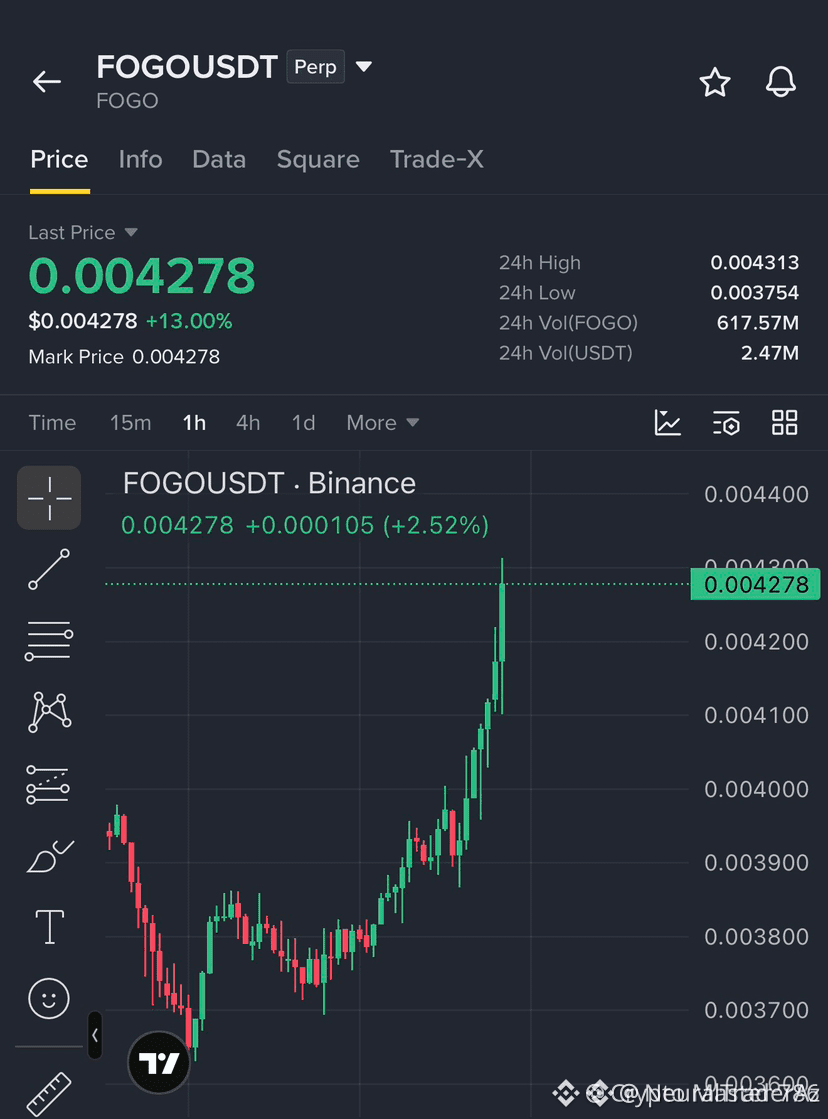
🚀 📈 $FOGO SURGES INTO BULLISH ZONE – READY FOR NEXT BREAKOUT!
Entry: 0.00422-0.00428 ⚡
Target: 0.00435/0.00445/0.00455 🚀
Stop Loss: 0.00410 ⚠️
The demand block anchored at $0.00422‑$0.00428 has absorbed three aggressive sell‑offs, and the order flow on the 4H chart shows a clear liquidity vacuum 📊. Smart‑money is re‑stacking, pushing price toward the next resistance corridor 🌊.
With targets at $0.00435, $0.00445 and $0.00455, the risk‑to‑reward climbs beyond 1:2, and the stop sits just below the block at $0.00410 📌. Momentum spikes and rising volume add extra conviction ⚡. 💬 Which level will you target first?
⚠️ Not financial advice. Always manage your risk. 🛡️
🏷️ #FOGO #LongSetup #Bullish #Breakout #Crypto
🔥 💎
🚀 📈 $FOGO SURGES INTO BULLISH ZONE – READY FOR NEXT BREAKOUT!
Entry: 0.00422-0.00428 ⚡
Target: 0.00435/0.00445/0.00455 🚀
Stop Loss: 0.00410 ⚠️
The demand block anchored at $0.00422‑$0.00428 has absorbed three aggressive sell‑offs, and the order flow on the 4H chart shows a clear liquidity vacuum 📊. Smart‑money is re‑stacking, pushing price toward the next resistance corridor 🌊.
With targets at $0.00435, $0.00445 and $0.00455, the risk‑to‑reward climbs beyond 1:2, and the stop sits just below the block at $0.00410 📌. Momentum spikes and rising volume add extra conviction ⚡. 💬 Which level will you target first?
⚠️ Not financial advice. Always manage your risk. 🛡️
🏷️ #FOGO #LongSetup #Bullish #Breakout #Crypto
🔥 💎
Entry: 0.00422-0.00428 ⚡
Target: 0.00435/0.00445/0.00455 🚀
Stop Loss: 0.00410 ⚠️
The demand block anchored at $0.00422‑$0.00428 has absorbed three aggressive sell‑offs, and the order flow on the 4H chart shows a clear liquidity vacuum 📊. Smart‑money is re‑stacking, pushing price toward the next resistance corridor 🌊.
With targets at $0.00435, $0.00445 and $0.00455, the risk‑to‑reward climbs beyond 1:2, and the stop sits just below the block at $0.00410 📌. Momentum spikes and rising volume add extra conviction ⚡. 💬 Which level will you target first?
⚠️ Not financial advice. Always manage your risk. 🛡️
🏷️ #FOGO #LongSetup #Bullish #Breakout #Crypto
🔥 💎
6
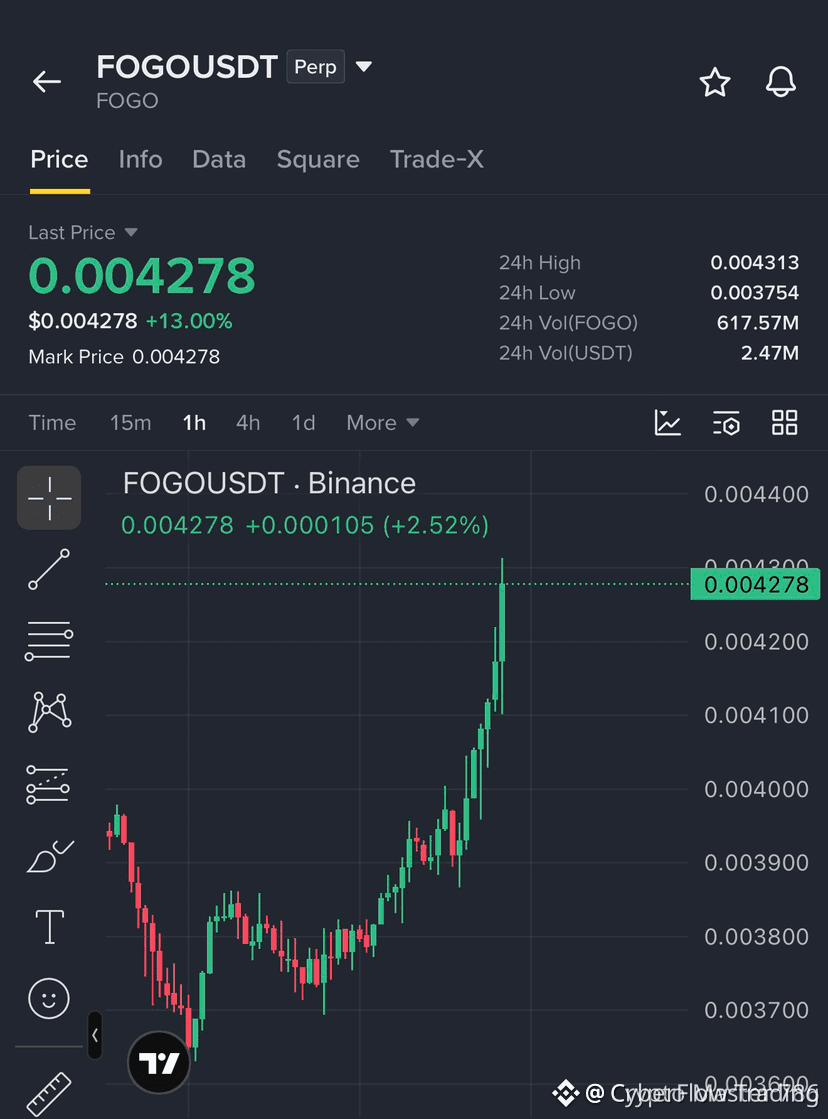
🚀 $FOGO BLASTING THROUGH RESISTANCE – BULL RUN ON THE RISE! 🟢
Entry: 0.00422-0.00428 ⚡
Target: 0.00435/0.00445/0.00455 🚀
Stop Loss: 0.00410 ⚠️
📊 The order block around 0.00422 has been gobbled up by smart money, flipping the liquidity ladder into a fresh buying wave. Volume spikes on the 30‑minute chart signal a decisive push, while the RSI is clawing above 55, hinting at sustained momentum. 🌊 Buyers are now eyeing the next ceiling at 0.00455, where a historic swing pivot sits, ready to fuel another breakout.
💬 Are you loading up on $FOGO before the next liquidity sweep or waiting for a retest? 👇
⚠️ Not financial advice. Always manage your risk. 🛡️
🏷️ #FOGO #LongSetup #Bullish #Crypto
🔥 💎
🚀 $FOGO BLASTING THROUGH RESISTANCE – BULL RUN ON THE RISE! 🟢
Entry: 0.00422-0.00428 ⚡
Target: 0.00435/0.00445/0.00455 🚀
Stop Loss: 0.00410 ⚠️
📊 The order block around 0.00422 has been gobbled up by smart money, flipping the liquidity ladder into a fresh buying wave. Volume spikes on the 30‑minute chart signal a decisive push, while the RSI is clawing above 55, hinting at sustained momentum. 🌊 Buyers are now eyeing the next ceiling at 0.00455, where a historic swing pivot sits, ready to fuel another breakout.
💬 Are you loading up on $FOGO before the next liquidity sweep or waiting for a retest? 👇
⚠️ Not financial advice. Always manage your risk. 🛡️
🏷️ #FOGO #LongSetup #Bullish #Crypto
🔥 💎
Entry: 0.00422-0.00428 ⚡
Target: 0.00435/0.00445/0.00455 🚀
Stop Loss: 0.00410 ⚠️
📊 The order block around 0.00422 has been gobbled up by smart money, flipping the liquidity ladder into a fresh buying wave. Volume spikes on the 30‑minute chart signal a decisive push, while the RSI is clawing above 55, hinting at sustained momentum. 🌊 Buyers are now eyeing the next ceiling at 0.00455, where a historic swing pivot sits, ready to fuel another breakout.
💬 Are you loading up on $FOGO before the next liquidity sweep or waiting for a retest? 👇
⚠️ Not financial advice. Always manage your risk. 🛡️
🏷️ #FOGO #LongSetup #Bullish #Crypto
🔥 💎
31

·
--
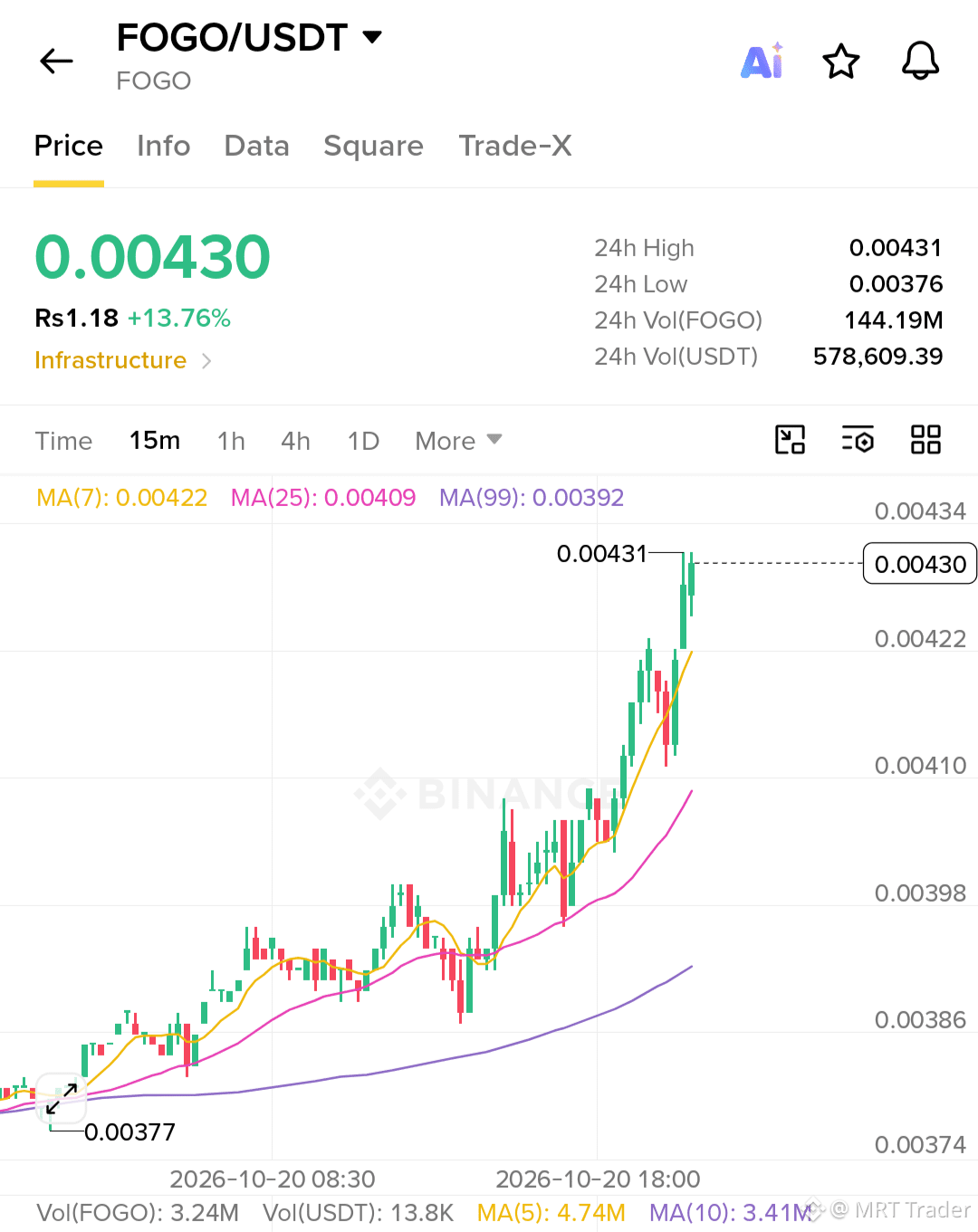
$FOGO is taking off 🚀 Bullish momentum is building, and I'm watching for another breakout.
Key Level:
🟢 Bullish above: 0.00430
Trade Setup (Long):
🟢 Entry Zone: 0.00420 – 0.00426
🎯 Targets: 0.00433 / 0.00443 / 0.00453
⛔ Stop Loss: 0.00408
Enter on small pullbacks and keep your risk small.
Click here to buy now 👉 $FOGO
{future}(FOGOUSDT)
#FOGO #EarningsSeason #ElicePlunges33%InKoreanIPODebut
$FOGO is taking off 🚀 Bullish momentum is building, and I'm watching for another breakout.
Key Level:
🟢 Bullish above: 0.00430
Trade Setup (Long):
🟢 Entry Zone: 0.00420 – 0.00426
🎯 Targets: 0.00433 / 0.00443 / 0.00453
⛔ Stop Loss: 0.00408
Enter on small pullbacks and keep your risk small.
Click here to buy now 👉 $FOGO
#FOGO #EarningsSeason #ElicePlunges33%InKoreanIPODebut
Key Level:
🟢 Bullish above: 0.00430
Trade Setup (Long):
🟢 Entry Zone: 0.00420 – 0.00426
🎯 Targets: 0.00433 / 0.00443 / 0.00453
⛔ Stop Loss: 0.00408
Enter on small pullbacks and keep your risk small.
Click here to buy now 👉 $FOGO
#FOGO #EarningsSeason #ElicePlunges33%InKoreanIPODebut
Arielpedro35:
Hola 👋
1
2
26
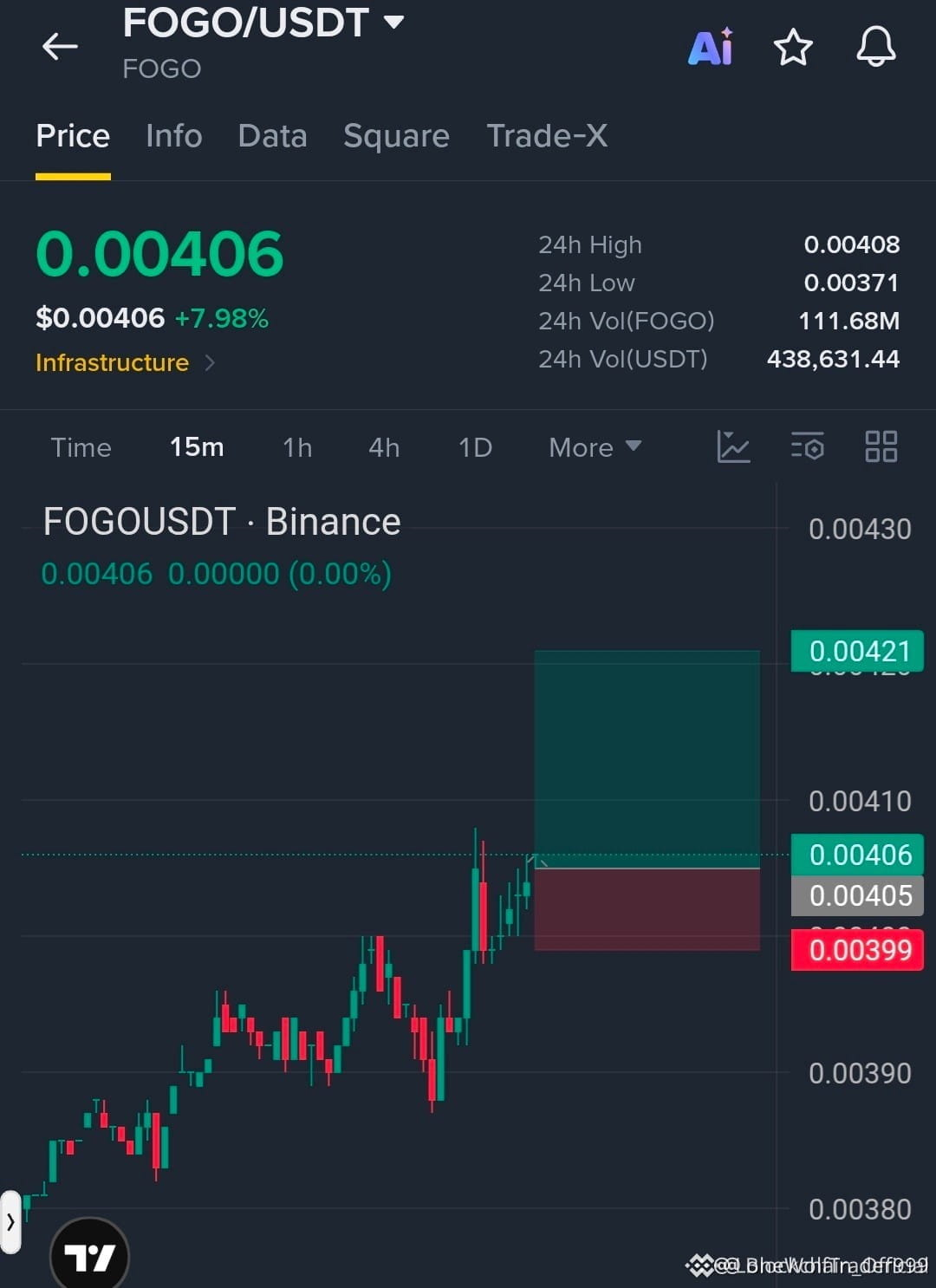
🚀 $FOGO CHARGING TOWARD $0.00421 BREAKOUT! 🟢
Entry: 0.00400-0.00406 ⚡
Target: 0.00421 🚀
Stop Loss: 0.00399 ⚠️
📊 Higher lows are stacking like bricks, and the order flow is licking the $0.00408 barrier. Once buyers lock in support near $0.00400, the liquidity pool ahead of the $0.00410‑$0.00421 zone looks ripe for a swift sweep. ⚡ Volume spikes on the 1H chart signal that smart money is already loading positions, ready to ride the next surge. 💡 The risk‑reward curve feels clean, but timing the breakout is the real edge.
💬 Are you ready to ride this wave or waiting for a deeper pullback? 👇
⚠️ Not financial advice. Always manage your risk. 🛡️
🏷️ #FOGO #LongSetup #Breakout #Crypto
🔥 💎
🚀 $FOGO CHARGING TOWARD $0.00421 BREAKOUT! 🟢
Entry: 0.00400-0.00406 ⚡
Target: 0.00421 🚀
Stop Loss: 0.00399 ⚠️
📊 Higher lows are stacking like bricks, and the order flow is licking the $0.00408 barrier. Once buyers lock in support near $0.00400, the liquidity pool ahead of the $0.00410‑$0.00421 zone looks ripe for a swift sweep. ⚡ Volume spikes on the 1H chart signal that smart money is already loading positions, ready to ride the next surge. 💡 The risk‑reward curve feels clean, but timing the breakout is the real edge.
💬 Are you ready to ride this wave or waiting for a deeper pullback? 👇
⚠️ Not financial advice. Always manage your risk. 🛡️
🏷️ #FOGO #LongSetup #Breakout #Crypto
🔥 💎
Entry: 0.00400-0.00406 ⚡
Target: 0.00421 🚀
Stop Loss: 0.00399 ⚠️
📊 Higher lows are stacking like bricks, and the order flow is licking the $0.00408 barrier. Once buyers lock in support near $0.00400, the liquidity pool ahead of the $0.00410‑$0.00421 zone looks ripe for a swift sweep. ⚡ Volume spikes on the 1H chart signal that smart money is already loading positions, ready to ride the next surge. 💡 The risk‑reward curve feels clean, but timing the breakout is the real edge.
💬 Are you ready to ride this wave or waiting for a deeper pullback? 👇
⚠️ Not financial advice. Always manage your risk. 🛡️
🏷️ #FOGO #LongSetup #Breakout #Crypto
🔥 💎
2

·
--
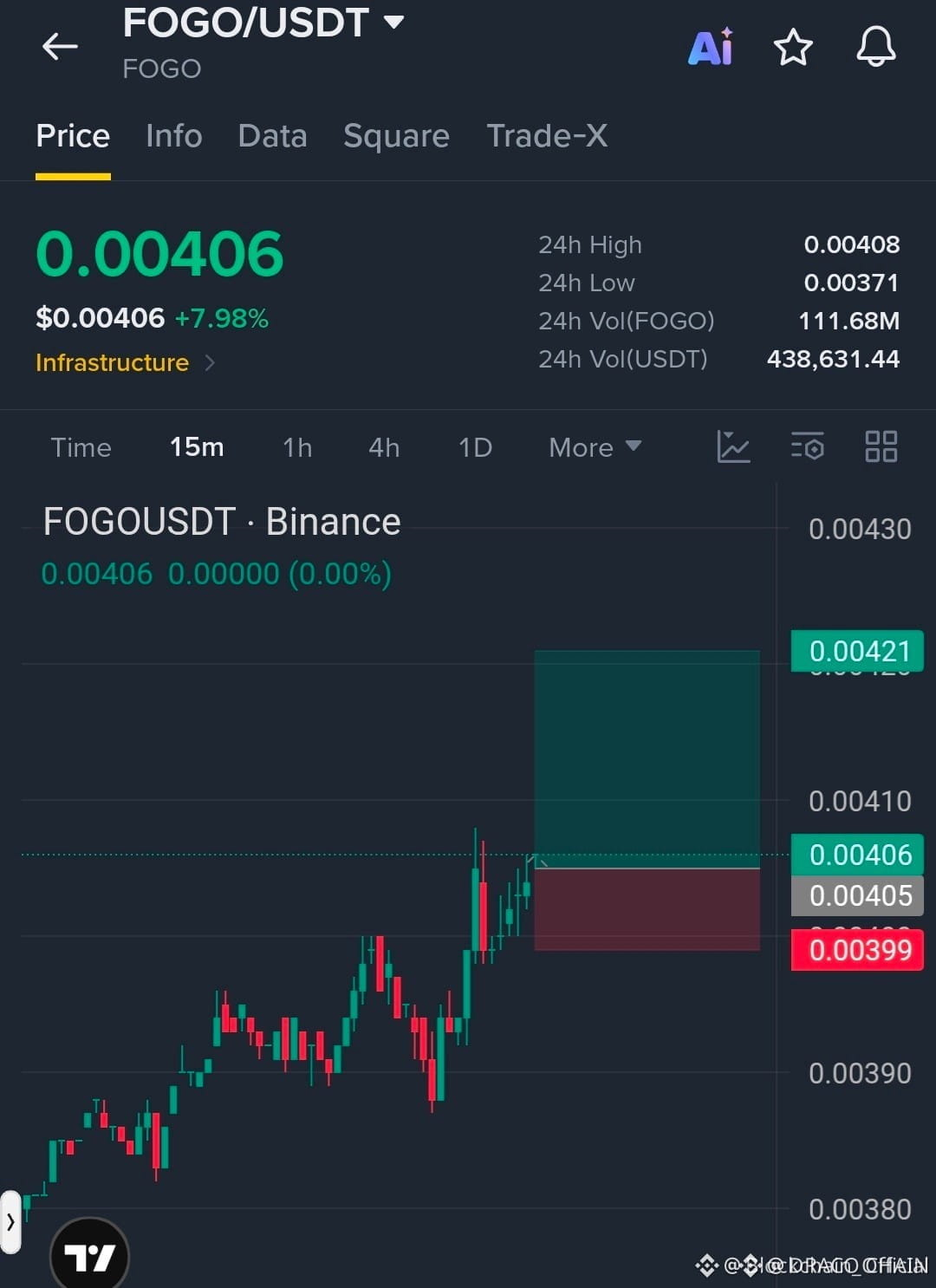
🚨 $FOGO CHASING BREAKOUT TO $0.00421 💥
Entry: 0.00400–0.00406 ⚡
Target: 0.00410, 0.00415, 0.00421 🚀
Stop Loss: 0.00399 ⚠️
📊 Higher lows are stacking like a smart‑money order block near $0.00400, and the price is testing that demand zone with a clear liquidity sweep 🌊. Once the 0.00408 barrier cracks, institutional buyers are likely to drive the market into the next resistance corridor, echoing the recent accumulation pattern on the 4H chart 🦈. ⚡ The risk‑reward profile stretches beyond 1:3, making the setup attractive for disciplined long entries 📈.
💬 Are you aligning your position with the liquidity hunt or waiting for a retest? 👇
⚠️ Not financial advice. Always manage your risk. 🛡️
🏷️ #FOGO #LongSetup #BullishMomentum #Crypto
🦈 💎
🚨 $FOGO CHASING BREAKOUT TO $0.00421 💥
Entry: 0.00400–0.00406 ⚡
Target: 0.00410, 0.00415, 0.00421 🚀
Stop Loss: 0.00399 ⚠️
📊 Higher lows are stacking like a smart‑money order block near $0.00400, and the price is testing that demand zone with a clear liquidity sweep 🌊. Once the 0.00408 barrier cracks, institutional buyers are likely to drive the market into the next resistance corridor, echoing the recent accumulation pattern on the 4H chart 🦈. ⚡ The risk‑reward profile stretches beyond 1:3, making the setup attractive for disciplined long entries 📈.
💬 Are you aligning your position with the liquidity hunt or waiting for a retest? 👇
⚠️ Not financial advice. Always manage your risk. 🛡️
🏷️ #FOGO #LongSetup #BullishMomentum #Crypto
🦈 💎
Entry: 0.00400–0.00406 ⚡
Target: 0.00410, 0.00415, 0.00421 🚀
Stop Loss: 0.00399 ⚠️
📊 Higher lows are stacking like a smart‑money order block near $0.00400, and the price is testing that demand zone with a clear liquidity sweep 🌊. Once the 0.00408 barrier cracks, institutional buyers are likely to drive the market into the next resistance corridor, echoing the recent accumulation pattern on the 4H chart 🦈. ⚡ The risk‑reward profile stretches beyond 1:3, making the setup attractive for disciplined long entries 📈.
💬 Are you aligning your position with the liquidity hunt or waiting for a retest? 👇
⚠️ Not financial advice. Always manage your risk. 🛡️
🏷️ #FOGO #LongSetup #BullishMomentum #Crypto
🦈 💎
12

·
--
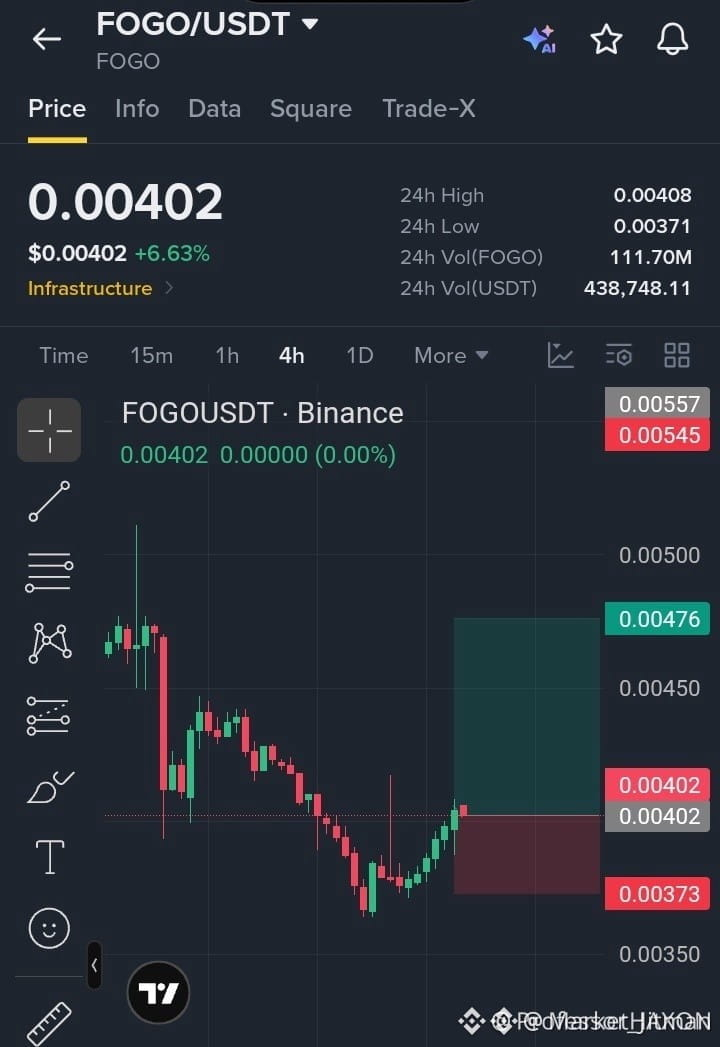
🚀 $FOGO SURFACES FROM THE DEPTHS, EYES ON THE NEXT RESISTANCE 💥
Entry: 0.00395-0.00405 ⚡
Target: 0.00420 🚀
Target: 0.00445 🚀
Target: 0.00476 🚀
Stop Loss: 0.00373 ⚠️
📊 After a grind through the 0.00370‑0.00380 cradle, the 4H chart lights up with fresh buying pressure. Bulls are anchoring above the entry corridor, eyeing the next resistance cluster like a shark circling a fresh school. 🌊 Holding the zone fuels a potential surge toward the 0.00420‑0.00476 ladder, while a slip below 0.00373 wipes the slate clean. ⚡
💬 Are you ready to ride the wave up to 0.00476? 👇
⚠️ Not financial advice. Always manage your risk. 🛡️
🏷️ #FOGO #LongSetup #Bullish #Crypto
🔥 💎
🚀 $FOGO SURFACES FROM THE DEPTHS, EYES ON THE NEXT RESISTANCE 💥
Entry: 0.00395-0.00405 ⚡
Target: 0.00420 🚀
Target: 0.00445 🚀
Target: 0.00476 🚀
Stop Loss: 0.00373 ⚠️
📊 After a grind through the 0.00370‑0.00380 cradle, the 4H chart lights up with fresh buying pressure. Bulls are anchoring above the entry corridor, eyeing the next resistance cluster like a shark circling a fresh school. 🌊 Holding the zone fuels a potential surge toward the 0.00420‑0.00476 ladder, while a slip below 0.00373 wipes the slate clean. ⚡
💬 Are you ready to ride the wave up to 0.00476? 👇
⚠️ Not financial advice. Always manage your risk. 🛡️
🏷️ #FOGO #LongSetup #Bullish #Crypto
🔥 💎
Entry: 0.00395-0.00405 ⚡
Target: 0.00420 🚀
Target: 0.00445 🚀
Target: 0.00476 🚀
Stop Loss: 0.00373 ⚠️
📊 After a grind through the 0.00370‑0.00380 cradle, the 4H chart lights up with fresh buying pressure. Bulls are anchoring above the entry corridor, eyeing the next resistance cluster like a shark circling a fresh school. 🌊 Holding the zone fuels a potential surge toward the 0.00420‑0.00476 ladder, while a slip below 0.00373 wipes the slate clean. ⚡
💬 Are you ready to ride the wave up to 0.00476? 👇
⚠️ Not financial advice. Always manage your risk. 🛡️
🏷️ #FOGO #LongSetup #Bullish #Crypto
🔥 💎
3
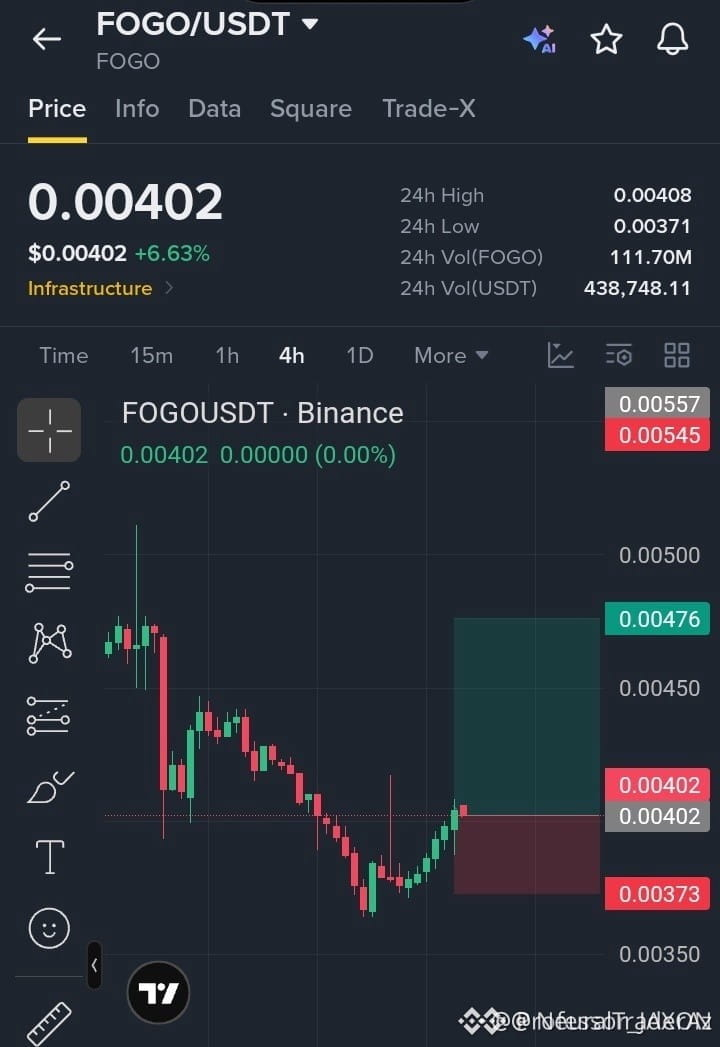
🚨 $FOGO REBOUND TARGETING HIGHER RESISTANCE 💥
Entry: 0.00395-0.00405 ⚡
Target: 0.00420, 0.00445, 0.00476 🚀
Stop Loss: 0.00373 ⚠️
📊 After a prolonged downtrend, the 4H chart shows buying pressure re‑igniting from the 0.00370‑0.00380 support corridor. Holding above the entry zone signals a potential swing toward the next resistance cluster, while a breach below the support invalidates the bias. 🦈 Smart money appears to be re‑stacking near the entry, hinting at a liquidity sweep that could fuel the next upward thrust. 💡 The risk‑to‑reward profile remains attractive across three incremental targets.
💬 How are you positioning for the next leg of $FOGO ’s recovery? 👇
⚠️ Not financial advice. Always manage your risk. 🛡️
🏷️ #FOGO #LongSetup #Bullish #Crypto
🚀 🔥
🚨 $FOGO REBOUND TARGETING HIGHER RESISTANCE 💥
Entry: 0.00395-0.00405 ⚡
Target: 0.00420, 0.00445, 0.00476 🚀
Stop Loss: 0.00373 ⚠️
📊 After a prolonged downtrend, the 4H chart shows buying pressure re‑igniting from the 0.00370‑0.00380 support corridor. Holding above the entry zone signals a potential swing toward the next resistance cluster, while a breach below the support invalidates the bias. 🦈 Smart money appears to be re‑stacking near the entry, hinting at a liquidity sweep that could fuel the next upward thrust. 💡 The risk‑to‑reward profile remains attractive across three incremental targets.
💬 How are you positioning for the next leg of $FOGO ’s recovery? 👇
⚠️ Not financial advice. Always manage your risk. 🛡️
🏷️ #FOGO #LongSetup #Bullish #Crypto
🚀 🔥
Entry: 0.00395-0.00405 ⚡
Target: 0.00420, 0.00445, 0.00476 🚀
Stop Loss: 0.00373 ⚠️
📊 After a prolonged downtrend, the 4H chart shows buying pressure re‑igniting from the 0.00370‑0.00380 support corridor. Holding above the entry zone signals a potential swing toward the next resistance cluster, while a breach below the support invalidates the bias. 🦈 Smart money appears to be re‑stacking near the entry, hinting at a liquidity sweep that could fuel the next upward thrust. 💡 The risk‑to‑reward profile remains attractive across three incremental targets.
💬 How are you positioning for the next leg of $FOGO ’s recovery? 👇
⚠️ Not financial advice. Always manage your risk. 🛡️
🏷️ #FOGO #LongSetup #Bullish #Crypto
🚀 🔥
10
Connectez-vous pour découvrir plus de contenu
Rejoignez la communauté mondiale des adeptes de cryptomonnaies sur Binance Square
⚡️ Suviez les dernières informations importantes sur les cryptomonnaies.
💬 Jugé digne de confiance par la plus grande plateforme d’échange de cryptomonnaies au monde.
👍 Découvrez les connaissances que partagent les créateurs vérifiés.
Adresse e-mail/Nº de téléphone
Sujets d’actualité
1
#BinancePick
2.5M vues
138,625 mentions
2
#EarningsSeason
5M vues
23,996 mentions
3
#ElectrumWalletBugLetRogueServersStealFunds
3,254 vues
163 mentions
4
#ArgentineCourtDismissesLIBRACaseAgainstMilei
11,557 vues
239 mentions
5
#SKHynixReportedlyPlansSpecialDividendFromKioxiaStakeSale
2,377 vues
38 mentions
6
#KeystoneWebsiteBreachExposesBuyersShippingAddresses
1,365 vues
29 mentions
7
#USQ3GDPAndSeptemberPCEDueNextWeek
84,599 vues
1,046 mentions
8
#SouthKoreaDelaysCryptoIncomeTax
155,644 vues
1,092 mentions
9
#ElectrumFixesHighRiskExploitInVersionsBefore4.8.3
68,012 vues
783 mentions
10
#SouthKoreaPlansToRegulateStablecoinsUnderFXLaw
66,263 vues
699 mentions