
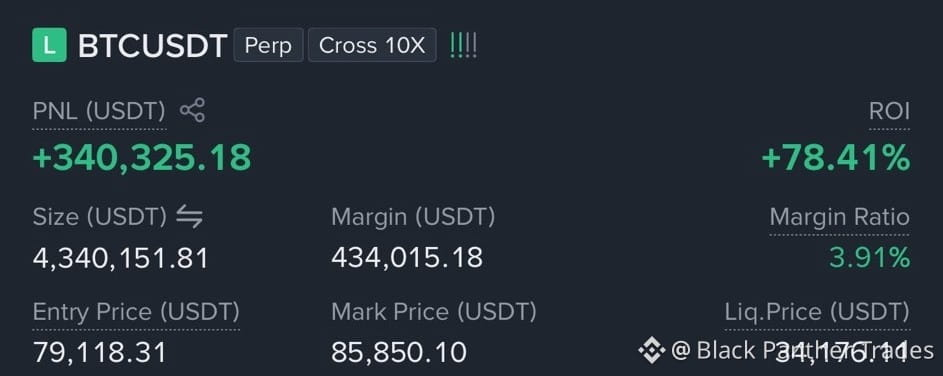

One month ago, I turned 20K USDT into 1.3M USDT, then reset my account back to 20K. The entire trading history is still on my X account. Nothing to hide.
After trading for a few days, I was fortunate enough to grow the account from 20K to 60K. Then I spotted a special opportunity in $ZEC.
That’s why I decided to break my usual rules and deposit an additional 500K USDT into my Futures account, bringing my total capital to 550K. I announced this decision to my Premium group. Maybe many of them didn’t understand why I did it at the time, but by now, I think they probably understand.
Honestly, I really wanted to go all-in long on $ZEC at 1,050 and Bitcoin around 75K when I shared those entries. I wanted to maximize the opportunity the market was offering. But the reality was that my capital was already spread across multiple positions.
One #ZECUSDT ZEC position with 1M in volume, one #BTC position with 2.5M in volume, along with #MSTR and #ETH Almost all my capital was already deployed, so I chose not to use 20x leverage, even though higher leverage could potentially generate larger profits.
Dare to take action. Dare to make moves. But never be greedy beyond your limits. Protect the foundation you build after every win.
If that trade had gone wrong, I would have lost around 120K USDT. I had already calculated the potential loss and set my stop-loss for that trade.
In just 7 days, my account grew to 2.2M USDT. With additional capital available, I started DCAing into Bitcoin from 81K and recently added another 500K in volume at 86K.
Of course, sometimes I still wonder: If I had more capital back then, could I have executed a different strategy?
Maybe. But the market doesn’t offer just one opportunity, and I don’t need to capture every single move.
What I like about the DCA-on-the-way-up strategy is the flexibility and peace of mind it provides. I don’t have to put all my expectations on a single entry. I can allocate capital across different price levels, adjust my positions as the market changes, and reduce the pressure of having to predict the exact bottom.
Of course, DCA is not a foolproof strategy. If the market continues to decline sharply, the account still faces significant risks. But when combined with proper capital management and discipline, it allows me to approach the market in a way that better aligns with my long-term goals.
In the end, perhaps the most frustrating thing isn’t missing an opportunity, but not having enough resources to capitalize on it the way you wanted.
But it’s all good. The market will still be here, and the next opportunity will come.
Now, sit back, look at everything I’ve written, and think about what you can learn from it.
Wishing all of you a season filled with big profits.$B