The more I think about institutional adoption, the less I believe it happens because of one breakthrough moment.
I think it happens when confidence becomes repeatable.
That sounds simple, but I don't think it gets discussed enough.
Financial institutions don't build long-term strategies around exceptional outcomes.
They build them around processes they can expect to work again and again.
That idea kept coming back while I was researching DUSK.
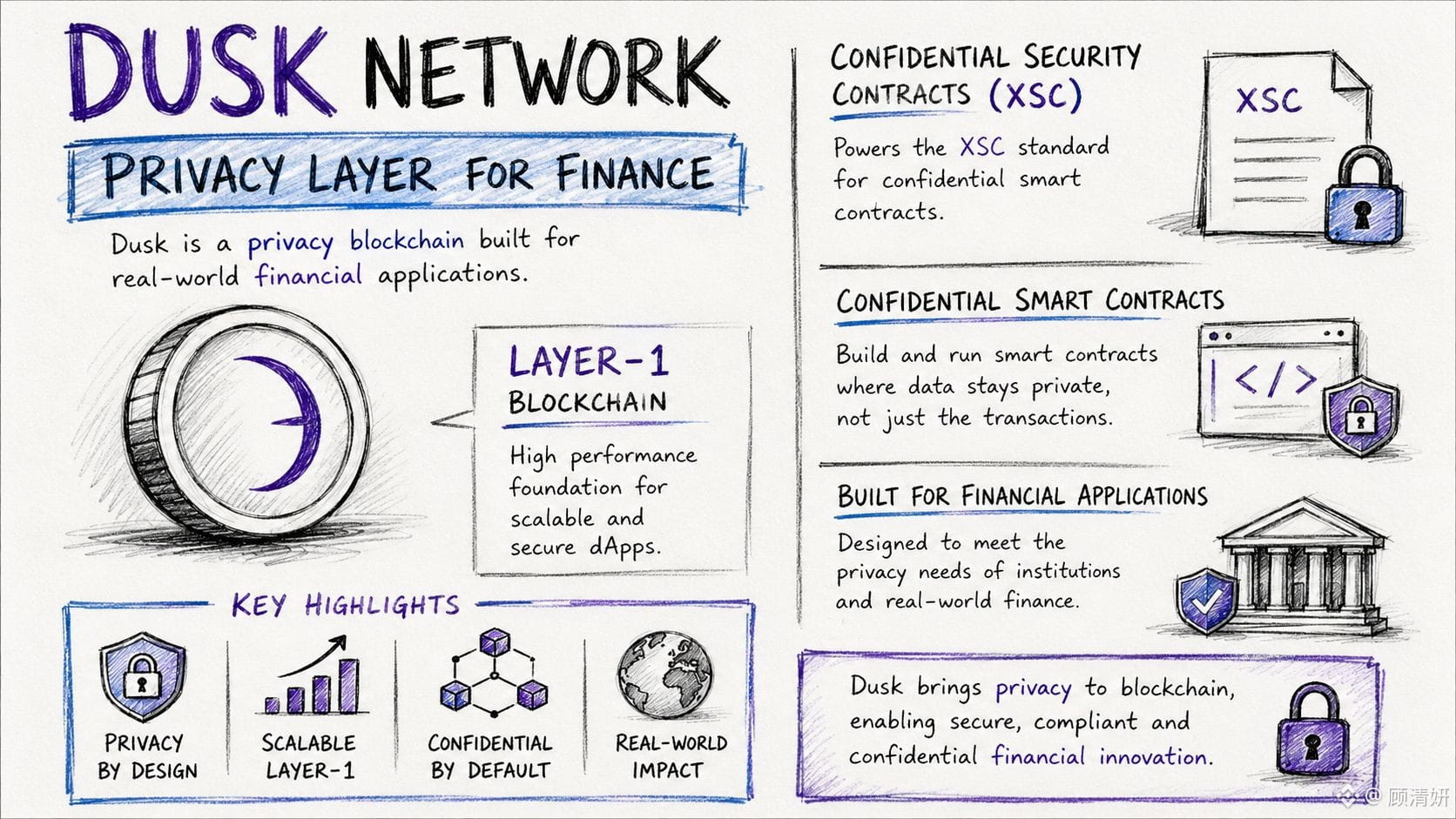
The more I explored Confidential Security Contracts (XSC), the more I saw them as part of a framework designed to make regulated financial activity predictable without making sensitive information unnecessarily public.
I've noticed that many blockchain conversations focus on the first successful transaction.
For me, the more interesting question is what happens after the thousandth.
Can the same rules still apply?
Can participants still operate with confidence?
Can confidentiality and accountability continue to coexist without creating operational friction?
That's where I think infrastructure begins to matter more than headlines.
DUSK isn't interesting to me because it promises something radically different.
It's interesting because it explores how regulated financial systems could become consistently dependable in a digital environment.
And in institutional finance, repeatability is often more valuable than novelty.
@Dusk $DUSK #dusk
I think it happens when confidence becomes repeatable.
That sounds simple, but I don't think it gets discussed enough.
Financial institutions don't build long-term strategies around exceptional outcomes.
They build them around processes they can expect to work again and again.
That idea kept coming back while I was researching DUSK.
The more I explored Confidential Security Contracts (XSC), the more I saw them as part of a framework designed to make regulated financial activity predictable without making sensitive information unnecessarily public.
I've noticed that many blockchain conversations focus on the first successful transaction.
For me, the more interesting question is what happens after the thousandth.
Can the same rules still apply?
Can participants still operate with confidence?
Can confidentiality and accountability continue to coexist without creating operational friction?
That's where I think infrastructure begins to matter more than headlines.
DUSK isn't interesting to me because it promises something radically different.
It's interesting because it explores how regulated financial systems could become consistently dependable in a digital environment.
And in institutional finance, repeatability is often more valuable than novelty.
@Dusk $DUSK #dusk