
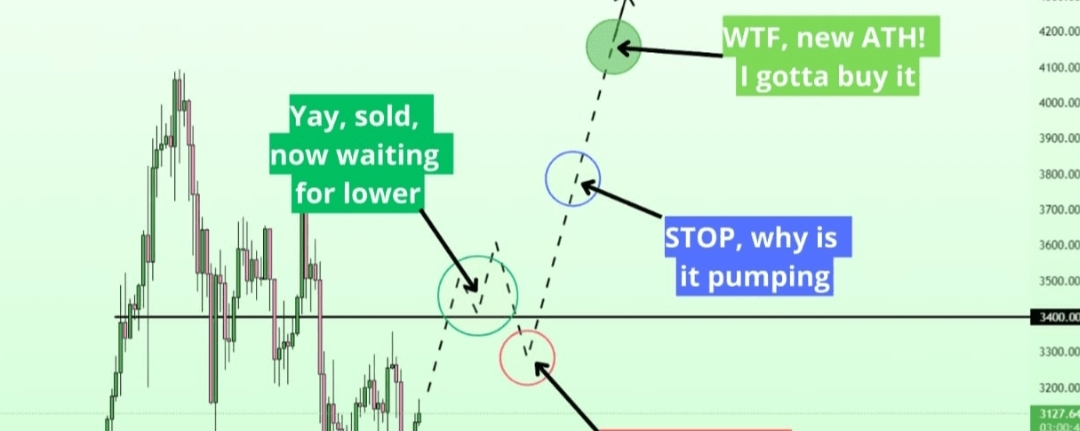

Crypto markets rarely feel comfortable near major turning points. When prices are falling, sentiment is weak, and investors are taking losses, the easiest conclusion is often that things will only get worse.
But I think these uncomfortable periods deserve the most attention. Capitulation can destroy confidence, yet it can also create the conditions from which a new accumulation phase eventually develops.
What Does Crypto Capitulation Really Mean?
Capitulation happens when prolonged market weakness pushes investors to finally give up and sell, often at a loss. Fear begins replacing patience, and even investors who previously planned to hold can start exiting.
Recent on-chain data has shown signs of exactly this pressure. Glassnode reported in July that long-term Bitcoin holders were responsible for 43% of total realized value, with their loss realization reaching levels not seen since late 2022.
To me, that doesn't automatically mean the bottom has arrived. It does mean the market is experiencing the kind of stress worth watching closely.
The Crowd Usually Reacts to Price
One thing I’ve learned from watching crypto cycles is that sentiment often follows price rather than predicting it.
When prices are rising quickly, bullish predictions become everywhere. When the market falls for months, bearish expectations begin dominating instead.
This is why I prefer looking beyond social-media sentiment. On-chain activity, spot demand, ETF flows, liquidity and holder behavior can provide a much clearer picture of what is happening underneath the market.
Realized Losses Can Reveal Market Stress
One of the strongest capitulation signals is investors actually locking in losses.
VanEck reported in June that Bitcoin's 30-day average realized losses had risen 78% month over month to $714 million, while realized profits dropped sharply.
I see this as an important distinction. A falling price shows weakness, but heavy realized losses show that investors are actually surrendering positions.
Historically, that kind of pressure can appear during painful phases of bear markets, although it cannot identify the exact bottom in advance.
ETF Flows Are Another Piece of the Puzzle
Institutional demand matters too.
Glassnode noted that Bitcoin ETF flows remained negative during its July assessment, while trading volumes were dramatically below their October 2025 peak. That suggested institutional demand had not yet fully stabilized.
However, Coinbase later argued that the market had already experienced an extreme period of ETF outflows and that flows were beginning to stabilize, contributing to its view that Bitcoin could be near an accumulation zone.
This is exactly why I wouldn't depend on one indicator.
Liquidity Could Decide What Comes Next
Crypto needs liquidity to sustain a meaningful recovery.
If stablecoin activity expands, spot demand strengthens and fresh capital begins returning, the market has a stronger foundation for recovery. Without those conditions, short rallies can simply become opportunities for trapped holders to sell.
I’m especially interested in stablecoins because their role is expanding beyond trading. Coinbase reported that stablecoin transaction activity has grown much faster than supply since 2024, highlighting their increasing use as financial infrastructure.
A Rally Doesn't Automatically Mean the Bottom Is In
This is where I think patience becomes important.
Bear markets can produce powerful rallies that look like the beginning of a new bull cycle. If those moves are mainly driven by leverage instead of genuine spot buying, they can disappear quickly.
Coinbase's June positioning analysis found that leverage had rebuilt faster than liquidity and that the broader market still lacked a strong altcoin rotation.
For me, stronger confirmation would come from improving spot demand, healthier liquidity and sustained buying alongside price recovery.
Capitulation Can Become Opportunity
I don't see capitulation as automatically bullish or bearish.
I see it as a transition period.
Weak hands may be exiting, stronger investors may begin looking for value, leverage can reset, and speculative excess can gradually leave the system.
Even professional analysis remains cautious about declaring a bottom. Charles Schwab noted that capitulation cannot really be confirmed until after the fact and that bear markets don't always follow identical patterns.
Reading the Market Before the Crowd
I’m not trying to predict the exact candle that marks the bottom. I’m watching whether the market's internal conditions begin changing before sentiment catches up.
If realized losses start declining, ETF flows improve, spot demand returns, liquidity strengthens and Bitcoin begins reclaiming important market structure, I would consider that far more meaningful than a few bullish days.
Crypto capitulation can feel like the moment to leave the market completely. Sometimes, however, maximum uncertainty is exactly when the next phase quietly begins forming.
The crowd watches price. I prefer watching what changes underneath it.