
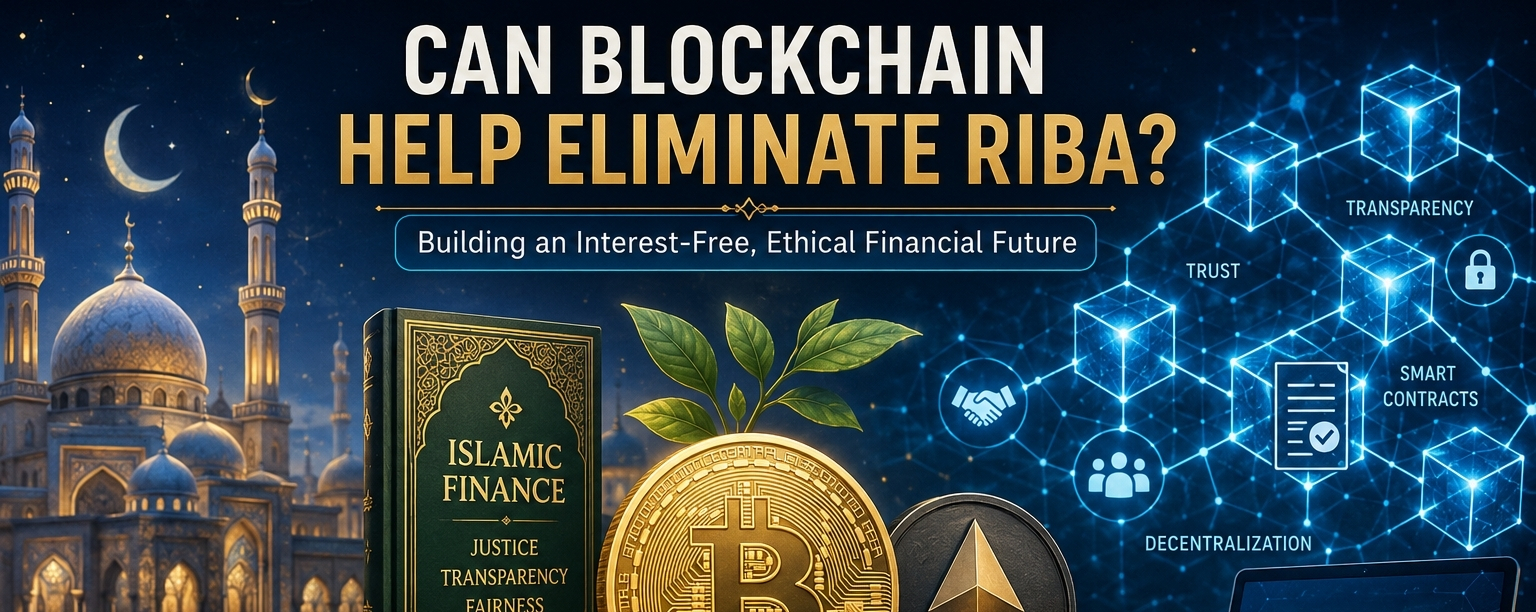
For centuries, Muslims have searched for financial systems that promote justice, transparency, and fairness while avoiding riba (interest or usury), one of the most discussed concepts in Islamic finance. Today, blockchain technology has sparked a new conversation. Can this revolutionary technology help reduce dependence on interest-based financial systems? Or is it simply another tool that can be used for both good and bad?
The answer is more nuanced than a simple yes or no. Blockchain itself is neither halal nor haram. Like the internet, it is a technology. Whether it supports Islamic values depends on how it is designed and used.
What Is Riba?
In Islamic teachings, riba generally refers to prohibited forms of unjust gain through lending or certain financial transactions. Muslims seek financial arrangements based on fairness, shared risk, honesty, and mutual consent instead of exploitative practices.
Islam encourages trade, entrepreneurship, investment in productive activities, and charitable giving while discouraging exploitation.
What Is Blockchain?
Blockchain is a digital ledger that records transactions across many computers. Once information is recorded, it becomes very difficult to alter without network agreement.
Its key features include:
Transparency
Security
Traceability
Decentralization
Reduced dependence on intermediaries
These characteristics have attracted attention from both the financial industry and Islamic finance researchers.
How Blockchain Could Support Islamic Finance
1. Greater Transparency
Every transaction can be recorded permanently, making fraud more difficult and increasing accountability.
2. Lower Transaction Costs
Blockchain can reduce the need for multiple intermediaries, allowing people to send money more efficiently across borders.
3. Better Record Keeping
Smart contracts can automatically execute agreements according to predefined conditions, reducing disputes.
4. Easier Distribution of Zakat and Charity
Blockchain can help charitable organizations demonstrate how donations are received and distributed, improving trust.
5. Financial Inclusion
Millions of people lack access to traditional banking. Digital financial tools built responsibly may expand access to payments and savings.
Can Blockchain Eliminate Riba?
Not by itself.
Blockchain is infrastructure. It does not automatically remove interest from financial transactions. An interest-bearing loan can still exist on a blockchain.
However, blockchain can support financial products designed around Islamic principles, such as:
Profit-and-loss sharing arrangements
Asset-backed financing
Transparent charitable funds
Digital waqf management
Smart contracts reflecting Sharia-compliant agreements
Whether these arrangements comply with Islamic law depends on their structure, not merely on the technology.
Challenges
Several issues remain under discussion among scholars and experts:
Cryptocurrency price volatility
Fraud and scams
Speculative trading
Consumer protection
Regulatory uncertainty
Differences of scholarly opinion regarding specific cryptoassets and activities
Because of these complexities, Muslims considering crypto-related investments often consult knowledgeable scholars and qualified financial professionals.
The Future of Islamic Finance
Blockchain offers opportunities to improve transparency, reduce unnecessary costs, and strengthen trust. If combined with ethical financial models, it may help support some goals of Islamic finance.
Technology alone cannot create justice. Ethical behavior, responsible regulation, and sound financial design remain essential.
Conclusion
Blockchain is not a cure for riba, but it may become a valuable tool in building more transparent and accountable financial systems. For Muslims, the key question is not simply whether blockchain exists, but whether it is used in ways that promote fairness, honesty, shared responsibility, and ethical economic activity.
As blockchain technology evolves, conversations between Islamic scholars, economists, technologists, and policymakers will continue to shape how these innovations can best serve society while remaining faithful to Islamic ethical principles.
#IslamicFinance #bitcoin #ShariahCrypto #BinanceSquareFamily #cryptocurreny




Like, Reply, & Repost.
Don't forget to tip below ⤵️⤵️⤵️