Bitcoin (BTC), the world's first and largest cryptocurrency, remains one of the most closely watched financial assets. Since its creation in 2009 by the anonymous Satoshi Nakamoto, Bitcoin has transformed from a niche digital experiment into a globally recognized store of value and investment asset.
Strong Long-Term Trend
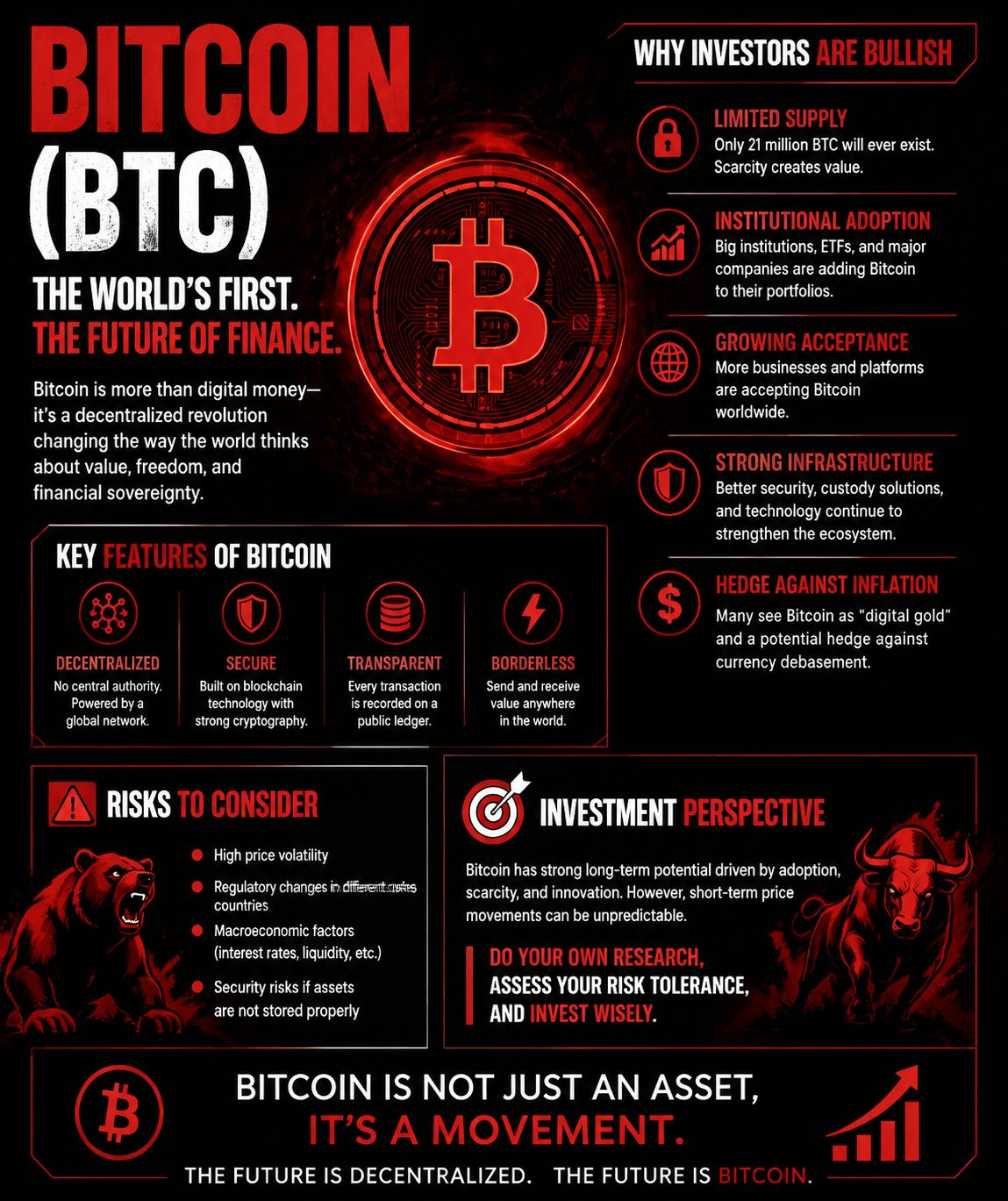
Despite experiencing periods of high volatility, Bitcoin has historically followed a long-term upward trend driven by increasing adoption, institutional investment, and limited supply. With a maximum supply capped at 21 million coins, Bitcoin's scarcity has earned it the nickname "digital gold."
Institutional Adoption
Major financial institutions, hedge funds, and publicly traded companies have added Bitcoin to their portfolios over the years. The launch and expansion of spot Bitcoin ETFs in several markets have also made it easier for traditional investors to gain exposure without directly holding cryptocurrency.
Growing Global Acceptance
Bitcoin is increasingly being accepted as a payment method by businesses and integrated into financial services. In many regions, it is viewed as an alternative asset that can help diversify investment portfolios.
Key Factors Supporting a Bullish Outlook
Fixed supply of 21 million BTC creates scarcity.
Increasing institutional demand through ETFs and investment products.
Growing adoption by businesses and payment platforms.
Continued development of Bitcoin infrastructure and custody solutions.
Rising awareness of Bitcoin as a potential hedge against currency debasement.
Risks to Consider9
While Bitcoin has significant upside potential, investors should also understand the risks:
High price volatility.
Regulatory changes in different countries.
Macroeconomic factors such as interest rates and liquidity conditions.
Security risks if assets are not stored properly.
Investment Perspective
Many analysts believe Bitcoin could continue to benefit from increasing global adoption and limited supply over the long term. However, short-term price movements can be unpredictable. Investors should conduct their own research, assess their risk tolerance, and avoid investing more than they can afford to lose.
Conclusion
Bitcoin remains one of the most influential assets in the digital economy. Its combination of scarcity, decentralization, and growing institutional acceptance continues to support long-term interest. Although volatility is likely to remain a defining characteristic, Bitcoin's role in global finance continues to evolve, making it an asset worth monitoring for both experienced and new investors.#BTC走势分析