

@MidnightNetwork At first, it was just small things. Someone who had been around since the early days getting nothing from a drop. Someone else no history, no presence somehow qualifying for everything. No one really argues anymore. It’s more like a shared silence, like people already know how it ends.
That’s when you start feeling it. Not anger—just distance.
Because the truth is simple, even if no one says it clearly: the system doesn’t really see you.
That’s where this whole idea of credential verification and token distribution comes from. Not from innovation, but from frustration. People want to be recognized for what they’ve actually done. Not by shouting louder, not by exposing everything but in a way that feels fair.
Something that quietly says, you were here, and it mattered.
But the moment you try to build that, things get complicated.
Because as soon as value is attached tokens, access, reputation people start adjusting. Not in obvious ways. Just enough. Enough to fit what the system is looking for. And slowly, real behavior turns into performed behavior.
You can feel the shift if you look closely.
People stop asking, “what do I want to do here?” and start asking, “what counts?”
And that question changes everything.
Credentials, which were supposed to reflect truth, start shaping it instead. They become something you manage. Something you think about. Something you worry about losing or not having enough of.
It stops feeling natural.
There’s also this quiet pressure behind it all—the need to prove yourself, but without giving too much away. Because once your actions become credentials, they also become a trail. A pattern. Something that can be read, judged, maybe even misunderstood.
And systems don’t really understand nuance. They reduce things. They measure what’s easy to measure. But people don’t move in clean patterns. Some contributions are invisible. Some effort doesn’t leave a trace.
Still, the system has to decide.
And in that decision, something always gets lost.
But even with all these flaws, the idea doesn’t go away. Because the alternative feels worse. A space where nothing is remembered, where every step resets to zero that kind of emptiness wears people down too.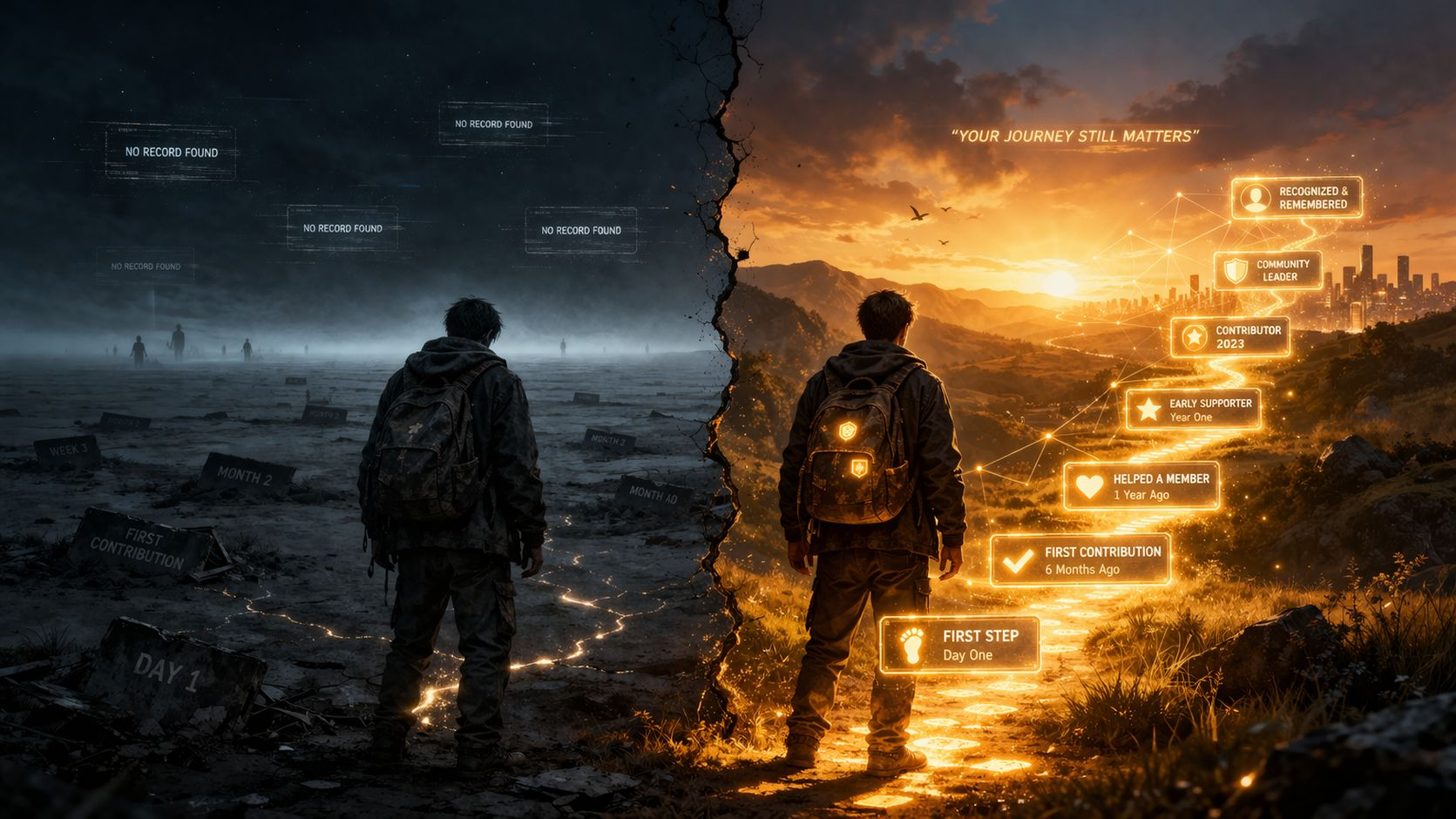
So this infrastructure keeps forming, slowly, imperfectly.
Not as a solution, but as an attempt.
An attempt to answer something very human: can you be seen without being exposed$NIGHT