

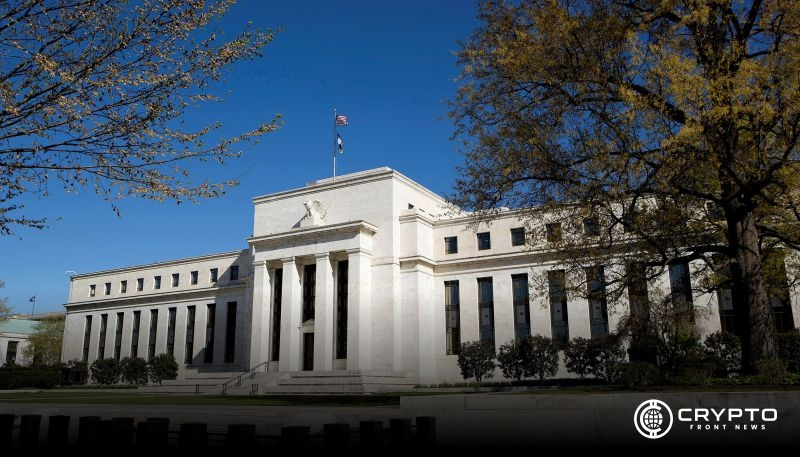
Fed wants crypto treated as its own asset class to better manage extreme price swings and trading risks.
New margin rules aim to protect traders in risky derivatives and track crypto market behavior with a benchmark index.
“Skinny” master accounts and clearer rules make it easier for banks and crypto firms to operate safely.
The Federal Reserve is moving to address the unpredictable nature of cryptocurrency trading. A new proposal aims to treat crypto as a standalone asset class, helping manage its extreme price swings. Researchers Anna Amirdjanova, David Lynch, and Anni Zheng outlined the plan in a working paper published Wednesday.
They warn that current derivative systems fail to capture crypto’s unique risks. By introducing dedicated margin requirements, the Fed hopes to create a safer trading environment for investors and institutions alike.
Existing margin rules aggregate assets into traditional categories like equities, interest rates, and commodities. However, crypto does not fit neatly into any of these groups. Its prices swing rapidly, influenced by factors beyond conventional market dynamics.
Hence, traders may underestimate risks under the current system. The Fed researchers suggest assigning specific risk weights to cryptocurrencies. They also recommend separating “floating” cryptos like Bitcoin and Ether from “pegged” stablecoins to more accurately reflect risk levels.
Managing Derivatives Risks
Uncleared derivatives, which trade over-the-counter, carry heightened risks because no central clearinghouse verifies transactions. Margin requirements act as a buffer against defaults, ensuring both parties can meet obligations. “Traders in derivatives markets leverage borrowed funds, which raises potential profits but also increases chances of loss,” the researchers noted.
Consequently, assigning proper margin for volatile crypto assets becomes critical. The team proposes a benchmark crypto index that combines floating and stablecoins. This index would allow financial institutions to track market behavior and adjust collateral requirements dynamically.
Federal Reserve’s Broader Shift
This proposal signals a broader shift in the Fed’s approach to cryptocurrencies. Instead of limiting exposure, the central bank now seeks frameworks that safely integrate crypto into the financial system. In December, it reversed prior guidance that restricted banks’ crypto engagement.
Additionally, the Fed is exploring “skinny” master accounts for crypto firms, giving access to central banking infrastructure without full privileges. Moreover, these moves aim to provide clear, consistent rules for banks and crypto-related companies, reducing uncertainty while supporting innovation.
The post Fed Proposes New Margin Rules to Tame Crypto Volatility appears on Crypto Front News. Visit our website to read more interesting articles about cryptocurrency, blockchain technology, and digital assets.

