
BlockchainReporter
27.8k Publicaciones

BlockchainReporter
 Verificado Plus de Binance Square
Denunciar
Bloquear usuario
The World's Page on Emerging Tech | Cryptocurrencies | Bitcoin | Blockchain | NFT | blockchainreporter.net
2 Siguiendo
41.9K+ Seguidores
180.0K+ Me gusta
Publicaciones

Artículo
The Next Trillion-Dollar Currency May Not Be a StablecoinA new CoinDesk analysis examines why the next trillion-dollar currency may emerge outside today’s stablecoin model and may not have a name yet. CoinDesk reported.
What the Report Says
The development is notable because it changes the factual picture around next trillion-dollar currency. The available reporting identifies a specific development, but it does not justify treating the event as proof of a completed industry-wide shift. The figures and descriptions remain tied to the source and its stated scope.
Why It Matters for Digital Assets
Crypto infrastructure increasingly connects payments, markets and software systems. That creates new opportunities for adoption, but it also leaves participants facing questions about security, regulation, liquidity and operational reliability. Those questions will determine whether the reported development expands beyond an initial test, study or proposal.
What Comes Next
The next milestones are additional disclosures, implementation details and evidence that users or institutions are adopting the relevant system. Until those details appear, the event should be read as a dated development rather than a prediction about market prices or guaranteed future adoption. BlockchainReporter has previously covered related digital-asset infrastructure in earlier coverage.
The Next Trillion-Dollar Currency May Not Be a Stablecoin
A new CoinDesk analysis examines why the next trillion-dollar currency may emerge outside today’s stablecoin model and may not have a name yet. CoinDesk reported.
What the Report Says
The development is notable because it changes the factual picture around next trillion-dollar currency. The available reporting identifies a specific development, but it does not justify treating the event as proof of a completed industry-wide shift. The figures and descriptions remain tied to the source and its stated scope.
Why It Matters for Digital Assets
Crypto infrastructure increasingly connects payments, markets and software systems. That creates new opportunities for adoption, but it also leaves participants facing questions about security, regulation, liquidity and operational reliability. Those questions will determine whether the reported development expands beyond an initial test, study or proposal.
What Comes Next
The next milestones are additional disclosures, implementation details and evidence that users or institutions are adopting the relevant system. Until those details appear, the event should be read as a dated development rather than a prediction about market prices or guaranteed future adoption. BlockchainReporter has previously covered related digital-asset infrastructure in earlier coverage.
What the Report Says
The development is notable because it changes the factual picture around next trillion-dollar currency. The available reporting identifies a specific development, but it does not justify treating the event as proof of a completed industry-wide shift. The figures and descriptions remain tied to the source and its stated scope.
Why It Matters for Digital Assets
Crypto infrastructure increasingly connects payments, markets and software systems. That creates new opportunities for adoption, but it also leaves participants facing questions about security, regulation, liquidity and operational reliability. Those questions will determine whether the reported development expands beyond an initial test, study or proposal.
What Comes Next
The next milestones are additional disclosures, implementation details and evidence that users or institutions are adopting the relevant system. Until those details appear, the event should be read as a dated development rather than a prediction about market prices or guaranteed future adoption. BlockchainReporter has previously covered related digital-asset infrastructure in earlier coverage.
373
Verificado

Artículo
BTC News Today: Bitcoin Holds Near $80K As IceBull Offers Stage 1 Access Before the Next Presale ...BTC news today has Bitcoin holding near $80K, a level that keeps market sentiment focused on whether risk appetite can extend beyond the largest asset. A firm Bitcoin backdrop does not decide the future of smaller tokens, but it can set the tone for interest in altcoins and fresh launches. IceBull offers a separate timing story within that environment: its presale is live at Stage 1, before the next planned increase in its 16-stage price sequence.
Bitcoin Near $80K Sets the News Tone
Bitcoin remains the reference point for crypto sentiment because it is the asset many readers use to gauge appetite for the sector. Holding near $80K can keep discussion constructive, yet a single price area never removes volatility or determines where capital goes next. BTC news today is best read as context. It describes the market’s largest benchmark, while each altcoin and presale needs its own facts, risks, and acquisition mechanics.
That distinction matters when a headline shifts from Bitcoin to a new project. A move in BTC can encourage attention toward new themes, but it cannot validate a promotional upside claim. IceBull is not presented as a copy of Bitcoin. It is a bull-themed Ethereum ERC-20 token with a presale structure designed around fixed stages. The connection is market mood, not a promise that one asset’s stability will translate into another asset’s future performance.
Risk Appetite Can Open a New Search
When Bitcoin is steady, some readers broaden their research from major coins to projects with an earlier entry point. That is why the best crypto to buy now search often combines large-cap news with presale discovery. IceBull gives that search a visible condition: Stage 1 is active. The sale has 16 stages, and every later stage is designed with a higher official price. Fifteen planned price increases remain while the first stage is live.
Waiting can therefore change the official token allocation available for a given payment amount. That is a presale pricing fact, not a statement about eventual resale value. The timing element has no fixed deadline in this article. It is tied to a stage transition, whenever the sale advances. For the best crypto to buy now search, readers can inspect the displayed stage and allocation before payment rather than rely on a broad claim that the next market move is known.
IceBull Adds Disclosed Mechanics
The IceBull setup includes facts that can be reviewed alongside its meme-style energy. The token is an Ethereum ERC-20 with a fixed 120 billion supply. SolidProof has audited the contract, liquidity is planned to be locked at listing, and team tokens vest. These controls do not guarantee demand, a listing result, or a future price. They do provide clear subjects for due diligence before someone decides whether a presale belongs in their research.
The project also cites 1250X potential connected with a planned $0.025 listing price. Potential is the important qualifier. It is not financial advice, a fixed projection, or a completed gain. Approximately $5K raised is likewise an early, time-sensitive project snapshot rather than proof of traction. The stronger present-tense case is simply that Stage 1 is live, the price sequence is defined, and the published token mechanics can be checked.
How to Buy IceBull
Visit the official IceBull Buy Now page and confirm that Stage 1 is displayed.
Choose a cryptocurrency payment route or credit or debit card.
Connect a compatible Web3 wallet for a cryptocurrency purchase.
Select ETH, BNB, USDT, or choose the card checkout option.
Review the on-screen $ICEBULL allocation and payment total before confirming.
Claim tokens through the official procedure after the presale has ended.
The Payment Route Does Not Change the Stage
Crypto and card checkout solve different practical needs. A crypto purchase requires a compatible Web3 wallet and uses ETH, BNB, or USDT. Credit and debit card payment follows the available card route. Neither method creates a different presale stage. The displayed Stage 1 terms govern the allocation while that stage remains active. Checking the amount before confirmation makes the process easier to understand and prevents payment convenience from being confused with price certainty.
The later claim step is equally important. A completed payment records a presale allocation, while token claiming follows after the presale through the official process. This timeline differs from buying Bitcoin on an exchange, where the asset may be available immediately under that venue’s rules. Knowing the difference lets readers assess an early project on its own terms rather than assuming every crypto purchase has the same delivery model.
A Live Stage Inside a Wider Market Story
BTC news today supplies the big-market backdrop, but IceBull‘s immediate story is more specific: Stage 1 is open before the next presale price increase. The sale’s 16-stage design, 15 future higher prices, planned listing reference, and stated claim process are the points that can be verified now. Readers using the best crypto to buy now search can inspect IceBull’s live terms and decide based on their own research, keeping the 1250X potential clearly separate from any guaranteed outcome.
BTC News Today and IceBull FAQs What does Bitcoin near $80K mean for IceBull?
It is market context only. Bitcoin’s position does not guarantee a result for an early-stage presale.
Why does Stage 1 matter in the best crypto to buy now search?
It is the opening stage of a 16-stage sale, with 15 planned higher prices remaining after it.
Can I use a credit or debit card for IceBull?
Yes. The official flow supports credit and debit cards as well as ETH, BNB, and USDT.
When are IceBull tokens claimed?
Purchased tokens are claimed through the official process after the presale.
This article is not intended as financial advice. Educational purposes only.
BTC News Today: Bitcoin Holds Near $80K As IceBull Offers Stage 1 Access Before the Next Presale ...
BTC news today has Bitcoin holding near $80K, a level that keeps market sentiment focused on whether risk appetite can extend beyond the largest asset. A firm Bitcoin backdrop does not decide the future of smaller tokens, but it can set the tone for interest in altcoins and fresh launches. IceBull offers a separate timing story within that environment: its presale is live at Stage 1, before the next planned increase in its 16-stage price sequence.
Bitcoin Near $80K Sets the News Tone
Bitcoin remains the reference point for crypto sentiment because it is the asset many readers use to gauge appetite for the sector. Holding near $80K can keep discussion constructive, yet a single price area never removes volatility or determines where capital goes next. BTC news today is best read as context. It describes the market’s largest benchmark, while each altcoin and presale needs its own facts, risks, and acquisition mechanics.
That distinction matters when a headline shifts from Bitcoin to a new project. A move in BTC can encourage attention toward new themes, but it cannot validate a promotional upside claim. IceBull is not presented as a copy of Bitcoin. It is a bull-themed Ethereum ERC-20 token with a presale structure designed around fixed stages. The connection is market mood, not a promise that one asset’s stability will translate into another asset’s future performance.
Risk Appetite Can Open a New Search
When Bitcoin is steady, some readers broaden their research from major coins to projects with an earlier entry point. That is why the best crypto to buy now search often combines large-cap news with presale discovery. IceBull gives that search a visible condition: Stage 1 is active. The sale has 16 stages, and every later stage is designed with a higher official price. Fifteen planned price increases remain while the first stage is live.
Waiting can therefore change the official token allocation available for a given payment amount. That is a presale pricing fact, not a statement about eventual resale value. The timing element has no fixed deadline in this article. It is tied to a stage transition, whenever the sale advances. For the best crypto to buy now search, readers can inspect the displayed stage and allocation before payment rather than rely on a broad claim that the next market move is known.
IceBull Adds Disclosed Mechanics
The IceBull setup includes facts that can be reviewed alongside its meme-style energy. The token is an Ethereum ERC-20 with a fixed 120 billion supply. SolidProof has audited the contract, liquidity is planned to be locked at listing, and team tokens vest. These controls do not guarantee demand, a listing result, or a future price. They do provide clear subjects for due diligence before someone decides whether a presale belongs in their research.
The project also cites 1250X potential connected with a planned $0.025 listing price. Potential is the important qualifier. It is not financial advice, a fixed projection, or a completed gain. Approximately $5K raised is likewise an early, time-sensitive project snapshot rather than proof of traction. The stronger present-tense case is simply that Stage 1 is live, the price sequence is defined, and the published token mechanics can be checked.
How to Buy IceBull
Visit the official IceBull Buy Now page and confirm that Stage 1 is displayed.
Choose a cryptocurrency payment route or credit or debit card.
Connect a compatible Web3 wallet for a cryptocurrency purchase.
Select ETH, BNB, USDT, or choose the card checkout option.
Review the on-screen $ICEBULL allocation and payment total before confirming.
Claim tokens through the official procedure after the presale has ended.
The Payment Route Does Not Change the Stage
Crypto and card checkout solve different practical needs. A crypto purchase requires a compatible Web3 wallet and uses ETH, BNB, or USDT. Credit and debit card payment follows the available card route. Neither method creates a different presale stage. The displayed Stage 1 terms govern the allocation while that stage remains active. Checking the amount before confirmation makes the process easier to understand and prevents payment convenience from being confused with price certainty.
The later claim step is equally important. A completed payment records a presale allocation, while token claiming follows after the presale through the official process. This timeline differs from buying Bitcoin on an exchange, where the asset may be available immediately under that venue’s rules. Knowing the difference lets readers assess an early project on its own terms rather than assuming every crypto purchase has the same delivery model.
A Live Stage Inside a Wider Market Story
BTC news today supplies the big-market backdrop, but IceBull‘s immediate story is more specific: Stage 1 is open before the next presale price increase. The sale’s 16-stage design, 15 future higher prices, planned listing reference, and stated claim process are the points that can be verified now. Readers using the best crypto to buy now search can inspect IceBull’s live terms and decide based on their own research, keeping the 1250X potential clearly separate from any guaranteed outcome.
BTC News Today and IceBull FAQs What does Bitcoin near $80K mean for IceBull?
It is market context only. Bitcoin’s position does not guarantee a result for an early-stage presale.
Why does Stage 1 matter in the best crypto to buy now search?
It is the opening stage of a 16-stage sale, with 15 planned higher prices remaining after it.
Can I use a credit or debit card for IceBull?
Yes. The official flow supports credit and debit cards as well as ETH, BNB, and USDT.
When are IceBull tokens claimed?
Purchased tokens are claimed through the official process after the presale.
This article is not intended as financial advice. Educational purposes only.
Bitcoin Near $80K Sets the News Tone
Bitcoin remains the reference point for crypto sentiment because it is the asset many readers use to gauge appetite for the sector. Holding near $80K can keep discussion constructive, yet a single price area never removes volatility or determines where capital goes next. BTC news today is best read as context. It describes the market’s largest benchmark, while each altcoin and presale needs its own facts, risks, and acquisition mechanics.
That distinction matters when a headline shifts from Bitcoin to a new project. A move in BTC can encourage attention toward new themes, but it cannot validate a promotional upside claim. IceBull is not presented as a copy of Bitcoin. It is a bull-themed Ethereum ERC-20 token with a presale structure designed around fixed stages. The connection is market mood, not a promise that one asset’s stability will translate into another asset’s future performance.
Risk Appetite Can Open a New Search
When Bitcoin is steady, some readers broaden their research from major coins to projects with an earlier entry point. That is why the best crypto to buy now search often combines large-cap news with presale discovery. IceBull gives that search a visible condition: Stage 1 is active. The sale has 16 stages, and every later stage is designed with a higher official price. Fifteen planned price increases remain while the first stage is live.
Waiting can therefore change the official token allocation available for a given payment amount. That is a presale pricing fact, not a statement about eventual resale value. The timing element has no fixed deadline in this article. It is tied to a stage transition, whenever the sale advances. For the best crypto to buy now search, readers can inspect the displayed stage and allocation before payment rather than rely on a broad claim that the next market move is known.
IceBull Adds Disclosed Mechanics
The IceBull setup includes facts that can be reviewed alongside its meme-style energy. The token is an Ethereum ERC-20 with a fixed 120 billion supply. SolidProof has audited the contract, liquidity is planned to be locked at listing, and team tokens vest. These controls do not guarantee demand, a listing result, or a future price. They do provide clear subjects for due diligence before someone decides whether a presale belongs in their research.
The project also cites 1250X potential connected with a planned $0.025 listing price. Potential is the important qualifier. It is not financial advice, a fixed projection, or a completed gain. Approximately $5K raised is likewise an early, time-sensitive project snapshot rather than proof of traction. The stronger present-tense case is simply that Stage 1 is live, the price sequence is defined, and the published token mechanics can be checked.
How to Buy IceBull
Visit the official IceBull Buy Now page and confirm that Stage 1 is displayed.
Choose a cryptocurrency payment route or credit or debit card.
Connect a compatible Web3 wallet for a cryptocurrency purchase.
Select ETH, BNB, USDT, or choose the card checkout option.
Review the on-screen $ICEBULL allocation and payment total before confirming.
Claim tokens through the official procedure after the presale has ended.
The Payment Route Does Not Change the Stage
Crypto and card checkout solve different practical needs. A crypto purchase requires a compatible Web3 wallet and uses ETH, BNB, or USDT. Credit and debit card payment follows the available card route. Neither method creates a different presale stage. The displayed Stage 1 terms govern the allocation while that stage remains active. Checking the amount before confirmation makes the process easier to understand and prevents payment convenience from being confused with price certainty.
The later claim step is equally important. A completed payment records a presale allocation, while token claiming follows after the presale through the official process. This timeline differs from buying Bitcoin on an exchange, where the asset may be available immediately under that venue’s rules. Knowing the difference lets readers assess an early project on its own terms rather than assuming every crypto purchase has the same delivery model.
A Live Stage Inside a Wider Market Story
BTC news today supplies the big-market backdrop, but IceBull‘s immediate story is more specific: Stage 1 is open before the next presale price increase. The sale’s 16-stage design, 15 future higher prices, planned listing reference, and stated claim process are the points that can be verified now. Readers using the best crypto to buy now search can inspect IceBull’s live terms and decide based on their own research, keeping the 1250X potential clearly separate from any guaranteed outcome.
BTC News Today and IceBull FAQs What does Bitcoin near $80K mean for IceBull?
It is market context only. Bitcoin’s position does not guarantee a result for an early-stage presale.
Why does Stage 1 matter in the best crypto to buy now search?
It is the opening stage of a 16-stage sale, with 15 planned higher prices remaining after it.
Can I use a credit or debit card for IceBull?
Yes. The official flow supports credit and debit cards as well as ETH, BNB, and USDT.
When are IceBull tokens claimed?
Purchased tokens are claimed through the official process after the presale.
This article is not intended as financial advice. Educational purposes only.
500
Artículo
Same Election Question, Two Different Odds: Predictions.io Launches Free Cross-Venue Comparison T...Washington, United States, August 28th, 2026, Chainwire
As prediction-market volume hits record highs and regulators circle, identically worded midterm questions are trading several points apart depending on the venue. Predictions.io now tracks 9,700+ markets across Kalshi, Polymarket and Manifold in one place – with free fee and odds calculators so traders can see what a price actually costs them.
Prediction markets have never been bigger, or more contested. Kalshi, Polymarket and Polymarket US together posted a record $50.59 billion in combined volume in July, with Kalshi accounting for roughly 74.5% of the total. In the same month, New York City opened a probe into both leading venues, a Washington judge ordered Kalshi to halt most wagers in the state, and the CFTC began an internal review of so-called “mention markets.”
Amid that scrutiny, a simpler question has gone largely unexamined: when two venues list the same question, do they agree on the answer?
Often, they do not. On identically worded midterm markets tracked by Predictions.io, “Blue tsunami in 2026?” was priced at 44.5% on Polymarket and 36.0% on Kalshi. “Blue wave in 2026?” showed 82.5% against 74.0%. Both gaps are 8.5 percentage points — on questions whose wording is identical on the two venues. Across a sample of directly comparable binary markets live on more than one venue, the median gap was more than four points, and nearly half of the pairs differed by five points or more. (Prices as of 05:08 UTC on 28 August 2026; both venues’ live prices are shown side by side on Predictions.io.)
Those gaps matter to anyone quoting a single number. A market priced at 44.5% on one venue and 36.0% on another does not have one “market-implied probability” – it has two, and which one gets cited is arbitrary unless the reader is told both.
“A single venue’s price is a data point. The spread between venues is the information. When the two biggest markets in the world disagree by seven points on the same sentence, that disagreement is the story – and nobody who runs one of those markets is in a position to report it.” said spokesperson of Predictions.io
Predictions.io aggregates markets from Kalshi, Polymarket and Manifold, matching equivalent questions across venues so the same event can be compared directly. The platform currently tracks more than 9,700 event pages across 23 categories including US politics, economics, crypto, sport and geopolitics.
Alongside the comparison pages, Predictions.io publishes two free tools:
● Fee Calculator — enter any trade and see the fee, total outlay and effective all-in price on each venue, including Kalshi’s 0.07 × P × (1−P) taker formula and maker discount against Polymarket’s zero-fee standard markets.
https://predictions.io/tools/fee-calculator
● Odds Converter — convert American, decimal and fractional odds into implied probability and prediction-market prices, and see the vig-free line.
https://predictions.io/tools/odds-converter
A direct venue comparison is available at https://predictions.io/compare/polymarket-vs-kalshi, and live midterms markets at https://predictions.io/lobby/us-politics.
Predictions.io operates no market and takes no position in any contract. It is a data and comparison service, not an exchange, broker or investment adviser.
About Predictions.io
Predictions.io is an independent aggregator of prediction markets, bringing prices from Kalshi, Polymarket and Manifold into a single view so the same question can be compared across venues. It publishes free tools for traders and journalists, including a cross-venue fee calculator and odds converter.
Users can learn more about Predictions.io here: https://predictions.io/
Predictions.io socials: https://bio.site/predictions.io
Contact
SpokespersonPredictions.iosupport@predictions.io
This article is not intended as financial advice. Educational purposes only.
Same Election Question, Two Different Odds: Predictions.io Launches Free Cross-Venue Comparison T...
Washington, United States, August 28th, 2026, Chainwire
As prediction-market volume hits record highs and regulators circle, identically worded midterm questions are trading several points apart depending on the venue. Predictions.io now tracks 9,700+ markets across Kalshi, Polymarket and Manifold in one place – with free fee and odds calculators so traders can see what a price actually costs them.
Prediction markets have never been bigger, or more contested. Kalshi, Polymarket and Polymarket US together posted a record $50.59 billion in combined volume in July, with Kalshi accounting for roughly 74.5% of the total. In the same month, New York City opened a probe into both leading venues, a Washington judge ordered Kalshi to halt most wagers in the state, and the CFTC began an internal review of so-called “mention markets.”
Amid that scrutiny, a simpler question has gone largely unexamined: when two venues list the same question, do they agree on the answer?
Often, they do not. On identically worded midterm markets tracked by Predictions.io, “Blue tsunami in 2026?” was priced at 44.5% on Polymarket and 36.0% on Kalshi. “Blue wave in 2026?” showed 82.5% against 74.0%. Both gaps are 8.5 percentage points — on questions whose wording is identical on the two venues. Across a sample of directly comparable binary markets live on more than one venue, the median gap was more than four points, and nearly half of the pairs differed by five points or more. (Prices as of 05:08 UTC on 28 August 2026; both venues’ live prices are shown side by side on Predictions.io.)
Those gaps matter to anyone quoting a single number. A market priced at 44.5% on one venue and 36.0% on another does not have one “market-implied probability” – it has two, and which one gets cited is arbitrary unless the reader is told both.
“A single venue’s price is a data point. The spread between venues is the information. When the two biggest markets in the world disagree by seven points on the same sentence, that disagreement is the story – and nobody who runs one of those markets is in a position to report it.” said spokesperson of Predictions.io
Predictions.io aggregates markets from Kalshi, Polymarket and Manifold, matching equivalent questions across venues so the same event can be compared directly. The platform currently tracks more than 9,700 event pages across 23 categories including US politics, economics, crypto, sport and geopolitics.
Alongside the comparison pages, Predictions.io publishes two free tools:
● Fee Calculator — enter any trade and see the fee, total outlay and effective all-in price on each venue, including Kalshi’s 0.07 × P × (1−P) taker formula and maker discount against Polymarket’s zero-fee standard markets.
https://predictions.io/tools/fee-calculator
● Odds Converter — convert American, decimal and fractional odds into implied probability and prediction-market prices, and see the vig-free line.
https://predictions.io/tools/odds-converter
A direct venue comparison is available at https://predictions.io/compare/polymarket-vs-kalshi, and live midterms markets at https://predictions.io/lobby/us-politics.
Predictions.io operates no market and takes no position in any contract. It is a data and comparison service, not an exchange, broker or investment adviser.
About Predictions.io
Predictions.io is an independent aggregator of prediction markets, bringing prices from Kalshi, Polymarket and Manifold into a single view so the same question can be compared across venues. It publishes free tools for traders and journalists, including a cross-venue fee calculator and odds converter.
Users can learn more about Predictions.io here: https://predictions.io/
Predictions.io socials: https://bio.site/predictions.io
Contact
SpokespersonPredictions.iosupport@predictions.io
This article is not intended as financial advice. Educational purposes only.
As prediction-market volume hits record highs and regulators circle, identically worded midterm questions are trading several points apart depending on the venue. Predictions.io now tracks 9,700+ markets across Kalshi, Polymarket and Manifold in one place – with free fee and odds calculators so traders can see what a price actually costs them.
Prediction markets have never been bigger, or more contested. Kalshi, Polymarket and Polymarket US together posted a record $50.59 billion in combined volume in July, with Kalshi accounting for roughly 74.5% of the total. In the same month, New York City opened a probe into both leading venues, a Washington judge ordered Kalshi to halt most wagers in the state, and the CFTC began an internal review of so-called “mention markets.”
Amid that scrutiny, a simpler question has gone largely unexamined: when two venues list the same question, do they agree on the answer?
Often, they do not. On identically worded midterm markets tracked by Predictions.io, “Blue tsunami in 2026?” was priced at 44.5% on Polymarket and 36.0% on Kalshi. “Blue wave in 2026?” showed 82.5% against 74.0%. Both gaps are 8.5 percentage points — on questions whose wording is identical on the two venues. Across a sample of directly comparable binary markets live on more than one venue, the median gap was more than four points, and nearly half of the pairs differed by five points or more. (Prices as of 05:08 UTC on 28 August 2026; both venues’ live prices are shown side by side on Predictions.io.)
Those gaps matter to anyone quoting a single number. A market priced at 44.5% on one venue and 36.0% on another does not have one “market-implied probability” – it has two, and which one gets cited is arbitrary unless the reader is told both.
“A single venue’s price is a data point. The spread between venues is the information. When the two biggest markets in the world disagree by seven points on the same sentence, that disagreement is the story – and nobody who runs one of those markets is in a position to report it.” said spokesperson of Predictions.io
Predictions.io aggregates markets from Kalshi, Polymarket and Manifold, matching equivalent questions across venues so the same event can be compared directly. The platform currently tracks more than 9,700 event pages across 23 categories including US politics, economics, crypto, sport and geopolitics.
Alongside the comparison pages, Predictions.io publishes two free tools:
● Fee Calculator — enter any trade and see the fee, total outlay and effective all-in price on each venue, including Kalshi’s 0.07 × P × (1−P) taker formula and maker discount against Polymarket’s zero-fee standard markets.
https://predictions.io/tools/fee-calculator
● Odds Converter — convert American, decimal and fractional odds into implied probability and prediction-market prices, and see the vig-free line.
https://predictions.io/tools/odds-converter
A direct venue comparison is available at https://predictions.io/compare/polymarket-vs-kalshi, and live midterms markets at https://predictions.io/lobby/us-politics.
Predictions.io operates no market and takes no position in any contract. It is a data and comparison service, not an exchange, broker or investment adviser.
About Predictions.io
Predictions.io is an independent aggregator of prediction markets, bringing prices from Kalshi, Polymarket and Manifold into a single view so the same question can be compared across venues. It publishes free tools for traders and journalists, including a cross-venue fee calculator and odds converter.
Users can learn more about Predictions.io here: https://predictions.io/
Predictions.io socials: https://bio.site/predictions.io
Contact
SpokespersonPredictions.iosupport@predictions.io
This article is not intended as financial advice. Educational purposes only.
314
Artículo
Margex Launches Competitions Mode Featuring Weekly Fantasy Leagues and 10,000 USDT RewardsVictoria, Seychelles, August 28th, 2026, Chainwire
Margex, a specialized digital asset trading platform powered by proprietary MP Shield technology, has launched Competitions Mode, introducing free weekly trading contests with real USDT rewards. The new feature kicks off today with the Fantasy League, offering a 10,000 USDT weekly prize pool and top individual payouts of up to 3,000 USDT.
The competition focuses on price accuracy rather than account size. Participants select five crypto pairs from their previous trading activity and predict whether their prices will move up or down. Points are awarded for accurate calls, with rankings determined by weekly leaderboard performance and cash payouts available to eligible participants.
How the Fantasy League Works
Five-Pair Selection: Selecting five crypto assets from recent trading history.
Price Direction: Participants indicate whether each asset’s price will move up or down over the course of the week.
Points Program: Accumulating leaderboard points when directional calls align with market movements.
Prize Pool: Up to 3,000 USDT: Participants who finish near the top of the weekly standings can claim a share of the 10,000 USDT prize pool.
Every weekly competition is completely free to enter for registered users. Points and leaderboard standings update in real time.
Participants can enter this week’s active Fantasy League directly through the new platform. Competitions tab on the Margex dashboard.
About Margex
Established in 2019, Margex is a specialized digital asset trading platform known for its institutional-grade security and professional-tier infrastructure. Engineered with proprietary MP Shield technology to protect users against price manipulation, the platform provides a secure environment for high-leverage trading across a diverse range of assets, including tokenized gold and privacy-centric collateral.
Margex is also home to a high-performance copy trading ecosystem, allowing users of all experience levels to align their portfolios with professional strategies. With a focus on transparency, accessibility, and merit-based rewards, Margex continues to bridge the gap between traditional safe-haven assets and the agility of global digital markets.
Users can follow Margex on X, Facebook, Telegram, and YouTube, or visit the official website to connect directly with the Margex team.
Contact
Margex Press TeamMargex Trading Solutions Ltdpr@margex.com
This article is not intended as financial advice. Educational purposes only.
Margex Launches Competitions Mode Featuring Weekly Fantasy Leagues and 10,000 USDT Rewards
Victoria, Seychelles, August 28th, 2026, Chainwire
Margex, a specialized digital asset trading platform powered by proprietary MP Shield technology, has launched Competitions Mode, introducing free weekly trading contests with real USDT rewards. The new feature kicks off today with the Fantasy League, offering a 10,000 USDT weekly prize pool and top individual payouts of up to 3,000 USDT.
The competition focuses on price accuracy rather than account size. Participants select five crypto pairs from their previous trading activity and predict whether their prices will move up or down. Points are awarded for accurate calls, with rankings determined by weekly leaderboard performance and cash payouts available to eligible participants.
How the Fantasy League Works
Five-Pair Selection: Selecting five crypto assets from recent trading history.
Price Direction: Participants indicate whether each asset’s price will move up or down over the course of the week.
Points Program: Accumulating leaderboard points when directional calls align with market movements.
Prize Pool: Up to 3,000 USDT: Participants who finish near the top of the weekly standings can claim a share of the 10,000 USDT prize pool.
Every weekly competition is completely free to enter for registered users. Points and leaderboard standings update in real time.
Participants can enter this week’s active Fantasy League directly through the new platform. Competitions tab on the Margex dashboard.
About Margex
Established in 2019, Margex is a specialized digital asset trading platform known for its institutional-grade security and professional-tier infrastructure. Engineered with proprietary MP Shield technology to protect users against price manipulation, the platform provides a secure environment for high-leverage trading across a diverse range of assets, including tokenized gold and privacy-centric collateral.
Margex is also home to a high-performance copy trading ecosystem, allowing users of all experience levels to align their portfolios with professional strategies. With a focus on transparency, accessibility, and merit-based rewards, Margex continues to bridge the gap between traditional safe-haven assets and the agility of global digital markets.
Users can follow Margex on X, Facebook, Telegram, and YouTube, or visit the official website to connect directly with the Margex team.
Contact
Margex Press TeamMargex Trading Solutions Ltdpr@margex.com
This article is not intended as financial advice. Educational purposes only.
Margex, a specialized digital asset trading platform powered by proprietary MP Shield technology, has launched Competitions Mode, introducing free weekly trading contests with real USDT rewards. The new feature kicks off today with the Fantasy League, offering a 10,000 USDT weekly prize pool and top individual payouts of up to 3,000 USDT.
The competition focuses on price accuracy rather than account size. Participants select five crypto pairs from their previous trading activity and predict whether their prices will move up or down. Points are awarded for accurate calls, with rankings determined by weekly leaderboard performance and cash payouts available to eligible participants.
How the Fantasy League Works
Five-Pair Selection: Selecting five crypto assets from recent trading history.
Price Direction: Participants indicate whether each asset’s price will move up or down over the course of the week.
Points Program: Accumulating leaderboard points when directional calls align with market movements.
Prize Pool: Up to 3,000 USDT: Participants who finish near the top of the weekly standings can claim a share of the 10,000 USDT prize pool.
Every weekly competition is completely free to enter for registered users. Points and leaderboard standings update in real time.
Participants can enter this week’s active Fantasy League directly through the new platform. Competitions tab on the Margex dashboard.
About Margex
Established in 2019, Margex is a specialized digital asset trading platform known for its institutional-grade security and professional-tier infrastructure. Engineered with proprietary MP Shield technology to protect users against price manipulation, the platform provides a secure environment for high-leverage trading across a diverse range of assets, including tokenized gold and privacy-centric collateral.
Margex is also home to a high-performance copy trading ecosystem, allowing users of all experience levels to align their portfolios with professional strategies. With a focus on transparency, accessibility, and merit-based rewards, Margex continues to bridge the gap between traditional safe-haven assets and the agility of global digital markets.
Users can follow Margex on X, Facebook, Telegram, and YouTube, or visit the official website to connect directly with the Margex team.
Contact
Margex Press TeamMargex Trading Solutions Ltdpr@margex.com
This article is not intended as financial advice. Educational purposes only.
264
Artículo
YZi Labs Backs TermMax to Advance On-Chain Bond Market InfrastructureSingapore, Singapore, August 27th, 2026, Chainwire
TermMax, a fixed-rate lending protocol built by Term Structure Labs, announced on August 26 that it has received a strategic investment from YZi Labs. Terms were not disclosed.
TermMax was selected for YZi Labs’ EASY Residency Season 3 and has raised more than $8 million to date. Its earlier backers include Cumberland DRW — which led the 2023 seed round — HashKey Capital, Decima Fund, Longling Capital and MZ Web3 Fund.
The protocol has been live on mainnet since April 2025 and now runs across 10 EVM-compatible chains, with 60 fixed-rate markets, 40 strategy vaults, tens of millions of dollars in total value locked and more than 1.5 million registered wallets. Keyrock, Hardcore Labs, Edge Capital and Origami serve as Curators, managing strategy vaults on the protocol. The $TMX token completed its TGE on August 25.
The investor’s own public position points to the gap this investment is meant to fill. In an August 14 post describing what it wants to see built, YZi Labs wrote that tokenized blue-chip equities have reached meaningful volume, but that the financial application layer around them — credit, collateral management, risk transfer and structured products — remains underdeveloped, and that options and other risk-transfer products in particular remain conspicuously absent.
YZi Labs placed this investment precisely where that gap sits.
“When I left banking, there were a few hundred billion dollars of assets sitting on-chain without a single directly observable interest rate curve between them. In traditional markets, that would be unheard of. That is what made me decide to build this infrastructure on-chain.” – Jerry Li, Co-founder and CEO, TermMax.
Tokenized equities are the fastest-growing asset class on-chain, now at $2.48 billion, with holder count up 165% in 30 days.
TermMax integrated Ondo Global Markets in January 2026 to launch the first fixed-rate borrowing market to accept tokenized U.S. equities as collateral, then added Binance’s bStock. In August it went live on Robinhood Chain, where QQQ, SPY and NVDA can be posted against USDG.
But financing is only half of what tokenized equities need. Nearly all of this year’s tokenized-equity infrastructure has gone into perpetual futures, and almost none into options.
TermMax Alpha is where that changes: physical delivery options, with no liquidation before expiry. The conversion price is fixed when the position is opened, and the position is settled by physical delivery at expiry. A directionally correct position therefore cannot be knocked out by a few minutes of volatile trading in thin liquidity — the failure mode that makes perpetuals unsuitable at the illiquid end of tokenized equities.
This no-liquidation design rests on a choice running through the whole protocol: when liquidation does happen, it settles by physical delivery, with collateral delivered directly to the lender rather than sold into the market. The usual assumption — that collateral can be sold at fair value on demand — holds for ETH and fails for a tokenized equity with a few million dollars of depth.
On the institutional side, TermPrime completed its first live trade on Canton Network at the end of June and has since grown its counterparty network to nine institutions.
TermMax runs an early validator node on Canton, and TermPrime is ready to support lending business for institutions there through open markets.
TermMax holds a DeFiSafety Process Quality Review score of 93%, matching Aave V3.
“What we set out to do is not to teach traditional institutions DeFi. It is to let DeFi grow into something professional enough to genuinely serve finance.” – Jerry Li, Co-founder and CEO, TermMax.
What TermMax wants to be is not another lending protocol, but the on-chain interest rate curve itself.
About TermMax
TermMax is a fixed-rate, fixed-term borrowing and lending marketplace built by Term Structure Labs, live on mainnet since April 2025 and deployed across 10 EVM-compatible chains, where it runs 60 fixed-rate markets and 40 strategy vaults. The protocol splits debt into three tradable tokens: FT (principal), XT (interest and option value) and GT (an ERC-721 receipt for leveraged positions). Professional Curators set target APR ranges across isolated markets and manage strategy vaults, and liquidations settle by physical delivery of collateral. Co-founder and CEO Jerry Li has 25 years in global financial markets and served as Managing Director at Deutsche Bank, running fixed income and FX for Greater China.
Website: https://ts.finance/
About YZi Labs
YZi Labs manages over $10 billion in assets globally. Our investment philosophy emphasizes impact first — we believe that meaningful returns will naturally follow. We invest in ventures at every stage, prioritizing those with solid fundamentals in Web3, AI, and biotech. YZi Labs’ portfolio covers over 300 projects from over 25 countries across six continents. Some notable portfolios include Trust Wallet, CoinMarketCap, Polygon, Injective, Ethena, SafePal Wallet, Better Payment Network, Aster, XAI, and more. More than 65 of YZi Labs’ portfolio companies have gone through our incubation program, EASY Residency. For more information, follow YZi Labs on X (@yzilabs).
Contact
TermMax Marketing Teamhello@cipherdance.com
This article is not intended as financial advice. Educational purposes only.
YZi Labs Backs TermMax to Advance On-Chain Bond Market Infrastructure
Singapore, Singapore, August 27th, 2026, Chainwire
TermMax, a fixed-rate lending protocol built by Term Structure Labs, announced on August 26 that it has received a strategic investment from YZi Labs. Terms were not disclosed.
TermMax was selected for YZi Labs’ EASY Residency Season 3 and has raised more than $8 million to date. Its earlier backers include Cumberland DRW — which led the 2023 seed round — HashKey Capital, Decima Fund, Longling Capital and MZ Web3 Fund.
The protocol has been live on mainnet since April 2025 and now runs across 10 EVM-compatible chains, with 60 fixed-rate markets, 40 strategy vaults, tens of millions of dollars in total value locked and more than 1.5 million registered wallets. Keyrock, Hardcore Labs, Edge Capital and Origami serve as Curators, managing strategy vaults on the protocol. The $TMX token completed its TGE on August 25.
The investor’s own public position points to the gap this investment is meant to fill. In an August 14 post describing what it wants to see built, YZi Labs wrote that tokenized blue-chip equities have reached meaningful volume, but that the financial application layer around them — credit, collateral management, risk transfer and structured products — remains underdeveloped, and that options and other risk-transfer products in particular remain conspicuously absent.
YZi Labs placed this investment precisely where that gap sits.
“When I left banking, there were a few hundred billion dollars of assets sitting on-chain without a single directly observable interest rate curve between them. In traditional markets, that would be unheard of. That is what made me decide to build this infrastructure on-chain.” – Jerry Li, Co-founder and CEO, TermMax.
Tokenized equities are the fastest-growing asset class on-chain, now at $2.48 billion, with holder count up 165% in 30 days.
TermMax integrated Ondo Global Markets in January 2026 to launch the first fixed-rate borrowing market to accept tokenized U.S. equities as collateral, then added Binance’s bStock. In August it went live on Robinhood Chain, where QQQ, SPY and NVDA can be posted against USDG.
But financing is only half of what tokenized equities need. Nearly all of this year’s tokenized-equity infrastructure has gone into perpetual futures, and almost none into options.
TermMax Alpha is where that changes: physical delivery options, with no liquidation before expiry. The conversion price is fixed when the position is opened, and the position is settled by physical delivery at expiry. A directionally correct position therefore cannot be knocked out by a few minutes of volatile trading in thin liquidity — the failure mode that makes perpetuals unsuitable at the illiquid end of tokenized equities.
This no-liquidation design rests on a choice running through the whole protocol: when liquidation does happen, it settles by physical delivery, with collateral delivered directly to the lender rather than sold into the market. The usual assumption — that collateral can be sold at fair value on demand — holds for ETH and fails for a tokenized equity with a few million dollars of depth.
On the institutional side, TermPrime completed its first live trade on Canton Network at the end of June and has since grown its counterparty network to nine institutions.
TermMax runs an early validator node on Canton, and TermPrime is ready to support lending business for institutions there through open markets.
TermMax holds a DeFiSafety Process Quality Review score of 93%, matching Aave V3.
“What we set out to do is not to teach traditional institutions DeFi. It is to let DeFi grow into something professional enough to genuinely serve finance.” – Jerry Li, Co-founder and CEO, TermMax.
What TermMax wants to be is not another lending protocol, but the on-chain interest rate curve itself.
About TermMax
TermMax is a fixed-rate, fixed-term borrowing and lending marketplace built by Term Structure Labs, live on mainnet since April 2025 and deployed across 10 EVM-compatible chains, where it runs 60 fixed-rate markets and 40 strategy vaults. The protocol splits debt into three tradable tokens: FT (principal), XT (interest and option value) and GT (an ERC-721 receipt for leveraged positions). Professional Curators set target APR ranges across isolated markets and manage strategy vaults, and liquidations settle by physical delivery of collateral. Co-founder and CEO Jerry Li has 25 years in global financial markets and served as Managing Director at Deutsche Bank, running fixed income and FX for Greater China.
Website: https://ts.finance/
About YZi Labs
YZi Labs manages over $10 billion in assets globally. Our investment philosophy emphasizes impact first — we believe that meaningful returns will naturally follow. We invest in ventures at every stage, prioritizing those with solid fundamentals in Web3, AI, and biotech. YZi Labs’ portfolio covers over 300 projects from over 25 countries across six continents. Some notable portfolios include Trust Wallet, CoinMarketCap, Polygon, Injective, Ethena, SafePal Wallet, Better Payment Network, Aster, XAI, and more. More than 65 of YZi Labs’ portfolio companies have gone through our incubation program, EASY Residency. For more information, follow YZi Labs on X (@yzilabs).
Contact
TermMax Marketing Teamhello@cipherdance.com
This article is not intended as financial advice. Educational purposes only.
TermMax, a fixed-rate lending protocol built by Term Structure Labs, announced on August 26 that it has received a strategic investment from YZi Labs. Terms were not disclosed.
TermMax was selected for YZi Labs’ EASY Residency Season 3 and has raised more than $8 million to date. Its earlier backers include Cumberland DRW — which led the 2023 seed round — HashKey Capital, Decima Fund, Longling Capital and MZ Web3 Fund.
The protocol has been live on mainnet since April 2025 and now runs across 10 EVM-compatible chains, with 60 fixed-rate markets, 40 strategy vaults, tens of millions of dollars in total value locked and more than 1.5 million registered wallets. Keyrock, Hardcore Labs, Edge Capital and Origami serve as Curators, managing strategy vaults on the protocol. The $TMX token completed its TGE on August 25.
The investor’s own public position points to the gap this investment is meant to fill. In an August 14 post describing what it wants to see built, YZi Labs wrote that tokenized blue-chip equities have reached meaningful volume, but that the financial application layer around them — credit, collateral management, risk transfer and structured products — remains underdeveloped, and that options and other risk-transfer products in particular remain conspicuously absent.
YZi Labs placed this investment precisely where that gap sits.
“When I left banking, there were a few hundred billion dollars of assets sitting on-chain without a single directly observable interest rate curve between them. In traditional markets, that would be unheard of. That is what made me decide to build this infrastructure on-chain.” – Jerry Li, Co-founder and CEO, TermMax.
Tokenized equities are the fastest-growing asset class on-chain, now at $2.48 billion, with holder count up 165% in 30 days.
TermMax integrated Ondo Global Markets in January 2026 to launch the first fixed-rate borrowing market to accept tokenized U.S. equities as collateral, then added Binance’s bStock. In August it went live on Robinhood Chain, where QQQ, SPY and NVDA can be posted against USDG.
But financing is only half of what tokenized equities need. Nearly all of this year’s tokenized-equity infrastructure has gone into perpetual futures, and almost none into options.
TermMax Alpha is where that changes: physical delivery options, with no liquidation before expiry. The conversion price is fixed when the position is opened, and the position is settled by physical delivery at expiry. A directionally correct position therefore cannot be knocked out by a few minutes of volatile trading in thin liquidity — the failure mode that makes perpetuals unsuitable at the illiquid end of tokenized equities.
This no-liquidation design rests on a choice running through the whole protocol: when liquidation does happen, it settles by physical delivery, with collateral delivered directly to the lender rather than sold into the market. The usual assumption — that collateral can be sold at fair value on demand — holds for ETH and fails for a tokenized equity with a few million dollars of depth.
On the institutional side, TermPrime completed its first live trade on Canton Network at the end of June and has since grown its counterparty network to nine institutions.
TermMax runs an early validator node on Canton, and TermPrime is ready to support lending business for institutions there through open markets.
TermMax holds a DeFiSafety Process Quality Review score of 93%, matching Aave V3.
“What we set out to do is not to teach traditional institutions DeFi. It is to let DeFi grow into something professional enough to genuinely serve finance.” – Jerry Li, Co-founder and CEO, TermMax.
What TermMax wants to be is not another lending protocol, but the on-chain interest rate curve itself.
About TermMax
TermMax is a fixed-rate, fixed-term borrowing and lending marketplace built by Term Structure Labs, live on mainnet since April 2025 and deployed across 10 EVM-compatible chains, where it runs 60 fixed-rate markets and 40 strategy vaults. The protocol splits debt into three tradable tokens: FT (principal), XT (interest and option value) and GT (an ERC-721 receipt for leveraged positions). Professional Curators set target APR ranges across isolated markets and manage strategy vaults, and liquidations settle by physical delivery of collateral. Co-founder and CEO Jerry Li has 25 years in global financial markets and served as Managing Director at Deutsche Bank, running fixed income and FX for Greater China.
Website: https://ts.finance/
About YZi Labs
YZi Labs manages over $10 billion in assets globally. Our investment philosophy emphasizes impact first — we believe that meaningful returns will naturally follow. We invest in ventures at every stage, prioritizing those with solid fundamentals in Web3, AI, and biotech. YZi Labs’ portfolio covers over 300 projects from over 25 countries across six continents. Some notable portfolios include Trust Wallet, CoinMarketCap, Polygon, Injective, Ethena, SafePal Wallet, Better Payment Network, Aster, XAI, and more. More than 65 of YZi Labs’ portfolio companies have gone through our incubation program, EASY Residency. For more information, follow YZi Labs on X (@yzilabs).
Contact
TermMax Marketing Teamhello@cipherdance.com
This article is not intended as financial advice. Educational purposes only.
164
Artículo
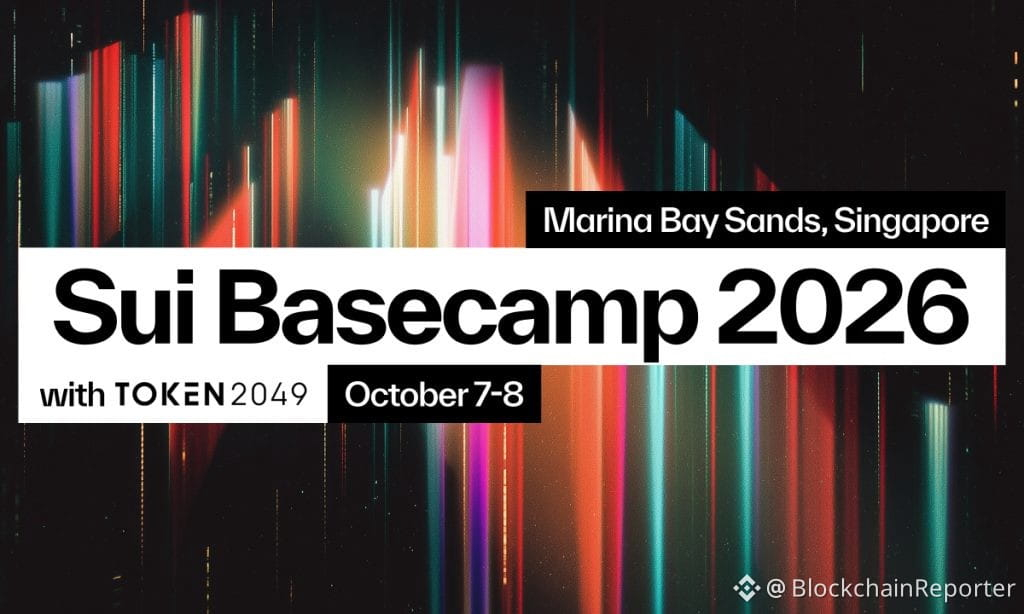
The Agentic Economy Takes Center Stage At Sui Basecamp 2026 in SingaporeSingapore, Singapore, August 27th, 2026, Chainwire
Two days at Marina Bay Sands in Singapore, on October 7-8, alongside TOKEN2049, with product reveals, leading voices in AI, and a live attempt at a sustained TPS record.
The Sui community worldwide is invited to Sui Basecamp 2026, held October 7-8 at Marina Bay Sands in Singapore alongside TOKEN2049. This year’s program centers on the agentic economy: instant settlement, autonomous payments, private transactions, stable digital dollars, and post-quantum security.
Sui Basecamp is the Sui ecosystem’s flagship annual gathering, bringing together the people building, investing in, and shaping what comes next on Sui. Over two days, founders, builders, developers, investors, traders, and industry leaders come together for product reveals, technical deep dives, hands-on demos, and direct conversations with the people pushing the technology forward. Top-tier speakers from inside and outside the Sui ecosystem will provide a peek into what’s coming next and offer a direct look at the infrastructure carrying finance onchain.
This year, one conversation will loom especially large: the rise of the agentic economy. The next $5 trillion in transactions won’t be human. Agentic finance needs rails that settle instantly, prove ownership and authorization, and keep transaction details private by default.
Hear From the Builders of the Agentic Future
What happens when you put a macro legend, the architects of Sui, an AI pioneer, a gaming visionary, and builders of the autonomous economy on the same stage? That’s just the beginning of the Sui Basecamp lineup:
Raoul Pal, Co-Founder and CEO of Real Vision, has spent his career mapping where capital moves next, and was early to the shift from traditional macro into digital assets.
Adeniyi Abiodun, Co-Founder and Chief Product Officer of Mysten Labs, is part of the team that came out of Meta’s Diem project that went on to build Sui and the infrastructure for the autonomous economy.
Kostas Chalkias, Co-Founder and Chief Cryptographer at Mysten Labs, works on the cryptographic foundations autonomous systems depend on, including Sui’s push toward post-quantum security. He also will lead the Main Stage speed test.
Hilmar Veigar Petursson, CEO of Fenris Creations and formerly CEO of CCP Games, spent more than two decades running one of software’s longest-lived player-driven economies. He is bringing that experience onchain through EVE Frontier.
Alex Mourfarek, Director of Inception at Google DeepMind, works at the intersection of frontier AI research and entrepreneurship, helping turn breakthrough ideas into ambitious new AI ventures.
Jen Zhu Scott, Co-Founder and CEO of Power Dynamics, is building the cooling and energy storage infrastructure that AI relies on to scale.
Brian Quintenez, Director of Sui Holdings Group and a former commissioner of the U.S. Commodity Futures Trading Commission, is an expert on public policy and regulatory frameworks in crypto.
Richard Socher, Co-Founder and CEO of Recursive and You.com, builds at the front edge of AI research and the evolution of intelligent software.
Explore the full Sui Basecamp 2026 speaker roster here, with more names to be added over the coming weeks.
A Live Record Attempt on the Main Stage
On October 7, live on the Main Stage, Mysten Labs Co-Founder and Chief Cryptographer Kostas Chalkias will push Sui to its absolute limit in a public, real-time speed test. The target is to break Sui’s standing record of 6,086,766 transactions per second (TPS), recorded earlier this year on July 4th.
Participate live from Marina Bay Sands or anywhere in the world: submit your TPS prediction to compete for first (10,000 SUI), second (5,000 SUI), and third-place (1,000 SUI) rewards. Details will be announced by @SuiNetwork on X.
High throughput shows how much room the network has under real load, which is exactly what an economy of agents will demand. The test is built to mirror those conditions. AI agents and users will transact across games, payments, and chat using programmable tunnels, producing the velocity expected when software transacts continuously and at machine speed.
To ensure total transparency, web3 security leader CertiK will serve as the independent auditor for the attempt. Every transaction will be logged in a cryptographic transcript for post-test verification and formal reconfirmation, providing proof that can be mathematically audited rather than simply observed.
Following the attempt, attendees are invited to join a celebration on-site.
Get Hands-On at Sui Basecamp
Sui Basecamp isn’t just about what happens on stage. In the AI Builder Lab, get hands-on with the latest AI tools, join sessions led by teams building at the intersection of AI and Sui, and learn how to build AI-powered applications and agents yourself. Then head to the Trading Arena to watch your favorite traders go head-to-head live on Hudi where you can watch their moves in real time. Whether you’re here to build,or try something new, Sui Basecamp is designed for active participation.
Sui Basecamp Brings Builders and Capital Together
Sui Basecamp is designed around what happens when the people building on Sui occupy the same space. This year, the people building the agentic financial stack across protocols, wallets, payments, data infrastructure, AI systems, institutions, and applications are converging on the same set of problems. Sui Basecamp puts them in one room for two days.
If you’re building at the intersection of technology and finance, investing in the machine to machine future, or trying to understand where the next generation of economic activity is headed, this is the room to be in.
“Economic activity is shifting from people clicking checkout buttons to agents transacting on their behalf, continuously and at machine speed,” said Adeniyi Abiodun, Co-Founder and Chief Product Officer of Mysten Labs, the original contributor to Sui. “That only works when intent, authorization, and settlement can each be proven onchain. Sui Basecamp is the one place where every layer of that stack is in the same room, so you leave understanding the whole picture instead of one piece of it.”
Sui Basecamp 2026 is sponsored by AlphaFi, EVE Frontier, and Walrus at the Diamond level, ONE Championship at Platinum, Slush at Gold, RedotPay at Silver, and Scallop, Anyflo, Merkle Science, and Sentio at Bronze.
How to Register
A standard pass covers both days, including all presentations, programming, workshops, expo areas, and official opening and evening events.
Lock in the discounted rate at luma.com/SuiBasecamp2026 and join us in Singapore on October 7-8. Build with us.
About Sui
Sui, where money moves as freely as messages, is a next-generation Layer 1 blockchain built for scalable finance and global payments. Founded by the core team behind Meta’s stablecoin initiative and powered by an object-centric model, Sui makes assets, permissions, and user data programmable and ownable. Sui’s primitives offer builders everything they need to create high-performance payments and financial applications, including instant agentic payments. Learn more at sui.io. Learn more about Sui Basecamp at sui.io/basecamp.
Contact
Sui Foundationmedia@sui.io
This article is not intended as financial advice. Educational purposes only.
The Agentic Economy Takes Center Stage At Sui Basecamp 2026 in Singapore
Singapore, Singapore, August 27th, 2026, Chainwire
Two days at Marina Bay Sands in Singapore, on October 7-8, alongside TOKEN2049, with product reveals, leading voices in AI, and a live attempt at a sustained TPS record.
The Sui community worldwide is invited to Sui Basecamp 2026, held October 7-8 at Marina Bay Sands in Singapore alongside TOKEN2049. This year’s program centers on the agentic economy: instant settlement, autonomous payments, private transactions, stable digital dollars, and post-quantum security.
Sui Basecamp is the Sui ecosystem’s flagship annual gathering, bringing together the people building, investing in, and shaping what comes next on Sui. Over two days, founders, builders, developers, investors, traders, and industry leaders come together for product reveals, technical deep dives, hands-on demos, and direct conversations with the people pushing the technology forward. Top-tier speakers from inside and outside the Sui ecosystem will provide a peek into what’s coming next and offer a direct look at the infrastructure carrying finance onchain.
This year, one conversation will loom especially large: the rise of the agentic economy. The next $5 trillion in transactions won’t be human. Agentic finance needs rails that settle instantly, prove ownership and authorization, and keep transaction details private by default.
Hear From the Builders of the Agentic Future
What happens when you put a macro legend, the architects of Sui, an AI pioneer, a gaming visionary, and builders of the autonomous economy on the same stage? That’s just the beginning of the Sui Basecamp lineup:
Raoul Pal, Co-Founder and CEO of Real Vision, has spent his career mapping where capital moves next, and was early to the shift from traditional macro into digital assets.
Adeniyi Abiodun, Co-Founder and Chief Product Officer of Mysten Labs, is part of the team that came out of Meta’s Diem project that went on to build Sui and the infrastructure for the autonomous economy.
Kostas Chalkias, Co-Founder and Chief Cryptographer at Mysten Labs, works on the cryptographic foundations autonomous systems depend on, including Sui’s push toward post-quantum security. He also will lead the Main Stage speed test.
Hilmar Veigar Petursson, CEO of Fenris Creations and formerly CEO of CCP Games, spent more than two decades running one of software’s longest-lived player-driven economies. He is bringing that experience onchain through EVE Frontier.
Alex Mourfarek, Director of Inception at Google DeepMind, works at the intersection of frontier AI research and entrepreneurship, helping turn breakthrough ideas into ambitious new AI ventures.
Jen Zhu Scott, Co-Founder and CEO of Power Dynamics, is building the cooling and energy storage infrastructure that AI relies on to scale.
Brian Quintenez, Director of Sui Holdings Group and a former commissioner of the U.S. Commodity Futures Trading Commission, is an expert on public policy and regulatory frameworks in crypto.
Richard Socher, Co-Founder and CEO of Recursive and You.com, builds at the front edge of AI research and the evolution of intelligent software.
Explore the full Sui Basecamp 2026 speaker roster here, with more names to be added over the coming weeks.
A Live Record Attempt on the Main Stage
On October 7, live on the Main Stage, Mysten Labs Co-Founder and Chief Cryptographer Kostas Chalkias will push Sui to its absolute limit in a public, real-time speed test. The target is to break Sui’s standing record of 6,086,766 transactions per second (TPS), recorded earlier this year on July 4th.
Participate live from Marina Bay Sands or anywhere in the world: submit your TPS prediction to compete for first (10,000 SUI), second (5,000 SUI), and third-place (1,000 SUI) rewards. Details will be announced by @SuiNetwork on X.
High throughput shows how much room the network has under real load, which is exactly what an economy of agents will demand. The test is built to mirror those conditions. AI agents and users will transact across games, payments, and chat using programmable tunnels, producing the velocity expected when software transacts continuously and at machine speed.
To ensure total transparency, web3 security leader CertiK will serve as the independent auditor for the attempt. Every transaction will be logged in a cryptographic transcript for post-test verification and formal reconfirmation, providing proof that can be mathematically audited rather than simply observed.
Following the attempt, attendees are invited to join a celebration on-site.
Get Hands-On at Sui Basecamp
Sui Basecamp isn’t just about what happens on stage. In the AI Builder Lab, get hands-on with the latest AI tools, join sessions led by teams building at the intersection of AI and Sui, and learn how to build AI-powered applications and agents yourself. Then head to the Trading Arena to watch your favorite traders go head-to-head live on Hudi where you can watch their moves in real time. Whether you’re here to build,or try something new, Sui Basecamp is designed for active participation.
Sui Basecamp Brings Builders and Capital Together
Sui Basecamp is designed around what happens when the people building on Sui occupy the same space. This year, the people building the agentic financial stack across protocols, wallets, payments, data infrastructure, AI systems, institutions, and applications are converging on the same set of problems. Sui Basecamp puts them in one room for two days.
If you’re building at the intersection of technology and finance, investing in the machine to machine future, or trying to understand where the next generation of economic activity is headed, this is the room to be in.
“Economic activity is shifting from people clicking checkout buttons to agents transacting on their behalf, continuously and at machine speed,” said Adeniyi Abiodun, Co-Founder and Chief Product Officer of Mysten Labs, the original contributor to Sui. “That only works when intent, authorization, and settlement can each be proven onchain. Sui Basecamp is the one place where every layer of that stack is in the same room, so you leave understanding the whole picture instead of one piece of it.”
Sui Basecamp 2026 is sponsored by AlphaFi, EVE Frontier, and Walrus at the Diamond level, ONE Championship at Platinum, Slush at Gold, RedotPay at Silver, and Scallop, Anyflo, Merkle Science, and Sentio at Bronze.
How to Register
A standard pass covers both days, including all presentations, programming, workshops, expo areas, and official opening and evening events.
Lock in the discounted rate at luma.com/SuiBasecamp2026 and join us in Singapore on October 7-8. Build with us.
About Sui
Sui, where money moves as freely as messages, is a next-generation Layer 1 blockchain built for scalable finance and global payments. Founded by the core team behind Meta’s stablecoin initiative and powered by an object-centric model, Sui makes assets, permissions, and user data programmable and ownable. Sui’s primitives offer builders everything they need to create high-performance payments and financial applications, including instant agentic payments. Learn more at sui.io. Learn more about Sui Basecamp at sui.io/basecamp.
Contact
Sui Foundationmedia@sui.io
This article is not intended as financial advice. Educational purposes only.
Two days at Marina Bay Sands in Singapore, on October 7-8, alongside TOKEN2049, with product reveals, leading voices in AI, and a live attempt at a sustained TPS record.
The Sui community worldwide is invited to Sui Basecamp 2026, held October 7-8 at Marina Bay Sands in Singapore alongside TOKEN2049. This year’s program centers on the agentic economy: instant settlement, autonomous payments, private transactions, stable digital dollars, and post-quantum security.
Sui Basecamp is the Sui ecosystem’s flagship annual gathering, bringing together the people building, investing in, and shaping what comes next on Sui. Over two days, founders, builders, developers, investors, traders, and industry leaders come together for product reveals, technical deep dives, hands-on demos, and direct conversations with the people pushing the technology forward. Top-tier speakers from inside and outside the Sui ecosystem will provide a peek into what’s coming next and offer a direct look at the infrastructure carrying finance onchain.
This year, one conversation will loom especially large: the rise of the agentic economy. The next $5 trillion in transactions won’t be human. Agentic finance needs rails that settle instantly, prove ownership and authorization, and keep transaction details private by default.
Hear From the Builders of the Agentic Future
What happens when you put a macro legend, the architects of Sui, an AI pioneer, a gaming visionary, and builders of the autonomous economy on the same stage? That’s just the beginning of the Sui Basecamp lineup:
Raoul Pal, Co-Founder and CEO of Real Vision, has spent his career mapping where capital moves next, and was early to the shift from traditional macro into digital assets.
Adeniyi Abiodun, Co-Founder and Chief Product Officer of Mysten Labs, is part of the team that came out of Meta’s Diem project that went on to build Sui and the infrastructure for the autonomous economy.
Kostas Chalkias, Co-Founder and Chief Cryptographer at Mysten Labs, works on the cryptographic foundations autonomous systems depend on, including Sui’s push toward post-quantum security. He also will lead the Main Stage speed test.
Hilmar Veigar Petursson, CEO of Fenris Creations and formerly CEO of CCP Games, spent more than two decades running one of software’s longest-lived player-driven economies. He is bringing that experience onchain through EVE Frontier.
Alex Mourfarek, Director of Inception at Google DeepMind, works at the intersection of frontier AI research and entrepreneurship, helping turn breakthrough ideas into ambitious new AI ventures.
Jen Zhu Scott, Co-Founder and CEO of Power Dynamics, is building the cooling and energy storage infrastructure that AI relies on to scale.
Brian Quintenez, Director of Sui Holdings Group and a former commissioner of the U.S. Commodity Futures Trading Commission, is an expert on public policy and regulatory frameworks in crypto.
Richard Socher, Co-Founder and CEO of Recursive and You.com, builds at the front edge of AI research and the evolution of intelligent software.
Explore the full Sui Basecamp 2026 speaker roster here, with more names to be added over the coming weeks.
A Live Record Attempt on the Main Stage
On October 7, live on the Main Stage, Mysten Labs Co-Founder and Chief Cryptographer Kostas Chalkias will push Sui to its absolute limit in a public, real-time speed test. The target is to break Sui’s standing record of 6,086,766 transactions per second (TPS), recorded earlier this year on July 4th.
Participate live from Marina Bay Sands or anywhere in the world: submit your TPS prediction to compete for first (10,000 SUI), second (5,000 SUI), and third-place (1,000 SUI) rewards. Details will be announced by @SuiNetwork on X.
High throughput shows how much room the network has under real load, which is exactly what an economy of agents will demand. The test is built to mirror those conditions. AI agents and users will transact across games, payments, and chat using programmable tunnels, producing the velocity expected when software transacts continuously and at machine speed.
To ensure total transparency, web3 security leader CertiK will serve as the independent auditor for the attempt. Every transaction will be logged in a cryptographic transcript for post-test verification and formal reconfirmation, providing proof that can be mathematically audited rather than simply observed.
Following the attempt, attendees are invited to join a celebration on-site.
Get Hands-On at Sui Basecamp
Sui Basecamp isn’t just about what happens on stage. In the AI Builder Lab, get hands-on with the latest AI tools, join sessions led by teams building at the intersection of AI and Sui, and learn how to build AI-powered applications and agents yourself. Then head to the Trading Arena to watch your favorite traders go head-to-head live on Hudi where you can watch their moves in real time. Whether you’re here to build,or try something new, Sui Basecamp is designed for active participation.
Sui Basecamp Brings Builders and Capital Together
Sui Basecamp is designed around what happens when the people building on Sui occupy the same space. This year, the people building the agentic financial stack across protocols, wallets, payments, data infrastructure, AI systems, institutions, and applications are converging on the same set of problems. Sui Basecamp puts them in one room for two days.
If you’re building at the intersection of technology and finance, investing in the machine to machine future, or trying to understand where the next generation of economic activity is headed, this is the room to be in.
“Economic activity is shifting from people clicking checkout buttons to agents transacting on their behalf, continuously and at machine speed,” said Adeniyi Abiodun, Co-Founder and Chief Product Officer of Mysten Labs, the original contributor to Sui. “That only works when intent, authorization, and settlement can each be proven onchain. Sui Basecamp is the one place where every layer of that stack is in the same room, so you leave understanding the whole picture instead of one piece of it.”
Sui Basecamp 2026 is sponsored by AlphaFi, EVE Frontier, and Walrus at the Diamond level, ONE Championship at Platinum, Slush at Gold, RedotPay at Silver, and Scallop, Anyflo, Merkle Science, and Sentio at Bronze.
How to Register
A standard pass covers both days, including all presentations, programming, workshops, expo areas, and official opening and evening events.
Lock in the discounted rate at luma.com/SuiBasecamp2026 and join us in Singapore on October 7-8. Build with us.
About Sui
Sui, where money moves as freely as messages, is a next-generation Layer 1 blockchain built for scalable finance and global payments. Founded by the core team behind Meta’s stablecoin initiative and powered by an object-centric model, Sui makes assets, permissions, and user data programmable and ownable. Sui’s primitives offer builders everything they need to create high-performance payments and financial applications, including instant agentic payments. Learn more at sui.io. Learn more about Sui Basecamp at sui.io/basecamp.
Contact
Sui Foundationmedia@sui.io
This article is not intended as financial advice. Educational purposes only.
458

Artículo
Nimiq Opens Second Mini Apps Competition After Strong DebutBerlin, Germany, August 27th, 2026, Chainwire
The second four-week app building competition offers $17,000 to developers, AI builders and indie hackers and over $50,000 in total prizes.
Nimiq is opening Cycle II of its popular Mini Apps Competition on Aug. 24, giving developers, AI builders and indie hackers four weeks to compete for $17,000 in prizes by building open-source applications for Nimiq Pay.
Cycle II runs through Sept. 18 and follows an inaugural round that attracted 62 Mini App submissions. It is the second of three competition cycles offering more than $50,000 in total prizes to builders creating applications through the Nimiq Pay Mini Apps Framework.
The framework allows developers to build and host their own lightweight web applications while using Nimiq Pay as the environment through which users access them. Nimiq Pay provides wallet functionality and payment rails, while builders retain control of their applications, infrastructure and intellectual property.
For builders, the model is designed to reduce some of the friction associated with conventional app distribution. Mini Apps can be made available to Nimiq Pay users without submission fees, platform commissions or revenue sharing, while payment functionality is available directly through Nimiq Pay.
Nimiq is beginning to roll out its renewed vision for the future of payments: an open framework that lets developers bring their own creations directly into its payment app.
“This is an ‘App Store moment’ for crypto payments,” said Max Burger, Executive Director at Nimiq. “Developers can ship extensions to Nimiq payment experience and put it in front of real users immediately, inside an app where it works with everything else, not in a silo.”
The Nimiq Pay Mini App Framework is designed to address some of the friction developers face after an app is built and traditionally submitted to iOS and Android app stores. Builders can make their apps available through Nimiq Pay without submission fees, platform commissions or revenue sharing, while retaining ownership of the applications they create.
Nimiq Pay also provides the wallet and payment functionality used by Mini Apps, reducing the amount of infrastructure builders need to create themselves before they can launch. That allows developers to spend more time on the product itself rather than setting up payment flows or adapting to a separate platform’s monetization requirements.
The competition is aimed at developers, AI-builders, vibe coders and indie hackers. Participants can use AI development tools throughout the build process, and eligible applications can include games, productivity tools, marketplaces, social experiences and other web apps.
Cycle II opens Aug. 24, giving builders four weeks to turn an idea into a working Mini App and put it in front of Nimiq Pay users. Developers, AI builders and indie hackers can register and access the Mini Apps Framework, competition rules and starter resources at miniappscompetition.com.
About Nimiq
Nimiq is an open-source technology project currently undergoing a broader strategic and structural evolution, including changes to its direction and the components that make up its ecosystem. As part of this next phase, Nimiq is turning its payment app into a platform: developers build Mini-Apps that extend what the app can do, and distribute them instantly to the Nimiq community — an open framework, immediate reach, and experiences that work together instead of living in silos.
Contact
Ricardo Barqueroinfo@nimiq.com
This article is not intended as financial advice. Educational purposes only.
Nimiq Opens Second Mini Apps Competition After Strong Debut
Berlin, Germany, August 27th, 2026, Chainwire
The second four-week app building competition offers $17,000 to developers, AI builders and indie hackers and over $50,000 in total prizes.
Nimiq is opening Cycle II of its popular Mini Apps Competition on Aug. 24, giving developers, AI builders and indie hackers four weeks to compete for $17,000 in prizes by building open-source applications for Nimiq Pay.
Cycle II runs through Sept. 18 and follows an inaugural round that attracted 62 Mini App submissions. It is the second of three competition cycles offering more than $50,000 in total prizes to builders creating applications through the Nimiq Pay Mini Apps Framework.
The framework allows developers to build and host their own lightweight web applications while using Nimiq Pay as the environment through which users access them. Nimiq Pay provides wallet functionality and payment rails, while builders retain control of their applications, infrastructure and intellectual property.
For builders, the model is designed to reduce some of the friction associated with conventional app distribution. Mini Apps can be made available to Nimiq Pay users without submission fees, platform commissions or revenue sharing, while payment functionality is available directly through Nimiq Pay.
Nimiq is beginning to roll out its renewed vision for the future of payments: an open framework that lets developers bring their own creations directly into its payment app.
“This is an ‘App Store moment’ for crypto payments,” said Max Burger, Executive Director at Nimiq. “Developers can ship extensions to Nimiq payment experience and put it in front of real users immediately, inside an app where it works with everything else, not in a silo.”
The Nimiq Pay Mini App Framework is designed to address some of the friction developers face after an app is built and traditionally submitted to iOS and Android app stores. Builders can make their apps available through Nimiq Pay without submission fees, platform commissions or revenue sharing, while retaining ownership of the applications they create.
Nimiq Pay also provides the wallet and payment functionality used by Mini Apps, reducing the amount of infrastructure builders need to create themselves before they can launch. That allows developers to spend more time on the product itself rather than setting up payment flows or adapting to a separate platform’s monetization requirements.
The competition is aimed at developers, AI-builders, vibe coders and indie hackers. Participants can use AI development tools throughout the build process, and eligible applications can include games, productivity tools, marketplaces, social experiences and other web apps.
Cycle II opens Aug. 24, giving builders four weeks to turn an idea into a working Mini App and put it in front of Nimiq Pay users. Developers, AI builders and indie hackers can register and access the Mini Apps Framework, competition rules and starter resources at miniappscompetition.com.
About Nimiq
Nimiq is an open-source technology project currently undergoing a broader strategic and structural evolution, including changes to its direction and the components that make up its ecosystem. As part of this next phase, Nimiq is turning its payment app into a platform: developers build Mini-Apps that extend what the app can do, and distribute them instantly to the Nimiq community — an open framework, immediate reach, and experiences that work together instead of living in silos.
Contact
Ricardo Barqueroinfo@nimiq.com
This article is not intended as financial advice. Educational purposes only.
The second four-week app building competition offers $17,000 to developers, AI builders and indie hackers and over $50,000 in total prizes.
Nimiq is opening Cycle II of its popular Mini Apps Competition on Aug. 24, giving developers, AI builders and indie hackers four weeks to compete for $17,000 in prizes by building open-source applications for Nimiq Pay.
Cycle II runs through Sept. 18 and follows an inaugural round that attracted 62 Mini App submissions. It is the second of three competition cycles offering more than $50,000 in total prizes to builders creating applications through the Nimiq Pay Mini Apps Framework.
The framework allows developers to build and host their own lightweight web applications while using Nimiq Pay as the environment through which users access them. Nimiq Pay provides wallet functionality and payment rails, while builders retain control of their applications, infrastructure and intellectual property.
For builders, the model is designed to reduce some of the friction associated with conventional app distribution. Mini Apps can be made available to Nimiq Pay users without submission fees, platform commissions or revenue sharing, while payment functionality is available directly through Nimiq Pay.
Nimiq is beginning to roll out its renewed vision for the future of payments: an open framework that lets developers bring their own creations directly into its payment app.
“This is an ‘App Store moment’ for crypto payments,” said Max Burger, Executive Director at Nimiq. “Developers can ship extensions to Nimiq payment experience and put it in front of real users immediately, inside an app where it works with everything else, not in a silo.”
The Nimiq Pay Mini App Framework is designed to address some of the friction developers face after an app is built and traditionally submitted to iOS and Android app stores. Builders can make their apps available through Nimiq Pay without submission fees, platform commissions or revenue sharing, while retaining ownership of the applications they create.
Nimiq Pay also provides the wallet and payment functionality used by Mini Apps, reducing the amount of infrastructure builders need to create themselves before they can launch. That allows developers to spend more time on the product itself rather than setting up payment flows or adapting to a separate platform’s monetization requirements.
The competition is aimed at developers, AI-builders, vibe coders and indie hackers. Participants can use AI development tools throughout the build process, and eligible applications can include games, productivity tools, marketplaces, social experiences and other web apps.
Cycle II opens Aug. 24, giving builders four weeks to turn an idea into a working Mini App and put it in front of Nimiq Pay users. Developers, AI builders and indie hackers can register and access the Mini Apps Framework, competition rules and starter resources at miniappscompetition.com.
About Nimiq
Nimiq is an open-source technology project currently undergoing a broader strategic and structural evolution, including changes to its direction and the components that make up its ecosystem. As part of this next phase, Nimiq is turning its payment app into a platform: developers build Mini-Apps that extend what the app can do, and distribute them instantly to the Nimiq community — an open framework, immediate reach, and experiences that work together instead of living in silos.
Contact
Ricardo Barqueroinfo@nimiq.com
This article is not intended as financial advice. Educational purposes only.
1
84

Artículo
AnyBOUND and JTB Launch Travel Reward and VIP Retreat Services for Crypto ProjectsTokyo, Japan, August 27th, 2026, Chainwire
Helping crypto exchanges, wallets, payment apps and token projects move beyond airdrops with real-world travel experiences
anyBOUND today announced the launch of its travel reward and VIP retreat services for crypto companies, enabling exchanges, wallets, payment apps and token projects to offer travel experiences as user rewards, loyalty incentives and VIP engagement programs. The service supports tailor-made retreats, VIP and KOL invitation trips, and reward travel programs not only in Japan, but also in destinations around the world through JTB’s global network.
Airdrops, token rewards, points, and cashback have defined user acquisition across the crypto industry. However, they have not solved the retention problem. Many projects invest heavily in incentive campaigns, only to see engagement decline once the rewards end.
Financial incentives can attract users, but they rarely create lasting loyalty on their own. Credit card companies, airlines, and financial services have long used travel benefits, dining access, and VIP experiences to build customer relationships that endure beyond campaigns, market swings, and competitive pressure.
anyBOUND brings this proven loyalty model to the crypto industry. Instead of limiting rewards to tokens or points, anyBOUND helps crypto companies turn digital incentives into real-world travel, dining and rare experiences that create lasting impressions.
anyBOUND is operated in partnership with JTB, Japan’s largest travel company, originally founded in 1912 as the Japan Tourist Bureau. JTB has an extensive domestic and global network, including 354 locations in Japan and 152 overseas locations across 81 cities in 36 countries, as well as relationships with more than 35,000 corporate clients. The group has deep experience in corporate travel, MICE, inbound travel and VIP hospitality, including high-level logistics and hospitality arrangements for diplomatic and state visits.
anyBOUND has already supported several crypto projects through retreat planning and user reward programs ahead of this public launch. With this announcement, anyBOUND is expanding its support for crypto user engagement through travel-based incentives and invitation programs.
What anyBOUND Offers
Travel Rewards for Campaigns and Loyalty Programs
Crypto exchanges, wallets and payment services can integrate anyBOUND’s travel products into their campaigns and incentive programs as prizes, benefits or premium user rewards.
Available options include fully arranged Japan travel packages covering accommodation, transportation and local experiences, as well as stays in historic Japanese castles, access to reservation-only restaurants and project-exclusive itineraries. The OMAKASE TRAVEL BOX — anyBOUND’s signature curated Japan experience package — is also available as a premium reward option. Programs can be tailored based on budget, destination, target users and campaign goals.
This allows partner companies to add travel — a reward category with lasting personal impact — to trading campaigns, loyalty programs, VIP user initiatives and KOL engagement programs.
Tailor-Made Retreats, VIP Trips and KOL Invitation Programs
anyBOUND designs custom retreats for crypto communities and invitation trips for VIP users, top token holders and KOLs in Japan and international destinations.
Programs can include travel for dozens of participants tied to conferences and networking events, retreats with workshops for groups of 100 or more, venue sourcing for meetups and community events, logistics planning and on-site operations.
The JTB Group handled more than 5,100 MICE projects in fiscal year 2025, with experience across large-scale conferences, corporate events and private gatherings. Leveraging this operational foundation, anyBOUND helps crypto projects strengthen brand experience, community loyalty and relationships with KOLs.
The service is not limited to Japan. Through JTB’s global network, anyBOUND can support international travel programs, VIP invitation trips, community retreats and conference-linked experiences in destinations around the world.
Example Use Cases
For crypto exchanges, wallets and payment services:
Add travel rewards to trading campaigns
Offer VIP invitation trips to high-value users
Add travel benefits to points, token or cashback programs
Create special experiences for partners and KOLs
For crypto projects, founders, growth leads and community teams:
Design token holder retreats in Japan or international destinations
Invite KOLs and ambassadors to curated travel experiences
Offer NFT or token-gated real-world rewards
Build post-airdrop community engagement through memorable experiences
Comment from anyBOUND
“We started this work quietly, supporting crypto projects with retreats and reward programs before making any public announcement,” said Yohei Shiobara, Founder & CEO at anyBOUND. “What we consistently heard was that financial incentives alone weren’t building the relationships these projects wanted with their communities. Through our work with JTB, anyBOUND is focused on changing that — turning on-chain activity into experiences people actually remember and talk about.”
Next Action
Crypto exchanges, wallets, payment services, token projects, and community operators interested in travel rewards, VIP retreats, KOL invitation trips, or on-chain rare experiences can contact anyBOUND at:
https://anybound.jp/contact-us
Whether:
Adding travel rewards to a campaign
Planning a VIP or KOL invitation trip
Designing a token holder retreat
Creating on-chain rare travel experiences and real-world rewards
About anyBOUND
anyBOUND is a platform for rare real-world experiences and curated travel programs. The platform designs and delivers unique travel experiences around the world from planning to fulfillment, offering tailor-made programs based on customer and partner needs. All offerings support on-chain tokenization and multiple payment methods, including crypto assets, stablecoins, and traditional card payments.
Website: https://anybound.jp
X: https://x.com/anyBOUND
Contact
anBOUND Teamcontact@anybound.jp
This article is not intended as financial advice. Educational purposes only.
AnyBOUND and JTB Launch Travel Reward and VIP Retreat Services for Crypto Projects
Tokyo, Japan, August 27th, 2026, Chainwire
Helping crypto exchanges, wallets, payment apps and token projects move beyond airdrops with real-world travel experiences
anyBOUND today announced the launch of its travel reward and VIP retreat services for crypto companies, enabling exchanges, wallets, payment apps and token projects to offer travel experiences as user rewards, loyalty incentives and VIP engagement programs. The service supports tailor-made retreats, VIP and KOL invitation trips, and reward travel programs not only in Japan, but also in destinations around the world through JTB’s global network.
Airdrops, token rewards, points, and cashback have defined user acquisition across the crypto industry. However, they have not solved the retention problem. Many projects invest heavily in incentive campaigns, only to see engagement decline once the rewards end.
Financial incentives can attract users, but they rarely create lasting loyalty on their own. Credit card companies, airlines, and financial services have long used travel benefits, dining access, and VIP experiences to build customer relationships that endure beyond campaigns, market swings, and competitive pressure.
anyBOUND brings this proven loyalty model to the crypto industry. Instead of limiting rewards to tokens or points, anyBOUND helps crypto companies turn digital incentives into real-world travel, dining and rare experiences that create lasting impressions.
anyBOUND is operated in partnership with JTB, Japan’s largest travel company, originally founded in 1912 as the Japan Tourist Bureau. JTB has an extensive domestic and global network, including 354 locations in Japan and 152 overseas locations across 81 cities in 36 countries, as well as relationships with more than 35,000 corporate clients. The group has deep experience in corporate travel, MICE, inbound travel and VIP hospitality, including high-level logistics and hospitality arrangements for diplomatic and state visits.
anyBOUND has already supported several crypto projects through retreat planning and user reward programs ahead of this public launch. With this announcement, anyBOUND is expanding its support for crypto user engagement through travel-based incentives and invitation programs.
What anyBOUND Offers
Travel Rewards for Campaigns and Loyalty Programs
Crypto exchanges, wallets and payment services can integrate anyBOUND’s travel products into their campaigns and incentive programs as prizes, benefits or premium user rewards.
Available options include fully arranged Japan travel packages covering accommodation, transportation and local experiences, as well as stays in historic Japanese castles, access to reservation-only restaurants and project-exclusive itineraries. The OMAKASE TRAVEL BOX — anyBOUND’s signature curated Japan experience package — is also available as a premium reward option. Programs can be tailored based on budget, destination, target users and campaign goals.
This allows partner companies to add travel — a reward category with lasting personal impact — to trading campaigns, loyalty programs, VIP user initiatives and KOL engagement programs.
Tailor-Made Retreats, VIP Trips and KOL Invitation Programs
anyBOUND designs custom retreats for crypto communities and invitation trips for VIP users, top token holders and KOLs in Japan and international destinations.
Programs can include travel for dozens of participants tied to conferences and networking events, retreats with workshops for groups of 100 or more, venue sourcing for meetups and community events, logistics planning and on-site operations.
The JTB Group handled more than 5,100 MICE projects in fiscal year 2025, with experience across large-scale conferences, corporate events and private gatherings. Leveraging this operational foundation, anyBOUND helps crypto projects strengthen brand experience, community loyalty and relationships with KOLs.
The service is not limited to Japan. Through JTB’s global network, anyBOUND can support international travel programs, VIP invitation trips, community retreats and conference-linked experiences in destinations around the world.
Example Use Cases
For crypto exchanges, wallets and payment services:
Add travel rewards to trading campaigns
Offer VIP invitation trips to high-value users
Add travel benefits to points, token or cashback programs
Create special experiences for partners and KOLs
For crypto projects, founders, growth leads and community teams:
Design token holder retreats in Japan or international destinations
Invite KOLs and ambassadors to curated travel experiences
Offer NFT or token-gated real-world rewards
Build post-airdrop community engagement through memorable experiences
Comment from anyBOUND
“We started this work quietly, supporting crypto projects with retreats and reward programs before making any public announcement,” said Yohei Shiobara, Founder & CEO at anyBOUND. “What we consistently heard was that financial incentives alone weren’t building the relationships these projects wanted with their communities. Through our work with JTB, anyBOUND is focused on changing that — turning on-chain activity into experiences people actually remember and talk about.”
Next Action
Crypto exchanges, wallets, payment services, token projects, and community operators interested in travel rewards, VIP retreats, KOL invitation trips, or on-chain rare experiences can contact anyBOUND at:
https://anybound.jp/contact-us
Whether:
Adding travel rewards to a campaign
Planning a VIP or KOL invitation trip
Designing a token holder retreat
Creating on-chain rare travel experiences and real-world rewards
About anyBOUND
anyBOUND is a platform for rare real-world experiences and curated travel programs. The platform designs and delivers unique travel experiences around the world from planning to fulfillment, offering tailor-made programs based on customer and partner needs. All offerings support on-chain tokenization and multiple payment methods, including crypto assets, stablecoins, and traditional card payments.
Website: https://anybound.jp
X: https://x.com/anyBOUND
Contact
anBOUND Teamcontact@anybound.jp
This article is not intended as financial advice. Educational purposes only.
Helping crypto exchanges, wallets, payment apps and token projects move beyond airdrops with real-world travel experiences
anyBOUND today announced the launch of its travel reward and VIP retreat services for crypto companies, enabling exchanges, wallets, payment apps and token projects to offer travel experiences as user rewards, loyalty incentives and VIP engagement programs. The service supports tailor-made retreats, VIP and KOL invitation trips, and reward travel programs not only in Japan, but also in destinations around the world through JTB’s global network.
Airdrops, token rewards, points, and cashback have defined user acquisition across the crypto industry. However, they have not solved the retention problem. Many projects invest heavily in incentive campaigns, only to see engagement decline once the rewards end.
Financial incentives can attract users, but they rarely create lasting loyalty on their own. Credit card companies, airlines, and financial services have long used travel benefits, dining access, and VIP experiences to build customer relationships that endure beyond campaigns, market swings, and competitive pressure.
anyBOUND brings this proven loyalty model to the crypto industry. Instead of limiting rewards to tokens or points, anyBOUND helps crypto companies turn digital incentives into real-world travel, dining and rare experiences that create lasting impressions.
anyBOUND is operated in partnership with JTB, Japan’s largest travel company, originally founded in 1912 as the Japan Tourist Bureau. JTB has an extensive domestic and global network, including 354 locations in Japan and 152 overseas locations across 81 cities in 36 countries, as well as relationships with more than 35,000 corporate clients. The group has deep experience in corporate travel, MICE, inbound travel and VIP hospitality, including high-level logistics and hospitality arrangements for diplomatic and state visits.
anyBOUND has already supported several crypto projects through retreat planning and user reward programs ahead of this public launch. With this announcement, anyBOUND is expanding its support for crypto user engagement through travel-based incentives and invitation programs.
What anyBOUND Offers
Travel Rewards for Campaigns and Loyalty Programs
Crypto exchanges, wallets and payment services can integrate anyBOUND’s travel products into their campaigns and incentive programs as prizes, benefits or premium user rewards.
Available options include fully arranged Japan travel packages covering accommodation, transportation and local experiences, as well as stays in historic Japanese castles, access to reservation-only restaurants and project-exclusive itineraries. The OMAKASE TRAVEL BOX — anyBOUND’s signature curated Japan experience package — is also available as a premium reward option. Programs can be tailored based on budget, destination, target users and campaign goals.
This allows partner companies to add travel — a reward category with lasting personal impact — to trading campaigns, loyalty programs, VIP user initiatives and KOL engagement programs.
Tailor-Made Retreats, VIP Trips and KOL Invitation Programs
anyBOUND designs custom retreats for crypto communities and invitation trips for VIP users, top token holders and KOLs in Japan and international destinations.
Programs can include travel for dozens of participants tied to conferences and networking events, retreats with workshops for groups of 100 or more, venue sourcing for meetups and community events, logistics planning and on-site operations.
The JTB Group handled more than 5,100 MICE projects in fiscal year 2025, with experience across large-scale conferences, corporate events and private gatherings. Leveraging this operational foundation, anyBOUND helps crypto projects strengthen brand experience, community loyalty and relationships with KOLs.
The service is not limited to Japan. Through JTB’s global network, anyBOUND can support international travel programs, VIP invitation trips, community retreats and conference-linked experiences in destinations around the world.
Example Use Cases
For crypto exchanges, wallets and payment services:
Add travel rewards to trading campaigns
Offer VIP invitation trips to high-value users
Add travel benefits to points, token or cashback programs
Create special experiences for partners and KOLs
For crypto projects, founders, growth leads and community teams:
Design token holder retreats in Japan or international destinations
Invite KOLs and ambassadors to curated travel experiences
Offer NFT or token-gated real-world rewards
Build post-airdrop community engagement through memorable experiences
Comment from anyBOUND
“We started this work quietly, supporting crypto projects with retreats and reward programs before making any public announcement,” said Yohei Shiobara, Founder & CEO at anyBOUND. “What we consistently heard was that financial incentives alone weren’t building the relationships these projects wanted with their communities. Through our work with JTB, anyBOUND is focused on changing that — turning on-chain activity into experiences people actually remember and talk about.”
Next Action
Crypto exchanges, wallets, payment services, token projects, and community operators interested in travel rewards, VIP retreats, KOL invitation trips, or on-chain rare experiences can contact anyBOUND at:
https://anybound.jp/contact-us
Whether:
Adding travel rewards to a campaign
Planning a VIP or KOL invitation trip
Designing a token holder retreat
Creating on-chain rare travel experiences and real-world rewards
About anyBOUND
anyBOUND is a platform for rare real-world experiences and curated travel programs. The platform designs and delivers unique travel experiences around the world from planning to fulfillment, offering tailor-made programs based on customer and partner needs. All offerings support on-chain tokenization and multiple payment methods, including crypto assets, stablecoins, and traditional card payments.
Website: https://anybound.jp
X: https://x.com/anyBOUND
Contact
anBOUND Teamcontact@anybound.jp
This article is not intended as financial advice. Educational purposes only.
249
Artículo
Umia Opens Onchain Auction for $UMIA, the First Token Launched Through Its Own PlatformNew York, New York, August 26th, 2026, Chainwire
Umia is a full-stack platform for launching, structuring, and governing projects onchain, where treasuries are non-custodial and board decisions are priced in markets.
Umia, the new venture creation platform on the EVM, has opened the token auction for $UMIA, its own token and the first launched through its system. The early-bid window is now live, and a public round opens to everyone from 29 August to 2 September, on Base via umia.finance.
The platform’s main goal is to bring to life a framework that makes tokens real financial primitives: in many crypto projects, equity holds direct control over the revenue and IP, while the token sits onchain with no defined connection to either. Instead, every project launched through Umia (including Umia itself) is structured as a Sub Company within a Cayman Segregated Portfolio Company built on the MetaLex BORG framework. This allows the IP, operating team, and treasury to sit under one structure, removing the need for a foundation, DAO, or labs split. $UMIA is the first token issued on the platform; its treasury and governance run through decision markets.
In decision markets, board-level choices are priced rather than voted on: markets estimate the project’s value under each option, and a proposal executes only if the market values the project higher with it than without it. Markets can also be multi-option, weighing which chains to deploy on or which budget to adopt, and the $UMIA auction proceeds flow directly to the non-custodial treasury these markets govern.
The sale runs on Umia’s native auction protocol, which builds on Uniswap’s Continuous Clearing Auction design. Bidders submit a budget and a maximum price; all bids clearing at a given moment pay the same price, and unspent budget is refunded. The early-bid window is gated by zkTLS eligibility proofs generated through the Umia browser extension, and will be reserved for onchain builders, capital allocators, and futarchy traders. Once the early-bid window finishes, the public round opens to everyone. Bidding is denominated in USDC, with card deposits supported via Privy. Trading begins at auction close with protocol-owned liquidity on Uniswap v4.
$UMIA has a total supply of 50 million tokens. Of these, 40 million are allocated at launch, while the remaining 10 million form a performance reserve that unlocks only if milestones are met. From day one, 61% of the 40 million is in circulation. This covers the 17.3 million tokens sold in the Tailored Auction, which carry no lockup, and the treasury, liquidity, and incentive allocations held by the protocol. Allocations to backers (10.15 million), service providers (3 million), and the team (2.5 million) make up the rest and vest over 36 months after a 12-month cliff.
Francesco Mosterts, CEO of Umia: “Serious ventures have never had a framework to launch a token aligned with their project. With Umia, the legal structure, the treasury, and the markets that govern it are a single system, and we are putting our own token through it first.”
The first external projects are expected to begin launching through Umia in September, subject to completion of onboarding and legal review.
About Umia
Umia is a full-stack platform for launching, supporting, and governing projects onchain. Each project launched through Umia operates within a single legal wrapper, with its intellectual property, operating team, and treasury under one structure and board-level decisions delegated to onchain decision markets. Umia is incubated by Chainbound. Users can learn more at umia.finance, https://www.umia.finance/docs, x.com/umia_finance
Contact
Umia Media Relationshello@umia.finance
This article is not intended as financial advice. Educational purposes only.
Umia Opens Onchain Auction for $UMIA, the First Token Launched Through Its Own Platform
New York, New York, August 26th, 2026, Chainwire
Umia is a full-stack platform for launching, structuring, and governing projects onchain, where treasuries are non-custodial and board decisions are priced in markets.
Umia, the new venture creation platform on the EVM, has opened the token auction for $UMIA, its own token and the first launched through its system. The early-bid window is now live, and a public round opens to everyone from 29 August to 2 September, on Base via umia.finance.
The platform’s main goal is to bring to life a framework that makes tokens real financial primitives: in many crypto projects, equity holds direct control over the revenue and IP, while the token sits onchain with no defined connection to either. Instead, every project launched through Umia (including Umia itself) is structured as a Sub Company within a Cayman Segregated Portfolio Company built on the MetaLex BORG framework. This allows the IP, operating team, and treasury to sit under one structure, removing the need for a foundation, DAO, or labs split. $UMIA is the first token issued on the platform; its treasury and governance run through decision markets.
In decision markets, board-level choices are priced rather than voted on: markets estimate the project’s value under each option, and a proposal executes only if the market values the project higher with it than without it. Markets can also be multi-option, weighing which chains to deploy on or which budget to adopt, and the $UMIA auction proceeds flow directly to the non-custodial treasury these markets govern.
The sale runs on Umia’s native auction protocol, which builds on Uniswap’s Continuous Clearing Auction design. Bidders submit a budget and a maximum price; all bids clearing at a given moment pay the same price, and unspent budget is refunded. The early-bid window is gated by zkTLS eligibility proofs generated through the Umia browser extension, and will be reserved for onchain builders, capital allocators, and futarchy traders. Once the early-bid window finishes, the public round opens to everyone. Bidding is denominated in USDC, with card deposits supported via Privy. Trading begins at auction close with protocol-owned liquidity on Uniswap v4.
$UMIA has a total supply of 50 million tokens. Of these, 40 million are allocated at launch, while the remaining 10 million form a performance reserve that unlocks only if milestones are met. From day one, 61% of the 40 million is in circulation. This covers the 17.3 million tokens sold in the Tailored Auction, which carry no lockup, and the treasury, liquidity, and incentive allocations held by the protocol. Allocations to backers (10.15 million), service providers (3 million), and the team (2.5 million) make up the rest and vest over 36 months after a 12-month cliff.
Francesco Mosterts, CEO of Umia: “Serious ventures have never had a framework to launch a token aligned with their project. With Umia, the legal structure, the treasury, and the markets that govern it are a single system, and we are putting our own token through it first.”
The first external projects are expected to begin launching through Umia in September, subject to completion of onboarding and legal review.
About Umia
Umia is a full-stack platform for launching, supporting, and governing projects onchain. Each project launched through Umia operates within a single legal wrapper, with its intellectual property, operating team, and treasury under one structure and board-level decisions delegated to onchain decision markets. Umia is incubated by Chainbound. Users can learn more at umia.finance, https://www.umia.finance/docs, x.com/umia_finance
Contact
Umia Media Relationshello@umia.finance
This article is not intended as financial advice. Educational purposes only.
Umia is a full-stack platform for launching, structuring, and governing projects onchain, where treasuries are non-custodial and board decisions are priced in markets.
Umia, the new venture creation platform on the EVM, has opened the token auction for $UMIA, its own token and the first launched through its system. The early-bid window is now live, and a public round opens to everyone from 29 August to 2 September, on Base via umia.finance.
The platform’s main goal is to bring to life a framework that makes tokens real financial primitives: in many crypto projects, equity holds direct control over the revenue and IP, while the token sits onchain with no defined connection to either. Instead, every project launched through Umia (including Umia itself) is structured as a Sub Company within a Cayman Segregated Portfolio Company built on the MetaLex BORG framework. This allows the IP, operating team, and treasury to sit under one structure, removing the need for a foundation, DAO, or labs split. $UMIA is the first token issued on the platform; its treasury and governance run through decision markets.
In decision markets, board-level choices are priced rather than voted on: markets estimate the project’s value under each option, and a proposal executes only if the market values the project higher with it than without it. Markets can also be multi-option, weighing which chains to deploy on or which budget to adopt, and the $UMIA auction proceeds flow directly to the non-custodial treasury these markets govern.
The sale runs on Umia’s native auction protocol, which builds on Uniswap’s Continuous Clearing Auction design. Bidders submit a budget and a maximum price; all bids clearing at a given moment pay the same price, and unspent budget is refunded. The early-bid window is gated by zkTLS eligibility proofs generated through the Umia browser extension, and will be reserved for onchain builders, capital allocators, and futarchy traders. Once the early-bid window finishes, the public round opens to everyone. Bidding is denominated in USDC, with card deposits supported via Privy. Trading begins at auction close with protocol-owned liquidity on Uniswap v4.
$UMIA has a total supply of 50 million tokens. Of these, 40 million are allocated at launch, while the remaining 10 million form a performance reserve that unlocks only if milestones are met. From day one, 61% of the 40 million is in circulation. This covers the 17.3 million tokens sold in the Tailored Auction, which carry no lockup, and the treasury, liquidity, and incentive allocations held by the protocol. Allocations to backers (10.15 million), service providers (3 million), and the team (2.5 million) make up the rest and vest over 36 months after a 12-month cliff.
Francesco Mosterts, CEO of Umia: “Serious ventures have never had a framework to launch a token aligned with their project. With Umia, the legal structure, the treasury, and the markets that govern it are a single system, and we are putting our own token through it first.”
The first external projects are expected to begin launching through Umia in September, subject to completion of onboarding and legal review.
About Umia
Umia is a full-stack platform for launching, supporting, and governing projects onchain. Each project launched through Umia operates within a single legal wrapper, with its intellectual property, operating team, and treasury under one structure and board-level decisions delegated to onchain decision markets. Umia is incubated by Chainbound. Users can learn more at umia.finance, https://www.umia.finance/docs, x.com/umia_finance
Contact
Umia Media Relationshello@umia.finance
This article is not intended as financial advice. Educational purposes only.
126
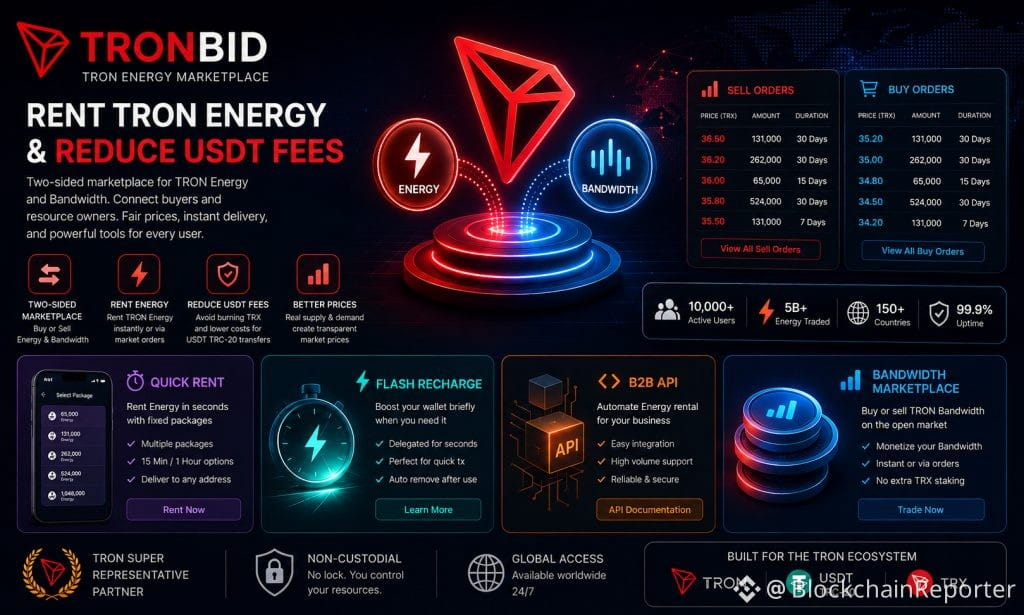
Artículo
Rent TRON Energy and Reduce USDT Fees : TronBid Expands MarketplaceBerlin, Germany, August 26th, 2026, Chainwire
TronBid expands its two-sided TRON resource marketplace, giving users new ways to rent Energy, trade Energy and Bandwidth, and reduce USDT fees for TRC-20 transactions.
TronBid, a peer-to-peer marketplace for TRON network resources, has expanded its platform with new tools for users looking to rent TRON Energy, manage transaction costs and access network resources without maintaining large amounts of staked TRX.
The platform now operates as a two-sided marketplace where both buyers and sellers can create orders for TRON Energy and Bandwidth.
Understanding TRON Energy Usage
TRON uses Energy and Bandwidth as its primary network resources. Energy is required for smart-contract computation, including USDT TRC-20 transfers.
When a wallet does not have sufficient Energy, TRX may be consumed to cover the resources required by the transaction. This has created demand for users and businesses to rent Energy instead.
By receiving temporary Energy delegated from another account, users can perform eligible TRON transactions without maintaining enough staked TRX for their maximum resource requirements.
For businesses processing frequent TRC-20 transactions, choosing to rent TRON Energy can therefore provide another way to manage network costs and reduce USDT fees.
A Two-Sided Marketplace for Energy
Unlike platforms where rental conditions are determined entirely by the provider, TronBid allows both sides of the market to create orders.
Buyers can create BUY orders specifying the amount of Energy required, rental duration and price they are willing to pay.
Sellers can create SELL offers with their own amount, price and rental period. Buyers can purchase all or part of these offers directly.
For example, if a seller offers 600,000 Energy, one buyer can rent 350,000 Energy, leaving the remaining amount available for other buyers.
Creating a SELL offer does not reserve the seller’s Energy. If resources become unavailable because they are being used elsewhere, recurring offers can automatically pause and become active again when sufficient Energy returns.
This allows sellers to participate in the TronBid marketplace while continuing to manage their resources elsewhere.
Rent Energy Without Waiting for the Marketplace
For users who need resources immediately, TronBid also provides Quick Rent with predefined Energy packages and short rental periods.
Energy can be delivered directly to any specified TRON address, even when payment is made from another wallet.
TronBid has also introduced Flash Recharge, an alternative designed for wallets that already maintain their own Energy capacity but need to manage consumed resources.
Energy and Bandwidth Trading
TronBid’s marketplace supports both Energy and Bandwidth, allowing holders of staked TRX to monetize the network resources their stake generates.
This creates two sides of the ecosystem: users who need to rent TRON Energy or Bandwidth and resource owners looking to make unused capacity available to the market.
By allowing both buyers and sellers to determine their own terms, TronBid aims to create more transparent price discovery based on actual supply and demand.
B2B API to Reduce USDT Fees at Scale
TronBid also provides a B2B Quick Rent API for exchanges, payment processors, wallets, OTC services and other businesses processing frequent TRON transactions.
Businesses can maintain a prepaid balance and automatically request Energy for specified TRON addresses before executing transactions.
Instead of manually renting resources for every transfer, companies can integrate Energy rental directly into their transaction infrastructure.
For businesses handling large numbers of USDT TRC-20 transfers, this can make it easier to rent Energy automatically and manage the network-resource component of transaction costs.
TronBid Becomes a TRON SR Partner
Alongside the expansion of its marketplace, TronBid has become a TRON Super Representative Partner, adding the project to TRON’s delegated proof-of-stake governance ecosystem.
The development strengthens TronBid’s connection with the underlying TRON ecosystem while the platform continues building infrastructure around Energy and Bandwidth.
About TronBid
TronBid is a peer-to-peer marketplace for TRON Energy and Bandwidth. Buyers can rent TRON Energy, create BUY orders or purchase existing seller offers, while resource owners can create SELL offers with their own prices and rental periods.
The platform also provides Quick Rent, Flash Recharge and a B2B API for businesses looking to automate Energy rental and reduce USDT fees for TRC-20 transactions.
More information: https://tronbid.com
Contact
Petr Stolisupport@tronbid.com
This article is not intended as financial advice. Educational purposes only.
Rent TRON Energy and Reduce USDT Fees : TronBid Expands Marketplace
Berlin, Germany, August 26th, 2026, Chainwire
TronBid expands its two-sided TRON resource marketplace, giving users new ways to rent Energy, trade Energy and Bandwidth, and reduce USDT fees for TRC-20 transactions.
TronBid, a peer-to-peer marketplace for TRON network resources, has expanded its platform with new tools for users looking to rent TRON Energy, manage transaction costs and access network resources without maintaining large amounts of staked TRX.
The platform now operates as a two-sided marketplace where both buyers and sellers can create orders for TRON Energy and Bandwidth.
Understanding TRON Energy Usage
TRON uses Energy and Bandwidth as its primary network resources. Energy is required for smart-contract computation, including USDT TRC-20 transfers.
When a wallet does not have sufficient Energy, TRX may be consumed to cover the resources required by the transaction. This has created demand for users and businesses to rent Energy instead.
By receiving temporary Energy delegated from another account, users can perform eligible TRON transactions without maintaining enough staked TRX for their maximum resource requirements.
For businesses processing frequent TRC-20 transactions, choosing to rent TRON Energy can therefore provide another way to manage network costs and reduce USDT fees.
A Two-Sided Marketplace for Energy
Unlike platforms where rental conditions are determined entirely by the provider, TronBid allows both sides of the market to create orders.
Buyers can create BUY orders specifying the amount of Energy required, rental duration and price they are willing to pay.
Sellers can create SELL offers with their own amount, price and rental period. Buyers can purchase all or part of these offers directly.
For example, if a seller offers 600,000 Energy, one buyer can rent 350,000 Energy, leaving the remaining amount available for other buyers.
Creating a SELL offer does not reserve the seller’s Energy. If resources become unavailable because they are being used elsewhere, recurring offers can automatically pause and become active again when sufficient Energy returns.
This allows sellers to participate in the TronBid marketplace while continuing to manage their resources elsewhere.
Rent Energy Without Waiting for the Marketplace
For users who need resources immediately, TronBid also provides Quick Rent with predefined Energy packages and short rental periods.
Energy can be delivered directly to any specified TRON address, even when payment is made from another wallet.
TronBid has also introduced Flash Recharge, an alternative designed for wallets that already maintain their own Energy capacity but need to manage consumed resources.
Energy and Bandwidth Trading
TronBid’s marketplace supports both Energy and Bandwidth, allowing holders of staked TRX to monetize the network resources their stake generates.
This creates two sides of the ecosystem: users who need to rent TRON Energy or Bandwidth and resource owners looking to make unused capacity available to the market.
By allowing both buyers and sellers to determine their own terms, TronBid aims to create more transparent price discovery based on actual supply and demand.
B2B API to Reduce USDT Fees at Scale
TronBid also provides a B2B Quick Rent API for exchanges, payment processors, wallets, OTC services and other businesses processing frequent TRON transactions.
Businesses can maintain a prepaid balance and automatically request Energy for specified TRON addresses before executing transactions.
Instead of manually renting resources for every transfer, companies can integrate Energy rental directly into their transaction infrastructure.
For businesses handling large numbers of USDT TRC-20 transfers, this can make it easier to rent Energy automatically and manage the network-resource component of transaction costs.
TronBid Becomes a TRON SR Partner
Alongside the expansion of its marketplace, TronBid has become a TRON Super Representative Partner, adding the project to TRON’s delegated proof-of-stake governance ecosystem.
The development strengthens TronBid’s connection with the underlying TRON ecosystem while the platform continues building infrastructure around Energy and Bandwidth.
About TronBid
TronBid is a peer-to-peer marketplace for TRON Energy and Bandwidth. Buyers can rent TRON Energy, create BUY orders or purchase existing seller offers, while resource owners can create SELL offers with their own prices and rental periods.
The platform also provides Quick Rent, Flash Recharge and a B2B API for businesses looking to automate Energy rental and reduce USDT fees for TRC-20 transactions.
More information: https://tronbid.com
Contact
Petr Stolisupport@tronbid.com
This article is not intended as financial advice. Educational purposes only.
TronBid expands its two-sided TRON resource marketplace, giving users new ways to rent Energy, trade Energy and Bandwidth, and reduce USDT fees for TRC-20 transactions.
TronBid, a peer-to-peer marketplace for TRON network resources, has expanded its platform with new tools for users looking to rent TRON Energy, manage transaction costs and access network resources without maintaining large amounts of staked TRX.
The platform now operates as a two-sided marketplace where both buyers and sellers can create orders for TRON Energy and Bandwidth.
Understanding TRON Energy Usage
TRON uses Energy and Bandwidth as its primary network resources. Energy is required for smart-contract computation, including USDT TRC-20 transfers.
When a wallet does not have sufficient Energy, TRX may be consumed to cover the resources required by the transaction. This has created demand for users and businesses to rent Energy instead.
By receiving temporary Energy delegated from another account, users can perform eligible TRON transactions without maintaining enough staked TRX for their maximum resource requirements.
For businesses processing frequent TRC-20 transactions, choosing to rent TRON Energy can therefore provide another way to manage network costs and reduce USDT fees.
A Two-Sided Marketplace for Energy
Unlike platforms where rental conditions are determined entirely by the provider, TronBid allows both sides of the market to create orders.
Buyers can create BUY orders specifying the amount of Energy required, rental duration and price they are willing to pay.
Sellers can create SELL offers with their own amount, price and rental period. Buyers can purchase all or part of these offers directly.
For example, if a seller offers 600,000 Energy, one buyer can rent 350,000 Energy, leaving the remaining amount available for other buyers.
Creating a SELL offer does not reserve the seller’s Energy. If resources become unavailable because they are being used elsewhere, recurring offers can automatically pause and become active again when sufficient Energy returns.
This allows sellers to participate in the TronBid marketplace while continuing to manage their resources elsewhere.
Rent Energy Without Waiting for the Marketplace
For users who need resources immediately, TronBid also provides Quick Rent with predefined Energy packages and short rental periods.
Energy can be delivered directly to any specified TRON address, even when payment is made from another wallet.
TronBid has also introduced Flash Recharge, an alternative designed for wallets that already maintain their own Energy capacity but need to manage consumed resources.
Energy and Bandwidth Trading
TronBid’s marketplace supports both Energy and Bandwidth, allowing holders of staked TRX to monetize the network resources their stake generates.
This creates two sides of the ecosystem: users who need to rent TRON Energy or Bandwidth and resource owners looking to make unused capacity available to the market.
By allowing both buyers and sellers to determine their own terms, TronBid aims to create more transparent price discovery based on actual supply and demand.
B2B API to Reduce USDT Fees at Scale
TronBid also provides a B2B Quick Rent API for exchanges, payment processors, wallets, OTC services and other businesses processing frequent TRON transactions.
Businesses can maintain a prepaid balance and automatically request Energy for specified TRON addresses before executing transactions.
Instead of manually renting resources for every transfer, companies can integrate Energy rental directly into their transaction infrastructure.
For businesses handling large numbers of USDT TRC-20 transfers, this can make it easier to rent Energy automatically and manage the network-resource component of transaction costs.
TronBid Becomes a TRON SR Partner
Alongside the expansion of its marketplace, TronBid has become a TRON Super Representative Partner, adding the project to TRON’s delegated proof-of-stake governance ecosystem.
The development strengthens TronBid’s connection with the underlying TRON ecosystem while the platform continues building infrastructure around Energy and Bandwidth.
About TronBid
TronBid is a peer-to-peer marketplace for TRON Energy and Bandwidth. Buyers can rent TRON Energy, create BUY orders or purchase existing seller offers, while resource owners can create SELL offers with their own prices and rental periods.
The platform also provides Quick Rent, Flash Recharge and a B2B API for businesses looking to automate Energy rental and reduce USDT fees for TRC-20 transactions.
More information: https://tronbid.com
Contact
Petr Stolisupport@tronbid.com
This article is not intended as financial advice. Educational purposes only.
130
US Treasury Names Crypto Processor in Iran Sanctions SweepThe US Treasury has put a name and a dollar figure on the digital-asset plumbing behind Iranian oil sales. Ivan Obukhov allegedly processed more than $100 million in crypto for IRGC-QF oil sales since 2023, according to the original report. The designation lands as Washington expands the crackdown beyond crypto to gold, shipping, and technology networks.
The action targets an operational role, not just a wallet. By naming Obukhov, Treasury is treating crypto processors as financial intermediaries rather than neutral infrastructure. That distinction will matter for exchanges, custodians, bridge operators, and any platform that settles cross-border value.
A Broader Enforcement Net
This designation fits into a wider campaign against Iran’s Islamic Revolutionary Guard Corps Quds Force. The group has long relied on layered networks of brokers, shipping providers, and intermediaries to move oil revenue. Adding a crypto processor to that list signals that US authorities view digital assets as a core part of the evasion stack, not a peripheral experiment.
The $100 million figure is significant because it gives investigators and compliance teams a concrete benchmark. Processing that volume since 2023 would likely require access to multiple off-ramps, exchange accounts, or over-the-counter desks. Those counterparties now face a practical question: whether their screening systems flagged the associated addresses before Treasury did.
For US-based platforms, the legal exposure is direct. For foreign institutions, the more immediate pressure comes from secondary sanctions risk. Compliance teams are already screening addresses linked to OFAC designations, even as banks and lawmakers clash over the future shape of US crypto rules. That fight is playing out at the exact moment enforcement agencies are widening their use of sanctions powers, as seen in the debate over Banks Are Trying to Kill the Biggest Crypto Bill in US History Four Days Before the Senate Vote.
Why the Timing Matters
Expanding the crackdown to gold, shipping, and technology suggests Treasury no longer separates crypto from older sanctions-evasion channels. Instead, digital assets are being treated as one transport layer among several. If that framing sticks, the enforcement focus will shift toward the gatekeepers that convert crypto into usable liquidity.
The move also comes as more traditional assets move on-chain. Institutional tokenization has accelerated, bringing clearer audit trails but also more complex compliance obligations. The same infrastructure that makes tokenized assets attractive can give regulators a richer map of counterparty relationships. For participants watching the Weekly Tokenization Roundup: Bullish Buys Equiniti for $4.2B, Ondo Settles With JPMorgan, RWA Crosses $20B, enforcement visibility is becoming a baseline expectation rather than an afterthought.
Tracing firms and compliance vendors now have a named target to map. High-activity chains remain the primary field for that work, since the transaction volume that attracts developers also produces more data for investigators. The ongoing review of Top 10 Blockchains by Developer Activity This Week illustrates how much on-chain activity is now visible to outside observers.
What Remains Uncertain
The Treasury statement does not identify which blockchains or assets Obukhov used, nor does it detail the specific off-ramps. That leaves counterparties guessing about their exposure. Sanctions screening can be blunt, and misattributed addresses remain a known failure mode. Funds that have passed through mixers or cross-chain bridges are even harder to trace back to a single actor.
The deeper question is whether naming facilitators deters the activity or simply pushes it further into less transparent venues. Historically, sanctions pressure displaces flows rather than eliminating them. The practical market response will likely be more aggressive transaction monitoring, closer review of counterparties in loosely supervised jurisdictions, and a fresh round of risk assessments at exchanges that touch large cross-border volumes.
Treasury has shown that it will name individuals behind crypto processing networks, not just the wallets they control. The missing details may be just as important as the designation itself.
US Treasury Names Crypto Processor in Iran Sanctions Sweep
The US Treasury has put a name and a dollar figure on the digital-asset plumbing behind Iranian oil sales. Ivan Obukhov allegedly processed more than $100 million in crypto for IRGC-QF oil sales since 2023, according to the original report. The designation lands as Washington expands the crackdown beyond crypto to gold, shipping, and technology networks.
The action targets an operational role, not just a wallet. By naming Obukhov, Treasury is treating crypto processors as financial intermediaries rather than neutral infrastructure. That distinction will matter for exchanges, custodians, bridge operators, and any platform that settles cross-border value.
A Broader Enforcement Net
This designation fits into a wider campaign against Iran’s Islamic Revolutionary Guard Corps Quds Force. The group has long relied on layered networks of brokers, shipping providers, and intermediaries to move oil revenue. Adding a crypto processor to that list signals that US authorities view digital assets as a core part of the evasion stack, not a peripheral experiment.
The $100 million figure is significant because it gives investigators and compliance teams a concrete benchmark. Processing that volume since 2023 would likely require access to multiple off-ramps, exchange accounts, or over-the-counter desks. Those counterparties now face a practical question: whether their screening systems flagged the associated addresses before Treasury did.
For US-based platforms, the legal exposure is direct. For foreign institutions, the more immediate pressure comes from secondary sanctions risk. Compliance teams are already screening addresses linked to OFAC designations, even as banks and lawmakers clash over the future shape of US crypto rules. That fight is playing out at the exact moment enforcement agencies are widening their use of sanctions powers, as seen in the debate over Banks Are Trying to Kill the Biggest Crypto Bill in US History Four Days Before the Senate Vote.
Why the Timing Matters
Expanding the crackdown to gold, shipping, and technology suggests Treasury no longer separates crypto from older sanctions-evasion channels. Instead, digital assets are being treated as one transport layer among several. If that framing sticks, the enforcement focus will shift toward the gatekeepers that convert crypto into usable liquidity.
The move also comes as more traditional assets move on-chain. Institutional tokenization has accelerated, bringing clearer audit trails but also more complex compliance obligations. The same infrastructure that makes tokenized assets attractive can give regulators a richer map of counterparty relationships. For participants watching the Weekly Tokenization Roundup: Bullish Buys Equiniti for $4.2B, Ondo Settles With JPMorgan, RWA Crosses $20B, enforcement visibility is becoming a baseline expectation rather than an afterthought.
Tracing firms and compliance vendors now have a named target to map. High-activity chains remain the primary field for that work, since the transaction volume that attracts developers also produces more data for investigators. The ongoing review of Top 10 Blockchains by Developer Activity This Week illustrates how much on-chain activity is now visible to outside observers.
What Remains Uncertain
The Treasury statement does not identify which blockchains or assets Obukhov used, nor does it detail the specific off-ramps. That leaves counterparties guessing about their exposure. Sanctions screening can be blunt, and misattributed addresses remain a known failure mode. Funds that have passed through mixers or cross-chain bridges are even harder to trace back to a single actor.
The deeper question is whether naming facilitators deters the activity or simply pushes it further into less transparent venues. Historically, sanctions pressure displaces flows rather than eliminating them. The practical market response will likely be more aggressive transaction monitoring, closer review of counterparties in loosely supervised jurisdictions, and a fresh round of risk assessments at exchanges that touch large cross-border volumes.
Treasury has shown that it will name individuals behind crypto processing networks, not just the wallets they control. The missing details may be just as important as the designation itself.
The action targets an operational role, not just a wallet. By naming Obukhov, Treasury is treating crypto processors as financial intermediaries rather than neutral infrastructure. That distinction will matter for exchanges, custodians, bridge operators, and any platform that settles cross-border value.
A Broader Enforcement Net
This designation fits into a wider campaign against Iran’s Islamic Revolutionary Guard Corps Quds Force. The group has long relied on layered networks of brokers, shipping providers, and intermediaries to move oil revenue. Adding a crypto processor to that list signals that US authorities view digital assets as a core part of the evasion stack, not a peripheral experiment.
The $100 million figure is significant because it gives investigators and compliance teams a concrete benchmark. Processing that volume since 2023 would likely require access to multiple off-ramps, exchange accounts, or over-the-counter desks. Those counterparties now face a practical question: whether their screening systems flagged the associated addresses before Treasury did.
For US-based platforms, the legal exposure is direct. For foreign institutions, the more immediate pressure comes from secondary sanctions risk. Compliance teams are already screening addresses linked to OFAC designations, even as banks and lawmakers clash over the future shape of US crypto rules. That fight is playing out at the exact moment enforcement agencies are widening their use of sanctions powers, as seen in the debate over Banks Are Trying to Kill the Biggest Crypto Bill in US History Four Days Before the Senate Vote.
Why the Timing Matters
Expanding the crackdown to gold, shipping, and technology suggests Treasury no longer separates crypto from older sanctions-evasion channels. Instead, digital assets are being treated as one transport layer among several. If that framing sticks, the enforcement focus will shift toward the gatekeepers that convert crypto into usable liquidity.
The move also comes as more traditional assets move on-chain. Institutional tokenization has accelerated, bringing clearer audit trails but also more complex compliance obligations. The same infrastructure that makes tokenized assets attractive can give regulators a richer map of counterparty relationships. For participants watching the Weekly Tokenization Roundup: Bullish Buys Equiniti for $4.2B, Ondo Settles With JPMorgan, RWA Crosses $20B, enforcement visibility is becoming a baseline expectation rather than an afterthought.
Tracing firms and compliance vendors now have a named target to map. High-activity chains remain the primary field for that work, since the transaction volume that attracts developers also produces more data for investigators. The ongoing review of Top 10 Blockchains by Developer Activity This Week illustrates how much on-chain activity is now visible to outside observers.
What Remains Uncertain
The Treasury statement does not identify which blockchains or assets Obukhov used, nor does it detail the specific off-ramps. That leaves counterparties guessing about their exposure. Sanctions screening can be blunt, and misattributed addresses remain a known failure mode. Funds that have passed through mixers or cross-chain bridges are even harder to trace back to a single actor.
The deeper question is whether naming facilitators deters the activity or simply pushes it further into less transparent venues. Historically, sanctions pressure displaces flows rather than eliminating them. The practical market response will likely be more aggressive transaction monitoring, closer review of counterparties in loosely supervised jurisdictions, and a fresh round of risk assessments at exchanges that touch large cross-border volumes.
Treasury has shown that it will name individuals behind crypto processing networks, not just the wallets they control. The missing details may be just as important as the designation itself.
89
How Far Is Each Major Crypto From Its All-Time High? and What It Would Take to Get BackOne of the most useful and least discussed numbers in crypto is the distance between where an asset trades and where it once traded. It reframes almost every conversation. A coin can be up 20% this week and still need to quadruple to reach a price it printed two years ago. Below is the current picture across major assets, and then the arithmetic that explains why the gap matters more than most people assume.
The current picture
Distance from all-time high, as of late August 2026:
Asset Below all-time high TRON roughly 21% Bitcoin roughly 37% BNB roughly 49% Ethereum roughly 50% XRP roughly 60% Solana roughly 67%
Figures compiled from CoinGecko, which publishes each asset’s distance from its record price on its coin pages. These move daily; check live figures before relying on any of them.
Two things jump out immediately. Bitcoin, the largest and most institutionally held asset, has the smallest drawdown of the major cryptocurrencies apart from TRON. And Solana, one of the most widely held alternatives, needs to triple from here to reach a price it has already achieved once.
The arithmetic almost nobody runs
A drawdown and its recovery are not symmetrical, and the gap between them widens brutally as losses deepen. This is arithmetic rather than opinion.
If an asset falls It must rise this much to break even 20% 25% 37% about 59% 50% 100% 60% 150% 67% about 203% 90% 900% 93% about 1,300%
The reason is simple. A 50% fall takes $100 to $50, and getting from $50 back to $100 requires doubling, not another 50%. Every further percentage point of decline makes the required recovery disproportionately larger.
Applied to the table above: Bitcoin needs roughly 59% to reach its record. Ethereum needs to double. Solana needs to roughly triple. Those are very different propositions, and they are frequently discussed as though they were the same trade.
This site ran the extreme version of this calculation in August 2026 on a token that fell 93% in ten days, and the finding was stark: an investor who bought the top needed the token to multiply by roughly fourteen just to break even. That is the mathematical shape of the hole, and it explains why post-collapse assets so rarely revisit their highs even when the underlying project continues operating normally.
What the number does and does not tell you
It is not a discount. The most common misuse of this metric is treating distance from the high as a measure of value, as though an asset 67% below its record is therefore 67% cheap. The previous high was a price that existed for a moment under specific conditions, not a fair value the asset is entitled to return to. Plenty of assets never see their old highs again, and the ones that do usually take years.
It is not a prediction either way. A small drawdown does not mean an asset is strong, and a large one does not mean it is broken. TRON’s relatively shallow gap partly reflects a lower peak rather than superior performance since.
What it genuinely tells you is how much of the previous cycle’s damage has been repaired, which is useful context when reading almost any bullish headline. A rally that lifts an asset from 70% below its high to 60% below its high is a large percentage move and a modest structural recovery, and both descriptions are true at once.
It also tells you about overhead supply. Everyone who bought between the current price and the previous high is sitting on a loss, and a share of them will sell to break even as price approaches their entry. That is why recoveries tend to stall at the levels where earlier buying was heaviest, and why deep drawdowns produce charts that grind rather than sprint.
The questions worth asking instead
If distance from a high is a weak measure of value, what should sit next to it?
Does the asset produce anything? For tokens with fee revenue, the ratio of market capitalization to annualized revenue is a far more grounded comparison. This site has measured readings ranging from roughly 1 times to 24 times across different assets this month, which is a spread that tells you considerably more than a drawdown percentage.
Is supply still expanding? An asset with most of its tokens still to unlock faces a headwind that has nothing to do with sentiment, which is why the FDV to market cap ratio belongs beside any recovery thesis. A token can be 60% below its high and still be diluting.
Who owns it now versus then? An asset whose holder base has shifted from retail speculation to institutional vehicles has a structurally different recovery path from one that has simply been abandoned.
And is anyone actually trading it? Turnover, meaning daily volume as a share of market capitalization, separates assets that are being accumulated from ones that are merely sitting still. Volume figures deserve their own scrutiny, since raw volume is inflated in ways that routinely mislead.
Bottom Line
Distance from an all-time high is a useful piece of context and a terrible investment thesis. Read it to understand how much repair work a chart still faces and where overhead sellers are waiting, not as a measure of how cheap something is. And run the recovery arithmetic before deciding a deep drawdown looks like an opportunity, because the difference between needing 59% and needing 203% is the difference between a plausible year and a full cycle.
This article is for information only and is not investment advice. Crypto assets are extremely volatile and you can lose your entire stake. Always do your own research.
How Far Is Each Major Crypto From Its All-Time High? and What It Would Take to Get Back
One of the most useful and least discussed numbers in crypto is the distance between where an asset trades and where it once traded. It reframes almost every conversation. A coin can be up 20% this week and still need to quadruple to reach a price it printed two years ago. Below is the current picture across major assets, and then the arithmetic that explains why the gap matters more than most people assume.
The current picture
Distance from all-time high, as of late August 2026:
Asset Below all-time high TRON roughly 21% Bitcoin roughly 37% BNB roughly 49% Ethereum roughly 50% XRP roughly 60% Solana roughly 67%
Figures compiled from CoinGecko, which publishes each asset’s distance from its record price on its coin pages. These move daily; check live figures before relying on any of them.
Two things jump out immediately. Bitcoin, the largest and most institutionally held asset, has the smallest drawdown of the major cryptocurrencies apart from TRON. And Solana, one of the most widely held alternatives, needs to triple from here to reach a price it has already achieved once.
The arithmetic almost nobody runs
A drawdown and its recovery are not symmetrical, and the gap between them widens brutally as losses deepen. This is arithmetic rather than opinion.
If an asset falls It must rise this much to break even 20% 25% 37% about 59% 50% 100% 60% 150% 67% about 203% 90% 900% 93% about 1,300%
The reason is simple. A 50% fall takes $100 to $50, and getting from $50 back to $100 requires doubling, not another 50%. Every further percentage point of decline makes the required recovery disproportionately larger.
Applied to the table above: Bitcoin needs roughly 59% to reach its record. Ethereum needs to double. Solana needs to roughly triple. Those are very different propositions, and they are frequently discussed as though they were the same trade.
This site ran the extreme version of this calculation in August 2026 on a token that fell 93% in ten days, and the finding was stark: an investor who bought the top needed the token to multiply by roughly fourteen just to break even. That is the mathematical shape of the hole, and it explains why post-collapse assets so rarely revisit their highs even when the underlying project continues operating normally.
What the number does and does not tell you
It is not a discount. The most common misuse of this metric is treating distance from the high as a measure of value, as though an asset 67% below its record is therefore 67% cheap. The previous high was a price that existed for a moment under specific conditions, not a fair value the asset is entitled to return to. Plenty of assets never see their old highs again, and the ones that do usually take years.
It is not a prediction either way. A small drawdown does not mean an asset is strong, and a large one does not mean it is broken. TRON’s relatively shallow gap partly reflects a lower peak rather than superior performance since.
What it genuinely tells you is how much of the previous cycle’s damage has been repaired, which is useful context when reading almost any bullish headline. A rally that lifts an asset from 70% below its high to 60% below its high is a large percentage move and a modest structural recovery, and both descriptions are true at once.
It also tells you about overhead supply. Everyone who bought between the current price and the previous high is sitting on a loss, and a share of them will sell to break even as price approaches their entry. That is why recoveries tend to stall at the levels where earlier buying was heaviest, and why deep drawdowns produce charts that grind rather than sprint.
The questions worth asking instead
If distance from a high is a weak measure of value, what should sit next to it?
Does the asset produce anything? For tokens with fee revenue, the ratio of market capitalization to annualized revenue is a far more grounded comparison. This site has measured readings ranging from roughly 1 times to 24 times across different assets this month, which is a spread that tells you considerably more than a drawdown percentage.
Is supply still expanding? An asset with most of its tokens still to unlock faces a headwind that has nothing to do with sentiment, which is why the FDV to market cap ratio belongs beside any recovery thesis. A token can be 60% below its high and still be diluting.
Who owns it now versus then? An asset whose holder base has shifted from retail speculation to institutional vehicles has a structurally different recovery path from one that has simply been abandoned.
And is anyone actually trading it? Turnover, meaning daily volume as a share of market capitalization, separates assets that are being accumulated from ones that are merely sitting still. Volume figures deserve their own scrutiny, since raw volume is inflated in ways that routinely mislead.
Bottom Line
Distance from an all-time high is a useful piece of context and a terrible investment thesis. Read it to understand how much repair work a chart still faces and where overhead sellers are waiting, not as a measure of how cheap something is. And run the recovery arithmetic before deciding a deep drawdown looks like an opportunity, because the difference between needing 59% and needing 203% is the difference between a plausible year and a full cycle.
This article is for information only and is not investment advice. Crypto assets are extremely volatile and you can lose your entire stake. Always do your own research.
The current picture
Distance from all-time high, as of late August 2026:
Asset Below all-time high TRON roughly 21% Bitcoin roughly 37% BNB roughly 49% Ethereum roughly 50% XRP roughly 60% Solana roughly 67%
Figures compiled from CoinGecko, which publishes each asset’s distance from its record price on its coin pages. These move daily; check live figures before relying on any of them.
Two things jump out immediately. Bitcoin, the largest and most institutionally held asset, has the smallest drawdown of the major cryptocurrencies apart from TRON. And Solana, one of the most widely held alternatives, needs to triple from here to reach a price it has already achieved once.
The arithmetic almost nobody runs
A drawdown and its recovery are not symmetrical, and the gap between them widens brutally as losses deepen. This is arithmetic rather than opinion.
If an asset falls It must rise this much to break even 20% 25% 37% about 59% 50% 100% 60% 150% 67% about 203% 90% 900% 93% about 1,300%
The reason is simple. A 50% fall takes $100 to $50, and getting from $50 back to $100 requires doubling, not another 50%. Every further percentage point of decline makes the required recovery disproportionately larger.
Applied to the table above: Bitcoin needs roughly 59% to reach its record. Ethereum needs to double. Solana needs to roughly triple. Those are very different propositions, and they are frequently discussed as though they were the same trade.
This site ran the extreme version of this calculation in August 2026 on a token that fell 93% in ten days, and the finding was stark: an investor who bought the top needed the token to multiply by roughly fourteen just to break even. That is the mathematical shape of the hole, and it explains why post-collapse assets so rarely revisit their highs even when the underlying project continues operating normally.
What the number does and does not tell you
It is not a discount. The most common misuse of this metric is treating distance from the high as a measure of value, as though an asset 67% below its record is therefore 67% cheap. The previous high was a price that existed for a moment under specific conditions, not a fair value the asset is entitled to return to. Plenty of assets never see their old highs again, and the ones that do usually take years.
It is not a prediction either way. A small drawdown does not mean an asset is strong, and a large one does not mean it is broken. TRON’s relatively shallow gap partly reflects a lower peak rather than superior performance since.
What it genuinely tells you is how much of the previous cycle’s damage has been repaired, which is useful context when reading almost any bullish headline. A rally that lifts an asset from 70% below its high to 60% below its high is a large percentage move and a modest structural recovery, and both descriptions are true at once.
It also tells you about overhead supply. Everyone who bought between the current price and the previous high is sitting on a loss, and a share of them will sell to break even as price approaches their entry. That is why recoveries tend to stall at the levels where earlier buying was heaviest, and why deep drawdowns produce charts that grind rather than sprint.
The questions worth asking instead
If distance from a high is a weak measure of value, what should sit next to it?
Does the asset produce anything? For tokens with fee revenue, the ratio of market capitalization to annualized revenue is a far more grounded comparison. This site has measured readings ranging from roughly 1 times to 24 times across different assets this month, which is a spread that tells you considerably more than a drawdown percentage.
Is supply still expanding? An asset with most of its tokens still to unlock faces a headwind that has nothing to do with sentiment, which is why the FDV to market cap ratio belongs beside any recovery thesis. A token can be 60% below its high and still be diluting.
Who owns it now versus then? An asset whose holder base has shifted from retail speculation to institutional vehicles has a structurally different recovery path from one that has simply been abandoned.
And is anyone actually trading it? Turnover, meaning daily volume as a share of market capitalization, separates assets that are being accumulated from ones that are merely sitting still. Volume figures deserve their own scrutiny, since raw volume is inflated in ways that routinely mislead.
Bottom Line
Distance from an all-time high is a useful piece of context and a terrible investment thesis. Read it to understand how much repair work a chart still faces and where overhead sellers are waiting, not as a measure of how cheap something is. And run the recovery arithmetic before deciding a deep drawdown looks like an opportunity, because the difference between needing 59% and needing 203% is the difference between a plausible year and a full cycle.
This article is for information only and is not investment advice. Crypto assets are extremely volatile and you can lose your entire stake. Always do your own research.
164
Metaplanet Moves 1,000 Bitcoin to Coinbase Prime, Holds 43,000 BTCJapanese corporate bitcoin holder Metaplanet transferred 1,000 Bitcoin, worth roughly $79.77 million, to Coinbase Prime on Aug. 25, according to on-chain analytics account Lookonchain, crypto.news reported.
What the transfer shows
Lookonchain described the transaction as a deposit into Coinbase Prime, which provides institutional trading, financing and custody services. Moving bitcoin there can precede a sale, but it can equally reflect custody management, collateral arrangements or internal account transfers. Neither Metaplanet nor Coinbase had identified the movement as a sale when checked, and the destination attribution is an on-chain analyst’s assessment rather than confirmation of a disposal. A confirmed reduction in the company’s holdings would require an official treasury update or evidence of a subsequent sale.
Metaplanet’s 43,000 BTC treasury
Metaplanet reports holding 43,000 Bitcoin, valued near $3.4 billion at current market prices, with a disclosed average acquisition cost of about 15.3 million yen per coin, which Lookonchain converts to roughly $96,191. At that average, the position’s estimated acquisition cost would be about $4.14 billion. The company has addressed similar speculation before: on Aug. 12, CEO Simon Gerovich said Metaplanet moved 5,014 BTC between custodial addresses without selling any coins, and its reported holdings stayed at 43,000 BTC. The company has been among the most aggressive corporate accumulators of bitcoin this year, using equity and convertible-debt issuance to expand its position while signaling that it treats the asset as a long-term treasury reserve.
The Super League tie-up
The transfer comes a week after Metaplanet agreed to contribute 2,100 BTC and $2.5 million to Nasdaq-listed Super League Enterprise, which would become a U.S. bitcoin treasury platform renamed Superplanet under the proposed transaction, with the Nasdaq ticker SUPA and Metaplanet expected to own about 95.7 percent of the resulting company. There is no official evidence connecting Tuesday’s 1,000 BTC movement to that deal, which still requires shareholder approval and is targeted to close in the fourth quarter. Separately, Super League reported selling 475,598 shares for approximately $2.23 million in gross proceeds through its at-the-market program, and the companies valued the initial investment at about $134.6 million.
The movement is the latest marker in the corporate bitcoin treasury thesis that Metaplanet has ridden aggressively.
Metaplanet Moves 1,000 Bitcoin to Coinbase Prime, Holds 43,000 BTC
Japanese corporate bitcoin holder Metaplanet transferred 1,000 Bitcoin, worth roughly $79.77 million, to Coinbase Prime on Aug. 25, according to on-chain analytics account Lookonchain, crypto.news reported.
What the transfer shows
Lookonchain described the transaction as a deposit into Coinbase Prime, which provides institutional trading, financing and custody services. Moving bitcoin there can precede a sale, but it can equally reflect custody management, collateral arrangements or internal account transfers. Neither Metaplanet nor Coinbase had identified the movement as a sale when checked, and the destination attribution is an on-chain analyst’s assessment rather than confirmation of a disposal. A confirmed reduction in the company’s holdings would require an official treasury update or evidence of a subsequent sale.
Metaplanet’s 43,000 BTC treasury
Metaplanet reports holding 43,000 Bitcoin, valued near $3.4 billion at current market prices, with a disclosed average acquisition cost of about 15.3 million yen per coin, which Lookonchain converts to roughly $96,191. At that average, the position’s estimated acquisition cost would be about $4.14 billion. The company has addressed similar speculation before: on Aug. 12, CEO Simon Gerovich said Metaplanet moved 5,014 BTC between custodial addresses without selling any coins, and its reported holdings stayed at 43,000 BTC. The company has been among the most aggressive corporate accumulators of bitcoin this year, using equity and convertible-debt issuance to expand its position while signaling that it treats the asset as a long-term treasury reserve.
The Super League tie-up
The transfer comes a week after Metaplanet agreed to contribute 2,100 BTC and $2.5 million to Nasdaq-listed Super League Enterprise, which would become a U.S. bitcoin treasury platform renamed Superplanet under the proposed transaction, with the Nasdaq ticker SUPA and Metaplanet expected to own about 95.7 percent of the resulting company. There is no official evidence connecting Tuesday’s 1,000 BTC movement to that deal, which still requires shareholder approval and is targeted to close in the fourth quarter. Separately, Super League reported selling 475,598 shares for approximately $2.23 million in gross proceeds through its at-the-market program, and the companies valued the initial investment at about $134.6 million.
The movement is the latest marker in the corporate bitcoin treasury thesis that Metaplanet has ridden aggressively.
What the transfer shows
Lookonchain described the transaction as a deposit into Coinbase Prime, which provides institutional trading, financing and custody services. Moving bitcoin there can precede a sale, but it can equally reflect custody management, collateral arrangements or internal account transfers. Neither Metaplanet nor Coinbase had identified the movement as a sale when checked, and the destination attribution is an on-chain analyst’s assessment rather than confirmation of a disposal. A confirmed reduction in the company’s holdings would require an official treasury update or evidence of a subsequent sale.
Metaplanet’s 43,000 BTC treasury
Metaplanet reports holding 43,000 Bitcoin, valued near $3.4 billion at current market prices, with a disclosed average acquisition cost of about 15.3 million yen per coin, which Lookonchain converts to roughly $96,191. At that average, the position’s estimated acquisition cost would be about $4.14 billion. The company has addressed similar speculation before: on Aug. 12, CEO Simon Gerovich said Metaplanet moved 5,014 BTC between custodial addresses without selling any coins, and its reported holdings stayed at 43,000 BTC. The company has been among the most aggressive corporate accumulators of bitcoin this year, using equity and convertible-debt issuance to expand its position while signaling that it treats the asset as a long-term treasury reserve.
The Super League tie-up
The transfer comes a week after Metaplanet agreed to contribute 2,100 BTC and $2.5 million to Nasdaq-listed Super League Enterprise, which would become a U.S. bitcoin treasury platform renamed Superplanet under the proposed transaction, with the Nasdaq ticker SUPA and Metaplanet expected to own about 95.7 percent of the resulting company. There is no official evidence connecting Tuesday’s 1,000 BTC movement to that deal, which still requires shareholder approval and is targeted to close in the fourth quarter. Separately, Super League reported selling 475,598 shares for approximately $2.23 million in gross proceeds through its at-the-market program, and the companies valued the initial investment at about $134.6 million.
The movement is the latest marker in the corporate bitcoin treasury thesis that Metaplanet has ridden aggressively.
71
Cosmos Labs Urges EVM Chains to Halt After KiiChain’s $148 Million ExploitCosmos Labs urged affected Cosmos EVM chains to request validator halts on Aug. 25 as its security and engineering teams responded to an incident that had already reached multiple networks, crypto.news reported.
A shared software stack
Cosmos EVM is a software module that lets Cosmos SDK chains execute Ethereum-compatible smart contracts, so a vulnerability in a common component can expose independent networks running affected versions. Cosmos Labs did not identify the underlying vulnerability, the affected chains or total losses in its initial statement, and said it would publish an incident report after the situation was resolved. It did not publish a software version, mitigation instructions or a restart schedule, likely to avoid revealing exploitable details before chains are protected, and directed other teams with questions to its security email.
What the affected chains disclosed
KiiChain said an attacker drained 148,326,583.15 KII from wallets on Aug. 22, repeating the technique 18 times before validators stopped the network at block 9,355,723. The team linked the attack to a Cosmos EVM vulnerability involving vesting accounts, staking operations and balance handling, and said part of the assets was bridged to BNB Smart Chain through Hyperlane. TAC separately said an attacker exploited a weakness in the Cosmos EVM precompile layer on Aug. 22 and drained one account before validators halted the network at block 24,671.
MANTRA and the bigger picture
MANTRA stopped its network on Aug. 20 after detecting activity in two project-managed wallets and resumed block production after a roughly 30-hour halt, saying user balances were unchanged. A halt prevents new transactions from settling while developers investigate, temporarily blocking transfers, applications and withdrawals that depend on the chain. The incidents follow an earlier Cosmos EVM flaw in the ICS20 precompile, where incorrect state handling during nested execution allowed the same balance to be used repeatedly, causing an estimated $7 million loss on SagaEVM in January. Whether the August attacks used that exact flaw or a separate vulnerability remains unconfirmed, and Cosmos Labs has not yet published an aggregate loss figure or confirmed whether the same attacker controlled every address involved.
The episode recalls MANTRA’s earlier halt after its own exploit.
Cosmos Labs Urges EVM Chains to Halt After KiiChain’s $148 Million Exploit
Cosmos Labs urged affected Cosmos EVM chains to request validator halts on Aug. 25 as its security and engineering teams responded to an incident that had already reached multiple networks, crypto.news reported.
A shared software stack
Cosmos EVM is a software module that lets Cosmos SDK chains execute Ethereum-compatible smart contracts, so a vulnerability in a common component can expose independent networks running affected versions. Cosmos Labs did not identify the underlying vulnerability, the affected chains or total losses in its initial statement, and said it would publish an incident report after the situation was resolved. It did not publish a software version, mitigation instructions or a restart schedule, likely to avoid revealing exploitable details before chains are protected, and directed other teams with questions to its security email.
What the affected chains disclosed
KiiChain said an attacker drained 148,326,583.15 KII from wallets on Aug. 22, repeating the technique 18 times before validators stopped the network at block 9,355,723. The team linked the attack to a Cosmos EVM vulnerability involving vesting accounts, staking operations and balance handling, and said part of the assets was bridged to BNB Smart Chain through Hyperlane. TAC separately said an attacker exploited a weakness in the Cosmos EVM precompile layer on Aug. 22 and drained one account before validators halted the network at block 24,671.
MANTRA and the bigger picture
MANTRA stopped its network on Aug. 20 after detecting activity in two project-managed wallets and resumed block production after a roughly 30-hour halt, saying user balances were unchanged. A halt prevents new transactions from settling while developers investigate, temporarily blocking transfers, applications and withdrawals that depend on the chain. The incidents follow an earlier Cosmos EVM flaw in the ICS20 precompile, where incorrect state handling during nested execution allowed the same balance to be used repeatedly, causing an estimated $7 million loss on SagaEVM in January. Whether the August attacks used that exact flaw or a separate vulnerability remains unconfirmed, and Cosmos Labs has not yet published an aggregate loss figure or confirmed whether the same attacker controlled every address involved.
The episode recalls MANTRA’s earlier halt after its own exploit.
A shared software stack
Cosmos EVM is a software module that lets Cosmos SDK chains execute Ethereum-compatible smart contracts, so a vulnerability in a common component can expose independent networks running affected versions. Cosmos Labs did not identify the underlying vulnerability, the affected chains or total losses in its initial statement, and said it would publish an incident report after the situation was resolved. It did not publish a software version, mitigation instructions or a restart schedule, likely to avoid revealing exploitable details before chains are protected, and directed other teams with questions to its security email.
What the affected chains disclosed
KiiChain said an attacker drained 148,326,583.15 KII from wallets on Aug. 22, repeating the technique 18 times before validators stopped the network at block 9,355,723. The team linked the attack to a Cosmos EVM vulnerability involving vesting accounts, staking operations and balance handling, and said part of the assets was bridged to BNB Smart Chain through Hyperlane. TAC separately said an attacker exploited a weakness in the Cosmos EVM precompile layer on Aug. 22 and drained one account before validators halted the network at block 24,671.
MANTRA and the bigger picture
MANTRA stopped its network on Aug. 20 after detecting activity in two project-managed wallets and resumed block production after a roughly 30-hour halt, saying user balances were unchanged. A halt prevents new transactions from settling while developers investigate, temporarily blocking transfers, applications and withdrawals that depend on the chain. The incidents follow an earlier Cosmos EVM flaw in the ICS20 precompile, where incorrect state handling during nested execution allowed the same balance to be used repeatedly, causing an estimated $7 million loss on SagaEVM in January. Whether the August attacks used that exact flaw or a separate vulnerability remains unconfirmed, and Cosmos Labs has not yet published an aggregate loss figure or confirmed whether the same attacker controlled every address involved.
The episode recalls MANTRA’s earlier halt after its own exploit.
165
Why Is Zcash Going Up? the ETF, the $800 Barrier, and the Ratio Nobody Is QuotingOn July 8, when this site published its first structural assessment of Zcash, ZEC traded at $469.57 and the two markers were $440 as support and $500 as the resistance that would probably need several attempts. Both resolved. On August 19 it was $544 and we wrote that the framework had been fully satisfied and the next assessment needed new markers. It now trades at $821.79, having cleared $800 for the first time since January 2018. That is roughly 75% above where this coverage started, and the reasons are specific rather than mystical.
Live price per CoinGecko, with ZEC sitting in CoinGecko’s most viewed list alongside Bitcoin at $79,056.
One: an actual ETF, with a date
Grayscale filed to convert its Zcash Trust into a spot exchange-traded product listed on NYSE Arca under the ticker ZCSH, with an August 21 filing indicating shares were anticipated to begin trading on or around August 25, subject to regulatory approvals, alongside a name change to The Zcash ETF. The fund is described as holding up to 393,000 ZEC, worth over $260 million at current prices. Earlier filings also disclosed that DCG International Investments held non-binding discussions involving roughly 200,000 ZEC through the trust.
Every document in that process is public and searchable through SEC EDGAR, which is where anyone should verify the status rather than relying on commentary, including this article.
Why it matters more here than it would for most assets: privacy coins have spent a decade being removed from regulated venues, not added to them. This site’s comparison of Zcash and Monero scored Zcash ahead specifically on access and regulatory exposure, arguing that the sector’s dividing line is permission rather than cryptography. A US-listed spot vehicle is that argument arriving in physical form.
Two: the Bitcoin comparison finally got traction
Zcash inherited Bitcoin’s architecture directly: a 21 million supply cap, proof-of-work mining and a halving schedule, with shielded transactions layered on top. This site made the same comparison in July, noting that the entire bull argument compresses into a single claim, that an asset with Bitcoin’s emission discipline plus privacy should not trade at a tiny fraction of Bitcoin’s price.
That ratio has moved substantially in the bulls’ favour since. In July it stood near 132 to 1. With ZEC at $821.79 and Bitcoin at $79,056, it is now closer to 96 to 1.
Network development supported the narrative: an Ironwood upgrade activated in late July introducing a new shielded pool with quantum-recoverable notes and a supply-verification turnstile, with a further NU7 upgrade snapshot dated August 24.
Three, and this is the part to read twice
Futures volume has been running at roughly $9.5 billion against just over $1 billion in spot trading.
That ratio, close to nine to one, is the most important number in this rally and the one most coverage skips. It means the price is being set overwhelmingly in leveraged derivatives markets rather than by people buying and holding the actual asset. Reported moves included the token trading between roughly $589 and $851 within a single 24-hour window, which is what a leverage-driven market looks like from the inside.
There is a second detail that sharpens it. Social volume on August 21 reached only 138 mentions, roughly 88% below the 1,116 recorded before the June bottom. So trading participation expanded dramatically while public discussion did not. A rally driven by derivatives desks rather than by a retail crowd.
Both readings deserve space. The constructive one: rallies without retail euphoria have not yet burned their most obvious fuel, and there is a crowd that has not arrived. The cautionary one: leverage cuts both ways with equal enthusiasm, and a nine-to-one futures ratio is the configuration that produces the fastest reversals in this market. This site’s explanation of how liquidation cascades work applies directly here, in both directions.
The seven-day relative strength index has been reported as high as 88, which is about as overbought as this indicator gets.
What has not changed
The risk this site has flagged in every Zcash piece since July has not moved. The European Union’s anti-money-laundering framework is set to restrict anonymity-enhancing tokens at regulated providers from July 1, 2027. No technical level accounts for a regulatory date, a 75% gain does not reduce that exposure, and an ETF listing in the United States does not bind European regulators.
The levels that matter now
The $800 line is the structural one, because it was Zcash’s January 2018 peak and stood as long-term resistance for eight years. Reclaimed levels of that age tend to become meaningful support if they hold. Analysts have identified the $780 to $800 zone as the near-term support to watch, with $880 as the next upside test and a break lower risking a move toward the $716 area. Above the current price, $1,000 is the round number the market is now openly discussing.
So should anyone chase this?
That is not a question this site answers, but the framework is straightforward. The ETF is a genuine structural development that changes who can buy Zcash. The Bitcoin-architecture argument is real and has been repriced, not resolved. And the mechanism carrying the price right now is leverage, which is fast, finite and reverses hard.
The honest summary of a rally this size is that the strongest part of the story, regulated access, arrives on a specific date that has now passed or is passing, and the market has already priced a great deal of anticipation into it. What happens after a long-awaited launch actually lists is one of the more reliable disappointments in this industry, and it is worth watching the ETF’s initial flows rather than its headlines.
This article is for information only and is not investment advice. Crypto assets are extremely volatile and you can lose your entire stake. Always do your own research.
Why Is Zcash Going Up? the ETF, the $800 Barrier, and the Ratio Nobody Is Quoting
On July 8, when this site published its first structural assessment of Zcash, ZEC traded at $469.57 and the two markers were $440 as support and $500 as the resistance that would probably need several attempts. Both resolved. On August 19 it was $544 and we wrote that the framework had been fully satisfied and the next assessment needed new markers. It now trades at $821.79, having cleared $800 for the first time since January 2018. That is roughly 75% above where this coverage started, and the reasons are specific rather than mystical.
Live price per CoinGecko, with ZEC sitting in CoinGecko’s most viewed list alongside Bitcoin at $79,056.
One: an actual ETF, with a date
Grayscale filed to convert its Zcash Trust into a spot exchange-traded product listed on NYSE Arca under the ticker ZCSH, with an August 21 filing indicating shares were anticipated to begin trading on or around August 25, subject to regulatory approvals, alongside a name change to The Zcash ETF. The fund is described as holding up to 393,000 ZEC, worth over $260 million at current prices. Earlier filings also disclosed that DCG International Investments held non-binding discussions involving roughly 200,000 ZEC through the trust.
Every document in that process is public and searchable through SEC EDGAR, which is where anyone should verify the status rather than relying on commentary, including this article.
Why it matters more here than it would for most assets: privacy coins have spent a decade being removed from regulated venues, not added to them. This site’s comparison of Zcash and Monero scored Zcash ahead specifically on access and regulatory exposure, arguing that the sector’s dividing line is permission rather than cryptography. A US-listed spot vehicle is that argument arriving in physical form.
Two: the Bitcoin comparison finally got traction
Zcash inherited Bitcoin’s architecture directly: a 21 million supply cap, proof-of-work mining and a halving schedule, with shielded transactions layered on top. This site made the same comparison in July, noting that the entire bull argument compresses into a single claim, that an asset with Bitcoin’s emission discipline plus privacy should not trade at a tiny fraction of Bitcoin’s price.
That ratio has moved substantially in the bulls’ favour since. In July it stood near 132 to 1. With ZEC at $821.79 and Bitcoin at $79,056, it is now closer to 96 to 1.
Network development supported the narrative: an Ironwood upgrade activated in late July introducing a new shielded pool with quantum-recoverable notes and a supply-verification turnstile, with a further NU7 upgrade snapshot dated August 24.
Three, and this is the part to read twice
Futures volume has been running at roughly $9.5 billion against just over $1 billion in spot trading.
That ratio, close to nine to one, is the most important number in this rally and the one most coverage skips. It means the price is being set overwhelmingly in leveraged derivatives markets rather than by people buying and holding the actual asset. Reported moves included the token trading between roughly $589 and $851 within a single 24-hour window, which is what a leverage-driven market looks like from the inside.
There is a second detail that sharpens it. Social volume on August 21 reached only 138 mentions, roughly 88% below the 1,116 recorded before the June bottom. So trading participation expanded dramatically while public discussion did not. A rally driven by derivatives desks rather than by a retail crowd.
Both readings deserve space. The constructive one: rallies without retail euphoria have not yet burned their most obvious fuel, and there is a crowd that has not arrived. The cautionary one: leverage cuts both ways with equal enthusiasm, and a nine-to-one futures ratio is the configuration that produces the fastest reversals in this market. This site’s explanation of how liquidation cascades work applies directly here, in both directions.
The seven-day relative strength index has been reported as high as 88, which is about as overbought as this indicator gets.
What has not changed
The risk this site has flagged in every Zcash piece since July has not moved. The European Union’s anti-money-laundering framework is set to restrict anonymity-enhancing tokens at regulated providers from July 1, 2027. No technical level accounts for a regulatory date, a 75% gain does not reduce that exposure, and an ETF listing in the United States does not bind European regulators.
The levels that matter now
The $800 line is the structural one, because it was Zcash’s January 2018 peak and stood as long-term resistance for eight years. Reclaimed levels of that age tend to become meaningful support if they hold. Analysts have identified the $780 to $800 zone as the near-term support to watch, with $880 as the next upside test and a break lower risking a move toward the $716 area. Above the current price, $1,000 is the round number the market is now openly discussing.
So should anyone chase this?
That is not a question this site answers, but the framework is straightforward. The ETF is a genuine structural development that changes who can buy Zcash. The Bitcoin-architecture argument is real and has been repriced, not resolved. And the mechanism carrying the price right now is leverage, which is fast, finite and reverses hard.
The honest summary of a rally this size is that the strongest part of the story, regulated access, arrives on a specific date that has now passed or is passing, and the market has already priced a great deal of anticipation into it. What happens after a long-awaited launch actually lists is one of the more reliable disappointments in this industry, and it is worth watching the ETF’s initial flows rather than its headlines.
This article is for information only and is not investment advice. Crypto assets are extremely volatile and you can lose your entire stake. Always do your own research.
Live price per CoinGecko, with ZEC sitting in CoinGecko’s most viewed list alongside Bitcoin at $79,056.
One: an actual ETF, with a date
Grayscale filed to convert its Zcash Trust into a spot exchange-traded product listed on NYSE Arca under the ticker ZCSH, with an August 21 filing indicating shares were anticipated to begin trading on or around August 25, subject to regulatory approvals, alongside a name change to The Zcash ETF. The fund is described as holding up to 393,000 ZEC, worth over $260 million at current prices. Earlier filings also disclosed that DCG International Investments held non-binding discussions involving roughly 200,000 ZEC through the trust.
Every document in that process is public and searchable through SEC EDGAR, which is where anyone should verify the status rather than relying on commentary, including this article.
Why it matters more here than it would for most assets: privacy coins have spent a decade being removed from regulated venues, not added to them. This site’s comparison of Zcash and Monero scored Zcash ahead specifically on access and regulatory exposure, arguing that the sector’s dividing line is permission rather than cryptography. A US-listed spot vehicle is that argument arriving in physical form.
Two: the Bitcoin comparison finally got traction
Zcash inherited Bitcoin’s architecture directly: a 21 million supply cap, proof-of-work mining and a halving schedule, with shielded transactions layered on top. This site made the same comparison in July, noting that the entire bull argument compresses into a single claim, that an asset with Bitcoin’s emission discipline plus privacy should not trade at a tiny fraction of Bitcoin’s price.
That ratio has moved substantially in the bulls’ favour since. In July it stood near 132 to 1. With ZEC at $821.79 and Bitcoin at $79,056, it is now closer to 96 to 1.
Network development supported the narrative: an Ironwood upgrade activated in late July introducing a new shielded pool with quantum-recoverable notes and a supply-verification turnstile, with a further NU7 upgrade snapshot dated August 24.
Three, and this is the part to read twice
Futures volume has been running at roughly $9.5 billion against just over $1 billion in spot trading.
That ratio, close to nine to one, is the most important number in this rally and the one most coverage skips. It means the price is being set overwhelmingly in leveraged derivatives markets rather than by people buying and holding the actual asset. Reported moves included the token trading between roughly $589 and $851 within a single 24-hour window, which is what a leverage-driven market looks like from the inside.
There is a second detail that sharpens it. Social volume on August 21 reached only 138 mentions, roughly 88% below the 1,116 recorded before the June bottom. So trading participation expanded dramatically while public discussion did not. A rally driven by derivatives desks rather than by a retail crowd.
Both readings deserve space. The constructive one: rallies without retail euphoria have not yet burned their most obvious fuel, and there is a crowd that has not arrived. The cautionary one: leverage cuts both ways with equal enthusiasm, and a nine-to-one futures ratio is the configuration that produces the fastest reversals in this market. This site’s explanation of how liquidation cascades work applies directly here, in both directions.
The seven-day relative strength index has been reported as high as 88, which is about as overbought as this indicator gets.
What has not changed
The risk this site has flagged in every Zcash piece since July has not moved. The European Union’s anti-money-laundering framework is set to restrict anonymity-enhancing tokens at regulated providers from July 1, 2027. No technical level accounts for a regulatory date, a 75% gain does not reduce that exposure, and an ETF listing in the United States does not bind European regulators.
The levels that matter now
The $800 line is the structural one, because it was Zcash’s January 2018 peak and stood as long-term resistance for eight years. Reclaimed levels of that age tend to become meaningful support if they hold. Analysts have identified the $780 to $800 zone as the near-term support to watch, with $880 as the next upside test and a break lower risking a move toward the $716 area. Above the current price, $1,000 is the round number the market is now openly discussing.
So should anyone chase this?
That is not a question this site answers, but the framework is straightforward. The ETF is a genuine structural development that changes who can buy Zcash. The Bitcoin-architecture argument is real and has been repriced, not resolved. And the mechanism carrying the price right now is leverage, which is fast, finite and reverses hard.
The honest summary of a rally this size is that the strongest part of the story, regulated access, arrives on a specific date that has now passed or is passing, and the market has already priced a great deal of anticipation into it. What happens after a long-awaited launch actually lists is one of the more reliable disappointments in this industry, and it is worth watching the ETF’s initial flows rather than its headlines.
This article is for information only and is not investment advice. Crypto assets are extremely volatile and you can lose your entire stake. Always do your own research.
381
BNB Chain Activates Pasteur Hard Fork to Harden Bridge SecurityBNB Chain activated the Pasteur hard fork on BNB Smart Chain mainnet at 02:30 UTC on Aug. 25, introducing three changes focused on bridge security, validator authorization and block capacity, crypto.news reported.
The fork proceeded without major disruption, with BSC continuing to produce blocks at its existing 450-millisecond interval.
What Pasteur changes
Pasteur combines BEP-682, BEP-695 and BEP-675 under the broader BEP-673 upgrade plan, and the changes had run on BSC’s Chapel testnet since July 21 before reaching mainnet. BEP-682 changes how the network verifies light blocks submitted through cross-chain infrastructure: it now rejects duplicate validator entries before calculating whether a voting threshold has been reached, closing a gap that could have made a bridge approval appear to carry more independent support than it actually did.
Validator and governance fixes
BEP-695 closes gaps around validator key rotation, penalties and governance. When a validator replaces its operator key, the previous key now loses its management rights, and validators cannot escape pending penalties by rotating keys. The updated contracts also check the original signer before counting a delegated vote, blocking restricted addresses from using offchain signatures to participate in governance. Node operators were required to run client v1.7.7 for the upgrade.
More room for transactions
BEP-675 introduces an optional route for specialist builders to submit blocks they have already executed, letting validators sign without re-running full execution. Builders can keep using the previous process, and the new route must be enabled through the network’s remote procedure call interface. In controlled QANet testing, throughput rose from 1,237 to 2,324 transactions per second while average gas consumption per block rose from 46.35 million to 84.15 million and the 450-millisecond block time and 100-million gas limit stayed unchanged. BNB Chain noted the performance figures came from controlled testing rather than mainnet activity, and it did not report that the bridge flaw had been exploited, describing the change as preventive. Cross-chain bridges have been responsible for billions of dollars in cumulative losses through compromised keys, contract flaws and weak message verification, making the Pasteur checks a timely hardening step.
The upgrade follows the recent bridge-security episode on BNB Chain, underscoring how cross-chain infrastructure remains a top target.
BNB Chain Activates Pasteur Hard Fork to Harden Bridge Security
BNB Chain activated the Pasteur hard fork on BNB Smart Chain mainnet at 02:30 UTC on Aug. 25, introducing three changes focused on bridge security, validator authorization and block capacity, crypto.news reported.
The fork proceeded without major disruption, with BSC continuing to produce blocks at its existing 450-millisecond interval.
What Pasteur changes
Pasteur combines BEP-682, BEP-695 and BEP-675 under the broader BEP-673 upgrade plan, and the changes had run on BSC’s Chapel testnet since July 21 before reaching mainnet. BEP-682 changes how the network verifies light blocks submitted through cross-chain infrastructure: it now rejects duplicate validator entries before calculating whether a voting threshold has been reached, closing a gap that could have made a bridge approval appear to carry more independent support than it actually did.
Validator and governance fixes
BEP-695 closes gaps around validator key rotation, penalties and governance. When a validator replaces its operator key, the previous key now loses its management rights, and validators cannot escape pending penalties by rotating keys. The updated contracts also check the original signer before counting a delegated vote, blocking restricted addresses from using offchain signatures to participate in governance. Node operators were required to run client v1.7.7 for the upgrade.
More room for transactions
BEP-675 introduces an optional route for specialist builders to submit blocks they have already executed, letting validators sign without re-running full execution. Builders can keep using the previous process, and the new route must be enabled through the network’s remote procedure call interface. In controlled QANet testing, throughput rose from 1,237 to 2,324 transactions per second while average gas consumption per block rose from 46.35 million to 84.15 million and the 450-millisecond block time and 100-million gas limit stayed unchanged. BNB Chain noted the performance figures came from controlled testing rather than mainnet activity, and it did not report that the bridge flaw had been exploited, describing the change as preventive. Cross-chain bridges have been responsible for billions of dollars in cumulative losses through compromised keys, contract flaws and weak message verification, making the Pasteur checks a timely hardening step.
The upgrade follows the recent bridge-security episode on BNB Chain, underscoring how cross-chain infrastructure remains a top target.
The fork proceeded without major disruption, with BSC continuing to produce blocks at its existing 450-millisecond interval.
What Pasteur changes
Pasteur combines BEP-682, BEP-695 and BEP-675 under the broader BEP-673 upgrade plan, and the changes had run on BSC’s Chapel testnet since July 21 before reaching mainnet. BEP-682 changes how the network verifies light blocks submitted through cross-chain infrastructure: it now rejects duplicate validator entries before calculating whether a voting threshold has been reached, closing a gap that could have made a bridge approval appear to carry more independent support than it actually did.
Validator and governance fixes
BEP-695 closes gaps around validator key rotation, penalties and governance. When a validator replaces its operator key, the previous key now loses its management rights, and validators cannot escape pending penalties by rotating keys. The updated contracts also check the original signer before counting a delegated vote, blocking restricted addresses from using offchain signatures to participate in governance. Node operators were required to run client v1.7.7 for the upgrade.
More room for transactions
BEP-675 introduces an optional route for specialist builders to submit blocks they have already executed, letting validators sign without re-running full execution. Builders can keep using the previous process, and the new route must be enabled through the network’s remote procedure call interface. In controlled QANet testing, throughput rose from 1,237 to 2,324 transactions per second while average gas consumption per block rose from 46.35 million to 84.15 million and the 450-millisecond block time and 100-million gas limit stayed unchanged. BNB Chain noted the performance figures came from controlled testing rather than mainnet activity, and it did not report that the bridge flaw had been exploited, describing the change as preventive. Cross-chain bridges have been responsible for billions of dollars in cumulative losses through compromised keys, contract flaws and weak message verification, making the Pasteur checks a timely hardening step.
The upgrade follows the recent bridge-security episode on BNB Chain, underscoring how cross-chain infrastructure remains a top target.
1
71
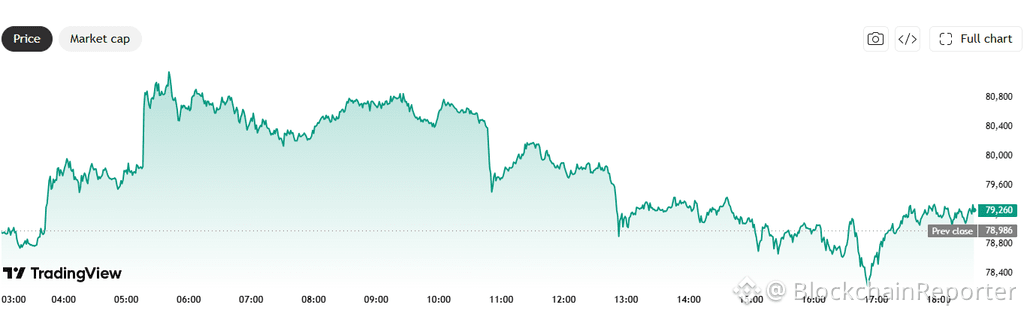
Artículo
Bitcoin Taps 15-Week Peak Above $81K, but the Rally Now Hinges on Holding $80,000Quick Take
1. Bitcoin touched $81,257 on August 25, its highest price since mid-May, before easing back toward $79,000, extending a seven-day gain of roughly 25%.
2. US spot Bitcoin ETFs took in about $1.92 billion in the week to August 21, their strongest weekly intake since October 2025, across five consecutive sessions of inflows.
3. The move began as a short squeeze, daily RSI has run above 84, and 84 of the QC 100 constituents are already declining, so the rally needs acceptance above $80,000 rather than a single spike through it.
Bitcoin reached $81,257 in Tuesday trading before reversing, its first move above $80,000 since mid-May and a 15-week peak. The token has since settled back toward $79,000, leaving the round number directly overhead as the level that decides whether this is a breakout or an overshoot.
Live price data via CoinGecko. Total crypto market capitalization stands at $2.69 trillion on $171.56 billion of daily volume, with Bitcoin dominance at 59.25% and Ethereum at 11.13%, per QuantifyCrypto. The breadth reading is the detail worth holding: of the QC 100 index, 84 constituents are declining against 16 advancing.
How did Bitcoin get from $64,000 to $81,000?
In eight sessions, through a breakout, a weekend pullback and a fresh push. The route matters more than the destination here, because each leg had a different driver.
The advance began last week from around $64,000, when the US Treasury announced it would double its long-dated buyback ceiling from $2 billion to at least $4 billion per operation, running from September 9. Long yields fell, risk assets rallied together, and roughly $2.7 billion of bearish crypto positions were liquidated. Bitcoin cleared $70,000 within hours, then $75,000. The weekend brought the correction the pace demanded, with price slipping to $75,500. Buyers returned at the start of the business week and pushed through $81,000 on Tuesday morning, where the move stalled.
Measured from the late-June low beneath $58,000, Bitcoin is up roughly 38%. Measured over eight days, roughly 28%, an advance that has added around $350 billion to its market capitalization and lifted it to about $1.6 trillion.
BTCUSD daily from TradingView Is the Bitcoin rally backed by real buying?
Partly, and that is the honest answer rather than a hedge. Two different flows are at work and only one of them can repeat.
The forced part came first. A short squeeze drove the initial move, with traders positioned for Bitcoin to stay below $67,000 unwound rapidly, and CoinGlass recorded roughly $452 million of short liquidations in the most recent 24-hour window alone. A short squeeze is forced buying from traders whose bearish positions are automatically closed by an exchange when price moves against them, which makes it real buying with a finite fuel supply.
The voluntary part is the reason this looks different from a simple squeeze. US spot Bitcoin ETFs recorded approximately $1.92 billion in net inflows in the week ending August 21, their strongest week since October 2025, with capital arriving across five consecutive sessions. Daily flow tables are published openly at Farside Investors and SoSoValue, which means the continuation of this can be checked rather than assumed.
The boundary on that figure is worth stating: one strong week establishes that spot demand returned during a rally. It does not establish that the same buyers return once the price is 25% higher, and a single week is not a trend.
What are the warning signs?
Momentum readings are stretched and the level has not been accepted yet. Daily RSI has printed above 84 and the Money Flow Index near 77.22, both deep into territory that usually precedes consolidation rather than continuation.
Positioning tells a similar story from another angle. Glassnode noted that Bitcoin’s options skew has fallen to its lowest level of the year across the curve, with front-end skew turning negative, meaning traders are paying more for upside calls than for downside protection. That is a measure of enthusiasm, and enthusiasm at a 15-week high is the configuration that produces sharp pullbacks.
Fundstrat’s Tom Lee has framed a near-term range of $74,000 to $81,000, which places the current price at the top of an expected consolidation band rather than at the start of a new leg.
What levels matter now?
$80,000 above, $75,500 below. Everything else is noise until one of them resolves.
Acceptance above $80,000, meaning daily closes rather than an intraday spike, would open the $82,000 to $87,000 area where there is limited recent trading history. Failure there, especially if ETF inflows slow, points back toward $75,500, the weekend low that buyers already defended once.
This site tracked the $60,000 to $64,000 range through July and set two conditions for treating its break as real: acceptance above the old ceiling, and volume persistence. Both held, and Bitcoin has since travelled roughly 25% higher. The same two conditions apply at $80,000, with the same logic. For context on how far the recovery still has to run, Bitcoin remains around 36% below its all-time high near $126,000 set in October 2025.
Which altcoins moved with it?
Almost none of them today, and that is the story. Every one of the ten tracked sectors is red, with memes worst at minus 2.93%, platforms at minus 2.30% and DeFi at minus 2.18%.
Monero is the exception among large caps, up 5.11% to $446.88 on a day when nearly everything else fell. Hyperliquid held a 0.97% gain at $80.96, and Solana added 0.86% to $97.99, just under the $100 it cleared earlier in the session.
The rest gave ground. Ether fell 1.84% to $2,474.96, XRP dropped 3.57% to $1.4706, Dogecoin lost 4.34%, Cardano 4.85%, Stellar 4.86%, and Zcash gave back 5.96% to $807.73.
Weekly figures tell the opposite story and belong beside the daily ones. Over seven days Zcash is up 62.38%, XRP 46.93%, Hyperliquid 36.78%, Bitcoin Cash 31.51%, Ethereum 29.67%, Solana 27.45% and Bitcoin 22.50%. Today is a pause inside a week that repriced the entire market, not a reversal of it.
Among smaller caps the dispersion is extreme in both directions: AGI gained 66.22% and ONG 39.31%, while DENT fell 29.06% and VELVET 22.29%.
Cryptocurrency Market Overview August 25. Source: QuantifyCrypto Bottom line
Bitcoin’s move to a 15-week peak at $81,257 was driven by a short squeeze and the strongest week of ETF inflows since October 2025, and its continuation now depends on whether the market accepts $80,000 as support rather than treating it as a ceiling.
The squeeze cannot repeat, the ETF flows can. Which of those two the next week resembles is the whole question, and it will be visible in the flow tables long before it is obvious on the chart. Today’s breadth reading, with 84 of 100 assets falling while Bitcoin dominance climbs to 59.25%, suggests the market has already started choosing.
This article is for information only and is not investment advice. Crypto assets are extremely volatile and you can lose your entire stake. Always do your own research.
Bitcoin Taps 15-Week Peak Above $81K, but the Rally Now Hinges on Holding $80,000
Quick Take
1. Bitcoin touched $81,257 on August 25, its highest price since mid-May, before easing back toward $79,000, extending a seven-day gain of roughly 25%.
2. US spot Bitcoin ETFs took in about $1.92 billion in the week to August 21, their strongest weekly intake since October 2025, across five consecutive sessions of inflows.
3. The move began as a short squeeze, daily RSI has run above 84, and 84 of the QC 100 constituents are already declining, so the rally needs acceptance above $80,000 rather than a single spike through it.
Bitcoin reached $81,257 in Tuesday trading before reversing, its first move above $80,000 since mid-May and a 15-week peak. The token has since settled back toward $79,000, leaving the round number directly overhead as the level that decides whether this is a breakout or an overshoot.
Live price data via CoinGecko. Total crypto market capitalization stands at $2.69 trillion on $171.56 billion of daily volume, with Bitcoin dominance at 59.25% and Ethereum at 11.13%, per QuantifyCrypto. The breadth reading is the detail worth holding: of the QC 100 index, 84 constituents are declining against 16 advancing.
How did Bitcoin get from $64,000 to $81,000?
In eight sessions, through a breakout, a weekend pullback and a fresh push. The route matters more than the destination here, because each leg had a different driver.
The advance began last week from around $64,000, when the US Treasury announced it would double its long-dated buyback ceiling from $2 billion to at least $4 billion per operation, running from September 9. Long yields fell, risk assets rallied together, and roughly $2.7 billion of bearish crypto positions were liquidated. Bitcoin cleared $70,000 within hours, then $75,000. The weekend brought the correction the pace demanded, with price slipping to $75,500. Buyers returned at the start of the business week and pushed through $81,000 on Tuesday morning, where the move stalled.
Measured from the late-June low beneath $58,000, Bitcoin is up roughly 38%. Measured over eight days, roughly 28%, an advance that has added around $350 billion to its market capitalization and lifted it to about $1.6 trillion.
BTCUSD daily from TradingView Is the Bitcoin rally backed by real buying?
Partly, and that is the honest answer rather than a hedge. Two different flows are at work and only one of them can repeat.
The forced part came first. A short squeeze drove the initial move, with traders positioned for Bitcoin to stay below $67,000 unwound rapidly, and CoinGlass recorded roughly $452 million of short liquidations in the most recent 24-hour window alone. A short squeeze is forced buying from traders whose bearish positions are automatically closed by an exchange when price moves against them, which makes it real buying with a finite fuel supply.
The voluntary part is the reason this looks different from a simple squeeze. US spot Bitcoin ETFs recorded approximately $1.92 billion in net inflows in the week ending August 21, their strongest week since October 2025, with capital arriving across five consecutive sessions. Daily flow tables are published openly at Farside Investors and SoSoValue, which means the continuation of this can be checked rather than assumed.
The boundary on that figure is worth stating: one strong week establishes that spot demand returned during a rally. It does not establish that the same buyers return once the price is 25% higher, and a single week is not a trend.
What are the warning signs?
Momentum readings are stretched and the level has not been accepted yet. Daily RSI has printed above 84 and the Money Flow Index near 77.22, both deep into territory that usually precedes consolidation rather than continuation.
Positioning tells a similar story from another angle. Glassnode noted that Bitcoin’s options skew has fallen to its lowest level of the year across the curve, with front-end skew turning negative, meaning traders are paying more for upside calls than for downside protection. That is a measure of enthusiasm, and enthusiasm at a 15-week high is the configuration that produces sharp pullbacks.
Fundstrat’s Tom Lee has framed a near-term range of $74,000 to $81,000, which places the current price at the top of an expected consolidation band rather than at the start of a new leg.
What levels matter now?
$80,000 above, $75,500 below. Everything else is noise until one of them resolves.
Acceptance above $80,000, meaning daily closes rather than an intraday spike, would open the $82,000 to $87,000 area where there is limited recent trading history. Failure there, especially if ETF inflows slow, points back toward $75,500, the weekend low that buyers already defended once.
This site tracked the $60,000 to $64,000 range through July and set two conditions for treating its break as real: acceptance above the old ceiling, and volume persistence. Both held, and Bitcoin has since travelled roughly 25% higher. The same two conditions apply at $80,000, with the same logic. For context on how far the recovery still has to run, Bitcoin remains around 36% below its all-time high near $126,000 set in October 2025.
Which altcoins moved with it?
Almost none of them today, and that is the story. Every one of the ten tracked sectors is red, with memes worst at minus 2.93%, platforms at minus 2.30% and DeFi at minus 2.18%.
Monero is the exception among large caps, up 5.11% to $446.88 on a day when nearly everything else fell. Hyperliquid held a 0.97% gain at $80.96, and Solana added 0.86% to $97.99, just under the $100 it cleared earlier in the session.
The rest gave ground. Ether fell 1.84% to $2,474.96, XRP dropped 3.57% to $1.4706, Dogecoin lost 4.34%, Cardano 4.85%, Stellar 4.86%, and Zcash gave back 5.96% to $807.73.
Weekly figures tell the opposite story and belong beside the daily ones. Over seven days Zcash is up 62.38%, XRP 46.93%, Hyperliquid 36.78%, Bitcoin Cash 31.51%, Ethereum 29.67%, Solana 27.45% and Bitcoin 22.50%. Today is a pause inside a week that repriced the entire market, not a reversal of it.
Among smaller caps the dispersion is extreme in both directions: AGI gained 66.22% and ONG 39.31%, while DENT fell 29.06% and VELVET 22.29%.
Cryptocurrency Market Overview August 25. Source: QuantifyCrypto Bottom line
Bitcoin’s move to a 15-week peak at $81,257 was driven by a short squeeze and the strongest week of ETF inflows since October 2025, and its continuation now depends on whether the market accepts $80,000 as support rather than treating it as a ceiling.
The squeeze cannot repeat, the ETF flows can. Which of those two the next week resembles is the whole question, and it will be visible in the flow tables long before it is obvious on the chart. Today’s breadth reading, with 84 of 100 assets falling while Bitcoin dominance climbs to 59.25%, suggests the market has already started choosing.
This article is for information only and is not investment advice. Crypto assets are extremely volatile and you can lose your entire stake. Always do your own research.
1. Bitcoin touched $81,257 on August 25, its highest price since mid-May, before easing back toward $79,000, extending a seven-day gain of roughly 25%.
2. US spot Bitcoin ETFs took in about $1.92 billion in the week to August 21, their strongest weekly intake since October 2025, across five consecutive sessions of inflows.
3. The move began as a short squeeze, daily RSI has run above 84, and 84 of the QC 100 constituents are already declining, so the rally needs acceptance above $80,000 rather than a single spike through it.
Bitcoin reached $81,257 in Tuesday trading before reversing, its first move above $80,000 since mid-May and a 15-week peak. The token has since settled back toward $79,000, leaving the round number directly overhead as the level that decides whether this is a breakout or an overshoot.
Live price data via CoinGecko. Total crypto market capitalization stands at $2.69 trillion on $171.56 billion of daily volume, with Bitcoin dominance at 59.25% and Ethereum at 11.13%, per QuantifyCrypto. The breadth reading is the detail worth holding: of the QC 100 index, 84 constituents are declining against 16 advancing.
How did Bitcoin get from $64,000 to $81,000?
In eight sessions, through a breakout, a weekend pullback and a fresh push. The route matters more than the destination here, because each leg had a different driver.
The advance began last week from around $64,000, when the US Treasury announced it would double its long-dated buyback ceiling from $2 billion to at least $4 billion per operation, running from September 9. Long yields fell, risk assets rallied together, and roughly $2.7 billion of bearish crypto positions were liquidated. Bitcoin cleared $70,000 within hours, then $75,000. The weekend brought the correction the pace demanded, with price slipping to $75,500. Buyers returned at the start of the business week and pushed through $81,000 on Tuesday morning, where the move stalled.
Measured from the late-June low beneath $58,000, Bitcoin is up roughly 38%. Measured over eight days, roughly 28%, an advance that has added around $350 billion to its market capitalization and lifted it to about $1.6 trillion.
BTCUSD daily from TradingView Is the Bitcoin rally backed by real buying?
Partly, and that is the honest answer rather than a hedge. Two different flows are at work and only one of them can repeat.
The forced part came first. A short squeeze drove the initial move, with traders positioned for Bitcoin to stay below $67,000 unwound rapidly, and CoinGlass recorded roughly $452 million of short liquidations in the most recent 24-hour window alone. A short squeeze is forced buying from traders whose bearish positions are automatically closed by an exchange when price moves against them, which makes it real buying with a finite fuel supply.
The voluntary part is the reason this looks different from a simple squeeze. US spot Bitcoin ETFs recorded approximately $1.92 billion in net inflows in the week ending August 21, their strongest week since October 2025, with capital arriving across five consecutive sessions. Daily flow tables are published openly at Farside Investors and SoSoValue, which means the continuation of this can be checked rather than assumed.
The boundary on that figure is worth stating: one strong week establishes that spot demand returned during a rally. It does not establish that the same buyers return once the price is 25% higher, and a single week is not a trend.
What are the warning signs?
Momentum readings are stretched and the level has not been accepted yet. Daily RSI has printed above 84 and the Money Flow Index near 77.22, both deep into territory that usually precedes consolidation rather than continuation.
Positioning tells a similar story from another angle. Glassnode noted that Bitcoin’s options skew has fallen to its lowest level of the year across the curve, with front-end skew turning negative, meaning traders are paying more for upside calls than for downside protection. That is a measure of enthusiasm, and enthusiasm at a 15-week high is the configuration that produces sharp pullbacks.
Fundstrat’s Tom Lee has framed a near-term range of $74,000 to $81,000, which places the current price at the top of an expected consolidation band rather than at the start of a new leg.
What levels matter now?
$80,000 above, $75,500 below. Everything else is noise until one of them resolves.
Acceptance above $80,000, meaning daily closes rather than an intraday spike, would open the $82,000 to $87,000 area where there is limited recent trading history. Failure there, especially if ETF inflows slow, points back toward $75,500, the weekend low that buyers already defended once.
This site tracked the $60,000 to $64,000 range through July and set two conditions for treating its break as real: acceptance above the old ceiling, and volume persistence. Both held, and Bitcoin has since travelled roughly 25% higher. The same two conditions apply at $80,000, with the same logic. For context on how far the recovery still has to run, Bitcoin remains around 36% below its all-time high near $126,000 set in October 2025.
Which altcoins moved with it?
Almost none of them today, and that is the story. Every one of the ten tracked sectors is red, with memes worst at minus 2.93%, platforms at minus 2.30% and DeFi at minus 2.18%.
Monero is the exception among large caps, up 5.11% to $446.88 on a day when nearly everything else fell. Hyperliquid held a 0.97% gain at $80.96, and Solana added 0.86% to $97.99, just under the $100 it cleared earlier in the session.
The rest gave ground. Ether fell 1.84% to $2,474.96, XRP dropped 3.57% to $1.4706, Dogecoin lost 4.34%, Cardano 4.85%, Stellar 4.86%, and Zcash gave back 5.96% to $807.73.
Weekly figures tell the opposite story and belong beside the daily ones. Over seven days Zcash is up 62.38%, XRP 46.93%, Hyperliquid 36.78%, Bitcoin Cash 31.51%, Ethereum 29.67%, Solana 27.45% and Bitcoin 22.50%. Today is a pause inside a week that repriced the entire market, not a reversal of it.
Among smaller caps the dispersion is extreme in both directions: AGI gained 66.22% and ONG 39.31%, while DENT fell 29.06% and VELVET 22.29%.
Cryptocurrency Market Overview August 25. Source: QuantifyCrypto Bottom line
Bitcoin’s move to a 15-week peak at $81,257 was driven by a short squeeze and the strongest week of ETF inflows since October 2025, and its continuation now depends on whether the market accepts $80,000 as support rather than treating it as a ceiling.
The squeeze cannot repeat, the ETF flows can. Which of those two the next week resembles is the whole question, and it will be visible in the flow tables long before it is obvious on the chart. Today’s breadth reading, with 84 of 100 assets falling while Bitcoin dominance climbs to 59.25%, suggests the market has already started choosing.
This article is for information only and is not investment advice. Crypto assets are extremely volatile and you can lose your entire stake. Always do your own research.
232
Why Stablecoins Are Emerging As 24/7 FX InfrastructureCross-border payments have become increasingly digital, but much of the financial infrastructure underpinning them still operates around traditional banking and settlement hours.
Stablecoins offer a different model. Dollar-backed tokens such as USDT and USDC can move and settle across blockchain networks around the clock, creating access to dollar-denominated liquidity even when conventional banking infrastructure is offline.
That difference is increasingly visible in the data. Coinbase Institutional found that weekend activity has consistently accounted for roughly 20% of weekly adjusted stablecoin volume over several years. In other words, a meaningful share of stablecoin activity is taking place precisely when many traditional financial rails are unavailable for settlement.
Stablecoin payments themselves are also growing. Research firm Artemis tracked $136 billion in stablecoin payment settlements between January 2023 and February 2025. By August 2025, the annualized pace of those payments had reached approximately $122 billion, with monthly volume reaching roughly $10.2 billion.
The Philippines as a test case
The Philippines offers a particularly relevant example. Overseas Filipino workers sent $35.63 billion in cash remittances through banks and regulated financial institutions in 2025, up 3.3% from the previous year, according to the Bangko Sentral ng Pilipinas.
That creates a large market where the ability to continuously convert dollars into Philippine pesos has practical value.
Coins.ph, a Philippine crypto exchange and e-wallet licensed by the country’s central bank, has been building USDT and USDC-to-peso liquidity around that demand. The company says its peso order book currently handles around $100 million a day in USDT and USDC trading.
“The bigger difference is the FX layer,” Coins.ph CEO Wei Zhou said in a recent interview. “Outside the US, nothing converts one to one. The price changes constantly, and with that comes uncertainty: is this the right price, and how much can I actually execute at it?”
The distinction becomes particularly visible outside normal banking hours.
“On the weekends we see higher stablecoin trading volume than on weekdays, because the banks are closed,” Zhou said. “There are no rates on the weekend.”
For remittance companies, the problem is practical. A provider processing a transfer from the United States to the Philippines on a Saturday still needs to determine how many pesos the recipient should receive. Without an executable FX price, the provider may need to account for potential currency movements before conventional markets reopen.
A continuously traded USDT or USDC-to-peso market offers another route, allowing payment providers to potentially access executable local-currency liquidity outside conventional FX hours.
This is already moving beyond theory. Remitly and Coins.ph launched a remittance solution in early 2026 that converts U.S. or Canadian fiat into stablecoins for the transfer leg before delivering Philippine pesos to a Coins.ph wallet or connected bank account. The companies say the structure enables near-real-time settlement.
The composition of stablecoin liquidity is changing as well. Zhou says USDC now represents roughly 40% of stablecoin volume on Coins.ph, compared with a market that was almost entirely USDT two years ago. He attributes part of that shift to U.S. businesses and financial institutions using USDC for overseas payouts.
An always-on layer for cross-border payments
The dynamic is not limited to the Philippines.
In Nigeria, the International Monetary Fund has identified constraints on access to foreign exchange as one factor increasing the relative attractiveness of stablecoins for cross-border transactions. The IMF noted that stablecoins can reduce reliance on correspondent banking networks and intermediaries, potentially enabling faster and cheaper international transfers.
The cost gap in some corridors remains substantial. The same IMF report, citing World Bank data, puts the global average cost of sending $200 internationally at 6.49%, rising to 8.78% in Sub-Saharan Africa. The IMF cautions, however, that the final cost of a stablecoin transaction still depends on network fees as well as the cost of converting between fiat and digital assets.
None of this suggests stablecoins are about to replace the global foreign-exchange market. Traditional banks continue to provide deep liquidity, large transaction capacity and regulated financial infrastructure that stablecoin markets do not consistently match.
Instead, a more immediate role is emerging alongside that system: an always-on layer for moving dollar liquidity across borders and, increasingly, converting it into local currencies.
The roughly 20% of stablecoin activity occurring on weekends illustrates where that difference becomes most tangible. Cross-border payments do not stop when banks close, and the infrastructure supporting them is beginning to reflect that.
Why Stablecoins Are Emerging As 24/7 FX Infrastructure
Cross-border payments have become increasingly digital, but much of the financial infrastructure underpinning them still operates around traditional banking and settlement hours.
Stablecoins offer a different model. Dollar-backed tokens such as USDT and USDC can move and settle across blockchain networks around the clock, creating access to dollar-denominated liquidity even when conventional banking infrastructure is offline.
That difference is increasingly visible in the data. Coinbase Institutional found that weekend activity has consistently accounted for roughly 20% of weekly adjusted stablecoin volume over several years. In other words, a meaningful share of stablecoin activity is taking place precisely when many traditional financial rails are unavailable for settlement.
Stablecoin payments themselves are also growing. Research firm Artemis tracked $136 billion in stablecoin payment settlements between January 2023 and February 2025. By August 2025, the annualized pace of those payments had reached approximately $122 billion, with monthly volume reaching roughly $10.2 billion.
The Philippines as a test case
The Philippines offers a particularly relevant example. Overseas Filipino workers sent $35.63 billion in cash remittances through banks and regulated financial institutions in 2025, up 3.3% from the previous year, according to the Bangko Sentral ng Pilipinas.
That creates a large market where the ability to continuously convert dollars into Philippine pesos has practical value.
Coins.ph, a Philippine crypto exchange and e-wallet licensed by the country’s central bank, has been building USDT and USDC-to-peso liquidity around that demand. The company says its peso order book currently handles around $100 million a day in USDT and USDC trading.
“The bigger difference is the FX layer,” Coins.ph CEO Wei Zhou said in a recent interview. “Outside the US, nothing converts one to one. The price changes constantly, and with that comes uncertainty: is this the right price, and how much can I actually execute at it?”
The distinction becomes particularly visible outside normal banking hours.
“On the weekends we see higher stablecoin trading volume than on weekdays, because the banks are closed,” Zhou said. “There are no rates on the weekend.”
For remittance companies, the problem is practical. A provider processing a transfer from the United States to the Philippines on a Saturday still needs to determine how many pesos the recipient should receive. Without an executable FX price, the provider may need to account for potential currency movements before conventional markets reopen.
A continuously traded USDT or USDC-to-peso market offers another route, allowing payment providers to potentially access executable local-currency liquidity outside conventional FX hours.
This is already moving beyond theory. Remitly and Coins.ph launched a remittance solution in early 2026 that converts U.S. or Canadian fiat into stablecoins for the transfer leg before delivering Philippine pesos to a Coins.ph wallet or connected bank account. The companies say the structure enables near-real-time settlement.
The composition of stablecoin liquidity is changing as well. Zhou says USDC now represents roughly 40% of stablecoin volume on Coins.ph, compared with a market that was almost entirely USDT two years ago. He attributes part of that shift to U.S. businesses and financial institutions using USDC for overseas payouts.
An always-on layer for cross-border payments
The dynamic is not limited to the Philippines.
In Nigeria, the International Monetary Fund has identified constraints on access to foreign exchange as one factor increasing the relative attractiveness of stablecoins for cross-border transactions. The IMF noted that stablecoins can reduce reliance on correspondent banking networks and intermediaries, potentially enabling faster and cheaper international transfers.
The cost gap in some corridors remains substantial. The same IMF report, citing World Bank data, puts the global average cost of sending $200 internationally at 6.49%, rising to 8.78% in Sub-Saharan Africa. The IMF cautions, however, that the final cost of a stablecoin transaction still depends on network fees as well as the cost of converting between fiat and digital assets.
None of this suggests stablecoins are about to replace the global foreign-exchange market. Traditional banks continue to provide deep liquidity, large transaction capacity and regulated financial infrastructure that stablecoin markets do not consistently match.
Instead, a more immediate role is emerging alongside that system: an always-on layer for moving dollar liquidity across borders and, increasingly, converting it into local currencies.
The roughly 20% of stablecoin activity occurring on weekends illustrates where that difference becomes most tangible. Cross-border payments do not stop when banks close, and the infrastructure supporting them is beginning to reflect that.
Stablecoins offer a different model. Dollar-backed tokens such as USDT and USDC can move and settle across blockchain networks around the clock, creating access to dollar-denominated liquidity even when conventional banking infrastructure is offline.
That difference is increasingly visible in the data. Coinbase Institutional found that weekend activity has consistently accounted for roughly 20% of weekly adjusted stablecoin volume over several years. In other words, a meaningful share of stablecoin activity is taking place precisely when many traditional financial rails are unavailable for settlement.
Stablecoin payments themselves are also growing. Research firm Artemis tracked $136 billion in stablecoin payment settlements between January 2023 and February 2025. By August 2025, the annualized pace of those payments had reached approximately $122 billion, with monthly volume reaching roughly $10.2 billion.
The Philippines as a test case
The Philippines offers a particularly relevant example. Overseas Filipino workers sent $35.63 billion in cash remittances through banks and regulated financial institutions in 2025, up 3.3% from the previous year, according to the Bangko Sentral ng Pilipinas.
That creates a large market where the ability to continuously convert dollars into Philippine pesos has practical value.
Coins.ph, a Philippine crypto exchange and e-wallet licensed by the country’s central bank, has been building USDT and USDC-to-peso liquidity around that demand. The company says its peso order book currently handles around $100 million a day in USDT and USDC trading.
“The bigger difference is the FX layer,” Coins.ph CEO Wei Zhou said in a recent interview. “Outside the US, nothing converts one to one. The price changes constantly, and with that comes uncertainty: is this the right price, and how much can I actually execute at it?”
The distinction becomes particularly visible outside normal banking hours.
“On the weekends we see higher stablecoin trading volume than on weekdays, because the banks are closed,” Zhou said. “There are no rates on the weekend.”
For remittance companies, the problem is practical. A provider processing a transfer from the United States to the Philippines on a Saturday still needs to determine how many pesos the recipient should receive. Without an executable FX price, the provider may need to account for potential currency movements before conventional markets reopen.
A continuously traded USDT or USDC-to-peso market offers another route, allowing payment providers to potentially access executable local-currency liquidity outside conventional FX hours.
This is already moving beyond theory. Remitly and Coins.ph launched a remittance solution in early 2026 that converts U.S. or Canadian fiat into stablecoins for the transfer leg before delivering Philippine pesos to a Coins.ph wallet or connected bank account. The companies say the structure enables near-real-time settlement.
The composition of stablecoin liquidity is changing as well. Zhou says USDC now represents roughly 40% of stablecoin volume on Coins.ph, compared with a market that was almost entirely USDT two years ago. He attributes part of that shift to U.S. businesses and financial institutions using USDC for overseas payouts.
An always-on layer for cross-border payments
The dynamic is not limited to the Philippines.
In Nigeria, the International Monetary Fund has identified constraints on access to foreign exchange as one factor increasing the relative attractiveness of stablecoins for cross-border transactions. The IMF noted that stablecoins can reduce reliance on correspondent banking networks and intermediaries, potentially enabling faster and cheaper international transfers.
The cost gap in some corridors remains substantial. The same IMF report, citing World Bank data, puts the global average cost of sending $200 internationally at 6.49%, rising to 8.78% in Sub-Saharan Africa. The IMF cautions, however, that the final cost of a stablecoin transaction still depends on network fees as well as the cost of converting between fiat and digital assets.
None of this suggests stablecoins are about to replace the global foreign-exchange market. Traditional banks continue to provide deep liquidity, large transaction capacity and regulated financial infrastructure that stablecoin markets do not consistently match.
Instead, a more immediate role is emerging alongside that system: an always-on layer for moving dollar liquidity across borders and, increasingly, converting it into local currencies.
The roughly 20% of stablecoin activity occurring on weekends illustrates where that difference becomes most tangible. Cross-border payments do not stop when banks close, and the infrastructure supporting them is beginning to reflect that.
50
CME Group Adds Ethena (ENA) Reference Rates Across Three RegionsCME Group has added three regional U.S. dollar reference rates and real-time indices for Ethena’s ENA token, with daily publication beginning Aug. 24, crypto.news reported.
The new benchmarks
The suite uses the CME CF Ethena-Dollar Reference Rate for the London close under the ENAUSD RR identifier, while ENAUSD NY provides a New York closing rate and ENAUSD AP covers the end of the APAC trading day. Each rate is published at 4 p.m. in its respective region, letting firms select a valuation point that matches their working day. Publication continues seven days a week, including weekends and public holidays, reflecting the fact that ENA trades continuously even when traditional markets are closed.
Who calculates the rates
CF Benchmarks, the administrator that manages CME’s cryptocurrency indices, will calculate and publish the products. Rather than taking ENA’s price from a single platform, it draws on transactions from eligible spot exchanges that meet its constituent venue rules, reducing reliance on any one order book. Reference rates produce a fixed price for portfolio valuation and net asset value calculations, while real-time indices follow the token through the trading day for collateral monitoring and risk controls.
What it does not do
The announcement adds pricing tools, not a tradable contract. CME did not launch ENA futures, options or an exchange-traded fund, and any listed product would require its own terms and regulatory treatment. The addition places Ethena’s governance token beside a benchmark lineup that already spans Bitcoin, Ether, Solana, XRP, Cardano, Chainlink, Stellar, Avalanche and Sui, and follows CME’s June launch of Nasdaq CME Crypto Index futures and its May standard and micro futures for Avalanche and Sui.
For U.S. firms, the New York variant supplies an ENA price at 4 p.m. local time, aligning the benchmark with the close of the American equity trading day, and CF Benchmarks has long administered rates for CME’s crypto products, adding Crypto.com as a constituent exchange for Bitcoin and Ether indices in March 2025.
The move follows a sharp run in ENA this year; see our earlier look at Ethena’s recent market performance.
CME Group Adds Ethena (ENA) Reference Rates Across Three Regions
CME Group has added three regional U.S. dollar reference rates and real-time indices for Ethena’s ENA token, with daily publication beginning Aug. 24, crypto.news reported.
The new benchmarks
The suite uses the CME CF Ethena-Dollar Reference Rate for the London close under the ENAUSD RR identifier, while ENAUSD NY provides a New York closing rate and ENAUSD AP covers the end of the APAC trading day. Each rate is published at 4 p.m. in its respective region, letting firms select a valuation point that matches their working day. Publication continues seven days a week, including weekends and public holidays, reflecting the fact that ENA trades continuously even when traditional markets are closed.
Who calculates the rates
CF Benchmarks, the administrator that manages CME’s cryptocurrency indices, will calculate and publish the products. Rather than taking ENA’s price from a single platform, it draws on transactions from eligible spot exchanges that meet its constituent venue rules, reducing reliance on any one order book. Reference rates produce a fixed price for portfolio valuation and net asset value calculations, while real-time indices follow the token through the trading day for collateral monitoring and risk controls.
What it does not do
The announcement adds pricing tools, not a tradable contract. CME did not launch ENA futures, options or an exchange-traded fund, and any listed product would require its own terms and regulatory treatment. The addition places Ethena’s governance token beside a benchmark lineup that already spans Bitcoin, Ether, Solana, XRP, Cardano, Chainlink, Stellar, Avalanche and Sui, and follows CME’s June launch of Nasdaq CME Crypto Index futures and its May standard and micro futures for Avalanche and Sui.
For U.S. firms, the New York variant supplies an ENA price at 4 p.m. local time, aligning the benchmark with the close of the American equity trading day, and CF Benchmarks has long administered rates for CME’s crypto products, adding Crypto.com as a constituent exchange for Bitcoin and Ether indices in March 2025.
The move follows a sharp run in ENA this year; see our earlier look at Ethena’s recent market performance.
The new benchmarks
The suite uses the CME CF Ethena-Dollar Reference Rate for the London close under the ENAUSD RR identifier, while ENAUSD NY provides a New York closing rate and ENAUSD AP covers the end of the APAC trading day. Each rate is published at 4 p.m. in its respective region, letting firms select a valuation point that matches their working day. Publication continues seven days a week, including weekends and public holidays, reflecting the fact that ENA trades continuously even when traditional markets are closed.
Who calculates the rates
CF Benchmarks, the administrator that manages CME’s cryptocurrency indices, will calculate and publish the products. Rather than taking ENA’s price from a single platform, it draws on transactions from eligible spot exchanges that meet its constituent venue rules, reducing reliance on any one order book. Reference rates produce a fixed price for portfolio valuation and net asset value calculations, while real-time indices follow the token through the trading day for collateral monitoring and risk controls.
What it does not do
The announcement adds pricing tools, not a tradable contract. CME did not launch ENA futures, options or an exchange-traded fund, and any listed product would require its own terms and regulatory treatment. The addition places Ethena’s governance token beside a benchmark lineup that already spans Bitcoin, Ether, Solana, XRP, Cardano, Chainlink, Stellar, Avalanche and Sui, and follows CME’s June launch of Nasdaq CME Crypto Index futures and its May standard and micro futures for Avalanche and Sui.
For U.S. firms, the New York variant supplies an ENA price at 4 p.m. local time, aligning the benchmark with the close of the American equity trading day, and CF Benchmarks has long administered rates for CME’s crypto products, adding Crypto.com as a constituent exchange for Bitcoin and Ether indices in March 2025.
The move follows a sharp run in ENA this year; see our earlier look at Ethena’s recent market performance.
79
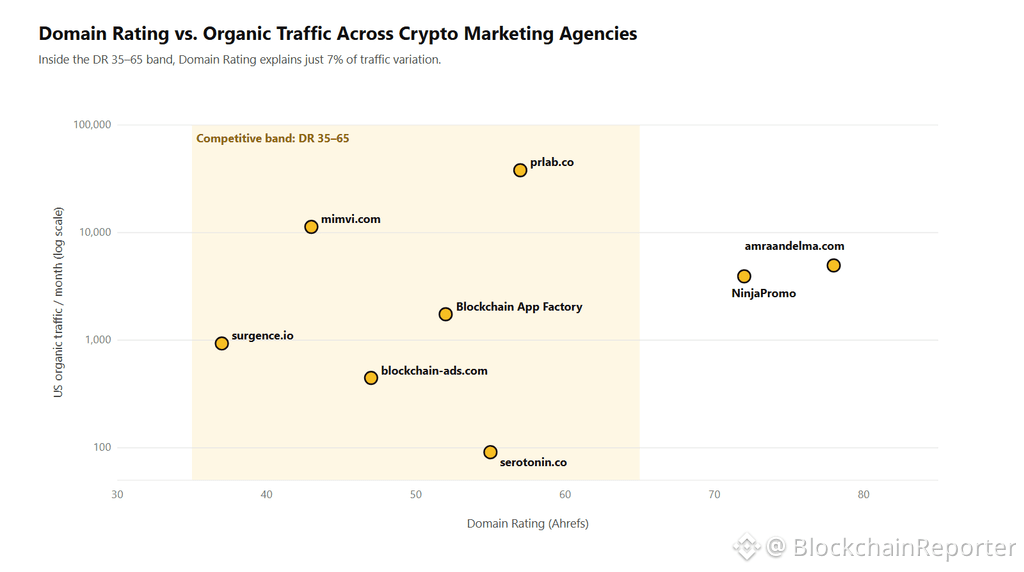
Artículo
Domain Authority Stopped Protecting Crypto Marketing Agencies in Search. Here’s What Replaced It.NinjaPromo’s Domain Rating climbed from 44 to 72 in three years. In that same window, its US organic search traffic fell 96%, from a peak of 107,633 monthly visits to 3,933. The pattern isn’t limited to one agency: across the crypto marketing agencies we tracked, higher DR now predicts losing search traffic more often than keeping it.
This is ICODA’s own research, not a client complaint or a competitor’s press release. We’re a crypto marketing agency ourselves, and we pulled fresh Ahrefs data across 45 crypto marketing agency domains, 51 search result slots across six commercial keywords, and 41 crypto sites tracked year-over-year. The story those numbers tell isn’t “Domain Rating stopped helping.” It’s worse than that.
Why Crypto Marketing Agencies Built Their Pitch Around Domain Rating
Domain Rating became the default KPI because it was easy to show a client and easy to inflate, not because Google ever used it to rank a page. Ahrefs’ own help docs say DR is not a Google ranking factor; it’s a relative measure of a domain’s backlink profile, nothing more. Google’s John Mueller has said the same about the idea of a sitewide “authority score” for years.
That didn’t stop the sales pitch. A rising DR chart is a clean deliverable: one number, going up, month over month. For a decade, DR also correlated loosely with traffic, so nobody had much reason to question it. That correlation is the part that broke.
Does a Higher Domain Rating Still Predict More Traffic?
No. Among crypto marketing agencies, higher DR now correlates with losing search traffic, not gaining it. We tracked 41 crypto domains from August 2025 to August 2026 and found:
The correlation between DR and year-over-year traffic change came out negative (Spearman -0.27)
Domains at DR 60 or higher lost traffic 67% of the time
Domains under DR 60 lost traffic 52% of the time
The median site in the sample shed 68.5% of its ranking pages in twelve months
To be fair to the old belief: across a wider 45-domain sample that includes dead and abandoned sites, DR and traffic still correlate strongly (0.71). But that number is doing something different: it’s separating “live business” from “parked domain,” not “winner” from “loser.” Narrow the sample to the DR 35-65 band, where actual competing agencies sit, and the correlation collapses to 0.27. Inside the real competitive set, DR stopped telling you anything useful.
Agency DR then → now Traffic then → now Change NinjaPromo 44 → 72 4,639 → 3,933 (peaked 107,633) -96% from peak blockchain-ads.com 61 → 47 (flat since Nov ’25) 98 → 447 (peaked 7,625) -94% from peak Blockchain App Factory n/a → 52 5,125 → 1,745 -66% The NinjaPromo Chart That Ends the Argument
Zoom into the last 15 months and the same story holds. DR climbed 7 points, from 65 to 72, while referring domains grew 51%, from 2,514 to 3,791, and traffic fell 96% from that same peak. The DR line never dropped once across the whole period.
The links reveal the mechanism: of NinjaPromo’s 3,791 referring domains, 1,688 (nearly half) point at the homepage. The pages that needed to rank for commercial crypto marketing terms carry a URL Rating of just 4.5 to 5.0 each, with single digits of referring domains apiece. NinjaPromo built its link magnet at the root of the domain, not at the pages doing the selling.
Why the Old DR-Protects-You Model Broke
Search engines stopped scoring domains and started scoring individual pages, which is why crypto SEO now works at the page level, not the domain level. Google’s Helpful Content System evaluates content quality, topical relevance, and user satisfaction URL by URL, not as a single sitewide trust score inherited from the domain’s link history. A page can now rank, or fall out of the index, independent of what the rest of the domain is doing.
You can see the mechanism running in reverse at surgence.io. Its traffic went from zero to 935 monthly visits between December 2025 and August 2026, while its DR moved from 12 to 37 over the same stretch. Rankings arrived first; links followed. One of its ranking pages has a URL Rating of 0.0 and exactly one referring domain, and it still ranks #6 for “web3 marketing agency.” Domain Rating didn’t cause that ranking. It’s a lagging measurement of a page that was already working.
What Ranks for “Top Crypto Marketing Agency” Now
63% of top-10 slots for crypto marketing agency keywords belong to Reddit, LinkedIn Pulse, and third-party listicles, not agency websites. Across 51 ranking slots we tracked for six commercial keywords:
Page-level URL Rating correlates with position at just 0.04, functionally nothing
Domain-level DR fares only slightly better at -0.24
A page with two referring domains from a small opinion blog holds a top-five slot on four separate keywords
A DR-5 domain outranks Clutch.co, sitting at DR 91, for “crypto PR agency”
The same fragmentation shows up in AI search. NinjaPromo kept a meaningful share of citations across ChatGPT, Perplexity, and Google AI Overviews even as its blue-link traffic fell 96%, proof that classic search rankings and AI-answer visibility have become two separate surfaces an agency has to win independently. A high DR buys neither.
How to Vet a Crypto Marketing Agency Without Asking for Its DR
Ask for page-level, verifiable metrics instead of a single sitewide score. Domain Rating tells you how many sites link to a domain. It tells you nothing about whether the pages that matter to you are ranking, staying ranked, or getting cited where your buyers look.
Retire Replace with Domain Rating / DA Ranking-page survival rate month over month Total backlinks Share of top-10 slots you directly influence (owned pages, listicle placements, named mentions) Total referring domains Page-query format fit (does a comparison page exist for a comparison query) n/a Citations in AI Overviews, ChatGPT, and Perplexity for your money keywords n/a Branded search volume growth
A crypto marketing agency that can show you which of its own pages still rank a year after publishing, and which of yours will still rank a year from now, is telling you something DR never could.
The Takeaway
Domain Rating didn’t fail quietly. It kept climbing at NinjaPromo, at blockchain-ads.com, at nearly every agency in this data, while the traffic it was supposed to protect fell 60% to 96%. The old metric stopped telling clients the truth long before agencies admitted it. ICODA built this dataset to replace it with numbers that still mean something: ranking-page survival, share of slots you directly influence, and citations where your buyers are already looking.
If your agency’s monthly report still leads with a DR chart, ask to see the ranking-page survival rate instead. Get a free SEO audit from ICODA and find out what your current metrics are protecting.
This article is not intended as financial advice. Educational purposes only.
Domain Authority Stopped Protecting Crypto Marketing Agencies in Search. Here’s What Replaced It.
NinjaPromo’s Domain Rating climbed from 44 to 72 in three years. In that same window, its US organic search traffic fell 96%, from a peak of 107,633 monthly visits to 3,933. The pattern isn’t limited to one agency: across the crypto marketing agencies we tracked, higher DR now predicts losing search traffic more often than keeping it.
This is ICODA’s own research, not a client complaint or a competitor’s press release. We’re a crypto marketing agency ourselves, and we pulled fresh Ahrefs data across 45 crypto marketing agency domains, 51 search result slots across six commercial keywords, and 41 crypto sites tracked year-over-year. The story those numbers tell isn’t “Domain Rating stopped helping.” It’s worse than that.
Why Crypto Marketing Agencies Built Their Pitch Around Domain Rating
Domain Rating became the default KPI because it was easy to show a client and easy to inflate, not because Google ever used it to rank a page. Ahrefs’ own help docs say DR is not a Google ranking factor; it’s a relative measure of a domain’s backlink profile, nothing more. Google’s John Mueller has said the same about the idea of a sitewide “authority score” for years.
That didn’t stop the sales pitch. A rising DR chart is a clean deliverable: one number, going up, month over month. For a decade, DR also correlated loosely with traffic, so nobody had much reason to question it. That correlation is the part that broke.
Does a Higher Domain Rating Still Predict More Traffic?
No. Among crypto marketing agencies, higher DR now correlates with losing search traffic, not gaining it. We tracked 41 crypto domains from August 2025 to August 2026 and found:
The correlation between DR and year-over-year traffic change came out negative (Spearman -0.27)
Domains at DR 60 or higher lost traffic 67% of the time
Domains under DR 60 lost traffic 52% of the time
The median site in the sample shed 68.5% of its ranking pages in twelve months
To be fair to the old belief: across a wider 45-domain sample that includes dead and abandoned sites, DR and traffic still correlate strongly (0.71). But that number is doing something different: it’s separating “live business” from “parked domain,” not “winner” from “loser.” Narrow the sample to the DR 35-65 band, where actual competing agencies sit, and the correlation collapses to 0.27. Inside the real competitive set, DR stopped telling you anything useful.
Agency DR then → now Traffic then → now Change NinjaPromo 44 → 72 4,639 → 3,933 (peaked 107,633) -96% from peak blockchain-ads.com 61 → 47 (flat since Nov ’25) 98 → 447 (peaked 7,625) -94% from peak Blockchain App Factory n/a → 52 5,125 → 1,745 -66% The NinjaPromo Chart That Ends the Argument
Zoom into the last 15 months and the same story holds. DR climbed 7 points, from 65 to 72, while referring domains grew 51%, from 2,514 to 3,791, and traffic fell 96% from that same peak. The DR line never dropped once across the whole period.
The links reveal the mechanism: of NinjaPromo’s 3,791 referring domains, 1,688 (nearly half) point at the homepage. The pages that needed to rank for commercial crypto marketing terms carry a URL Rating of just 4.5 to 5.0 each, with single digits of referring domains apiece. NinjaPromo built its link magnet at the root of the domain, not at the pages doing the selling.
Why the Old DR-Protects-You Model Broke
Search engines stopped scoring domains and started scoring individual pages, which is why crypto SEO now works at the page level, not the domain level. Google’s Helpful Content System evaluates content quality, topical relevance, and user satisfaction URL by URL, not as a single sitewide trust score inherited from the domain’s link history. A page can now rank, or fall out of the index, independent of what the rest of the domain is doing.
You can see the mechanism running in reverse at surgence.io. Its traffic went from zero to 935 monthly visits between December 2025 and August 2026, while its DR moved from 12 to 37 over the same stretch. Rankings arrived first; links followed. One of its ranking pages has a URL Rating of 0.0 and exactly one referring domain, and it still ranks #6 for “web3 marketing agency.” Domain Rating didn’t cause that ranking. It’s a lagging measurement of a page that was already working.
What Ranks for “Top Crypto Marketing Agency” Now
63% of top-10 slots for crypto marketing agency keywords belong to Reddit, LinkedIn Pulse, and third-party listicles, not agency websites. Across 51 ranking slots we tracked for six commercial keywords:
Page-level URL Rating correlates with position at just 0.04, functionally nothing
Domain-level DR fares only slightly better at -0.24
A page with two referring domains from a small opinion blog holds a top-five slot on four separate keywords
A DR-5 domain outranks Clutch.co, sitting at DR 91, for “crypto PR agency”
The same fragmentation shows up in AI search. NinjaPromo kept a meaningful share of citations across ChatGPT, Perplexity, and Google AI Overviews even as its blue-link traffic fell 96%, proof that classic search rankings and AI-answer visibility have become two separate surfaces an agency has to win independently. A high DR buys neither.
How to Vet a Crypto Marketing Agency Without Asking for Its DR
Ask for page-level, verifiable metrics instead of a single sitewide score. Domain Rating tells you how many sites link to a domain. It tells you nothing about whether the pages that matter to you are ranking, staying ranked, or getting cited where your buyers look.
Retire Replace with Domain Rating / DA Ranking-page survival rate month over month Total backlinks Share of top-10 slots you directly influence (owned pages, listicle placements, named mentions) Total referring domains Page-query format fit (does a comparison page exist for a comparison query) n/a Citations in AI Overviews, ChatGPT, and Perplexity for your money keywords n/a Branded search volume growth
A crypto marketing agency that can show you which of its own pages still rank a year after publishing, and which of yours will still rank a year from now, is telling you something DR never could.
The Takeaway
Domain Rating didn’t fail quietly. It kept climbing at NinjaPromo, at blockchain-ads.com, at nearly every agency in this data, while the traffic it was supposed to protect fell 60% to 96%. The old metric stopped telling clients the truth long before agencies admitted it. ICODA built this dataset to replace it with numbers that still mean something: ranking-page survival, share of slots you directly influence, and citations where your buyers are already looking.
If your agency’s monthly report still leads with a DR chart, ask to see the ranking-page survival rate instead. Get a free SEO audit from ICODA and find out what your current metrics are protecting.
This article is not intended as financial advice. Educational purposes only.
This is ICODA’s own research, not a client complaint or a competitor’s press release. We’re a crypto marketing agency ourselves, and we pulled fresh Ahrefs data across 45 crypto marketing agency domains, 51 search result slots across six commercial keywords, and 41 crypto sites tracked year-over-year. The story those numbers tell isn’t “Domain Rating stopped helping.” It’s worse than that.
Why Crypto Marketing Agencies Built Their Pitch Around Domain Rating
Domain Rating became the default KPI because it was easy to show a client and easy to inflate, not because Google ever used it to rank a page. Ahrefs’ own help docs say DR is not a Google ranking factor; it’s a relative measure of a domain’s backlink profile, nothing more. Google’s John Mueller has said the same about the idea of a sitewide “authority score” for years.
That didn’t stop the sales pitch. A rising DR chart is a clean deliverable: one number, going up, month over month. For a decade, DR also correlated loosely with traffic, so nobody had much reason to question it. That correlation is the part that broke.
Does a Higher Domain Rating Still Predict More Traffic?
No. Among crypto marketing agencies, higher DR now correlates with losing search traffic, not gaining it. We tracked 41 crypto domains from August 2025 to August 2026 and found:
The correlation between DR and year-over-year traffic change came out negative (Spearman -0.27)
Domains at DR 60 or higher lost traffic 67% of the time
Domains under DR 60 lost traffic 52% of the time
The median site in the sample shed 68.5% of its ranking pages in twelve months
To be fair to the old belief: across a wider 45-domain sample that includes dead and abandoned sites, DR and traffic still correlate strongly (0.71). But that number is doing something different: it’s separating “live business” from “parked domain,” not “winner” from “loser.” Narrow the sample to the DR 35-65 band, where actual competing agencies sit, and the correlation collapses to 0.27. Inside the real competitive set, DR stopped telling you anything useful.
Agency DR then → now Traffic then → now Change NinjaPromo 44 → 72 4,639 → 3,933 (peaked 107,633) -96% from peak blockchain-ads.com 61 → 47 (flat since Nov ’25) 98 → 447 (peaked 7,625) -94% from peak Blockchain App Factory n/a → 52 5,125 → 1,745 -66% The NinjaPromo Chart That Ends the Argument
Zoom into the last 15 months and the same story holds. DR climbed 7 points, from 65 to 72, while referring domains grew 51%, from 2,514 to 3,791, and traffic fell 96% from that same peak. The DR line never dropped once across the whole period.
The links reveal the mechanism: of NinjaPromo’s 3,791 referring domains, 1,688 (nearly half) point at the homepage. The pages that needed to rank for commercial crypto marketing terms carry a URL Rating of just 4.5 to 5.0 each, with single digits of referring domains apiece. NinjaPromo built its link magnet at the root of the domain, not at the pages doing the selling.
Why the Old DR-Protects-You Model Broke
Search engines stopped scoring domains and started scoring individual pages, which is why crypto SEO now works at the page level, not the domain level. Google’s Helpful Content System evaluates content quality, topical relevance, and user satisfaction URL by URL, not as a single sitewide trust score inherited from the domain’s link history. A page can now rank, or fall out of the index, independent of what the rest of the domain is doing.
You can see the mechanism running in reverse at surgence.io. Its traffic went from zero to 935 monthly visits between December 2025 and August 2026, while its DR moved from 12 to 37 over the same stretch. Rankings arrived first; links followed. One of its ranking pages has a URL Rating of 0.0 and exactly one referring domain, and it still ranks #6 for “web3 marketing agency.” Domain Rating didn’t cause that ranking. It’s a lagging measurement of a page that was already working.
What Ranks for “Top Crypto Marketing Agency” Now
63% of top-10 slots for crypto marketing agency keywords belong to Reddit, LinkedIn Pulse, and third-party listicles, not agency websites. Across 51 ranking slots we tracked for six commercial keywords:
Page-level URL Rating correlates with position at just 0.04, functionally nothing
Domain-level DR fares only slightly better at -0.24
A page with two referring domains from a small opinion blog holds a top-five slot on four separate keywords
A DR-5 domain outranks Clutch.co, sitting at DR 91, for “crypto PR agency”
The same fragmentation shows up in AI search. NinjaPromo kept a meaningful share of citations across ChatGPT, Perplexity, and Google AI Overviews even as its blue-link traffic fell 96%, proof that classic search rankings and AI-answer visibility have become two separate surfaces an agency has to win independently. A high DR buys neither.
How to Vet a Crypto Marketing Agency Without Asking for Its DR
Ask for page-level, verifiable metrics instead of a single sitewide score. Domain Rating tells you how many sites link to a domain. It tells you nothing about whether the pages that matter to you are ranking, staying ranked, or getting cited where your buyers look.
Retire Replace with Domain Rating / DA Ranking-page survival rate month over month Total backlinks Share of top-10 slots you directly influence (owned pages, listicle placements, named mentions) Total referring domains Page-query format fit (does a comparison page exist for a comparison query) n/a Citations in AI Overviews, ChatGPT, and Perplexity for your money keywords n/a Branded search volume growth
A crypto marketing agency that can show you which of its own pages still rank a year after publishing, and which of yours will still rank a year from now, is telling you something DR never could.
The Takeaway
Domain Rating didn’t fail quietly. It kept climbing at NinjaPromo, at blockchain-ads.com, at nearly every agency in this data, while the traffic it was supposed to protect fell 60% to 96%. The old metric stopped telling clients the truth long before agencies admitted it. ICODA built this dataset to replace it with numbers that still mean something: ranking-page survival, share of slots you directly influence, and citations where your buyers are already looking.
If your agency’s monthly report still leads with a DR chart, ask to see the ranking-page survival rate instead. Get a free SEO audit from ICODA and find out what your current metrics are protecting.
This article is not intended as financial advice. Educational purposes only.
50
Inicia sesión para explorar más contenidos
Únete a usuarios globales de criptomonedas en Binance Square
⚡️ Obtén información útil y actualizada sobre criptos.
💬 Avalado por el mayor exchange de criptomonedas en el mundo.
👍 Descubre perspectivas reales de creadores verificados.
Email/número de teléfono
Temas populares
XRPRises40%InTwoWeeksAsOpenInterestFalls
735 vistas
70 están debatiendo
🚀 XRP Rallies 40% in Just Two Weeks!
$XRP has delivered a powerful move, gaining around 40% over the past two weeks. 📈
But there’s an interesting twist: Open Interest is falling while price continues to climb.
This could signal that the rally is being driven more by spot demand and short covering than by aggressive new leveraged positions.
🔥 Key things to watch:
• XRP price momentum
• Open Interest trends
• Trading volume
• Whether the rally can hold key support levels
Strong price action is encouraging, but traders should stay alert as leverage resets.
Is XRP preparing for another leg higher? 👀
#XRPRises40%InTwoWeeksAsOpenInterestFalls
Antoine -RIFAT
·1 me gusta
·63 vistas
USStocksCloseLowerAmazonSuedByFTC
4,451 vistas
223 están debatiendo
NvidiaToInvest$3.5BInMediaTek
1,257 vistas
37 están debatiendo