
Dream Spicer 梦想家
11.3k Publicaciones

Dream Spicer 梦想家
Dream big, earn smart | Crypto learner | Airdrop Hunter | Charts on, stress gone | Let’s grow 🚀
504 Siguiendo
25.0K+ Seguidores
16.4K+ Me gusta
Publicaciones
Todo
Citas
Videos
Live
PINNED
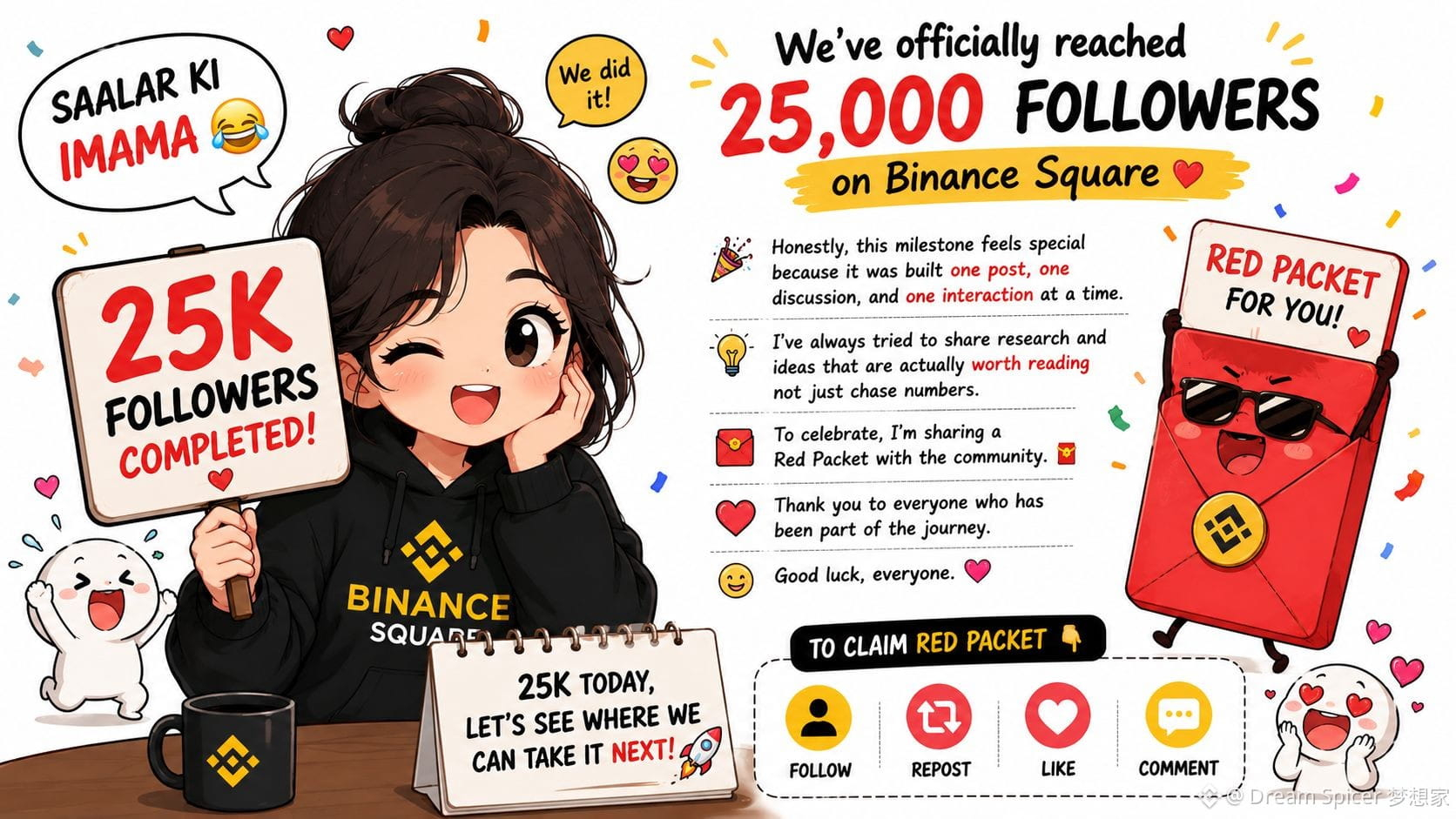
25K Followers Completed Now I'm Looking Saalar ki Imama😂❤️
We’ve officially reached 25,000 followers on Binance Square.
Honestly, this milestone feels special because it was built one post, one discussion, and one interaction at a time.
I’ve always tried to share research and ideas that are actually worth reading not just chase numbers.
To celebrate, I’m sharing a Red Packet with the community. 🧧
Thank you to everyone who has been part of the journey.
25K today. Let’s see where we can take it next.
Good luck, everyone. ❤️
To Claim Red Packet
📌 Follow
📌 Repost
📌 Like
📌 Comment
#BinanceSquare #25K #CryptoCommunity
$SOL
We’ve officially reached 25,000 followers on Binance Square.
Honestly, this milestone feels special because it was built one post, one discussion, and one interaction at a time.
I’ve always tried to share research and ideas that are actually worth reading not just chase numbers.
To celebrate, I’m sharing a Red Packet with the community. 🧧
Thank you to everyone who has been part of the journey.
25K today. Let’s see where we can take it next.
Good luck, everyone. ❤️
To Claim Red Packet
📌 Follow
📌 Repost
📌 Like
📌 Comment
#BinanceSquare #25K #CryptoCommunity
$SOL
PINNED
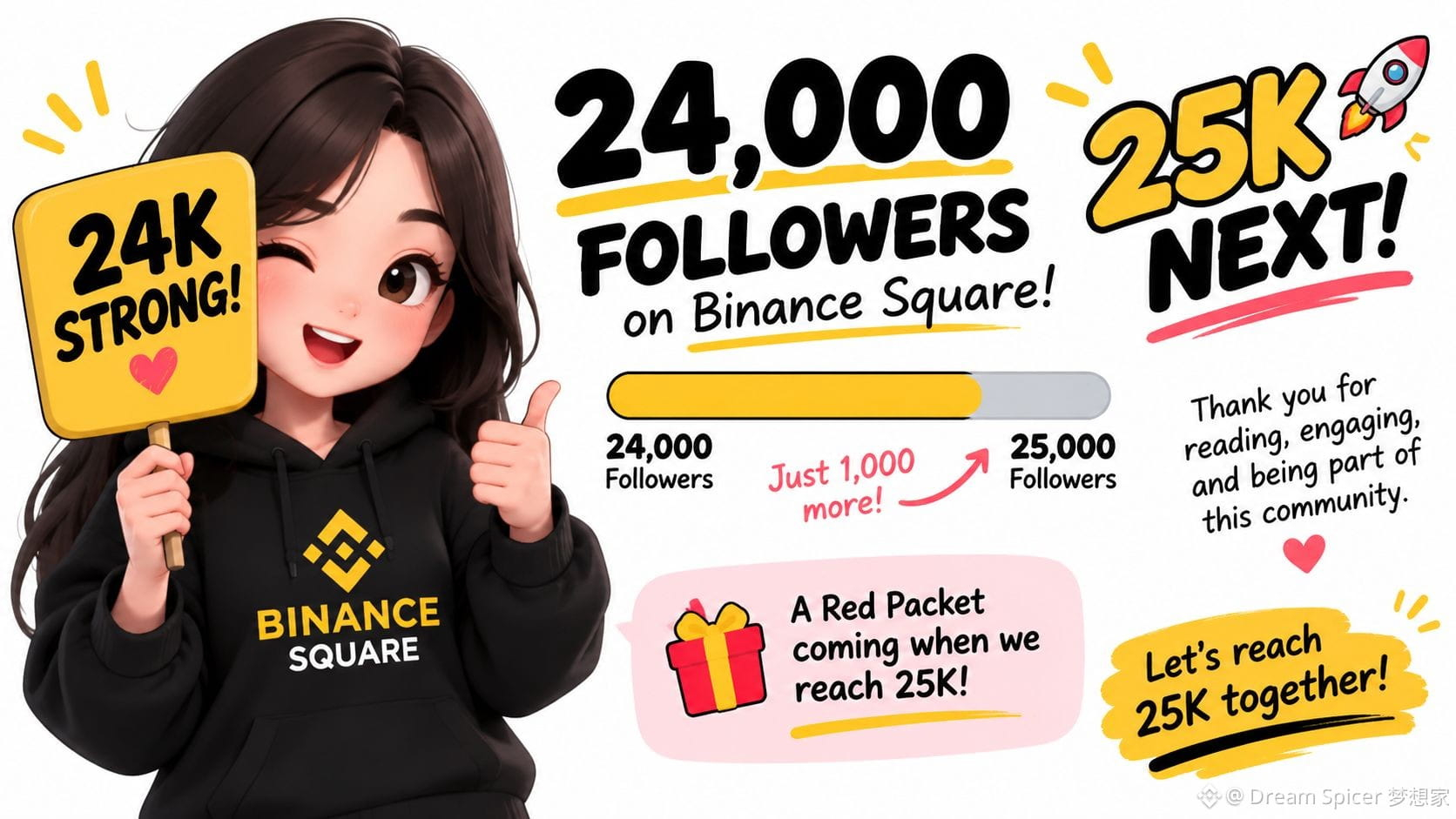
24K Strong. 25K Next.
We’ve officially reached 24,000 followers on Binance Square.
What started as sharing research, insights, and ideas with the community has grown into something much bigger.
Now, we’re just 500 followers away from 25K.
To celebrate everyone who has supported the journey, I’ll be sharing a Red Packet when we reach the milestone. 🎁
Thank you for reading, engaging, and being part of this community.
Let’s reach 25K together.
$BNB
We’ve officially reached 24,000 followers on Binance Square.
What started as sharing research, insights, and ideas with the community has grown into something much bigger.
Now, we’re just 500 followers away from 25K.
To celebrate everyone who has supported the journey, I’ll be sharing a Red Packet when we reach the milestone. 🎁
Thank you for reading, engaging, and being part of this community.
Let’s reach 25K together.
$BNB
claim


Shaheen 69
·
--
🎁 BINANCE PUT ALL THE GIFTS IN ONE BASKET! 🟡
Imagine one basket filled with Airdrops, Red Packets, Trading Rewards, Token Vouchers, CreatorPad rewards, Write-to-Earn opportunities and VIP benefits. 🚀
That’s what makes the Binance ecosystem exciting — it’s not only about trading, but also about discovering new opportunities, participating in campaigns and sharing rewards with the community.
And today, Shaheen69 is opening the gift basket for YOU! 🎉
I’m sharing Red Packet rewards with all of you as a small thank-you for your continued support and love. ❤️
Good luck everyone! 🍀
Who will grab the reward? 👀
#Binance #BNB #redpacket
Imagine one basket filled with Airdrops, Red Packets, Trading Rewards, Token Vouchers, CreatorPad rewards, Write-to-Earn opportunities and VIP benefits. 🚀
That’s what makes the Binance ecosystem exciting — it’s not only about trading, but also about discovering new opportunities, participating in campaigns and sharing rewards with the community.
And today, Shaheen69 is opening the gift basket for YOU! 🎉
I’m sharing Red Packet rewards with all of you as a small thank-you for your continued support and love. ❤️
Good luck everyone! 🍀
Who will grab the reward? 👀
#Binance #BNB #redpacket

Dk

DK短线复刻
·
--
关注回复领取红包🎁🎁

Goo

生蚝哥Oyster
·
--
🧧🧧🧧关注回复领红包🧧🧧🧧

goo

白鲨观点
·
--
孙宇晨一篇《我的女友景甜》,把全中文互联网的热搜包圆了。我第一反应是笑,笑着笑着就觉得这事实在太"孙宇晨"了。
一个身家85亿美元的人,为了三千多万彩礼,把前女友的私生活细节铺陈到全网围观。你说他缺钱?不可能。你说他深情?文末还标了句"本文纯属虚构"。
这就像币圈常见的拉盘手法——你以为是价值发现,其实是注意力套现。孙宇晨从来都深谙此道:巴菲特午餐拍了不去,热度吃两波;620万美元买根香蕉当众吃掉,头条买满屏。他的人生就是一场持续的注意力做市,每一次事件都是一次"上链",把争议、八卦、猎奇全部转化为流量和曝光。
但你要看清本质:注意力能拉盘,也能砸盘。这次事件最值得警惕的,不是狗血剧情,而是创始人舆情风险正在向关联资产传导。波场TRX、HTX、以及他深度绑定的特朗普币,本质上都是"孙宇晨概念股"——当创始人的公众形象从"币圈营销之王"滑向"情感纠纷男主",筹码结构的脆弱性会被放大。
更微妙的是那个被反复提及的细节:景甜问他"能来北京吗",他沉默了。这个沉默背后是边控、是监管风险、是资产可变现性的深层疑问。一个连国都回不去的人,他的财富有多少是纸面富贵,有多少是真实落袋,市场心里都该有杆秤。
八卦看看就好,别为故事买单。币圈的铁律从来没变过:创始人越热闹,你越要冷静。 他赚足了眼球,你却可能成为注意力经济的成本。
#孙割 #景甜 #Binance #BTC
一个身家85亿美元的人,为了三千多万彩礼,把前女友的私生活细节铺陈到全网围观。你说他缺钱?不可能。你说他深情?文末还标了句"本文纯属虚构"。
这就像币圈常见的拉盘手法——你以为是价值发现,其实是注意力套现。孙宇晨从来都深谙此道:巴菲特午餐拍了不去,热度吃两波;620万美元买根香蕉当众吃掉,头条买满屏。他的人生就是一场持续的注意力做市,每一次事件都是一次"上链",把争议、八卦、猎奇全部转化为流量和曝光。
但你要看清本质:注意力能拉盘,也能砸盘。这次事件最值得警惕的,不是狗血剧情,而是创始人舆情风险正在向关联资产传导。波场TRX、HTX、以及他深度绑定的特朗普币,本质上都是"孙宇晨概念股"——当创始人的公众形象从"币圈营销之王"滑向"情感纠纷男主",筹码结构的脆弱性会被放大。
更微妙的是那个被反复提及的细节:景甜问他"能来北京吗",他沉默了。这个沉默背后是边控、是监管风险、是资产可变现性的深层疑问。一个连国都回不去的人,他的财富有多少是纸面富贵,有多少是真实落袋,市场心里都该有杆秤。
八卦看看就好,别为故事买单。币圈的铁律从来没变过:创始人越热闹,你越要冷静。 他赚足了眼球,你却可能成为注意力经济的成本。
#孙割 #景甜 #Binance #BTC

Gooo

Suadagar Ali
·
--
#BNB $
follow ☘️🥀🌹like
comments repost
follow ☘️🥀🌹like
comments repost
Goo
Virus钻石
·
--
人生如茶,不会苦一辈子,但总会苦一阵子。苦尽甘来,越来越好。


Claim
Dream Spicer 梦想家
·
--
25K Followers Completed Now I'm Looking Saalar ki Imama😂❤️
We’ve officially reached 25,000 followers on Binance Square.
Honestly, this milestone feels special because it was built one post, one discussion, and one interaction at a time.
I’ve always tried to share research and ideas that are actually worth reading not just chase numbers.
To celebrate, I’m sharing a Red Packet with the community. 🧧
Thank you to everyone who has been part of the journey.
25K today. Let’s see where we can take it next.
Good luck, everyone. ❤️
To Claim Red Packet
📌 Follow
📌 Repost
📌 Like
📌 Comment
#BinanceSquare #25K #CryptoCommunity
$SOL
We’ve officially reached 25,000 followers on Binance Square.
Honestly, this milestone feels special because it was built one post, one discussion, and one interaction at a time.
I’ve always tried to share research and ideas that are actually worth reading not just chase numbers.
To celebrate, I’m sharing a Red Packet with the community. 🧧
Thank you to everyone who has been part of the journey.
25K today. Let’s see where we can take it next.
Good luck, everyone. ❤️
To Claim Red Packet
📌 Follow
📌 Repost
📌 Like
📌 Comment
#BinanceSquare #25K #CryptoCommunity
$SOL
Join

@听澜321
está hablando[EN VIVO] 🎙️ 建设币安广场,定投BNB|周六,今天的行情和昨晚美联储沃什说话的内容有关吗?来聊聊~
10.6k escuchan
claim
ETHcryptohub
·
--
🎁🎁🎁🎁 Gifts for Everyone 🎁🎁🎁🎁
Comment: Yes
LIKE + Follow + Repost
🎉🎉🎉🎉🎉🎉🎉🎉🎉🎉🎉
#Ethcryptohub
$BNB $BTC
Comment: Yes
LIKE + Follow + Repost
🎉🎉🎉🎉🎉🎉🎉🎉🎉🎉🎉
#Ethcryptohub
$BNB $BTC
Gooo

Frenzy _13
·
--
Hello crypto friends 🤗✨
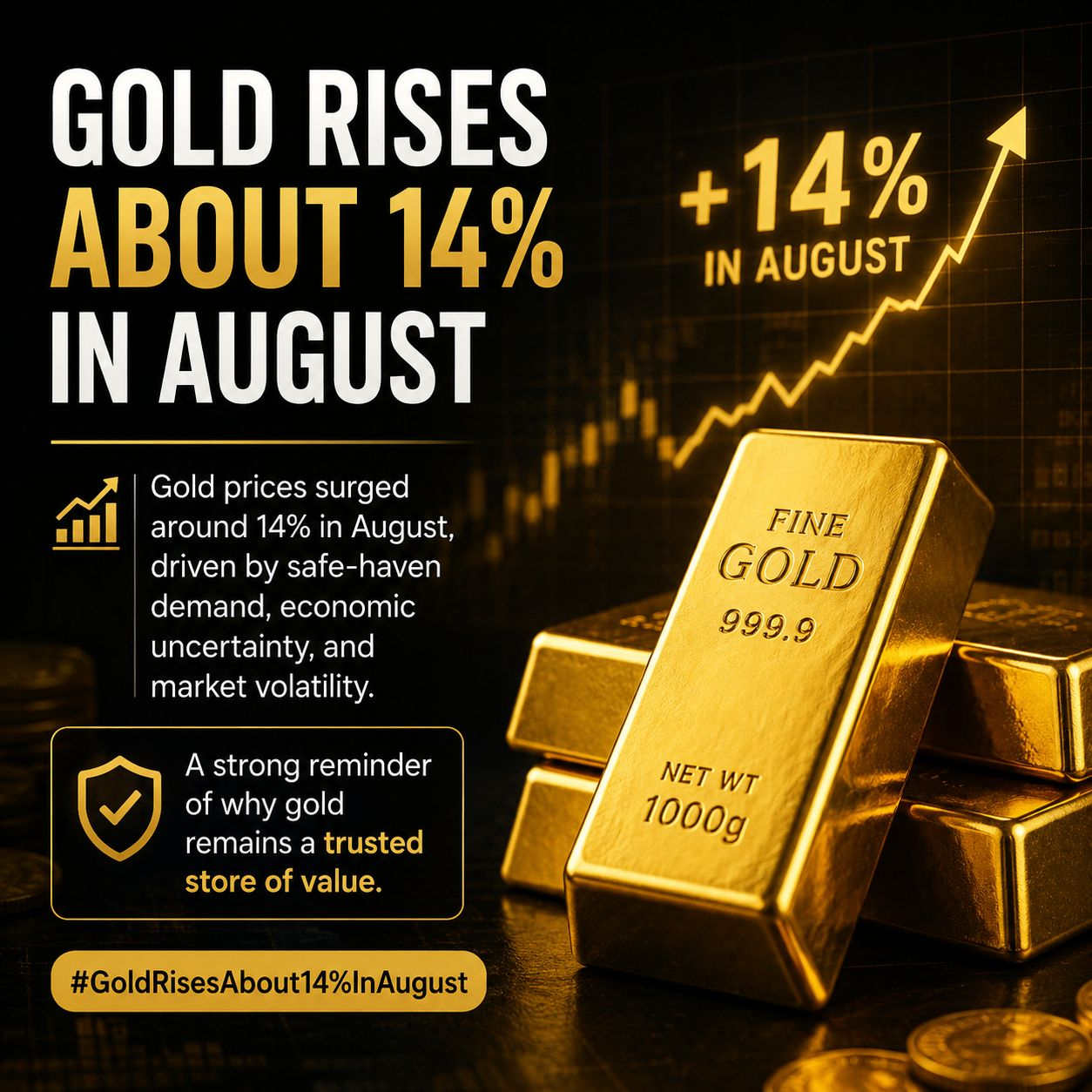
Gold is up around 14% in August, and that’s definitely caught my attention. To me, this move looks bigger than just a short-term price pump. It shows how much interest investors still have in safe-haven assets. Now I’m watching to see if this momentum can carry into September.
$XAU
Gold is up around 14% in August, and that’s definitely caught my attention. To me, this move looks bigger than just a short-term price pump. It shows how much interest investors still have in safe-haven assets. Now I’m watching to see if this momentum can carry into September.
$XAU
claim

远方1688 BNB
·
--
₿ $BTC 價格預測 — 2026 → 2035 🚀
未來十年,BTC 可能走向哪裏?👀
2026 → $125K
2027 → $100K
2028 → $140K
2029 → $200K
2030 → $300K
2031 → $250K
2032 → $350K
2033 → $450K
2034 → $550K
2035 → $700K+ 🔥🔥🔥
📌 如果採用和需求持續增長, 比特幣到 2035 年可能達到 50 萬到 70 萬美金以上。
這段旅程不會一帆風順——預計途中會出現重大回調、熊市以及爆發式反彈。
你會一直持有 BTC 到 2035 年嗎?👁️👁️
#BTC #Bitcoin #Crypto #CryptoPrediction #Bitcoin2035
未來十年,BTC 可能走向哪裏?👀
2026 → $125K
2027 → $100K
2028 → $140K
2029 → $200K
2030 → $300K
2031 → $250K
2032 → $350K
2033 → $450K
2034 → $550K
2035 → $700K+ 🔥🔥🔥
📌 如果採用和需求持續增長, 比特幣到 2035 年可能達到 50 萬到 70 萬美金以上。
這段旅程不會一帆風順——預計途中會出現重大回調、熊市以及爆發式反彈。
你會一直持有 BTC 到 2035 年嗎?👁️👁️
#BTC #Bitcoin #Crypto #CryptoPrediction #Bitcoin2035

24K followers. 😮💨
Okay… apparently some people actually enjoy reading my crypto thoughts. 😂
Now we’re only 1,000 followers away from 25K — and I want to make the final push a little more fun.
🧧 RED PACKET coming at 25K!
If you’ve been following, reading, commenting, or quietly watching me overthink crypto charts… this one is for you. 😂
Help me close the final 1K:
❤️ Like
🔁 Share
👥 Invite a crypto friend
💬 Comment 25K
Let’s make 25K happen together.
Okay… apparently some people actually enjoy reading my crypto thoughts. 😂
Now we’re only 1,000 followers away from 25K — and I want to make the final push a little more fun.
🧧 RED PACKET coming at 25K!
If you’ve been following, reading, commenting, or quietly watching me overthink crypto charts… this one is for you. 😂
Help me close the final 1K:
❤️ Like
🔁 Share
👥 Invite a crypto friend
💬 Comment 25K
Let’s make 25K happen together.

🎙️ Let's start to share Dusk live Trading Session
Finalizado
01 h 08 m 52 s
302

BNB
Holding
-1.69
0
🎙️ Talk About Dusk, live Trade, live Analysis
Finalizado
01 h 18 m 19 s
288
DUSK/USDT
Market/Venta
Completada
0
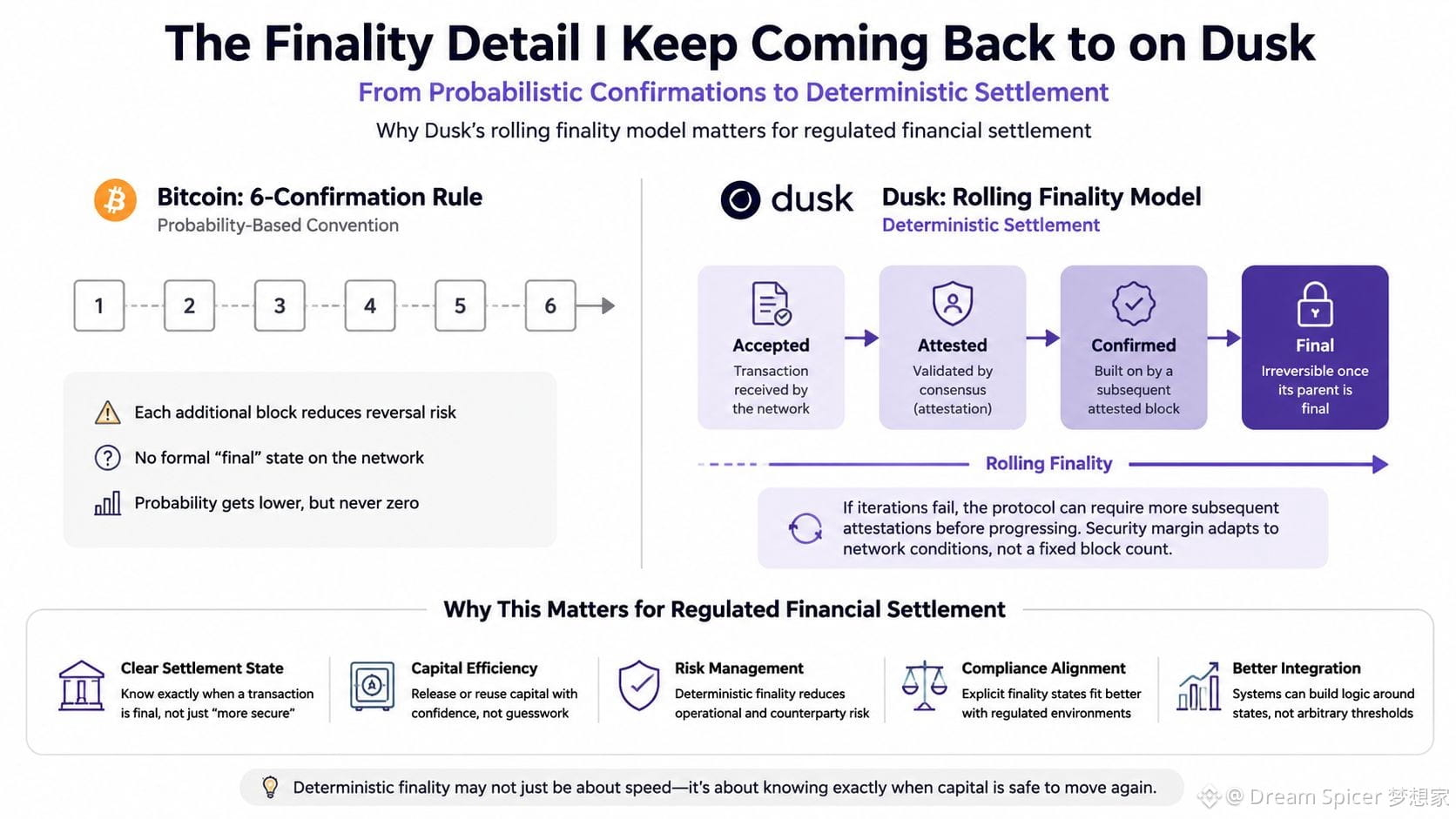
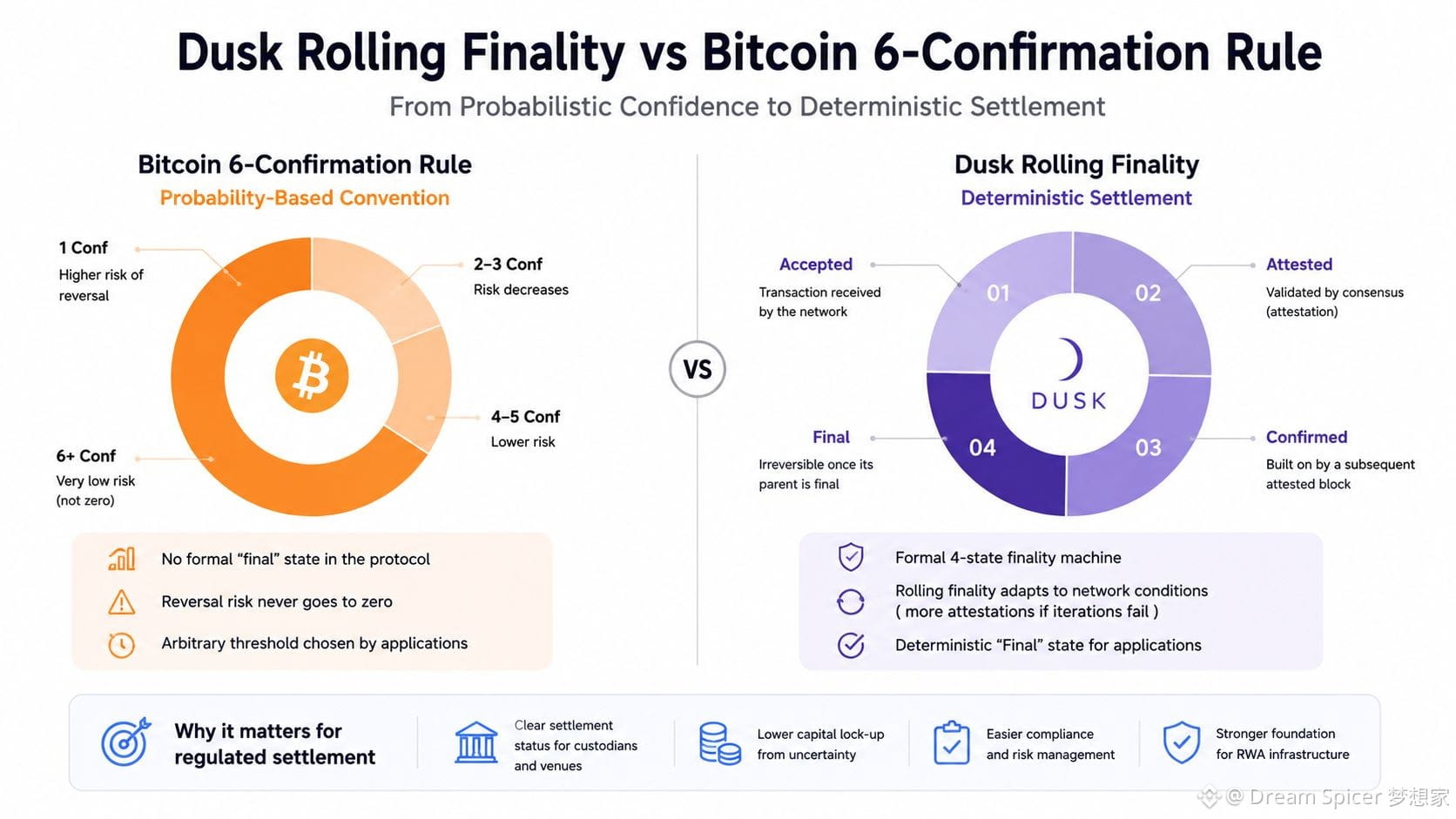
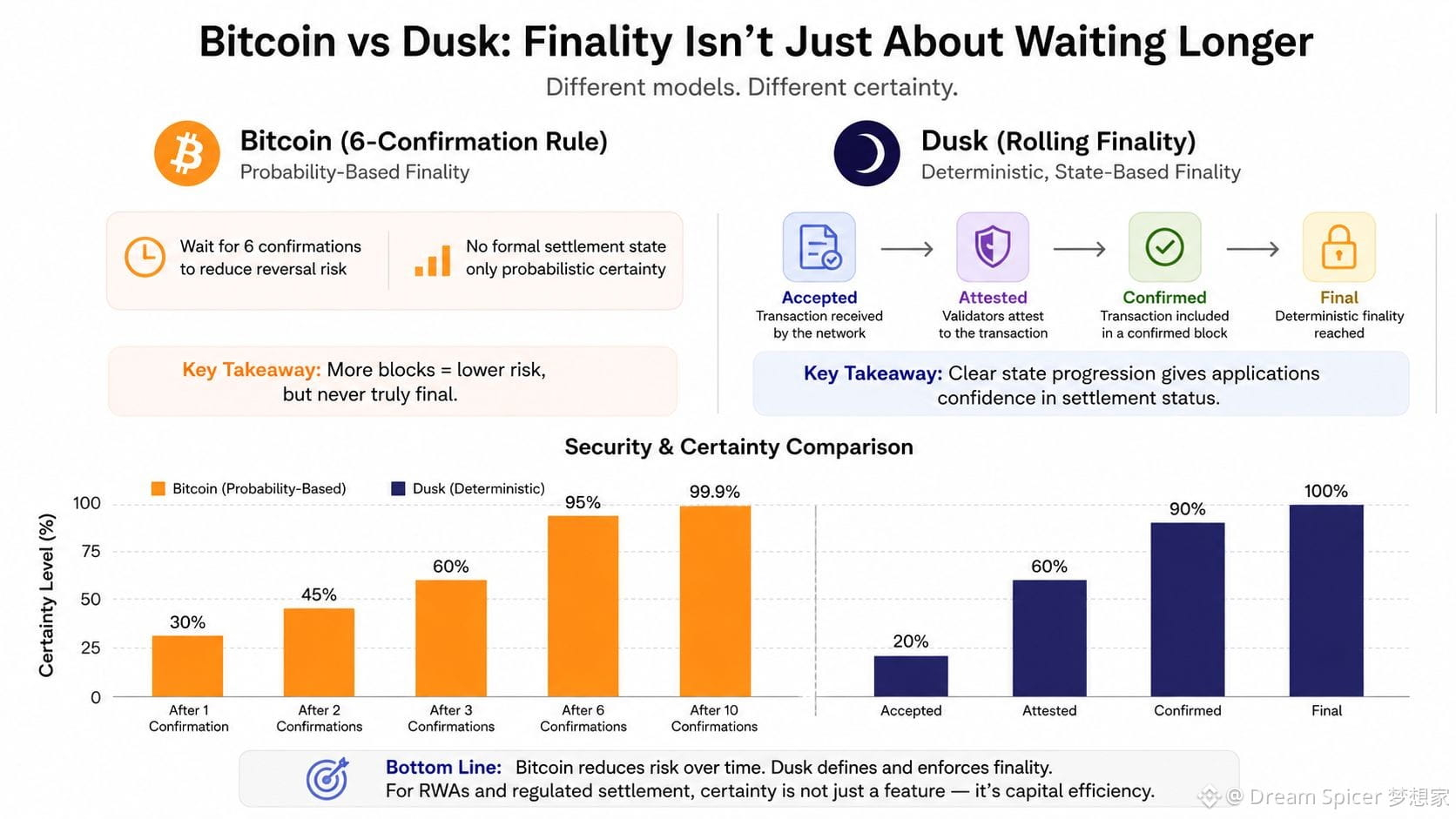
The more I study @Dusk , the more I think its rolling finality is easy to underestimate.
Bitcoin’s familiar 6 confirmation rule is really a probability based convention. Waiting longer reduces the chance of a reversal, but the network doesn’t move through a formal settlement state called final.
$DUSK takes a different approach.
Accepted → Attested → Confirmed → Final
I like this distinction because it gives applications a clearer idea of where a transaction actually stands. A custodian or financial venue can treat final differently from simply seeing a transaction included or confirmed.
The rolling part matters too. If iterations fail, the protocol can require more subsequent attestations before progressing. So the security margin isn’t just an arbitrary block count.
There’s an obvious trade off. Applications now need to understand the state machine instead of reducing everything to wait six blocks.
But that complexity may be worthwhile for regulated settlement, where uncertainty has a real capital cost.
If deterministic finality can make settlement status more predictable. I wonder whether its biggest advantage for RWAs will ultimately be speed or simply knowing exactly when capital is safe to move again.
#dusk #DUSK #Dusk
Bitcoin’s familiar 6 confirmation rule is really a probability based convention. Waiting longer reduces the chance of a reversal, but the network doesn’t move through a formal settlement state called final.
$DUSK takes a different approach.
Accepted → Attested → Confirmed → Final
I like this distinction because it gives applications a clearer idea of where a transaction actually stands. A custodian or financial venue can treat final differently from simply seeing a transaction included or confirmed.
The rolling part matters too. If iterations fail, the protocol can require more subsequent attestations before progressing. So the security margin isn’t just an arbitrary block count.
There’s an obvious trade off. Applications now need to understand the state machine instead of reducing everything to wait six blocks.
But that complexity may be worthwhile for regulated settlement, where uncertainty has a real capital cost.
If deterministic finality can make settlement status more predictable. I wonder whether its biggest advantage for RWAs will ultimately be speed or simply knowing exactly when capital is safe to move again.
#dusk #DUSK #Dusk
🎙️ Dusk Live Trading, Real analysis, Real Trade 📌
Finalizado
01 h 27 m 02 s
429
DUSK/USDT
Market/Venta
Completada
1
Verificado
The Dusk consensus problem I didn’t notice at first.
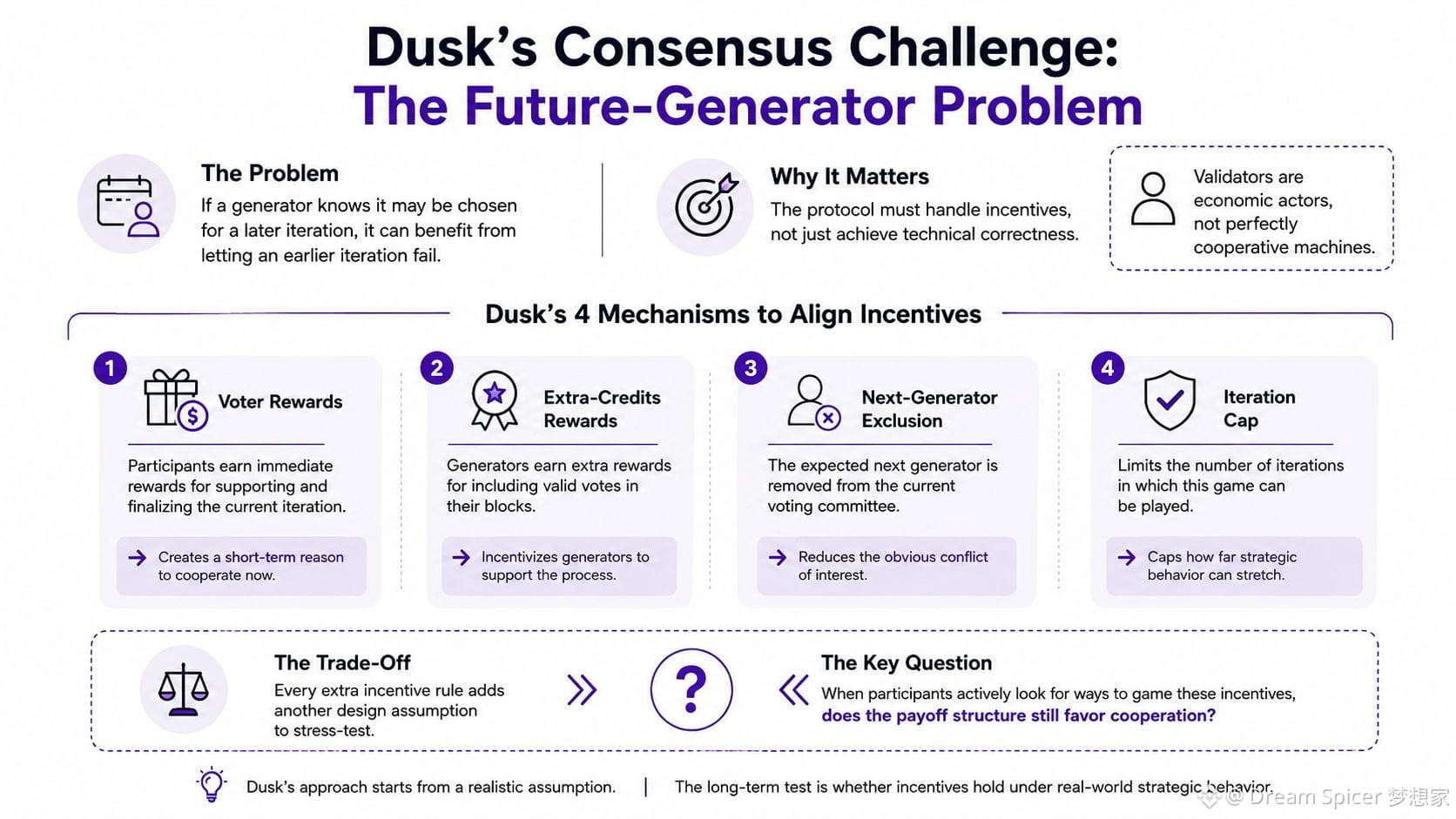
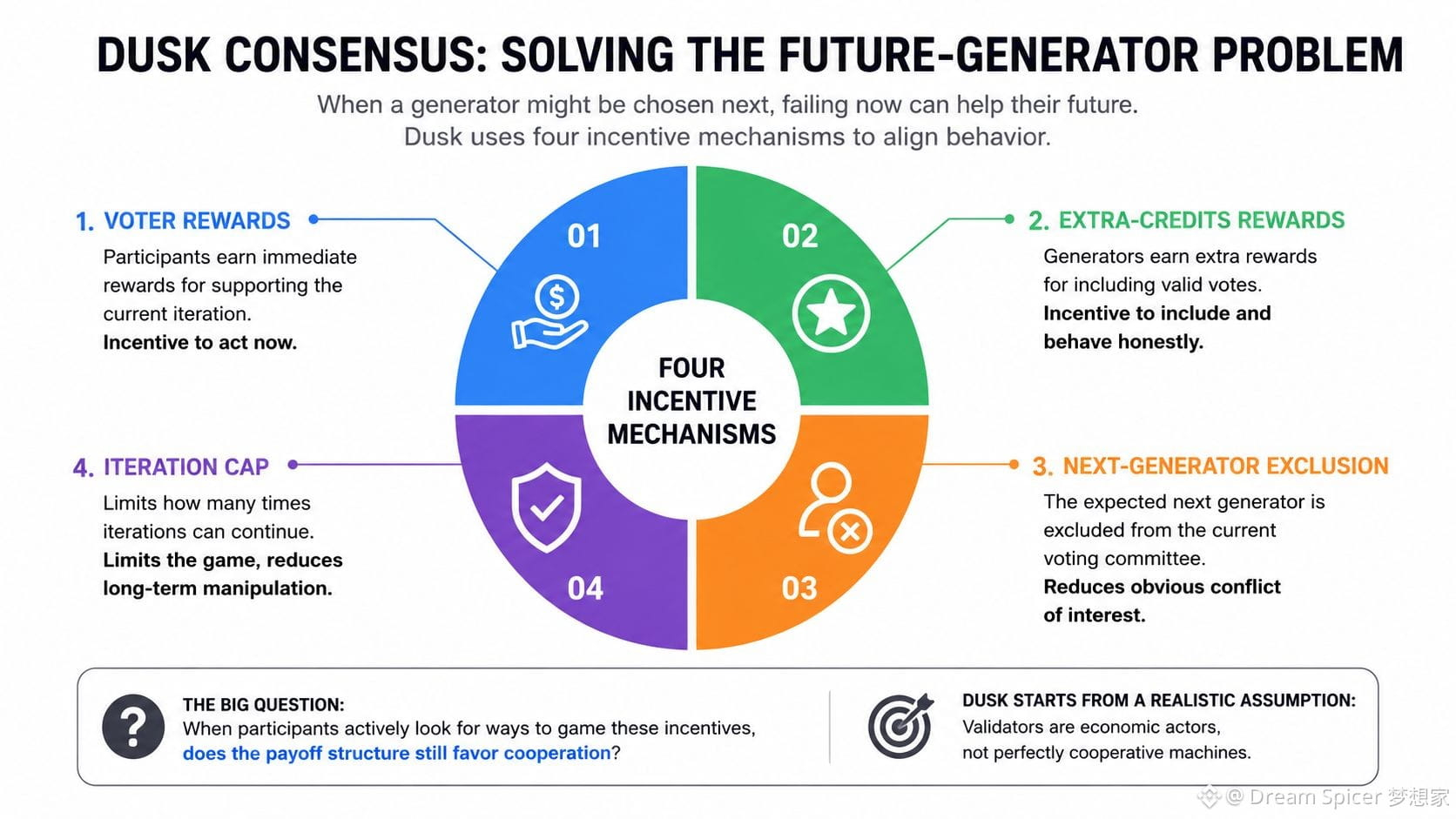
While going deeper into @Dusk , I found the future generator problem more interesting than the usual consensus discussion.
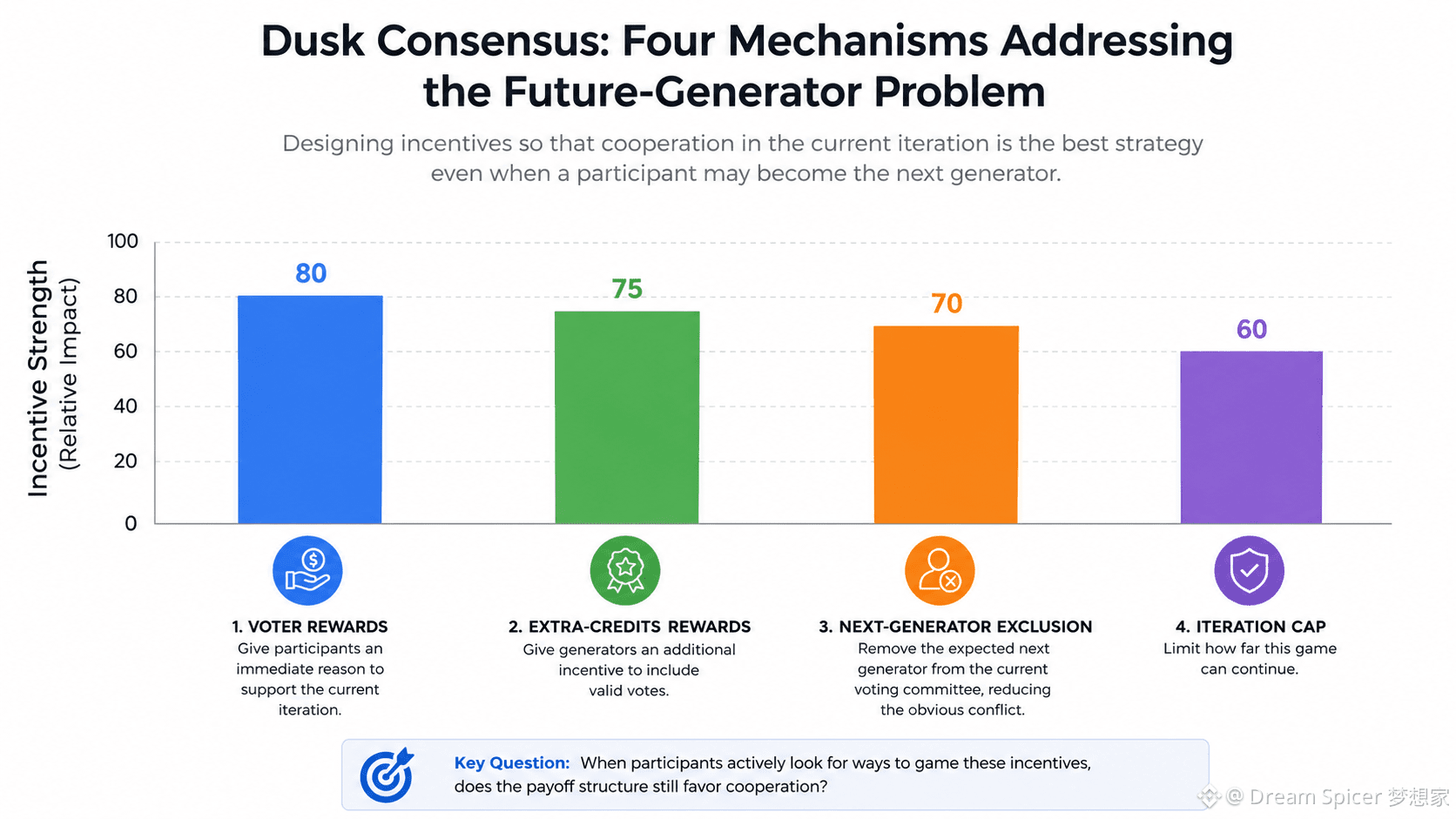
The basic issue is pretty simple. If a generator knows it may be chosen for a later iteration, there can be a reason to let an earlier iteration fail. That failure could improve its own chance to become the next useful generator. So the protocol has to deal with incentives, not just technical correctness.
$DUSK approaches it with four mechanisms.
Voter rewards give participants an immediate reason to support the current iteration.
Extra credits rewards give generators another incentive to include valid votes.
Next generator exclusion removes the expected next generator from the current voting committee, reducing the obvious conflict.
And the iteration cap limits how far this game can continue.
I like this because it starts from a realistic assumption validators are economic actors, not perfectly cooperative machines.
The trade off is that every extra incentive rule adds another design assumption to stress test.
So the question I’m left with is.
When participants actively look for ways to game these incentives, does the payoff structure still favor cooperation?
That’s the part of Dusk consensus I’ll be watching.
#dusk #DUSK #Dusk
While going deeper into @Dusk , I found the future generator problem more interesting than the usual consensus discussion.
The basic issue is pretty simple. If a generator knows it may be chosen for a later iteration, there can be a reason to let an earlier iteration fail. That failure could improve its own chance to become the next useful generator. So the protocol has to deal with incentives, not just technical correctness.
$DUSK approaches it with four mechanisms.
Voter rewards give participants an immediate reason to support the current iteration.
Extra credits rewards give generators another incentive to include valid votes.
Next generator exclusion removes the expected next generator from the current voting committee, reducing the obvious conflict.
And the iteration cap limits how far this game can continue.
I like this because it starts from a realistic assumption validators are economic actors, not perfectly cooperative machines.
The trade off is that every extra incentive rule adds another design assumption to stress test.
So the question I’m left with is.
When participants actively look for ways to game these incentives, does the payoff structure still favor cooperation?
That’s the part of Dusk consensus I’ll be watching.
#dusk #DUSK #Dusk
🎙️ Dusk Real Trade, Real Analysis

Finalizado
01 h 47 m 22 s
467
DUSK/USDT
Market/Venta
Completada
0
Inicia sesión para explorar más contenidos