

#cryptoadoption
cryptoadoption
13.5M vistas
16,820 están debatiendo
Bank of Montreal (BMO), Canada's third-largest bank, has acquired around $150 million in spot Bitcoin ETFs! 🔥📈 Of this investment, $139 million has been allocated to BlackRock's iShares Bitcoin ETF, while the remaining $11 million is spread across three other Bitcoin funds.This is a huge step forward for traditional financial institutions embracing the Bitcoin revolution! 🏦💎What do you think about this major institutional move? Let’s hear your thoughts! 👇
Hot
Lo último

·
--
La última declaración de Tom Lee está recibiendo mucha atención en X: alrededor del 99 % de las finanzas todavía funciona con sistemas heredados, y precisamente por eso los bancos podrían estar subestimando la rapidez con la que crecen los canales cripto.
Creo que tiene razón a medias. El «punto ciego de los sistemas heredados» es real. Cuando toda tu infraestructura liquida en T+1 o T+2 y cierra los fines de semana, la liquidación de stablecoins las 24 horas del día, los 7 días de la semana, y los activos tokenizados parecen algo de nicho... hasta que, de repente, dejan de serlo.
Pero también importa el argumento contrario. Los bancos no tienen por qué «perder» frente a las criptomonedas; muchos simplemente están integrándose. HSBC acaba de lanzar su stablecoin RedCoin HKD para los usuarios de PayMe en Hong Kong, en un sistema con permisos. Eso es adopción en los términos del banco, no una toma de control.
Así que la verdadera pregunta para $ETH y el mercado en general no es «bancos contra criptomonedas». Es si esa nueva actividad llega a cadenas públicas abiertas o se queda en redes cerradas gestionadas por bancos. Solo la primera opción alimenta claramente las comisiones onchain y la demanda.
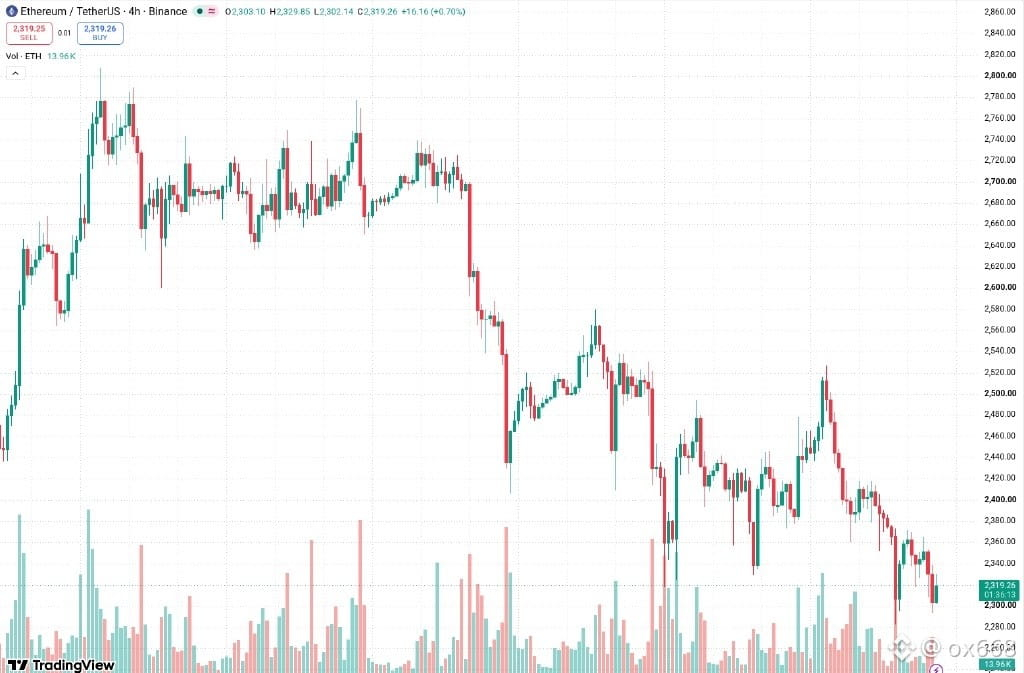
En cuanto al precio, hoy $ETH cotiza cerca de los $2,320, con una caída de alrededor del 1,3 % en 24 h, después de bajar hasta unos $2,293. La narrativa es de largo plazo; a corto plazo, el gráfico aún tiene que mantenerse por encima de los bajos $2,300.
#Ethereum #Stablecoins #Tokenization #TomLee #CryptoAdoption
Esto no es asesoramiento financiero.
La última declaración de Tom Lee está recibiendo mucha atención en X: alrededor del 99 % de las finanzas todavía funciona con sistemas heredados, y precisamente por eso los bancos podrían estar subestimando la rapidez con la que crecen los canales cripto.
Creo que tiene razón a medias. El «punto ciego de los sistemas heredados» es real. Cuando toda tu infraestructura liquida en T+1 o T+2 y cierra los fines de semana, la liquidación de stablecoins las 24 horas del día, los 7 días de la semana, y los activos tokenizados parecen algo de nicho... hasta que, de repente, dejan de serlo.
Pero también importa el argumento contrario. Los bancos no tienen por qué «perder» frente a las criptomonedas; muchos simplemente están integrándose. HSBC acaba de lanzar su stablecoin RedCoin HKD para los usuarios de PayMe en Hong Kong, en un sistema con permisos. Eso es adopción en los términos del banco, no una toma de control.
Así que la verdadera pregunta para $ETH y el mercado en general no es «bancos contra criptomonedas». Es si esa nueva actividad llega a cadenas públicas abiertas o se queda en redes cerradas gestionadas por bancos. Solo la primera opción alimenta claramente las comisiones onchain y la demanda.
En cuanto al precio, hoy $ETH cotiza cerca de los $2,320, con una caída de alrededor del 1,3 % en 24 h, después de bajar hasta unos $2,293. La narrativa es de largo plazo; a corto plazo, el gráfico aún tiene que mantenerse por encima de los bajos $2,300.
#Ethereum #Stablecoins #Tokenization #TomLee #CryptoAdoption
Esto no es asesoramiento financiero.
Creo que tiene razón a medias. El «punto ciego de los sistemas heredados» es real. Cuando toda tu infraestructura liquida en T+1 o T+2 y cierra los fines de semana, la liquidación de stablecoins las 24 horas del día, los 7 días de la semana, y los activos tokenizados parecen algo de nicho... hasta que, de repente, dejan de serlo.
Pero también importa el argumento contrario. Los bancos no tienen por qué «perder» frente a las criptomonedas; muchos simplemente están integrándose. HSBC acaba de lanzar su stablecoin RedCoin HKD para los usuarios de PayMe en Hong Kong, en un sistema con permisos. Eso es adopción en los términos del banco, no una toma de control.
Así que la verdadera pregunta para $ETH y el mercado en general no es «bancos contra criptomonedas». Es si esa nueva actividad llega a cadenas públicas abiertas o se queda en redes cerradas gestionadas por bancos. Solo la primera opción alimenta claramente las comisiones onchain y la demanda.
En cuanto al precio, hoy $ETH cotiza cerca de los $2,320, con una caída de alrededor del 1,3 % en 24 h, después de bajar hasta unos $2,293. La narrativa es de largo plazo; a corto plazo, el gráfico aún tiene que mantenerse por encima de los bajos $2,300.
#Ethereum #Stablecoins #Tokenization #TomLee #CryptoAdoption
Esto no es asesoramiento financiero.
3

·
--
📺 BLOCK LANZA «BITCOIN DOES»: LA PRIMERA CAMPAÑA MASIVA PARA LLEVAR BITCOIN AL PÚBLICO GENERAL 💡⚡
La matriz de Cash App y Square apunta a 60 millones de personas interesadas en el uso cotidiano de Bitcoin.
🔍 PUNTOS CLAVE DE LA CAMPAÑA:
🎯 Público objetivo: Enfocada en 60 millones de consumidores estadounidenses que sienten curiosidad por los activos digitales.
💡 Enfoque práctico: Sustituye la jerga técnica por soluciones a la inflación, oferta fija y la ventaja de la autocustodia.
⚡ Experiencia interactiva: Demostraciones en eventos en vivo permitiendo pagos reales a través de la Lightning Network.
¿Creen que estas campañas de adopción masiva impulsadas por fintechs acelerarán el uso diario de BTC como medio de pago?
💭👇 ¡Los leo en los comentarios!
#CryptoNews #BinanceSquare #Block #CryptoAdoption #CryptoCommunity
$BTC
{spot}(BTCUSDT)
$ETH
{spot}(ETHUSDT)
$SOL
{spot}(SOLUSDT)
📺 BLOCK LANZA «BITCOIN DOES»: LA PRIMERA CAMPAÑA MASIVA PARA LLEVAR BITCOIN AL PÚBLICO GENERAL 💡⚡
La matriz de Cash App y Square apunta a 60 millones de personas interesadas en el uso cotidiano de Bitcoin.
🔍 PUNTOS CLAVE DE LA CAMPAÑA:
🎯 Público objetivo: Enfocada en 60 millones de consumidores estadounidenses que sienten curiosidad por los activos digitales.
💡 Enfoque práctico: Sustituye la jerga técnica por soluciones a la inflación, oferta fija y la ventaja de la autocustodia.
⚡ Experiencia interactiva: Demostraciones en eventos en vivo permitiendo pagos reales a través de la Lightning Network.
¿Creen que estas campañas de adopción masiva impulsadas por fintechs acelerarán el uso diario de BTC como medio de pago?
💭👇 ¡Los leo en los comentarios!
#CryptoNews #BinanceSquare #Block #CryptoAdoption #CryptoCommunity
$BTC
$ETH
$SOL
La matriz de Cash App y Square apunta a 60 millones de personas interesadas en el uso cotidiano de Bitcoin.
🔍 PUNTOS CLAVE DE LA CAMPAÑA:
🎯 Público objetivo: Enfocada en 60 millones de consumidores estadounidenses que sienten curiosidad por los activos digitales.
💡 Enfoque práctico: Sustituye la jerga técnica por soluciones a la inflación, oferta fija y la ventaja de la autocustodia.
⚡ Experiencia interactiva: Demostraciones en eventos en vivo permitiendo pagos reales a través de la Lightning Network.
¿Creen que estas campañas de adopción masiva impulsadas por fintechs acelerarán el uso diario de BTC como medio de pago?
💭👇 ¡Los leo en los comentarios!
#CryptoNews #BinanceSquare #Block #CryptoAdoption #CryptoCommunity
$BTC
$ETH
$SOL

1
120

·
--
🚨 JPMorgan lleva los fondos monetarios tokenizados MONY y JLTXX a Solana para inversionistas estadounidenses cualificados a través de la plataforma Morgan Money.
Esta incorporación institucional aumenta la utilidad de SOL y podría impulsar una demanda sostenida de capital proveniente de las finanzas tradicionales.
Implicaciones para el mercado: una mayor integración de activos del mundo real refuerza la narrativa a largo plazo de Solana.
💡 ¿Qué significa esto para la trayectoria de adopción de SOL? #Solana #CryptoAdoption
$SOL #TradingSignal #CryptoAnalysis
🚨 JPMorgan lleva los fondos monetarios tokenizados MONY y JLTXX a Solana para inversionistas estadounidenses cualificados a través de la plataforma Morgan Money.
Esta incorporación institucional aumenta la utilidad de SOL y podría impulsar una demanda sostenida de capital proveniente de las finanzas tradicionales.
Implicaciones para el mercado: una mayor integración de activos del mundo real refuerza la narrativa a largo plazo de Solana.
💡 ¿Qué significa esto para la trayectoria de adopción de SOL? #Solana #CryptoAdoption
$SOL #TradingSignal #CryptoAnalysis
Esta incorporación institucional aumenta la utilidad de SOL y podría impulsar una demanda sostenida de capital proveniente de las finanzas tradicionales.
Implicaciones para el mercado: una mayor integración de activos del mundo real refuerza la narrativa a largo plazo de Solana.
💡 ¿Qué significa esto para la trayectoria de adopción de SOL? #Solana #CryptoAdoption
$SOL #TradingSignal #CryptoAnalysis

50

🚨 ¡3 BANCOS CENTRALES ACABAN DE APOSTAR POR LAS MONEDAS ESTABLES! 🚨
¡Esto es ENORME para las criptomonedas!
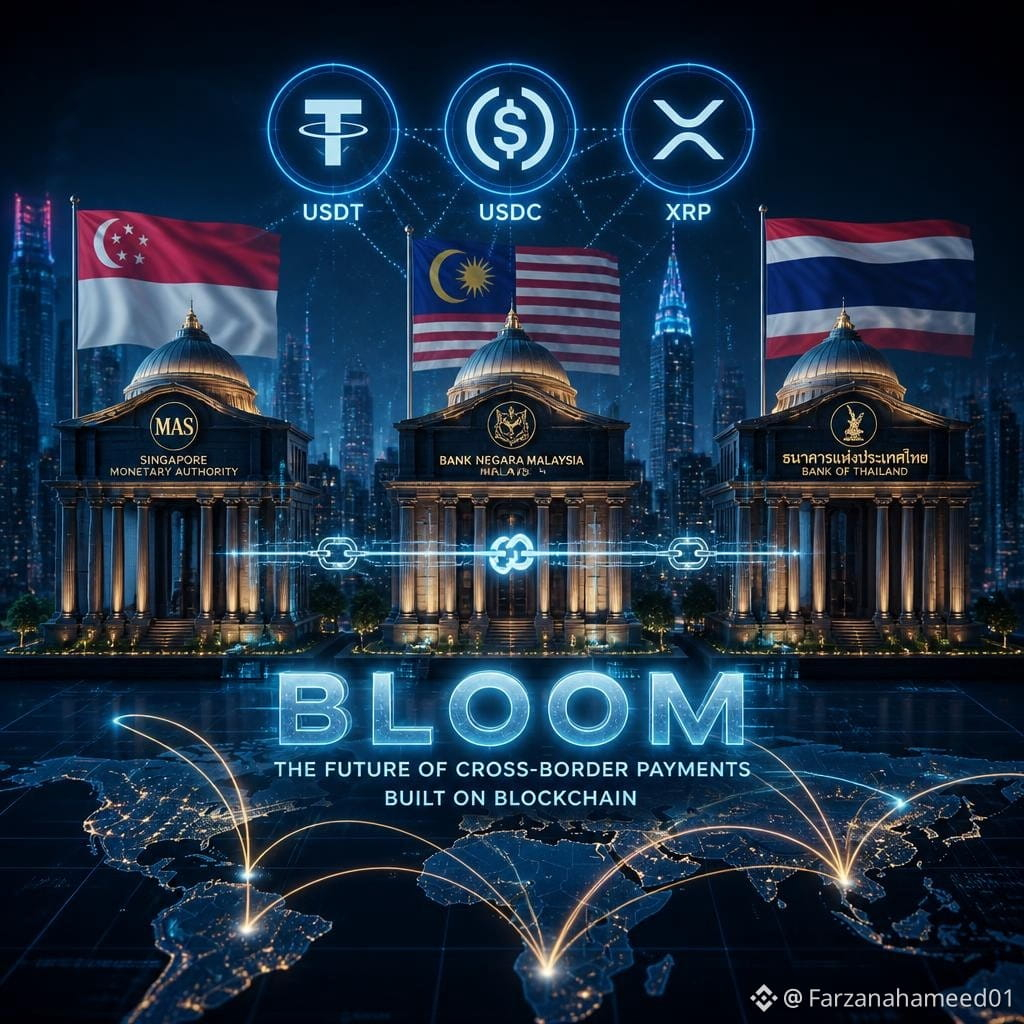
Los bancos centrales de Malasia y Tailandia se han unido oficialmente a la iniciativa BLOOM de Singapur, liderada por MAS.
¿Qué es BLOOM?
Multimoneda, líquida, abierta, en línea y sin fronteras
Una iniciativa público-privada para impulsar los pagos transfronterizos mediante monedas estables reguladas y depósitos tokenizados.
Y mira quién más se acaba de unir 👇
Visa, Mastercard, Ripple, JPMorgan, Coinbase, Circle, Grupo Banco Mundial, Standard Chartered y Stripe.
Esto no es solo otra alianza. Los principales bancos centrales de Asia están construyendo el futuro del dinero SOBRE monedas estables.
SWIFT está siendo desafiado. Las monedas estables ya no son una alternativa: se están convirtiendo en EL SISTEMA.
Optimismo por el futuro de los pagos. 🚀
¿Tienes una perspectiva optimista sobre las monedas estables?
$USDT $USDC $XRP
#BLOOM #Stablecoin #MAS #BreakingNews #CryptoAdoption
🚨 ¡3 BANCOS CENTRALES ACABAN DE APOSTAR POR LAS MONEDAS ESTABLES! 🚨
¡Esto es ENORME para las criptomonedas!
Los bancos centrales de Malasia y Tailandia se han unido oficialmente a la iniciativa BLOOM de Singapur, liderada por MAS.
¿Qué es BLOOM?
Multimoneda, líquida, abierta, en línea y sin fronteras
Una iniciativa público-privada para impulsar los pagos transfronterizos mediante monedas estables reguladas y depósitos tokenizados.
Y mira quién más se acaba de unir 👇
Visa, Mastercard, Ripple, JPMorgan, Coinbase, Circle, Grupo Banco Mundial, Standard Chartered y Stripe.
Esto no es solo otra alianza. Los principales bancos centrales de Asia están construyendo el futuro del dinero SOBRE monedas estables.
SWIFT está siendo desafiado. Las monedas estables ya no son una alternativa: se están convirtiendo en EL SISTEMA.
Optimismo por el futuro de los pagos. 🚀
¿Tienes una perspectiva optimista sobre las monedas estables?
$USDT $USDC $XRP
#BLOOM #Stablecoin #MAS #BreakingNews #CryptoAdoption
¡Esto es ENORME para las criptomonedas!
Los bancos centrales de Malasia y Tailandia se han unido oficialmente a la iniciativa BLOOM de Singapur, liderada por MAS.
¿Qué es BLOOM?
Multimoneda, líquida, abierta, en línea y sin fronteras
Una iniciativa público-privada para impulsar los pagos transfronterizos mediante monedas estables reguladas y depósitos tokenizados.
Y mira quién más se acaba de unir 👇
Visa, Mastercard, Ripple, JPMorgan, Coinbase, Circle, Grupo Banco Mundial, Standard Chartered y Stripe.
Esto no es solo otra alianza. Los principales bancos centrales de Asia están construyendo el futuro del dinero SOBRE monedas estables.
SWIFT está siendo desafiado. Las monedas estables ya no son una alternativa: se están convirtiendo en EL SISTEMA.
Optimismo por el futuro de los pagos. 🚀
¿Tienes una perspectiva optimista sobre las monedas estables?
$USDT $USDC $XRP
#BLOOM #Stablecoin #MAS #BreakingNews #CryptoAdoption
3
164

Un importante banco tradicional está acercando las stablecoins a los pagos cotidianos. 👀
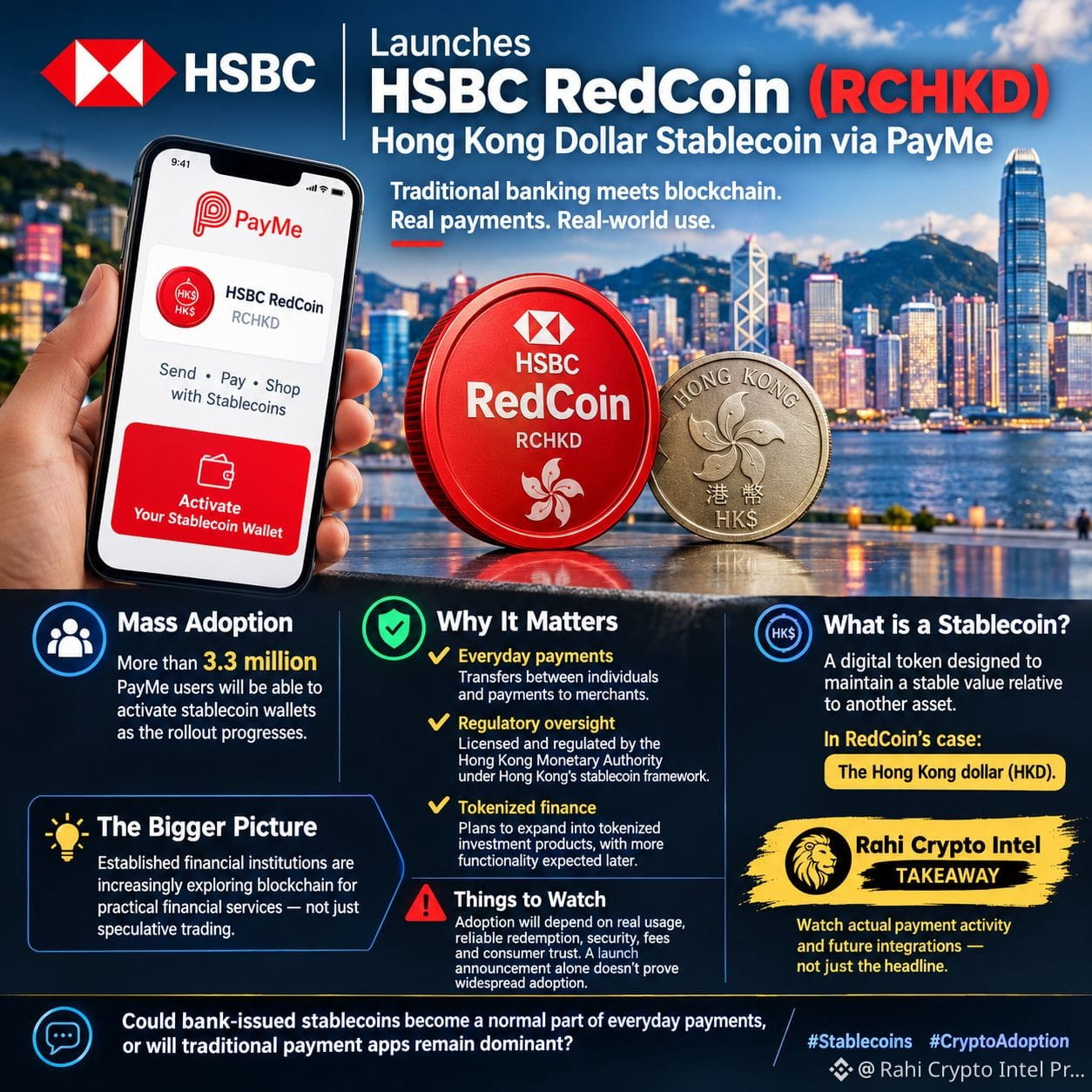
El 23 de octubre, HSBC anunció el lanzamiento de HSBC RedCoin (RCHKD), su primera stablecoin denominada en dólares de Hong Kong, a través de su plataforma PayMe.
Según HSBC, más de 3,3 millones de usuarios de PayMe podrán activar monederos de stablecoins a medida que avance el despliegue.
Esto es importante por varias razones.
🔹 Pagos cotidianos: RedCoin está diseñada para transferencias entre personas y pagos a comercios, no simplemente para operar con criptomonedas.
🔹 Supervisión regulatoria: HSBC afirma que la Autoridad Monetaria de Hong Kong ha autorizado y regula la stablecoin conforme al marco de stablecoins de Hong Kong.
🔹 Finanzas tokenizadas: HSBC planea ampliar sus casos de uso a productos de inversión tokenizados y prevé incorporar más funciones más adelante.
Pero ¿qué es exactamente una stablecoin?
Es un token digital diseñado para mantener un valor estable en relación con otro activo. En el caso de RedCoin, ese activo de referencia es el dólar de Hong Kong.
El panorama general es importante: las instituciones financieras consolidadas exploran cada vez más la tecnología blockchain para ofrecer servicios financieros prácticos, no solo para la especulación.
Aun así, la adopción dependerá del uso real, la posibilidad de canjearla de forma fiable, la seguridad, las comisiones y la confianza de los consumidores. Un anuncio de lanzamiento, por sí solo, no demuestra que su adopción sea generalizada.
Conclusión de Rahi Crypto Intel: Presta atención a la actividad de pago real y a las futuras integraciones, no solo a los titulares.
¿Podrían las stablecoins emitidas por bancos convertirse en una parte habitual de los pagos cotidianos, o seguirán dominando las aplicaciones de pago tradicionales?
#Stablecoins #CryptoAdoption
$ARK
{future}(ARKUSDT)
$AVA
{future}(AVAUSDT)
$PEPE
{spot}(PEPEUSDT)
Un importante banco tradicional está acercando las stablecoins a los pagos cotidianos. 👀
El 23 de octubre, HSBC anunció el lanzamiento de HSBC RedCoin (RCHKD), su primera stablecoin denominada en dólares de Hong Kong, a través de su plataforma PayMe.
Según HSBC, más de 3,3 millones de usuarios de PayMe podrán activar monederos de stablecoins a medida que avance el despliegue.
Esto es importante por varias razones.
🔹 Pagos cotidianos: RedCoin está diseñada para transferencias entre personas y pagos a comercios, no simplemente para operar con criptomonedas.
🔹 Supervisión regulatoria: HSBC afirma que la Autoridad Monetaria de Hong Kong ha autorizado y regula la stablecoin conforme al marco de stablecoins de Hong Kong.
🔹 Finanzas tokenizadas: HSBC planea ampliar sus casos de uso a productos de inversión tokenizados y prevé incorporar más funciones más adelante.
Pero ¿qué es exactamente una stablecoin?
Es un token digital diseñado para mantener un valor estable en relación con otro activo. En el caso de RedCoin, ese activo de referencia es el dólar de Hong Kong.
El panorama general es importante: las instituciones financieras consolidadas exploran cada vez más la tecnología blockchain para ofrecer servicios financieros prácticos, no solo para la especulación.
Aun así, la adopción dependerá del uso real, la posibilidad de canjearla de forma fiable, la seguridad, las comisiones y la confianza de los consumidores. Un anuncio de lanzamiento, por sí solo, no demuestra que su adopción sea generalizada.
Conclusión de Rahi Crypto Intel: Presta atención a la actividad de pago real y a las futuras integraciones, no solo a los titulares.
¿Podrían las stablecoins emitidas por bancos convertirse en una parte habitual de los pagos cotidianos, o seguirán dominando las aplicaciones de pago tradicionales?
#Stablecoins #CryptoAdoption
$ARK
$AVA
$PEPE
El 23 de octubre, HSBC anunció el lanzamiento de HSBC RedCoin (RCHKD), su primera stablecoin denominada en dólares de Hong Kong, a través de su plataforma PayMe.
Según HSBC, más de 3,3 millones de usuarios de PayMe podrán activar monederos de stablecoins a medida que avance el despliegue.
Esto es importante por varias razones.
🔹 Pagos cotidianos: RedCoin está diseñada para transferencias entre personas y pagos a comercios, no simplemente para operar con criptomonedas.
🔹 Supervisión regulatoria: HSBC afirma que la Autoridad Monetaria de Hong Kong ha autorizado y regula la stablecoin conforme al marco de stablecoins de Hong Kong.
🔹 Finanzas tokenizadas: HSBC planea ampliar sus casos de uso a productos de inversión tokenizados y prevé incorporar más funciones más adelante.
Pero ¿qué es exactamente una stablecoin?
Es un token digital diseñado para mantener un valor estable en relación con otro activo. En el caso de RedCoin, ese activo de referencia es el dólar de Hong Kong.
El panorama general es importante: las instituciones financieras consolidadas exploran cada vez más la tecnología blockchain para ofrecer servicios financieros prácticos, no solo para la especulación.
Aun así, la adopción dependerá del uso real, la posibilidad de canjearla de forma fiable, la seguridad, las comisiones y la confianza de los consumidores. Un anuncio de lanzamiento, por sí solo, no demuestra que su adopción sea generalizada.
Conclusión de Rahi Crypto Intel: Presta atención a la actividad de pago real y a las futuras integraciones, no solo a los titulares.
¿Podrían las stablecoins emitidas por bancos convertirse en una parte habitual de los pagos cotidianos, o seguirán dominando las aplicaciones de pago tradicionales?
#Stablecoins #CryptoAdoption
$ARK
$AVA
$PEPE
86

·
--
Alcista
#MalaysiaAndThailandJoinSingaporeStablecoinInitiati ve
🚨 ¡MALASIA Y TAILANDIA SE SUMAN A LA INICIATIVA DE MONEDAS ESTABLES DE SINGAPUR!
¡Un gran paso hacia las finanzas digitales en el Sudeste Asiático! 🇸🇬🇲🇾🇹🇭
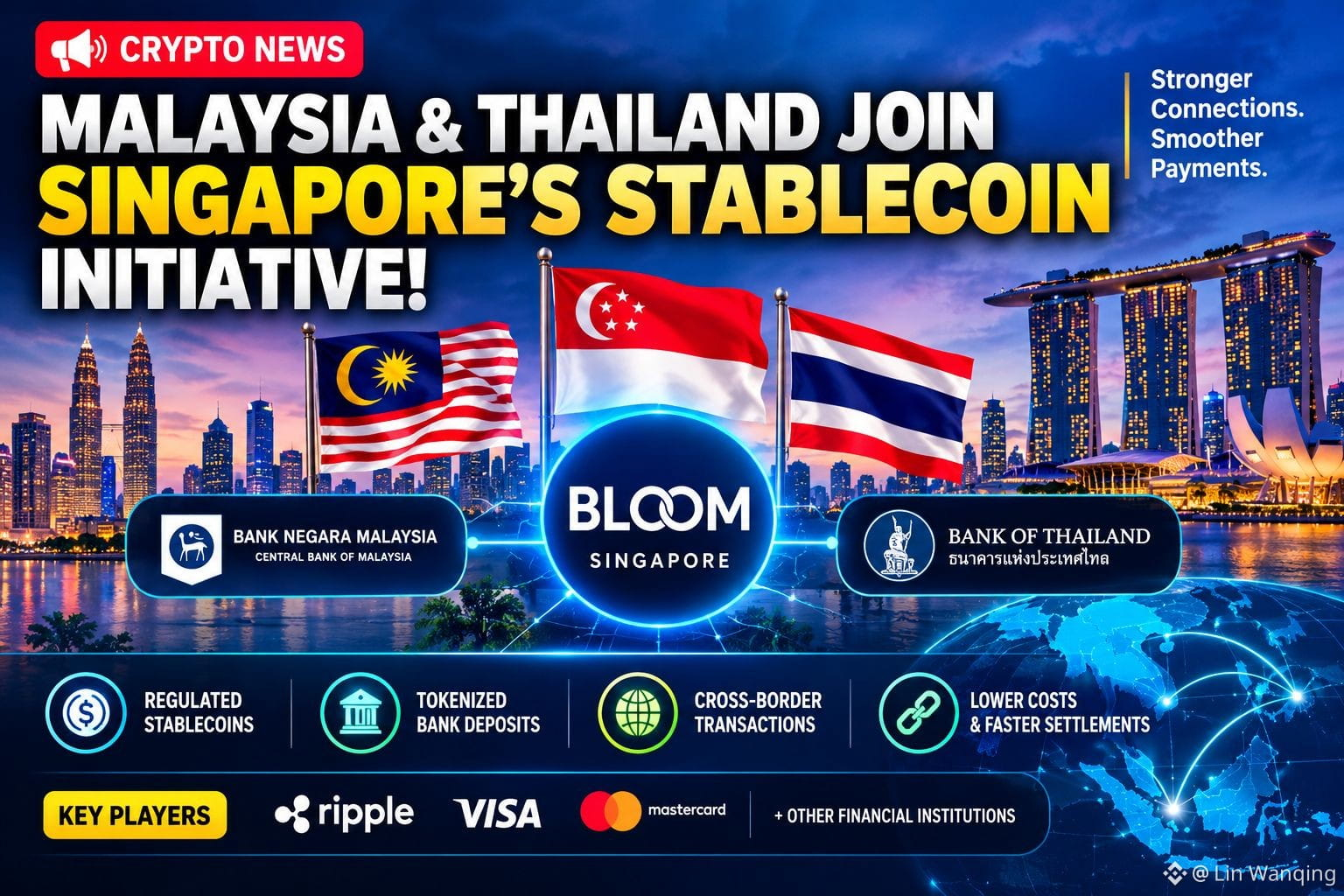
El 23 de octubre de 2026, el banco central de Malasia y el Banco de Tailandia se unieron a la iniciativa BLOOM de Singapur como miembros responsables de formular políticas. La colaboración busca mejorar las transacciones transfronterizas mediante dinero digital, incluidas las monedas estables reguladas y los depósitos bancarios tokenizados.
📊 ¿Por qué es importante?
La iniciativa se centra en lograr que los pagos digitales sean más interoperables, reducir los costos de implementación y mejorar la liquidación entre instituciones financieras y países. Entre los principales participantes del sector se encuentran Ripple, Visa, Mastercard y otras instituciones financieras. <Cite refs={["turn608786search0","turn608786search1"]}/>
📈 Posible impacto en el mercado cripto
Una mayor cooperación institucional podría respaldar la adopción a largo plazo de las monedas estables y de la infraestructura de pagos basada en blockchain. Los proyectos vinculados a la liquidación transfronteriza podrían atraer más atención, pero participar en la iniciativa no garantiza la demanda de tokens ni una apreciación de su precio.
⚠️ Perspectiva del trader: Se trata de un avance significativo para la adopción de blockchain en el mundo real, pero los indicadores clave serán la implementación efectiva, los volúmenes de transacciones y los avances regulatorios, no solo los titulares.
💬 ¿Puede el Sudeste Asiático convertirse en un importante centro de pagos con monedas estables reguladas?
#Ripple #CryptoAdoption #BinanceSquare
$AGT $SOPH $UNITREE
{future}(UNITREEUSDT)
{future}(SOPHUSDT)
{future}(AGTUSDT)
#MalaysiaAndThailandJoinSingaporeStablecoinInitiati ve
🚨 ¡MALASIA Y TAILANDIA SE SUMAN A LA INICIATIVA DE MONEDAS ESTABLES DE SINGAPUR!
¡Un gran paso hacia las finanzas digitales en el Sudeste Asiático! 🇸🇬🇲🇾🇹🇭
El 23 de octubre de 2026, el banco central de Malasia y el Banco de Tailandia se unieron a la iniciativa BLOOM de Singapur como miembros responsables de formular políticas. La colaboración busca mejorar las transacciones transfronterizas mediante dinero digital, incluidas las monedas estables reguladas y los depósitos bancarios tokenizados.
📊 ¿Por qué es importante?
La iniciativa se centra en lograr que los pagos digitales sean más interoperables, reducir los costos de implementación y mejorar la liquidación entre instituciones financieras y países. Entre los principales participantes del sector se encuentran Ripple, Visa, Mastercard y otras instituciones financieras. <Cite refs={["turn608786search0","turn608786search1"]}/>
📈 Posible impacto en el mercado cripto
Una mayor cooperación institucional podría respaldar la adopción a largo plazo de las monedas estables y de la infraestructura de pagos basada en blockchain. Los proyectos vinculados a la liquidación transfronteriza podrían atraer más atención, pero participar en la iniciativa no garantiza la demanda de tokens ni una apreciación de su precio.
⚠️ Perspectiva del trader: Se trata de un avance significativo para la adopción de blockchain en el mundo real, pero los indicadores clave serán la implementación efectiva, los volúmenes de transacciones y los avances regulatorios, no solo los titulares.
💬 ¿Puede el Sudeste Asiático convertirse en un importante centro de pagos con monedas estables reguladas?
#Ripple #CryptoAdoption #BinanceSquare
$AGT $SOPH $UNITREE
🚨 ¡MALASIA Y TAILANDIA SE SUMAN A LA INICIATIVA DE MONEDAS ESTABLES DE SINGAPUR!
¡Un gran paso hacia las finanzas digitales en el Sudeste Asiático! 🇸🇬🇲🇾🇹🇭
El 23 de octubre de 2026, el banco central de Malasia y el Banco de Tailandia se unieron a la iniciativa BLOOM de Singapur como miembros responsables de formular políticas. La colaboración busca mejorar las transacciones transfronterizas mediante dinero digital, incluidas las monedas estables reguladas y los depósitos bancarios tokenizados.
📊 ¿Por qué es importante?
La iniciativa se centra en lograr que los pagos digitales sean más interoperables, reducir los costos de implementación y mejorar la liquidación entre instituciones financieras y países. Entre los principales participantes del sector se encuentran Ripple, Visa, Mastercard y otras instituciones financieras. <Cite refs={["turn608786search0","turn608786search1"]}/>
📈 Posible impacto en el mercado cripto
Una mayor cooperación institucional podría respaldar la adopción a largo plazo de las monedas estables y de la infraestructura de pagos basada en blockchain. Los proyectos vinculados a la liquidación transfronteriza podrían atraer más atención, pero participar en la iniciativa no garantiza la demanda de tokens ni una apreciación de su precio.
⚠️ Perspectiva del trader: Se trata de un avance significativo para la adopción de blockchain en el mundo real, pero los indicadores clave serán la implementación efectiva, los volúmenes de transacciones y los avances regulatorios, no solo los titulares.
💬 ¿Puede el Sudeste Asiático convertirse en un importante centro de pagos con monedas estables reguladas?
#Ripple #CryptoAdoption #BinanceSquare
$AGT $SOPH $UNITREE
74

·
--
Verificado
🚨 HSBC lleva su stablecoin respaldada por el dólar de Hong Kong a millones de usuarios 🇭🇰
HSBC está dando otro paso hacia la adopción generalizada de los pagos digitales al lanzar su stablecoin respaldada por el dólar de Hong Kong, RedCoin, para más de 3,3 millones de usuarios de PayMe, según informó el South China Morning Post.
Lo que me llamó la atención es su alcance potencial. Cuando un gran banco tradicional lleva la tecnología de las stablecoins directamente a una plataforma de pagos consolidada, los activos digitales van más allá del trading de criptomonedas y se acercan al uso financiero cotidiano.
La gran pregunta es si la gente realmente adoptará las stablecoins para los pagos diarios, las transferencias y otras actividades financieras.
Si aumenta su adopción, esto podría ser otra señal importante de que la banca tradicional y los pagos basados en blockchain se están acercando.
Para mí, la verdadera noticia no es solo el lanzamiento de otra stablecoin, sino la escala de distribución que lo respalda. 👀
$AKE $MAGMA $PTB
#stablecoin #HSBC #HongKong #CryptoAdoption #blockchain
🚨 HSBC lleva su stablecoin respaldada por el dólar de Hong Kong a millones de usuarios 🇭🇰
HSBC está dando otro paso hacia la adopción generalizada de los pagos digitales al lanzar su stablecoin respaldada por el dólar de Hong Kong, RedCoin, para más de 3,3 millones de usuarios de PayMe, según informó el South China Morning Post.
Lo que me llamó la atención es su alcance potencial. Cuando un gran banco tradicional lleva la tecnología de las stablecoins directamente a una plataforma de pagos consolidada, los activos digitales van más allá del trading de criptomonedas y se acercan al uso financiero cotidiano.
La gran pregunta es si la gente realmente adoptará las stablecoins para los pagos diarios, las transferencias y otras actividades financieras.
Si aumenta su adopción, esto podría ser otra señal importante de que la banca tradicional y los pagos basados en blockchain se están acercando.
Para mí, la verdadera noticia no es solo el lanzamiento de otra stablecoin, sino la escala de distribución que lo respalda. 👀
$AKE $MAGMA $PTB
#stablecoin #HSBC #HongKong #CryptoAdoption #blockchain
HSBC está dando otro paso hacia la adopción generalizada de los pagos digitales al lanzar su stablecoin respaldada por el dólar de Hong Kong, RedCoin, para más de 3,3 millones de usuarios de PayMe, según informó el South China Morning Post.
Lo que me llamó la atención es su alcance potencial. Cuando un gran banco tradicional lleva la tecnología de las stablecoins directamente a una plataforma de pagos consolidada, los activos digitales van más allá del trading de criptomonedas y se acercan al uso financiero cotidiano.
La gran pregunta es si la gente realmente adoptará las stablecoins para los pagos diarios, las transferencias y otras actividades financieras.
Si aumenta su adopción, esto podría ser otra señal importante de que la banca tradicional y los pagos basados en blockchain se están acercando.
Para mí, la verdadera noticia no es solo el lanzamiento de otra stablecoin, sino la escala de distribución que lo respalda. 👀
$AKE $MAGMA $PTB
#stablecoin #HSBC #HongKong #CryptoAdoption #blockchain

856

Rusia cambió las reglas del juego: el mismo banco central que propuso prohibir las criptomonedas en 2022 ahora está otorgando licencias a sus bancos más grandes para que operen como exchanges de criptomonedas.
Esta semana, el registro de exchanges de criptomonedas del Banco de Rusia llegó a 17 empresas. Sberbank y VTB —los dos bancos más grandes del país— cuentan con licencias tanto para operar como para custodiar criptomonedas. VTB planea ofrecer operaciones con criptomonedas a clientes minoristas a través de su aplicación VTB My Investments en noviembre; Sberbank apunta al 1 de diciembre y ya está probando operaciones con BTC, ETH y USDT dentro de su aplicación.
Las restricciones son estrictas: los compradores minoristas solo pueden acceder a las monedas más líquidas, con un límite de 300.000 rublos (~$3.800) al año por intermediario, y únicamente después de aprobar una prueba. Los pagos nacionales con criptomonedas siguen prohibidos.
Por qué importa: una economía sancionada que integra las criptomonedas en sus mayores bancos minoristas crea un canal de demanda estructural: infraestructura regulada, no FOMO minorista. A partir de julio de 2027, todas las operaciones con criptomonedas en Rusia deberán canalizarse a través de intermediarios registrados.
No hay reacción inmediata en el mercado: $BTC se mantiene en $81.7K, casi sin cambios. La estructura se consolida en meses, no en horas. Esto no es asesoramiento financiero: haz tu propia investigación.
Si los bancos más grandes de Rusia empiezan a vender criptomonedas en diciembre, ¿qué bancos de una gran economía darán el siguiente paso?
$BTC #Bitcoin #Russia #CryptoAdoption #Regulación
Rusia cambió las reglas del juego: el mismo banco central que propuso prohibir las criptomonedas en 2022 ahora está otorgando licencias a sus bancos más grandes para que operen como exchanges de criptomonedas.
Esta semana, el registro de exchanges de criptomonedas del Banco de Rusia llegó a 17 empresas. Sberbank y VTB —los dos bancos más grandes del país— cuentan con licencias tanto para operar como para custodiar criptomonedas. VTB planea ofrecer operaciones con criptomonedas a clientes minoristas a través de su aplicación VTB My Investments en noviembre; Sberbank apunta al 1 de diciembre y ya está probando operaciones con BTC, ETH y USDT dentro de su aplicación.
Las restricciones son estrictas: los compradores minoristas solo pueden acceder a las monedas más líquidas, con un límite de 300.000 rublos (~$3.800) al año por intermediario, y únicamente después de aprobar una prueba. Los pagos nacionales con criptomonedas siguen prohibidos.
Por qué importa: una economía sancionada que integra las criptomonedas en sus mayores bancos minoristas crea un canal de demanda estructural: infraestructura regulada, no FOMO minorista. A partir de julio de 2027, todas las operaciones con criptomonedas en Rusia deberán canalizarse a través de intermediarios registrados.
No hay reacción inmediata en el mercado: $BTC se mantiene en $81.7K, casi sin cambios. La estructura se consolida en meses, no en horas. Esto no es asesoramiento financiero: haz tu propia investigación.
Si los bancos más grandes de Rusia empiezan a vender criptomonedas en diciembre, ¿qué bancos de una gran economía darán el siguiente paso?
$BTC #Bitcoin #Russia #CryptoAdoption #Regulación
Esta semana, el registro de exchanges de criptomonedas del Banco de Rusia llegó a 17 empresas. Sberbank y VTB —los dos bancos más grandes del país— cuentan con licencias tanto para operar como para custodiar criptomonedas. VTB planea ofrecer operaciones con criptomonedas a clientes minoristas a través de su aplicación VTB My Investments en noviembre; Sberbank apunta al 1 de diciembre y ya está probando operaciones con BTC, ETH y USDT dentro de su aplicación.
Las restricciones son estrictas: los compradores minoristas solo pueden acceder a las monedas más líquidas, con un límite de 300.000 rublos (~$3.800) al año por intermediario, y únicamente después de aprobar una prueba. Los pagos nacionales con criptomonedas siguen prohibidos.
Por qué importa: una economía sancionada que integra las criptomonedas en sus mayores bancos minoristas crea un canal de demanda estructural: infraestructura regulada, no FOMO minorista. A partir de julio de 2027, todas las operaciones con criptomonedas en Rusia deberán canalizarse a través de intermediarios registrados.
No hay reacción inmediata en el mercado: $BTC se mantiene en $81.7K, casi sin cambios. La estructura se consolida en meses, no en horas. Esto no es asesoramiento financiero: haz tu propia investigación.
Si los bancos más grandes de Rusia empiezan a vender criptomonedas en diciembre, ¿qué bancos de una gran economía darán el siguiente paso?
$BTC #Bitcoin #Russia #CryptoAdoption #Regulación
18

·
--
¡Las memecoins están demostrando ser el mayor motor de incorporación de usuarios al mundo cripto! 🚀
Las tendencias recientes en Robinhood revelan que tokens como $DOGE y $SHIB están impulsando una adopción real en cadena y atrayendo a millones de nuevos usuarios a Web3. Más allá del entusiasmo, Dogecoin sigue ampliando su utilidad, lo que demuestra que las memecoins podrían ser la puerta de entrada definitiva al uso generalizado de las criptomonedas.
¿Son las memecoins el futuro de la adopción de usuarios? 👇
#Dogecoin #Memecoins #AdopciónCripto
¡Las memecoins están demostrando ser el mayor motor de incorporación de usuarios al mundo cripto! 🚀
Las tendencias recientes en Robinhood revelan que tokens como $DOGE y $SHIB están impulsando una adopción real en cadena y atrayendo a millones de nuevos usuarios a Web3. Más allá del entusiasmo, Dogecoin sigue ampliando su utilidad, lo que demuestra que las memecoins podrían ser la puerta de entrada definitiva al uso generalizado de las criptomonedas.
¿Son las memecoins el futuro de la adopción de usuarios? 👇
#Dogecoin #Memecoins #AdopciónCripto
Las tendencias recientes en Robinhood revelan que tokens como $DOGE y $SHIB están impulsando una adopción real en cadena y atrayendo a millones de nuevos usuarios a Web3. Más allá del entusiasmo, Dogecoin sigue ampliando su utilidad, lo que demuestra que las memecoins podrían ser la puerta de entrada definitiva al uso generalizado de las criptomonedas.
¿Son las memecoins el futuro de la adopción de usuarios? 👇
#Dogecoin #Memecoins #AdopciónCripto
11

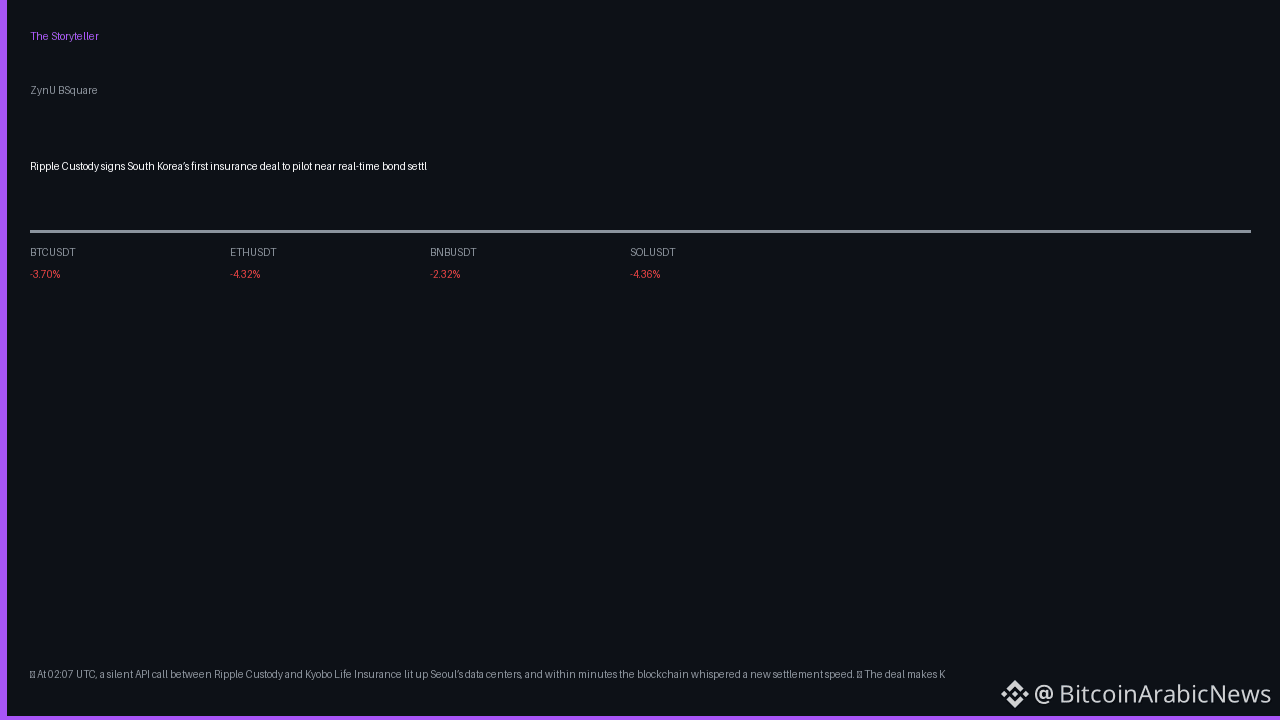
🔥 A las 02:07 UTC, una llamada silenciosa a la API entre Ripple Custody y Kyobo Life Insurance iluminó los centros de datos de Seúl y, en cuestión de minutos, la cadena de bloques susurró una nueva velocidad de liquidación.
📊 El acuerdo convierte a Kyobo, una aseguradora de nivel 1, en la primera entidad coreana en liquidar bonos del gobierno en cadena, reduciendo el retraso clásico de T+2 a casi tiempo real y abriendo un mercado de 1,2 billones de dólares que ha visto cómo Bitcoin caía a 81.435 $ (‑3,7%) y ETH descendía a 2.387 $ (‑4,3%) en medio de un sentimiento de codicia de 68; el interés abierto de los futuros sigue siendo alcista, con un OI de BTC de 7.780 millones de dólares y una tasa de financiación de +0,0062%, mientras las billeteras de dinero inteligente ya tienen la deuda tokenizada en la mira como la próxima jugada #Ripple play #Kyobo #BondSettlement #CryptoAdoption.
💡 ¿El giro? Los mismos gráficos bajistas que asustan a los operadores minoristas son precisamente el catalizador que lleva a las instituciones a buscar la eficiencia respaldada por la cadena de bloques, convirtiendo la caída de hoy en el repunte de la demanda de mañana.
❓ ¿Obligará este discreto proyecto piloto coreano a todo el mercado cripto a reescribir las reglas de liquidación antes del próximo movimiento de la Fed?
🔥 A las 02:07 UTC, una llamada silenciosa a la API entre Ripple Custody y Kyobo Life Insurance iluminó los centros de datos de Seúl y, en cuestión de minutos, la cadena de bloques susurró una nueva velocidad de liquidación.
📊 El acuerdo convierte a Kyobo, una aseguradora de nivel 1, en la primera entidad coreana en liquidar bonos del gobierno en cadena, reduciendo el retraso clásico de T+2 a casi tiempo real y abriendo un mercado de 1,2 billones de dólares que ha visto cómo Bitcoin caía a 81.435 $ (‑3,7%) y ETH descendía a 2.387 $ (‑4,3%) en medio de un sentimiento de codicia de 68; el interés abierto de los futuros sigue siendo alcista, con un OI de BTC de 7.780 millones de dólares y una tasa de financiación de +0,0062%, mientras las billeteras de dinero inteligente ya tienen la deuda tokenizada en la mira como la próxima jugada #Ripple play #Kyobo #BondSettlement #CryptoAdoption.
💡 ¿El giro? Los mismos gráficos bajistas que asustan a los operadores minoristas son precisamente el catalizador que lleva a las instituciones a buscar la eficiencia respaldada por la cadena de bloques, convirtiendo la caída de hoy en el repunte de la demanda de mañana.
❓ ¿Obligará este discreto proyecto piloto coreano a todo el mercado cripto a reescribir las reglas de liquidación antes del próximo movimiento de la Fed?
📊 El acuerdo convierte a Kyobo, una aseguradora de nivel 1, en la primera entidad coreana en liquidar bonos del gobierno en cadena, reduciendo el retraso clásico de T+2 a casi tiempo real y abriendo un mercado de 1,2 billones de dólares que ha visto cómo Bitcoin caía a 81.435 $ (‑3,7%) y ETH descendía a 2.387 $ (‑4,3%) en medio de un sentimiento de codicia de 68; el interés abierto de los futuros sigue siendo alcista, con un OI de BTC de 7.780 millones de dólares y una tasa de financiación de +0,0062%, mientras las billeteras de dinero inteligente ya tienen la deuda tokenizada en la mira como la próxima jugada #Ripple play #Kyobo #BondSettlement #CryptoAdoption.
💡 ¿El giro? Los mismos gráficos bajistas que asustan a los operadores minoristas son precisamente el catalizador que lleva a las instituciones a buscar la eficiencia respaldada por la cadena de bloques, convirtiendo la caída de hoy en el repunte de la demanda de mañana.
❓ ¿Obligará este discreto proyecto piloto coreano a todo el mercado cripto a reescribir las reglas de liquidación antes del próximo movimiento de la Fed?
6

·
--
🏦 ¡Los bancos tradicionales entran con fuerza en el mundo cripto! ¿De qué se trata?
Un nuevo paso que impulsa la adopción de las monedas digitales: la empresa tecnológica y financiera SoFi anunció el lanzamiento de un producto de «depósitos tokenizados» que permite a los usuarios obtener rendimientos anuales de hasta el 4.4% sobre el efectivo destinado a comprar criptomonedas, a la vez que ofrece protección a los inversores.
💡 ¿Por qué es importante esta noticia? La llegada de estos instrumentos financieros inyecta nueva liquidez estable al mercado y facilita que los inversores tradicionales accedan con flexibilidad y rapidez.
👇 ¿Qué opinan? ¿Creen que la integración de los bancos tradicionales con los servicios cripto acelerará la próxima subida?
#CryptoAdoption #BinanceSquare #CryptoNews #Write2Earn $BTC
{spot}(BTCUSDT)
$BNB
{spot}(BNBUSDT)
$USDC
{spot}(USDCUSDT)
🏦 ¡Los bancos tradicionales entran con fuerza en el mundo cripto! ¿De qué se trata?
Un nuevo paso que impulsa la adopción de las monedas digitales: la empresa tecnológica y financiera SoFi anunció el lanzamiento de un producto de «depósitos tokenizados» que permite a los usuarios obtener rendimientos anuales de hasta el 4.4% sobre el efectivo destinado a comprar criptomonedas, a la vez que ofrece protección a los inversores.
💡 ¿Por qué es importante esta noticia? La llegada de estos instrumentos financieros inyecta nueva liquidez estable al mercado y facilita que los inversores tradicionales accedan con flexibilidad y rapidez.
👇 ¿Qué opinan? ¿Creen que la integración de los bancos tradicionales con los servicios cripto acelerará la próxima subida?
#CryptoAdoption #BinanceSquare #CryptoNews #Write2Earn $BTC
$BNB
$USDC
Un nuevo paso que impulsa la adopción de las monedas digitales: la empresa tecnológica y financiera SoFi anunció el lanzamiento de un producto de «depósitos tokenizados» que permite a los usuarios obtener rendimientos anuales de hasta el 4.4% sobre el efectivo destinado a comprar criptomonedas, a la vez que ofrece protección a los inversores.
💡 ¿Por qué es importante esta noticia? La llegada de estos instrumentos financieros inyecta nueva liquidez estable al mercado y facilita que los inversores tradicionales accedan con flexibilidad y rapidez.
👇 ¿Qué opinan? ¿Creen que la integración de los bancos tradicionales con los servicios cripto acelerará la próxima subida?
#CryptoAdoption #BinanceSquare #CryptoNews #Write2Earn $BTC
$BNB
$USDC
21

Si todavía insistes en que la autocustodia es la única forma auténtica de tener Bitcoin, este error ya les ha costado millones a los traders por la pérdida de claves y los hackeos.
Los inversores de a pie no dejan de ver cómo desaparecen sus ahorros tras un intento de phishing o por olvidar la frase semilla. Se pierden oportunidades sencillas de entrada y salida mientras la barrera técnica los mantiene al margen.
Suiza acaba de dar un paso en este sentido. El 20 de octubre, FINMA aprobó un fondo que mantiene Bitcoin real $BTC y lo abrió a los inversores de a pie, no solo a los cualificados. Se espera que empiece a cotizar como BBIT en SIX el próximo mes, para que la gente pueda obtener una exposición auténtica a Bitcoin sin tener que gestionar claves privadas.
FINMA incluso eximió al fondo de las normas habituales de diversificación. Los puristas dirán que esto no es más que otro derecho sobre el papel, igual que ciertos productos $ETH en los que nunca controlas el activo. Yo veo más claramente el otro lado. La mayoría de la gente no va a convertirse en experta en monederos, y esto elimina la principal razón por la que no participa o termina perdiéndolo todo.
Esto parece un paso práctico hacia un acceso más amplio a $BTC , en lugar de otra prueba ideológica de pureza.
¿Es este el equilibrio adecuado para acercar Bitcoin a los inversores comunes o un paso que nos aleja de lo que se suponía que debía ser el mundo cripto?
#Bitcoin #FINMA #AdopciónCripto
Si todavía insistes en que la autocustodia es la única forma auténtica de tener Bitcoin, este error ya les ha costado millones a los traders por la pérdida de claves y los hackeos.
Los inversores de a pie no dejan de ver cómo desaparecen sus ahorros tras un intento de phishing o por olvidar la frase semilla. Se pierden oportunidades sencillas de entrada y salida mientras la barrera técnica los mantiene al margen.
Suiza acaba de dar un paso en este sentido. El 20 de octubre, FINMA aprobó un fondo que mantiene Bitcoin real $BTC y lo abrió a los inversores de a pie, no solo a los cualificados. Se espera que empiece a cotizar como BBIT en SIX el próximo mes, para que la gente pueda obtener una exposición auténtica a Bitcoin sin tener que gestionar claves privadas.
FINMA incluso eximió al fondo de las normas habituales de diversificación. Los puristas dirán que esto no es más que otro derecho sobre el papel, igual que ciertos productos $ETH en los que nunca controlas el activo. Yo veo más claramente el otro lado. La mayoría de la gente no va a convertirse en experta en monederos, y esto elimina la principal razón por la que no participa o termina perdiéndolo todo.
Esto parece un paso práctico hacia un acceso más amplio a $BTC , en lugar de otra prueba ideológica de pureza.
¿Es este el equilibrio adecuado para acercar Bitcoin a los inversores comunes o un paso que nos aleja de lo que se suponía que debía ser el mundo cripto?
#Bitcoin #FINMA #AdopciónCripto
Los inversores de a pie no dejan de ver cómo desaparecen sus ahorros tras un intento de phishing o por olvidar la frase semilla. Se pierden oportunidades sencillas de entrada y salida mientras la barrera técnica los mantiene al margen.
Suiza acaba de dar un paso en este sentido. El 20 de octubre, FINMA aprobó un fondo que mantiene Bitcoin real $BTC y lo abrió a los inversores de a pie, no solo a los cualificados. Se espera que empiece a cotizar como BBIT en SIX el próximo mes, para que la gente pueda obtener una exposición auténtica a Bitcoin sin tener que gestionar claves privadas.
FINMA incluso eximió al fondo de las normas habituales de diversificación. Los puristas dirán que esto no es más que otro derecho sobre el papel, igual que ciertos productos $ETH en los que nunca controlas el activo. Yo veo más claramente el otro lado. La mayoría de la gente no va a convertirse en experta en monederos, y esto elimina la principal razón por la que no participa o termina perdiéndolo todo.
Esto parece un paso práctico hacia un acceso más amplio a $BTC , en lugar de otra prueba ideológica de pureza.
¿Es este el equilibrio adecuado para acercar Bitcoin a los inversores comunes o un paso que nos aleja de lo que se suponía que debía ser el mundo cripto?
#Bitcoin #FINMA #AdopciónCripto

·
--
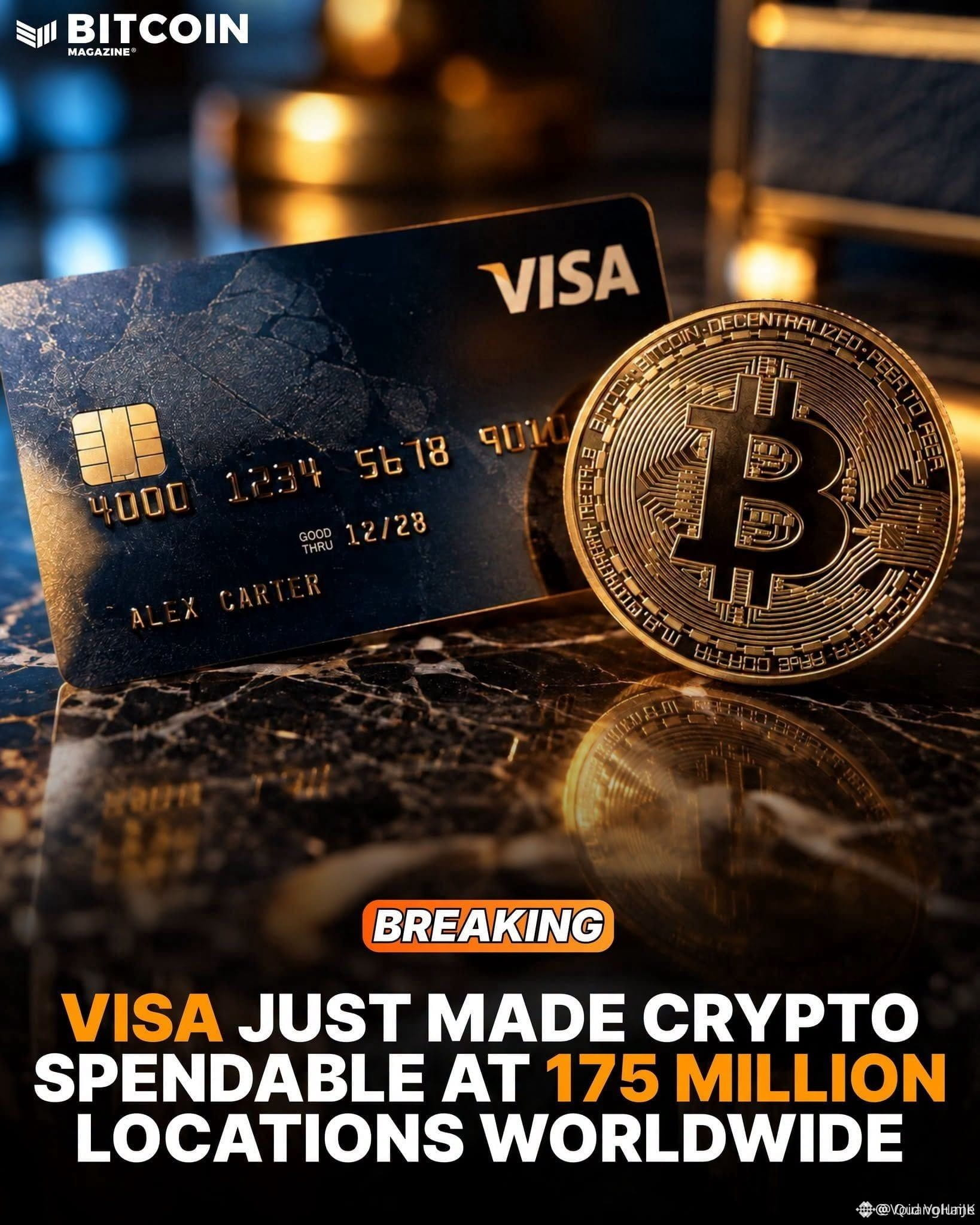
⚡ LA INFRAESTRUCTURA INSTITUCIONAL SE EXPANDE A MEDIDA QUE LA LIQUIDACIÓN DIRECTA EN BILLETERAS $BTC SE INTEGRA CON VISA 🦈
Detrás de los libros de órdenes, la adopción estructural sigue conectando silenciosamente la liquidez macroeconómica con los balances nativos. 🏦 El canal de conversión invisible conecta directamente la demanda de marcos temporales amplios con el volumen en puntos de venta, absorbiendo sistemáticamente la oferta circulante sin generar fricciones en las transacciones cotidianas.
Desde la perspectiva de la estructura del mercado, reducir la fricción en las rampas de salida actúa como un mecanismo permanente de absorción en los fondos de liquidez. 🔍 A medida que los pagos tradicionales abstraen la conversión a moneda fiduciaria en redes de backend, la acumulación estructural gana un catalizador silencioso y recurrente. 💬 ¿La utilidad de gastar sin fricciones acelera la creación de una base institucional, o los holders preservarán la oferta en la cadena? 👇
⚠️ Esto no es asesoramiento financiero. Gestiona siempre tus riesgos. 🛡️
🏷️ #BTC #Bitcoin #CryptoAdoption #MacroLiquidity
🎯 🦈
⚡ LA INFRAESTRUCTURA INSTITUCIONAL SE EXPANDE A MEDIDA QUE LA LIQUIDACIÓN DIRECTA EN BILLETERAS $BTC SE INTEGRA CON VISA 🦈
Detrás de los libros de órdenes, la adopción estructural sigue conectando silenciosamente la liquidez macroeconómica con los balances nativos. 🏦 El canal de conversión invisible conecta directamente la demanda de marcos temporales amplios con el volumen en puntos de venta, absorbiendo sistemáticamente la oferta circulante sin generar fricciones en las transacciones cotidianas.
Desde la perspectiva de la estructura del mercado, reducir la fricción en las rampas de salida actúa como un mecanismo permanente de absorción en los fondos de liquidez. 🔍 A medida que los pagos tradicionales abstraen la conversión a moneda fiduciaria en redes de backend, la acumulación estructural gana un catalizador silencioso y recurrente. 💬 ¿La utilidad de gastar sin fricciones acelera la creación de una base institucional, o los holders preservarán la oferta en la cadena? 👇
⚠️ Esto no es asesoramiento financiero. Gestiona siempre tus riesgos. 🛡️
🏷️ #BTC #Bitcoin #CryptoAdoption #MacroLiquidity
🎯 🦈
Detrás de los libros de órdenes, la adopción estructural sigue conectando silenciosamente la liquidez macroeconómica con los balances nativos. 🏦 El canal de conversión invisible conecta directamente la demanda de marcos temporales amplios con el volumen en puntos de venta, absorbiendo sistemáticamente la oferta circulante sin generar fricciones en las transacciones cotidianas.
Desde la perspectiva de la estructura del mercado, reducir la fricción en las rampas de salida actúa como un mecanismo permanente de absorción en los fondos de liquidez. 🔍 A medida que los pagos tradicionales abstraen la conversión a moneda fiduciaria en redes de backend, la acumulación estructural gana un catalizador silencioso y recurrente. 💬 ¿La utilidad de gastar sin fricciones acelera la creación de una base institucional, o los holders preservarán la oferta en la cadena? 👇
⚠️ Esto no es asesoramiento financiero. Gestiona siempre tus riesgos. 🛡️
🏷️ #BTC #Bitcoin #CryptoAdoption #MacroLiquidity
🎯 🦈
1
Visa acaba de empezar a usar $USDC para realizar pagos a comercios en tiempo real, después de mantenerlo en pruebas durante meses; algo que la mayoría de los traders todavía considera ruido de fondo.
Has visto demasiados titulares sobre alianzas desvanecerse sin llegar a nada, mientras tu cartera recibía el golpe por perseguir la próxima narrativa en lugar de seguir el movimiento real del dinero.
Este cambio significa que Visa está prefinanciando liquidaciones reales con $USDC en vez de esperar transferencias bancarias que se interrumpen los fines de semana. Los pagos tradicionales pueden tardar días. En la cadena, se liquidan en minutos, a cualquier hora. Vi el mismo patrón en 2020, cuando las instituciones empezaron a mantener efectivo en monedas estables durante el ciclo anterior. Todo el mundo lo descartó por aburrido, hasta que el volumen empezó a acumularse. $ETH todavía concentra la mayor parte de esa liquidez, y hasta una pequeña fracción del flujo de Visa eclipsaría la actividad típica de DeFi que antes celebrábamos.
Es comprensible temer perderse otra ola de euforia. Pero la esperanza de que las criptomonedas por fin se conviertan en la infraestructura financiera, en vez de un casino, es lo que realmente se acumula a lo largo de los ciclos.
¿Hacia dónde crees que irá esto cuando más redes empiecen a tratar $USDC como capital operativo en lugar de como un lugar donde aparcar fondos?
#USDC #Stablecoins #CryptoAdoption
Visa acaba de empezar a usar $USDC para realizar pagos a comercios en tiempo real, después de mantenerlo en pruebas durante meses; algo que la mayoría de los traders todavía considera ruido de fondo.
Has visto demasiados titulares sobre alianzas desvanecerse sin llegar a nada, mientras tu cartera recibía el golpe por perseguir la próxima narrativa en lugar de seguir el movimiento real del dinero.
Este cambio significa que Visa está prefinanciando liquidaciones reales con $USDC en vez de esperar transferencias bancarias que se interrumpen los fines de semana. Los pagos tradicionales pueden tardar días. En la cadena, se liquidan en minutos, a cualquier hora. Vi el mismo patrón en 2020, cuando las instituciones empezaron a mantener efectivo en monedas estables durante el ciclo anterior. Todo el mundo lo descartó por aburrido, hasta que el volumen empezó a acumularse. $ETH todavía concentra la mayor parte de esa liquidez, y hasta una pequeña fracción del flujo de Visa eclipsaría la actividad típica de DeFi que antes celebrábamos.
Es comprensible temer perderse otra ola de euforia. Pero la esperanza de que las criptomonedas por fin se conviertan en la infraestructura financiera, en vez de un casino, es lo que realmente se acumula a lo largo de los ciclos.
¿Hacia dónde crees que irá esto cuando más redes empiecen a tratar $USDC como capital operativo en lugar de como un lugar donde aparcar fondos?
#USDC #Stablecoins #CryptoAdoption
Has visto demasiados titulares sobre alianzas desvanecerse sin llegar a nada, mientras tu cartera recibía el golpe por perseguir la próxima narrativa en lugar de seguir el movimiento real del dinero.
Este cambio significa que Visa está prefinanciando liquidaciones reales con $USDC en vez de esperar transferencias bancarias que se interrumpen los fines de semana. Los pagos tradicionales pueden tardar días. En la cadena, se liquidan en minutos, a cualquier hora. Vi el mismo patrón en 2020, cuando las instituciones empezaron a mantener efectivo en monedas estables durante el ciclo anterior. Todo el mundo lo descartó por aburrido, hasta que el volumen empezó a acumularse. $ETH todavía concentra la mayor parte de esa liquidez, y hasta una pequeña fracción del flujo de Visa eclipsaría la actividad típica de DeFi que antes celebrábamos.
Es comprensible temer perderse otra ola de euforia. Pero la esperanza de que las criptomonedas por fin se conviertan en la infraestructura financiera, en vez de un casino, es lo que realmente se acumula a lo largo de los ciclos.
¿Hacia dónde crees que irá esto cuando más redes empiecen a tratar $USDC como capital operativo en lugar de como un lugar donde aparcar fondos?
#USDC #Stablecoins #CryptoAdoption
1

#Mesh #bitcoin #CryptoAdoption
Visa y Mesh acaban de asociarse (lo anunciaron el 19 de octubre). Los usuarios podrán gastar los saldos de criptomonedas y monedas estables directamente desde sus billeteras en comercios de la red de Visa, sin necesidad de una tarjeta aparte. La red de Visa abarca más de 175 millones de establecimientos comerciales en más de 200 países y territorios. Mesh se encarga de la conversión, y los comercios siguen recibiendo los pagos a través del sistema habitual de Visa. La salvedad es que todavía no se ha anunciado una fecha de lanzamiento ni qué plataformas participarán. BTC se mantiene estable en torno a los 82.000 $. (visa mesh asociación gasto en criptomonedas 175 millones de establecimientos comerciales +3)
Ponle un título →
Gastar criptomonedas acaba de volverse mucho menos complicado
Visa y Mesh se están asociando para que puedas pagar con criptomonedas o monedas estables en más de 175 millones de comercios, sin una tarjeta de criptomonedas aparte ni tener que convertirlas primero en efectivo. El comercio sigue cobrando como siempre.
La salvedad: todavía no hay fecha de lanzamiento ni una lista de billeteras. Un gran anuncio; la implementación real aún está por llegar.
#Mesh #bitcoin #CryptoAdoption
Visa y Mesh acaban de asociarse (lo anunciaron el 19 de octubre). Los usuarios podrán gastar los saldos de criptomonedas y monedas estables directamente desde sus billeteras en comercios de la red de Visa, sin necesidad de una tarjeta aparte. La red de Visa abarca más de 175 millones de establecimientos comerciales en más de 200 países y territorios. Mesh se encarga de la conversión, y los comercios siguen recibiendo los pagos a través del sistema habitual de Visa. La salvedad es que todavía no se ha anunciado una fecha de lanzamiento ni qué plataformas participarán. BTC se mantiene estable en torno a los 82.000 $. (visa mesh asociación gasto en criptomonedas 175 millones de establecimientos comerciales +3)
Ponle un título →
Gastar criptomonedas acaba de volverse mucho menos complicado
Visa y Mesh se están asociando para que puedas pagar con criptomonedas o monedas estables en más de 175 millones de comercios, sin una tarjeta de criptomonedas aparte ni tener que convertirlas primero en efectivo. El comercio sigue cobrando como siempre.
La salvedad: todavía no hay fecha de lanzamiento ni una lista de billeteras. Un gran anuncio; la implementación real aún está por llegar.
Visa y Mesh acaban de asociarse (lo anunciaron el 19 de octubre). Los usuarios podrán gastar los saldos de criptomonedas y monedas estables directamente desde sus billeteras en comercios de la red de Visa, sin necesidad de una tarjeta aparte. La red de Visa abarca más de 175 millones de establecimientos comerciales en más de 200 países y territorios. Mesh se encarga de la conversión, y los comercios siguen recibiendo los pagos a través del sistema habitual de Visa. La salvedad es que todavía no se ha anunciado una fecha de lanzamiento ni qué plataformas participarán. BTC se mantiene estable en torno a los 82.000 $. (visa mesh asociación gasto en criptomonedas 175 millones de establecimientos comerciales +3)
Ponle un título →
Gastar criptomonedas acaba de volverse mucho menos complicado
Visa y Mesh se están asociando para que puedas pagar con criptomonedas o monedas estables en más de 175 millones de comercios, sin una tarjeta de criptomonedas aparte ni tener que convertirlas primero en efectivo. El comercio sigue cobrando como siempre.
La salvedad: todavía no hay fecha de lanzamiento ni una lista de billeteras. Un gran anuncio; la implementación real aún está por llegar.
83
·
--
🇨🇭 Suiza acaba de dar otro gran paso hacia la adopción de Bitcoin.
Lo que me llamó la atención no es solo la aprobación de un nuevo ETF de Bitcoin, sino también el hecho de que FINMA haya permitido que un ETF minorista sujeto a la legislación suiza invierta directamente en Bitcoin, eximiéndolo de las normas habituales de diversificación.
Para mí, esto señala algo importante: a medida que madura el mercado cripto, los productos financieros tradicionales encuentran nuevas formas de dar cabida a Bitcoin en lugar de evitarlo.
Pero no considero que esto sea un catalizador alcista inmediato. Aún no se han anunciado el emisor, las comisiones de gestión ni la fecha de inicio de la negociación, y las medidas de seguridad de la custodia siguen siendo importantes.
La verdadera pregunta es si este paso hará que Bitcoin sea más accesible para los inversores de a pie y animará a otros mercados financieros a seguir el ejemplo de Suiza.
La adopción de Bitcoin ya no se trata solo del precio. También se trata de cómo las finanzas tradicionales están cambiando a su alrededor. 👀
¿Qué opinas? ¿El paso de Suiza podría animar a más países a abrir sus puertas a los productos de inversión en Bitcoin?
$JCT $ARIA
#Bitcoin #BTC #CryptoNews #BitcoinETFs #CryptoAdoption
🇨🇭 Suiza acaba de dar otro gran paso hacia la adopción de Bitcoin.
Lo que me llamó la atención no es solo la aprobación de un nuevo ETF de Bitcoin, sino también el hecho de que FINMA haya permitido que un ETF minorista sujeto a la legislación suiza invierta directamente en Bitcoin, eximiéndolo de las normas habituales de diversificación.
Para mí, esto señala algo importante: a medida que madura el mercado cripto, los productos financieros tradicionales encuentran nuevas formas de dar cabida a Bitcoin en lugar de evitarlo.
Pero no considero que esto sea un catalizador alcista inmediato. Aún no se han anunciado el emisor, las comisiones de gestión ni la fecha de inicio de la negociación, y las medidas de seguridad de la custodia siguen siendo importantes.
La verdadera pregunta es si este paso hará que Bitcoin sea más accesible para los inversores de a pie y animará a otros mercados financieros a seguir el ejemplo de Suiza.
La adopción de Bitcoin ya no se trata solo del precio. También se trata de cómo las finanzas tradicionales están cambiando a su alrededor. 👀
¿Qué opinas? ¿El paso de Suiza podría animar a más países a abrir sus puertas a los productos de inversión en Bitcoin?
$JCT $ARIA
#Bitcoin #BTC #CryptoNews #BitcoinETFs #CryptoAdoption
Lo que me llamó la atención no es solo la aprobación de un nuevo ETF de Bitcoin, sino también el hecho de que FINMA haya permitido que un ETF minorista sujeto a la legislación suiza invierta directamente en Bitcoin, eximiéndolo de las normas habituales de diversificación.
Para mí, esto señala algo importante: a medida que madura el mercado cripto, los productos financieros tradicionales encuentran nuevas formas de dar cabida a Bitcoin en lugar de evitarlo.
Pero no considero que esto sea un catalizador alcista inmediato. Aún no se han anunciado el emisor, las comisiones de gestión ni la fecha de inicio de la negociación, y las medidas de seguridad de la custodia siguen siendo importantes.
La verdadera pregunta es si este paso hará que Bitcoin sea más accesible para los inversores de a pie y animará a otros mercados financieros a seguir el ejemplo de Suiza.
La adopción de Bitcoin ya no se trata solo del precio. También se trata de cómo las finanzas tradicionales están cambiando a su alrededor. 👀
¿Qué opinas? ¿El paso de Suiza podría animar a más países a abrir sus puertas a los productos de inversión en Bitcoin?
$JCT $ARIA
#Bitcoin #BTC #CryptoNews #BitcoinETFs #CryptoAdoption

109

·
--
Las Sparkassen alemanas lanzan operaciones con criptomonedas para sus clientes con cinco grandes tokens. Se trata de una de las mayores redes bancarias de Europa, así que millones de personas tendrán acceso a las criptomonedas sin necesidad de usar exchanges. El banco precisará cuáles serán los tokens, pero apostar por $BTC y $ETH parece lógico. Para el mercado, esto supone una demanda a largo plazo, no un impulso pasajero.
¿Las criptomonedas en la banca son buenas noticias para el precio o solo una comodidad para los pequeños inversores? 👇
#Sparkassen #CryptoAdoption #Europe
Las Sparkassen alemanas lanzan operaciones con criptomonedas para sus clientes con cinco grandes tokens. Se trata de una de las mayores redes bancarias de Europa, así que millones de personas tendrán acceso a las criptomonedas sin necesidad de usar exchanges. El banco precisará cuáles serán los tokens, pero apostar por $BTC y $ETH parece lógico. Para el mercado, esto supone una demanda a largo plazo, no un impulso pasajero.
¿Las criptomonedas en la banca son buenas noticias para el precio o solo una comodidad para los pequeños inversores? 👇
#Sparkassen #CryptoAdoption #Europe
¿Las criptomonedas en la banca son buenas noticias para el precio o solo una comodidad para los pequeños inversores? 👇
#Sparkassen #CryptoAdoption #Europe
26

·
--
Suiza y los ETF (optimismo institucional 😁😁😁😁😁)
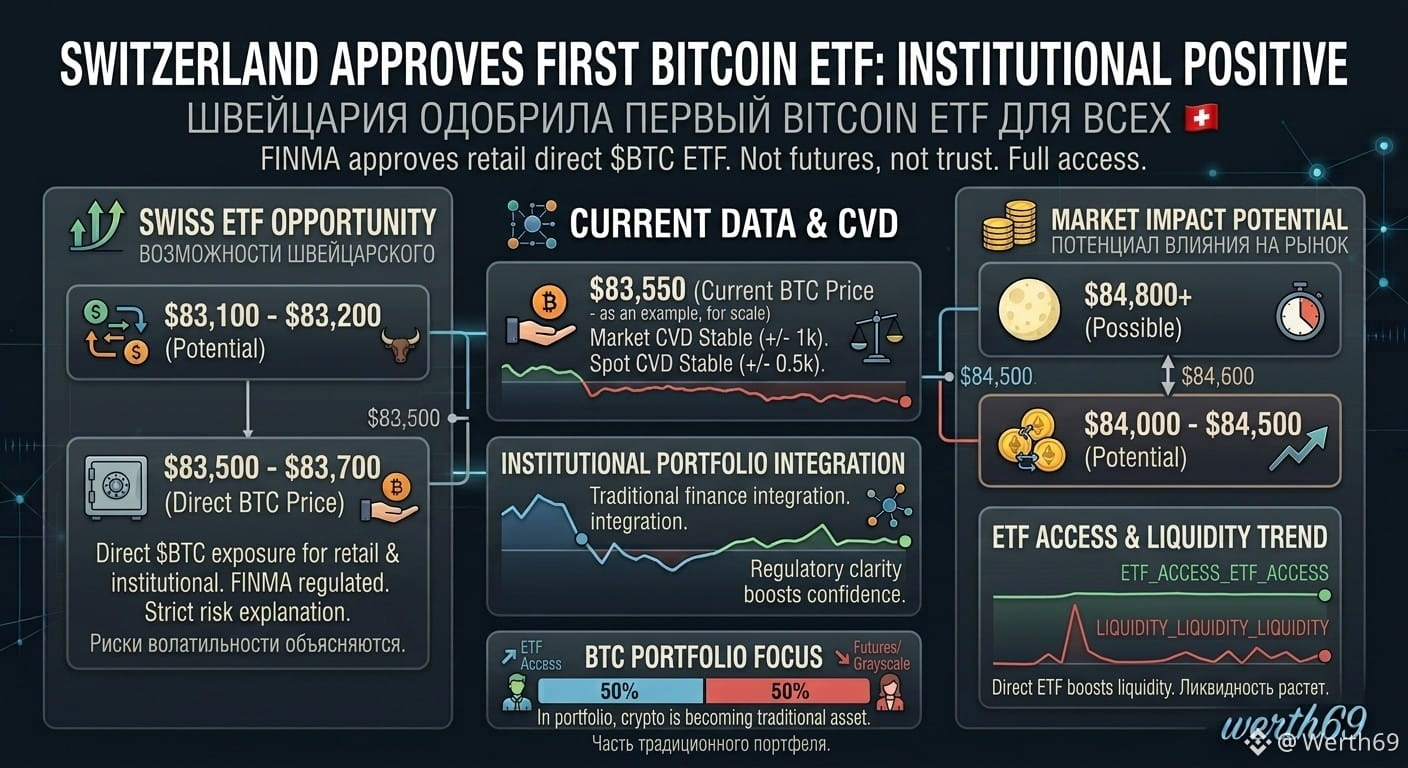
Suiza aprueba el primer ETF de Bitcoin
El regulador suizo FINMA aprobó oficialmente el primer fondo minorista que invierte directamente en $BTC. No es un ETF de futuros ni un fideicomiso: es un fondo cotizado en bolsa de pleno derecho, disponible para el público general.
Por qué es importante:
Suiza es uno de los centros financieros más conservadores del mundo. La aprobación de un ETF allí significa que Bitcoin ha superado el escrutinio incluso de los reguladores más estrictos. FINMA recalcó que hay que explicar a los inversores los riesgos de la volatilidad, pero el mero hecho de que el fondo empiece a operar ya dice mucho.
Para el mercado, este es otro paso hacia la incorporación de las criptomonedas a las carteras de inversión tradicionales. Si antes los inversores institucionales accedían a través de Grayscale o de futuros, ahora cuentan con acceso directo mediante un ETF regulado.
#bitcoin #etf #CryptoAdoption
$BTC
{future}(BTCUSDT)
Suiza y los ETF (optimismo institucional 😁😁😁😁😁)
Suiza aprueba el primer ETF de Bitcoin
El regulador suizo FINMA aprobó oficialmente el primer fondo minorista que invierte directamente en $BTC . No es un ETF de futuros ni un fideicomiso: es un fondo cotizado en bolsa de pleno derecho, disponible para el público general.
Por qué es importante:
Suiza es uno de los centros financieros más conservadores del mundo. La aprobación de un ETF allí significa que Bitcoin ha superado el escrutinio incluso de los reguladores más estrictos. FINMA recalcó que hay que explicar a los inversores los riesgos de la volatilidad, pero el mero hecho de que el fondo empiece a operar ya dice mucho.
Para el mercado, este es otro paso hacia la incorporación de las criptomonedas a las carteras de inversión tradicionales. Si antes los inversores institucionales accedían a través de Grayscale o de futuros, ahora cuentan con acceso directo mediante un ETF regulado.
#bitcoin #etf #CryptoAdoption
$BTC
Suiza aprueba el primer ETF de Bitcoin
El regulador suizo FINMA aprobó oficialmente el primer fondo minorista que invierte directamente en $BTC . No es un ETF de futuros ni un fideicomiso: es un fondo cotizado en bolsa de pleno derecho, disponible para el público general.
Por qué es importante:
Suiza es uno de los centros financieros más conservadores del mundo. La aprobación de un ETF allí significa que Bitcoin ha superado el escrutinio incluso de los reguladores más estrictos. FINMA recalcó que hay que explicar a los inversores los riesgos de la volatilidad, pero el mero hecho de que el fondo empiece a operar ya dice mucho.
Para el mercado, este es otro paso hacia la incorporación de las criptomonedas a las carteras de inversión tradicionales. Si antes los inversores institucionales accedían a través de Grayscale o de futuros, ahora cuentan con acceso directo mediante un ETF regulado.
#bitcoin #etf #CryptoAdoption
$BTC
89

ÚLTIMA HORA: 🇮🇷🇺🇸 Se desploma la moneda de IránTesoro de EE. UU.: el rial iraní alcanza un mínimo histórico: 2,5 millones por $1
Las exportaciones de petróleo se desplomaron de 1,7 millones a 260.000 barriles al día. Irán quedó aislado del sistema del dólar estadounidense.
Sobre el terreno: compras de pánico, largas filas para conseguir combustible e informes de personas que pagan una prima por $USDT.
Cuando las monedas fracasan, la gente elige las criptomonedas. Lo vimos en Líbano, Venezuela y Turquía; ahora, en Irán.
La descentralización no es un relato, es supervivencia.
#BTC $USDT #CryptoAdoption #EarningsSeason #SkyAISellsAllSOLAndLaunchesCashTenderOffer
ÚLTIMA HORA: 🇮🇷🇺🇸 Se desploma la moneda de Irán
Tesoro de EE. UU.: el rial iraní alcanza un mínimo histórico: 2,5 millones por $1
Las exportaciones de petróleo se desplomaron de 1,7 millones a 260.000 barriles al día. Irán quedó aislado del sistema del dólar estadounidense.
Sobre el terreno: compras de pánico, largas filas para conseguir combustible e informes de personas que pagan una prima por $USDT.
Cuando las monedas fracasan, la gente elige las criptomonedas. Lo vimos en Líbano, Venezuela y Turquía; ahora, en Irán.
La descentralización no es un relato, es supervivencia.
#BTC $USDT #CryptoAdoption #EarningsSeason #SkyAISellsAllSOLAndLaunchesCashTenderOffer
Las exportaciones de petróleo se desplomaron de 1,7 millones a 260.000 barriles al día. Irán quedó aislado del sistema del dólar estadounidense.
Sobre el terreno: compras de pánico, largas filas para conseguir combustible e informes de personas que pagan una prima por $USDT.
Cuando las monedas fracasan, la gente elige las criptomonedas. Lo vimos en Líbano, Venezuela y Turquía; ahora, en Irán.
La descentralización no es un relato, es supervivencia.
#BTC $USDT #CryptoAdoption #EarningsSeason #SkyAISellsAllSOLAndLaunchesCashTenderOffer
15
🔥 Tokenizar las acciones estadounidenses no es un proyecto secundario; es la próxima frontera para el capital cripto.
📈 DTCC acaba de anunciar su grupo de trabajo sobre tokenización e incorporó a Ondo junto con BlackRock, Goldman, JPMorgan y Circle: una clara señal de que la infraestructura #Tokenization y #OnChain está pasando de la teoría a la regulación.
🌍 Cuando los mayores custodios del mundo empiezan a construir puentes en cadena para 30 billones de dólares en acciones y bonos del Tesoro, el mercado cripto entra en la fase de «liquidez institucional» del ciclo, amplificando la narrativa actual #InstitutionalMoney #CryptoAdoption .
💡 Medida práctica: observa la financiación alcista (+0.0070%) y el sólido interés abierto (7.83 B$) en los futuros de BTC como indicador del apetito institucional, y considera destinar una parte de tu cartera a plataformas como BNB (733$, RSI 56.9, MACD alcista), que ya alojan activos tokenizados.
❓ ¿Cómo te posicionarás mientras las finanzas tradicionales se incorporan a la cadena de bloques: redoblarás tu apuesta por las criptomonedas, diversificarás hacia acciones tokenizadas o esperarás la próxima luz verde regulatoria?
🔥 Tokenizar las acciones estadounidenses no es un proyecto secundario; es la próxima frontera para el capital cripto.
📈 DTCC acaba de anunciar su grupo de trabajo sobre tokenización e incorporó a Ondo junto con BlackRock, Goldman, JPMorgan y Circle: una clara señal de que la infraestructura #Tokenization y #OnChain está pasando de la teoría a la regulación.
🌍 Cuando los mayores custodios del mundo empiezan a construir puentes en cadena para 30 billones de dólares en acciones y bonos del Tesoro, el mercado cripto entra en la fase de «liquidez institucional» del ciclo, amplificando la narrativa actual #InstitutionalMoney #CryptoAdoption .
💡 Medida práctica: observa la financiación alcista (+0.0070%) y el sólido interés abierto (7.83 B$) en los futuros de BTC como indicador del apetito institucional, y considera destinar una parte de tu cartera a plataformas como BNB (733$, RSI 56.9, MACD alcista), que ya alojan activos tokenizados.
❓ ¿Cómo te posicionarás mientras las finanzas tradicionales se incorporan a la cadena de bloques: redoblarás tu apuesta por las criptomonedas, diversificarás hacia acciones tokenizadas o esperarás la próxima luz verde regulatoria?
📈 DTCC acaba de anunciar su grupo de trabajo sobre tokenización e incorporó a Ondo junto con BlackRock, Goldman, JPMorgan y Circle: una clara señal de que la infraestructura #Tokenization y #OnChain está pasando de la teoría a la regulación.
🌍 Cuando los mayores custodios del mundo empiezan a construir puentes en cadena para 30 billones de dólares en acciones y bonos del Tesoro, el mercado cripto entra en la fase de «liquidez institucional» del ciclo, amplificando la narrativa actual #InstitutionalMoney #CryptoAdoption .
💡 Medida práctica: observa la financiación alcista (+0.0070%) y el sólido interés abierto (7.83 B$) en los futuros de BTC como indicador del apetito institucional, y considera destinar una parte de tu cartera a plataformas como BNB (733$, RSI 56.9, MACD alcista), que ya alojan activos tokenizados.
❓ ¿Cómo te posicionarás mientras las finanzas tradicionales se incorporan a la cadena de bloques: redoblarás tu apuesta por las criptomonedas, diversificarás hacia acciones tokenizadas o esperarás la próxima luz verde regulatoria?
3
Inicia sesión para explorar más contenidos
Únete a usuarios globales de criptomonedas en Binance Square
⚡️ Obtén información útil y actualizada sobre criptos.
💬 Avalado por el mayor exchange de criptomonedas en el mundo.
👍 Descubre perspectivas reales de creadores verificados.
Email/número de teléfono
Temas populares
1
#BinancePick
2.7M vistas
145,456 están debatiendo
2
#EarningsSeason
5.1M vistas
24,879 están debatiendo
3
#AnthropicS1ExpectedToday
57 vistas
16 están debatiendo
4
#SouthKoreaReportedlyWeighsFourthCryptoTaxDelay
6,436 vistas
200 están debatiendo
5
#FranklinTempletonFilesForTwoDividendToBitcoinETFs
12,375 vistas
317 están debatiendo
6
#StrategyMSTRSurpassesNasdaqInMarketCap
10,859 vistas
258 están debatiendo
7
#CanadaProposesStablecoinRedemptionWithin3BusinessDays
453 vistas
27 están debatiendo
8
#ElectrumWalletBugLetRogueServersStealFunds
15,768 vistas
374 están debatiendo
9
#ArgentineCourtDismissesLIBRACaseAgainstMilei
25,858 vistas
441 están debatiendo
10
#SKHynixReportedlyPlansSpecialDividendFromKioxiaStakeSale
3,880 vistas
52 están debatiendo