

#cryptobasics
cryptobasics
550,554 vistas
3,326 están debatiendo
Hot
Lo último

·
--
Bitcoin vs. blockchain: ¿cuál es la diferencia?
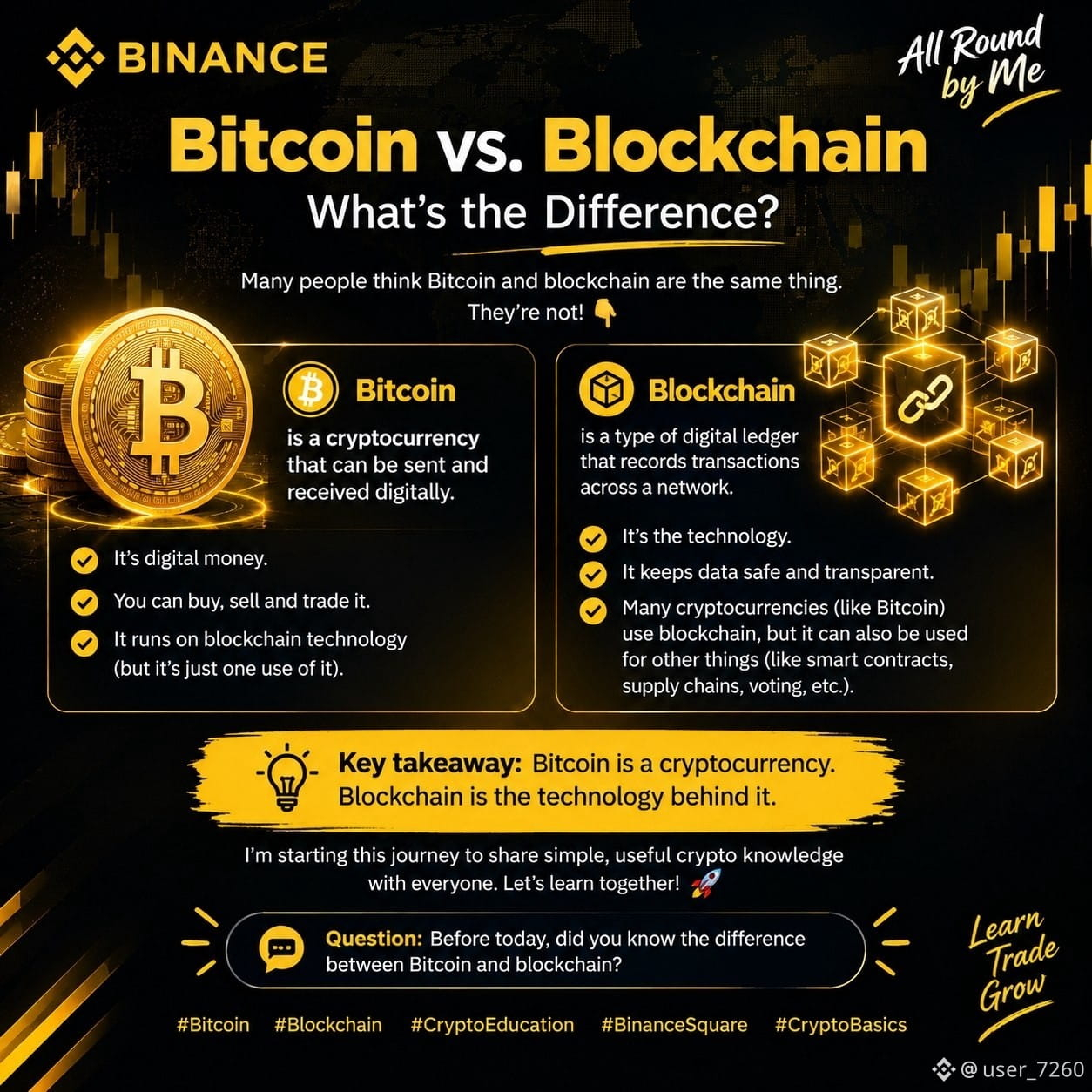
🪙 BITCOIN vs. BLOCKCHAIN — ¿Cuál es la diferencia?
¿Nuevo en el mundo cripto? ¡Hagámoslo sencillo! 👇
₿ Bitcoin es una criptomoneda que se puede enviar y recibir digitalmente.
🔗 Blockchain es un tipo de libro de contabilidad digital que registra transacciones en una red.
💡 Esta es la forma más fácil de recordarlo:
Bitcoin es dinero digital. Blockchain es la tecnología que hace posibles las transacciones con Bitcoin.
Y aquí va un dato interesante: ¡la tecnología blockchain tiene muchos otros usos, además de las criptomonedas!
🚀 En All Round by Me, hacemos que el mundo cripto sea más fácil de entender, publicación a publicación.
💬 Te toca: ¿Ya conocías la diferencia entre Bitcoin y blockchain o aprendiste algo nuevo hoy?
Síguenos para descubrir más explicaciones sencillas sobre criptomonedas, consejos útiles y análisis del mercado.
#Bitcoin #Blockchain #CryptoEducation #BinanceSquare #CryptoBasics
Bitcoin vs. blockchain: ¿cuál es la diferencia?
🪙 BITCOIN vs. BLOCKCHAIN — ¿Cuál es la diferencia?
¿Nuevo en el mundo cripto? ¡Hagámoslo sencillo! 👇
₿ Bitcoin es una criptomoneda que se puede enviar y recibir digitalmente.
🔗 Blockchain es un tipo de libro de contabilidad digital que registra transacciones en una red.
💡 Esta es la forma más fácil de recordarlo:
Bitcoin es dinero digital. Blockchain es la tecnología que hace posibles las transacciones con Bitcoin.
Y aquí va un dato interesante: ¡la tecnología blockchain tiene muchos otros usos, además de las criptomonedas!
🚀 En All Round by Me, hacemos que el mundo cripto sea más fácil de entender, publicación a publicación.
💬 Te toca: ¿Ya conocías la diferencia entre Bitcoin y blockchain o aprendiste algo nuevo hoy?
Síguenos para descubrir más explicaciones sencillas sobre criptomonedas, consejos útiles y análisis del mercado.
#Bitcoin #Blockchain #CryptoEducation #BinanceSquare #CryptoBasics
🪙 BITCOIN vs. BLOCKCHAIN — ¿Cuál es la diferencia?
¿Nuevo en el mundo cripto? ¡Hagámoslo sencillo! 👇
₿ Bitcoin es una criptomoneda que se puede enviar y recibir digitalmente.
🔗 Blockchain es un tipo de libro de contabilidad digital que registra transacciones en una red.
💡 Esta es la forma más fácil de recordarlo:
Bitcoin es dinero digital. Blockchain es la tecnología que hace posibles las transacciones con Bitcoin.
Y aquí va un dato interesante: ¡la tecnología blockchain tiene muchos otros usos, además de las criptomonedas!
🚀 En All Round by Me, hacemos que el mundo cripto sea más fácil de entender, publicación a publicación.
💬 Te toca: ¿Ya conocías la diferencia entre Bitcoin y blockchain o aprendiste algo nuevo hoy?
Síguenos para descubrir más explicaciones sencillas sobre criptomonedas, consejos útiles y análisis del mercado.
#Bitcoin #Blockchain #CryptoEducation #BinanceSquare #CryptoBasics
98

·
--
Alcista
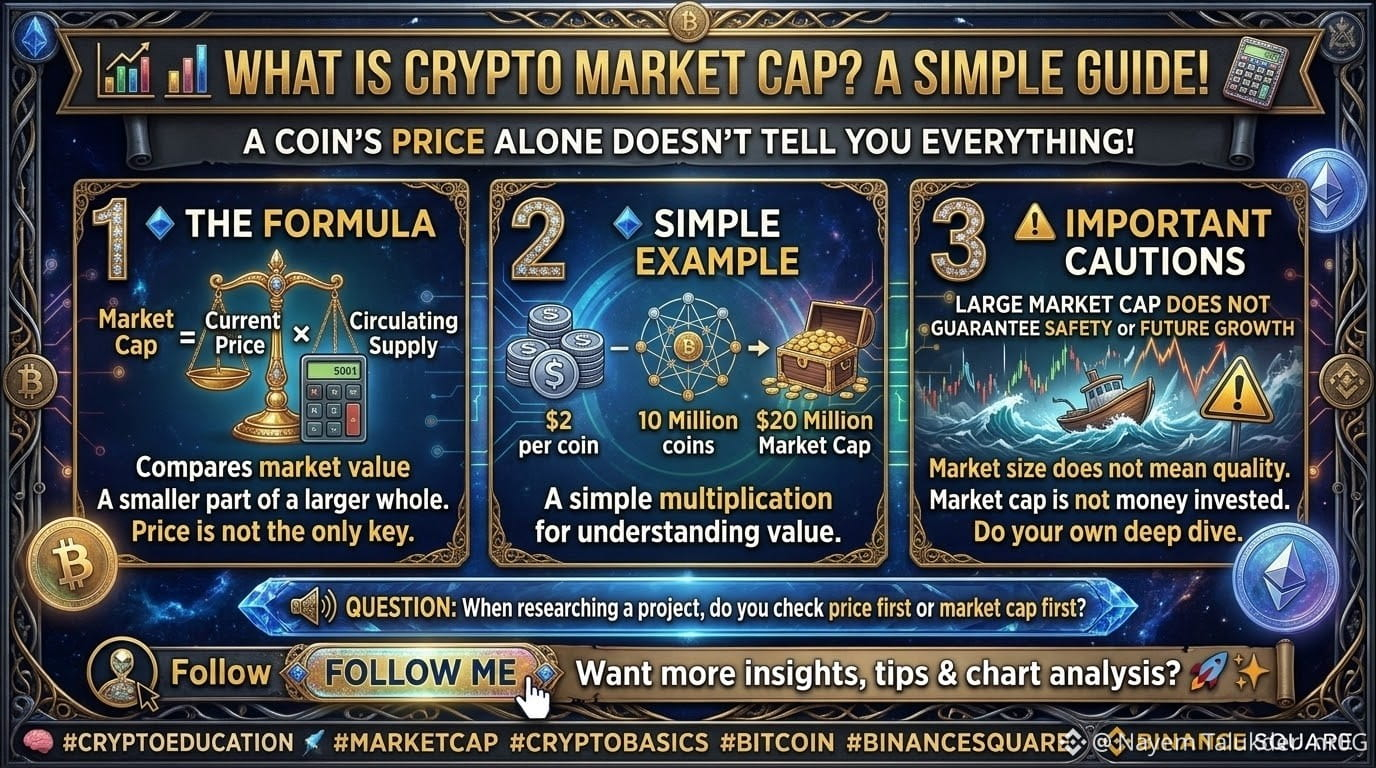
📊 ¿Qué es la capitalización de mercado de las criptomonedas? ¡Una guía sencilla!
¡El precio de una moneda por sí solo no te lo dice todo!
🔹 La fórmula: Capitalización de mercado = Precio actual × Oferta circulante
🔹 Ejemplo sencillo: Si una moneda cotiza a 2 $ y hay 10 millones de monedas en circulación, su capitalización de mercado es de 20 millones de dólares.
{spot}(ZECUSDT)
{spot}(TRXUSDT)
{spot}(BNBUSDT)
🔹 ¿Por qué es importante? Ayuda a comparar el valor de mercado de distintos criptoactivos.
⚠️ Una mayor capitalización de mercado no garantiza seguridad, calidad ni crecimiento futuro. La capitalización de mercado no es lo mismo que el dinero invertido.
💬 Pregunta: Cuando investigas un proyecto cripto, ¿te fijas primero en el precio o en la capitalización de mercado?
#MarketCap #CryptoBasics #Bitcoin❗ #BinanceSquare
$ZEC $TRX $BNB
📊 ¿Qué es la capitalización de mercado de las criptomonedas? ¡Una guía sencilla!
¡El precio de una moneda por sí solo no te lo dice todo!
🔹 La fórmula: Capitalización de mercado = Precio actual × Oferta circulante
🔹 Ejemplo sencillo: Si una moneda cotiza a 2 $ y hay 10 millones de monedas en circulación, su capitalización de mercado es de 20 millones de dólares.
🔹 ¿Por qué es importante? Ayuda a comparar el valor de mercado de distintos criptoactivos.
⚠️ Una mayor capitalización de mercado no garantiza seguridad, calidad ni crecimiento futuro. La capitalización de mercado no es lo mismo que el dinero invertido.
💬 Pregunta: Cuando investigas un proyecto cripto, ¿te fijas primero en el precio o en la capitalización de mercado?
#MarketCap #CryptoBasics #Bitcoin❗ #BinanceSquare
$ZEC $TRX $BNB
¡El precio de una moneda por sí solo no te lo dice todo!
🔹 La fórmula: Capitalización de mercado = Precio actual × Oferta circulante
🔹 Ejemplo sencillo: Si una moneda cotiza a 2 $ y hay 10 millones de monedas en circulación, su capitalización de mercado es de 20 millones de dólares.
🔹 ¿Por qué es importante? Ayuda a comparar el valor de mercado de distintos criptoactivos.
⚠️ Una mayor capitalización de mercado no garantiza seguridad, calidad ni crecimiento futuro. La capitalización de mercado no es lo mismo que el dinero invertido.
💬 Pregunta: Cuando investigas un proyecto cripto, ¿te fijas primero en el precio o en la capitalización de mercado?
#MarketCap #CryptoBasics #Bitcoin❗ #BinanceSquare
$ZEC $TRX $BNB
Shaon 13:
ok
1
1
266

·
--
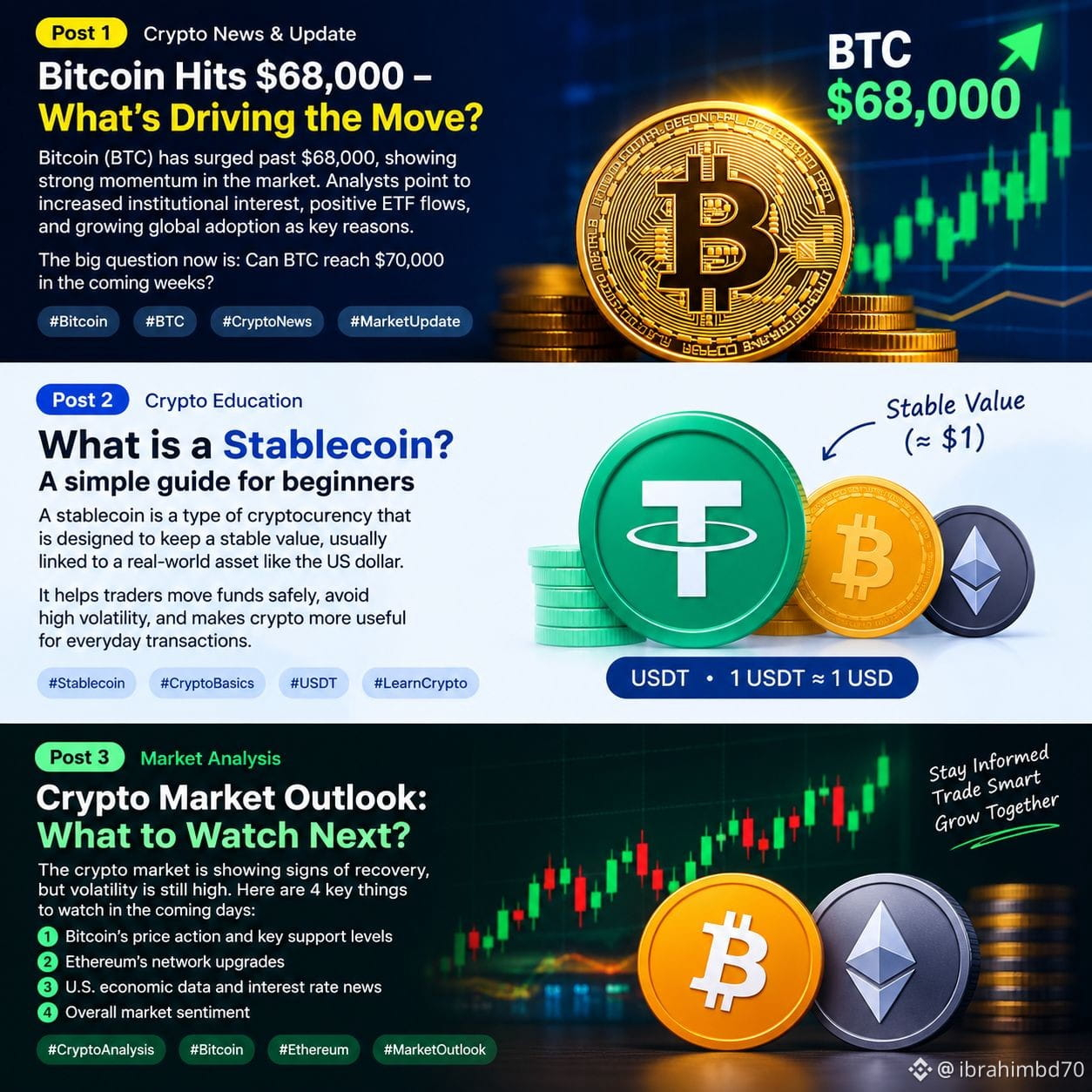
¿Qué es una stablecoin? Una guía sencilla para principiantes 💵
¿Alguna vez te has preguntado por qué algunas criptomonedas están diseñadas para mantener un precio estable?
Las stablecoins son criptomonedas diseñadas para mantener un valor relativamente estable. Muchas están vinculadas a monedas tradicionales, como el dólar estadounidense.
Por ejemplo, USDT está diseñada para seguir el valor del dólar estadounidense. Sin embargo, su precio a veces puede alejarse de 1 $.
¿Por qué usa la gente las stablecoins?
Para transferir fondos entre plataformas de criptomonedas.
Para mantener activos digitales con menos volatilidad de precio que Bitcoin.
Para facilitar ciertas transacciones con criptomonedas.
Recuerda que las stablecoins también conllevan riesgos. Antes de usar una, comprueba siempre quién la emite, sus reservas y la plataforma.
¿Usas stablecoins? ¿Por qué sí o por qué no? ¡Cuéntanos qué piensas aquí abajo! 👇
#CryptoEducation #Stablecoin #USDT #CryptoBasics
¿Qué es una stablecoin? Una guía sencilla para principiantes 💵
¿Alguna vez te has preguntado por qué algunas criptomonedas están diseñadas para mantener un precio estable?
Las stablecoins son criptomonedas diseñadas para mantener un valor relativamente estable. Muchas están vinculadas a monedas tradicionales, como el dólar estadounidense.
Por ejemplo, USDT está diseñada para seguir el valor del dólar estadounidense. Sin embargo, su precio a veces puede alejarse de 1 $.
¿Por qué usa la gente las stablecoins?
Para transferir fondos entre plataformas de criptomonedas.
Para mantener activos digitales con menos volatilidad de precio que Bitcoin.
Para facilitar ciertas transacciones con criptomonedas.
Recuerda que las stablecoins también conllevan riesgos. Antes de usar una, comprueba siempre quién la emite, sus reservas y la plataforma.
¿Usas stablecoins? ¿Por qué sí o por qué no? ¡Cuéntanos qué piensas aquí abajo! 👇
#CryptoEducation #Stablecoin #USDT #CryptoBasics
¿Alguna vez te has preguntado por qué algunas criptomonedas están diseñadas para mantener un precio estable?
Las stablecoins son criptomonedas diseñadas para mantener un valor relativamente estable. Muchas están vinculadas a monedas tradicionales, como el dólar estadounidense.
Por ejemplo, USDT está diseñada para seguir el valor del dólar estadounidense. Sin embargo, su precio a veces puede alejarse de 1 $.
¿Por qué usa la gente las stablecoins?
Para transferir fondos entre plataformas de criptomonedas.
Para mantener activos digitales con menos volatilidad de precio que Bitcoin.
Para facilitar ciertas transacciones con criptomonedas.
Recuerda que las stablecoins también conllevan riesgos. Antes de usar una, comprueba siempre quién la emite, sus reservas y la plataforma.
¿Usas stablecoins? ¿Por qué sí o por qué no? ¡Cuéntanos qué piensas aquí abajo! 👇
#CryptoEducation #Stablecoin #USDT #CryptoBasics
90

·
--
📘 ¿QUÉ ES EL TRADING AL CONTADO? CRIPTOMONEDAS EXPLICADAS PARA PRINCIPIANTES
¿Te confunde el trading de criptomonedas? Vamos a simplificarlo 👇
🪙 1. Compras una criptomoneda al precio actual del mercado o al precio que elijas.
📈 2. Si su precio sube, el valor de lo que tienes puede aumentar.
📉 3. Si su precio baja, el valor de lo que tienes disminuye.
💸 4. Es posible que se apliquen comisiones al comprar o vender.
⚠️ 5. Las ganancias NUNCA están garantizadas. Los precios pueden caer bruscamente.
Ejemplo 👇
Compras 10 $ en una criptomoneda.
Si su valor sube un 10 %, pasa a valer 11 $ antes de las comisiones.
Si su valor baja un 10 %, pasa a valer 9 $ antes de las comisiones.
Así funcionan los movimientos de precios: sin magia ni dinero garantizado.
👇 ¿Qué tema debería explicar después?
A — Trading al contado
B — Trading de futuros
C — Cómo leer gráficos
D — Comisiones de trading
Comenta A, B, C o D 👇
#CryptoBasics #LearnCrypto #FinanceEducation #Binance
📘 ¿QUÉ ES EL TRADING AL CONTADO? CRIPTOMONEDAS EXPLICADAS PARA PRINCIPIANTES
¿Te confunde el trading de criptomonedas? Vamos a simplificarlo 👇
🪙 1. Compras una criptomoneda al precio actual del mercado o al precio que elijas.
📈 2. Si su precio sube, el valor de lo que tienes puede aumentar.
📉 3. Si su precio baja, el valor de lo que tienes disminuye.
💸 4. Es posible que se apliquen comisiones al comprar o vender.
⚠️ 5. Las ganancias NUNCA están garantizadas. Los precios pueden caer bruscamente.
Ejemplo 👇
Compras 10 $ en una criptomoneda.
Si su valor sube un 10 %, pasa a valer 11 $ antes de las comisiones.
Si su valor baja un 10 %, pasa a valer 9 $ antes de las comisiones.
Así funcionan los movimientos de precios: sin magia ni dinero garantizado.
👇 ¿Qué tema debería explicar después?
A — Trading al contado
B — Trading de futuros
C — Cómo leer gráficos
D — Comisiones de trading
Comenta A, B, C o D 👇
#CryptoBasics #LearnCrypto #FinanceEducation #Binance
¿Te confunde el trading de criptomonedas? Vamos a simplificarlo 👇
🪙 1. Compras una criptomoneda al precio actual del mercado o al precio que elijas.
📈 2. Si su precio sube, el valor de lo que tienes puede aumentar.
📉 3. Si su precio baja, el valor de lo que tienes disminuye.
💸 4. Es posible que se apliquen comisiones al comprar o vender.
⚠️ 5. Las ganancias NUNCA están garantizadas. Los precios pueden caer bruscamente.
Ejemplo 👇
Compras 10 $ en una criptomoneda.
Si su valor sube un 10 %, pasa a valer 11 $ antes de las comisiones.
Si su valor baja un 10 %, pasa a valer 9 $ antes de las comisiones.
Así funcionan los movimientos de precios: sin magia ni dinero garantizado.
👇 ¿Qué tema debería explicar después?
A — Trading al contado
B — Trading de futuros
C — Cómo leer gráficos
D — Comisiones de trading
Comenta A, B, C o D 👇
#CryptoBasics #LearnCrypto #FinanceEducation #Binance
43

·
--
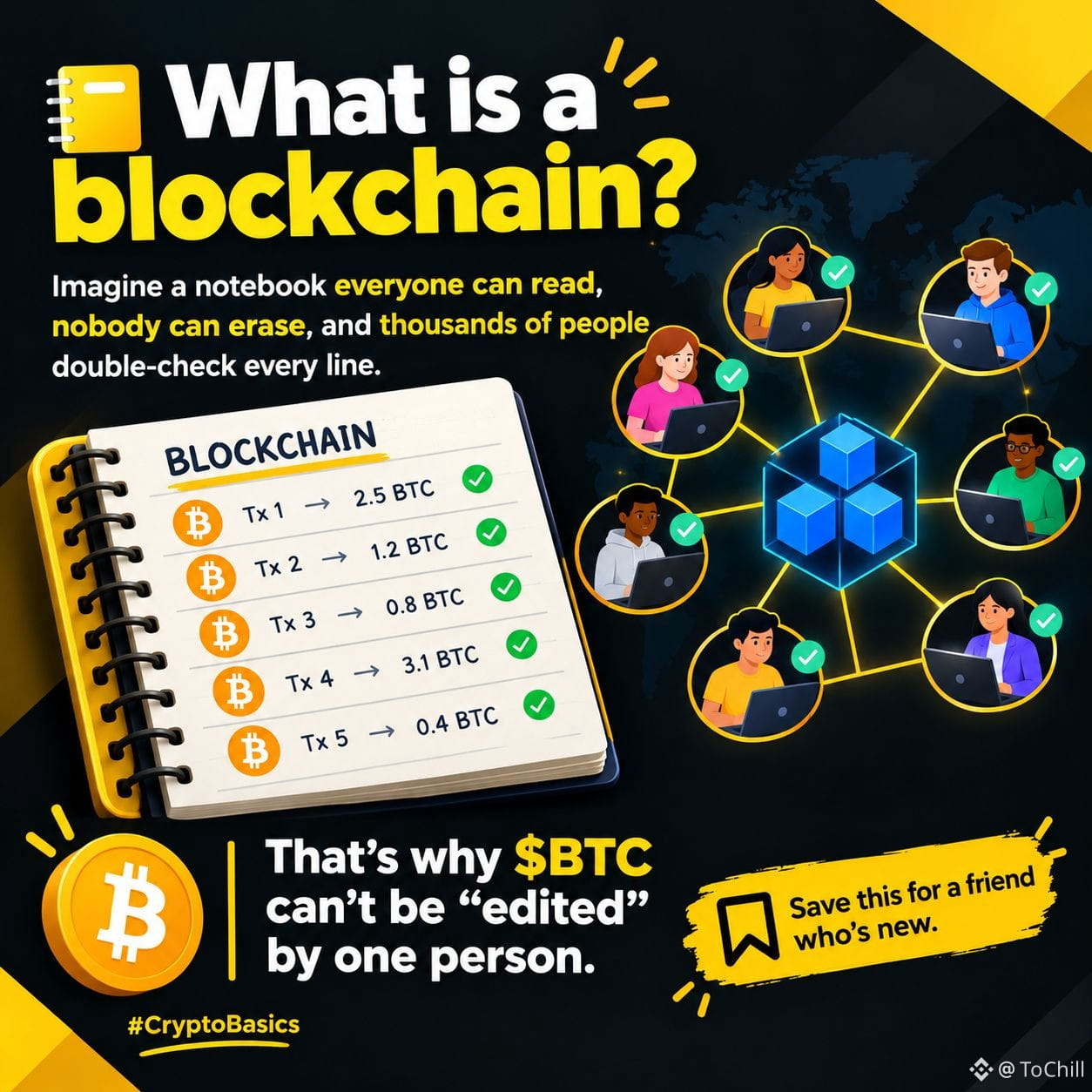
📒 ¿Qué es una cadena de bloques? Imagina un cuaderno que todos pueden leer, nadie puede borrar y miles de personas revisan cada línea. Por eso, nadie puede «editar» $BTC por su cuenta. Guarda esto para un amigo que recién está empezando. #CryptoBasics
📒 ¿Qué es una cadena de bloques? Imagina un cuaderno que todos pueden leer, nadie puede borrar y miles de personas revisan cada línea. Por eso, nadie puede «editar» $BTC por su cuenta. Guarda esto para un amigo que recién está empezando. #CryptoBasics
71

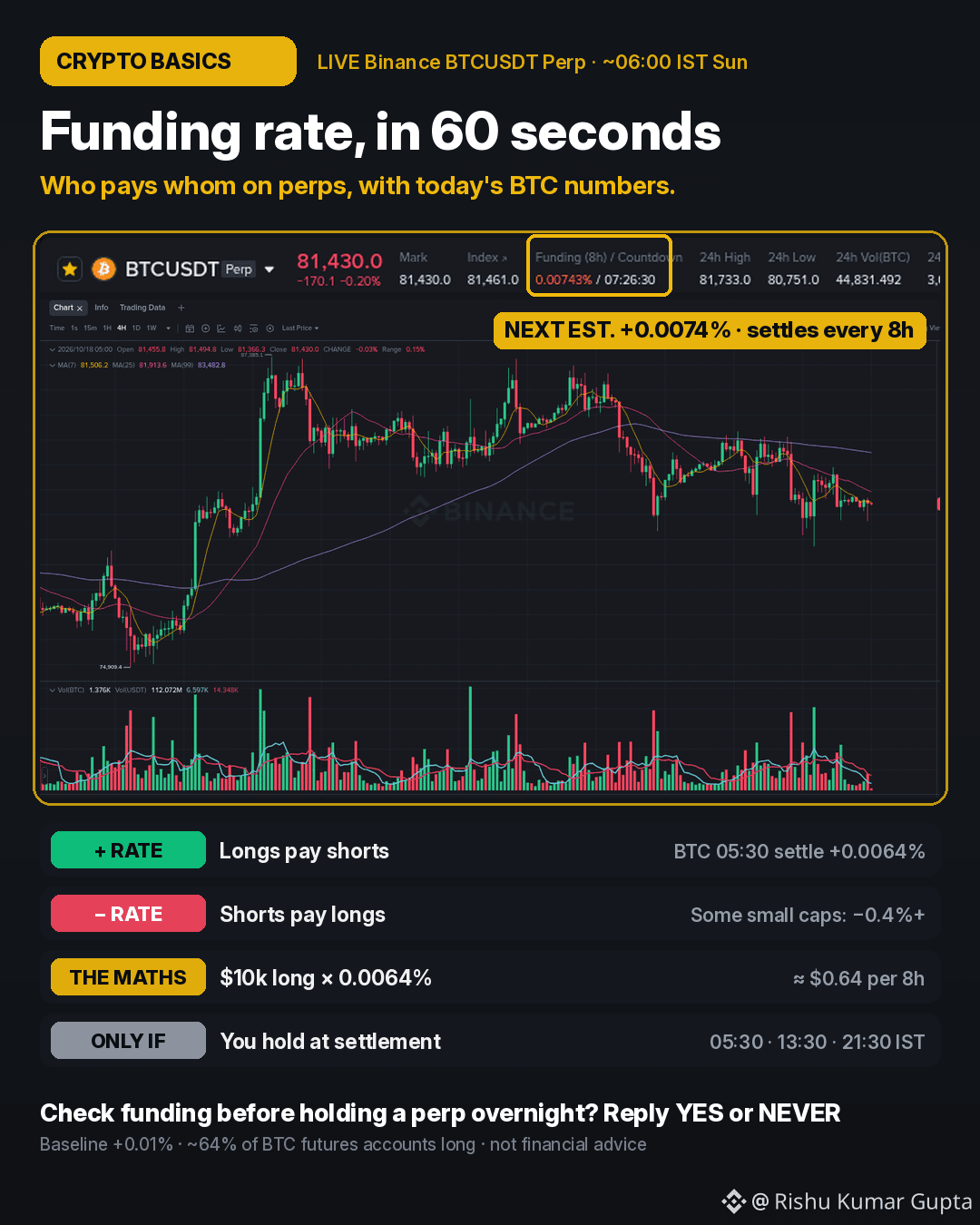
Tasa de financiación, explicada con las cifras de BTC de hoy.
En los futuros perpetuos de Binance, la financiación es un pequeño pago entre posiciones largas y cortas en horarios establecidos (cada 8 h para BTCUSDT: 05:30, 13:30 y 21:30 IST). Mantiene el precio del perpetuo cerca del precio al contado.
Tasa positiva: las posiciones largas pagan a las cortas. Tasa negativa: las posiciones cortas pagan a las largas.
$BTC Ahora mismo (~06:00 IST del domingo, ~$81.4k): la liquidación de las 05:30 fue de +0.0064%, y la estimación en tiempo real para la próxima es de aproximadamente +0.0074%. Está por debajo del nivel de referencia de +0.01%, así que las posiciones largas no están pagando de más, incluso con ~64% de las cuentas de futuros posicionadas en largo.
Las matemáticas: una posición larga de $10,000 con una tasa de +0.0064% paga alrededor de $0.64 cada 8 h.
Cuándo puede afectar: hoy, algunos futuros perpetuos de baja capitalización tienen tasas de −0.4% o peores por intervalo. Eso equivale a unos $40 o más por cada $10k, en cada liquidación.
3 reglas que sigo:
1. Comprueba la tasa de financiación antes de mantener una posición apalancada durante días.
2. Una tasa de financiación extrema indica que hay demasiados participantes posicionados en el mismo lado. Por sí sola, no es una señal de compra ni de venta.
3. Solo pagas o recibes la financiación si mantienes la posición en el momento de la liquidación.
No es asesoramiento financiero, solo lo básico.
¿Compruebas la tasa de financiación antes de mantener un perpetuo durante la noche? Responde SÍ o NUNCA.
#BinanceSquare #FundingRate #ConceptosBásicosDeCripto
Tasa de financiación, explicada con las cifras de BTC de hoy.
En los futuros perpetuos de Binance, la financiación es un pequeño pago entre posiciones largas y cortas en horarios establecidos (cada 8 h para BTCUSDT: 05:30, 13:30 y 21:30 IST). Mantiene el precio del perpetuo cerca del precio al contado.
Tasa positiva: las posiciones largas pagan a las cortas. Tasa negativa: las posiciones cortas pagan a las largas.
$BTC Ahora mismo (~06:00 IST del domingo, ~$81.4k): la liquidación de las 05:30 fue de +0.0064%, y la estimación en tiempo real para la próxima es de aproximadamente +0.0074%. Está por debajo del nivel de referencia de +0.01%, así que las posiciones largas no están pagando de más, incluso con ~64% de las cuentas de futuros posicionadas en largo.
Las matemáticas: una posición larga de $10,000 con una tasa de +0.0064% paga alrededor de $0.64 cada 8 h.
Cuándo puede afectar: hoy, algunos futuros perpetuos de baja capitalización tienen tasas de −0.4% o peores por intervalo. Eso equivale a unos $40 o más por cada $10k, en cada liquidación.
3 reglas que sigo:
1. Comprueba la tasa de financiación antes de mantener una posición apalancada durante días.
2. Una tasa de financiación extrema indica que hay demasiados participantes posicionados en el mismo lado. Por sí sola, no es una señal de compra ni de venta.
3. Solo pagas o recibes la financiación si mantienes la posición en el momento de la liquidación.
No es asesoramiento financiero, solo lo básico.
¿Compruebas la tasa de financiación antes de mantener un perpetuo durante la noche? Responde SÍ o NUNCA.
#BinanceSquare #FundingRate #ConceptosBásicosDeCripto
En los futuros perpetuos de Binance, la financiación es un pequeño pago entre posiciones largas y cortas en horarios establecidos (cada 8 h para BTCUSDT: 05:30, 13:30 y 21:30 IST). Mantiene el precio del perpetuo cerca del precio al contado.
Tasa positiva: las posiciones largas pagan a las cortas. Tasa negativa: las posiciones cortas pagan a las largas.
$BTC Ahora mismo (~06:00 IST del domingo, ~$81.4k): la liquidación de las 05:30 fue de +0.0064%, y la estimación en tiempo real para la próxima es de aproximadamente +0.0074%. Está por debajo del nivel de referencia de +0.01%, así que las posiciones largas no están pagando de más, incluso con ~64% de las cuentas de futuros posicionadas en largo.
Las matemáticas: una posición larga de $10,000 con una tasa de +0.0064% paga alrededor de $0.64 cada 8 h.
Cuándo puede afectar: hoy, algunos futuros perpetuos de baja capitalización tienen tasas de −0.4% o peores por intervalo. Eso equivale a unos $40 o más por cada $10k, en cada liquidación.
3 reglas que sigo:
1. Comprueba la tasa de financiación antes de mantener una posición apalancada durante días.
2. Una tasa de financiación extrema indica que hay demasiados participantes posicionados en el mismo lado. Por sí sola, no es una señal de compra ni de venta.
3. Solo pagas o recibes la financiación si mantienes la posición en el momento de la liquidación.
No es asesoramiento financiero, solo lo básico.
¿Compruebas la tasa de financiación antes de mantener un perpetuo durante la noche? Responde SÍ o NUNCA.
#BinanceSquare #FundingRate #ConceptosBásicosDeCripto
76

·
--
¿Qué es Bitcoin? Explicado con palabras sencillas.
Bitcoin $BTC es dinero digital que funciona en internet, sin que ningún banco o empresa lo controle.
3 datos sencillos que todo principiante debería conocer:
• Solo existirán 21 millones de bitcoins: nadie puede crear más
• Cada transacción queda registrada en una lista pública llamada cadena de bloques, por lo que no se puede modificar discretamente
• Las personas se envían Bitcoin directamente entre sí, de billetera a billetera, desde cualquier lugar del mundo
Piensa en él como oro digital: su cantidad es limitada, te pertenece y se transfiere por internet.
Los precios suben y bajan, a veces mucho; así que primero infórmate y nunca inviertas dinero que no puedas permitirte perder.
Contenido educativo únicamente; no es asesoramiento financiero.
#BinanceSquare #WriteToEarn #Bitcoin #ConceptosBásicos
¿Qué es Bitcoin? Explicado con palabras sencillas.
Bitcoin $BTC es dinero digital que funciona en internet, sin que ningún banco o empresa lo controle.
3 datos sencillos que todo principiante debería conocer:
• Solo existirán 21 millones de bitcoins: nadie puede crear más
• Cada transacción queda registrada en una lista pública llamada cadena de bloques, por lo que no se puede modificar discretamente
• Las personas se envían Bitcoin directamente entre sí, de billetera a billetera, desde cualquier lugar del mundo
Piensa en él como oro digital: su cantidad es limitada, te pertenece y se transfiere por internet.
Los precios suben y bajan, a veces mucho; así que primero infórmate y nunca inviertas dinero que no puedas permitirte perder.
Contenido educativo únicamente; no es asesoramiento financiero.
#BinanceSquare #WriteToEarn #Bitcoin #ConceptosBásicos
Bitcoin $BTC es dinero digital que funciona en internet, sin que ningún banco o empresa lo controle.
3 datos sencillos que todo principiante debería conocer:
• Solo existirán 21 millones de bitcoins: nadie puede crear más
• Cada transacción queda registrada en una lista pública llamada cadena de bloques, por lo que no se puede modificar discretamente
• Las personas se envían Bitcoin directamente entre sí, de billetera a billetera, desde cualquier lugar del mundo
Piensa en él como oro digital: su cantidad es limitada, te pertenece y se transfiere por internet.
Los precios suben y bajan, a veces mucho; así que primero infórmate y nunca inviertas dinero que no puedas permitirte perder.
Contenido educativo únicamente; no es asesoramiento financiero.
#BinanceSquare #WriteToEarn #Bitcoin #ConceptosBásicos
73

·
--
Artículo
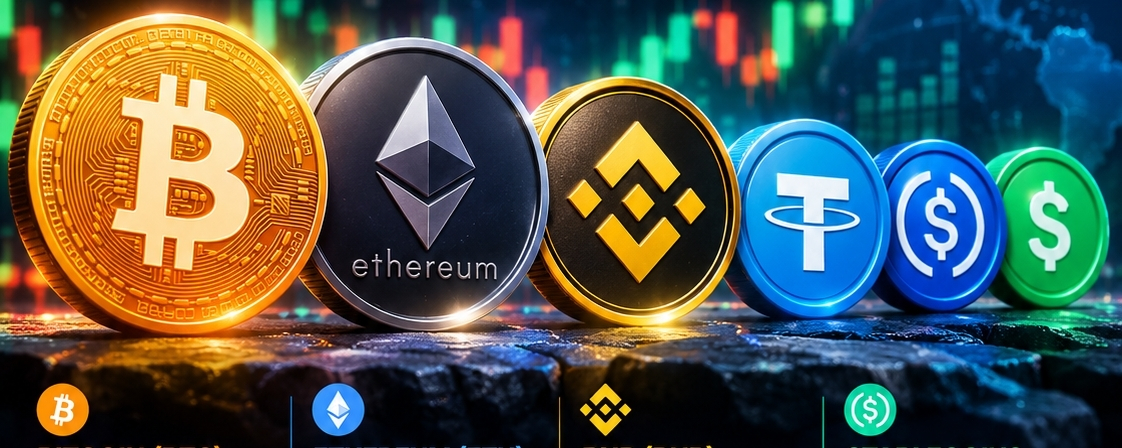
Fundamentos de las criptomonedas: BTC, ETH, BNB y stablecoins# 📚
El ecosistema cripto cuenta con distintos activos digitales, cada uno con un propósito único.
🟠 **1. Bitcoin (BTC) — Oro digital**
Bitcoin es una criptomoneda descentralizada con una oferta máxima de 21 millones de monedas. A menudo se considera una reserva de valor, aunque su precio puede ser muy volátil.
🔷 **2. Ethereum (ETH) — Potencia de los contratos inteligentes**
Ethereum admite contratos inteligentes y aplicaciones descentralizadas, incluidas DeFi, los NFT y otros servicios Web3. ETH se usa para pagar las comisiones por transacción de la red.
Fundamentos de las criptomonedas: BTC, ETH, BNB y stablecoins
# 📚
El ecosistema cripto cuenta con distintos activos digitales, cada uno con un propósito único.
🟠 **1. Bitcoin (BTC) — Oro digital**
Bitcoin es una criptomoneda descentralizada con una oferta máxima de 21 millones de monedas. A menudo se considera una reserva de valor, aunque su precio puede ser muy volátil.
🔷 **2. Ethereum (ETH) — Potencia de los contratos inteligentes**
Ethereum admite contratos inteligentes y aplicaciones descentralizadas, incluidas DeFi, los NFT y otros servicios Web3. ETH se usa para pagar las comisiones por transacción de la red.
El ecosistema cripto cuenta con distintos activos digitales, cada uno con un propósito único.
🟠 **1. Bitcoin (BTC) — Oro digital**
Bitcoin es una criptomoneda descentralizada con una oferta máxima de 21 millones de monedas. A menudo se considera una reserva de valor, aunque su precio puede ser muy volátil.
🔷 **2. Ethereum (ETH) — Potencia de los contratos inteligentes**
Ethereum admite contratos inteligentes y aplicaciones descentralizadas, incluidas DeFi, los NFT y otros servicios Web3. ETH se usa para pagar las comisiones por transacción de la red.
125

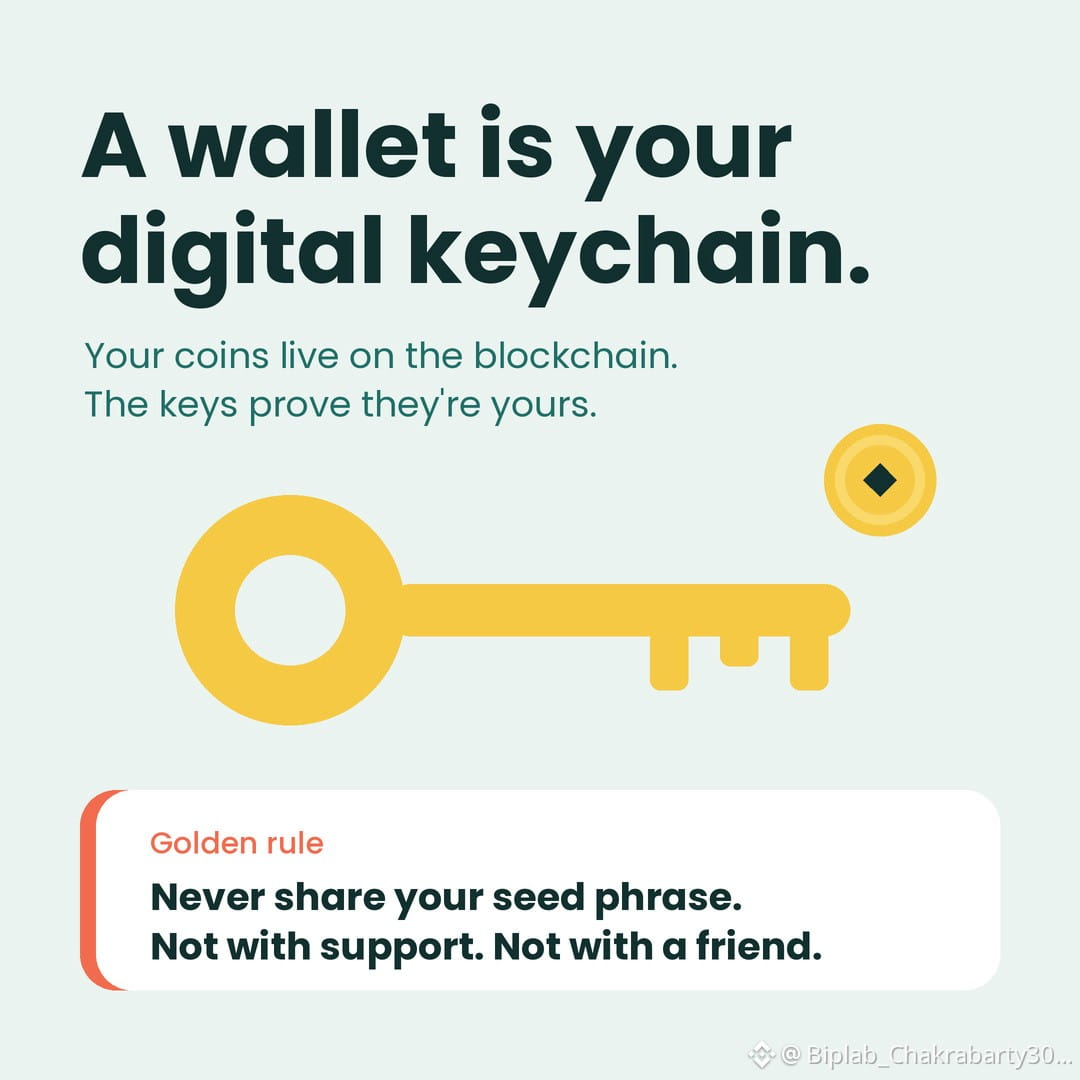
¿Qué es una billetera? 🤔
Piensa en ella como tu llavero digital personal. Tus monedas están en la blockchain y tu billetera guarda las claves que demuestran que son tuyas.
Regla de oro: nunca compartas tu frase semilla con nadie. Ni con el equipo de soporte, ni con un «amigo», con nadie. 🔐
¿Quieres aprender más conceptos básicos como este? Comenta un tema aquí abajo 👇
#CryptoBasics s #Wallet #security
¿Qué es una billetera? 🤔
Piensa en ella como tu llavero digital personal. Tus monedas están en la blockchain y tu billetera guarda las claves que demuestran que son tuyas.
Regla de oro: nunca compartas tu frase semilla con nadie. Ni con el equipo de soporte, ni con un «amigo», con nadie. 🔐
¿Quieres aprender más conceptos básicos como este? Comenta un tema aquí abajo 👇
#CryptoBasics s #Wallet #security
Piensa en ella como tu llavero digital personal. Tus monedas están en la blockchain y tu billetera guarda las claves que demuestran que son tuyas.
Regla de oro: nunca compartas tu frase semilla con nadie. Ni con el equipo de soporte, ni con un «amigo», con nadie. 🔐
¿Quieres aprender más conceptos básicos como este? Comenta un tema aquí abajo 👇
#CryptoBasics s #Wallet #security
1
235

·
--
Artículo
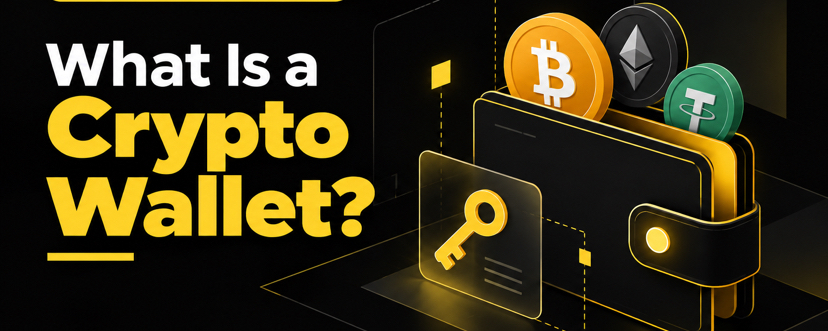
¿Qué contiene realmente una billetera de criptomonedas?Quizá pienses que una billetera de criptomonedas guarda tus monedas, igual que una billetera física guarda dinero en efectivo.
Pero aquí viene lo interesante: tus criptomonedas no están realmente dentro de tu billetera. 👀
Entonces, ¿qué hace realmente una billetera de criptomonedas? Veámoslo paso a paso.
🔑 1. ¿Qué es una billetera de criptomonedas?
Una billetera de criptomonedas es una herramienta que te permite acceder a tus activos digitales y gestionarlos en una cadena de bloques.
Te ayuda a enviar y recibir criptomonedas, consultar tus saldos y autorizar transacciones.
Tus activos siguen registrados en la cadena de bloques. La billetera gestiona las claves que te permiten acceder a ellos.
¿Qué contiene realmente una billetera de criptomonedas?
Quizá pienses que una billetera de criptomonedas guarda tus monedas, igual que una billetera física guarda dinero en efectivo.
Pero aquí viene lo interesante: tus criptomonedas no están realmente dentro de tu billetera. 👀
Entonces, ¿qué hace realmente una billetera de criptomonedas? Veámoslo paso a paso.
🔑 1. ¿Qué es una billetera de criptomonedas?
Una billetera de criptomonedas es una herramienta que te permite acceder a tus activos digitales y gestionarlos en una cadena de bloques.
Te ayuda a enviar y recibir criptomonedas, consultar tus saldos y autorizar transacciones.
Tus activos siguen registrados en la cadena de bloques. La billetera gestiona las claves que te permiten acceder a ellos.
Pero aquí viene lo interesante: tus criptomonedas no están realmente dentro de tu billetera. 👀
Entonces, ¿qué hace realmente una billetera de criptomonedas? Veámoslo paso a paso.
🔑 1. ¿Qué es una billetera de criptomonedas?
Una billetera de criptomonedas es una herramienta que te permite acceder a tus activos digitales y gestionarlos en una cadena de bloques.
Te ayuda a enviar y recibir criptomonedas, consultar tus saldos y autorizar transacciones.
Tus activos siguen registrados en la cadena de bloques. La billetera gestiona las claves que te permiten acceder a ellos.
1
58
·
--
Artículo
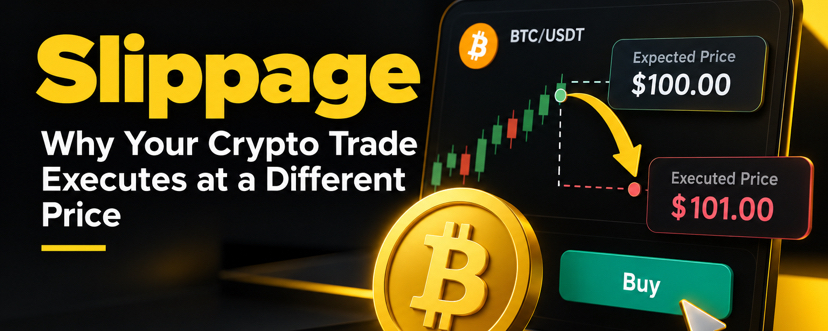
¿Por qué se ejecutó tu operación con criptomonedas a un precio diferente?Ves una criptomoneda a 100 $, haces una orden y terminas comprándola a 101 $.
¿Qué pasó?
Podría ser deslizamiento, y entenderlo puede ayudarte a tomar decisiones de trading más informadas.
📊 ¿Qué es el deslizamiento?
El deslizamiento es la diferencia entre el precio esperado de una operación y el precio real al que se ejecuta.
Por ejemplo, imagina que quieres comprar una criptomoneda por 100 $.
Para cuando se ejecuta tu orden, el precio que pagas es de 101 $.
Esa diferencia de 1 $ es el deslizamiento.
🔎 ¿Por qué ocurre el deslizamiento?
¿Por qué se ejecutó tu operación con criptomonedas a un precio diferente?
Ves una criptomoneda a 100 $, haces una orden y terminas comprándola a 101 $.
¿Qué pasó?
Podría ser deslizamiento, y entenderlo puede ayudarte a tomar decisiones de trading más informadas.
📊 ¿Qué es el deslizamiento?
El deslizamiento es la diferencia entre el precio esperado de una operación y el precio real al que se ejecuta.
Por ejemplo, imagina que quieres comprar una criptomoneda por 100 $.
Para cuando se ejecuta tu orden, el precio que pagas es de 101 $.
Esa diferencia de 1 $ es el deslizamiento.
🔎 ¿Por qué ocurre el deslizamiento?
¿Qué pasó?
Podría ser deslizamiento, y entenderlo puede ayudarte a tomar decisiones de trading más informadas.
📊 ¿Qué es el deslizamiento?
El deslizamiento es la diferencia entre el precio esperado de una operación y el precio real al que se ejecuta.
Por ejemplo, imagina que quieres comprar una criptomoneda por 100 $.
Para cuando se ejecuta tu orden, el precio que pagas es de 101 $.
Esa diferencia de 1 $ es el deslizamiento.
🔎 ¿Por qué ocurre el deslizamiento?
1
94

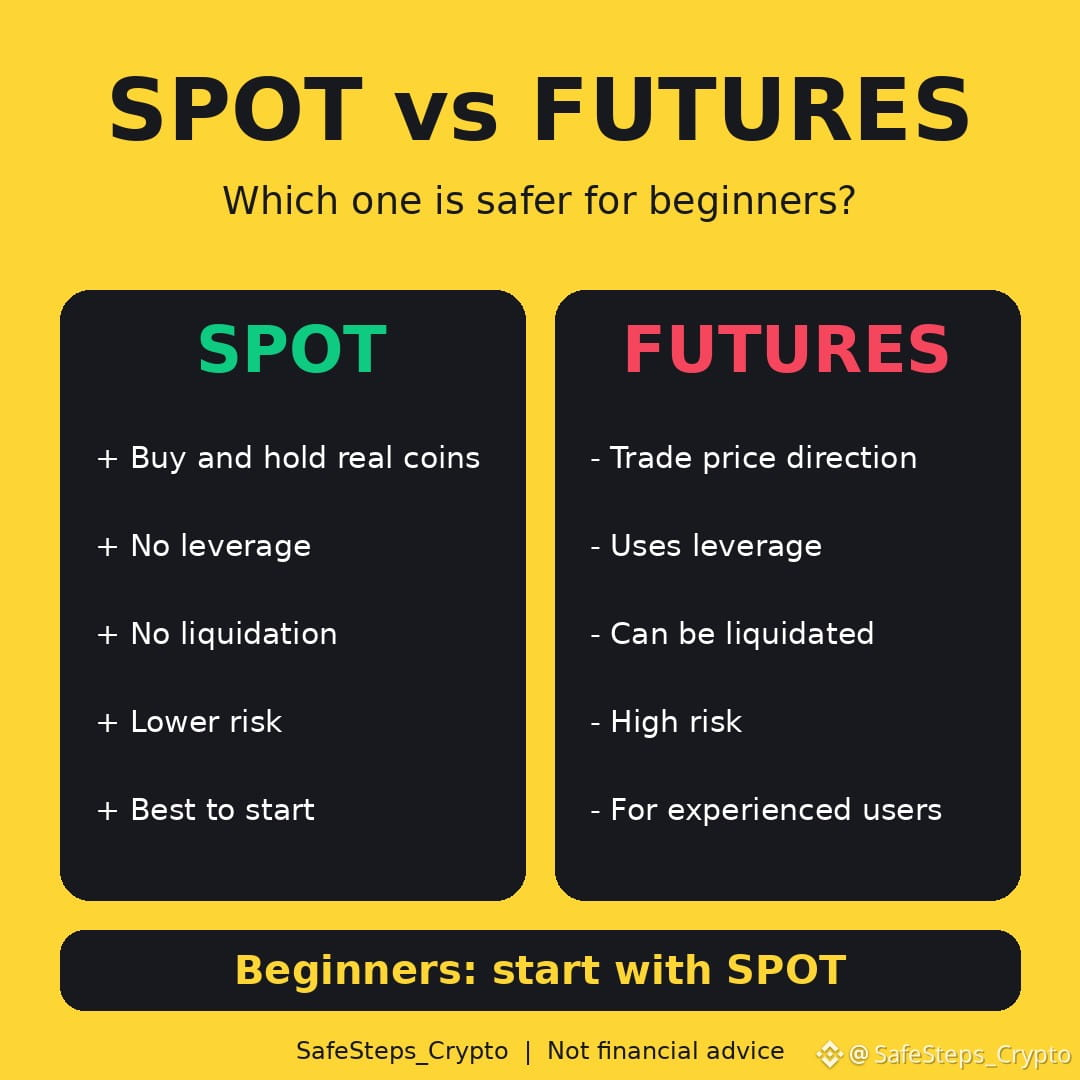
Spot vs. futuros: ¿con cuál debería empezar un principiante? 🤔
🟢 SPOT
Compras y mantienes monedas reales. Sin apalancamiento ni liquidaciones, y con menos riesgo.
🔴 FUTUROS
Operas según la dirección del precio con apalancamiento. Las ganancias pueden ser mayores, pero las pérdidas pueden acabar rápidamente con tu saldo.
Mi consejo: empieza con Spot, aprende lo básico y luego decide si los futuros son para ti.
¿Cuál operas, Spot o futuros? 👇
$BTC $BNB
#Binance #Spot #Futures #BinanceSquare #CryptoBasics
Spot vs. futuros: ¿con cuál debería empezar un principiante? 🤔
🟢 SPOT
Compras y mantienes monedas reales. Sin apalancamiento ni liquidaciones, y con menos riesgo.
🔴 FUTUROS
Operas según la dirección del precio con apalancamiento. Las ganancias pueden ser mayores, pero las pérdidas pueden acabar rápidamente con tu saldo.
Mi consejo: empieza con Spot, aprende lo básico y luego decide si los futuros son para ti.
¿Cuál operas, Spot o futuros? 👇
$BTC $BNB
#Binance #Spot #Futures #BinanceSquare #CryptoBasics
🟢 SPOT
Compras y mantienes monedas reales. Sin apalancamiento ni liquidaciones, y con menos riesgo.
🔴 FUTUROS
Operas según la dirección del precio con apalancamiento. Las ganancias pueden ser mayores, pero las pérdidas pueden acabar rápidamente con tu saldo.
Mi consejo: empieza con Spot, aprende lo básico y luego decide si los futuros son para ti.
¿Cuál operas, Spot o futuros? 👇
$BTC $BNB
#Binance #Spot #Futures #BinanceSquare #CryptoBasics
1
140

Spot vs. futuros: la diferencia que todo principiante debería conocer
Operar en Spot: compras o vendes el activo real. Si compras BTC en Spot, se añade al saldo de tu billetera.
Operar con futuros: operas con un contrato basado en los movimientos del precio. Puede implicar apalancamiento, riesgo de liquidación y pérdidas mucho más rápidas.
En general, el Spot es más fácil de entender para principiantes. Para operar con futuros, es necesario comprender bien el margen, el apalancamiento, la financiación y los controles de riesgo.
Aprende primero cómo funcionan. Los mercados de criptomonedas son volátiles y es posible sufrir pérdidas.
#CryptoBasics #SpotTrading #FuturesTrading $BTC
{future}(BTCUSDT)
Spot vs. futuros: la diferencia que todo principiante debería conocer
Operar en Spot: compras o vendes el activo real. Si compras BTC en Spot, se añade al saldo de tu billetera.
Operar con futuros: operas con un contrato basado en los movimientos del precio. Puede implicar apalancamiento, riesgo de liquidación y pérdidas mucho más rápidas.
En general, el Spot es más fácil de entender para principiantes. Para operar con futuros, es necesario comprender bien el margen, el apalancamiento, la financiación y los controles de riesgo.
Aprende primero cómo funcionan. Los mercados de criptomonedas son volátiles y es posible sufrir pérdidas.
#CryptoBasics #SpotTrading #FuturesTrading $BTC
Operar en Spot: compras o vendes el activo real. Si compras BTC en Spot, se añade al saldo de tu billetera.
Operar con futuros: operas con un contrato basado en los movimientos del precio. Puede implicar apalancamiento, riesgo de liquidación y pérdidas mucho más rápidas.
En general, el Spot es más fácil de entender para principiantes. Para operar con futuros, es necesario comprender bien el margen, el apalancamiento, la financiación y los controles de riesgo.
Aprende primero cómo funcionan. Los mercados de criptomonedas son volátiles y es posible sufrir pérdidas.
#CryptoBasics #SpotTrading #FuturesTrading $BTC
74

·
--
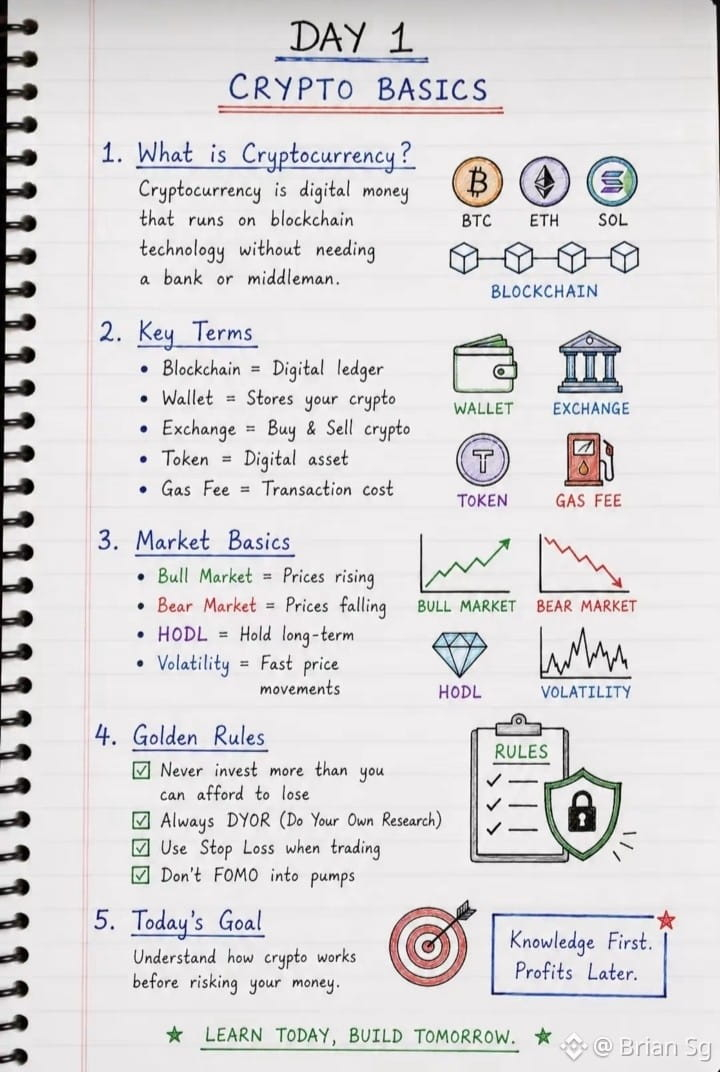
📚 CONCEPTOS BÁSICOS DE CRIPTO — DÍA 1: Antes de comprar tu primera moneda
¿Nuevo en el mundo cripto? Empieza aquí. 👇
No necesitas ser experto en trading para entender lo básico. Necesitas entender en qué estás invirtiendo tu dinero.
🔹 Blockchain: Un registro digital de transacciones compartido a través de una red.
🔹 Billetera: Una herramienta para gestionar tus criptomonedas. Tus claves privadas controlan el acceso a tus activos.
🔹 Exchange: Una plataforma donde puedes comprar y vender criptomonedas.
🔹 Token: Un activo digital emitido en una blockchain.
🔹 Mercado alcista vs. bajista: Alcista significa que los precios, por lo general, suben; bajista significa que suelen bajar.
🔹 Volatilidad: Los precios de las criptomonedas pueden fluctuar bruscamente en cualquier dirección.
⚠️ 4 reglas que todo principiante debería recordar:
✅ Nunca arriesgues dinero que no puedas permitirte perder.
✅ Investiga antes de comprar.
✅ Entiende los riesgos antes de usar apalancamiento.
✅ No compres solo porque una moneda se esté disparando.
¿El mayor error de los principiantes? Perseguir ganancias antes de entender el mercado.
🎯 Reto de hoy: Aprende un concepto antes de hacer tu próxima operación.
👇 TE TOCA: ¿Qué es lo que más te confunde de las criptomonedas ahora mismo: las billeteras, Bitcoin, las altcoins o el trading?
Comenta abajo. En el Día 2 explicaré el tema más solicitado.
Sígueme para aprender sobre criptomonedas con lecciones sencillas y prácticas. Primero el conocimiento. Después las ganancias.
#CryptoBasics #bitcoin #CryptoEducationCryptoGuid #BinanceSquare
📚 CONCEPTOS BÁSICOS DE CRIPTO — DÍA 1: Antes de comprar tu primera moneda
¿Nuevo en el mundo cripto? Empieza aquí. 👇
No necesitas ser experto en trading para entender lo básico. Necesitas entender en qué estás invirtiendo tu dinero.
🔹 Blockchain: Un registro digital de transacciones compartido a través de una red.
🔹 Billetera: Una herramienta para gestionar tus criptomonedas. Tus claves privadas controlan el acceso a tus activos.
🔹 Exchange: Una plataforma donde puedes comprar y vender criptomonedas.
🔹 Token: Un activo digital emitido en una blockchain.
🔹 Mercado alcista vs. bajista: Alcista significa que los precios, por lo general, suben; bajista significa que suelen bajar.
🔹 Volatilidad: Los precios de las criptomonedas pueden fluctuar bruscamente en cualquier dirección.
⚠️ 4 reglas que todo principiante debería recordar:
✅ Nunca arriesgues dinero que no puedas permitirte perder.
✅ Investiga antes de comprar.
✅ Entiende los riesgos antes de usar apalancamiento.
✅ No compres solo porque una moneda se esté disparando.
¿El mayor error de los principiantes? Perseguir ganancias antes de entender el mercado.
🎯 Reto de hoy: Aprende un concepto antes de hacer tu próxima operación.
👇 TE TOCA: ¿Qué es lo que más te confunde de las criptomonedas ahora mismo: las billeteras, Bitcoin, las altcoins o el trading?
Comenta abajo. En el Día 2 explicaré el tema más solicitado.
Sígueme para aprender sobre criptomonedas con lecciones sencillas y prácticas. Primero el conocimiento. Después las ganancias.
#CryptoBasics #bitcoin #CryptoEducationCryptoGuid #BinanceSquare
¿Nuevo en el mundo cripto? Empieza aquí. 👇
No necesitas ser experto en trading para entender lo básico. Necesitas entender en qué estás invirtiendo tu dinero.
🔹 Blockchain: Un registro digital de transacciones compartido a través de una red.
🔹 Billetera: Una herramienta para gestionar tus criptomonedas. Tus claves privadas controlan el acceso a tus activos.
🔹 Exchange: Una plataforma donde puedes comprar y vender criptomonedas.
🔹 Token: Un activo digital emitido en una blockchain.
🔹 Mercado alcista vs. bajista: Alcista significa que los precios, por lo general, suben; bajista significa que suelen bajar.
🔹 Volatilidad: Los precios de las criptomonedas pueden fluctuar bruscamente en cualquier dirección.
⚠️ 4 reglas que todo principiante debería recordar:
✅ Nunca arriesgues dinero que no puedas permitirte perder.
✅ Investiga antes de comprar.
✅ Entiende los riesgos antes de usar apalancamiento.
✅ No compres solo porque una moneda se esté disparando.
¿El mayor error de los principiantes? Perseguir ganancias antes de entender el mercado.
🎯 Reto de hoy: Aprende un concepto antes de hacer tu próxima operación.
👇 TE TOCA: ¿Qué es lo que más te confunde de las criptomonedas ahora mismo: las billeteras, Bitcoin, las altcoins o el trading?
Comenta abajo. En el Día 2 explicaré el tema más solicitado.
Sígueme para aprender sobre criptomonedas con lecciones sencillas y prácticas. Primero el conocimiento. Después las ganancias.
#CryptoBasics #bitcoin #CryptoEducationCryptoGuid #BinanceSquare
106

Conceptos básicos de criptomonedas para nuevos traders
Bitcoin (BTC): La primera criptomoneda y la de mayor capitalización de mercado.
Ethereum (ETH): La moneda nativa de una red que se utiliza para contratos inteligentes y aplicaciones.
Stablecoins (USDT, USDC): Suelen estar vinculadas al dólar estadounidense y se utilizan en pares de trading.
Altcoins: Cualquier moneda que no sea Bitcoin. Sus precios suelen fluctuar más.
Antes de comprar: Comprueba a qué se dedica el proyecto, su capitalización de mercado, su volumen en 24 horas y su liquidez.
Reglas de gestión del riesgo: Invierte solo lo que puedas permitirte perder, empieza con poco, evita el apalancamiento y diversifica tus fondos entre distintos activos.
Los precios de las criptomonedas son muy volátiles y es posible sufrir pérdidas. Esta publicación tiene únicamente fines educativos y no constituye asesoramiento financiero.$BTC $ETH
#Binance #CryptoBasics #BinanceSquare
Conceptos básicos de criptomonedas para nuevos traders
Bitcoin (BTC): La primera criptomoneda y la de mayor capitalización de mercado.
Ethereum (ETH): La moneda nativa de una red que se utiliza para contratos inteligentes y aplicaciones.
Stablecoins (USDT, USDC): Suelen estar vinculadas al dólar estadounidense y se utilizan en pares de trading.
Altcoins: Cualquier moneda que no sea Bitcoin. Sus precios suelen fluctuar más.
Antes de comprar: Comprueba a qué se dedica el proyecto, su capitalización de mercado, su volumen en 24 horas y su liquidez.
Reglas de gestión del riesgo: Invierte solo lo que puedas permitirte perder, empieza con poco, evita el apalancamiento y diversifica tus fondos entre distintos activos.
Los precios de las criptomonedas son muy volátiles y es posible sufrir pérdidas. Esta publicación tiene únicamente fines educativos y no constituye asesoramiento financiero.$BTC $ETH
#Binance #CryptoBasics #BinanceSquare
Bitcoin (BTC): La primera criptomoneda y la de mayor capitalización de mercado.
Ethereum (ETH): La moneda nativa de una red que se utiliza para contratos inteligentes y aplicaciones.
Stablecoins (USDT, USDC): Suelen estar vinculadas al dólar estadounidense y se utilizan en pares de trading.
Altcoins: Cualquier moneda que no sea Bitcoin. Sus precios suelen fluctuar más.
Antes de comprar: Comprueba a qué se dedica el proyecto, su capitalización de mercado, su volumen en 24 horas y su liquidez.
Reglas de gestión del riesgo: Invierte solo lo que puedas permitirte perder, empieza con poco, evita el apalancamiento y diversifica tus fondos entre distintos activos.
Los precios de las criptomonedas son muy volátiles y es posible sufrir pérdidas. Esta publicación tiene únicamente fines educativos y no constituye asesoramiento financiero.$BTC $ETH
#Binance #CryptoBasics #BinanceSquare
56

·
--
Los NFT, o tokens no fungibles, son elementos digitales que prueban la propiedad de algo único en la blockchain.
Piensa en una entrada para un concierto con un número de asiento especial. La entrada no es solo “una más” — apunta a un lugar específico y único. Los NFT funcionan de la misma manera para el arte digital, los coleccionables, los elementos de videojuegos y más.
A diferencia de $BTC, que es intercambiable con cualquier otro BTC, cada NFT puede ser diferente y tener su propia identidad.
Importante: poseer un NFT normalmente significa que posees el token, no necesariamente los derechos de autor ni los derechos comerciales completos sobre el contenido subyacente.
#CryptoBasics #NFT
Conclusión: los NFT son como certificados digitales de propiedad para activos únicos.
Los NFT, o tokens no fungibles, son elementos digitales que prueban la propiedad de algo único en la blockchain.
Piensa en una entrada para un concierto con un número de asiento especial. La entrada no es solo “una más” — apunta a un lugar específico y único. Los NFT funcionan de la misma manera para el arte digital, los coleccionables, los elementos de videojuegos y más.
A diferencia de $BTC , que es intercambiable con cualquier otro BTC, cada NFT puede ser diferente y tener su propia identidad.
Importante: poseer un NFT normalmente significa que posees el token, no necesariamente los derechos de autor ni los derechos comerciales completos sobre el contenido subyacente.
#CryptoBasics #NFT
Conclusión: los NFT son como certificados digitales de propiedad para activos únicos.
Piensa en una entrada para un concierto con un número de asiento especial. La entrada no es solo “una más” — apunta a un lugar específico y único. Los NFT funcionan de la misma manera para el arte digital, los coleccionables, los elementos de videojuegos y más.
A diferencia de $BTC , que es intercambiable con cualquier otro BTC, cada NFT puede ser diferente y tener su propia identidad.
Importante: poseer un NFT normalmente significa que posees el token, no necesariamente los derechos de autor ni los derechos comerciales completos sobre el contenido subyacente.
#CryptoBasics #NFT
Conclusión: los NFT son como certificados digitales de propiedad para activos únicos.

111
·
--
¿Qué significa “capitalización de mercado” en cripto?
La capitalización de mercado es el valor total de una moneda o token. Puedes pensar en ella como la “etiqueta de precio” del mercado para todo el proyecto.
Fórmula sencilla:
Precio por moneda × número de monedas en circulación = capitalización de mercado
Ejemplo: si un token cuesta $2 y hay 100 millones de tokens en circulación, la capitalización de mercado es de $200 millones.
Por qué importa:
Te ayuda a comparar proyectos según su tamaño, pero no te dice todo sobre el riesgo, la utilidad o los resultados futuros.
Una capitalización de mercado más alta normalmente significa un proyecto más grande, pero siempre mira más allá del número del titular.
#CryptoBasics #MarketCap
¿Qué significa “capitalización de mercado” en cripto?
La capitalización de mercado es el valor total de una moneda o token. Puedes pensar en ella como la “etiqueta de precio” del mercado para todo el proyecto.
Fórmula sencilla:
Precio por moneda × número de monedas en circulación = capitalización de mercado
Ejemplo: si un token cuesta $2 y hay 100 millones de tokens en circulación, la capitalización de mercado es de $200 millones.
Por qué importa:
Te ayuda a comparar proyectos según su tamaño, pero no te dice todo sobre el riesgo, la utilidad o los resultados futuros.
Una capitalización de mercado más alta normalmente significa un proyecto más grande, pero siempre mira más allá del número del titular.
#CryptoBasics #MarketCap
La capitalización de mercado es el valor total de una moneda o token. Puedes pensar en ella como la “etiqueta de precio” del mercado para todo el proyecto.
Fórmula sencilla:
Precio por moneda × número de monedas en circulación = capitalización de mercado
Ejemplo: si un token cuesta $2 y hay 100 millones de tokens en circulación, la capitalización de mercado es de $200 millones.
Por qué importa:
Te ayuda a comparar proyectos según su tamaño, pero no te dice todo sobre el riesgo, la utilidad o los resultados futuros.
Una capitalización de mercado más alta normalmente significa un proyecto más grande, pero siempre mira más allá del número del titular.
#CryptoBasics #MarketCap

79

A contracorriente aquí, pero...
Aproximadamente el 20% de todo el suministro de bitcoin todavía está en exchanges, según datos on-chain. Después de que FTX, Celsius y BlockFi congelaran los retiros en 2022, ese número debería estar más cerca de cero.
→ Los saldos en exchanges son exposición a contrapartes. Tú tienes un pagaré (IOU), no bitcoin. Cuando se detuvieron los retiros en 2022, los usuarios esperaron meses o nunca recuperaron los fondos.
→ Las ventas de carteras de hardware se dispararon más de un 300% en las semanas posteriores al colapso de FTX. Eso es un comportamiento reactivo. La autogestión funciona mejor como predeterminada, no como una respuesta de pánico.
→ Una cartera de hardware mantiene las claves privadas sin conexión. Tu frase semilla es el activo real. Si la pierdes, no hay ticket de soporte que te ayude.
→ La autogestión tiene inconvenientes. Tú administras las copias de seguridad, verificas direcciones y aceptas la responsabilidad total por los errores. Ese es el costo de eliminar intermediarios.
→ La diversificación también aplica a la custodia. Dividir las tenencias entre exchanges y almacenamiento en frío reduce puntos únicos de fallo, mientras mantienes algo de liquidez accesible.
La lección de cada fallo de un exchange es la misma. La custodia determina la propiedad. Si no puedes mover el activo por tu cuenta, no lo controlas. Verifica tus claves, prueba tus copias de seguridad y trata la autogestión como una habilidad que vale la pena practicar antes de que realmente la necesites.
Me gusta si esto fue útil
#CryptoTips #CryptoBasics #CryptoCommunity #Blockchain #Invertir
📱 Sígueme en @PoorCryptoMan
A contracorriente aquí, pero...
Aproximadamente el 20% de todo el suministro de bitcoin todavía está en exchanges, según datos on-chain. Después de que FTX, Celsius y BlockFi congelaran los retiros en 2022, ese número debería estar más cerca de cero.
→ Los saldos en exchanges son exposición a contrapartes. Tú tienes un pagaré (IOU), no bitcoin. Cuando se detuvieron los retiros en 2022, los usuarios esperaron meses o nunca recuperaron los fondos.
→ Las ventas de carteras de hardware se dispararon más de un 300% en las semanas posteriores al colapso de FTX. Eso es un comportamiento reactivo. La autogestión funciona mejor como predeterminada, no como una respuesta de pánico.
→ Una cartera de hardware mantiene las claves privadas sin conexión. Tu frase semilla es el activo real. Si la pierdes, no hay ticket de soporte que te ayude.
→ La autogestión tiene inconvenientes. Tú administras las copias de seguridad, verificas direcciones y aceptas la responsabilidad total por los errores. Ese es el costo de eliminar intermediarios.
→ La diversificación también aplica a la custodia. Dividir las tenencias entre exchanges y almacenamiento en frío reduce puntos únicos de fallo, mientras mantienes algo de liquidez accesible.
La lección de cada fallo de un exchange es la misma. La custodia determina la propiedad. Si no puedes mover el activo por tu cuenta, no lo controlas. Verifica tus claves, prueba tus copias de seguridad y trata la autogestión como una habilidad que vale la pena practicar antes de que realmente la necesites.
Me gusta si esto fue útil
#CryptoTips #CryptoBasics #CryptoCommunity #Blockchain #Invertir
📱 Sígueme en @PoorCryptoMan
Aproximadamente el 20% de todo el suministro de bitcoin todavía está en exchanges, según datos on-chain. Después de que FTX, Celsius y BlockFi congelaran los retiros en 2022, ese número debería estar más cerca de cero.
→ Los saldos en exchanges son exposición a contrapartes. Tú tienes un pagaré (IOU), no bitcoin. Cuando se detuvieron los retiros en 2022, los usuarios esperaron meses o nunca recuperaron los fondos.
→ Las ventas de carteras de hardware se dispararon más de un 300% en las semanas posteriores al colapso de FTX. Eso es un comportamiento reactivo. La autogestión funciona mejor como predeterminada, no como una respuesta de pánico.
→ Una cartera de hardware mantiene las claves privadas sin conexión. Tu frase semilla es el activo real. Si la pierdes, no hay ticket de soporte que te ayude.
→ La autogestión tiene inconvenientes. Tú administras las copias de seguridad, verificas direcciones y aceptas la responsabilidad total por los errores. Ese es el costo de eliminar intermediarios.
→ La diversificación también aplica a la custodia. Dividir las tenencias entre exchanges y almacenamiento en frío reduce puntos únicos de fallo, mientras mantienes algo de liquidez accesible.
La lección de cada fallo de un exchange es la misma. La custodia determina la propiedad. Si no puedes mover el activo por tu cuenta, no lo controlas. Verifica tus claves, prueba tus copias de seguridad y trata la autogestión como una habilidad que vale la pena practicar antes de que realmente la necesites.
Me gusta si esto fue útil
#CryptoTips #CryptoBasics #CryptoCommunity #Blockchain #Invertir
📱 Sígueme en @PoorCryptoMan
38
·
--
Artículo
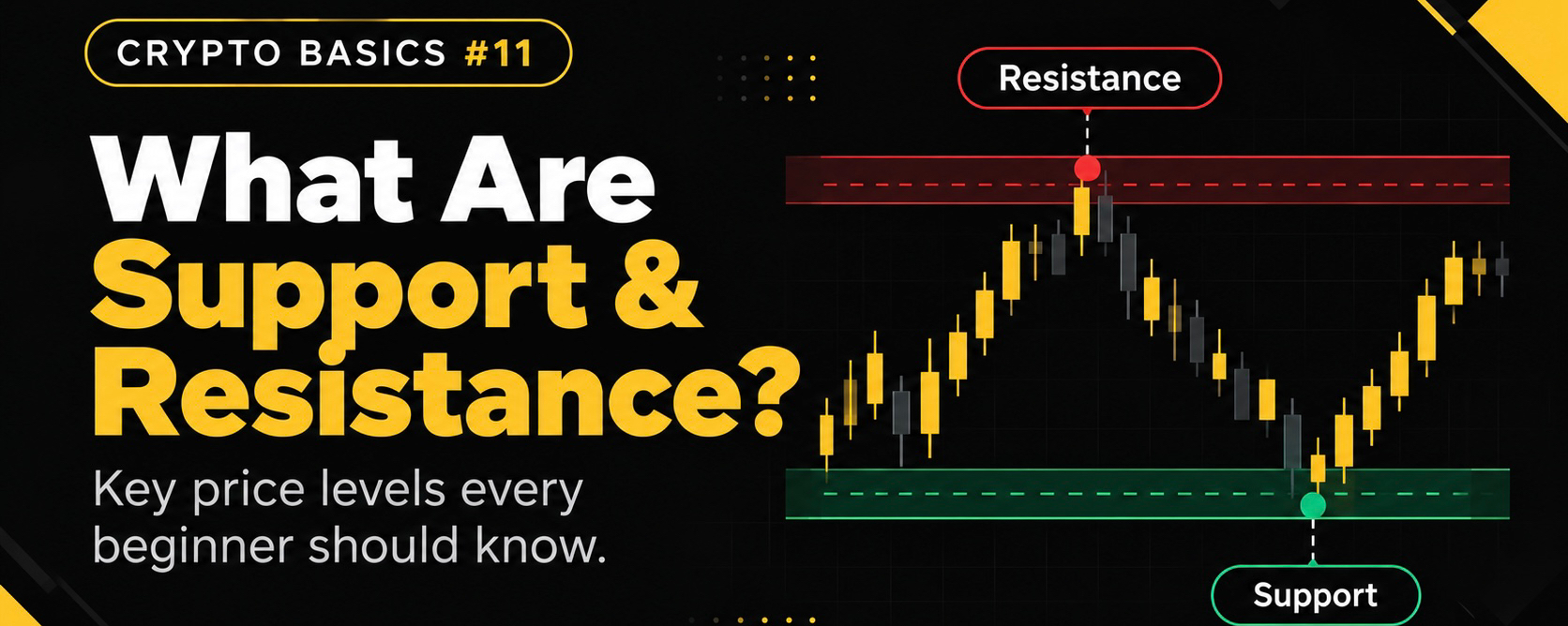
CRYPTO BASICS #11 — Soporte y Resistencia ExplicadosCuando miras un gráfico de cripto, a menudo oirás a los traders hablar sobre Soporte y Resistencia.
Pero, ¿qué significan realmente estos términos?
🟢 ¿Qué es el Soporte?
El soporte es una zona de precios donde el interés de compra puede aumentar, haciendo que sea más difícil que el precio baje.
Piensa en ello como un posible suelo.
🔴 ¿Qué es la Resistencia?
La resistencia es una zona de precios donde la presión vendedora puede aumentar, haciendo que sea más difícil que el precio suba.
Piensa en ello como un posible techo.
📍 Son zonas, no precios exactos
Hay una cosa importante que entender:
CRYPTO BASICS #11 — Soporte y Resistencia Explicados
Cuando miras un gráfico de cripto, a menudo oirás a los traders hablar sobre Soporte y Resistencia.
Pero, ¿qué significan realmente estos términos?
🟢 ¿Qué es el Soporte?
El soporte es una zona de precios donde el interés de compra puede aumentar, haciendo que sea más difícil que el precio baje.
Piensa en ello como un posible suelo.
🔴 ¿Qué es la Resistencia?
La resistencia es una zona de precios donde la presión vendedora puede aumentar, haciendo que sea más difícil que el precio suba.
Piensa en ello como un posible techo.
📍 Son zonas, no precios exactos
Hay una cosa importante que entender:
Pero, ¿qué significan realmente estos términos?
🟢 ¿Qué es el Soporte?
El soporte es una zona de precios donde el interés de compra puede aumentar, haciendo que sea más difícil que el precio baje.
Piensa en ello como un posible suelo.
🔴 ¿Qué es la Resistencia?
La resistencia es una zona de precios donde la presión vendedora puede aumentar, haciendo que sea más difícil que el precio suba.
Piensa en ello como un posible techo.
📍 Son zonas, no precios exactos
Hay una cosa importante que entender:
2
107

Cripto 101: Spot vs Futuros
La versión que me habría gustado haber leído primero...
El spot es simple: compras la moneda, la tienes. Incluso si el precio cae, sigues teniéndola.
Los futuros son diferentes. No estás comprando la moneda, estás apostando a la dirección, normalmente con apalancamiento.
Largo si crees que sube, corto si crees que cae.
El dinero prestado hace que las ganancias sean mayores y las pérdidas muchísimo más grandes.
¿Mi primera operación de futuros? Sí, no estamos hablando de esa. 😅 Volví al spot y mejoró mi sueño.
Los futuros pueden borrar una cuenta en minutos si no tienes un plan de riesgo. El spot es más lento y aburrido, y por eso mismo es el lugar más seguro para aprender.
¿Eres nuevo aquí? Empieza con spot. Los futuros pueden esperar.
No es asesoramiento financiero.
$ETH $BTC $BNB
#Cryptollegiate
#CryptoForBeginners
#CryptoBasics
#SpotVsFutures
{spot}(ETHUSDT)
{spot}(BNBUSDT)
{spot}(BTCUSDT)
Cripto 101: Spot vs Futuros
La versión que me habría gustado haber leído primero...
El spot es simple: compras la moneda, la tienes. Incluso si el precio cae, sigues teniéndola.
Los futuros son diferentes. No estás comprando la moneda, estás apostando a la dirección, normalmente con apalancamiento.
Largo si crees que sube, corto si crees que cae.
El dinero prestado hace que las ganancias sean mayores y las pérdidas muchísimo más grandes.
¿Mi primera operación de futuros? Sí, no estamos hablando de esa. 😅 Volví al spot y mejoró mi sueño.
Los futuros pueden borrar una cuenta en minutos si no tienes un plan de riesgo. El spot es más lento y aburrido, y por eso mismo es el lugar más seguro para aprender.
¿Eres nuevo aquí? Empieza con spot. Los futuros pueden esperar.
No es asesoramiento financiero.
$ETH $BTC $BNB
#Cryptollegiate
#CryptoForBeginners
#CryptoBasics
#SpotVsFutures
La versión que me habría gustado haber leído primero...
El spot es simple: compras la moneda, la tienes. Incluso si el precio cae, sigues teniéndola.
Los futuros son diferentes. No estás comprando la moneda, estás apostando a la dirección, normalmente con apalancamiento.
Largo si crees que sube, corto si crees que cae.
El dinero prestado hace que las ganancias sean mayores y las pérdidas muchísimo más grandes.
¿Mi primera operación de futuros? Sí, no estamos hablando de esa. 😅 Volví al spot y mejoró mi sueño.
Los futuros pueden borrar una cuenta en minutos si no tienes un plan de riesgo. El spot es más lento y aburrido, y por eso mismo es el lugar más seguro para aprender.
¿Eres nuevo aquí? Empieza con spot. Los futuros pueden esperar.
No es asesoramiento financiero.
$ETH $BTC $BNB
#Cryptollegiate
#CryptoForBeginners
#CryptoBasics
#SpotVsFutures
120
Inicia sesión para explorar más contenidos
Únete a usuarios globales de criptomonedas en Binance Square
⚡️ Obtén información útil y actualizada sobre criptos.
💬 Avalado por el mayor exchange de criptomonedas en el mundo.
👍 Descubre perspectivas reales de creadores verificados.
Email/número de teléfono
Temas populares
1
#BinancePick
3.2M vistas
159,096 están debatiendo
2
#EarningsSeason
5.4M vistas
26,353 están debatiendo
3
#BitmineAdds10452ETH
862 vistas
38 están debatiendo
4
#SouthKoreaConsidersEducationTaxOnCryptoExchanges
1,193 vistas
54 están debatiendo
5
#OCCUrgesCommunityBanksToEnterStablecoinPayments
661 vistas
36 están debatiendo
6
#RippleWinsFullApprovalAsNationalTrustBank
696 vistas
34 están debatiendo
7
#AkashSelectsSolanaAsMigrationTarget
428 vistas
8 están debatiendo
8
#OndoToOpenSubscriptionsForOpenAIPreIPOTokenizedNotes
43 vistas
3 están debatiendo
9
#AnthropicTTMRevenueGrewAbout1200%
45,868 vistas
521 están debatiendo
10
#AnthropicS1ExpectedToday
37,268 vistas
407 están debatiendo