

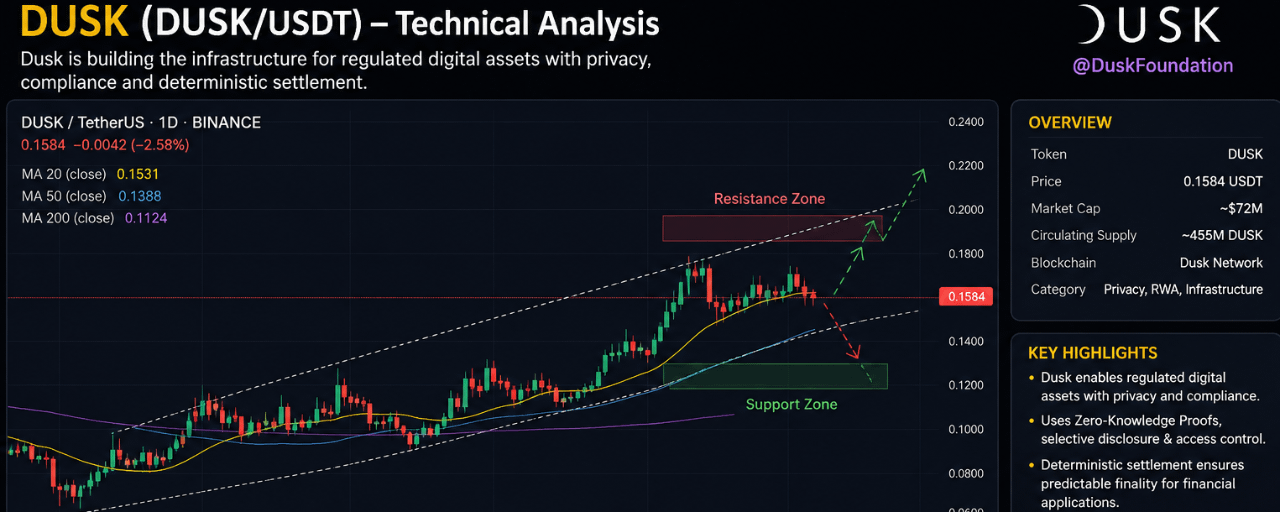

@Dusk es interesante porque aborda la adopción de blockchain desde la perspectiva de la infraestructura financiera real, no solo de las transferencias de tokens.
Un gran problema de las blockchains públicas es que la transparencia puede convertirse en una debilidad para los mercados regulados. Las instituciones financieras pueden necesitar demostrar que un inversor es elegible, verificar transacciones o proporcionar información a los reguladores, al mismo tiempo que protegen los saldos sensibles, las contrapartes y la actividad de negociación.
Aquí es donde Dusk adopta un enfoque diferente.
Su arquitectura combina controles de acceso, tecnología de conocimiento cero, transacciones protegidas, divulgación selectiva y liquidación determinista. En lugar de obligar a que todo sea completamente público o completamente privado, Dusk permite que distintas informaciones sean visibles para distintos participantes según los requisitos del flujo de trabajo.
La diferencia entre Moonlight y Phoenix es especialmente interesante. Moonlight admite transacciones transparentes basadas en cuentas, mientras que Phoenix permite transferencias protegidas mediante pruebas de conocimiento cero. Esto crea una base en la que la privacidad puede usarse cuando sea necesario sin eliminar la posibilidad de una divulgación controlada.
Dusk también separa la liquidación de la ejecución mediante DuskDS, DuskVM y DuskEVM. Este enfoque modular ofrece a los desarrolladores distintos entornos según si necesitan funcionalidad nativa de L1, ejecución centrada en la privacidad o compatibilidad con EVM.
La idea más importante es sencilla: tokenizar un activo no es suficiente. Los mercados financieros reales también necesitan identidad, elegibilidad, restricciones de transferencia, informes, servicios y una liquidación predecible.
Ese es el problema que @Dusk está intentando abordar.
$DUSK es el activo nativo que se usa para el gas de la red y el staking, conectando la capa económica con la infraestructura que respalda estos flujos de trabajo financieros.
Para mí, la parte más interesante de Dusk no es solo poner activos en la cadena: es intentar que la blockchain se ajuste a las limitaciones reales de las finanzas reguladas.