

#defievolution
defievolution
94,746 vistas
168 están debatiendo
Hot
Lo último

·
--
🚨 Los líderes de DeFi en Solana, Orca y Loopscale, se fusionan en Formation, una entidad con sede en Nueva York que apunta a activos del mundo real como IA, energía, robótica y defensa. Esto señala un giro estratégico de las DeFi puras hacia oportunidades reguladas y de nivel institucional. ¿Podría este puente unir la innovación on-chain de Solana con la demanda de las finanzas tradicionales?
#DeFiEvolution
$SOL #TradingSignal #CryptoAnalysis
🚨 Los líderes de DeFi en Solana, Orca y Loopscale, se fusionan en Formation, una entidad con sede en Nueva York que apunta a activos del mundo real como IA, energía, robótica y defensa. Esto señala un giro estratégico de las DeFi puras hacia oportunidades reguladas y de nivel institucional. ¿Podría este puente unir la innovación on-chain de Solana con la demanda de las finanzas tradicionales?
#DeFiEvolution
$SOL #TradingSignal #CryptoAnalysis
#DeFiEvolution
$SOL #TradingSignal #CryptoAnalysis

57

·
--
El respaldo de Ripple enciende un catalizador oculto para XRPLos verdaderos elementos decisivos en las criptomonedas no son solo los nuevos tokens o los proyectos con mucho bombo: son los que, en silencio, construyen redes sólidas que podrían alterar el statu quo.
La mayoría de los traders observa el precio, pero los insiders saben que hay que examinar las señales sutiles de un ecosistema en maduración, como el respaldo de Ripple a dos enmiendas de XRP Ledger diseñadas para fortalecer bóvedas de un solo activo y préstamos institucionales a plazo fijo.
EL SEÑAL (3 hashtags): Vemos un interés significativo en la bóveda y las capacidades de préstamos de XRP, evidenciado por el aumento de la actividad de votación y el compromiso de nodos validadores reputados. (#XRP #LendingInfrastructure #DeFiEvolution)
El respaldo de Ripple enciende un catalizador oculto para XRP
Los verdaderos elementos decisivos en las criptomonedas no son solo los nuevos tokens o los proyectos con mucho bombo: son los que, en silencio, construyen redes sólidas que podrían alterar el statu quo.
La mayoría de los traders observa el precio, pero los insiders saben que hay que examinar las señales sutiles de un ecosistema en maduración, como el respaldo de Ripple a dos enmiendas de XRP Ledger diseñadas para fortalecer bóvedas de un solo activo y préstamos institucionales a plazo fijo.
EL SEÑAL (3 hashtags): Vemos un interés significativo en la bóveda y las capacidades de préstamos de XRP, evidenciado por el aumento de la actividad de votación y el compromiso de nodos validadores reputados. (#XRP #LendingInfrastructure #DeFiEvolution)
La mayoría de los traders observa el precio, pero los insiders saben que hay que examinar las señales sutiles de un ecosistema en maduración, como el respaldo de Ripple a dos enmiendas de XRP Ledger diseñadas para fortalecer bóvedas de un solo activo y préstamos institucionales a plazo fijo.
EL SEÑAL (3 hashtags): Vemos un interés significativo en la bóveda y las capacidades de préstamos de XRP, evidenciado por el aumento de la actividad de votación y el compromiso de nodos validadores reputados. (#XRP #LendingInfrastructure #DeFiEvolution)
91
·
--
¿Sabías que las regulaciones financieras tradicionales podrían pronto no ser suficientes para mantenerse al día con el vertiginosamente cambiante mundo del trading en DeFi?
#DeFiEvolution #CFTCRegulations
Profundicemos en lo que hay detrás de este asunto urgente: las regulaciones existentes, diseñadas para los mercados financieros tradicionales, no encajan con la infraestructura descentralizada como el trading en DeFi. Imagina intentar aplicar las reglas de un supermercado físico a una plataforma de compras en línea: simplemente no funcionaría. El Hyperliquid Policy Center y Phantom están instando a la CFTC de EE. UU. a actualizar su reglamento para el trading onchain. Esto significa que las plataformas DeFi, como los intercambios descentralizados y los protocolos de préstamos, necesitan regulaciones a medida para garantizar la protección del usuario y la transparencia.
Ejemplo del mundo real: Binance ya es un referente en cumplimiento de DeFi, con medidas sólidas contra el lavado de dinero (AML) y de conocimiento del cliente (KYC). Al adelantarnos a la curva regulatoria, podemos fomentar un ecosistema DeFi más seguro y protegido.
Entonces, ¿qué puedes hacer para mantenerte a la vanguardia de las regulaciones de DeFi? Mantente informado sobre las actualizaciones de los organismos regulatorios y de las plataformas DeFi, y usa siempre intercambios reconocidos con medidas de seguridad sólidas. ¿Qué piensas: las regulaciones específicas de DeFi darán paso a una nueva era de innovación y confianza en el sector?
¿Sabías que las regulaciones financieras tradicionales podrían pronto no ser suficientes para mantenerse al día con el vertiginosamente cambiante mundo del trading en DeFi?
#DeFiEvolution #CFTCRegulations
Profundicemos en lo que hay detrás de este asunto urgente: las regulaciones existentes, diseñadas para los mercados financieros tradicionales, no encajan con la infraestructura descentralizada como el trading en DeFi. Imagina intentar aplicar las reglas de un supermercado físico a una plataforma de compras en línea: simplemente no funcionaría. El Hyperliquid Policy Center y Phantom están instando a la CFTC de EE. UU. a actualizar su reglamento para el trading onchain. Esto significa que las plataformas DeFi, como los intercambios descentralizados y los protocolos de préstamos, necesitan regulaciones a medida para garantizar la protección del usuario y la transparencia.
Ejemplo del mundo real: Binance ya es un referente en cumplimiento de DeFi, con medidas sólidas contra el lavado de dinero (AML) y de conocimiento del cliente (KYC). Al adelantarnos a la curva regulatoria, podemos fomentar un ecosistema DeFi más seguro y protegido.
Entonces, ¿qué puedes hacer para mantenerte a la vanguardia de las regulaciones de DeFi? Mantente informado sobre las actualizaciones de los organismos regulatorios y de las plataformas DeFi, y usa siempre intercambios reconocidos con medidas de seguridad sólidas. ¿Qué piensas: las regulaciones específicas de DeFi darán paso a una nueva era de innovación y confianza en el sector?
#DeFiEvolution #CFTCRegulations
Profundicemos en lo que hay detrás de este asunto urgente: las regulaciones existentes, diseñadas para los mercados financieros tradicionales, no encajan con la infraestructura descentralizada como el trading en DeFi. Imagina intentar aplicar las reglas de un supermercado físico a una plataforma de compras en línea: simplemente no funcionaría. El Hyperliquid Policy Center y Phantom están instando a la CFTC de EE. UU. a actualizar su reglamento para el trading onchain. Esto significa que las plataformas DeFi, como los intercambios descentralizados y los protocolos de préstamos, necesitan regulaciones a medida para garantizar la protección del usuario y la transparencia.
Ejemplo del mundo real: Binance ya es un referente en cumplimiento de DeFi, con medidas sólidas contra el lavado de dinero (AML) y de conocimiento del cliente (KYC). Al adelantarnos a la curva regulatoria, podemos fomentar un ecosistema DeFi más seguro y protegido.
Entonces, ¿qué puedes hacer para mantenerte a la vanguardia de las regulaciones de DeFi? Mantente informado sobre las actualizaciones de los organismos regulatorios y de las plataformas DeFi, y usa siempre intercambios reconocidos con medidas de seguridad sólidas. ¿Qué piensas: las regulaciones específicas de DeFi darán paso a una nueva era de innovación y confianza en el sector?
4

⚡ Evolución de Hyperliquid y DEX: el crecimiento sostenido de HYPE señala un cambio de paradigma en el trading
El 19 de julio de 2026, Hyperliquid $HYPE a $60.82 con una capitalización de $13.53B está demostrando que el trading perpetuo on-chain puede competir con los exchanges centralizados. La ganancia de +2.62% de hoy y el volumen de $288.89M confirman la creciente adopción de usuarios.
La tesis va más allá de un solo token: la autocustodia combinada con una experiencia de trading de nivel CEX es el santo grial de DeFi. Si $HYPE mantiene esta trayectoria, podría desafiar la idea de que los DEX son inherentemente inferiores a las alternativas centralizadas.
📌 Idea clave:
Hyperliquid representa una tesis que se valida en tiempo real. Los derivados on-chain con rendimiento a nivel CEX ya no son un sueño — es una realidad de capitalización de $13.5B.
#Hyperliquid #HYPE #DeFiEvolution
#BinanceAlphaAlert
⚡ Evolución de Hyperliquid y DEX: el crecimiento sostenido de HYPE señala un cambio de paradigma en el trading
El 19 de julio de 2026, Hyperliquid $HYPE a $60.82 con una capitalización de $13.53B está demostrando que el trading perpetuo on-chain puede competir con los exchanges centralizados. La ganancia de +2.62% de hoy y el volumen de $288.89M confirman la creciente adopción de usuarios.
La tesis va más allá de un solo token: la autocustodia combinada con una experiencia de trading de nivel CEX es el santo grial de DeFi. Si $HYPE mantiene esta trayectoria, podría desafiar la idea de que los DEX son inherentemente inferiores a las alternativas centralizadas.
📌 Idea clave:
Hyperliquid representa una tesis que se valida en tiempo real. Los derivados on-chain con rendimiento a nivel CEX ya no son un sueño — es una realidad de capitalización de $13.5B.
#Hyperliquid #HYPE #DeFiEvolution
#BinanceAlphaAlert
El 19 de julio de 2026, Hyperliquid $HYPE a $60.82 con una capitalización de $13.53B está demostrando que el trading perpetuo on-chain puede competir con los exchanges centralizados. La ganancia de +2.62% de hoy y el volumen de $288.89M confirman la creciente adopción de usuarios.
La tesis va más allá de un solo token: la autocustodia combinada con una experiencia de trading de nivel CEX es el santo grial de DeFi. Si $HYPE mantiene esta trayectoria, podría desafiar la idea de que los DEX son inherentemente inferiores a las alternativas centralizadas.
📌 Idea clave:
Hyperliquid representa una tesis que se valida en tiempo real. Los derivados on-chain con rendimiento a nivel CEX ya no son un sueño — es una realidad de capitalización de $13.5B.
#Hyperliquid #HYPE #DeFiEvolution
#BinanceAlphaAlert
40
·
--
¿Alguna vez te has preguntado qué pasa cuando un protocolo DeFi muy esperado sufre un golpe? Radiant, una plataforma DeFi líder, ha anunciado que cerrará operaciones después de un hackeo devastador en 2024 que dejó un impacto duradero.
#DeFiEvolution #CryptoResilience
Vamos a profundizar en el concepto de cerrar operaciones. Piensa en ello como una empresa cerrando una línea de negocio fallida – no están cerrando completamente, sino enfocándose en lo que realmente importa. En el caso de Radiant, los usuarios aún podrán retirar, pagar y gestionar sus posiciones a través del frontend y los contratos inteligentes.
El ejemplo en el mundo real es Radiant mismo. A pesar de enfrentar desafíos después del hackeo, están eligiendo centrarse en mantener la funcionalidad crítica en lugar de abandonar el barco por completo. Una lección para todos los entusiastas de DeFi – a veces, menos es más.
Entonces, ¿qué puedes hacer con este conocimiento? Evalúa tus propias inversiones en cripto y determina qué es lo más importante para tu estrategia de crecimiento a largo plazo. #CryptoGrowthStrategy
¿Alguna vez te has preguntado qué pasa cuando un protocolo DeFi muy esperado sufre un golpe? Radiant, una plataforma DeFi líder, ha anunciado que cerrará operaciones después de un hackeo devastador en 2024 que dejó un impacto duradero.
#DeFiEvolution #CryptoResilience
Vamos a profundizar en el concepto de cerrar operaciones. Piensa en ello como una empresa cerrando una línea de negocio fallida – no están cerrando completamente, sino enfocándose en lo que realmente importa. En el caso de Radiant, los usuarios aún podrán retirar, pagar y gestionar sus posiciones a través del frontend y los contratos inteligentes.
El ejemplo en el mundo real es Radiant mismo. A pesar de enfrentar desafíos después del hackeo, están eligiendo centrarse en mantener la funcionalidad crítica en lugar de abandonar el barco por completo. Una lección para todos los entusiastas de DeFi – a veces, menos es más.
Entonces, ¿qué puedes hacer con este conocimiento? Evalúa tus propias inversiones en cripto y determina qué es lo más importante para tu estrategia de crecimiento a largo plazo. #CryptoGrowthStrategy
#DeFiEvolution #CryptoResilience
Vamos a profundizar en el concepto de cerrar operaciones. Piensa en ello como una empresa cerrando una línea de negocio fallida – no están cerrando completamente, sino enfocándose en lo que realmente importa. En el caso de Radiant, los usuarios aún podrán retirar, pagar y gestionar sus posiciones a través del frontend y los contratos inteligentes.
El ejemplo en el mundo real es Radiant mismo. A pesar de enfrentar desafíos después del hackeo, están eligiendo centrarse en mantener la funcionalidad crítica en lugar de abandonar el barco por completo. Una lección para todos los entusiastas de DeFi – a veces, menos es más.
Entonces, ¿qué puedes hacer con este conocimiento? Evalúa tus propias inversiones en cripto y determina qué es lo más importante para tu estrategia de crecimiento a largo plazo. #CryptoGrowthStrategy
63
·
--
"Parece que la divulgación institucional de la Fundación Ethereum acaba de volverse institucionalizada. Se ha creado una nueva organización sin fines de lucro respaldada por los sospechosos de siempre, y esta vez no es solo un spin-off: es un golpe de Estado de pleno derecho, amigos.
EL ALFA
El lanzamiento institucional de Ethereum ahora es independiente de la Fundación, gracias a BitMine, SharpLink y la magia de Joseph Lubin. Están cortejando a bancos y administradores de activos como si fuera DeFi 2.0.
EL INSIGHT DE LA PUNTILLA
La verdadera pregunta aquí no es quién está detrás, sino quién sigue: ¿los otros grandes actores del ecosistema harán lo mismo?
CEBO DE PARTICIPACIÓN
¿Quién piensa que esto señala que el DeFi institucional finalmente está a la vuelta de la esquina? ¿Será Binance u otra persona? ¡Comparte tus ideas!" #EthereumInstitutional #CryptoRegulation #DeFiEvolution
"Parece que la divulgación institucional de la Fundación Ethereum acaba de volverse institucionalizada. Se ha creado una nueva organización sin fines de lucro respaldada por los sospechosos de siempre, y esta vez no es solo un spin-off: es un golpe de Estado de pleno derecho, amigos.
EL ALFA
El lanzamiento institucional de Ethereum ahora es independiente de la Fundación, gracias a BitMine, SharpLink y la magia de Joseph Lubin. Están cortejando a bancos y administradores de activos como si fuera DeFi 2.0.
EL INSIGHT DE LA PUNTILLA
La verdadera pregunta aquí no es quién está detrás, sino quién sigue: ¿los otros grandes actores del ecosistema harán lo mismo?
CEBO DE PARTICIPACIÓN
¿Quién piensa que esto señala que el DeFi institucional finalmente está a la vuelta de la esquina? ¿Será Binance u otra persona? ¡Comparte tus ideas!" #EthereumInstitutional #CryptoRegulation #DeFiEvolution
EL ALFA
El lanzamiento institucional de Ethereum ahora es independiente de la Fundación, gracias a BitMine, SharpLink y la magia de Joseph Lubin. Están cortejando a bancos y administradores de activos como si fuera DeFi 2.0.
EL INSIGHT DE LA PUNTILLA
La verdadera pregunta aquí no es quién está detrás, sino quién sigue: ¿los otros grandes actores del ecosistema harán lo mismo?
CEBO DE PARTICIPACIÓN
¿Quién piensa que esto señala que el DeFi institucional finalmente está a la vuelta de la esquina? ¿Será Binance u otra persona? ¡Comparte tus ideas!" #EthereumInstitutional #CryptoRegulation #DeFiEvolution
22

#bedrock $BR
💡 La verdadera pregunta en DeFi no es "¿cuánto gano?" sino "¿cuánto arriesgo?"
Bedrock 2.0 responde con un diseño inteligente que reduce riesgos sin sacrificar rendimientos.
@Bedrock ofrece un modelo de liquidez dinámica que se adapta a las condiciones del mercado, y el token $BR recompensa a los participantes activos en la gobernanza.
Vale la pena la experiencia.
#Bedrock #BR #DeFiEvolution
{future}(BRUSDT)
#bedrock $BR
💡 La verdadera pregunta en DeFi no es "¿cuánto gano?" sino "¿cuánto arriesgo?"
Bedrock 2.0 responde con un diseño inteligente que reduce riesgos sin sacrificar rendimientos.
@Bedrock ofrece un modelo de liquidez dinámica que se adapta a las condiciones del mercado, y el token $BR recompensa a los participantes activos en la gobernanza.
Vale la pena la experiencia.
#Bedrock #BR #DeFiEvolution
💡 La verdadera pregunta en DeFi no es "¿cuánto gano?" sino "¿cuánto arriesgo?"
Bedrock 2.0 responde con un diseño inteligente que reduce riesgos sin sacrificar rendimientos.
@Bedrock ofrece un modelo de liquidez dinámica que se adapta a las condiciones del mercado, y el token $BR recompensa a los participantes activos en la gobernanza.
Vale la pena la experiencia.
#Bedrock #BR #DeFiEvolution
2
78

·
--
Artículo
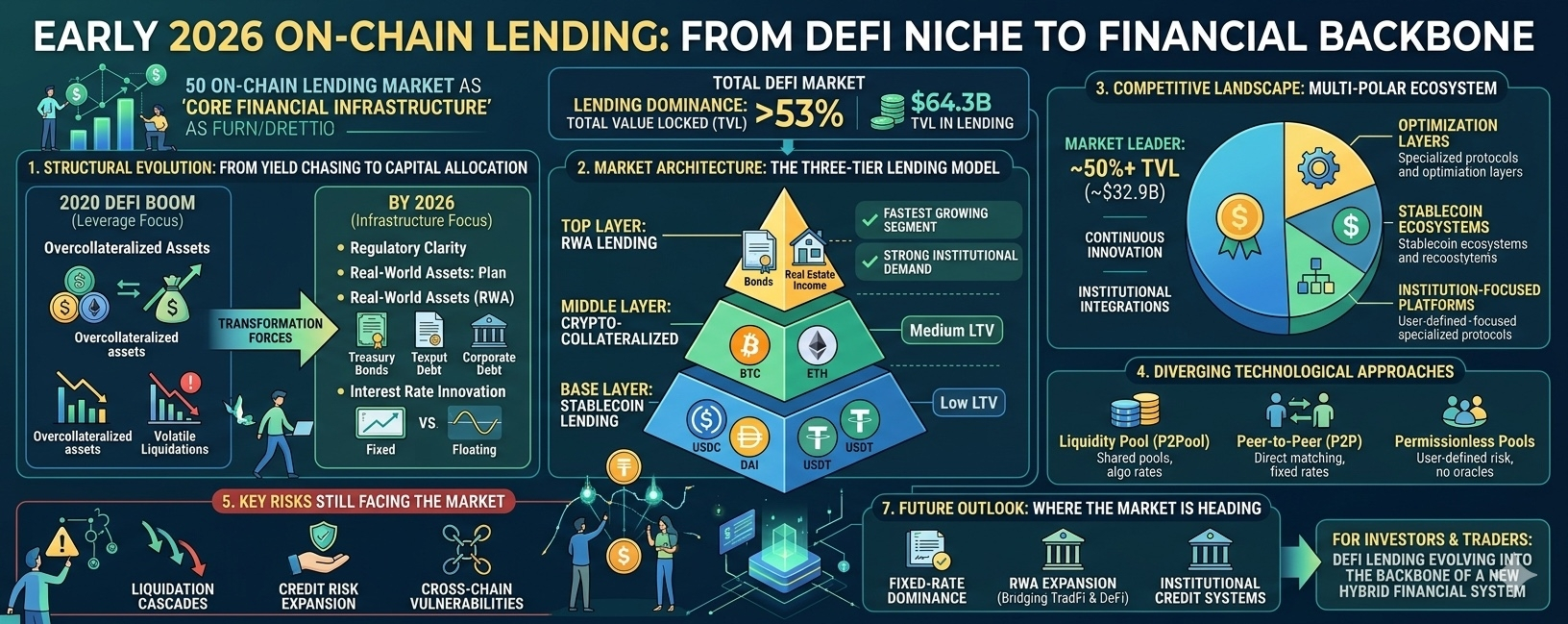
Mercado de Préstamos en Cadena a Principios de 2026: De Nicho DeFi a Espina Dorsal FinancieraEl sector de préstamos en cadena ha pasado decisivamente de un nicho especulativo de DeFi a uno de los pilares más críticos del sistema financiero digital. Para principios de 2026, los protocolos de préstamos controlan más de $64.3 mil millones en valor total bloqueado (TVL), más del 53% de todo el ecosistema DeFi, destacando su dominio y madurez.
Esta evolución no se trata solo de escala. Refleja un cambio estructural más profundo: de herramientas de apalancamiento criptográfico de alto riesgo a infraestructura financiera de grado institucional.
1. Evolución Estructural: De Apalancamiento a Infraestructura
Mercado de Préstamos en Cadena a Principios de 2026: De Nicho DeFi a Espina Dorsal Financiera
El sector de préstamos en cadena ha pasado decisivamente de un nicho especulativo de DeFi a uno de los pilares más críticos del sistema financiero digital. Para principios de 2026, los protocolos de préstamos controlan más de $64.3 mil millones en valor total bloqueado (TVL), más del 53% de todo el ecosistema DeFi, destacando su dominio y madurez.
Esta evolución no se trata solo de escala. Refleja un cambio estructural más profundo: de herramientas de apalancamiento criptográfico de alto riesgo a infraestructura financiera de grado institucional.
1. Evolución Estructural: De Apalancamiento a Infraestructura
Esta evolución no se trata solo de escala. Refleja un cambio estructural más profundo: de herramientas de apalancamiento criptográfico de alto riesgo a infraestructura financiera de grado institucional.
1. Evolución Estructural: De Apalancamiento a Infraestructura
89

Artículo
Los Algoritmos Invisibles: 3 Curiosidades Estructurales que Están Transformando Web3 Ahora MismoLa conversación sobre criptomonedas está profundamente dividida. Por un lado, los medios de comunicación convencionales se centran completamente en las velas de precios y las batallas regulatorias. Por otro lado, las herramientas de IA estándar reciclan las mismas definiciones superficiales de descentralización y contratos inteligentes.
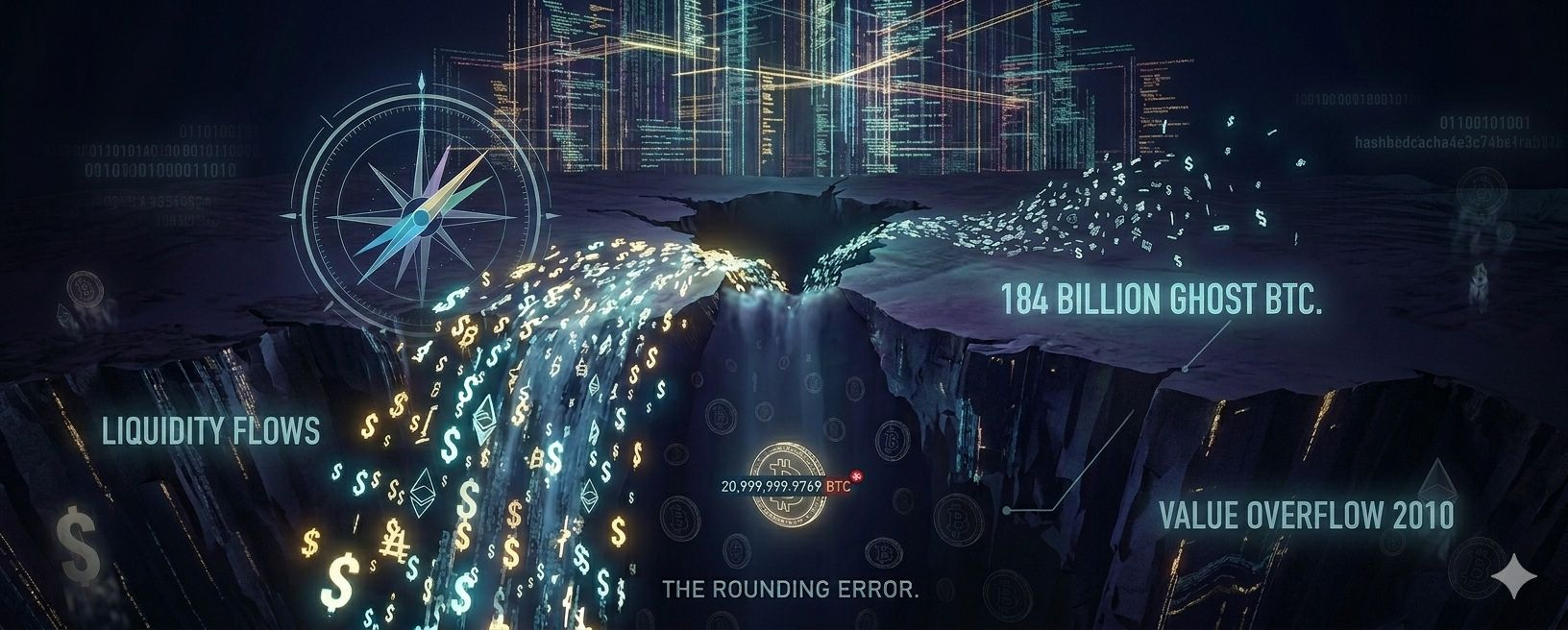
Pero si miras debajo del capó de las redes blockchain modernas, encontrarás paradojas arquitectónicas, guerras de infraestructura ocultas y fallas en los protocolos que desafían todo lo que pensamos que sabemos sobre los activos digitales.
Aquí hay tres realidades estructurales del cripto que rara vez se discuten, pero que dictan exactamente hacia dónde se dirige la tecnología.
Los Algoritmos Invisibles: 3 Curiosidades Estructurales que Están Transformando Web3 Ahora Mismo
La conversación sobre criptomonedas está profundamente dividida. Por un lado, los medios de comunicación convencionales se centran completamente en las velas de precios y las batallas regulatorias. Por otro lado, las herramientas de IA estándar reciclan las mismas definiciones superficiales de descentralización y contratos inteligentes.
Pero si miras debajo del capó de las redes blockchain modernas, encontrarás paradojas arquitectónicas, guerras de infraestructura ocultas y fallas en los protocolos que desafían todo lo que pensamos que sabemos sobre los activos digitales.
Aquí hay tres realidades estructurales del cripto que rara vez se discuten, pero que dictan exactamente hacia dónde se dirige la tecnología.
Pero si miras debajo del capó de las redes blockchain modernas, encontrarás paradojas arquitectónicas, guerras de infraestructura ocultas y fallas en los protocolos que desafían todo lo que pensamos que sabemos sobre los activos digitales.
Aquí hay tres realidades estructurales del cripto que rara vez se discuten, pero que dictan exactamente hacia dónde se dirige la tecnología.
85

·
--
🧠 $MORPHO … ¡Cuándo la financiación descentralizada se vuelve inteligente e institucional al mismo tiempo!
Como siempre, los proyectos que trabajan en silencio son los que cambian las reglas del juego — y Morpho es uno de ellos, construye sobre Ethereum pero opera con una mentalidad institucional 💼
El mercado habla de un protocolo con un valor de mercado de 1.09 mil millones de dólares, y un valor total bloqueado (TVL) que supera los 518 millones… pero los números por sí solos no son suficientes, veamos la profundidad real.
🚀 ¿Qué hace que $MORPHO sea diferente?
– Combina la eficiencia del préstamo y el endeudamiento, y la fluidez de plataformas como Aave y Compound
– Aprobado por instituciones como Société Générale y SG-Forge — es decir, no solo para los usuarios, sino también para los bancos
– Soporta activos diversos como ETH, USDC, DAI y BTC, y opera dentro de un entorno técnico masivo que supera los 5000 mil millones de dólares
📌 El protocolo es de código abierto, compatible con las regulaciones de MICA, y está sujeto a gobernanza de Morpho Association y CreatorPad
Personalmente, estoy observando $MORPHO porque conecta el mundo DeFi con la financiación tradicional de una manera que no hemos visto antes ⏳
📲 Sigue el canal #CryptoEmad para análisis de proyectos que marcan la diferencia antes de que se difundan
{future}(MORPHOUSDT)
#MorphoProtocol #DeFiEvolution #EthereumFinance #SmartLending
🧠 $MORPHO … ¡Cuándo la financiación descentralizada se vuelve inteligente e institucional al mismo tiempo!
Como siempre, los proyectos que trabajan en silencio son los que cambian las reglas del juego — y Morpho es uno de ellos, construye sobre Ethereum pero opera con una mentalidad institucional 💼
El mercado habla de un protocolo con un valor de mercado de 1.09 mil millones de dólares, y un valor total bloqueado (TVL) que supera los 518 millones… pero los números por sí solos no son suficientes, veamos la profundidad real.
🚀 ¿Qué hace que $MORPHO sea diferente?
– Combina la eficiencia del préstamo y el endeudamiento, y la fluidez de plataformas como Aave y Compound
– Aprobado por instituciones como Société Générale y SG-Forge — es decir, no solo para los usuarios, sino también para los bancos
– Soporta activos diversos como ETH, USDC, DAI y BTC, y opera dentro de un entorno técnico masivo que supera los 5000 mil millones de dólares
📌 El protocolo es de código abierto, compatible con las regulaciones de MICA, y está sujeto a gobernanza de Morpho Association y CreatorPad
Personalmente, estoy observando $MORPHO porque conecta el mundo DeFi con la financiación tradicional de una manera que no hemos visto antes ⏳
📲 Sigue el canal #CryptoEmad para análisis de proyectos que marcan la diferencia antes de que se difundan
#MorphoProtocol #DeFiEvolution #EthereumFinance #SmartLending
Como siempre, los proyectos que trabajan en silencio son los que cambian las reglas del juego — y Morpho es uno de ellos, construye sobre Ethereum pero opera con una mentalidad institucional 💼
El mercado habla de un protocolo con un valor de mercado de 1.09 mil millones de dólares, y un valor total bloqueado (TVL) que supera los 518 millones… pero los números por sí solos no son suficientes, veamos la profundidad real.
🚀 ¿Qué hace que $MORPHO sea diferente?
– Combina la eficiencia del préstamo y el endeudamiento, y la fluidez de plataformas como Aave y Compound
– Aprobado por instituciones como Société Générale y SG-Forge — es decir, no solo para los usuarios, sino también para los bancos
– Soporta activos diversos como ETH, USDC, DAI y BTC, y opera dentro de un entorno técnico masivo que supera los 5000 mil millones de dólares
📌 El protocolo es de código abierto, compatible con las regulaciones de MICA, y está sujeto a gobernanza de Morpho Association y CreatorPad
Personalmente, estoy observando $MORPHO porque conecta el mundo DeFi con la financiación tradicional de una manera que no hemos visto antes ⏳
📲 Sigue el canal #CryptoEmad para análisis de proyectos que marcan la diferencia antes de que se difundan
#MorphoProtocol #DeFiEvolution #EthereumFinance #SmartLending
1
6
7k

Artículo
El Futuro de DeFi: ¿Es la Automatización Basada en la Intención la Última Frontera?El panorama de las finanzas descentralizadas (DeFi) está cambiando bajo nuestros pies. Durante años, hemos estado obsesionados con la "agricultura de rendimiento," "piscinas de liquidez," y "rebalanceo manual." Pero a medida que nos adentramos más en 2026, está emergiendo un nuevo paradigma: DeFi Basado en la Intención.
Las plataformas como
están en el centro de esta transición. En lugar de obligar a los usuarios a navegar por contratos inteligentes complejos o preocuparse por la optimización de gas, estas plataformas actúan como una capa de ejecución, interpretando la "intención" de un usuario y encontrando el camino más eficiente para ejecutarla.
El Futuro de DeFi: ¿Es la Automatización Basada en la Intención la Última Frontera?
El panorama de las finanzas descentralizadas (DeFi) está cambiando bajo nuestros pies. Durante años, hemos estado obsesionados con la "agricultura de rendimiento," "piscinas de liquidez," y "rebalanceo manual." Pero a medida que nos adentramos más en 2026, está emergiendo un nuevo paradigma: DeFi Basado en la Intención.
Las plataformas como
están en el centro de esta transición. En lugar de obligar a los usuarios a navegar por contratos inteligentes complejos o preocuparse por la optimización de gas, estas plataformas actúan como una capa de ejecución, interpretando la "intención" de un usuario y encontrando el camino más eficiente para ejecutarla.
Las plataformas como
están en el centro de esta transición. En lugar de obligar a los usuarios a navegar por contratos inteligentes complejos o preocuparse por la optimización de gas, estas plataformas actúan como una capa de ejecución, interpretando la "intención" de un usuario y encontrando el camino más eficiente para ejecutarla.
20

·
--
#StablecoinLaw está Transformando las Finanzas
Los reguladores ya no están al margen — la claridad está en camino.
🔐 La estabilidad se encuentra con el escrutinio a medida que los marcos de cumplimiento se endurecen.
💸 Los dólares digitales están saliendo de las sombras hacia la legitimidad legal.
🌍 Desde remesas hasta reservas, la columna vertebral de DeFi está evolucionando.
Esto no es solo política — es la base del dinero del futuro.
Prepárate para una economía cripto regulada, escalable y respaldada por soberanía.
#FinanceReform #CryptoPolicy #DigitalAssets #DeFiEvolution
#StablecoinLaw está Transformando las Finanzas
Los reguladores ya no están al margen — la claridad está en camino.
🔐 La estabilidad se encuentra con el escrutinio a medida que los marcos de cumplimiento se endurecen.
💸 Los dólares digitales están saliendo de las sombras hacia la legitimidad legal.
🌍 Desde remesas hasta reservas, la columna vertebral de DeFi está evolucionando.
Esto no es solo política — es la base del dinero del futuro.
Prepárate para una economía cripto regulada, escalable y respaldada por soberanía.
#FinanceReform #CryptoPolicy #DigitalAssets #DeFiEvolution
Los reguladores ya no están al margen — la claridad está en camino.
🔐 La estabilidad se encuentra con el escrutinio a medida que los marcos de cumplimiento se endurecen.
💸 Los dólares digitales están saliendo de las sombras hacia la legitimidad legal.
🌍 Desde remesas hasta reservas, la columna vertebral de DeFi está evolucionando.
Esto no es solo política — es la base del dinero del futuro.
Prepárate para una economía cripto regulada, escalable y respaldada por soberanía.
#FinanceReform #CryptoPolicy #DigitalAssets #DeFiEvolution
76

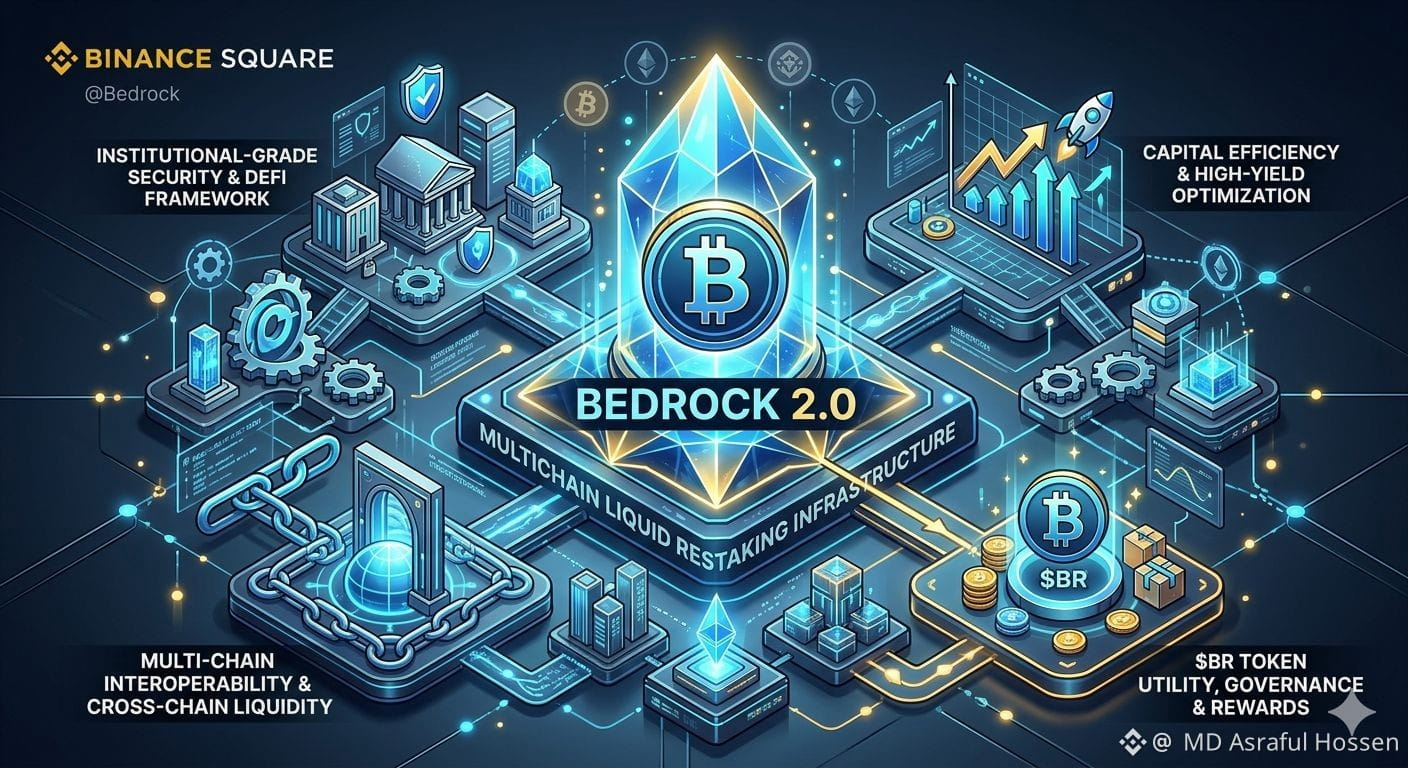
A medida que el ecosistema de finanzas descentralizadas (DeFi) madura, las limitaciones del staking tradicional—donde los activos están bloqueados y el capital se vuelve estancado—se están volviendo más evidentes. Aquí es exactamente donde la arquitectura innovadora de Bedrock 2.0 entra en juego para revolucionar el mercado. Al fusionar sin problemas la seguridad con una flexibilidad de capital absoluta, @Bedrock está estableciendo un nuevo estándar para el restaking líquido multichain.
La filosofía central detrás de Bedrock 2.0 es asegurar que tus activos cripto nunca duerman. Ya sea que busques aprovechar estructuras de rendimiento de nivel institucional o optimizar tus tenencias de Bitcoin a través de marcos descentralizados, esta plataforma cierra la brecha con una eficiencia sin igual. Mitiga los riesgos del restaking tradicional a través de capas robustas de seguridad y protección contra slashing, convirtiéndola en una infraestructura confiable tanto para usuarios minoristas como para grandes asignadores de capital.
En el centro de este ecosistema en expansión se encuentra el $BR token. A medida que Bedrock continúa integrándose con las principales redes blockchain y fomenta la liquidez multichain, la utilidad, el poder de gobernanza y los mecanismos de recompensa asociados a $BR están posicionados para una creación de valor sostenible a largo plazo. Si realmente estás comprometido a maximizar tu estrategia DeFi mientras mantienes una liquidez total de activos, prestar atención a esta actualización es sumamente esencial. 🚀🔥
#Bedrock $BR @Bedrock #LiquidRestaking #DeFiEvolution #SmartInvesting #CryptoInfrastructure #web3Finance
A medida que el ecosistema de finanzas descentralizadas (DeFi) madura, las limitaciones del staking tradicional—donde los activos están bloqueados y el capital se vuelve estancado—se están volviendo más evidentes. Aquí es exactamente donde la arquitectura innovadora de Bedrock 2.0 entra en juego para revolucionar el mercado. Al fusionar sin problemas la seguridad con una flexibilidad de capital absoluta, @Bedrock está estableciendo un nuevo estándar para el restaking líquido multichain.
La filosofía central detrás de Bedrock 2.0 es asegurar que tus activos cripto nunca duerman. Ya sea que busques aprovechar estructuras de rendimiento de nivel institucional o optimizar tus tenencias de Bitcoin a través de marcos descentralizados, esta plataforma cierra la brecha con una eficiencia sin igual. Mitiga los riesgos del restaking tradicional a través de capas robustas de seguridad y protección contra slashing, convirtiéndola en una infraestructura confiable tanto para usuarios minoristas como para grandes asignadores de capital.
En el centro de este ecosistema en expansión se encuentra el $BR token. A medida que Bedrock continúa integrándose con las principales redes blockchain y fomenta la liquidez multichain, la utilidad, el poder de gobernanza y los mecanismos de recompensa asociados a $BR están posicionados para una creación de valor sostenible a largo plazo. Si realmente estás comprometido a maximizar tu estrategia DeFi mientras mantienes una liquidez total de activos, prestar atención a esta actualización es sumamente esencial. 🚀🔥
#Bedrock $BR @Bedrock #LiquidRestaking #DeFiEvolution #SmartInvesting #CryptoInfrastructure #web3Finance
La filosofía central detrás de Bedrock 2.0 es asegurar que tus activos cripto nunca duerman. Ya sea que busques aprovechar estructuras de rendimiento de nivel institucional o optimizar tus tenencias de Bitcoin a través de marcos descentralizados, esta plataforma cierra la brecha con una eficiencia sin igual. Mitiga los riesgos del restaking tradicional a través de capas robustas de seguridad y protección contra slashing, convirtiéndola en una infraestructura confiable tanto para usuarios minoristas como para grandes asignadores de capital.
En el centro de este ecosistema en expansión se encuentra el $BR token. A medida que Bedrock continúa integrándose con las principales redes blockchain y fomenta la liquidez multichain, la utilidad, el poder de gobernanza y los mecanismos de recompensa asociados a $BR están posicionados para una creación de valor sostenible a largo plazo. Si realmente estás comprometido a maximizar tu estrategia DeFi mientras mantienes una liquidez total de activos, prestar atención a esta actualización es sumamente esencial. 🚀🔥
#Bedrock $BR @Bedrock #LiquidRestaking #DeFiEvolution #SmartInvesting #CryptoInfrastructure #web3Finance
82

·
--
#grvt Uno de los mayores obstáculos para la adopción masiva de Web3 siempre ha sido la compleja experiencia de usuario. GRVT lo aborda de frente al ofrecer una interfaz fluida e intuitiva que se siente exactamente como una plataforma centralizada de primer nivel, pero con una mejora enorme: 100% autocustodia. No tienes que confiar en una entidad centralizada con tus activos para disfrutar de herramientas de trading de nivel profesional, liquidez profunda y emparejamiento de órdenes instantáneo. Tus claves, tu cripto, siempre. Es exactamente lo que la industria necesita para avanzar hacia el futuro de las finanzas descentralizadas.
#SelfCustody #CryptoUX #DeFiEvolution #SmartTrading
#grvt Uno de los mayores obstáculos para la adopción masiva de Web3 siempre ha sido la compleja experiencia de usuario. GRVT lo aborda de frente al ofrecer una interfaz fluida e intuitiva que se siente exactamente como una plataforma centralizada de primer nivel, pero con una mejora enorme: 100% autocustodia. No tienes que confiar en una entidad centralizada con tus activos para disfrutar de herramientas de trading de nivel profesional, liquidez profunda y emparejamiento de órdenes instantáneo. Tus claves, tu cripto, siempre. Es exactamente lo que la industria necesita para avanzar hacia el futuro de las finanzas descentralizadas.
#SelfCustody #CryptoUX #DeFiEvolution #SmartTrading
#SelfCustody #CryptoUX #DeFiEvolution #SmartTrading
99
·
--
La privacidad no es un lujo en las criptomonedas; es una necesidad fundamental. GRVT aprovecha tecnología avanzada de Capa 3 construida sobre zkSync para ofrecer una privacidad de datos y escalabilidad incomparables. Al utilizar pruebas de conocimiento cero, los usuarios pueden ejecutar operaciones de alta frecuencia sin exponer datos sensibles de transacciones a actores maliciosos. Esto garantiza un ecosistema seguro donde tanto los participantes institucionales como los traders minoristas pueden operar con total tranquilidad. La seguridad, la privacidad y la escalabilidad ya no son opciones mutuamente excluyentes. ¡Deseando los próximos hitos de este ecosistema!
#GRVT #zkSync #Layer3 #PrivacyMatters #Web3Security
📅 Día 3: 12 de julio – Experiencia de usuario fluida y verdadera custodia propia
Uno de los mayores obstáculos para la adopción masiva de Web3 siempre ha sido la compleja experiencia del usuario. GRVT lo aborda de frente al ofrecer una interfaz fluida e intuitiva que se siente exactamente como una plataforma centralizada de primer nivel, pero con una gran mejora: 100% custodia propia. No necesitas confiar en una entidad centralizada para disfrutar de herramientas de trading de nivel profesional, liquidez profunda y emparejamiento de órdenes instantáneo. Tus claves, tu cripto, siempre. Es exactamente lo que la industria necesita para avanzar hacia el futuro de las finanzas descentralizadas.
#grvt #SelfCustody #CryptoUX #DeFiEvolution #SmartTrading
La privacidad no es un lujo en las criptomonedas; es una necesidad fundamental. GRVT aprovecha tecnología avanzada de Capa 3 construida sobre zkSync para ofrecer una privacidad de datos y escalabilidad incomparables. Al utilizar pruebas de conocimiento cero, los usuarios pueden ejecutar operaciones de alta frecuencia sin exponer datos sensibles de transacciones a actores maliciosos. Esto garantiza un ecosistema seguro donde tanto los participantes institucionales como los traders minoristas pueden operar con total tranquilidad. La seguridad, la privacidad y la escalabilidad ya no son opciones mutuamente excluyentes. ¡Deseando los próximos hitos de este ecosistema!
#GRVT #zkSync #Layer3 #PrivacyMatters #Web3Security
📅 Día 3: 12 de julio – Experiencia de usuario fluida y verdadera custodia propia
Uno de los mayores obstáculos para la adopción masiva de Web3 siempre ha sido la compleja experiencia del usuario. GRVT lo aborda de frente al ofrecer una interfaz fluida e intuitiva que se siente exactamente como una plataforma centralizada de primer nivel, pero con una gran mejora: 100% custodia propia. No necesitas confiar en una entidad centralizada para disfrutar de herramientas de trading de nivel profesional, liquidez profunda y emparejamiento de órdenes instantáneo. Tus claves, tu cripto, siempre. Es exactamente lo que la industria necesita para avanzar hacia el futuro de las finanzas descentralizadas.
#grvt #SelfCustody #CryptoUX #DeFiEvolution #SmartTrading
#GRVT #zkSync #Layer3 #PrivacyMatters #Web3Security
📅 Día 3: 12 de julio – Experiencia de usuario fluida y verdadera custodia propia
Uno de los mayores obstáculos para la adopción masiva de Web3 siempre ha sido la compleja experiencia del usuario. GRVT lo aborda de frente al ofrecer una interfaz fluida e intuitiva que se siente exactamente como una plataforma centralizada de primer nivel, pero con una gran mejora: 100% custodia propia. No necesitas confiar en una entidad centralizada para disfrutar de herramientas de trading de nivel profesional, liquidez profunda y emparejamiento de órdenes instantáneo. Tus claves, tu cripto, siempre. Es exactamente lo que la industria necesita para avanzar hacia el futuro de las finanzas descentralizadas.
#grvt #SelfCustody #CryptoUX #DeFiEvolution #SmartTrading
113
Inicia sesión para explorar más contenidos
Únete a usuarios globales de criptomonedas en Binance Square
⚡️ Obtén información útil y actualizada sobre criptos.
💬 Avalado por el mayor exchange de criptomonedas en el mundo.
👍 Descubre perspectivas reales de creadores verificados.
Email/número de teléfono
Temas populares
1
#BinancePick
2.7M vistas
144,553 están debatiendo
2
#EarningsSeason
5M vistas
24,786 están debatiendo
3
#SouthKoreaReportedlyWeighsFourthCryptoTaxDelay
4,117 vistas
164 están debatiendo
4
#FranklinTempletonFilesForTwoDividendToBitcoinETFs
9,473 vistas
286 están debatiendo
5
#StrategyMSTRSurpassesNasdaqInMarketCap
8,399 vistas
238 están debatiendo
6
#CanadaProposesStablecoinRedemptionWithin3BusinessDays
285 vistas
24 están debatiendo
7
#ElectrumWalletBugLetRogueServersStealFunds
13,786 vistas
359 están debatiendo
8
#ArgentineCourtDismissesLIBRACaseAgainstMilei
23,973 vistas
423 están debatiendo
9
#SKHynixReportedlyPlansSpecialDividendFromKioxiaStakeSale
3,638 vistas
51 están debatiendo
10
#KeystoneWebsiteBreachExposesBuyersShippingAddresses
1,897 vistas
44 están debatiendo