
#blockchaininfrastructure
blockchaininfrastructure
76,230 vistas
1,029 están debatiendo
Hot
Lo último

·
--
El siguiente aumento de velocidad de Solana no es solo un número de titular.
El último registro de cambios de la Fundación Solana documenta una reducción del tiempo de ranura en mainnet de 400 ms a 350 ms, mientras que en testnet pasó de 250 ms a 200 ms. Es un paso significativo hacia actualizaciones de estado más rápidas, pero no es lo mismo que decir que cada aplicación ahora es un 14% más rápida.
La pregunta más difícil es operativa: las ranuras más cortas dejan menos tiempo para la votación, los traspasos de líder y la propagación de la red. El análisis de validadores de Solana indica que el objetivo eventual de 200 ms podría volver esos márgenes de latencia más relevantes, mientras que los efectos sobre MEV, los costos de los validadores y la creación de mercado dependen del comportamiento real en mainnet.
Para quienes construyen, la conclusión es práctica: medir la confirmación, la latencia de RPC, la frescura de los oráculos y la lógica de reintentos de transacciones frente a las nuevas suposiciones de temporización. Los bloques más rápidos pueden mejorar la capacidad de respuesta, pero solo si la infraestructura circundante se mantiene al ritmo.
El paso de 350 ms en mainnet está confirmado. El impacto completo de alcanzar 200 ms sigue siendo una cuestión empírica, no una mejora de rendimiento garantizada.
#Solana #BlockchainInfrastructure
El siguiente aumento de velocidad de Solana no es solo un número de titular.
El último registro de cambios de la Fundación Solana documenta una reducción del tiempo de ranura en mainnet de 400 ms a 350 ms, mientras que en testnet pasó de 250 ms a 200 ms. Es un paso significativo hacia actualizaciones de estado más rápidas, pero no es lo mismo que decir que cada aplicación ahora es un 14% más rápida.
La pregunta más difícil es operativa: las ranuras más cortas dejan menos tiempo para la votación, los traspasos de líder y la propagación de la red. El análisis de validadores de Solana indica que el objetivo eventual de 200 ms podría volver esos márgenes de latencia más relevantes, mientras que los efectos sobre MEV, los costos de los validadores y la creación de mercado dependen del comportamiento real en mainnet.
Para quienes construyen, la conclusión es práctica: medir la confirmación, la latencia de RPC, la frescura de los oráculos y la lógica de reintentos de transacciones frente a las nuevas suposiciones de temporización. Los bloques más rápidos pueden mejorar la capacidad de respuesta, pero solo si la infraestructura circundante se mantiene al ritmo.
El paso de 350 ms en mainnet está confirmado. El impacto completo de alcanzar 200 ms sigue siendo una cuestión empírica, no una mejora de rendimiento garantizada.
#Solana #BlockchainInfrastructure
El último registro de cambios de la Fundación Solana documenta una reducción del tiempo de ranura en mainnet de 400 ms a 350 ms, mientras que en testnet pasó de 250 ms a 200 ms. Es un paso significativo hacia actualizaciones de estado más rápidas, pero no es lo mismo que decir que cada aplicación ahora es un 14% más rápida.
La pregunta más difícil es operativa: las ranuras más cortas dejan menos tiempo para la votación, los traspasos de líder y la propagación de la red. El análisis de validadores de Solana indica que el objetivo eventual de 200 ms podría volver esos márgenes de latencia más relevantes, mientras que los efectos sobre MEV, los costos de los validadores y la creación de mercado dependen del comportamiento real en mainnet.
Para quienes construyen, la conclusión es práctica: medir la confirmación, la latencia de RPC, la frescura de los oráculos y la lógica de reintentos de transacciones frente a las nuevas suposiciones de temporización. Los bloques más rápidos pueden mejorar la capacidad de respuesta, pero solo si la infraestructura circundante se mantiene al ritmo.
El paso de 350 ms en mainnet está confirmado. El impacto completo de alcanzar 200 ms sigue siendo una cuestión empírica, no una mejora de rendimiento garantizada.
#Solana #BlockchainInfrastructure
64

·
--
Rotación de Capital: ¡La Capa 1 y la Expansión de Ecosistemas de Escalado Aumentan el Volumen On-Chain! 🔄
Mientras Bitcoin consolida cerca de máximos locales, el capital inteligente está rotando agresivamente hacia protocolos fundamentales de Capa-1 y Capa-2 de escalado en todo el panorama Web3.
Aquí está por qué la rotación de liquidez a mitad de semana está fortaleciendo la estructura más amplia del mercado:
1️⃣ Expansión de DeFi TVL:
El Total Value Locked (TVL) en redes de liquidación de alta velocidad sube de forma constante, ya que los intercambios descentralizados (DEXs) y los mercados monetarios absorben entradas de liquidez en stablecoins.
2️⃣ Velocidad del Gas On-Chain:
El aumento de la interacción con activos tokenizados del mundo real (RWAs), infraestructura física descentralizada (DePIN) y rollups de trading de alta frecuencia continúa quemando gas de la red y recompensando a los validadores.
3️⃣ Salud del Mercado de Altcoins:
Cuando el capital fluye con fluidez de Bitcoin hacia altcoins de alto uso durante la consolidación del BTC, se evita el agotamiento del mercado y se confirma una demanda sostenible en múltiples sectores.
Conclusión: Los ciclos de mercado fuertes prosperan con una rotación de liquidez constante. Mantén tu cartera equilibrada entre materias primas digitales de base y redes de alta capacidad. 💡
¿En qué ecosistema estás operando más activamente on-chain esta semana? ¡Compártelo abajo! 👇
#CryptoNews #Layer1 #Layer2 #DeFi #Altcoins #Web3 #BlockchainInfrastructure
Rotación de Capital: ¡La Capa 1 y la Expansión de Ecosistemas de Escalado Aumentan el Volumen On-Chain! 🔄
Mientras Bitcoin consolida cerca de máximos locales, el capital inteligente está rotando agresivamente hacia protocolos fundamentales de Capa-1 y Capa-2 de escalado en todo el panorama Web3.
Aquí está por qué la rotación de liquidez a mitad de semana está fortaleciendo la estructura más amplia del mercado:
1️⃣ Expansión de DeFi TVL:
El Total Value Locked (TVL) en redes de liquidación de alta velocidad sube de forma constante, ya que los intercambios descentralizados (DEXs) y los mercados monetarios absorben entradas de liquidez en stablecoins.
2️⃣ Velocidad del Gas On-Chain:
El aumento de la interacción con activos tokenizados del mundo real (RWAs), infraestructura física descentralizada (DePIN) y rollups de trading de alta frecuencia continúa quemando gas de la red y recompensando a los validadores.
3️⃣ Salud del Mercado de Altcoins:
Cuando el capital fluye con fluidez de Bitcoin hacia altcoins de alto uso durante la consolidación del BTC, se evita el agotamiento del mercado y se confirma una demanda sostenible en múltiples sectores.
Conclusión: Los ciclos de mercado fuertes prosperan con una rotación de liquidez constante. Mantén tu cartera equilibrada entre materias primas digitales de base y redes de alta capacidad. 💡
¿En qué ecosistema estás operando más activamente on-chain esta semana? ¡Compártelo abajo! 👇
#CryptoNews #Layer1 #Layer2 #DeFi #Altcoins #Web3 #BlockchainInfrastructure
Mientras Bitcoin consolida cerca de máximos locales, el capital inteligente está rotando agresivamente hacia protocolos fundamentales de Capa-1 y Capa-2 de escalado en todo el panorama Web3.
Aquí está por qué la rotación de liquidez a mitad de semana está fortaleciendo la estructura más amplia del mercado:
1️⃣ Expansión de DeFi TVL:
El Total Value Locked (TVL) en redes de liquidación de alta velocidad sube de forma constante, ya que los intercambios descentralizados (DEXs) y los mercados monetarios absorben entradas de liquidez en stablecoins.
2️⃣ Velocidad del Gas On-Chain:
El aumento de la interacción con activos tokenizados del mundo real (RWAs), infraestructura física descentralizada (DePIN) y rollups de trading de alta frecuencia continúa quemando gas de la red y recompensando a los validadores.
3️⃣ Salud del Mercado de Altcoins:
Cuando el capital fluye con fluidez de Bitcoin hacia altcoins de alto uso durante la consolidación del BTC, se evita el agotamiento del mercado y se confirma una demanda sostenible en múltiples sectores.
Conclusión: Los ciclos de mercado fuertes prosperan con una rotación de liquidez constante. Mantén tu cartera equilibrada entre materias primas digitales de base y redes de alta capacidad. 💡
¿En qué ecosistema estás operando más activamente on-chain esta semana? ¡Compártelo abajo! 👇
#CryptoNews #Layer1 #Layer2 #DeFi #Altcoins #Web3 #BlockchainInfrastructure
128

·
--
Alcista
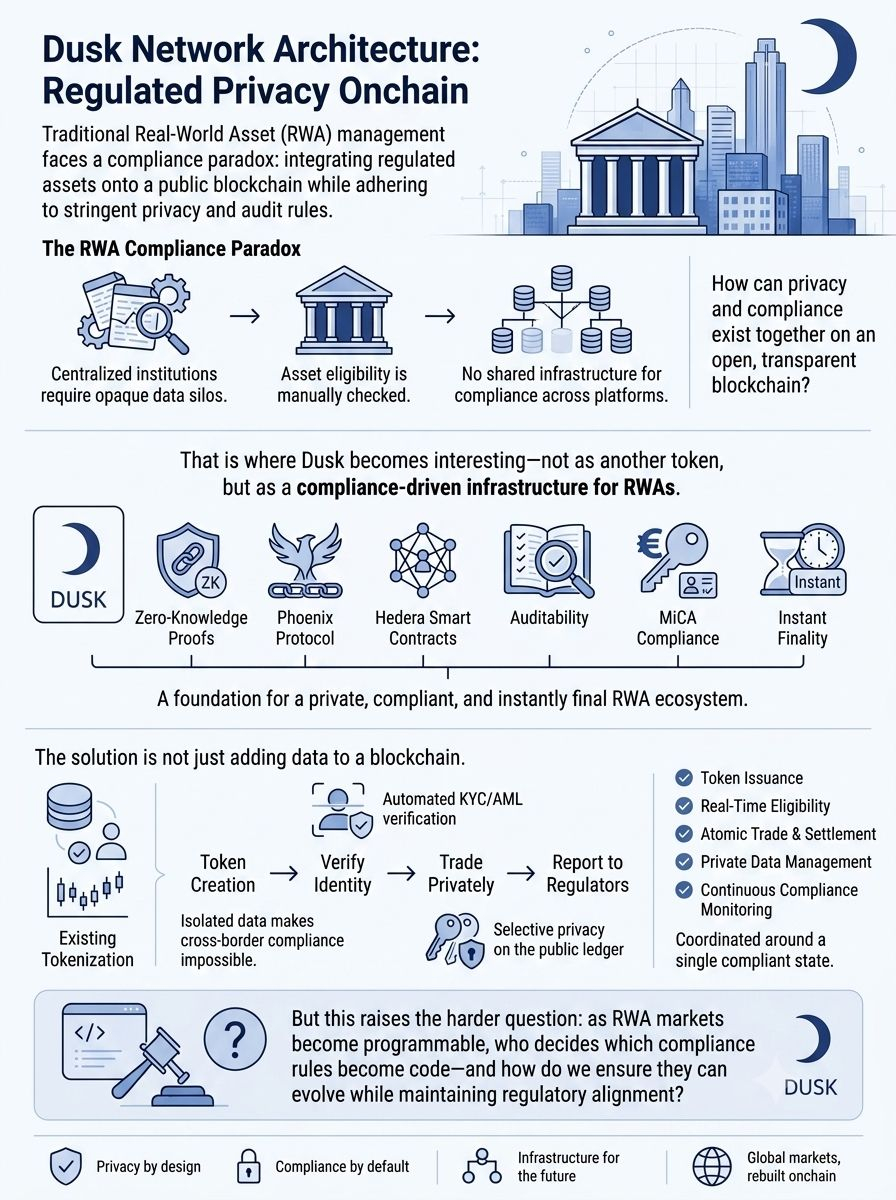
Arquitectura de la Red Dusk: Privacidad Regulada On-Chain
La gestión de Activos del Mundo Real (RWA) tradicionales se enfrenta a una paradoja crítica: las instituciones necesitan mover activos regulados a blockchains públicas para ganar eficiencia, pero los libros contables transparentes entran en conflicto con reglas estrictas de privacidad del cliente y cumplimiento.
La Paradoja del Cumplimiento de los RWA
Los mercados financieros modernos operan en silos desconectados. Los bancos centrales y los exchanges centralizados dependen de bases de datos privadas, verificaciones manuales de identidad y sistemas de liquidación separados. Esta estructura provoca altos retrasos en la liquidación, fricción operativa y liquidez fragmentada entre plataformas.
La Solución de Protocolo de Dusk
Dusk lo aborda integrando el cumplimiento directamente en su protocolo de Capa-1. Las características técnicas clave incluyen:
* Pruebas de Conocimiento Cero: Protegen los importes de las transacciones y las identidades de los traders de la vista pública.
* Protocolo Phoenix: Garantiza transiciones de estado privadas preservando al mismo tiempo las comprobaciones regulatorias.
* Divulgación Selectiva: Permite que las instituciones compartan detalles de operaciones cifrados con auditores verificados sin exponer secretos corporativos.
* Cumplimiento MiCA: Adaptado a los marcos legales europeos para valores tokenizados y proveedores de servicios de activos digitales.
* Liquidación Determinista: Logra una finalidad rápida e irreversible en segundos mediante el consenso Segregated Byzantine Agreement (SBA).
Reemplazando Sistemas Aislados
En lugar de envolver los activos en contratos inteligentes básicos, Dusk coordina todas las etapas del ciclo de vida—emisión, verificación de identidad, negociación y liquidación—alrededor de un único estado compartido. Instituciones como NPEX y 21X usan este marco para ejecutar liquidaciones atómicas conformes en un libro contable público.
La Pregunta Central
A medida que los mercados de capitales transicionan a lo on-chain, el éxito depende de si los protocolos descentralizados pueden alinear continuamente la lógica programable con requisitos regulatorios en evolución.
#AnthropicIPOCouldTopSpaceXRecordReportsSay DUSK #ActivosTokenizados #BlockchainInfrastructure
{future}(UAIUSDT)
{future}(TUTUSDT)
#TUTUSDT $TUT
#UAIUSDT $UAI
{future}(DUSKUSDT)
$DUSK
Arquitectura de la Red Dusk: Privacidad Regulada On-Chain
La gestión de Activos del Mundo Real (RWA) tradicionales se enfrenta a una paradoja crítica: las instituciones necesitan mover activos regulados a blockchains públicas para ganar eficiencia, pero los libros contables transparentes entran en conflicto con reglas estrictas de privacidad del cliente y cumplimiento.
La Paradoja del Cumplimiento de los RWA
Los mercados financieros modernos operan en silos desconectados. Los bancos centrales y los exchanges centralizados dependen de bases de datos privadas, verificaciones manuales de identidad y sistemas de liquidación separados. Esta estructura provoca altos retrasos en la liquidación, fricción operativa y liquidez fragmentada entre plataformas.
La Solución de Protocolo de Dusk
Dusk lo aborda integrando el cumplimiento directamente en su protocolo de Capa-1. Las características técnicas clave incluyen:
* Pruebas de Conocimiento Cero: Protegen los importes de las transacciones y las identidades de los traders de la vista pública.
* Protocolo Phoenix: Garantiza transiciones de estado privadas preservando al mismo tiempo las comprobaciones regulatorias.
* Divulgación Selectiva: Permite que las instituciones compartan detalles de operaciones cifrados con auditores verificados sin exponer secretos corporativos.
* Cumplimiento MiCA: Adaptado a los marcos legales europeos para valores tokenizados y proveedores de servicios de activos digitales.
* Liquidación Determinista: Logra una finalidad rápida e irreversible en segundos mediante el consenso Segregated Byzantine Agreement (SBA).
Reemplazando Sistemas Aislados
En lugar de envolver los activos en contratos inteligentes básicos, Dusk coordina todas las etapas del ciclo de vida—emisión, verificación de identidad, negociación y liquidación—alrededor de un único estado compartido. Instituciones como NPEX y 21X usan este marco para ejecutar liquidaciones atómicas conformes en un libro contable público.
La Pregunta Central
A medida que los mercados de capitales transicionan a lo on-chain, el éxito depende de si los protocolos descentralizados pueden alinear continuamente la lógica programable con requisitos regulatorios en evolución.
#AnthropicIPOCouldTopSpaceXRecordReportsSay DUSK #ActivosTokenizados #BlockchainInfrastructure
#TUTUSDT $TUT
#UAIUSDT $UAI
$DUSK
La gestión de Activos del Mundo Real (RWA) tradicionales se enfrenta a una paradoja crítica: las instituciones necesitan mover activos regulados a blockchains públicas para ganar eficiencia, pero los libros contables transparentes entran en conflicto con reglas estrictas de privacidad del cliente y cumplimiento.
La Paradoja del Cumplimiento de los RWA
Los mercados financieros modernos operan en silos desconectados. Los bancos centrales y los exchanges centralizados dependen de bases de datos privadas, verificaciones manuales de identidad y sistemas de liquidación separados. Esta estructura provoca altos retrasos en la liquidación, fricción operativa y liquidez fragmentada entre plataformas.
La Solución de Protocolo de Dusk
Dusk lo aborda integrando el cumplimiento directamente en su protocolo de Capa-1. Las características técnicas clave incluyen:
* Pruebas de Conocimiento Cero: Protegen los importes de las transacciones y las identidades de los traders de la vista pública.
* Protocolo Phoenix: Garantiza transiciones de estado privadas preservando al mismo tiempo las comprobaciones regulatorias.
* Divulgación Selectiva: Permite que las instituciones compartan detalles de operaciones cifrados con auditores verificados sin exponer secretos corporativos.
* Cumplimiento MiCA: Adaptado a los marcos legales europeos para valores tokenizados y proveedores de servicios de activos digitales.
* Liquidación Determinista: Logra una finalidad rápida e irreversible en segundos mediante el consenso Segregated Byzantine Agreement (SBA).
Reemplazando Sistemas Aislados
En lugar de envolver los activos en contratos inteligentes básicos, Dusk coordina todas las etapas del ciclo de vida—emisión, verificación de identidad, negociación y liquidación—alrededor de un único estado compartido. Instituciones como NPEX y 21X usan este marco para ejecutar liquidaciones atómicas conformes en un libro contable público.
La Pregunta Central
A medida que los mercados de capitales transicionan a lo on-chain, el éxito depende de si los protocolos descentralizados pueden alinear continuamente la lógica programable con requisitos regulatorios en evolución.
#AnthropicIPOCouldTopSpaceXRecordReportsSay DUSK #ActivosTokenizados #BlockchainInfrastructure
#TUTUSDT $TUT
#UAIUSDT $UAI
$DUSK
1
1
156

⚡ LA REVOLUCIÓN DE LA PRIVACIDAD RACIONAL A MEDIANOCHE
El mayor obstáculo para la adopción de blockchain empresarial no es la velocidad: es la privacidad. La mayoría de las redes obligan a una elección binaria rota: exponer todo públicamente o ocultarlo todo por completo.
Midnight ($NIGHT) rompe el molde con la "privacidad racional". Usando contratos inteligentes con conocimiento cero, introduce un punto medio crítico: divulgación selectiva. Ahora puedes demostrar que un dato es verdadero sin revelar los datos privados que hay detrás.
Esto posiciona \(NIGHTatthecenterofamassiveinfrastructureshiftrightalongside\)ZEC, \(XRP, y\)TAO. Nos estamos alejando del aislamiento absoluto y aislado, y entrando en una era de infraestructura de utilidad segura y compatible.
#MidnightNetwork #Web3Privacy #BlockchainInfrastructure #ZeroKnowledge
⚡ LA REVOLUCIÓN DE LA PRIVACIDAD RACIONAL A MEDIANOCHE
El mayor obstáculo para la adopción de blockchain empresarial no es la velocidad: es la privacidad. La mayoría de las redes obligan a una elección binaria rota: exponer todo públicamente o ocultarlo todo por completo.
Midnight ($NIGHT) rompe el molde con la "privacidad racional". Usando contratos inteligentes con conocimiento cero, introduce un punto medio crítico: divulgación selectiva. Ahora puedes demostrar que un dato es verdadero sin revelar los datos privados que hay detrás.
Esto posiciona \(NIGHTatthecenterofamassiveinfrastructureshiftrightalongside\)ZEC, \(XRP, y\)TAO. Nos estamos alejando del aislamiento absoluto y aislado, y entrando en una era de infraestructura de utilidad segura y compatible.
#MidnightNetwork #Web3Privacy #BlockchainInfrastructure #ZeroKnowledge
El mayor obstáculo para la adopción de blockchain empresarial no es la velocidad: es la privacidad. La mayoría de las redes obligan a una elección binaria rota: exponer todo públicamente o ocultarlo todo por completo.
Midnight ($NIGHT) rompe el molde con la "privacidad racional". Usando contratos inteligentes con conocimiento cero, introduce un punto medio crítico: divulgación selectiva. Ahora puedes demostrar que un dato es verdadero sin revelar los datos privados que hay detrás.
Esto posiciona \(NIGHTatthecenterofamassiveinfrastructureshiftrightalongside\)ZEC, \(XRP, y\)TAO. Nos estamos alejando del aislamiento absoluto y aislado, y entrando en una era de infraestructura de utilidad segura y compatible.
#MidnightNetwork #Web3Privacy #BlockchainInfrastructure #ZeroKnowledge
1
198
·
--
¡El auge modular! Las redes de Capa 2 procesan transacciones de registro a medida que se acelera el escalado de la ejecución. 🌐
Mientras los debates del mercado minorista siguen pegados a los gráficos de precios, la infraestructura de escalado on-chain está alcanzando récords masivos de rendimiento. ¡Los totales de transacciones diarias en rollups de Capa 2 de alta velocidad y en capas modulares de disponibilidad de datos han llegado a nuevos máximos históricos este mes!
Aquí está por qué el escalado de la ejecución y la modularidad están impulsando el valor a largo plazo del ecosistema:
1️⃣ Comisiones de transacción por debajo de un centavo:
La compresión de datos mejorada y los rollups han reducido permanentemente las tarifas de gas a fracciones de un centavo, lo que permite que las apps Web3 de consumo, las plataformas de gaming y los canales de micropagos escalen sin problemas.
2️⃣ Capacidad de liquidación institucional:
Las operaciones DeFi de alta frecuencia y las plataformas de activos tokenizados están aprovechando las vías de Capa 2 para ejecutar volúmenes de transacciones a escala empresarial sin congestionar la liquidación de seguridad de la capa base.
3️⃣ Ingresos sostenibles para el protocolo:
La enorme velocidad transaccional de L2 sigue generando un gasto constante de comisiones de liquidación en las redes subyacentes de Capa 1, creando un valor económico no especulativo para los activos de la red nativa.
Conclusión: El trilema de escalabilidad de la blockchain se está resolviendo en tiempo real. Crear exposición a ecosistemas fundamentales de Capa 2 y redes modulares de datos sitúa tu portafolio para la adopción escalable de Web3. 💡
¿Con qué ecosistema de Capa 2 o de escalado interactúas más en cadena? ¡Deja tus principales opciones abajo! 👇
#CryptoNews #Layer2 #Ethereum #Scaling #DeFi #Web3 #BlockchainInfrastructure
¡El auge modular! Las redes de Capa 2 procesan transacciones de registro a medida que se acelera el escalado de la ejecución. 🌐
Mientras los debates del mercado minorista siguen pegados a los gráficos de precios, la infraestructura de escalado on-chain está alcanzando récords masivos de rendimiento. ¡Los totales de transacciones diarias en rollups de Capa 2 de alta velocidad y en capas modulares de disponibilidad de datos han llegado a nuevos máximos históricos este mes!
Aquí está por qué el escalado de la ejecución y la modularidad están impulsando el valor a largo plazo del ecosistema:
1️⃣ Comisiones de transacción por debajo de un centavo:
La compresión de datos mejorada y los rollups han reducido permanentemente las tarifas de gas a fracciones de un centavo, lo que permite que las apps Web3 de consumo, las plataformas de gaming y los canales de micropagos escalen sin problemas.
2️⃣ Capacidad de liquidación institucional:
Las operaciones DeFi de alta frecuencia y las plataformas de activos tokenizados están aprovechando las vías de Capa 2 para ejecutar volúmenes de transacciones a escala empresarial sin congestionar la liquidación de seguridad de la capa base.
3️⃣ Ingresos sostenibles para el protocolo:
La enorme velocidad transaccional de L2 sigue generando un gasto constante de comisiones de liquidación en las redes subyacentes de Capa 1, creando un valor económico no especulativo para los activos de la red nativa.
Conclusión: El trilema de escalabilidad de la blockchain se está resolviendo en tiempo real. Crear exposición a ecosistemas fundamentales de Capa 2 y redes modulares de datos sitúa tu portafolio para la adopción escalable de Web3. 💡
¿Con qué ecosistema de Capa 2 o de escalado interactúas más en cadena? ¡Deja tus principales opciones abajo! 👇
#CryptoNews #Layer2 #Ethereum #Scaling #DeFi #Web3 #BlockchainInfrastructure
Mientras los debates del mercado minorista siguen pegados a los gráficos de precios, la infraestructura de escalado on-chain está alcanzando récords masivos de rendimiento. ¡Los totales de transacciones diarias en rollups de Capa 2 de alta velocidad y en capas modulares de disponibilidad de datos han llegado a nuevos máximos históricos este mes!
Aquí está por qué el escalado de la ejecución y la modularidad están impulsando el valor a largo plazo del ecosistema:
1️⃣ Comisiones de transacción por debajo de un centavo:
La compresión de datos mejorada y los rollups han reducido permanentemente las tarifas de gas a fracciones de un centavo, lo que permite que las apps Web3 de consumo, las plataformas de gaming y los canales de micropagos escalen sin problemas.
2️⃣ Capacidad de liquidación institucional:
Las operaciones DeFi de alta frecuencia y las plataformas de activos tokenizados están aprovechando las vías de Capa 2 para ejecutar volúmenes de transacciones a escala empresarial sin congestionar la liquidación de seguridad de la capa base.
3️⃣ Ingresos sostenibles para el protocolo:
La enorme velocidad transaccional de L2 sigue generando un gasto constante de comisiones de liquidación en las redes subyacentes de Capa 1, creando un valor económico no especulativo para los activos de la red nativa.
Conclusión: El trilema de escalabilidad de la blockchain se está resolviendo en tiempo real. Crear exposición a ecosistemas fundamentales de Capa 2 y redes modulares de datos sitúa tu portafolio para la adopción escalable de Web3. 💡
¿Con qué ecosistema de Capa 2 o de escalado interactúas más en cadena? ¡Deja tus principales opciones abajo! 👇
#CryptoNews #Layer2 #Ethereum #Scaling #DeFi #Web3 #BlockchainInfrastructure
282
·
--
💳 Rieles sin fricción: ¡El volumen de liquidación con stablecoins supera a las redes tradicionales! 💳
Mientras los traders a corto plazo siguen objetivos de precio diarios, la infraestructura global de pagos está experimentando silenciosamente una transformación monumental on-chain.
Aquí está el porqué de que las redes de liquidación descentralizadas y las stablecoins compatibles estén dominando el flujo de transacciones global:
1️⃣ Liquidación transfronteriza para instituciones:
Las empresas multinacionales y los procesadores de pagos fintech se están alejando de los rieles bancarios tradicionales de corresponsalía para adoptar la liquidación con stablecoins de alta velocidad en Layer-1 y Layer-2, reduciendo los costos de transacción y los tiempos de liquidación a cuestión de segundos.
2️⃣ Integración de marcos regulatorios:
Rutas de cumplimiento claras en las principales jurisdicciones (como el MiCA de la UE y las directrices internacionales actualizadas) han dado a los custodios institucionales la confianza legal para desplegar liquidez profunda en productos digitales regulados de dólar.
3️⃣ Expansión de la velocidad monetaria:
La alta velocidad de las stablecoins fortalece directamente la demanda fundamental de tokens de gas Layer-1 subyacentes y de blockspace de la red, creando valor económico sostenido en los ecosistemas centrales.
Conclusión: La utilidad real en pagos genera un volumen permanente y no especulativo. Coloca tu cartera en protocolos que impulsan la infraestructura financiera global real. 💡
¿Qué red usas con más frecuencia para transferencias cotidianas de stablecoins? ¡Comparte abajo! 👇
#CryptoNews #Stablecoins #Web3Payments #Layer1 #Fintech #BlockchainInfrastructure
💳 Rieles sin fricción: ¡El volumen de liquidación con stablecoins supera a las redes tradicionales! 💳
Mientras los traders a corto plazo siguen objetivos de precio diarios, la infraestructura global de pagos está experimentando silenciosamente una transformación monumental on-chain.
Aquí está el porqué de que las redes de liquidación descentralizadas y las stablecoins compatibles estén dominando el flujo de transacciones global:
1️⃣ Liquidación transfronteriza para instituciones:
Las empresas multinacionales y los procesadores de pagos fintech se están alejando de los rieles bancarios tradicionales de corresponsalía para adoptar la liquidación con stablecoins de alta velocidad en Layer-1 y Layer-2, reduciendo los costos de transacción y los tiempos de liquidación a cuestión de segundos.
2️⃣ Integración de marcos regulatorios:
Rutas de cumplimiento claras en las principales jurisdicciones (como el MiCA de la UE y las directrices internacionales actualizadas) han dado a los custodios institucionales la confianza legal para desplegar liquidez profunda en productos digitales regulados de dólar.
3️⃣ Expansión de la velocidad monetaria:
La alta velocidad de las stablecoins fortalece directamente la demanda fundamental de tokens de gas Layer-1 subyacentes y de blockspace de la red, creando valor económico sostenido en los ecosistemas centrales.
Conclusión: La utilidad real en pagos genera un volumen permanente y no especulativo. Coloca tu cartera en protocolos que impulsan la infraestructura financiera global real. 💡
¿Qué red usas con más frecuencia para transferencias cotidianas de stablecoins? ¡Comparte abajo! 👇
#CryptoNews #Stablecoins #Web3Payments #Layer1 #Fintech #BlockchainInfrastructure
Mientras los traders a corto plazo siguen objetivos de precio diarios, la infraestructura global de pagos está experimentando silenciosamente una transformación monumental on-chain.
Aquí está el porqué de que las redes de liquidación descentralizadas y las stablecoins compatibles estén dominando el flujo de transacciones global:
1️⃣ Liquidación transfronteriza para instituciones:
Las empresas multinacionales y los procesadores de pagos fintech se están alejando de los rieles bancarios tradicionales de corresponsalía para adoptar la liquidación con stablecoins de alta velocidad en Layer-1 y Layer-2, reduciendo los costos de transacción y los tiempos de liquidación a cuestión de segundos.
2️⃣ Integración de marcos regulatorios:
Rutas de cumplimiento claras en las principales jurisdicciones (como el MiCA de la UE y las directrices internacionales actualizadas) han dado a los custodios institucionales la confianza legal para desplegar liquidez profunda en productos digitales regulados de dólar.
3️⃣ Expansión de la velocidad monetaria:
La alta velocidad de las stablecoins fortalece directamente la demanda fundamental de tokens de gas Layer-1 subyacentes y de blockspace de la red, creando valor económico sostenido en los ecosistemas centrales.
Conclusión: La utilidad real en pagos genera un volumen permanente y no especulativo. Coloca tu cartera en protocolos que impulsan la infraestructura financiera global real. 💡
¿Qué red usas con más frecuencia para transferencias cotidianas de stablecoins? ¡Comparte abajo! 👇
#CryptoNews #Stablecoins #Web3Payments #Layer1 #Fintech #BlockchainInfrastructure
196
·
--
¡Auge de la interoperabilidad: cómo los rieles de liquidez entre cadenas están impulsando el crecimiento de DeFi! 🌐
Mientras los activos de mayor capitalización pasan el fin de semana consolidándose dentro de rangos ajustados, la infraestructura descentralizada está alcanzando importantes hitos operativos en ecosistemas on-chain.
Aquí está el porqué de que la interoperabilidad entre cadenas y los rieles de liquidación de Layer-1 estén atrayendo capital inteligente este mes:
1️⃣ Flujo de capital sin fricciones:
Los protocolos de puente de nueva generación y las capas de mensajería entre cadenas han reducido drásticamente el deslizamiento y la latencia de liquidación, permitiendo que la liquidez rote sin problemas entre Layer-1 de alta velocidad y rollups Layer-2.
2️⃣ Velocidad de rendimiento on-chain:
Los protocolos de préstamos descentralizados y los market makers automatizados (AMMs) están viendo un crecimiento constante del Total Value Locked (TVL), ya que las instituciones despliegan reservas de stablecoin ociosas directamente en contratos inteligentes transparentes y auditables.
3️⃣ Resiliencia estructural:
A diferencia de ciclos de mercado anteriores que dependían únicamente de lanzamientos de tokens especulativos, el volumen on-chain actual está fuertemente anclado por demanda real de transacciones, liquidación con stablecoins y activos tokenizados del mundo real (RWAs).
Conclusión: el desarrollo de infraestructura nunca se toma un fin de semana libre. Mantener una parte de tu cartera expuesta a protocolos fundamentales de Layer-1 e interoperabilidad captura valor a lo largo de toda la expansión de Web3. 💡
¿En qué Layer-1 o ecosistema DeFi estás más activo en este ciclo? ¡Comparte tus principales elecciones! 👇
#CryptoNews #DeFi #Layer1 #Interoperability #Web3 #BlockchainInfrastructure
¡Auge de la interoperabilidad: cómo los rieles de liquidez entre cadenas están impulsando el crecimiento de DeFi! 🌐
Mientras los activos de mayor capitalización pasan el fin de semana consolidándose dentro de rangos ajustados, la infraestructura descentralizada está alcanzando importantes hitos operativos en ecosistemas on-chain.
Aquí está el porqué de que la interoperabilidad entre cadenas y los rieles de liquidación de Layer-1 estén atrayendo capital inteligente este mes:
1️⃣ Flujo de capital sin fricciones:
Los protocolos de puente de nueva generación y las capas de mensajería entre cadenas han reducido drásticamente el deslizamiento y la latencia de liquidación, permitiendo que la liquidez rote sin problemas entre Layer-1 de alta velocidad y rollups Layer-2.
2️⃣ Velocidad de rendimiento on-chain:
Los protocolos de préstamos descentralizados y los market makers automatizados (AMMs) están viendo un crecimiento constante del Total Value Locked (TVL), ya que las instituciones despliegan reservas de stablecoin ociosas directamente en contratos inteligentes transparentes y auditables.
3️⃣ Resiliencia estructural:
A diferencia de ciclos de mercado anteriores que dependían únicamente de lanzamientos de tokens especulativos, el volumen on-chain actual está fuertemente anclado por demanda real de transacciones, liquidación con stablecoins y activos tokenizados del mundo real (RWAs).
Conclusión: el desarrollo de infraestructura nunca se toma un fin de semana libre. Mantener una parte de tu cartera expuesta a protocolos fundamentales de Layer-1 e interoperabilidad captura valor a lo largo de toda la expansión de Web3. 💡
¿En qué Layer-1 o ecosistema DeFi estás más activo en este ciclo? ¡Comparte tus principales elecciones! 👇
#CryptoNews #DeFi #Layer1 #Interoperability #Web3 #BlockchainInfrastructure
Mientras los activos de mayor capitalización pasan el fin de semana consolidándose dentro de rangos ajustados, la infraestructura descentralizada está alcanzando importantes hitos operativos en ecosistemas on-chain.
Aquí está el porqué de que la interoperabilidad entre cadenas y los rieles de liquidación de Layer-1 estén atrayendo capital inteligente este mes:
1️⃣ Flujo de capital sin fricciones:
Los protocolos de puente de nueva generación y las capas de mensajería entre cadenas han reducido drásticamente el deslizamiento y la latencia de liquidación, permitiendo que la liquidez rote sin problemas entre Layer-1 de alta velocidad y rollups Layer-2.
2️⃣ Velocidad de rendimiento on-chain:
Los protocolos de préstamos descentralizados y los market makers automatizados (AMMs) están viendo un crecimiento constante del Total Value Locked (TVL), ya que las instituciones despliegan reservas de stablecoin ociosas directamente en contratos inteligentes transparentes y auditables.
3️⃣ Resiliencia estructural:
A diferencia de ciclos de mercado anteriores que dependían únicamente de lanzamientos de tokens especulativos, el volumen on-chain actual está fuertemente anclado por demanda real de transacciones, liquidación con stablecoins y activos tokenizados del mundo real (RWAs).
Conclusión: el desarrollo de infraestructura nunca se toma un fin de semana libre. Mantener una parte de tu cartera expuesta a protocolos fundamentales de Layer-1 e interoperabilidad captura valor a lo largo de toda la expansión de Web3. 💡
¿En qué Layer-1 o ecosistema DeFi estás más activo en este ciclo? ¡Comparte tus principales elecciones! 👇
#CryptoNews #DeFi #Layer1 #Interoperability #Web3 #BlockchainInfrastructure
133

·
--
Mientras todos estaban en pánico por la caída de BTC a $73K debido a los ataques aéreos en Irán, ocurrió algo más de lo que nadie habló.
La tasa de hash de Bitcoin no parpadeó. Se mantuvo cerca de máximos históricos durante todo el desplome.
En la cadena, las tarifas de blob de ETH se dispararon porque las L2 seguían procesando. Los validadores de Solana Alpenglow seguían finalizando bloques en menos de 400ms. La infraestructura no se preocupó por el ruido geopolítico.
Esto es lo que la mayoría de los traders pasa por alto durante el pánico: las redes en sí son la señal más clara. Cuando el precio se desploma un 10% en un día y la infraestructura subyacente sigue funcionando sin problemas, eso no es debilidad — es un sistema que demuestra que funciona exactamente cuando importa.
El desplome de $73K liquidó el apalancamiento. No liquidó la tecnología.
Ahora que la expiración de opciones de 6B se ha despejado, el PCE está en los libros, y el acuerdo de paz de Irán elimina la carga macroeconómica. Junio se abre con la fecha límite de la Ley de Claridad del 4 de julio acercándose rápidamente.
Mayo fue una prueba de estrés. La infraestructura pasó. Esa es la verdadera hoja de puntuación.
$BTC $ETH $SOL
#Bitcoin #Ethereum #Crypto #CryptoAnalysis #InfraestructuraBlockchain
Mientras todos estaban en pánico por la caída de BTC a $73K debido a los ataques aéreos en Irán, ocurrió algo más de lo que nadie habló.
La tasa de hash de Bitcoin no parpadeó. Se mantuvo cerca de máximos históricos durante todo el desplome.
En la cadena, las tarifas de blob de ETH se dispararon porque las L2 seguían procesando. Los validadores de Solana Alpenglow seguían finalizando bloques en menos de 400ms. La infraestructura no se preocupó por el ruido geopolítico.
Esto es lo que la mayoría de los traders pasa por alto durante el pánico: las redes en sí son la señal más clara. Cuando el precio se desploma un 10% en un día y la infraestructura subyacente sigue funcionando sin problemas, eso no es debilidad — es un sistema que demuestra que funciona exactamente cuando importa.
El desplome de $73K liquidó el apalancamiento. No liquidó la tecnología.
Ahora que la expiración de opciones de 6B se ha despejado, el PCE está en los libros, y el acuerdo de paz de Irán elimina la carga macroeconómica. Junio se abre con la fecha límite de la Ley de Claridad del 4 de julio acercándose rápidamente.
Mayo fue una prueba de estrés. La infraestructura pasó. Esa es la verdadera hoja de puntuación.
$BTC $ETH $SOL
#Bitcoin #Ethereum #Crypto #CryptoAnalysis #InfraestructuraBlockchain
La tasa de hash de Bitcoin no parpadeó. Se mantuvo cerca de máximos históricos durante todo el desplome.
En la cadena, las tarifas de blob de ETH se dispararon porque las L2 seguían procesando. Los validadores de Solana Alpenglow seguían finalizando bloques en menos de 400ms. La infraestructura no se preocupó por el ruido geopolítico.
Esto es lo que la mayoría de los traders pasa por alto durante el pánico: las redes en sí son la señal más clara. Cuando el precio se desploma un 10% en un día y la infraestructura subyacente sigue funcionando sin problemas, eso no es debilidad — es un sistema que demuestra que funciona exactamente cuando importa.
El desplome de $73K liquidó el apalancamiento. No liquidó la tecnología.
Ahora que la expiración de opciones de 6B se ha despejado, el PCE está en los libros, y el acuerdo de paz de Irán elimina la carga macroeconómica. Junio se abre con la fecha límite de la Ley de Claridad del 4 de julio acercándose rápidamente.
Mayo fue una prueba de estrés. La infraestructura pasó. Esa es la verdadera hoja de puntuación.
$BTC $ETH $SOL
#Bitcoin #Ethereum #Crypto #CryptoAnalysis #InfraestructuraBlockchain
66

·
--
#newt $NEWT @NewtonProtocol
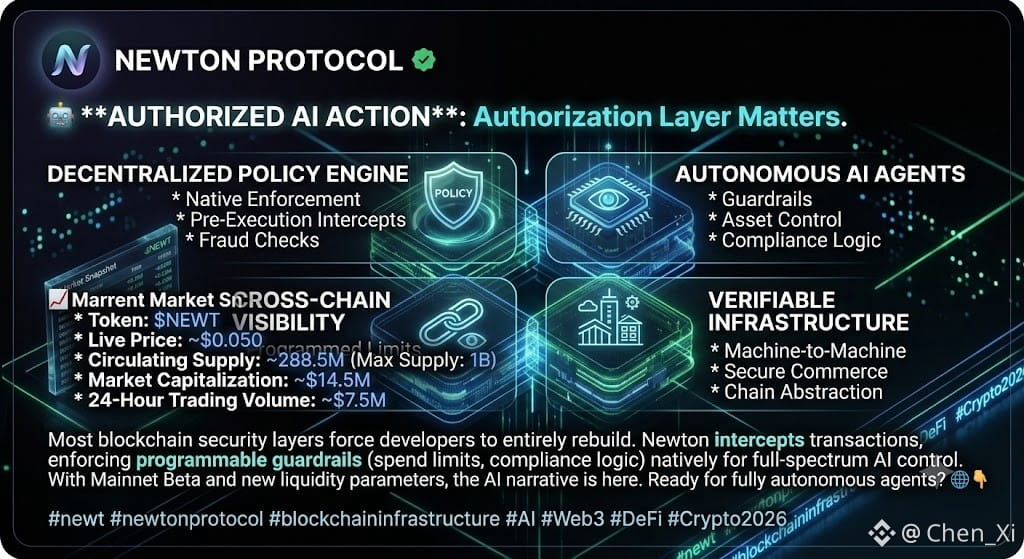
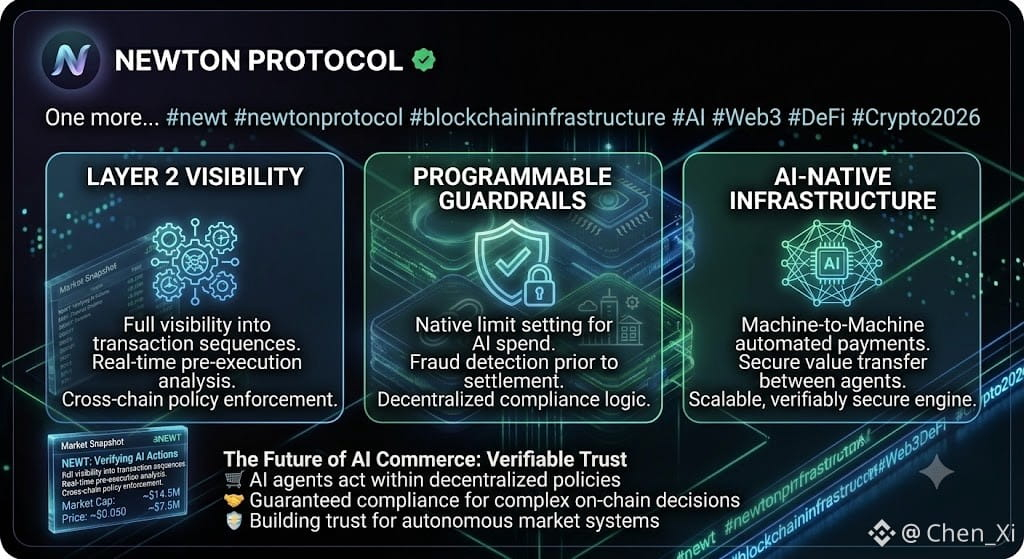
La mayoría de las capas de seguridad blockchain obligan a los desarrolladores a reconstruir por completo sus plataformas. Newton Protocol está abordando el desafío de infraestructura de una manera diferente: actuando como un motor de políticas descentralizado que intercepta las transacciones antes de su ejecución.
Binance
A medida que los agentes autónomos de IA pasan de gestionar carteras simples a ejecutar decisiones financieras complejas y entre cadenas, la confianza ciega no es una opción. Newton ofrece las barreras programables: aplicando límites de gasto, controles contra fraude y lógica de cumplimiento de forma nativa. No se trata solo de velocidad; se trata de construir una infraestructura verificable para el comercio máquina a máquina.
Binance
+ 1
📈 Resumen actual del mercado:
Token: $NEWT
Precio en vivo: ~$0.050 USD
Binance
Suministro en circulación: ~288.5M (Suministro máximo: 1B)
Binance
Capitalización de mercado: ~$14.5M
Binance
Volumen de operaciones de 24 horas: ~$7.5M
Binance
Con su Mainnet Beta oficialmente en marcha y un ajuste de parámetros de colateral programado para el 7 de julio para impulsar la liquidez del protocolo, la narrativa de infraestructura está cobrando fuerza.
Binance
¿Cómo ves el futuro de DeFi impulsado por IA? ¿Estamos listos para agentes on-chain totalmente autónomos? 🌐👇
#newt #newtonprotocol #BlockchainInfrastructure #AI
{future}(NEWTUSDT)
#newt $NEWT @NewtonProtocol
La mayoría de las capas de seguridad blockchain obligan a los desarrolladores a reconstruir por completo sus plataformas. Newton Protocol está abordando el desafío de infraestructura de una manera diferente: actuando como un motor de políticas descentralizado que intercepta las transacciones antes de su ejecución.
Binance
A medida que los agentes autónomos de IA pasan de gestionar carteras simples a ejecutar decisiones financieras complejas y entre cadenas, la confianza ciega no es una opción. Newton ofrece las barreras programables: aplicando límites de gasto, controles contra fraude y lógica de cumplimiento de forma nativa. No se trata solo de velocidad; se trata de construir una infraestructura verificable para el comercio máquina a máquina.
Binance
+ 1
📈 Resumen actual del mercado:
Token: $NEWT
Precio en vivo: ~$0.050 USD
Binance
Suministro en circulación: ~288.5M (Suministro máximo: 1B)
Binance
Capitalización de mercado: ~$14.5M
Binance
Volumen de operaciones de 24 horas: ~$7.5M
Binance
Con su Mainnet Beta oficialmente en marcha y un ajuste de parámetros de colateral programado para el 7 de julio para impulsar la liquidez del protocolo, la narrativa de infraestructura está cobrando fuerza.
Binance
¿Cómo ves el futuro de DeFi impulsado por IA? ¿Estamos listos para agentes on-chain totalmente autónomos? 🌐👇
#newt #newtonprotocol #BlockchainInfrastructure #AI
La mayoría de las capas de seguridad blockchain obligan a los desarrolladores a reconstruir por completo sus plataformas. Newton Protocol está abordando el desafío de infraestructura de una manera diferente: actuando como un motor de políticas descentralizado que intercepta las transacciones antes de su ejecución.
Binance
A medida que los agentes autónomos de IA pasan de gestionar carteras simples a ejecutar decisiones financieras complejas y entre cadenas, la confianza ciega no es una opción. Newton ofrece las barreras programables: aplicando límites de gasto, controles contra fraude y lógica de cumplimiento de forma nativa. No se trata solo de velocidad; se trata de construir una infraestructura verificable para el comercio máquina a máquina.
Binance
+ 1
📈 Resumen actual del mercado:
Token: $NEWT
Precio en vivo: ~$0.050 USD
Binance
Suministro en circulación: ~288.5M (Suministro máximo: 1B)
Binance
Capitalización de mercado: ~$14.5M
Binance
Volumen de operaciones de 24 horas: ~$7.5M
Binance
Con su Mainnet Beta oficialmente en marcha y un ajuste de parámetros de colateral programado para el 7 de julio para impulsar la liquidez del protocolo, la narrativa de infraestructura está cobrando fuerza.
Binance
¿Cómo ves el futuro de DeFi impulsado por IA? ¿Estamos listos para agentes on-chain totalmente autónomos? 🌐👇
#newt #newtonprotocol #BlockchainInfrastructure #AI

38
8
243

$NEWT IS CONSTRUYENDO LA CAPA DE POLÍTICAS EN LA BLOCKCHAIN HA FALTADO 🔥
Los contratos inteligentes se ejecutan sin problemas, pero aún pueden violar las reglas internas de una empresa o los requisitos regulatorios. Newton Protocol introduce una capa de políticas programable que evalúa si una transacción debe ocurrir antes de que se finalice — separando la autorización de la ejecución por primera vez.
A medida que las instituciones se adentran más en los activos tokenizados y en operaciones automatizadas de tesorería, la necesidad de marcos de políticas flexibles y auditables se volverá inevitable. $NEWT se posiciona como la infraestructura detrás de ese cambio.
¿Crees que la infraestructura de políticas se volverá tan importante como la velocidad de ejecución?
No es asesoramiento financiero. Gestiona siempre tu riesgo.
#NEWT #PolicyLayer #BlockchainInfrastructure #CryptoInnovation
🔥
$NEWT IS CONSTRUYENDO LA CAPA DE POLÍTICAS EN LA BLOCKCHAIN HA FALTADO 🔥
Los contratos inteligentes se ejecutan sin problemas, pero aún pueden violar las reglas internas de una empresa o los requisitos regulatorios. Newton Protocol introduce una capa de políticas programable que evalúa si una transacción debe ocurrir antes de que se finalice — separando la autorización de la ejecución por primera vez.
A medida que las instituciones se adentran más en los activos tokenizados y en operaciones automatizadas de tesorería, la necesidad de marcos de políticas flexibles y auditables se volverá inevitable. $NEWT se posiciona como la infraestructura detrás de ese cambio.
¿Crees que la infraestructura de políticas se volverá tan importante como la velocidad de ejecución?
No es asesoramiento financiero. Gestiona siempre tu riesgo.
#NEWT #PolicyLayer #BlockchainInfrastructure #CryptoInnovation
🔥
Los contratos inteligentes se ejecutan sin problemas, pero aún pueden violar las reglas internas de una empresa o los requisitos regulatorios. Newton Protocol introduce una capa de políticas programable que evalúa si una transacción debe ocurrir antes de que se finalice — separando la autorización de la ejecución por primera vez.
A medida que las instituciones se adentran más en los activos tokenizados y en operaciones automatizadas de tesorería, la necesidad de marcos de políticas flexibles y auditables se volverá inevitable. $NEWT se posiciona como la infraestructura detrás de ese cambio.
¿Crees que la infraestructura de políticas se volverá tan importante como la velocidad de ejecución?
No es asesoramiento financiero. Gestiona siempre tu riesgo.
#NEWT #PolicyLayer #BlockchainInfrastructure #CryptoInnovation
🔥
21

·
--
La infraestructura entre cadenas está redefiniendo cómo se mueve el valor a través de Web3.
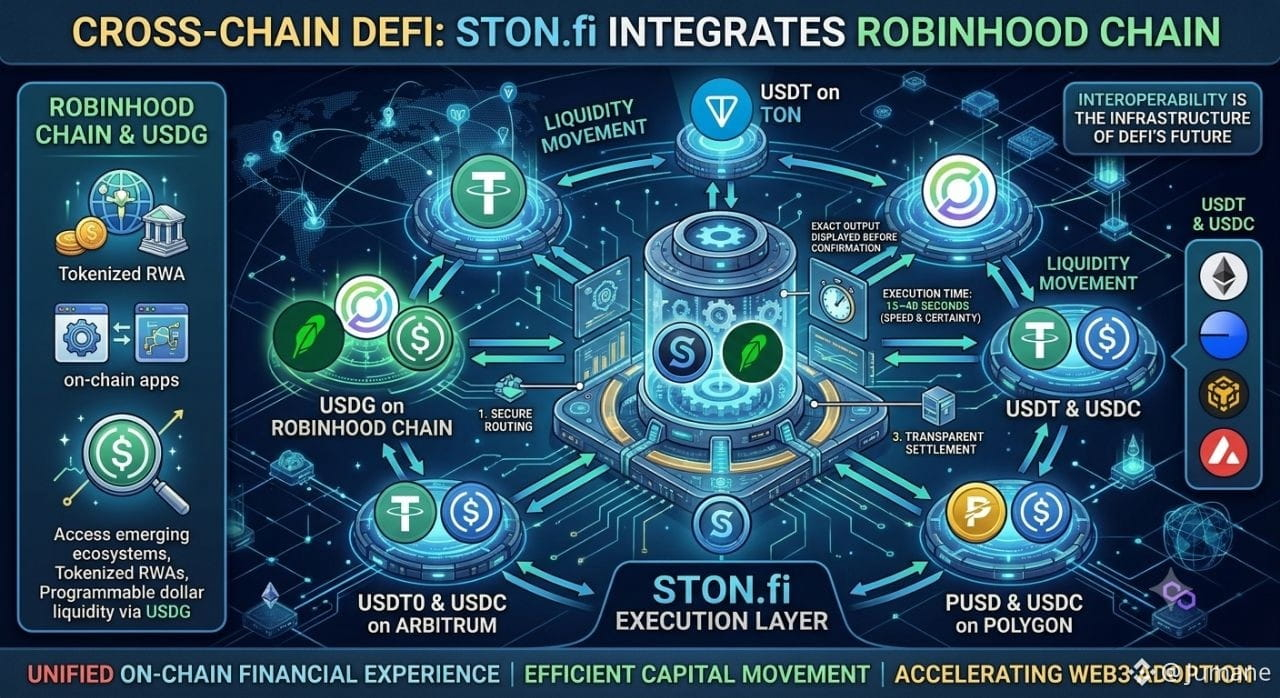
La integración de Robinhood Chain en STON.fi marca otro paso hacia un ecosistema DeFi más conectado y ajeno a la cadena, que permite a los usuarios acceder a liquidez en múltiples redes blockchain mediante una experiencia entre cadenas fluida.@ston_fi
Impulsado por Omniston, la capa de ejecución de STON.fi gestiona el ciclo de vida completo de la transacción, desde el enrutamiento y el descubrimiento de precios hasta la liquidación, garantizando una ejecución transparente con el resultado exacto mostrado antes de la confirmación. La mayoría de los swaps se completan en 15–40 segundos, ofreciendo rapidez y certeza.
La integración admite el movimiento de liquidez entre:
- USDT en TON
- USDG en Robinhood Chain
- USDT y USDC en Ethereum, Base, BNB Chain y Avalanche
- USDT0 y USDC en Arbitrum
- PUSD y USDC en Polygon
Robinhood Chain amplía el acceso a un ecosistema emergente de activos del mundo real tokenizados (RWAs), stablecoins y aplicaciones financieras on-chain, mientras que USDG (Global Dollar) fortalece la liquidez programable en dólares a través de redes conectadas.
A medida que la industria continúa evolucionando, el enfoque se está desplazando desde blockchains individuales hacia infraestructura interoperable que permite que el capital se mueva de forma eficiente entre ecosistemas. Las soluciones que simplifican las interacciones entre cadenas desempeñarán un papel fundamental para acelerar la adopción de Web3 y ofrecer una experiencia financiera on-chain más unificada.
La interoperabilidad ya no es opcional: es la infraestructura que impulsa el futuro de las finanzas descentralizadas.
#Web3 #DeFi #CrossChain #STONfi #TON #robinhoodchain #OmnistonContest #BlockchainInfrastructure #Stablecoins #RWA
La infraestructura entre cadenas está redefiniendo cómo se mueve el valor a través de Web3.
La integración de Robinhood Chain en STON.fi marca otro paso hacia un ecosistema DeFi más conectado y ajeno a la cadena, que permite a los usuarios acceder a liquidez en múltiples redes blockchain mediante una experiencia entre cadenas fluida.@ston_fi
Impulsado por Omniston, la capa de ejecución de STON.fi gestiona el ciclo de vida completo de la transacción, desde el enrutamiento y el descubrimiento de precios hasta la liquidación, garantizando una ejecución transparente con el resultado exacto mostrado antes de la confirmación. La mayoría de los swaps se completan en 15–40 segundos, ofreciendo rapidez y certeza.
La integración admite el movimiento de liquidez entre:
- USDT en TON
- USDG en Robinhood Chain
- USDT y USDC en Ethereum, Base, BNB Chain y Avalanche
- USDT0 y USDC en Arbitrum
- PUSD y USDC en Polygon
Robinhood Chain amplía el acceso a un ecosistema emergente de activos del mundo real tokenizados (RWAs), stablecoins y aplicaciones financieras on-chain, mientras que USDG (Global Dollar) fortalece la liquidez programable en dólares a través de redes conectadas.
A medida que la industria continúa evolucionando, el enfoque se está desplazando desde blockchains individuales hacia infraestructura interoperable que permite que el capital se mueva de forma eficiente entre ecosistemas. Las soluciones que simplifican las interacciones entre cadenas desempeñarán un papel fundamental para acelerar la adopción de Web3 y ofrecer una experiencia financiera on-chain más unificada.
La interoperabilidad ya no es opcional: es la infraestructura que impulsa el futuro de las finanzas descentralizadas.
#Web3 #DeFi #CrossChain #STONfi #TON #robinhoodchain #OmnistonContest #BlockchainInfrastructure #Stablecoins #RWA
La integración de Robinhood Chain en STON.fi marca otro paso hacia un ecosistema DeFi más conectado y ajeno a la cadena, que permite a los usuarios acceder a liquidez en múltiples redes blockchain mediante una experiencia entre cadenas fluida.@ston_fi
Impulsado por Omniston, la capa de ejecución de STON.fi gestiona el ciclo de vida completo de la transacción, desde el enrutamiento y el descubrimiento de precios hasta la liquidación, garantizando una ejecución transparente con el resultado exacto mostrado antes de la confirmación. La mayoría de los swaps se completan en 15–40 segundos, ofreciendo rapidez y certeza.
La integración admite el movimiento de liquidez entre:
- USDT en TON
- USDG en Robinhood Chain
- USDT y USDC en Ethereum, Base, BNB Chain y Avalanche
- USDT0 y USDC en Arbitrum
- PUSD y USDC en Polygon
Robinhood Chain amplía el acceso a un ecosistema emergente de activos del mundo real tokenizados (RWAs), stablecoins y aplicaciones financieras on-chain, mientras que USDG (Global Dollar) fortalece la liquidez programable en dólares a través de redes conectadas.
A medida que la industria continúa evolucionando, el enfoque se está desplazando desde blockchains individuales hacia infraestructura interoperable que permite que el capital se mueva de forma eficiente entre ecosistemas. Las soluciones que simplifican las interacciones entre cadenas desempeñarán un papel fundamental para acelerar la adopción de Web3 y ofrecer una experiencia financiera on-chain más unificada.
La interoperabilidad ya no es opcional: es la infraestructura que impulsa el futuro de las finanzas descentralizadas.
#Web3 #DeFi #CrossChain #STONfi #TON #robinhoodchain #OmnistonContest #BlockchainInfrastructure #Stablecoins #RWA
1
87

🔍 GeniusX en Cardano — ¿Es esta la infraestructura DEX que realmente cumple?
El espacio cripto está lleno de proyectos que prometen infraestructuras revolucionarias. GeniusX ($GENIUS) en Cardano es uno que merece una mirada más cercana y honesta.
⚙️ ¿Qué hace diferente a GeniusX?
Construido sobre el modelo EUTxO de Cardano, GeniusX combina:
Liquidez Concentrada — Eficiencia de capital a un nivel superior
Smart Swap — Ejecución de operaciones optimizada
Smart Order Router (ahora Open Source) — Cualquiera puede acceder y enrutar liquidez libremente. Esto es un gran asunto. Hacer público el logic de enrutamiento transforma un protocolo de un producto cerrado en una infraestructura de coordinación compartida.
🏦 Integración de RWA — Cautelosamente Interesante
La mayoría de los proyectos habla sobre Activos del Mundo Real. Pocos realmente manejan:
Lógica de liquidación
Capas de cumplimiento
Coordinación de liquidez simultáneamente
GeniusX está intentando las tres juntas. Ahí es donde la mayoría de los protocolos fallan — y donde GeniusX está siendo genuinamente probado.
📈 Staking V2 — Un cambio silencioso pero importante
Pasar de APY fijo → compartición de recompensas basada en tarifas es una señal de madurez. Alinea los incentivos de los stakers con el uso real del protocolo en lugar de rendimientos pasivos inflados. Esto es más saludable a largo plazo.
⚠️ La verdadera pregunta
¿Puede el ecosistema de Cardano generar suficiente demanda sostenida en la cadena para que este nivel de complejidad importe?
La arquitectura es tan fuerte como la actividad que sostiene.
Los traders en spot — observen $GENIUS por volumen y profundidad de liquidez antes de hacer cualquier movimiento. La infraestructura no significa nada sin un uso real que la siga.
$GENIUS $ADA #GeniusX #Cardano #DeFi #BlockchainInfrastructure #DEX #DEX
🔍 GeniusX en Cardano — ¿Es esta la infraestructura DEX que realmente cumple?
El espacio cripto está lleno de proyectos que prometen infraestructuras revolucionarias. GeniusX ($GENIUS ) en Cardano es uno que merece una mirada más cercana y honesta.
⚙️ ¿Qué hace diferente a GeniusX?
Construido sobre el modelo EUTxO de Cardano, GeniusX combina:
Liquidez Concentrada — Eficiencia de capital a un nivel superior
Smart Swap — Ejecución de operaciones optimizada
Smart Order Router (ahora Open Source) — Cualquiera puede acceder y enrutar liquidez libremente. Esto es un gran asunto. Hacer público el logic de enrutamiento transforma un protocolo de un producto cerrado en una infraestructura de coordinación compartida.
🏦 Integración de RWA — Cautelosamente Interesante
La mayoría de los proyectos habla sobre Activos del Mundo Real. Pocos realmente manejan:
Lógica de liquidación
Capas de cumplimiento
Coordinación de liquidez simultáneamente
GeniusX está intentando las tres juntas. Ahí es donde la mayoría de los protocolos fallan — y donde GeniusX está siendo genuinamente probado.
📈 Staking V2 — Un cambio silencioso pero importante
Pasar de APY fijo → compartición de recompensas basada en tarifas es una señal de madurez. Alinea los incentivos de los stakers con el uso real del protocolo en lugar de rendimientos pasivos inflados. Esto es más saludable a largo plazo.
⚠️ La verdadera pregunta
¿Puede el ecosistema de Cardano generar suficiente demanda sostenida en la cadena para que este nivel de complejidad importe?
La arquitectura es tan fuerte como la actividad que sostiene.
Los traders en spot — observen $GENIUS por volumen y profundidad de liquidez antes de hacer cualquier movimiento. La infraestructura no significa nada sin un uso real que la siga.
$GENIUS $ADA #GeniusX #Cardano #DeFi #BlockchainInfrastructure #DEX #DEX
El espacio cripto está lleno de proyectos que prometen infraestructuras revolucionarias. GeniusX ($GENIUS ) en Cardano es uno que merece una mirada más cercana y honesta.
⚙️ ¿Qué hace diferente a GeniusX?
Construido sobre el modelo EUTxO de Cardano, GeniusX combina:
Liquidez Concentrada — Eficiencia de capital a un nivel superior
Smart Swap — Ejecución de operaciones optimizada
Smart Order Router (ahora Open Source) — Cualquiera puede acceder y enrutar liquidez libremente. Esto es un gran asunto. Hacer público el logic de enrutamiento transforma un protocolo de un producto cerrado en una infraestructura de coordinación compartida.
🏦 Integración de RWA — Cautelosamente Interesante
La mayoría de los proyectos habla sobre Activos del Mundo Real. Pocos realmente manejan:
Lógica de liquidación
Capas de cumplimiento
Coordinación de liquidez simultáneamente
GeniusX está intentando las tres juntas. Ahí es donde la mayoría de los protocolos fallan — y donde GeniusX está siendo genuinamente probado.
📈 Staking V2 — Un cambio silencioso pero importante
Pasar de APY fijo → compartición de recompensas basada en tarifas es una señal de madurez. Alinea los incentivos de los stakers con el uso real del protocolo en lugar de rendimientos pasivos inflados. Esto es más saludable a largo plazo.
⚠️ La verdadera pregunta
¿Puede el ecosistema de Cardano generar suficiente demanda sostenida en la cadena para que este nivel de complejidad importe?
La arquitectura es tan fuerte como la actividad que sostiene.
Los traders en spot — observen $GENIUS por volumen y profundidad de liquidez antes de hacer cualquier movimiento. La infraestructura no significa nada sin un uso real que la siga.
$GENIUS $ADA #GeniusX #Cardano #DeFi #BlockchainInfrastructure #DEX #DEX
53

·
--
$ETH sigue ganando atención a medida que DMG Blockchain Solutions asegura su primer contrato de colocación de centro de datos prefabricado, potencialmente ampliando la infraestructura para aplicaciones descentralizadas. 📊
El nuevo modelo de colocación promete tiempos de despliegue más rápidos y costos operativos reducidos para nodos de blockchain. ⚡
Al aprovechar centros de datos modulares, los proveedores pueden escalar de manera más eficiente para satisfacer la creciente demanda de recursos computacionales en cadena. 🌐
Este desarrollo se alinea con las tendencias más amplias de la industria hacia operaciones de minería y staking más ecológicas y flexibles. 🧠
Los analistas señalan que tales mejoras en la infraestructura podrían aumentar la resiliencia de la red y reducir la latencia en la ejecución de contratos inteligentes. 📈
Como siempre, DYOR antes de formar cualquier conclusión sobre los impactos en el ecosistema. 💡
#CryptoNews #BlockchainInfrastructure #Ethereum #GAMERXERO #CommunityInsights
$ETH sigue ganando atención a medida que DMG Blockchain Solutions asegura su primer contrato de colocación de centro de datos prefabricado, potencialmente ampliando la infraestructura para aplicaciones descentralizadas. 📊
El nuevo modelo de colocación promete tiempos de despliegue más rápidos y costos operativos reducidos para nodos de blockchain. ⚡
Al aprovechar centros de datos modulares, los proveedores pueden escalar de manera más eficiente para satisfacer la creciente demanda de recursos computacionales en cadena. 🌐
Este desarrollo se alinea con las tendencias más amplias de la industria hacia operaciones de minería y staking más ecológicas y flexibles. 🧠
Los analistas señalan que tales mejoras en la infraestructura podrían aumentar la resiliencia de la red y reducir la latencia en la ejecución de contratos inteligentes. 📈
Como siempre, DYOR antes de formar cualquier conclusión sobre los impactos en el ecosistema. 💡
#CryptoNews #BlockchainInfrastructure #Ethereum #GAMERXERO #CommunityInsights
El nuevo modelo de colocación promete tiempos de despliegue más rápidos y costos operativos reducidos para nodos de blockchain. ⚡
Al aprovechar centros de datos modulares, los proveedores pueden escalar de manera más eficiente para satisfacer la creciente demanda de recursos computacionales en cadena. 🌐
Este desarrollo se alinea con las tendencias más amplias de la industria hacia operaciones de minería y staking más ecológicas y flexibles. 🧠
Los analistas señalan que tales mejoras en la infraestructura podrían aumentar la resiliencia de la red y reducir la latencia en la ejecución de contratos inteligentes. 📈
Como siempre, DYOR antes de formar cualquier conclusión sobre los impactos en el ecosistema. 💡
#CryptoNews #BlockchainInfrastructure #Ethereum #GAMERXERO #CommunityInsights
36

·
--
La financiación de la IA entra en las vías cripto
La infraestructura blockchain se está convirtiendo en el eje financiero para las empresas de IA y robótica, según Michael Anderson de Framework Ventures. El cambio marca un momento decisivo en el que industrias tradicionales, intensivas en capital, adoptan mecanismos de finanzas descentralizadas para la financiación y la transparencia operativa.
Las principales startups de IA recurren cada vez más a vehículos de inversión tokenizados y a la gestión de tesorería en cadena. Esta tendencia refleja una convergencia más amplia en la que el dinero programable de blockchain y los registros de auditoría inmutables abordan las necesidades de transparencia de los inversores institucionales que canalizan capital hacia iniciativas de inteligencia artificial.
El sector de la robótica sigue el mismo camino: los fabricantes de hardware exploran cadenas de suministro tokenizadas y organizaciones autónomas descentralizadas para la toma de decisiones. Estos casos de uso van más allá del trading especulativo para centrarse en la construcción de infraestructura práctica.
¿El capital que fluye por las vías cripto señala una adopción generalizada o es solo otro canal de financiación? Comparte tus ideas abajo. 👇
#AIFinancing #BlockchainInfrastructure #RoboticsInvestment
La financiación de la IA entra en las vías cripto
La infraestructura blockchain se está convirtiendo en el eje financiero para las empresas de IA y robótica, según Michael Anderson de Framework Ventures. El cambio marca un momento decisivo en el que industrias tradicionales, intensivas en capital, adoptan mecanismos de finanzas descentralizadas para la financiación y la transparencia operativa.
Las principales startups de IA recurren cada vez más a vehículos de inversión tokenizados y a la gestión de tesorería en cadena. Esta tendencia refleja una convergencia más amplia en la que el dinero programable de blockchain y los registros de auditoría inmutables abordan las necesidades de transparencia de los inversores institucionales que canalizan capital hacia iniciativas de inteligencia artificial.
El sector de la robótica sigue el mismo camino: los fabricantes de hardware exploran cadenas de suministro tokenizadas y organizaciones autónomas descentralizadas para la toma de decisiones. Estos casos de uso van más allá del trading especulativo para centrarse en la construcción de infraestructura práctica.
¿El capital que fluye por las vías cripto señala una adopción generalizada o es solo otro canal de financiación? Comparte tus ideas abajo. 👇
#AIFinancing #BlockchainInfrastructure #RoboticsInvestment
La infraestructura blockchain se está convirtiendo en el eje financiero para las empresas de IA y robótica, según Michael Anderson de Framework Ventures. El cambio marca un momento decisivo en el que industrias tradicionales, intensivas en capital, adoptan mecanismos de finanzas descentralizadas para la financiación y la transparencia operativa.
Las principales startups de IA recurren cada vez más a vehículos de inversión tokenizados y a la gestión de tesorería en cadena. Esta tendencia refleja una convergencia más amplia en la que el dinero programable de blockchain y los registros de auditoría inmutables abordan las necesidades de transparencia de los inversores institucionales que canalizan capital hacia iniciativas de inteligencia artificial.
El sector de la robótica sigue el mismo camino: los fabricantes de hardware exploran cadenas de suministro tokenizadas y organizaciones autónomas descentralizadas para la toma de decisiones. Estos casos de uso van más allá del trading especulativo para centrarse en la construcción de infraestructura práctica.
¿El capital que fluye por las vías cripto señala una adopción generalizada o es solo otro canal de financiación? Comparte tus ideas abajo. 👇
#AIFinancing #BlockchainInfrastructure #RoboticsInvestment
1
11
·
--
OpenAI Ofrece al Gobierno de EE. UU. una Rebanada de 42 Mil Millones de Dólares
Sam Altman está proponiendo una participación del 5% en el capital de OpenAI para el gobierno de EE. UU., y supuestamente quiere que todas las principales empresas de IA hagan lo mismo. El desarrollo pone de relieve un cambio más amplio en la forma en que las instituciones abordan la integración de activos digitales y la adopción de infraestructura blockchain en todo el sector de los servicios financieros.
Los participantes del mercado están siguiendo de cerca cómo estos movimientos podrían reconfigurar la dinámica competitiva en el sector. Los analistas señalan una creciente superposición entre las operaciones de las finanzas tradicionales y los protocolos nativos de cripto a medida que maduran los marcos regulatorios.
Los observadores de la industria apuntan a una validación cada vez mayor de la tokenización y la liquidación en cadena como alternativas viables a los sistemas heredados. La tendencia refleja una inversión sostenida en infraestructura blockchain por parte de actores financieros establecidos que buscan ganancias de eficiencia y nuevas fuentes de ingresos.
¿Esto acelerará la adopción generalizada o se mantendrá como un nicho? Comparte tu perspectiva a continuación. 👇
#DigitalAssets #InstitutionalAdoption #BlockchainInfrastructure
OpenAI Ofrece al Gobierno de EE. UU. una Rebanada de 42 Mil Millones de Dólares
Sam Altman está proponiendo una participación del 5% en el capital de OpenAI para el gobierno de EE. UU., y supuestamente quiere que todas las principales empresas de IA hagan lo mismo. El desarrollo pone de relieve un cambio más amplio en la forma en que las instituciones abordan la integración de activos digitales y la adopción de infraestructura blockchain en todo el sector de los servicios financieros.
Los participantes del mercado están siguiendo de cerca cómo estos movimientos podrían reconfigurar la dinámica competitiva en el sector. Los analistas señalan una creciente superposición entre las operaciones de las finanzas tradicionales y los protocolos nativos de cripto a medida que maduran los marcos regulatorios.
Los observadores de la industria apuntan a una validación cada vez mayor de la tokenización y la liquidación en cadena como alternativas viables a los sistemas heredados. La tendencia refleja una inversión sostenida en infraestructura blockchain por parte de actores financieros establecidos que buscan ganancias de eficiencia y nuevas fuentes de ingresos.
¿Esto acelerará la adopción generalizada o se mantendrá como un nicho? Comparte tu perspectiva a continuación. 👇
#DigitalAssets #InstitutionalAdoption #BlockchainInfrastructure
Sam Altman está proponiendo una participación del 5% en el capital de OpenAI para el gobierno de EE. UU., y supuestamente quiere que todas las principales empresas de IA hagan lo mismo. El desarrollo pone de relieve un cambio más amplio en la forma en que las instituciones abordan la integración de activos digitales y la adopción de infraestructura blockchain en todo el sector de los servicios financieros.
Los participantes del mercado están siguiendo de cerca cómo estos movimientos podrían reconfigurar la dinámica competitiva en el sector. Los analistas señalan una creciente superposición entre las operaciones de las finanzas tradicionales y los protocolos nativos de cripto a medida que maduran los marcos regulatorios.
Los observadores de la industria apuntan a una validación cada vez mayor de la tokenización y la liquidación en cadena como alternativas viables a los sistemas heredados. La tendencia refleja una inversión sostenida en infraestructura blockchain por parte de actores financieros establecidos que buscan ganancias de eficiencia y nuevas fuentes de ingresos.
¿Esto acelerará la adopción generalizada o se mantendrá como un nicho? Comparte tu perspectiva a continuación. 👇
#DigitalAssets #InstitutionalAdoption #BlockchainInfrastructure
11

·
--
Artículo
Por qué la blockchain equivocada mata los proyectos de Web3¿Por qué nadie habla de cómo ajustarse a la infraestructura blockchain equivocada desde el principio está matando silenciosamente los prometedores proyectos de Web3?
La mayoría de los fundadores y los inversores ven cómo sus carteras se desangran porque respaldan plataformas que se congestionan en el momento en que la actividad de los usuarios se dispara. Para cuando se dan cuenta de que necesitan migrar, las tarifas de gas ya se han comido su liquidez y los usuarios han abandonado el barco.
El relato dominante dice que debes lanzarte en $ETH para la seguridad, pero esperar hasta que tu dApp alcance 10,000 usuarios activos diarios para optimizar tu pila tecnológica es un error fatal. Necesitas evaluar el rendimiento de las transacciones y los cuellos de botella de costos durante la fase de testnet. Una migración inteligente y temprana a una red de alto rendimiento como $SOL puede ahorrar hasta un 90% en costos operativos antes de que los problemas de escalado se vuelvan definitivos.
Por qué la blockchain equivocada mata los proyectos de Web3
¿Por qué nadie habla de cómo ajustarse a la infraestructura blockchain equivocada desde el principio está matando silenciosamente los prometedores proyectos de Web3?
La mayoría de los fundadores y los inversores ven cómo sus carteras se desangran porque respaldan plataformas que se congestionan en el momento en que la actividad de los usuarios se dispara. Para cuando se dan cuenta de que necesitan migrar, las tarifas de gas ya se han comido su liquidez y los usuarios han abandonado el barco.
El relato dominante dice que debes lanzarte en $ETH para la seguridad, pero esperar hasta que tu dApp alcance 10,000 usuarios activos diarios para optimizar tu pila tecnológica es un error fatal. Necesitas evaluar el rendimiento de las transacciones y los cuellos de botella de costos durante la fase de testnet. Una migración inteligente y temprana a una red de alto rendimiento como $SOL puede ahorrar hasta un 90% en costos operativos antes de que los problemas de escalado se vuelvan definitivos.
La mayoría de los fundadores y los inversores ven cómo sus carteras se desangran porque respaldan plataformas que se congestionan en el momento en que la actividad de los usuarios se dispara. Para cuando se dan cuenta de que necesitan migrar, las tarifas de gas ya se han comido su liquidez y los usuarios han abandonado el barco.
El relato dominante dice que debes lanzarte en $ETH para la seguridad, pero esperar hasta que tu dApp alcance 10,000 usuarios activos diarios para optimizar tu pila tecnológica es un error fatal. Necesitas evaluar el rendimiento de las transacciones y los cuellos de botella de costos durante la fase de testnet. Una migración inteligente y temprana a una red de alto rendimiento como $SOL puede ahorrar hasta un 90% en costos operativos antes de que los problemas de escalado se vuelvan definitivos.
26

·
--

Artículo
IOTA se conecta con Pyth Pro para fortalecer la infraestructura de datos de blockchainIOTA se ha integrado con Pyth Pro, brindando a los desarrolladores acceso a miles de fuentes de precios de nivel institucional, diseñadas para aplicaciones blockchain más rápidas y confiables.
Esta actualización forma parte de la transición más amplia de Pyth desde su infraestructura anterior de Pythnet hacia Pyth Pro, un sistema de datos de próxima generación diseñado para mejorar la velocidad, la escalabilidad y la entrega de datos de mercado en las redes admitidas.
Por qué es importante
Los datos confiables son una base fundamental para las aplicaciones blockchain, especialmente en áreas como DeFi, plataformas de trading y servicios financieros.
IOTA se conecta con Pyth Pro para fortalecer la infraestructura de datos de blockchain
IOTA se ha integrado con Pyth Pro, brindando a los desarrolladores acceso a miles de fuentes de precios de nivel institucional, diseñadas para aplicaciones blockchain más rápidas y confiables.
Esta actualización forma parte de la transición más amplia de Pyth desde su infraestructura anterior de Pythnet hacia Pyth Pro, un sistema de datos de próxima generación diseñado para mejorar la velocidad, la escalabilidad y la entrega de datos de mercado en las redes admitidas.
Por qué es importante
Los datos confiables son una base fundamental para las aplicaciones blockchain, especialmente en áreas como DeFi, plataformas de trading y servicios financieros.
Esta actualización forma parte de la transición más amplia de Pyth desde su infraestructura anterior de Pythnet hacia Pyth Pro, un sistema de datos de próxima generación diseñado para mejorar la velocidad, la escalabilidad y la entrega de datos de mercado en las redes admitidas.
Por qué es importante
Los datos confiables son una base fundamental para las aplicaciones blockchain, especialmente en áreas como DeFi, plataformas de trading y servicios financieros.
149

·
--
Artículo
Más Allá del Hype: Cómo la Utilidad Está Redefiniendo Web3@Openledger La narrativa en torno a Web3 está cambiando rápidamente de un crecimiento especulativo a una utilidad genuina. A medida que participamos en iniciativas lideradas por proyectos como @Openledger OpenLedger, estamos esencialmente poniendo a prueba el futuro de las finanzas descentralizadas y la educación.
Lo que hace que esta fase sea emocionante es el enfoque en la infraestructura. Ya sea el restaking líquido o la validación de datos descentralizada de IA, no son solo palabras de moda; son los cimientos de un internet que realmente pertenece al usuario. Muchos pueden ver estas tareas como solo una carrera por recompensas, pero el verdadero valor radica en las contribuciones basadas en datos que ayudan a escalar estos ecosistemas. Si estás participando, recuerda que tu compromiso hoy es parte de un plan más amplio a largo plazo. ¡Mantente alerta, verifica tus envíos y sigue contribuyendo a la red! 🚀📈
Más Allá del Hype: Cómo la Utilidad Está Redefiniendo Web3
@OpenLedger La narrativa en torno a Web3 está cambiando rápidamente de un crecimiento especulativo a una utilidad genuina. A medida que participamos en iniciativas lideradas por proyectos como @OpenLedger OpenLedger, estamos esencialmente poniendo a prueba el futuro de las finanzas descentralizadas y la educación.
Lo que hace que esta fase sea emocionante es el enfoque en la infraestructura. Ya sea el restaking líquido o la validación de datos descentralizada de IA, no son solo palabras de moda; son los cimientos de un internet que realmente pertenece al usuario. Muchos pueden ver estas tareas como solo una carrera por recompensas, pero el verdadero valor radica en las contribuciones basadas en datos que ayudan a escalar estos ecosistemas. Si estás participando, recuerda que tu compromiso hoy es parte de un plan más amplio a largo plazo. ¡Mantente alerta, verifica tus envíos y sigue contribuyendo a la red! 🚀📈
Lo que hace que esta fase sea emocionante es el enfoque en la infraestructura. Ya sea el restaking líquido o la validación de datos descentralizada de IA, no son solo palabras de moda; son los cimientos de un internet que realmente pertenece al usuario. Muchos pueden ver estas tareas como solo una carrera por recompensas, pero el verdadero valor radica en las contribuciones basadas en datos que ayudan a escalar estos ecosistemas. Si estás participando, recuerda que tu compromiso hoy es parte de un plan más amplio a largo plazo. ¡Mantente alerta, verifica tus envíos y sigue contribuyendo a la red! 🚀📈
45


Artículo
🌐 Newton Mainnet Beta: Sentando las bases para la verdadera economía de datos en Web3El desarrollo de la tecnología blockchain exige soluciones que vayan más allá de la simple especulación financiera; el mercado actual busca infraestructura real, escalabilidad y utilidad práctica. Aquí es exactamente donde entra en juego @NewtonProtocol con el lanzamiento y consolidación de su Newton Mainnet Beta, un hito técnico diseñado para redefinir cómo interactúan los datos, las aplicaciones descentralizadas (dApps) y la economía digital.
A diferencia de las redes tradicionales que sufren por la congestión y las altas tarifas de gas, esta arquitectura está optimizada para soportar un flujo masivo de transacciones con costos ultra bajos y una velocidad de procesamiento sumamente competitiva. Esto abre la puerta a que desarrolladores de todo el mundo puedan desplegar soluciones reales sin las barreras de entrada que limitan a otros ecosistemas.
El motor que impulsa y asegura toda esta infraestructura es el token $NEWT . Lejos de ser un activo digital más, cumple funciones críticas de gobernanza, incentivos para los nodos y el soporte técnico necesario para la sostenibilidad de la red a largo plazo. Al alinear los intereses de los usuarios, los desarrolladores y los validadores, el ecosistema garantiza un crecimiento orgánico y seguro.
Si algo nos está demostrando esta fase de prueba y despliegue, es que la visión de conectar el mundo físico con el entorno digital a través de una gobernanza descentralizada y transparente es totalmente viable. Es el momento ideal para estudiar de cerca sus fundamentos técnicos y entender el impacto que tendrá en el futuro cercano de la Web3.
#Newt #NewtonProtocol l #Web3 #BlockchainInfrastructure #Mainnet
🌐 Newton Mainnet Beta: Sentando las bases para la verdadera economía de datos en Web3
El desarrollo de la tecnología blockchain exige soluciones que vayan más allá de la simple especulación financiera; el mercado actual busca infraestructura real, escalabilidad y utilidad práctica. Aquí es exactamente donde entra en juego @NewtonProtocol con el lanzamiento y consolidación de su Newton Mainnet Beta, un hito técnico diseñado para redefinir cómo interactúan los datos, las aplicaciones descentralizadas (dApps) y la economía digital.
A diferencia de las redes tradicionales que sufren por la congestión y las altas tarifas de gas, esta arquitectura está optimizada para soportar un flujo masivo de transacciones con costos ultra bajos y una velocidad de procesamiento sumamente competitiva. Esto abre la puerta a que desarrolladores de todo el mundo puedan desplegar soluciones reales sin las barreras de entrada que limitan a otros ecosistemas.
El motor que impulsa y asegura toda esta infraestructura es el token $NEWT . Lejos de ser un activo digital más, cumple funciones críticas de gobernanza, incentivos para los nodos y el soporte técnico necesario para la sostenibilidad de la red a largo plazo. Al alinear los intereses de los usuarios, los desarrolladores y los validadores, el ecosistema garantiza un crecimiento orgánico y seguro.
Si algo nos está demostrando esta fase de prueba y despliegue, es que la visión de conectar el mundo físico con el entorno digital a través de una gobernanza descentralizada y transparente es totalmente viable. Es el momento ideal para estudiar de cerca sus fundamentos técnicos y entender el impacto que tendrá en el futuro cercano de la Web3.
#Newt #NewtonProtocol l #Web3 #BlockchainInfrastructure #Mainnet
A diferencia de las redes tradicionales que sufren por la congestión y las altas tarifas de gas, esta arquitectura está optimizada para soportar un flujo masivo de transacciones con costos ultra bajos y una velocidad de procesamiento sumamente competitiva. Esto abre la puerta a que desarrolladores de todo el mundo puedan desplegar soluciones reales sin las barreras de entrada que limitan a otros ecosistemas.
El motor que impulsa y asegura toda esta infraestructura es el token $NEWT . Lejos de ser un activo digital más, cumple funciones críticas de gobernanza, incentivos para los nodos y el soporte técnico necesario para la sostenibilidad de la red a largo plazo. Al alinear los intereses de los usuarios, los desarrolladores y los validadores, el ecosistema garantiza un crecimiento orgánico y seguro.
Si algo nos está demostrando esta fase de prueba y despliegue, es que la visión de conectar el mundo físico con el entorno digital a través de una gobernanza descentralizada y transparente es totalmente viable. Es el momento ideal para estudiar de cerca sus fundamentos técnicos y entender el impacto que tendrá en el futuro cercano de la Web3.
#Newt #NewtonProtocol l #Web3 #BlockchainInfrastructure #Mainnet
51

·
--
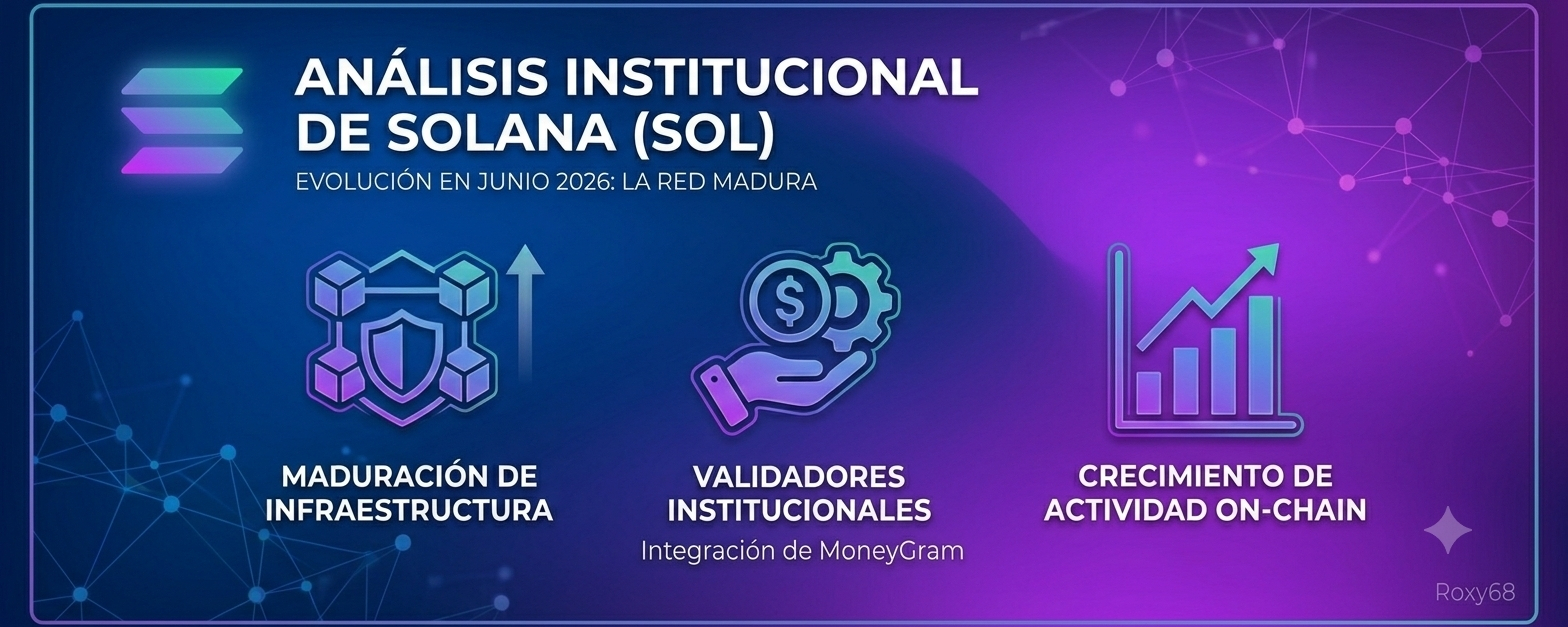
Artículo
$Solana en junio de 2026: La red se viste de institución 🏗️Este mes de junio, la narrativa alrededor de Solana $SOL ha dado un giro significativo. Más allá de las fluctuaciones de mercado habituales, el ecosistema está atravesando una etapa de "maduración infraestructural".
¿Qué hemos observado en las últimas semanas?
Institucionalización de la validación: La incorporación de actores globales como MoneyGram como validadores activos es un hito técnico relevante. Esto no es solo marketing; es una señal de que las grandes firmas de pagos están integrándose directamente en la gobernanza y seguridad de la red para garantizar sus propios rieles financieros.Transparencia de grado financiero: La integración del Token Integration Engine de Moody’s permite que las calificaciones crediticias sean ahora legibles y verificables on-chain. Esto coloca a Solana en una posición única para los activos del mundo real (RWA), convirtiéndola en un laboratorio para la banca del futuro.Preparación para el rendimiento: Con la vista puesta en la actualización Alpenglow, la comunidad técnica sigue trabajando en reducir la latencia de confirmación de bloques a milisegundos. Es un recordatorio de que, en blockchain, la verdadera ventaja competitiva suele construirse en los niveles más profundos del código, no en la superficie de los precios.
El mercado sigue siendo un mecanismo de descubrimiento de precios, pero la tecnología parece estar enfocada en una hoja de ruta muy distinta: la eficiencia a escala empresarial.
¿Estamos ante el fin de la etapa experimental de Solana para dar paso a la estandarización institucional? Analicemos los datos, no solo los gráficos.
#Solana #BlockchainInfrastructure $SOL #InstitutionalCrypto #TechAnalysis
$Solana en junio de 2026: La red se viste de institución 🏗️
Este mes de junio, la narrativa alrededor de Solana $SOL ha dado un giro significativo. Más allá de las fluctuaciones de mercado habituales, el ecosistema está atravesando una etapa de "maduración infraestructural".
¿Qué hemos observado en las últimas semanas?
Institucionalización de la validación: La incorporación de actores globales como MoneyGram como validadores activos es un hito técnico relevante. Esto no es solo marketing; es una señal de que las grandes firmas de pagos están integrándose directamente en la gobernanza y seguridad de la red para garantizar sus propios rieles financieros.Transparencia de grado financiero: La integración del Token Integration Engine de Moody’s permite que las calificaciones crediticias sean ahora legibles y verificables on-chain. Esto coloca a Solana en una posición única para los activos del mundo real (RWA), convirtiéndola en un laboratorio para la banca del futuro.Preparación para el rendimiento: Con la vista puesta en la actualización Alpenglow, la comunidad técnica sigue trabajando en reducir la latencia de confirmación de bloques a milisegundos. Es un recordatorio de que, en blockchain, la verdadera ventaja competitiva suele construirse en los niveles más profundos del código, no en la superficie de los precios.
El mercado sigue siendo un mecanismo de descubrimiento de precios, pero la tecnología parece estar enfocada en una hoja de ruta muy distinta: la eficiencia a escala empresarial.
¿Estamos ante el fin de la etapa experimental de Solana para dar paso a la estandarización institucional? Analicemos los datos, no solo los gráficos.
#Solana #BlockchainInfrastructure $SOL #InstitutionalCrypto #TechAnalysis
¿Qué hemos observado en las últimas semanas?
Institucionalización de la validación: La incorporación de actores globales como MoneyGram como validadores activos es un hito técnico relevante. Esto no es solo marketing; es una señal de que las grandes firmas de pagos están integrándose directamente en la gobernanza y seguridad de la red para garantizar sus propios rieles financieros.Transparencia de grado financiero: La integración del Token Integration Engine de Moody’s permite que las calificaciones crediticias sean ahora legibles y verificables on-chain. Esto coloca a Solana en una posición única para los activos del mundo real (RWA), convirtiéndola en un laboratorio para la banca del futuro.Preparación para el rendimiento: Con la vista puesta en la actualización Alpenglow, la comunidad técnica sigue trabajando en reducir la latencia de confirmación de bloques a milisegundos. Es un recordatorio de que, en blockchain, la verdadera ventaja competitiva suele construirse en los niveles más profundos del código, no en la superficie de los precios.
El mercado sigue siendo un mecanismo de descubrimiento de precios, pero la tecnología parece estar enfocada en una hoja de ruta muy distinta: la eficiencia a escala empresarial.
¿Estamos ante el fin de la etapa experimental de Solana para dar paso a la estandarización institucional? Analicemos los datos, no solo los gráficos.
#Solana #BlockchainInfrastructure $SOL #InstitutionalCrypto #TechAnalysis
53
Inicia sesión para explorar más contenidos
Únete a usuarios globales de criptomonedas en Binance Square
⚡️ Obtén información útil y actualizada sobre criptos.
💬 Avalado por el mayor exchange de criptomonedas en el mundo.
👍 Descubre perspectivas reales de creadores verificados.
Email/número de teléfono
Temas populares
1
#USContinuingJoblessClaims1.774M
0 vistas
11 están debatiendo
2
#USAugustPPIYoYRisesTo5.4%
0 vistas
11 están debatiendo
3
#AppleDebutsFoldablePhone
53,134 vistas
1,051 están debatiendo
4
#TSMCAugustRevenueUp53.3%YoY
12,887 vistas
382 están debatiendo
5
#IranSaysReadyToEscalateWarWithUS
17,290 vistas
377 están debatiendo
6
#EUExtendsCentralContactPointToCASPs
16,147 vistas
414 están debatiendo
7
#US10YTreasuryYieldHitsHighestSinceNov2023
40,628 vistas
634 están debatiendo
8
#USTreasuryToBuyBackUpTo$6BLongDatedDebt
22,859 vistas
190 están debatiendo
9
#BitcoinSurpasses$79K
77,954 vistas
299 están debatiendo
10
#BrentCrudeTops$100
137,568 vistas
428 están debatiendo