
ILIQ69
208 Publicaciones

ILIQ69
39 Siguiendo
54 Seguidores
240 Me gusta
Publicaciones
PINNED
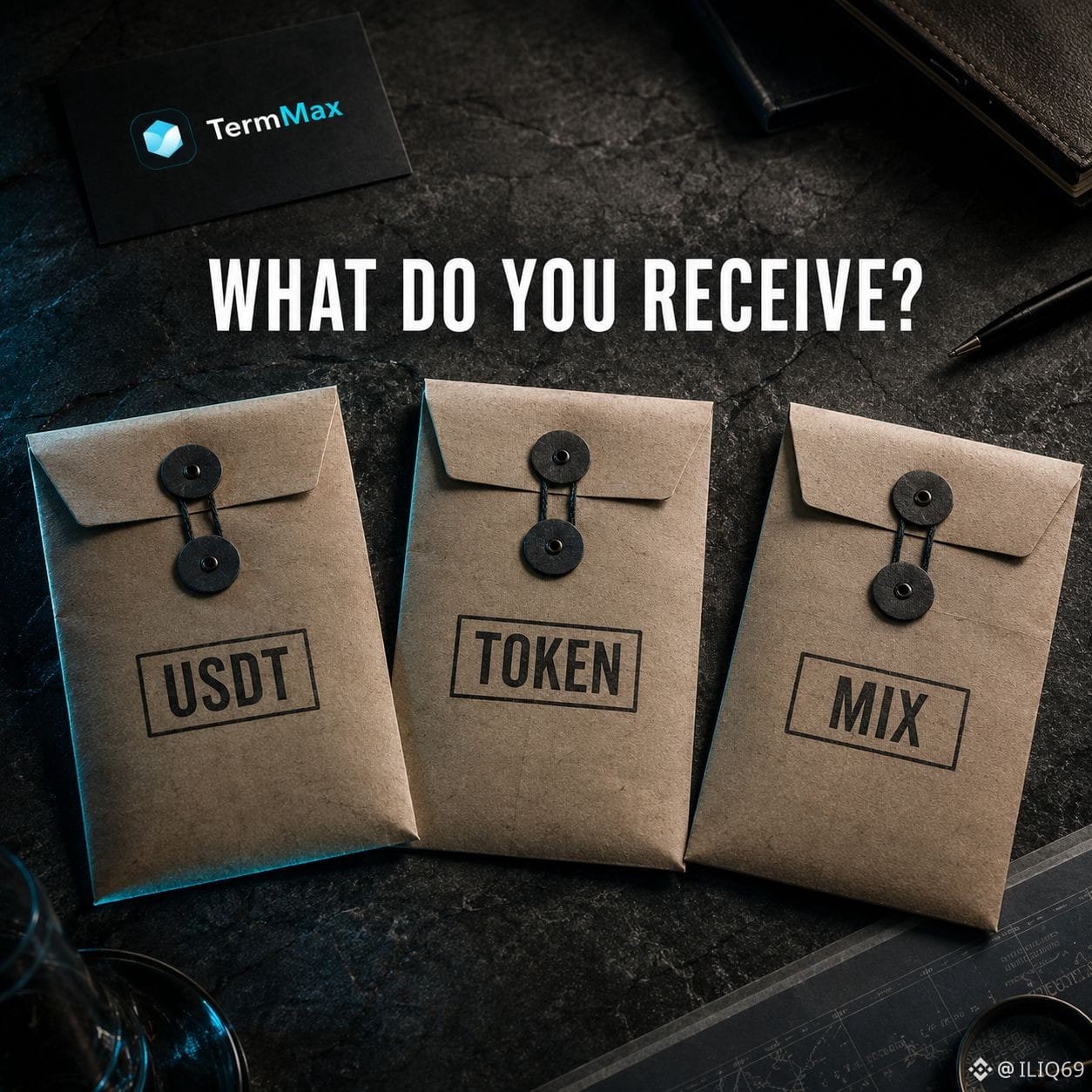
A vault return can look simple until you ask a more practical question: what asset might I actually receive at settlement?
TermMax Alpha documentation explains that, after maturity, a Dual Investment vault may end with USDT, the token, or a mix of both in a partial-exercise scenario. The final composition depends on the settlement outcome and available liquidity.
That detail makes me read a yield offer differently. The rate is only one part of the decision. The settlement asset is another. If I deposit USDT but the setup can settle into tokens under certain conditions, I need to be comfortable with that possibility before I enter.
Which final outcome would you want defined most clearly before depositing?
@TermMax $TMX #TermMax
TermMax Alpha documentation explains that, after maturity, a Dual Investment vault may end with USDT, the token, or a mix of both in a partial-exercise scenario. The final composition depends on the settlement outcome and available liquidity.
That detail makes me read a yield offer differently. The rate is only one part of the decision. The settlement asset is another. If I deposit USDT but the setup can settle into tokens under certain conditions, I need to be comfortable with that possibility before I enter.
Which final outcome would you want defined most clearly before depositing?
@TermMax $TMX #TermMax
Settlement asset
0%
Strike price
0%
Maturity date
0%
Partial-exercise rules
0%
0 Voto(s) • Votación cerrada
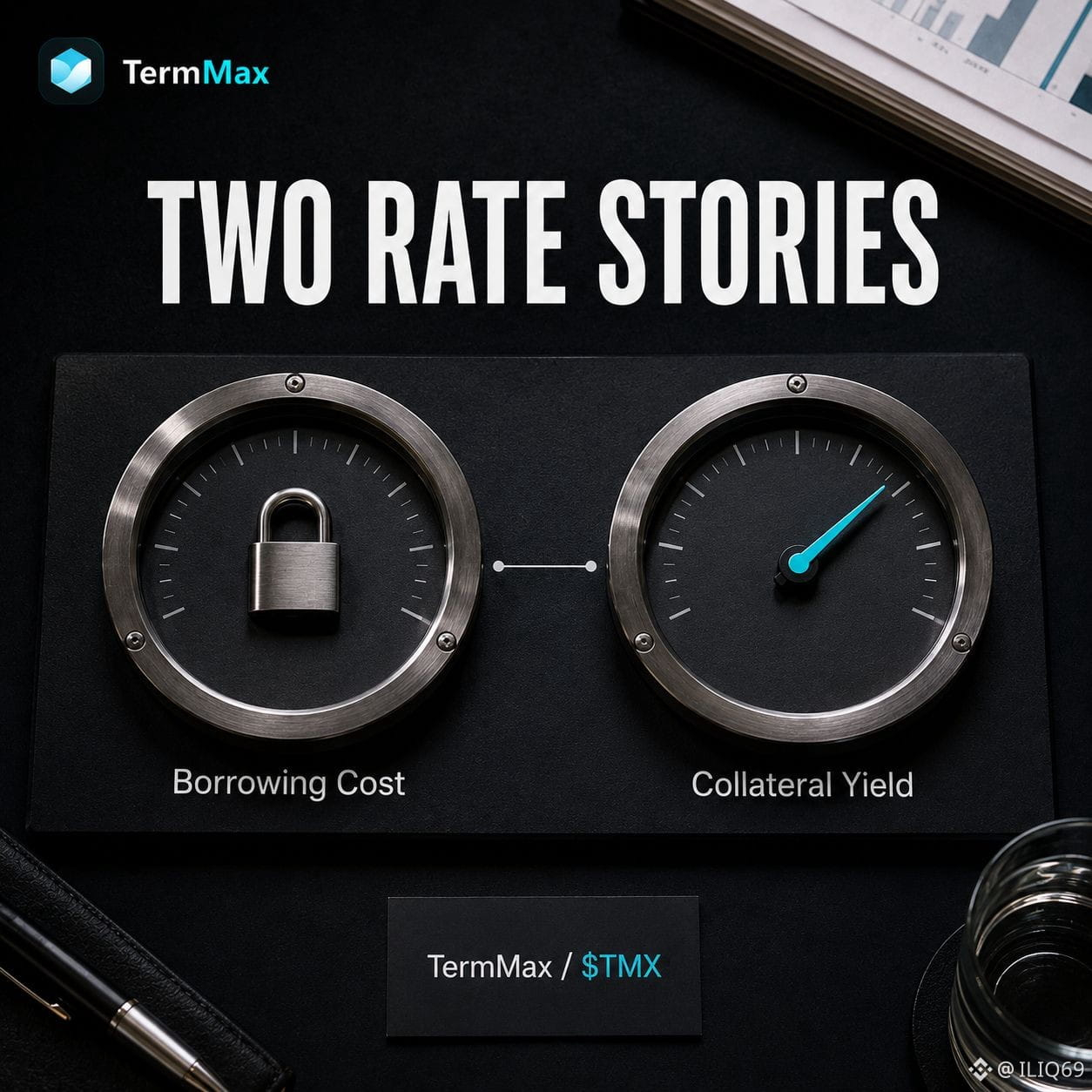
A fixed borrowing rate does not automatically mean the whole position has a fixed outcome. That distinction becomes clearer when yield-bearing collateral enters the picture.
TermMax documentation says the borrowing rate can stay fixed while the income from collateral depends on what that collateral is. A fixed-rate asset such as a PT can have fixed income, while collateral with a floating yield can keep moving with the market.
So I would separate the position into two questions: what is my known cost of borrowing, and what is the return behavior of the asset I locked? Calling both sides “fixed” would hide the part that can still change.
Which part would you separate first when assessing a yield-bearing position?
@TermMax #TermMax
TermMax documentation says the borrowing rate can stay fixed while the income from collateral depends on what that collateral is. A fixed-rate asset such as a PT can have fixed income, while collateral with a floating yield can keep moving with the market.
So I would separate the position into two questions: what is my known cost of borrowing, and what is the return behavior of the asset I locked? Calling both sides “fixed” would hide the part that can still change.
Which part would you separate first when assessing a yield-bearing position?
@TermMax #TermMax
Borrowing cost
0%
Collateral yield
0%
LTV risk
0%
All three together
0%
0 Voto(s) • Votación cerrada
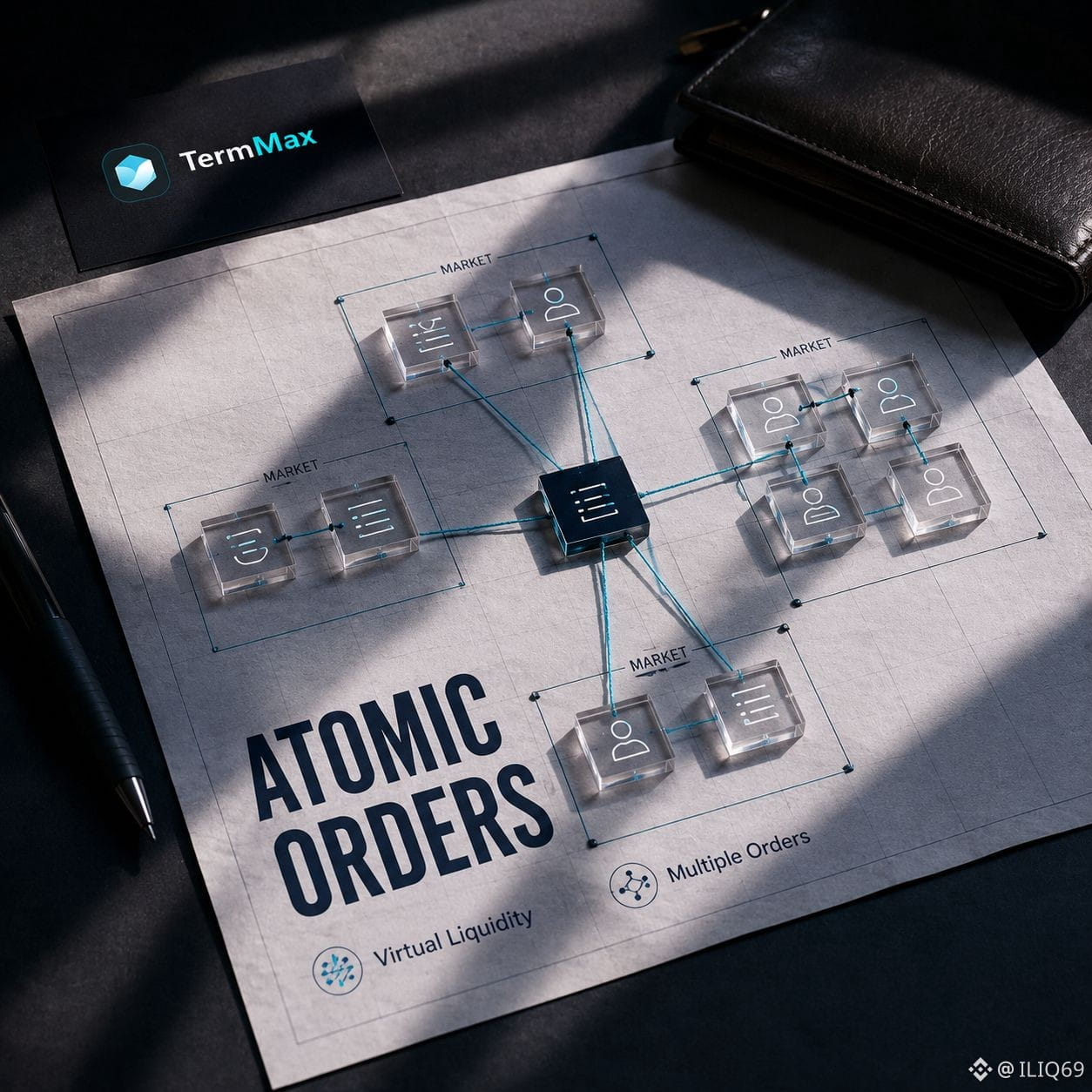
The part of the TMX whitepaper I almost skipped was Atomic Orders. TermMax describes virtual liquidity being spread across multiple orders before the funds are actually borrowed.
That sounds like plumbing, but I think it changes what “available liquidity” really means. Capital does not have to choose one market too early just to be ready. It can be positioned for more than one opportunity instead of being fragmented the moment it enters the system.
I would not treat that as proof that every market will have deep execution. A clever design still has to work in live conditions. But it is a more interesting problem than simply displaying one attractive rate: where should liquidity wait before someone needs it?
Would you rather reserve liquidity in one market or keep it positioned across several opportunities?
@TermMax $TMX #TermMax
That sounds like plumbing, but I think it changes what “available liquidity” really means. Capital does not have to choose one market too early just to be ready. It can be positioned for more than one opportunity instead of being fragmented the moment it enters the system.
I would not treat that as proof that every market will have deep execution. A clever design still has to work in live conditions. But it is a more interesting problem than simply displaying one attractive rate: where should liquidity wait before someone needs it?
Would you rather reserve liquidity in one market or keep it positioned across several opportunities?
@TermMax $TMX #TermMax
Reserve one market
0%
Spread it across markets
0%
Depends on execution
0%
I need more data
0%
0 Voto(s) • Votación cerrada
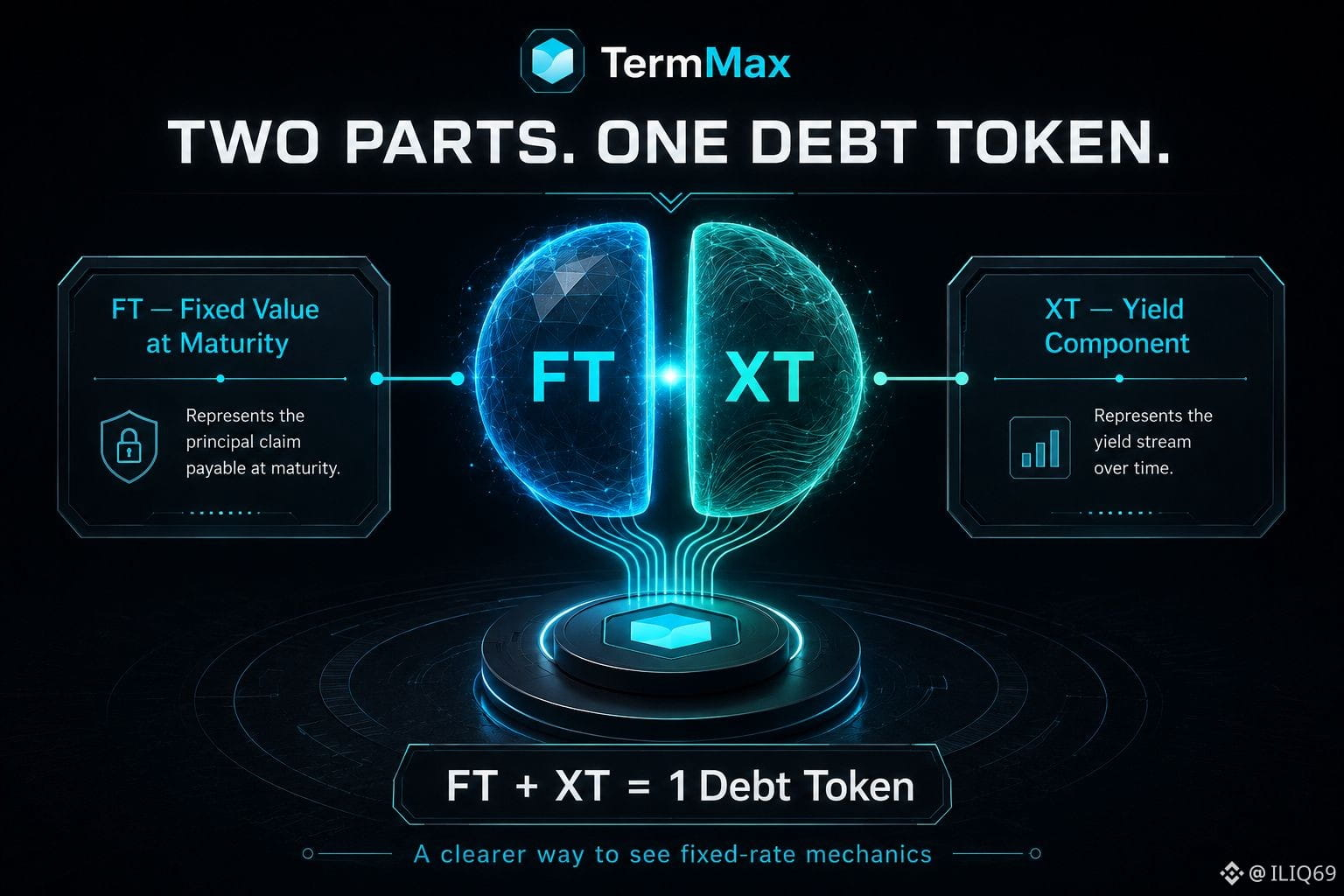
The FT and XT structure on @TermMax looked technical to me at first. Then I stopped trying to memorize acronyms and used a simpler mental model.
One debt token can be represented by two connected pieces: FT + XT. The FT carries the fixed-value claim at maturity, while XT represents the other side of that value before maturity. Together, they make the original debt token whole.
I like systems that make the economics visible instead of hiding everything inside one black-box balance. It does not remove risk or make the process “easy money,” but it gives lenders and borrowers a clearer way to see how fixed yield and borrowing cost are formed.
Which part of the FT + XT model would you want explained with a real example?
@TermMax #TermMax
One debt token can be represented by two connected pieces: FT + XT. The FT carries the fixed-value claim at maturity, while XT represents the other side of that value before maturity. Together, they make the original debt token whole.
I like systems that make the economics visible instead of hiding everything inside one black-box balance. It does not remove risk or make the process “easy money,” but it gives lenders and borrowers a clearer way to see how fixed yield and borrowing cost are formed.
Which part of the FT + XT model would you want explained with a real example?
@TermMax #TermMax
How FT earns yield
0%
What XT represents
0%
Why they equal one asset
0%
The borrower flow
0%
0 Voto(s) • Votación cerrada
The part of a trade I want to understand before buying is the exit path.
Binance explains that eligible users can convert between a supported direct stock and the corresponding bStock at a 1:1 ratio with no conversion fee. It also notes that conversion can be paused temporarily for corporate-action processing or maintenance. That is useful, but it is not a reason to skip the details.
For me, the practical takeaway is simple: eligibility, product terms, and operational timing matter before I need them — not after I have already built a position. And because a bStock is a certificate structure rather than direct share ownership, I should understand what I hold before making any conversion plan.
That is not the most exciting part of trading, but it is the part that makes the rest feel more deliberate.
Would you check conversion and eligibility rules before buying a bStock?
#bstockscis @BinanceCIS #bStocksCIS $EWYB
Binance explains that eligible users can convert between a supported direct stock and the corresponding bStock at a 1:1 ratio with no conversion fee. It also notes that conversion can be paused temporarily for corporate-action processing or maintenance. That is useful, but it is not a reason to skip the details.
For me, the practical takeaway is simple: eligibility, product terms, and operational timing matter before I need them — not after I have already built a position. And because a bStock is a certificate structure rather than direct share ownership, I should understand what I hold before making any conversion plan.
That is not the most exciting part of trading, but it is the part that makes the rest feel more deliberate.
Would you check conversion and eligibility rules before buying a bStock?
#bstockscis @BinanceCIS #bStocksCIS $EWYB

Always before buying
50%
Only for a large position
0%
Only when I need it
50%
I did not know this existed
0%
2 Voto(s) • Votación cerrada
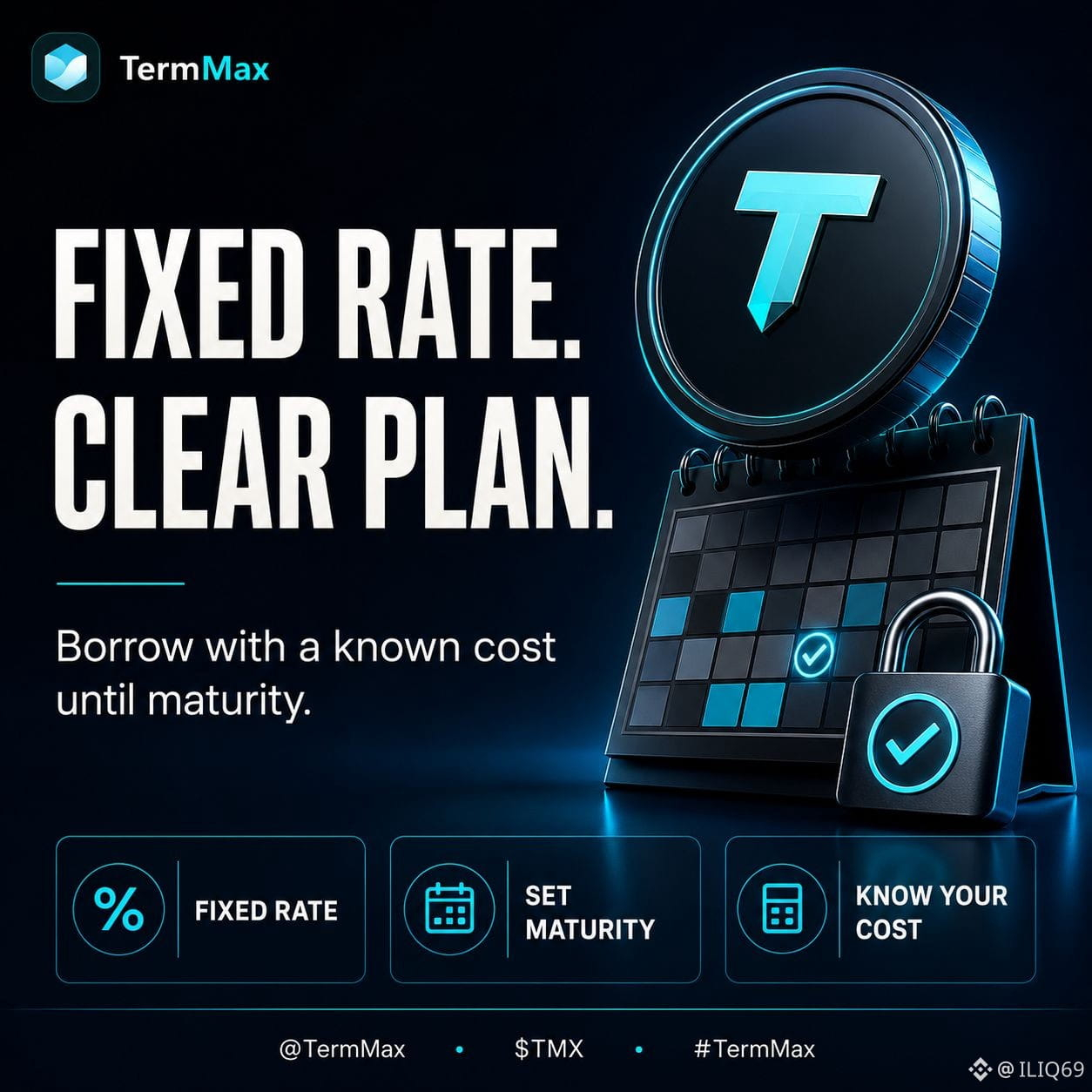
@TermMax made me think about DeFi borrowing like planning a small business budget. I can accept a cost; what is difficult to work with is a cost that shifts while the plan stays the same.
With a fixed rate and a fixed maturity, I know the question upfront: is this borrowing cost worth the time I am buying? That feels more honest than treating an APY widget like a promise.
The trade-off still matters. A fixed rate can look less attractive if floating rates later fall, and collateral can still move against you. But certainty has value when the goal is to make a deliberate decision instead of refreshing a dashboard every day.
What would help you more when borrowing: a known rate or maximum flexibility?
@TermMax #TermMax
With a fixed rate and a fixed maturity, I know the question upfront: is this borrowing cost worth the time I am buying? That feels more honest than treating an APY widget like a promise.
The trade-off still matters. A fixed rate can look less attractive if floating rates later fall, and collateral can still move against you. But certainty has value when the goal is to make a deliberate decision instead of refreshing a dashboard every day.
What would help you more when borrowing: a known rate or maximum flexibility?
@TermMax #TermMax
A known rate
0%
Maximum flexibility
0%
A mix of both
0%
Not borrowing now
0%
0 Voto(s) • Votación cerrada
There is a useful tension in bStocks that I do not see discussed enough: the market can be open 24/7, while the underlying company still tells its business story on a normal reporting calendar.
With $NVDAB , a price can move at any hour on Binance Spot. But a serious research process still needs the company’s results, guidance, product cycle, customer demand, and risks. A live chart can show that attention changed; it cannot explain whether the business thesis improved.
So I am trying to separate two activities. One is watching the market. The other is reading the company. The first is fast and emotional; the second is slower and usually more useful.
That distinction is what keeps 24/7 access from becoming 24/7 noise for me.
What do you read first when a company publishes results?
#bstockscis @BinanceCIS #bStocksCIS $NVDAB
With $NVDAB , a price can move at any hour on Binance Spot. But a serious research process still needs the company’s results, guidance, product cycle, customer demand, and risks. A live chart can show that attention changed; it cannot explain whether the business thesis improved.
So I am trying to separate two activities. One is watching the market. The other is reading the company. The first is fast and emotional; the second is slower and usually more useful.
That distinction is what keeps 24/7 access from becoming 24/7 noise for me.
What do you read first when a company publishes results?
#bstockscis @BinanceCIS #bStocksCIS $NVDAB

Revenue and earnings
100%
Forward guidance
0%
Management commentary
0%
I wait for analysis
0%
1 Voto(s) • Votación cerrada
One bStocks habit I am trying to build is boring on purpose: I do not confuse a market being open with a trade automatically being a good idea.
$SPCXB can trade on Binance Spot around the clock. That is useful, especially when a traditional exchange is closed. But “available to trade” is not the same as “I should rush in with a market order.” Before entering, I want to look at the live order book, decide the maximum price I am comfortable paying, and size the position before emotion takes over.
That is not a prediction about SpaceX. It is an execution rule for any 24/7 asset: convenience should make me more prepared, not more impulsive.
The best trade I avoid may be the one I nearly made because a chart looked exciting at midnight.
When you trade an always-open market, which rule helps you most?
#bstockscis @BinanceCIS #bStocksCIS $SPCXB
$SPCXB can trade on Binance Spot around the clock. That is useful, especially when a traditional exchange is closed. But “available to trade” is not the same as “I should rush in with a market order.” Before entering, I want to look at the live order book, decide the maximum price I am comfortable paying, and size the position before emotion takes over.
That is not a prediction about SpaceX. It is an execution rule for any 24/7 asset: convenience should make me more prepared, not more impulsive.
The best trade I avoid may be the one I nearly made because a chart looked exciting at midnight.
When you trade an always-open market, which rule helps you most?
#bstockscis @BinanceCIS #bStocksCIS $SPCXB

Use limit orders
0%
Check the order book
67%
Set a position size first
0%
Wait for the main session
33%
3 Voto(s) • Votación cerrada
Verificado
The easy AI narrative is “buy the company that designs the fastest chip.” $ASMLB asks a different question: who makes the equipment that helps chipmakers manufacture advanced chips in the first place?
ASML designs and manufactures lithography machines, plus the software and services used by chipmakers in production. That puts its business further upstream than a familiar consumer-tech headline.
It also changes what I would research. I would not use the next smartphone launch as my whole thesis. I would look at customer capital spending, the manufacturing roadmap, and whether customers are taking delivery and using complex equipment effectively.
This is not a claim that one position is better than another. It is a reminder that “semiconductors” is a chain of very different businesses, each with its own bottlenecks.
Which part of the chip ecosystem interests you most?
#bstockscis @BinanceCIS #bStocksCIS $ASMLB
ASML designs and manufactures lithography machines, plus the software and services used by chipmakers in production. That puts its business further upstream than a familiar consumer-tech headline.
It also changes what I would research. I would not use the next smartphone launch as my whole thesis. I would look at customer capital spending, the manufacturing roadmap, and whether customers are taking delivery and using complex equipment effectively.
This is not a claim that one position is better than another. It is a reminder that “semiconductors” is a chain of very different businesses, each with its own bottlenecks.
Which part of the chip ecosystem interests you most?
#bstockscis @BinanceCIS #bStocksCIS $ASMLB

Chip design
29%
Manufacturing equipment
0%
Memory and storage
28%
Servers and systems
43%
7 Voto(s) • Votación cerrada
When I see Nokia mentioned, my first mental image is still an old phone. That is exactly why $NOKB makes for a useful research exercise.
Nokia describes itself as a B2B technology company working across mobile, fixed, and cloud networks, with customers that include service providers and enterprises. That means a quick consumer-product narrative misses the actual business lens.
If I were researching this ticker, I would care less about nostalgia and more about network investment cycles, customer contracts, technology standards, and how infrastructure spending converts into results. It is a quieter story than a viral gadget launch, but it is also a more accurate place to start.
The lesson is simple: before trading a familiar brand, ask what the company really sells today.
What would you check first when researching $NOKB ?
@BinanceCIS #bStocksCIS #bstockscis
Nokia describes itself as a B2B technology company working across mobile, fixed, and cloud networks, with customers that include service providers and enterprises. That means a quick consumer-product narrative misses the actual business lens.
If I were researching this ticker, I would care less about nostalgia and more about network investment cycles, customer contracts, technology standards, and how infrastructure spending converts into results. It is a quieter story than a viral gadget launch, but it is also a more accurate place to start.
The lesson is simple: before trading a familiar brand, ask what the company really sells today.
What would you check first when researching $NOKB ?
@BinanceCIS #bStocksCIS #bstockscis

Network customers
25%
5G and cloud strategy
50%
Financial results
0%
Competitive landscape
25%
4 Voto(s) • Votación cerrada
Verificado
One thing I like about researching $INTCB is that it forces me to drop the “chip company” label. It is too vague to be useful.
Intel reports product businesses that design and sell processors and related semiconductor solutions. It also has Intel Foundry, a manufacturing-and-services business that aims to serve external customers. Those are connected, but they ask for different proof points.
For the product side, I would watch demand and competitiveness. For the foundry side, I would ask about manufacturing execution, customer trust, and whether outside demand is actually developing. Calling both of those things simply “AI exposure” hides more than it explains.
That is my favourite kind of bStock research: not a prediction, just a better map of what the ticker represents.
Which $INTCB story would you study first?
#bstockscis @BinanceCIS #bStocksCIS $INTCB
Intel reports product businesses that design and sell processors and related semiconductor solutions. It also has Intel Foundry, a manufacturing-and-services business that aims to serve external customers. Those are connected, but they ask for different proof points.
For the product side, I would watch demand and competitiveness. For the foundry side, I would ask about manufacturing execution, customer trust, and whether outside demand is actually developing. Calling both of those things simply “AI exposure” hides more than it explains.
That is my favourite kind of bStock research: not a prediction, just a better map of what the ticker represents.
Which $INTCB story would you study first?
#bstockscis @BinanceCIS #bStocksCIS $INTCB

Consumer and data-center chips
25%
Intel Foundry
0%
Manufacturing execution
25%
All of the above
50%
4 Voto(s) • Votación cerrada
Verificado
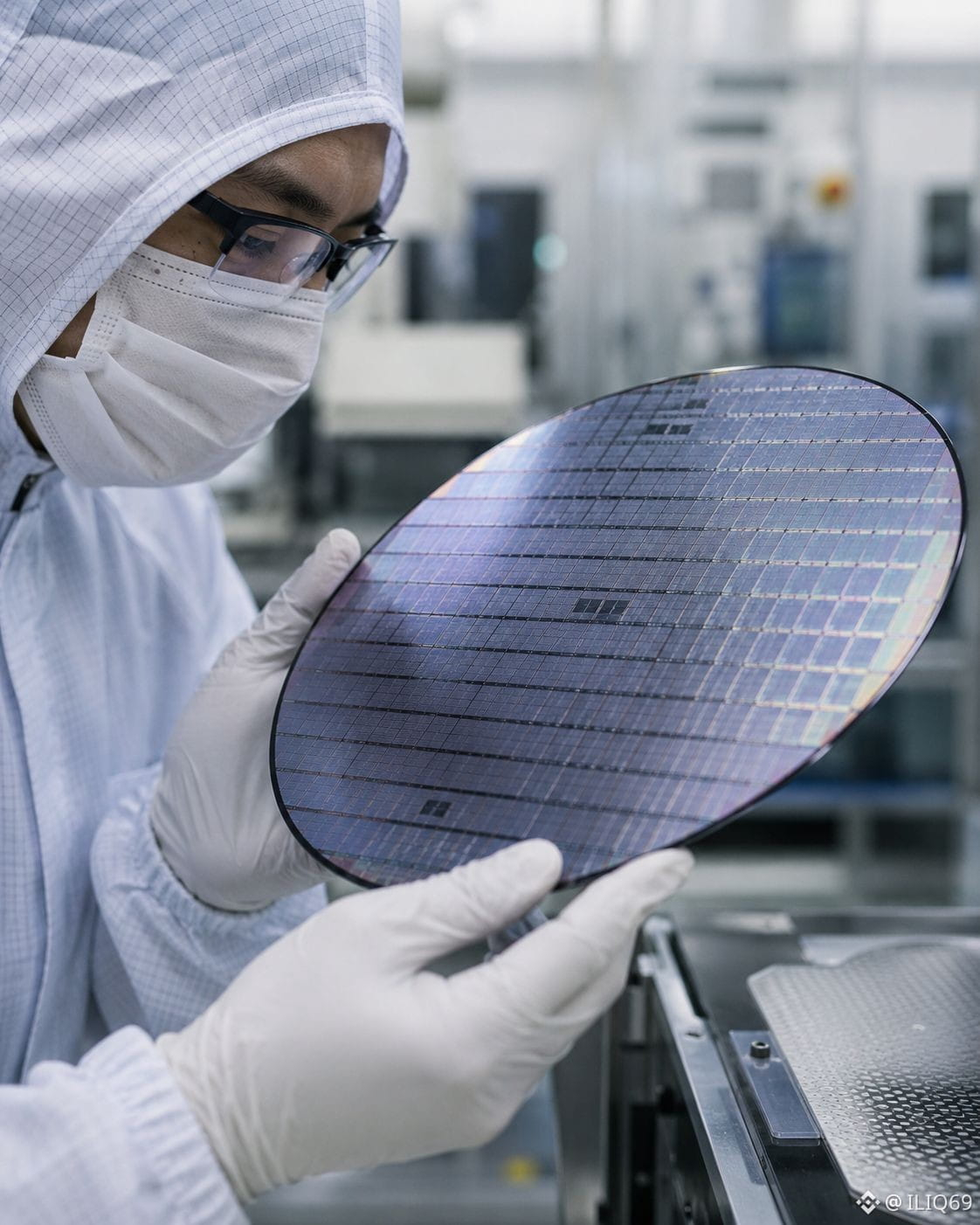
AI discussions usually start with the chip doing the calculation. I have started paying more attention to the memory that lets the system keep data moving.
Micron’s own product range includes DRAM, NAND, and NOR memory and storage products. That does not make $MUB a shortcut to “the AI trade.” It gives me a clearer research question: which part of the compute stack is this company actually exposed to, and what needs to go right for demand to translate into a better business result?
The distinction matters. A strong headline about AI can lift a whole sector, while the economics of memory can still depend on supply, product mix, customer demand, and execution.
So I would rather understand the company’s role in the system than buy a ticker because it appears next to an AI headline.
What would you research first before looking at $MUB ?
@BinanceCIS #bStocksCIS #bstockscis
Micron’s own product range includes DRAM, NAND, and NOR memory and storage products. That does not make $MUB a shortcut to “the AI trade.” It gives me a clearer research question: which part of the compute stack is this company actually exposed to, and what needs to go right for demand to translate into a better business result?
The distinction matters. A strong headline about AI can lift a whole sector, while the economics of memory can still depend on supply, product mix, customer demand, and execution.
So I would rather understand the company’s role in the system than buy a ticker because it appears next to an AI headline.
What would you research first before looking at $MUB ?
@BinanceCIS #bStocksCIS #bstockscis
Memory product mix
50%
Demand outlook
25%
Supply conditions
0%
Earnings report
25%
4 Voto(s) • Votación cerrada
The name “stablecoin” can create a dangerous mental shortcut.
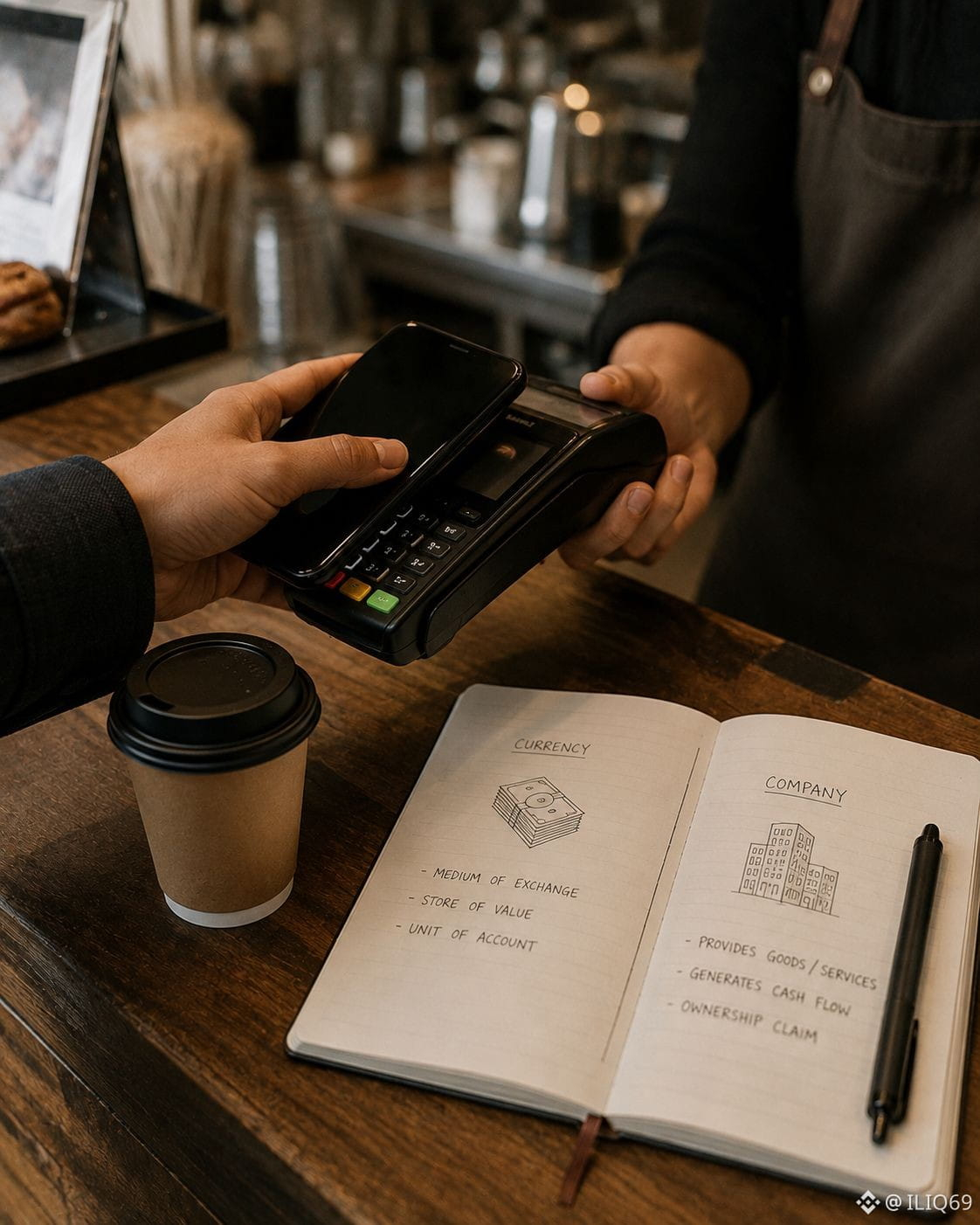
USDC is designed to maintain a dollar peg. $CRCLB is exposure to Circle as a company through a bStock structure. Those are completely different things. One is meant to be stable in price; the other is an equity-linked instrument whose value can react to the company’s revenue model, adoption, competition, regulation, expenses, and market expectations.
That is why I would never call $CRCLB a “safe version of USDC.” The useful connection is not price stability — it is that Circle operates infrastructure around stablecoins and blockchain-based financial services.
For me, the real question is whether I understand how the business earns, grows, and spends money, rather than whether I use its stablecoin in my wallet.
Which business driver would you research first for $CRCLB ?
@BinanceCIS #bStocksCIS #bstockscis
USDC is designed to maintain a dollar peg. $CRCLB is exposure to Circle as a company through a bStock structure. Those are completely different things. One is meant to be stable in price; the other is an equity-linked instrument whose value can react to the company’s revenue model, adoption, competition, regulation, expenses, and market expectations.
That is why I would never call $CRCLB a “safe version of USDC.” The useful connection is not price stability — it is that Circle operates infrastructure around stablecoins and blockchain-based financial services.
For me, the real question is whether I understand how the business earns, grows, and spends money, rather than whether I use its stablecoin in my wallet.
Which business driver would you research first for $CRCLB ?
@BinanceCIS #bStocksCIS #bstockscis
USDC adoption
43%
Reserve income
14%
Regulation
29%
Competition
14%
7 Voto(s) • Votación cerrada
Verificado
Not every ticker deserves to be researched as if it were one company. $EWYB is a good reminder of that.
The underlying EWY fund is designed to track an index of South Korean equities. So the question is not only “Do I like this chart?” It is also: what country, sectors, currency exposure, and group of companies am I choosing through one position?
That feels more honest than calling any ETF “automatically diversified.” A basket can hold many companies and still be exposed to one market’s regulations, export cycle, technology weighting, and investor sentiment.
For a crypto-native portfolio, I find that interesting because it changes the conversation from picking a famous name to taking a deliberate country view. That is a very different decision.
Would you rather research one company deeply or take a country-basket view with $EWYB ?
@BinanceCIS #bStocksCIS $EWYB
The underlying EWY fund is designed to track an index of South Korean equities. So the question is not only “Do I like this chart?” It is also: what country, sectors, currency exposure, and group of companies am I choosing through one position?
That feels more honest than calling any ETF “automatically diversified.” A basket can hold many companies and still be exposed to one market’s regulations, export cycle, technology weighting, and investor sentiment.
For a crypto-native portfolio, I find that interesting because it changes the conversation from picking a famous name to taking a deliberate country view. That is a very different decision.
Would you rather research one company deeply or take a country-basket view with $EWYB ?
@BinanceCIS #bStocksCIS $EWYB

One company deeply
0%
Country basket
75%
Mix of both
25%
Still learning ETFs
0%
4 Voto(s) • Votación cerrada
@BinanceCIS #bStocksCIS
I used to look at Strategy and think: “That is basically Bitcoin with a stock ticker.” The more I read, the less useful that shortcut became.
Strategy describes itself as a Bitcoin Treasury Company, but $MSTRB is still exposure to a public company. Its story includes the company’s Bitcoin treasury, its capital-raising decisions, and its enterprise analytics business. Those can point in the same direction sometimes, but they are not the same risk.
For me, that changes the research process. If I only watch $BTC, I miss the company layer. If I only watch the company chart, I miss why the treasury strategy matters. A clean thesis needs both.
I am not treating $MSTRB as “leveraged BTC.” I am treating it as a separate instrument with a BTC-sensitive thesis and company-specific decisions behind it.
Which lens would you check first before researching $MSTRB ?
I used to look at Strategy and think: “That is basically Bitcoin with a stock ticker.” The more I read, the less useful that shortcut became.
Strategy describes itself as a Bitcoin Treasury Company, but $MSTRB is still exposure to a public company. Its story includes the company’s Bitcoin treasury, its capital-raising decisions, and its enterprise analytics business. Those can point in the same direction sometimes, but they are not the same risk.
For me, that changes the research process. If I only watch $BTC, I miss the company layer. If I only watch the company chart, I miss why the treasury strategy matters. A clean thesis needs both.
I am not treating $MSTRB as “leveraged BTC.” I am treating it as a separate instrument with a BTC-sensitive thesis and company-specific decisions behind it.
Which lens would you check first before researching $MSTRB ?

Bitcoin treasury
25%
Capital structure
25%
Software business
0%
All three together
50%
4 Voto(s) • Votación cerrada
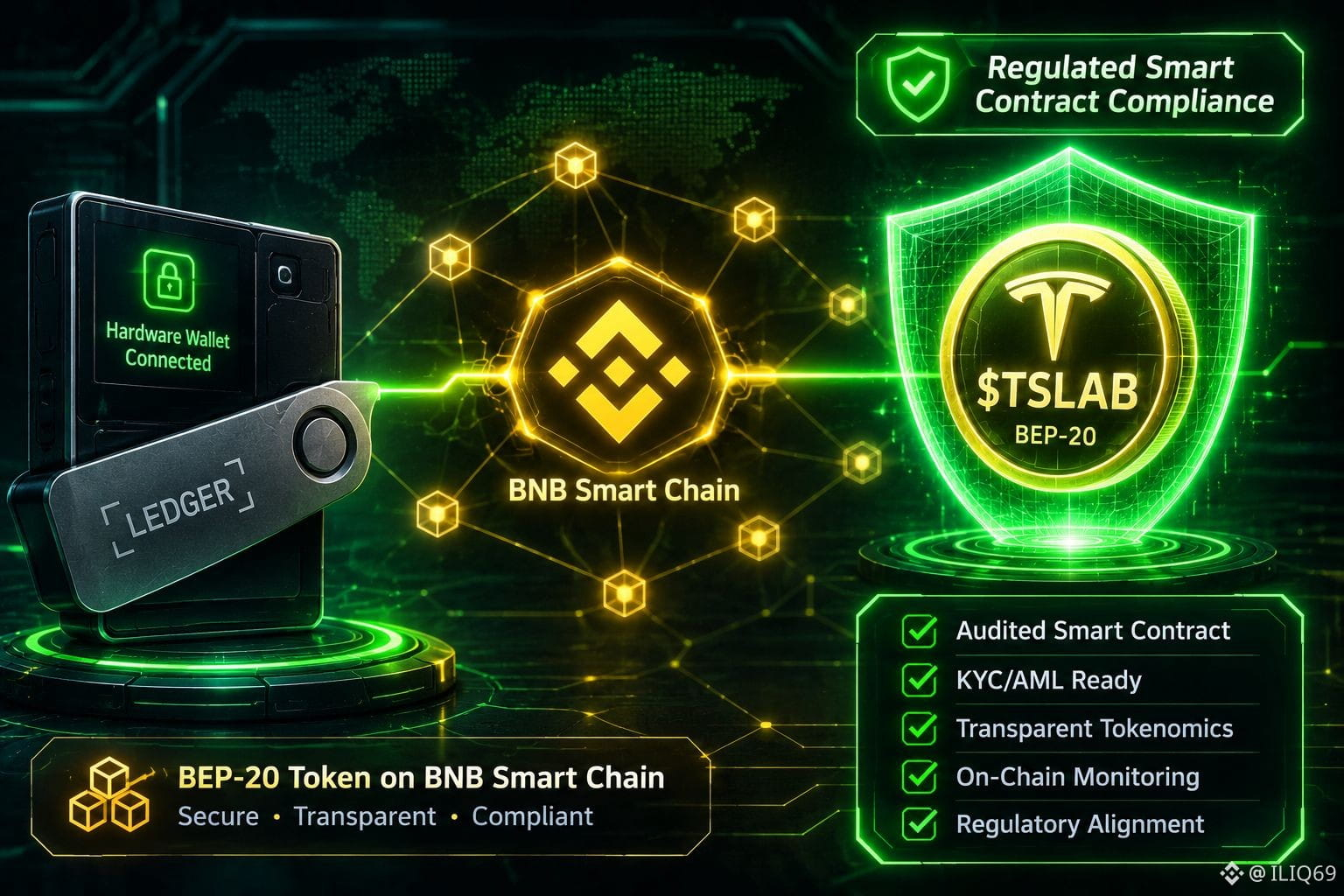
I withdrew my $TSLAB position to my personal BNB Smart Chain wallet yesterday, assuming it would behave like standard crypto. I was wrong, and understanding why is key for anyone trading RWA.
bStocks are issued as BEP-20 tokens by BTech Holdings under ADGM/FSRA regulation. While holding the private keys gives you user-controlled custody, the underlying smart contract retains regulatory transfer controls.
If an address conflicts with compliance, sanctions, or geographic restrictions, the contract can restrict or freeze the transfer.
What this means in practice:
1️⃣ Private Key Control: You own the signature and wallet custody. 2️⃣ Regulated Perimeter: The issuer enforces legal compliance on-chain.
3️⃣ Hybrid Security: You get blockchain portability without permissionless anonymity.
It is not a "traditional stock," nor is it a "pure DeFi token." It’s a regulated security running on public infrastructure.
Do you prefer holding bStocks in your self-custody wallet or directly on Binance? @BinanceCIS #bStocksCIS $TSLAB
bStocks are issued as BEP-20 tokens by BTech Holdings under ADGM/FSRA regulation. While holding the private keys gives you user-controlled custody, the underlying smart contract retains regulatory transfer controls.
If an address conflicts with compliance, sanctions, or geographic restrictions, the contract can restrict or freeze the transfer.
What this means in practice:
1️⃣ Private Key Control: You own the signature and wallet custody. 2️⃣ Regulated Perimeter: The issuer enforces legal compliance on-chain.
3️⃣ Hybrid Security: You get blockchain portability without permissionless anonymity.
It is not a "traditional stock," nor is it a "pure DeFi token." It’s a regulated security running on public infrastructure.
Do you prefer holding bStocks in your self-custody wallet or directly on Binance? @BinanceCIS #bStocksCIS $TSLAB
Self-custody (BNB Chain)
50%
Directly on Binance Spot
33%
I use both methods
17%
6 Voto(s) • Votación cerrada
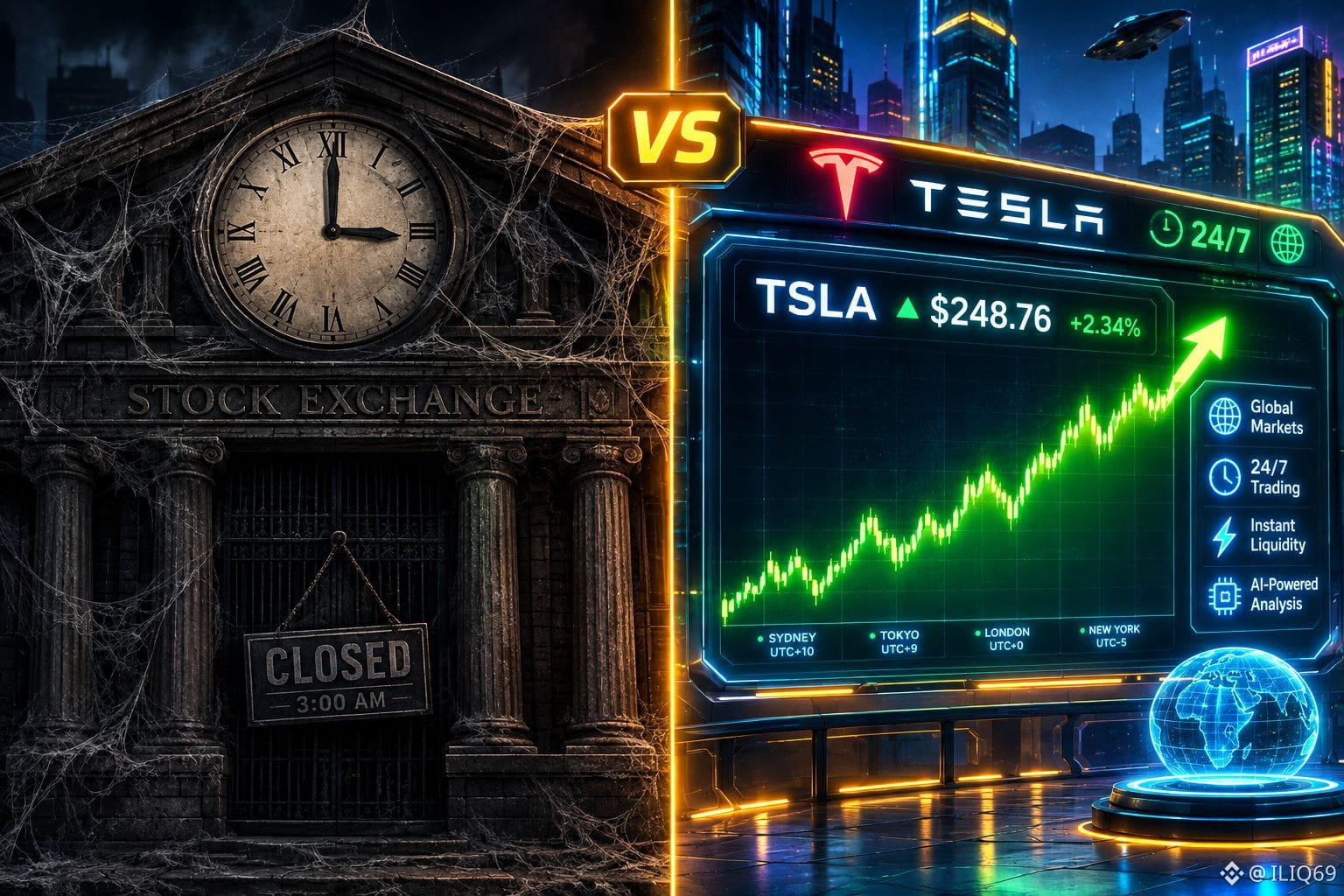
Wall Street sleeps, but your portfolio shouldn’t have to. 📉📈
For decades, retail investors have been chained to the 9:30 AM to 4:00 PM EST bell. If a massive macroeconomic event happens on a Friday night, traditional investors are trapped until Monday morning.
The bStocks ecosystem fundamentally changes this power dynamic. By utilizing @BinanceCIS , tokenized RWA (Real World Assets) allow for 24/7 liquidity.
Why this matters for your $TSLAB strategy:
1️⃣ Event-Driven Trading: React to weekend news instantly, not on Monday.
2️⃣ Global Accessibility: Trade in your local timezone, not New York's. 3️⃣ Continuous Hedging: Balance your crypto and equity exposure simultaneously, without waiting for legacy markets to open.
The traditional brokerage model is starting to look like a relic of the past. Are you still waiting for the opening bell, or have you migrated to constant liquidity?
Which advantage of 24/7 trading is the most critical to your strategy? #bStocksCIS
For decades, retail investors have been chained to the 9:30 AM to 4:00 PM EST bell. If a massive macroeconomic event happens on a Friday night, traditional investors are trapped until Monday morning.
The bStocks ecosystem fundamentally changes this power dynamic. By utilizing @BinanceCIS , tokenized RWA (Real World Assets) allow for 24/7 liquidity.
Why this matters for your $TSLAB strategy:
1️⃣ Event-Driven Trading: React to weekend news instantly, not on Monday.
2️⃣ Global Accessibility: Trade in your local timezone, not New York's. 3️⃣ Continuous Hedging: Balance your crypto and equity exposure simultaneously, without waiting for legacy markets to open.
The traditional brokerage model is starting to look like a relic of the past. Are you still waiting for the opening bell, or have you migrated to constant liquidity?
Which advantage of 24/7 trading is the most critical to your strategy? #bStocksCIS
Reacting to weekend news
60%
Trading in my own timezone
40%
Continuous portfolio hedging
0%
5 Voto(s) • Votación cerrada
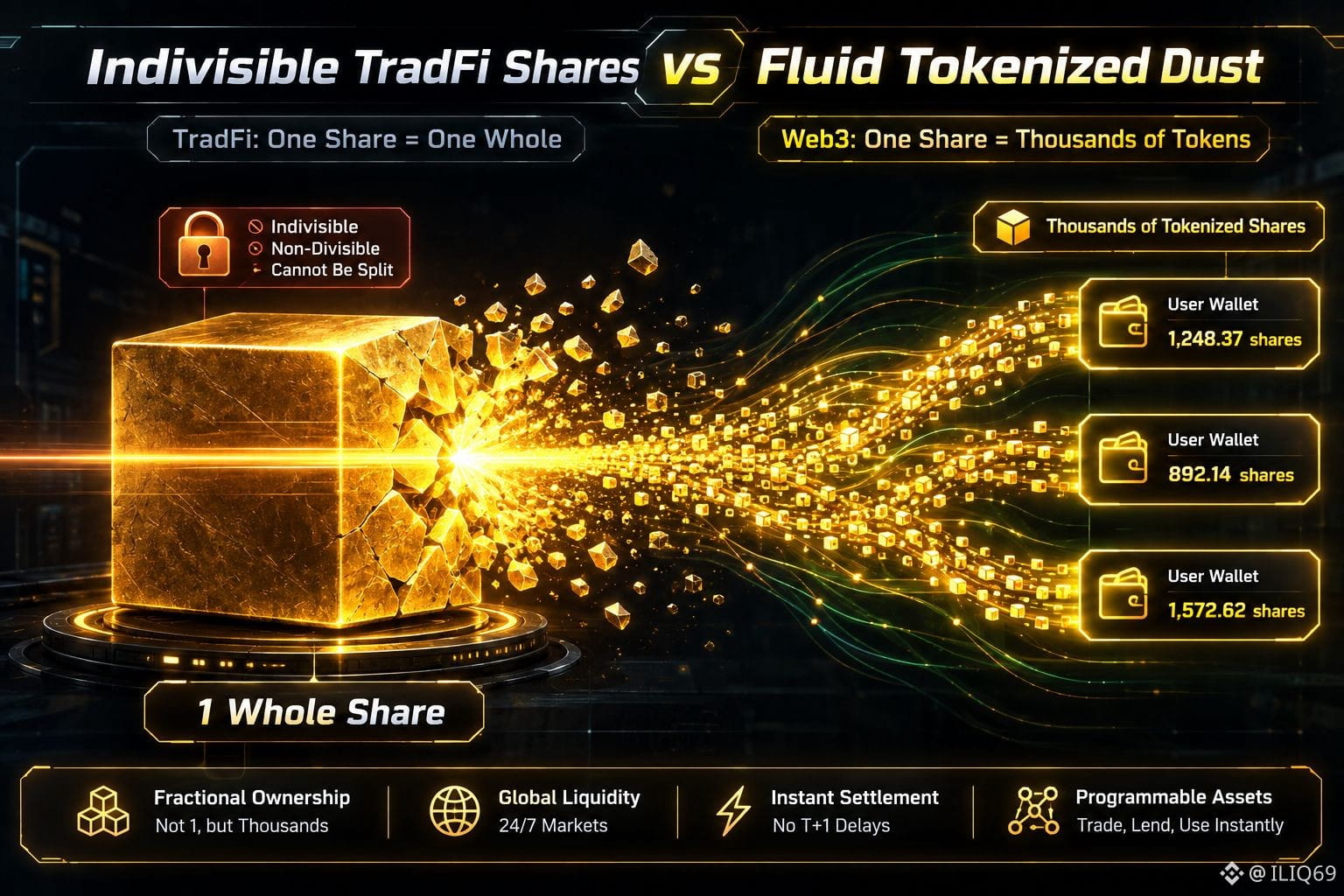
The concept of fractional shares has always been a mathematical headache for traditional custodians. You cannot natively hold 0.015 of an Apple share. The traditional ledger is built on whole, indivisible units. It’s an absolute integer system. Yet, look at the bStocks order book. You can deploy exact USDT amounts into $NVDAB down to micro-fractions. This isn't just a UI trick; it’s a massive pooling operation. The underlying custodian in Abu Dhabi aggregates these fractional demands, holds the whole shares in a secure vault, and issues divisible tokens on the blockchain. This effectively turns rigid traditional equities into fluid, divisible crypto liquidity. It is a brilliant arbitrage of architecture. You get the capital efficiency of an ERC-20 token combined with the regulatory backing of a legacy asset. But it raises a technical question: what happens to the "dust"? When thousands of users hold 0.0001 of a share, the custodian is essentially running a continuous balancing act between on-chain fragmentation and off-chain wholeness. It’s a massive upgrade for retail capital efficiency, but it requires absolute trust in the intermediary’s math. More architectural details at @BinanceCIS #bStocksCIS
Verificado
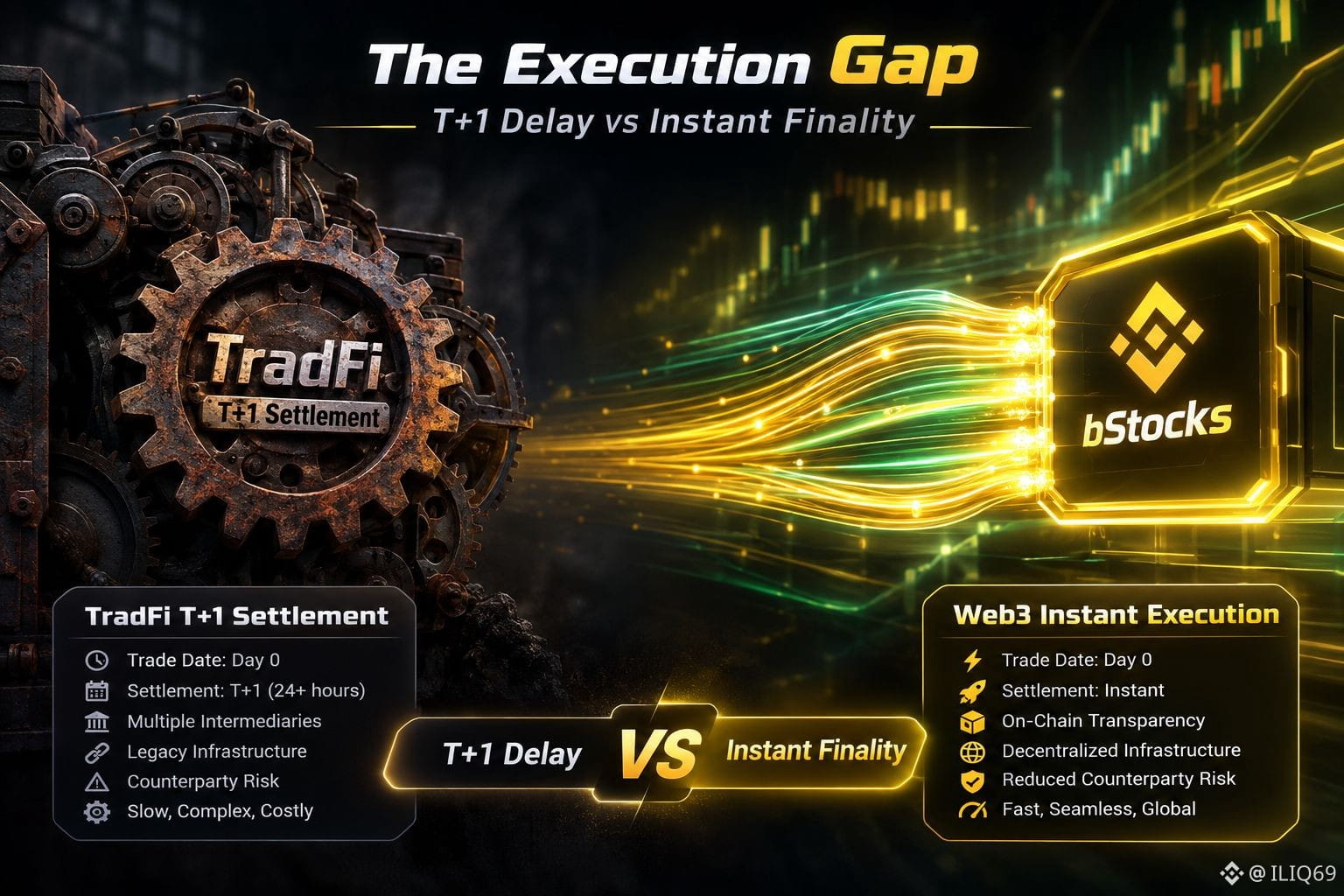
Started looking into how execution actually functions on tokenized equities, and it highlights a fundamental clash between Web3 speed and TradFi architecture. In traditional finance, if you buy a share, the broker takes T+1 days to actually settle the paperwork. It is a highly rigid, heavily regulated bureaucratic process. Crypto doesn’t work like that. A blockchain state changes instantly. By design, we expect absolute finality the second we click buy. This creates a massive UX hurdle when bridging the two worlds. Binance solves this with bStocks. When you hit buy on $TSLAB , the dashboard instantly reflects your balance. But under the hood, they are forcing an ancient TradFi settlement layer to operate at crypto speed. The exchange essentially absorbs the time-delay risk, acting as a buffer between your instant USDT deduction and the custodian's slow-moving vault in ADGM. It is a fascinating workaround that proves BTech Holdings is not just porting stocks to crypto. They are forcing legacy markets to adapt to Web3's impatient base layer. But it makes me wonder how the system handles extreme volatility when the legacy market is closed but the crypto liquidity pool is still active. Does the pure speed of native crypto outweigh the operational friction of custodial backing? Deep dive into the mechanics at @BinanceCIS #bStocksCIS
Verificado
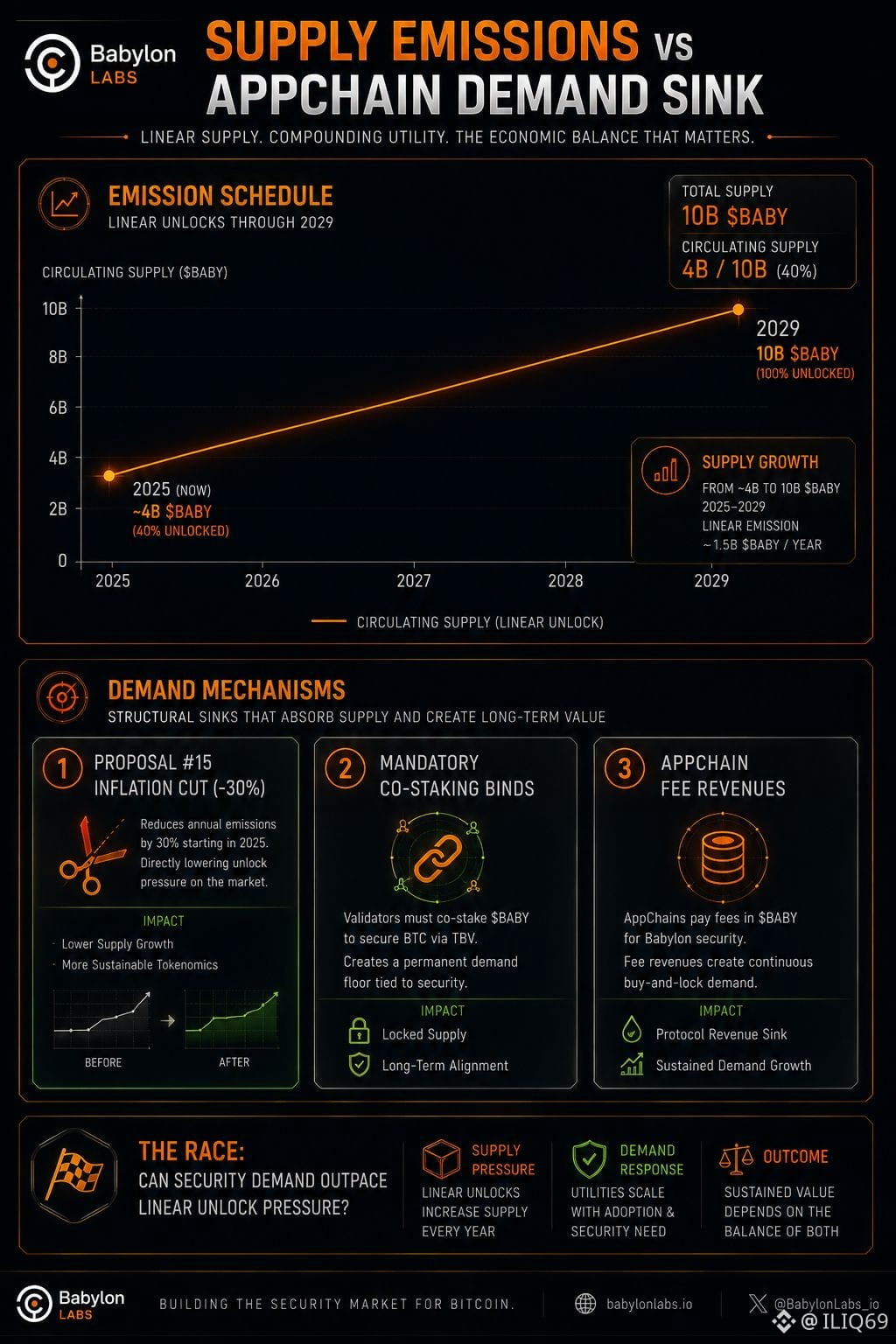
Was mapping out the supply dynamics for $BABY over the next couple of years, and it puts the current price behavior into a much clearer structural context.
Circulating supply is sitting around 4 Billion tokens out of a 10 Billion total cap. With monthly linear unlocks running through 2029, there is an ongoing supply emission that the market has to continuously digest. When you look at the chart down over 80% from its early highs, it is easy to assume something is broken inside the protocol.
But looking at the actual infrastructure tells a different story. The protocol is onboarding consumer chains and expanding its co-staking capabilities. The core tension isn't about whether native BTC staking works—it's about execution velocity. Can new AppChains adopt Babylon security fast enough to create token sink demand that outpaces the monthly unlock schedule?
Right now, BTC stakers are accumulating yield while $BABY holders bear the inflation curve. Proposal #15 already took a step toward fixing this by cutting inflation by 30% and enabling BTC-$BABY co-staking. But until fee revenues from consumer chains scale up significantly, that distance between linear emissions and token demand will remain the main battlefield for price discovery.
@BabylonLabs_io #baby
Circulating supply is sitting around 4 Billion tokens out of a 10 Billion total cap. With monthly linear unlocks running through 2029, there is an ongoing supply emission that the market has to continuously digest. When you look at the chart down over 80% from its early highs, it is easy to assume something is broken inside the protocol.
But looking at the actual infrastructure tells a different story. The protocol is onboarding consumer chains and expanding its co-staking capabilities. The core tension isn't about whether native BTC staking works—it's about execution velocity. Can new AppChains adopt Babylon security fast enough to create token sink demand that outpaces the monthly unlock schedule?
Right now, BTC stakers are accumulating yield while $BABY holders bear the inflation curve. Proposal #15 already took a step toward fixing this by cutting inflation by 30% and enabling BTC-$BABY co-staking. But until fee revenues from consumer chains scale up significantly, that distance between linear emissions and token demand will remain the main battlefield for price discovery.
@BabylonLabs_io #baby
Inicia sesión para explorar más contenidos