
Cryptology_7
2.5k Publicaciones
Cryptology_7
🧠 Quantitative Trader | Binance Sqaure Post Creator | Crypto Insights | Your Go-To Path to Profit
Traders de alta frecuencia
3.4 año(s)
721 Siguiendo
15.1K+ Seguidores
4.8K+ Me gusta
Publicaciones
Todo
Citas
Live
PINNED
Tienes $ETH 0.6 USDT
𝐂𝐫𝐲𝐩𝐭𝐨 𝐫𝐞𝐰𝐚𝐫𝐝𝐬 𝐭𝐡𝐨𝐬𝐞 𝐰𝐡𝐨 𝐬𝐮𝐫𝐯𝐢𝐯𝐞 𝐥𝐨𝐧𝐠 𝐞𝐧𝐨𝐮𝐠𝐡 𝐭𝐨 𝐥𝐞𝐚𝐫𝐧, 𝐚𝐝𝐚𝐩𝐭, 𝐚𝐧𝐝 𝐠𝐫𝐨𝐰. 🤍🌱
$O $ETH
#Ethereum #CryptoPatience
#Cryptology_7
$O $ETH
#Ethereum #CryptoPatience
#Cryptology_7
@橙子Joyce Go


橙子Joyce
·
--
Alcista比特币当前牛市周期的顶峰很可能由美国以外的机构资金和ETF需求驱动。
稳定币流动性的增强和代币化资产基础设施的完善将扩大全球市场参与度。
以韩国为例,指出该国目前缺乏现货比特币ETF,散户投资者无法购买海外上市的现货比特币ETF,大多数公司也无法开设交易账户购买比特币。韩国已开始分阶段向企业开放,金融服务委员会(FSC)的路线图涵盖约3500家上市公司和合格的专业投资者,但金融机构和其他企业仍被排除在外。
Strategy的比特币银行业采用指数评估了25家主要机构,涵盖交易、托管、数字资产产品、融资和企业参与等领域,总体采用率为32%。数据显示,全球代币化分布式资产的价值为386.3亿美元,较30天前增长2.65%。国际清算银行(BIS)指出,稳定币有潜力实现更快捷、可编程的支付,但其目前的设计可能带来与金融完整性、流动性和货币性相关的风险。
美国现货比特币ETF在上市前的两年内累计净流入约570亿美元。
下一阶段将是全球机构化,届时将有更多机构将比特币视为战略资产,而缺乏ETF的国家也将完善其投资渠道。
$BTC
$BNB
稳定币流动性的增强和代币化资产基础设施的完善将扩大全球市场参与度。
以韩国为例,指出该国目前缺乏现货比特币ETF,散户投资者无法购买海外上市的现货比特币ETF,大多数公司也无法开设交易账户购买比特币。韩国已开始分阶段向企业开放,金融服务委员会(FSC)的路线图涵盖约3500家上市公司和合格的专业投资者,但金融机构和其他企业仍被排除在外。
Strategy的比特币银行业采用指数评估了25家主要机构,涵盖交易、托管、数字资产产品、融资和企业参与等领域,总体采用率为32%。数据显示,全球代币化分布式资产的价值为386.3亿美元,较30天前增长2.65%。国际清算银行(BIS)指出,稳定币有潜力实现更快捷、可编程的支付,但其目前的设计可能带来与金融完整性、流动性和货币性相关的风险。
美国现货比特币ETF在上市前的两年内累计净流入约570亿美元。
下一阶段将是全球机构化,届时将有更多机构将比特币视为战略资产,而缺乏ETF的国家也将完善其投资渠道。
$BTC
$BNB
@奋斗1688BNB Go
奋斗1688BNB
·
--
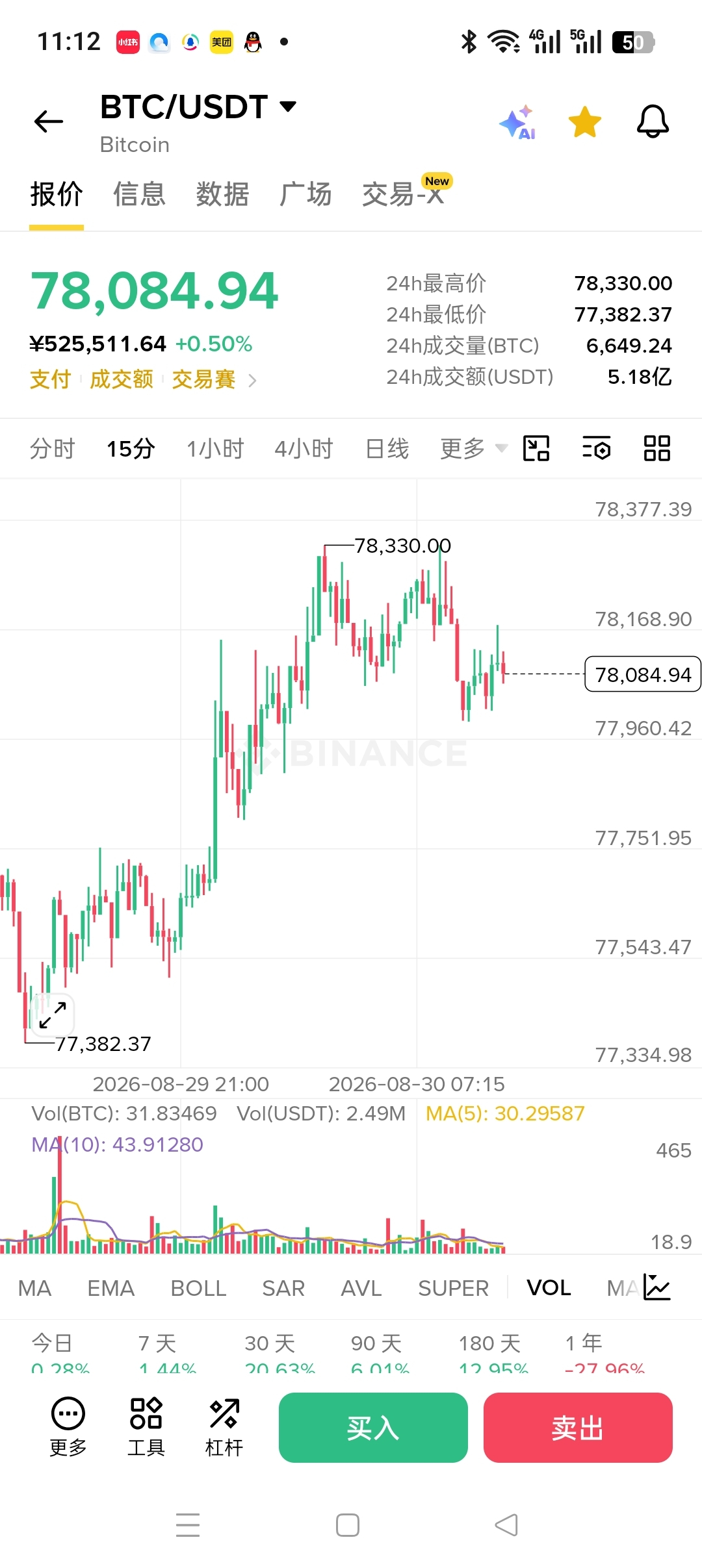
$BTC 说实话,我内心其实比谁都期待BTC能够回调到4万附近。
如果真给到这个位置,我这份判断可以拿出来讲好几年。
但现实摆在眼前,BTC这根大阳线一阳穿三线,市场的整体结构已经彻底发生改变。
我不能墨守成规,还固执地咬死说,后面一定还能回到4万。
会有人质疑:前两天我还在看5万,怎么观点就转变了?
坦白讲,我也会害怕,害怕错过这一轮牛市行情。
思维必须跟着市场更新。
当下正是熊转牛的初期阶段,就好比我们老家说的,少年刚刚开始崭露头角,行情才刚刚苏醒。
依旧还有上车机会,只不过5字头的BTC,我们大概率很难再等到。
6.5W、6.8W依然存在布局窗口,最坏的情况7.0W,这个机会概率至少五成。
一失足成千古恨,再回头牛已远走。
每一轮牛市启动,走法从来不会简单复制上一轮。刻舟求剑,只会误导自己,也误导身边人。
向趋势低头,一点都不丢人。
当然现在直接追多同样不够理性。如果这一轮冲不破8.3W,市场就会迎来回踩,很大概率会在6.5‑7.2W区间震荡3‑5个月。
等到某一天放量突破,才会正式开启冲向10W的牛市主升浪,这是我预判接下来最有可能走出的剧本。
问菩萨为何倒坐,叹众生不肯回头。
ETH会跟随BTC同步震荡,回踩1800‑2000区间,适合现货分批布局。
SOL回落80‑90,可以分批低吸。
PAXG回踩4200‑4300附近可以关注,多家央行持续大额增持,值得留意。
美股标的较多,后续逐一拆解。SPX不再继续下探,反弹行情还会延续。之前110附近布局长线,这个思路依旧成立。
在这里坦诚的说一句:对不起,我之前判断偏空,市场已经熊转牛,牛市才刚刚探出头。
期待大盘后续能够出现回踩,还没有布局现货的家人,可以借着回调分批进场。
我能给到的思考就这么多,希望大家都能把握好周期。
如果真给到这个位置,我这份判断可以拿出来讲好几年。
但现实摆在眼前,BTC这根大阳线一阳穿三线,市场的整体结构已经彻底发生改变。
我不能墨守成规,还固执地咬死说,后面一定还能回到4万。
会有人质疑:前两天我还在看5万,怎么观点就转变了?
坦白讲,我也会害怕,害怕错过这一轮牛市行情。
思维必须跟着市场更新。
当下正是熊转牛的初期阶段,就好比我们老家说的,少年刚刚开始崭露头角,行情才刚刚苏醒。
依旧还有上车机会,只不过5字头的BTC,我们大概率很难再等到。
6.5W、6.8W依然存在布局窗口,最坏的情况7.0W,这个机会概率至少五成。
一失足成千古恨,再回头牛已远走。
每一轮牛市启动,走法从来不会简单复制上一轮。刻舟求剑,只会误导自己,也误导身边人。
向趋势低头,一点都不丢人。
当然现在直接追多同样不够理性。如果这一轮冲不破8.3W,市场就会迎来回踩,很大概率会在6.5‑7.2W区间震荡3‑5个月。
等到某一天放量突破,才会正式开启冲向10W的牛市主升浪,这是我预判接下来最有可能走出的剧本。
问菩萨为何倒坐,叹众生不肯回头。
ETH会跟随BTC同步震荡,回踩1800‑2000区间,适合现货分批布局。
SOL回落80‑90,可以分批低吸。
PAXG回踩4200‑4300附近可以关注,多家央行持续大额增持,值得留意。
美股标的较多,后续逐一拆解。SPX不再继续下探,反弹行情还会延续。之前110附近布局长线,这个思路依旧成立。
在这里坦诚的说一句:对不起,我之前判断偏空,市场已经熊转牛,牛市才刚刚探出头。
期待大盘后续能够出现回踩,还没有布局现货的家人,可以借着回调分批进场。
我能给到的思考就这么多,希望大家都能把握好周期。


@可可529 Go

可可529
·
--
今天(8月31日)是数字银行Revolut正式下架USDT的截止日期。平台将用户剩余USDT持仓自动按当日汇率转换为基础法币。这是欧洲加密合规收紧的又一标志性事件。
与此同时,G20财长与央行行长会议今日在北卡罗来纳州举行,接续上周的杰克逊霍尔会议,全球通胀与货币政策走向值得关注。
此外,NFT抵押借贷平台NFTfi今日正式结束运营并下线前端网站;一站式代币部署平台Printr也于今日停止所有运营。
与此同时,G20财长与央行行长会议今日在北卡罗来纳州举行,接续上周的杰克逊霍尔会议,全球通胀与货币政策走向值得关注。
此外,NFT抵押借贷平台NFTfi今日正式结束运营并下线前端网站;一站式代币部署平台Printr也于今日停止所有运营。



Go

Shaheen 69
·
--
🎁 5 BASIC RULES TO SCORE MORE ON CREATOR PAD!
1️⃣ Stay consistent
2️⃣ Create original content
3️⃣ Follow every campaign requirement
4️⃣ Focus on quality + engagement
5️⃣ Stay active and post on time
Small improvements can bring bigger points and better rewards. 🚀
And today, Shaheen69 is sharing a BNB Red Packet 🎁 with all Binancers!
Good luck, creators! 💛
$BNB
1️⃣ Stay consistent
2️⃣ Create original content
3️⃣ Follow every campaign requirement
4️⃣ Focus on quality + engagement
5️⃣ Stay active and post on time
Small improvements can bring bigger points and better rewards. 🚀
And today, Shaheen69 is sharing a BNB Red Packet 🎁 with all Binancers!
Good luck, creators! 💛
$BNB


·
--
🎙️ Inicia la semana y ya estamos ganando! Operativa y aprendizaje 🔥🤍🔥

Finalizado
03 h 39 m 38 s
2.2k
5
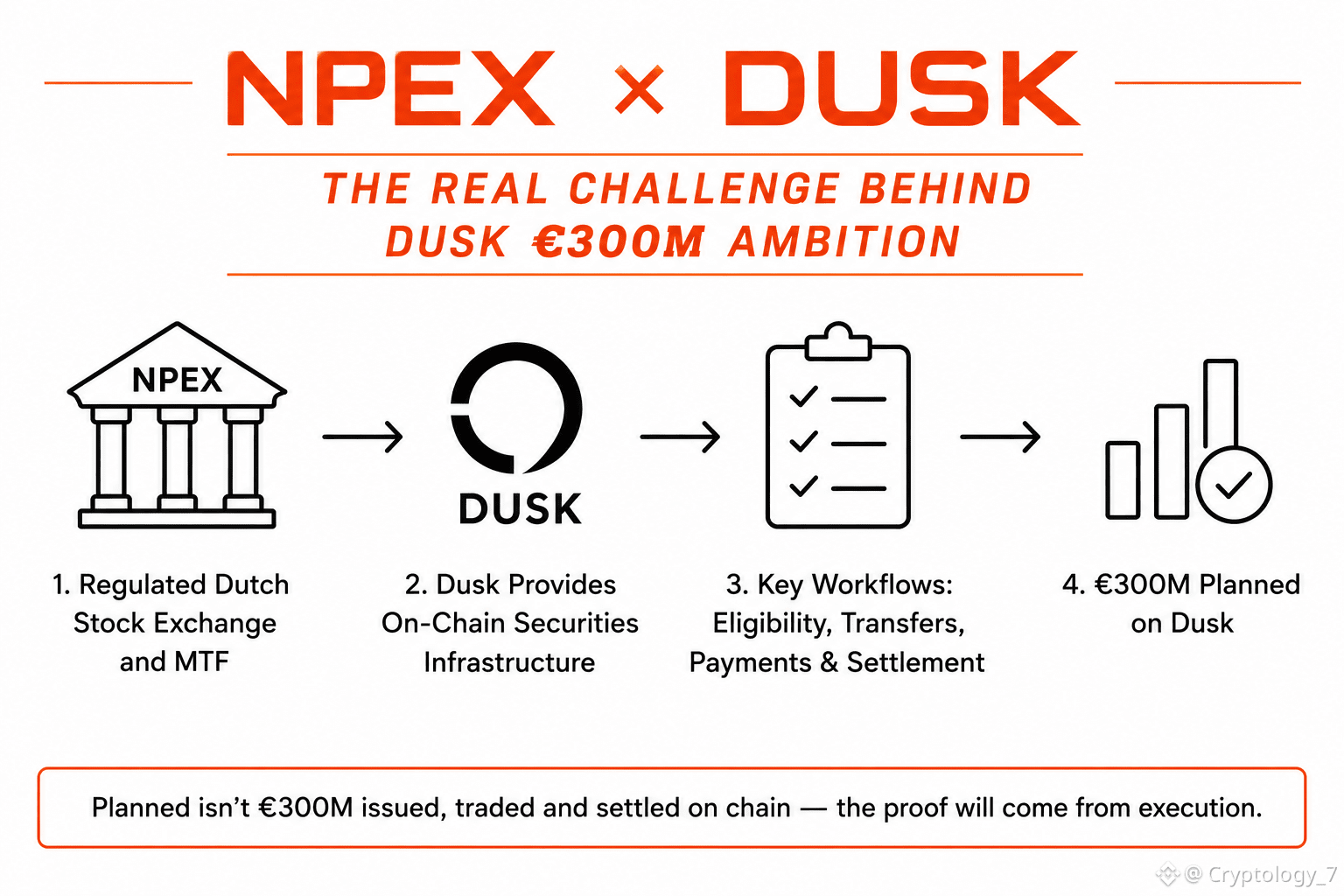
#dusk $DUSK @Dusk A regulated Dutch exchange plans to bring €300M in assets under management on-chain through Dusk.
That sounds impressive.. But the number isn't what caught my attention. The real question is what has to work underneath it.
NPEX operates within regulated market infrastructure, while Dusk aims to bring those same financial workflows on-chain.
Real tokenization requires more than putting an asset on a blockchain. Investor eligibility, wallet binding, controlled transfers, payment coordination and compliant settlement all need to work together.
That’s where Dusk Trade becomes interesting.
If these workflows can operate together, tokenized securities could move closer to functioning like real financial products rather than simple blockchain representations.
But there is still an important distinction.
€300M planned for Dusk is not the same as €300M issued, traded and settled on-chain.
The partnership is promising. The real proof will come from execution.
Can Dusk turn this €300M ambition into functioning regulated on-chain markets?
#dusk
That sounds impressive.. But the number isn't what caught my attention. The real question is what has to work underneath it.
NPEX operates within regulated market infrastructure, while Dusk aims to bring those same financial workflows on-chain.
Real tokenization requires more than putting an asset on a blockchain. Investor eligibility, wallet binding, controlled transfers, payment coordination and compliant settlement all need to work together.
That’s where Dusk Trade becomes interesting.
If these workflows can operate together, tokenized securities could move closer to functioning like real financial products rather than simple blockchain representations.
But there is still an important distinction.
€300M planned for Dusk is not the same as €300M issued, traded and settled on-chain.
The partnership is promising. The real proof will come from execution.
Can Dusk turn this €300M ambition into functioning regulated on-chain markets?
#dusk
Verificado
#dusk $DUSK @Dusk One truth keeps surfacing every time I explore Dusk. Privacy depends on more than just saying “zero knowledge.”
Most blockchain conversations focus on what a proof can hide. Far fewer look at the cryptographic machinery making those proofs practical.
That's where JubJub caught my attention.
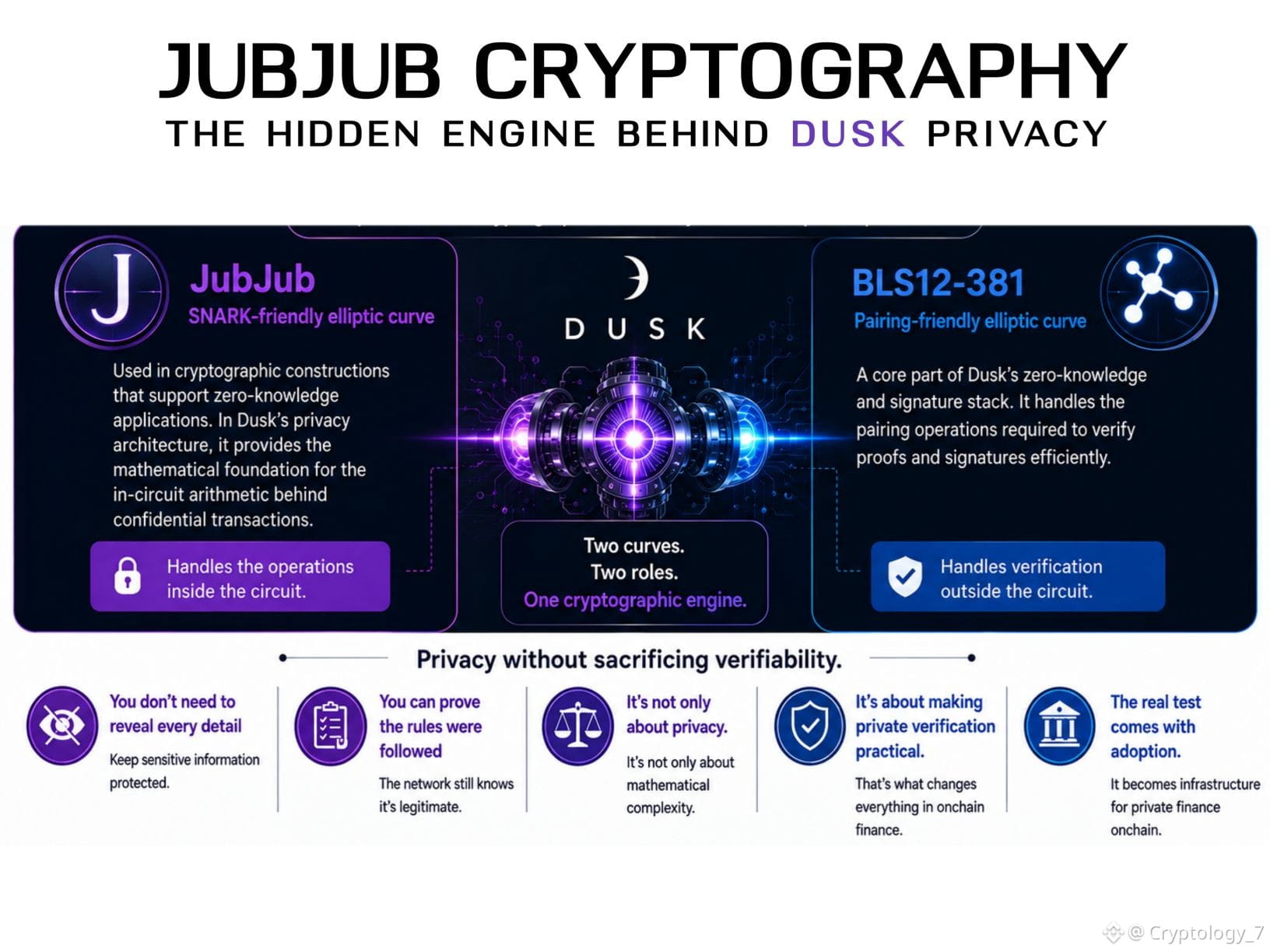
JubJub is a SNARK-friendly elliptic curve used in cryptographic constructions that support zero-knowledge applications.. In Dusk's privacy architecture, it provides an important mathematical foundation for handliNg the operations behind confidential transactions.
JubJub doesn't do this alone. Dusk also relies on BLS12-381 a pairing friendly elliptic curve at the core of its ZK and signature stack. While JubJub handles the in-circuit arithmetic for confidential transactions, BLS12-381 handles the pairing operations required to verify proofs and signatures efficiently. Together, they form two complementary halves of the same cryptographic engine.
That may sound like a small technical detail.
I DON'T THINK IT IS.. The interesting part isn't simply that @Dusk uses advanced cryptography. It's how these different pieces work together to create privacy without sacrificing verifiability.
You don't need to reveal every transaction detail for the network to know something is legitimate.
You can prove the rules were followed while keeping sensitive information protected.
Not “only about privacy.”
Not “only about mathematical complexity.”
It’s about making private verification practical. That changes how I think about privacy in on-chain finance.
But the real test comes with adoption.
The future of institutional finance may not depend on choosing between transparency and privacy, but on cryptography that finally makes both possible. Could JubJub be part of that foundation?
#dusk $DUSK
Most blockchain conversations focus on what a proof can hide. Far fewer look at the cryptographic machinery making those proofs practical.
That's where JubJub caught my attention.
JubJub is a SNARK-friendly elliptic curve used in cryptographic constructions that support zero-knowledge applications.. In Dusk's privacy architecture, it provides an important mathematical foundation for handliNg the operations behind confidential transactions.
JubJub doesn't do this alone. Dusk also relies on BLS12-381 a pairing friendly elliptic curve at the core of its ZK and signature stack. While JubJub handles the in-circuit arithmetic for confidential transactions, BLS12-381 handles the pairing operations required to verify proofs and signatures efficiently. Together, they form two complementary halves of the same cryptographic engine.
That may sound like a small technical detail.
I DON'T THINK IT IS.. The interesting part isn't simply that @Dusk uses advanced cryptography. It's how these different pieces work together to create privacy without sacrificing verifiability.
You don't need to reveal every transaction detail for the network to know something is legitimate.
You can prove the rules were followed while keeping sensitive information protected.
Not “only about privacy.”
Not “only about mathematical complexity.”
It’s about making private verification practical. That changes how I think about privacy in on-chain finance.
But the real test comes with adoption.
The future of institutional finance may not depend on choosing between transparency and privacy, but on cryptography that finally makes both possible. Could JubJub be part of that foundation?
#dusk $DUSK
Verificado
#dusk $DUSK @Dusk
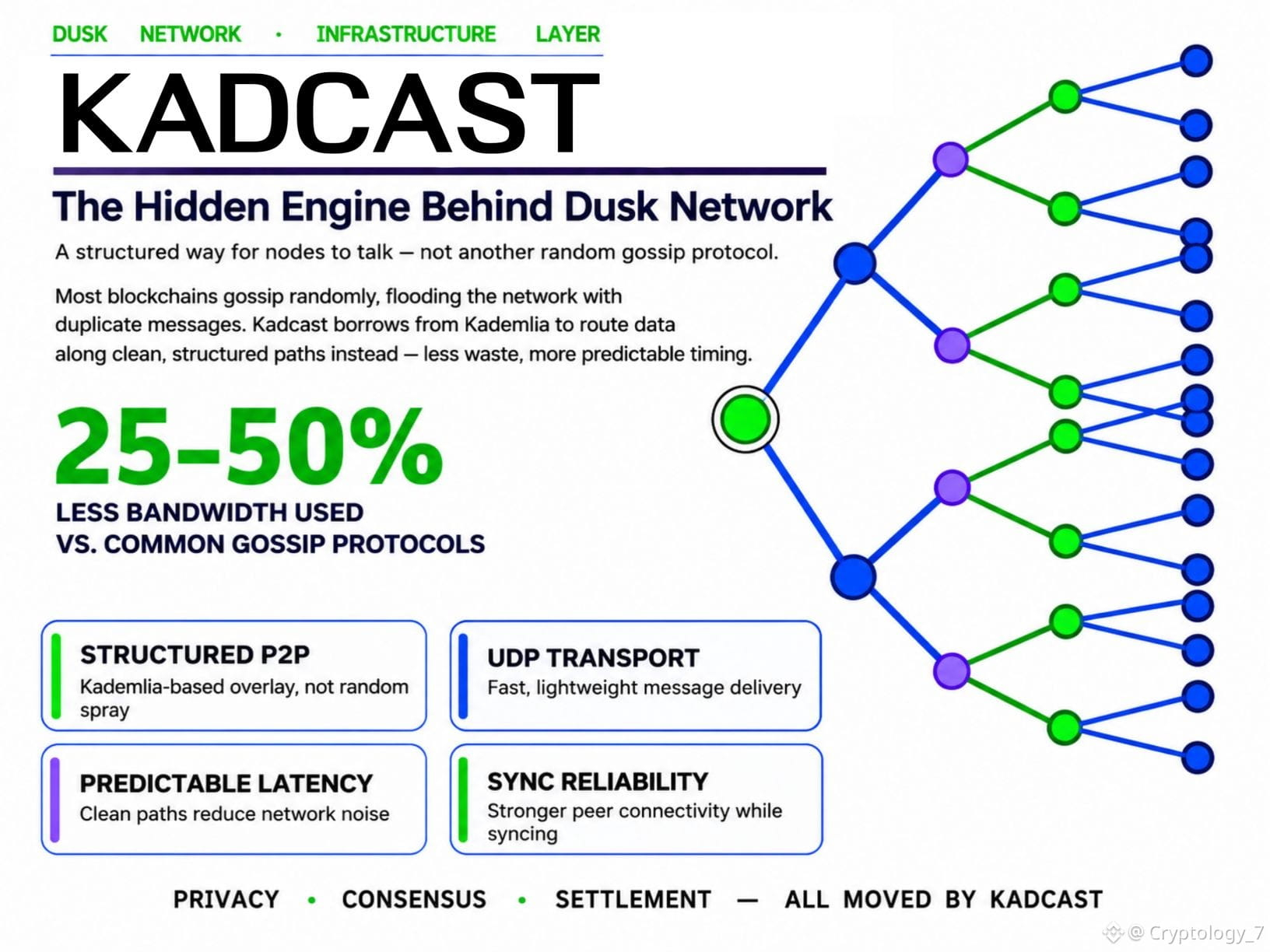
Honestly, I didn’t expect Kadcast to catch my attention. I thought it was just another way for blockchain nodes to gossip. Then I found something that changed how I see Dusk’s network layer differently. Kadcast can cut bandwidth use by 25–50% compared with common protocols.
How do you move information across a growing network without wasting bandwidth or creating unnecessary delays?
In a traditional gossip-style network, the same message can travel thrOugh many peers, creating extra network traffic. Depending on the design, this overhead can be significant.
Kadcast takes a smarter route.
Instead of letting messages spread through an unstructured web of connections, Dusk uses a structured P2P overlay designed to make communication more efficient and latency more predictable.. Kadcast builds on Kademlia, using XOR distance to organize peer routing.
And it gets more interesting.
Kadcast uses UDP, while @Dusk has also worked on things like routing improvements, UDP message size controls, network version checks, message flow tracking, and stronger peer connectivity during synchronization.
To me, this shows that Kadcast isn’t just some technical feature buried in the docs. It’s part of the foundation that keeps Dusk communicating.
Privacy protects sensitive information.
Consensus creates agreement.
Settlement moves value.
Kadcast helps move the information that makes all of it possible.
Sometimes, the technology doing the most important work is the technology users never notice.
If the best network layer is invisible to users, how far can Dusk go as its infrastructure becomes smarter and more efficient?
#dusk
Honestly, I didn’t expect Kadcast to catch my attention. I thought it was just another way for blockchain nodes to gossip. Then I found something that changed how I see Dusk’s network layer differently. Kadcast can cut bandwidth use by 25–50% compared with common protocols.
How do you move information across a growing network without wasting bandwidth or creating unnecessary delays?
In a traditional gossip-style network, the same message can travel thrOugh many peers, creating extra network traffic. Depending on the design, this overhead can be significant.
Kadcast takes a smarter route.
Instead of letting messages spread through an unstructured web of connections, Dusk uses a structured P2P overlay designed to make communication more efficient and latency more predictable.. Kadcast builds on Kademlia, using XOR distance to organize peer routing.
And it gets more interesting.
Kadcast uses UDP, while @Dusk has also worked on things like routing improvements, UDP message size controls, network version checks, message flow tracking, and stronger peer connectivity during synchronization.
To me, this shows that Kadcast isn’t just some technical feature buried in the docs. It’s part of the foundation that keeps Dusk communicating.
Privacy protects sensitive information.
Consensus creates agreement.
Settlement moves value.
Kadcast helps move the information that makes all of it possible.
Sometimes, the technology doing the most important work is the technology users never notice.
If the best network layer is invisible to users, how far can Dusk go as its infrastructure becomes smarter and more efficient?
#dusk
#dusk
I wouldn't feel comfortable knowing every dollar I move could be seen by anyone watching my transactions. No secrets. No privacy. Just you, exposed, one transaction at a time.
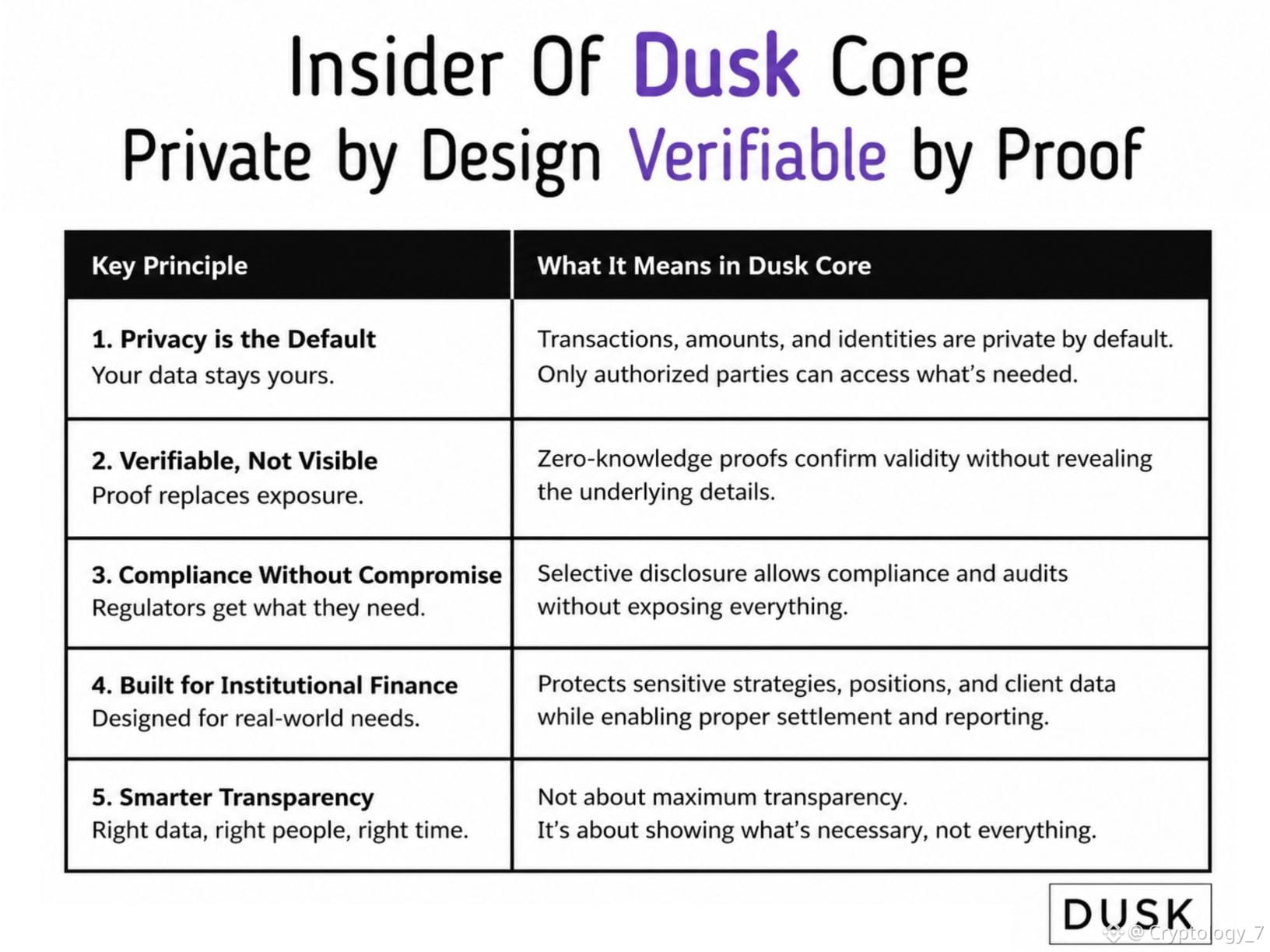
Now imagine a bank, or a fund, or an institution trying to operate that way on a public chain. That's not a business model. That's a liability waiting to happen. And that's exactly the problem @Dusk Core was built to solve.
Here's the thing I didn't get at first while learning about Dusk Core: privacy isn't about hiding everything. It's about choosing what gets shown and to whom, without breaking trust in the system.. BIG DIFFERENCE.
Public blockchains work great for a lot of things NFTs, memes, open communities. But finance isn't like that. Trading desks, asset managers, and regulated institutions can't just broadcast every transaction, balance, and trade to the entire internet. That's not transparency. That's exposure.
So how does $DUSK solve this?
Instead of choosing between "fully open" or "fully hidden," Dusk asks a smarter question: what if a transaction could be private and provably valid at the same time? What if regulators could still verify compliance, without seeing every private detail?
That's the real unlock. Privacy and verification, working together instead of against each other.
Once you see it this way, blockchain infrastructure stops being just "process the transaction." It starts being "process it privately, keep it compliant, and make it settle correctly." That's a much bigger job and honestly, it's the job real financial systems actually need.
So maybe the future of institutional blockchain isn't about showing everything to everyone. It's about showing the right things to the right people. Not Maximum Transparency. Smarter Transparency.
That's DUSK Core. Quietly building the kind of trust crypto was always meant to have.
#dusk
I wouldn't feel comfortable knowing every dollar I move could be seen by anyone watching my transactions. No secrets. No privacy. Just you, exposed, one transaction at a time.
Now imagine a bank, or a fund, or an institution trying to operate that way on a public chain. That's not a business model. That's a liability waiting to happen. And that's exactly the problem @Dusk Core was built to solve.
Here's the thing I didn't get at first while learning about Dusk Core: privacy isn't about hiding everything. It's about choosing what gets shown and to whom, without breaking trust in the system.. BIG DIFFERENCE.
Public blockchains work great for a lot of things NFTs, memes, open communities. But finance isn't like that. Trading desks, asset managers, and regulated institutions can't just broadcast every transaction, balance, and trade to the entire internet. That's not transparency. That's exposure.
So how does $DUSK solve this?
Instead of choosing between "fully open" or "fully hidden," Dusk asks a smarter question: what if a transaction could be private and provably valid at the same time? What if regulators could still verify compliance, without seeing every private detail?
That's the real unlock. Privacy and verification, working together instead of against each other.
Once you see it this way, blockchain infrastructure stops being just "process the transaction." It starts being "process it privately, keep it compliant, and make it settle correctly." That's a much bigger job and honestly, it's the job real financial systems actually need.
So maybe the future of institutional blockchain isn't about showing everything to everyone. It's about showing the right things to the right people. Not Maximum Transparency. Smarter Transparency.
That's DUSK Core. Quietly building the kind of trust crypto was always meant to have.
#dusk
Verificado
#dusk
Bridges usually bore me. Send token, wait, receive token same story every time.
So when I sat down to actually test the DuskEVM bridge on testnet, I wasn't expecting much. But a few steps in, I stopped and started taking notes.
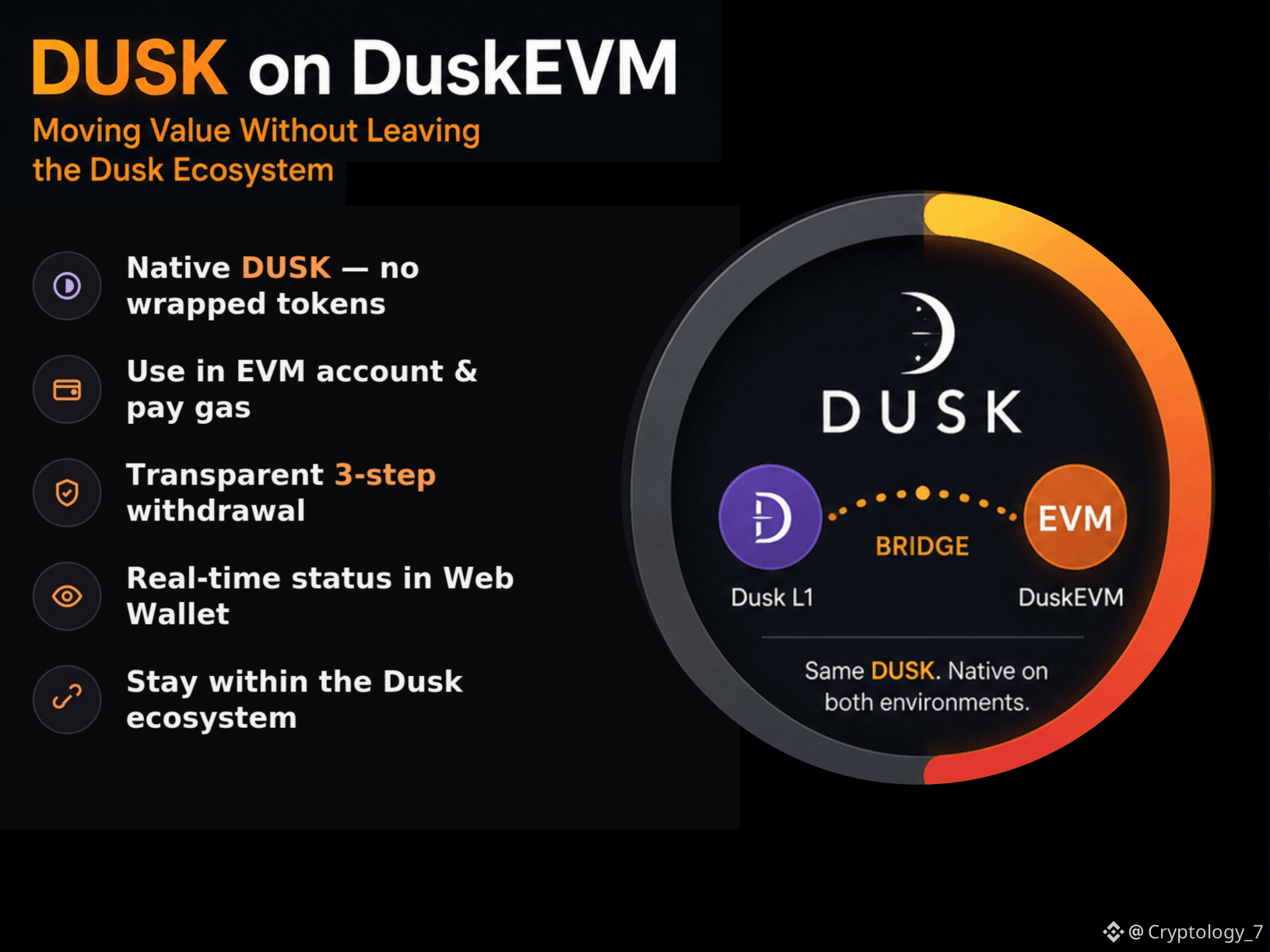
First thing I noticed: when I deposited $DUSK from Dusk L1, it didn't show up on DuskEVM as some wrapped version. It landed as native DUSK same asset, no "wDUSK," nothing new to track. I could use it directly in my connected EVM account, and it even covered gas right away. That alone made the deposit feel less like a bridge and more like Dusk just... existing on both sides. Deposit was simple. Send from Dusk L1, wait a bit, watch it appear on DuskEVM. Nothing to figure out. Withdrawal is where I actually had to pay attention.
I started the withdrawal on DuskEVM, expecting the usual one click and hope experience. Instead, the Web Wallet walked me through three distinct stages:
1. Initiate - I kicked off the withdrawal on DuskEVM.
2. Prove - once the wallet flagged "Ready to prove," I submitted proof on Dusk L1.
3. Finalize - once it flagged "Ready to finalize," DUSK was released back on Dusk L1.
At first I thought, why three steps for one withdrawal? But by the second stage, I got it. At no point was I guessing. The wallet told me exactly where my funds were and what needed to happen next. No black box, no blind trust.
That's the part that stuck with me after testing it. Most bridges hide the complexity to feel simple. DuskEVM just shows it to you, one labeled stage at a time, and lets you watch your funds move through the process in real time.
Would you choose speed that hides the risk, or transparency that lets you trust every step?
#dusk @Dusk
Bridges usually bore me. Send token, wait, receive token same story every time.
So when I sat down to actually test the DuskEVM bridge on testnet, I wasn't expecting much. But a few steps in, I stopped and started taking notes.
First thing I noticed: when I deposited $DUSK from Dusk L1, it didn't show up on DuskEVM as some wrapped version. It landed as native DUSK same asset, no "wDUSK," nothing new to track. I could use it directly in my connected EVM account, and it even covered gas right away. That alone made the deposit feel less like a bridge and more like Dusk just... existing on both sides. Deposit was simple. Send from Dusk L1, wait a bit, watch it appear on DuskEVM. Nothing to figure out. Withdrawal is where I actually had to pay attention.
I started the withdrawal on DuskEVM, expecting the usual one click and hope experience. Instead, the Web Wallet walked me through three distinct stages:
1. Initiate - I kicked off the withdrawal on DuskEVM.
2. Prove - once the wallet flagged "Ready to prove," I submitted proof on Dusk L1.
3. Finalize - once it flagged "Ready to finalize," DUSK was released back on Dusk L1.
At first I thought, why three steps for one withdrawal? But by the second stage, I got it. At no point was I guessing. The wallet told me exactly where my funds were and what needed to happen next. No black box, no blind trust.
That's the part that stuck with me after testing it. Most bridges hide the complexity to feel simple. DuskEVM just shows it to you, one labeled stage at a time, and lets you watch your funds move through the process in real time.
Would you choose speed that hides the risk, or transparency that lets you trust every step?
#dusk @Dusk
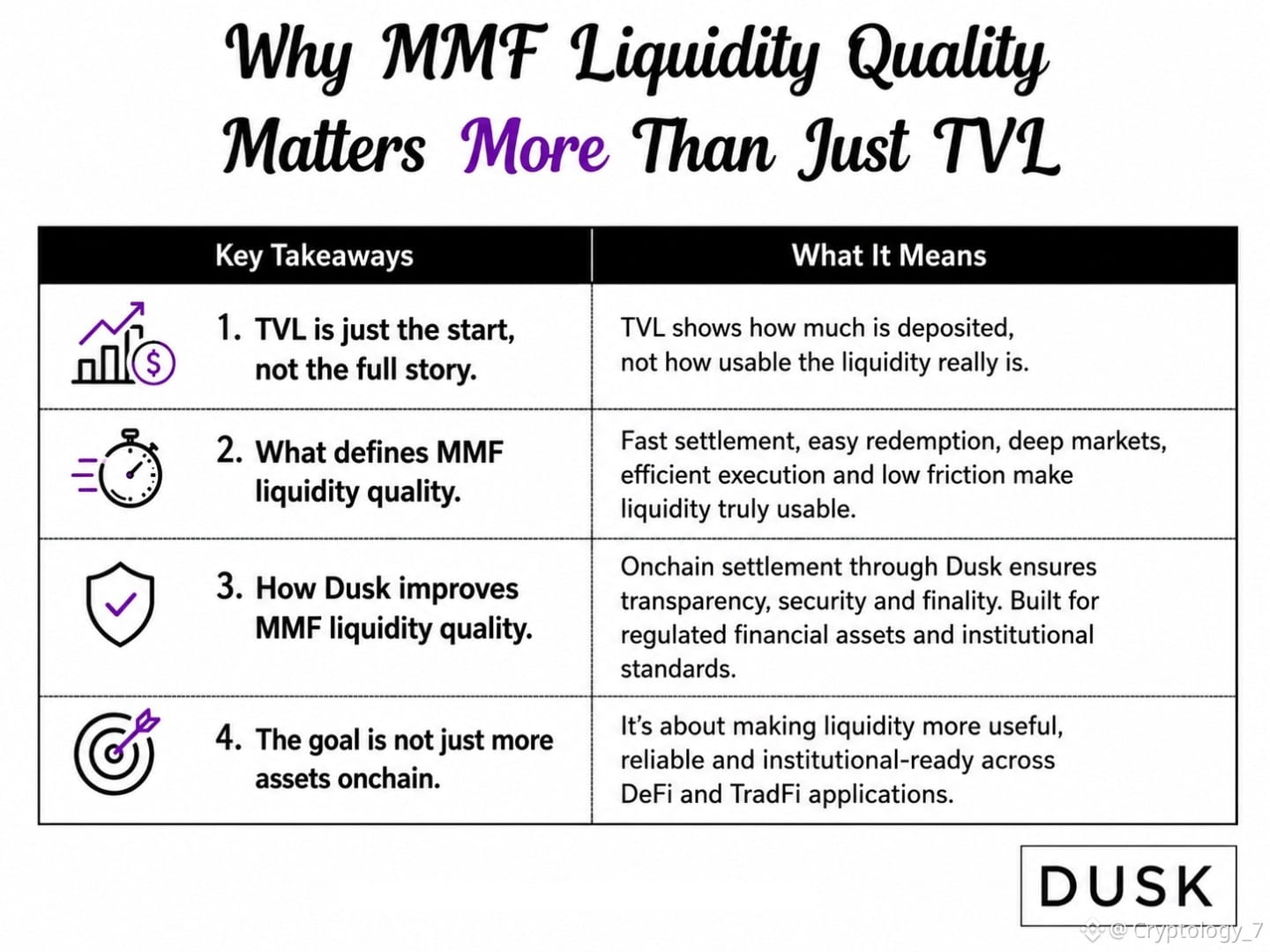
I’ve been thinking about how tokenized money market funds are often judged Dusk by one number: TVL. But I don’t think TVL tells the full story.
For institutional assets, the bigger question is whether that liquidity is actually usable when needed.?
This is where $DUSK gets interesting for me.
With tokenized MMFs on-chain, liquidity quality can depend on more than the amount deposited. Settlement speed, market access, execution and how easily assets can move between financial applications all matter.. A LARGE POOL with poor execution is not the same as deep usable liquidity. DUSK focus on regulated financial assets and on-chain settlement creates an interesting foundation for improving how MMF liquidity can work.
The goal isn’t simply putting more assets on-chain. It’s making those assets more accessible, transferable and useful within a compliant financial ecosystem.
That shift could matter as institutions move from experimenting with tokenization toward actually using it.
The future of tokenized MMFs won’t be defined by TVL alone, but by how efficiently that liquidity can actually be used.
#dusk @Dusk
For institutional assets, the bigger question is whether that liquidity is actually usable when needed.?
This is where $DUSK gets interesting for me.
With tokenized MMFs on-chain, liquidity quality can depend on more than the amount deposited. Settlement speed, market access, execution and how easily assets can move between financial applications all matter.. A LARGE POOL with poor execution is not the same as deep usable liquidity. DUSK focus on regulated financial assets and on-chain settlement creates an interesting foundation for improving how MMF liquidity can work.
The goal isn’t simply putting more assets on-chain. It’s making those assets more accessible, transferable and useful within a compliant financial ecosystem.
That shift could matter as institutions move from experimenting with tokenization toward actually using it.
The future of tokenized MMFs won’t be defined by TVL alone, but by how efficiently that liquidity can actually be used.
#dusk @Dusk
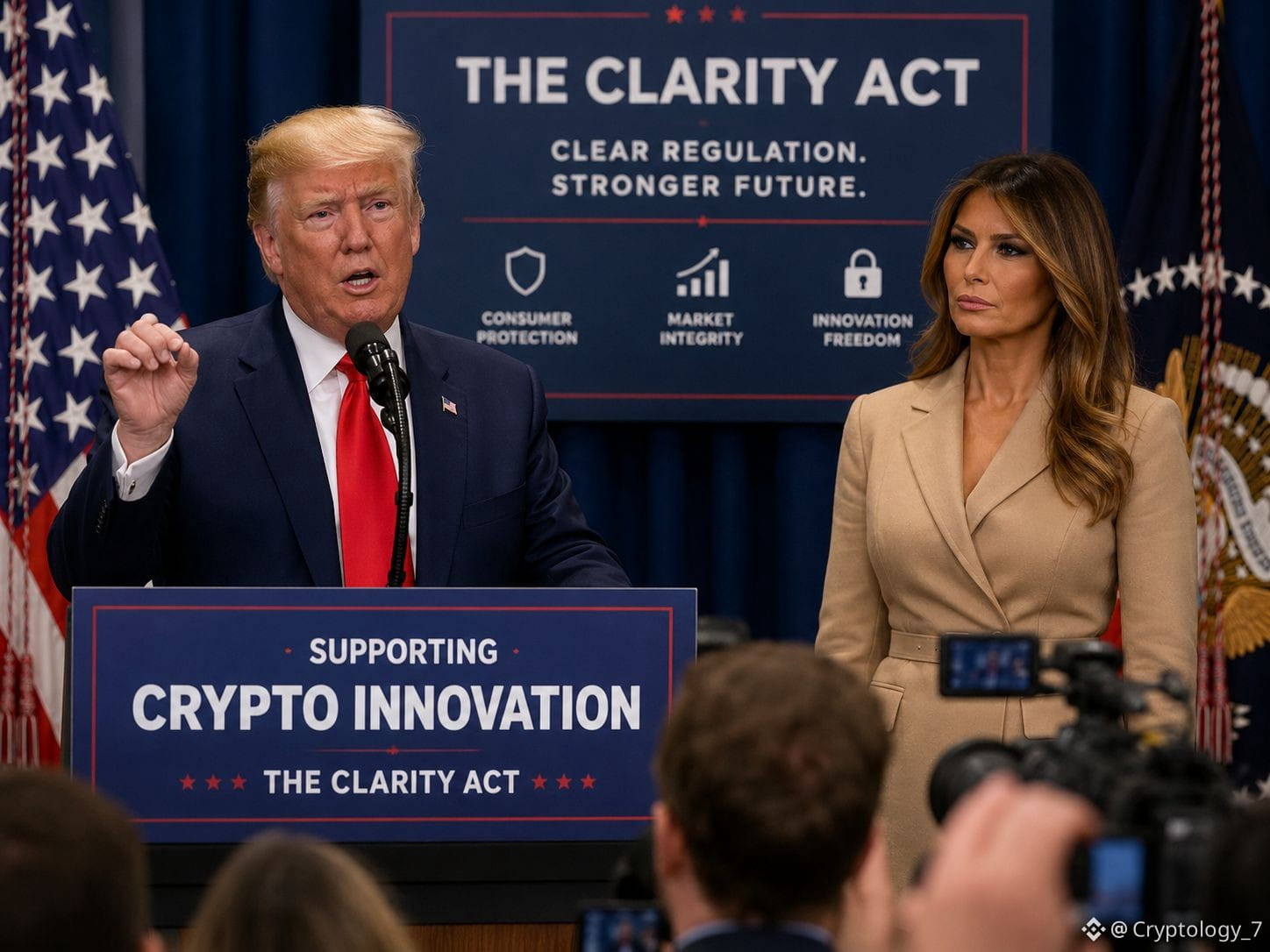
‼️ BIG NEWS FOR CRYPTO 🇺🇸
President Trump is pushing Congress to move forward with the CLARITY Act, a major crypto bill that could bring clearer rules to the U.S. market.
Trump’s meeting with leading crypto CEOs and regulators sends a clear message:
Crypto remains a U.S. priority. 🇺🇸
Clear regulations could attract more institutional capital. 📜
Bitcoin has moved back above $69K ⚡
World Liberty Financial continues expanding its U.S. presence. 🏦
Now all eyes are on the Senate.
Will CLARITY pass?
If it does, 2026 could see one of crypto biggest regulatory catalysts yet. 🚀
$BTC $WLFI $RE
#CryptoRally #CLARITYAct #TRUMP
President Trump is pushing Congress to move forward with the CLARITY Act, a major crypto bill that could bring clearer rules to the U.S. market.
Trump’s meeting with leading crypto CEOs and regulators sends a clear message:
Crypto remains a U.S. priority. 🇺🇸
Clear regulations could attract more institutional capital. 📜
Bitcoin has moved back above $69K ⚡
World Liberty Financial continues expanding its U.S. presence. 🏦
Now all eyes are on the Senate.
Will CLARITY pass?
If it does, 2026 could see one of crypto biggest regulatory catalysts yet. 🚀
$BTC $WLFI $RE
#CryptoRally #CLARITYAct #TRUMP
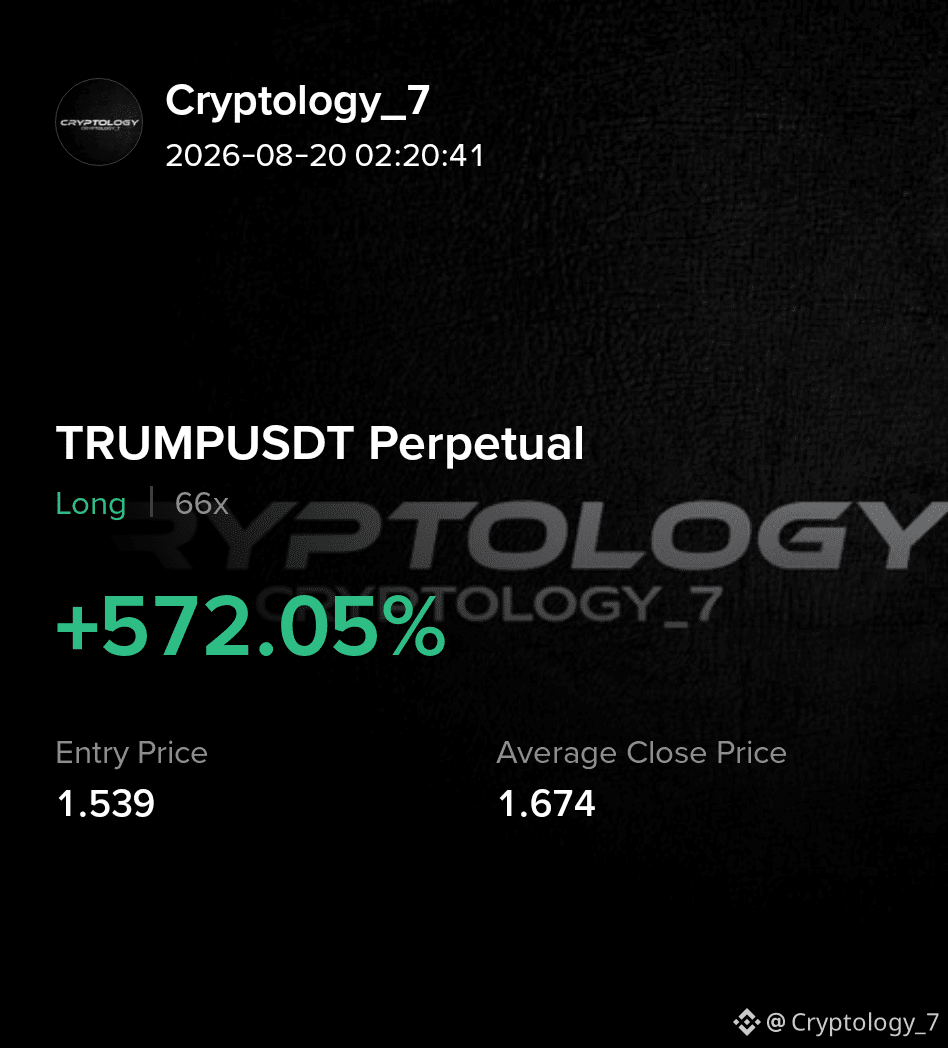
Trump is bullish. The market is bullish. 🚀
When the narrative turns bullish
Momentum can move fast. 🔥
But leverage cuts both ways. Stay disciplined, manage risk, and don’t let greed take control. 📈
Trade $TRUMP $BTC here. 👇
When the narrative turns bullish
Momentum can move fast. 🔥
But leverage cuts both ways. Stay disciplined, manage risk, and don’t let greed take control. 📈
Trade $TRUMP $BTC here. 👇
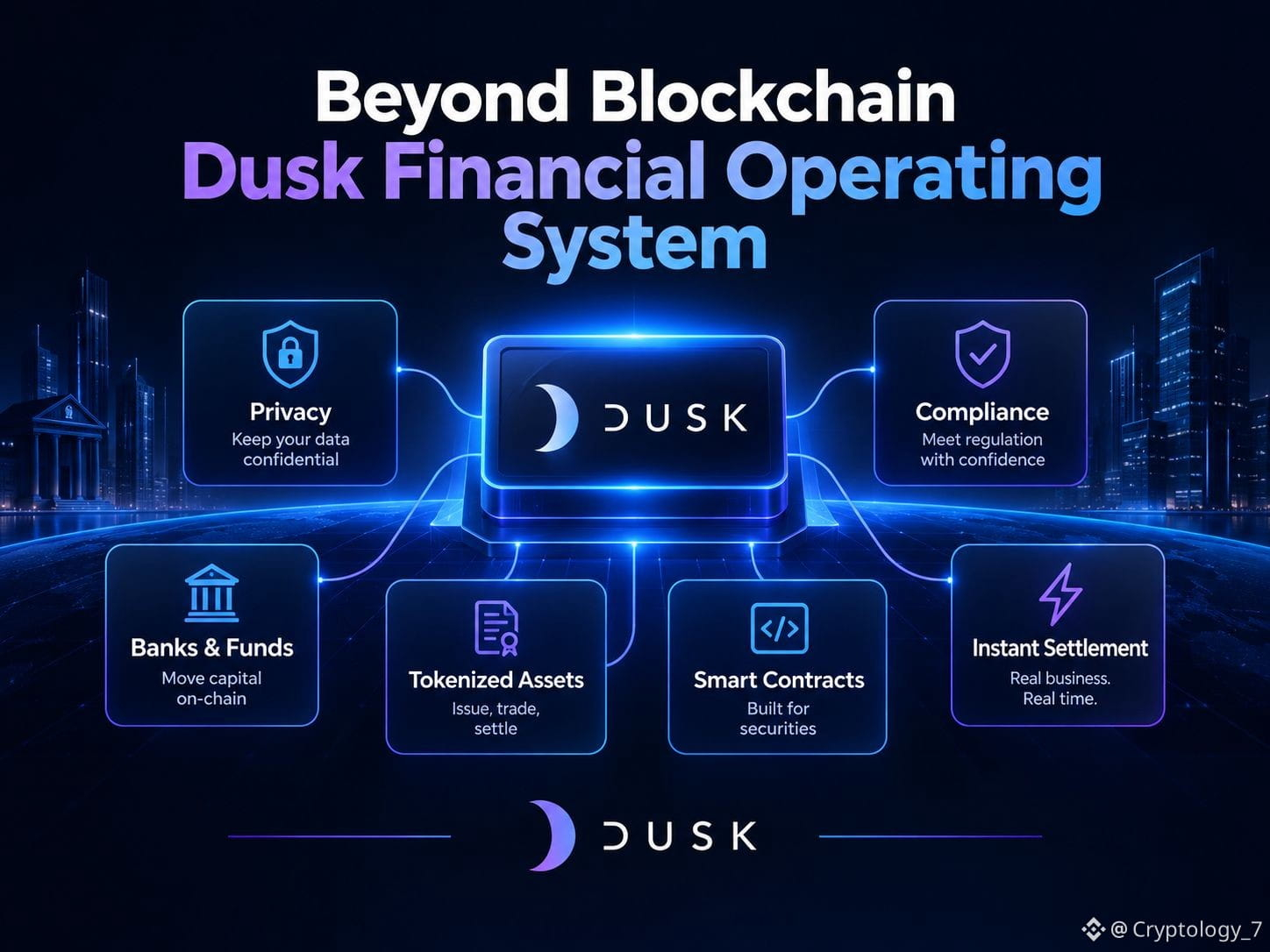
Let me told you one thing. Most blockchains chase speed or hype. Dusk is solving a harder problem: how do banks, funds, and real businesses actually move money and assets on-chain without breaking the law or leaking every trade to competitors?
"Now here's the part nobody really talks about."
Public blockchains are transparent by design great for trust, terrible for finance... No institution wants its trades, salaries, or client lists visible to the world. That's why regulated finance never fully showed up to crypto.
Dusk fixes this at the root. $DUSK combines privacy with built-in compliance, so transactions stay confidential yet still verifiable by regulators when needed. Add smart contracts made for securities, and you get something new infrastructure where a company can issue shares, settle bonds, or run funds directly on-chain legally, privately, and instantly.
That's the real shift. DUSK isn't just another chain competing for headlines. It's quietly becoming the operating system future finance will run on where privacy and compliance finally work together, not against each other.
#dusk @Dusk
"Now here's the part nobody really talks about."
Public blockchains are transparent by design great for trust, terrible for finance... No institution wants its trades, salaries, or client lists visible to the world. That's why regulated finance never fully showed up to crypto.
Dusk fixes this at the root. $DUSK combines privacy with built-in compliance, so transactions stay confidential yet still verifiable by regulators when needed. Add smart contracts made for securities, and you get something new infrastructure where a company can issue shares, settle bonds, or run funds directly on-chain legally, privately, and instantly.
That's the real shift. DUSK isn't just another chain competing for headlines. It's quietly becoming the operating system future finance will run on where privacy and compliance finally work together, not against each other.
#dusk @Dusk
Verificado
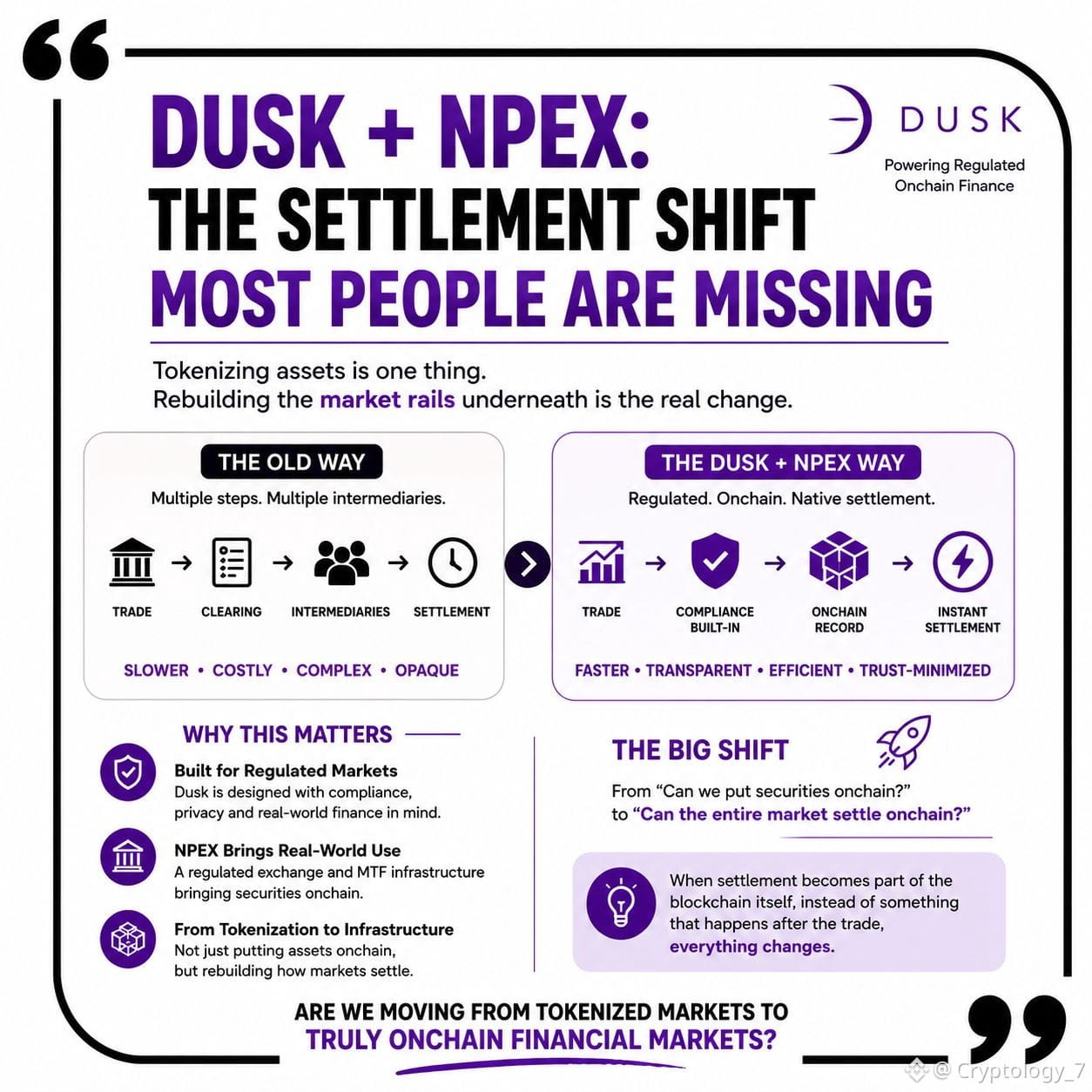
Okay, this is where Dusk got me thinking twice
I was scrolling through @Dusk stuff today and honestly, I almost skipped the NPEX part.
“Another RWA going onchain?”
I thought. But then I looked at it differently.
Putting a security on-chain is cool, sure.
But what about everything that happens after the trade?
That’s where things get interesting... Traditional markets still rely on multiple systems to handle trading, ownership records, compliance, and settlement. So simply putting an asset on a blockchain doesn’t magically fix the whole machine.
Dusk is taking a bigger shot at the problem.
With NPEX, the interesting part isn’t just bringing regulated assets on-chain. It’s the idea of bringing market execution and settlement closer to the same on-chain environment.
And honestly, that feels like a much bigger shift.
Because the real question isn’t:
“Can we tokenize securities?”
We already know we can.
The better question is:
“Can the financial rails underneath those securities become on-chain too?”
That’s the part of $DUSK I’m watching closely.
Maybe RWAs don’t need more tokens.
They need better rails.
#dusk $DUSK
I was scrolling through @Dusk stuff today and honestly, I almost skipped the NPEX part.
“Another RWA going onchain?”
I thought. But then I looked at it differently.
Putting a security on-chain is cool, sure.
But what about everything that happens after the trade?
That’s where things get interesting... Traditional markets still rely on multiple systems to handle trading, ownership records, compliance, and settlement. So simply putting an asset on a blockchain doesn’t magically fix the whole machine.
Dusk is taking a bigger shot at the problem.
With NPEX, the interesting part isn’t just bringing regulated assets on-chain. It’s the idea of bringing market execution and settlement closer to the same on-chain environment.
And honestly, that feels like a much bigger shift.
Because the real question isn’t:
“Can we tokenize securities?”
We already know we can.
The better question is:
“Can the financial rails underneath those securities become on-chain too?”
That’s the part of $DUSK I’m watching closely.
Maybe RWAs don’t need more tokens.
They need better rails.
#dusk $DUSK
Inicia sesión para explorar más contenidos