
Cryptology_7
2.5k Publicaciones
Cryptology_7
🧠 Quantitative Trader | Binance Sqaure Post Creator | Crypto Insights | Your Go-To Path to Profit
Traders de alta frecuencia
3.4 año(s)
706 Siguiendo
14.3K+ Seguidores
4.7K+ Me gusta
Publicaciones
Todo
Citas
Live
PINNED
Tienes $ETH 0.6 USDT
𝐂𝐫𝐲𝐩𝐭𝐨 𝐫𝐞𝐰𝐚𝐫𝐝𝐬 𝐭𝐡𝐨𝐬𝐞 𝐰𝐡𝐨 𝐬𝐮𝐫𝐯𝐢𝐯𝐞 𝐥𝐨𝐧𝐠 𝐞𝐧𝐨𝐮𝐠𝐡 𝐭𝐨 𝐥𝐞𝐚𝐫𝐧, 𝐚𝐝𝐚𝐩𝐭, 𝐚𝐧𝐝 𝐠𝐫𝐨𝐰. 🤍🌱
$O $ETH
#Ethereum #CryptoPatience
#Cryptology_7
$O $ETH
#Ethereum #CryptoPatience
#Cryptology_7
Go
Bilverse
·
--
🧧 BIG SOL IS WAITING INSIDE THESE RED PACKETS… 🧧
The Solana Red Packets are ready with BIG Rewards sitting inside! 💜💚
💰 Want to claim yours?
👇 3 SIMPLE STEPS:
1️⃣ FOLLOW my account
2️⃣ ❤️ LIKE this post
3️⃣ 💬 COMMENT “294” below to claim 🎁
Don’t wait until the Red Packets are gone. 👀
SOL community, make some noise! ⚡️
Click here to DOUBLE your Rewards! 🧧🚀
🌌 SOL TO THE MOON 🚀
#SOL #RedPacketMission #Bilverse #CryptoCommunity
The Solana Red Packets are ready with BIG Rewards sitting inside! 💜💚
💰 Want to claim yours?
👇 3 SIMPLE STEPS:
1️⃣ FOLLOW my account
2️⃣ ❤️ LIKE this post
3️⃣ 💬 COMMENT “294” below to claim 🎁
Don’t wait until the Red Packets are gone. 👀
SOL community, make some noise! ⚡️
Click here to DOUBLE your Rewards! 🧧🚀
🌌 SOL TO THE MOON 🚀
#SOL #RedPacketMission #Bilverse #CryptoCommunity

Go

BTC 222
·
--
Kalshi takes legal blow in court ruling confirming state powers over prediction markets
This latest U.S. appeals court ruling sets up a rift between federal courts on event contracts, suggesting the U.S. Supreme Court may need to settle the matter.
$BTC
This latest U.S. appeals court ruling sets up a rift between federal courts on event contracts, suggesting the U.S. Supreme Court may need to settle the matter.
$BTC
Go
Suadagar Ali
·
--
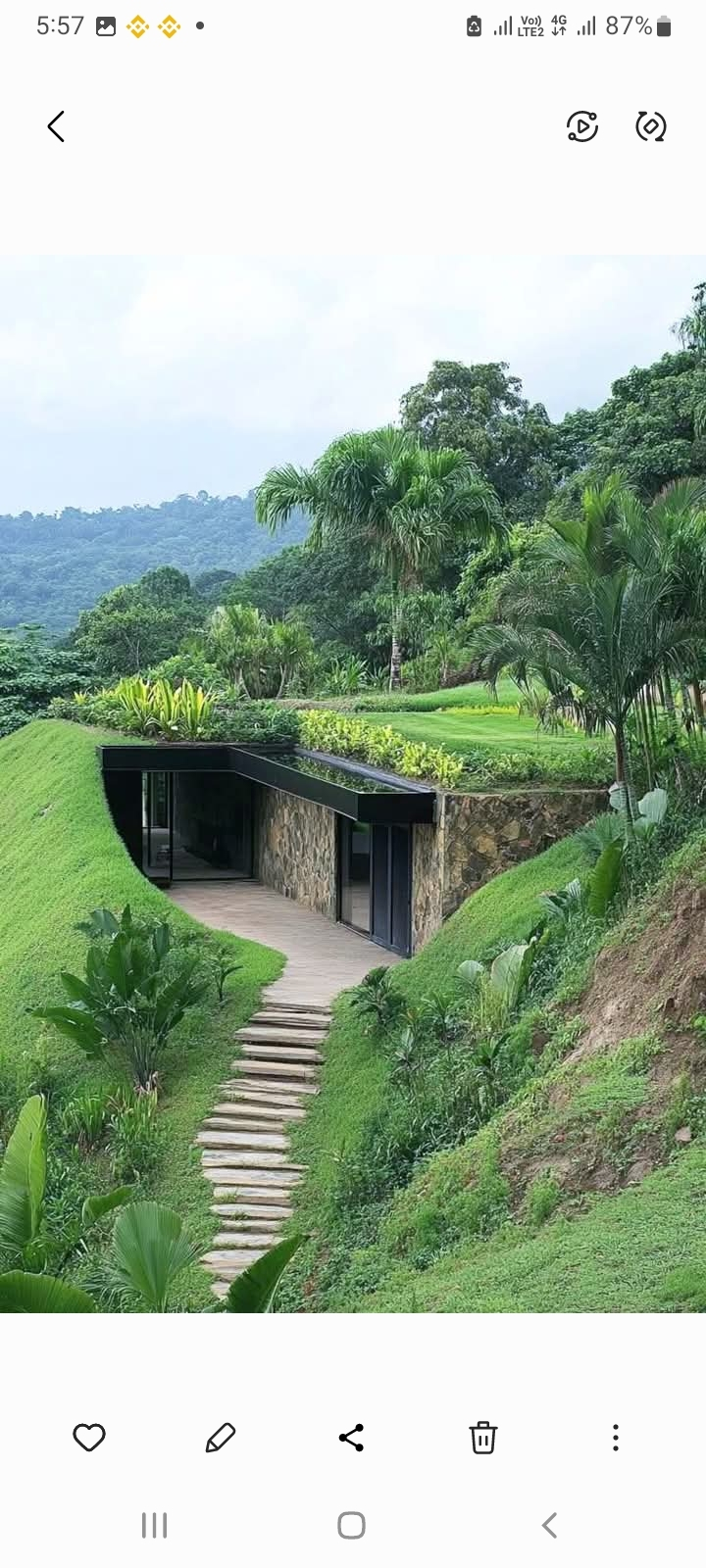
#BNB $
follow ☘️🥀🌹like
comments repost
follow ☘️🥀🌹like
comments repost
Go


DK短线复刻
·
--
关注回复领取红包🎁🎁

Go 🎁
Muzamil Abbas⁷⁵ 穆扎米尔_阿巴斯
·
--
Alcista🎁 $SHIB GIVEAWAY WORTH $100 🎁
I’m giving away SHIB Gift Boxes to 3,000 lucky people! 🐕🔥
To participate:
❤️ Like this post ✅
🔁 Repost this post ✅
💬 Comment “1” below ✅
🎁 Claim your Gift Box ✅
Good luck everyone🚀✨
#SHIB #Giveaway #Binance #CryptoGiveaway
Go

Prof Denial
·
--
I’m giving a $DOGE 🐶 reward 🎁 to our community as a BIG gift of appreciation.
💛claim it before the reward is gone.💛
💛 Don’t wait and miss your chance! 💛
💛claim it before the reward is gone.💛
💛 Don’t wait and miss your chance! 💛


Go
Baoluo币商资本
·
--
#中国批准新增684亿美元QDII额度
#沃什称通胀是美联储首要关注
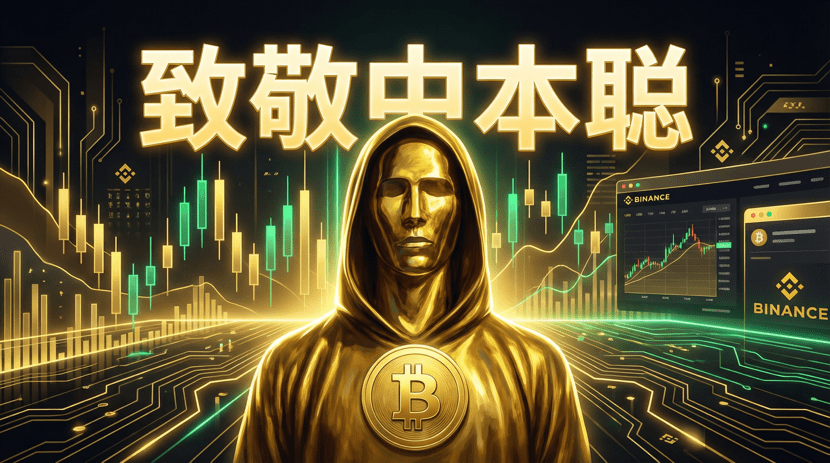
动荡不安的世界格局,市场也在摇晃,这个时代的突变也会引领趋势的改变#Aİ #物理AI 已经破解了最初的市场价格和应用。$BTC
#沃什称通胀是美联储首要关注
动荡不安的世界格局,市场也在摇晃,这个时代的突变也会引领趋势的改变#Aİ #物理AI 已经破解了最初的市场价格和应用。$BTC
@阿波罗1111 Go

阿波罗1111
·
--
不是所有机遇都需要喧哗,
真正的价值自有声量。
Not every opportunity needs noise;
true value carries its own voice.
真正的价值自有声量。
Not every opportunity needs noise;
true value carries its own voice.
·
--
🎙️ $BNB TesT FliGhT 😃👻 GoOD NiGhT AnD GoOD WeeKeND ✨🌼🥰👻💓
Finalizado
05 h 59 m 59 s
3.2k
5
@周周1688 Go

周周1688
·
--
今晚22点,全世界573万人都在等美联储开口,但我劝你别熬夜
热搜第一,浏览573万,1192个帖子在刷屏。 今晚北京时间22点,杰克逊霍尔,美联储主席沃什首次主旨演讲。 阵仗搞得跟超级碗决赛一样,好像他一开口,全球资产就要重新洗牌。
但我劝你先冷静三秒,这大概率是2026年最盛大的一场"形式主义"。
说句得罪人的实话:杰克逊霍尔这地方,历史上90%的演讲都是"正确废话"。 "我们将依赖数据""政策保持灵活性""相机抉择"——翻译成人话就是:我什么都没说,你们别瞎猜。 美联储主席是全球最会说话的人,他们的天赋就是念完40分钟,你愣是提炼不出一个有效信息。
而且你想想: 核心PCE还黏在2%上方,初请失业金20.3万稳得很,油价刚重回90美元。 就这组合,沃什能说什么?说降息?他疯了。说加息?他也没疯。 所以今晚的答案早就写在数据里了:维持现状,继续等。
真正该盯的,根本不在今晚。 一是9月的点阵图——那才是美联储真正亮底牌的地方; 二是下周五的CPI——数据比嘴炮值钱一百倍。 今晚这个演讲,说白了就是给全市场一个"仪式感",让多头空头都有借口波动一下。
你要是真关心自己的仓位,听我一句: 别熬夜等一个大概率什么都不会说的男人,把精力留给9月的点阵图和CPI。 短线那点波动,不是信号,是噪音。
#1688家族family
热搜第一,浏览573万,1192个帖子在刷屏。 今晚北京时间22点,杰克逊霍尔,美联储主席沃什首次主旨演讲。 阵仗搞得跟超级碗决赛一样,好像他一开口,全球资产就要重新洗牌。
但我劝你先冷静三秒,这大概率是2026年最盛大的一场"形式主义"。
说句得罪人的实话:杰克逊霍尔这地方,历史上90%的演讲都是"正确废话"。 "我们将依赖数据""政策保持灵活性""相机抉择"——翻译成人话就是:我什么都没说,你们别瞎猜。 美联储主席是全球最会说话的人,他们的天赋就是念完40分钟,你愣是提炼不出一个有效信息。
而且你想想: 核心PCE还黏在2%上方,初请失业金20.3万稳得很,油价刚重回90美元。 就这组合,沃什能说什么?说降息?他疯了。说加息?他也没疯。 所以今晚的答案早就写在数据里了:维持现状,继续等。
真正该盯的,根本不在今晚。 一是9月的点阵图——那才是美联储真正亮底牌的地方; 二是下周五的CPI——数据比嘴炮值钱一百倍。 今晚这个演讲,说白了就是给全市场一个"仪式感",让多头空头都有借口波动一下。
你要是真关心自己的仓位,听我一句: 别熬夜等一个大概率什么都不会说的男人,把精力留给9月的点阵图和CPI。 短线那点波动,不是信号,是噪音。
#1688家族family

Go
静心1688
·
--
💥 合抱之木,生于毫末;九层之台,起于累土;千里之行,始于足下。
大事起于微小积累,慢慢来、持续做
#美元创近四周最大涨幅 #中国反对美国拟加征7.5%关税
大事起于微小积累,慢慢来、持续做
#美元创近四周最大涨幅 #中国反对美国拟加征7.5%关税

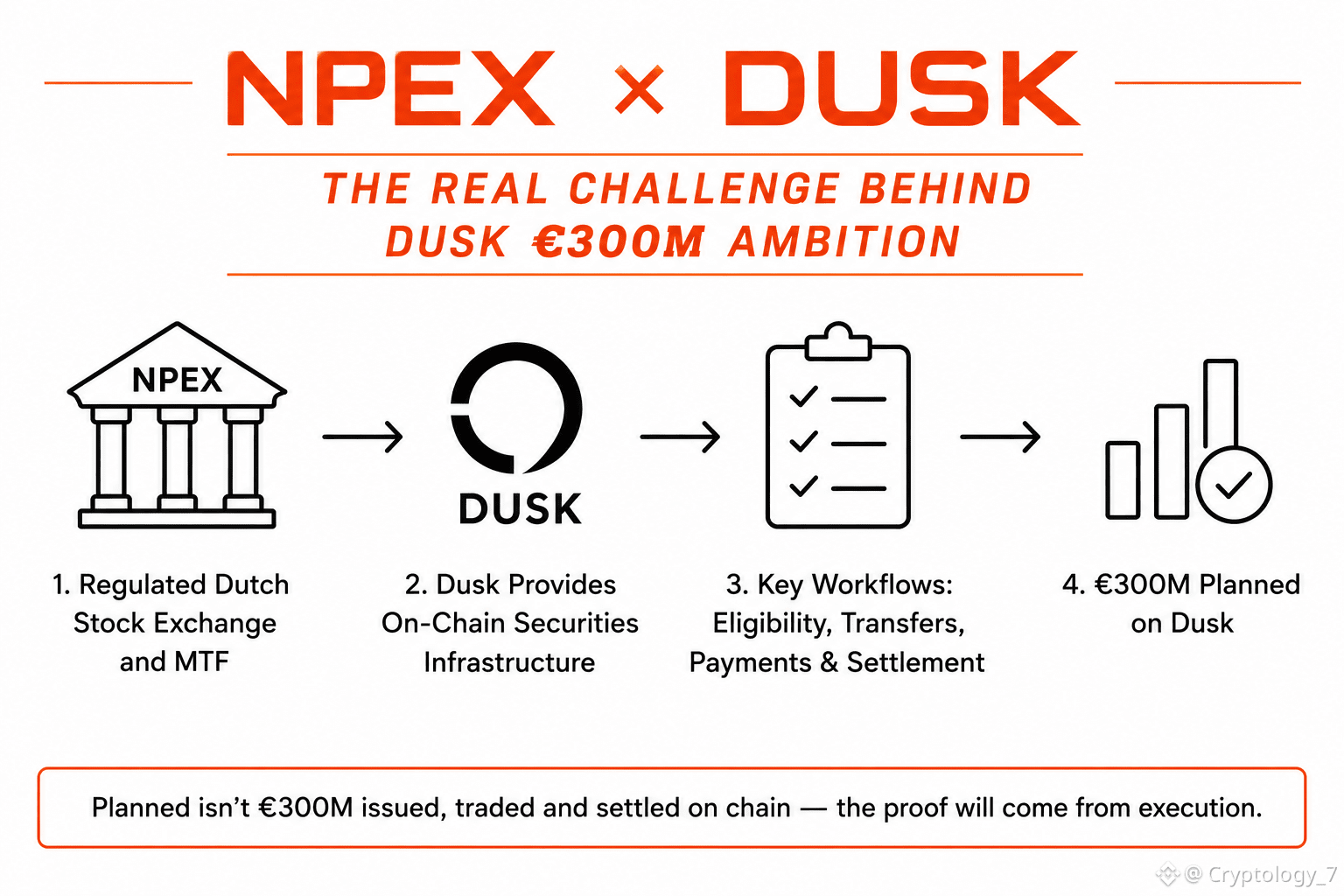
#dusk $DUSK @Dusk A regulated Dutch exchange plans to bring €300M in assets under management on-chain through Dusk.
That sounds impressive.. But the number isn't what caught my attention. The real question is what has to work underneath it.
NPEX operates within regulated market infrastructure, while Dusk aims to bring those same financial workflows on-chain.
Real tokenization requires more than putting an asset on a blockchain. Investor eligibility, wallet binding, controlled transfers, payment coordination and compliant settlement all need to work together.
That’s where Dusk Trade becomes interesting.
If these workflows can operate together, tokenized securities could move closer to functioning like real financial products rather than simple blockchain representations.
But there is still an important distinction.
€300M planned for Dusk is not the same as €300M issued, traded and settled on-chain.
The partnership is promising. The real proof will come from execution.
Can Dusk turn this €300M ambition into functioning regulated on-chain markets?
#dusk
That sounds impressive.. But the number isn't what caught my attention. The real question is what has to work underneath it.
NPEX operates within regulated market infrastructure, while Dusk aims to bring those same financial workflows on-chain.
Real tokenization requires more than putting an asset on a blockchain. Investor eligibility, wallet binding, controlled transfers, payment coordination and compliant settlement all need to work together.
That’s where Dusk Trade becomes interesting.
If these workflows can operate together, tokenized securities could move closer to functioning like real financial products rather than simple blockchain representations.
But there is still an important distinction.
€300M planned for Dusk is not the same as €300M issued, traded and settled on-chain.
The partnership is promising. The real proof will come from execution.
Can Dusk turn this €300M ambition into functioning regulated on-chain markets?
#dusk
Verificado
#dusk $DUSK @Dusk One truth keeps surfacing every time I explore Dusk. Privacy depends on more than just saying “zero knowledge.”
Most blockchain conversations focus on what a proof can hide. Far fewer look at the cryptographic machinery making those proofs practical.
That's where JubJub caught my attention.
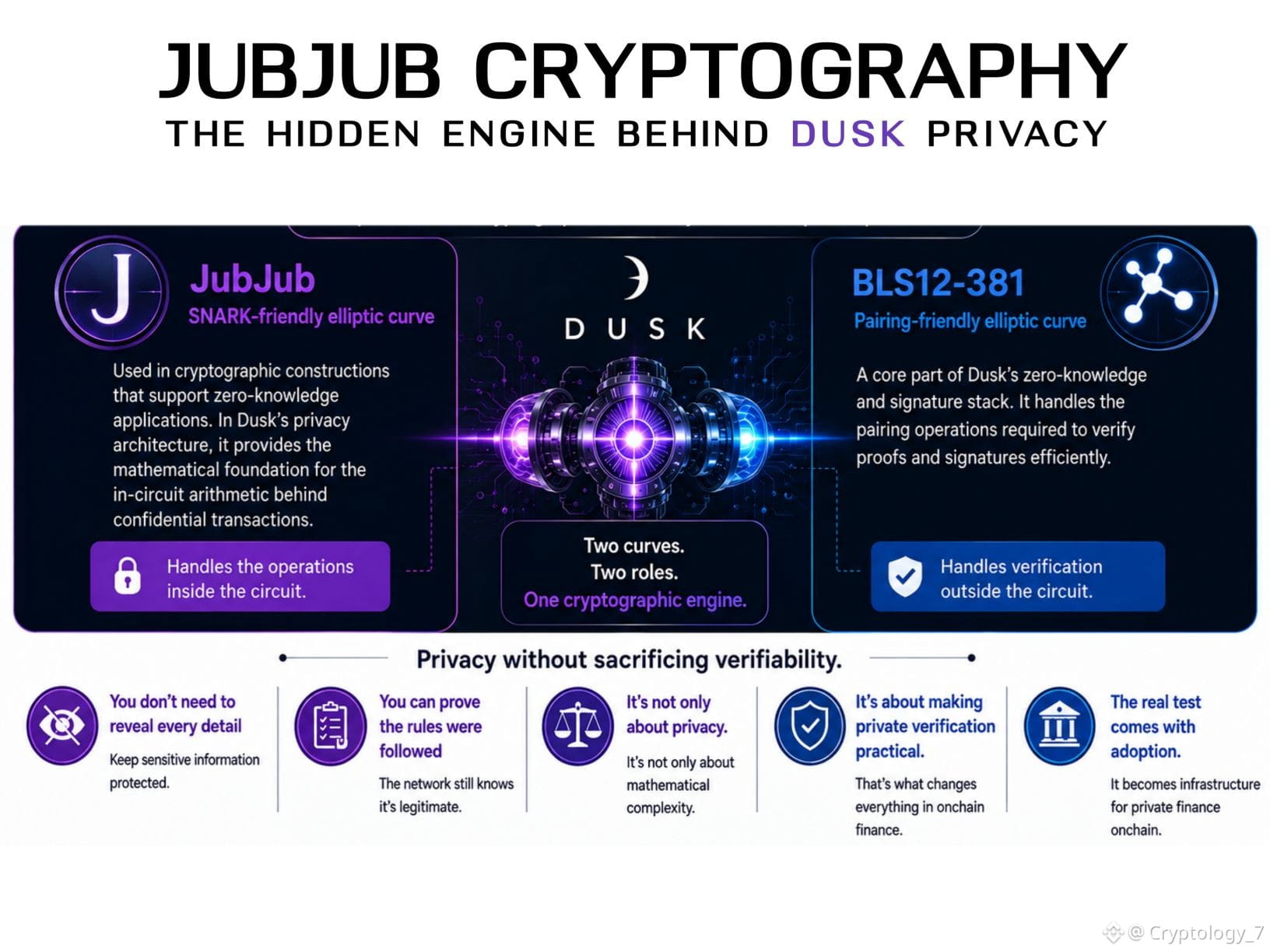
JubJub is a SNARK-friendly elliptic curve used in cryptographic constructions that support zero-knowledge applications.. In Dusk's privacy architecture, it provides an important mathematical foundation for handliNg the operations behind confidential transactions.
JubJub doesn't do this alone. Dusk also relies on BLS12-381 a pairing friendly elliptic curve at the core of its ZK and signature stack. While JubJub handles the in-circuit arithmetic for confidential transactions, BLS12-381 handles the pairing operations required to verify proofs and signatures efficiently. Together, they form two complementary halves of the same cryptographic engine.
That may sound like a small technical detail.
I DON'T THINK IT IS.. The interesting part isn't simply that @Dusk uses advanced cryptography. It's how these different pieces work together to create privacy without sacrificing verifiability.
You don't need to reveal every transaction detail for the network to know something is legitimate.
You can prove the rules were followed while keeping sensitive information protected.
Not “only about privacy.”
Not “only about mathematical complexity.”
It’s about making private verification practical. That changes how I think about privacy in on-chain finance.
But the real test comes with adoption.
The future of institutional finance may not depend on choosing between transparency and privacy, but on cryptography that finally makes both possible. Could JubJub be part of that foundation?
#dusk $DUSK
Most blockchain conversations focus on what a proof can hide. Far fewer look at the cryptographic machinery making those proofs practical.
That's where JubJub caught my attention.
JubJub is a SNARK-friendly elliptic curve used in cryptographic constructions that support zero-knowledge applications.. In Dusk's privacy architecture, it provides an important mathematical foundation for handliNg the operations behind confidential transactions.
JubJub doesn't do this alone. Dusk also relies on BLS12-381 a pairing friendly elliptic curve at the core of its ZK and signature stack. While JubJub handles the in-circuit arithmetic for confidential transactions, BLS12-381 handles the pairing operations required to verify proofs and signatures efficiently. Together, they form two complementary halves of the same cryptographic engine.
That may sound like a small technical detail.
I DON'T THINK IT IS.. The interesting part isn't simply that @Dusk uses advanced cryptography. It's how these different pieces work together to create privacy without sacrificing verifiability.
You don't need to reveal every transaction detail for the network to know something is legitimate.
You can prove the rules were followed while keeping sensitive information protected.
Not “only about privacy.”
Not “only about mathematical complexity.”
It’s about making private verification practical. That changes how I think about privacy in on-chain finance.
But the real test comes with adoption.
The future of institutional finance may not depend on choosing between transparency and privacy, but on cryptography that finally makes both possible. Could JubJub be part of that foundation?
#dusk $DUSK
Verificado
#dusk $DUSK @Dusk
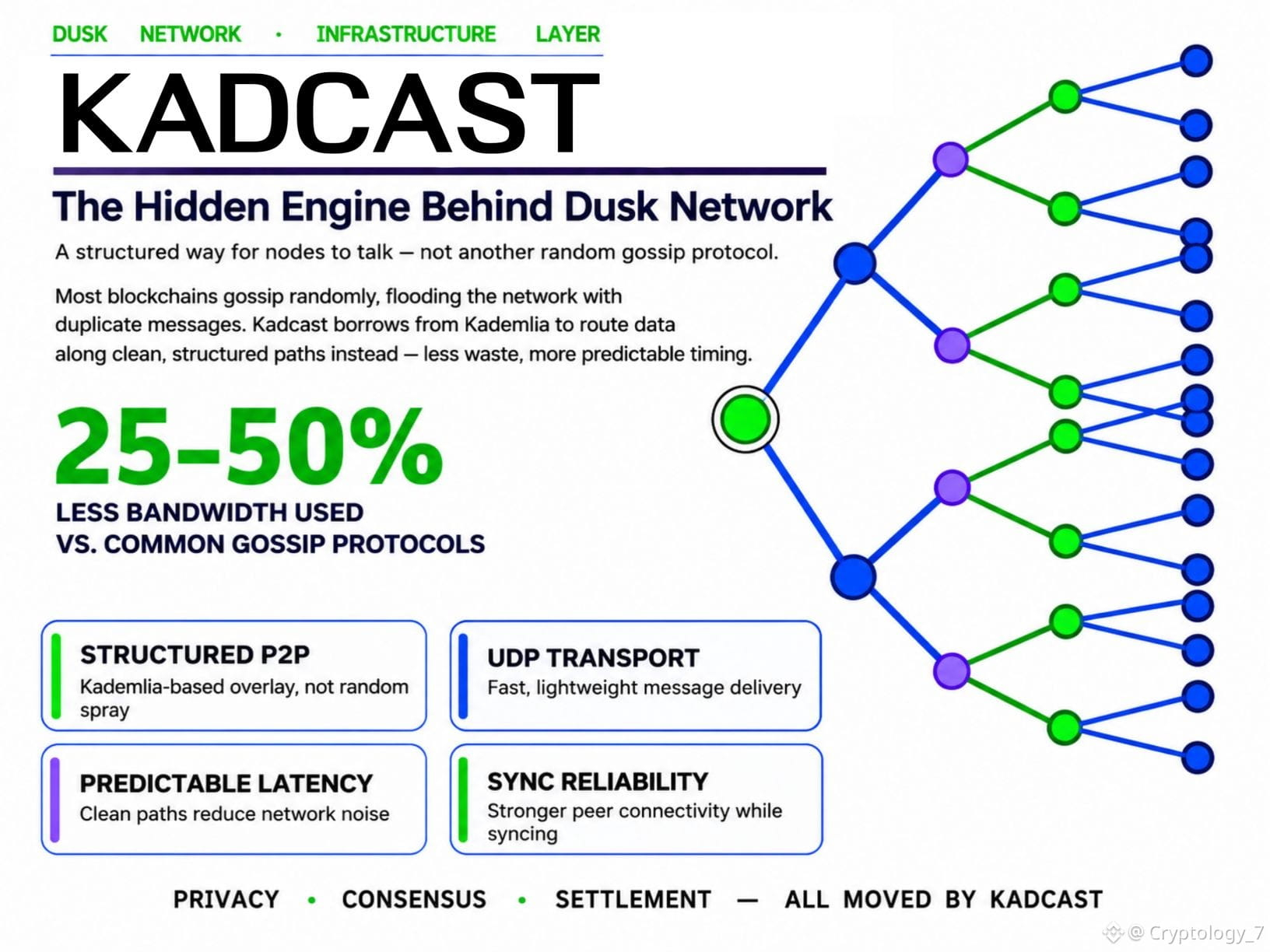
Honestly, I didn’t expect Kadcast to catch my attention. I thought it was just another way for blockchain nodes to gossip. Then I found something that changed how I see Dusk’s network layer differently. Kadcast can cut bandwidth use by 25–50% compared with common protocols.
How do you move information across a growing network without wasting bandwidth or creating unnecessary delays?
In a traditional gossip-style network, the same message can travel thrOugh many peers, creating extra network traffic. Depending on the design, this overhead can be significant.
Kadcast takes a smarter route.
Instead of letting messages spread through an unstructured web of connections, Dusk uses a structured P2P overlay designed to make communication more efficient and latency more predictable.. Kadcast builds on Kademlia, using XOR distance to organize peer routing.
And it gets more interesting.
Kadcast uses UDP, while @Dusk has also worked on things like routing improvements, UDP message size controls, network version checks, message flow tracking, and stronger peer connectivity during synchronization.
To me, this shows that Kadcast isn’t just some technical feature buried in the docs. It’s part of the foundation that keeps Dusk communicating.
Privacy protects sensitive information.
Consensus creates agreement.
Settlement moves value.
Kadcast helps move the information that makes all of it possible.
Sometimes, the technology doing the most important work is the technology users never notice.
If the best network layer is invisible to users, how far can Dusk go as its infrastructure becomes smarter and more efficient?
#dusk
Honestly, I didn’t expect Kadcast to catch my attention. I thought it was just another way for blockchain nodes to gossip. Then I found something that changed how I see Dusk’s network layer differently. Kadcast can cut bandwidth use by 25–50% compared with common protocols.
How do you move information across a growing network without wasting bandwidth or creating unnecessary delays?
In a traditional gossip-style network, the same message can travel thrOugh many peers, creating extra network traffic. Depending on the design, this overhead can be significant.
Kadcast takes a smarter route.
Instead of letting messages spread through an unstructured web of connections, Dusk uses a structured P2P overlay designed to make communication more efficient and latency more predictable.. Kadcast builds on Kademlia, using XOR distance to organize peer routing.
And it gets more interesting.
Kadcast uses UDP, while @Dusk has also worked on things like routing improvements, UDP message size controls, network version checks, message flow tracking, and stronger peer connectivity during synchronization.
To me, this shows that Kadcast isn’t just some technical feature buried in the docs. It’s part of the foundation that keeps Dusk communicating.
Privacy protects sensitive information.
Consensus creates agreement.
Settlement moves value.
Kadcast helps move the information that makes all of it possible.
Sometimes, the technology doing the most important work is the technology users never notice.
If the best network layer is invisible to users, how far can Dusk go as its infrastructure becomes smarter and more efficient?
#dusk
#dusk
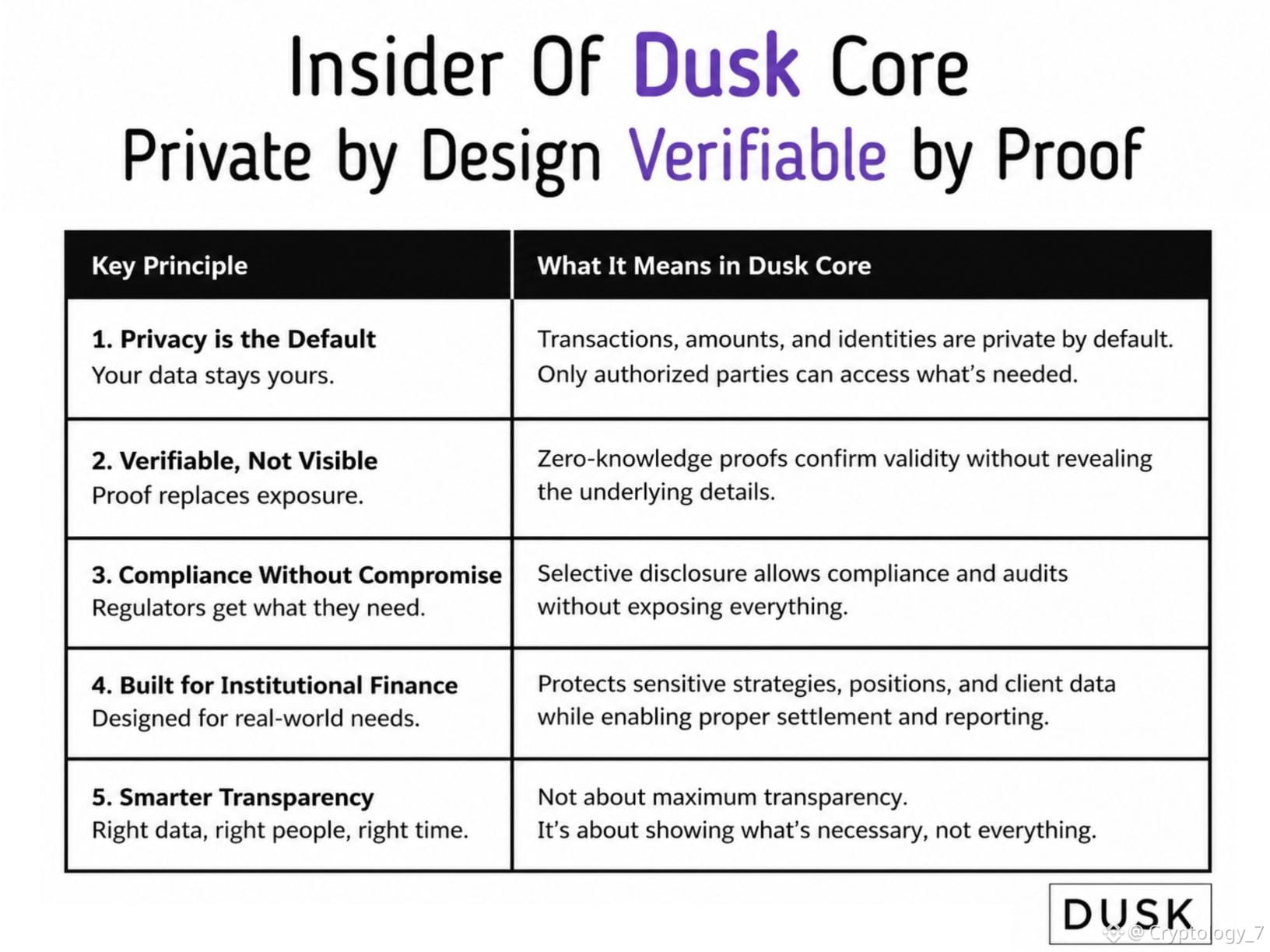
I wouldn't feel comfortable knowing every dollar I move could be seen by anyone watching my transactions. No secrets. No privacy. Just you, exposed, one transaction at a time.
Now imagine a bank, or a fund, or an institution trying to operate that way on a public chain. That's not a business model. That's a liability waiting to happen. And that's exactly the problem @Dusk Core was built to solve.
Here's the thing I didn't get at first while learning about Dusk Core: privacy isn't about hiding everything. It's about choosing what gets shown and to whom, without breaking trust in the system.. BIG DIFFERENCE.
Public blockchains work great for a lot of things NFTs, memes, open communities. But finance isn't like that. Trading desks, asset managers, and regulated institutions can't just broadcast every transaction, balance, and trade to the entire internet. That's not transparency. That's exposure.
So how does $DUSK solve this?
Instead of choosing between "fully open" or "fully hidden," Dusk asks a smarter question: what if a transaction could be private and provably valid at the same time? What if regulators could still verify compliance, without seeing every private detail?
That's the real unlock. Privacy and verification, working together instead of against each other.
Once you see it this way, blockchain infrastructure stops being just "process the transaction." It starts being "process it privately, keep it compliant, and make it settle correctly." That's a much bigger job and honestly, it's the job real financial systems actually need.
So maybe the future of institutional blockchain isn't about showing everything to everyone. It's about showing the right things to the right people. Not Maximum Transparency. Smarter Transparency.
That's DUSK Core. Quietly building the kind of trust crypto was always meant to have.
#dusk
I wouldn't feel comfortable knowing every dollar I move could be seen by anyone watching my transactions. No secrets. No privacy. Just you, exposed, one transaction at a time.
Now imagine a bank, or a fund, or an institution trying to operate that way on a public chain. That's not a business model. That's a liability waiting to happen. And that's exactly the problem @Dusk Core was built to solve.
Here's the thing I didn't get at first while learning about Dusk Core: privacy isn't about hiding everything. It's about choosing what gets shown and to whom, without breaking trust in the system.. BIG DIFFERENCE.
Public blockchains work great for a lot of things NFTs, memes, open communities. But finance isn't like that. Trading desks, asset managers, and regulated institutions can't just broadcast every transaction, balance, and trade to the entire internet. That's not transparency. That's exposure.
So how does $DUSK solve this?
Instead of choosing between "fully open" or "fully hidden," Dusk asks a smarter question: what if a transaction could be private and provably valid at the same time? What if regulators could still verify compliance, without seeing every private detail?
That's the real unlock. Privacy and verification, working together instead of against each other.
Once you see it this way, blockchain infrastructure stops being just "process the transaction." It starts being "process it privately, keep it compliant, and make it settle correctly." That's a much bigger job and honestly, it's the job real financial systems actually need.
So maybe the future of institutional blockchain isn't about showing everything to everyone. It's about showing the right things to the right people. Not Maximum Transparency. Smarter Transparency.
That's DUSK Core. Quietly building the kind of trust crypto was always meant to have.
#dusk
Inicia sesión para explorar más contenidos