
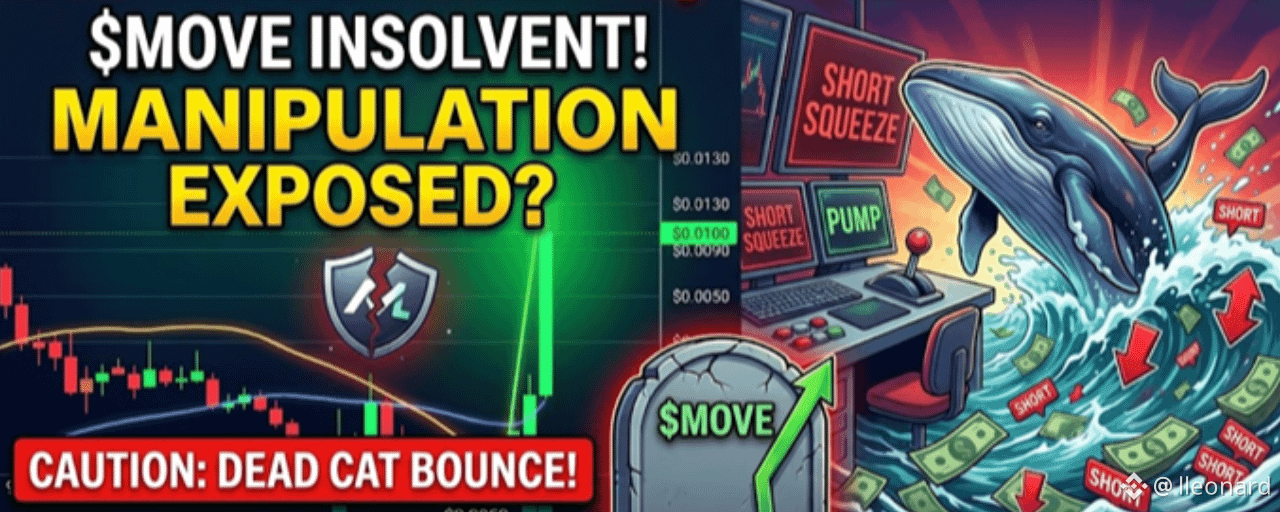
In mid-July 2026, Movement Labs (MVMT Labs) officially filed for Chapter 11 bankruptcy protection. The news dealt a heavy blow to market sentiment, laying bare unsustainable financial strain and internal disputes. However, a corporate bankruptcy filing does not mean the $MOVE token instantly vanishes from exchanges.
As long as trading pairs remain active and smart contracts execute on-chain, this structural disconnect creates a breeding ground for price manipulation.
Market Makers and the Short Squeeze Playbook
The sudden vertical pump on the $MOVE chart right after the drop isn't driven by fundamental recovery—it is a classic execution by Market Makers (MMs) and whales:
The Short Squeeze Trap: Favorable conditions emerge when bad news prompts retail traders to aggressively open Short positions. Facing thin liquidity as panic-sellers exit, MMs use relatively small capital to push the price up rapidly.
Cascading Liquidations: As the price spikes, Short sellers are forced to buy back the token to cover their positions, creating a self-reinforcing loop that propels the price even higher.
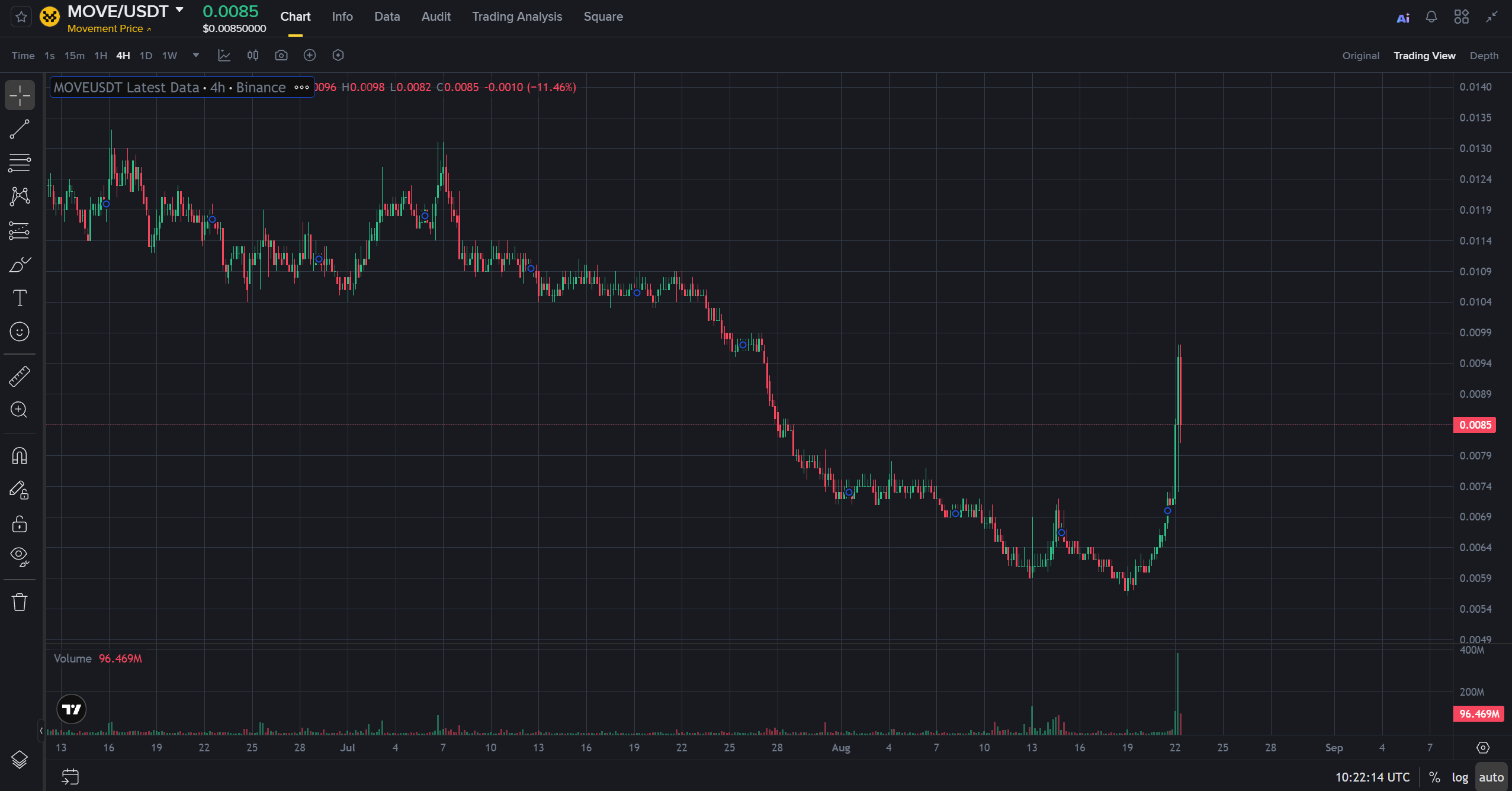
Warning: The "Dead Cat Bounce" and Catching Falling Knives
Retail investors frequently mistake these engineered spikes for a project turnaround, falling into the FOMO trap of trying to bottom-fish.
The "Zombie Token" Game: Much like past scenarios with LUNC or FTT, insolvent protocols often turn into high-risk speculative instruments.
Exit Liquidity Baffles: These "Dead Cat Bounces" are brief by design, meant only to generate the exit liquidity larger players need to dump their final holdings.
When a project's legal entity collapses and core development halts, short-term pumps are purely liquidations in disguise. Strict risk management and recognizing market manipulation remain your best defenses.
