Bitcoin has become one of the largest sources of liquidity in DeFi, but one problem remains: how do you use $BTC exposure while keeping borrowing costs predictable?
This is where I find TermMax interesting.
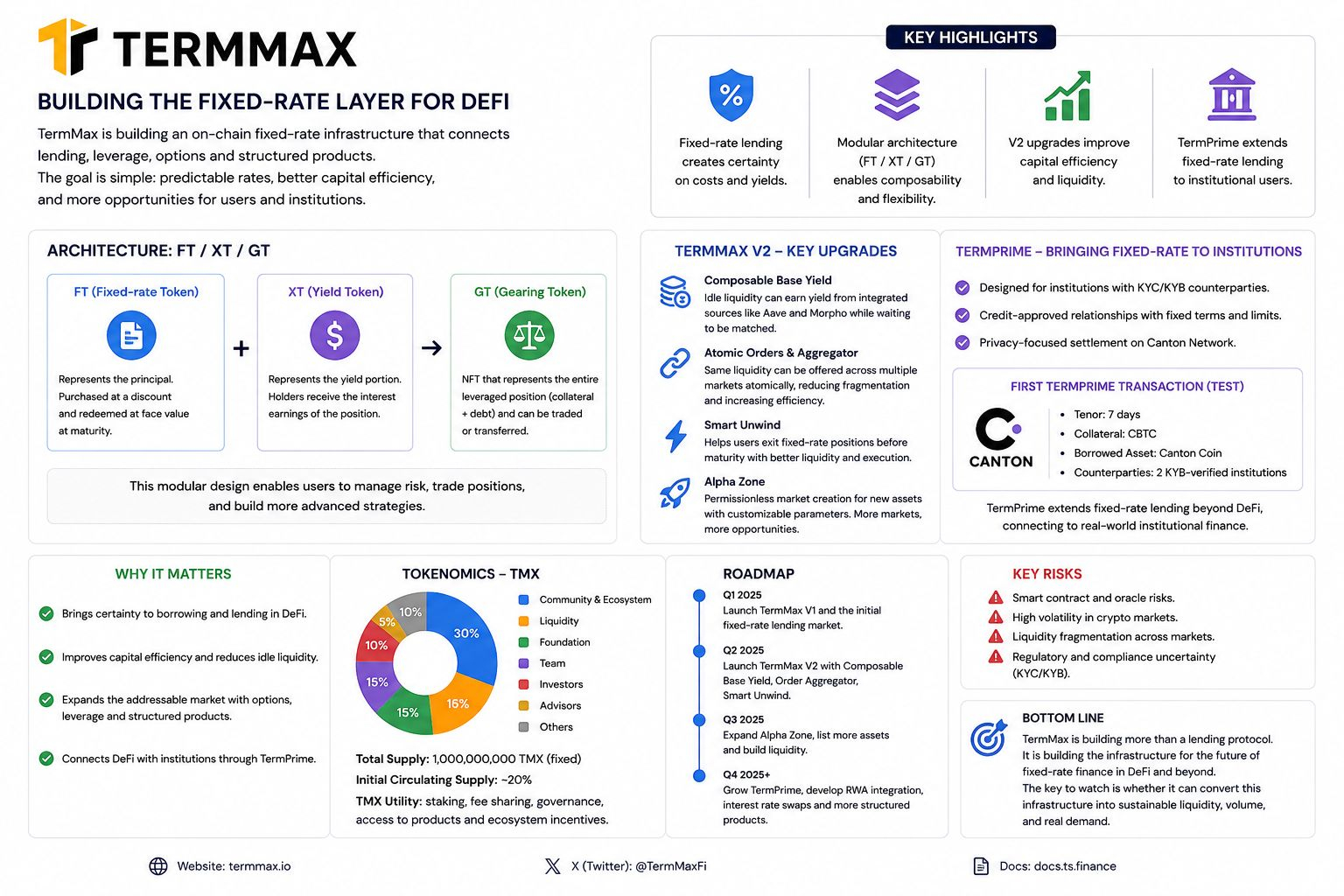
Instead of relying entirely on floating rates, TermMax focuses on fixed-rate markets, allowing users to know their borrowing cost for a defined maturity. For BTC-related strategies, that predictability can matter when market conditions become volatile.
The interesting part is that TermMax is not only building a lending market. Its V2 architecture is designed around better capital efficiency, while its broader ecosystem adds leverage, options and structured products.
So the bigger question is:
Can fixed-rate infrastructure become an important layer for managing $BTC liquidity in DeFi, rather than simply another way to borrow against crypto?
For me, that is a much more interesting question than simply watching BTC price movements.
@TermMax $BTC #TermMax
This is where I find TermMax interesting.
Instead of relying entirely on floating rates, TermMax focuses on fixed-rate markets, allowing users to know their borrowing cost for a defined maturity. For BTC-related strategies, that predictability can matter when market conditions become volatile.
The interesting part is that TermMax is not only building a lending market. Its V2 architecture is designed around better capital efficiency, while its broader ecosystem adds leverage, options and structured products.
So the bigger question is:
Can fixed-rate infrastructure become an important layer for managing $BTC liquidity in DeFi, rather than simply another way to borrow against crypto?
For me, that is a much more interesting question than simply watching BTC price movements.
@TermMax $BTC #TermMax