He estado investigando cómo Succinct Attestation realmente resuelve una iteración, y algo sobre la ruta de fallo no dejaba de darme vueltas.
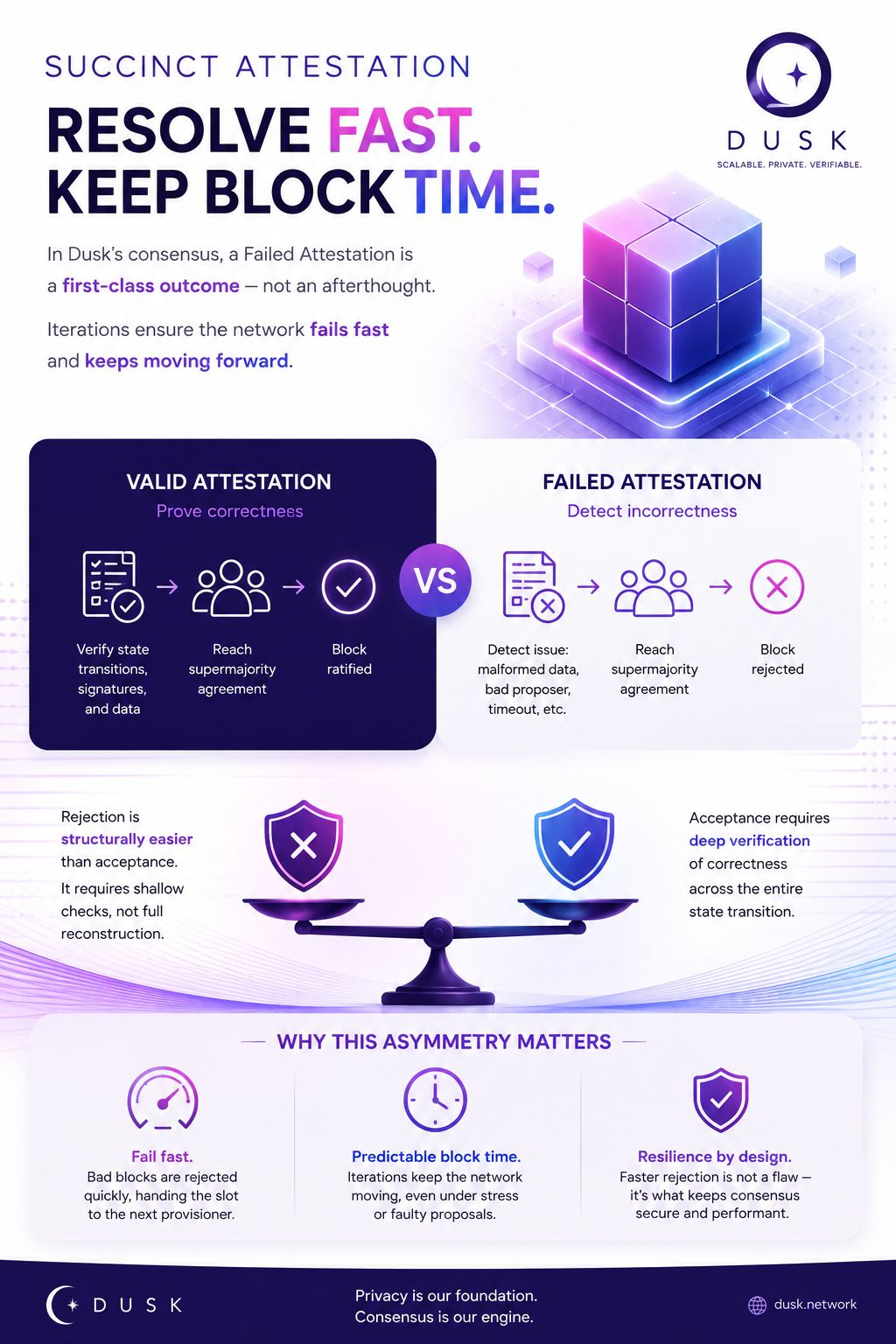
La historia obvia: un comité valida un bloque, lo ratifica y listo. Pero el protocolo de Dusk no solo lleva el estado de "válido": lleva las Attestations, y una Failed Attestation (un quórum que acuerda que un bloque *no* es válido) es un resultado de primera clase, no un mero detalle posterior.
Esto es lo que no había considerado: rechazar es estructuralmente más fácil que aceptar. Para ratificar un bloque válido, el comité debe realmente verificar las transiciones de estado, las firmas, todo el candidato. Para llegar a una Failed Attestation, los miembros del comité solo necesitan acuerdo de supermayoría en que *algo* está mal: datos mal formados, un proponente incorrecto, un tiempo de espera agotado. Es una comprobación mucho más superficial.
Así que, mecánicamente, un bloque defectuoso puede superar su umbral de quórum más rápido que uno bueno supera la validación, no porque la red favorezca los bloques inválidos, sino porque el rechazo no requiere reconstruir la corrección, solo detectar su ausencia. Eso no es un fallo. De hecho, es por eso que existen las iteraciones: fallar rápido, ceder el turno al siguiente provisionador y mantener el tiempo de bloque predecible.
Aun así, sigo trabajando en lo que esta asimetría significa cuando el tamaño del comité cambia con la distribución del stake. ¿El rechazo más rápido se convierte en una superficie de ataque, o es solo resiliencia diseñada?
@Dusk #dusk $DUSK
La historia obvia: un comité valida un bloque, lo ratifica y listo. Pero el protocolo de Dusk no solo lleva el estado de "válido": lleva las Attestations, y una Failed Attestation (un quórum que acuerda que un bloque *no* es válido) es un resultado de primera clase, no un mero detalle posterior.
Esto es lo que no había considerado: rechazar es estructuralmente más fácil que aceptar. Para ratificar un bloque válido, el comité debe realmente verificar las transiciones de estado, las firmas, todo el candidato. Para llegar a una Failed Attestation, los miembros del comité solo necesitan acuerdo de supermayoría en que *algo* está mal: datos mal formados, un proponente incorrecto, un tiempo de espera agotado. Es una comprobación mucho más superficial.
Así que, mecánicamente, un bloque defectuoso puede superar su umbral de quórum más rápido que uno bueno supera la validación, no porque la red favorezca los bloques inválidos, sino porque el rechazo no requiere reconstruir la corrección, solo detectar su ausencia. Eso no es un fallo. De hecho, es por eso que existen las iteraciones: fallar rápido, ceder el turno al siguiente provisionador y mantener el tiempo de bloque predecible.
Aun así, sigo trabajando en lo que esta asimetría significa cuando el tamaño del comité cambia con la distribución del stake. ¿El rechazo más rápido se convierte en una superficie de ataque, o es solo resiliencia diseñada?
@Dusk #dusk $DUSK