

#usinflationdata
usinflationdata
116,528 vistas
107 están debatiendo
Hot
Lo último

🇺🇸 SORPRESA EN EL IPP DE EE. UU.: se dispara la inflación mayorista
El IPP de EE. UU. subió un 1,3 % en septiembre respecto al mes anterior, muy por encima del 0,6 % previsto que mostraba Forex Factory. El IPP subyacente también registró un aumento elevado, del 0,7 % intermensual, frente al 0,3 % esperado. El informe apunta a presiones más amplias sobre los precios en las primeras etapas de la cadena de producción, y no solo a una pequeña desviación en la inflación general.
Por qué les importa a los mercados: Unos precios mayoristas más altos pueden trasladarse a la inflación al consumidor y complicar las perspectivas de tasas de la Fed. Normalmente, eso favorecería al dólar y perjudicaría al oro y a los activos de riesgo.
Pero la reacción inicial del mercado fue más matizada: el dólar y los rendimientos de los bonos del Tesoro cayeron pese al dato elevado, lo que muestra que los mercados estaban sopesando las perspectivas generales de crecimiento y política monetaria, y no solo la sorpresa inflacionaria.
Conclusión: Las presiones inflacionarias son motivo de preocupación, pero no des por sentado que «IPP elevado = dólar al alza» de forma lineal. Sigue de cerca los rendimientos, las expectativas sobre la Fed y la evolución de los precios.
#USInflationData #PPI #FederalReserve
🇺🇸 SORPRESA EN EL IPP DE EE. UU.: se dispara la inflación mayorista
El IPP de EE. UU. subió un 1,3 % en septiembre respecto al mes anterior, muy por encima del 0,6 % previsto que mostraba Forex Factory. El IPP subyacente también registró un aumento elevado, del 0,7 % intermensual, frente al 0,3 % esperado. El informe apunta a presiones más amplias sobre los precios en las primeras etapas de la cadena de producción, y no solo a una pequeña desviación en la inflación general.
Por qué les importa a los mercados: Unos precios mayoristas más altos pueden trasladarse a la inflación al consumidor y complicar las perspectivas de tasas de la Fed. Normalmente, eso favorecería al dólar y perjudicaría al oro y a los activos de riesgo.
Pero la reacción inicial del mercado fue más matizada: el dólar y los rendimientos de los bonos del Tesoro cayeron pese al dato elevado, lo que muestra que los mercados estaban sopesando las perspectivas generales de crecimiento y política monetaria, y no solo la sorpresa inflacionaria.
Conclusión: Las presiones inflacionarias son motivo de preocupación, pero no des por sentado que «IPP elevado = dólar al alza» de forma lineal. Sigue de cerca los rendimientos, las expectativas sobre la Fed y la evolución de los precios.
#USInflationData #PPI #FederalReserve
El IPP de EE. UU. subió un 1,3 % en septiembre respecto al mes anterior, muy por encima del 0,6 % previsto que mostraba Forex Factory. El IPP subyacente también registró un aumento elevado, del 0,7 % intermensual, frente al 0,3 % esperado. El informe apunta a presiones más amplias sobre los precios en las primeras etapas de la cadena de producción, y no solo a una pequeña desviación en la inflación general.
Por qué les importa a los mercados: Unos precios mayoristas más altos pueden trasladarse a la inflación al consumidor y complicar las perspectivas de tasas de la Fed. Normalmente, eso favorecería al dólar y perjudicaría al oro y a los activos de riesgo.
Pero la reacción inicial del mercado fue más matizada: el dólar y los rendimientos de los bonos del Tesoro cayeron pese al dato elevado, lo que muestra que los mercados estaban sopesando las perspectivas generales de crecimiento y política monetaria, y no solo la sorpresa inflacionaria.
Conclusión: Las presiones inflacionarias son motivo de preocupación, pero no des por sentado que «IPP elevado = dólar al alza» de forma lineal. Sigue de cerca los rendimientos, las expectativas sobre la Fed y la evolución de los precios.
#USInflationData #PPI #FederalReserve
89

🚨 ¡Los datos de inflación de EE. UU. presionan a los mercados de criptomonedas!
Los nuevos datos de inflación de EE. UU. publicados hoy muestran que la inflación anual del IPC se situó en el 3,7 %, por encima del 3,6 % previsto.
Según U.Today, Bitcoin cayó hasta alrededor de $82,856, mientras que Ethereum bajó de los $2,500 tras conocerse los datos.
Los inversores siguen de cerca la situación, ya que las cifras de inflación pueden influir en las expectativas sobre las decisiones de la Reserva Federal de EE. UU. en materia de tipos de interés.
📊 Pregunta: ¿Crees que BTC puede recuperarse o podría haber más volatilidad?
$BTC $ETH #bitcoin #Ethereum✅ #CryptoNewss #USInflationData #BinanceSquare
🚨 ¡Los datos de inflación de EE. UU. presionan a los mercados de criptomonedas!
Los nuevos datos de inflación de EE. UU. publicados hoy muestran que la inflación anual del IPC se situó en el 3,7 %, por encima del 3,6 % previsto.
Según U.Today, Bitcoin cayó hasta alrededor de $82,856, mientras que Ethereum bajó de los $2,500 tras conocerse los datos.
Los inversores siguen de cerca la situación, ya que las cifras de inflación pueden influir en las expectativas sobre las decisiones de la Reserva Federal de EE. UU. en materia de tipos de interés.
📊 Pregunta: ¿Crees que BTC puede recuperarse o podría haber más volatilidad?
$BTC $ETH #bitcoin #Ethereum✅ #CryptoNewss #USInflationData #BinanceSquare
Los nuevos datos de inflación de EE. UU. publicados hoy muestran que la inflación anual del IPC se situó en el 3,7 %, por encima del 3,6 % previsto.
Según U.Today, Bitcoin cayó hasta alrededor de $82,856, mientras que Ethereum bajó de los $2,500 tras conocerse los datos.
Los inversores siguen de cerca la situación, ya que las cifras de inflación pueden influir en las expectativas sobre las decisiones de la Reserva Federal de EE. UU. en materia de tipos de interés.
📊 Pregunta: ¿Crees que BTC puede recuperarse o podría haber más volatilidad?
$BTC $ETH #bitcoin #Ethereum✅ #CryptoNewss #USInflationData #BinanceSquare
73

·
--
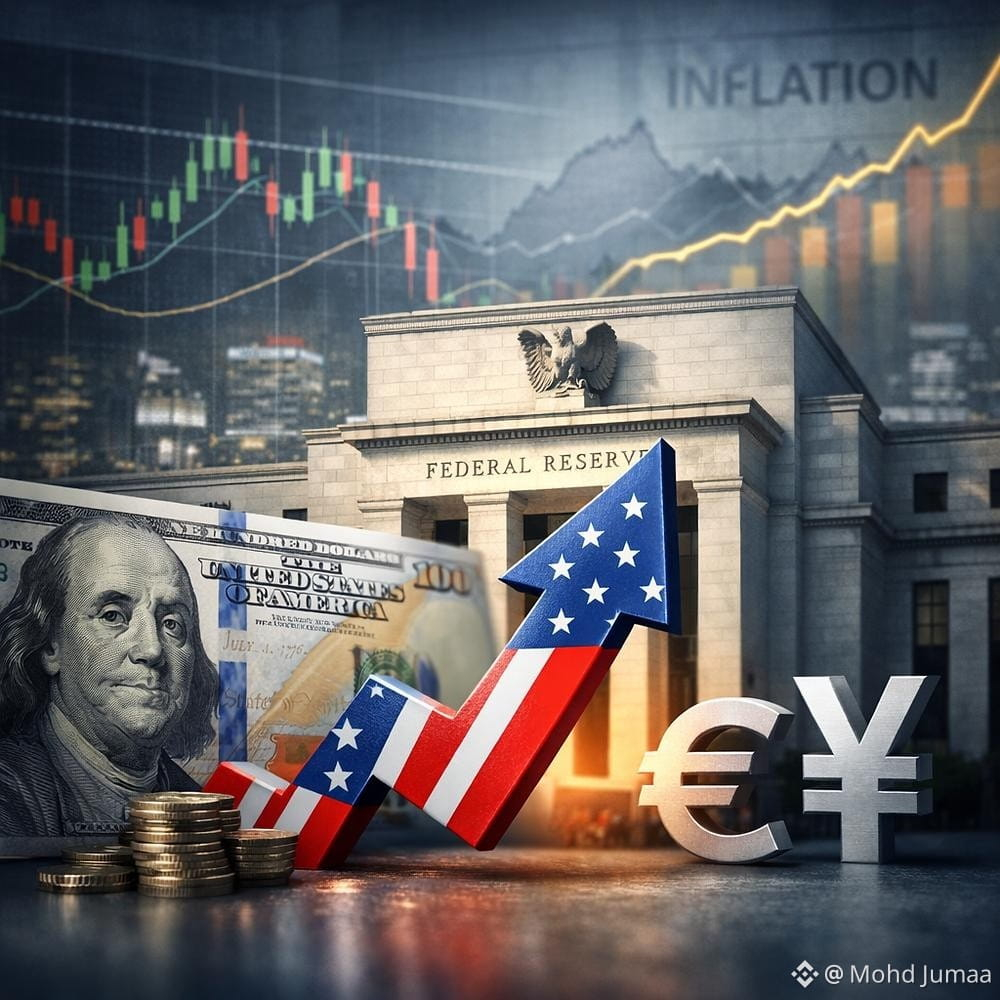
🚨 DATOS DE INFLACIÓN DE EE. UU. HOY — UN MOMENTO IMPORTANTE PARA LAS CRIPTOMONEDAS
Operadores de criptomonedas, ¡no pierdan de vista el mercado! 👀📊
El informe de inflación de EE. UU. (IPC) de hoy podría ser un catalizador importante para Bitcoin, Ethereum y todo el mercado de las criptomonedas.
🔥 ¿Por qué importa el IPC?
📉 Si la inflación resulta más baja de lo esperado: El mercado podría anticipar una Reserva Federal más moderada, lo que podría impulsar activos de riesgo como BTC y ETH.
📈 Si la inflación resulta más alta de lo esperado: Podrían volver las preocupaciones por las tasas de interés, lo que presionaría a Bitcoin y las altcoins.
⚖️ Si la inflación coincide con las expectativas: Los operadores podrían centrarse en los próximos movimientos de la Fed, el posicionamiento del mercado y la liquidez.
🎯 Mi lista de verificación para operar hoy:
✅ Observar la acción del precio de BTC y ETH.
✅ Vigilar la volatilidad en torno a la publicación de los datos.
✅ Revisar los flujos de ETF y los niveles de liquidación.
✅ Evitar un apalancamiento excesivo durante movimientos bruscos de precios.
✅ Nunca operar basándose únicamente en los titulares.
💡 Recuerda: El mercado no solo reacciona a la cifra de inflación, sino también a cómo se compara con las expectativas. Incluso las buenas noticias pueden provocar una venta masiva si los operadores ya las habían descontado.
👇 ¿Cuál es tu predicción?
🟢 ALCISTA — $BTC subirá 🚀
🔴 BAJISTA — $BTC caerá 📉
🟡 NEUTRAL — Esperar confirmación 👀
¡Deja tu predicción en los comentarios! Hablemos del tema. 🔥
{future}(BTCUSDT)
#BTC #USInflationData #cpi #cryptotrading
🚨 DATOS DE INFLACIÓN DE EE. UU. HOY — UN MOMENTO IMPORTANTE PARA LAS CRIPTOMONEDAS
Operadores de criptomonedas, ¡no pierdan de vista el mercado! 👀📊
El informe de inflación de EE. UU. (IPC) de hoy podría ser un catalizador importante para Bitcoin, Ethereum y todo el mercado de las criptomonedas.
🔥 ¿Por qué importa el IPC?
📉 Si la inflación resulta más baja de lo esperado: El mercado podría anticipar una Reserva Federal más moderada, lo que podría impulsar activos de riesgo como BTC y ETH.
📈 Si la inflación resulta más alta de lo esperado: Podrían volver las preocupaciones por las tasas de interés, lo que presionaría a Bitcoin y las altcoins.
⚖️ Si la inflación coincide con las expectativas: Los operadores podrían centrarse en los próximos movimientos de la Fed, el posicionamiento del mercado y la liquidez.
🎯 Mi lista de verificación para operar hoy:
✅ Observar la acción del precio de BTC y ETH.
✅ Vigilar la volatilidad en torno a la publicación de los datos.
✅ Revisar los flujos de ETF y los niveles de liquidación.
✅ Evitar un apalancamiento excesivo durante movimientos bruscos de precios.
✅ Nunca operar basándose únicamente en los titulares.
💡 Recuerda: El mercado no solo reacciona a la cifra de inflación, sino también a cómo se compara con las expectativas. Incluso las buenas noticias pueden provocar una venta masiva si los operadores ya las habían descontado.
👇 ¿Cuál es tu predicción?
🟢 ALCISTA — $BTC subirá 🚀
🔴 BAJISTA — $BTC caerá 📉
🟡 NEUTRAL — Esperar confirmación 👀
¡Deja tu predicción en los comentarios! Hablemos del tema. 🔥
#BTC #USInflationData #cpi #cryptotrading
Operadores de criptomonedas, ¡no pierdan de vista el mercado! 👀📊
El informe de inflación de EE. UU. (IPC) de hoy podría ser un catalizador importante para Bitcoin, Ethereum y todo el mercado de las criptomonedas.
🔥 ¿Por qué importa el IPC?
📉 Si la inflación resulta más baja de lo esperado: El mercado podría anticipar una Reserva Federal más moderada, lo que podría impulsar activos de riesgo como BTC y ETH.
📈 Si la inflación resulta más alta de lo esperado: Podrían volver las preocupaciones por las tasas de interés, lo que presionaría a Bitcoin y las altcoins.
⚖️ Si la inflación coincide con las expectativas: Los operadores podrían centrarse en los próximos movimientos de la Fed, el posicionamiento del mercado y la liquidez.
🎯 Mi lista de verificación para operar hoy:
✅ Observar la acción del precio de BTC y ETH.
✅ Vigilar la volatilidad en torno a la publicación de los datos.
✅ Revisar los flujos de ETF y los niveles de liquidación.
✅ Evitar un apalancamiento excesivo durante movimientos bruscos de precios.
✅ Nunca operar basándose únicamente en los titulares.
💡 Recuerda: El mercado no solo reacciona a la cifra de inflación, sino también a cómo se compara con las expectativas. Incluso las buenas noticias pueden provocar una venta masiva si los operadores ya las habían descontado.
👇 ¿Cuál es tu predicción?
🟢 ALCISTA — $BTC subirá 🚀
🔴 BAJISTA — $BTC caerá 📉
🟡 NEUTRAL — Esperar confirmación 👀
¡Deja tu predicción en los comentarios! Hablemos del tema. 🔥
#BTC #USInflationData #cpi #cryptotrading
111


·
--
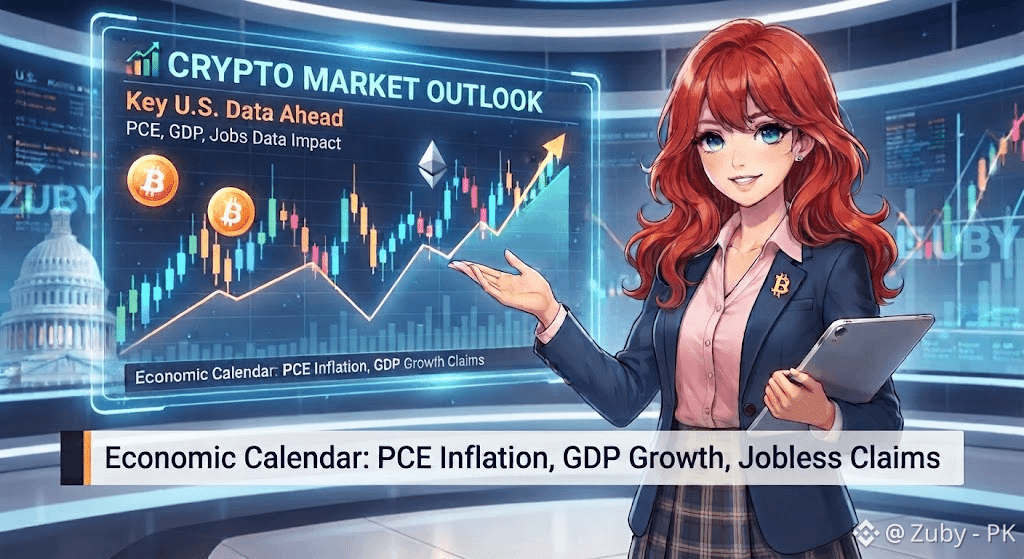
📊 Perspectiva del Mercado de Cripto: Datos Clave de EE. UU. por Delante
📜 El mercado de cripto se prepara para una semana de alta volatilidad mientras los inversores siguen informes económicos críticos de EE. UU., que influirán fuertemente en futuras decisiones de tasas de interés de la Reserva Federal.
📈 ¿Qué Está Moviendo los Mercados Esta Semana?
🇺🇸 Índice de Inflación PCE (miércoles): se espera que el indicador de inflación preferido de la Fed suba ligeramente hasta 0,1% mes a mes, con lecturas anuales del núcleo pronosticadas alrededor de 3,3%. Los datos más calientes de lo esperado podrían mantener las tasas elevadas, presionando a los activos de riesgo.
📉 Crecimiento del PIB del 2T (miércoles): se proyecta que el crecimiento económico anualizado del segundo trimestre rebote hasta 1,5%, desde 2,1% en el 1T, señalando un cambio en el impulso económico.
👷 Solicitudes de Desempleo (jueves): se prevé que las solicitudes iniciales semanales de desempleo se mantengan estables en 206.000, ofreciendo una ventana clara sobre la salud actual del mercado laboral.
🎙️ Discursos de la Fed y Impacto en Cripto: los comentarios de funcionarios de la Fed en el simposio de Jackson Hole proporcionarán pistas importantes sobre liquidez, tasas de préstamo y apetito por el riesgo. Tras una reciente tendencia alcista de Bitcoin, estos puntos de datos macro dictarán en gran medida la acción del precio a corto plazo.
🏷️#CryptoMarketTrends #USInflationData #FederalReservePolicy
📊 Perspectiva del Mercado de Cripto: Datos Clave de EE. UU. por Delante
📜 El mercado de cripto se prepara para una semana de alta volatilidad mientras los inversores siguen informes económicos críticos de EE. UU., que influirán fuertemente en futuras decisiones de tasas de interés de la Reserva Federal.
📈 ¿Qué Está Moviendo los Mercados Esta Semana?
🇺🇸 Índice de Inflación PCE (miércoles): se espera que el indicador de inflación preferido de la Fed suba ligeramente hasta 0,1% mes a mes, con lecturas anuales del núcleo pronosticadas alrededor de 3,3%. Los datos más calientes de lo esperado podrían mantener las tasas elevadas, presionando a los activos de riesgo.
📉 Crecimiento del PIB del 2T (miércoles): se proyecta que el crecimiento económico anualizado del segundo trimestre rebote hasta 1,5%, desde 2,1% en el 1T, señalando un cambio en el impulso económico.
👷 Solicitudes de Desempleo (jueves): se prevé que las solicitudes iniciales semanales de desempleo se mantengan estables en 206.000, ofreciendo una ventana clara sobre la salud actual del mercado laboral.
🎙️ Discursos de la Fed y Impacto en Cripto: los comentarios de funcionarios de la Fed en el simposio de Jackson Hole proporcionarán pistas importantes sobre liquidez, tasas de préstamo y apetito por el riesgo. Tras una reciente tendencia alcista de Bitcoin, estos puntos de datos macro dictarán en gran medida la acción del precio a corto plazo.
🏷️#CryptoMarketTrends #USInflationData #FederalReservePolicy
📜 El mercado de cripto se prepara para una semana de alta volatilidad mientras los inversores siguen informes económicos críticos de EE. UU., que influirán fuertemente en futuras decisiones de tasas de interés de la Reserva Federal.
📈 ¿Qué Está Moviendo los Mercados Esta Semana?
🇺🇸 Índice de Inflación PCE (miércoles): se espera que el indicador de inflación preferido de la Fed suba ligeramente hasta 0,1% mes a mes, con lecturas anuales del núcleo pronosticadas alrededor de 3,3%. Los datos más calientes de lo esperado podrían mantener las tasas elevadas, presionando a los activos de riesgo.
📉 Crecimiento del PIB del 2T (miércoles): se proyecta que el crecimiento económico anualizado del segundo trimestre rebote hasta 1,5%, desde 2,1% en el 1T, señalando un cambio en el impulso económico.
👷 Solicitudes de Desempleo (jueves): se prevé que las solicitudes iniciales semanales de desempleo se mantengan estables en 206.000, ofreciendo una ventana clara sobre la salud actual del mercado laboral.
🎙️ Discursos de la Fed y Impacto en Cripto: los comentarios de funcionarios de la Fed en el simposio de Jackson Hole proporcionarán pistas importantes sobre liquidez, tasas de préstamo y apetito por el riesgo. Tras una reciente tendencia alcista de Bitcoin, estos puntos de datos macro dictarán en gran medida la acción del precio a corto plazo.
🏷️#CryptoMarketTrends #USInflationData #FederalReservePolicy
3
165

·
--
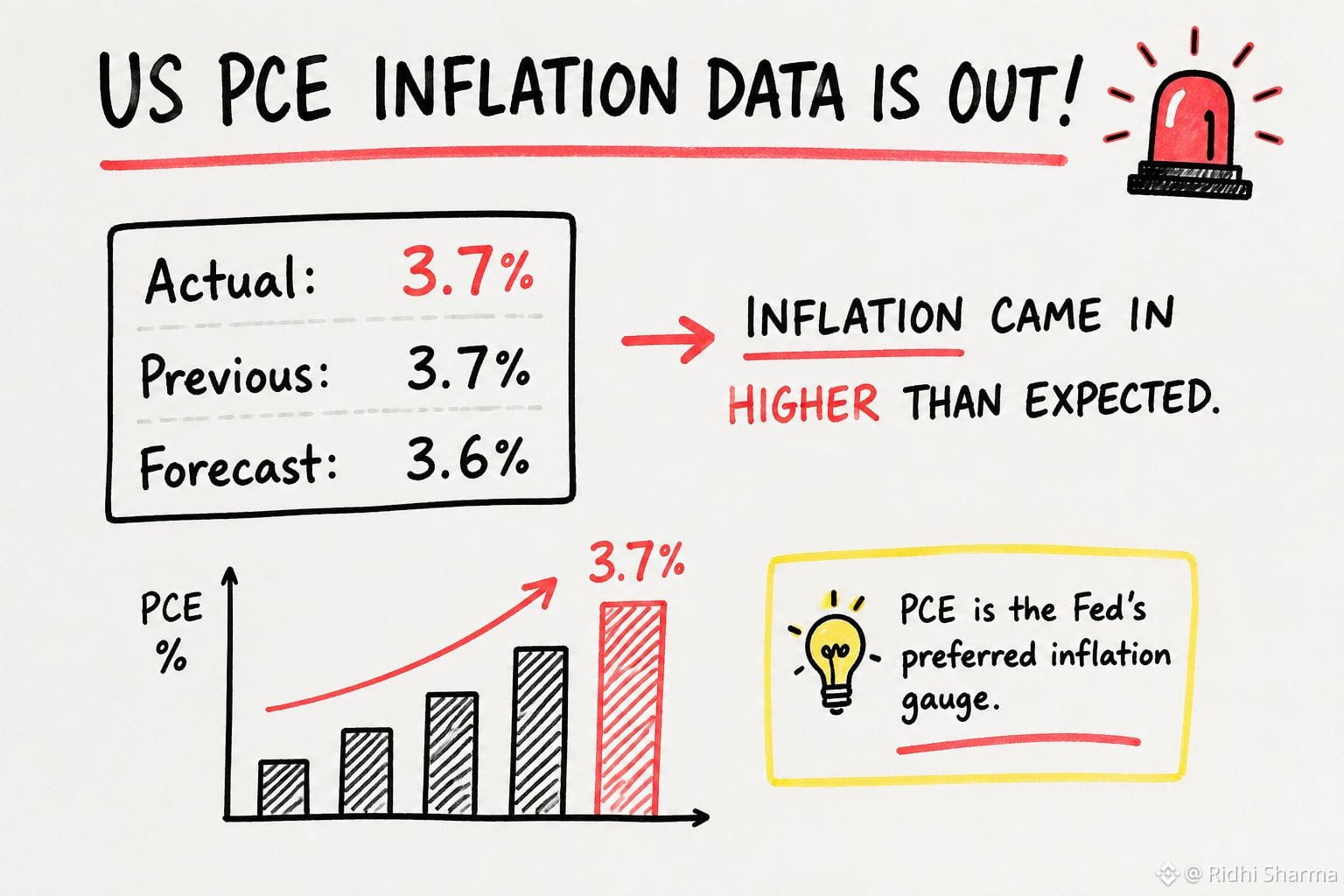
¡Los datos de inflación PCE de EE. UU. ya están fuera! 🚨
Actual: 3.7%
Anterior: 3.7%
Pronóstico: 3.6%
La inflación salió más alta de lo esperado.
#USInflationData #SECSendsCryptoCustodyRuleToWhiteHouse
$BTC
{future}(BTCUSDT)
$BICO
{future}(BICOUSDT)
¡Los datos de inflación PCE de EE. UU. ya están fuera! 🚨
Actual: 3.7%
Anterior: 3.7%
Pronóstico: 3.6%
La inflación salió más alta de lo esperado.
#USInflationData #SECSendsCryptoCustodyRuleToWhiteHouse
$BTC
$BICO
Actual: 3.7%
Anterior: 3.7%
Pronóstico: 3.6%
La inflación salió más alta de lo esperado.
#USInflationData #SECSendsCryptoCustodyRuleToWhiteHouse
$BTC
$BICO
120

·
--
#USInflationData
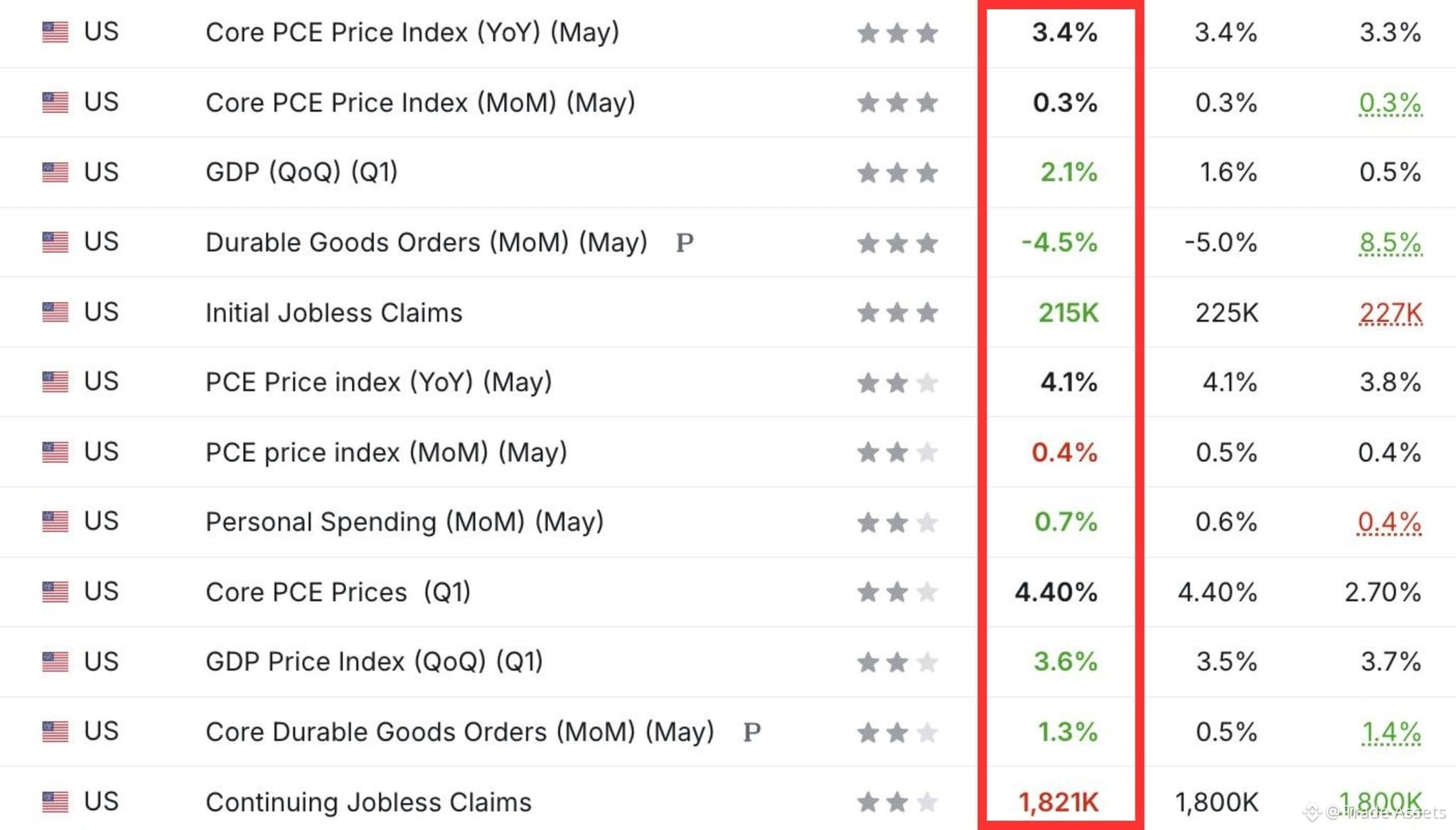
La inflación de Estados Unidos alcanza un máximo de 3 años en 4,1%: más del doble del objetivo de la Fed y la economía se niega a enfriarse.
Con un PIB sólido, un gasto del consumidor resistente y un mercado laboral ajustado, el argumento a favor de recortes de tasas está desapareciendo. Espere que el presidente Warsh se incline hacia más subidas. 📈📉 #economy #Fed #Inflation
#USInflationData
La inflación de Estados Unidos alcanza un máximo de 3 años en 4,1%: más del doble del objetivo de la Fed y la economía se niega a enfriarse.
Con un PIB sólido, un gasto del consumidor resistente y un mercado laboral ajustado, el argumento a favor de recortes de tasas está desapareciendo. Espere que el presidente Warsh se incline hacia más subidas. 📈📉 #economy #Fed #Inflation
La inflación de Estados Unidos alcanza un máximo de 3 años en 4,1%: más del doble del objetivo de la Fed y la economía se niega a enfriarse.
Con un PIB sólido, un gasto del consumidor resistente y un mercado laboral ajustado, el argumento a favor de recortes de tasas está desapareciendo. Espere que el presidente Warsh se incline hacia más subidas. 📈📉 #economy #Fed #Inflation
1
19

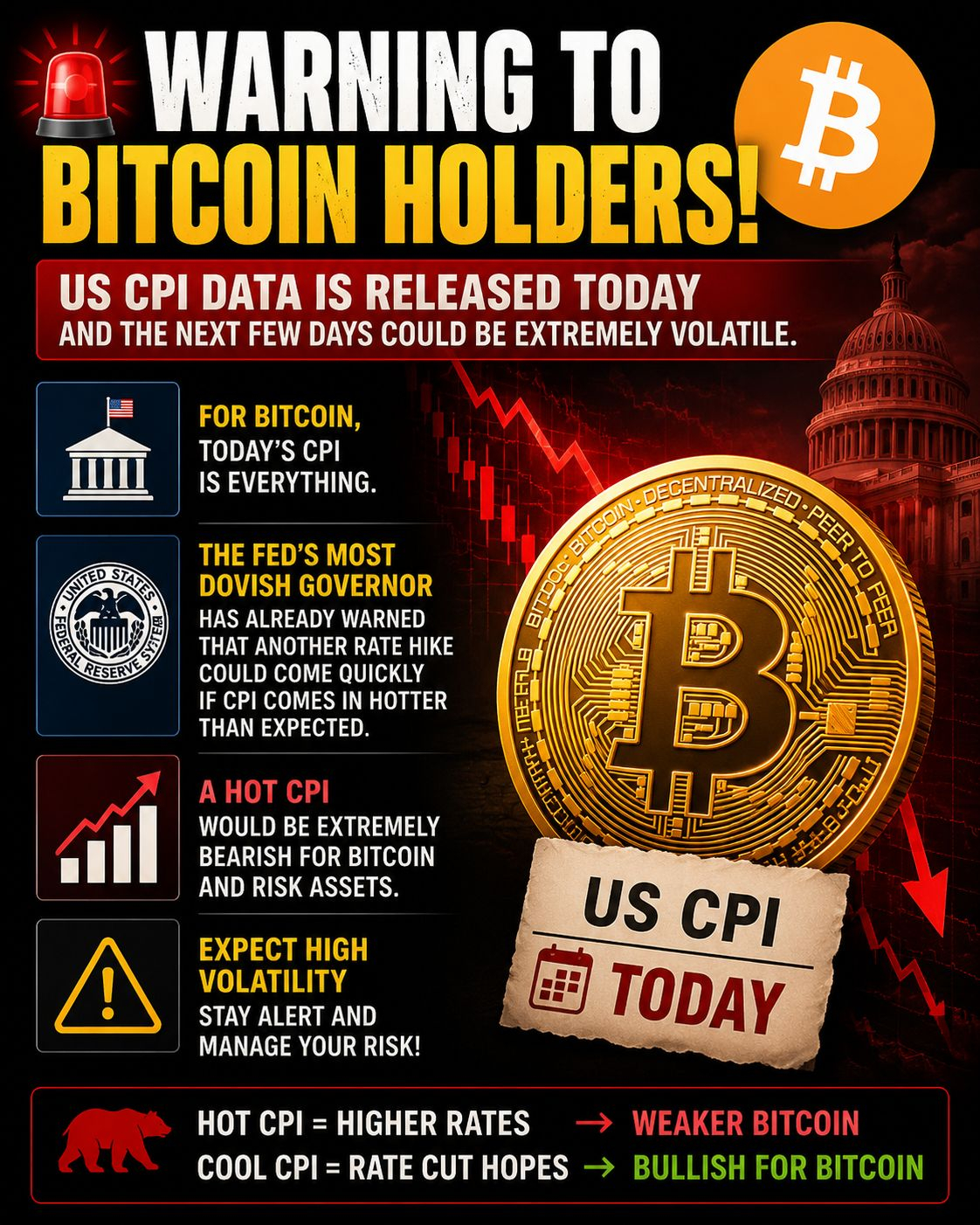
El informe del IPC de EE. UU. (inflación) se publica hoy, y podría ser uno de los mayores eventos que mueven el mercado esta semana.
Para $Bitcoin, este informe importa porque puede influir en la próxima decisión de la Reserva Federal sobre las tasas de interés.
Si la inflación sale más alta de lo esperado, la Fed podría mantener las tasas de interés más altas durante más tiempo, o incluso considerar otra subida de tipos. Eso probablemente presionaría a $Bitcoin y a otros activos de riesgo.
Espera una mayor volatilidad a medida que el mercado reacciona a las cifras del $CPI.#crypto #USInflationData
El informe del IPC de EE. UU. (inflación) se publica hoy, y podría ser uno de los mayores eventos que mueven el mercado esta semana.
Para $Bitcoin, este informe importa porque puede influir en la próxima decisión de la Reserva Federal sobre las tasas de interés.
Si la inflación sale más alta de lo esperado, la Fed podría mantener las tasas de interés más altas durante más tiempo, o incluso considerar otra subida de tipos. Eso probablemente presionaría a $Bitcoin y a otros activos de riesgo.
Espera una mayor volatilidad a medida que el mercado reacciona a las cifras del $CPI.#crypto #USInflationData
Para $Bitcoin, este informe importa porque puede influir en la próxima decisión de la Reserva Federal sobre las tasas de interés.
Si la inflación sale más alta de lo esperado, la Fed podría mantener las tasas de interés más altas durante más tiempo, o incluso considerar otra subida de tipos. Eso probablemente presionaría a $Bitcoin y a otros activos de riesgo.
Espera una mayor volatilidad a medida que el mercado reacciona a las cifras del $CPI.#crypto #USInflationData
1
74


·
--
Artículo
¡EL ORO SE RECUPERA TRAS UN IPP DE EE. UU. MÁS ALTO DE LO ESPERADO! 🥇 ¿POR QUÉ REBOTÓ XAUUSDT?🚨
¡El mercado sorprendió! 🇺🇸📊
El IPP de EE. UU. se situó en el 1,3 %, frente al 0,6 % previsto; aun así, el oro se recuperó en lugar de seguir cayendo.
🔥 ¿QUÉ PASÓ EN REALIDAD?
📉 1. El dólar se debilitó: Un dólar estadounidense más débil ayudó al oro a recuperarse, ya que el metal se abarató para los compradores que usan otras monedas.
📊 2. Cayeron los rendimientos de los bonos del Tesoro: Los rendimientos más bajos redujeron parte de la presión sobre el oro, que no ofrece intereses, y favorecieron el rebote.
🛡️ 3. Entraron compradores: La incertidumbre del mercado y la debilidad de la renta variable ayudaron a sostener la demanda de activos refugio.
¡EL ORO SE RECUPERA TRAS UN IPP DE EE. UU. MÁS ALTO DE LO ESPERADO! 🥇 ¿POR QUÉ REBOTÓ XAUUSDT?
🚨
¡El mercado sorprendió! 🇺🇸📊
El IPP de EE. UU. se situó en el 1,3 %, frente al 0,6 % previsto; aun así, el oro se recuperó en lugar de seguir cayendo.
🔥 ¿QUÉ PASÓ EN REALIDAD?
📉 1. El dólar se debilitó: Un dólar estadounidense más débil ayudó al oro a recuperarse, ya que el metal se abarató para los compradores que usan otras monedas.
📊 2. Cayeron los rendimientos de los bonos del Tesoro: Los rendimientos más bajos redujeron parte de la presión sobre el oro, que no ofrece intereses, y favorecieron el rebote.
🛡️ 3. Entraron compradores: La incertidumbre del mercado y la debilidad de la renta variable ayudaron a sostener la demanda de activos refugio.
¡El mercado sorprendió! 🇺🇸📊
El IPP de EE. UU. se situó en el 1,3 %, frente al 0,6 % previsto; aun así, el oro se recuperó en lugar de seguir cayendo.
🔥 ¿QUÉ PASÓ EN REALIDAD?
📉 1. El dólar se debilitó: Un dólar estadounidense más débil ayudó al oro a recuperarse, ya que el metal se abarató para los compradores que usan otras monedas.
📊 2. Cayeron los rendimientos de los bonos del Tesoro: Los rendimientos más bajos redujeron parte de la presión sobre el oro, que no ofrece intereses, y favorecieron el rebote.
🛡️ 3. Entraron compradores: La incertidumbre del mercado y la debilidad de la renta variable ayudaron a sostener la demanda de activos refugio.
1
180

·
--
Artículo
La inflación de EE. UU. alcanza el 3,7 %: por qué los detalles importan para las criptomonedas#CPIWatch
La inflación de EE. UU. alcanza el 3,7 %: por qué los detalles importan para las criptomonedas
15 de octubre de 2026, hora de Pakistán. Basado en el informe del IPC de septiembre, publicado el 14 de octubre a las 5:30 p. m., hora de Pakistán.
El último informe de inflación de EE. UU. dio mucho que pensar a los inversores. Los precios de los combustibles subieron considerablemente, la inflación anual se aceleró y la inflación subyacente superó las expectativas. En conjunto, estos acontecimientos centraron la atención en la próxima decisión de la Reserva Federal sobre los tipos de interés.
Estas son las cuatro cifras principales:
Las cifras reales proceden de la Oficina de Estadísticas Laborales. La columna de previsiones recoge las expectativas publicadas por Trading Economics. Las cifras mensuales están desestacionalizadas; las anuales, no.
La inflación de EE. UU. alcanza el 3,7 %: por qué los detalles importan para las criptomonedas
#CPIWatch
La inflación de EE. UU. alcanza el 3,7 %: por qué los detalles importan para las criptomonedas
15 de octubre de 2026, hora de Pakistán. Basado en el informe del IPC de septiembre, publicado el 14 de octubre a las 5:30 p. m., hora de Pakistán.
El último informe de inflación de EE. UU. dio mucho que pensar a los inversores. Los precios de los combustibles subieron considerablemente, la inflación anual se aceleró y la inflación subyacente superó las expectativas. En conjunto, estos acontecimientos centraron la atención en la próxima decisión de la Reserva Federal sobre los tipos de interés.
Estas son las cuatro cifras principales:
Las cifras reales proceden de la Oficina de Estadísticas Laborales. La columna de previsiones recoge las expectativas publicadas por Trading Economics. Las cifras mensuales están desestacionalizadas; las anuales, no.
La inflación de EE. UU. alcanza el 3,7 %: por qué los detalles importan para las criptomonedas
15 de octubre de 2026, hora de Pakistán. Basado en el informe del IPC de septiembre, publicado el 14 de octubre a las 5:30 p. m., hora de Pakistán.
El último informe de inflación de EE. UU. dio mucho que pensar a los inversores. Los precios de los combustibles subieron considerablemente, la inflación anual se aceleró y la inflación subyacente superó las expectativas. En conjunto, estos acontecimientos centraron la atención en la próxima decisión de la Reserva Federal sobre los tipos de interés.
Estas son las cuatro cifras principales:
Las cifras reales proceden de la Oficina de Estadísticas Laborales. La columna de previsiones recoge las expectativas publicadas por Trading Economics. Las cifras mensuales están desestacionalizadas; las anuales, no.
261
·
--
#USInflationData
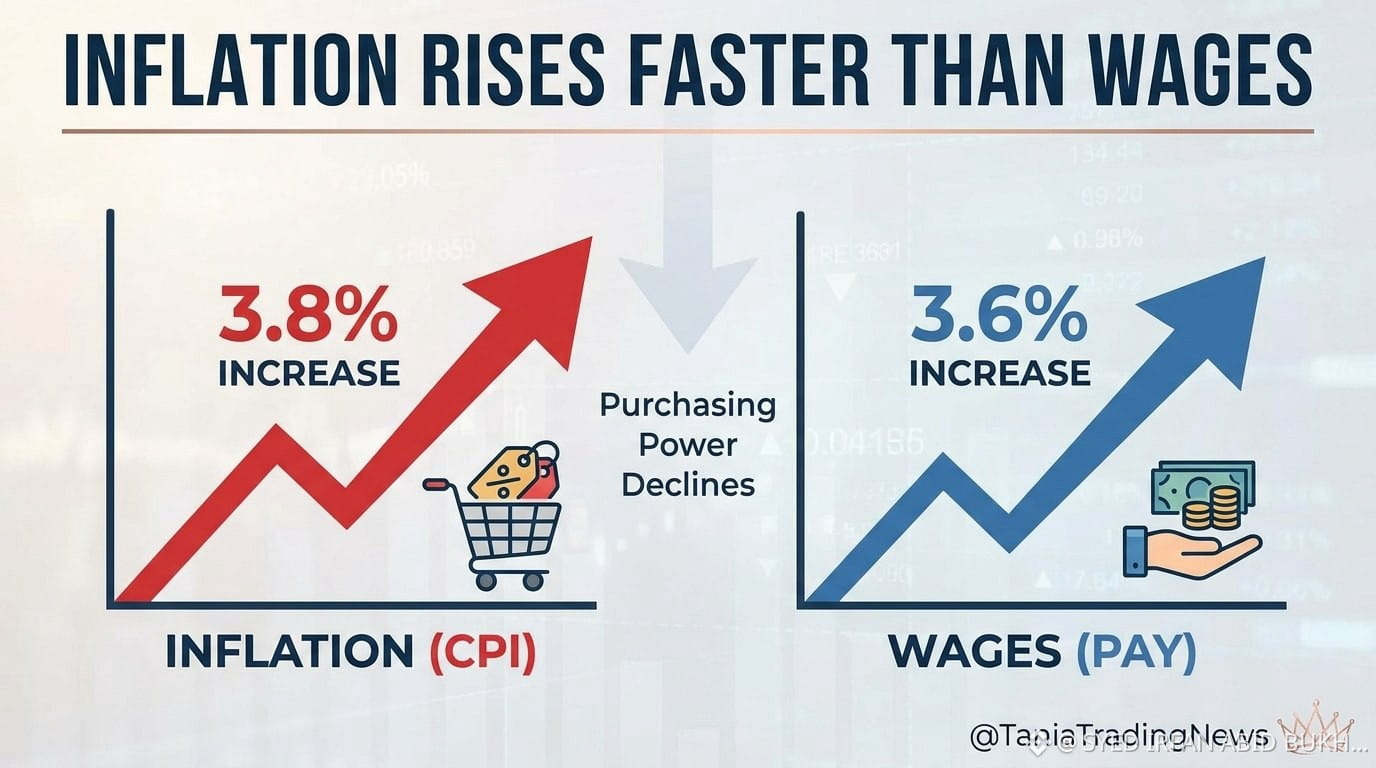
La inflación está subiendo más rápido que los salarios por primera vez en casi tres años. En el último año, los precios al consumidor aumentaron un 3.8%, pero los salarios solo subieron un 3.6%, lo que ha hecho que muchos estadounidenses pierdan poder adquisitivo y enfrenten más presión financiera.
sigue, comparte, like
#USInflationData
La inflación está subiendo más rápido que los salarios por primera vez en casi tres años. En el último año, los precios al consumidor aumentaron un 3.8%, pero los salarios solo subieron un 3.6%, lo que ha hecho que muchos estadounidenses pierdan poder adquisitivo y enfrenten más presión financiera.
sigue, comparte, like
La inflación está subiendo más rápido que los salarios por primera vez en casi tres años. En el último año, los precios al consumidor aumentaron un 3.8%, pero los salarios solo subieron un 3.6%, lo que ha hecho que muchos estadounidenses pierdan poder adquisitivo y enfrenten más presión financiera.
sigue, comparte, like
1
12

·
--
#USJulyCPI&PPIDueThisWeek US los datos de inflación toman el centro de la escena esta semana. El IPC de julio se publicará el 12 de agosto, seguido por el PPI el 13 de agosto, ambos a las 8:30 a. m. ET. �
Oficina de Estadísticas Laborales +1
🔥 Por qué es importante:
Inflación menor a la esperada → 🟢 los activos de riesgo podrían repuntar
Inflación más alta a la esperada → 🔴 los temores sobre las tasas de la Fed podrían presionar a las acciones y & cripto
📊 Mi seguimiento: BTC • ETH • XRP • Nasdaq • USD
Predicción: espera volatilidad alrededor de las publicaciones. El movimiento real podría venir por la sorpresa del IPC + del IPC subyacente, no solo por la cifra principal.
💡 Consejo: no hagas FOMO en una posición justo antes de los datos. Deja que la primera volatilidad se calme y luego observa la dirección de la ruptura.
#cpi #PPI #USInflationData #BTC
#USJulyCPI&PPIDueThisWeek US los datos de inflación toman el centro de la escena esta semana. El IPC de julio se publicará el 12 de agosto, seguido por el PPI el 13 de agosto, ambos a las 8:30 a. m. ET. �
Oficina de Estadísticas Laborales +1
🔥 Por qué es importante:
Inflación menor a la esperada → 🟢 los activos de riesgo podrían repuntar
Inflación más alta a la esperada → 🔴 los temores sobre las tasas de la Fed podrían presionar a las acciones y & cripto
📊 Mi seguimiento: BTC • ETH • XRP • Nasdaq • USD
Predicción: espera volatilidad alrededor de las publicaciones. El movimiento real podría venir por la sorpresa del IPC + del IPC subyacente, no solo por la cifra principal.
💡 Consejo: no hagas FOMO en una posición justo antes de los datos. Deja que la primera volatilidad se calme y luego observa la dirección de la ruptura.
#cpi #PPI #USInflationData #BTC
Oficina de Estadísticas Laborales +1
🔥 Por qué es importante:
Inflación menor a la esperada → 🟢 los activos de riesgo podrían repuntar
Inflación más alta a la esperada → 🔴 los temores sobre las tasas de la Fed podrían presionar a las acciones y & cripto
📊 Mi seguimiento: BTC • ETH • XRP • Nasdaq • USD
Predicción: espera volatilidad alrededor de las publicaciones. El movimiento real podría venir por la sorpresa del IPC + del IPC subyacente, no solo por la cifra principal.
💡 Consejo: no hagas FOMO en una posición justo antes de los datos. Deja que la primera volatilidad se calme y luego observa la dirección de la ruptura.
#cpi #PPI #USInflationData #BTC
139

La inflación en EE.UU. alcanza su nivel más alto desde mayo de 2023.
La inflación del IPC subyacente sube al 2.8%.
El precio de Bitcoin cae un 0.5%, cotizando alrededor de $81,000.
$BTC #USInflationData
La inflación en EE.UU. alcanza su nivel más alto desde mayo de 2023.
La inflación del IPC subyacente sube al 2.8%.
El precio de Bitcoin cae un 0.5%, cotizando alrededor de $81,000.
$BTC #USInflationData
La inflación del IPC subyacente sube al 2.8%.
El precio de Bitcoin cae un 0.5%, cotizando alrededor de $81,000.
$BTC #USInflationData
101
·
--
#USInflationData
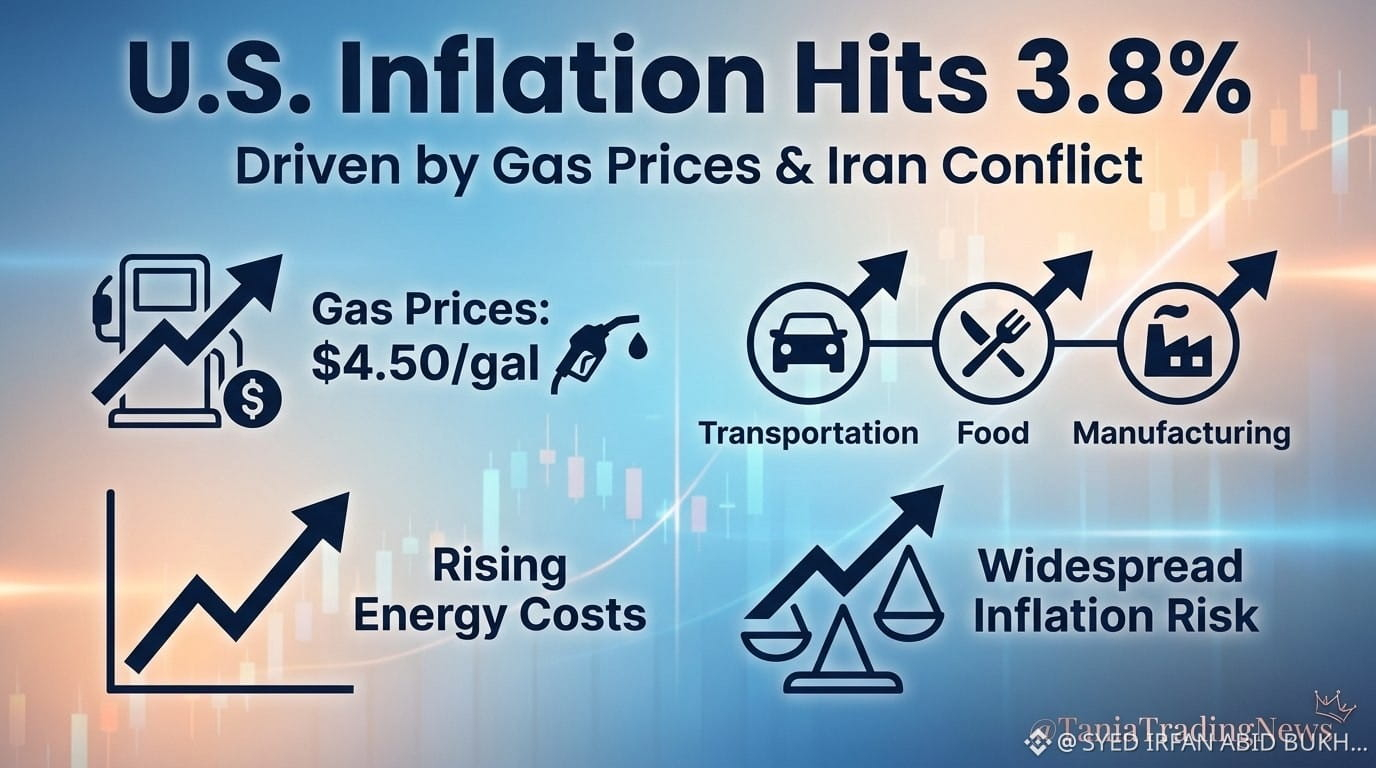
La inflación en EE.UU. aumentó al 3.8% en abril, superando las expectativas, principalmente debido al aumento de los precios de la gasolina causados por la guerra en Irán.
Los costos energéticos más altos también están impulsando el aumento de precios en transporte, alimentos y manufactura, generando preocupaciones de que la inflación podría volverse más generalizada y afectar el gasto de los consumidores.
El presidente Trump expresó su apoyo a una suspensión temporal del impuesto federal sobre la gasolina para ayudar a los conductores, ya que los precios promedio de la gasolina han saltado a alrededor de $4.50 por galón, subiendo desde $3.14 hace un año.
#USInflationData
La inflación en EE.UU. aumentó al 3.8% en abril, superando las expectativas, principalmente debido al aumento de los precios de la gasolina causados por la guerra en Irán.
Los costos energéticos más altos también están impulsando el aumento de precios en transporte, alimentos y manufactura, generando preocupaciones de que la inflación podría volverse más generalizada y afectar el gasto de los consumidores.
El presidente Trump expresó su apoyo a una suspensión temporal del impuesto federal sobre la gasolina para ayudar a los conductores, ya que los precios promedio de la gasolina han saltado a alrededor de $4.50 por galón, subiendo desde $3.14 hace un año.
La inflación en EE.UU. aumentó al 3.8% en abril, superando las expectativas, principalmente debido al aumento de los precios de la gasolina causados por la guerra en Irán.
Los costos energéticos más altos también están impulsando el aumento de precios en transporte, alimentos y manufactura, generando preocupaciones de que la inflación podría volverse más generalizada y afectar el gasto de los consumidores.
El presidente Trump expresó su apoyo a una suspensión temporal del impuesto federal sobre la gasolina para ayudar a los conductores, ya que los precios promedio de la gasolina han saltado a alrededor de $4.50 por galón, subiendo desde $3.14 hace un año.
1
10

·
--
🚨🚨 NOTICIAS DE ÚLTIMA HORA — #TRUMP :
La Reserva Federal no bajará las tasas hasta que la inflación alcance nuestro objetivo — eso es definitivo.
Jerome Powell sirve a la satisfacción de nadie más que la economía estadounidense.
No necesitamos dinero barato, necesitamos dinero fuerte.
$TRUMP
{spot}(TRUMPUSDT)
$XAU $AAVE
{spot}(AAVEUSDT)
$DXY
#AltcoinRecoverySignals #GoldRally #FedWatchSignals #USInflationData
#Writing2Earn
🚨🚨 NOTICIAS DE ÚLTIMA HORA — #TRUMP :
La Reserva Federal no bajará las tasas hasta que la inflación alcance nuestro objetivo — eso es definitivo.
Jerome Powell sirve a la satisfacción de nadie más que la economía estadounidense.
No necesitamos dinero barato, necesitamos dinero fuerte.
$TRUMP
$XAU $AAVE
$DXY
#AltcoinRecoverySignals #GoldRally #FedWatchSignals #USInflationData
#Writing2Earn
La Reserva Federal no bajará las tasas hasta que la inflación alcance nuestro objetivo — eso es definitivo.
Jerome Powell sirve a la satisfacción de nadie más que la economía estadounidense.
No necesitamos dinero barato, necesitamos dinero fuerte.
$TRUMP
$XAU $AAVE
$DXY
#AltcoinRecoverySignals #GoldRally #FedWatchSignals #USInflationData
#Writing2Earn

1
505

·
--
Bajista
Inflación en EE.UU. (12 de mayo): Los datos del IPC caen hoy. Espera volatilidad en #BTC y #ETH. Mayor inflación = Alcista para activos de "Reserva de Valor". 📈 #CPIdata #USInflationData
Inflación en EE.UU. (12 de mayo): Los datos del IPC caen hoy. Espera volatilidad en #BTC y #ETH. Mayor inflación = Alcista para activos de "Reserva de Valor". 📈 #CPIdata #USInflationData
35
Inicia sesión para explorar más contenidos
Únete a usuarios globales de criptomonedas en Binance Square
⚡️ Obtén información útil y actualizada sobre criptos.
💬 Avalado por el mayor exchange de criptomonedas en el mundo.
👍 Descubre perspectivas reales de creadores verificados.
Email/número de teléfono
Temas populares
1
#BinancePick
2.9M vistas
150,785 están debatiendo
2
#EarningsSeason
5.2M vistas
25,679 están debatiendo
3
#AnthropicTTMRevenueGrewAbout1200%
12,328 vistas
289 están debatiendo
4
#AnthropicS1ExpectedToday
15,393 vistas
266 están debatiendo
5
#SouthKoreaReportedlyWeighsFourthCryptoTaxDelay
22,213 vistas
396 están debatiendo
6
#FranklinTempletonFilesForTwoDividendToBitcoinETFs
29,864 vistas
491 están debatiendo
7
#StrategyMSTRSurpassesNasdaqInMarketCap
23,239 vistas
356 están debatiendo
8
#CanadaProposesStablecoinRedemptionWithin3BusinessDays
1,060 vistas
34 están debatiendo
9
#ElectrumWalletBugLetRogueServersStealFunds
25,201 vistas
439 están debatiendo
10
#ArgentineCourtDismissesLIBRACaseAgainstMilei
38,395 vistas
540 están debatiendo