

#tradingmath
tradingmath
3,152 vistas
15 están debatiendo
Hot
Lo último

·
--
Ver ARK volar +61% en 24h es el cebo definitivo para el público de los "20x long".
La matemática del desastre:
Con 20x de apalancamiento, un movimiento del 5% en tu contra = 100% de pérdida.
Cuando una moneda oscila 60% en un día, una vela de "ruido" del 5% ocurre cada pocos minutos. No estás operando una tendencia; estás apostando al momento de un latido.
Mi regla de evitación de la ruina:
Apalancamiento ≤ 1 / (Rango Diario × 2)
Para ARK hoy: 1 / (0.60 × 2) = 0.83x.
Básicamente: Si se mueve 60% al día, usar cualquier apalancamiento es simplemente pagarle a Binance para que se quede con tu dinero.
Mejor llegar tarde y estar a salvo que ser temprano y terminar liquidado.
¿Quién sigue manteniendo su 20x long, o ya eres un recuerdo?
$ARK #RiskManagement #TradingMath
Ver ARK volar +61% en 24h es el cebo definitivo para el público de los "20x long".
La matemática del desastre:
Con 20x de apalancamiento, un movimiento del 5% en tu contra = 100% de pérdida.
Cuando una moneda oscila 60% en un día, una vela de "ruido" del 5% ocurre cada pocos minutos. No estás operando una tendencia; estás apostando al momento de un latido.
Mi regla de evitación de la ruina:
Apalancamiento ≤ 1 / (Rango Diario × 2)
Para ARK hoy: 1 / (0.60 × 2) = 0.83x.
Básicamente: Si se mueve 60% al día, usar cualquier apalancamiento es simplemente pagarle a Binance para que se quede con tu dinero.
Mejor llegar tarde y estar a salvo que ser temprano y terminar liquidado.
¿Quién sigue manteniendo su 20x long, o ya eres un recuerdo?
$ARK #RiskManagement #TradingMath
La matemática del desastre:
Con 20x de apalancamiento, un movimiento del 5% en tu contra = 100% de pérdida.
Cuando una moneda oscila 60% en un día, una vela de "ruido" del 5% ocurre cada pocos minutos. No estás operando una tendencia; estás apostando al momento de un latido.
Mi regla de evitación de la ruina:
Apalancamiento ≤ 1 / (Rango Diario × 2)
Para ARK hoy: 1 / (0.60 × 2) = 0.83x.
Básicamente: Si se mueve 60% al día, usar cualquier apalancamiento es simplemente pagarle a Binance para que se quede con tu dinero.
Mejor llegar tarde y estar a salvo que ser temprano y terminar liquidado.
¿Quién sigue manteniendo su 20x long, o ya eres un recuerdo?
$ARK #RiskManagement #TradingMath
152

·
--
El mercado no premia tener la razón. Premia tener la razón y dimensionar correctamente.
Puedes tener un 70% de tasa de acierto y aun así arruinarte si tus pérdidas son 3 veces tus ganancias en términos de dinero. Por el contrario, un 40% de tasa de acierto con una relación recompensa/riesgo de 3:1 compone bien.
Valor esperado = (tasa de acierto × ganancia promedio) − (tasa de pérdida × pérdida promedio)
Haz los cálculos con tus últimas 20 operaciones. El resultado te dice más que cualquier patrón de gráfico.
#TradingMath #RiskManagement #Crypto
El mercado no premia tener la razón. Premia tener la razón y dimensionar correctamente.
Puedes tener un 70% de tasa de acierto y aun así arruinarte si tus pérdidas son 3 veces tus ganancias en términos de dinero. Por el contrario, un 40% de tasa de acierto con una relación recompensa/riesgo de 3:1 compone bien.
Valor esperado = (tasa de acierto × ganancia promedio) − (tasa de pérdida × pérdida promedio)
Haz los cálculos con tus últimas 20 operaciones. El resultado te dice más que cualquier patrón de gráfico.
#TradingMath #RiskManagement #Crypto
Puedes tener un 70% de tasa de acierto y aun así arruinarte si tus pérdidas son 3 veces tus ganancias en términos de dinero. Por el contrario, un 40% de tasa de acierto con una relación recompensa/riesgo de 3:1 compone bien.
Valor esperado = (tasa de acierto × ganancia promedio) − (tasa de pérdida × pérdida promedio)
Haz los cálculos con tus últimas 20 operaciones. El resultado te dice más que cualquier patrón de gráfico.
#TradingMath #RiskManagement #Crypto
2

RIESGO Y SUMA DE LA OPERACIÓN: LA MATEMÁTICA QUE SALVARÁ TU DEPÓSITO CONSIDERANDO LAS COMISIONES 🛡️🧮
Muchos traders calculan el riesgo a ojo, olvidándose del slippage y las comisiones del exchange. Para sobrevivir en futuros, tu matemática tiene que ser perfecta.
• Tu stop-loss debe calcularse en base al tamaño total del depósito (arriesgas el 1% del balance, no de la margen de la operación).
• La relación riesgo-recompensa (R:R) debe ser al menos de 1:3. Esto significa que una operación ganadora cubre tres stops.
👇 Abre el widget SOL. ¿Cuál es la relación promedio de riesgo-recompensa en tu sistema de trading?
#RiskManagement #TradingMath #Solana $SOL #CryptoFREEMEN
RIESGO Y SUMA DE LA OPERACIÓN: LA MATEMÁTICA QUE SALVARÁ TU DEPÓSITO CONSIDERANDO LAS COMISIONES 🛡️🧮
Muchos traders calculan el riesgo a ojo, olvidándose del slippage y las comisiones del exchange. Para sobrevivir en futuros, tu matemática tiene que ser perfecta.
• Tu stop-loss debe calcularse en base al tamaño total del depósito (arriesgas el 1% del balance, no de la margen de la operación).
• La relación riesgo-recompensa (R:R) debe ser al menos de 1:3. Esto significa que una operación ganadora cubre tres stops.
👇 Abre el widget SOL. ¿Cuál es la relación promedio de riesgo-recompensa en tu sistema de trading?
#RiskManagement #TradingMath #Solana $SOL #CryptoFREEMEN
Muchos traders calculan el riesgo a ojo, olvidándose del slippage y las comisiones del exchange. Para sobrevivir en futuros, tu matemática tiene que ser perfecta.
• Tu stop-loss debe calcularse en base al tamaño total del depósito (arriesgas el 1% del balance, no de la margen de la operación).
• La relación riesgo-recompensa (R:R) debe ser al menos de 1:3. Esto significa que una operación ganadora cubre tres stops.
👇 Abre el widget SOL. ¿Cuál es la relación promedio de riesgo-recompensa en tu sistema de trading?
#RiskManagement #TradingMath #Solana $SOL #CryptoFREEMEN
145
·
--
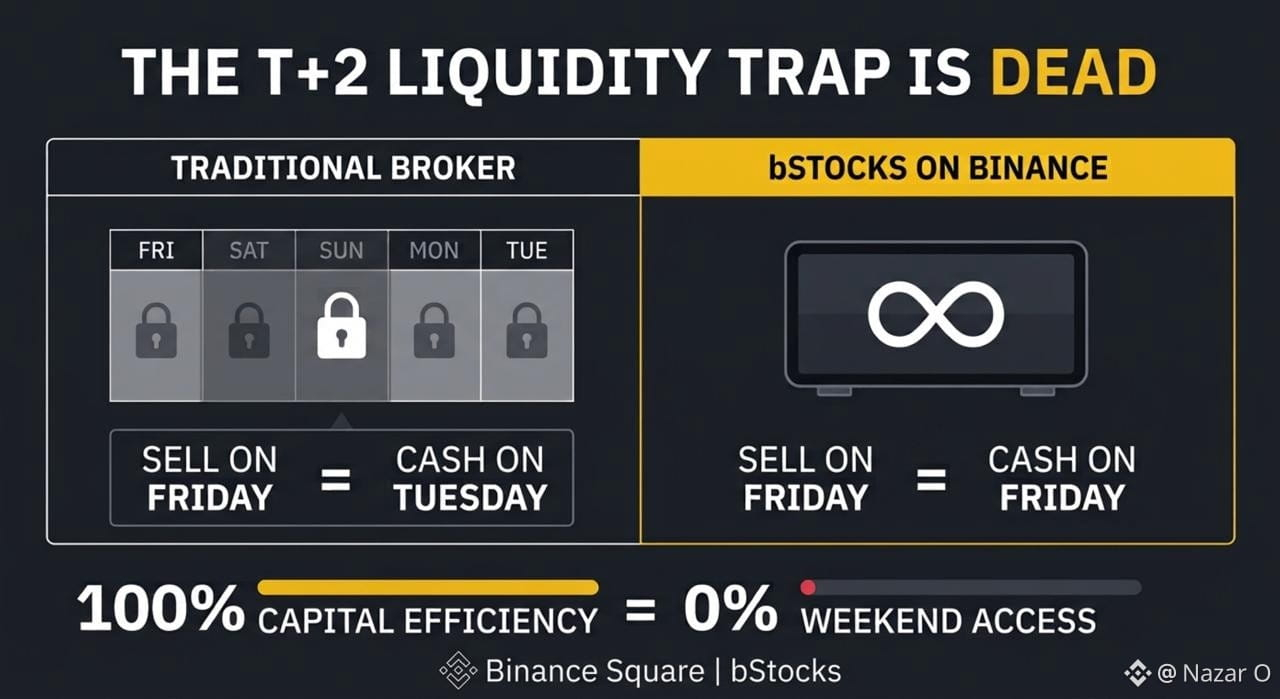
LA TRAMPA DE LIQUIDEZ T+2 HA MUERTO
Aprendí una lección dolorosa sobre liquidez el pasado viernes por la noche. Vi un desplome masivo en un criptoactivo importante y decidí vender una pequeña parte de una posición bursátil tradicional para aprovechar la entrada. Hice clic en vender, la operación se ejecutó y luego esperé. Y esperé.
En el viejo mundo de las corredurías, especialmente para quienes usamos rieles internacionales en la CEI, tu dinero entra en un agujero negro llamado liquidación T+2. Mi capital era legalmente mío, pero no pude tocarlo durante 48 horas. Para cuando el efectivo se liquidó el martes por la mañana, la oportunidad de entrada en cripto ya había desaparecido.
Esto es exactamente por lo que he empezado a mover mi exposición a acciones hacia bStocks. Como auditor DeFi, odio ver que el capital se quede ocioso.
Veamos la matemática de la trampa de la liquidación:
Escenario: Vendes 1.000 dólares en acciones tradicionales el viernes a las 3:55 PM.
Ruta TradFi: El dinero queda bloqueado durante el fin de semana más dos días hábiles. Recuperas el acceso el martes por la mañana. Tiempo total bloqueado: 64+ horas.
Costo de oportunidad: Si el mercado cripto se mueve un 5% a tu favor durante ese fin de semana, acabas de perder 50 dólares en ganancias potenciales simplemente porque el sistema bancario va lento.
Ruta bStocks: Vendes 1.000 dólares de TSLAB por USDT. Liquidación: Instantánea. Puedes intercambiar ese USDT por cualquier criptoactivo en el mismo minuto.
La matemática es sencilla: la liquidación instantánea significa que tu eficiencia de capital es 100%. En TradFi, tu eficiencia de capital cae significativamente cada vez que necesitas rotar entre activos.
Actualmente mantengo SPCXB y NVDAB en Binance porque necesito que mis Activos del Mundo Real se muevan a la misma velocidad que mi cripto. Incluso puedo convertir mis bStocks de vuelta a acciones directas en una proporción 1:1 gratis si alguna vez decido volver al carril lento, pero sinceramente, ¿por qué lo haría?
Las reglas bancarias del siglo XIX no encajan en una cartera del siglo XXI. Si tu capital no puede moverse 24/7, entonces no es realmente tuyo.
¿Todavía estás dejando que los brokers tengan tu efectivo secuestrado durante dos días, o ya cambiaste a la liquidación instantánea de bStocks?
@BinanceCIS #bstockscis #TradingMath #SpaceX $NVDAB $TSLAB
LA TRAMPA DE LIQUIDEZ T+2 HA MUERTO
Aprendí una lección dolorosa sobre liquidez el pasado viernes por la noche. Vi un desplome masivo en un criptoactivo importante y decidí vender una pequeña parte de una posición bursátil tradicional para aprovechar la entrada. Hice clic en vender, la operación se ejecutó y luego esperé. Y esperé.
En el viejo mundo de las corredurías, especialmente para quienes usamos rieles internacionales en la CEI, tu dinero entra en un agujero negro llamado liquidación T+2. Mi capital era legalmente mío, pero no pude tocarlo durante 48 horas. Para cuando el efectivo se liquidó el martes por la mañana, la oportunidad de entrada en cripto ya había desaparecido.
Esto es exactamente por lo que he empezado a mover mi exposición a acciones hacia bStocks. Como auditor DeFi, odio ver que el capital se quede ocioso.
Veamos la matemática de la trampa de la liquidación:
Escenario: Vendes 1.000 dólares en acciones tradicionales el viernes a las 3:55 PM.
Ruta TradFi: El dinero queda bloqueado durante el fin de semana más dos días hábiles. Recuperas el acceso el martes por la mañana. Tiempo total bloqueado: 64+ horas.
Costo de oportunidad: Si el mercado cripto se mueve un 5% a tu favor durante ese fin de semana, acabas de perder 50 dólares en ganancias potenciales simplemente porque el sistema bancario va lento.
Ruta bStocks: Vendes 1.000 dólares de TSLAB por USDT. Liquidación: Instantánea. Puedes intercambiar ese USDT por cualquier criptoactivo en el mismo minuto.
La matemática es sencilla: la liquidación instantánea significa que tu eficiencia de capital es 100%. En TradFi, tu eficiencia de capital cae significativamente cada vez que necesitas rotar entre activos.
Actualmente mantengo SPCXB y NVDAB en Binance porque necesito que mis Activos del Mundo Real se muevan a la misma velocidad que mi cripto. Incluso puedo convertir mis bStocks de vuelta a acciones directas en una proporción 1:1 gratis si alguna vez decido volver al carril lento, pero sinceramente, ¿por qué lo haría?
Las reglas bancarias del siglo XIX no encajan en una cartera del siglo XXI. Si tu capital no puede moverse 24/7, entonces no es realmente tuyo.
¿Todavía estás dejando que los brokers tengan tu efectivo secuestrado durante dos días, o ya cambiaste a la liquidación instantánea de bStocks?
@BinanceCIS #bstockscis #TradingMath #SpaceX $NVDAB $TSLAB
Aprendí una lección dolorosa sobre liquidez el pasado viernes por la noche. Vi un desplome masivo en un criptoactivo importante y decidí vender una pequeña parte de una posición bursátil tradicional para aprovechar la entrada. Hice clic en vender, la operación se ejecutó y luego esperé. Y esperé.
En el viejo mundo de las corredurías, especialmente para quienes usamos rieles internacionales en la CEI, tu dinero entra en un agujero negro llamado liquidación T+2. Mi capital era legalmente mío, pero no pude tocarlo durante 48 horas. Para cuando el efectivo se liquidó el martes por la mañana, la oportunidad de entrada en cripto ya había desaparecido.
Esto es exactamente por lo que he empezado a mover mi exposición a acciones hacia bStocks. Como auditor DeFi, odio ver que el capital se quede ocioso.
Veamos la matemática de la trampa de la liquidación:
Escenario: Vendes 1.000 dólares en acciones tradicionales el viernes a las 3:55 PM.
Ruta TradFi: El dinero queda bloqueado durante el fin de semana más dos días hábiles. Recuperas el acceso el martes por la mañana. Tiempo total bloqueado: 64+ horas.
Costo de oportunidad: Si el mercado cripto se mueve un 5% a tu favor durante ese fin de semana, acabas de perder 50 dólares en ganancias potenciales simplemente porque el sistema bancario va lento.
Ruta bStocks: Vendes 1.000 dólares de TSLAB por USDT. Liquidación: Instantánea. Puedes intercambiar ese USDT por cualquier criptoactivo en el mismo minuto.
La matemática es sencilla: la liquidación instantánea significa que tu eficiencia de capital es 100%. En TradFi, tu eficiencia de capital cae significativamente cada vez que necesitas rotar entre activos.
Actualmente mantengo SPCXB y NVDAB en Binance porque necesito que mis Activos del Mundo Real se muevan a la misma velocidad que mi cripto. Incluso puedo convertir mis bStocks de vuelta a acciones directas en una proporción 1:1 gratis si alguna vez decido volver al carril lento, pero sinceramente, ¿por qué lo haría?
Las reglas bancarias del siglo XIX no encajan en una cartera del siglo XXI. Si tu capital no puede moverse 24/7, entonces no es realmente tuyo.
¿Todavía estás dejando que los brokers tengan tu efectivo secuestrado durante dos días, o ya cambiaste a la liquidación instantánea de bStocks?
@BinanceCIS #bstockscis #TradingMath #SpaceX $NVDAB $TSLAB
1
198

Matemáticas del Drawdown: Por qué Limitamos el Riesgo Máximo de 8 a 12 por cientoLa pérdida de la cartera opera de forma asimétrica con respecto al capital restante. Cuando el capital baja un 10 por ciento, necesitamos un aumento del 11,1 por ciento para volver al punto de partida. Si la pérdida se deja ampliar hasta un 50 por ciento, la cartera necesita un aumento del 100 por ciento para volver al punto de equilibrio.
Este cálculo sencillo es la base de por qué establecemos un límite de stop loss al cierre de la vela diaria en el rango de 8 a 12 por ciento desde el precio de compra. Recortar las posiciones que fallan desde temprano mantiene el efectivo USDT intacto para asignarlo al siguiente setup.
Matemáticas del Drawdown: Por qué Limitamos el Riesgo Máximo de 8 a 12 por ciento
La pérdida de la cartera opera de forma asimétrica con respecto al capital restante. Cuando el capital baja un 10 por ciento, necesitamos un aumento del 11,1 por ciento para volver al punto de partida. Si la pérdida se deja ampliar hasta un 50 por ciento, la cartera necesita un aumento del 100 por ciento para volver al punto de equilibrio.
Este cálculo sencillo es la base de por qué establecemos un límite de stop loss al cierre de la vela diaria en el rango de 8 a 12 por ciento desde el precio de compra. Recortar las posiciones que fallan desde temprano mantiene el efectivo USDT intacto para asignarlo al siguiente setup.
Este cálculo sencillo es la base de por qué establecemos un límite de stop loss al cierre de la vela diaria en el rango de 8 a 12 por ciento desde el precio de compra. Recortar las posiciones que fallan desde temprano mantiene el efectivo USDT intacto para asignarlo al siguiente setup.
120
·
--
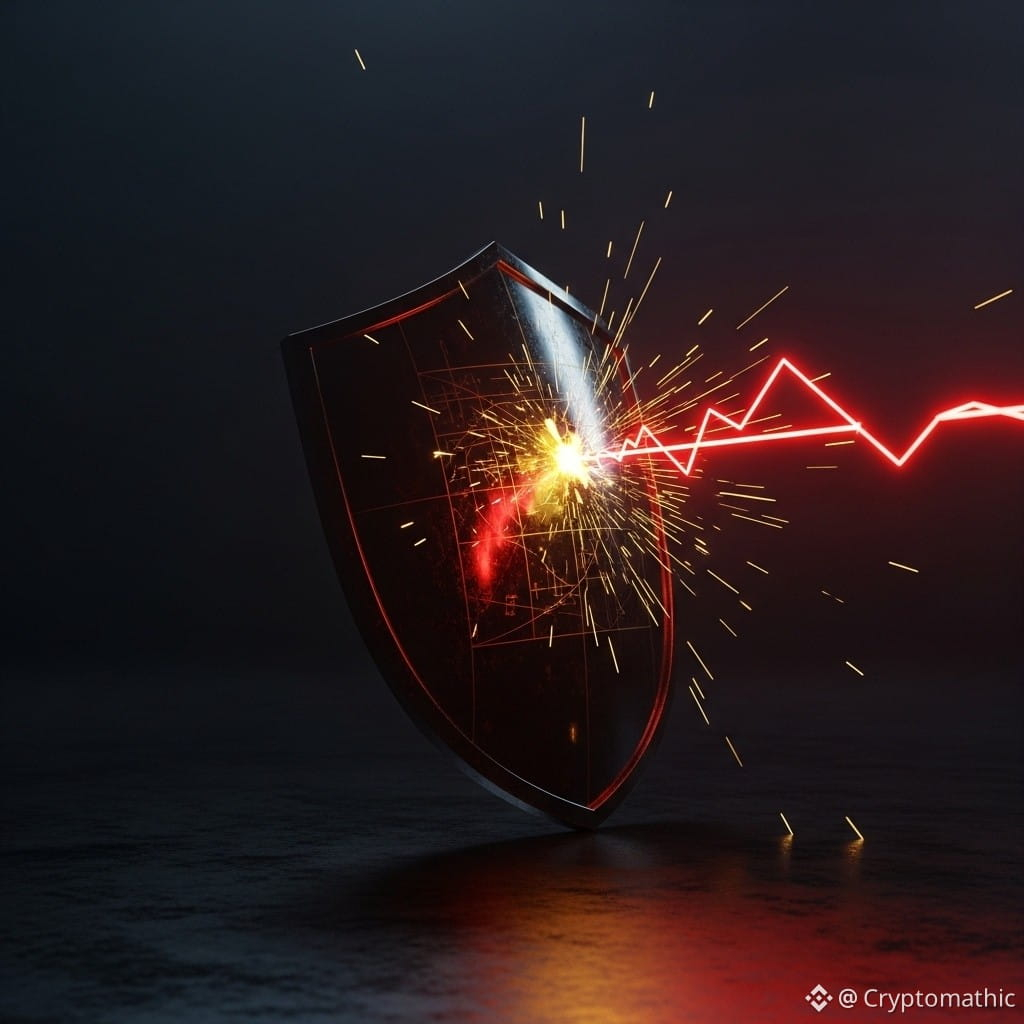
El Escudo Matemático ⚖️🛡️
Los amateurs calculan cuánto pueden ganar.
Los profesionales calculan exactamente cuánto van a perder.
Aquí está la diferencia institucional:
• El dinero inteligente nunca arriesga >2% del capital total por operación.
• Saben que perder el 50% requiere una ganancia del 100% solo para sobrevivir.
• Un Punto de Invalidación se establece matemáticamente antes de entrar.
Si operas sin un escudo matemático, no estás invirtiendo.
Simplemente estás donando liquidez a aquellos que hacen las cuentas.
Corta pérdidas matemáticamente.
Deja la esperanza en la puerta.
Lógica > Esperanza. ⚖️🛡️
#RiskManagement #TradingMath #smartmoney #crypto #Cryptomathic $BTC $BNB $ETH
El Escudo Matemático ⚖️🛡️
Los amateurs calculan cuánto pueden ganar.
Los profesionales calculan exactamente cuánto van a perder.
Aquí está la diferencia institucional:
• El dinero inteligente nunca arriesga >2% del capital total por operación.
• Saben que perder el 50% requiere una ganancia del 100% solo para sobrevivir.
• Un Punto de Invalidación se establece matemáticamente antes de entrar.
Si operas sin un escudo matemático, no estás invirtiendo.
Simplemente estás donando liquidez a aquellos que hacen las cuentas.
Corta pérdidas matemáticamente.
Deja la esperanza en la puerta.
Lógica > Esperanza. ⚖️🛡️
#RiskManagement #TradingMath #smartmoney #crypto #Cryptomathic $BTC $BNB $ETH
Los amateurs calculan cuánto pueden ganar.
Los profesionales calculan exactamente cuánto van a perder.
Aquí está la diferencia institucional:
• El dinero inteligente nunca arriesga >2% del capital total por operación.
• Saben que perder el 50% requiere una ganancia del 100% solo para sobrevivir.
• Un Punto de Invalidación se establece matemáticamente antes de entrar.
Si operas sin un escudo matemático, no estás invirtiendo.
Simplemente estás donando liquidez a aquellos que hacen las cuentas.
Corta pérdidas matemáticamente.
Deja la esperanza en la puerta.
Lógica > Esperanza. ⚖️🛡️
#RiskManagement #TradingMath #smartmoney #crypto #Cryptomathic $BTC $BNB $ETH
1
1
178

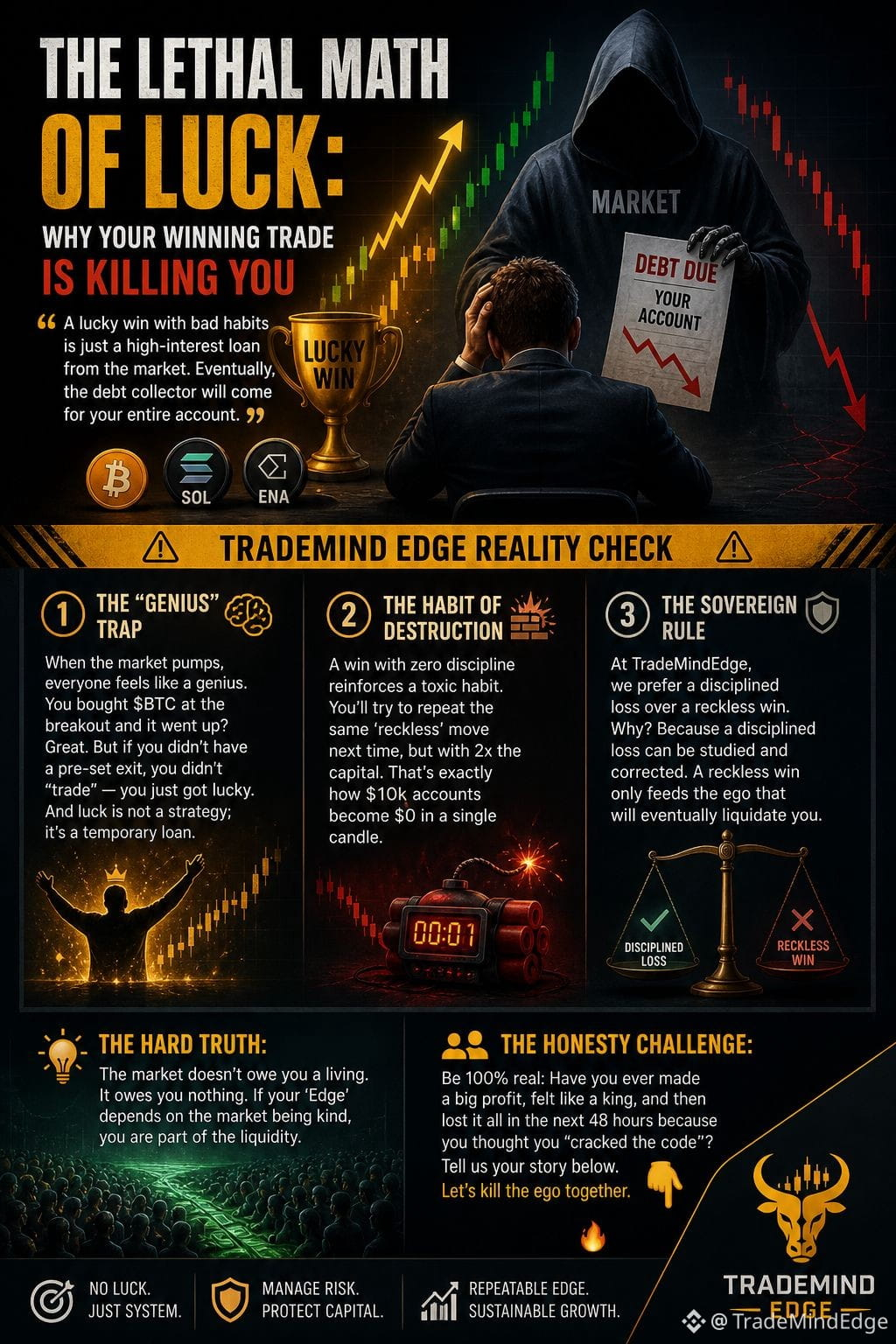
🛡️ LA MATH LETAL DE LA SUERTE: POR QUÉ TU OPERACIÓN GANADORA TE ESTÁ MATANDO 📉
"Una victoria afortunada con malos hábitos es solo un préstamo a alto interés del mercado. Eventualmente, el cobrador de deudas vendrá por toda tu cuenta."
Querido Amigo,
La persona más peligrosa en el mercado no es la que acaba de perderlo todo. Es la que acaba de obtener un 100% de ganancia en $SOL o $ENA sin un plan. 🏛️
🔍 LA REALIDAD DE TRADEMINDEDGE:
1️⃣ La Trampa del "Genio": 🧠
Cuando el mercado se dispara, todos se sienten como genios. Compraste $BTC en el breakout y subió? Genial. Pero si no tenías una salida preestablecida, no "operaste"—solo tuviste suerte. Y la suerte no es una estrategia; es un préstamo temporal.
2️⃣ El Hábito de la Destrucción: 🏗️🧨
Una victoria sin disciplina refuerza un hábito tóxico. Intentarás repetir el mismo movimiento 'imprudente' la próxima vez, pero con 2x el capital. Así es como las cuentas de $10k se convierten en $0 en una sola vela.
3️⃣ La Regla Soberana: 🛡️
En TradeMindEdge, preferimos una pérdida disciplinada a una victoria imprudente. ¿Por qué? Porque una pérdida disciplinada puede ser estudiada y corregida. Una victoria imprudente solo alimenta el ego que eventualmente te liquidará.
💡 LA DURA VERDAD:
El mercado no te debe una vida. No te debe nada. Si tu 'Ventaja' depende de que el mercado sea amable, eres parte de la liquidez.
🤝 EL DESAFÍO DE LA HONESTIDAD:
Sé 100% real: ¿Alguna vez has tenido una gran ganancia, te has sentido como un rey y luego lo has perdido todo en las siguientes 48 horas porque pensabas que habías "descifrado el código"? Cuéntanos tu historia a continuación. Vamos a matar el ego juntos. 👇🔥
#TradeMindEdge #TradingMath #BinanceSquare #BTC #SOL #ENA #GestiónDeRiesgo #SinSuerteSoloSistema
🛡️ LA MATH LETAL DE LA SUERTE: POR QUÉ TU OPERACIÓN GANADORA TE ESTÁ MATANDO 📉
"Una victoria afortunada con malos hábitos es solo un préstamo a alto interés del mercado. Eventualmente, el cobrador de deudas vendrá por toda tu cuenta."
Querido Amigo,
La persona más peligrosa en el mercado no es la que acaba de perderlo todo. Es la que acaba de obtener un 100% de ganancia en $SOL o $ENA sin un plan. 🏛️
🔍 LA REALIDAD DE TRADEMINDEDGE:
1️⃣ La Trampa del "Genio": 🧠
Cuando el mercado se dispara, todos se sienten como genios. Compraste $BTC en el breakout y subió? Genial. Pero si no tenías una salida preestablecida, no "operaste"—solo tuviste suerte. Y la suerte no es una estrategia; es un préstamo temporal.
2️⃣ El Hábito de la Destrucción: 🏗️🧨
Una victoria sin disciplina refuerza un hábito tóxico. Intentarás repetir el mismo movimiento 'imprudente' la próxima vez, pero con 2x el capital. Así es como las cuentas de $10k se convierten en $0 en una sola vela.
3️⃣ La Regla Soberana: 🛡️
En TradeMindEdge, preferimos una pérdida disciplinada a una victoria imprudente. ¿Por qué? Porque una pérdida disciplinada puede ser estudiada y corregida. Una victoria imprudente solo alimenta el ego que eventualmente te liquidará.
💡 LA DURA VERDAD:
El mercado no te debe una vida. No te debe nada. Si tu 'Ventaja' depende de que el mercado sea amable, eres parte de la liquidez.
🤝 EL DESAFÍO DE LA HONESTIDAD:
Sé 100% real: ¿Alguna vez has tenido una gran ganancia, te has sentido como un rey y luego lo has perdido todo en las siguientes 48 horas porque pensabas que habías "descifrado el código"? Cuéntanos tu historia a continuación. Vamos a matar el ego juntos. 👇🔥
#TradeMindEdge #TradingMath #BinanceSquare #BTC #SOL #ENA #GestiónDeRiesgo #SinSuerteSoloSistema
"Una victoria afortunada con malos hábitos es solo un préstamo a alto interés del mercado. Eventualmente, el cobrador de deudas vendrá por toda tu cuenta."
Querido Amigo,
La persona más peligrosa en el mercado no es la que acaba de perderlo todo. Es la que acaba de obtener un 100% de ganancia en $SOL o $ENA sin un plan. 🏛️
🔍 LA REALIDAD DE TRADEMINDEDGE:
1️⃣ La Trampa del "Genio": 🧠
Cuando el mercado se dispara, todos se sienten como genios. Compraste $BTC en el breakout y subió? Genial. Pero si no tenías una salida preestablecida, no "operaste"—solo tuviste suerte. Y la suerte no es una estrategia; es un préstamo temporal.
2️⃣ El Hábito de la Destrucción: 🏗️🧨
Una victoria sin disciplina refuerza un hábito tóxico. Intentarás repetir el mismo movimiento 'imprudente' la próxima vez, pero con 2x el capital. Así es como las cuentas de $10k se convierten en $0 en una sola vela.
3️⃣ La Regla Soberana: 🛡️
En TradeMindEdge, preferimos una pérdida disciplinada a una victoria imprudente. ¿Por qué? Porque una pérdida disciplinada puede ser estudiada y corregida. Una victoria imprudente solo alimenta el ego que eventualmente te liquidará.
💡 LA DURA VERDAD:
El mercado no te debe una vida. No te debe nada. Si tu 'Ventaja' depende de que el mercado sea amable, eres parte de la liquidez.
🤝 EL DESAFÍO DE LA HONESTIDAD:
Sé 100% real: ¿Alguna vez has tenido una gran ganancia, te has sentido como un rey y luego lo has perdido todo en las siguientes 48 horas porque pensabas que habías "descifrado el código"? Cuéntanos tu historia a continuación. Vamos a matar el ego juntos. 👇🔥
#TradeMindEdge #TradingMath #BinanceSquare #BTC #SOL #ENA #GestiónDeRiesgo #SinSuerteSoloSistema
1
285
Inicia sesión para explorar más contenidos
Únete a usuarios globales de criptomonedas en Binance Square
⚡️ Obtén información útil y actualizada sobre criptos.
💬 Avalado por el mayor exchange de criptomonedas en el mundo.
👍 Descubre perspectivas reales de creadores verificados.
Email/número de teléfono
Temas populares
1
#BitcoinClears$85200
3,043 vistas
118 están debatiendo
2
#AltcoinSeasonIndexHoldsAbove60For5Days
20,399 vistas
734 están debatiendo
3
#USADPAdds90000JobsInSeptember
7,430 vistas
406 están debatiendo
4
#USCorePCEEasesTo3%InAugust
6,367 vistas
347 están debatiendo
5
#KospiPostsWorstQuarterSince2020
5,559 vistas
369 están debatiendo
6
#SECToClarifyOnChainFundraisingRules
14,111 vistas
536 están debatiendo
7
#UKFCAOpensCryptoFirmAuthorization
16,840 vistas
474 están debatiendo
8
#JapanMOFStudyGroupOnTokenizedGovtBonds
14,502 vistas
384 están debatiendo
9
#QNTRises287%
64,825 vistas
806 están debatiendo
10
#TrumpRejectsAIRulesForVoluntaryAudits
39,986 vistas
717 están debatiendo