

#blockchain
blockchain
35.2M vistas
166,931 están debatiendo
Hot
Lo último

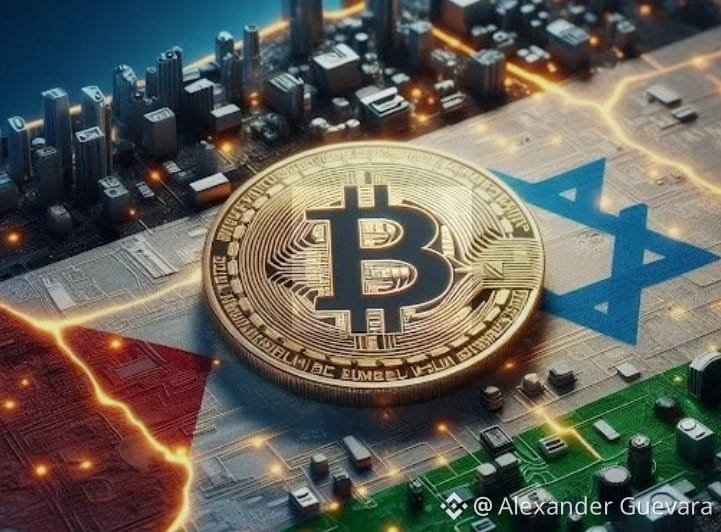
El primer ministro del estado sionista de Israel, Benjamin Netanyahu, aseguró que su país podría recurrir a la tecnología blockchain y las criptomonedas para eludir posibles sanciones internacionales, para consternación de sus oponentes y del gobernador del banco central del país. Varios de los candidatos que buscan reemplazar a Netanyahu en las elecciones del 27 de octubre, así como el jefe del Banco de Israel, se apresuraron a cuestionar la declaración del primer ministro.
Una docena de países occidentales han anunciado sanciones dirigidas contra productos procedentes de asentamientos israelíes en Cisjordania, en respuesta a los ataques de colonos judíos contra palestinos y al aumento de la construcción en los asentamientos aprobado Netanyahu. Esas sanciones podrían extenderse al propio Israel, dijeron economistas y figuras del sector el mes pasado.
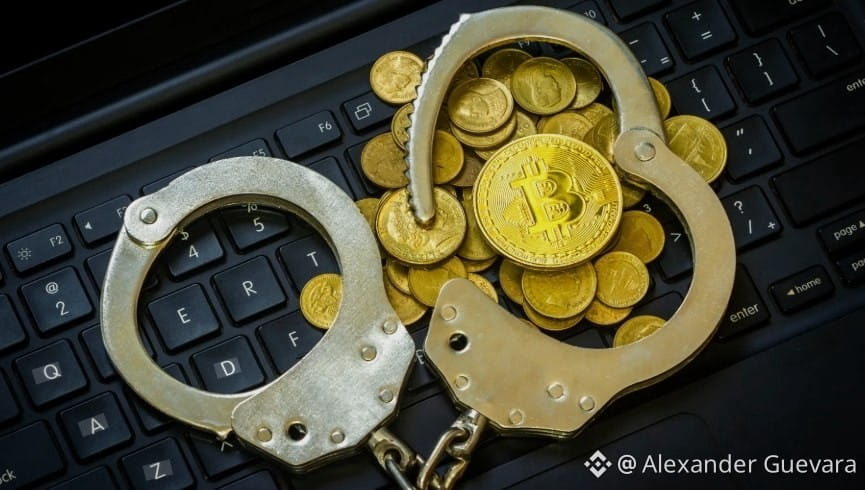
El ciudadano de nacionalidad chino, Zheng Zhao, se enfrenta a un cargo de blanqueo de capitales en EEUU tras su extradición desde Holanda por una presunta estafa con criptomonedas que asciende a más de US$36 millones. Los investigadores han identificado a 174 víctimas estadounidenses cuyos fondos habrían pasado por cuentas bancarias en paraísos fiscales y monederos digitales. La red utilizaba plataformas de inversión y sitios web falsos para engañar a las víctimas.
Los fondos ilícitos pasaban inicialmente por empresas fantasma o pantalla en EEUU, desde donde eran transferidos a cuentas bancarias en jurisdicciones offshore. Posteriormente, el dinero era convertido en stablecoin y distribuido hacia monederos digitales situados en el extranjero, específicamente en Camboya. Zhao se enfrenta a una pena máxima de hasta 20 años de cárcel de ser hallado culpable del cargo de conspiración para cometer blanqueo de capitales.
#EEUU #blockchain #Israel #benjamin_netanyahu #BTC $BTC
El primer ministro del estado sionista de Israel, Benjamin Netanyahu, aseguró que su país podría recurrir a la tecnología blockchain y las criptomonedas para eludir posibles sanciones internacionales, para consternación de sus oponentes y del gobernador del banco central del país. Varios de los candidatos que buscan reemplazar a Netanyahu en las elecciones del 27 de octubre, así como el jefe del Banco de Israel, se apresuraron a cuestionar la declaración del primer ministro.
Una docena de países occidentales han anunciado sanciones dirigidas contra productos procedentes de asentamientos israelíes en Cisjordania, en respuesta a los ataques de colonos judíos contra palestinos y al aumento de la construcción en los asentamientos aprobado Netanyahu. Esas sanciones podrían extenderse al propio Israel, dijeron economistas y figuras del sector el mes pasado.
El ciudadano de nacionalidad chino, Zheng Zhao, se enfrenta a un cargo de blanqueo de capitales en EEUU tras su extradición desde Holanda por una presunta estafa con criptomonedas que asciende a más de US$36 millones. Los investigadores han identificado a 174 víctimas estadounidenses cuyos fondos habrían pasado por cuentas bancarias en paraísos fiscales y monederos digitales. La red utilizaba plataformas de inversión y sitios web falsos para engañar a las víctimas.
Los fondos ilícitos pasaban inicialmente por empresas fantasma o pantalla en EEUU, desde donde eran transferidos a cuentas bancarias en jurisdicciones offshore. Posteriormente, el dinero era convertido en stablecoin y distribuido hacia monederos digitales situados en el extranjero, específicamente en Camboya. Zhao se enfrenta a una pena máxima de hasta 20 años de cárcel de ser hallado culpable del cargo de conspiración para cometer blanqueo de capitales.
#EEUU #blockchain #Israel #benjamin_netanyahu #BTC $BTC
Una docena de países occidentales han anunciado sanciones dirigidas contra productos procedentes de asentamientos israelíes en Cisjordania, en respuesta a los ataques de colonos judíos contra palestinos y al aumento de la construcción en los asentamientos aprobado Netanyahu. Esas sanciones podrían extenderse al propio Israel, dijeron economistas y figuras del sector el mes pasado.
El ciudadano de nacionalidad chino, Zheng Zhao, se enfrenta a un cargo de blanqueo de capitales en EEUU tras su extradición desde Holanda por una presunta estafa con criptomonedas que asciende a más de US$36 millones. Los investigadores han identificado a 174 víctimas estadounidenses cuyos fondos habrían pasado por cuentas bancarias en paraísos fiscales y monederos digitales. La red utilizaba plataformas de inversión y sitios web falsos para engañar a las víctimas.
Los fondos ilícitos pasaban inicialmente por empresas fantasma o pantalla en EEUU, desde donde eran transferidos a cuentas bancarias en jurisdicciones offshore. Posteriormente, el dinero era convertido en stablecoin y distribuido hacia monederos digitales situados en el extranjero, específicamente en Camboya. Zhao se enfrenta a una pena máxima de hasta 20 años de cárcel de ser hallado culpable del cargo de conspiración para cometer blanqueo de capitales.
#EEUU #blockchain #Israel #benjamin_netanyahu #BTC $BTC
147
Artículo
₿ BITCOIN DESDE CERO: LA TECNOLOGÍA DETRÁS DE CADA TRANSACCIÓN...Millones de personas compran, venden y transfieren Bitcoin o simplemente otra criptomonedas... Pero ..
¿cuántas saben realmente qué sucede cuando presionan el botón ENVIAR?
Vamos a conocer juntos el mundo del bitcoin...
¿Dónde están realmente los bitcoins?
¿Qué guarda una wallet?
¿Cómo puede una red verificar una transferencia sin depender de un banco?
¿Quién crea los bloques, qué hacen los mineros y cómo se protege una historia de transacciones que comenzó hace más de una decada?
Porque detrás de esas preguntas existe una arquitectura tecnológica extraordinaria que merece ser comprendida....
Por eso voy a comenzar una serie de publicaciones en la que vamos a DESARMAR BITCOIN PIEZA POR PIEZA, desde el problema que dio origen a su creación hasta los mecanismos criptográficos que permiten su funcionamiento.
Vamos a recorrer las claves privadas, las firmas digitales, los UTXO, las transacciones, los nodos, la minería, el Proof of Work, el halving y muchos otros componentes fundamentales.
No como conceptos aislados, sino descubriendo cómo se relacionan y qué función cumple cada uno dentro del sistema.
La propuesta es sencilla: cada historia responderá una pregunta y abrirá el camino hacia la siguiente. Como los bloques de una cadena, cada explicación estará conectada con la anterior.
Utilizaré ejemplos prácticos, explicaciones accesibles y documentación técnica verificable. También pondré a prueba algunas de las afirmaciones más repetidas sobre Bitcoin para distinguir lo que realmente hace su tecnología de lo que muchas veces se cree que hace.
NO... no necesitás tener criptomonedas, gastar un solo peso ni saber programación. Solamente curiosidad por comprender cómo funciona una tecnología que permite transferir valor mediante una red distribuida.
MÁS DE 70 HISTORIAS. UNA SOLA INVESTIGACIÓN. UN UNICO OBJETIVO: ENTENDER BITCOIN DESDE CERO.
🧠 ESTO... ES SIMPLE Y GRATIS.
ACÁ NO VAS A APRENDER A INVERTIR... VAS A APRENDER A ENTENDER LA TECNOLOGÍA QUE LO HACE POSIBLE...
PORQUE NO SE TRATA DE SABER CUÁNTO VALE UN BITCOIN, SINO DE COMPRENDER CÓMO FUNCIONA, POR QUÉ EXISTE Y QUÉ LO MANTIENE EN PIE...
💎 TE INVITO A SUSCRIBIRTE.. A ESTE NUEVO DESAFIO...
⚠️ PERO CUIDADO... Esto es solo...
👽 PARA CURIOSOS DIGITALES...
Siguiente: https://app.binance.com/uni-qr/cart/381216131783190?r=MMBMSTEK&l=es-LA&uco=BCkZoR_UN7fRAF9WbZ56aQ
$BTC
#bitcoin #CRİPTO #ciberseguridad #blockchain
₿ BITCOIN DESDE CERO: LA TECNOLOGÍA DETRÁS DE CADA TRANSACCIÓN...
Millones de personas compran, venden y transfieren Bitcoin o simplemente otra criptomonedas... Pero ..
¿cuántas saben realmente qué sucede cuando presionan el botón ENVIAR?
Vamos a conocer juntos el mundo del bitcoin...
¿Dónde están realmente los bitcoins?
¿Qué guarda una wallet?
¿Cómo puede una red verificar una transferencia sin depender de un banco?
¿Quién crea los bloques, qué hacen los mineros y cómo se protege una historia de transacciones que comenzó hace más de una decada?
Porque detrás de esas preguntas existe una arquitectura tecnológica extraordinaria que merece ser comprendida....
Por eso voy a comenzar una serie de publicaciones en la que vamos a DESARMAR BITCOIN PIEZA POR PIEZA, desde el problema que dio origen a su creación hasta los mecanismos criptográficos que permiten su funcionamiento.
Vamos a recorrer las claves privadas, las firmas digitales, los UTXO, las transacciones, los nodos, la minería, el Proof of Work, el halving y muchos otros componentes fundamentales.
No como conceptos aislados, sino descubriendo cómo se relacionan y qué función cumple cada uno dentro del sistema.
La propuesta es sencilla: cada historia responderá una pregunta y abrirá el camino hacia la siguiente. Como los bloques de una cadena, cada explicación estará conectada con la anterior.
Utilizaré ejemplos prácticos, explicaciones accesibles y documentación técnica verificable. También pondré a prueba algunas de las afirmaciones más repetidas sobre Bitcoin para distinguir lo que realmente hace su tecnología de lo que muchas veces se cree que hace.
NO... no necesitás tener criptomonedas, gastar un solo peso ni saber programación. Solamente curiosidad por comprender cómo funciona una tecnología que permite transferir valor mediante una red distribuida.
MÁS DE 70 HISTORIAS. UNA SOLA INVESTIGACIÓN. UN UNICO OBJETIVO: ENTENDER BITCOIN DESDE CERO.
🧠 ESTO... ES SIMPLE Y GRATIS.
ACÁ NO VAS A APRENDER A INVERTIR... VAS A APRENDER A ENTENDER LA TECNOLOGÍA QUE LO HACE POSIBLE...
PORQUE NO SE TRATA DE SABER CUÁNTO VALE UN BITCOIN, SINO DE COMPRENDER CÓMO FUNCIONA, POR QUÉ EXISTE Y QUÉ LO MANTIENE EN PIE...
💎 TE INVITO A SUSCRIBIRTE.. A ESTE NUEVO DESAFIO...
⚠️ PERO CUIDADO... Esto es solo...
👽 PARA CURIOSOS DIGITALES...
Siguiente: https://app.binance.com/uni-qr/cart/381216131783190?r=MMBMSTEK&l=es-LA&uco=BCkZoR_UN7fRAF9WbZ56aQ
$BTC
#bitcoin #CRİPTO #ciberseguridad #blockchain
¿cuántas saben realmente qué sucede cuando presionan el botón ENVIAR?
Vamos a conocer juntos el mundo del bitcoin...
¿Dónde están realmente los bitcoins?
¿Qué guarda una wallet?
¿Cómo puede una red verificar una transferencia sin depender de un banco?
¿Quién crea los bloques, qué hacen los mineros y cómo se protege una historia de transacciones que comenzó hace más de una decada?
Porque detrás de esas preguntas existe una arquitectura tecnológica extraordinaria que merece ser comprendida....
Por eso voy a comenzar una serie de publicaciones en la que vamos a DESARMAR BITCOIN PIEZA POR PIEZA, desde el problema que dio origen a su creación hasta los mecanismos criptográficos que permiten su funcionamiento.
Vamos a recorrer las claves privadas, las firmas digitales, los UTXO, las transacciones, los nodos, la minería, el Proof of Work, el halving y muchos otros componentes fundamentales.
No como conceptos aislados, sino descubriendo cómo se relacionan y qué función cumple cada uno dentro del sistema.
La propuesta es sencilla: cada historia responderá una pregunta y abrirá el camino hacia la siguiente. Como los bloques de una cadena, cada explicación estará conectada con la anterior.
Utilizaré ejemplos prácticos, explicaciones accesibles y documentación técnica verificable. También pondré a prueba algunas de las afirmaciones más repetidas sobre Bitcoin para distinguir lo que realmente hace su tecnología de lo que muchas veces se cree que hace.
NO... no necesitás tener criptomonedas, gastar un solo peso ni saber programación. Solamente curiosidad por comprender cómo funciona una tecnología que permite transferir valor mediante una red distribuida.
MÁS DE 70 HISTORIAS. UNA SOLA INVESTIGACIÓN. UN UNICO OBJETIVO: ENTENDER BITCOIN DESDE CERO.
🧠 ESTO... ES SIMPLE Y GRATIS.
ACÁ NO VAS A APRENDER A INVERTIR... VAS A APRENDER A ENTENDER LA TECNOLOGÍA QUE LO HACE POSIBLE...
PORQUE NO SE TRATA DE SABER CUÁNTO VALE UN BITCOIN, SINO DE COMPRENDER CÓMO FUNCIONA, POR QUÉ EXISTE Y QUÉ LO MANTIENE EN PIE...
💎 TE INVITO A SUSCRIBIRTE.. A ESTE NUEVO DESAFIO...
⚠️ PERO CUIDADO... Esto es solo...
👽 PARA CURIOSOS DIGITALES...
Siguiente: https://app.binance.com/uni-qr/cart/381216131783190?r=MMBMSTEK&l=es-LA&uco=BCkZoR_UN7fRAF9WbZ56aQ
$BTC
#bitcoin #CRİPTO #ciberseguridad #blockchain
1
289

·
--
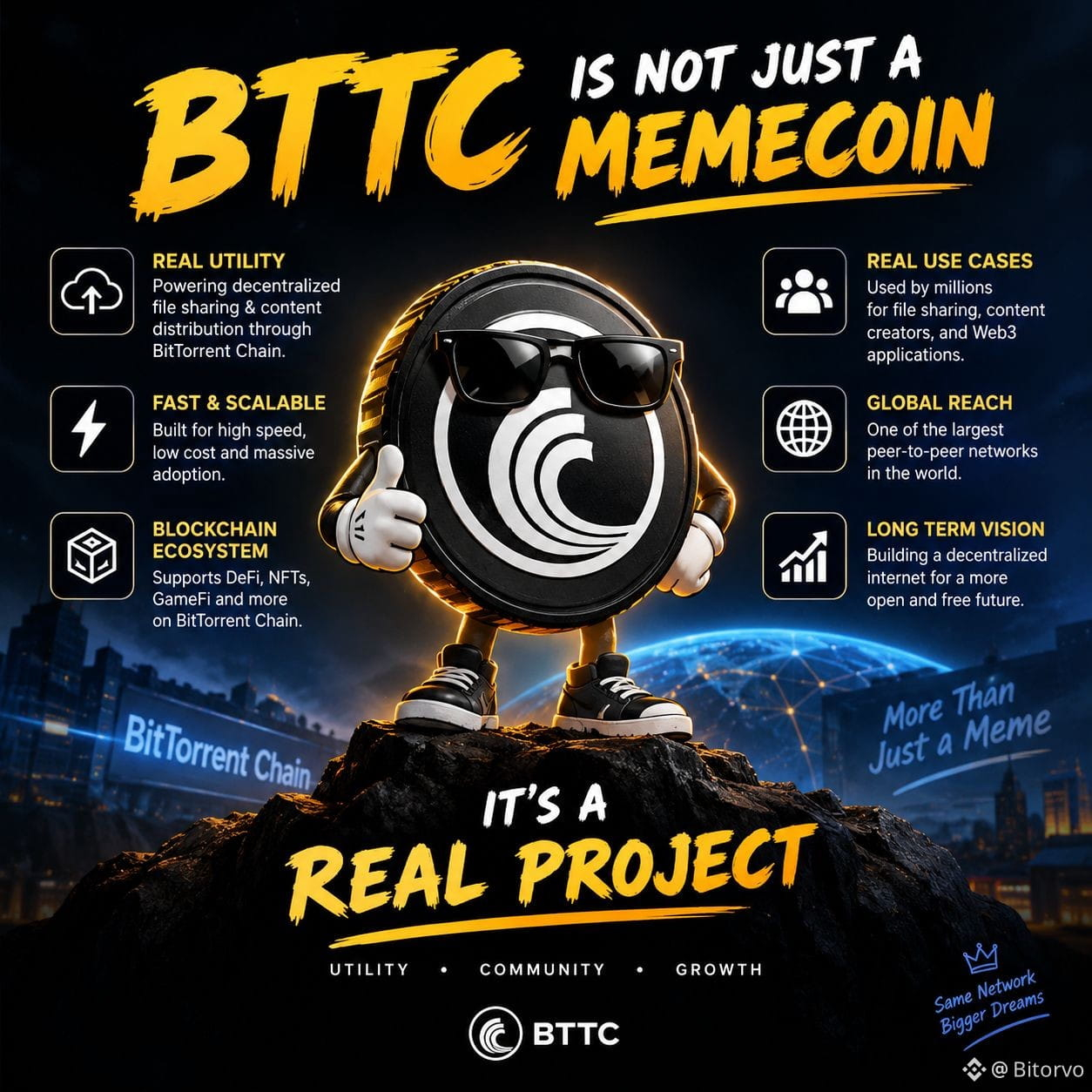
Creo que $BTTC es solo una memecoin, pero no puede 😧
🚀 ¡BTTC está ayudando a que Web3 esté más conectada! 🔗🌐
sus usos👀👀👀....
✨ Conectividad entre cadenas: Supera las limitaciones de una sola cadena.
🔄 Mayor flexibilidad: Explora más fácilmente varios ecosistemas de blockchain.
🌍 Menos fragmentación: Ayuda a que las redes y los usuarios interactúen entre cadenas.
⚡ Más utilidad: Los activos y las aplicaciones pueden tener un uso más amplio en Web3.
🤝 Un ecosistema más sólido: Un futuro conectado puede ofrecer experiencias más fluidas para todos.
BTTC refleja la visión de un mundo blockchain más interoperable. 🌉
💬 ¿Qué es lo más importante para ti en la tecnología entre cadenas: la velocidad, la accesibilidad o la liquidez?
#BTTC #BTT #Web3 #Blockchain #Crypto
Creo que $BTTC es solo una memecoin, pero no puede 😧
🚀 ¡BTTC está ayudando a que Web3 esté más conectada! 🔗🌐
sus usos👀👀👀....
✨ Conectividad entre cadenas: Supera las limitaciones de una sola cadena.
🔄 Mayor flexibilidad: Explora más fácilmente varios ecosistemas de blockchain.
🌍 Menos fragmentación: Ayuda a que las redes y los usuarios interactúen entre cadenas.
⚡ Más utilidad: Los activos y las aplicaciones pueden tener un uso más amplio en Web3.
🤝 Un ecosistema más sólido: Un futuro conectado puede ofrecer experiencias más fluidas para todos.
BTTC refleja la visión de un mundo blockchain más interoperable. 🌉
💬 ¿Qué es lo más importante para ti en la tecnología entre cadenas: la velocidad, la accesibilidad o la liquidez?
#BTTC #BTT #Web3 #Blockchain #Crypto
🚀 ¡BTTC está ayudando a que Web3 esté más conectada! 🔗🌐
sus usos👀👀👀....
✨ Conectividad entre cadenas: Supera las limitaciones de una sola cadena.
🔄 Mayor flexibilidad: Explora más fácilmente varios ecosistemas de blockchain.
🌍 Menos fragmentación: Ayuda a que las redes y los usuarios interactúen entre cadenas.
⚡ Más utilidad: Los activos y las aplicaciones pueden tener un uso más amplio en Web3.
🤝 Un ecosistema más sólido: Un futuro conectado puede ofrecer experiencias más fluidas para todos.
BTTC refleja la visión de un mundo blockchain más interoperable. 🌉
💬 ¿Qué es lo más importante para ti en la tecnología entre cadenas: la velocidad, la accesibilidad o la liquidez?
#BTTC #BTT #Web3 #Blockchain #Crypto
Quality Pic:
Bttc is a dead coin
3
5
630

·
--
🔷 ETHEREUM: ¿MÁS QUE UNA SIMPLE MONEDA?
Ethereum es uno de los proyectos más importantes del mundo cripto porque permite crear contratos inteligentes, aplicaciones descentralizadas y un enorme ecosistema de proyectos blockchain.
Aquí te contamos por qué ETH merece atención 👇
⚙️ Contratos inteligentes: Permiten que las aplicaciones funcionen en la blockchain sin depender de una autoridad central tradicional.
🌐 Ecosistema DeFi: Ethereum impulsa muchas aplicaciones de finanzas descentralizadas.
🔥 La actividad de la red importa: La adopción, la competencia, las comisiones y el uso de la red pueden influir en las perspectivas de Ethereum a largo plazo.
📉 Pero recuerda: Una gran tecnología no significa automáticamente que el precio de su token vaya a subir. Los mercados cripto siguen siendo volátiles.
💬 ¡Hablemos!
¿Crees que Ethereum seguirá siendo una de las principales redes blockchain durante los próximos cinco años?
👇 Cuéntanos por qué en los comentarios.
#Ethereum #ETH #CryptoNews #Blockchain #BinanceSquare
🔷 ETHEREUM: ¿MÁS QUE UNA SIMPLE MONEDA?
Ethereum es uno de los proyectos más importantes del mundo cripto porque permite crear contratos inteligentes, aplicaciones descentralizadas y un enorme ecosistema de proyectos blockchain.
Aquí te contamos por qué ETH merece atención 👇
⚙️ Contratos inteligentes: Permiten que las aplicaciones funcionen en la blockchain sin depender de una autoridad central tradicional.
🌐 Ecosistema DeFi: Ethereum impulsa muchas aplicaciones de finanzas descentralizadas.
🔥 La actividad de la red importa: La adopción, la competencia, las comisiones y el uso de la red pueden influir en las perspectivas de Ethereum a largo plazo.
📉 Pero recuerda: Una gran tecnología no significa automáticamente que el precio de su token vaya a subir. Los mercados cripto siguen siendo volátiles.
💬 ¡Hablemos!
¿Crees que Ethereum seguirá siendo una de las principales redes blockchain durante los próximos cinco años?
👇 Cuéntanos por qué en los comentarios.
#Ethereum #ETH #CryptoNews #Blockchain #BinanceSquare
Ethereum es uno de los proyectos más importantes del mundo cripto porque permite crear contratos inteligentes, aplicaciones descentralizadas y un enorme ecosistema de proyectos blockchain.
Aquí te contamos por qué ETH merece atención 👇
⚙️ Contratos inteligentes: Permiten que las aplicaciones funcionen en la blockchain sin depender de una autoridad central tradicional.
🌐 Ecosistema DeFi: Ethereum impulsa muchas aplicaciones de finanzas descentralizadas.
🔥 La actividad de la red importa: La adopción, la competencia, las comisiones y el uso de la red pueden influir en las perspectivas de Ethereum a largo plazo.
📉 Pero recuerda: Una gran tecnología no significa automáticamente que el precio de su token vaya a subir. Los mercados cripto siguen siendo volátiles.
💬 ¡Hablemos!
¿Crees que Ethereum seguirá siendo una de las principales redes blockchain durante los próximos cinco años?
👇 Cuéntanos por qué en los comentarios.
#Ethereum #ETH #CryptoNews #Blockchain #BinanceSquare
1
95

·
--
Artículo
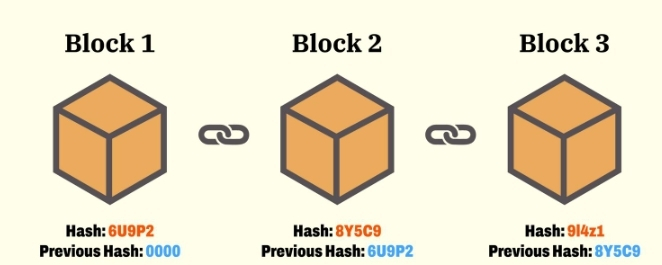
¿Cómo funciona la cadena de bloques?¿Te has preguntado alguna vez cómo se registran las transacciones de Bitcoin sin que un banco central controle la red? 🤔
¡Entendamos la cadena de bloques con un ejemplo sencillo!
📒 Imagina un cuaderno digital compartido.
Envías 100 takas a tu amigo. La transacción queda registrada en un sistema digital que varios participantes de la red pueden verificar.
Así funciona la cadena de bloques:
1️⃣ Transacción: Un usuario inicia una transacción.
2️⃣ Verificación: Los participantes de la red la verifican según las reglas del sistema.
3️⃣ Bloque: Las transacciones verificadas se agrupan en un bloque.
¿Cómo funciona la cadena de bloques?
¿Te has preguntado alguna vez cómo se registran las transacciones de Bitcoin sin que un banco central controle la red? 🤔
¡Entendamos la cadena de bloques con un ejemplo sencillo!
📒 Imagina un cuaderno digital compartido.
Envías 100 takas a tu amigo. La transacción queda registrada en un sistema digital que varios participantes de la red pueden verificar.
Así funciona la cadena de bloques:
1️⃣ Transacción: Un usuario inicia una transacción.
2️⃣ Verificación: Los participantes de la red la verifican según las reglas del sistema.
3️⃣ Bloque: Las transacciones verificadas se agrupan en un bloque.
¡Entendamos la cadena de bloques con un ejemplo sencillo!
📒 Imagina un cuaderno digital compartido.
Envías 100 takas a tu amigo. La transacción queda registrada en un sistema digital que varios participantes de la red pueden verificar.
Así funciona la cadena de bloques:
1️⃣ Transacción: Un usuario inicia una transacción.
2️⃣ Verificación: Los participantes de la red la verifican según las reglas del sistema.
3️⃣ Bloque: Las transacciones verificadas se agrupan en un bloque.
70

·
--
🤖 ¿QUÉ PASA CUANDO LOS AGENTES DE IA EMPIEZAN A USAR CRIPTOMONEDAS? 🔥
Imagina un asistente de IA que puede:
✅ Pagar servicios digitales automáticamente
✅ Comprar recursos informáticos
✅ Verificar transacciones en la cadena de bloques
✅ Interactuar con aplicaciones descentralizadas
Esta es una de las fascinantes posibilidades que surgen en la intersección de la IA y la cadena de bloques.
Pero la seguridad, los permisos y la rendición de cuentas siguen siendo grandes desafíos.
🌍 El próximo capítulo de la Web3 podría incluir máquinas interactuando económicamente, no solo personas intercambiando tokens.
💬 ¿Confiarías en un agente de IA para que gestione pequeños pagos en criptomonedas en tu nombre?
#AI #Web3 #blockchain #BinanceSquar
🤖 ¿QUÉ PASA CUANDO LOS AGENTES DE IA EMPIEZAN A USAR CRIPTOMONEDAS? 🔥
Imagina un asistente de IA que puede:
✅ Pagar servicios digitales automáticamente
✅ Comprar recursos informáticos
✅ Verificar transacciones en la cadena de bloques
✅ Interactuar con aplicaciones descentralizadas
Esta es una de las fascinantes posibilidades que surgen en la intersección de la IA y la cadena de bloques.
Pero la seguridad, los permisos y la rendición de cuentas siguen siendo grandes desafíos.
🌍 El próximo capítulo de la Web3 podría incluir máquinas interactuando económicamente, no solo personas intercambiando tokens.
💬 ¿Confiarías en un agente de IA para que gestione pequeños pagos en criptomonedas en tu nombre?
#AI #Web3 #blockchain #BinanceSquar
Imagina un asistente de IA que puede:
✅ Pagar servicios digitales automáticamente
✅ Comprar recursos informáticos
✅ Verificar transacciones en la cadena de bloques
✅ Interactuar con aplicaciones descentralizadas
Esta es una de las fascinantes posibilidades que surgen en la intersección de la IA y la cadena de bloques.
Pero la seguridad, los permisos y la rendición de cuentas siguen siendo grandes desafíos.
🌍 El próximo capítulo de la Web3 podría incluir máquinas interactuando económicamente, no solo personas intercambiando tokens.
💬 ¿Confiarías en un agente de IA para que gestione pequeños pagos en criptomonedas en tu nombre?
#AI #Web3 #blockchain #BinanceSquar
30

·
--
$ZAMA
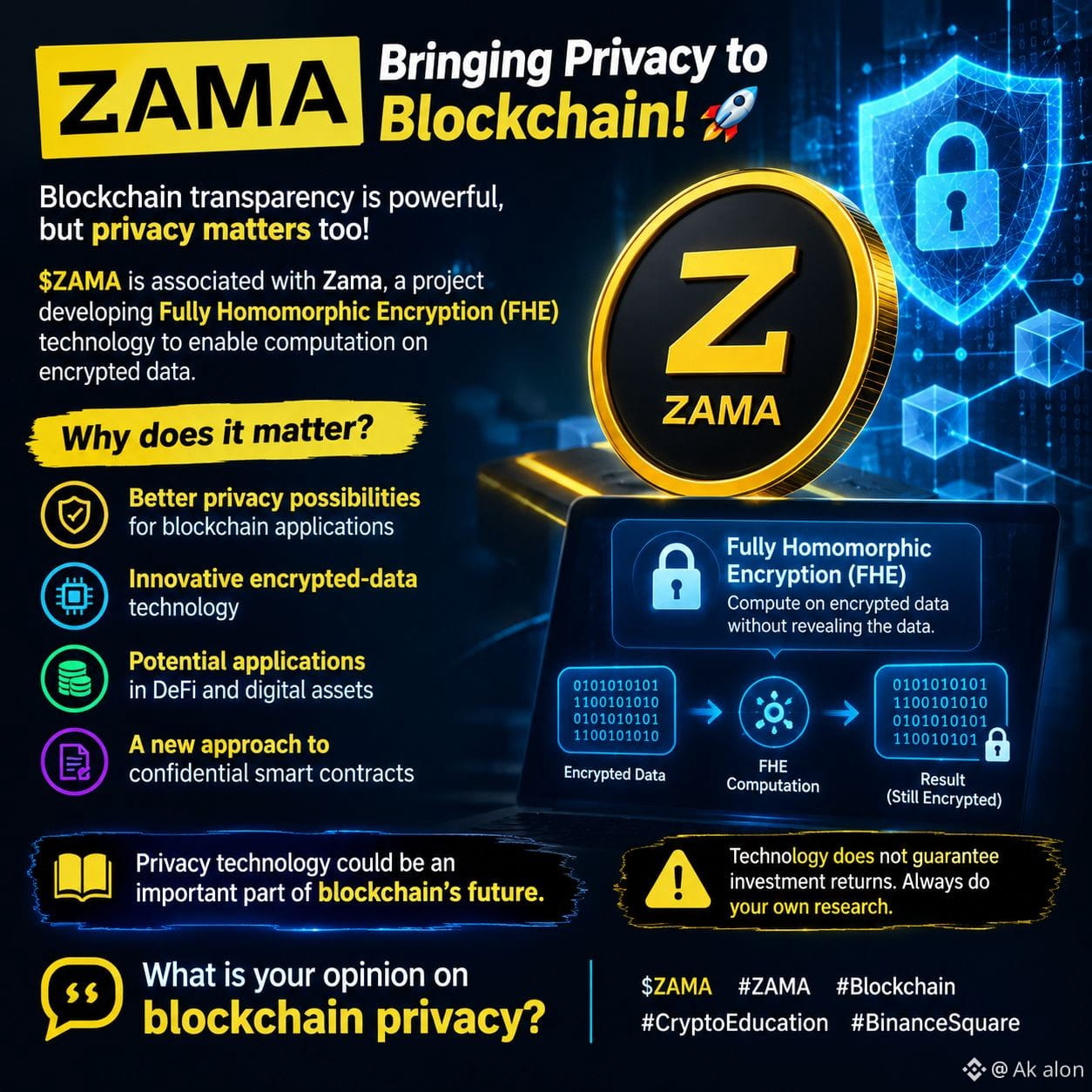
🔐 ZAMA: ¡Privacidad para la blockchain! 🚀
La transparencia de la blockchain es poderosa, ¡pero la privacidad también importa!
$ZAMA está asociado con Zama, un proyecto que desarrolla tecnología de cifrado totalmente homomórfico (FHE) para permitir realizar cálculos con datos cifrados.
🌟 ¿Por qué es importante?
🔹 Más posibilidades de privacidad para las aplicaciones de blockchain
🔹 Tecnología innovadora para datos cifrados
🔹 Posibles aplicaciones en DeFi y activos digitales
🔹 Un nuevo enfoque para los contratos inteligentes confidenciales
📚 La tecnología de privacidad podría ser una parte importante del futuro de la blockchain.
⚠️ La tecnología no garantiza rendimientos de inversión. Investiga siempre por tu cuenta.
¿Qué opinas sobre la privacidad en la blockchain?
$ZAMA #blockchain #cryptoeducation #BinanceSquare
$ZAMA
🔐 ZAMA: ¡Privacidad para la blockchain! 🚀
La transparencia de la blockchain es poderosa, ¡pero la privacidad también importa!
$ZAMA está asociado con Zama, un proyecto que desarrolla tecnología de cifrado totalmente homomórfico (FHE) para permitir realizar cálculos con datos cifrados.
🌟 ¿Por qué es importante?
🔹 Más posibilidades de privacidad para las aplicaciones de blockchain
🔹 Tecnología innovadora para datos cifrados
🔹 Posibles aplicaciones en DeFi y activos digitales
🔹 Un nuevo enfoque para los contratos inteligentes confidenciales
📚 La tecnología de privacidad podría ser una parte importante del futuro de la blockchain.
⚠️ La tecnología no garantiza rendimientos de inversión. Investiga siempre por tu cuenta.
¿Qué opinas sobre la privacidad en la blockchain?
$ZAMA #blockchain #cryptoeducation #BinanceSquare
🔐 ZAMA: ¡Privacidad para la blockchain! 🚀
La transparencia de la blockchain es poderosa, ¡pero la privacidad también importa!
$ZAMA está asociado con Zama, un proyecto que desarrolla tecnología de cifrado totalmente homomórfico (FHE) para permitir realizar cálculos con datos cifrados.
🌟 ¿Por qué es importante?
🔹 Más posibilidades de privacidad para las aplicaciones de blockchain
🔹 Tecnología innovadora para datos cifrados
🔹 Posibles aplicaciones en DeFi y activos digitales
🔹 Un nuevo enfoque para los contratos inteligentes confidenciales
📚 La tecnología de privacidad podría ser una parte importante del futuro de la blockchain.
⚠️ La tecnología no garantiza rendimientos de inversión. Investiga siempre por tu cuenta.
¿Qué opinas sobre la privacidad en la blockchain?
$ZAMA #blockchain #cryptoeducation #BinanceSquare
149

·
--
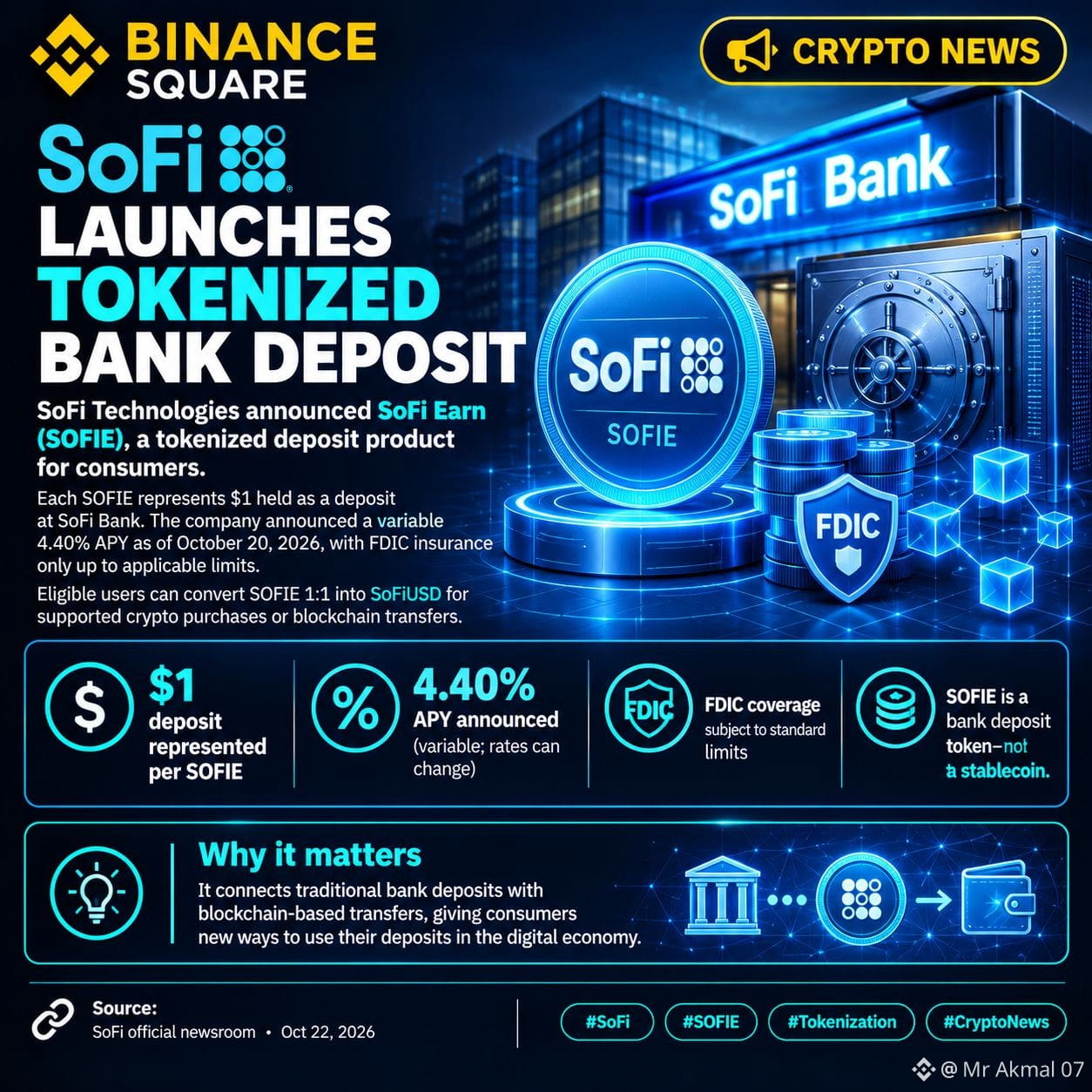
$SOFI 🚨 SOFI LANZA SOFIE: UN DEPÓSITO BANCARIO TOKENIZADO
SoFi Technologies anunció SoFi Earn (SOFIE) el 22 de octubre, presentando un depósito bancario tokenizado diseñado para conectar la banca tradicional con los pagos digitales basados en blockchain.
🔍 Aspectos destacados:
🔹 Cada SOFIE representa 1 $ depositado en SoFi Bank.
🔹 El rendimiento porcentual anual (APY) anunciado fue del 4,40 %, variable y sujeto a cambios.
🔹 Los miembros que cumplan los requisitos pueden convertir SOFIE a SoFiUSD en una proporción de 1:1.
🔹 El depósito puede acogerse al seguro de la FDIC hasta los límites aplicables.
🔹 SOFIE es un token de depósito bancario, no una stablecoin.
🌐 Por qué importa: Los depósitos tokenizados podrían ayudar a conectar la banca tradicional con la infraestructura de activos digitales, conservando la estructura jurídica de un depósito bancario.
📌 Importante: El producto se está implementando para los miembros de SoFi que cumplan los requisitos. La protección de la FDIC se aplica a los depósitos que reúnan las condiciones, conforme a las normas y los límites habituales; no cubre SoFiUSD ni otros criptoactivos.
🔗 Fuente oficial: https://www.sofi.com/newsroom/sofi-launches-sofi-earn-sofie-the-first-and-only-national-bank-issued-tokenized-deposit-for-consumers/
¿Qué opinas? ¿Se convertirán los depósitos bancarios tokenizados en una parte importante de los pagos digitales? 👇
#SoFi #blockchain #CryptoNews #BinanceSquare
{future}(SOFIUSDT)
$SOFI 🚨 SOFI LANZA SOFIE: UN DEPÓSITO BANCARIO TOKENIZADO
SoFi Technologies anunció SoFi Earn (SOFIE) el 22 de octubre, presentando un depósito bancario tokenizado diseñado para conectar la banca tradicional con los pagos digitales basados en blockchain.
🔍 Aspectos destacados:
🔹 Cada SOFIE representa 1 $ depositado en SoFi Bank.
🔹 El rendimiento porcentual anual (APY) anunciado fue del 4,40 %, variable y sujeto a cambios.
🔹 Los miembros que cumplan los requisitos pueden convertir SOFIE a SoFiUSD en una proporción de 1:1.
🔹 El depósito puede acogerse al seguro de la FDIC hasta los límites aplicables.
🔹 SOFIE es un token de depósito bancario, no una stablecoin.
🌐 Por qué importa: Los depósitos tokenizados podrían ayudar a conectar la banca tradicional con la infraestructura de activos digitales, conservando la estructura jurídica de un depósito bancario.
📌 Importante: El producto se está implementando para los miembros de SoFi que cumplan los requisitos. La protección de la FDIC se aplica a los depósitos que reúnan las condiciones, conforme a las normas y los límites habituales; no cubre SoFiUSD ni otros criptoactivos.
🔗 Fuente oficial: https://www.sofi.com/newsroom/sofi-launches-sofi-earn-sofie-the-first-and-only-national-bank-issued-tokenized-deposit-for-consumers/
¿Qué opinas? ¿Se convertirán los depósitos bancarios tokenizados en una parte importante de los pagos digitales? 👇
#SoFi #blockchain #CryptoNews #BinanceSquare
SoFi Technologies anunció SoFi Earn (SOFIE) el 22 de octubre, presentando un depósito bancario tokenizado diseñado para conectar la banca tradicional con los pagos digitales basados en blockchain.
🔍 Aspectos destacados:
🔹 Cada SOFIE representa 1 $ depositado en SoFi Bank.
🔹 El rendimiento porcentual anual (APY) anunciado fue del 4,40 %, variable y sujeto a cambios.
🔹 Los miembros que cumplan los requisitos pueden convertir SOFIE a SoFiUSD en una proporción de 1:1.
🔹 El depósito puede acogerse al seguro de la FDIC hasta los límites aplicables.
🔹 SOFIE es un token de depósito bancario, no una stablecoin.
🌐 Por qué importa: Los depósitos tokenizados podrían ayudar a conectar la banca tradicional con la infraestructura de activos digitales, conservando la estructura jurídica de un depósito bancario.
📌 Importante: El producto se está implementando para los miembros de SoFi que cumplan los requisitos. La protección de la FDIC se aplica a los depósitos que reúnan las condiciones, conforme a las normas y los límites habituales; no cubre SoFiUSD ni otros criptoactivos.
🔗 Fuente oficial: https://www.sofi.com/newsroom/sofi-launches-sofi-earn-sofie-the-first-and-only-national-bank-issued-tokenized-deposit-for-consumers/
¿Qué opinas? ¿Se convertirán los depósitos bancarios tokenizados en una parte importante de los pagos digitales? 👇
#SoFi #blockchain #CryptoNews #BinanceSquare
14

·
--
China incluyó la «construcción de una red nacional de blockchain» en su plan de informatización hasta 2030, y la entidad oficial prevé completarla para ese año. Se trata de una iniciativa de infraestructura gubernamental, no de un anuncio sobre una moneda o una red de intercambio específica. ¿Qué aplicaciones prevén? 🌐🧱📄
Los activos más negociados en Binance al momento de la consulta (17:05, hora de Estambul; pares Spot USDT): $USDC, $BTC, $ETH. Esta es una referencia general del mercado y no tiene una relación causal con la noticia. Fuente: Binance Spot 24h Ticker API.
#Blockchain #Crypto
China incluyó la «construcción de una red nacional de blockchain» en su plan de informatización hasta 2030, y la entidad oficial prevé completarla para ese año. Se trata de una iniciativa de infraestructura gubernamental, no de un anuncio sobre una moneda o una red de intercambio específica. ¿Qué aplicaciones prevén? 🌐🧱📄
Los activos más negociados en Binance al momento de la consulta (17:05, hora de Estambul; pares Spot USDT): $USDC , $BTC , $ETH . Esta es una referencia general del mercado y no tiene una relación causal con la noticia. Fuente: Binance Spot 24h Ticker API.
#Blockchain #Crypto
Los activos más negociados en Binance al momento de la consulta (17:05, hora de Estambul; pares Spot USDT): $USDC , $BTC , $ETH . Esta es una referencia general del mercado y no tiene una relación causal con la noticia. Fuente: Binance Spot 24h Ticker API.
#Blockchain #Crypto
77

·
--
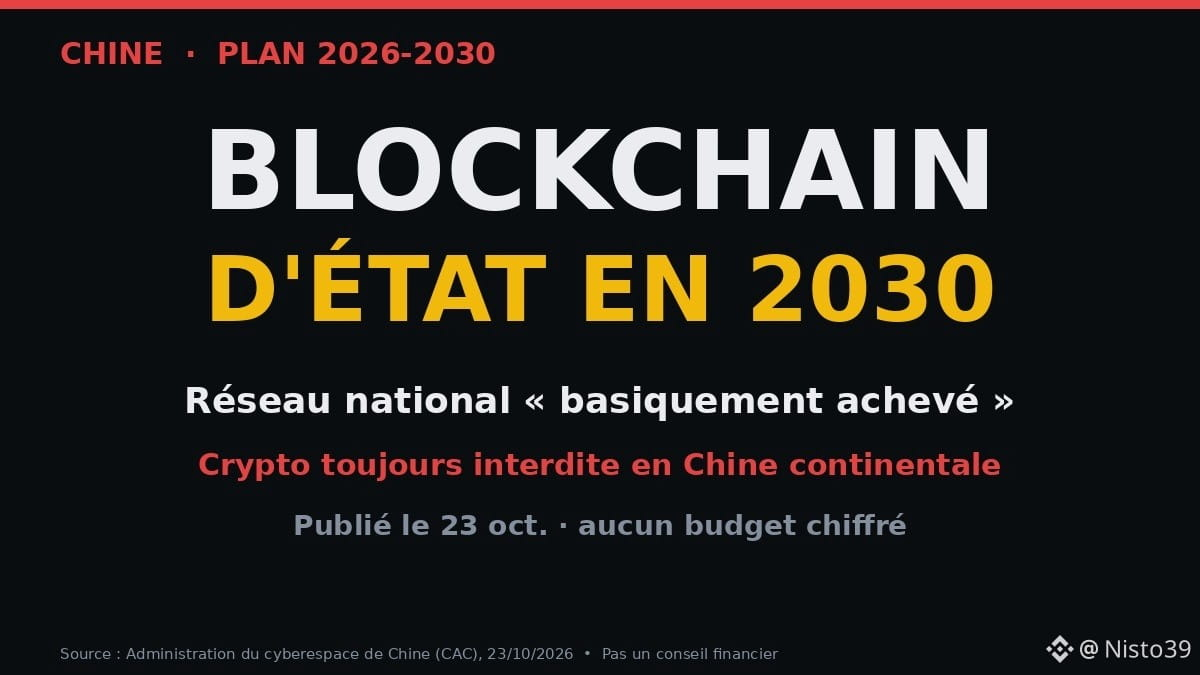
🇨🇳 China quiere su propia «autopista blockchain» para 2030… mientras mantiene las criptomonedas prohibidas. ¿Una paradoja? No realmente.
📌 Los hechos (23 de octubre de 2026)
• El Plan Nacional de Informatización 2026-2030 (15.º plan quinquenal), publicado por la Administración del Ciberespacio de China, fija un objetivo: que en 2030 esté «prácticamente terminada» una red nacional blockchain
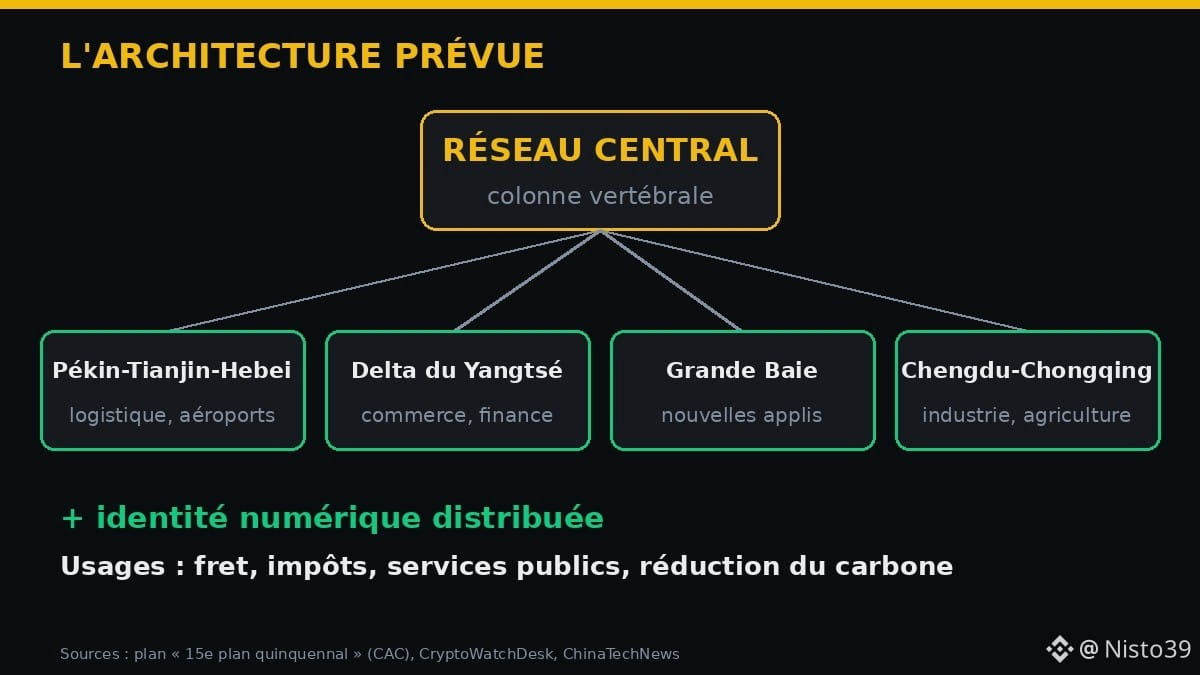
• El plan incluye una red central (la «columna vertebral»), nodos regionales conectados y una identidad digital distribuida
• Usos previstos: transporte de mercancías y marítimo, comercio, finanzas, impuestos, servicios públicos, agricultura y reducción de emisiones de carbono
• El texto no especifica ningún presupuesto ni menciona criptomonedas o stablecoins
• El yuan digital (la moneda del banco central) sigue en el plan
🔍 ¿Por qué importa?
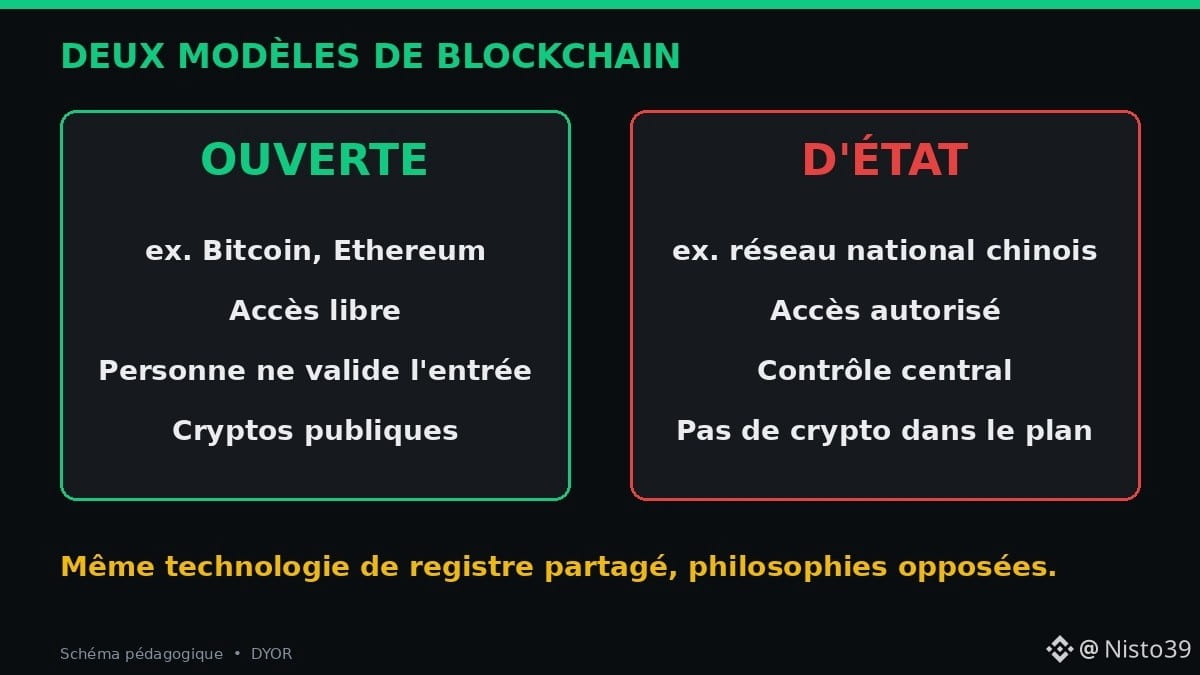
La blockchain es, ante todo, un registro compartido que nadie puede modificar por su cuenta. Pekín conserva la herramienta (para rastrear documentos, pagos y mercancías), pero no la libertad de las criptomonedas públicas como Bitcoin, que cualquiera puede usar sin autorización.
⚖️ Matices
• No es algo nuevo: la red ya figuraba en el plan nacional de marzo
• Es un objetivo, no una red que ya esté operativa
• La prohibición de las actividades relacionadas con las criptomonedas en China continental no cambia
👤 Koffi (personaje ficticio) es agente de carga en Lomé y recibe contenedores de China. Si algún día los conocimientos de embarque (documentos de transporte) se gestionan en esta red, sus socios chinos podrían verificar más rápido el origen de las mercancías. Para él, mañana no cambia nada.
💡 Se enfrentan dos modelos: blockchain abierta vs. blockchain estatal. China es el principal socio comercial de África, así que esto nos afecta.
💬 Blockchain estatal: ¿progreso 👍 o control 👀? 👇
No es asesoramiento financiero. DYOR.
Fuentes: CAC (23/10), Xinhua (23/10), CryptoWatchDesk, ChinaTechNews (24/10).
#CryptoNews #Chine #Blockchain #Afrique
🇨🇳 China quiere su propia «autopista blockchain» para 2030… mientras mantiene las criptomonedas prohibidas. ¿Una paradoja? No realmente.
📌 Los hechos (23 de octubre de 2026)
• El Plan Nacional de Informatización 2026-2030 (15.º plan quinquenal), publicado por la Administración del Ciberespacio de China, fija un objetivo: que en 2030 esté «prácticamente terminada» una red nacional blockchain
• El plan incluye una red central (la «columna vertebral»), nodos regionales conectados y una identidad digital distribuida
• Usos previstos: transporte de mercancías y marítimo, comercio, finanzas, impuestos, servicios públicos, agricultura y reducción de emisiones de carbono
• El texto no especifica ningún presupuesto ni menciona criptomonedas o stablecoins
• El yuan digital (la moneda del banco central) sigue en el plan
🔍 ¿Por qué importa?
La blockchain es, ante todo, un registro compartido que nadie puede modificar por su cuenta. Pekín conserva la herramienta (para rastrear documentos, pagos y mercancías), pero no la libertad de las criptomonedas públicas como Bitcoin, que cualquiera puede usar sin autorización.
⚖️ Matices
• No es algo nuevo: la red ya figuraba en el plan nacional de marzo
• Es un objetivo, no una red que ya esté operativa
• La prohibición de las actividades relacionadas con las criptomonedas en China continental no cambia
👤 Koffi (personaje ficticio) es agente de carga en Lomé y recibe contenedores de China. Si algún día los conocimientos de embarque (documentos de transporte) se gestionan en esta red, sus socios chinos podrían verificar más rápido el origen de las mercancías. Para él, mañana no cambia nada.
💡 Se enfrentan dos modelos: blockchain abierta vs. blockchain estatal. China es el principal socio comercial de África, así que esto nos afecta.
💬 Blockchain estatal: ¿progreso 👍 o control 👀? 👇
No es asesoramiento financiero. DYOR.
Fuentes: CAC (23/10), Xinhua (23/10), CryptoWatchDesk, ChinaTechNews (24/10).
#CryptoNews #Chine #Blockchain #Afrique
📌 Los hechos (23 de octubre de 2026)
• El Plan Nacional de Informatización 2026-2030 (15.º plan quinquenal), publicado por la Administración del Ciberespacio de China, fija un objetivo: que en 2030 esté «prácticamente terminada» una red nacional blockchain
• El plan incluye una red central (la «columna vertebral»), nodos regionales conectados y una identidad digital distribuida
• Usos previstos: transporte de mercancías y marítimo, comercio, finanzas, impuestos, servicios públicos, agricultura y reducción de emisiones de carbono
• El texto no especifica ningún presupuesto ni menciona criptomonedas o stablecoins
• El yuan digital (la moneda del banco central) sigue en el plan
🔍 ¿Por qué importa?
La blockchain es, ante todo, un registro compartido que nadie puede modificar por su cuenta. Pekín conserva la herramienta (para rastrear documentos, pagos y mercancías), pero no la libertad de las criptomonedas públicas como Bitcoin, que cualquiera puede usar sin autorización.
⚖️ Matices
• No es algo nuevo: la red ya figuraba en el plan nacional de marzo
• Es un objetivo, no una red que ya esté operativa
• La prohibición de las actividades relacionadas con las criptomonedas en China continental no cambia
👤 Koffi (personaje ficticio) es agente de carga en Lomé y recibe contenedores de China. Si algún día los conocimientos de embarque (documentos de transporte) se gestionan en esta red, sus socios chinos podrían verificar más rápido el origen de las mercancías. Para él, mañana no cambia nada.
💡 Se enfrentan dos modelos: blockchain abierta vs. blockchain estatal. China es el principal socio comercial de África, así que esto nos afecta.
💬 Blockchain estatal: ¿progreso 👍 o control 👀? 👇
No es asesoramiento financiero. DYOR.
Fuentes: CAC (23/10), Xinhua (23/10), CryptoWatchDesk, ChinaTechNews (24/10).
#CryptoNews #Chine #Blockchain #Afrique
14
·
--
$NEAR
🚀 ¡Descubre NEAR Protocol: construyendo una Web3 mejor!
NEAR Protocol es una plataforma blockchain diseñada para que las aplicaciones descentralizadas sean más rápidas, escalables y fáciles de usar.
🌐 Características principales:
🔹 Tecnología blockchain escalable
🔹 Herramientas fáciles de usar para desarrolladores
🔹 Compatibilidad con aplicaciones Web3
🔹 Criptomoneda nativa: NEAR
💡 La tecnología blockchain sigue evolucionando y creando nuevas oportunidades para desarrolladores y usuarios.
⚠️ Investiga siempre por tu cuenta antes de invertir. Los mercados de criptomonedas son volátiles y las ganancias nunca están garantizadas.
¿Qué opinas sobre el futuro de NEAR Protocol?
$NEAR #NEARProtocol #Web3 #blockchain #cryptoeducation #BinanceSquare
$NEAR
🚀 ¡Descubre NEAR Protocol: construyendo una Web3 mejor!
NEAR Protocol es una plataforma blockchain diseñada para que las aplicaciones descentralizadas sean más rápidas, escalables y fáciles de usar.
🌐 Características principales:
🔹 Tecnología blockchain escalable
🔹 Herramientas fáciles de usar para desarrolladores
🔹 Compatibilidad con aplicaciones Web3
🔹 Criptomoneda nativa: NEAR
💡 La tecnología blockchain sigue evolucionando y creando nuevas oportunidades para desarrolladores y usuarios.
⚠️ Investiga siempre por tu cuenta antes de invertir. Los mercados de criptomonedas son volátiles y las ganancias nunca están garantizadas.
¿Qué opinas sobre el futuro de NEAR Protocol?
$NEAR #NEARProtocol #Web3 #blockchain #cryptoeducation #BinanceSquare
🚀 ¡Descubre NEAR Protocol: construyendo una Web3 mejor!
NEAR Protocol es una plataforma blockchain diseñada para que las aplicaciones descentralizadas sean más rápidas, escalables y fáciles de usar.
🌐 Características principales:
🔹 Tecnología blockchain escalable
🔹 Herramientas fáciles de usar para desarrolladores
🔹 Compatibilidad con aplicaciones Web3
🔹 Criptomoneda nativa: NEAR
💡 La tecnología blockchain sigue evolucionando y creando nuevas oportunidades para desarrolladores y usuarios.
⚠️ Investiga siempre por tu cuenta antes de invertir. Los mercados de criptomonedas son volátiles y las ganancias nunca están garantizadas.
¿Qué opinas sobre el futuro de NEAR Protocol?
$NEAR #NEARProtocol #Web3 #blockchain #cryptoeducation #BinanceSquare

79

·
--
$XAUT 🪙 Tether Gold ($XAU₮): ¡el oro real se une a la blockchain! 🥇
Tether Gold conecta la propiedad tradicional del oro con la tecnología blockchain. Cada token XAU₮ representa la propiedad de una onza troy fina de oro físico y combina el valor respaldado por oro con la portabilidad digital. 🌍
✨ Respaldado por oro físico
🔗 Transferencias basadas en blockchain
💛 Una forma moderna de ser propietario de oro
¡Descubre el futuro del oro digital! 🚀
🔗 https://gold.tether.to/
#TetherGold #XAUt #Gold #Crypto #blockchain
$XAUT 🪙 Tether Gold ($XAU₮): ¡el oro real se une a la blockchain! 🥇
Tether Gold conecta la propiedad tradicional del oro con la tecnología blockchain. Cada token XAU₮ representa la propiedad de una onza troy fina de oro físico y combina el valor respaldado por oro con la portabilidad digital. 🌍
✨ Respaldado por oro físico
🔗 Transferencias basadas en blockchain
💛 Una forma moderna de ser propietario de oro
¡Descubre el futuro del oro digital! 🚀
🔗 https://gold.tether.to/
#TetherGold #XAUt #Gold #Crypto #blockchain
Tether Gold conecta la propiedad tradicional del oro con la tecnología blockchain. Cada token XAU₮ representa la propiedad de una onza troy fina de oro físico y combina el valor respaldado por oro con la portabilidad digital. 🌍
✨ Respaldado por oro físico
🔗 Transferencias basadas en blockchain
💛 Una forma moderna de ser propietario de oro
¡Descubre el futuro del oro digital! 🚀
🔗 https://gold.tether.to/
#TetherGold #XAUt #Gold #Crypto #blockchain
210

El PNUD y Blockchain for Good lanzan un programa de ciberseguridad de dos años para los servicios públicos
- El PNUD y la Alianza Blockchain for Good anunciaron un programa de ciberseguridad de dos años el 19/10.
- El programa se centra en la seguridad de los servicios públicos y de los nuevos sistemas de pago.
- El objetivo es determinar si los operadores pueden prevenir incidentes, responder ante ellos y restablecer el acceso al implementar blockchain.
#BinanceSquare #CryptoNews #Blockchain
$btc $eth
#vlikevn #Titanbot
Fuente: NewsBTC
El PNUD y Blockchain for Good lanzan un programa de ciberseguridad de dos años para los servicios públicos
- El PNUD y la Alianza Blockchain for Good anunciaron un programa de ciberseguridad de dos años el 19/10.
- El programa se centra en la seguridad de los servicios públicos y de los nuevos sistemas de pago.
- El objetivo es determinar si los operadores pueden prevenir incidentes, responder ante ellos y restablecer el acceso al implementar blockchain.
#BinanceSquare #CryptoNews #Blockchain
$btc $eth
#vlikevn #Titanbot
Fuente: NewsBTC
- El PNUD y la Alianza Blockchain for Good anunciaron un programa de ciberseguridad de dos años el 19/10.
- El programa se centra en la seguridad de los servicios públicos y de los nuevos sistemas de pago.
- El objetivo es determinar si los operadores pueden prevenir incidentes, responder ante ellos y restablecer el acceso al implementar blockchain.
#BinanceSquare #CryptoNews #Blockchain
$btc $eth
#vlikevn #Titanbot
Fuente: NewsBTC
276

·
--
Alcista
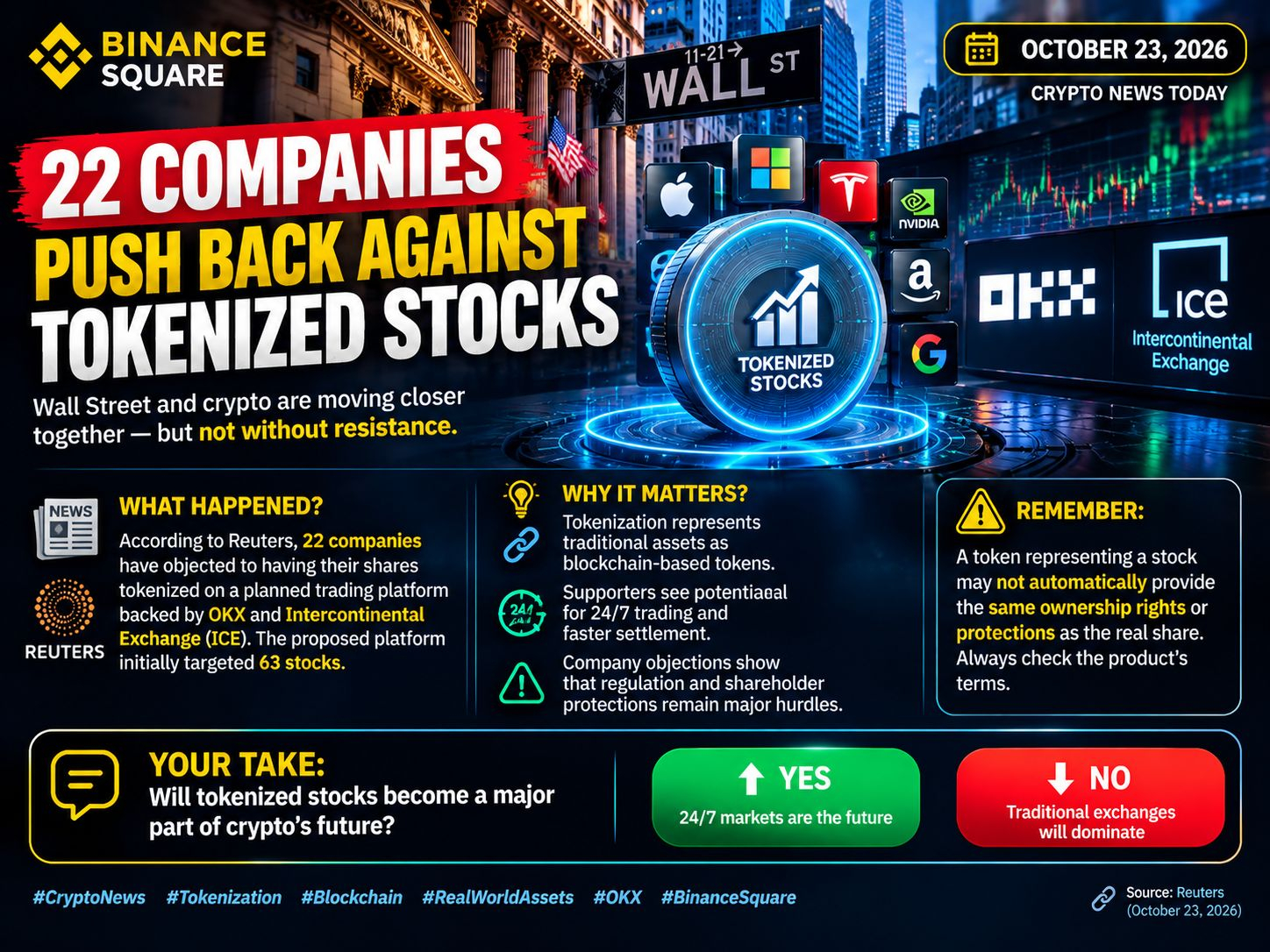
🚨 NOTICIAS CRIPTO — ¡EL MERCADO BURSÁTIL SE TRASLADA A LA CADENA DE BLOQUES! 📈⛓️
Wall Street y las criptomonedas están cada vez más cerca, pero no sin resistencia.
📰 ¿Qué ocurrió?
Según Reuters, 22 empresas se han opuesto a que sus acciones se tokenicen en una plataforma de negociación prevista y respaldada por OKX e Intercontinental Exchange (ICE). La plataforma propuesta tenía inicialmente como objetivo 63 acciones. citeturn288564news7
💡 Por qué es importante:
🔹 La tokenización representa activos tradicionales como tokens basados en la cadena de bloques.
🔹 Sus defensores ven potencial para operar las 24 horas, todos los días, y liquidar las operaciones más rápido.
🔹 Las objeciones de las empresas muestran que la regulación y la protección de los accionistas siguen siendo grandes obstáculos.
⚠️ Recuerda: Un token que representa una acción quizá no otorgue automáticamente los mismos derechos de propiedad ni las mismas protecciones que la acción real. Revisa siempre las condiciones del producto.
🔥 TU OPINIÓN: ¿Se convertirán las acciones tokenizadas en una parte importante del futuro de las criptomonedas?
🟢 SÍ — Los mercados 24/7 son el futuro
🔴 NO — Las bolsas tradicionales dominarán
#CryptoNewson #Blockchain #RealWorldAssets #OKX #BinanceSquare
{spot}(SPCXBUSDT)
🚨 NOTICIAS CRIPTO — ¡EL MERCADO BURSÁTIL SE TRASLADA A LA CADENA DE BLOQUES! 📈⛓️
Wall Street y las criptomonedas están cada vez más cerca, pero no sin resistencia.
📰 ¿Qué ocurrió?
Según Reuters, 22 empresas se han opuesto a que sus acciones se tokenicen en una plataforma de negociación prevista y respaldada por OKX e Intercontinental Exchange (ICE). La plataforma propuesta tenía inicialmente como objetivo 63 acciones. citeturn288564news7
💡 Por qué es importante:
🔹 La tokenización representa activos tradicionales como tokens basados en la cadena de bloques.
🔹 Sus defensores ven potencial para operar las 24 horas, todos los días, y liquidar las operaciones más rápido.
🔹 Las objeciones de las empresas muestran que la regulación y la protección de los accionistas siguen siendo grandes obstáculos.
⚠️ Recuerda: Un token que representa una acción quizá no otorgue automáticamente los mismos derechos de propiedad ni las mismas protecciones que la acción real. Revisa siempre las condiciones del producto.
🔥 TU OPINIÓN: ¿Se convertirán las acciones tokenizadas en una parte importante del futuro de las criptomonedas?
🟢 SÍ — Los mercados 24/7 son el futuro
🔴 NO — Las bolsas tradicionales dominarán
#CryptoNewson #Blockchain #RealWorldAssets #OKX #BinanceSquare
Wall Street y las criptomonedas están cada vez más cerca, pero no sin resistencia.
📰 ¿Qué ocurrió?
Según Reuters, 22 empresas se han opuesto a que sus acciones se tokenicen en una plataforma de negociación prevista y respaldada por OKX e Intercontinental Exchange (ICE). La plataforma propuesta tenía inicialmente como objetivo 63 acciones. citeturn288564news7
💡 Por qué es importante:
🔹 La tokenización representa activos tradicionales como tokens basados en la cadena de bloques.
🔹 Sus defensores ven potencial para operar las 24 horas, todos los días, y liquidar las operaciones más rápido.
🔹 Las objeciones de las empresas muestran que la regulación y la protección de los accionistas siguen siendo grandes obstáculos.
⚠️ Recuerda: Un token que representa una acción quizá no otorgue automáticamente los mismos derechos de propiedad ni las mismas protecciones que la acción real. Revisa siempre las condiciones del producto.
🔥 TU OPINIÓN: ¿Se convertirán las acciones tokenizadas en una parte importante del futuro de las criptomonedas?
🟢 SÍ — Los mercados 24/7 son el futuro
🔴 NO — Las bolsas tradicionales dominarán
#CryptoNewson #Blockchain #RealWorldAssets #OKX #BinanceSquare
91

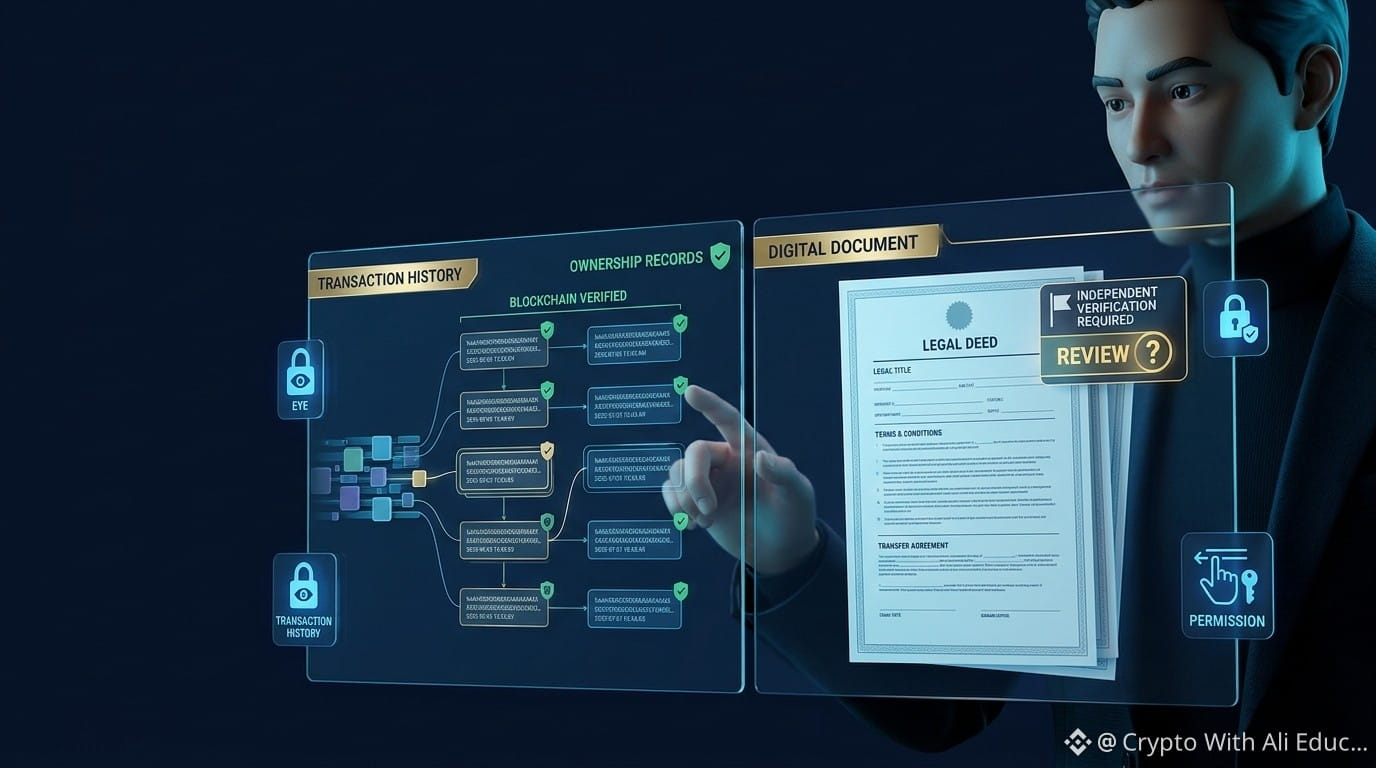
🌐 Un registro en la cadena de bloques no demuestra automáticamente la propiedad
La cadena de bloques puede ayudar a rastrear ciertas transacciones de activos digitales, pero un token registrado no demuestra automáticamente la propiedad legal, los derechos de autor ni la exactitud de la información vinculada a él.
La propiedad digital también depende de los permisos, la privacidad, los derechos aplicables y la capacidad de ejercer un control efectivo.
Por eso es importante entender qué posees y qué has autorizado realmente.
📖 Lee la parte 4 de nuestra serie sobre IA + Web3 en Binance Square.
#blockchain #Web3 #DataPrivacy #DigitalIdentity #transparency
🌐 Un registro en la cadena de bloques no demuestra automáticamente la propiedad
La cadena de bloques puede ayudar a rastrear ciertas transacciones de activos digitales, pero un token registrado no demuestra automáticamente la propiedad legal, los derechos de autor ni la exactitud de la información vinculada a él.
La propiedad digital también depende de los permisos, la privacidad, los derechos aplicables y la capacidad de ejercer un control efectivo.
Por eso es importante entender qué posees y qué has autorizado realmente.
📖 Lee la parte 4 de nuestra serie sobre IA + Web3 en Binance Square.
#blockchain #Web3 #DataPrivacy #DigitalIdentity #transparency
La cadena de bloques puede ayudar a rastrear ciertas transacciones de activos digitales, pero un token registrado no demuestra automáticamente la propiedad legal, los derechos de autor ni la exactitud de la información vinculada a él.
La propiedad digital también depende de los permisos, la privacidad, los derechos aplicables y la capacidad de ejercer un control efectivo.
Por eso es importante entender qué posees y qué has autorizado realmente.
📖 Lee la parte 4 de nuestra serie sobre IA + Web3 en Binance Square.
#blockchain #Web3 #DataPrivacy #DigitalIdentity #transparency
71

Artículo
IA, Web3 y propiedad digital: ¿quién controla tus activos y tus datos?Parte 4 de la serie sobre IA + Web3 | Identidad digital, permisos de usuario, propiedad y procedencia en blockchain
Cada día, las personas crean información digital, utilizan servicios en línea e interactúan con aplicaciones que almacenan datos personales o gestionan activos digitales. A medida que la inteligencia artificial se vuelve más capaz y evolucionan las aplicaciones Web3, hay una pregunta importante que merece atención:
¿Quién controla realmente tu identidad digital, tus activos y tus datos?
Los agentes de IA pueden ayudar a los usuarios a organizar información e interactuar con servicios digitales. La tecnología blockchain puede ayudar a registrar transacciones y rastrear el historial de ciertos activos digitales. Pero ninguna de estas tecnologías garantiza automáticamente la propiedad, la privacidad ni el control.
IA, Web3 y propiedad digital: ¿quién controla tus activos y tus datos?
Parte 4 de la serie sobre IA + Web3 | Identidad digital, permisos de usuario, propiedad y procedencia en blockchain
Cada día, las personas crean información digital, utilizan servicios en línea e interactúan con aplicaciones que almacenan datos personales o gestionan activos digitales. A medida que la inteligencia artificial se vuelve más capaz y evolucionan las aplicaciones Web3, hay una pregunta importante que merece atención:
¿Quién controla realmente tu identidad digital, tus activos y tus datos?
Los agentes de IA pueden ayudar a los usuarios a organizar información e interactuar con servicios digitales. La tecnología blockchain puede ayudar a registrar transacciones y rastrear el historial de ciertos activos digitales. Pero ninguna de estas tecnologías garantiza automáticamente la propiedad, la privacidad ni el control.
Cada día, las personas crean información digital, utilizan servicios en línea e interactúan con aplicaciones que almacenan datos personales o gestionan activos digitales. A medida que la inteligencia artificial se vuelve más capaz y evolucionan las aplicaciones Web3, hay una pregunta importante que merece atención:
¿Quién controla realmente tu identidad digital, tus activos y tus datos?
Los agentes de IA pueden ayudar a los usuarios a organizar información e interactuar con servicios digitales. La tecnología blockchain puede ayudar a registrar transacciones y rastrear el historial de ciertos activos digitales. Pero ninguna de estas tecnologías garantiza automáticamente la propiedad, la privacidad ni el control.
1
83

·
--
Netanyahu propone usar blockchain para eludir posibles sanciones financieras
QUÉ SUCEDIÓ
▪️ Antes de las elecciones, el primer ministro Benjamin Netanyahu declaró que Israel podría recurrir a blockchain y las criptomonedas para eludir posibles sanciones internacionales.
▪️ La propuesta encontró resistencia entre sus oponentes políticos y causó consternación al gobernador del banco central del país.
POR QUÉ LES IMPORTA A LOS TRADERS
Los debates sobre el uso de criptomonedas por parte de los Estados para evadir sanciones podrían impulsar una supervisión regulatoria internacional más estricta. El aumento de las exigencias de cumplimiento normativo podría, posteriormente, afectar la liquidez general del mercado y la participación institucional.
PANORAMA DEL MERCADO
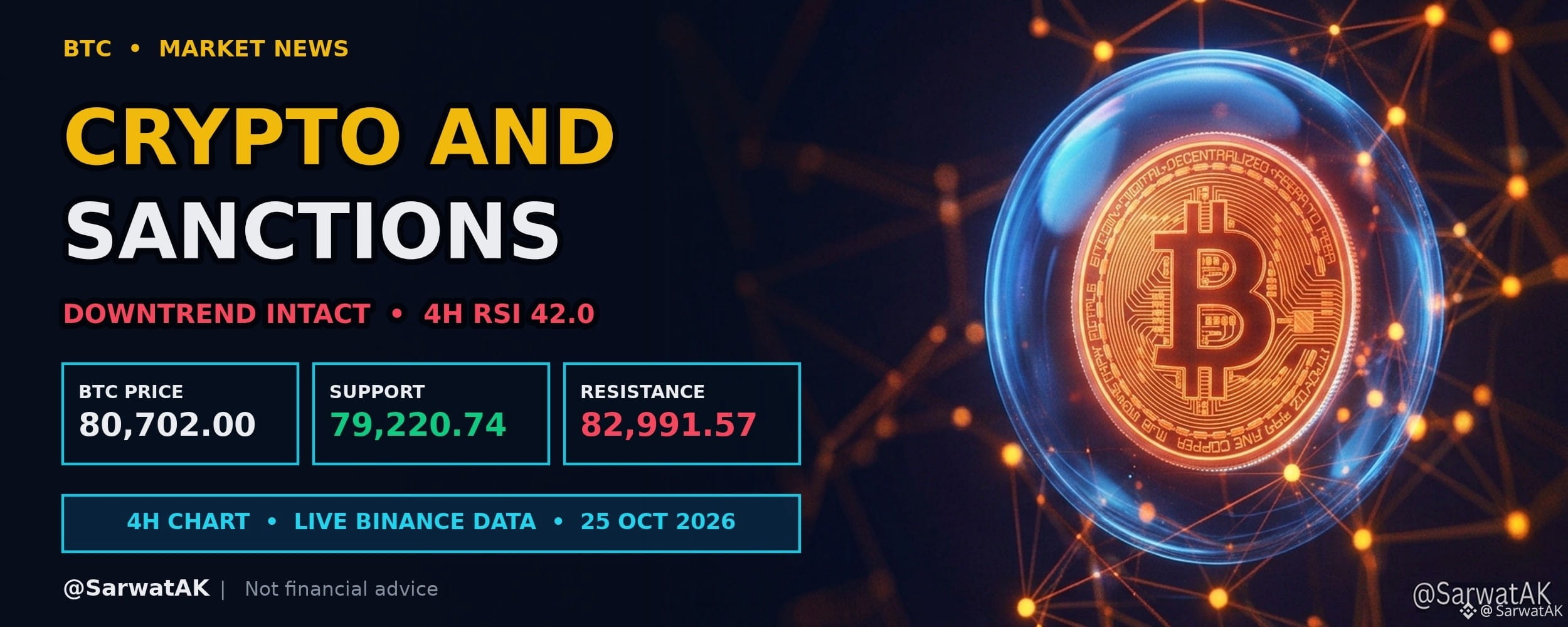
▪️ $BTC : 80,702.00 USD, subida del 1.2% (24 h), RSI de 4H: 42.0
▪️ Rango a observar: soporte en 79,220.74 / resistencia en 82,991.57
¿Cómo podrían las propuestas soberanas sobre blockchain modificar las expectativas regulatorias en los mercados globales?
Fuente: Cointelegraph
Esto no es asesoramiento financiero. Haz siempre tu propia investigación.
Dale a «Me gusta» y síguenos para recibir análisis diarios de trading y noticias exclusivas. @SarwatAK
#Bitcoin #blockchain
Netanyahu propone usar blockchain para eludir posibles sanciones financieras
QUÉ SUCEDIÓ
▪️ Antes de las elecciones, el primer ministro Benjamin Netanyahu declaró que Israel podría recurrir a blockchain y las criptomonedas para eludir posibles sanciones internacionales.
▪️ La propuesta encontró resistencia entre sus oponentes políticos y causó consternación al gobernador del banco central del país.
POR QUÉ LES IMPORTA A LOS TRADERS
Los debates sobre el uso de criptomonedas por parte de los Estados para evadir sanciones podrían impulsar una supervisión regulatoria internacional más estricta. El aumento de las exigencias de cumplimiento normativo podría, posteriormente, afectar la liquidez general del mercado y la participación institucional.
PANORAMA DEL MERCADO
▪️ $BTC : 80,702.00 USD, subida del 1.2% (24 h), RSI de 4H: 42.0
▪️ Rango a observar: soporte en 79,220.74 / resistencia en 82,991.57
¿Cómo podrían las propuestas soberanas sobre blockchain modificar las expectativas regulatorias en los mercados globales?
Fuente: Cointelegraph
Esto no es asesoramiento financiero. Haz siempre tu propia investigación.
Dale a «Me gusta» y síguenos para recibir análisis diarios de trading y noticias exclusivas. @SarwatAK
#Bitcoin #blockchain
QUÉ SUCEDIÓ
▪️ Antes de las elecciones, el primer ministro Benjamin Netanyahu declaró que Israel podría recurrir a blockchain y las criptomonedas para eludir posibles sanciones internacionales.
▪️ La propuesta encontró resistencia entre sus oponentes políticos y causó consternación al gobernador del banco central del país.
POR QUÉ LES IMPORTA A LOS TRADERS
Los debates sobre el uso de criptomonedas por parte de los Estados para evadir sanciones podrían impulsar una supervisión regulatoria internacional más estricta. El aumento de las exigencias de cumplimiento normativo podría, posteriormente, afectar la liquidez general del mercado y la participación institucional.
PANORAMA DEL MERCADO
▪️ $BTC : 80,702.00 USD, subida del 1.2% (24 h), RSI de 4H: 42.0
▪️ Rango a observar: soporte en 79,220.74 / resistencia en 82,991.57
¿Cómo podrían las propuestas soberanas sobre blockchain modificar las expectativas regulatorias en los mercados globales?
Fuente: Cointelegraph
Esto no es asesoramiento financiero. Haz siempre tu propia investigación.
Dale a «Me gusta» y síguenos para recibir análisis diarios de trading y noticias exclusivas. @SarwatAK
#Bitcoin #blockchain
1
4

Artículo
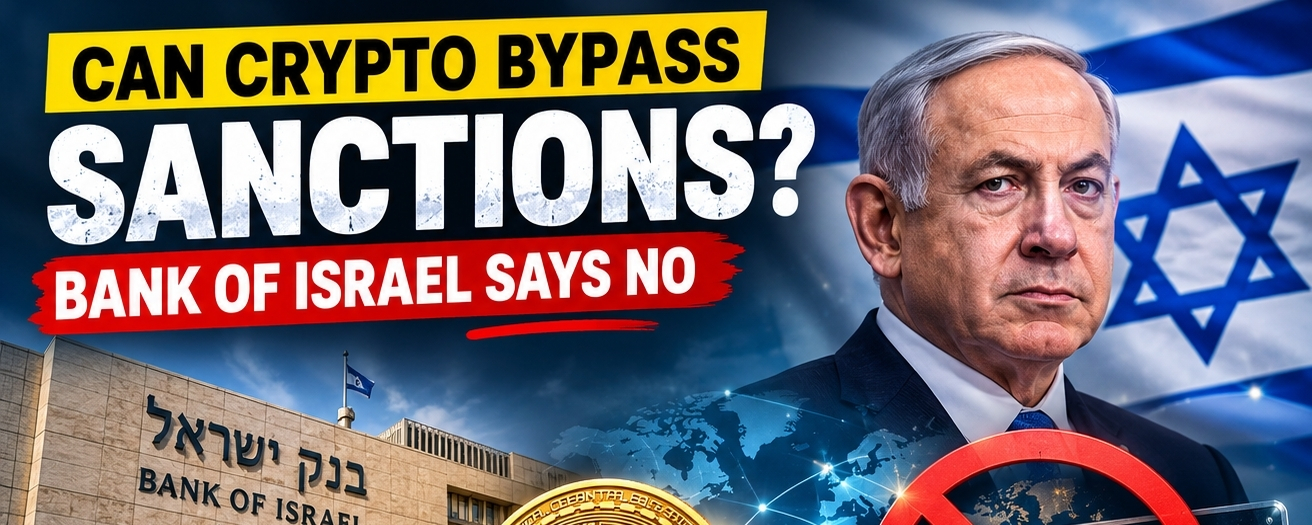
🚨 EL BANCO DE ISRAEL RECHAZA LAS CRIPTOMONEDAS COMO VÍA PARA ELUDIR POSIBLES SANCIONES🚨 EL BANCO DE ISRAEL RECHAZA LAS CRIPTOMONEDAS COMO VÍA PARA ELUDIR POSIBLES SANCIONES
🌍 ¿Pueden las criptomonedas proteger a una nación de las restricciones financieras internacionales?
Ha surgido un debate importante sobre el futuro de las finanzas digitales tras los informes de que el Banco de Israel rechazó una propuesta para explorar las criptomonedas como una forma de eludir posibles sanciones financieras internacionales.
Según el informe que compartiste, el primer ministro Benjamin Netanyahu expresó su preocupación por posibles restricciones bancarias internacionales y solicitó planes para explorar sistemas financieros alternativos, incluida la tecnología blockchain y las criptomonedas.
🚨 EL BANCO DE ISRAEL RECHAZA LAS CRIPTOMONEDAS COMO VÍA PARA ELUDIR POSIBLES SANCIONES
🚨 EL BANCO DE ISRAEL RECHAZA LAS CRIPTOMONEDAS COMO VÍA PARA ELUDIR POSIBLES SANCIONES
🌍 ¿Pueden las criptomonedas proteger a una nación de las restricciones financieras internacionales?
Ha surgido un debate importante sobre el futuro de las finanzas digitales tras los informes de que el Banco de Israel rechazó una propuesta para explorar las criptomonedas como una forma de eludir posibles sanciones financieras internacionales.
Según el informe que compartiste, el primer ministro Benjamin Netanyahu expresó su preocupación por posibles restricciones bancarias internacionales y solicitó planes para explorar sistemas financieros alternativos, incluida la tecnología blockchain y las criptomonedas.
🌍 ¿Pueden las criptomonedas proteger a una nación de las restricciones financieras internacionales?
Ha surgido un debate importante sobre el futuro de las finanzas digitales tras los informes de que el Banco de Israel rechazó una propuesta para explorar las criptomonedas como una forma de eludir posibles sanciones financieras internacionales.
Según el informe que compartiste, el primer ministro Benjamin Netanyahu expresó su preocupación por posibles restricciones bancarias internacionales y solicitó planes para explorar sistemas financieros alternativos, incluida la tecnología blockchain y las criptomonedas.
194

·
--
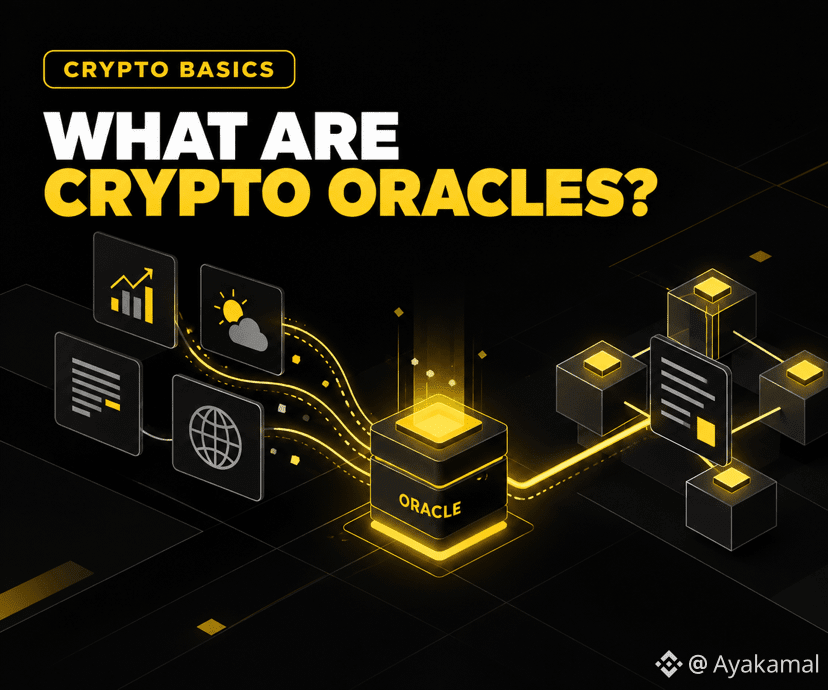
🔗 CONCEPTOS BÁSICOS DE CRIPTO #15 — ¿Qué son los oráculos de criptomonedas?
Las cadenas de bloques son potentes, pero tienen una limitación importante: no pueden acceder directamente a información del mundo exterior. 🌍
Ahí es donde entran en juego los oráculos de blockchain.
💡 ¿Qué es un oráculo?
Un oráculo es un servicio que lleva datos externos a una cadena de bloques para que los contratos inteligentes puedan utilizarlos.
Piensa en él como un puente entre la cadena de bloques y el mundo real.
📊 Veamos un ejemplo práctico:
Imagina una plataforma de préstamos DeFi que necesita conocer el precio actual de ETH para calcular el valor de tu garantía.
Un contrato inteligente no puede consultar por sí solo el precio de ETH en un sitio web común.
Un oráculo proporciona los datos del precio, lo que permite al contrato inteligente ejecutar las acciones programadas según esa información.
🌐 Los oráculos pueden proporcionar distintos tipos de datos:
▪️ Precios de criptomonedas
▪️ Tipos de cambio
▪️ Condiciones meteorológicas
▪️ Resultados de acontecimientos del mundo real
⚠️ Pero hay un detalle importante.
Los contratos inteligentes solo pueden actuar según los datos que reciben. Si un oráculo proporciona información inexacta o manipulada, el contrato podría ejecutarse de forma incorrecta.
Por eso son importantes las fuentes de datos fiables y las redes de oráculos descentralizadas. El uso de varias fuentes independientes puede reducir la dependencia de un único proveedor, aunque no elimina todos los riesgos.
💛 La idea clave:
Los oráculos ayudan a los contratos inteligentes a interactuar con el mundo real, lo que hace posibles aplicaciones de blockchain más avanzadas.
Pero recuerda: un contrato inteligente solo es tan fiable como los datos de los que depende.
📚 Obtén más información en Binance Academy:
https://www.binance.com/en/academy/articles/blockchain-oracles-explained
#blockchain #DeFi #Binance
🔗 CONCEPTOS BÁSICOS DE CRIPTO #15 — ¿Qué son los oráculos de criptomonedas?
Las cadenas de bloques son potentes, pero tienen una limitación importante: no pueden acceder directamente a información del mundo exterior. 🌍
Ahí es donde entran en juego los oráculos de blockchain.
💡 ¿Qué es un oráculo?
Un oráculo es un servicio que lleva datos externos a una cadena de bloques para que los contratos inteligentes puedan utilizarlos.
Piensa en él como un puente entre la cadena de bloques y el mundo real.
📊 Veamos un ejemplo práctico:
Imagina una plataforma de préstamos DeFi que necesita conocer el precio actual de ETH para calcular el valor de tu garantía.
Un contrato inteligente no puede consultar por sí solo el precio de ETH en un sitio web común.
Un oráculo proporciona los datos del precio, lo que permite al contrato inteligente ejecutar las acciones programadas según esa información.
🌐 Los oráculos pueden proporcionar distintos tipos de datos:
▪️ Precios de criptomonedas
▪️ Tipos de cambio
▪️ Condiciones meteorológicas
▪️ Resultados de acontecimientos del mundo real
⚠️ Pero hay un detalle importante.
Los contratos inteligentes solo pueden actuar según los datos que reciben. Si un oráculo proporciona información inexacta o manipulada, el contrato podría ejecutarse de forma incorrecta.
Por eso son importantes las fuentes de datos fiables y las redes de oráculos descentralizadas. El uso de varias fuentes independientes puede reducir la dependencia de un único proveedor, aunque no elimina todos los riesgos.
💛 La idea clave:
Los oráculos ayudan a los contratos inteligentes a interactuar con el mundo real, lo que hace posibles aplicaciones de blockchain más avanzadas.
Pero recuerda: un contrato inteligente solo es tan fiable como los datos de los que depende.
📚 Obtén más información en Binance Academy:
https://www.binance.com/en/academy/articles/blockchain-oracles-explained
#blockchain #DeFi #Binance
Las cadenas de bloques son potentes, pero tienen una limitación importante: no pueden acceder directamente a información del mundo exterior. 🌍
Ahí es donde entran en juego los oráculos de blockchain.
💡 ¿Qué es un oráculo?
Un oráculo es un servicio que lleva datos externos a una cadena de bloques para que los contratos inteligentes puedan utilizarlos.
Piensa en él como un puente entre la cadena de bloques y el mundo real.
📊 Veamos un ejemplo práctico:
Imagina una plataforma de préstamos DeFi que necesita conocer el precio actual de ETH para calcular el valor de tu garantía.
Un contrato inteligente no puede consultar por sí solo el precio de ETH en un sitio web común.
Un oráculo proporciona los datos del precio, lo que permite al contrato inteligente ejecutar las acciones programadas según esa información.
🌐 Los oráculos pueden proporcionar distintos tipos de datos:
▪️ Precios de criptomonedas
▪️ Tipos de cambio
▪️ Condiciones meteorológicas
▪️ Resultados de acontecimientos del mundo real
⚠️ Pero hay un detalle importante.
Los contratos inteligentes solo pueden actuar según los datos que reciben. Si un oráculo proporciona información inexacta o manipulada, el contrato podría ejecutarse de forma incorrecta.
Por eso son importantes las fuentes de datos fiables y las redes de oráculos descentralizadas. El uso de varias fuentes independientes puede reducir la dependencia de un único proveedor, aunque no elimina todos los riesgos.
💛 La idea clave:
Los oráculos ayudan a los contratos inteligentes a interactuar con el mundo real, lo que hace posibles aplicaciones de blockchain más avanzadas.
Pero recuerda: un contrato inteligente solo es tan fiable como los datos de los que depende.
📚 Obtén más información en Binance Academy:
https://www.binance.com/en/academy/articles/blockchain-oracles-explained
#blockchain #DeFi #Binance
Abu Fahadأ:
💛
1
4
126
Netanyahu propone usar blockchain para eludir las sanciones financieras
- Netanyahu propone usar blockchain para eludir las sanciones financieras
- La propuesta se planteó antes de las próximas elecciones
- Sus oponentes y el Banco Central se oponen
#BinanceSquare #CryptoNews #Blockchain
$btc $eth
#vlikevn #Titanbot
Fuente: CoinTelegraph
Netanyahu propone usar blockchain para eludir las sanciones financieras
- Netanyahu propone usar blockchain para eludir las sanciones financieras
- La propuesta se planteó antes de las próximas elecciones
- Sus oponentes y el Banco Central se oponen
#BinanceSquare #CryptoNews #Blockchain
$btc $eth
#vlikevn #Titanbot
Fuente: CoinTelegraph
- Netanyahu propone usar blockchain para eludir las sanciones financieras
- La propuesta se planteó antes de las próximas elecciones
- Sus oponentes y el Banco Central se oponen
#BinanceSquare #CryptoNews #Blockchain
$btc $eth
#vlikevn #Titanbot
Fuente: CoinTelegraph
Inicia sesión para explorar más contenidos
Únete a usuarios globales de criptomonedas en Binance Square
⚡️ Obtén información útil y actualizada sobre criptos.
💬 Avalado por el mayor exchange de criptomonedas en el mundo.
👍 Descubre perspectivas reales de creadores verificados.
Email/número de teléfono
Temas populares
1
#BinancePick
3.1M vistas
153,091 están debatiendo
2
#EarningsSeason
5.3M vistas
26,032 están debatiendo
3
#AnthropicTTMRevenueGrewAbout1200%
32,993 vistas
436 están debatiendo
4
#AnthropicS1ExpectedToday
27,695 vistas
353 están debatiendo
5
#SouthKoreaReportedlyWeighsFourthCryptoTaxDelay
31,770 vistas
483 están debatiendo
6
#FranklinTempletonFilesForTwoDividendToBitcoinETFs
42,377 vistas
553 están debatiendo
7
#StrategyMSTRSurpassesNasdaqInMarketCap
32,080 vistas
394 están debatiendo
8
#CanadaProposesStablecoinRedemptionWithin3BusinessDays
1,373 vistas
36 están debatiendo
9
#ElectrumWalletBugLetRogueServersStealFunds
32,308 vistas
472 están debatiendo
10
#ArgentineCourtDismissesLIBRACaseAgainstMilei
47,895 vistas
591 están debatiendo