
#76
76
133,468 vistas
31 están debatiendo
Hot
Lo último

·
--
El 76% de las personas están short y, entonces... los aplastaron.
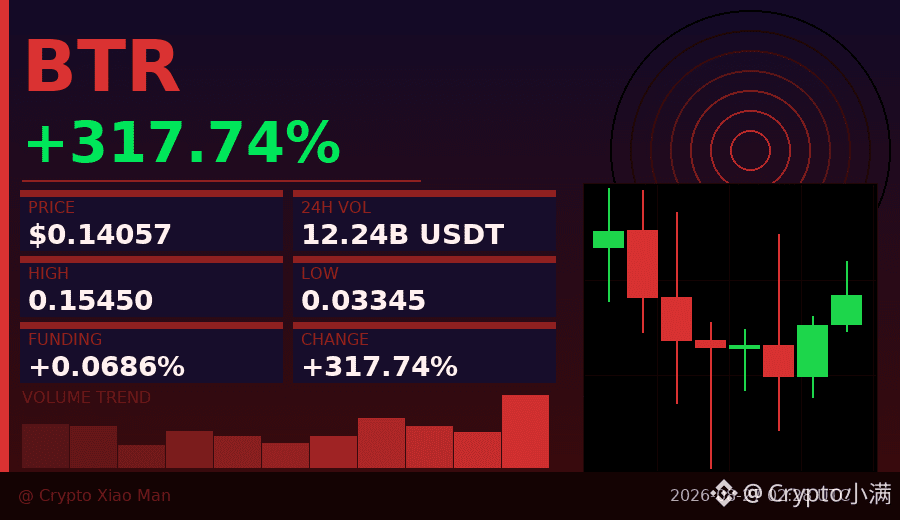
¡BTR hoy subió más de 316%! Desde el mínimo de 0.033 hasta llegar a 0.154, ¡multiplicándose por casi 5!
Pero lo más interesante no es el aumento—es la estructura de las posiciones.
En la derecha, el 76.4% de la posición en contratos son posiciones cortas (short), y solo menos del 24% son largos.
Esto significa que la mayoría de la gente al principio no creía en esta subida: apostaron a que caería.
Cuantos más hacen short, más fuerte es la presión para liquidar (short squeeze); en cambio, se convierte en combustible para el alza.
Esto se llama Short Squeeze (apretón de cortos): el precio sube → los shorts pierden → se ven forzados a cerrar comprando → el precio sigue subiendo → más shorts explotan.
Es un bucle de retroalimentación positiva, una trampa mortal, que va sacando a quienes están en contra uno por uno.
La tasa de financiación (funding rate) actualmente es positiva (0.069%), lo que indica que los largos ya están tomando el control y que siguen pagando la comisión para mantener sus posiciones.
Tres velas horarias seguidas en verde, la inercia de corto plazo aún está presente.
Por supuesto, después de subir cinco veces, cualquier reversa puede ser muy violenta.
Los largos restantes—ese 24%—deben tener cuidado: cuanto más alto persiguen, más rápido se van a caer.
Si los shorts aún no han salido, lo siguiente será o seguir siendo apretados, o esperar un retroceso brutal.
En un mercado con una relación extrema entre largos y cortos, no se trata de si la dirección es correcta, sino de quién aguanta menos.
$BTR #空头挤压 #76% short
Haz clic en la tarjeta pequeña de abajo para ver rápidamente la cotización 👇
El 76% de las personas están short y, entonces... los aplastaron.
¡BTR hoy subió más de 316%! Desde el mínimo de 0.033 hasta llegar a 0.154, ¡multiplicándose por casi 5!
Pero lo más interesante no es el aumento—es la estructura de las posiciones.
En la derecha, el 76.4% de la posición en contratos son posiciones cortas (short), y solo menos del 24% son largos.
Esto significa que la mayoría de la gente al principio no creía en esta subida: apostaron a que caería.
Cuantos más hacen short, más fuerte es la presión para liquidar (short squeeze); en cambio, se convierte en combustible para el alza.
Esto se llama Short Squeeze (apretón de cortos): el precio sube → los shorts pierden → se ven forzados a cerrar comprando → el precio sigue subiendo → más shorts explotan.
Es un bucle de retroalimentación positiva, una trampa mortal, que va sacando a quienes están en contra uno por uno.
La tasa de financiación (funding rate) actualmente es positiva (0.069%), lo que indica que los largos ya están tomando el control y que siguen pagando la comisión para mantener sus posiciones.
Tres velas horarias seguidas en verde, la inercia de corto plazo aún está presente.
Por supuesto, después de subir cinco veces, cualquier reversa puede ser muy violenta.
Los largos restantes—ese 24%—deben tener cuidado: cuanto más alto persiguen, más rápido se van a caer.
Si los shorts aún no han salido, lo siguiente será o seguir siendo apretados, o esperar un retroceso brutal.
En un mercado con una relación extrema entre largos y cortos, no se trata de si la dirección es correcta, sino de quién aguanta menos.
$BTR #空头挤压 #76% short
Haz clic en la tarjeta pequeña de abajo para ver rápidamente la cotización 👇
¡BTR hoy subió más de 316%! Desde el mínimo de 0.033 hasta llegar a 0.154, ¡multiplicándose por casi 5!
Pero lo más interesante no es el aumento—es la estructura de las posiciones.
En la derecha, el 76.4% de la posición en contratos son posiciones cortas (short), y solo menos del 24% son largos.
Esto significa que la mayoría de la gente al principio no creía en esta subida: apostaron a que caería.
Cuantos más hacen short, más fuerte es la presión para liquidar (short squeeze); en cambio, se convierte en combustible para el alza.
Esto se llama Short Squeeze (apretón de cortos): el precio sube → los shorts pierden → se ven forzados a cerrar comprando → el precio sigue subiendo → más shorts explotan.
Es un bucle de retroalimentación positiva, una trampa mortal, que va sacando a quienes están en contra uno por uno.
La tasa de financiación (funding rate) actualmente es positiva (0.069%), lo que indica que los largos ya están tomando el control y que siguen pagando la comisión para mantener sus posiciones.
Tres velas horarias seguidas en verde, la inercia de corto plazo aún está presente.
Por supuesto, después de subir cinco veces, cualquier reversa puede ser muy violenta.
Los largos restantes—ese 24%—deben tener cuidado: cuanto más alto persiguen, más rápido se van a caer.
Si los shorts aún no han salido, lo siguiente será o seguir siendo apretados, o esperar un retroceso brutal.
En un mercado con una relación extrema entre largos y cortos, no se trata de si la dirección es correcta, sino de quién aguanta menos.
$BTR #空头挤压 #76% short
Haz clic en la tarjeta pequeña de abajo para ver rápidamente la cotización 👇
1
1
501

Artículo
$PI -12.1% en 24h — se desplomó más que nadie en el top-100!😱 $PI -12.1% en 24h — se desplomó más que nadie en el top-100
Resumen del día — breve y al grano.
🧭 Resultado: el movimiento sigue una tendencia general más amplia: 7d y 30d en la misma dirección; el volumen es bajo: el movimiento puede ser inestable.
🌍 Contexto del mercado: de 69 grandes monedas con movimiento notable en las últimas 24h — 🔼 12 subieron, 🔽 57 cayeron
$PI -12.1% en 24h — se desplomó más que nadie en el top-100!
😱 $PI -12.1% en 24h — se desplomó más que nadie en el top-100
Resumen del día — breve y al grano.
🧭 Resultado: el movimiento sigue una tendencia general más amplia: 7d y 30d en la misma dirección; el volumen es bajo: el movimiento puede ser inestable.
🌍 Contexto del mercado: de 69 grandes monedas con movimiento notable en las últimas 24h — 🔼 12 subieron, 🔽 57 cayeron
Resumen del día — breve y al grano.
🧭 Resultado: el movimiento sigue una tendencia general más amplia: 7d y 30d en la misma dirección; el volumen es bajo: el movimiento puede ser inestable.
🌍 Contexto del mercado: de 69 grandes monedas con movimiento notable en las últimas 24h — 🔼 12 subieron, 🔽 57 cayeron
631
·
--
76% de subida, pero la tasa de financiación ya se disparó a 0.0518%——¿qué significa esto?
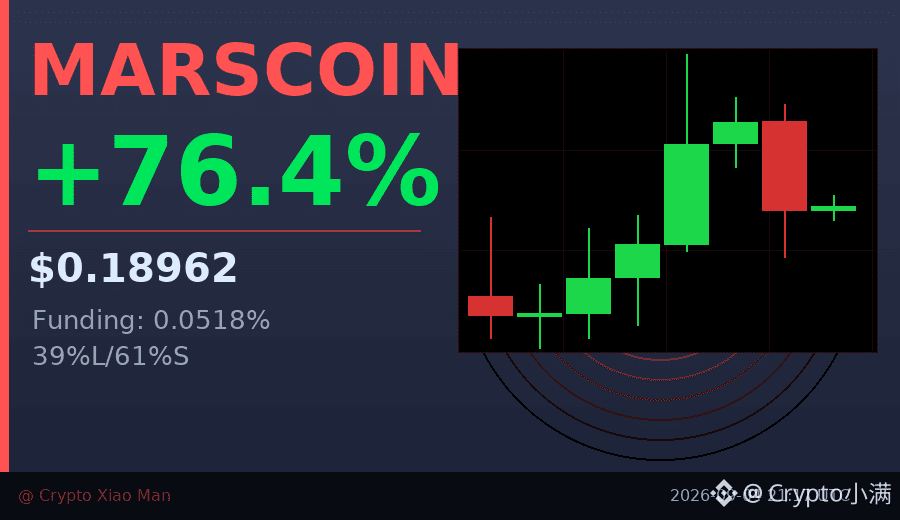
MARSCOIN hoy subió de 0.107 a 0.214, con un volumen de negociación de 834 millones USDT, y parece muy fuerte.
Pero ojo: la relación largos/cortos es 39% largos /61% cortos, la mayoría en realidad está apostando a la baja.
En las últimas 8 horas la tendencia general es alcista, pero la vela más reciente retrocedió de 0.206 a 0.189, y los alcistas empiezan a dudar.
Subida extrema + tasa alta + mayoría en corto = un típico enfrentamiento entre largos y cortos en plena ebullición.
Perseguir la subida no es poca cosa; esperar un retroceso y confirmación es más seguro.
$MARSCOIN #资金费率预警 #76%
Haz clic en la tarjeta de abajo para ver rápidamente el行情👇
76% de subida, pero la tasa de financiación ya se disparó a 0.0518%——¿qué significa esto?
MARSCOIN hoy subió de 0.107 a 0.214, con un volumen de negociación de 834 millones USDT, y parece muy fuerte.
Pero ojo: la relación largos/cortos es 39% largos /61% cortos, la mayoría en realidad está apostando a la baja.
En las últimas 8 horas la tendencia general es alcista, pero la vela más reciente retrocedió de 0.206 a 0.189, y los alcistas empiezan a dudar.
Subida extrema + tasa alta + mayoría en corto = un típico enfrentamiento entre largos y cortos en plena ebullición.
Perseguir la subida no es poca cosa; esperar un retroceso y confirmación es más seguro.
$MARSCOIN #资金费率预警 #76%
Haz clic en la tarjeta de abajo para ver rápidamente el行情👇
MARSCOIN hoy subió de 0.107 a 0.214, con un volumen de negociación de 834 millones USDT, y parece muy fuerte.
Pero ojo: la relación largos/cortos es 39% largos /61% cortos, la mayoría en realidad está apostando a la baja.
En las últimas 8 horas la tendencia general es alcista, pero la vela más reciente retrocedió de 0.206 a 0.189, y los alcistas empiezan a dudar.
Subida extrema + tasa alta + mayoría en corto = un típico enfrentamiento entre largos y cortos en plena ebullición.
Perseguir la subida no es poca cosa; esperar un retroceso y confirmación es más seguro.
$MARSCOIN #资金费率预警 #76%
Haz clic en la tarjeta de abajo para ver rápidamente el行情👇
17

·
--
¿Cómo Leer los Movimientos de Precio Diarios y Hacer Operaciones Rápidas? – & Guía Práctica con Ejemplos¡Arbitrum (ARBUSDT) está en tendencia ahora mismo!
Clasificación: #76
🚀 **Paso 1: Revisa Prioritariamente los Datos Diarios** - Observa el cambio en 24 horas y el volumen en la pestaña “Markets” de Binance Square. - **Datos de hoy (03‑09‑2026):** - : **0,958.55** ↑%4.71 | Volumen **2,95B** - : **,501.75** ↑%4.50 | Volumen **5,65B** - **¿Por qué es importante?** Un cambio positivo junto con un alto volumen se considera una señal de fuerte impulso (momentum); podría ser una oportunidad de compra a corto plazo. 📊 **Paso 2: Analiza la Relación Volumen‑Precio** - Si el precio sube y el volumen también aumenta → **presión real de compra** (alcista). - Si el precio sube y el volumen baja → **impulso débil**, riesgo de corrección. - **Práctico:** observa el aumento del **4.71%** de ’ junto con el volumen de **2.95B** → señal fuerte de compra. 🎯 **Paso 3: Define Puntos de Entrada‑Salida a Corto Plazo** 1. **Entrada:** Si aparece una figura “bullish engulfing” o una “hammer” por encima de la apertura diaria, coloca una orden límite con un **0.5‑1%** por encima del precio de cierre de esa vela. - Ejemplo: 80,958 → una orden de compra en el rango **81,300‑81,500**. 2. **Stop‑Loss:** Colócalo por debajo del reciente swing low (p. ej., **9,800**) o en el nivel de riesgo del **2%** por debajo del precio de entrada. 3. **Take‑Profit:** Apunta a una relación riesgo‑beneficio de **1:2** → objetivo un **4‑6%** de ganancia desde la entrada (≈ **4,200‑5,800**). 🔍 **Paso 4: Usa Pistas del Patrón en el Gráfico** - **Triángulo Ascendente:** resistencia horizontal + soporte ascendente → expectativa de ruptura al alza. - **Bullish Flag:** bandera de corrección a corto plazo tras un fuerte impulso en la dirección → se espera continuación en la ruptura. - **Ahora mismo:** 4‑saa
¿Cómo Leer los Movimientos de Precio Diarios y Hacer Operaciones Rápidas? – & Guía Práctica con Ejemplos
¡Arbitrum (ARBUSDT) está en tendencia ahora mismo!
Clasificación: #76
🚀 **Paso 1: Revisa Prioritariamente los Datos Diarios** - Observa el cambio en 24 horas y el volumen en la pestaña “Markets” de Binance Square. - **Datos de hoy (03‑09‑2026):** - : **0,958.55** ↑%4.71 | Volumen **2,95B** - : **,501.75** ↑%4.50 | Volumen **5,65B** - **¿Por qué es importante?** Un cambio positivo junto con un alto volumen se considera una señal de fuerte impulso (momentum); podría ser una oportunidad de compra a corto plazo. 📊 **Paso 2: Analiza la Relación Volumen‑Precio** - Si el precio sube y el volumen también aumenta → **presión real de compra** (alcista). - Si el precio sube y el volumen baja → **impulso débil**, riesgo de corrección. - **Práctico:** observa el aumento del **4.71%** de ’ junto con el volumen de **2.95B** → señal fuerte de compra. 🎯 **Paso 3: Define Puntos de Entrada‑Salida a Corto Plazo** 1. **Entrada:** Si aparece una figura “bullish engulfing” o una “hammer” por encima de la apertura diaria, coloca una orden límite con un **0.5‑1%** por encima del precio de cierre de esa vela. - Ejemplo: 80,958 → una orden de compra en el rango **81,300‑81,500**. 2. **Stop‑Loss:** Colócalo por debajo del reciente swing low (p. ej., **9,800**) o en el nivel de riesgo del **2%** por debajo del precio de entrada. 3. **Take‑Profit:** Apunta a una relación riesgo‑beneficio de **1:2** → objetivo un **4‑6%** de ganancia desde la entrada (≈ **4,200‑5,800**). 🔍 **Paso 4: Usa Pistas del Patrón en el Gráfico** - **Triángulo Ascendente:** resistencia horizontal + soporte ascendente → expectativa de ruptura al alza. - **Bullish Flag:** bandera de corrección a corto plazo tras un fuerte impulso en la dirección → se espera continuación en la ruptura. - **Ahora mismo:** 4‑saa
Clasificación: #76
🚀 **Paso 1: Revisa Prioritariamente los Datos Diarios** - Observa el cambio en 24 horas y el volumen en la pestaña “Markets” de Binance Square. - **Datos de hoy (03‑09‑2026):** - : **0,958.55** ↑%4.71 | Volumen **2,95B** - : **,501.75** ↑%4.50 | Volumen **5,65B** - **¿Por qué es importante?** Un cambio positivo junto con un alto volumen se considera una señal de fuerte impulso (momentum); podría ser una oportunidad de compra a corto plazo. 📊 **Paso 2: Analiza la Relación Volumen‑Precio** - Si el precio sube y el volumen también aumenta → **presión real de compra** (alcista). - Si el precio sube y el volumen baja → **impulso débil**, riesgo de corrección. - **Práctico:** observa el aumento del **4.71%** de ’ junto con el volumen de **2.95B** → señal fuerte de compra. 🎯 **Paso 3: Define Puntos de Entrada‑Salida a Corto Plazo** 1. **Entrada:** Si aparece una figura “bullish engulfing” o una “hammer” por encima de la apertura diaria, coloca una orden límite con un **0.5‑1%** por encima del precio de cierre de esa vela. - Ejemplo: 80,958 → una orden de compra en el rango **81,300‑81,500**. 2. **Stop‑Loss:** Colócalo por debajo del reciente swing low (p. ej., **9,800**) o en el nivel de riesgo del **2%** por debajo del precio de entrada. 3. **Take‑Profit:** Apunta a una relación riesgo‑beneficio de **1:2** → objetivo un **4‑6%** de ganancia desde la entrada (≈ **4,200‑5,800**). 🔍 **Paso 4: Usa Pistas del Patrón en el Gráfico** - **Triángulo Ascendente:** resistencia horizontal + soporte ascendente → expectativa de ruptura al alza. - **Bullish Flag:** bandera de corrección a corto plazo tras un fuerte impulso en la dirección → se espera continuación en la ruptura. - **Ahora mismo:** 4‑saa
46

·
--
Necesitamos explicar por qué cada moneda podría estar en tendencia, especulando según el rango o la puntuación.
Datos: Pons (PONS): Rango #117, Puntuación 0.0. Lil' Shrub (SHRUB): Rango #495, Puntuación 1.0. Arbitrum (ARB): Rango #76, Puntuación 2.0.
Necesitamos 150-200 palabras. Apuntemos a ~170 palabras.
Tres secciones, cada una quizá un párrafo. Sin markdown (sin negritas ni cursivas). Solo texto normal.
Debemos incluir los hashtags al final.
Asegúrate de que la última línea sea exactamente la línea de hashtags.
No debemos incluir comentarios extra.
Vamos a redactar.
Recuento de palabras: contemos de forma aproximada.
Sección 1: Pons (PONS) - quizá 50 palabras.
Sección 2: Lil' Shrub (SHRUB) - quizá 50 palabras.
Sección 3: Arbitrum (ARB) - quizá 50 palabras.
Luego la frase final y los hashtags.
Total quizá 170.
Escribamos.
Contemos palabras manualmente.
Escribimos:
"Pons (PONS) está en el puesto 117 con una puntuación de 0.0, lo que sugiere bajo impulso actual. Sin embargo, su presencia entre los 120 primeros podría indicar acumulación temprana por comunidades específicas o un listado reciente en un intercambio menor, lo que despierta interés especulativo entre traders que buscan joyas ocultas."
Necesitamos explicar por qué cada moneda podría estar en tendencia, especulando según el rango o la puntuación.
Datos: Pons (PONS): Rango #117, Puntuación 0.0. Lil' Shrub (SHRUB): Rango #495, Puntuación 1.0. Arbitrum (ARB): Rango #76, Puntuación 2.0.
Necesitamos 150-200 palabras. Apuntemos a ~170 palabras.
Tres secciones, cada una quizá un párrafo. Sin markdown (sin negritas ni cursivas). Solo texto normal.
Debemos incluir los hashtags al final.
Asegúrate de que la última línea sea exactamente la línea de hashtags.
No debemos incluir comentarios extra.
Vamos a redactar.
Recuento de palabras: contemos de forma aproximada.
Sección 1: Pons (PONS) - quizá 50 palabras.
Sección 2: Lil' Shrub (SHRUB) - quizá 50 palabras.
Sección 3: Arbitrum (ARB) - quizá 50 palabras.
Luego la frase final y los hashtags.
Total quizá 170.
Escribamos.
Contemos palabras manualmente.
Escribimos:
"Pons (PONS) está en el puesto 117 con una puntuación de 0.0, lo que sugiere bajo impulso actual. Sin embargo, su presencia entre los 120 primeros podría indicar acumulación temprana por comunidades específicas o un listado reciente en un intercambio menor, lo que despierta interés especulativo entre traders que buscan joyas ocultas."
Datos: Pons (PONS): Rango #117, Puntuación 0.0. Lil' Shrub (SHRUB): Rango #495, Puntuación 1.0. Arbitrum (ARB): Rango #76, Puntuación 2.0.
Necesitamos 150-200 palabras. Apuntemos a ~170 palabras.
Tres secciones, cada una quizá un párrafo. Sin markdown (sin negritas ni cursivas). Solo texto normal.
Debemos incluir los hashtags al final.
Asegúrate de que la última línea sea exactamente la línea de hashtags.
No debemos incluir comentarios extra.
Vamos a redactar.
Recuento de palabras: contemos de forma aproximada.
Sección 1: Pons (PONS) - quizá 50 palabras.
Sección 2: Lil' Shrub (SHRUB) - quizá 50 palabras.
Sección 3: Arbitrum (ARB) - quizá 50 palabras.
Luego la frase final y los hashtags.
Total quizá 170.
Escribamos.
Contemos palabras manualmente.
Escribimos:
"Pons (PONS) está en el puesto 117 con una puntuación de 0.0, lo que sugiere bajo impulso actual. Sin embargo, su presencia entre los 120 primeros podría indicar acumulación temprana por comunidades específicas o un listado reciente en un intercambio menor, lo que despierta interés especulativo entre traders que buscan joyas ocultas."
60


·
--
🎓 Cada día, aprende el mercado — no compres y ya
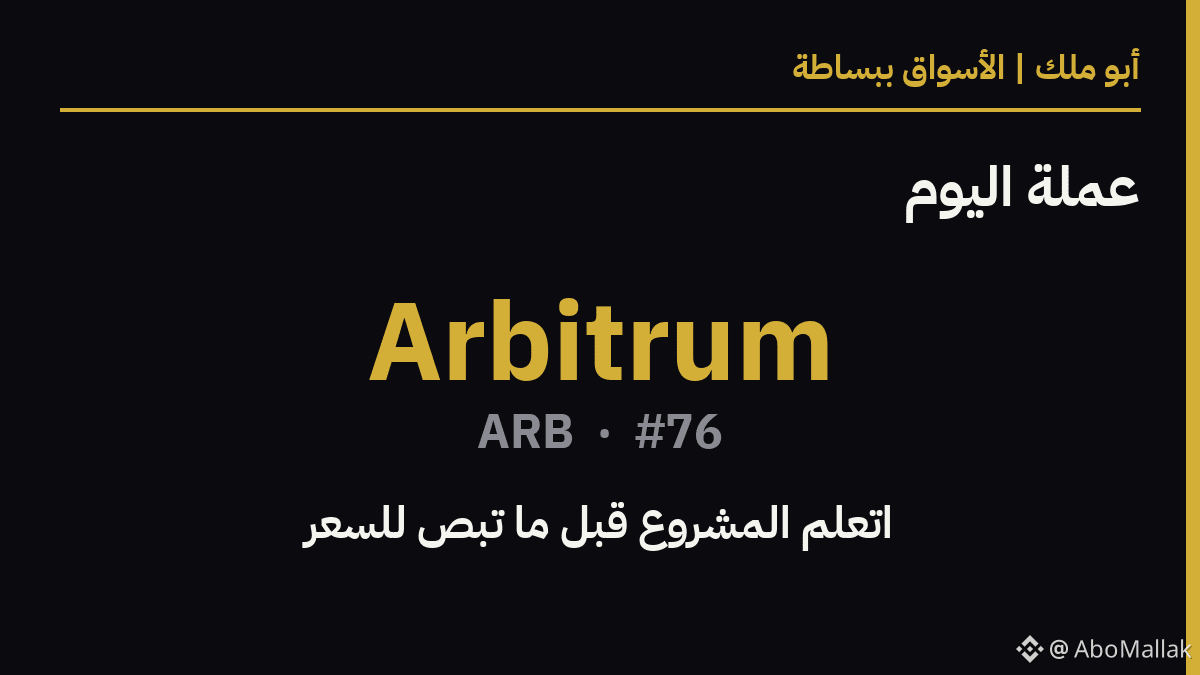
Hoy: Arbitrum ($ARB) — #76 por valor de mercado
🏗️ La mayor red de Capa 2 en Ethereum — ejecuta transacciones fuera de la red principal y devuelve el resultado, obteniendo la seguridad de Ethereum con tarifas mucho más bajas.
💪 La mayor liquidez y actividad entre todas las soluciones de Capa 2.
⚠️ El token ARB está pensado principalmente para la gobernanza — no se lleva una parte directa de las comisiones de la red.
📊 Precio: 0.1328$ · Valor de mercado: 886 millones de dólares
7 días: +46.8% · 30 días: +62.3%
📈 Soportes: 0.0756$ · 0.0722$
(Zonas de parada históricas de velas de 90 días — no son objetivos ni recomendaciones)
¿Qué es lo que más te llamó la atención de Arbitrum? Escribe tu opinión 👇 $ARB
💛 Únete al equipo de Abu Malak: regístrate en Binance con el código ABOMALAK — descuento permanente en comisiones de trading y acceso a nuestros servicios y ofertas
#76 #ARB #Altcoins
⚠️ Contenido educativo — no es asesoramiento de inversión
🎓 Cada día, aprende el mercado — no compres y ya
Hoy: Arbitrum ($ARB ) — #76 por valor de mercado
🏗️ La mayor red de Capa 2 en Ethereum — ejecuta transacciones fuera de la red principal y devuelve el resultado, obteniendo la seguridad de Ethereum con tarifas mucho más bajas.
💪 La mayor liquidez y actividad entre todas las soluciones de Capa 2.
⚠️ El token ARB está pensado principalmente para la gobernanza — no se lleva una parte directa de las comisiones de la red.
📊 Precio: 0.1328$ · Valor de mercado: 886 millones de dólares
7 días: +46.8% · 30 días: +62.3%
📈 Soportes: 0.0756$ · 0.0722$
(Zonas de parada históricas de velas de 90 días — no son objetivos ni recomendaciones)
¿Qué es lo que más te llamó la atención de Arbitrum? Escribe tu opinión 👇 $ARB
💛 Únete al equipo de Abu Malak: regístrate en Binance con el código ABOMALAK — descuento permanente en comisiones de trading y acceso a nuestros servicios y ofertas
#76 #ARB #Altcoins
⚠️ Contenido educativo — no es asesoramiento de inversión
Hoy: Arbitrum ($ARB ) — #76 por valor de mercado
🏗️ La mayor red de Capa 2 en Ethereum — ejecuta transacciones fuera de la red principal y devuelve el resultado, obteniendo la seguridad de Ethereum con tarifas mucho más bajas.
💪 La mayor liquidez y actividad entre todas las soluciones de Capa 2.
⚠️ El token ARB está pensado principalmente para la gobernanza — no se lleva una parte directa de las comisiones de la red.
📊 Precio: 0.1328$ · Valor de mercado: 886 millones de dólares
7 días: +46.8% · 30 días: +62.3%
📈 Soportes: 0.0756$ · 0.0722$
(Zonas de parada históricas de velas de 90 días — no son objetivos ni recomendaciones)
¿Qué es lo que más te llamó la atención de Arbitrum? Escribe tu opinión 👇 $ARB
💛 Únete al equipo de Abu Malak: regístrate en Binance con el código ABOMALAK — descuento permanente en comisiones de trading y acceso a nuestros servicios y ofertas
#76 #ARB #Altcoins
⚠️ Contenido educativo — no es asesoramiento de inversión
3
650
·
--
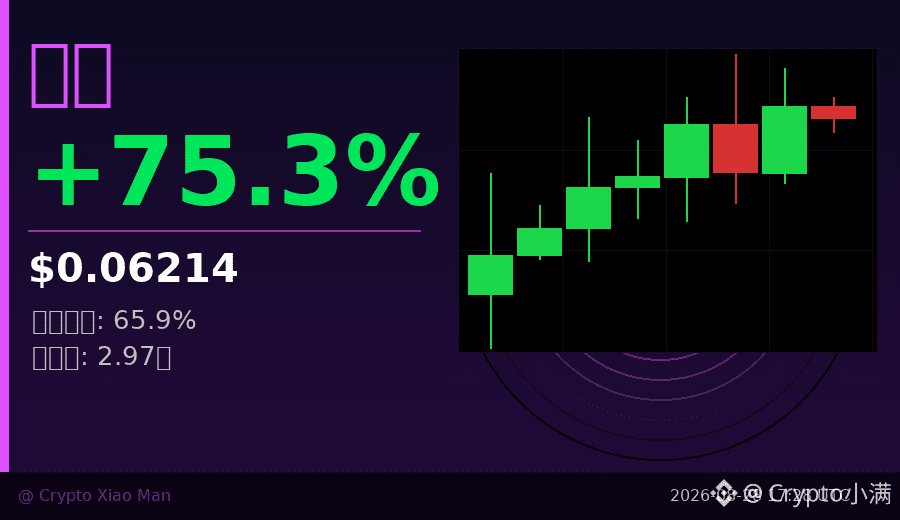
Los bajistas tienen el 65% de la posición y, aun así, el precio de la moneda subió un 76%.
Así es el panorama de la langosta hoy. La proporción entre largos y cortos es de 3:7; en teoría, quienes están en corto son la mayoría absoluta, pero el precio, desde 0.033, fue empujado hasta 0.065, casi duplicándose.
A esta situación se le llama: liquidación de bajistas.
Hay cada vez más personas en corto, pero el precio no cae sino que sube. Una subida sostenida obligará a los bajistas a detener pérdidas y cerrar posiciones—y cerrar el corto equivale a comprar, lo que a su vez vuelve a empujar el precio. Se forma un ciclo de retroalimentación.
La tasa de financiación actual es del 0.1%, lo que indica que los alcistas están pagando por mantener sus posiciones, aunque todavía no estamos en un nivel extremo. El volumen de capital también es considerable: en 24 horas se negoció cerca de 300 millones de dólares.
Viéndolo en las velas de 8 horas, la tendencia general es alcista, pero la última vela muestra claramente una contracción del volumen: de 580 millones baja a 80 millones. Después del impulso alcista para marcar máximos, aparece la reducción de volumen. En este punto hay que prestar atención: ¿tiene el impulso suficiente para continuar, o primero va a tomar aire?
Cuando la batalla entre largos y cortos es más intensa, también suele ser el momento más peligroso. Si aciertas la dirección, la ganancia es grande; si te equivocas, la pérdida también.
$龙虾 #空头踩踏 #76% de aumento
Haz clic en la tarjeta pequeña de abajo para ver rápidamente la cotización👇
Los bajistas tienen el 65% de la posición y, aun así, el precio de la moneda subió un 76%.
Así es el panorama de la langosta hoy. La proporción entre largos y cortos es de 3:7; en teoría, quienes están en corto son la mayoría absoluta, pero el precio, desde 0.033, fue empujado hasta 0.065, casi duplicándose.
A esta situación se le llama: liquidación de bajistas.
Hay cada vez más personas en corto, pero el precio no cae sino que sube. Una subida sostenida obligará a los bajistas a detener pérdidas y cerrar posiciones—y cerrar el corto equivale a comprar, lo que a su vez vuelve a empujar el precio. Se forma un ciclo de retroalimentación.
La tasa de financiación actual es del 0.1%, lo que indica que los alcistas están pagando por mantener sus posiciones, aunque todavía no estamos en un nivel extremo. El volumen de capital también es considerable: en 24 horas se negoció cerca de 300 millones de dólares.
Viéndolo en las velas de 8 horas, la tendencia general es alcista, pero la última vela muestra claramente una contracción del volumen: de 580 millones baja a 80 millones. Después del impulso alcista para marcar máximos, aparece la reducción de volumen. En este punto hay que prestar atención: ¿tiene el impulso suficiente para continuar, o primero va a tomar aire?
Cuando la batalla entre largos y cortos es más intensa, también suele ser el momento más peligroso. Si aciertas la dirección, la ganancia es grande; si te equivocas, la pérdida también.
$龙虾 #空头踩踏 #76% de aumento
Haz clic en la tarjeta pequeña de abajo para ver rápidamente la cotización👇
Así es el panorama de la langosta hoy. La proporción entre largos y cortos es de 3:7; en teoría, quienes están en corto son la mayoría absoluta, pero el precio, desde 0.033, fue empujado hasta 0.065, casi duplicándose.
A esta situación se le llama: liquidación de bajistas.
Hay cada vez más personas en corto, pero el precio no cae sino que sube. Una subida sostenida obligará a los bajistas a detener pérdidas y cerrar posiciones—y cerrar el corto equivale a comprar, lo que a su vez vuelve a empujar el precio. Se forma un ciclo de retroalimentación.
La tasa de financiación actual es del 0.1%, lo que indica que los alcistas están pagando por mantener sus posiciones, aunque todavía no estamos en un nivel extremo. El volumen de capital también es considerable: en 24 horas se negoció cerca de 300 millones de dólares.
Viéndolo en las velas de 8 horas, la tendencia general es alcista, pero la última vela muestra claramente una contracción del volumen: de 580 millones baja a 80 millones. Después del impulso alcista para marcar máximos, aparece la reducción de volumen. En este punto hay que prestar atención: ¿tiene el impulso suficiente para continuar, o primero va a tomar aire?
Cuando la batalla entre largos y cortos es más intensa, también suele ser el momento más peligroso. Si aciertas la dirección, la ganancia es grande; si te equivocas, la pérdida también.
$龙虾 #空头踩踏 #76% de aumento
Haz clic en la tarjeta pequeña de abajo para ver rápidamente la cotización👇
149

·
--
El token de Venice ($VVV) se dispara mientras la participación de la comunidad se dispara
Venice Token ($VVV) está en alza con una ganancia del 7.73% en las últimas 24 horas, impulsada por una fuerte participación de la comunidad y un aumento en el volumen de operaciones hasta $21.86M. El ecosistema único del proyecto y las actualizaciones recientes están atrayendo a nuevos inversores. $VVV actualmente está clasificado en #76 en capitalización de mercado y en #10 en tendencia. Los traders deben estar atentos al impulso de la comunidad y a cualquier anuncio próximo. ⚡🔥
Sigue para actualizaciones diarias de cripto.
#HahaProfit #VeniceToken
El token de Venice ($VVV ) se dispara mientras la participación de la comunidad se dispara
Venice Token ($VVV ) está en alza con una ganancia del 7.73% en las últimas 24 horas, impulsada por una fuerte participación de la comunidad y un aumento en el volumen de operaciones hasta $21.86M. El ecosistema único del proyecto y las actualizaciones recientes están atrayendo a nuevos inversores. $VVV actualmente está clasificado en #76 en capitalización de mercado y en #10 en tendencia. Los traders deben estar atentos al impulso de la comunidad y a cualquier anuncio próximo. ⚡🔥
Sigue para actualizaciones diarias de cripto.
#HahaProfit #VeniceToken
Venice Token ($VVV ) está en alza con una ganancia del 7.73% en las últimas 24 horas, impulsada por una fuerte participación de la comunidad y un aumento en el volumen de operaciones hasta $21.86M. El ecosistema único del proyecto y las actualizaciones recientes están atrayendo a nuevos inversores. $VVV actualmente está clasificado en #76 en capitalización de mercado y en #10 en tendencia. Los traders deben estar atentos al impulso de la comunidad y a cualquier anuncio próximo. ⚡🔥
Sigue para actualizaciones diarias de cripto.
#HahaProfit #VeniceToken
83

·
--
$LIT Lleva el foco: por qué Lighter está en tendencia hoy
$LIT está manteniéndose con fuerza en el centro de atención hoy, reclamando el #9 lugar en la lista de tendencias. A pesar de una ligera caída en 24 horas de 0.77%, el proyecto está atrayendo una atención seria del mercado, con más de $126 millones en volumen de operaciones diario. Actualmente se negocia a $3.4871, y el enorme aumento de liquidez de Lighter en relación con su puesto por capitalización de mercado de #76 muestra que el dinero inteligente se está posicionando activamente. Los traders están observando de cerca esta consolidación de alto volumen, mientras $LIT continúa superando a activos de mayor capitalización en participación pura del mercado. Mantén este en tu radar mientras el volumen sigue subiendo. ⚡📊
Síguenos para más configuraciones cripto.
#DeGenYuv #Lighter
$LIT Lleva el foco: por qué Lighter está en tendencia hoy
$LIT está manteniéndose con fuerza en el centro de atención hoy, reclamando el #9 lugar en la lista de tendencias. A pesar de una ligera caída en 24 horas de 0.77%, el proyecto está atrayendo una atención seria del mercado, con más de $126 millones en volumen de operaciones diario. Actualmente se negocia a $3.4871, y el enorme aumento de liquidez de Lighter en relación con su puesto por capitalización de mercado de #76 muestra que el dinero inteligente se está posicionando activamente. Los traders están observando de cerca esta consolidación de alto volumen, mientras $LIT continúa superando a activos de mayor capitalización en participación pura del mercado. Mantén este en tu radar mientras el volumen sigue subiendo. ⚡📊
Síguenos para más configuraciones cripto.
#DeGenYuv #Lighter
$LIT está manteniéndose con fuerza en el centro de atención hoy, reclamando el #9 lugar en la lista de tendencias. A pesar de una ligera caída en 24 horas de 0.77%, el proyecto está atrayendo una atención seria del mercado, con más de $126 millones en volumen de operaciones diario. Actualmente se negocia a $3.4871, y el enorme aumento de liquidez de Lighter en relación con su puesto por capitalización de mercado de #76 muestra que el dinero inteligente se está posicionando activamente. Los traders están observando de cerca esta consolidación de alto volumen, mientras $LIT continúa superando a activos de mayor capitalización en participación pura del mercado. Mantén este en tu radar mientras el volumen sigue subiendo. ⚡📊
Síguenos para más configuraciones cripto.
#DeGenYuv #Lighter
106
·
--
Nos emociona compartir con nuestra comunidad los últimos tokens en tendencia 🚀. Según CoinGecko, varios tokens están causando sensación en el mercado.
Estamos viendo un gran interés en tokens como Pump.fun (PUMP), Lorenzo Protocol (BANK) y Geodnet (GEOD), con rangos de capitalización de mercado #76, #192 y #202 respectivamente. Otras menciones destacadas incluyen Pons (PONS) y Pudgy Penguins (PENGU) con rangos de capitalización de mercado #452 y #110.
Creemos que vale la pena prestar atención a estos tokens, con potencial de crecimiento 💰. A medida que nuestra comunidad sigue creciendo, estamos comprometidos a brindar las últimas actualizaciones y análisis 📊. Con esta información, estamos seguros de que nuestros usuarios tomarán decisiones informadas 🚫.
$NIL, $PUMP, $BTW
Nos emociona compartir con nuestra comunidad los últimos tokens en tendencia 🚀. Según CoinGecko, varios tokens están causando sensación en el mercado.
Estamos viendo un gran interés en tokens como Pump.fun (PUMP), Lorenzo Protocol (BANK) y Geodnet (GEOD), con rangos de capitalización de mercado #76, #192 y #202 respectivamente. Otras menciones destacadas incluyen Pons (PONS) y Pudgy Penguins (PENGU) con rangos de capitalización de mercado #452 y #110.
Creemos que vale la pena prestar atención a estos tokens, con potencial de crecimiento 💰. A medida que nuestra comunidad sigue creciendo, estamos comprometidos a brindar las últimas actualizaciones y análisis 📊. Con esta información, estamos seguros de que nuestros usuarios tomarán decisiones informadas 🚫.
$NIL , $PUMP , $BTW
Estamos viendo un gran interés en tokens como Pump.fun (PUMP), Lorenzo Protocol (BANK) y Geodnet (GEOD), con rangos de capitalización de mercado #76, #192 y #202 respectivamente. Otras menciones destacadas incluyen Pons (PONS) y Pudgy Penguins (PENGU) con rangos de capitalización de mercado #452 y #110.
Creemos que vale la pena prestar atención a estos tokens, con potencial de crecimiento 💰. A medida que nuestra comunidad sigue creciendo, estamos comprometidos a brindar las últimas actualizaciones y análisis 📊. Con esta información, estamos seguros de que nuestros usuarios tomarán decisiones informadas 🚫.
$NIL , $PUMP , $BTW
192

·
--
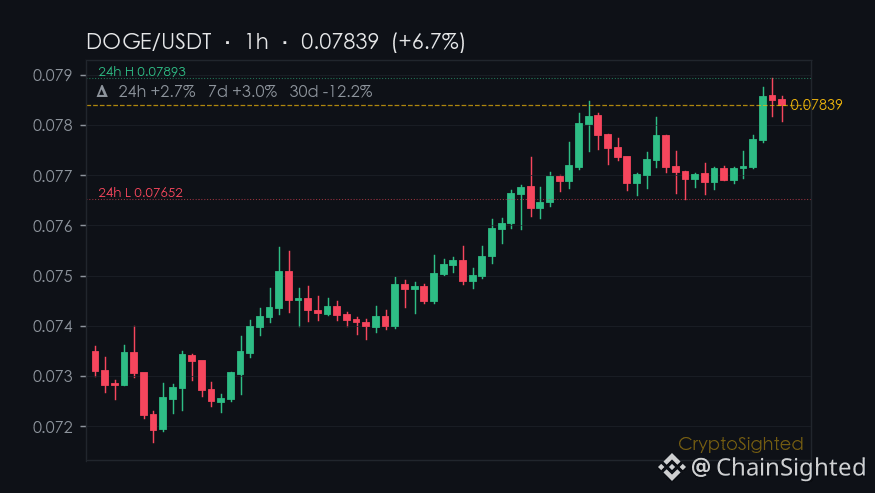
$DOGE is cotizando a $0.07838, con una suba del 2.28% en las últimas 24 horas, pero esa no es la historia. Lo que llama la atención es el volumen de 523, 744, 345 DOGE, un número que sugiere que se está moviendo algo más grande.
DOGE está dentro de un rango estrecho, con su ganancia de 7 días del 5.9% contrastando con su caída de 30 días del 3.8%. Ese es un signo clásico de compras a corto plazo, no de convicción a largo plazo. Y aunque $ADA is subió 11.65% en 24 horas, el volumen de DOGE es más de 1.5 veces mayor: una señal clara de dónde está la acción.
La pregunta es: ¿es solo ruido o DOGE se está preparando para un movimiento?
Defensa u ofensiva: una palabra.
—
No es asesoramiento financiero. Los criptoactivos son de alto riesgo; haz tu propia investigación.
📌 Observación de puntos calientes · #76
#CryptoTrends #CryptoSighted $DOGE
$DOGE is cotizando a $0.07838, con una suba del 2.28% en las últimas 24 horas, pero esa no es la historia. Lo que llama la atención es el volumen de 523, 744, 345 DOGE, un número que sugiere que se está moviendo algo más grande.
DOGE está dentro de un rango estrecho, con su ganancia de 7 días del 5.9% contrastando con su caída de 30 días del 3.8%. Ese es un signo clásico de compras a corto plazo, no de convicción a largo plazo. Y aunque $ADA is subió 11.65% en 24 horas, el volumen de DOGE es más de 1.5 veces mayor: una señal clara de dónde está la acción.
La pregunta es: ¿es solo ruido o DOGE se está preparando para un movimiento?
Defensa u ofensiva: una palabra.
—
No es asesoramiento financiero. Los criptoactivos son de alto riesgo; haz tu propia investigación.
📌 Observación de puntos calientes · #76
#CryptoTrends #CryptoSighted $DOGE
DOGE está dentro de un rango estrecho, con su ganancia de 7 días del 5.9% contrastando con su caída de 30 días del 3.8%. Ese es un signo clásico de compras a corto plazo, no de convicción a largo plazo. Y aunque $ADA is subió 11.65% en 24 horas, el volumen de DOGE es más de 1.5 veces mayor: una señal clara de dónde está la acción.
La pregunta es: ¿es solo ruido o DOGE se está preparando para un movimiento?
Defensa u ofensiva: una palabra.
—
No es asesoramiento financiero. Los criptoactivos son de alto riesgo; haz tu propia investigación.
📌 Observación de puntos calientes · #76
#CryptoTrends #CryptoSighted $DOGE
85

2.7k
1.3k
220
2.7k

·
--
BonkDAO 国库遭到恶意治理提案攻击 @bonk_inu
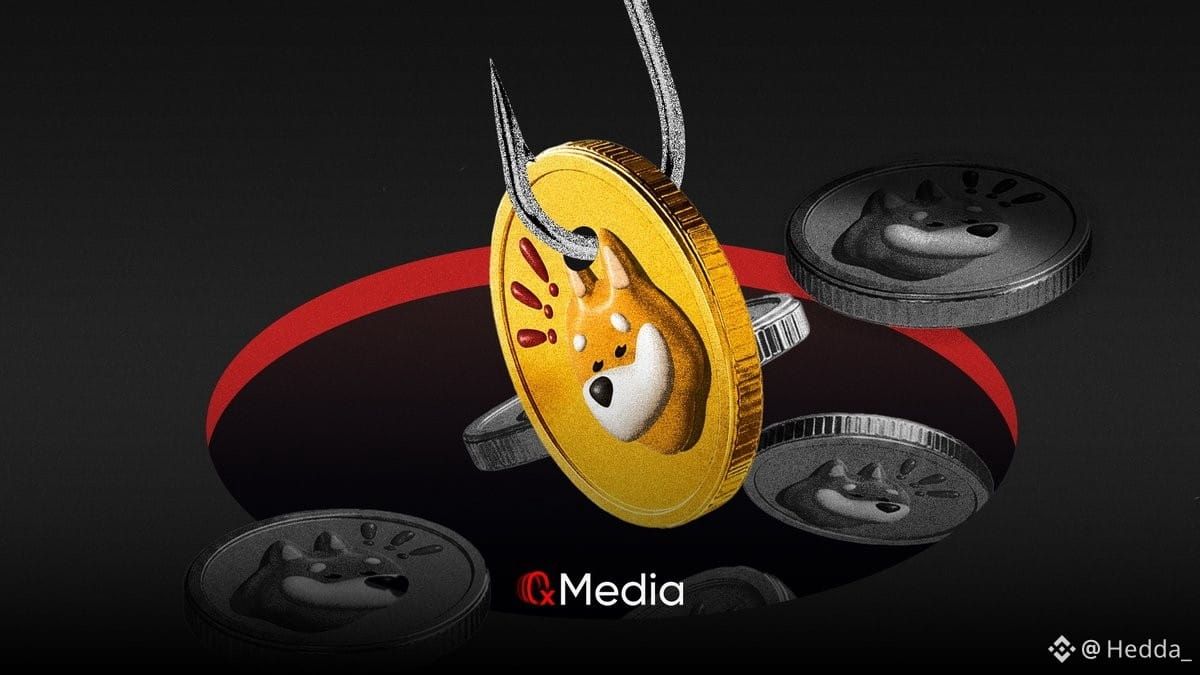
Una propuesta llamada Sowellian BonkDAO, correspondiente a la Bonk Improvement Proposal #76 , fue empaquetada como un plan de reforma de la gobernanza. Propone cambiar miembros y comités, reconstruir la DAO, reactivar activos y también promete otorgar recompensas BONK a las direcciones que emitan su voto a favor.
Tras la aprobación de la propuesta, aproximadamente 44 billones de BONK salieron de la tesorería de BonkDAO. Según los precios de entonces, equivaldría a unos 19,3 a 20 millones de dólares. El dinero fue a parar a una cartera que termina en JHvQ. El rastreo on-chain muestra que esta dirección previamente recibió apoyo con fondos de cuentas de Bybit; más tarde, esas mismas fichas fueron transferidas a otra dirección de Solana que termina en eh42. Las recompensas BONK prometidas a los participantes que votaron a favor no se han visto materializadas hasta la fecha.
El atacante no robó llaves privadas ni aprovechó vulnerabilidades de contratos que ya hubieran sido divulgadas. La ruta del ataque ocurrió a nivel de gobernanza. El atacante, con antelación, acumuló posiciones de BONK y poder de voto aprovechando carteras de múltiples exchanges, y luego hizo pasar una propuesta con permisos de ejecución de alto riesgo por el proceso de gobernanza de BonkDAO. Tras lo ocurrido, BonkDAO confirmó el incidente y señaló que ya se habían identificado las partes de carteras de exchanges que se usaron antes para comprar BONK. Un análisis on-chain externo estimó que, para obtener suficiente poder de voto, el atacante solo podría haber gastado alrededor de 4 millones de dólares en BONK, pero finalmente terminó extrayendo cerca de 20 millones de dólares en activos de la tesorería.
Después de que la noticia se difundiera, BONK llegó a caer cerca de un 10%. Upbit suspendió de inmediato los depósitos y retiros de BONK; Kraken también adoptó medidas similares. El objetivo principal es bloquear la salida para que el atacante convierta los fondos robados en una plataforma centralizada y los cambie por stablecoins o moneda fiduciaria. BonkDAO ya ha notificado a las autoridades encargadas de hacer cumplir la ley, y colabora con exchanges, puentes entre cadenas y la Solana Foundation para rastrear el dinero, buscar la congelación y la recuperación del mismo.
BonkDAO 国库遭到恶意治理提案攻击 @bonk_inu
Una propuesta llamada Sowellian BonkDAO, correspondiente a la Bonk Improvement Proposal #76 , fue empaquetada como un plan de reforma de la gobernanza. Propone cambiar miembros y comités, reconstruir la DAO, reactivar activos y también promete otorgar recompensas BONK a las direcciones que emitan su voto a favor.
Tras la aprobación de la propuesta, aproximadamente 44 billones de BONK salieron de la tesorería de BonkDAO. Según los precios de entonces, equivaldría a unos 19,3 a 20 millones de dólares. El dinero fue a parar a una cartera que termina en JHvQ. El rastreo on-chain muestra que esta dirección previamente recibió apoyo con fondos de cuentas de Bybit; más tarde, esas mismas fichas fueron transferidas a otra dirección de Solana que termina en eh42. Las recompensas BONK prometidas a los participantes que votaron a favor no se han visto materializadas hasta la fecha.
El atacante no robó llaves privadas ni aprovechó vulnerabilidades de contratos que ya hubieran sido divulgadas. La ruta del ataque ocurrió a nivel de gobernanza. El atacante, con antelación, acumuló posiciones de BONK y poder de voto aprovechando carteras de múltiples exchanges, y luego hizo pasar una propuesta con permisos de ejecución de alto riesgo por el proceso de gobernanza de BonkDAO. Tras lo ocurrido, BonkDAO confirmó el incidente y señaló que ya se habían identificado las partes de carteras de exchanges que se usaron antes para comprar BONK. Un análisis on-chain externo estimó que, para obtener suficiente poder de voto, el atacante solo podría haber gastado alrededor de 4 millones de dólares en BONK, pero finalmente terminó extrayendo cerca de 20 millones de dólares en activos de la tesorería.
Después de que la noticia se difundiera, BONK llegó a caer cerca de un 10%. Upbit suspendió de inmediato los depósitos y retiros de BONK; Kraken también adoptó medidas similares. El objetivo principal es bloquear la salida para que el atacante convierta los fondos robados en una plataforma centralizada y los cambie por stablecoins o moneda fiduciaria. BonkDAO ya ha notificado a las autoridades encargadas de hacer cumplir la ley, y colabora con exchanges, puentes entre cadenas y la Solana Foundation para rastrear el dinero, buscar la congelación y la recuperación del mismo.
Una propuesta llamada Sowellian BonkDAO, correspondiente a la Bonk Improvement Proposal #76 , fue empaquetada como un plan de reforma de la gobernanza. Propone cambiar miembros y comités, reconstruir la DAO, reactivar activos y también promete otorgar recompensas BONK a las direcciones que emitan su voto a favor.
Tras la aprobación de la propuesta, aproximadamente 44 billones de BONK salieron de la tesorería de BonkDAO. Según los precios de entonces, equivaldría a unos 19,3 a 20 millones de dólares. El dinero fue a parar a una cartera que termina en JHvQ. El rastreo on-chain muestra que esta dirección previamente recibió apoyo con fondos de cuentas de Bybit; más tarde, esas mismas fichas fueron transferidas a otra dirección de Solana que termina en eh42. Las recompensas BONK prometidas a los participantes que votaron a favor no se han visto materializadas hasta la fecha.
El atacante no robó llaves privadas ni aprovechó vulnerabilidades de contratos que ya hubieran sido divulgadas. La ruta del ataque ocurrió a nivel de gobernanza. El atacante, con antelación, acumuló posiciones de BONK y poder de voto aprovechando carteras de múltiples exchanges, y luego hizo pasar una propuesta con permisos de ejecución de alto riesgo por el proceso de gobernanza de BonkDAO. Tras lo ocurrido, BonkDAO confirmó el incidente y señaló que ya se habían identificado las partes de carteras de exchanges que se usaron antes para comprar BONK. Un análisis on-chain externo estimó que, para obtener suficiente poder de voto, el atacante solo podría haber gastado alrededor de 4 millones de dólares en BONK, pero finalmente terminó extrayendo cerca de 20 millones de dólares en activos de la tesorería.
Después de que la noticia se difundiera, BONK llegó a caer cerca de un 10%. Upbit suspendió de inmediato los depósitos y retiros de BONK; Kraken también adoptó medidas similares. El objetivo principal es bloquear la salida para que el atacante convierta los fondos robados en una plataforma centralizada y los cambie por stablecoins o moneda fiduciaria. BonkDAO ya ha notificado a las autoridades encargadas de hacer cumplir la ley, y colabora con exchanges, puentes entre cadenas y la Solana Foundation para rastrear el dinero, buscar la congelación y la recuperación del mismo.
287
·
--
Estamos emocionados de compartir los últimos tokens en tendencia con nuestra comunidad. Según CoinGecko, los mejores tokens como Bitcoin (BTC) y Ethereum (ETH) están causando revuelo 🚀.
Estamos viendo una mezcla de tokens consolidados y emergentes en la lista, incluyendo Solana (SOL) y Zcash (ZEC). Otras menciones notables son NEAR Protocol (NEAR) y Bittensor (TAO), que están ganando tracción. Venice Token (VVV) también está en ascenso, con un rango de capitalización de mercado de #76.
Estamos comprometidos a mantener a nuestra comunidad informada sobre las últimas tendencias del mercado 💡. Con tantos tokens emocionantes para elegir, estamos seguros de que nuestros usuarios encontrarán oportunidades que se alineen con sus objetivos de inversión 📈. Estamos ansiosos por ver cómo se desempeñan estos tokens en el futuro 👍
$BABY, $ALLO, $CLO
Estamos emocionados de compartir los últimos tokens en tendencia con nuestra comunidad. Según CoinGecko, los mejores tokens como Bitcoin (BTC) y Ethereum (ETH) están causando revuelo 🚀.
Estamos viendo una mezcla de tokens consolidados y emergentes en la lista, incluyendo Solana (SOL) y Zcash (ZEC). Otras menciones notables son NEAR Protocol (NEAR) y Bittensor (TAO), que están ganando tracción. Venice Token (VVV) también está en ascenso, con un rango de capitalización de mercado de #76.
Estamos comprometidos a mantener a nuestra comunidad informada sobre las últimas tendencias del mercado 💡. Con tantos tokens emocionantes para elegir, estamos seguros de que nuestros usuarios encontrarán oportunidades que se alineen con sus objetivos de inversión 📈. Estamos ansiosos por ver cómo se desempeñan estos tokens en el futuro 👍
$BABY , $ALLO , $CLO
Estamos viendo una mezcla de tokens consolidados y emergentes en la lista, incluyendo Solana (SOL) y Zcash (ZEC). Otras menciones notables son NEAR Protocol (NEAR) y Bittensor (TAO), que están ganando tracción. Venice Token (VVV) también está en ascenso, con un rango de capitalización de mercado de #76.
Estamos comprometidos a mantener a nuestra comunidad informada sobre las últimas tendencias del mercado 💡. Con tantos tokens emocionantes para elegir, estamos seguros de que nuestros usuarios encontrarán oportunidades que se alineen con sus objetivos de inversión 📈. Estamos ansiosos por ver cómo se desempeñan estos tokens en el futuro 👍
$BABY , $ALLO , $CLO
4

·
--
Informe de cuantificación de contratos #76|Hoy solo mira estos dos, no persigas el tercero
Estado del mercado:
La continuidad sigue, la tasa de financiamiento es en general controlable, prioriza observar tendencias que no se han roto y retrocesos que no sean profundos.
Candidatos principales:
1) ALLOUSDT
Razón de selección:La subida y el volumen de transacciones son suficientes, la continuidad a corto plazo es la más fuerte, la tasa de financiamiento es neutral, lo que indica que no es un puro apilamiento de largos.
Punto de observación:Si puede mantenerse cerca de la media de 20 días después de un retroceso.
Condición de activación:Reestablecerse y aumentar el volumen, continuar con la subida.
Condición de fallo:Caer por debajo del punto bajo del retroceso y debilitarse con un aumento de volumen.
2) STGUSDT
Razón de selección:El volumen de 1 hora y las transacciones aún están presentes, el OI también está en aumento, lo que indica que hay capital dispuesto a seguir.
Punto de observación:Si puede mantenerse cerca de 0.26.
Condición de activación:Si se establece, continuar subiendo.
Condición de fallo:El aumento no se mantiene, retrocede por debajo del punto de observación.
Opciones de observación/no persigas:
VELVETUSDT se parece más a una toma de ganancias después de un impulso emocional, hay fuerza, pero no es una posición cómoda para perseguir largos.
Advertencia de riesgo:
Lo que más teme el corto plazo es una consistencia demasiado fuerte seguida de un repentino aumento de volumen y retroceso, especialmente si se persigue en una fase acelerada, la tolerancia al error será muy baja.
Resumen en una frase:
Voy a vigilar primero ALLOUSDT y STGUSDT, el tercero solo lo observaré sin perseguir, esperaré confirmación antes de actuar.
Informe de cuantificación de contratos #76|Hoy solo mira estos dos, no persigas el tercero
Estado del mercado:
La continuidad sigue, la tasa de financiamiento es en general controlable, prioriza observar tendencias que no se han roto y retrocesos que no sean profundos.
Candidatos principales:
1) ALLOUSDT
Razón de selección:La subida y el volumen de transacciones son suficientes, la continuidad a corto plazo es la más fuerte, la tasa de financiamiento es neutral, lo que indica que no es un puro apilamiento de largos.
Punto de observación:Si puede mantenerse cerca de la media de 20 días después de un retroceso.
Condición de activación:Reestablecerse y aumentar el volumen, continuar con la subida.
Condición de fallo:Caer por debajo del punto bajo del retroceso y debilitarse con un aumento de volumen.
2) STGUSDT
Razón de selección:El volumen de 1 hora y las transacciones aún están presentes, el OI también está en aumento, lo que indica que hay capital dispuesto a seguir.
Punto de observación:Si puede mantenerse cerca de 0.26.
Condición de activación:Si se establece, continuar subiendo.
Condición de fallo:El aumento no se mantiene, retrocede por debajo del punto de observación.
Opciones de observación/no persigas:
VELVETUSDT se parece más a una toma de ganancias después de un impulso emocional, hay fuerza, pero no es una posición cómoda para perseguir largos.
Advertencia de riesgo:
Lo que más teme el corto plazo es una consistencia demasiado fuerte seguida de un repentino aumento de volumen y retroceso, especialmente si se persigue en una fase acelerada, la tolerancia al error será muy baja.
Resumen en una frase:
Voy a vigilar primero ALLOUSDT y STGUSDT, el tercero solo lo observaré sin perseguir, esperaré confirmación antes de actuar.
Estado del mercado:
La continuidad sigue, la tasa de financiamiento es en general controlable, prioriza observar tendencias que no se han roto y retrocesos que no sean profundos.
Candidatos principales:
1) ALLOUSDT
Razón de selección:La subida y el volumen de transacciones son suficientes, la continuidad a corto plazo es la más fuerte, la tasa de financiamiento es neutral, lo que indica que no es un puro apilamiento de largos.
Punto de observación:Si puede mantenerse cerca de la media de 20 días después de un retroceso.
Condición de activación:Reestablecerse y aumentar el volumen, continuar con la subida.
Condición de fallo:Caer por debajo del punto bajo del retroceso y debilitarse con un aumento de volumen.
2) STGUSDT
Razón de selección:El volumen de 1 hora y las transacciones aún están presentes, el OI también está en aumento, lo que indica que hay capital dispuesto a seguir.
Punto de observación:Si puede mantenerse cerca de 0.26.
Condición de activación:Si se establece, continuar subiendo.
Condición de fallo:El aumento no se mantiene, retrocede por debajo del punto de observación.
Opciones de observación/no persigas:
VELVETUSDT se parece más a una toma de ganancias después de un impulso emocional, hay fuerza, pero no es una posición cómoda para perseguir largos.
Advertencia de riesgo:
Lo que más teme el corto plazo es una consistencia demasiado fuerte seguida de un repentino aumento de volumen y retroceso, especialmente si se persigue en una fase acelerada, la tolerancia al error será muy baja.
Resumen en una frase:
Voy a vigilar primero ALLOUSDT y STGUSDT, el tercero solo lo observaré sin perseguir, esperaré confirmación antes de actuar.
610

·
--
Al ver cómo $ADI pasó de 4 dólares a 6.3 en un tramo, con un aumento del 58% en 30 días, y ahora retrocedió durante 3 días: lo más incómodo para quienes están observando es esto: alcanzarla te da miedo de quedar atrapado en el “bache” del retroceso a mitad de camino; no alcanzarla, te preocupa que siga “puliendo” hasta su ATH de 8 dólares.
En realidad, el panorama no es complicado. Cayó 3.35% en 7 días; en 24 horas volvió a caer 3.68%. El volumen se mantiene estable en 5-6M. No hay ventas por pánico, ni una afluencia de compras claramente visible. En el tramo del 4.0 al 7.0, el aumento no vino acompañado de una expansión sostenida del volumen; más bien, fue un enfriamiento natural tras un avance con menor volumen. Lo que me importa es que aún está a 22% de la ATH: la capitalización ocupa el #76, pero el volumen diario de operaciones es solo 0.7% de la capitalización. Esa actividad de trading no alcanza para sostener una ruptura rápida de máximos anteriores. Si quiere retomar la tendencia alcista, necesita al menos llevar el volumen a más de 10M y mantenerse por encima de $6.5. De lo contrario, en esta posición se parece más a un rango de “subió demasiado y se toma un descanso”, donde tanto compradores como vendedores esperan señales.
Quienes se quedaron fuera del mercado ahora no necesitan confirmar si “todavía puede subir”, sino si “si hay retroceso, comprarías en una posición más baja”. El costo de perseguirla es que podría caer otro 5-10% hasta $5.7-5.8. El costo de no perseguirla es que, si sale una segunda subida, la sensación de haberse quedado fuera se duplica. Si el retroceso no rompe $5.8 y el volumen vuelve a subir, entonces sería un punto de prueba relativamente más seguro.
Por último, la pregunta tipo opción múltiple: si ahora entras con poco peso, ¿prefieres probar con una pequeña posición en $6.3, poniendo un stop de pérdidas, o esperar a que se acerque a $5.8-$5.9 para considerar la entrada?
Al ver cómo $ADI pasó de 4 dólares a 6.3 en un tramo, con un aumento del 58% en 30 días, y ahora retrocedió durante 3 días: lo más incómodo para quienes están observando es esto: alcanzarla te da miedo de quedar atrapado en el “bache” del retroceso a mitad de camino; no alcanzarla, te preocupa que siga “puliendo” hasta su ATH de 8 dólares.
En realidad, el panorama no es complicado. Cayó 3.35% en 7 días; en 24 horas volvió a caer 3.68%. El volumen se mantiene estable en 5-6M. No hay ventas por pánico, ni una afluencia de compras claramente visible. En el tramo del 4.0 al 7.0, el aumento no vino acompañado de una expansión sostenida del volumen; más bien, fue un enfriamiento natural tras un avance con menor volumen. Lo que me importa es que aún está a 22% de la ATH: la capitalización ocupa el #76, pero el volumen diario de operaciones es solo 0.7% de la capitalización. Esa actividad de trading no alcanza para sostener una ruptura rápida de máximos anteriores. Si quiere retomar la tendencia alcista, necesita al menos llevar el volumen a más de 10M y mantenerse por encima de $6.5. De lo contrario, en esta posición se parece más a un rango de “subió demasiado y se toma un descanso”, donde tanto compradores como vendedores esperan señales.
Quienes se quedaron fuera del mercado ahora no necesitan confirmar si “todavía puede subir”, sino si “si hay retroceso, comprarías en una posición más baja”. El costo de perseguirla es que podría caer otro 5-10% hasta $5.7-5.8. El costo de no perseguirla es que, si sale una segunda subida, la sensación de haberse quedado fuera se duplica. Si el retroceso no rompe $5.8 y el volumen vuelve a subir, entonces sería un punto de prueba relativamente más seguro.
Por último, la pregunta tipo opción múltiple: si ahora entras con poco peso, ¿prefieres probar con una pequeña posición en $6.3, poniendo un stop de pérdidas, o esperar a que se acerque a $5.8-$5.9 para considerar la entrada?
En realidad, el panorama no es complicado. Cayó 3.35% en 7 días; en 24 horas volvió a caer 3.68%. El volumen se mantiene estable en 5-6M. No hay ventas por pánico, ni una afluencia de compras claramente visible. En el tramo del 4.0 al 7.0, el aumento no vino acompañado de una expansión sostenida del volumen; más bien, fue un enfriamiento natural tras un avance con menor volumen. Lo que me importa es que aún está a 22% de la ATH: la capitalización ocupa el #76, pero el volumen diario de operaciones es solo 0.7% de la capitalización. Esa actividad de trading no alcanza para sostener una ruptura rápida de máximos anteriores. Si quiere retomar la tendencia alcista, necesita al menos llevar el volumen a más de 10M y mantenerse por encima de $6.5. De lo contrario, en esta posición se parece más a un rango de “subió demasiado y se toma un descanso”, donde tanto compradores como vendedores esperan señales.
Quienes se quedaron fuera del mercado ahora no necesitan confirmar si “todavía puede subir”, sino si “si hay retroceso, comprarías en una posición más baja”. El costo de perseguirla es que podría caer otro 5-10% hasta $5.7-5.8. El costo de no perseguirla es que, si sale una segunda subida, la sensación de haberse quedado fuera se duplica. Si el retroceso no rompe $5.8 y el volumen vuelve a subir, entonces sería un punto de prueba relativamente más seguro.
Por último, la pregunta tipo opción múltiple: si ahora entras con poco peso, ¿prefieres probar con una pequeña posición en $6.3, poniendo un stop de pérdidas, o esperar a que se acerque a $5.8-$5.9 para considerar la entrada?
5
·
--
↑0.74% - esa es la ganancia diaria para $ETH.
ETH se encuentra en $1,868.13, con una subida del 0.74% en las últimas 24 horas.
Pero la historia más grande no es solo el precio: es lo que está pasando debajo de la superficie.
Este movimiento llega mientras Binance anuncia nuevos contratos de futuros y valores tokenizados.
La noticia ya salió y el mercado está reaccionando, pero no con el tipo de frenesí que cabría esperar.
El volumen de 24 horas de ETH es de 123,267 ETH, y su cambio de precio a 7 días es ↑0.5%, mientras que su ganancia a 30 días es ↑19.1%.
Eso muestra una divergencia clara: el impulso a largo plazo sigue intacto, pero la acción a corto plazo está amortiguada.
—
No es asesoramiento financiero. Infórmate por tu cuenta (DYOR).
📌 Gainers Radar · #76 · #Gainers #CryptoSighted $ETH
↑0.74% - esa es la ganancia diaria para $ETH .
ETH se encuentra en $1,868.13, con una subida del 0.74% en las últimas 24 horas.
Pero la historia más grande no es solo el precio: es lo que está pasando debajo de la superficie.
Este movimiento llega mientras Binance anuncia nuevos contratos de futuros y valores tokenizados.
La noticia ya salió y el mercado está reaccionando, pero no con el tipo de frenesí que cabría esperar.
El volumen de 24 horas de ETH es de 123,267 ETH, y su cambio de precio a 7 días es ↑0.5%, mientras que su ganancia a 30 días es ↑19.1%.
Eso muestra una divergencia clara: el impulso a largo plazo sigue intacto, pero la acción a corto plazo está amortiguada.
—
No es asesoramiento financiero. Infórmate por tu cuenta (DYOR).
📌 Gainers Radar · #76 · #Gainers #CryptoSighted $ETH
ETH se encuentra en $1,868.13, con una subida del 0.74% en las últimas 24 horas.
Pero la historia más grande no es solo el precio: es lo que está pasando debajo de la superficie.
Este movimiento llega mientras Binance anuncia nuevos contratos de futuros y valores tokenizados.
La noticia ya salió y el mercado está reaccionando, pero no con el tipo de frenesí que cabría esperar.
El volumen de 24 horas de ETH es de 123,267 ETH, y su cambio de precio a 7 días es ↑0.5%, mientras que su ganancia a 30 días es ↑19.1%.
Eso muestra una divergencia clara: el impulso a largo plazo sigue intacto, pero la acción a corto plazo está amortiguada.
—
No es asesoramiento financiero. Infórmate por tu cuenta (DYOR).
📌 Gainers Radar · #76 · #Gainers #CryptoSighted $ETH
222
Artículo
⚖️ Resumen general⚖️ Resumen general
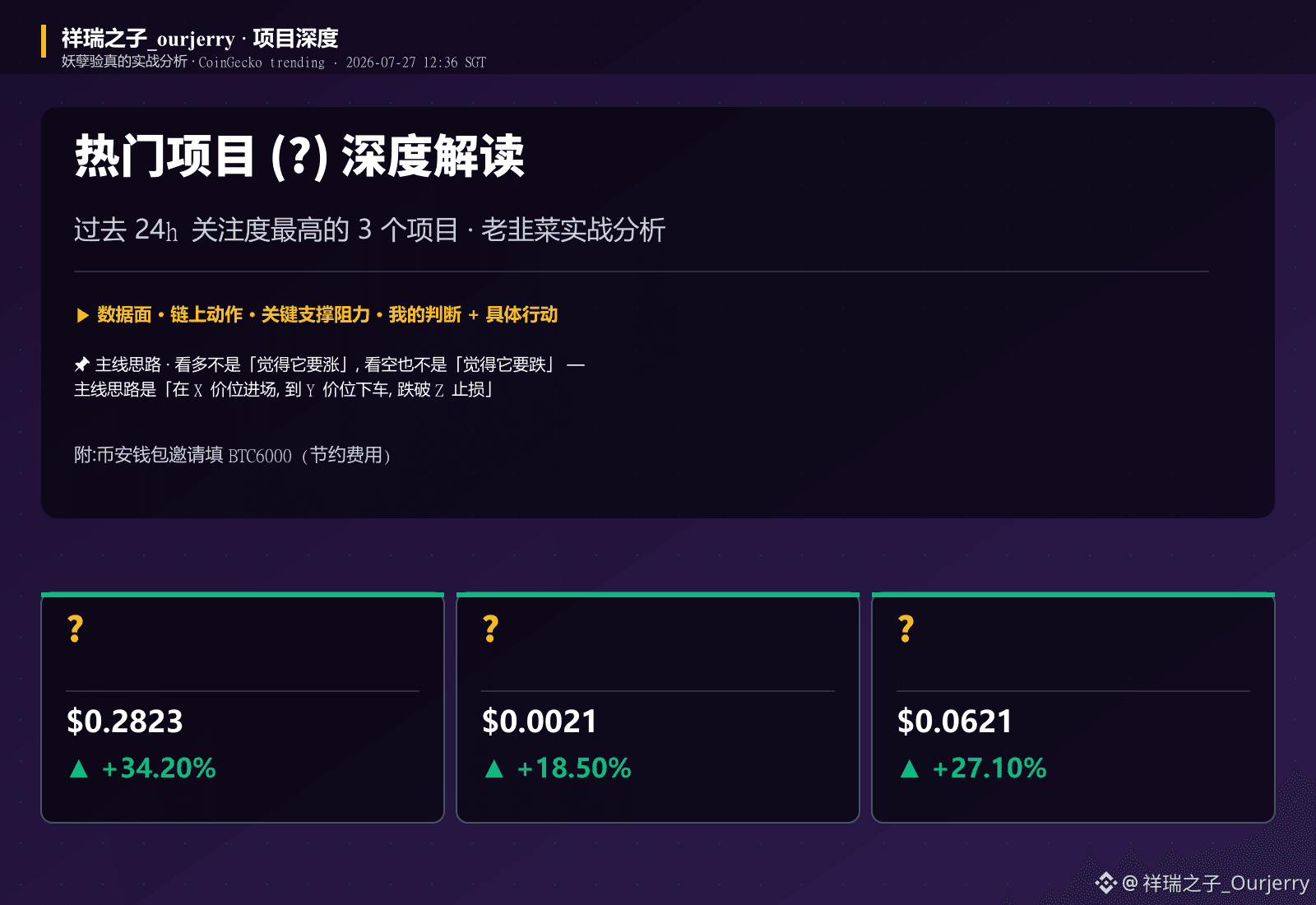
Acabo de revisar la lista de tendencias de CoinGecko de las últimas 24 h. De los 6 primeros, elegí 3 que, en mi opinión, vale la pena desglosar en detalle: Geodnet (GEOD), Pump.fun (PUMP) y Pudgy Penguins (PENGU). En pocas palabras, esta lista en sí es un “snapshot de flujo de capital x sentimiento del sector”. El GEOD sube 34.2% en 24 h, el PUMP +18.5% y el PENGU, aunque está prácticamente plano en 24 h, se mantiene sólido en el top 5. En conjunto, cubre tres sectores totalmente distintos: infraestructura física descentralizada DePIN, plataforma de lanzamiento de memes de Solana e IP brand NFT. Vamos uno por uno, a fondo.
⚖️ Resumen general
⚖️ Resumen general
Acabo de revisar la lista de tendencias de CoinGecko de las últimas 24 h. De los 6 primeros, elegí 3 que, en mi opinión, vale la pena desglosar en detalle: Geodnet (GEOD), Pump.fun (PUMP) y Pudgy Penguins (PENGU). En pocas palabras, esta lista en sí es un “snapshot de flujo de capital x sentimiento del sector”. El GEOD sube 34.2% en 24 h, el PUMP +18.5% y el PENGU, aunque está prácticamente plano en 24 h, se mantiene sólido en el top 5. En conjunto, cubre tres sectores totalmente distintos: infraestructura física descentralizada DePIN, plataforma de lanzamiento de memes de Solana e IP brand NFT. Vamos uno por uno, a fondo.
Acabo de revisar la lista de tendencias de CoinGecko de las últimas 24 h. De los 6 primeros, elegí 3 que, en mi opinión, vale la pena desglosar en detalle: Geodnet (GEOD), Pump.fun (PUMP) y Pudgy Penguins (PENGU). En pocas palabras, esta lista en sí es un “snapshot de flujo de capital x sentimiento del sector”. El GEOD sube 34.2% en 24 h, el PUMP +18.5% y el PENGU, aunque está prácticamente plano en 24 h, se mantiene sólido en el top 5. En conjunto, cubre tres sectores totalmente distintos: infraestructura física descentralizada DePIN, plataforma de lanzamiento de memes de Solana e IP brand NFT. Vamos uno por uno, a fondo.
198

👀 ¿En qué están fijándose ahora los traders inteligentes? El radar de tendencias de CoinGecko muestra una mezcla fascinante de cultura, plataformas de lanzamiento e infraestructura. Los tokens como $PUMP (#76) y el gigante de NFT $PENGU (#113) siguen dominando el volumen de búsquedas. Mientras tanto, $ZAMA (#202), centrado en la privacidad, junto con movimientos como Pons (#489) y Casper Network (#675), están atrayendo una atención inesperada de los traders. 📈 Cuando las listas de tendencias combinan el impulso de alta beta con la tecnología subyacente, a menudo indica una rotación dinámica de capital entre narrativas. 📊 ¿Qué gráfico vas a abrir primero hoy? 👇 No es Asesoramiento Financiero (DYOR)
👀 ¿En qué están fijándose ahora los traders inteligentes? El radar de tendencias de CoinGecko muestra una mezcla fascinante de cultura, plataformas de lanzamiento e infraestructura. Los tokens como $PUMP (#76) y el gigante de NFT $PENGU (#113) siguen dominando el volumen de búsquedas. Mientras tanto, $ZAMA (#202), centrado en la privacidad, junto con movimientos como Pons (#489) y Casper Network (#675), están atrayendo una atención inesperada de los traders. 📈 Cuando las listas de tendencias combinan el impulso de alta beta con la tecnología subyacente, a menudo indica una rotación dinámica de capital entre narrativas. 📊 ¿Qué gráfico vas a abrir primero hoy? 👇 No es Asesoramiento Financiero (DYOR)


236
·
--
Si viste los últimos anuncios de listados de Binance esta semana, quizá notaste algo extraño: los nuevos tokens tienen un precio con una confianza que no coincide con el estado de ánimo general del mercado.
Binance está agregando 10 valores tokenizados de bStocks como activos de garantía, junto con nuevos contratos perpetuos para activos de TradFi e incluso un contrato con margen POPMART USDⓈ.
Estos no son movimientos pequeños: son estructurales.
Pero está la pega: el mercado no reacciona como si estuviera viendo algo nuevo.
¿Los listados más recientes de Binance podrían ser la próxima gran novedad, o solo otra tanda de tokens sobrevalorados?
—
No es asesoramiento financiero. Infórmate por tu cuenta (DYOR).
📌 News Take · #76 · #CryptoNews #CryptoSighted
Si viste los últimos anuncios de listados de Binance esta semana, quizá notaste algo extraño: los nuevos tokens tienen un precio con una confianza que no coincide con el estado de ánimo general del mercado.
Binance está agregando 10 valores tokenizados de bStocks como activos de garantía, junto con nuevos contratos perpetuos para activos de TradFi e incluso un contrato con margen POPMART USDⓈ.
Estos no son movimientos pequeños: son estructurales.
Pero está la pega: el mercado no reacciona como si estuviera viendo algo nuevo.
¿Los listados más recientes de Binance podrían ser la próxima gran novedad, o solo otra tanda de tokens sobrevalorados?
—
No es asesoramiento financiero. Infórmate por tu cuenta (DYOR).
📌 News Take · #76 · #CryptoNews #CryptoSighted
Binance está agregando 10 valores tokenizados de bStocks como activos de garantía, junto con nuevos contratos perpetuos para activos de TradFi e incluso un contrato con margen POPMART USDⓈ.
Estos no son movimientos pequeños: son estructurales.
Pero está la pega: el mercado no reacciona como si estuviera viendo algo nuevo.
¿Los listados más recientes de Binance podrían ser la próxima gran novedad, o solo otra tanda de tokens sobrevalorados?
—
No es asesoramiento financiero. Infórmate por tu cuenta (DYOR).
📌 News Take · #76 · #CryptoNews #CryptoSighted
247
Inicia sesión para explorar más contenidos
Únete a usuarios globales de criptomonedas en Binance Square
⚡️ Obtén información útil y actualizada sobre criptos.
💬 Avalado por el mayor exchange de criptomonedas en el mundo.
👍 Descubre perspectivas reales de creadores verificados.
Email/número de teléfono
Temas populares
1
#ChainlinkPowersBottomlinePaymentPlatform
262 vistas
43 están debatiendo
2
#StellarActivatesProtocol28At211TPS
7,749 vistas
240 están debatiendo
3
#SECGrantsInnovationExemptionForTokenizedStocks
6,497 vistas
204 están debatiendo
4
#XRPGains3%AsRippleAddsMPPSupport
4,784 vistas
148 están debatiendo
5
#SPGlobalToAcquireOpenZeppelin
3,068 vistas
118 están debatiendo
6
#WorldLaunchesSelfCustodyAppIn150Countries
841 vistas
46 están debatiendo
7
#BitcoinSurpasses$77000
20,799 vistas
245 están debatiendo
8
#ParadigmDisclosesZECHolding
89,925 vistas
1,244 están debatiendo
9
#BitcoinETFsShed$450M
29,120 vistas
230 están debatiendo
10
#USWeeklyJoblessClaimsFallTo196K
48,680 vistas
714 están debatiendo