
加密掘金妹
102 Posts

加密掘金妹
BNB长期持有者|链上淘金人|币安生态深耕者,不贪一时涨跌,专注捕捉持续赚钱机会,硬核分析真实结论,陪你链上掘金
20 Following
4.4K+ Followers
1.1K+ Liked
Posts
All
Quotes
Live
SIGN does not speculate on cryptocurrencies, but provides a platform for central banks around the world? This infrastructure approach, I think it works!
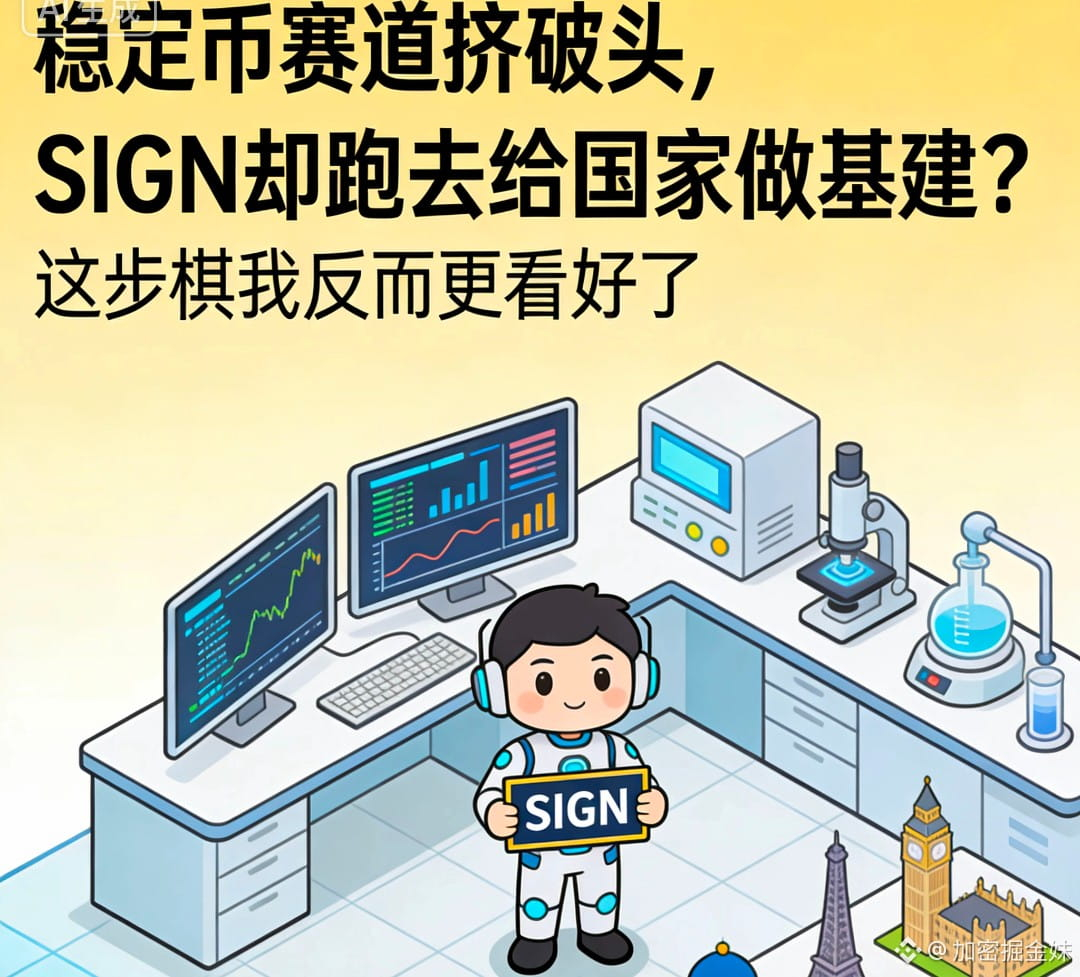
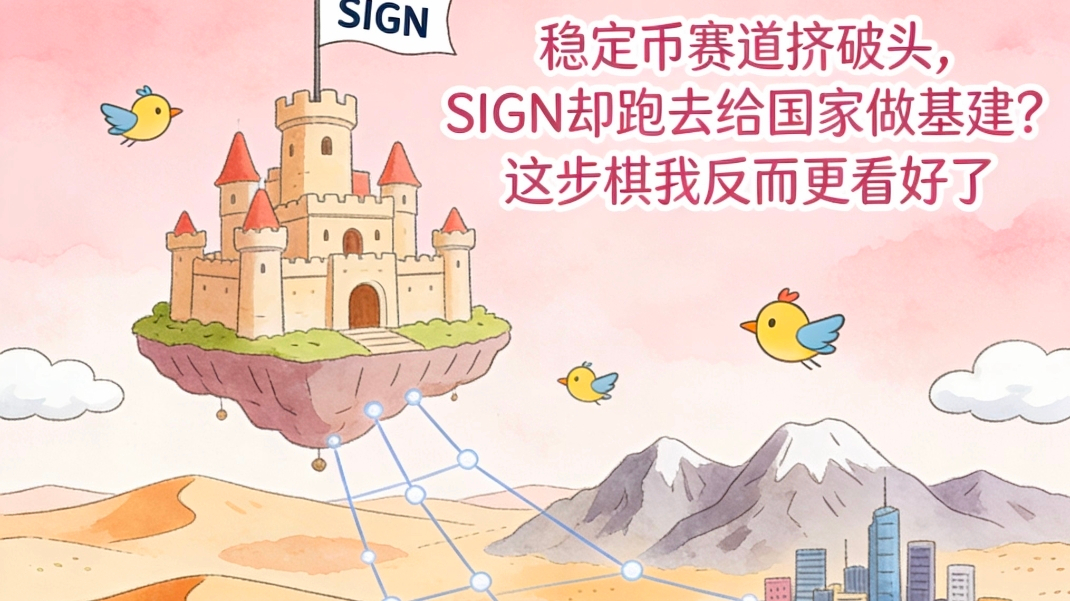
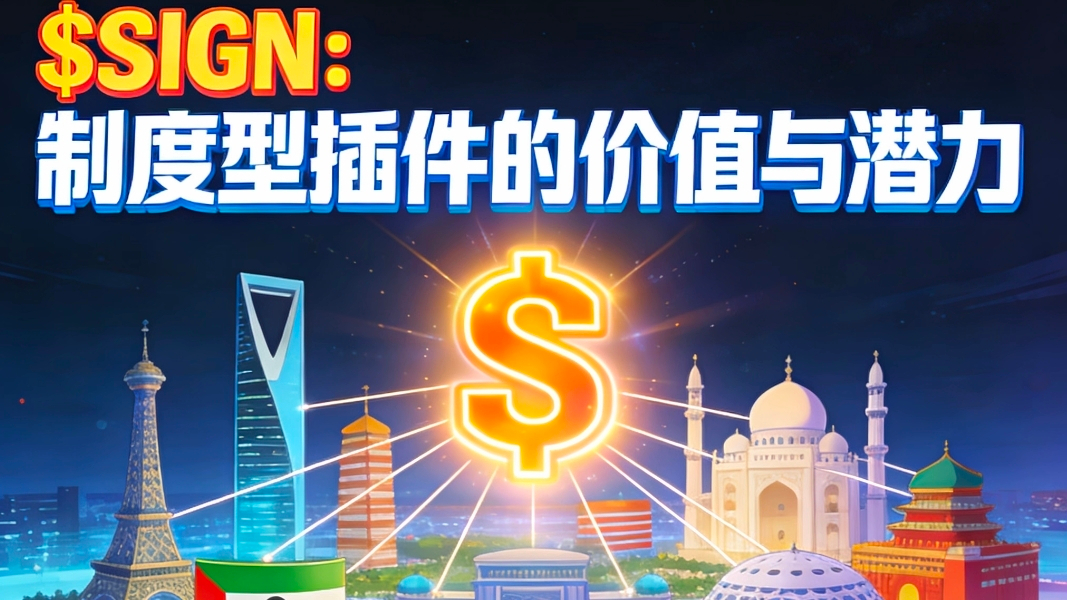
SIGN, don't just focus on the K-line. What it does is more 'hardcore': it acts as a digital infrastructure contractor for governments and countries, helping them issue central bank digital currencies and establish digital identity systems.
In simple terms, it does not create stablecoins, but instead provides 'minting facilities' and 'identity systems'. For example, it helps Kyrgyzstan issue stablecoins pegged to its national currency and assists Sierra Leone in building a digital identity and payment infrastructure. This is a solid national-level strategic cooperation.
Its dual-chain architecture is a highlight; the public chain ensures transparency and global circulation, while the private chain allows the government to control sensitive data. This design meets the need for openness while ensuring sovereign control, which is very pragmatic.
In terms of ecological expansion, it has already implemented cross-border settlement projects in the Middle East, Central Asia, and other regions. Backed by top-tier capital such as Sequoia, IDG, and Amber Group, it has raised over 55 million USD, providing strong credibility.
Security is fundamental; it ensures that on-chain credentials cannot be tampered with through full-chain certification and zero-knowledge proof technology, while also protecting user privacy. This is crucial when handling national financial data.
The community is currently somewhat divided; the price is fluctuating around $0.033, with a market capitalization of approximately 52 million. In the short term, it is affected by unlocking expectations, leading to significant volatility, but in the long run, once its business model is validated, the replication cost is very low, and the potential for growth is substantial.
I am very optimistic about SIGN; it cleverly avoids the red ocean competition and chooses to provide core infrastructure for B-end and G-end, taking the 'slow but steady' approach. In the era of digital sovereignty, this protocol that addresses real pain points will gradually release its value.
At the current price level, it is more suitable to adopt a 'allocation' mindset, focusing on its cooperation progress and on-chain data growth. Hold the positions you can bear and wait for the logic to be realized.
@SignOfficial
#Sign地缘政治基建
$SIGN
SIGN, don't just focus on the K-line. What it does is more 'hardcore': it acts as a digital infrastructure contractor for governments and countries, helping them issue central bank digital currencies and establish digital identity systems.
In simple terms, it does not create stablecoins, but instead provides 'minting facilities' and 'identity systems'. For example, it helps Kyrgyzstan issue stablecoins pegged to its national currency and assists Sierra Leone in building a digital identity and payment infrastructure. This is a solid national-level strategic cooperation.
Its dual-chain architecture is a highlight; the public chain ensures transparency and global circulation, while the private chain allows the government to control sensitive data. This design meets the need for openness while ensuring sovereign control, which is very pragmatic.
In terms of ecological expansion, it has already implemented cross-border settlement projects in the Middle East, Central Asia, and other regions. Backed by top-tier capital such as Sequoia, IDG, and Amber Group, it has raised over 55 million USD, providing strong credibility.
Security is fundamental; it ensures that on-chain credentials cannot be tampered with through full-chain certification and zero-knowledge proof technology, while also protecting user privacy. This is crucial when handling national financial data.
The community is currently somewhat divided; the price is fluctuating around $0.033, with a market capitalization of approximately 52 million. In the short term, it is affected by unlocking expectations, leading to significant volatility, but in the long run, once its business model is validated, the replication cost is very low, and the potential for growth is substantial.
I am very optimistic about SIGN; it cleverly avoids the red ocean competition and chooses to provide core infrastructure for B-end and G-end, taking the 'slow but steady' approach. In the era of digital sovereignty, this protocol that addresses real pain points will gradually release its value.
At the current price level, it is more suitable to adopt a 'allocation' mindset, focusing on its cooperation progress and on-chain data growth. Hold the positions you can bear and wait for the logic to be realized.
@SignOfficial
#Sign地缘政治基建
$SIGN
SIGN is playing a big game to take over the entire digital infrastructure
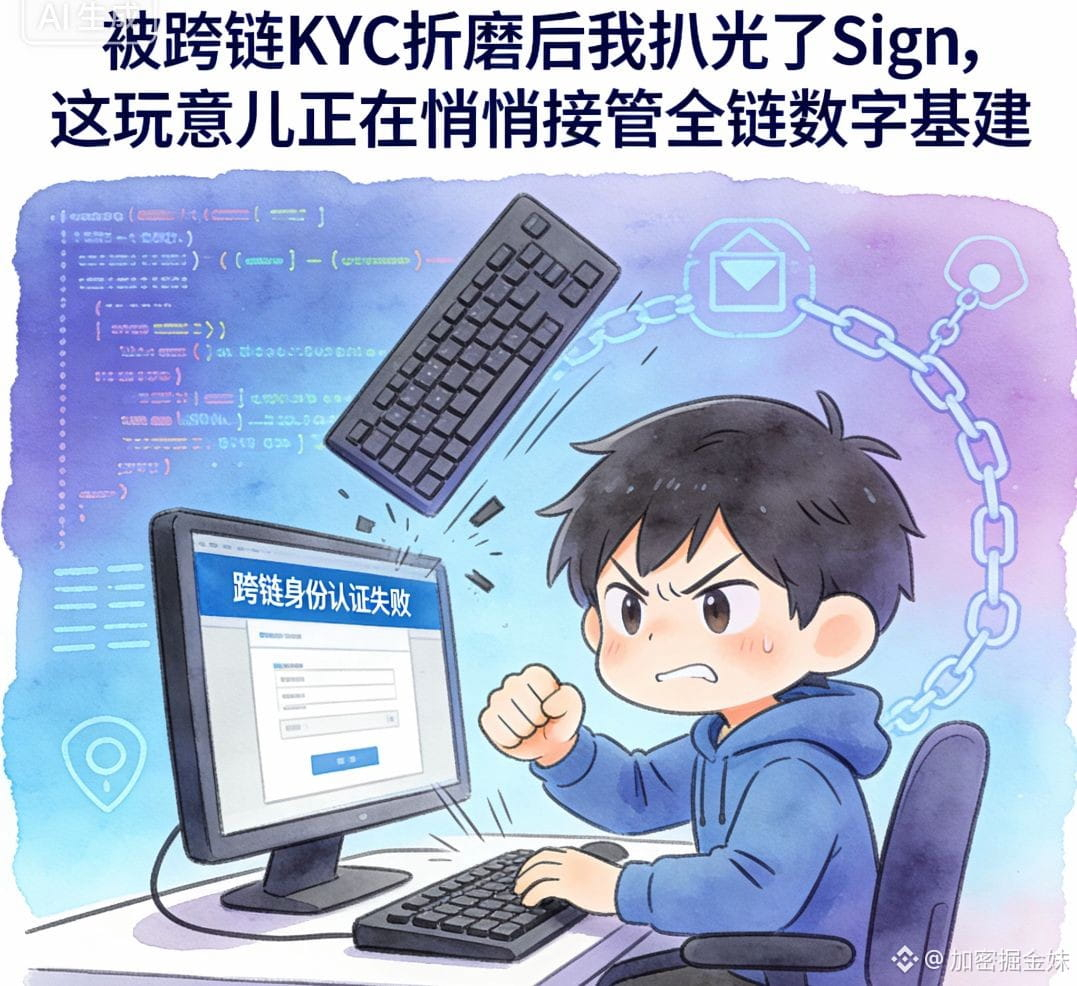
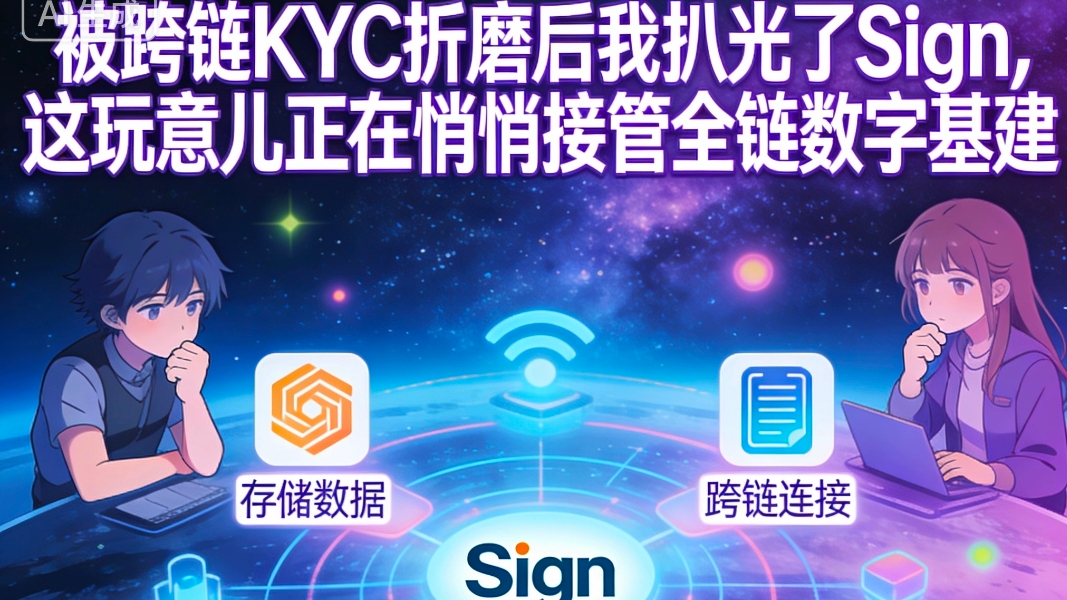
Recently, I was quite troubled by cross-chain KYC and asset proof, until I dug deep into the Sign Protocol's code and found out that it is not just a simple signature tool. What it is building is a data and trust infrastructure that can support future cross-chain applications, and I have great confidence in it.
Core Highlights: Solving Real Pain Points for Developers
Its “Schema” is like a universal data template that allows identity and asset proofs on different chains to understand each other. One verification, universally applicable across chains, solves the long-standing problem of fragmented data. Its “Hooks” mechanism is even smarter, automatically triggering subsequent actions, such as automatically distributing airdrops after verification, which is highly efficient in preventing witch attacks.
Strategic Support and Ecological Expansion
Investments from top institutions like Sequoia Capital are precisely due to its potential to address the fundamental problem of “trust.” Its core product, TokenTable, has an annual revenue exceeding 15 million USD and manages over 40 billion in assets, with solid ecological expansion. This proves the urgent market demand for its solutions.
Security Assurance and Transaction Perspective
It adopts an innovative hybrid storage solution, with core data permanently stored on Arweave and key hashes on-chain, balancing security and cost. By integrating zero-knowledge proofs, it achieves “proving my qualifications without exposing who I am” privacy protection.
From a transaction perspective, $SIGN is the fuel that drives the entire network, needed for staking and payment verification fees. As adoption increases, its consumption scenarios will become more solid. The community's discussion on its “sovereign infrastructure” narrative continues to heat up.
Summary
SIGN has great ambitions; it aims to become the cornerstone of trust in the digital world. Although infrastructure projects require patience to develop, its technological path is clear, addressing core pain points in the industry. I am optimistic about its long-term value as a key underlying protocol in the future multi-chain ecosystem.
@SignOfficial
$SIGN
#Sign地缘政治基建
Recently, I was quite troubled by cross-chain KYC and asset proof, until I dug deep into the Sign Protocol's code and found out that it is not just a simple signature tool. What it is building is a data and trust infrastructure that can support future cross-chain applications, and I have great confidence in it.
Core Highlights: Solving Real Pain Points for Developers
Its “Schema” is like a universal data template that allows identity and asset proofs on different chains to understand each other. One verification, universally applicable across chains, solves the long-standing problem of fragmented data. Its “Hooks” mechanism is even smarter, automatically triggering subsequent actions, such as automatically distributing airdrops after verification, which is highly efficient in preventing witch attacks.
Strategic Support and Ecological Expansion
Investments from top institutions like Sequoia Capital are precisely due to its potential to address the fundamental problem of “trust.” Its core product, TokenTable, has an annual revenue exceeding 15 million USD and manages over 40 billion in assets, with solid ecological expansion. This proves the urgent market demand for its solutions.
Security Assurance and Transaction Perspective
It adopts an innovative hybrid storage solution, with core data permanently stored on Arweave and key hashes on-chain, balancing security and cost. By integrating zero-knowledge proofs, it achieves “proving my qualifications without exposing who I am” privacy protection.
From a transaction perspective, $SIGN is the fuel that drives the entire network, needed for staking and payment verification fees. As adoption increases, its consumption scenarios will become more solid. The community's discussion on its “sovereign infrastructure” narrative continues to heat up.
Summary
SIGN has great ambitions; it aims to become the cornerstone of trust in the digital world. Although infrastructure projects require patience to develop, its technological path is clear, addressing core pain points in the industry. I am optimistic about its long-term value as a key underlying protocol in the future multi-chain ecosystem.
@SignOfficial
$SIGN
#Sign地缘政治基建
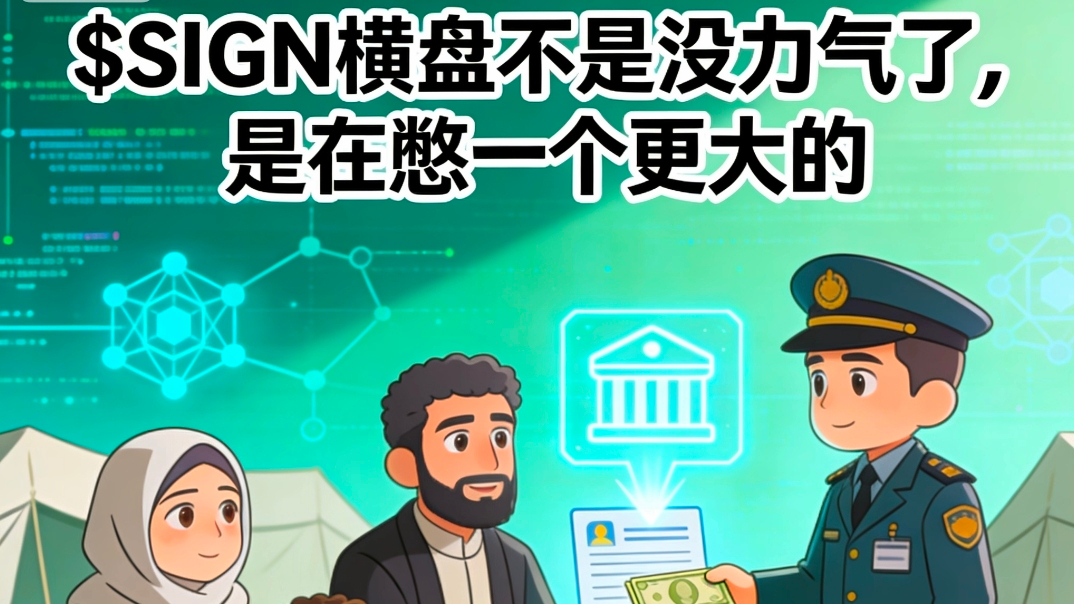
Is SIGN's sideways movement grinding? Yet I see chips flowing from 'speculators' to 'coin holders', quietly on the eve of an outbreak.
Brothers, to be honest, the recent trend of $SIGN is neither hot nor cold, indeed grinding. But I think this 'quietness' is a good thing. It's not like those pump-and-dump coins, but rather steadily oscillating within a range. This is often a signal of chip exchange, short-term traders lose patience and exit, while patient funds are quietly accumulating.
Why am I willing to accompany it in this 'grind'? Because I have great confidence in its underlying logic. @SignOfficial is not about trading concepts in DeFi, but rather solid 'sovereign-level digital infrastructure'. Just look at the white paper and real-world cases, helping the government distribute funds and deeply cooperating with the Abu Dhabi Blockchain Center, these are all hard strengths.
Its strategic support is very clear: providing a controllable, censorship-resistant trust system for the country amid global uncertainties. Its core component TokenTable is a 'programmable capital distribution engine', which addresses the pain point of traditional aid funds being eroded layer by layer, with high security and transparency.
In the current geopolitical environment, this capability has transformed from 'adding flowers to the brocade' to 'sending charcoal in the snow', with huge potential for ecological expansion. Short-term prices are influenced by overall community sentiment, but selling pressure is limited. Once there are new ecological developments or market sentiment shifts, the upward elasticity could be significant.
From a trading perspective, such projects require patience. Their value is not driven by short-term hotspots, but rather slowly released alongside macro narrative resonance. It is worth putting on the watchlist to closely monitor its real cooperation progress.
@SignOfficial
$SIGN
#Sign地缘政治基建
Brothers, to be honest, the recent trend of $SIGN is neither hot nor cold, indeed grinding. But I think this 'quietness' is a good thing. It's not like those pump-and-dump coins, but rather steadily oscillating within a range. This is often a signal of chip exchange, short-term traders lose patience and exit, while patient funds are quietly accumulating.
Why am I willing to accompany it in this 'grind'? Because I have great confidence in its underlying logic. @SignOfficial is not about trading concepts in DeFi, but rather solid 'sovereign-level digital infrastructure'. Just look at the white paper and real-world cases, helping the government distribute funds and deeply cooperating with the Abu Dhabi Blockchain Center, these are all hard strengths.
Its strategic support is very clear: providing a controllable, censorship-resistant trust system for the country amid global uncertainties. Its core component TokenTable is a 'programmable capital distribution engine', which addresses the pain point of traditional aid funds being eroded layer by layer, with high security and transparency.
In the current geopolitical environment, this capability has transformed from 'adding flowers to the brocade' to 'sending charcoal in the snow', with huge potential for ecological expansion. Short-term prices are influenced by overall community sentiment, but selling pressure is limited. Once there are new ecological developments or market sentiment shifts, the upward elasticity could be significant.
From a trading perspective, such projects require patience. Their value is not driven by short-term hotspots, but rather slowly released alongside macro narrative resonance. It is worth putting on the watchlist to closely monitor its real cooperation progress.
@SignOfficial
$SIGN
#Sign地缘政治基建
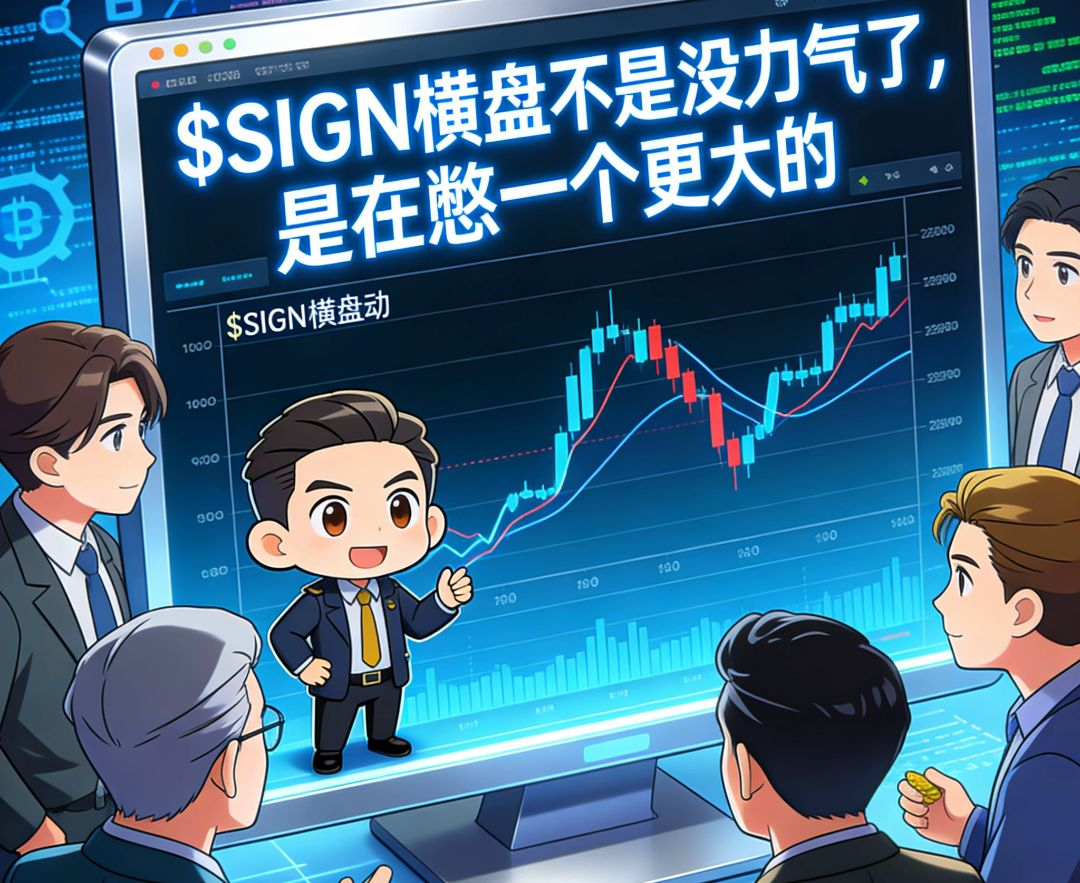
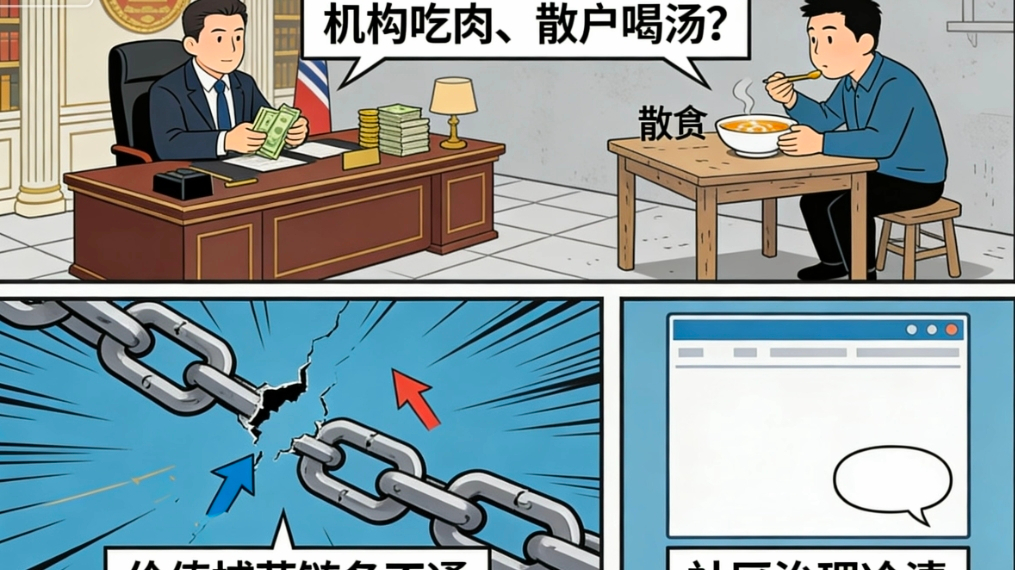
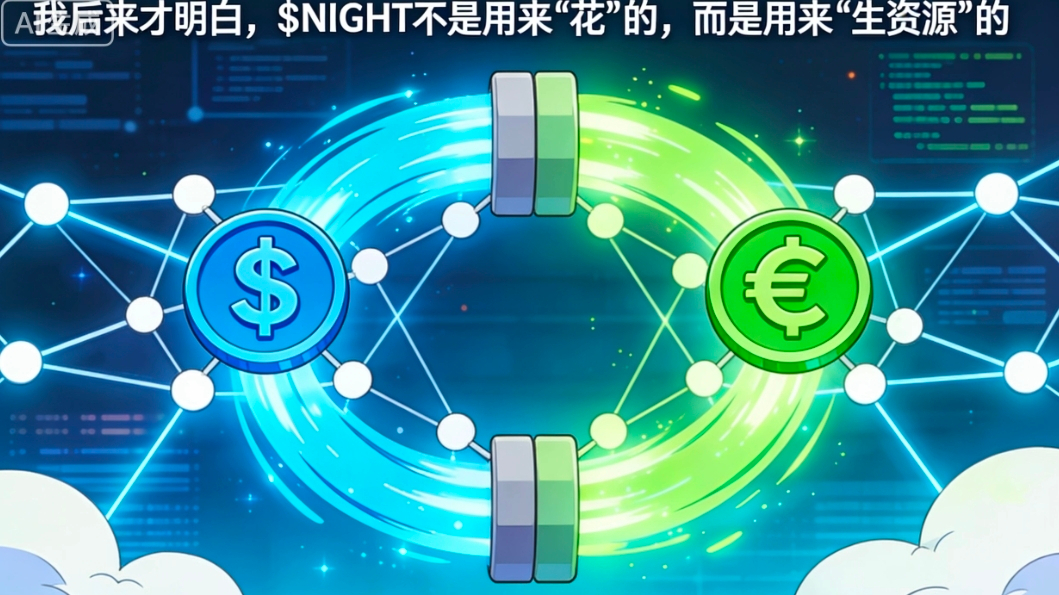
Don't treat SIGN as an ordinary coin for trading! It's quietly becoming the 'iron proof' of blockchain!
Brothers, I've been seeing a lot of discussions about Sign lately. At first, I thought it was just a shell application, but when I really dug into the underlying layer, I realized Sign is playing a big game: it's brewing the 'evidence layer' of blockchain.
Usually, when we look at on-chain interactions, the data is scattered like a pot of porridge. Sign takes a set of underlying rules to turn these fragmented statements into ironclad proofs that machines can understand. There's no need to rely on any centralized nodes; you can directly sign the facts with a private key and nail them down on the chain. This hardcore anchoring method really suits my taste!
What impresses me most about its practicality is that Sign doesn't stubbornly pursue full on-chain storage. After all, storing things on-chain is ridiculously expensive right now. It has created a hybrid model: lightweight data is thrown on-chain, while large files are directly backed up by Arweave.
This logic is so stable. When encountering main chain congestion or extreme market conditions, Sign still operates smoothly without the embarrassing issue of a single point of failure. Moreover, Sign does cross-chain interactions quite smoothly, being able to run on EVM, Solana, and even Bitcoin networks, and it conveniently incorporated zero-knowledge proofs, allowing verification of qualifications without exposing the entire background.
Following this line of thought, it also confirms my preference for this type of infrastructure strategy that can flatten multi-chain barriers over the years. The token of Sign is certainly not just about collecting toll fees in the system; node maintenance and aggregate queries all rely on it to align interests.
I am very optimistic about this project! Sign is currently one of the most aggressive players in the Web3 trust infrastructure. Its scarcity in trust agreements really struck a chord with me. Projects that can solve real problems are the hard currency that can weather bulls and bears.
Of course, I am also aware of the common issues with investing in infrastructure: the business ramp-up cycle is long, and early valuations are easily inflated. Whether Sign's hybrid storage can withstand extreme concurrency is still up for debate, and getting developers accustomed to new standards, who are used to old routines, will likely require a substantial amount of early educational subsidies.
So my current strategy is to keep a base position on the left side and slowly lurk, without recklessly going all in. I mainly focus on monitoring the actual usage data and ecosystem integration speed of Sign on a monthly basis. If I find the data weakening, I'll directly cut my position and switch vehicles.
@SignOfficial
$SIGN
#Sign地缘政治基建
Brothers, I've been seeing a lot of discussions about Sign lately. At first, I thought it was just a shell application, but when I really dug into the underlying layer, I realized Sign is playing a big game: it's brewing the 'evidence layer' of blockchain.
Usually, when we look at on-chain interactions, the data is scattered like a pot of porridge. Sign takes a set of underlying rules to turn these fragmented statements into ironclad proofs that machines can understand. There's no need to rely on any centralized nodes; you can directly sign the facts with a private key and nail them down on the chain. This hardcore anchoring method really suits my taste!
What impresses me most about its practicality is that Sign doesn't stubbornly pursue full on-chain storage. After all, storing things on-chain is ridiculously expensive right now. It has created a hybrid model: lightweight data is thrown on-chain, while large files are directly backed up by Arweave.
This logic is so stable. When encountering main chain congestion or extreme market conditions, Sign still operates smoothly without the embarrassing issue of a single point of failure. Moreover, Sign does cross-chain interactions quite smoothly, being able to run on EVM, Solana, and even Bitcoin networks, and it conveniently incorporated zero-knowledge proofs, allowing verification of qualifications without exposing the entire background.
Following this line of thought, it also confirms my preference for this type of infrastructure strategy that can flatten multi-chain barriers over the years. The token of Sign is certainly not just about collecting toll fees in the system; node maintenance and aggregate queries all rely on it to align interests.
I am very optimistic about this project! Sign is currently one of the most aggressive players in the Web3 trust infrastructure. Its scarcity in trust agreements really struck a chord with me. Projects that can solve real problems are the hard currency that can weather bulls and bears.
Of course, I am also aware of the common issues with investing in infrastructure: the business ramp-up cycle is long, and early valuations are easily inflated. Whether Sign's hybrid storage can withstand extreme concurrency is still up for debate, and getting developers accustomed to new standards, who are used to old routines, will likely require a substantial amount of early educational subsidies.
So my current strategy is to keep a base position on the left side and slowly lurk, without recklessly going all in. I mainly focus on monitoring the actual usage data and ecosystem integration speed of Sign on a monthly basis. If I find the data weakening, I'll directly cut my position and switch vehicles.
@SignOfficial
$SIGN
#Sign地缘政治基建
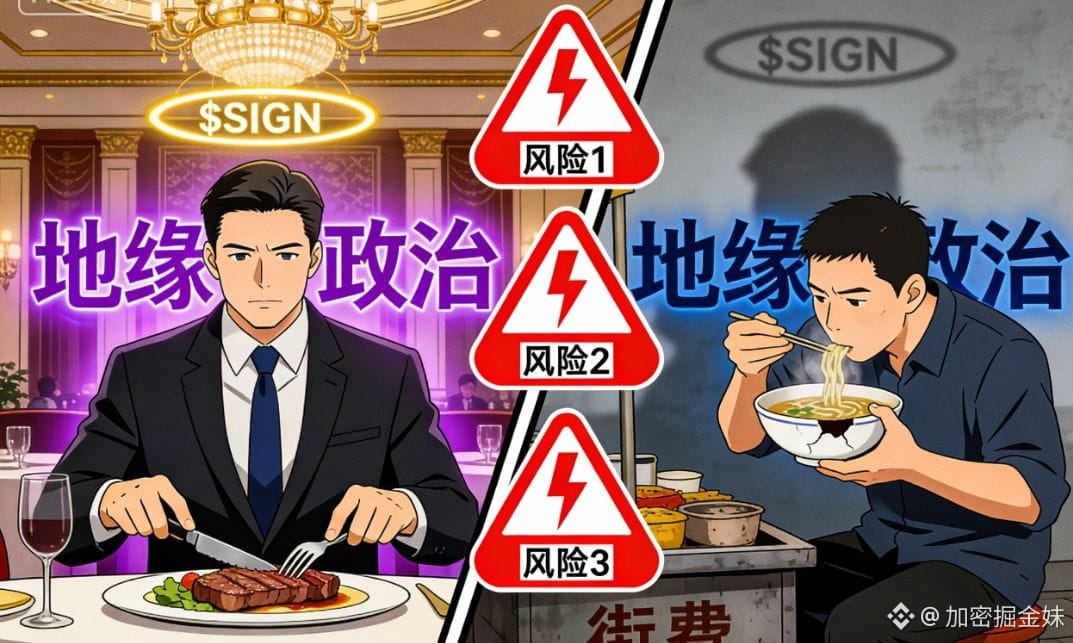
Stop just staring at the price of NIGHT! It is not meant to be 'spent', but rather your 'privacy printing press'!
Brothers, I recently fully understood the essence of Midnight and must talk to you about it. At first, I thought NIGHT was just for paying gas fees, but it turns out that's not the case at all! This logic is truly ahead of its time and completely overturned my understanding of public chain tokens.
In simple terms, NIGHT is not a consumable, but a production tool. You hold it not to spend it, but to let it continuously generate a resource called DUST for you, like a perpetual motion machine. This is the key!
It's like you didn't buy a disposable lighter, but rather a gas canister that continuously produces gas. Each transaction consumes DUST, while your NIGHT assets remain intact and continue to earn interest. This design perfectly separates 'usage' from 'speculation'!
What's even more amazing is that DUST will decay over time. This means you must genuinely use the network instead of hoarding it and waiting for appreciation.
Of course, behind this gameplay is Midnight's powerful technical strength. It uses zero-knowledge proof (ZKP) technology to make privacy the underlying rule of the network.
Why am I very optimistic about this project? Because it is not just a technical breakthrough, but also a well-thought-out ecosystem.
- Strong strategic support: Behind it are industry bigwigs like Cardano founder Charles Hoskinson, and giants like Google Cloud and BitGo voicing support, making its credibility and enterprise application potential self-evident.
- Rapid ecological expansion: From early airdrops to attracting global developers, community sentiment is very high. Over 8 million addresses participated in the activities, and this heat is not just for show.
- Security assurance in place: The dual-token model not only stabilizes the economy but also ensures network security through NIGHT's staking mechanism, forming a virtuous cycle.
In summary, Midnight is building an underlying infrastructure that makes privacy 'invisible'. It is not just a chain, but a brand new, user-centered design philosophy. I can't wait to see more applications based on it emerge!
@MidnightNetwork
$NIGHT
#night
Brothers, I recently fully understood the essence of Midnight and must talk to you about it. At first, I thought NIGHT was just for paying gas fees, but it turns out that's not the case at all! This logic is truly ahead of its time and completely overturned my understanding of public chain tokens.
In simple terms, NIGHT is not a consumable, but a production tool. You hold it not to spend it, but to let it continuously generate a resource called DUST for you, like a perpetual motion machine. This is the key!
It's like you didn't buy a disposable lighter, but rather a gas canister that continuously produces gas. Each transaction consumes DUST, while your NIGHT assets remain intact and continue to earn interest. This design perfectly separates 'usage' from 'speculation'!
What's even more amazing is that DUST will decay over time. This means you must genuinely use the network instead of hoarding it and waiting for appreciation.
Of course, behind this gameplay is Midnight's powerful technical strength. It uses zero-knowledge proof (ZKP) technology to make privacy the underlying rule of the network.
Why am I very optimistic about this project? Because it is not just a technical breakthrough, but also a well-thought-out ecosystem.
- Strong strategic support: Behind it are industry bigwigs like Cardano founder Charles Hoskinson, and giants like Google Cloud and BitGo voicing support, making its credibility and enterprise application potential self-evident.
- Rapid ecological expansion: From early airdrops to attracting global developers, community sentiment is very high. Over 8 million addresses participated in the activities, and this heat is not just for show.
- Security assurance in place: The dual-token model not only stabilizes the economy but also ensures network security through NIGHT's staking mechanism, forming a virtuous cycle.
In summary, Midnight is building an underlying infrastructure that makes privacy 'invisible'. It is not just a chain, but a brand new, user-centered design philosophy. I can't wait to see more applications based on it emerge!
@MidnightNetwork
$NIGHT
#night
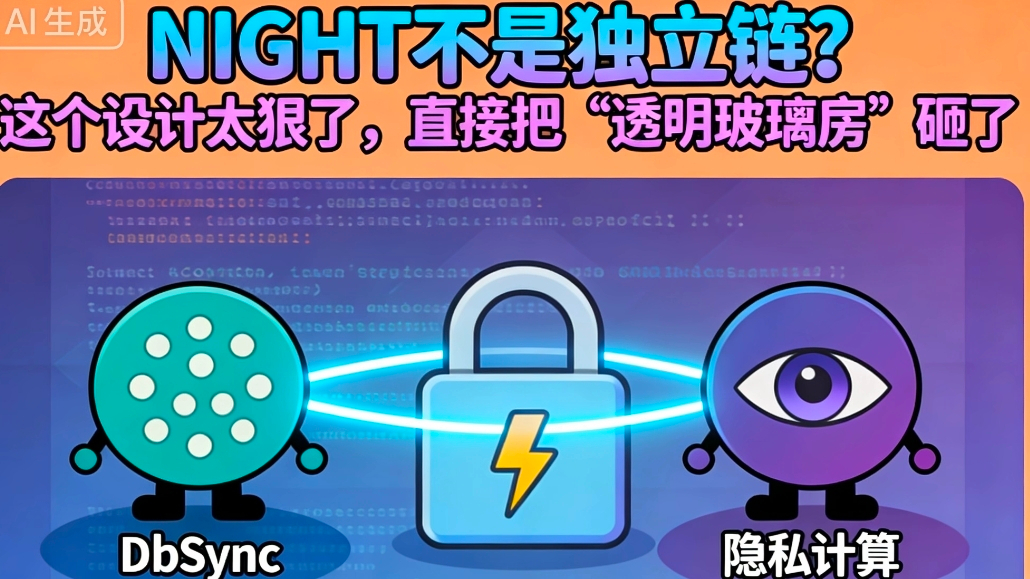
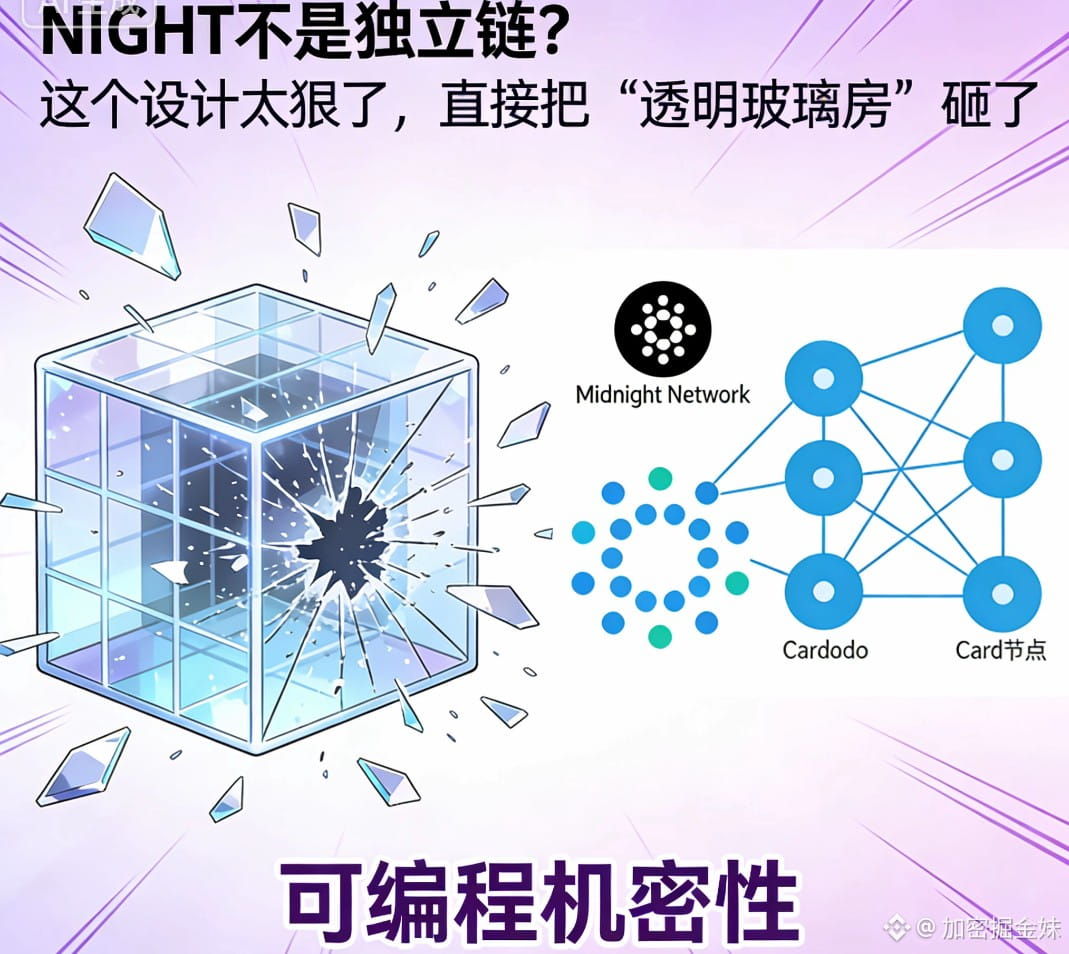
Do traditional giants dare to go all in on Web3? NIGHT's "smart one-way glass" is dismantling that transparent glass house!
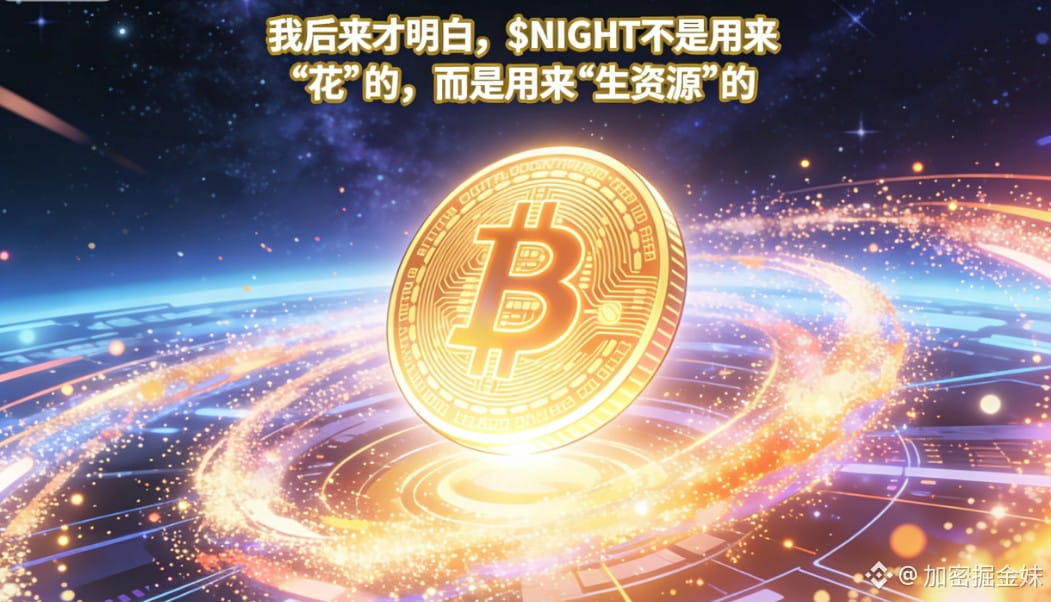
Old friends, let's talk about a fundamental pain point solved by $NIGHT . Why are big companies hesitant to move their core business onto the chain? Because today's public chains are like a "transparent glass house", with data exposed, and who can handle that?
NIGHT provides the answer: programmable confidentiality. It allows DApps to function like “smart one-way glass”, where business logic runs on the chain, but core data is encrypted and hidden. This is the security guarantee and privacy armor enterprises need.
Even more cleverly, its positioning is not about going solo, but as a “partner chain” of Cardano. This strategic support is so smart, directly sharing Cardano's security and ecosystem, significantly lowering the access cost for institutions and clarifying the ecological expansion path.
I am very optimistic about this design; it uses “selective disclosure” to meet compliance and lowers the adoption threshold through the partner chain model. The NIGHT token is the essential fuel driving this privacy computation, with value capture being very direct.
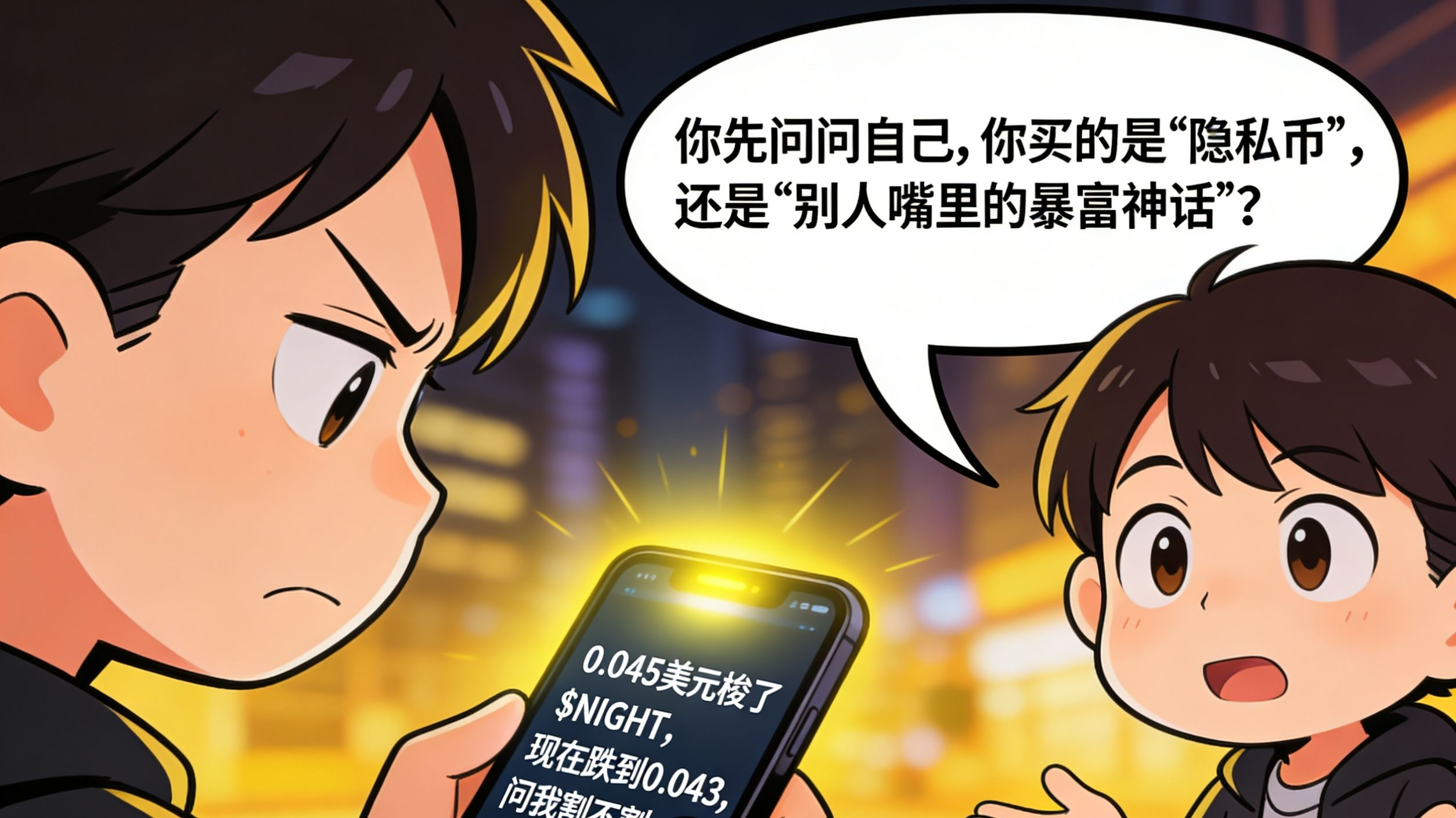
Currently, the market is fluctuating around 0.045, and community sentiment follows the mainnet expectations and technical narratives. In the short term, market heat depends on the enthusiasm, while long-term value relies on how many real business scenarios are willing to pay for this privacy.
@MidnightNetwork
$NIGHT
#night
Old friends, let's talk about a fundamental pain point solved by $NIGHT . Why are big companies hesitant to move their core business onto the chain? Because today's public chains are like a "transparent glass house", with data exposed, and who can handle that?
NIGHT provides the answer: programmable confidentiality. It allows DApps to function like “smart one-way glass”, where business logic runs on the chain, but core data is encrypted and hidden. This is the security guarantee and privacy armor enterprises need.
Even more cleverly, its positioning is not about going solo, but as a “partner chain” of Cardano. This strategic support is so smart, directly sharing Cardano's security and ecosystem, significantly lowering the access cost for institutions and clarifying the ecological expansion path.
I am very optimistic about this design; it uses “selective disclosure” to meet compliance and lowers the adoption threshold through the partner chain model. The NIGHT token is the essential fuel driving this privacy computation, with value capture being very direct.
Currently, the market is fluctuating around 0.045, and community sentiment follows the mainnet expectations and technical narratives. In the short term, market heat depends on the enthusiasm, while long-term value relies on how many real business scenarios are willing to pay for this privacy.
@MidnightNetwork
$NIGHT
#night
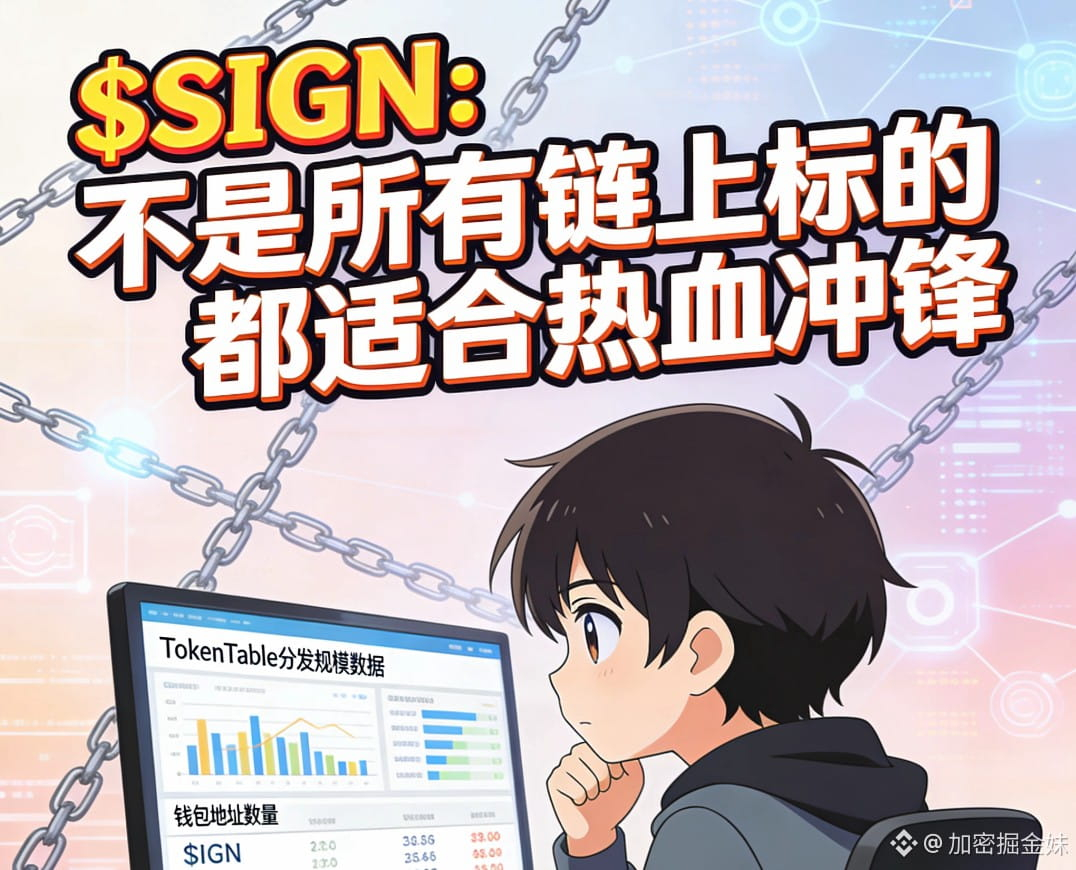
Don't ask what SIGN does anymore! It earns a toll for "the more chaotic the world, the more valuable I become."
Family, $SIGN is fluctuating around 0.053. Many people find it not stimulating enough, unlike Meme coins that can make one rich overnight. But I believe its value lies precisely in "not rushing."
I am very optimistic about SIGN because it addresses the fundamental issue of "how to trust" rather than "how to speculate." In the context of increasing global friction, the ability to safely collaborate between different systems in a state of mutual distrust has become hard currency. This is a top-level strategic support narrative.
Its highlight is "verifiable, not naked." Through products like Sign Protocol, it allows institutions to prove compliance and allocate resources without exposing all underlying documents. It's like a VIP security checkpoint in the digital age, balancing safety and efficiency.
In terms of ecological expansion, it has evolved from electronic signatures to encompass certificates and asset distribution, with TokenTable handling over 4 billion dollars in trust infrastructure. This capability to solve real friction is its deepest moat.
From a trading perspective, these types of infrastructure projects have a slow rhythm, but the demand is structural. Short-term prices are influenced by activities and market sentiment, but long-term value depends on how many real systems rely on it. Community sentiment needs to shift from speculation to focusing on actual adoption data.
In summary, what SIGN sells is not short-term gains but a type of "institutional capability" that will become increasingly scarce in the future. Its value will be truly reassessed when the world becomes more turbulent.
@SignOfficial
$SIGN
#Sign地缘政治基建
Family, $SIGN is fluctuating around 0.053. Many people find it not stimulating enough, unlike Meme coins that can make one rich overnight. But I believe its value lies precisely in "not rushing."
I am very optimistic about SIGN because it addresses the fundamental issue of "how to trust" rather than "how to speculate." In the context of increasing global friction, the ability to safely collaborate between different systems in a state of mutual distrust has become hard currency. This is a top-level strategic support narrative.
Its highlight is "verifiable, not naked." Through products like Sign Protocol, it allows institutions to prove compliance and allocate resources without exposing all underlying documents. It's like a VIP security checkpoint in the digital age, balancing safety and efficiency.
In terms of ecological expansion, it has evolved from electronic signatures to encompass certificates and asset distribution, with TokenTable handling over 4 billion dollars in trust infrastructure. This capability to solve real friction is its deepest moat.
From a trading perspective, these types of infrastructure projects have a slow rhythm, but the demand is structural. Short-term prices are influenced by activities and market sentiment, but long-term value depends on how many real systems rely on it. Community sentiment needs to shift from speculation to focusing on actual adoption data.
In summary, what SIGN sells is not short-term gains but a type of "institutional capability" that will become increasingly scarce in the future. Its value will be truly reassessed when the world becomes more turbulent.
@SignOfficial
$SIGN
#Sign地缘政治基建

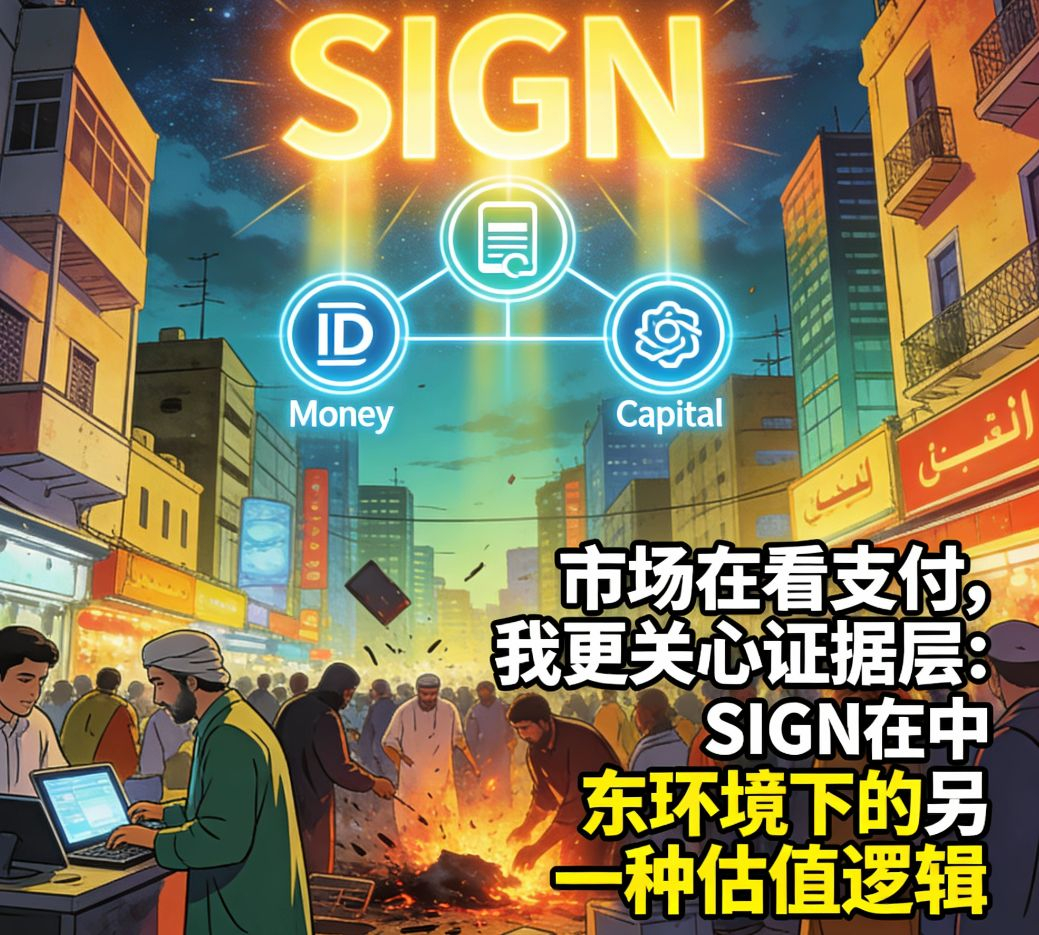
Under the chaos in the Middle East, the value of $SIGN 's 'digital black box' has been seriously underestimated?
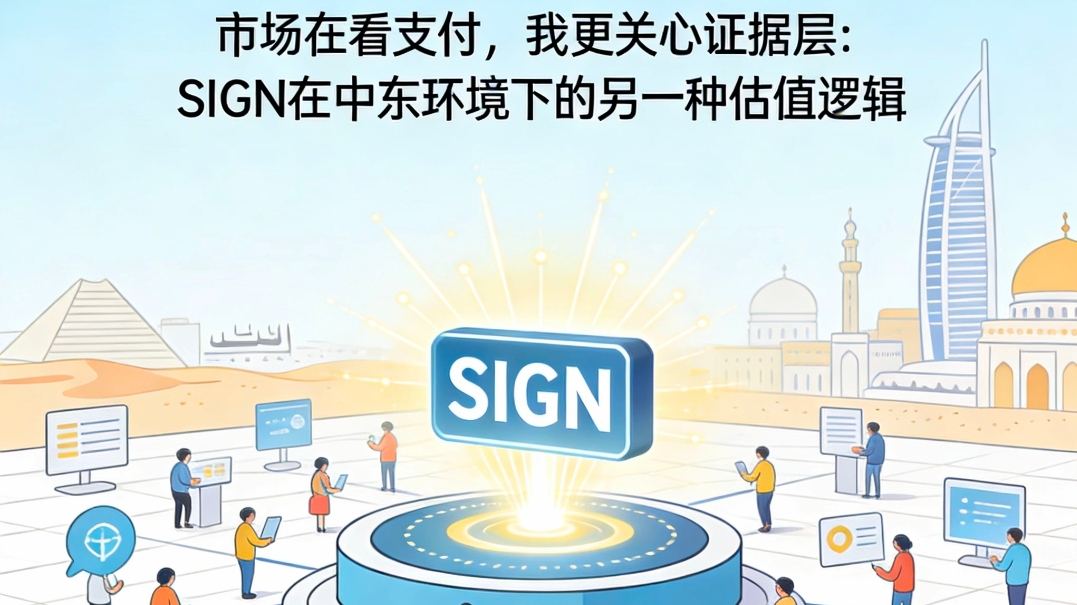
Friends, when talking about the Middle East and cryptocurrency, don't just focus on payments. What is truly scarce is a set of 'evidence systems' that can still operate under extreme conditions. This is exactly what $SIGN is doing with hard-core infrastructure.
I am very optimistic about the long-term value of SIGN; the 'full-chain evidence layer' it is building is the foundation of trust in the digital age. When physical systems collapse, it can prove 'who you are' and 'what you own,' which is crucial for sovereign nations.
The core highlight is its practicality; it has collaborated with multiple countries and handled over 4 billion dollars in asset distribution, demonstrating real blood production capability. Strategic support is strong, backed by top-tier venture capital.
The ecological expansion space is huge; it connects three major systems: identity, payment, and capital, serving as 'institutional middleware,' creating a deep moat. Security assurance is its lifeline, utilizing technologies like ZK to ensure data is verifiable and private.
Community sentiment is being ignited by its innovative OBI program, incentivizing real contributors. In trading, the short-term heat is driven by the Middle East narrative, but the long-term value depends on whether its 'evidence layer' can become a global standard.
I am optimistic about it because it addresses the fundamental issue of trust. In a complex geopolitical environment, this capability will become increasingly valuable.
@SignOfficial
$SIGN
#Sign地缘政治基建
Friends, when talking about the Middle East and cryptocurrency, don't just focus on payments. What is truly scarce is a set of 'evidence systems' that can still operate under extreme conditions. This is exactly what $SIGN is doing with hard-core infrastructure.
I am very optimistic about the long-term value of SIGN; the 'full-chain evidence layer' it is building is the foundation of trust in the digital age. When physical systems collapse, it can prove 'who you are' and 'what you own,' which is crucial for sovereign nations.
The core highlight is its practicality; it has collaborated with multiple countries and handled over 4 billion dollars in asset distribution, demonstrating real blood production capability. Strategic support is strong, backed by top-tier venture capital.
The ecological expansion space is huge; it connects three major systems: identity, payment, and capital, serving as 'institutional middleware,' creating a deep moat. Security assurance is its lifeline, utilizing technologies like ZK to ensure data is verifiable and private.
Community sentiment is being ignited by its innovative OBI program, incentivizing real contributors. In trading, the short-term heat is driven by the Middle East narrative, but the long-term value depends on whether its 'evidence layer' can become a global standard.
I am optimistic about it because it addresses the fundamental issue of trust. In a complex geopolitical environment, this capability will become increasingly valuable.
@SignOfficial
$SIGN
#Sign地缘政治基建
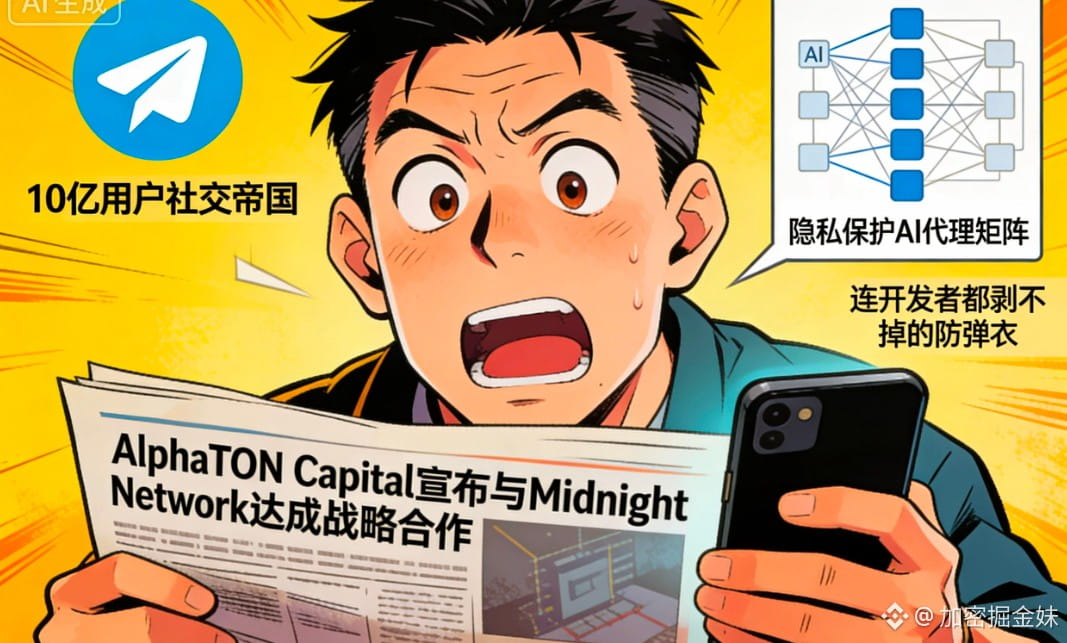
Are you still 'running naked' in the AI era? The NIGHT team collaborates with a platform of 1 billion users, allowing you to use smart assistants secretly!
Buddy, do you have this kind of worry? When using AI agents to manage transactions or handle personal matters, it feels like all your data is exposed. This is simply 'open trading' in the digital age, and it's quite terrifying to think about.
However, I am very optimistic about the problem that Midnight is addressing. It uses zero-knowledge proofs to allow AI to work for you without 'seeing' your specific data. For instance, it can prove that you have sufficient balance to make a payment, but the AI will not know how much money you actually have.
In terms of strategic support, it is partnering with AlphaTON to integrate this privacy protection solution into Telegram, which has 1 billion users. The potential for ecological expansion is enormous, which means there is a massive potential demand.
The highlight is its practicality; it can be used for everything from finding internships to managing sensitive assets. Its security assurance is foundational, and the Minotaur consensus mechanism makes the cost of attacks extremely high.
Community sentiment is high due to the approaching mainnet and significant collaborations. In terms of trading, short-term enthusiasm has already risen, but the key will be whether actual applications can keep up with the narrative after the mainnet launch at the end of March. In the long term, I am very optimistic, as this is one of the few projects that addresses real pain points.
@MidnightNetwork
$NIGHT
#night
Buddy, do you have this kind of worry? When using AI agents to manage transactions or handle personal matters, it feels like all your data is exposed. This is simply 'open trading' in the digital age, and it's quite terrifying to think about.
However, I am very optimistic about the problem that Midnight is addressing. It uses zero-knowledge proofs to allow AI to work for you without 'seeing' your specific data. For instance, it can prove that you have sufficient balance to make a payment, but the AI will not know how much money you actually have.
In terms of strategic support, it is partnering with AlphaTON to integrate this privacy protection solution into Telegram, which has 1 billion users. The potential for ecological expansion is enormous, which means there is a massive potential demand.
The highlight is its practicality; it can be used for everything from finding internships to managing sensitive assets. Its security assurance is foundational, and the Minotaur consensus mechanism makes the cost of attacks extremely high.
Community sentiment is high due to the approaching mainnet and significant collaborations. In terms of trading, short-term enthusiasm has already risen, but the key will be whether actual applications can keep up with the narrative after the mainnet launch at the end of March. In the long term, I am very optimistic, as this is one of the few projects that addresses real pain points.
@MidnightNetwork
$NIGHT
#night
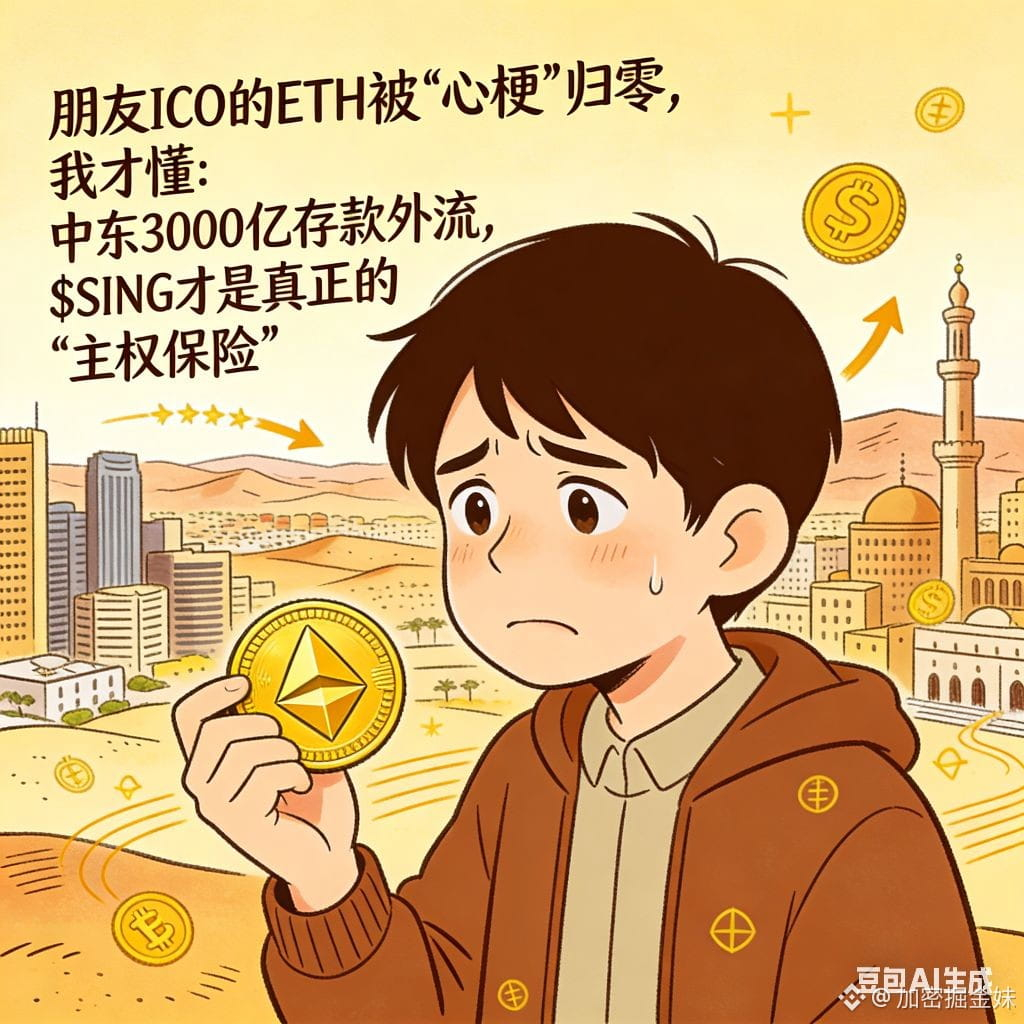
When war disrupts banks, do Middle Eastern countries turn to SIGN to build a 'digital lifeline'?
Recently, the situation in the Middle East has tightened, and bank transfers are frequently being blocked. This reveals a fatal problem: traditional financial channels are too fragile. This is the core logic I see—it is building a digital trust system that sovereign countries can fully control.
Its highlight is pragmatism; it does not just talk about concepts but has already collaborated with the Abu Dhabi Blockchain Center in the UAE to implement digital identity and CBDC systems, addressing real pain points in payment and identity verification.
Behind this is strong strategic support, Sequoia Capital's rare joint investment across three regions, and the intention of sovereign countries to cooperate, all of which validate its value in the 'digital era infrastructure' track.
The ecological expansion path is clear and has already generated revenue. Its product matrix, including SignPass and TokenTable, created a real revenue of 15 million USD in 2024, and the business model is very solid.
Its security assurance comes from an auditable trust layer design; it does not create a black box but turns every approval and rule execution into verifiable on-chain evidence, which meets both efficiency and regulatory needs.
Recently, due to geopolitical narratives, community sentiment and prices have warmed up. This reflects that the market is beginning to recognize that, in a volatile environment, this kind of infrastructure can serve as a 'backup layer' with unique hedging and growth attributes.
I am very optimistic about this project; it goes beyond simple price fluctuations and is committed to building a new cornerstone guaranteed by code in the trust vacuum of the real world. This ability to solve fundamental problems gives it enormous potential in the long term.
@SignOfficial
$SIGN
#Sign地缘政治基建
Recently, the situation in the Middle East has tightened, and bank transfers are frequently being blocked. This reveals a fatal problem: traditional financial channels are too fragile. This is the core logic I see—it is building a digital trust system that sovereign countries can fully control.
Its highlight is pragmatism; it does not just talk about concepts but has already collaborated with the Abu Dhabi Blockchain Center in the UAE to implement digital identity and CBDC systems, addressing real pain points in payment and identity verification.
Behind this is strong strategic support, Sequoia Capital's rare joint investment across three regions, and the intention of sovereign countries to cooperate, all of which validate its value in the 'digital era infrastructure' track.
The ecological expansion path is clear and has already generated revenue. Its product matrix, including SignPass and TokenTable, created a real revenue of 15 million USD in 2024, and the business model is very solid.
Its security assurance comes from an auditable trust layer design; it does not create a black box but turns every approval and rule execution into verifiable on-chain evidence, which meets both efficiency and regulatory needs.
Recently, due to geopolitical narratives, community sentiment and prices have warmed up. This reflects that the market is beginning to recognize that, in a volatile environment, this kind of infrastructure can serve as a 'backup layer' with unique hedging and growth attributes.
I am very optimistic about this project; it goes beyond simple price fluctuations and is committed to building a new cornerstone guaranteed by code in the trust vacuum of the real world. This ability to solve fundamental problems gives it enormous potential in the long term.
@SignOfficial
$SIGN
#Sign地缘政治基建
Log in to explore more content