Binance Square
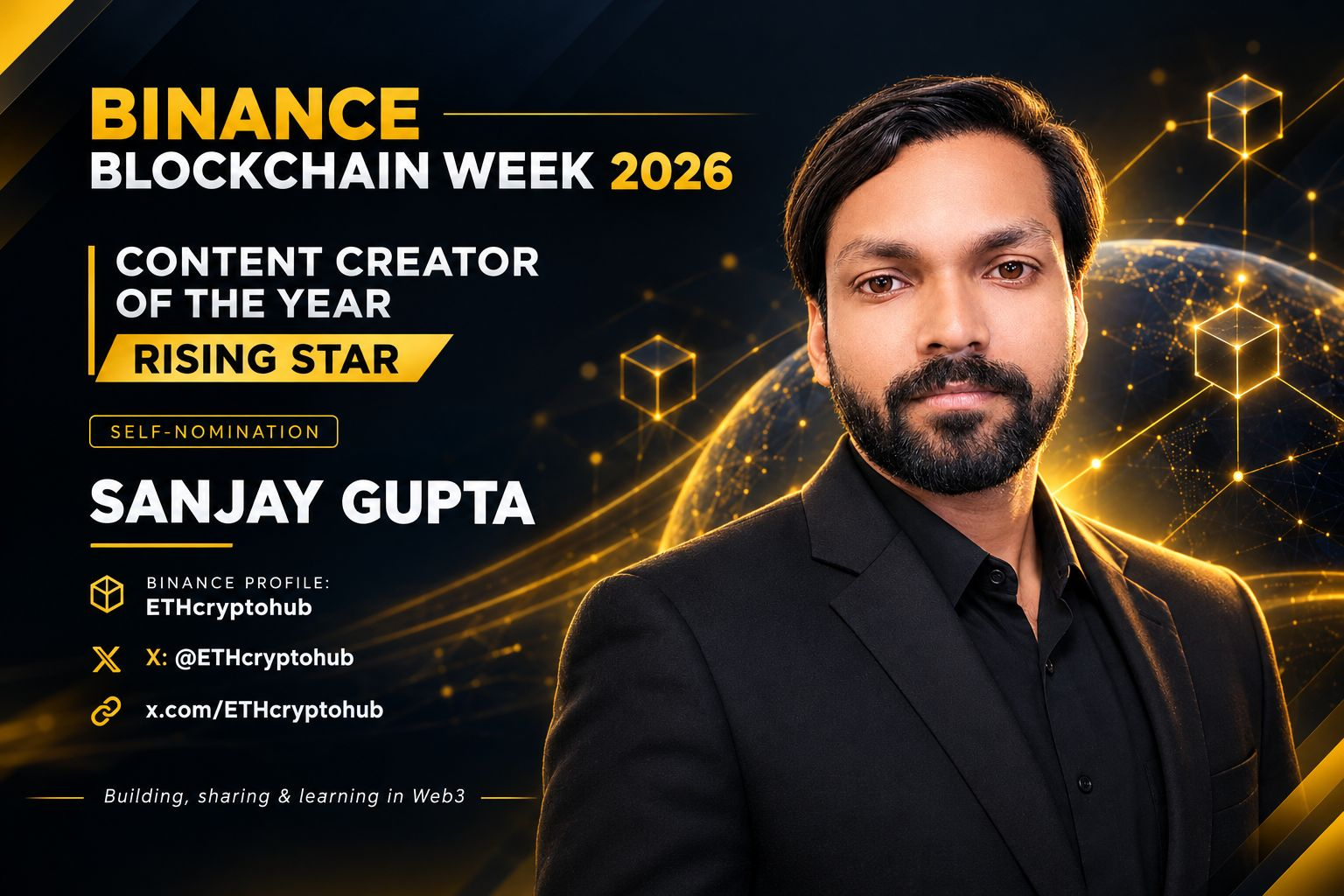
ETHcryptohub
15.9k Posts

ETHcryptohub

Square Verified+
Gold Standard Club, the Founding Co-builder of Binance's Top Guild! Verified KOL ✅ Binance Future Scalper ✅ Content Writer ✅ X : @Sanjaygupt74977
High-Frequency Trader
5.6 Years
1.3K+ Following
45.8K+ Followers
43.0K+ Liked
Posts
PINNED
·
--
🎁🎁 Hello Everyone Gifts for Everyone 🎁🎁 Claim Your Free Gifts 🎁🎁🎁🎁 comment Yes 👈 $EVAA
🎁🎁 Hello Everyone Gifts for Everyone 🎁🎁

Claim Your Free Gifts 🎁🎁🎁🎁

comment Yes 👈

$EVAA
1
1
MUZAMIL_ABBAS
·
--
Bullish
🐸🎁 $PEPE GIVEAWAY TIME 🎁🐸

i want to give back to the amazing community that continues to support me every day. To celebrate, I'm giving away PEPE tokens to a few lucky winners

Joining is simple 🔥
✅ Follow my account
✅ Like this post
✅ Comment 1
✅ Repost and share with your friends

Every action helps the community grow, and I truly appreciate everyone who takes part. Winners will be selected randomly and announced soon.

Good luck to everyone! May the $PEPE army keep growing stronger. 💚🐸

#PEPE #Giveaway #Crypto #Memecoin #PEPEArmy
1
1
RR 0660
·
--
Nine Years of Binance. Five and a Half Years of My Journey. One Lesson I'll Never Forget.
Nine years sounds like a number.
But in crypto, it represents resilience.
Markets have changed.
Narratives have changed.
Technologies have evolved.
Thousands of projects have appeared, and many have disappeared.
Yet Binance has continued to build through every cycle.
As Binance celebrates its ninth anniversary, i found myself reflecting on a different milestone.
My own journey with Binance began about five and a half years ago.
At that time, i was simply looking for a platform to explore crypto.

i never imagined it would become the place where i would not only trade, but also learn, write and become part of a global community.
When people talk about Binance, they usually mention trading volume, liquidity or product launches.
Those achievements matter.
But after spending more than five years inside the ecosystem, i think Binance's biggest achievement is something much harder to build.
It created an environment where users can grow alongside the platform.
As Binance expanded, i found myself expanding too.
Not just as a crypto user, but as someone constantly learning about blockchain, Web3 and the future of digital finance.
One of the biggest turning points in my journey was discovering Binance Square.
At first, i joined simply to read what other creators were sharing.
Over time, i started publishing my own thoughts, research and articles.
Today, more than 20,000 people follow my work on Binance Square.
That number means a lot to me—not because of the follower count itself, but because every follower represents someone who chose to spend a few minutes reading something i created.
To me, that's what makes Binance Square special.
It isn't just a content platform.
It's a place where traders become educators, learners become creators and ideas travel across a global community.
Every article starts a conversation.
Every conversation helps someone learn.
This year's message, "Built By You," feels especially meaningful.
Because Binance wasn't built only by engineers or one company.
It was built by millions of users making their first trade, asking their first question, writing their first article and supporting one another through every market cycle.
Looking back, i realize i wasn't only watching Binance grow.
In many ways, i was growing with it.
The number 9 also reminds me that lasting ecosystems aren't built overnight.
Innovation matters.
But consistency matters even more.

Through changing markets and changing narratives, Binance kept improving its products, expanding its ecosystem and creating more opportunities for people who wanted to learn, build and contribute.
That long-term mindset is one of the reasons it continues to earn the trust of millions around the world.
After five and a half years, one lesson stands out above everything else.
Great platforms help people complete transactions.
Great ecosystems help people build journeys.
For me, Binance became much more than an exchange.
It became the place where i learned, where i shared my knowledge and where i found a community that encouraged me to keep improving.
As Binance celebrates nine years, i'm grateful to have been a small part of that story.
And i hope the next chapter inspires even more people to learn, create and contribute.
Because in the end...
Binance wasn't only built by its team.
It was built by every user who chose to be part of the journey.
Happy 9th Anniversary, Binance. 💛
Here's to the next chapter.
$BNB $CAKE
#BinanceTurns9 #bnb @CZ @Binance Angels
@Binance TG Community @ETHcryptohub @AloNe72 .
1
1
MrRUHUL
·
--
The secret sauce…💰💰💰💵💵💵💵

🎁🎁🎁🎁🎁 BiG 🧧🧧🧧🧧🧧🧧🧧
1
1
MAYA_
·
--
#Binance New Update 🔥
Just noticed this update and thought it was worth sharing. If you're working toward your Spot Evaluation, this could make the progress a bit faster. Until October 15, bStocks trading counts as 3x volume for eligible referrals. Just remember, it's not available for users in the EEA, so check the details before getting started.
1
1
AbdullRauf
·
--
🎉 HUGE GIVEAWAY ALERT! 🎉
Our amazing Square family means everything to us! To show our love, we’re giving away GIFTS to our community.
🔥 How to Enter (3 easy steps):
1. Follow us
2. Share this post
3. Comment “Good luck!” below
Winners will be chosen at random. Let’s go! 🚀
#GIVEAWAY🎁 #crypto #squarecommunity #Airdrop
1
1
Frenzy _13
·
--
Alhamdulillah! ❤️

Today, for the first time, I nailed my BTC entry perfectly. It feels amazing! Every small win is the result of learning, patience, and discipline. This is just the beginning of my journey, and I'm excited to keep improving. Hoping for more smart decisions and consistent success ahead. 🚀📈

$BTC
1
1
I R F A N _ A L Y²
·
--
DON'T SCROLL❎️ FOCUS HERE👀
CLAIM YOUR SOLANA REWARD🎁🎁
👇🏻👇🏻👇🏻👇🏻👇🏻🎁🎁👇🏻👇🏻👇🏻👇🏻👇🏻
👉🏻CLICK HERE WIN 100 USDC👈🏻
👆🏻DON'T MISS THIS REWARD👆🏻
1' LIKE
2' SHARE
3' REPOST
#BTC #sol
1
1
Orhan_159
·
--
Hi Everyone! 🧡😇
Guys, Follow, Claim SOL🎁🧧🧧🧧🧧🧧🧧🧧🧧🧧🧧 and share with your friends... 😊💚
1
1
E L E X A
·
--
🚨 LIVE NOW 🚨
Watching is easy… winning takes action 👀
Want free $USDT?
💬 Comment 666
❤️ Like
🔁 Share
➕ Follow
⏳ Spots are filling fast
Comment 666 now 🚀
#Crypto #USDT
1
1
Flora Firdos
·
--
🎉 FREE $USDT GIVEAWAY 🎉
Don't miss your chance!
To enter:
💬 Comment 999
❤️ Like this post
🔁 Share or repost
➕ Follow the account
⏳ Limited spots available, and early entries come first.
Comment 999 now! 🚀
#USDT #crypto #GIVEAWAY #Airdrop #FreeCrypto
1
1
RaDhika_08
·
--
smile on your face 😊
🎁🎁🎁🎁🎁🎁🎁🎁
🎁🎁🎁🎁🎁😍😍😍
1
1
Humaira HN
·
--
$ETH Gifts for my followers 💕💕💕💕🎁 💝 💝 🎁 💐 💝 🎁 💐 💝 🎁

Join my Chatroom 💞💞

Join me on X 👉 HumairaHN22800


#ETH #BTC #KoreanSingleStockLeveragedETFsLose8.83TWon #EthereumBreaksDescendingTrendlineUp5.2%
1
1
MAYA_
·
--
#Binance New Update 🔥
Just noticed this update and thought it was worth sharing. If you're working toward your Spot Evaluation, this could make the progress a bit faster. Until October 15, bStocks trading counts as 3x volume for eligible referrals. Just remember, it's not available for users in the EEA, so check the details before getting started.
1
1
MUZAMIL_ABBAS
·
--
Bullish
🐸🎁 $PEPE GIVEAWAY TIME 🎁🐸

i want to give back to the amazing community that continues to support me every day. To celebrate, I'm giving away PEPE tokens to a few lucky winners

Joining is simple 🔥
✅ Follow my account
✅ Like this post
✅ Comment 1
✅ Repost and share with your friends

Every action helps the community grow, and I truly appreciate everyone who takes part. Winners will be selected randomly and announced soon.

Good luck to everyone! May the $PEPE army keep growing stronger. 💚🐸

#PEPE #Giveaway #Crypto #Memecoin #PEPEArmy
Article
Why Newton Protocol Looks Beyond Basic VerificationFor a long time, crypto has treated verification as the finish line. If a wallet owns the private key, the user is verified. If a transaction carries a valid signature, it gets executed. If a smart contract call satisfies the network's rules, then the blockchain accepts it. Technically, everything works exactly as intended. The problem is that real world security is rarely that simple. One lesson the crypto industry has learned over the years is that verifying identity or ownership does not automatically guarantee the right action is taking place. Some of the largest exploits in decentralized finance have involved perfectly valid transactions initiated by compromised wallets, stolen credentials, or automation systems acting outside their intended purpose. The blockchain verified them. The users never wanted them to happen. That is why I think the next stage of blockchain security is moving beyond simple verification and toward something much more important. Authorization. This is where Newton Protocol becomes particularly interesting. Instead of focusing only on proving who is making a request, Newton's architecture is designed around determining whether that request should actually be allowed. At first glance, those ideas sound almost identical. In practice, they solve completely different problems. Verification answers one question. Who are you? Authorization answers another. What are you allowed to do? That second question is becoming increasingly important as crypto evolves beyond simple wallet transfers. Today's blockchain ecosystem is full of automated treasury systems, AI agents, institutional asset managers, decentralized organizations, and applications that execute thousands of transactions every day without constant human involvement. Those systems need more than authentication. They need boundaries. Imagine a decentralized investment fund where multiple contributors help manage capital. Every manager may have legitimate access to the treasury. That does not mean every manager should have unlimited authority. One person might approve operational expenses. Another could rebalance investment positions. Only a small governance committee may be allowed to authorize large withdrawals. Traditional wallet verification cannot distinguish between those responsibilities. As long as the correct key signs the transaction, the blockchain considers everything valid. Newton introduces another layer into that process. Instead of relying entirely on signatures, actions can also be evaluated against programmable authorization policies before execution. To me, this feels much closer to how complex financial systems operate in the real world. Banks do not simply ask whether an employee logged into the system. They evaluate what that employee is authorized to do. Large corporations separate responsibilities across departments. Governments define different levels of administrative access. Even everyday software limits permissions depending on user roles. Crypto is gradually reaching the point where similar concepts are becoming necessary. The difference is that decentralized systems need to implement them without sacrificing openness or creating unnecessary central control. That balance is not easy to achieve. One reason I find Newton's approach compelling is because it treats authorization as programmable infrastructure rather than manual oversight. Organizations can establish policies defining acceptable behavior before transactions ever reach settlement. Transfer limits. Approved counterparties. Asset restrictions. Multi approval requirements. Time based permissions. Role specific authority. These rules become part of the execution process instead of remaining informal operational guidelines. I think this is especially valuable as artificial intelligence becomes more deeply integrated into blockchain applications. AI agents are beginning to execute trades, manage liquidity, optimize portfolios, and coordinate increasingly complex workflows. Those systems may be highly capable. They should not automatically receive unlimited authority. An AI portfolio manager might be allowed to rebalance stablecoins. It should not necessarily have permission to transfer an entire treasury into an unfamiliar protocol. Verification alone cannot enforce that distinction. Authorization can. Another aspect worth considering is institutional adoption. Large organizations are already comfortable with cryptographic security. They understand digital signatures, hardware wallets, and multi signature systems. What they continue asking is how operational policies can be enforced consistently across decentralized infrastructure. Who can approve payments? What actions require multiple reviewers? Which assets are restricted? How should automated systems behave under unusual market conditions? These questions extend far beyond identity verification. They are authorization problems. Personally, I think this is where blockchain infrastructure is heading. The first generation of crypto focused on proving ownership. The next generation is focused on managing permissions. Those are not competing ideas. They build upon one another. Ownership establishes control. Authorization defines responsible use of that control. As decentralized finance grows more sophisticated, simply verifying wallets will no longer provide enough protection for organizations managing significant amounts of capital. Execution needs context. Permissions need structure. Governance decisions need technical enforcement. That is exactly why advanced authorization feels like such an important development. Rather than assuming every authenticated action deserves immediate execution, systems can evaluate whether those actions align with predefined operational rules. That creates stronger security without depending entirely on human oversight. It also allows automation to expand without removing accountability. For me, this is one of the more overlooked conversations in blockchain infrastructure. Everyone talks about identity. Far fewer people talk about permissions. Yet permissions are often what determine whether assets remain secure. Newton Protocol appears to recognize that difference. Instead of stopping at verification, it explores how programmable authorization can become part of the blockchain execution process itself. If crypto is going to support autonomous agents, institutional treasuries, global DAOs, and increasingly complex financial applications, that evolution feels not only useful but necessary. In the years ahead, I suspect the projects that succeed will not simply be the ones that verify users most efficiently. They will be the ones that understand a much more important principle. Knowing who someone is only solves half the problem. Knowing exactly what they are allowed to do is what truly builds trust. @NewtonProtocol #Newt $NEWT $EVAA #Ethcryptohub

Why Newton Protocol Looks Beyond Basic Verification

For a long time, crypto has treated verification as the finish line.
If a wallet owns the private key, the user is verified.
If a transaction carries a valid signature, it gets executed.
If a smart contract call satisfies the network's rules, then the blockchain accepts it.
Technically, everything works exactly as intended.
The problem is that real world security is rarely that simple.
One lesson the crypto industry has learned over the years is that verifying identity or ownership does not automatically guarantee the right action is taking place. Some of the largest exploits in decentralized finance have involved perfectly valid transactions initiated by compromised wallets, stolen credentials, or automation systems acting outside their intended purpose.
The blockchain verified them.
The users never wanted them to happen.
That is why I think the next stage of blockchain security is moving beyond simple verification and toward something much more important.
Authorization.
This is where Newton Protocol becomes particularly interesting.
Instead of focusing only on proving who is making a request, Newton's architecture is designed around determining whether that request should actually be allowed.
At first glance, those ideas sound almost identical.
In practice, they solve completely different problems.
Verification answers one question.
Who are you?
Authorization answers another.
What are you allowed to do?
That second question is becoming increasingly important as crypto evolves beyond simple wallet transfers.
Today's blockchain ecosystem is full of automated treasury systems, AI agents, institutional asset managers, decentralized organizations, and applications that execute thousands of transactions every day without constant human involvement.
Those systems need more than authentication.
They need boundaries.
Imagine a decentralized investment fund where multiple contributors help manage capital.
Every manager may have legitimate access to the treasury.
That does not mean every manager should have unlimited authority.
One person might approve operational expenses.
Another could rebalance investment positions.
Only a small governance committee may be allowed to authorize large withdrawals.
Traditional wallet verification cannot distinguish between those responsibilities.
As long as the correct key signs the transaction, the blockchain considers everything valid.
Newton introduces another layer into that process.
Instead of relying entirely on signatures, actions can also be evaluated against programmable authorization policies before execution.
To me, this feels much closer to how complex financial systems operate in the real world.
Banks do not simply ask whether an employee logged into the system.
They evaluate what that employee is authorized to do.
Large corporations separate responsibilities across departments.
Governments define different levels of administrative access.
Even everyday software limits permissions depending on user roles.
Crypto is gradually reaching the point where similar concepts are becoming necessary.
The difference is that decentralized systems need to implement them without sacrificing openness or creating unnecessary central control.
That balance is not easy to achieve.
One reason I find Newton's approach compelling is because it treats authorization as programmable infrastructure rather than manual oversight.
Organizations can establish policies defining acceptable behavior before transactions ever reach settlement.
Transfer limits.
Approved counterparties.
Asset restrictions.
Multi approval requirements.
Time based permissions.
Role specific authority.
These rules become part of the execution process instead of remaining informal operational guidelines.
I think this is especially valuable as artificial intelligence becomes more deeply integrated into blockchain applications.
AI agents are beginning to execute trades, manage liquidity, optimize portfolios, and coordinate increasingly complex workflows.
Those systems may be highly capable.
They should not automatically receive unlimited authority.
An AI portfolio manager might be allowed to rebalance stablecoins.
It should not necessarily have permission to transfer an entire treasury into an unfamiliar protocol.
Verification alone cannot enforce that distinction.
Authorization can.
Another aspect worth considering is institutional adoption.
Large organizations are already comfortable with cryptographic security. They understand digital signatures, hardware wallets, and multi signature systems.
What they continue asking is how operational policies can be enforced consistently across decentralized infrastructure.
Who can approve payments?
What actions require multiple reviewers?
Which assets are restricted?
How should automated systems behave under unusual market conditions?
These questions extend far beyond identity verification.
They are authorization problems.
Personally, I think this is where blockchain infrastructure is heading.
The first generation of crypto focused on proving ownership.
The next generation is focused on managing permissions.
Those are not competing ideas.
They build upon one another.
Ownership establishes control.
Authorization defines responsible use of that control.
As decentralized finance grows more sophisticated, simply verifying wallets will no longer provide enough protection for organizations managing significant amounts of capital.
Execution needs context.
Permissions need structure.
Governance decisions need technical enforcement.
That is exactly why advanced authorization feels like such an important development.
Rather than assuming every authenticated action deserves immediate execution, systems can evaluate whether those actions align with predefined operational rules.
That creates stronger security without depending entirely on human oversight.
It also allows automation to expand without removing accountability.
For me, this is one of the more overlooked conversations in blockchain infrastructure.
Everyone talks about identity.
Far fewer people talk about permissions.
Yet permissions are often what determine whether assets remain secure.
Newton Protocol appears to recognize that difference.
Instead of stopping at verification, it explores how programmable authorization can become part of the blockchain execution process itself.
If crypto is going to support autonomous agents, institutional treasuries, global DAOs, and increasingly complex financial applications, that evolution feels not only useful but necessary.
In the years ahead, I suspect the projects that succeed will not simply be the ones that verify users most efficiently.
They will be the ones that understand a much more important principle.
Knowing who someone is only solves half the problem.
Knowing exactly what they are allowed to do is what truly builds trust.
@NewtonProtocol #Newt $NEWT $EVAA #Ethcryptohub
@grvt_io What stands out to me about GRVT is its attempt to combine two ideas that have often been treated as opposites: on-chain transparency and regulated market infrastructure. When I look at the broader crypto landscape, many platforms have focused on decentralization first, while compliance has been viewed as a separate path. For me, the more interesting development is seeing an on-chain financial market built with licensed infrastructure from the beginning, creating a different foundation for participation. I think of it like building a modern highway with clearly defined traffic rules. The roads allow movement, but the rules create confidence that everyone is operating within the same framework.(#grvt ) In a similar way, blockchain provides transparency, while regulatory compliance can establish a structure that larger market participants are more comfortable navigating. What make me interest most is how this could influence capital allocation over time. Institutional investors often look beyond technology alone and consider the governance, legal clarity and operational reliability before committing meaningful capital. The way I see it, combining transparent onchain activity with a regulated framework that may create stronger incentives for broader participation without sacrificing the visibility that blockchain offers. That said, licensing by itself does not guarantee the long term success. Sustained liquidity, active users and consistent execution will ultimately determine whether this model proves durable. Attracting institutional attention is one milestone, but maintaining engagement across changing market conditions is a much bigger challenge. For me, GRVT @grvt_io raises a broader question about where crypto infrastructure is heading. If regulated, onchain financial markets continue to mature, they could reshape how traditional and digital capital interact. Do you think compliant onchain exchanges will become the preferred gateway for institutional participation, or will different models continue to coexist? #grvt #Ethcryptohub $VELVET $EVAA
@grvt_io

What stands out to me about GRVT is its attempt to combine two ideas that have often been treated as opposites: on-chain transparency and regulated market infrastructure. When I look at the broader crypto landscape, many platforms have focused on decentralization first, while compliance has been viewed as a separate path. For me, the more interesting development is seeing an on-chain financial market built with licensed infrastructure from the beginning, creating a different foundation for participation.

I think of it like building a modern highway with clearly defined traffic rules. The roads allow movement, but the rules create confidence that everyone is operating within the same framework.(#grvt ) In a similar way, blockchain provides transparency, while regulatory compliance can establish a structure that larger market participants are more comfortable navigating.

What make me interest most is how this could influence capital allocation over time. Institutional investors often look beyond technology alone and consider the governance, legal clarity and operational reliability before committing meaningful capital. The way I see it, combining transparent onchain activity with a regulated framework that may create stronger incentives for broader participation without sacrificing the visibility that blockchain offers.

That said, licensing by itself does not guarantee the long term success. Sustained liquidity, active users and consistent execution will ultimately determine whether this model proves durable. Attracting institutional attention is one milestone, but maintaining engagement across changing market conditions is a much bigger challenge.

For me, GRVT @grvt_io raises a broader question about where crypto infrastructure is heading. If regulated, onchain financial markets continue to mature, they could reshape how traditional and digital capital interact. Do you think compliant onchain exchanges will become the preferred gateway for institutional participation, or will different models continue to coexist?

#grvt #Ethcryptohub $VELVET $EVAA
@NewtonProtocol One thing that I have started paying more attention to is, how a blockchain handles risk before it becomes a loss. Most conversations around security begin after an exploit that has already happened, but that approach has always felt me reactive. What interests me about Newton Protocol is that it seems to focus on making blockchain activity safer before transactions are carried out, rather than relying only on fixing problems afterward. I really think of it is like an airport security. Every passenger wants to reach their destination early as soon as possible, but no one expects the security checks to happen after the plane has take off. The purpose is to identify the potential issues before they become real problems. A few extra checks at the right moments can prevent much bigger consequences later. For me, this approach could influence more than just security. When users feel their assets are better protected, they are more likely to stay active instead of leaving after major incidents. Developers can also spend less time creating their own safety systems and more time improving their applications. If that happens consistently, stronger protection could support healthier participation and encourage capital to remain in the ecosystem for longer. That said, safer systems are not built by adding more rules alone. They also need to remain practical, efficient, and easy for developers to work with. If protection creates unnecessary friction, adoption becomes much harder, no matter how good the idea looks on paper. I keep wondering whether the next stage of blockchain growth will be driven by networks that process more transactions, or by those that make every transaction more dependable from the very beginning. Which direction do you think will matter more over the long run? $NEWT #Newt #Ethcryptohub $VELVET $SXT
@NewtonProtocol
One thing that I have started paying more attention to is, how a blockchain handles risk before it becomes a loss. Most conversations around security begin after an exploit that has already happened, but that approach has always felt me reactive. What interests me about Newton Protocol is that it seems to focus on making blockchain activity safer before transactions are carried out, rather than relying only on fixing problems afterward.

I really think of it is like an airport security. Every passenger wants to reach their destination early as soon as possible, but no one expects the security checks to happen after the plane has take off. The purpose is to identify the potential issues before they become real problems. A few extra checks at the right moments can prevent much bigger consequences later.

For me, this approach could influence more than just security. When users feel their assets are better protected, they are more likely to stay active instead of leaving after major incidents. Developers can also spend less time creating their own safety systems and more time improving their applications. If that happens consistently, stronger protection could support healthier participation and encourage capital to remain in the ecosystem for longer.

That said, safer systems are not built by adding more rules alone. They also need to remain practical, efficient, and easy for developers to work with. If protection creates unnecessary friction, adoption becomes much harder, no matter how good the idea looks on paper.

I keep wondering whether the next stage of blockchain growth will be driven by networks that process more transactions, or by those that make every transaction more dependable from the very beginning. Which direction do you think will matter more over the long run? $NEWT #Newt #Ethcryptohub $VELVET $SXT
Article
Beyond KYC: Why Verifiable Credentials Could Become the Next Standard in Crypto?For a years, identity verification in crypto has followed a familiar pattern. You signup in any exchange, upload your passport or driving license, take a selfie, wait for approval, and hope that your personal information will remain secure. If you try to use another platform, then you usually repeat the same entire process from the beginning. It works, but it has never felt like an system is built for the future. The irony is hard to ignore. Crypto was created to give people more control over their assets and digital lives, yet identity verification still depends on repeatedly handing sensitive information to different companies. Every new platform collects another copy of your documents. Every database becomes another potential target for hackers. Every verification creates another place where your personal information is stored. That model has obvious weaknesses. I think the industry has simply accepted it because there have not been many practical alternatives. That is starting to change. One concept gaining momentum is the use of verifiable credentials. It's not as widely discussed like a Bitcoin, Ethereum, or decentralized finance, but I still believe it could become one of the most important building blocks for the next generation of Web3 applications. The idea is surprisingly simple. Instead of proving your entire identity from the start every time, you use a new service, you will receive a digital credential from a trusted issuer. That credential can then be used to prove specific facts about you whenever they are needed. The important part is that you only reveal what is relevant. Suppose an application needs to know that you are over a certain age. It does not necessarily need your birthday. A financial platform may need confirmation that you completed identity verification. It does not always need access to your passport. A DAO might simply need proof that you belong to a particular organization. It does not need your full personal profile. That shift from sharing documents to sharing proofs is what makes verifiable credentials so interesting. In my opinion, it solves several problems at the same time. First, it gives users much greater control over their own information. Instead of sending complete identity documents everywhere, they decide which pieces of information to share and with whom. Second, it reduces risk for businesses. Every company storing identity documents becomes responsible for protecting them. If few organizations collect sensitive information in the first place, there are fewer opportunities for large scale that data breaches. That benefits everyone. Third, it also creates a much smoother user experience. Anyone who have completed Know Your Customer checks multiple times knows how repetitive the process can be. Uploading the same documents over and over again feels unnecessary in an internet, that already supports advanced cryptography. Verifiable credentials offer a more efficient alternative. One thing I find interesting is that many people assume moving beyond traditional KYC means eliminating compliance altogether. That is not what this technology is trying to achieve. Compliance still matters. Financial platforms need to satisfy regulatory requirements. Organizations need confidence that users meet certain eligibility standards. Institutions need mechanisms for managing risk. The difference is how that information gets verified. Instead of exposing every personal detail, users can prove that they satisfy specific requirements without revealing unrelated information. That distinction is important. It changes identity verification from a document sharing exercise into a cryptographic proof. As blockchain technology continues evolving, I think this approach makes far more sense than the systems we rely on today. Crypto has always been built around minimizing unnecessary trust. We use decentralized networks instead of using centralized databases. We rely on cryptographic signatures instead of handwritten contracts. Extending that philosophy to digital identity feels like a natural progression. Another reason I believe verifiable credentials will become more important is the rapid growth of artificial intelligence and automation. Software agents are still at beginning to execute transactions, manage portfolios, and interact with decentralized applications on the behalf of users. Those systems need ways to verify permissions before taking any action. They do not need unlimited access to someone's complete identity. A verifiable credential can confirm that an agent that has the authority to perform a specific task without exposing additional personal information. That creates a cleaner separation between authorization and identity. It also improves privacy. I also think this technology has the potential to improve trust across decentralized communities. DAOs often struggle with balancing openness and accountability. Some decisions require proof that participants belong to a particular group or satisfy predefined governance requirements. Verifiable credentials allow those conditions to be confirmed without forcing every participant to publicly reveal who they are. That feels much closer to the spirit of decentralized systems. Of course, this transition will not happen at overnight. Traditional KYC infrastructure is deeply integrated into exchanges, financial institutions, and the regulatory frameworks around the world. Replacing those systems entirely would take years. But I do not think replacement is the right way to think about it. Instead, I see verifiable credentials gradually becoming another layer of digital identity infrastructure. Applications will increasingly request proofs instead of documents. Users will expect greater control over their personal information. Organizations will realize they do not actually need to collect as much sensitive data as they once believed. Personally, I think that is where the industry is heading. The future of crypto identity is unlikely to be defined by who can collect the most information. It will be defined by who can verify the right information while exposing as little as possible. That is the real promise of verifiable credentials. They move identity away from endless document uploads and toward privacy preserving trust. They reduce unnecessary data sharing without abandoning accountability. Most importantl thing, they remind us that proving something does not always require revealing everything. If Web3 is serious about giving people ownership over their digital, then identity should evolve in the same direction as the rest of the technology. For me, that is why verifiable credentials deserve much more attention than they receive today. They are not just another feature for blockchain applications. They represent in a smarter way of thinking about trust, privacy, and digital identity in a world that increasingly depends on both. @NewtonProtocol #Newt $NEWT $VELVET #Ethcryptohub $JCT

Beyond KYC: Why Verifiable Credentials Could Become the Next Standard in Crypto?

For a years, identity verification in crypto has followed a familiar pattern.
You signup in any exchange, upload your passport or driving license, take a selfie, wait for approval, and hope that your personal information will remain secure. If you try to use another platform, then you usually repeat the same entire process from the beginning.
It works, but it has never felt like an system is built for the future.
The irony is hard to ignore.
Crypto was created to give people more control over their assets and digital lives, yet identity verification still depends on repeatedly handing sensitive information to different companies. Every new platform collects another copy of your documents. Every database becomes another potential target for hackers. Every verification creates another place where your personal information is stored.
That model has obvious weaknesses.
I think the industry has simply accepted it because there have not been many practical alternatives.
That is starting to change.
One concept gaining momentum is the use of verifiable credentials. It's not as widely discussed like a Bitcoin, Ethereum, or decentralized finance, but I still believe it could become one of the most important building blocks for the next generation of Web3 applications.
The idea is surprisingly simple.
Instead of proving your entire identity from the start every time, you use a new service, you will receive a digital credential from a trusted issuer. That credential can then be used to prove specific facts about you whenever they are needed.
The important part is that you only reveal what is relevant.
Suppose an application needs to know that you are over a certain age.
It does not necessarily need your birthday.
A financial platform may need confirmation that you completed identity verification.
It does not always need access to your passport.
A DAO might simply need proof that you belong to a particular organization.
It does not need your full personal profile.
That shift from sharing documents to sharing proofs is what makes verifiable credentials so interesting.
In my opinion, it solves several problems at the same time.
First, it gives users much greater control over their own information. Instead of sending complete identity documents everywhere, they decide which pieces of information to share and with whom.
Second, it reduces risk for businesses.
Every company storing identity documents becomes responsible for protecting them. If few organizations collect sensitive information in the first place, there are fewer opportunities for large scale that data breaches.
That benefits everyone.
Third, it also creates a much smoother user experience.
Anyone who have completed Know Your Customer checks multiple times knows how repetitive the process can be. Uploading the same documents over and over again feels unnecessary in an internet, that already supports advanced cryptography.
Verifiable credentials offer a more efficient alternative.
One thing I find interesting is that many people assume moving beyond traditional KYC means eliminating compliance altogether.
That is not what this technology is trying to achieve.
Compliance still matters.
Financial platforms need to satisfy regulatory requirements. Organizations need confidence that users meet certain eligibility standards. Institutions need mechanisms for managing risk.
The difference is how that information gets verified.
Instead of exposing every personal detail, users can prove that they satisfy specific requirements without revealing unrelated information.
That distinction is important.
It changes identity verification from a document sharing exercise into a cryptographic proof.
As blockchain technology continues evolving, I think this approach makes far more sense than the systems we rely on today.
Crypto has always been built around minimizing unnecessary trust.
We use decentralized networks instead of using centralized databases.
We rely on cryptographic signatures instead of handwritten contracts.
Extending that philosophy to digital identity feels like a natural progression.
Another reason I believe verifiable credentials will become more important is the rapid growth of artificial intelligence and automation.
Software agents are still at beginning to execute transactions, manage portfolios, and interact with decentralized applications on the behalf of users. Those systems need ways to verify permissions before taking any action.
They do not need unlimited access to someone's complete identity.
A verifiable credential can confirm that an agent that has the authority to perform a specific task without exposing additional personal information.
That creates a cleaner separation between authorization and identity.
It also improves privacy.
I also think this technology has the potential to improve trust across decentralized communities.
DAOs often struggle with balancing openness and accountability. Some decisions require proof that participants belong to a particular group or satisfy predefined governance requirements.
Verifiable credentials allow those conditions to be confirmed without forcing every participant to publicly reveal who they are.
That feels much closer to the spirit of decentralized systems.
Of course, this transition will not happen at overnight.
Traditional KYC infrastructure is deeply integrated into exchanges, financial institutions, and the regulatory frameworks around the world. Replacing those systems entirely would take years.
But I do not think replacement is the right way to think about it.
Instead, I see verifiable credentials gradually becoming another layer of digital identity infrastructure.
Applications will increasingly request proofs instead of documents.
Users will expect greater control over their personal information.
Organizations will realize they do not actually need to collect as much sensitive data as they once believed.
Personally, I think that is where the industry is heading.
The future of crypto identity is unlikely to be defined by who can collect the most information. It will be defined by who can verify the right information while exposing as little as possible.
That is the real promise of verifiable credentials.
They move identity away from endless document uploads and toward privacy preserving trust. They reduce unnecessary data sharing without abandoning accountability. Most importantl thing, they remind us that proving something does not always require revealing everything.
If Web3 is serious about giving people ownership over their digital, then identity should evolve in the same direction as the rest of the technology.
For me, that is why verifiable credentials deserve much more attention than they receive today. They are not just another feature for blockchain applications. They represent in a smarter way of thinking about trust, privacy, and digital identity in a world that increasingly depends on both.
@NewtonProtocol #Newt $NEWT $VELVET #Ethcryptohub $JCT
@NewtonProtocol Most infrastructure only becomes noticeable when more people start depending on it. I think Newton Protocol falls into that category. Right now, a lot of attention in crypto is still on new applications, but I keep asking myself what happens when thousands of those applications need the same level of security, policy checks, and reliable execution. That is where infrastructure starts becoming much more important than individual features. To me, it feels similar to how electricity powers a city. People rarely think about the power grid while everything is working. They simply expect it to be there every day. As the city grows then the demand on that system keep increasing, and its reliability also becomes more valuable than ever. If Web3 continues expanding, developers may spend less time in creating the same safety and authorization logic for every new application and more time building products that the users actually care about. That kind of shift could lower the cost of building, improve consistency across applications, and make it easier for the new teams to enter ecosystem. When builders save time, the entire network has a better chance to grow steadily. Still, none of this will happen automatically. Infrastructure only proves its worth when the people choose to build on it a year after year. Early interest can create momentum, but lasting adoption depends on whether it continues solving the real problems as the ecosystem changes. I keep coming back to one thought: in five years, will the most valuable crypto projects be the ones that everyone uses, or the ones that quietly helping everything else work better? $NEWT #Newt #Ethcryptohub $VELVET
@NewtonProtocol

Most infrastructure only becomes noticeable when more people start depending on it. I think Newton Protocol falls into that category. Right now, a lot of attention in crypto is still on new applications, but I keep asking myself what happens when thousands of those applications need the same level of security, policy checks, and reliable execution. That is where infrastructure starts becoming much more important than individual features.

To me, it feels similar to how electricity powers a city. People rarely think about the power grid while everything is working. They simply expect it to be there every day. As the city grows then the demand on that system keep increasing, and its reliability also becomes more valuable than ever.

If Web3 continues expanding, developers may spend less time in creating the same safety and authorization logic for every new application and more time building products that the users actually care about. That kind of shift could lower the cost of building, improve consistency across applications, and make it easier for the new teams to enter ecosystem. When builders save time, the entire network has a better chance to grow steadily.

Still, none of this will happen automatically. Infrastructure only proves its worth when the people choose to build on it a year after year. Early interest can create momentum, but lasting adoption depends on whether it continues solving the real problems as the ecosystem changes.

I keep coming back to one thought: in five years, will the most valuable crypto projects be the ones that everyone uses, or the ones that quietly helping everything else work better? $NEWT #Newt #Ethcryptohub $VELVET
Log in to explore more content
Join global crypto users on Binance Square
⚡️ Get latest and useful information about crypto.
💬 Trusted by the world’s largest crypto exchange.
👍 Discover real insights from verified creators.
Email / Phone number
Sitemap
Cookie Preferences
Platform T&Cs