
BullRun_Signals
9.1k Posts
BullRun_Signals
 Square Verified+
X: BullRun Signals | Teaching the streets about Web3 | Tokens · Memecoins · NFTs · DeFi | 19.5K X and 37k Binance fam | CMC Verified |
High-Frequency Trader
3.3 Years
46 Following
38.8K+ Followers
42.6K+ Liked
Posts
All
Quotes
Videos
Live
My followers if anyone asks for money, reports them, if anyone bothers you or bullies you, then report them or send me a screenshot and I will help you report them
@Binance Square Official is for everyone; it is not someone's private application. We need a fair and safe environment. Thanks for this post 🙌
@Binance Square Official is for everyone; it is not someone's private application. We need a fair and safe environment. Thanks for this post 🙌


Binance Square Official
·
--
Binance Square Community Governance Announcement (Aug 17 – Aug 23)
A safe and respectful community is what makes Binance Square worth being part of.
1.Directing users to a third-party platform, soliciting donations, or sharing personal contact information — in a Chatroom, in a comment, or through a watermark in a video — goes against our rules. In serious or repeated cases it can lead to losing the permission to post and comment.
2. The same goes for accounts that engage in fraudulent behaviour, or that bully, harass, invade privacy, insult, or personally attack other users. It puts people and their assets at risk, and serious cases can also lose posting and commenting permissions, permanently.
3. Seek donations and sharing personal contact information in any capacity is also a violation of our community guideline.
Based on the above, and since many of you reported suspicious accounts this week, we reviewed the reports we received between Aug 17 and Aug 23. Here's what we found:
2 accounts were engaging in fraudulent behavior. Their permission to post and comment has been permanently suspended.1 account was bullying, harassing, and personally attacking other users — a fourth violation on the account. Its permission to post and comment has been suspended for 14 days.5 accounts were promoting third-party channels or paid services to other platform users. Depending on their violation history, they've been suspended for 3 to 7 days, or warned.
A word of caution: adding or engaging with third-party contact information may put your assets at risk. When in doubt, don't add, don't pay — report it to us instead.
Below is a summary of the violations and the corresponding penalties:
Binance Square is about real, safe community interaction. We've added closer review of third-party promotion, donation solicitation, and fraudulent behavior across posts, comments, and Chatroom. Thank you to everyone who keeps creating with care. Let's keep the community safe, together.
We'd also like your help. If you come across behavior like the ones above, report it by tapping "..." or "X" in the upper right corner of the content — every report is read. If you have questions about content publishing, commenting, or offence management, the Community Guidelines spell out the rules, and our customer support team is here to help. Your vigilance helps us make this better.
1.Directing users to a third-party platform, soliciting donations, or sharing personal contact information — in a Chatroom, in a comment, or through a watermark in a video — goes against our rules. In serious or repeated cases it can lead to losing the permission to post and comment.
2. The same goes for accounts that engage in fraudulent behaviour, or that bully, harass, invade privacy, insult, or personally attack other users. It puts people and their assets at risk, and serious cases can also lose posting and commenting permissions, permanently.
3. Seek donations and sharing personal contact information in any capacity is also a violation of our community guideline.
Based on the above, and since many of you reported suspicious accounts this week, we reviewed the reports we received between Aug 17 and Aug 23. Here's what we found:
2 accounts were engaging in fraudulent behavior. Their permission to post and comment has been permanently suspended.1 account was bullying, harassing, and personally attacking other users — a fourth violation on the account. Its permission to post and comment has been suspended for 14 days.5 accounts were promoting third-party channels or paid services to other platform users. Depending on their violation history, they've been suspended for 3 to 7 days, or warned.
A word of caution: adding or engaging with third-party contact information may put your assets at risk. When in doubt, don't add, don't pay — report it to us instead.
Below is a summary of the violations and the corresponding penalties:
Binance Square is about real, safe community interaction. We've added closer review of third-party promotion, donation solicitation, and fraudulent behavior across posts, comments, and Chatroom. Thank you to everyone who keeps creating with care. Let's keep the community safe, together.
We'd also like your help. If you come across behavior like the ones above, report it by tapping "..." or "X" in the upper right corner of the content — every report is read. If you have questions about content publishing, commenting, or offence management, the Community Guidelines spell out the rules, and our customer support team is here to help. Your vigilance helps us make this better.

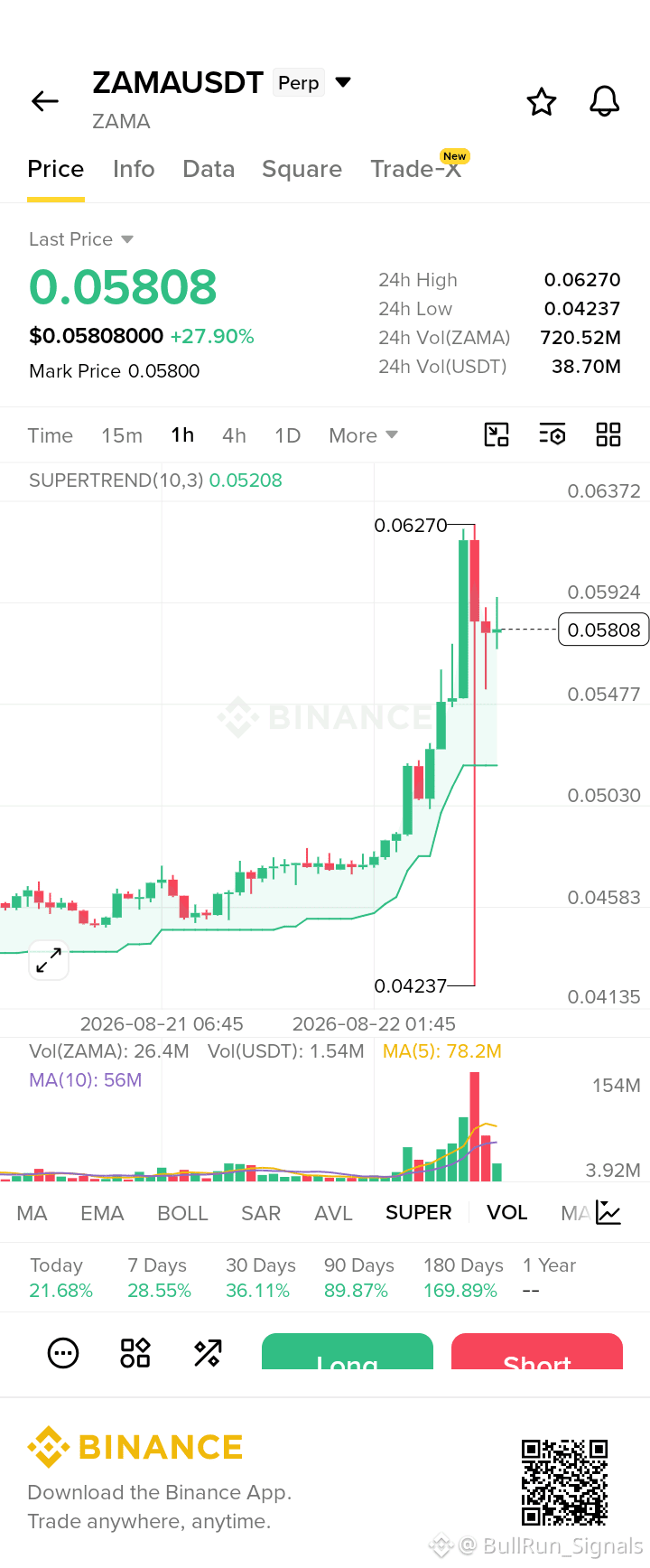
$ZAMA LONG ⚡
Trade Plan:
Entry: 0.0572 – 0.0585 🎯
SL: 0.0550 🛑
TP: 0.0610 / 0.0640 / 0.0680 💰
Why this setup?
+28.41% with $38.6M volume shows decent momentum, but liquidity is noticeably lower than the major runners.
Chart Reading 👀 • 0.057–0.0585 is the immediate demand zone
• 0.061 breakout confirms continuation
• 0.064–0.068 is the next resistance area
$TRUMP
$MAGMA
Trade Plan:
Entry: 0.0572 – 0.0585 🎯
SL: 0.0550 🛑
TP: 0.0610 / 0.0640 / 0.0680 💰
Why this setup?
+28.41% with $38.6M volume shows decent momentum, but liquidity is noticeably lower than the major runners.
Chart Reading 👀 • 0.057–0.0585 is the immediate demand zone
• 0.061 breakout confirms continuation
• 0.064–0.068 is the next resistance area
$TRUMP
$MAGMA
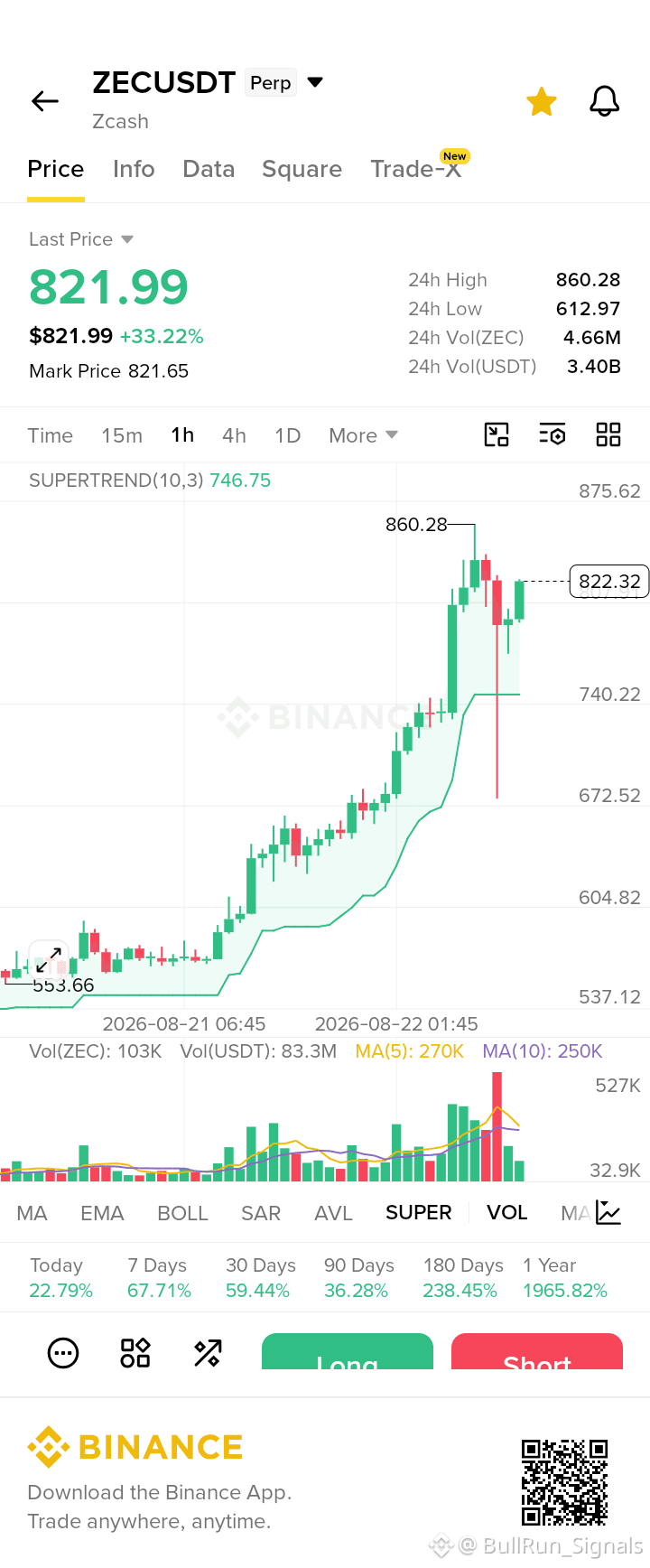
$ZEC LONG ⚡
Trade Plan:
Entry: 800 – 815 🎯
SL: 775 🛑
TP: 845 / 885 / 950 💰
Why this setup?
+33.68% with a massive $3.40B volume makes this one of the strongest liquidity setups on the screen.
Chart Reading 👀 • 800–815 is the key pullback zone
• 845 is the first breakout
• Holding above 885 could produce another leg higher
Risk Note ⚠️
Very volatile after the +33% move. Scale entries instead of full-size chasing.
$TRUMP
$MELANIA
Trade Plan:
Entry: 800 – 815 🎯
SL: 775 🛑
TP: 845 / 885 / 950 💰
Why this setup?
+33.68% with a massive $3.40B volume makes this one of the strongest liquidity setups on the screen.
Chart Reading 👀 • 800–815 is the key pullback zone
• 845 is the first breakout
• Holding above 885 could produce another leg higher
Risk Note ⚠️
Very volatile after the +33% move. Scale entries instead of full-size chasing.
$TRUMP
$MELANIA
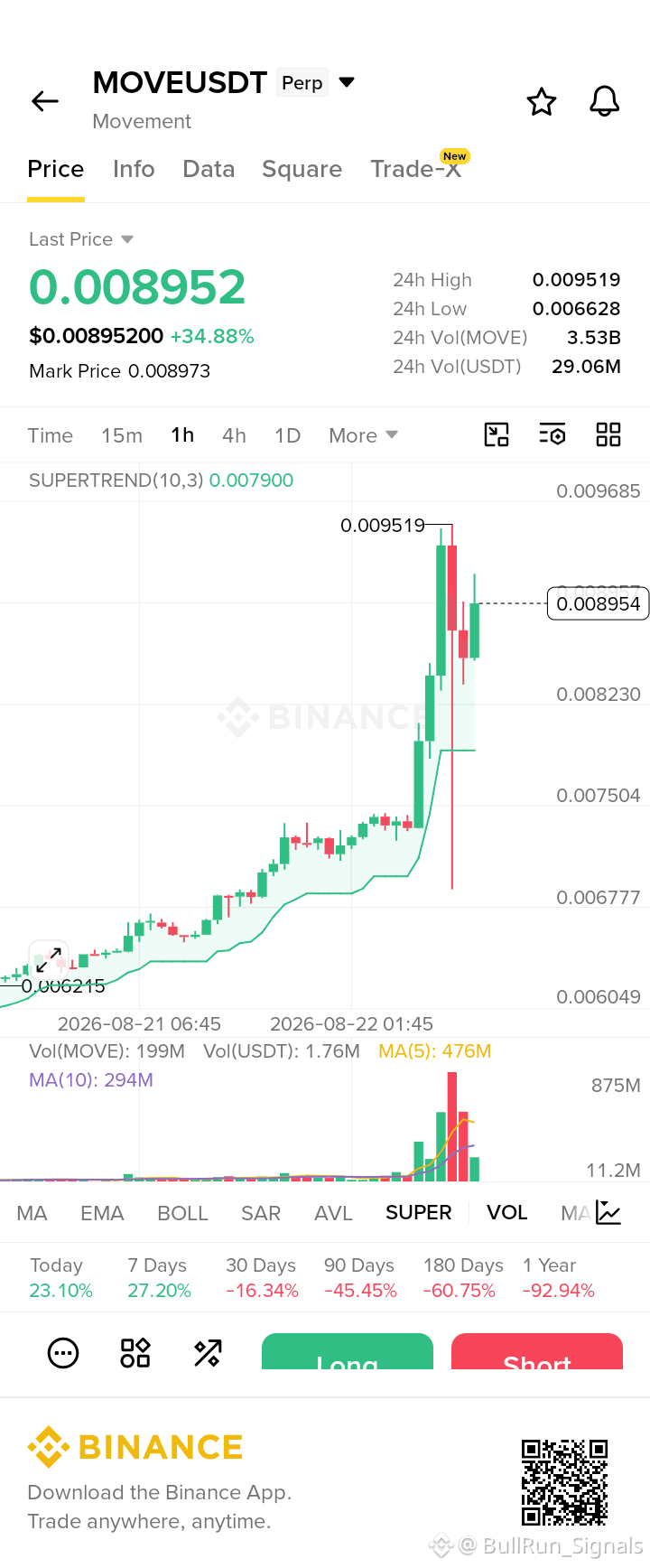
$MOVE LONG ⚡
Trade Plan:
Entry: 0.00872 – 0.00892 🎯
SL: 0.00840 🛑
TP: 0.00930 / 0.00975 / 0.01040 💰
Why this setup?
+33.97% momentum, but only $28.9M volume, making this riskier than BEAT or TRUMP.
Chart Reading 👀 • 0.0087–0.0089 is the immediate support
• 0.00930 breakout confirms continuation
• 0.010+ becomes possible with volume
$TRUMP
$MELANIA
Trade Plan:
Entry: 0.00872 – 0.00892 🎯
SL: 0.00840 🛑
TP: 0.00930 / 0.00975 / 0.01040 💰
Why this setup?
+33.97% momentum, but only $28.9M volume, making this riskier than BEAT or TRUMP.
Chart Reading 👀 • 0.0087–0.0089 is the immediate support
• 0.00930 breakout confirms continuation
• 0.010+ becomes possible with volume
$TRUMP
$MELANIA
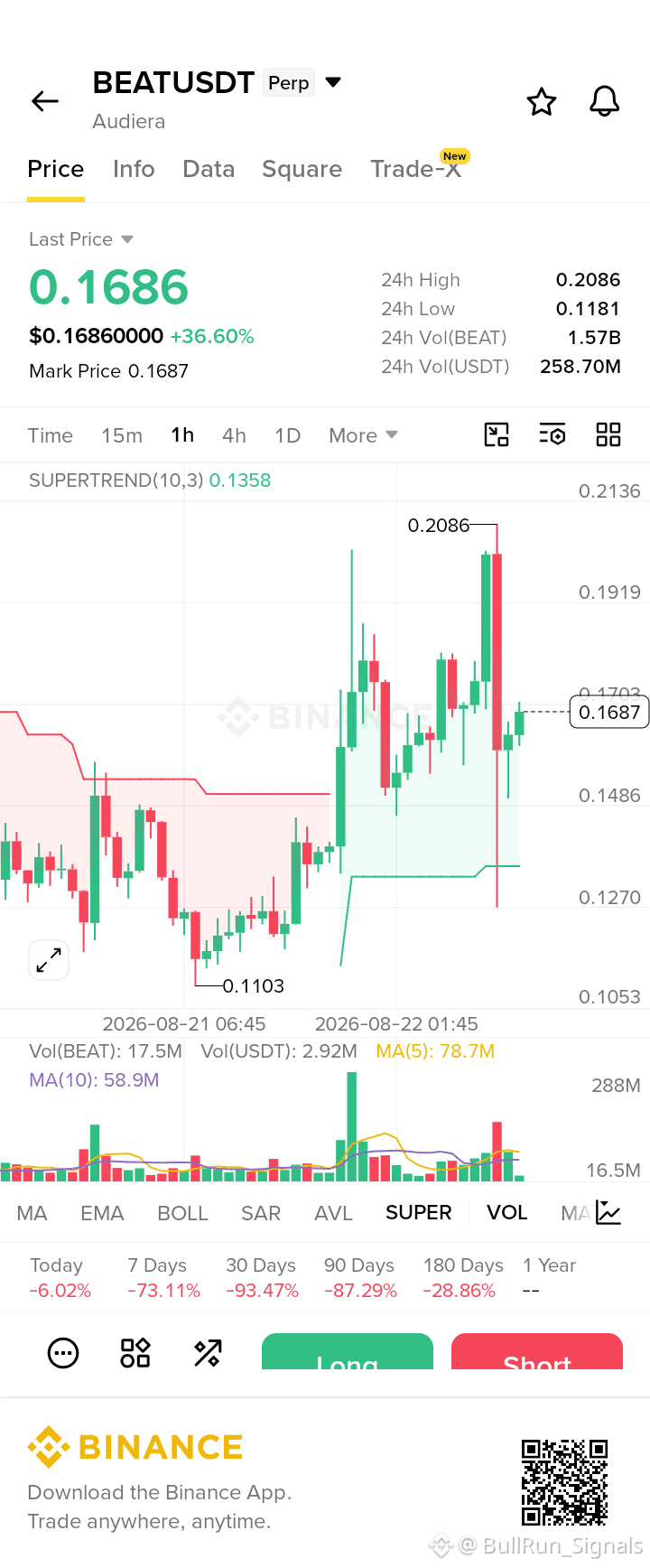
$BEAT LONG ⚡
Trade Plan:
Entry: 0.166 – 0.170 🎯
SL: 0.158 🛑
TP: 0.180 / 0.195 / 0.215 💰
Why this setup?
+36.94% with $258M volume gives this one strong momentum and considerably better liquidity.
Chart Reading 👀 • 0.166–0.170 is the key demand zone
• 0.18 is the first breakout
• Above 0.195 can trigger another expansion
$MELANIA
$TRUMP
Trade Plan:
Entry: 0.166 – 0.170 🎯
SL: 0.158 🛑
TP: 0.180 / 0.195 / 0.215 💰
Why this setup?
+36.94% with $258M volume gives this one strong momentum and considerably better liquidity.
Chart Reading 👀 • 0.166–0.170 is the key demand zone
• 0.18 is the first breakout
• Above 0.195 can trigger another expansion
$MELANIA
$TRUMP
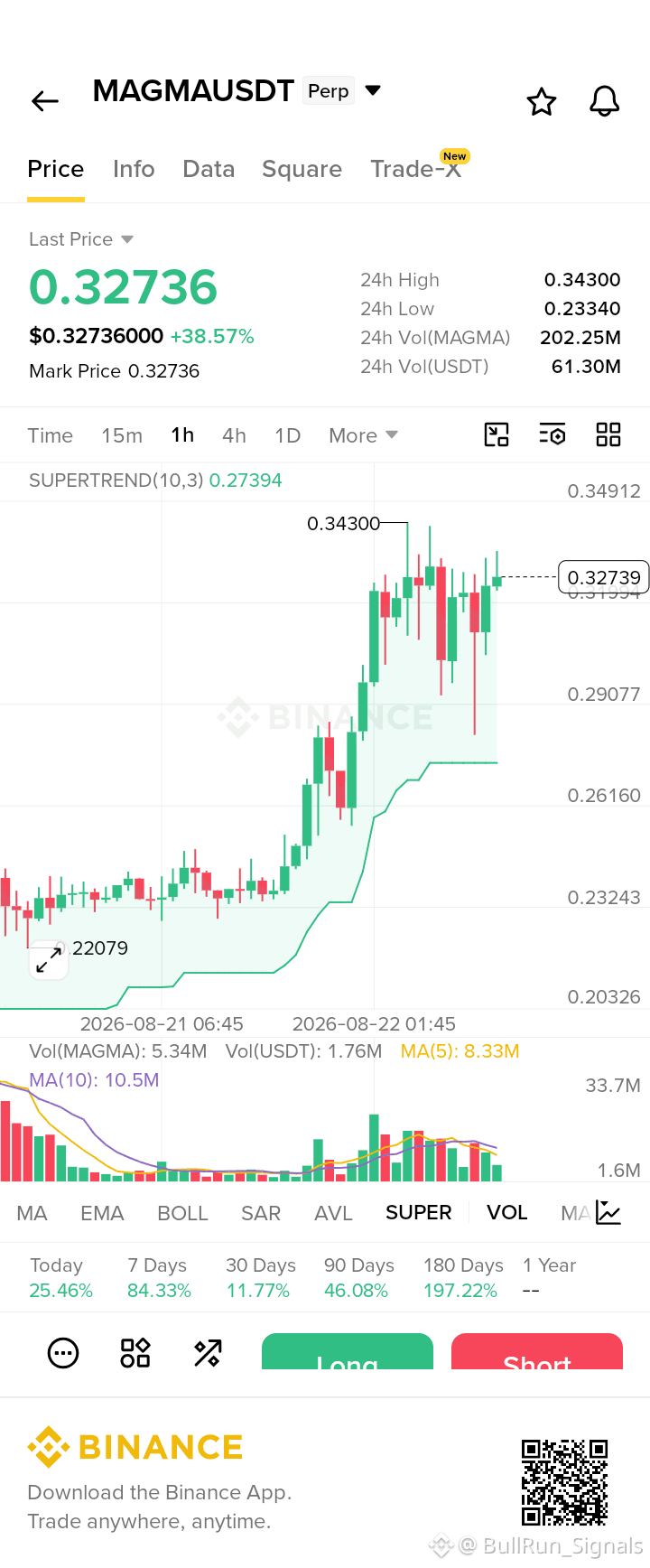
$MAGMA LONG ⚡
Trade Plan:
Entry: 0.318 – 0.326 🎯
SL: 0.305 🛑
TP: 0.340 / 0.365 / 0.400 💰
Why this setup?
+38.19% with $61M volume indicates aggressive buyers are still active.
Chart Reading 👀 • 0.318–0.325 needs to hold
• 0.34 breakout opens 0.365
• 0.40 becomes possible if volume expands 🚀
$TRUMP
$MELANIA
Trade Plan:
Entry: 0.318 – 0.326 🎯
SL: 0.305 🛑
TP: 0.340 / 0.365 / 0.400 💰
Why this setup?
+38.19% with $61M volume indicates aggressive buyers are still active.
Chart Reading 👀 • 0.318–0.325 needs to hold
• 0.34 breakout opens 0.365
• 0.40 becomes possible if volume expands 🚀
$TRUMP
$MELANIA
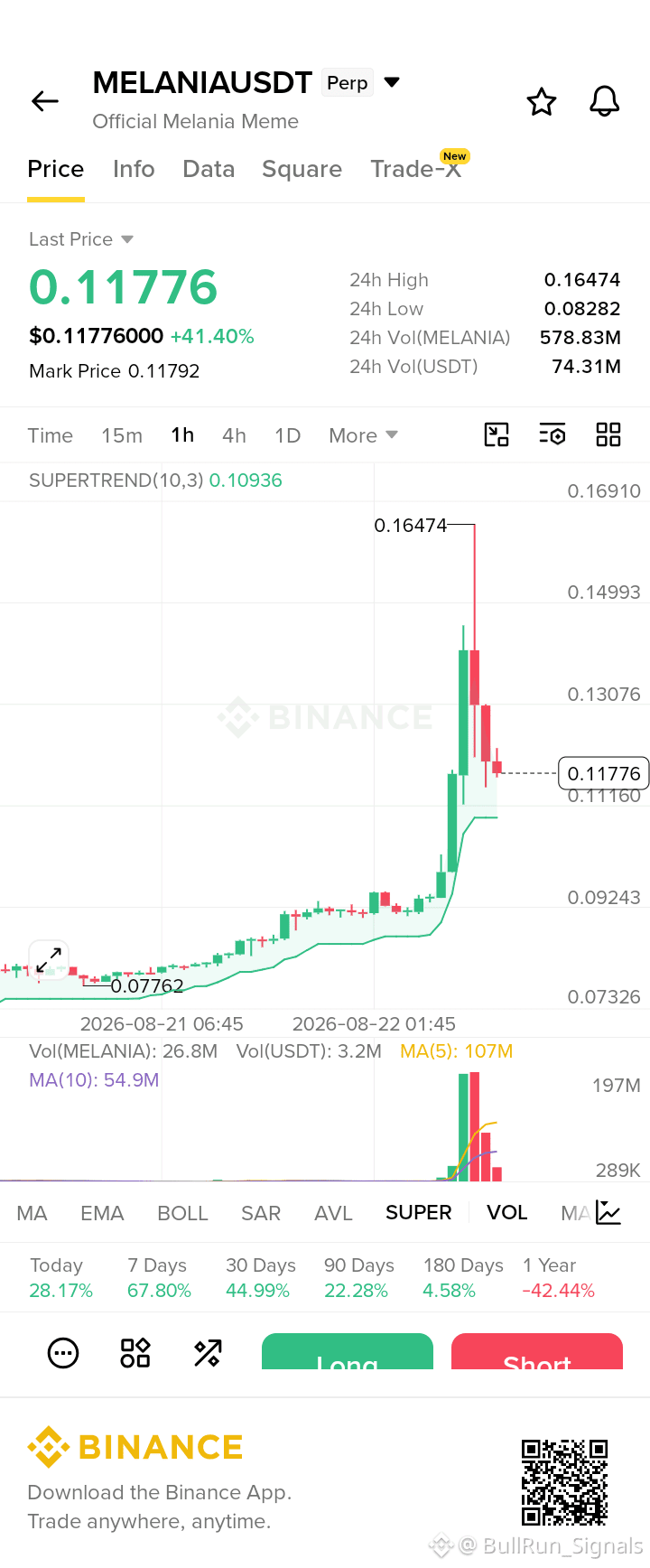
$MELANIA LONG ⚡
Trade Plan:
Entry: 0.1155 – 0.1190 🎯
SL: 0.1100 🛑
TP: 0.125 / 0.133 / 0.145 💰
Why this setup?
+42.66% with $74M volume shows a strong momentum breakout.
Chart Reading 👀 • 0.116–0.119 is the first support zone
• 0.125 breakout can accelerate
• 0.133 becomes the next resistance
Risk Note ⚠️
High volatility after a 40%+ move.
$MAGMA
$TRUMP
Trade Plan:
Entry: 0.1155 – 0.1190 🎯
SL: 0.1100 🛑
TP: 0.125 / 0.133 / 0.145 💰
Why this setup?
+42.66% with $74M volume shows a strong momentum breakout.
Chart Reading 👀 • 0.116–0.119 is the first support zone
• 0.125 breakout can accelerate
• 0.133 becomes the next resistance
Risk Note ⚠️
High volatility after a 40%+ move.
$MAGMA
$TRUMP
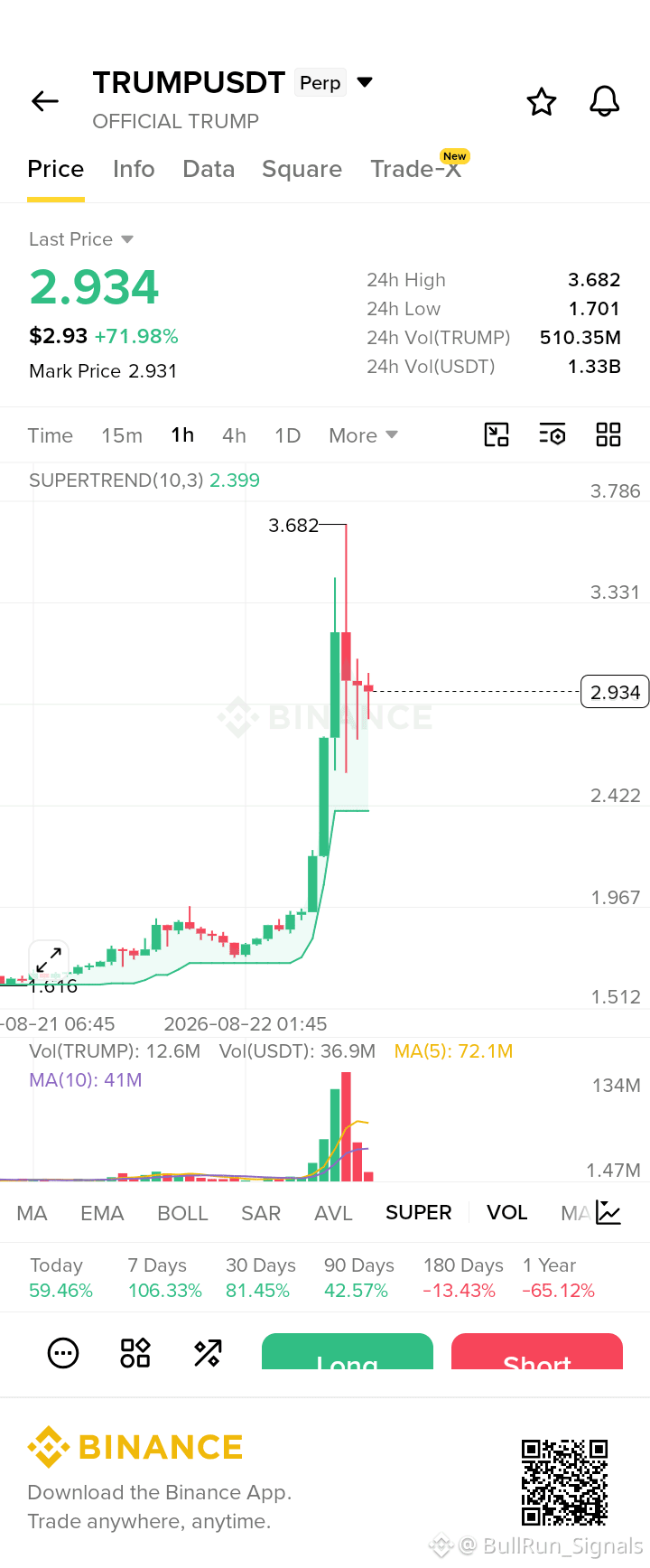
$TRUMP LONG ⚡
Trade Plan:
Entry: 2.88 – 2.94 🎯
SL: 2.76 🛑
TP: 3.08 / 3.25 / 3.50 💰
Why this setup?
+71.64% with $1.33B volume shows extreme momentum and liquidity.
Chart Reading 👀 • 2.88–2.94 is immediate support
• Break above 3.08 can extend the pump
• 3.25 is the key momentum level 🚀
Risk Note ⚠️
Already heavily extended. Avoid chasing a vertical candle.
$MELANIA
Trade Plan:
Entry: 2.88 – 2.94 🎯
SL: 2.76 🛑
TP: 3.08 / 3.25 / 3.50 💰
Why this setup?
+71.64% with $1.33B volume shows extreme momentum and liquidity.
Chart Reading 👀 • 2.88–2.94 is immediate support
• Break above 3.08 can extend the pump
• 3.25 is the key momentum level 🚀
Risk Note ⚠️
Already heavily extended. Avoid chasing a vertical candle.
$MELANIA
#dusk $DUSK @Dusk I'll be honest, I used to roll my eyes a little every time someone posted "RWA is the next big narrative" with a chart and three buzzwords. It felt like the same pitch dressed up in a new coin.
Then I actually sat down and read through Dusk's partnership details on NPEX, and something clicked differently for me.
NPEX isn't some crypto-native startup playing dress-up as a financial institution. It's an AFM-regulated exchange, licensed as an MTF, a Broker, and an ECSP. That's regulatory weight most projects in this space never even get close to. And according to Dusk's own partnership material, NPEX is planning to bring 300M+ EUR in assets onchain through Dusk.
That's the number that made me stop scrolling.
Because up until that point, my mental model of "RWA" was basically this: take something real, wrap it in a token, call it innovation. Simple math, blockchain plus real-world asset equals progress. Convenient, but shallow.
What changed my thinking is realizing this isn't really about tokenizing assets for the sake of it. It's about an actual regulated market participant, one that already has licenses, oversight, and existing institutional trust, choosing to plug into blockchain infrastructure instead of building around it.
That's a very different kind of story. It's not "crypto disrupts finance." It's "finance decides to use crypto's rails, on its own terms, within its own regulatory box."
And honestly, that's the only version of this RWA narrative I actually believe moves the needle. Not more experiments living in a sandbox, but real bridges connecting to institutions that were already playing by the rules long before any of us showed up.
Then I actually sat down and read through Dusk's partnership details on NPEX, and something clicked differently for me.
NPEX isn't some crypto-native startup playing dress-up as a financial institution. It's an AFM-regulated exchange, licensed as an MTF, a Broker, and an ECSP. That's regulatory weight most projects in this space never even get close to. And according to Dusk's own partnership material, NPEX is planning to bring 300M+ EUR in assets onchain through Dusk.
That's the number that made me stop scrolling.
Because up until that point, my mental model of "RWA" was basically this: take something real, wrap it in a token, call it innovation. Simple math, blockchain plus real-world asset equals progress. Convenient, but shallow.
What changed my thinking is realizing this isn't really about tokenizing assets for the sake of it. It's about an actual regulated market participant, one that already has licenses, oversight, and existing institutional trust, choosing to plug into blockchain infrastructure instead of building around it.
That's a very different kind of story. It's not "crypto disrupts finance." It's "finance decides to use crypto's rails, on its own terms, within its own regulatory box."
And honestly, that's the only version of this RWA narrative I actually believe moves the needle. Not more experiments living in a sandbox, but real bridges connecting to institutions that were already playing by the rules long before any of us showed up.
#dusk $DUSK @Dusk
So where does Dusk actually stand out in practice?
I used to think that the more transparent a blockchain is, especially for finance, the more trustworthy it becomes. If anyone can see and verify every transaction, that feels like a clear advantage.
But the more I looked into Dusk, the more I realized that this view leaves out something important.
What really caught my attention is the way Dusk approaches programmable privacy: keeping information private when it needs to be private, making it transparent when transparency is useful, and allowing specific information to be disclosed to the right parties when necessary.
At first, that might sound like another way of describing blockchain privacy. But for regulated finance, I think it’s a much bigger challenge than that.
Not every piece of financial data should be sitting in public view. At the same time, you can’t simply encrypt everything and expect regulators, institutions, or other authorized parties to blindly trust what’s happening underneath.
That’s where I started looking at Hedger differently.
The use of homomorphic encryption and zero-knowledge proofs isn’t just about hiding transaction data. The more interesting part is the possibility of allowing transactions or states to be verified under specific conditions, without exposing everything to everyone.
And that changed how I think about privacy in financial blockchains.
Maybe privacy isn’t really about “hiding everything.” Maybe it’s about giving the right people access to the right information at the right time.
If Dusk can make that work at scale, especially for regulated assets, I think that could be one of the most important parts of its thesis.
That said, I’m not ready to call it proven yet. The real test will be seeing how programmable privacy behaves once real financial activity starts happening on the network.
So where does Dusk actually stand out in practice?
I used to think that the more transparent a blockchain is, especially for finance, the more trustworthy it becomes. If anyone can see and verify every transaction, that feels like a clear advantage.
But the more I looked into Dusk, the more I realized that this view leaves out something important.
What really caught my attention is the way Dusk approaches programmable privacy: keeping information private when it needs to be private, making it transparent when transparency is useful, and allowing specific information to be disclosed to the right parties when necessary.
At first, that might sound like another way of describing blockchain privacy. But for regulated finance, I think it’s a much bigger challenge than that.
Not every piece of financial data should be sitting in public view. At the same time, you can’t simply encrypt everything and expect regulators, institutions, or other authorized parties to blindly trust what’s happening underneath.
That’s where I started looking at Hedger differently.
The use of homomorphic encryption and zero-knowledge proofs isn’t just about hiding transaction data. The more interesting part is the possibility of allowing transactions or states to be verified under specific conditions, without exposing everything to everyone.
And that changed how I think about privacy in financial blockchains.
Maybe privacy isn’t really about “hiding everything.” Maybe it’s about giving the right people access to the right information at the right time.
If Dusk can make that work at scale, especially for regulated assets, I think that could be one of the most important parts of its thesis.
That said, I’m not ready to call it proven yet. The real test will be seeing how programmable privacy behaves once real financial activity starts happening on the network.
bearish
50%
bullish
50%
neutral
0%
4 votes • Voting closed
#dusk $DUSK @Dusk
So where do I think DUSK’s real strength lies?
I used to believe the biggest advantage of blockchain was simple: everything could be visible, transparent, and publicly verifiable.
But the deeper I look into real-world financial use cases, the more I realize that this model has a clear limitation.
An investor may need to prove they’re eligible.
An institution may need to demonstrate that a transaction complies with regulations.
A business may need to verify ownership of an asset.
But does proving any of that really require exposing all the underlying data?
That’s what caught my attention about DUSK’s approach to privacy.
Instead of treating privacy as something added on top of the blockchain, DUSK’s Confidential Security Contract integrates privacy directly into the smart contract logic.
That changes the way I think about blockchain security.
Maybe the real question isn’t, “How do we make blockchain more private?”
It’s:
“How do we determine exactly what information needs to be disclosed, while keeping everything else protected?”
Traditional finance already works this way. You don’t need access to an entire counterparty’s financial history or every asset they own to verify that they’re eligible for a transaction.
You need a reliable proof.
If blockchain can provide that same kind of selective verification, privacy no longer has to compete with transparency and verifiability.
And that may be the more important evolution.
Not turning blockchain into a completely hidden system, but making privacy programmable, selective, and controllable.
So where do I think DUSK’s real strength lies?
I used to believe the biggest advantage of blockchain was simple: everything could be visible, transparent, and publicly verifiable.
But the deeper I look into real-world financial use cases, the more I realize that this model has a clear limitation.
An investor may need to prove they’re eligible.
An institution may need to demonstrate that a transaction complies with regulations.
A business may need to verify ownership of an asset.
But does proving any of that really require exposing all the underlying data?
That’s what caught my attention about DUSK’s approach to privacy.
Instead of treating privacy as something added on top of the blockchain, DUSK’s Confidential Security Contract integrates privacy directly into the smart contract logic.
That changes the way I think about blockchain security.
Maybe the real question isn’t, “How do we make blockchain more private?”
It’s:
“How do we determine exactly what information needs to be disclosed, while keeping everything else protected?”
Traditional finance already works this way. You don’t need access to an entire counterparty’s financial history or every asset they own to verify that they’re eligible for a transaction.
You need a reliable proof.
If blockchain can provide that same kind of selective verification, privacy no longer has to compete with transparency and verifiability.
And that may be the more important evolution.
Not turning blockchain into a completely hidden system, but making privacy programmable, selective, and controllable.
privacy matter
67%
security matter
33%
feature matters
0%
6 votes • Voting closed
#dusk $DUSK @Dusk Privacy in financial markets can't simply mean “nobody can see anything.”
That creates its own problems.
What interests me about Dusk's approach is the idea of reviewable privacy.
Hedger is designed for confidential EVM workflows using homomorphic encryption and zero-knowledge proofs.
The goal isn't blind secrecy.
It is privacy where it is needed, while still allowing authorized review when compliance requires it.
That distinction is important.
Traditional finance needs confidentiality.
Regulated finance also needs accountability.
Dusk is trying to make both programmable at the infrastructure level.
That creates its own problems.
What interests me about Dusk's approach is the idea of reviewable privacy.
Hedger is designed for confidential EVM workflows using homomorphic encryption and zero-knowledge proofs.
The goal isn't blind secrecy.
It is privacy where it is needed, while still allowing authorized review when compliance requires it.
That distinction is important.
Traditional finance needs confidentiality.
Regulated finance also needs accountability.
Dusk is trying to make both programmable at the infrastructure level.
bullish
50%
bearish
50%
4 votes • Voting closed

#dusk $DUSK @Dusk One thing that caught my attention about Dusk:
DuskEVM isn't trying to force developers into an entirely unfamiliar environment.
The EVM-compatible application layer gives builders and institutions a familiar Solidity/EVM route into the Dusk ecosystem.
That matters because infrastructure adoption is rarely just about technology.
Developer familiarity matters too.
DuskEVM is designed to combine that familiar EVM experience with Dusk's infrastructure for regulated financial applications.
And with Hedger, confidential EVM workflows become part of the picture.
For me, this makes DuskEVM one of the most important pieces to watch in the Dusk stack.
DuskEVM isn't trying to force developers into an entirely unfamiliar environment.
The EVM-compatible application layer gives builders and institutions a familiar Solidity/EVM route into the Dusk ecosystem.
That matters because infrastructure adoption is rarely just about technology.
Developer familiarity matters too.
DuskEVM is designed to combine that familiar EVM experience with Dusk's infrastructure for regulated financial applications.
And with Hedger, confidential EVM workflows become part of the picture.
For me, this makes DuskEVM one of the most important pieces to watch in the Dusk stack.
#dusk $DUSK @Dusk
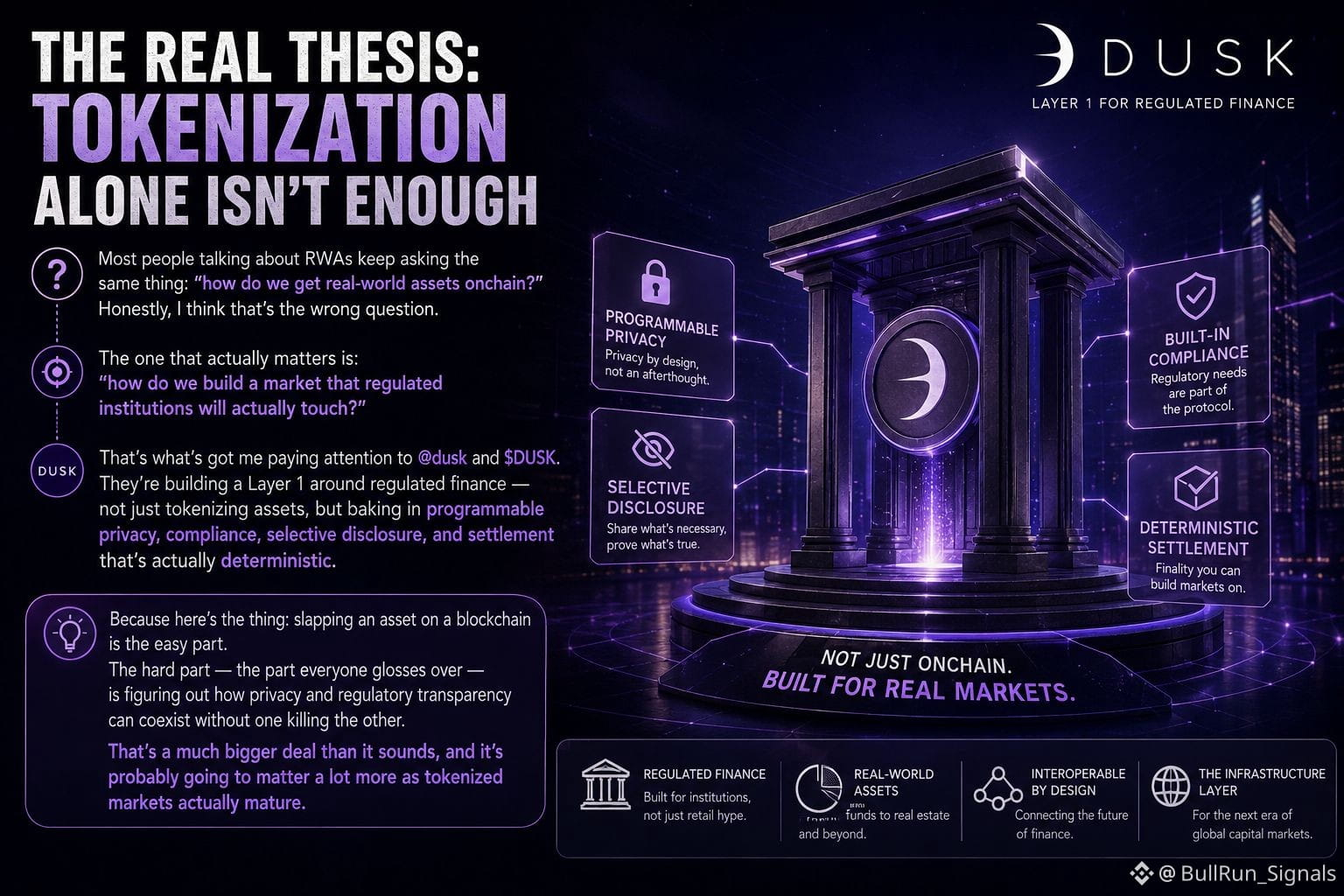
The real thesis: tokenization alone isn't enough
Most people talking about RWAs keep asking the same thing: "how do we get real-world assets onchain?"
Honestly, I think that's the wrong question. The one that actually matters is: "how do we build a market that regulated institutions will actually touch?"
That's what's got me paying attention to @Dusk and DUSK.
They're building a Layer 1 around regulated finance — not just tokenizing assets, but baking in programmable privacy, compliance, selective disclosure, and settlement that's actually deterministic.
Because here's the thing: slapping an asset on a blockchain is the easy part. The hard part, the part everyone glosses over.... is figuring out how privacy and regulatory transparency can coexist without one killing the other.
That's A much bigger deal than it sounds, and it's probably going to matter A lot more as tokenized markets actually mature.
The real thesis: tokenization alone isn't enough
Most people talking about RWAs keep asking the same thing: "how do we get real-world assets onchain?"
Honestly, I think that's the wrong question. The one that actually matters is: "how do we build a market that regulated institutions will actually touch?"
That's what's got me paying attention to @Dusk and DUSK.
They're building a Layer 1 around regulated finance — not just tokenizing assets, but baking in programmable privacy, compliance, selective disclosure, and settlement that's actually deterministic.
Because here's the thing: slapping an asset on a blockchain is the easy part. The hard part, the part everyone glosses over.... is figuring out how privacy and regulatory transparency can coexist without one killing the other.
That's A much bigger deal than it sounds, and it's probably going to matter A lot more as tokenized markets actually mature.
DUSK WILL PUMP
80%
DUSK WILL NOT PUMP
10%
I WILL KEEP WATCHING
10%
10 votes • Voting closed
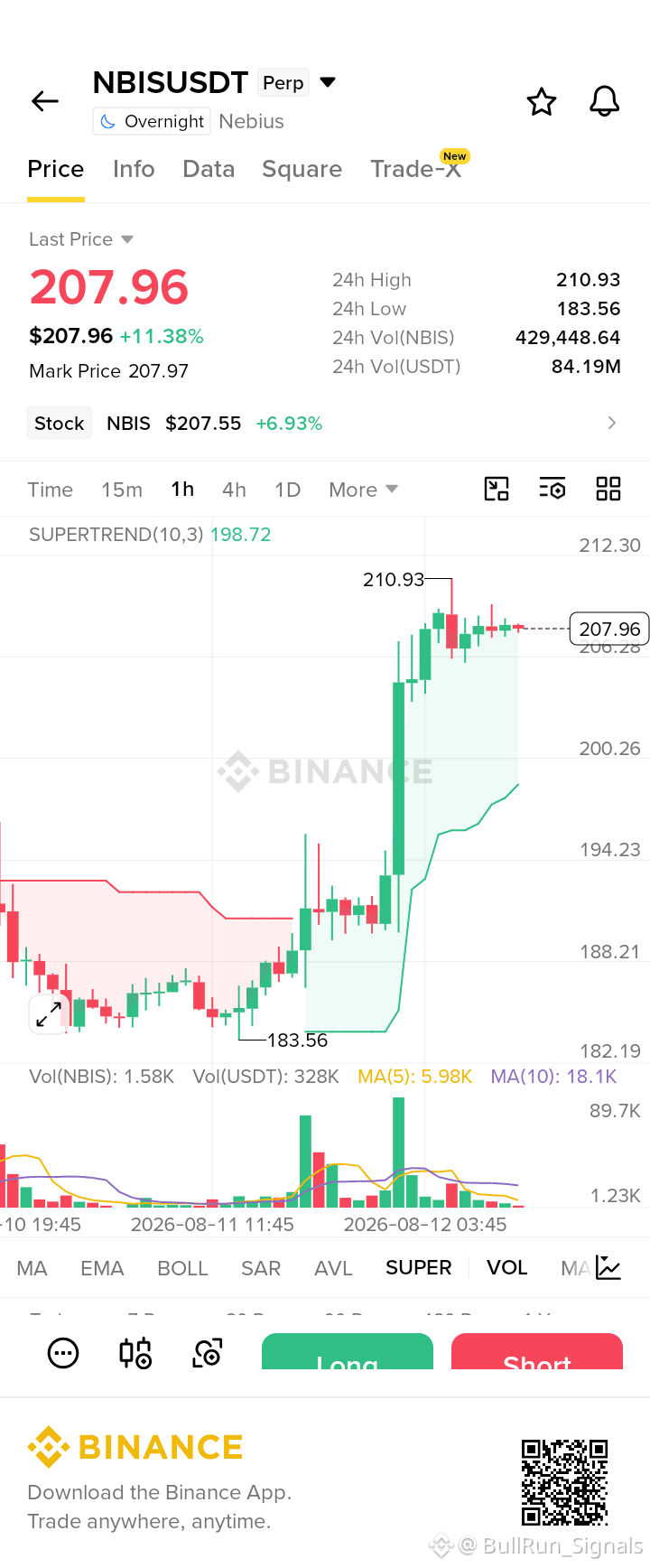
$NBIS LONG ⚡
Trade Plan:
Entry: 203 – 208 🎯
SL: 196 🛑
TP: 215 / 225 / 240 💰
Why this setup?
NBIS is up 11.13% with $84M volume, showing steady rather than explosive momentum. A continuation above the current range gives a cleaner risk/reward setup.
Chart Reading 👀 • 203–208 is the accumulation/entry zone
• 215 is the first breakout target
• Above 225 opens 240
$VELVET
$PROM
Trade Plan:
Entry: 203 – 208 🎯
SL: 196 🛑
TP: 215 / 225 / 240 💰
Why this setup?
NBIS is up 11.13% with $84M volume, showing steady rather than explosive momentum. A continuation above the current range gives a cleaner risk/reward setup.
Chart Reading 👀 • 203–208 is the accumulation/entry zone
• 215 is the first breakout target
• Above 225 opens 240
$VELVET
$PROM
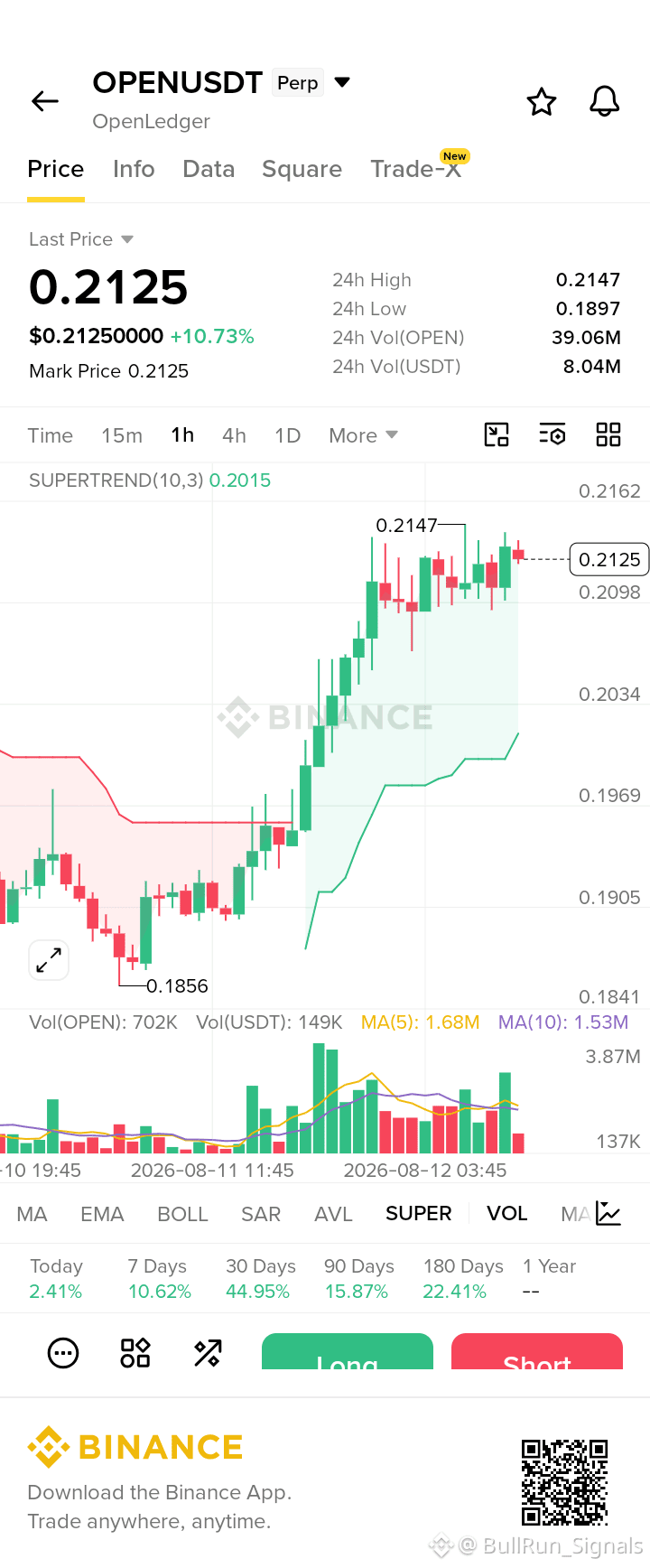
$OPEN LONG ⚡
Trade Plan:
Entry: 0.208 – 0.213 🎯
SL: 0.200 🛑
TP: 0.222 / 0.235 / 0.250 💰
Why this setup?
OPEN is up 11.82% and still holding positive momentum. Unlike the heavily pumped names, it has more room for a fresh continuation if volume expands.
Chart Reading 👀 • 0.208–0.213 is the preferred entry
• 0.222 is the first resistance
• Break above 0.235 can accelerate the move 🚀
$VELVET
$PROM
Trade Plan:
Entry: 0.208 – 0.213 🎯
SL: 0.200 🛑
TP: 0.222 / 0.235 / 0.250 💰
Why this setup?
OPEN is up 11.82% and still holding positive momentum. Unlike the heavily pumped names, it has more room for a fresh continuation if volume expands.
Chart Reading 👀 • 0.208–0.213 is the preferred entry
• 0.222 is the first resistance
• Break above 0.235 can accelerate the move 🚀
$VELVET
$PROM
Log in to explore more content