
Asfand_01
58 Posts
Asfand_01
Report
Block User
130 Following
4.1K+ Followers
448 Liked
Posts
·
--
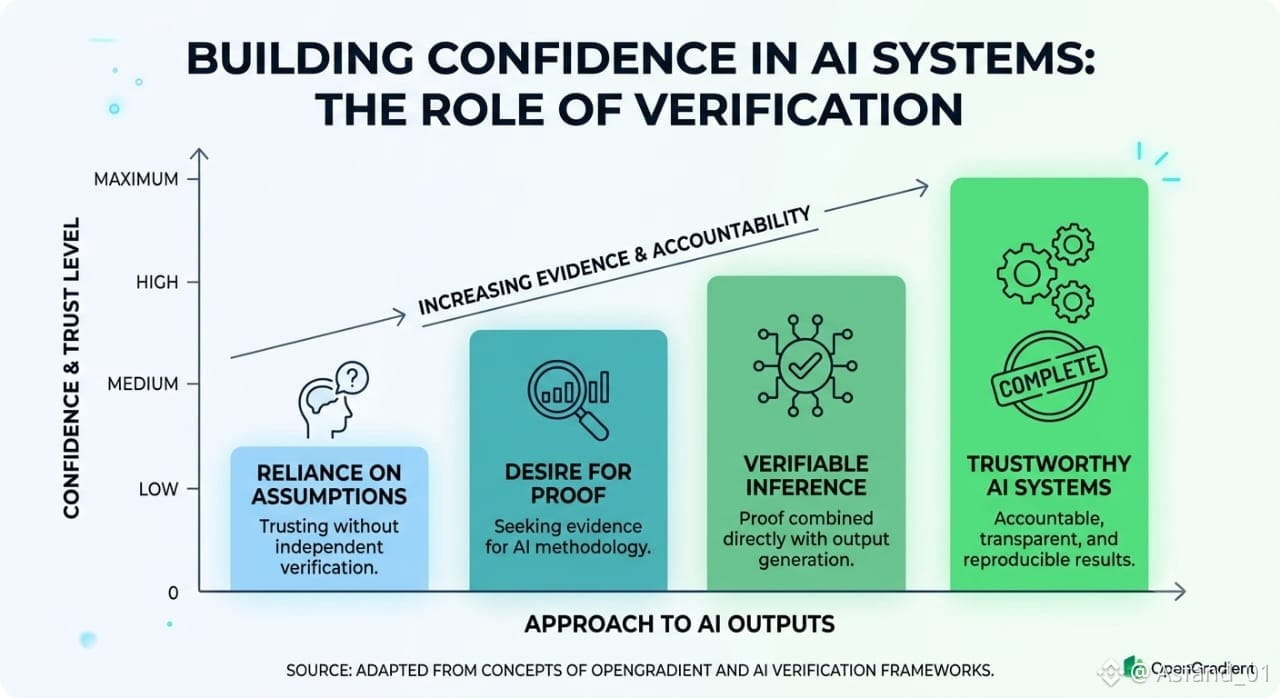
I almost spent more time relying on an AI response the other day, then I caught myself thinking, "How do I actually know this answer was produced the way it claims?" I realized I was ready to trust the result without having anything to verify. That small moment completely changed how I think about AI.
Since then, what interests me more isn't how quickly a model responds, but whether its output can stand up to independent verification. It reminds me of reading a research paper where the methodology matters just as much as the conclusion.
That's why @OpenGradient caught my attention. The idea of combining verification with inference instead of treating proof as an afterthought feels like a meaningful step toward AI accountability, transparent computation, reproducible outputs, and trustworthy AI systems. In the long run, confidence should come from evidence, not assumptions.
#opg $OPG
I almost spent more time relying on an AI response the other day, then I caught myself thinking, "How do I actually know this answer was produced the way it claims?" I realized I was ready to trust the result without having anything to verify. That small moment completely changed how I think about AI.
Since then, what interests me more isn't how quickly a model responds, but whether its output can stand up to independent verification. It reminds me of reading a research paper where the methodology matters just as much as the conclusion.
That's why @OpenGradient caught my attention. The idea of combining verification with inference instead of treating proof as an afterthought feels like a meaningful step toward AI accountability, transparent computation, reproducible outputs, and trustworthy AI systems. In the long run, confidence should come from evidence, not assumptions.
#opg $OPG
Since then, what interests me more isn't how quickly a model responds, but whether its output can stand up to independent verification. It reminds me of reading a research paper where the methodology matters just as much as the conclusion.
That's why @OpenGradient caught my attention. The idea of combining verification with inference instead of treating proof as an afterthought feels like a meaningful step toward AI accountability, transparent computation, reproducible outputs, and trustworthy AI systems. In the long run, confidence should come from evidence, not assumptions.
#opg $OPG
2
7
408
·
--
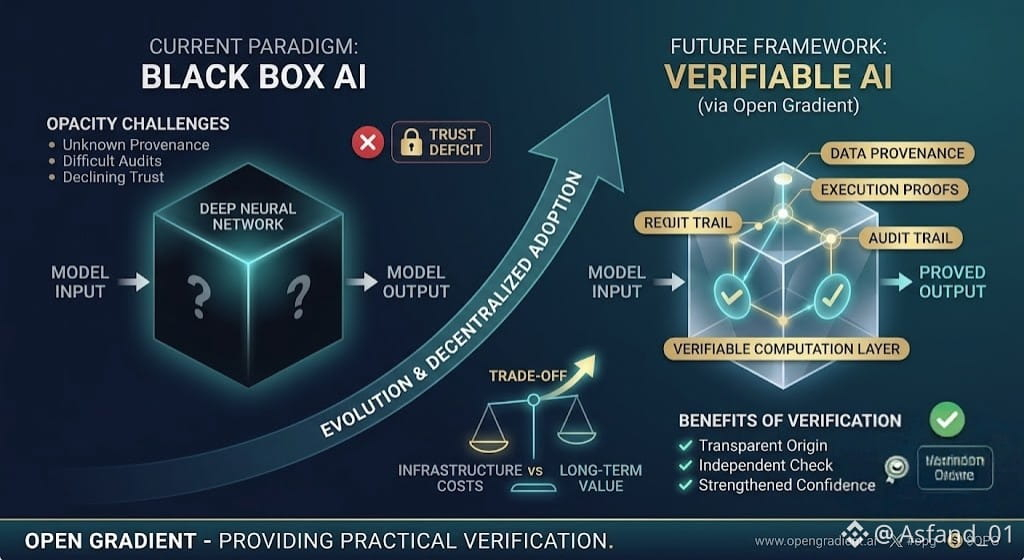
I keep wondering whether the biggest AI challenge is no longer intelligence but accountability. Models are becoming easier to access, yet it is still difficult to understand who produced an output, what data influenced it, or whether the process can be independently checked. That uncertainty feels more important as AI moves into everyday decisions.
The broader issue is that trust cannot rely on reputation alone. Builders, users, and entire ecosystems need systems that make verification practical instead of expecting blind confidence. Without that foundation, adoption may slow even if model quality keeps improving.
One reason @OpenGradient t has caught my attention is its focus on verifiable computation. Instead of treating AI as a black box, the idea is to make the execution itself more transparent. That approach could strengthen confidence across decentralized AI networks if it proves practical.
Still, adding verification also introduces costs. More infrastructure, coordination, and technical complexity could discourage adoption unless the benefits clearly outweigh the friction.
I think the long term value of AI may depend as much on proving results as generating them, but it's still too early to know how that balance will evolve.
Can transparent verification become a default expectation for AI, or will convenience always win?
#opg $OPG
I keep wondering whether the biggest AI challenge is no longer intelligence but accountability. Models are becoming easier to access, yet it is still difficult to understand who produced an output, what data influenced it, or whether the process can be independently checked. That uncertainty feels more important as AI moves into everyday decisions.
The broader issue is that trust cannot rely on reputation alone. Builders, users, and entire ecosystems need systems that make verification practical instead of expecting blind confidence. Without that foundation, adoption may slow even if model quality keeps improving.
One reason @OpenGradient t has caught my attention is its focus on verifiable computation. Instead of treating AI as a black box, the idea is to make the execution itself more transparent. That approach could strengthen confidence across decentralized AI networks if it proves practical.
Still, adding verification also introduces costs. More infrastructure, coordination, and technical complexity could discourage adoption unless the benefits clearly outweigh the friction.
I think the long term value of AI may depend as much on proving results as generating them, but it's still too early to know how that balance will evolve.
Can transparent verification become a default expectation for AI, or will convenience always win?
#opg $OPG
The broader issue is that trust cannot rely on reputation alone. Builders, users, and entire ecosystems need systems that make verification practical instead of expecting blind confidence. Without that foundation, adoption may slow even if model quality keeps improving.
One reason @OpenGradient t has caught my attention is its focus on verifiable computation. Instead of treating AI as a black box, the idea is to make the execution itself more transparent. That approach could strengthen confidence across decentralized AI networks if it proves practical.
Still, adding verification also introduces costs. More infrastructure, coordination, and technical complexity could discourage adoption unless the benefits clearly outweigh the friction.
I think the long term value of AI may depend as much on proving results as generating them, but it's still too early to know how that balance will evolve.
Can transparent verification become a default expectation for AI, or will convenience always win?
#opg $OPG
3
5
611
·
--
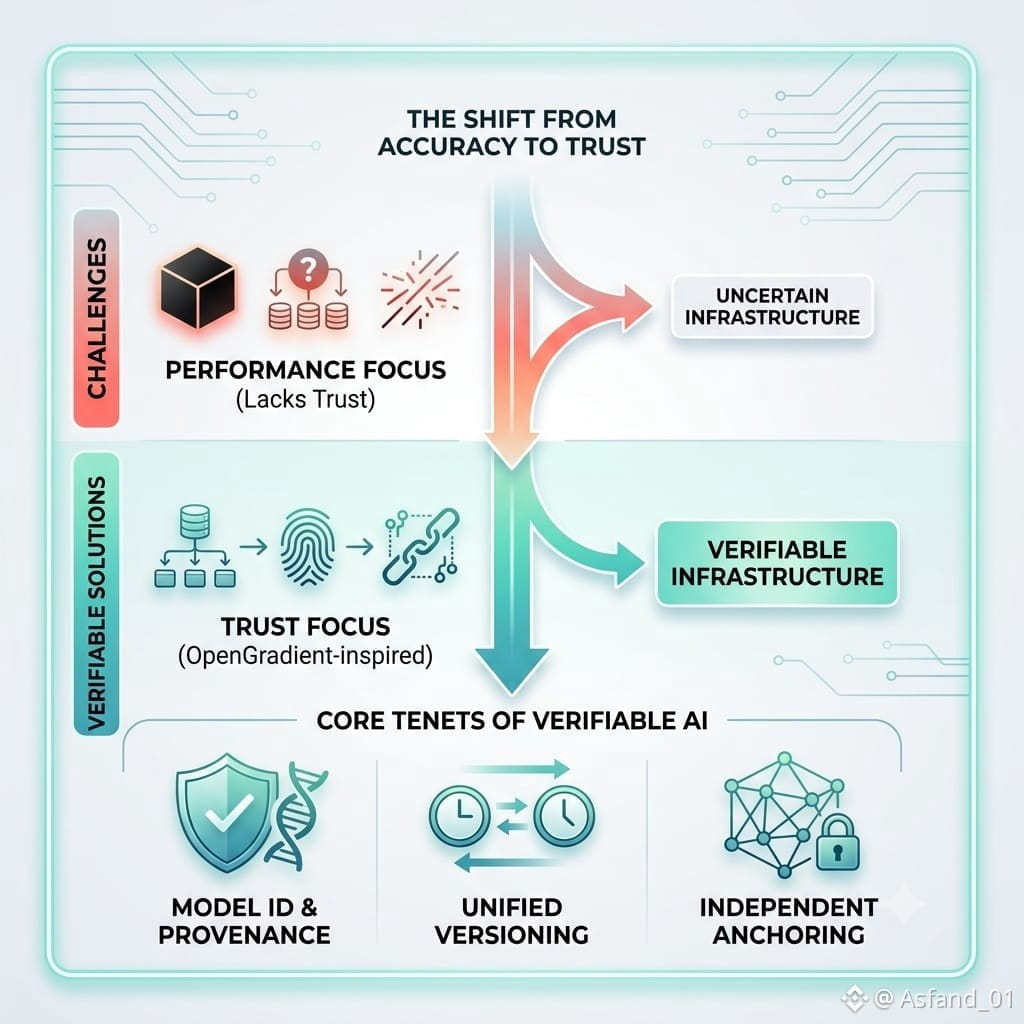
I've been thinking less about whether AI models are accurate and more about whether the systems around them deserve trust. A capable model means very little if nobody can verify where it came from, who changed it, or whether different users are actually interacting with the same version.
That feels like a larger challenge for the industry. As AI becomes part of everyday workflows, confidence will increasingly depend on transparent coordination rather than raw performance. Builders, users, and networks all need ways to verify shared assumptions without introducing unnecessary friction.
One reason I keep watching @OpenGradient is its focus on verifiable AI infrastructure. The idea that model identity and provenance can be anchored independently of the model itself seems like a practical step toward making distributed AI more accountable instead of simply more accessible.
Of course, stronger verification also introduces costs. Extra coordination, integration complexity, and incentives for operators could slow adoption, especially if developers prioritize convenience over transparency.
I'm not convinced there's a perfect balance yet, but I do think infrastructure decisions made today will shape how much confidence people place in AI systems tomorrow.
Will users eventually value verifiable AI enough to accept the extra complexity it may require?
#opg $OPG
I've been thinking less about whether AI models are accurate and more about whether the systems around them deserve trust. A capable model means very little if nobody can verify where it came from, who changed it, or whether different users are actually interacting with the same version.
That feels like a larger challenge for the industry. As AI becomes part of everyday workflows, confidence will increasingly depend on transparent coordination rather than raw performance. Builders, users, and networks all need ways to verify shared assumptions without introducing unnecessary friction.
One reason I keep watching @OpenGradient is its focus on verifiable AI infrastructure. The idea that model identity and provenance can be anchored independently of the model itself seems like a practical step toward making distributed AI more accountable instead of simply more accessible.
Of course, stronger verification also introduces costs. Extra coordination, integration complexity, and incentives for operators could slow adoption, especially if developers prioritize convenience over transparency.
I'm not convinced there's a perfect balance yet, but I do think infrastructure decisions made today will shape how much confidence people place in AI systems tomorrow.
Will users eventually value verifiable AI enough to accept the extra complexity it may require?
#opg $OPG
That feels like a larger challenge for the industry. As AI becomes part of everyday workflows, confidence will increasingly depend on transparent coordination rather than raw performance. Builders, users, and networks all need ways to verify shared assumptions without introducing unnecessary friction.
One reason I keep watching @OpenGradient is its focus on verifiable AI infrastructure. The idea that model identity and provenance can be anchored independently of the model itself seems like a practical step toward making distributed AI more accountable instead of simply more accessible.
Of course, stronger verification also introduces costs. Extra coordination, integration complexity, and incentives for operators could slow adoption, especially if developers prioritize convenience over transparency.
I'm not convinced there's a perfect balance yet, but I do think infrastructure decisions made today will shape how much confidence people place in AI systems tomorrow.
Will users eventually value verifiable AI enough to accept the extra complexity it may require?
#opg $OPG
5
4
216
·
--
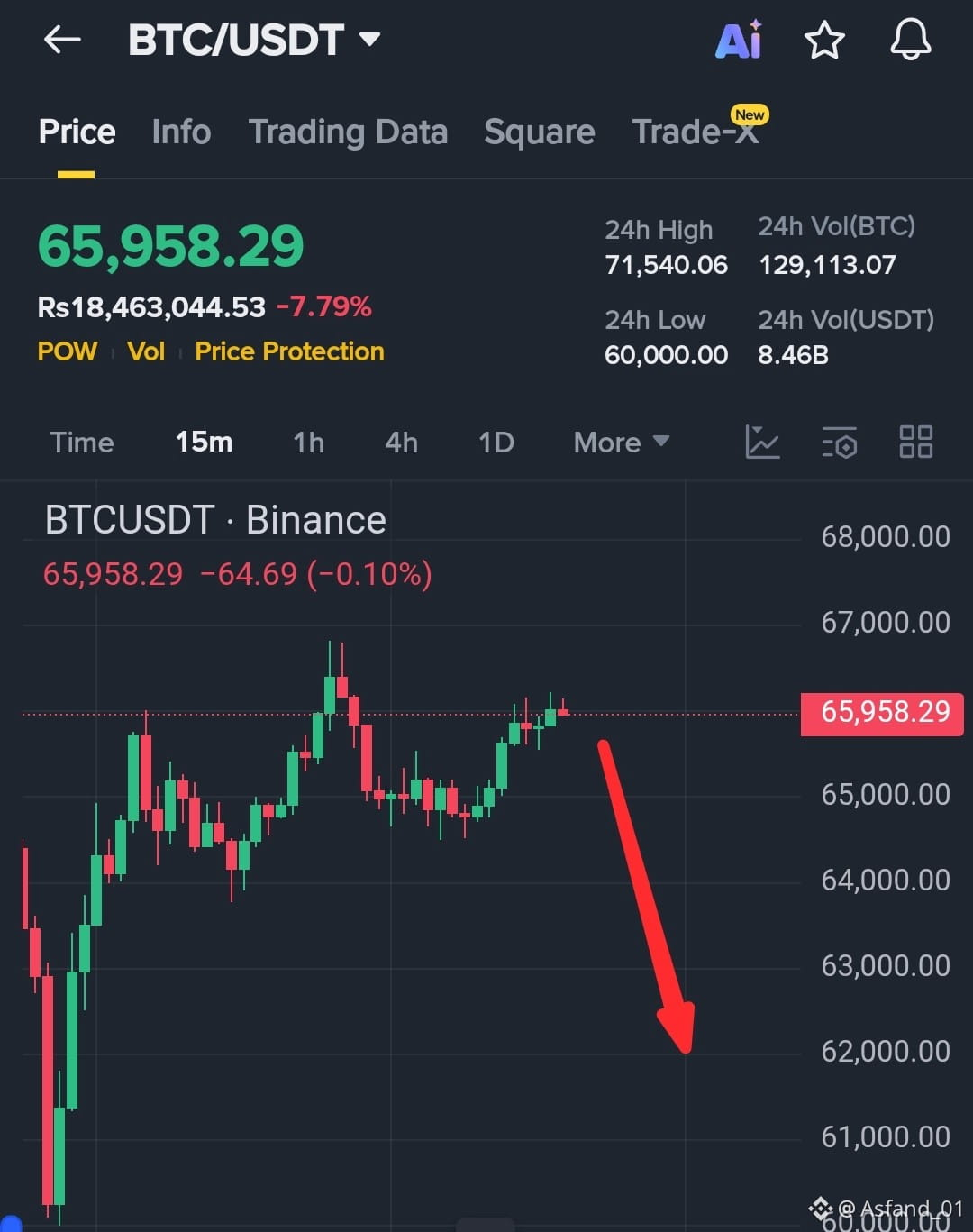
$BTC /USDT – SHORT
Timeframe: 15M
Setup: Resistance rejection / possible lower high formation
Entry: 65,800 – 66,100
Take Profit: 64,200
Take Profit 2: 62,200
Stop Loss: 67,000
{future}(BTCUSDT)
$BTC /USDT – SHORT
Timeframe: 15M
Setup: Resistance rejection / possible lower high formation
Entry: 65,800 – 66,100
Take Profit: 64,200
Take Profit 2: 62,200
Stop Loss: 67,000
Timeframe: 15M
Setup: Resistance rejection / possible lower high formation
Entry: 65,800 – 66,100
Take Profit: 64,200
Take Profit 2: 62,200
Stop Loss: 67,000
9
70
·
--
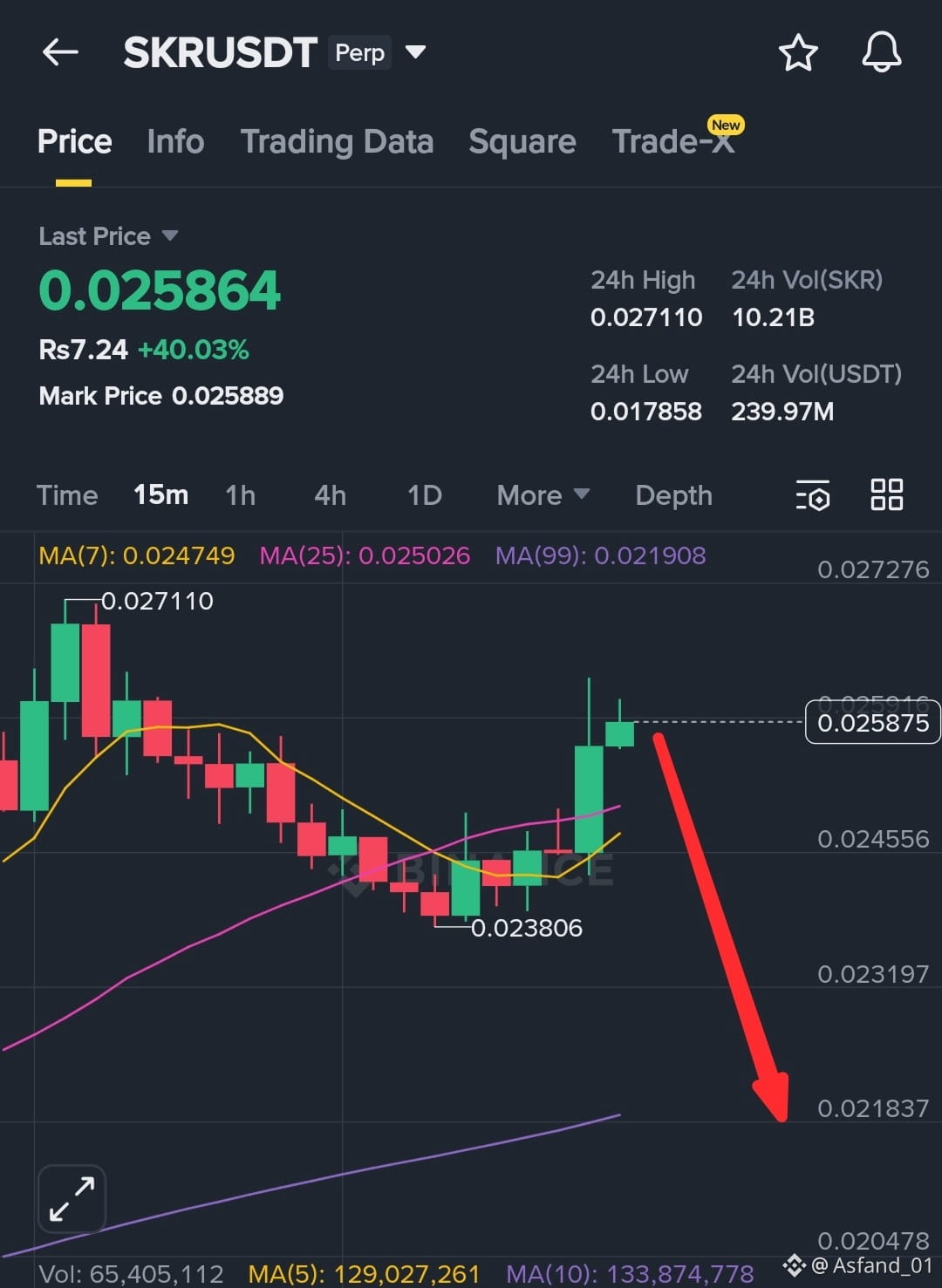
$SKR SHORT (Single Position)
Setup: Double Top → bearish reversal confirmed
Entry: Market price
Take Profit: 0.018169
Stop Loss: 0.028000
{future}(SKRUSDT)
$SKR SHORT (Single Position)
Setup: Double Top → bearish reversal confirmed
Entry: Market price
Take Profit: 0.018169
Stop Loss: 0.028000
Setup: Double Top → bearish reversal confirmed
Entry: Market price
Take Profit: 0.018169
Stop Loss: 0.028000
11
331
Log in to explore more content
Join global crypto users on Binance Square
⚡️ Get latest and useful information about crypto.
💬 Trusted by the world’s largest crypto exchange.
👍 Discover real insights from verified creators.
Email / Phone number
Trending Topics
USAugustPPIRisesLessThanExpected
16,624 views
430 Discussing
🚨 US AUG PPI: Rises LESS Than Expected! Bullish for Crypto? 🚀
PPI +0.4% MoM as expected, but CORE PPI only +0.2% vs +0.3% expected - cooling!
What it means:
• Wholesale inflation softer than feared
• Fed rate hike chance now 62% - but dovish signals coming
• Core PCE revisions expected downward - bullish
• BTC usually pumps on softer PPI
Fed meeting Sep 15-16 - Market now expects pause, not hike?
Is this the green light for Q4 rally?
#Bitcoin #PPI #Fed #CryptoNews #BTC#usaugustppiriseslessthanexpected
True News
·1 Likes
·1.2k views
SECApprovesNasdaqTexasCommodityTrustRule
12,452 views
379 Discussing
ECBRaisesRatesSecondTimeTo2.5%
8,858 views
269 Discussing