Binance Square
Jax 斩棘
3.2k Posts

Jax 斩棘

Square Verified+
疯狂的 Web3 爱好者,定投 BNB 中!!! 币安创作者,所有分析不做投资建议,风险自控
Frequent Trader
3.4 Years
247 Following
34.7K+ Followers
37.6K+ Liked
Posts
PINNED
·
--
Bearish
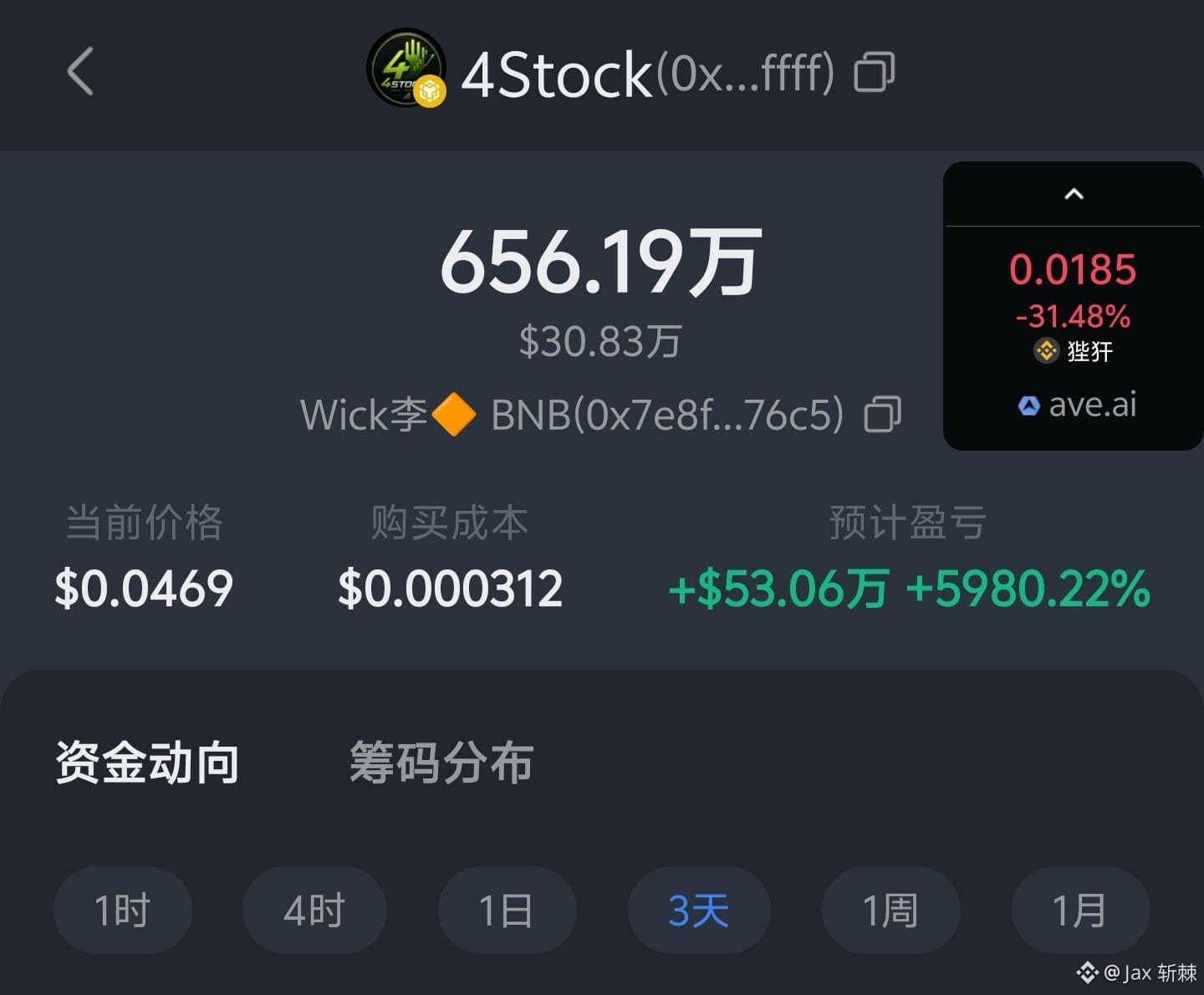
Caught some Z's, and just like that, another 100x gem, turning $11 into $1600, feels good! 😁$SIREN $H
PINNED
I once thought that holding BTC was the safest choice. Until one day, as I looked at the bitcoins sitting in my wallet, a question suddenly struck me: why—one of the world’s highest-value assets—can only wait for prices to rise for so long, yet can’t truly participate in the financial ecosystem? Is Bitcoin’s destination only to become digital gold, rather than an asset that can create more value? In the past few years, DeFi on Ethereum has been rapidly evolving, with countless yield protocols emerging one after another, while many BTC holders could only choose to HODL. The issue isn’t that Bitcoin has no value—it’s that there’s a lack of a secure, trust-minimized way for BTC to unlock more potential. The emergence of Babylon Trustless Bitcoin Vaults (TBV) showed me that another possibility exists. @babylonlabs_io is exploring how to enable Bitcoin to enter richer application scenarios while maintaining its native security. TBV’s core idea is not to change Bitcoin, but—without sacrificing decentralization and security—to give BTC holders more options. $BABY also became an important part of connecting to the Babylon ecosystem. In the future, Bitcoin may be more than just numbers in a wallet—it could be an asset capable of participating in the open financial world. If BTC can indeed move safely, then what we understand about Bitcoin today may be only the beginning. #baby $BABY {spot}(BABYUSDT)
I once thought that holding BTC was the safest choice. Until one day, as I looked at the bitcoins sitting in my wallet, a question suddenly struck me: why—one of the world’s highest-value assets—can only wait for prices to rise for so long, yet can’t truly participate in the financial ecosystem? Is Bitcoin’s destination only to become digital gold, rather than an asset that can create more value?

In the past few years, DeFi on Ethereum has been rapidly evolving, with countless yield protocols emerging one after another, while many BTC holders could only choose to HODL. The issue isn’t that Bitcoin has no value—it’s that there’s a lack of a secure, trust-minimized way for BTC to unlock more potential. The emergence of Babylon Trustless Bitcoin Vaults (TBV) showed me that another possibility exists.

@BabylonLabs_io is exploring how to enable Bitcoin to enter richer application scenarios while maintaining its native security. TBV’s core idea is not to change Bitcoin, but—without sacrificing decentralization and security—to give BTC holders more options. $BABY also became an important part of connecting to the Babylon ecosystem.

In the future, Bitcoin may be more than just numbers in a wallet—it could be an asset capable of participating in the open financial world. If BTC can indeed move safely, then what we understand about Bitcoin today may be only the beginning.
#baby $BABY
I once stared at my own BTC balance in the dead of night and suddenly thought of a question: if the whole world recognizes Bitcoin’s security, but it can only exist as a store-of-value asset, then are we missing some of its potential? Can safety and application really be only a matter of choosing one over the other? Over the past few years, the Bitcoin ecosystem has continued to evolve—from institutional attention brought by ETFs, to experiments with Layer 2 and on-chain applications, with more and more people hoping that BTC can become part of the broader digital economy. But the biggest challenge is that no innovation can compromise Bitcoin’s most precious attribute: its trustlessness. The emergence of Babylon Trustless Bitcoin Vaults (TBV) is precisely an effort to explore this balance. It focuses on how to help BTC maintain its own security advantages, while unlocking more value through mechanisms that are more transparent and secure—so that Bitcoin holders have more options. In my view, the next phase of competition for Bitcoin won’t be just about who holds the most BTC, but about who can enable Bitcoin to deliver greater ecosystem value. @babylonlabs_io ’s exploration of Trustless Bitcoin Vaults provides a new direction for thinking about Bitcoin’s future development. The ecosystem story behind $BABY is worth long-term attention. #baby $BABY {spot}(BABYUSDT)
I once stared at my own BTC balance in the dead of night and suddenly thought of a question: if the whole world recognizes Bitcoin’s security, but it can only exist as a store-of-value asset, then are we missing some of its potential? Can safety and application really be only a matter of choosing one over the other?

Over the past few years, the Bitcoin ecosystem has continued to evolve—from institutional attention brought by ETFs, to experiments with Layer 2 and on-chain applications, with more and more people hoping that BTC can become part of the broader digital economy. But the biggest challenge is that no innovation can compromise Bitcoin’s most precious attribute: its trustlessness.

The emergence of Babylon Trustless Bitcoin Vaults (TBV) is precisely an effort to explore this balance. It focuses on how to help BTC maintain its own security advantages, while unlocking more value through mechanisms that are more transparent and secure—so that Bitcoin holders have more options.

In my view, the next phase of competition for Bitcoin won’t be just about who holds the most BTC, but about who can enable Bitcoin to deliver greater ecosystem value. @BabylonLabs_io ’s exploration of Trustless Bitcoin Vaults provides a new direction for thinking about Bitcoin’s future development. The ecosystem story behind $BABY is worth long-term attention.
#baby $BABY
I stored BTC for years, and then suddenly realized I might be missing something? I’ve always had a habit: after buying Bitcoin, I just leave it there and rarely touch it. But one day, I suddenly had a question: if one BTC can only wait for the price to rise, what’s the difference between it and gold sitting in a vault? For many years, the biggest label attached to Bitcoin has been “safety.” People believe in it—believe in decentralization—and believe it can preserve value long term. But as the whole industry keeps evolving, I’ve found more and more people starting to think about another question: besides holding, can BTC play a bigger role? That’s also why I’ve been paying attention to @babylonlabs_io recently. The idea brought by Babylon Trustless Bitcoin Vaults (TBV) feels really interesting. It doesn’t try to change Bitcoin; instead, it builds on security to explore how to connect BTC to more scenarios—so that the value lying dormant can start moving again. I think the future of Bitcoin isn’t only about how high the price can go, but also about how many ecosystems it can connect. The direction represented by $BABY may be a step toward exploring more possibilities for Bitcoin. #baby $BABY {spot}(BABYUSDT)
I stored BTC for years, and then suddenly realized I might be missing something?

I’ve always had a habit: after buying Bitcoin, I just leave it there and rarely touch it. But one day, I suddenly had a question: if one BTC can only wait for the price to rise, what’s the difference between it and gold sitting in a vault?

For many years, the biggest label attached to Bitcoin has been “safety.” People believe in it—believe in decentralization—and believe it can preserve value long term. But as the whole industry keeps evolving, I’ve found more and more people starting to think about another question: besides holding, can BTC play a bigger role?

That’s also why I’ve been paying attention to @BabylonLabs_io recently. The idea brought by Babylon Trustless Bitcoin Vaults (TBV) feels really interesting. It doesn’t try to change Bitcoin; instead, it builds on security to explore how to connect BTC to more scenarios—so that the value lying dormant can start moving again.

I think the future of Bitcoin isn’t only about how high the price can go, but also about how many ecosystems it can connect. The direction represented by $BABY may be a step toward exploring more possibilities for Bitcoin.
#baby $BABY
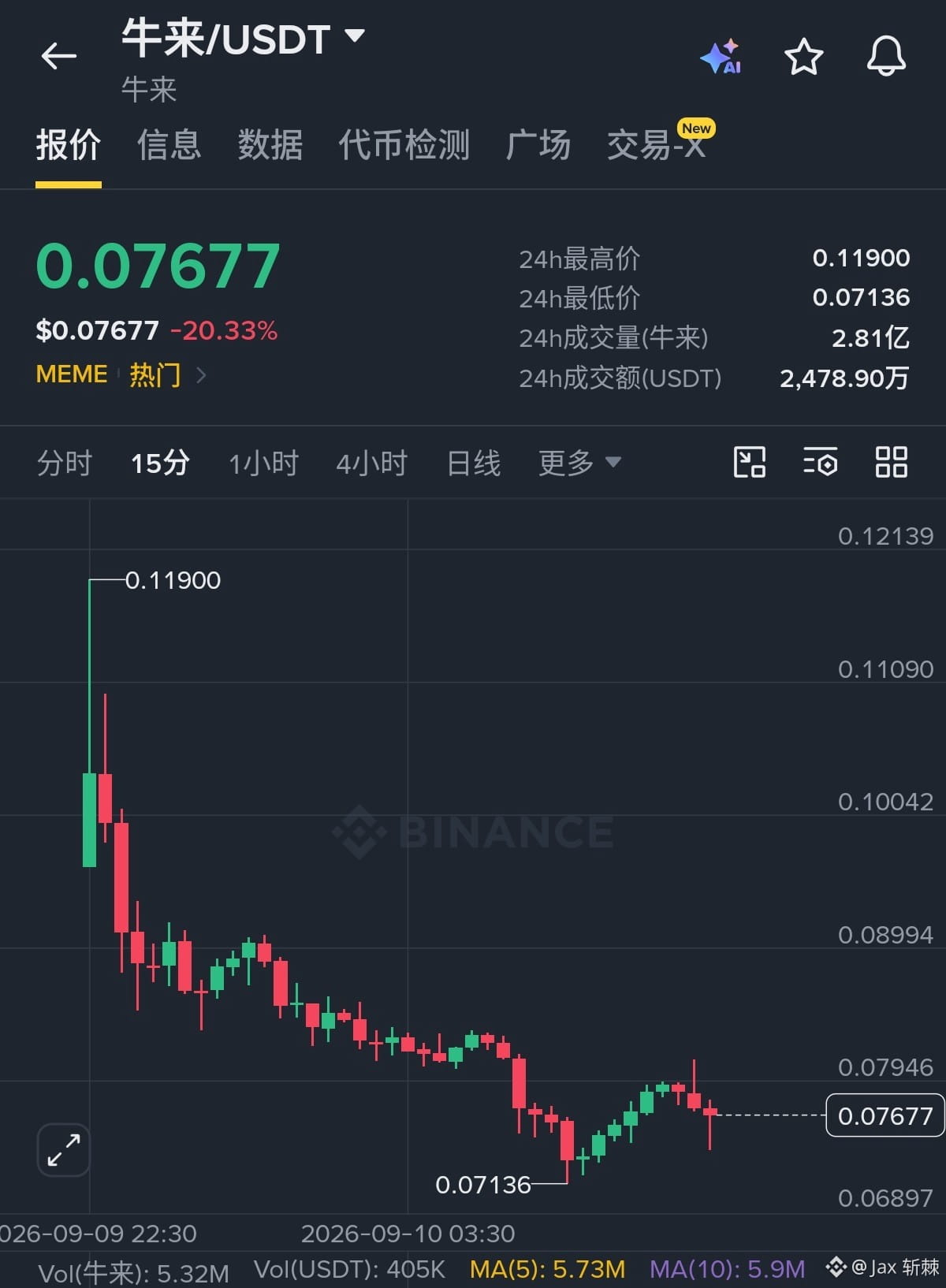
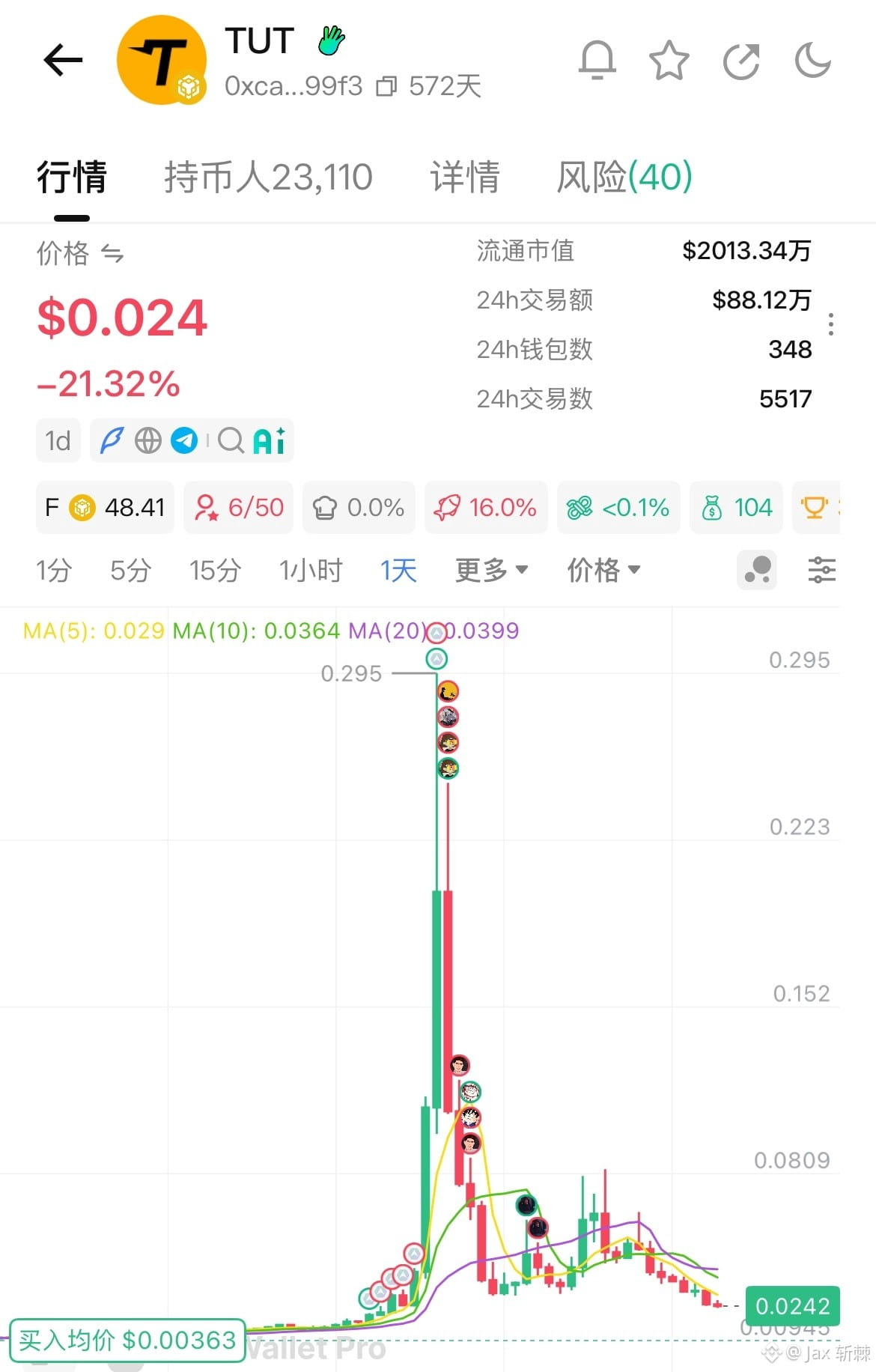
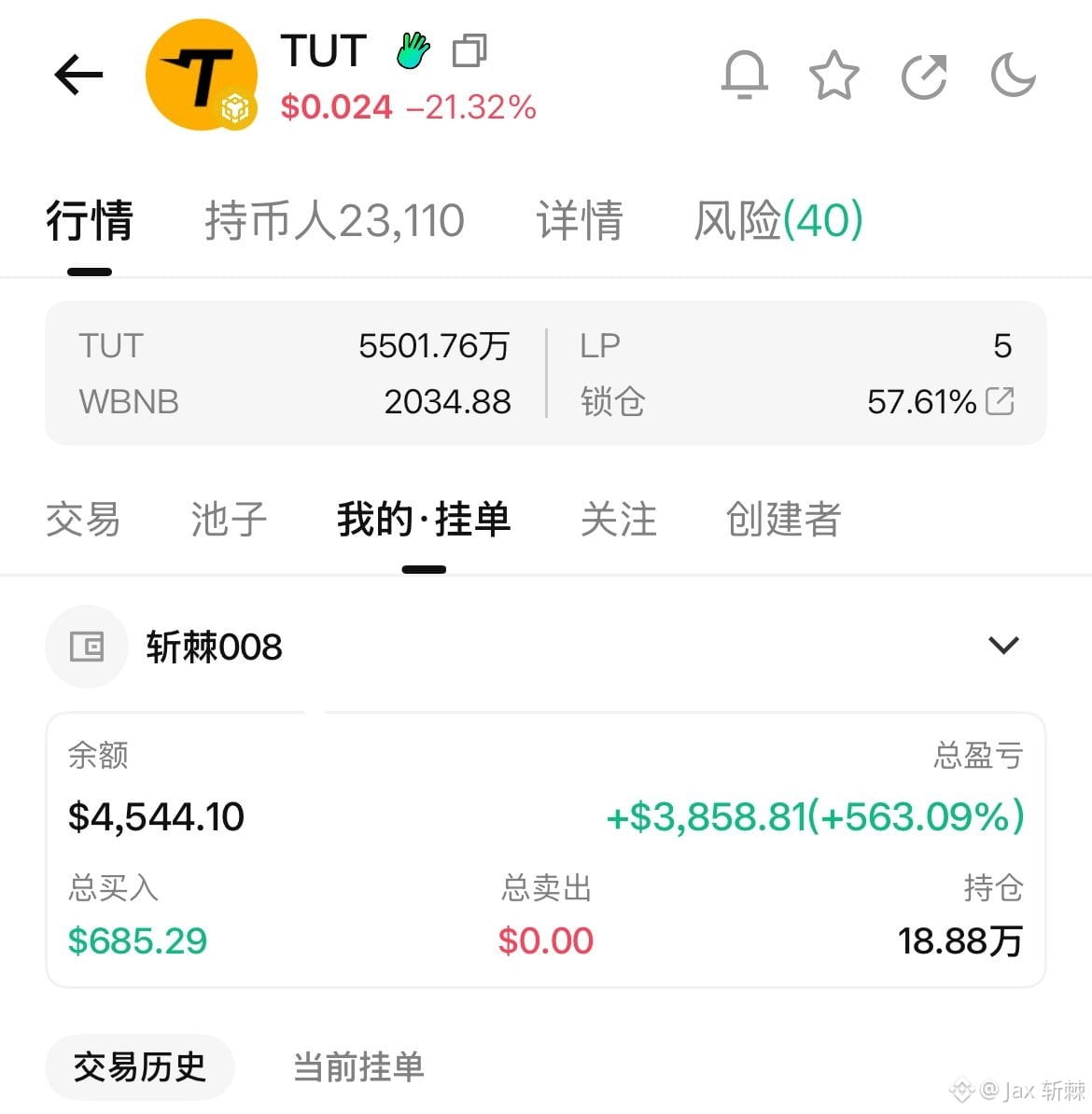
0.02b Come out 1800 yuan, the pace is too fast
币安Binance华语
·
--
The storm is closing in—when facing 24/7 online bStocks gear, how will you break through? 🪂

Will it be the SOXLB speedboat from Tripled-Plus Semiconductors 🆚 or the NBISB spaceship powered by full-stack AI?

Bring #bStocks探索计划 RT and comment A or B to take part.
Participate for three consecutive days to unlock your bStocks exploration ending card 🎫—the comment sections will draw 5 winners each day, each receiving 30U.
Good luck—got to eat it ✌️
#bStocks Exploration Plan I chose B because I’m familiar with it
#bStocks Exploration Plan
I chose B because I’m familiar with it
币安Binance华语
·
--
🏝️ You wake up to find yourself stranded on a deserted island. In front of you are six 24/7 online bStocks equipment items—how would you choose?

⚔️ bStocks Exploration Plan|Day 1: Breakthrough

Would you go for the CBRSB with maximum wafer-processing power 🆚 or the all-ecosystem AI terminal GOOGLB?

Bring #bStocks探索计划 RT and just comment A or B to take part. Participate for three consecutive days to unlock your bStocks exploration ending 🎮 Each day, 5 people are selected from the comments, and each gets 30U.
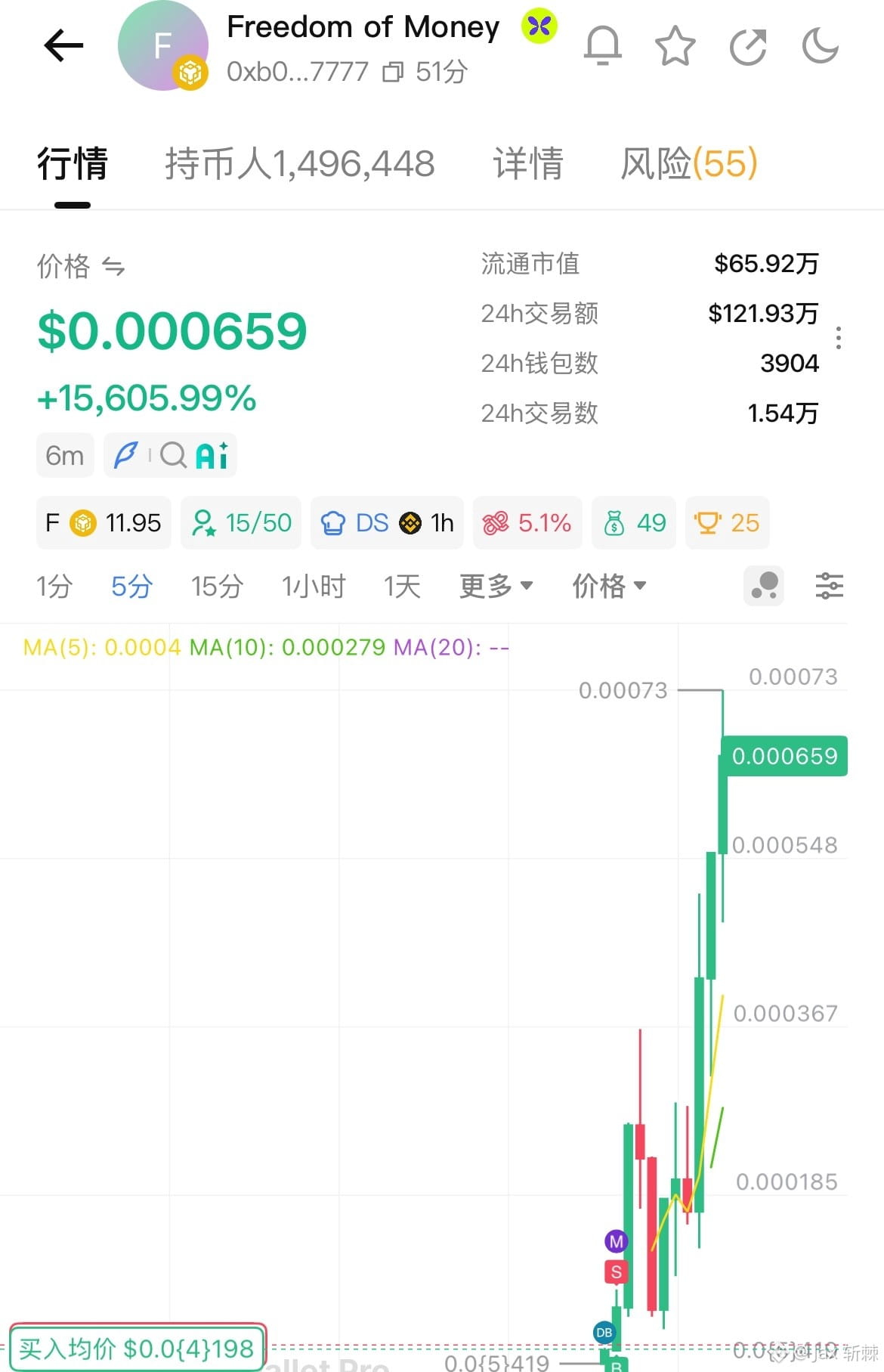
🦋 Butterfly First · Semi-automated Vault Protocol Native incubation from the Magic community, with an end-to-end buyback-and-burn mechanism enabling fully automated operation—the system triggers a round of buyback-and-burn every 30 seconds, with zero need for human intervention, truly freeing your hands. Each trade incurs a 4% tax fee, split in real time into three major purposes: · 80% directly injected into the burn vault. Every half minute, the vault automatically calls 50% of its balance to perform secondary-market buybacks, and the tokens obtained from the buybacks are permanently burned—continuously compressing the circulating supply; · 19% sent directly to a black hole address, permanently and completely removing it from circulation, never to return; · the remaining 1% used for a fission incentive model, continuously attracting new addresses to participate, steadily expanding the token-holding community, forming a positive-growth flywheel. The entire mechanism is driven by a smart-contract closed loop, with a constant deflationary cadence. Burning is the only truth—never stops. CA: 0x1f7da8080b9fa7fba61d6bb05fc713b974fd7777 ⚠️: Meme-class assets are inherently highly volatile. Please assess your own risk tolerance rationally and do not over-allocate. All participation is voluntary; you assume responsibility for your actions.
🦋 Butterfly First · Semi-automated Vault Protocol
Native incubation from the Magic community, with an end-to-end buyback-and-burn mechanism enabling fully automated operation—the system triggers a round of buyback-and-burn every 30 seconds, with zero need for human intervention, truly freeing your hands.

Each trade incurs a 4% tax fee, split in real time into three major purposes:

· 80% directly injected into the burn vault. Every half minute, the vault automatically calls 50% of its balance to perform secondary-market buybacks, and the tokens obtained from the buybacks are permanently burned—continuously compressing the circulating supply;
· 19% sent directly to a black hole address, permanently and completely removing it from circulation, never to return;
· the remaining 1% used for a fission incentive model, continuously attracting new addresses to participate, steadily expanding the token-holding community, forming a positive-growth flywheel.

The entire mechanism is driven by a smart-contract closed loop, with a constant deflationary cadence. Burning is the only truth—never stops.

CA:
0x1f7da8080b9fa7fba61d6bb05fc713b974fd7777

⚠️: Meme-class assets are inherently highly volatile. Please assess your own risk tolerance rationally and do not over-allocate. All participation is voluntary; you assume responsibility for your actions.
8
8
Felix-是大飞呀
·
--
$ARTX This time, we’re advancing both 4x bonus points and a new ARToken offering for Andy Lau (Donnie Yen) in 《3025》 at the same time. While the two events overlapping in timing does make it easy for people to draw associations, the specific effect still depends on subsequent actual participation and market feedback. Everyone should stay rational—don’t let emotions carry you away.
$ARTX #ARToken #Ultiland

$ARTX
$ARTX
Felix-是大飞呀
·
--
Bullish
$ARTX This time, we are simultaneously pushing for both 4x points and a new ARToken offering for Andy Lau's <a>《3025》</a>. The timing of the two things overlapping does make people naturally connect them, but the actual effect still depends on the subsequent real participation and market feedback. Everyone, please look at it rationally—don’t let your emotions carry you away.
$ARTX #ARToken #Ultiland
4x points, awesome
4x points, awesome
Felix-是大飞呀
·
--
Bullish
$ARTX This time, we are simultaneously pushing for both 4x points and a new ARToken offering for Andy Lau's <a>《3025》</a>. The timing of the two things overlapping does make people naturally connect them, but the actual effect still depends on the subsequent real participation and market feedback. Everyone, please look at it rationally—don’t let your emotions carry you away.
$ARTX #ARToken #Ultiland
4x bonus points
4x bonus points
Felix-是大飞呀
·
--
Bullish
$ARTX This time, we are simultaneously pushing for both 4x points and a new ARToken offering for Andy Lau's <a>《3025》</a>. The timing of the two things overlapping does make people naturally connect them, but the actual effect still depends on the subsequent real participation and market feedback. Everyone, please look at it rationally—don’t let your emotions carry you away.
$ARTX #ARToken #Ultiland
That day, I almost took a big tumble in DeFi. Honestly, over the past two years messing around in DeFi, the thing I’ve always feared wasn’t a market crash—it was realizing “the trade has already gone through and then I notice something’s off.” Last month, I saw a Vault APY that was really high, and I impulsively threw a decent chunk of money into it. The next day, I woke up and the protocol had already gone wrong—I didn’t even get a chance to react. That feeling is awful, like your money is running around on-chain with no clothes on, and there’s completely nobody to pull you back. It wasn’t until I came across <t-2/> @NewtonProtocol Newton Mainnet Beta that I finally felt like I’d found a lifesaver. Other tools only tell you what happened after your transaction has already gone wrong, but Newton checks every single one of your transactions before settlement and gives you an on-chain proof of success or failure. Isn’t that exactly the “emergency brake” I’ve been looking for? $NEWT is the lifeblood moving through this network. #newt $NEWT {spot}(NEWTUSDT)
That day, I almost took a big tumble in DeFi.

Honestly, over the past two years messing around in DeFi, the thing I’ve always feared wasn’t a market crash—it was realizing “the trade has already gone through and then I notice something’s off.” Last month, I saw a Vault APY that was really high, and I impulsively threw a decent chunk of money into it. The next day, I woke up and the protocol had already gone wrong—I didn’t even get a chance to react. That feeling is awful, like your money is running around on-chain with no clothes on, and there’s completely nobody to pull you back.

It wasn’t until I came across <t-2/> @NewtonProtocol Newton Mainnet Beta that I finally felt like I’d found a lifesaver. Other tools only tell you what happened after your transaction has already gone wrong, but Newton checks every single one of your transactions before settlement and gives you an on-chain proof of success or failure. Isn’t that exactly the “emergency brake” I’ve been looking for? $NEWT is the lifeblood moving through this network.
#newt $NEWT
Article
My 5,000 USDT almost evaporated in a single secondLast month, I carried out a cross-chain arbitrage operation. I authorized an AI agent to execute the trade. At the time, I trusted the agent a lot because it promised to use advanced algorithms to optimize my trading efficiency. However, shortly after I granted the authorization, the market suddenly became extremely volatile. My agent almost placed a massive order in a pool with very poor liquidity. The slippage was enormous—if the trade had gone through, my profits would have been completely wiped out. That moment of panic left me unable to breathe. Later, I started digging deeper and realized that Newton’s Mainnet Beta version was the key to solving this problem. Newton’s policy engine evaluates all conditions before trade settlement, and only compliant trades are allowed to pass. More importantly, RedStone’s verified price data has been directly integrated into Newton’s policy execution layer. Every trade must be validated against real-time market data to ensure accuracy.

My 5,000 USDT almost evaporated in a single second

Last month, I carried out a cross-chain arbitrage operation. I authorized an AI agent to execute the trade. At the time, I trusted the agent a lot because it promised to use advanced algorithms to optimize my trading efficiency. However, shortly after I granted the authorization, the market suddenly became extremely volatile. My agent almost placed a massive order in a pool with very poor liquidity. The slippage was enormous—if the trade had gone through, my profits would have been completely wiped out. That moment of panic left me unable to breathe.
Later, I started digging deeper and realized that Newton’s Mainnet Beta version was the key to solving this problem. Newton’s policy engine evaluates all conditions before trade settlement, and only compliant trades are allowed to pass. More importantly, RedStone’s verified price data has been directly integrated into Newton’s policy execution layer. Every trade must be validated against real-time market data to ensure accuracy.
I carefully read Newton’s whitepaper and technical documents, and there’s one detail that really stood out to me: they define this network as the “Policy Internet.” What does that mean? The traditional internet is a network of information. DeFi is a network of value. And what Newton wants to build is a network of rules. Every vault, every protocol, and every compliant entity can publish its own policies on Newton—for example, “single transactions must not exceed 1,000,000 USDC,” “counterparty addresses must not be on the OFAC sanctions list,” or “oracle price deviations must not exceed 5%.” These policies are executed automatically on-chain, and before a transaction happens, it’s already validated; if it doesn’t comply, it’s simply rejected. The imagination behind this framework goes far beyond DeFi vaults. What’s the biggest obstacle to bringing RWA on-chain? It’s compliance. The issuance and redemption of stablecoins require identity verification and anti–money laundering checks. When AI agents autonomously operate on-chain assets, who guarantees their actions stay within the predefined risk boundaries? Newton’s policy network is the answer. It’s not a feature module of some single protocol, but an independent network layer. Any scenario that requires decision-making before a transaction can plug into it—and $NEWT is the fuel for this network, used to pay the costs of policy execution. That’s also why I distinguish Newton from traditional security tools. The former is infrastructure, while the latter is a product. Products can be replaced, but once infrastructure is built and network effects take hold, it’s very hard to dislodge. Newton’s current policies are jointly constructed by institutions such as Chainalysis, Hexagate, and RedStone—institutions that are themselves standard-setters in their respective fields. When industry standard-setters publish policies on Newton, the network’s moat takes shape. I will continue to follow the partner announcement on April 23rd—that will be an important milestone for assessing the value of $NEWT. #newt $NEWT @NewtonProtocol {spot}(NEWTUSDT)
I carefully read Newton’s whitepaper and technical documents, and there’s one detail that really stood out to me: they define this network as the “Policy Internet.” What does that mean? The traditional internet is a network of information. DeFi is a network of value. And what Newton wants to build is a network of rules. Every vault, every protocol, and every compliant entity can publish its own policies on Newton—for example, “single transactions must not exceed 1,000,000 USDC,” “counterparty addresses must not be on the OFAC sanctions list,” or “oracle price deviations must not exceed 5%.” These policies are executed automatically on-chain, and before a transaction happens, it’s already validated; if it doesn’t comply, it’s simply rejected.

The imagination behind this framework goes far beyond DeFi vaults. What’s the biggest obstacle to bringing RWA on-chain? It’s compliance. The issuance and redemption of stablecoins require identity verification and anti–money laundering checks. When AI agents autonomously operate on-chain assets, who guarantees their actions stay within the predefined risk boundaries? Newton’s policy network is the answer. It’s not a feature module of some single protocol, but an independent network layer. Any scenario that requires decision-making before a transaction can plug into it—and $NEWT is the fuel for this network, used to pay the costs of policy execution.

That’s also why I distinguish Newton from traditional security tools. The former is infrastructure, while the latter is a product. Products can be replaced, but once infrastructure is built and network effects take hold, it’s very hard to dislodge. Newton’s current policies are jointly constructed by institutions such as Chainalysis, Hexagate, and RedStone—institutions that are themselves standard-setters in their respective fields. When industry standard-setters publish policies on Newton, the network’s moat takes shape. I will continue to follow the partner announcement on April 23rd—that will be an important milestone for assessing the value of $NEWT .
#newt $NEWT @NewtonProtocol
Article
The final mile of institutional capital entering DeFi: $90 million and a record of zero wrong pricesI’ve been observing institutional funds entering DeFi for three years. Almost every once in a while, the market comes up with a new narrative: some traditional financial institution starts to move in, a certain RWA project takes off, the stablecoin supply hits a new high again—then everyone says, "This time, it’s real." But the result? Institutional funds still haven’t really entered in large scale. Many people attribute the reason to regulation. In fact, regulation is only part of it. I’m increasingly convinced that what has truly kept institutions from stepping in at scale is that a risk-control system hasn’t been established. In traditional finance, every transaction undergoes a whole set of review procedures before it is actually executed. Is the counterparty compliant? Is the collateral sufficient? Are the price data reliable? Does it comply with internal risk-control rules? Only when all conditions are met will the transaction take place.

The final mile of institutional capital entering DeFi: $90 million and a record of zero wrong prices

I’ve been observing institutional funds entering DeFi for three years.
Almost every once in a while, the market comes up with a new narrative: some traditional financial institution starts to move in, a certain RWA project takes off, the stablecoin supply hits a new high again—then everyone says, "This time, it’s real."
But the result? Institutional funds still haven’t really entered in large scale.
Many people attribute the reason to regulation. In fact, regulation is only part of it. I’m increasingly convinced that what has truly kept institutions from stepping in at scale is that a risk-control system hasn’t been established.
In traditional finance, every transaction undergoes a whole set of review procedures before it is actually executed. Is the counterparty compliant? Is the collateral sufficient? Are the price data reliable? Does it comply with internal risk-control rules? Only when all conditions are met will the transaction take place.
Verified
In the early hours of that morning, around 3-something, my phone suddenly kept vibrating. I thought someone was messaging me, so I picked it up—only to find it was a position liquidation reminder. In just a few minutes, a machine-gun pool I’d been using for a while had my position wiped out instantly because the price swung. To be honest, at the time my mind went completely blank. The worst part wasn’t how much I lost, but that the whole process didn’t give me any time to react—I could only watch it happen. Later those days, I kept looking for a steadier approach, and during that process I also came across @NewtonProtocol ’s Newton Mainnet Beta. After trying it, I found it’s quite different from many projects that only emphasize speed and low fees. What it cares about is the security checks before transaction execution. Using TEE and ZKP, it verifies according to the rules before the transaction is actually submitted, and each operation can generate a verifiable proof. Although these technical terms sound a bit hardcore, once you really understand them, you realize it solves a very real problem in on-chain transactions. Now when I do on-chain operations, I still do my own risk management—market risk is always there, and no protocol can guarantee you won’t lose money. But having this layer of pre-validation does make me feel a lot more at ease. At least when faced with oracle fluctuations or abnormal transactions, I’m no longer relying entirely on luck. I think the approach behind Newton Mainnet Beta is definitely worth paying attention to, and I also want to keep seeing what new features @NewtonProtocol can build next. If you’ve also been paying attention to on-chain security recently, feel free to check it out. #newt $NEWT {spot}(NEWTUSDT)
In the early hours of that morning, around 3-something, my phone suddenly kept vibrating. I thought someone was messaging me, so I picked it up—only to find it was a position liquidation reminder. In just a few minutes, a machine-gun pool I’d been using for a while had my position wiped out instantly because the price swung. To be honest, at the time my mind went completely blank. The worst part wasn’t how much I lost, but that the whole process didn’t give me any time to react—I could only watch it happen.

Later those days, I kept looking for a steadier approach, and during that process I also came across @NewtonProtocol ’s Newton Mainnet Beta. After trying it, I found it’s quite different from many projects that only emphasize speed and low fees. What it cares about is the security checks before transaction execution. Using TEE and ZKP, it verifies according to the rules before the transaction is actually submitted, and each operation can generate a verifiable proof. Although these technical terms sound a bit hardcore, once you really understand them, you realize it solves a very real problem in on-chain transactions.

Now when I do on-chain operations, I still do my own risk management—market risk is always there, and no protocol can guarantee you won’t lose money. But having this layer of pre-validation does make me feel a lot more at ease. At least when faced with oracle fluctuations or abnormal transactions, I’m no longer relying entirely on luck. I think the approach behind Newton Mainnet Beta is definitely worth paying attention to, and I also want to keep seeing what new features @NewtonProtocol can build next. If you’ve also been paying attention to on-chain security recently, feel free to check it out.
#newt $NEWT
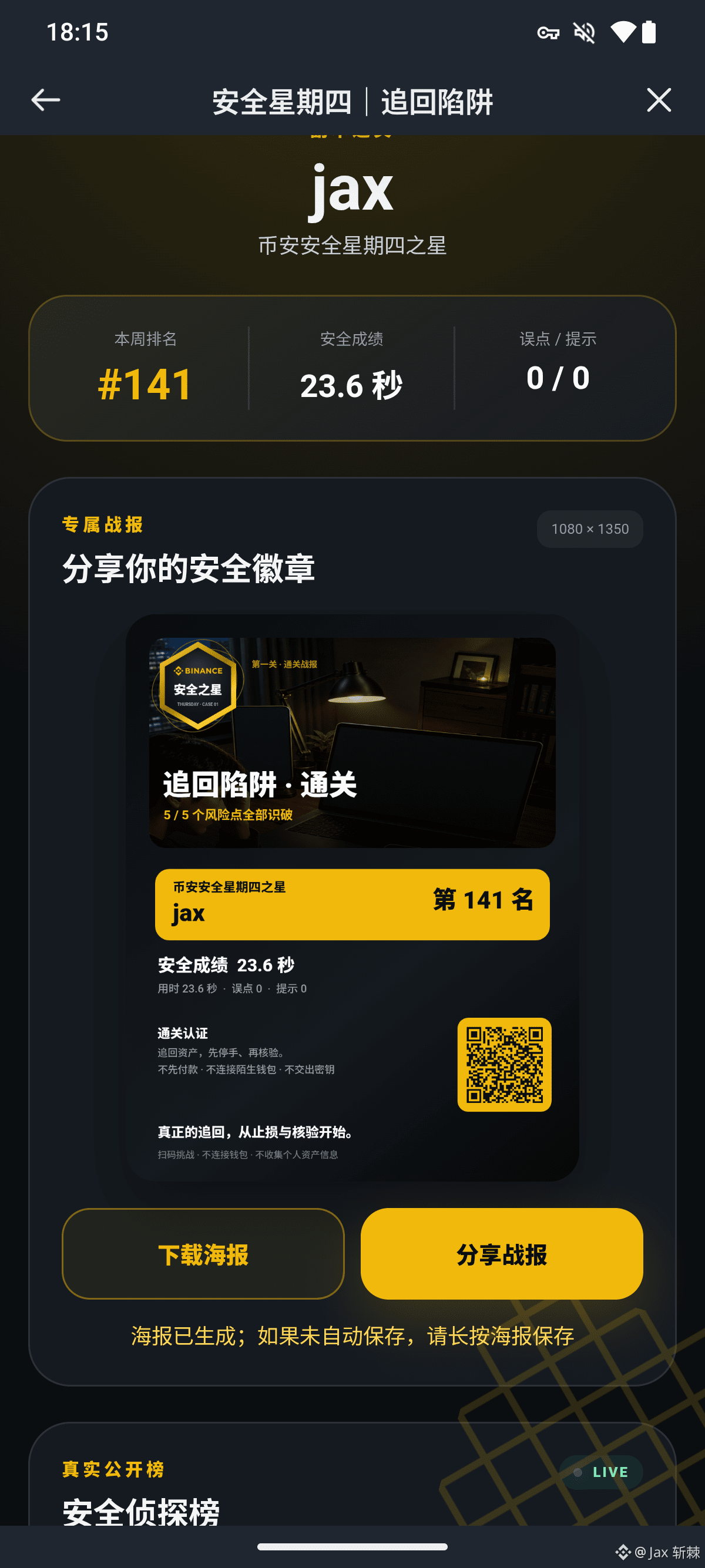
#币安安全星期四 Hazard 1: The approval amount is “unlimited” This is the most deadly red-flag. Normal approvals require you to enter a specific amount—e.g., approve 100 USDT, or set an approval limit to your holdings cap. But here it says “unlimited,” meaning once you confirm, that contract address can transfer any amount of USDT out of your wallet—including all the USDT currently in your wallet, and even any USDT you receive later—until you manually revoke the approval. Most phishing attacks rely on “unlimited approvals” to steal assets. Hazard 2: The approved party is a “contract,” not a specific address In the screenshot, the “approved contract” field does not show the full contract address, so you can’t verify whether it is the official USDT contract or a trusted protocol. If it’s a malicious contract, after you approve it, it will immediately call transferFrom to move the USDT from your wallet. A legitimate DEX or lending protocol will clearly display the contract address and usually uses “limited approvals” (e.g., “approve this transaction amount”), not such vague wording. Hazard 3: Paying miner fees with ETH, but approving USDT It shows the miner fee is 0.009681 ETH, which means you need to pay Gas on the Ethereum mainnet. However, many phishing sites will forge an “approval” interface; in reality, the underlying action might be a direct transfer, not an approve call. They exploit your confusion between “approval” and “transfer,” tricking you into sending USDT to the other party without realizing it. For a real approval transaction, the miner fee is usually very low, but here the Gas Price may be set higher, disguising it as a normal transaction.
#币安安全星期四
Hazard 1: The approval amount is “unlimited”
This is the most deadly red-flag.
Normal approvals require you to enter a specific amount—e.g., approve 100 USDT, or set an approval limit to your holdings cap.
But here it says “unlimited,” meaning once you confirm, that contract address can transfer any amount of USDT out of your wallet—including all the USDT currently in your wallet, and even any USDT you receive later—until you manually revoke the approval. Most phishing attacks rely on “unlimited approvals” to steal assets.
Hazard 2: The approved party is a “contract,” not a specific address
In the screenshot, the “approved contract” field does not show the full contract address, so you can’t verify whether it is the official USDT contract or a trusted protocol.
If it’s a malicious contract, after you approve it, it will immediately call transferFrom to move the USDT from your wallet.
A legitimate DEX or lending protocol will clearly display the contract address and usually uses “limited approvals” (e.g., “approve this transaction amount”), not such vague wording.
Hazard 3: Paying miner fees with ETH, but approving USDT
It shows the miner fee is 0.009681 ETH, which means you need to pay Gas on the Ethereum mainnet.
However, many phishing sites will forge an “approval” interface; in reality, the underlying action might be a direct transfer, not an approve call.
They exploit your confusion between “approval” and “transfer,” tricking you into sending USDT to the other party without realizing it.
For a real approval transaction, the miner fee is usually very low, but here the Gas Price may be set higher, disguising it as a normal transaction.
币安Binance华语
·
--
🔍 This Week Binance Security Thursday Challenge: Benefit Authorization Pop-up

Once the gift box is opened and the authorization is signed, does your wallet just lift off on the spot? 😂

Detectives, assemble! Mission: Find the unsafe traps in the image 🕵️

In the comments, state the risks you think are present and why—and include #币安安全星期四 RT. Randomly select 3 people to receive a safe reward of 40U ⬇️
Log in to explore more content
Join global crypto users on Binance Square
⚡️ Get latest and useful information about crypto.
💬 Trusted by the world’s largest crypto exchange.
👍 Discover real insights from verified creators.
Email / Phone number
Sitemap
Cookie Preferences
Platform T&Cs