
BlockBreaker
8.4k Posts

BlockBreaker
 Square Verified
Report
Block User
Crypto Analyst 🧠 | Binance charts📊 | Tracking Market Moves Daily
Open Trade

BNB Holder
High-Frequency Trader
1.9 Years
71 Following
47.9K+ Followers
26.1K+ Liked
Posts
Portfolio
All
Live
·
--
Bitcoin is going to $200,000.
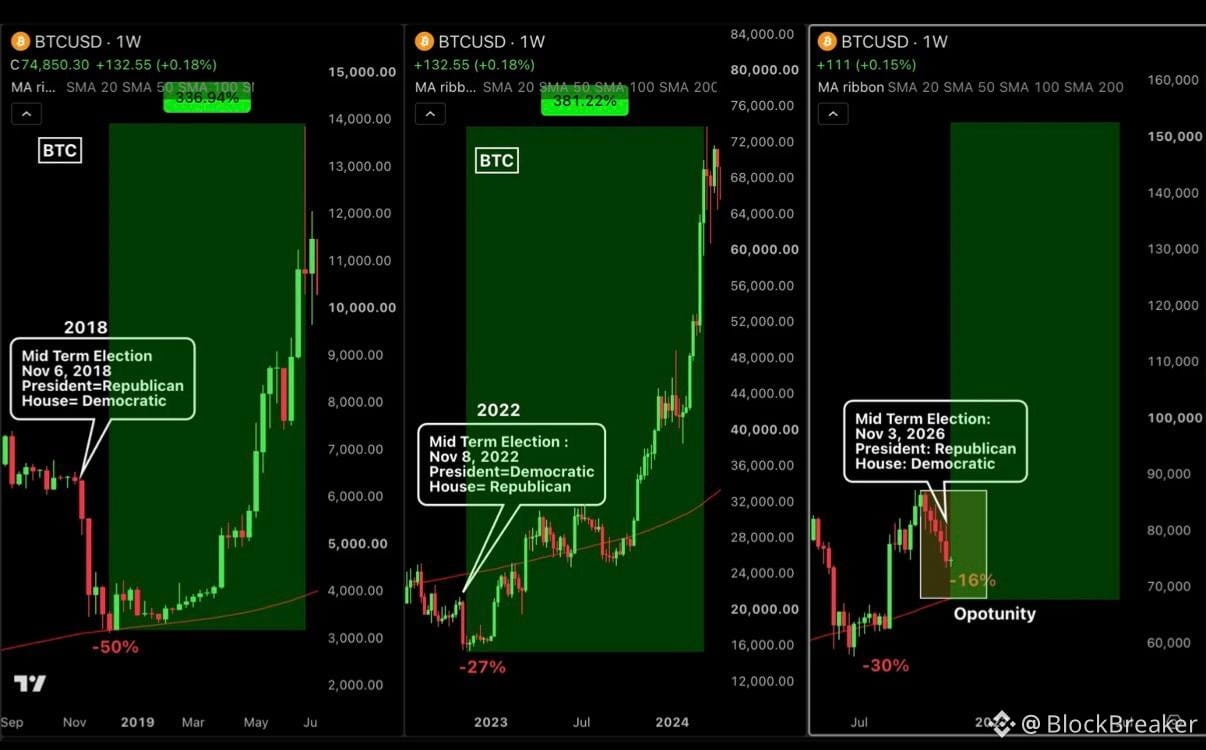
Data says November midterm election panic is the best opportunity to buy BTC before the next parabolic move.
In 2018, it did not matter if you bought Bitcoin at $6,000 or $3,200. It hit $69,000 in the next three years.
In 2022, it did not make much difference if you bought at $21,000 or $16,000. It hit $126,000 in the next three years.
The same idea applies in 2026. Buying BTC at $75,000 or $65,000 will not make a difference when it hits $200,000.
$BTC
Bitcoin is going to $200,000.
Data says November midterm election panic is the best opportunity to buy BTC before the next parabolic move.
In 2018, it did not matter if you bought Bitcoin at $6,000 or $3,200. It hit $69,000 in the next three years.
In 2022, it did not make much difference if you bought at $21,000 or $16,000. It hit $126,000 in the next three years.
The same idea applies in 2026. Buying BTC at $75,000 or $65,000 will not make a difference when it hits $200,000.
$BTC
Data says November midterm election panic is the best opportunity to buy BTC before the next parabolic move.
In 2018, it did not matter if you bought Bitcoin at $6,000 or $3,200. It hit $69,000 in the next three years.
In 2022, it did not make much difference if you bought at $21,000 or $16,000. It hit $126,000 in the next three years.
The same idea applies in 2026. Buying BTC at $75,000 or $65,000 will not make a difference when it hits $200,000.
$BTC
126
·
--
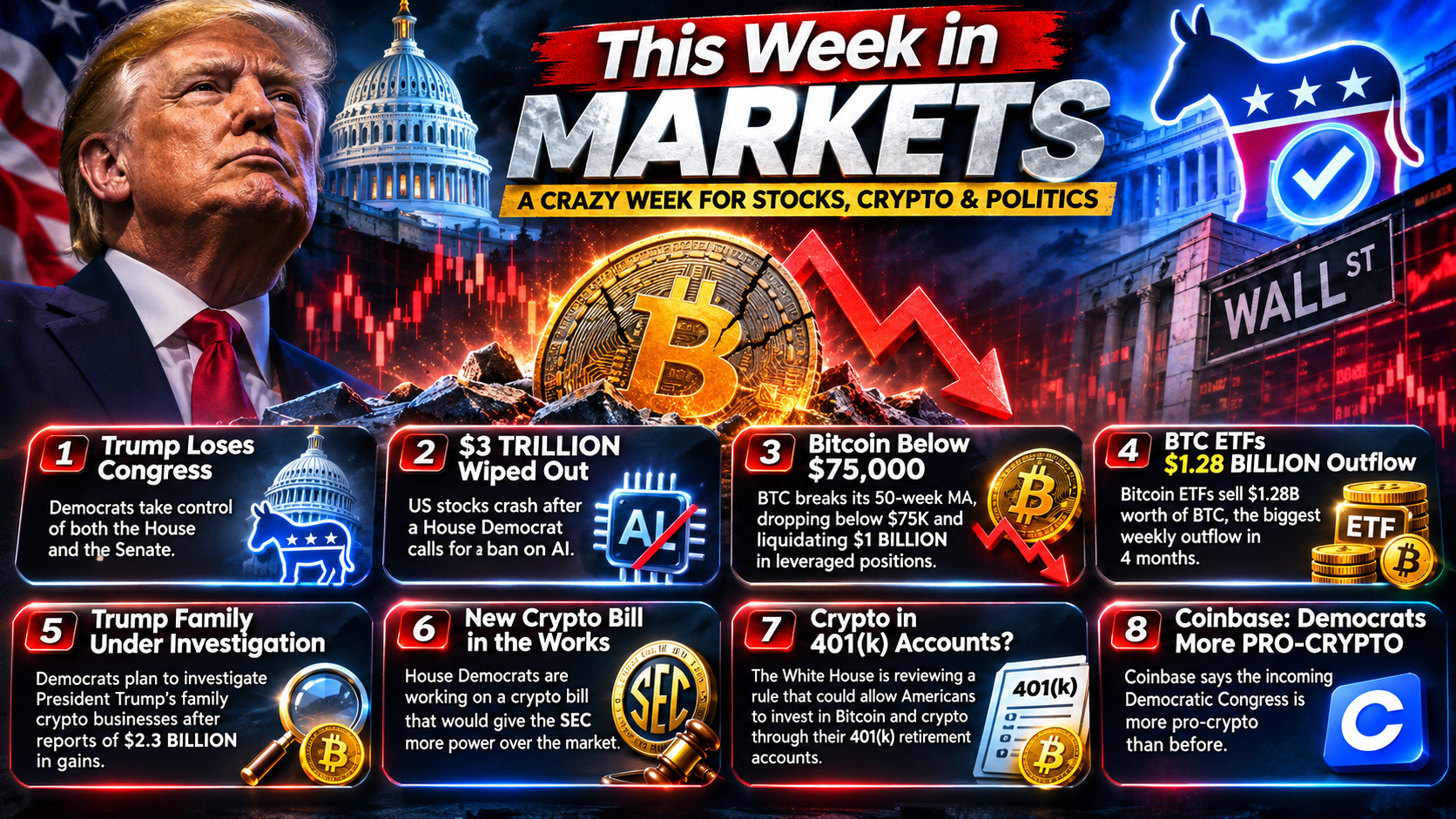
This was one of the craziest weeks we've seen in the markets this year.
US stocks suffered a massive sell-off, Bitcoin lost key support, and Democrats took control of Congress.
Here's everything that happened this week.
1. President Trump lost Congress as Democrats won control of both the House and the Senate.
2. $3 TRILLION was wiped out from US stocks after a House Democrat called for a ban on AI. Markets suffered their worst crash since the 2025 tariff shock.
3. Bitcoin broke below its 50-week moving average and dropped below $75,000 for the first time in nearly 2 months, liquidating $1 BILLION in leveraged positions.
4. Bitcoin ETFs sold $1.28 BILLION worth of BTC, the biggest weekly outflow in 4 months.
5. Democrats are reportedly planning to investigate President Trump's family's crypto businesses after reports claimed they made $2.3 BILLION.
6. House Democrats are reportedly working on a crypto bill that would give the SEC more power over the market.
7. The White House is reviewing a rule that could allow Americans to invest in Bitcoin and crypto through their 401(k) retirement accounts.
8. Coinbase says the incoming Democratic Congress is more PRO-CRYPTO than before.
$BTC $ZEC
This was one of the craziest weeks we've seen in the markets this year.
US stocks suffered a massive sell-off, Bitcoin lost key support, and Democrats took control of Congress.
Here's everything that happened this week.
1. President Trump lost Congress as Democrats won control of both the House and the Senate.
2. $3 TRILLION was wiped out from US stocks after a House Democrat called for a ban on AI. Markets suffered their worst crash since the 2025 tariff shock.
3. Bitcoin broke below its 50-week moving average and dropped below $75,000 for the first time in nearly 2 months, liquidating $1 BILLION in leveraged positions.
4. Bitcoin ETFs sold $1.28 BILLION worth of BTC, the biggest weekly outflow in 4 months.
5. Democrats are reportedly planning to investigate President Trump's family's crypto businesses after reports claimed they made $2.3 BILLION.
6. House Democrats are reportedly working on a crypto bill that would give the SEC more power over the market.
7. The White House is reviewing a rule that could allow Americans to invest in Bitcoin and crypto through their 401(k) retirement accounts.
8. Coinbase says the incoming Democratic Congress is more PRO-CRYPTO than before.
$BTC $ZEC
US stocks suffered a massive sell-off, Bitcoin lost key support, and Democrats took control of Congress.
Here's everything that happened this week.
1. President Trump lost Congress as Democrats won control of both the House and the Senate.
2. $3 TRILLION was wiped out from US stocks after a House Democrat called for a ban on AI. Markets suffered their worst crash since the 2025 tariff shock.
3. Bitcoin broke below its 50-week moving average and dropped below $75,000 for the first time in nearly 2 months, liquidating $1 BILLION in leveraged positions.
4. Bitcoin ETFs sold $1.28 BILLION worth of BTC, the biggest weekly outflow in 4 months.
5. Democrats are reportedly planning to investigate President Trump's family's crypto businesses after reports claimed they made $2.3 BILLION.
6. House Democrats are reportedly working on a crypto bill that would give the SEC more power over the market.
7. The White House is reviewing a rule that could allow Americans to invest in Bitcoin and crypto through their 401(k) retirement accounts.
8. Coinbase says the incoming Democratic Congress is more PRO-CRYPTO than before.
$BTC $ZEC
154
·
--
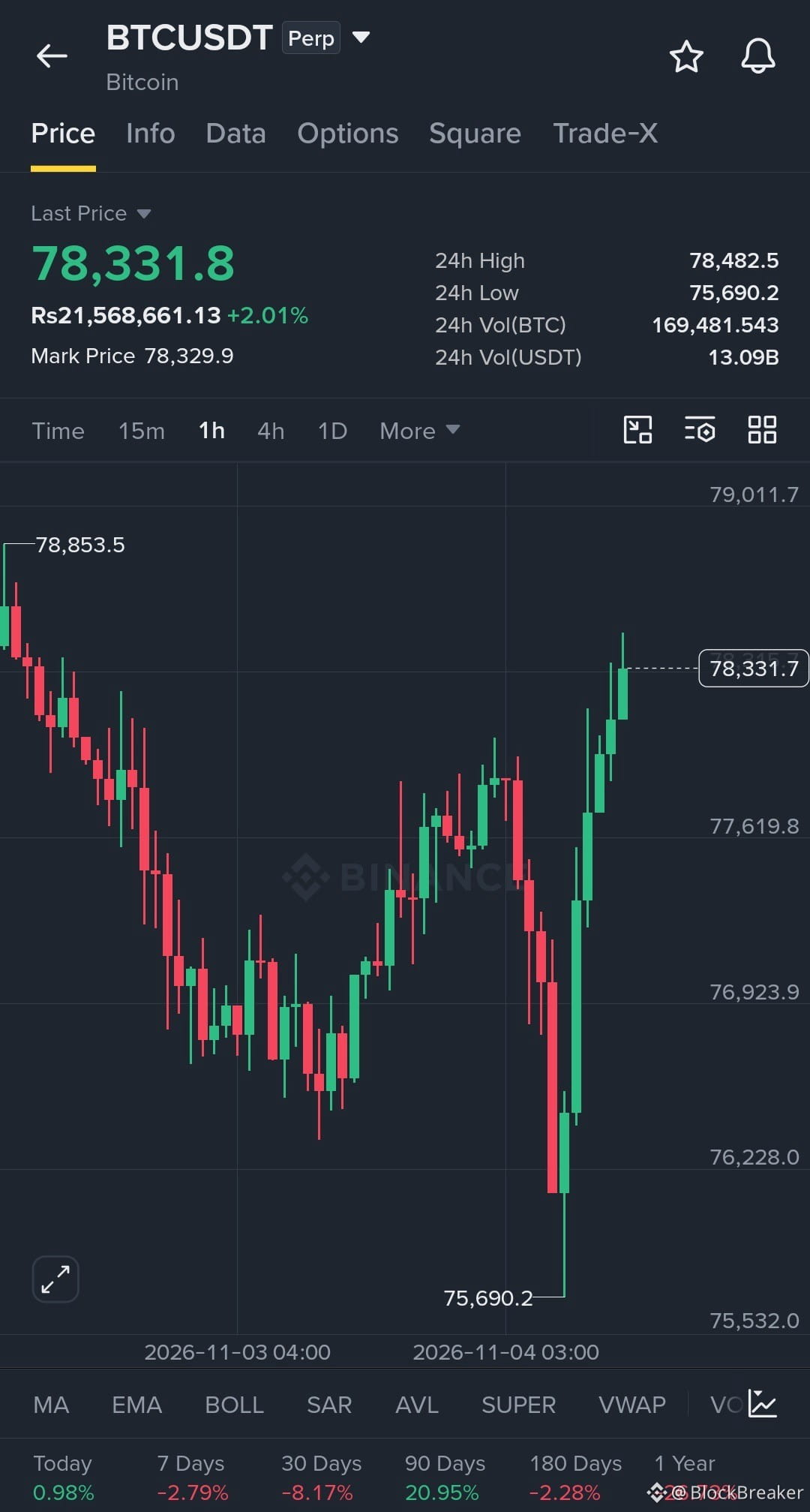
Bitcoin jumped +$2,400 in the past 4 hours and bounced from the crucial 50-week MA support.
Bitcoin jumped +$2,400 in the past 4 hours and bounced from the crucial 50-week MA support.
172
·
--
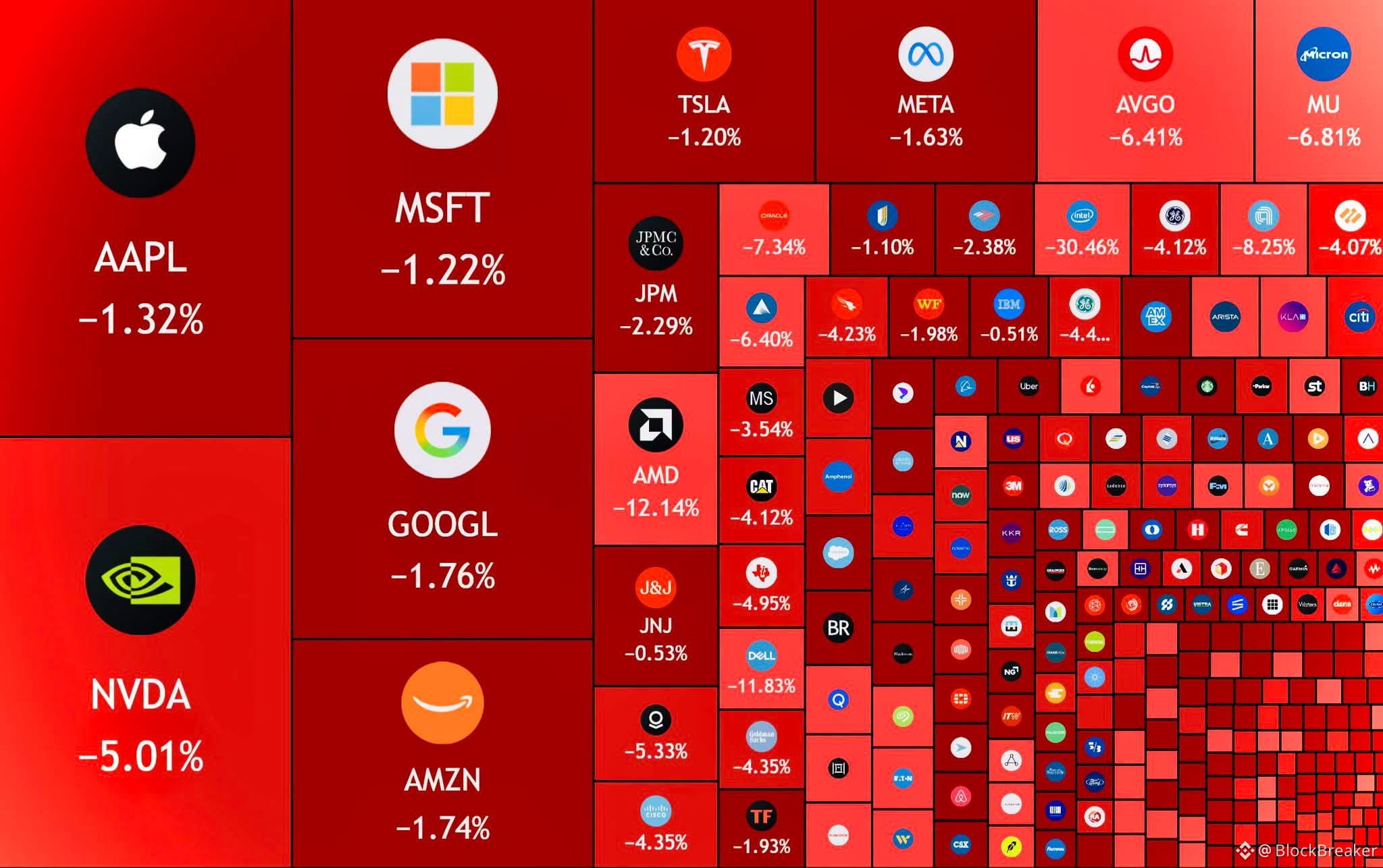
JUST IN: 🇺🇸 $1.8 trillion wiped out from the US stock market today.
$AIN $SOPH $IDOL
JUST IN: 🇺🇸 $1.8 trillion wiped out from the US stock market today.
$AIN $SOPH $IDOL
$AIN $SOPH $IDOL
257
·
--
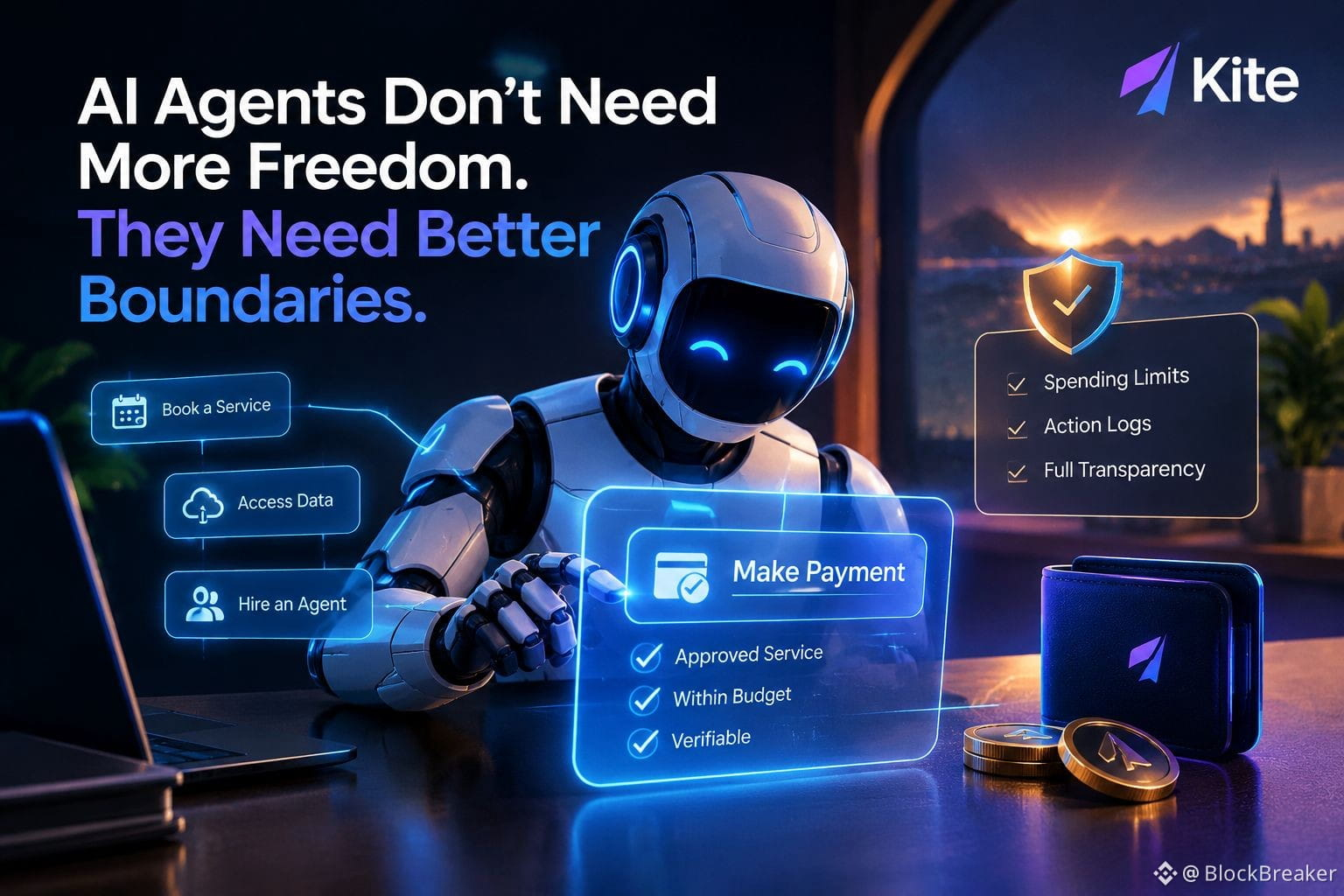
AI Agents Don’t Need More Freedom. They Need Better Boundaries.
Something I keep thinking about with AI agents: giving an agent money is easy. Knowing when to trust it with that money is a different story.
Imagine your agent booking a service, paying for data, or hiring another agent while you’re offline. What happens if it chooses the wrong service or spends more than you expected?
That’s the problem that makes Kite interesting to me. The real value isn’t just helping agents make payments; it’s building clearer boundaries around what they’re allowed to do and making their actions easier to verify.
Kite’s Passport and payment-session approach point toward that direction. Recent activity around Ankr Forge also gives developers another way to explore the ecosystem, but experiments are only the beginning.
What I’ll be watching is whether people keep using these tools for real tasks, not just trying them once.
Because the agent economy won’t earn trust simply by becoming more autonomous. It will earn trust when autonomy comes with accountability.
That’s the part of Kite worth watching.
#KiteBBW $KITE @GoKiteAI
AI Agents Don’t Need More Freedom. They Need Better Boundaries.
Something I keep thinking about with AI agents: giving an agent money is easy. Knowing when to trust it with that money is a different story.
Imagine your agent booking a service, paying for data, or hiring another agent while you’re offline. What happens if it chooses the wrong service or spends more than you expected?
That’s the problem that makes Kite interesting to me. The real value isn’t just helping agents make payments; it’s building clearer boundaries around what they’re allowed to do and making their actions easier to verify.
Kite’s Passport and payment-session approach point toward that direction. Recent activity around Ankr Forge also gives developers another way to explore the ecosystem, but experiments are only the beginning.
What I’ll be watching is whether people keep using these tools for real tasks, not just trying them once.
Because the agent economy won’t earn trust simply by becoming more autonomous. It will earn trust when autonomy comes with accountability.
That’s the part of Kite worth watching.
#KiteBBW $KITE @KITE AI 中文
Something I keep thinking about with AI agents: giving an agent money is easy. Knowing when to trust it with that money is a different story.
Imagine your agent booking a service, paying for data, or hiring another agent while you’re offline. What happens if it chooses the wrong service or spends more than you expected?
That’s the problem that makes Kite interesting to me. The real value isn’t just helping agents make payments; it’s building clearer boundaries around what they’re allowed to do and making their actions easier to verify.
Kite’s Passport and payment-session approach point toward that direction. Recent activity around Ankr Forge also gives developers another way to explore the ecosystem, but experiments are only the beginning.
What I’ll be watching is whether people keep using these tools for real tasks, not just trying them once.
Because the agent economy won’t earn trust simply by becoming more autonomous. It will earn trust when autonomy comes with accountability.
That’s the part of Kite worth watching.
#KiteBBW $KITE @KITE AI 中文
34
27
1.1k
·
--
Verified
#nil $NIL @nillionnetwork
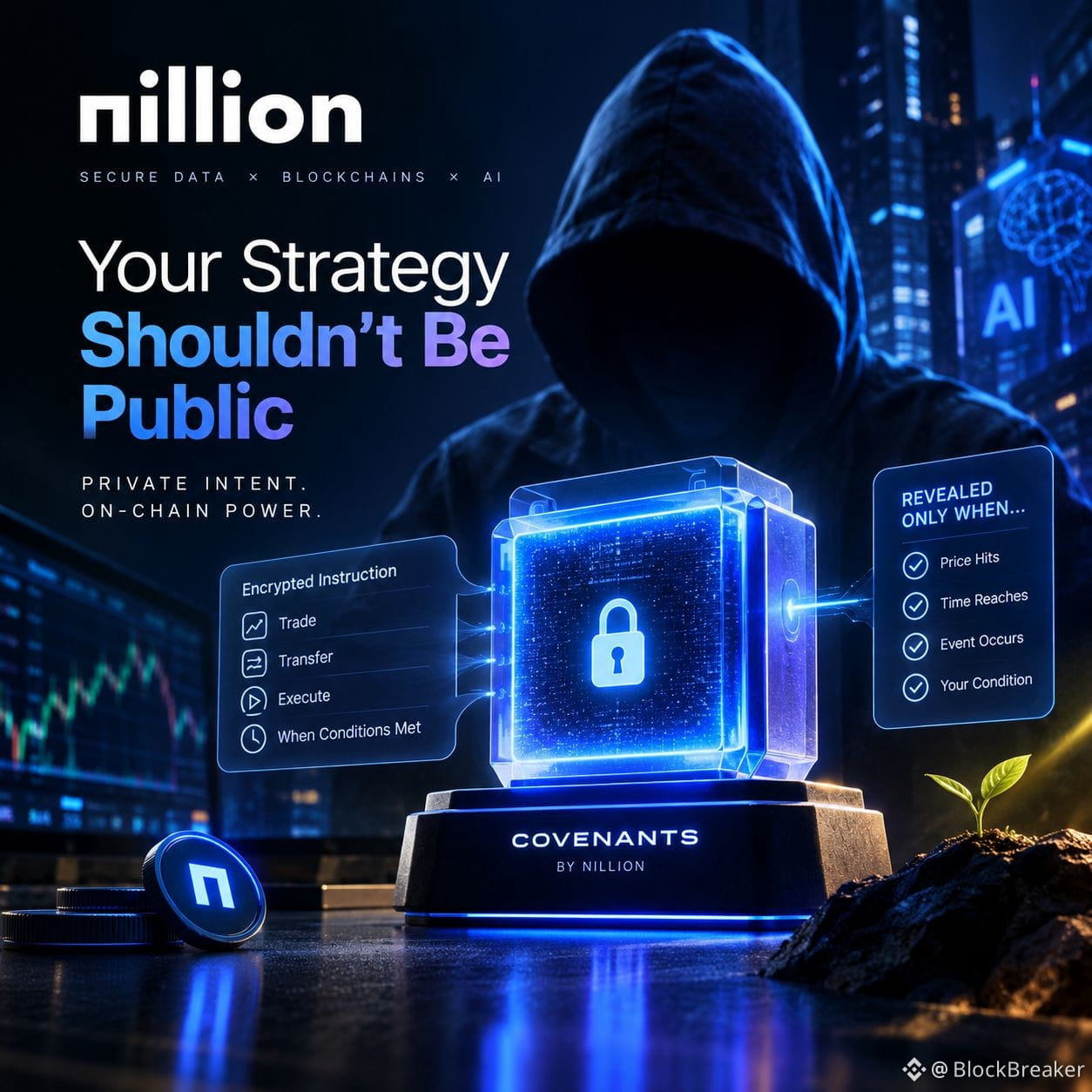
Nillion makes me think about a problem crypto doesn’t talk about enough: sometimes, the information you reveal too early is more expensive than the transaction itself.
Think about a trading strategy that exposes its conditions before execution. Other people can study it, front-run the opportunity, or simply copy the logic. The trader may own the capital, but everyone can watch the play unfold.
That’s why I find Covenants interesting. With Dusk, Nillion is exploring how encrypted instructions can remain hidden until specific conditions are met. The real advantage isn’t secrecy for its own sake. It’s controlling *when* your information becomes useful to others.
Still, the technology has something to prove. Early activity matters far less than whether independent developers build around it and users keep coming back.
I’ll be watching that behavior closely. If people start treating selective disclosure as a normal part of on-chain applications, Nillion could be solving a problem most protocols have accepted for too long: transparency shouldn’t have to mean revealing everything upfront.
#nil $NIL @Nillion
Nillion makes me think about a problem crypto doesn’t talk about enough: sometimes, the information you reveal too early is more expensive than the transaction itself.
Think about a trading strategy that exposes its conditions before execution. Other people can study it, front-run the opportunity, or simply copy the logic. The trader may own the capital, but everyone can watch the play unfold.
That’s why I find Covenants interesting. With Dusk, Nillion is exploring how encrypted instructions can remain hidden until specific conditions are met. The real advantage isn’t secrecy for its own sake. It’s controlling *when* your information becomes useful to others.
Still, the technology has something to prove. Early activity matters far less than whether independent developers build around it and users keep coming back.
I’ll be watching that behavior closely. If people start treating selective disclosure as a normal part of on-chain applications, Nillion could be solving a problem most protocols have accepted for too long: transparency shouldn’t have to mean revealing everything upfront.
Nillion makes me think about a problem crypto doesn’t talk about enough: sometimes, the information you reveal too early is more expensive than the transaction itself.
Think about a trading strategy that exposes its conditions before execution. Other people can study it, front-run the opportunity, or simply copy the logic. The trader may own the capital, but everyone can watch the play unfold.
That’s why I find Covenants interesting. With Dusk, Nillion is exploring how encrypted instructions can remain hidden until specific conditions are met. The real advantage isn’t secrecy for its own sake. It’s controlling *when* your information becomes useful to others.
Still, the technology has something to prove. Early activity matters far less than whether independent developers build around it and users keep coming back.
I’ll be watching that behavior closely. If people start treating selective disclosure as a normal part of on-chain applications, Nillion could be solving a problem most protocols have accepted for too long: transparency shouldn’t have to mean revealing everything upfront.
9
1
63
27.2k
·
--
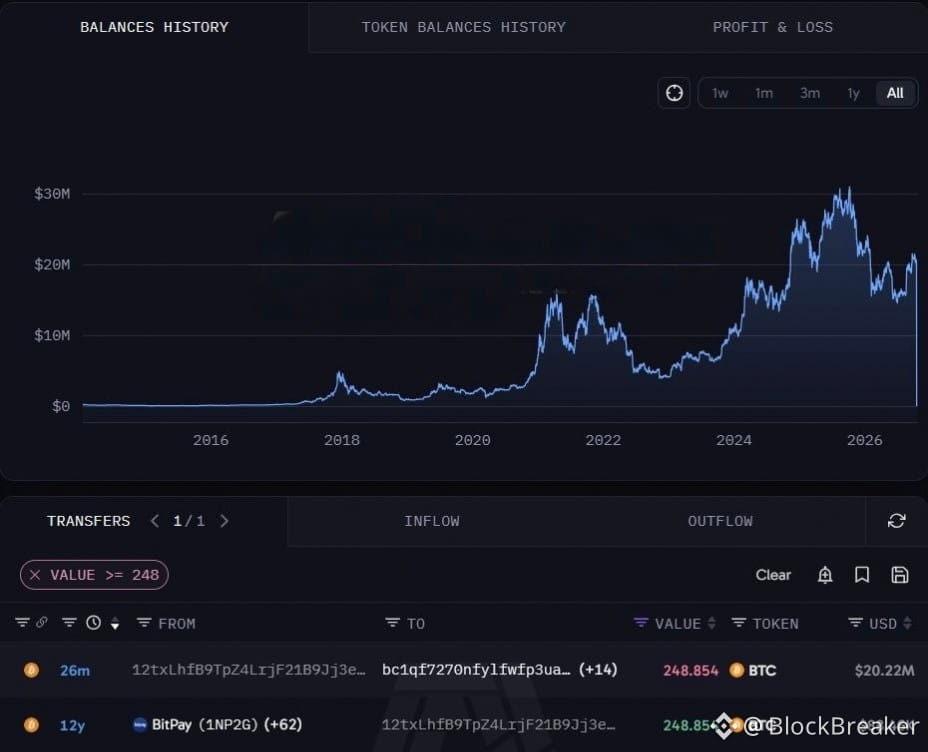
Someone bought 248.8 Bitcoin in 2013 for $88,000.
He survived the Mt. Gox collapse, the China ban, and the FTX crash and held for nearly 13 years without touching a single coin.
Today he moved his stash, which is now worth $20.2 Million.
A $20.1 million profit by simply HODLing.
$BTC
Someone bought 248.8 Bitcoin in 2013 for $88,000.
He survived the Mt. Gox collapse, the China ban, and the FTX crash and held for nearly 13 years without touching a single coin.
Today he moved his stash, which is now worth $20.2 Million.
A $20.1 million profit by simply HODLing.
$BTC
He survived the Mt. Gox collapse, the China ban, and the FTX crash and held for nearly 13 years without touching a single coin.
Today he moved his stash, which is now worth $20.2 Million.
A $20.1 million profit by simply HODLing.
$BTC

3
227
·
--
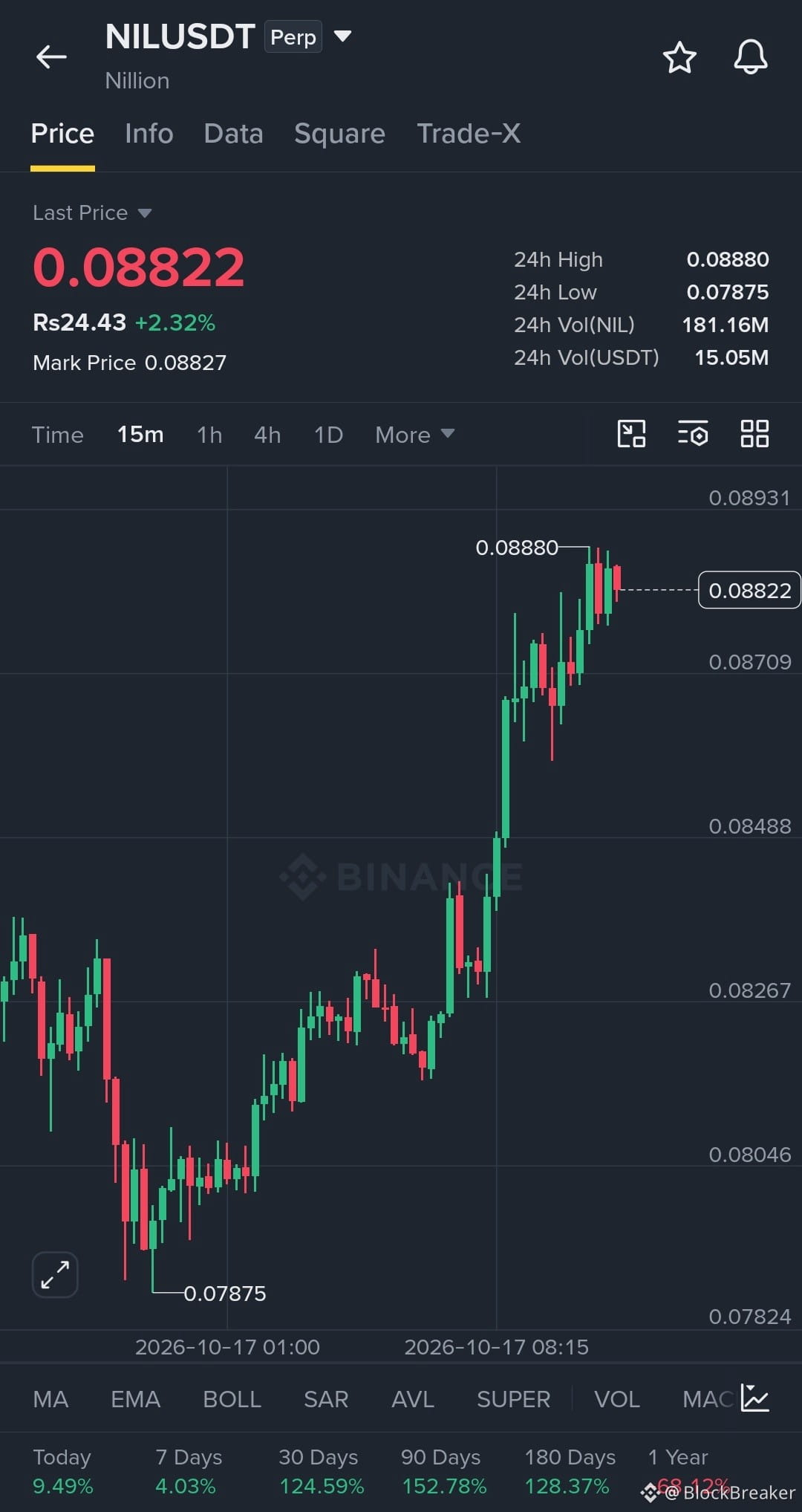
$NIL just woke up
It was 0.07875.
Now it’s almost 0.08880.
Price right now: **0.08822**
Up big today. Still going.
+9% today.
+124% in one month.
This is not just a pump.
NIL is showing power.
Watching close.
Who got in early? 👀
$NIL
{future}(NILUSDT)
$NIL just woke up
It was 0.07875.
Now it’s almost 0.08880.
Price right now: **0.08822**
Up big today. Still going.
+9% today.
+124% in one month.
This is not just a pump.
NIL is showing power.
Watching close.
Who got in early? 👀
$NIL
It was 0.07875.
Now it’s almost 0.08880.
Price right now: **0.08822**
Up big today. Still going.
+9% today.
+124% in one month.
This is not just a pump.
NIL is showing power.
Watching close.
Who got in early? 👀
$NIL
4
152
·
--
October starts with relentless selling.
The market keeps bleeding, and everyone starts saying Uptober is officially dead.
FUD hits from every direction.
Bears become more confident, calling for fresh yearly lows.
Short positions pile up rapidly as traders bet on further downside.
Then, near the end of October, the real setup unfolds.
Weak hands get shaken out. Panic reaches its peak. Shorts become overcrowded.
And suddenly… Pumptober begins.
Bitcoin makes a violent move higher, triggering a massive short squeeze.
Shorts get liquidated one after another, while ETH and altcoins accelerate to the upside.
The traders who sold in panic are forced to buy back at much higher prices.
The market doesn't need everyone to believe in the pump. It only needs enough shorts to be trapped.
$TIA $AMP $DUSK
October starts with relentless selling.
The market keeps bleeding, and everyone starts saying Uptober is officially dead.
FUD hits from every direction.
Bears become more confident, calling for fresh yearly lows.
Short positions pile up rapidly as traders bet on further downside.
Then, near the end of October, the real setup unfolds.
Weak hands get shaken out. Panic reaches its peak. Shorts become overcrowded.
And suddenly… Pumptober begins.
Bitcoin makes a violent move higher, triggering a massive short squeeze.
Shorts get liquidated one after another, while ETH and altcoins accelerate to the upside.
The traders who sold in panic are forced to buy back at much higher prices.
The market doesn't need everyone to believe in the pump. It only needs enough shorts to be trapped.
$TIA $AMP $DUSK
The market keeps bleeding, and everyone starts saying Uptober is officially dead.
FUD hits from every direction.
Bears become more confident, calling for fresh yearly lows.
Short positions pile up rapidly as traders bet on further downside.
Then, near the end of October, the real setup unfolds.
Weak hands get shaken out. Panic reaches its peak. Shorts become overcrowded.
And suddenly… Pumptober begins.
Bitcoin makes a violent move higher, triggering a massive short squeeze.
Shorts get liquidated one after another, while ETH and altcoins accelerate to the upside.
The traders who sold in panic are forced to buy back at much higher prices.
The market doesn't need everyone to believe in the pump. It only needs enough shorts to be trapped.
$TIA $AMP $DUSK

2
299
·
--
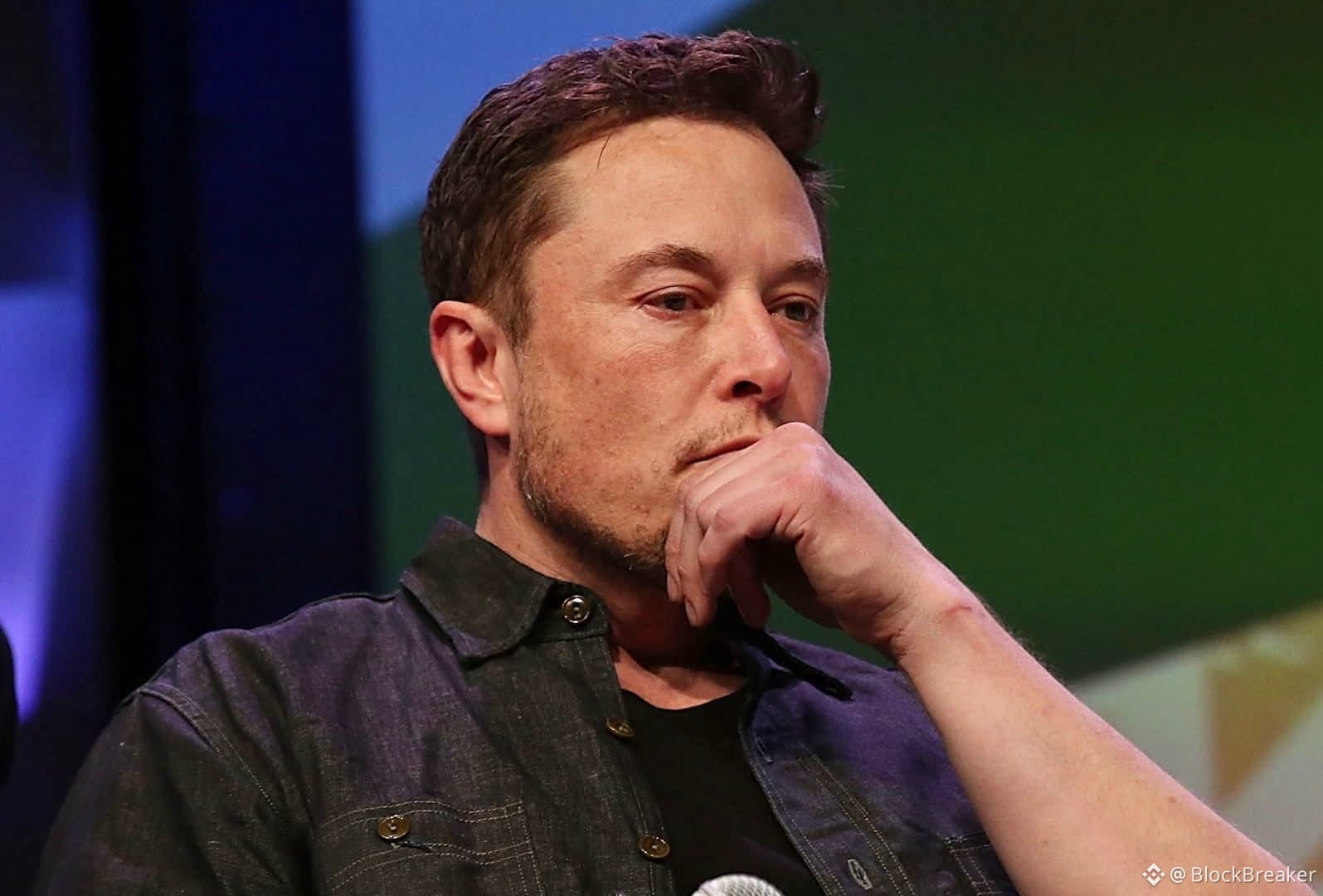
JUST IN: Elon Musk says he has been "sounding the alarm on AI for a long time."
$LSK $ARK $STEEM
JUST IN: Elon Musk says he has been "sounding the alarm on AI for a long time."
$LSK $ARK $STEEM
$LSK $ARK $STEEM
5
324
·
--
AI & Trading: How Is AI Changing the Game?
I think the most interesting thing about AI in trading isn’t the idea that a machine can “predict the market.”
It’s what happens before a trade is even considered.
A trader can throw a mountain of market data at an AI system and get patterns, summaries, comparisons, alerts, and strategy ideas in seconds. Things that once required hours of scrolling through charts and information can now be processed almost instantly.
That sounds like a huge advantage.
But there’s a catch.
Faster information does not automatically mean better decisions.
AI can spot a pattern without knowing whether that pattern actually matters. It can test a strategy against historical data, but history can behave very differently from the market in front of you. And automation can remove hesitation, but it can also execute a flawed idea without hesitation.
That’s why I see AI as a second set of eyes, not the person behind the wheel.
Research.
Analyse.
Monitor.
Test.
Automate.
Then comes the part AI still cannot outsource:
judgement.
Knowing what information deserves attention, questioning the assumptions behind a model, understanding risk, and recognizing when market conditions have changed.
Maybe the biggest shift isn’t AI replacing traders.
Maybe it’s traders using AI to spend less time collecting information and more time thinking about what that information actually means.
Would you trust AI to influence your trading decisions?
Educational only, not financial advice. DYOR.
AI & Trading: How Is AI Changing the Game?
I think the most interesting thing about AI in trading isn’t the idea that a machine can “predict the market.”
It’s what happens before a trade is even considered.
A trader can throw a mountain of market data at an AI system and get patterns, summaries, comparisons, alerts, and strategy ideas in seconds. Things that once required hours of scrolling through charts and information can now be processed almost instantly.
That sounds like a huge advantage.
But there’s a catch.
Faster information does not automatically mean better decisions.
AI can spot a pattern without knowing whether that pattern actually matters. It can test a strategy against historical data, but history can behave very differently from the market in front of you. And automation can remove hesitation, but it can also execute a flawed idea without hesitation.
That’s why I see AI as a second set of eyes, not the person behind the wheel.
Research.
Analyse.
Monitor.
Test.
Automate.
Then comes the part AI still cannot outsource:
judgement.
Knowing what information deserves attention, questioning the assumptions behind a model, understanding risk, and recognizing when market conditions have changed.
Maybe the biggest shift isn’t AI replacing traders.
Maybe it’s traders using AI to spend less time collecting information and more time thinking about what that information actually means.
Would you trust AI to influence your trading decisions?
Educational only, not financial advice. DYOR.
I think the most interesting thing about AI in trading isn’t the idea that a machine can “predict the market.”
It’s what happens before a trade is even considered.
A trader can throw a mountain of market data at an AI system and get patterns, summaries, comparisons, alerts, and strategy ideas in seconds. Things that once required hours of scrolling through charts and information can now be processed almost instantly.
That sounds like a huge advantage.
But there’s a catch.
Faster information does not automatically mean better decisions.
AI can spot a pattern without knowing whether that pattern actually matters. It can test a strategy against historical data, but history can behave very differently from the market in front of you. And automation can remove hesitation, but it can also execute a flawed idea without hesitation.
That’s why I see AI as a second set of eyes, not the person behind the wheel.
Research.
Analyse.
Monitor.
Test.
Automate.
Then comes the part AI still cannot outsource:
judgement.
Knowing what information deserves attention, questioning the assumptions behind a model, understanding risk, and recognizing when market conditions have changed.
Maybe the biggest shift isn’t AI replacing traders.
Maybe it’s traders using AI to spend less time collecting information and more time thinking about what that information actually means.
Would you trust AI to influence your trading decisions?
Educational only, not financial advice. DYOR.

3
182
·
--
#dusk $DUSK @Dusk_Foundation
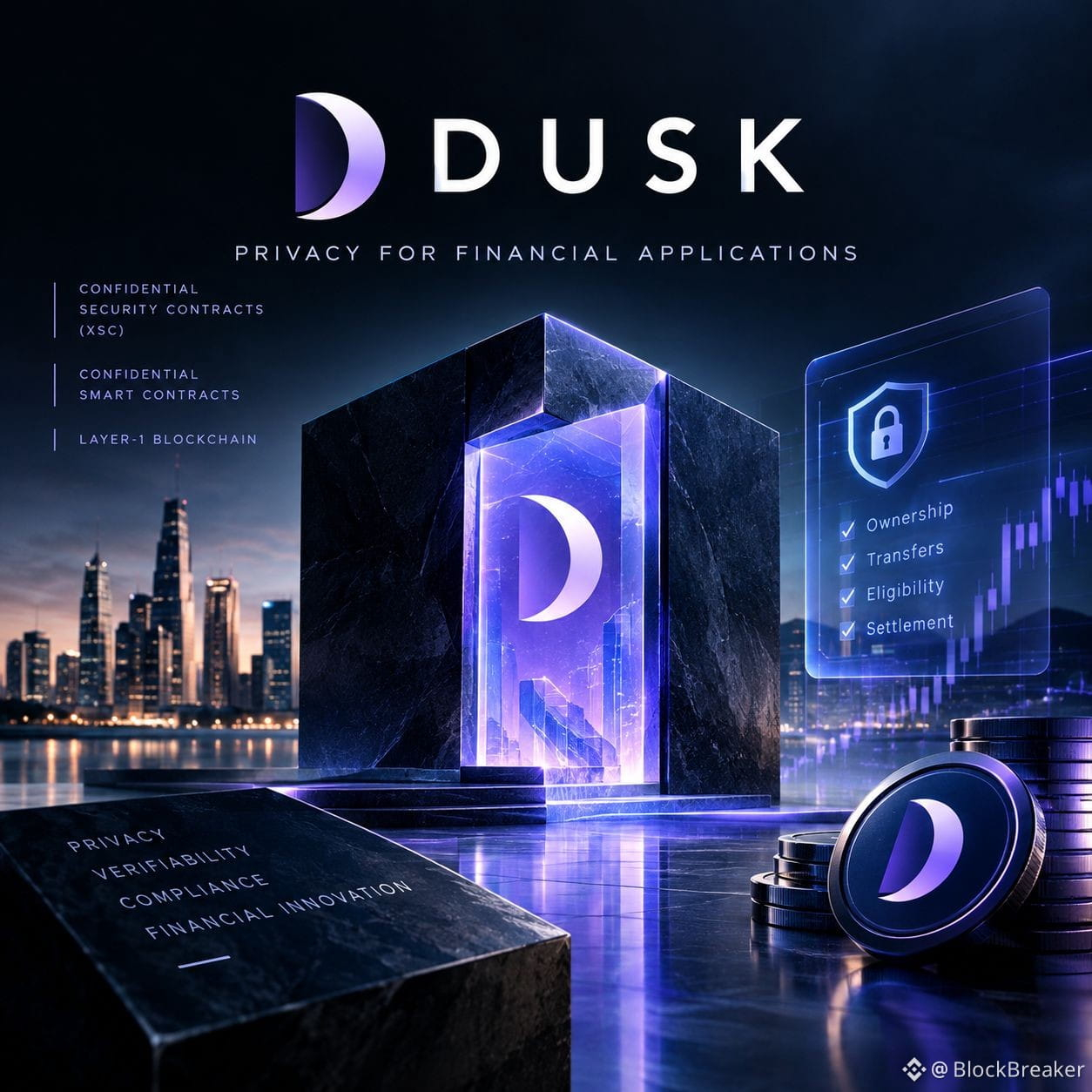
What interests me about Dusk is that its privacy thesis is becoming less about hiding transactions and more about hiding the parts of finance that never needed to be public in the first place.
That distinction matters.
Financial assets carry sensitive information around ownership, eligibility, pricing, transfers and settlement. Putting all of that into transparent smart contracts creates a strange tradeoff: you get composability, but you also expose data that regulated markets have spent decades controlling.
Dusk approaches the problem from the other side. Its privacy stack uses zero-knowledge proofs, PLONK, JubJub, Poseidon and Merkle-based structures to prove that rules were followed without publishing every underlying detail. The interesting part is not the cryptography itself. It is what that architecture can make possible for financial workflows.
And the recent engineering direction makes the thesis more credible. Aegis upgraded mainnet verification to PLONK V3 and added stronger consensus and refund protections, while August development work continued tightening proof and ciphertext validation.
Now DuskEVM is on testnet, giving Solidity developers a familiar execution path alongside Dusk’s native privacy stack.
My takeaway: Dusk is not really competing to be the “most private blockchain.” Its more interesting opportunity is becoming the layer where financial applications can remain verifiable without turning sensitive market information into public metadata.
That is a much harder problem, and a much more useful one to solve.
#dusk $DUSK @Dusk
What interests me about Dusk is that its privacy thesis is becoming less about hiding transactions and more about hiding the parts of finance that never needed to be public in the first place.
That distinction matters.
Financial assets carry sensitive information around ownership, eligibility, pricing, transfers and settlement. Putting all of that into transparent smart contracts creates a strange tradeoff: you get composability, but you also expose data that regulated markets have spent decades controlling.
Dusk approaches the problem from the other side. Its privacy stack uses zero-knowledge proofs, PLONK, JubJub, Poseidon and Merkle-based structures to prove that rules were followed without publishing every underlying detail. The interesting part is not the cryptography itself. It is what that architecture can make possible for financial workflows.
And the recent engineering direction makes the thesis more credible. Aegis upgraded mainnet verification to PLONK V3 and added stronger consensus and refund protections, while August development work continued tightening proof and ciphertext validation.
Now DuskEVM is on testnet, giving Solidity developers a familiar execution path alongside Dusk’s native privacy stack.
My takeaway: Dusk is not really competing to be the “most private blockchain.” Its more interesting opportunity is becoming the layer where financial applications can remain verifiable without turning sensitive market information into public metadata.
That is a much harder problem, and a much more useful one to solve.
What interests me about Dusk is that its privacy thesis is becoming less about hiding transactions and more about hiding the parts of finance that never needed to be public in the first place.
That distinction matters.
Financial assets carry sensitive information around ownership, eligibility, pricing, transfers and settlement. Putting all of that into transparent smart contracts creates a strange tradeoff: you get composability, but you also expose data that regulated markets have spent decades controlling.
Dusk approaches the problem from the other side. Its privacy stack uses zero-knowledge proofs, PLONK, JubJub, Poseidon and Merkle-based structures to prove that rules were followed without publishing every underlying detail. The interesting part is not the cryptography itself. It is what that architecture can make possible for financial workflows.
And the recent engineering direction makes the thesis more credible. Aegis upgraded mainnet verification to PLONK V3 and added stronger consensus and refund protections, while August development work continued tightening proof and ciphertext validation.
Now DuskEVM is on testnet, giving Solidity developers a familiar execution path alongside Dusk’s native privacy stack.
My takeaway: Dusk is not really competing to be the “most private blockchain.” Its more interesting opportunity is becoming the layer where financial applications can remain verifiable without turning sensitive market information into public metadata.
That is a much harder problem, and a much more useful one to solve.
3
2
264
·
--
#dusk $DUSK @Dusk_Foundation
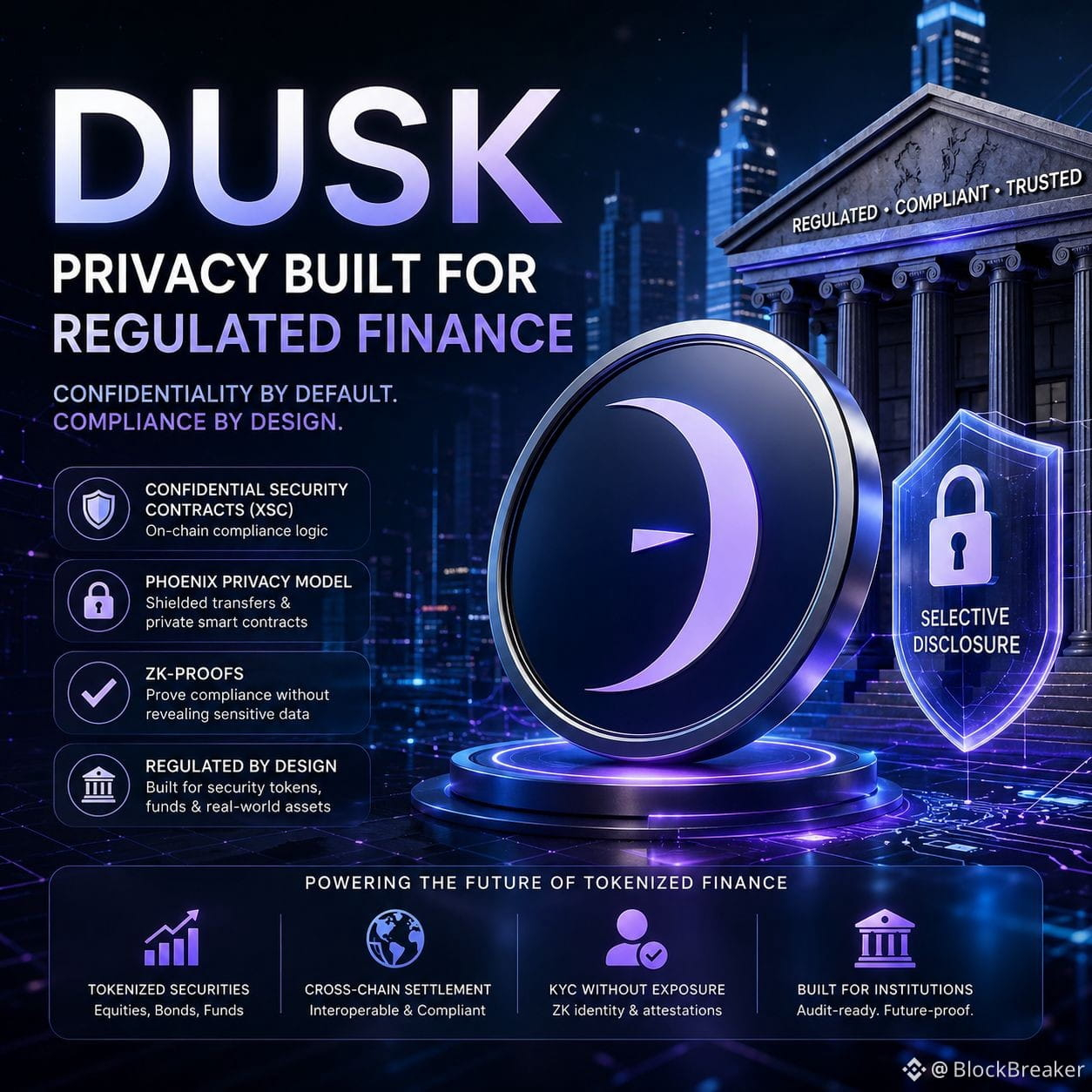
What stands out to me about Dusk is that it is not really trying to make blockchains “more private.” It is trying to make privacy a usable market primitive.
That distinction matters in finance. A securities ledger that exposes every balance, trade and investor relationship is transparent, but often unusable. Dusk takes the opposite route: keep sensitive state private, prove that the required rules were followed, and disclose only what a regulator, issuer or counterparty actually needs. That beats simply adding KYC to a transparent chain.
XSC is interesting for the same reason. Compliance is treated as programmable transaction logic, not paperwork around the edges. Access rules, transfer restrictions, ownership records and corporate actions can sit inside the asset workflow. Privacy then prevents those controls from becoming permanent public surveillance.
Recent development matters for what it signals, not headlines. Dusk has been tightening its protocol with PLONK V3 and consensus hardening, while its EVM path and developer tooling lower the barrier for builders. Its August 2026 zk-tooling work and focus on tokenized private markets point toward a bigger shift: from “privacy blockchain” to financial infrastructure.
Dusk’s edge is not secrecy alone. It is making regulated assets private without making them unverifiable. If tokenized finance demands confidentiality, auditability and deterministic settlement at the same time, that tradeoff becomes the product.
#dusk $DUSK @Dusk
What stands out to me about Dusk is that it is not really trying to make blockchains “more private.” It is trying to make privacy a usable market primitive.
That distinction matters in finance. A securities ledger that exposes every balance, trade and investor relationship is transparent, but often unusable. Dusk takes the opposite route: keep sensitive state private, prove that the required rules were followed, and disclose only what a regulator, issuer or counterparty actually needs. That beats simply adding KYC to a transparent chain.
XSC is interesting for the same reason. Compliance is treated as programmable transaction logic, not paperwork around the edges. Access rules, transfer restrictions, ownership records and corporate actions can sit inside the asset workflow. Privacy then prevents those controls from becoming permanent public surveillance.
Recent development matters for what it signals, not headlines. Dusk has been tightening its protocol with PLONK V3 and consensus hardening, while its EVM path and developer tooling lower the barrier for builders. Its August 2026 zk-tooling work and focus on tokenized private markets point toward a bigger shift: from “privacy blockchain” to financial infrastructure.
Dusk’s edge is not secrecy alone. It is making regulated assets private without making them unverifiable. If tokenized finance demands confidentiality, auditability and deterministic settlement at the same time, that tradeoff becomes the product.
What stands out to me about Dusk is that it is not really trying to make blockchains “more private.” It is trying to make privacy a usable market primitive.
That distinction matters in finance. A securities ledger that exposes every balance, trade and investor relationship is transparent, but often unusable. Dusk takes the opposite route: keep sensitive state private, prove that the required rules were followed, and disclose only what a regulator, issuer or counterparty actually needs. That beats simply adding KYC to a transparent chain.
XSC is interesting for the same reason. Compliance is treated as programmable transaction logic, not paperwork around the edges. Access rules, transfer restrictions, ownership records and corporate actions can sit inside the asset workflow. Privacy then prevents those controls from becoming permanent public surveillance.
Recent development matters for what it signals, not headlines. Dusk has been tightening its protocol with PLONK V3 and consensus hardening, while its EVM path and developer tooling lower the barrier for builders. Its August 2026 zk-tooling work and focus on tokenized private markets point toward a bigger shift: from “privacy blockchain” to financial infrastructure.
Dusk’s edge is not secrecy alone. It is making regulated assets private without making them unverifiable. If tokenized finance demands confidentiality, auditability and deterministic settlement at the same time, that tradeoff becomes the product.
2
5
438
·
--
#dusk $DUSK @Dusk_Foundation
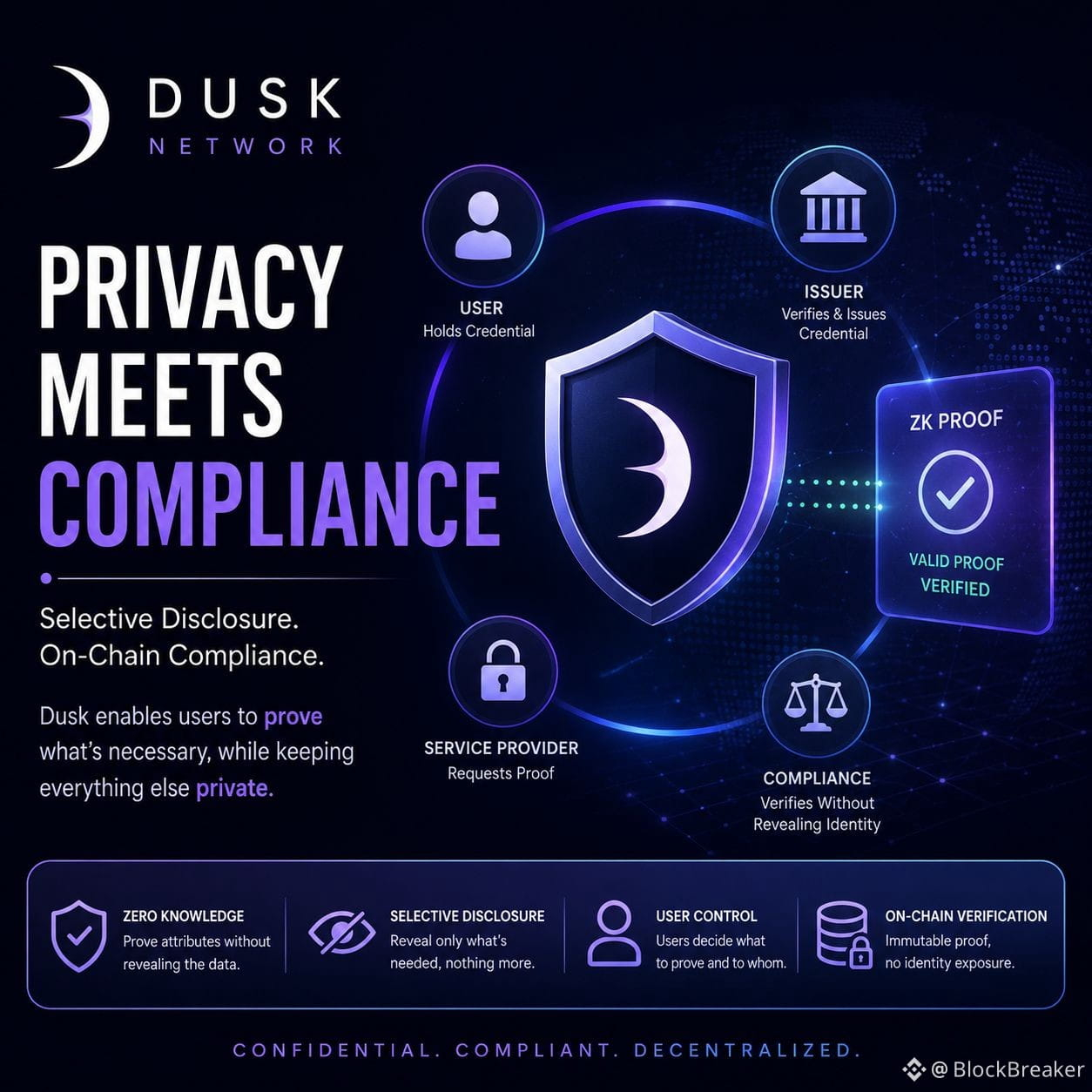
What I find interesting about Dusk’s compliance model is that it treats identity less like something you store and more like something you prove.
Citadel 2 separates the roles cleanly. A license provider verifies the user off-chain and signs the relevant attributes. The credential is registered without exposing its contents, then the user can generate a zero-knowledge proof showing they hold a valid credential without revealing which credential, their identity, or the underlying attributes. The service provider still decides what qualifies and whether access should be granted.
That is a subtle but important distinction from putting KYC data on-chain and calling it compliant. The chain should verify a statement such as “this participant is accredited” or “this holder satisfies the jurisdiction rule,” not permanently expose the passport, address, or birth date behind that statement.
The broader cryptographic direction supports this architecture. W3C’s 2026 Digital Credentials work treats selective disclosure and unlinkable presentations as core privacy properties, while its BBS cryptosuite formalizes derived proofs where holders can reveal chosen claims without making separate presentations trivially linkable.
My view is that Dusk’s difficult problem is no longer whether zero knowledge can hide KYC data. It is designing the policy layer around it: issuer trust, expiry, revocation, jurisdiction changes, wallet binding and anti-correlation.
That is where on-chain compliance becomes interesting: not identity disclosure, but programmable proof of eligibility.
#dusk $DUSK @Dusk
What I find interesting about Dusk’s compliance model is that it treats identity less like something you store and more like something you prove.
Citadel 2 separates the roles cleanly. A license provider verifies the user off-chain and signs the relevant attributes. The credential is registered without exposing its contents, then the user can generate a zero-knowledge proof showing they hold a valid credential without revealing which credential, their identity, or the underlying attributes. The service provider still decides what qualifies and whether access should be granted.
That is a subtle but important distinction from putting KYC data on-chain and calling it compliant. The chain should verify a statement such as “this participant is accredited” or “this holder satisfies the jurisdiction rule,” not permanently expose the passport, address, or birth date behind that statement.
The broader cryptographic direction supports this architecture. W3C’s 2026 Digital Credentials work treats selective disclosure and unlinkable presentations as core privacy properties, while its BBS cryptosuite formalizes derived proofs where holders can reveal chosen claims without making separate presentations trivially linkable.
My view is that Dusk’s difficult problem is no longer whether zero knowledge can hide KYC data. It is designing the policy layer around it: issuer trust, expiry, revocation, jurisdiction changes, wallet binding and anti-correlation.
That is where on-chain compliance becomes interesting: not identity disclosure, but programmable proof of eligibility.
What I find interesting about Dusk’s compliance model is that it treats identity less like something you store and more like something you prove.
Citadel 2 separates the roles cleanly. A license provider verifies the user off-chain and signs the relevant attributes. The credential is registered without exposing its contents, then the user can generate a zero-knowledge proof showing they hold a valid credential without revealing which credential, their identity, or the underlying attributes. The service provider still decides what qualifies and whether access should be granted.
That is a subtle but important distinction from putting KYC data on-chain and calling it compliant. The chain should verify a statement such as “this participant is accredited” or “this holder satisfies the jurisdiction rule,” not permanently expose the passport, address, or birth date behind that statement.
The broader cryptographic direction supports this architecture. W3C’s 2026 Digital Credentials work treats selective disclosure and unlinkable presentations as core privacy properties, while its BBS cryptosuite formalizes derived proofs where holders can reveal chosen claims without making separate presentations trivially linkable.
My view is that Dusk’s difficult problem is no longer whether zero knowledge can hide KYC data. It is designing the policy layer around it: issuer trust, expiry, revocation, jurisdiction changes, wallet binding and anti-correlation.
That is where on-chain compliance becomes interesting: not identity disclosure, but programmable proof of eligibility.
2
260
·
--
#termmax @termmax
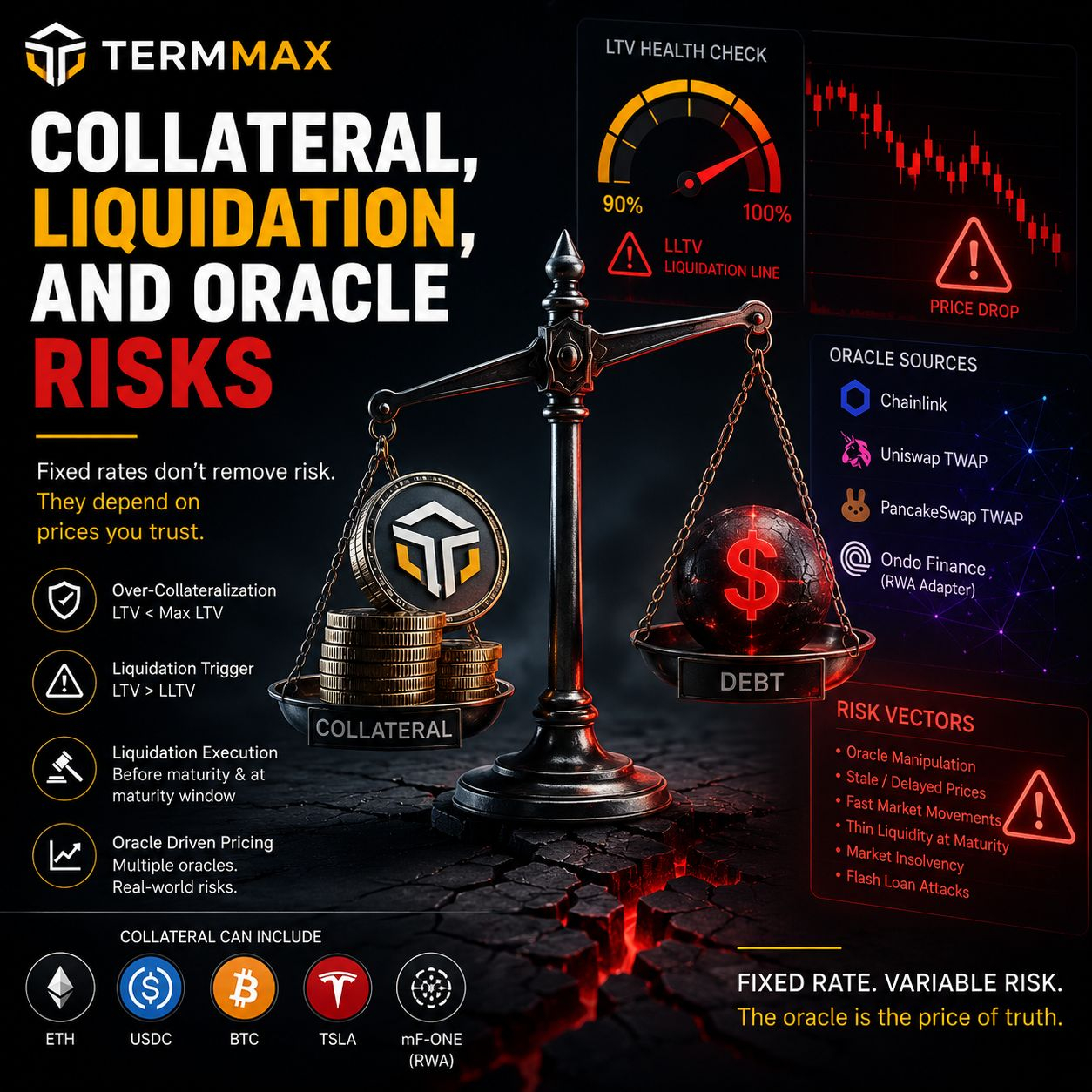
What I find most interesting in TermMax is that fixed-rate borrowing doesn’t make collateral risk disappear. It just moves the risk somewhere else.
I’ve been looking more closely at the Gearing Token logic, and the important part is that positions still live inside an LTV framework. Once collateral falls far enough, liquidation becomes the mechanism for containing bad debt. Near maturity, that risk gets even more interesting because the protocol has to reconcile a fixed-term position with a market that can move violently.
That makes the oracle layer the part I don’t fully trust by default.
TermMax’s architecture supports multiple pricing routes and adapters rather than relying on one universal feed. That matters when the collateral is something liquid like ETH, but the assumptions become much harder to judge for tokenized stocks or other RWA assets. A price can be technically “on-chain” and still be stale, thin, delayed, or disconnected from executable liquidity.
A simple stress case shows why. Suppose $100 of collateral backs $85 of debt. A 10% drop pushes the position close to a 94% LTV. A sharper move can leave the protocol racing liquidation against a market that is repricing faster than the oracle.
So I’m less interested in asking whether TermMax has liquidation.
The better question is: can liquidation happen at the right price, fast enough, when everyone else is trying to exit too?
That’s where I think the real risk model lives.
#termmax @TermMax
What I find most interesting in TermMax is that fixed-rate borrowing doesn’t make collateral risk disappear. It just moves the risk somewhere else.
I’ve been looking more closely at the Gearing Token logic, and the important part is that positions still live inside an LTV framework. Once collateral falls far enough, liquidation becomes the mechanism for containing bad debt. Near maturity, that risk gets even more interesting because the protocol has to reconcile a fixed-term position with a market that can move violently.
That makes the oracle layer the part I don’t fully trust by default.
TermMax’s architecture supports multiple pricing routes and adapters rather than relying on one universal feed. That matters when the collateral is something liquid like ETH, but the assumptions become much harder to judge for tokenized stocks or other RWA assets. A price can be technically “on-chain” and still be stale, thin, delayed, or disconnected from executable liquidity.
A simple stress case shows why. Suppose $100 of collateral backs $85 of debt. A 10% drop pushes the position close to a 94% LTV. A sharper move can leave the protocol racing liquidation against a market that is repricing faster than the oracle.
So I’m less interested in asking whether TermMax has liquidation.
The better question is: can liquidation happen at the right price, fast enough, when everyone else is trying to exit too?
That’s where I think the real risk model lives.
What I find most interesting in TermMax is that fixed-rate borrowing doesn’t make collateral risk disappear. It just moves the risk somewhere else.
I’ve been looking more closely at the Gearing Token logic, and the important part is that positions still live inside an LTV framework. Once collateral falls far enough, liquidation becomes the mechanism for containing bad debt. Near maturity, that risk gets even more interesting because the protocol has to reconcile a fixed-term position with a market that can move violently.
That makes the oracle layer the part I don’t fully trust by default.
TermMax’s architecture supports multiple pricing routes and adapters rather than relying on one universal feed. That matters when the collateral is something liquid like ETH, but the assumptions become much harder to judge for tokenized stocks or other RWA assets. A price can be technically “on-chain” and still be stale, thin, delayed, or disconnected from executable liquidity.
A simple stress case shows why. Suppose $100 of collateral backs $85 of debt. A 10% drop pushes the position close to a 94% LTV. A sharper move can leave the protocol racing liquidation against a market that is repricing faster than the oracle.
So I’m less interested in asking whether TermMax has liquidation.
The better question is: can liquidation happen at the right price, fast enough, when everyone else is trying to exit too?
That’s where I think the real risk model lives.
1
162
·
--
#dusk $DUSK @Dusk_Foundation
I’ve seen blockchain teams treat networking like plumbing. As long as blocks arrive, the architecture rarely gets much attention.
Kadcast makes me look at that layer differently.
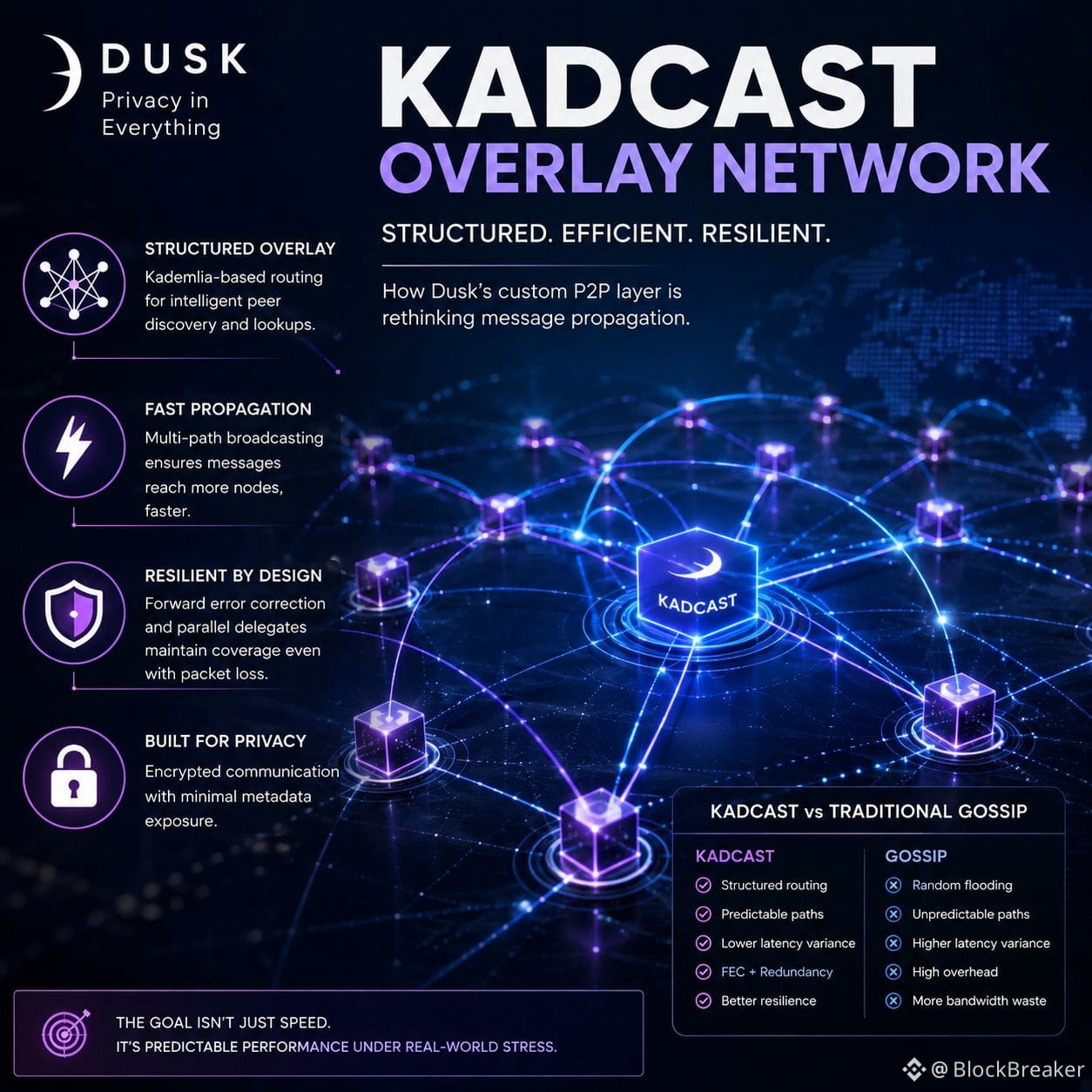
Dusk is not relying on the usual “receive, gossip, repeat” model alone. Kadcast organizes peers through a structured Kademlia-style overlay, so message propagation has some awareness of where nodes sit in the network. That sounds like a small implementation detail, but it changes the problem. Instead of hoping enough random peers spread a message quickly, the protocol is trying to make propagation more deliberate.
The part I find most interesting is how it handles imperfect networks. Kadcast uses UDP, which gives up some delivery guarantees, then adds redundancy and forward error correction to tolerate packet loss. In other words, it is not trying to make the network perfectly reliable. It is designing around the assumption that the network will be messy.
That is a much more useful framing for me.
Traditional gossip gets a lot of its resilience from redundancy. Kadcast appears to push more of that intelligence into peer selection and message routing. The tradeoff is complexity. A structured overlay now has to defend its routing tables, peer discovery and bootstrap process against bad actors and unfavorable topology.
So I’m less interested in raw propagation benchmarks.
The real test is whether Kadcast can keep latency predictable when nodes disappear, packets are dropped, peers behave badly, and the network gets larger.
Fast propagation is useful.
Predictable propagation under stress is what I’d actually want to measure.
#dusk $DUSK @Dusk
I’ve seen blockchain teams treat networking like plumbing. As long as blocks arrive, the architecture rarely gets much attention.
Kadcast makes me look at that layer differently.
Dusk is not relying on the usual “receive, gossip, repeat” model alone. Kadcast organizes peers through a structured Kademlia-style overlay, so message propagation has some awareness of where nodes sit in the network. That sounds like a small implementation detail, but it changes the problem. Instead of hoping enough random peers spread a message quickly, the protocol is trying to make propagation more deliberate.
The part I find most interesting is how it handles imperfect networks. Kadcast uses UDP, which gives up some delivery guarantees, then adds redundancy and forward error correction to tolerate packet loss. In other words, it is not trying to make the network perfectly reliable. It is designing around the assumption that the network will be messy.
That is a much more useful framing for me.
Traditional gossip gets a lot of its resilience from redundancy. Kadcast appears to push more of that intelligence into peer selection and message routing. The tradeoff is complexity. A structured overlay now has to defend its routing tables, peer discovery and bootstrap process against bad actors and unfavorable topology.
So I’m less interested in raw propagation benchmarks.
The real test is whether Kadcast can keep latency predictable when nodes disappear, packets are dropped, peers behave badly, and the network gets larger.
Fast propagation is useful.
Predictable propagation under stress is what I’d actually want to measure.
I’ve seen blockchain teams treat networking like plumbing. As long as blocks arrive, the architecture rarely gets much attention.
Kadcast makes me look at that layer differently.
Dusk is not relying on the usual “receive, gossip, repeat” model alone. Kadcast organizes peers through a structured Kademlia-style overlay, so message propagation has some awareness of where nodes sit in the network. That sounds like a small implementation detail, but it changes the problem. Instead of hoping enough random peers spread a message quickly, the protocol is trying to make propagation more deliberate.
The part I find most interesting is how it handles imperfect networks. Kadcast uses UDP, which gives up some delivery guarantees, then adds redundancy and forward error correction to tolerate packet loss. In other words, it is not trying to make the network perfectly reliable. It is designing around the assumption that the network will be messy.
That is a much more useful framing for me.
Traditional gossip gets a lot of its resilience from redundancy. Kadcast appears to push more of that intelligence into peer selection and message routing. The tradeoff is complexity. A structured overlay now has to defend its routing tables, peer discovery and bootstrap process against bad actors and unfavorable topology.
So I’m less interested in raw propagation benchmarks.
The real test is whether Kadcast can keep latency predictable when nodes disappear, packets are dropped, peers behave badly, and the network gets larger.
Fast propagation is useful.
Predictable propagation under stress is what I’d actually want to measure.
1
162
·
--
#dusk $DUSK @Dusk_Foundation
What I find interesting about Dusk’s privacy design is not just that notes are hidden. It’s where the hiding happens, and how many assumptions must hold at once.
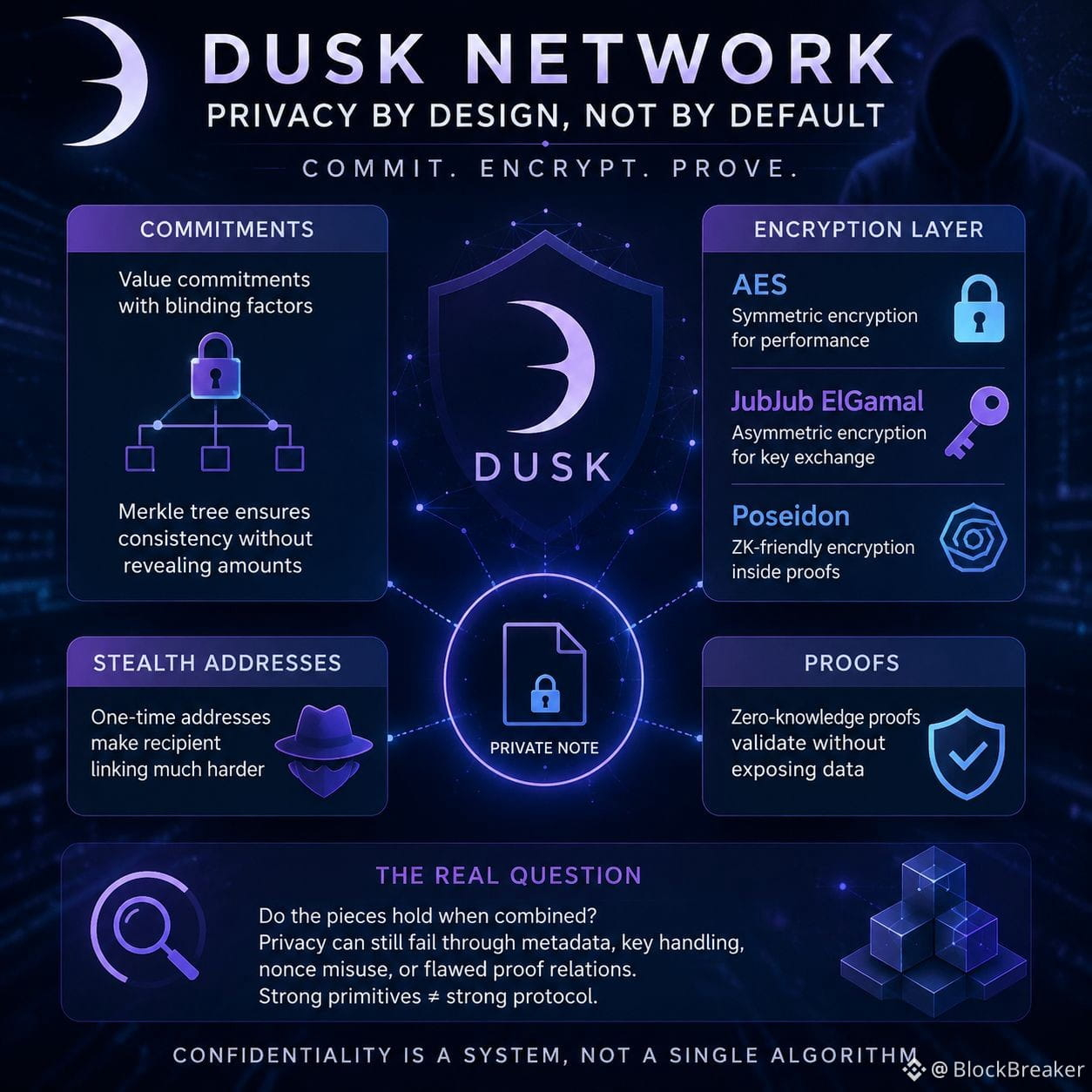
Phoenix uses commitments and a Merkle tree, while value commitments add a blinding factor. Validators can verify consistency without learning the amount. Stealth addresses also make recipient linking harder.
The encryption layer is where I look harder. Current Phoenix exposes AES as its symmetric cipher, while the stack also includes JubJub ElGamal and Poseidon. Dusk’s Poseidon library has encryption functionality, but saying “Poseidon provides confidentiality” is too simplistic. The implementation has evolved, and that matters when judging semantic security.
My real question is whether the composition has been proven as one system. A commitment can hide a value and encryption can hide plaintext, yet privacy can still fail through metadata, key handling, nonce misuse, address correlation, or a flawed proof relation. I’ve seen this before: strong primitives do not automatically make a strong protocol.
Poseidon is built for ZK-friendly computation, while AES is mature for general encryption. That can help performance, but it makes the boundary between encrypt, commit, and prove important.
I’m not ready to trust the construction because the ingredients are respected. I want a formal argument showing note encryption hides values and identities. That is where Dusk’s privacy claim becomes something I can evaluate.
#dusk $DUSK @Dusk
What I find interesting about Dusk’s privacy design is not just that notes are hidden. It’s where the hiding happens, and how many assumptions must hold at once.
Phoenix uses commitments and a Merkle tree, while value commitments add a blinding factor. Validators can verify consistency without learning the amount. Stealth addresses also make recipient linking harder.
The encryption layer is where I look harder. Current Phoenix exposes AES as its symmetric cipher, while the stack also includes JubJub ElGamal and Poseidon. Dusk’s Poseidon library has encryption functionality, but saying “Poseidon provides confidentiality” is too simplistic. The implementation has evolved, and that matters when judging semantic security.
My real question is whether the composition has been proven as one system. A commitment can hide a value and encryption can hide plaintext, yet privacy can still fail through metadata, key handling, nonce misuse, address correlation, or a flawed proof relation. I’ve seen this before: strong primitives do not automatically make a strong protocol.
Poseidon is built for ZK-friendly computation, while AES is mature for general encryption. That can help performance, but it makes the boundary between encrypt, commit, and prove important.
I’m not ready to trust the construction because the ingredients are respected. I want a formal argument showing note encryption hides values and identities. That is where Dusk’s privacy claim becomes something I can evaluate.
What I find interesting about Dusk’s privacy design is not just that notes are hidden. It’s where the hiding happens, and how many assumptions must hold at once.
Phoenix uses commitments and a Merkle tree, while value commitments add a blinding factor. Validators can verify consistency without learning the amount. Stealth addresses also make recipient linking harder.
The encryption layer is where I look harder. Current Phoenix exposes AES as its symmetric cipher, while the stack also includes JubJub ElGamal and Poseidon. Dusk’s Poseidon library has encryption functionality, but saying “Poseidon provides confidentiality” is too simplistic. The implementation has evolved, and that matters when judging semantic security.
My real question is whether the composition has been proven as one system. A commitment can hide a value and encryption can hide plaintext, yet privacy can still fail through metadata, key handling, nonce misuse, address correlation, or a flawed proof relation. I’ve seen this before: strong primitives do not automatically make a strong protocol.
Poseidon is built for ZK-friendly computation, while AES is mature for general encryption. That can help performance, but it makes the boundary between encrypt, commit, and prove important.
I’m not ready to trust the construction because the ingredients are respected. I want a formal argument showing note encryption hides values and identities. That is where Dusk’s privacy claim becomes something I can evaluate.
167
·
--
#termmax @termmax
What I’m watching in TermMax isn’t TVL. It’s where the liquidity actually gets used.
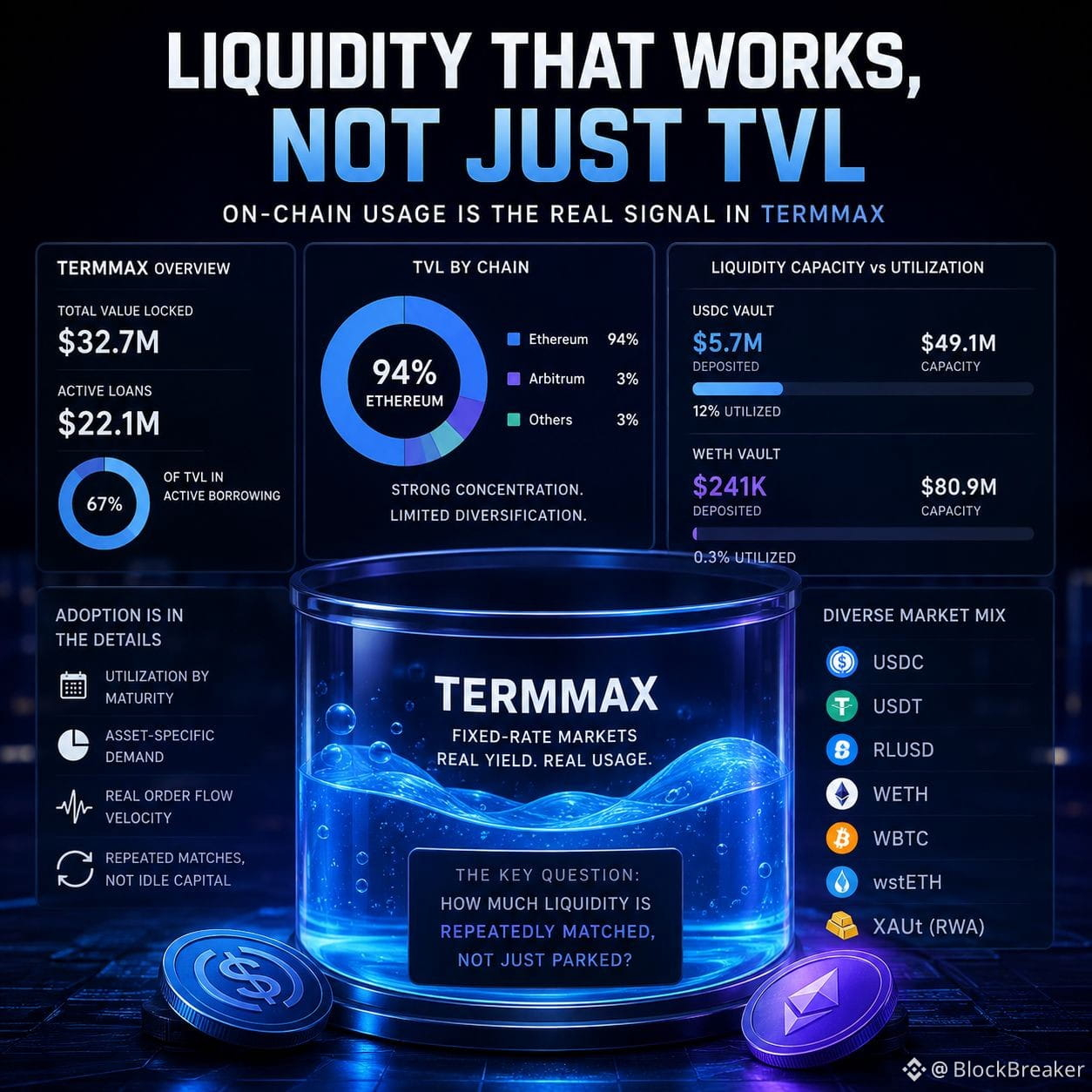
DefiLlama currently puts TermMax around $32.7M TVL, with roughly $22.1M in active loans. That implies about 67% of reported TVL is tied to active borrowing, which is more interesting to me than the headline number itself. Ethereum also represents about 94% of TVL, so the “multi-chain” story is still heavily concentrated in one venue.
But there is another layer I don’t fully trust: capacity. On TermMax’s own earn interface, the main USDC vault shows about $5.7M deposited against a $49.1M capacity, while a WETH vault has roughly $241K against $80.9M. That is a lot of theoretical liquidity that nobody is actually using.
This is where I keep noticing a subtle distinction between liquidity availability and liquidity demand. A market can advertise deep capacity while the active order flow remains thin. For fixed-rate products, that matters more because idle capacity at the wrong maturity or strike is not equivalent to usable liquidity.
I’ve seen this before in DeFi: TVL grows first, then people assume adoption followed. The better signal is utilization by market, maturity, and asset. Stablecoin borrowing, ETH collateral, and RWA-linked markets should not be lumped together.
TermMax’s current market mix already hints at that shift. The interface lists USDC, USDT, RLUSD, WETH, WBTC, wstETH and an expanding set of RWA collateral, including XAUt.
My real question is simple: how much of TermMax’s liquidity is repeatedly matched, not merely parked? That ratio will tell me far more about adoption than TVL alone.
#termmax @TermMax
What I’m watching in TermMax isn’t TVL. It’s where the liquidity actually gets used.
DefiLlama currently puts TermMax around $32.7M TVL, with roughly $22.1M in active loans. That implies about 67% of reported TVL is tied to active borrowing, which is more interesting to me than the headline number itself. Ethereum also represents about 94% of TVL, so the “multi-chain” story is still heavily concentrated in one venue.
But there is another layer I don’t fully trust: capacity. On TermMax’s own earn interface, the main USDC vault shows about $5.7M deposited against a $49.1M capacity, while a WETH vault has roughly $241K against $80.9M. That is a lot of theoretical liquidity that nobody is actually using.
This is where I keep noticing a subtle distinction between liquidity availability and liquidity demand. A market can advertise deep capacity while the active order flow remains thin. For fixed-rate products, that matters more because idle capacity at the wrong maturity or strike is not equivalent to usable liquidity.
I’ve seen this before in DeFi: TVL grows first, then people assume adoption followed. The better signal is utilization by market, maturity, and asset. Stablecoin borrowing, ETH collateral, and RWA-linked markets should not be lumped together.
TermMax’s current market mix already hints at that shift. The interface lists USDC, USDT, RLUSD, WETH, WBTC, wstETH and an expanding set of RWA collateral, including XAUt.
My real question is simple: how much of TermMax’s liquidity is repeatedly matched, not merely parked? That ratio will tell me far more about adoption than TVL alone.
What I’m watching in TermMax isn’t TVL. It’s where the liquidity actually gets used.
DefiLlama currently puts TermMax around $32.7M TVL, with roughly $22.1M in active loans. That implies about 67% of reported TVL is tied to active borrowing, which is more interesting to me than the headline number itself. Ethereum also represents about 94% of TVL, so the “multi-chain” story is still heavily concentrated in one venue.
But there is another layer I don’t fully trust: capacity. On TermMax’s own earn interface, the main USDC vault shows about $5.7M deposited against a $49.1M capacity, while a WETH vault has roughly $241K against $80.9M. That is a lot of theoretical liquidity that nobody is actually using.
This is where I keep noticing a subtle distinction between liquidity availability and liquidity demand. A market can advertise deep capacity while the active order flow remains thin. For fixed-rate products, that matters more because idle capacity at the wrong maturity or strike is not equivalent to usable liquidity.
I’ve seen this before in DeFi: TVL grows first, then people assume adoption followed. The better signal is utilization by market, maturity, and asset. Stablecoin borrowing, ETH collateral, and RWA-linked markets should not be lumped together.
TermMax’s current market mix already hints at that shift. The interface lists USDC, USDT, RLUSD, WETH, WBTC, wstETH and an expanding set of RWA collateral, including XAUt.
My real question is simple: how much of TermMax’s liquidity is repeatedly matched, not merely parked? That ratio will tell me far more about adoption than TVL alone.
22
13
797
·
--
#termmax @termmax
TermMax’s maker game is not about chasing the highest APR. It is about deciding where liquidity should become expensive.
OrderV2 lets makers shape orders with curves, while virtual reserves influence pricing as liquidity is consumed. The V2 repository was updated in July 2026, reinforcing that this order architecture is still being actively developed.
My view is that strong makers should think in zones. Start with competitive liquidity, then steepen the curve as utilization rises. The final segment can act as a reservation price, where capital is available only if compensation justifies the risk.
Two makers can commit the same capital and still produce different execution, utilization, and realized yield. The edge is curve design: knowing where to stay flexible, where to get defensive, and where to stop pricing cheaply. That is especially important when demand arrives unevenly across maturities and market conditions. On TermMax, the curve is the maker’s market view.
#termmax @TermMax
TermMax’s maker game is not about chasing the highest APR. It is about deciding where liquidity should become expensive.
OrderV2 lets makers shape orders with curves, while virtual reserves influence pricing as liquidity is consumed. The V2 repository was updated in July 2026, reinforcing that this order architecture is still being actively developed.
My view is that strong makers should think in zones. Start with competitive liquidity, then steepen the curve as utilization rises. The final segment can act as a reservation price, where capital is available only if compensation justifies the risk.
Two makers can commit the same capital and still produce different execution, utilization, and realized yield. The edge is curve design: knowing where to stay flexible, where to get defensive, and where to stop pricing cheaply. That is especially important when demand arrives unevenly across maturities and market conditions. On TermMax, the curve is the maker’s market view.
TermMax’s maker game is not about chasing the highest APR. It is about deciding where liquidity should become expensive.
OrderV2 lets makers shape orders with curves, while virtual reserves influence pricing as liquidity is consumed. The V2 repository was updated in July 2026, reinforcing that this order architecture is still being actively developed.
My view is that strong makers should think in zones. Start with competitive liquidity, then steepen the curve as utilization rises. The final segment can act as a reservation price, where capital is available only if compensation justifies the risk.
Two makers can commit the same capital and still produce different execution, utilization, and realized yield. The edge is curve design: knowing where to stay flexible, where to get defensive, and where to stop pricing cheaply. That is especially important when demand arrives unevenly across maturities and market conditions. On TermMax, the curve is the maker’s market view.
1
3
215
·
--
#dusk $DUSK @Dusk_Foundation
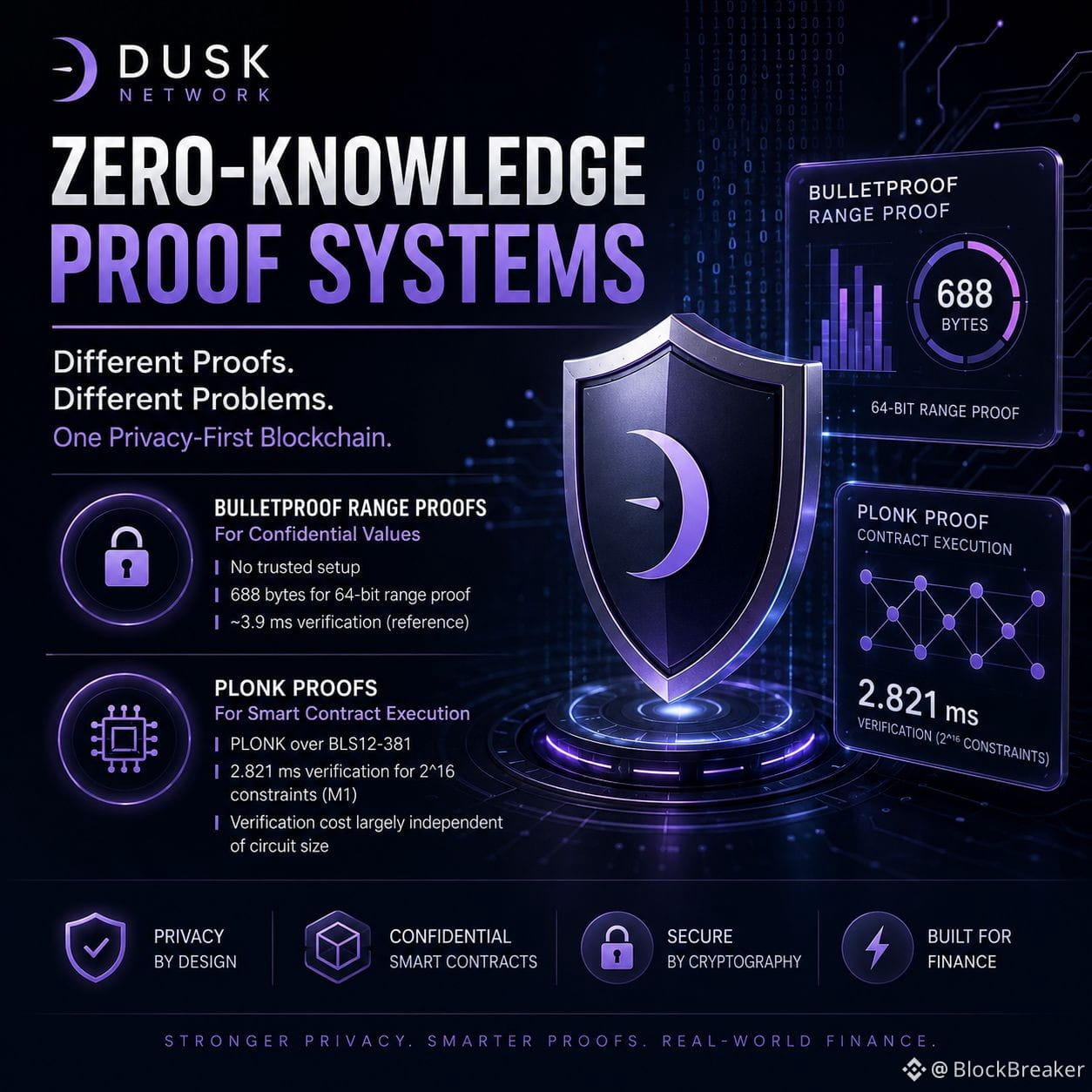
Zero-Knowledge Proof Systems: What interests me about Dusk is not that it uses ZK proofs. It is that different proof systems can solve different bottlenecks inside a financial blockchain.
Bulletproof-style range proofs make sense for confidential values. They can prove that a hidden amount sits inside an allowed range without exposing the amount itself, and they do it without a trusted setup. The trade-off is that proof and verification costs grow with the statement being proved.
Dusk’s newer direction shifts more of the execution burden toward PLONK-style proving. That is a more important distinction than the usual “Dusk is private” description. Once confidential transactions become programmable contracts, the problem is no longer just hiding numbers; it becomes proving that an entire set of state transitions followed the rules.
That is where circuit design starts to matter more than raw proof size. A proof that is tiny but expensive to generate, difficult to audit, or awkward to express may be less useful than a slightly larger proof backed by a flexible execution system.
Recent Dusk development around newer PLONK versions also makes the security engineering side impossible to ignore. ZK systems are not secure merely because the mathematics is sound. Verifier logic, commitment binding, circuit constraints and implementation details can become the actual attack surface.
So I would benchmark Dusk differently: prover time, verifier time, proof size, circuit complexity and audit resilience — all together.
The interesting question is not whether Dusk has ZK.
It is whether its proof architecture can remain efficient, programmable and trustworthy as confidential financial logic gets more complicated.
#dusk $DUSK @Dusk
Zero-Knowledge Proof Systems: What interests me about Dusk is not that it uses ZK proofs. It is that different proof systems can solve different bottlenecks inside a financial blockchain.
Bulletproof-style range proofs make sense for confidential values. They can prove that a hidden amount sits inside an allowed range without exposing the amount itself, and they do it without a trusted setup. The trade-off is that proof and verification costs grow with the statement being proved.
Dusk’s newer direction shifts more of the execution burden toward PLONK-style proving. That is a more important distinction than the usual “Dusk is private” description. Once confidential transactions become programmable contracts, the problem is no longer just hiding numbers; it becomes proving that an entire set of state transitions followed the rules.
That is where circuit design starts to matter more than raw proof size. A proof that is tiny but expensive to generate, difficult to audit, or awkward to express may be less useful than a slightly larger proof backed by a flexible execution system.
Recent Dusk development around newer PLONK versions also makes the security engineering side impossible to ignore. ZK systems are not secure merely because the mathematics is sound. Verifier logic, commitment binding, circuit constraints and implementation details can become the actual attack surface.
So I would benchmark Dusk differently: prover time, verifier time, proof size, circuit complexity and audit resilience — all together.
The interesting question is not whether Dusk has ZK.
It is whether its proof architecture can remain efficient, programmable and trustworthy as confidential financial logic gets more complicated.
Zero-Knowledge Proof Systems: What interests me about Dusk is not that it uses ZK proofs. It is that different proof systems can solve different bottlenecks inside a financial blockchain.
Bulletproof-style range proofs make sense for confidential values. They can prove that a hidden amount sits inside an allowed range without exposing the amount itself, and they do it without a trusted setup. The trade-off is that proof and verification costs grow with the statement being proved.
Dusk’s newer direction shifts more of the execution burden toward PLONK-style proving. That is a more important distinction than the usual “Dusk is private” description. Once confidential transactions become programmable contracts, the problem is no longer just hiding numbers; it becomes proving that an entire set of state transitions followed the rules.
That is where circuit design starts to matter more than raw proof size. A proof that is tiny but expensive to generate, difficult to audit, or awkward to express may be less useful than a slightly larger proof backed by a flexible execution system.
Recent Dusk development around newer PLONK versions also makes the security engineering side impossible to ignore. ZK systems are not secure merely because the mathematics is sound. Verifier logic, commitment binding, circuit constraints and implementation details can become the actual attack surface.
So I would benchmark Dusk differently: prover time, verifier time, proof size, circuit complexity and audit resilience — all together.
The interesting question is not whether Dusk has ZK.
It is whether its proof architecture can remain efficient, programmable and trustworthy as confidential financial logic gets more complicated.
1
5
324
Log in to explore more content
Join global crypto users on Binance Square
⚡️ Get latest and useful information about crypto.
💬 Trusted by the world’s largest crypto exchange.
👍 Discover real insights from verified creators.
Email / Phone number