
As usual, let me start with the conclusion: because these two coins and the two types they represent (copycat and fork) are essentially in a homogeneous competitive relationship with BTC, in the long run there will only be one winner.
In a free market, competitors with similar niches should not suffer together. If this happens temporarily, it only means that demand is too strong and information is not smooth enough. In time, a leader will emerge and eventually control the market share of the vast majority.
It's like when Apple's stock price keeps hitting new highs, you ask why the stock prices of Samsung and Xiaomi, which are also mobile phone companies, don't rise with it? The reason is easy to understand: Apple's rapid growth in mobile phone business is likely to be eroding the market share that originally belonged to other mobile phone brands. So it's good that Samsung and Xiaomi's stock prices haven't fallen, so why would they expect the same degree of increase?
The same is true for species evolution and competition in nature. Any successful species demonstrates its competitive advantage by eliminating other competitors in the same ecological niche. Just like our ancestors, Homo sapiens, used their competitive advantages to eventually drive other human branches in the same ecological niche, such as Homo erectus, Neanderthals, and Denisovans, all out of the historical stage.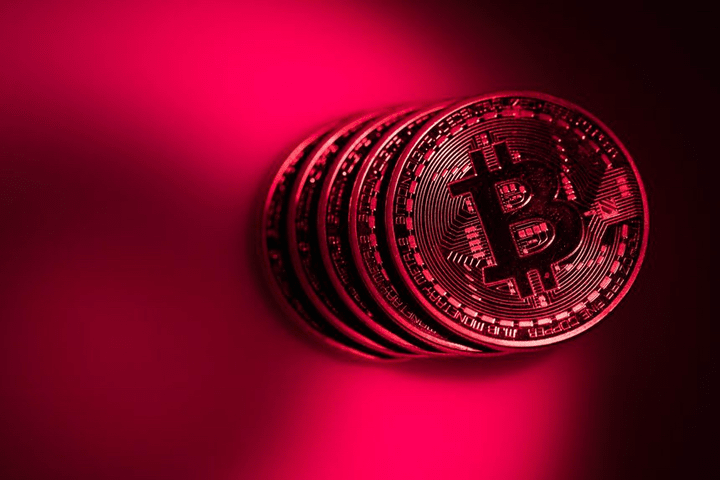 #BTC $
Whether it is a copycat or a fork, they all make some adjustments to the original Bitcoin code. For example, LTC shortens the confirmation time and increases the upper limit of the number of issuances, while the main change of BCH is to increase the upper limit of the block capacity. The difference between a copycat and a fork mainly lies in whether they inherit the historical data of the Bitcoin network at the same time. The former, such as LTC, copies the code and starts anew, while the latter, such as BCH, chooses to fork a new branch from the original Bitcoin network. Their prices have been significantly lower than Bitcoin for a long time, indicating that these changes are not favored and accepted by the market.
It should be noted here that I do not agree with some people in the industry who call all tokens other than BTC altcoins. Public chain projects like Ethereum (ETH) and many other projects that do not conflict with Bitcoin’s positioning should not be called “altcoins” in the strict sense.
So the altcoins I am talking about here are currencies like LTC that have only made some simple modifications to the Bitcoin code and have no new application scenarios or are different from the original positioning of Bitcoin.
#比特币超话 To sum up: for Bitcoin forks, failure to outperform other forks means elimination; for altcoins, failure to come up with more competitive innovations means elimination.
The logic behind this was already seen through by the Chinese painting master Qi Baishi:
"Those who learn from me will live, those who imitate me will die."