
Looking at the current crypto market, most of the popular public chains are POS models, and POW seems to be hard to come up with a masterpiece, especially since Ethereum switched to the POS mechanism. Recently, new POW influencers such as Kaspa and Dynex have made the market start to pay attention to the POW track again.
Among them, Dynex, which took advantage of the AI trend and promoted the "neuromorphic computing platform" narrative, not only attracted many miners to participate, but also attracted attention in the secondary market due to its dozens of times increase. But at the same time, Dynex began to face multiple doubts from the crypto community, and negative news such as the founder's suspected fraud and white paper plagiarism continued to spread.
Claims to be building a neuromorphic supercomputing blockchain, attracting attention due to market push
According to the official introduction, Dynex is a neuromorphic supercomputing blockchain based on the DynexSolve chip algorithm. It adopts the Proof of Effective Work (PoUW) method to improve the speed and efficiency of the decentralized network, and aims to provide computing power for machine learning, financial technology, biopharmaceuticals, etc.
The Dynex network nodes are composed of PoUW miners, allowing any miner to perform Dynex chip calculations and receive native tokens $DNX in return, thereby realizing a decentralized network to perform high-speed and efficient calculations, even exceeding quantum computing. Not only that, Dynex also uses a completely anonymous peer-to-peer transaction privacy method, and its token $DNX has no IC0, no pre-mining, and no team reservation.
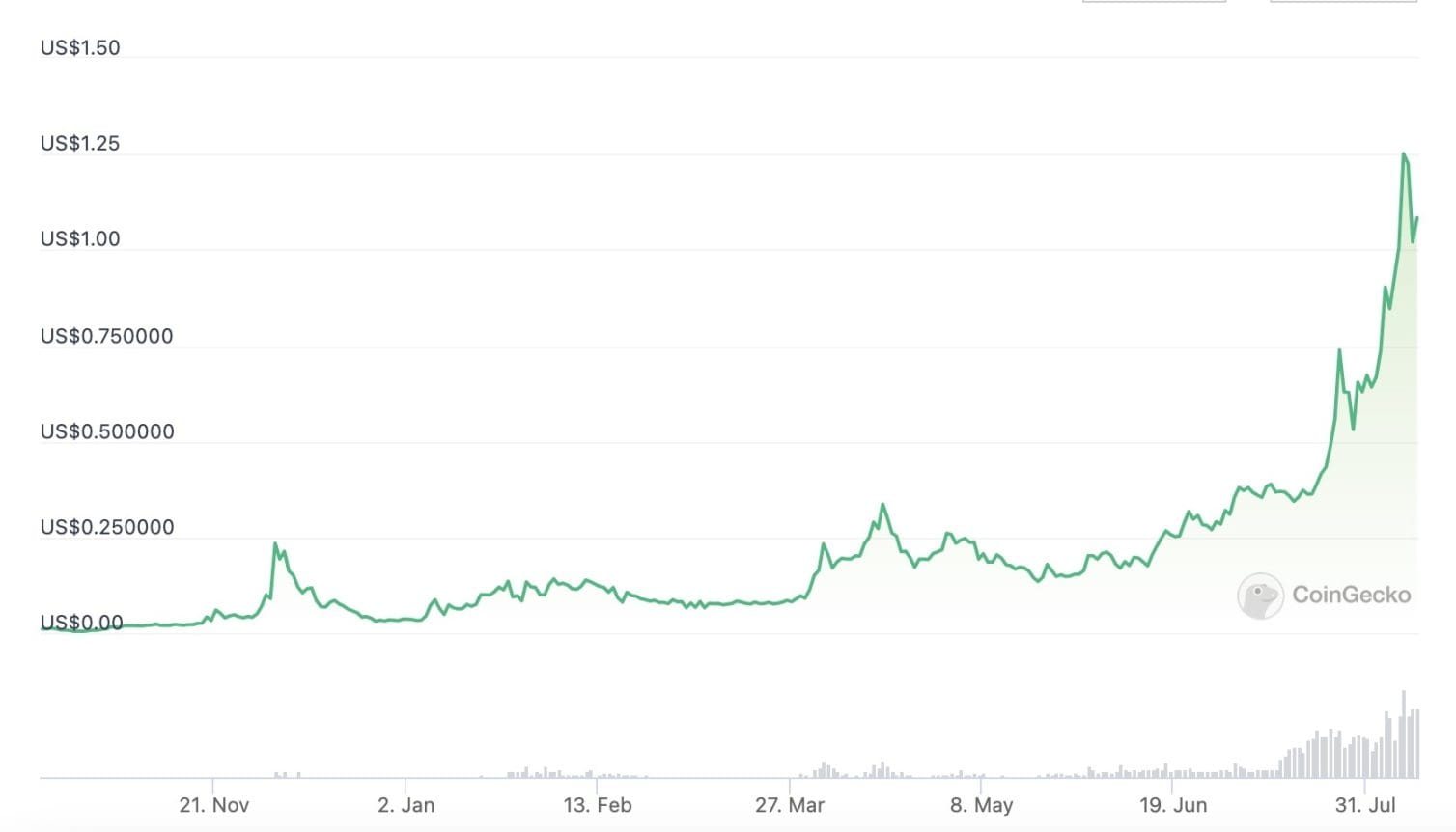
It is technically difficult for ordinary investors to verify (we will expand on this in detail below), but Dynex’s market performance is amazing. CoinGeoko data shows that the price of $DNX has increased by more than 34.7 times since the beginning of this year.
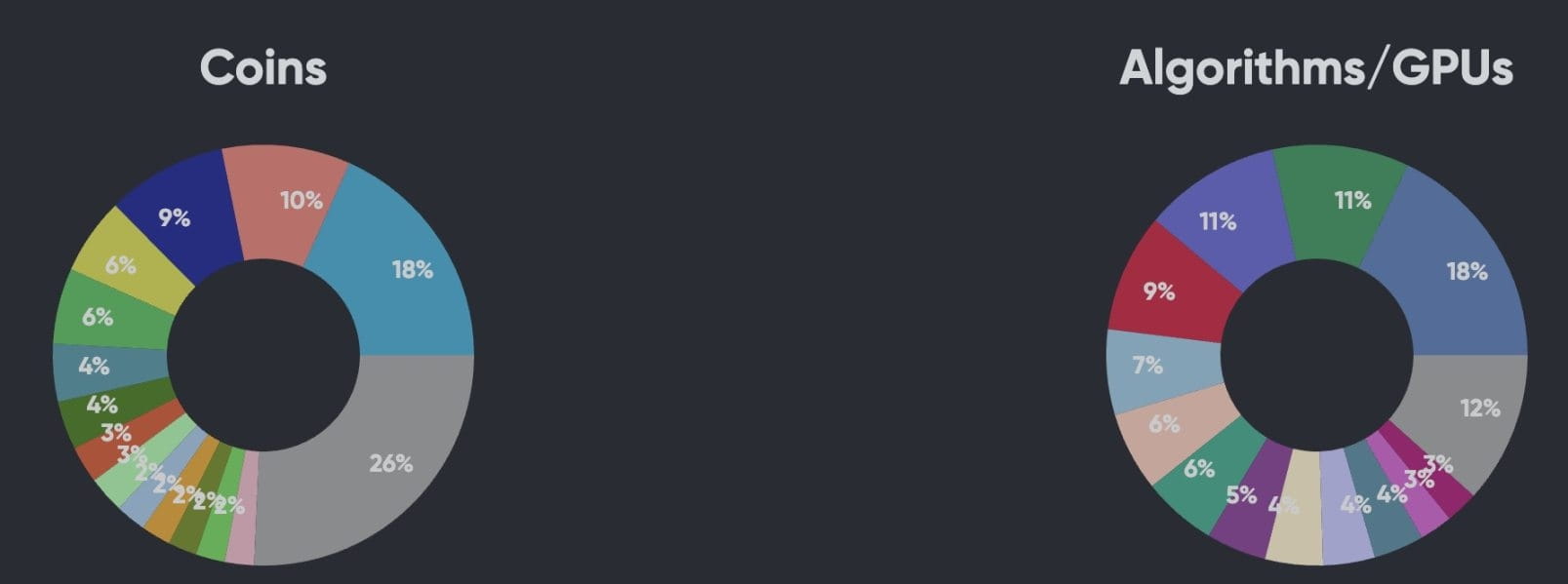
In terms of computing power, data from the hiveon.com computing power management platform shows that as of August 10, $DNX's computing power accounted for 18%, ranking first among the POW coins listed on the platform, far exceeding KAS, ETC, RVN and other projects.
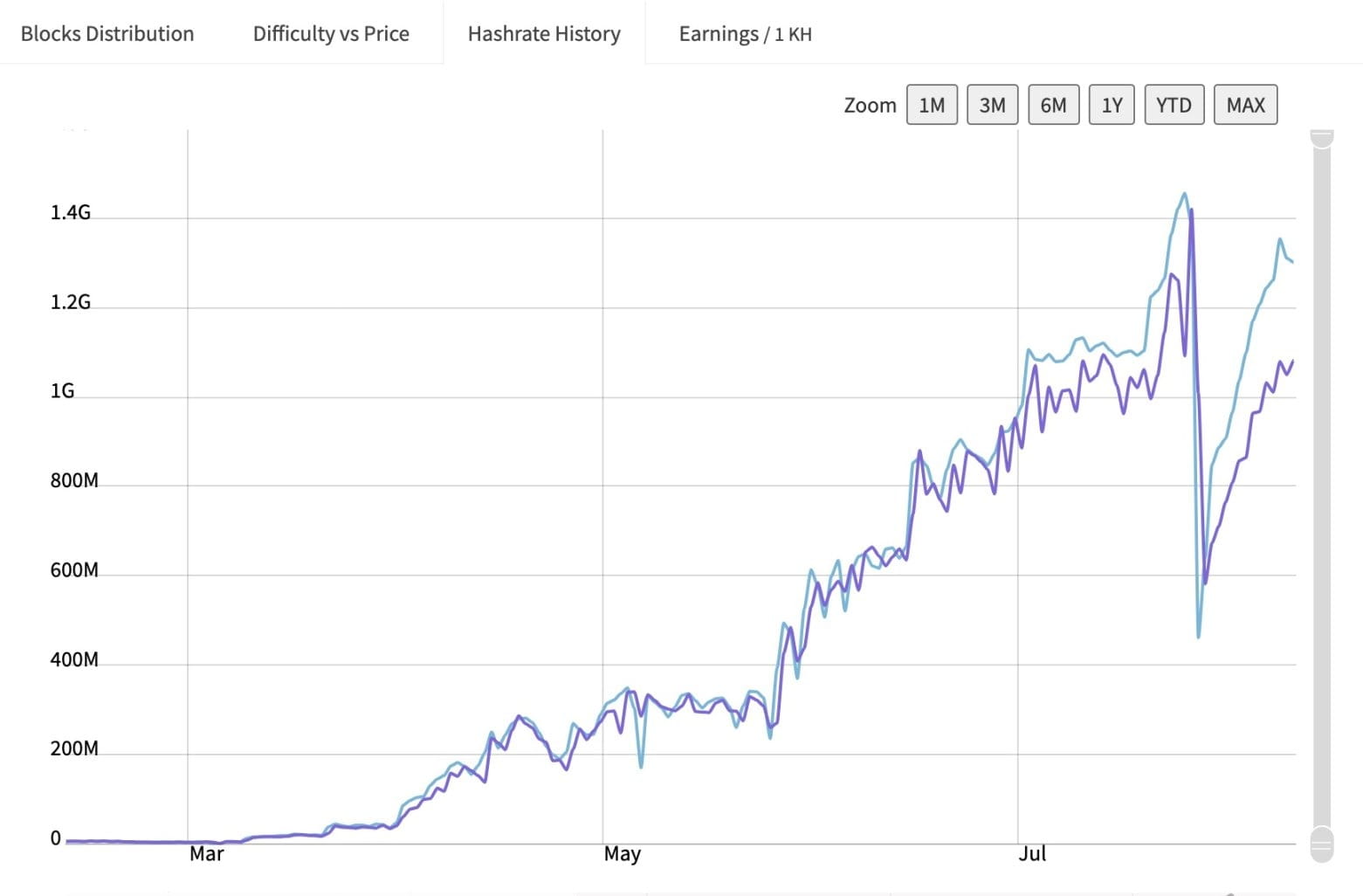
In addition, Mining Pool Stats data shows that as of August 10, Dynex's network computing power was 1.09 GH/s, ranking 38th. In the past 6 months, Dynex's computing power has also shown an upward trend. Although it briefly declined due to algorithm upgrades, it quickly recovered. In terms of computing power distribution, the top three mining pools account for nearly 84.4% of the total computing power.
The founder was punished by the SEC for fraud, and the white paper was suspected of plagiarism
While Dynex became popular, questions began to arise about white paper plagiarism and project team background. Dynex is an anonymous team. Anonymous identities are not uncommon in the Web3 world that focuses on decentralization and privacy, but this means that once these projects do evil, it will be difficult for users to hold them accountable.
As for the anonymity of the team's identity, according to a tweet on the Dynex Chinese channel, Dynex's parent company is a Nordic chip company, which has not yet been made public due to tax and other issues. However, the community did not accept this statement. Some community members discovered that Dynex founder Daniel Mattes had committed fraud. Linkedin information shows that Daniel Mattes is an Austrian Internet entrepreneur and venture capitalist who has founded several companies, including artificial intelligence company 42.cx, VoIP company Jajah and mobile payment and ID recognition startup Jumio.
Among them, Daniel Mattes, the former CEO of Jumio, was charged by the SEC in 2019. According to SEC public documents, Daniel Mattes deceived investors before the company went bankrupt, not only falsely reporting the company's revenue, but also secretly selling the company's stock without reporting it. Although Daniel Mattes neither admitted nor denied the allegations, he ultimately agreed to pay more than $17 million to settle and is no longer allowed to lead a public company in the United States.
Not only that, according to Twitter user @OlivierHelden, the predecessor of Dynex may be DeepQ. The latter not only has the same neuromorphic chip project, but the Adobe Stock Flash serial number of the DeepQ promotional video on Youtube is exactly the same as the promotional video on the Dynex official website ( Currently, Dynex has issued a 404 error regarding this video and cannot display it). Interestingly, another community member revealed that he had his account banned after asking about the relationship between DeepQ and Dynex in the Discord community.
In addition to the team background, the authenticity of Dynex's two core advantages, DynexSolve and PoUW, has also been questioned. According to KOL @陈剑 Jason, Dynex can transform any modern GPU into an analog neuromorphic computing chip through DynexSolve, but there is no public paper on such a revolutionary technology. Not only that, neuromorphic computing has not yet been applied in the real world, including top universities, the US military, Intel and IBM are still in the exploration stage.

As for PoUW, analyst Jason Chen Jian said that for a blockchain, PoUW is too non-standard in the three stages of beginning, process and end. The number and frequency of tasks are non-standard, and the difficulty and difficulty of completing tasks are non-standard. It is time-consuming and non-standard, and the correctness of the verification task results is non-standard. As a result, it is impossible to stably generate blocks and effectively verify them. This chain will not have basic usability.
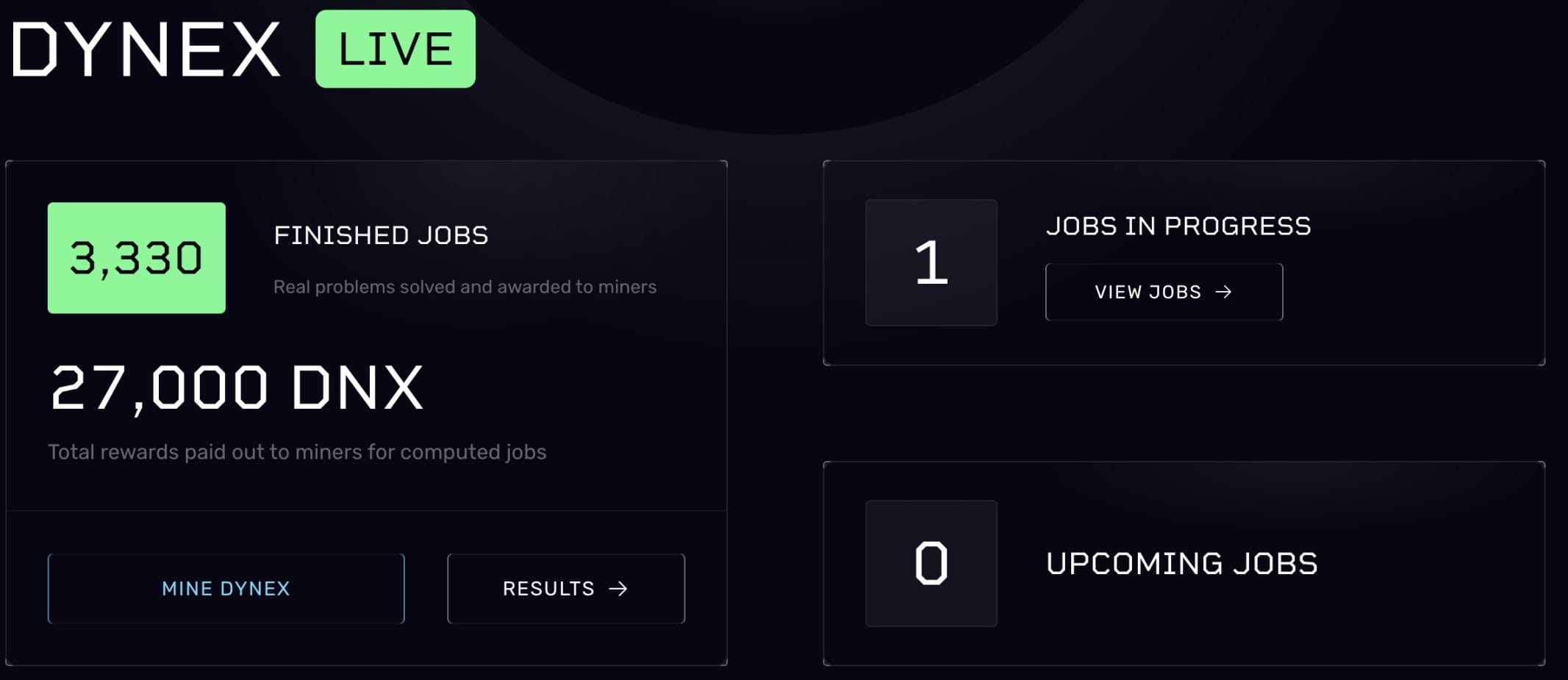
It is worth mentioning that Chen Jian also pointed out that the Dynex official website shows that 3,300 tasks have been completed, but only 1 is currently in progress, and all of these tasks are black boxes. They have no idea what they are doing, and there is no release of tasks. Entrance.
Regarding these technical issues, some community members believe that Dynex's ability to conduct ML public beta shows that its technology can withstand public scrutiny. However, the public beta has been postponed several times due to technical issues.
In addition, Dynex's white paper contains copy-paste content. As shown in the figure below, some of Dynex's content is almost copied from the white paper on the Digital Memory Computer (DMM) owned by the patented American company MemComputing.
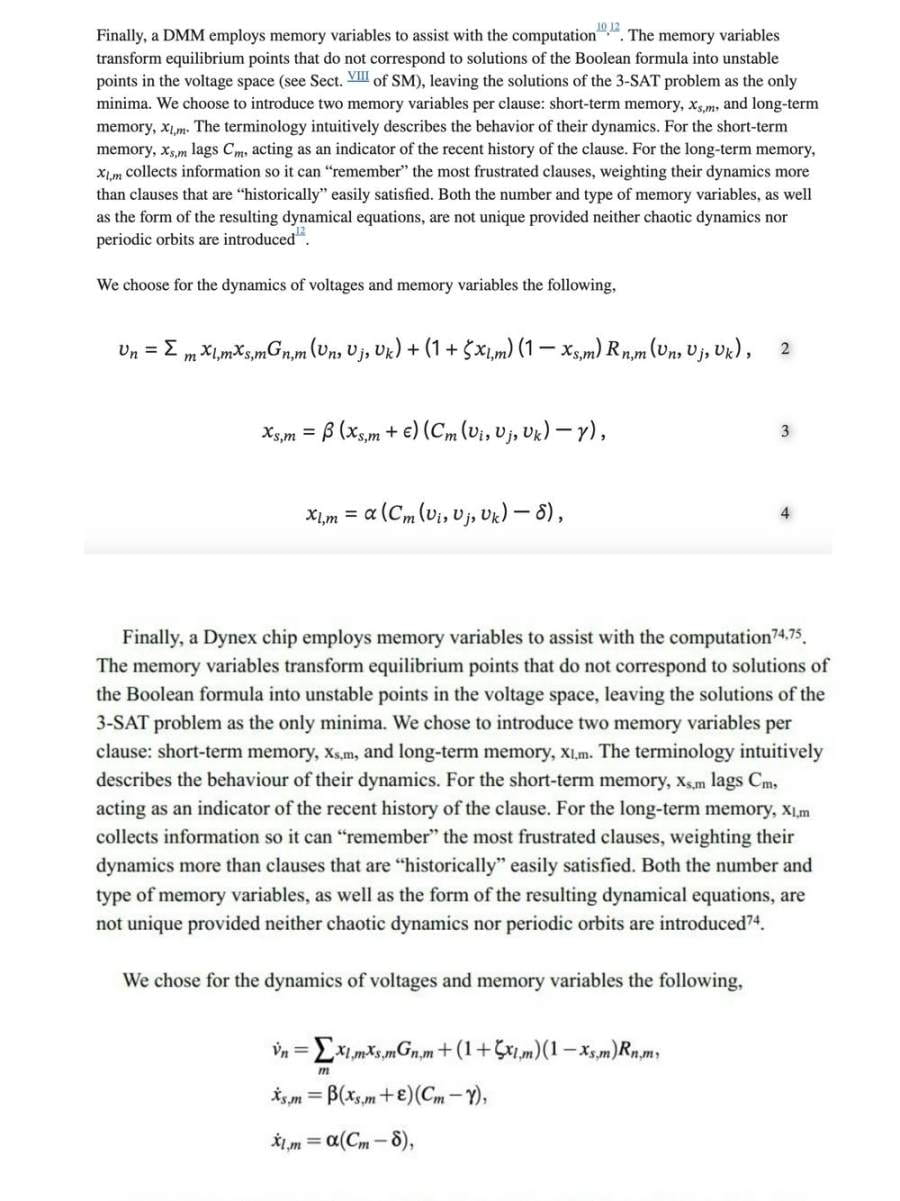
Comparison of parts of the white paper between Dynex and DMM
In short, with the AI trend and the POW concept becoming popular, it is not surprising that Dynex is favored by investors. In particular, with the popularity of Kaspa bringing about the POW mining boom, and a large number of mining machines being idle after Ethereum switched from POW to POS, Dynex has also become a migration target for miners. As a project that requires extremely strong technical R&D capabilities, it is reasonable for the community to question Dynex for its own interests, but in order to dispel the doubts from the market, it still needs to show "hard power".