


Layer2 has become one of the most important tracks this year. Its development will enable the Web3 network to serve users with higher efficiency and lower costs while maintaining the advantages of new production relations, smart contracts, etc., as the underlying facility Affect the speed of future industry development. Recently, in addition to projects specifically focusing on the L2 track, exchanges are also making frequent moves on the L2 track. Mantle, Base, and opBNB have successively launched or announced the L2 mainnet time, which has attracted market attention. In this article, we will take stock of the latest situation of the exchange's L2 and the meaning behind it.
1. Base
Powered by Coinbase, an Ethereum L2 network that provides a secure, low-cost, developer-friendly way for anyone to build decentralized applications, or on-chain “dapps,” aiming to bring the next billion users to Web3 and the Cryptoeconomics.
1. Technical Overview
Base was the first to cooperate with the OP Stack team and became the core developer of OP Stack, using Optimistic rollup and OP Stack's modular technology stack. The two technology roadmaps in 2023 are also coordinated. It can be said that all the advantages of OP Stack will be inherited in Base, such as shared Ethereum security, EVM equivalence, the lowest cost and excellent scalability in current L2, OP Stack’s modular structure, etc. For further technical features of OP Stack, you can review our previous report "Looking ahead to the Cancun upgrade, is OP worthy of "optimism"".
2. Current progress
(1) Timeline: The Base test network will be launched on February 23, 2023 to promote the cooperation with Optimism and the super chain concept - the main network will be open to builders on July 13, 2023 - it will be announced that the main network will be open to the entire network on August 9, 2023 , and launched the one-month Onchain Summer event.
(2) The meme craze at the end of July:
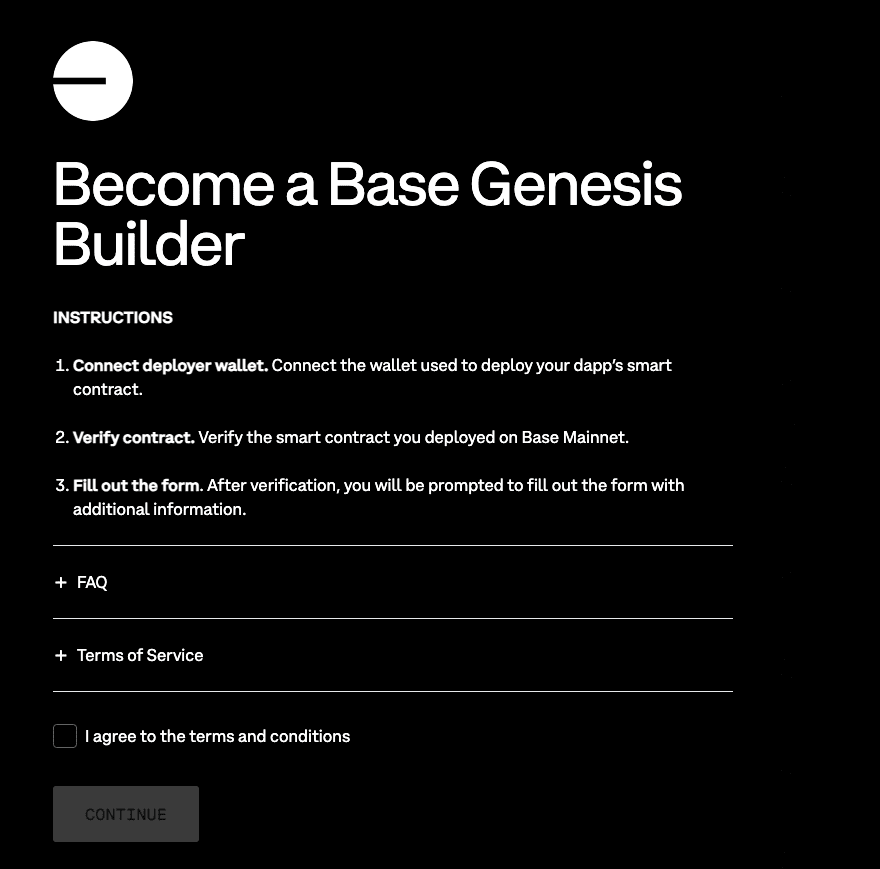
After the 7.13 mainnet was just opened, there was not much money on the chain. On July 28th, the official publicized the link to mint NFT to early builders. The casting condition was to deploy smart contracts on the Base mainnet. After 7.30, the TVL on Base began to grow rapidly. Two Within a day, TVL exceeded 8 million US dollars.
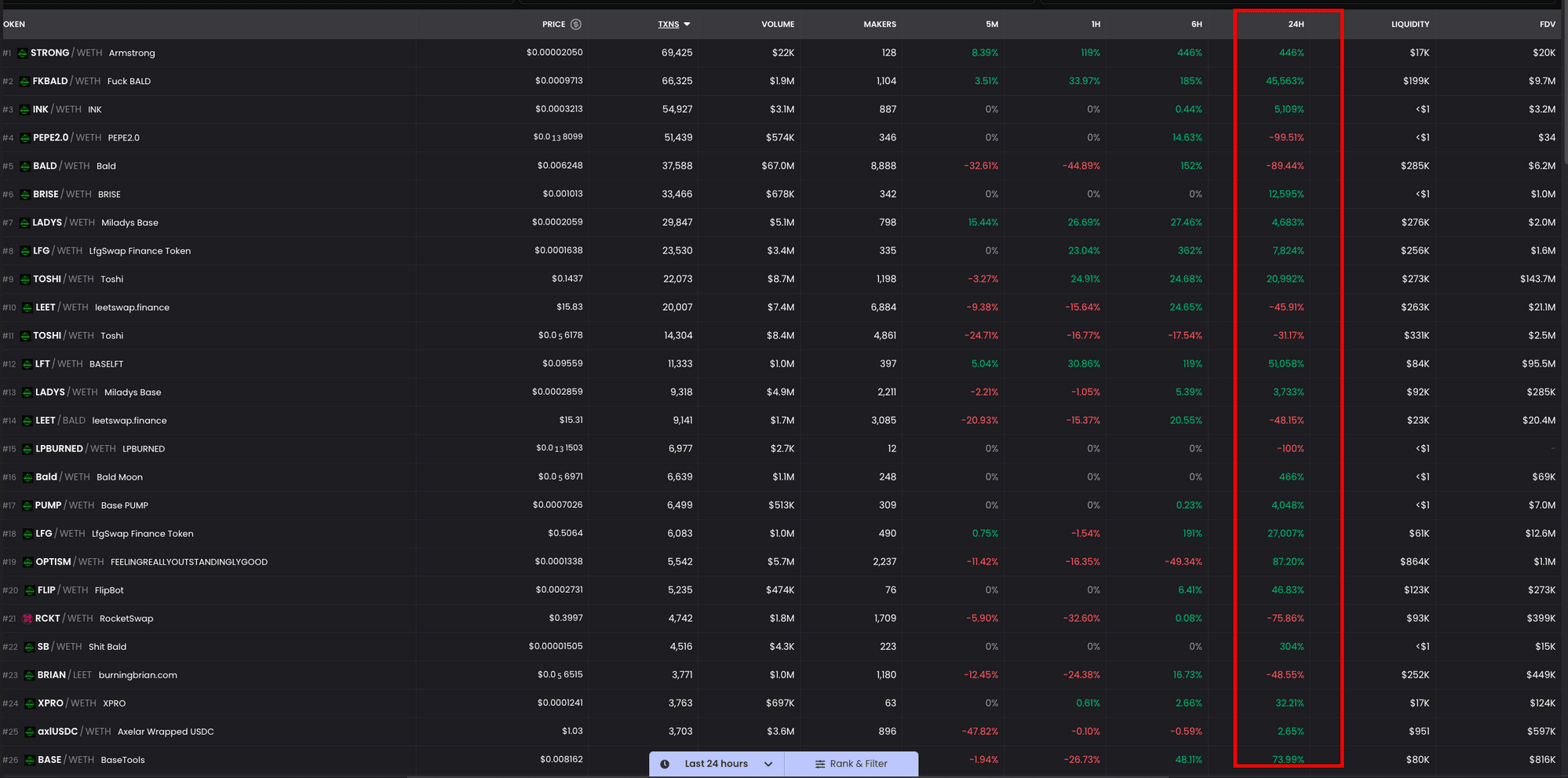
Since there are not many applications launched on the chain, the deployed smart contracts are mainly memes with no practical applications. In conjunction with the operation of funds, the meme currency represented by bald plummeted to zero after increasing a thousand times in one day. Although most of them Memes are all making their debut and Rug quickly, but the exaggerated data has caused more funds to pour into Base, and because there is no official cross-chain bridge for the time being, a large amount of funds have remained on the chain for speculation. This wave has made the Base mainnet Before it was officially launched to the public, it brought extremely high market popularity.
(3) Data situation on the chain:
Since the mainnet launch time was announced on August 3, the current TVL on the chain has exceeded 120 million US dollars.
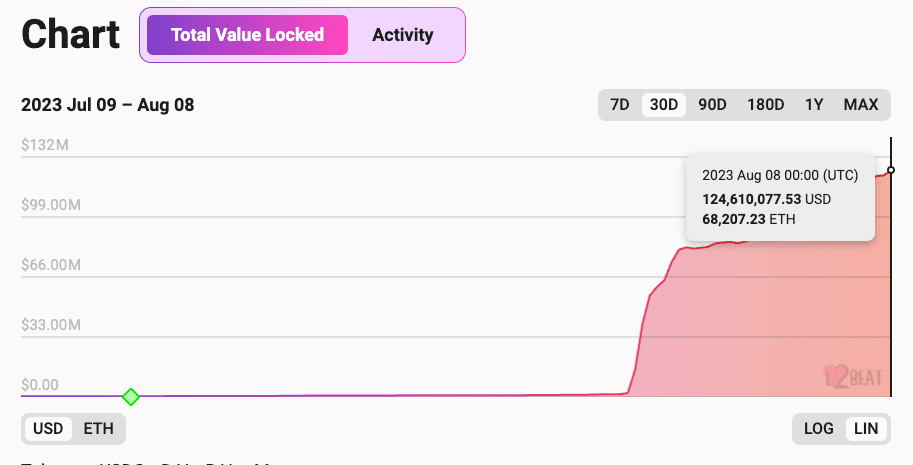
The total number of transactions is 5.75 million, the total number of users is 340,000+, the number of created contracts is 53,000, and the average gas is US$0.36.


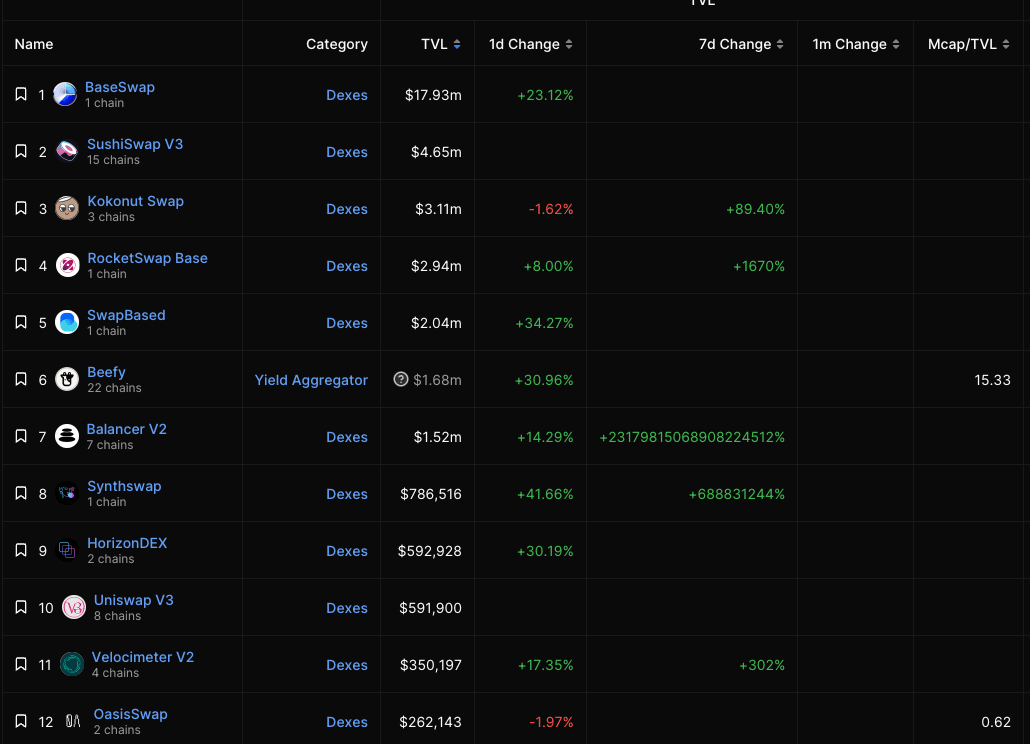
The main application on the current chain is Dex, with baseswap ranking first, and TVL accounting for 50% of the top ten Dex.
3. Future plans
(1) The vision of building an open portal for web3:
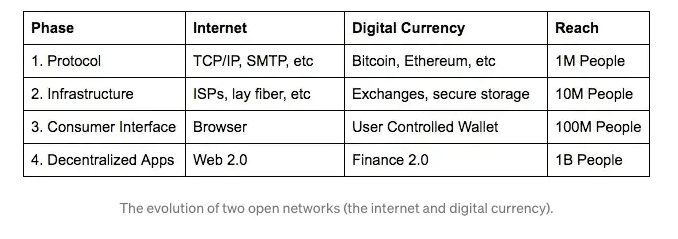
From its inception, Coinbase has had a four-phase plan with the goal of creating an open financial system to increase economic freedom around the world. Over the past decade, the first three phases have been completed: protocols (*Bitcoin, Ethereum), establishing an exchange (*Coinbase Exchange) as a bridge to digital currencies, and creating a decentralized application Or a mass-market interface to “dapps” (*Coinbase and Coinbase Wallet). Currently, it has reached the fourth stage. In the past, Coinbase's main services were built based on Web2 technology. At this stage, a chain written in smart contracts will be built as an environment to host various crypto-native dapps. In the future, it will be 10 billion users into the crypto economy.
(2) Technology roadmap:
The goal in 2023 is to work with OP Labs and Optimism Collective to advance Base and Op Mainnet from Phase 0 Roll up (*as defined by Vitalik) to Phase 1 Roll up and achieve a high degree of decentralization and trustlessness.
A. Online fault proof: Launch at least one fault proof for the OP stack to protect the security of Base and Op Mainnet by leveraging a set of validators to identify and challenge faults.
B. Advance decentralization: Decentralize the upgrade capabilities of Base and Op Mainnet smart contracts, first by handing them over to a security committee whose decentralized quorum is not controlled by any single entity.
C. Start implementing the Super Chain: Launch the initial version of the Super Chain, which can sort transactions aggregated by Base, Op Mainnet and any OP Stack, protecting anyone’s right to participate in these ecosystems.
The goal in 2024 is to work towards advancing the Base and Optimism mainnets to Phase 2, with a level of decentralization and security comparable to Ethereum.
4. Project characteristics
(1) No token plan: Base has made it clear through official channels that it has no plans to issue network tokens. (*This aspect may mainly consider compliance supervision in the United States. There may be new changes in the future based on the regulatory game between Coinbase and the SEC)
(2) Build an open chain: Base hopes to build a bridge, not an island. Access to Ethereum L1, other L2s, and other L1 ecosystems such as Solana will be provided. In addition to enabling Base to interoperate with other chains, as many chains as possible will be supported within the Coinbase product.
(3) Coinbase’s ecological linkage: Coinbase has nearly 100 million users and $130 billion in assets. Base’s development and interconnection will bring these users to the chain world through Coinbase. It is also hoped that more new users will start from Base’s The on-chain entrance comes to Coinbase.
2. Mantle
Supported by Bitdao and Bybit, the Mantle network is Ethereum L2 using Optimistic rollup. It is backed by the huge Mantle treasury. The product and plan roadmap are fully governed by token holders.
1. Technical Overview
(1) Modular architecture and data availability: Similar to OP Stack, Mantle also uses a modular architecture. In a modular blockchain, the core functions of operations (*execution, consensus, settlement, data availability) are in a dedicated layer carried out on. The advantage of this is that it can alleviate the impossible triangle problem of the blockchain to a certain extent. In terms of scalability, resource separation can improve network efficiency, because each layer is dedicated to specific tasks; in terms of security, all users use the same Operate at a safe level. In terms of decentralization, technologies such as fraud proof and zk proof operating on different layers reduce the overall execution and verification load on the node, eliminating the need to execute all transactions to check validity.
Based on a modular architecture, Mantle has a separate data availability layer DA, which means Mantle can increase throughput without affecting security or reducing the burden on verification nodes. Mantle DA is powered by EigenDA technology.
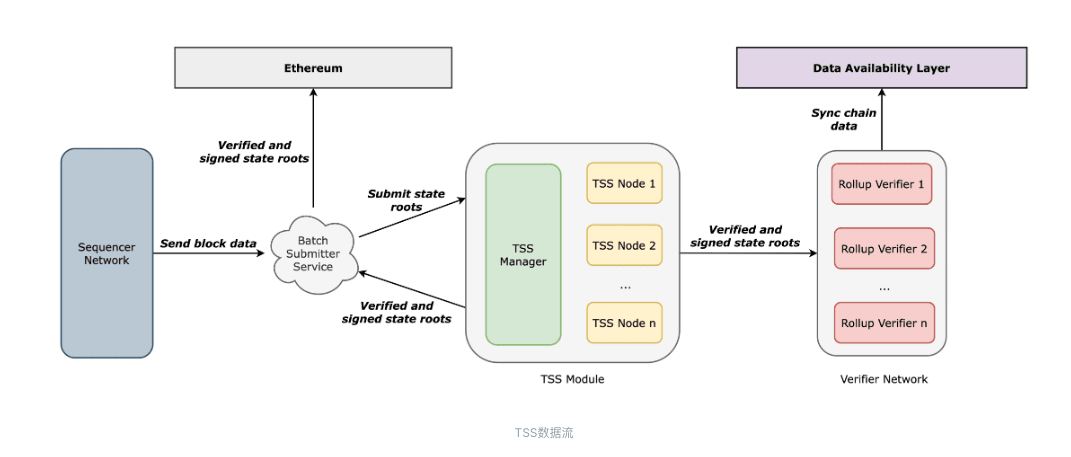
(2) Threshold signature scheme: Optimistic rollup has a limitation, which is to impose a long waiting time on withdrawals in the form of a challenge. In order to solve the uncertainty of transaction verification during the challenge, Mantle implemented a distributed signature scheme. Verify block data. This paradigm of distributed key generation combined with digital signatures, more commonly known as Threshold Signature Scheme TSS, enables each party to the client network to generate valid signatures and ensures the verifiability of distributed signature data ( *As long as there are enough honest signatures). Since each TSS client only holds a portion of the private key, the private key is no longer a single point of failure.
By using Threshold Signature Scheme (*TSS) technology, dedicated nodes contribute multi-party signatures to improve the correctness of off-chain transactions. This results in a shorter challenge period for withdrawals. However, the current TSS nodes are all authorized by Mantle core contributors, that is, they are centralized.
(3) Improved fraud proof
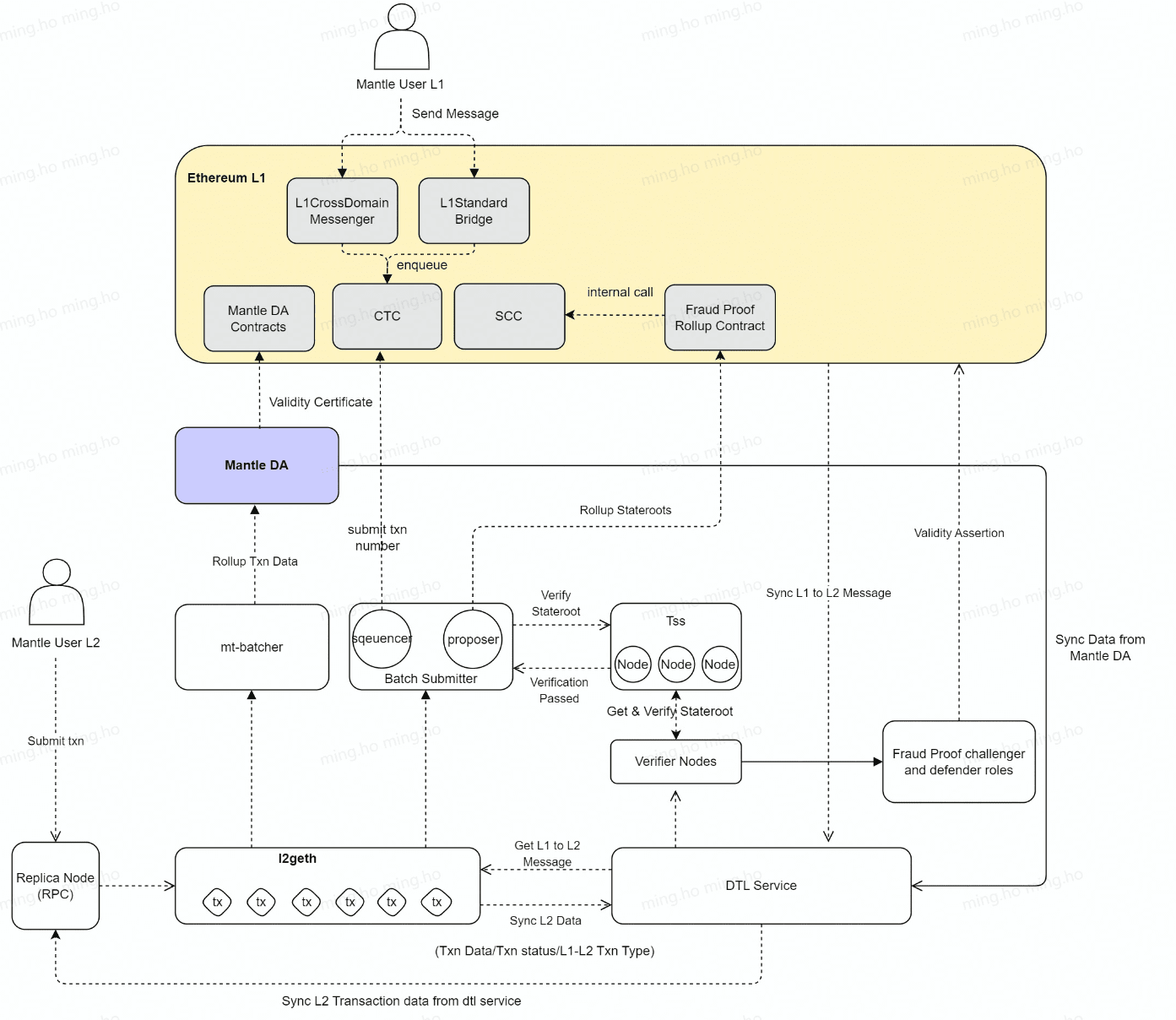
In the currently popular fraud-proof model, the contract that resolves disputes — the on-chain validator — can only execute instructions in lower-level virtual machines such as MIPS or WASM. This forces Ethereum Virtual Machine (*EVM) clients to recompile their fraud proofs into a lower-level language so that on-chain validators can interpret them, meaning the content of the fraud proofs is generated outside the scope of the EVM.
The Mantle network uses an interactive fraud proof mechanism to establish transaction validity, and compiles and verifies fraud proofs using EVM-level instructions (*i.e., no low-level translation is required to avoid ambiguity).
2. Current progress
(1) Timeline: 2023.1.10 BitDAO modular Ethereum Layer 2 network Mantle Network announced the launch of the test network - 2023.5.19 BitDAO community's proposal on "Optimization of Brands, Tokens and Token Economics" with a 100% approval rate pass. The BitDAO, Mantle, and BIT ecosystems will be collectively named Mantle, and BIT tokens will also be converted to Mantle — 2023.7.17 Mantle Network announced the launch of its mainnet Alpha version on EthCC.
(2) Token economics and token replacement:
Mantle officially opened token exchange at 6 a.m. UTC on July 17, 2023, and you can exchange BIT for MNT at a ratio of 1:1.
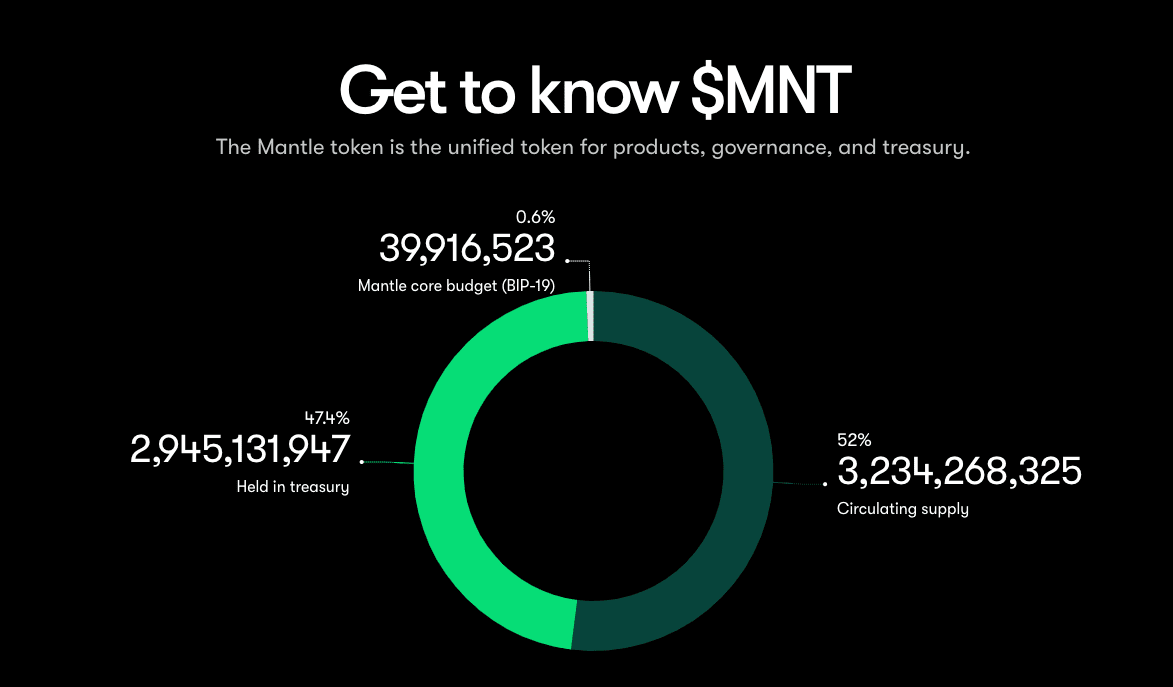
The current total supply of MNT is 6,219,316,794, of which 52% is circulating supply, 47.4% is held by the treasury, and 0.6% is held by the team’s core budget. MNT tokens play the dual role of governance and utility tokens in the Mantle ecosystem, providing holders with Voting rights and practical functions (*Mantle’s token economics may change in the future due to factors such as exchange, governance proposal approval, etc.)
(3) Data on the chain:
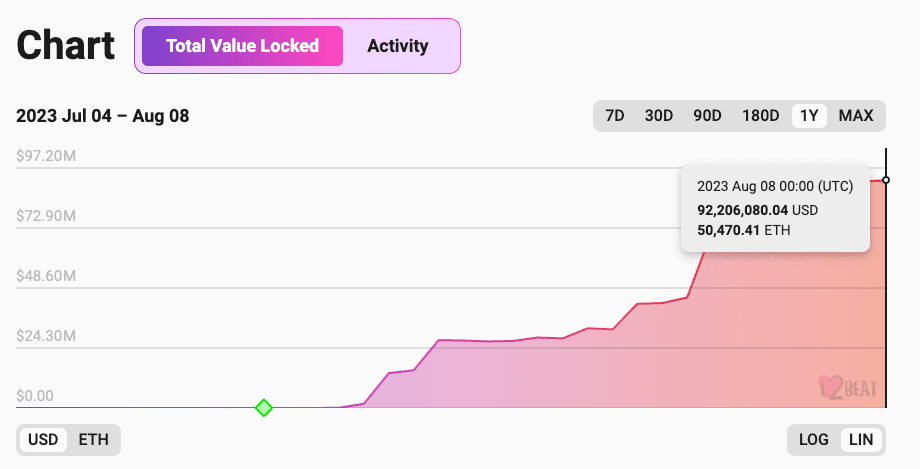
TVL 92 million, mainly due to the large number of tokens immediately after MNT was launched. The current circulation of MNT tokens is about 320 million, with a current price of US$0.505 and a market value of 1.6 billion.
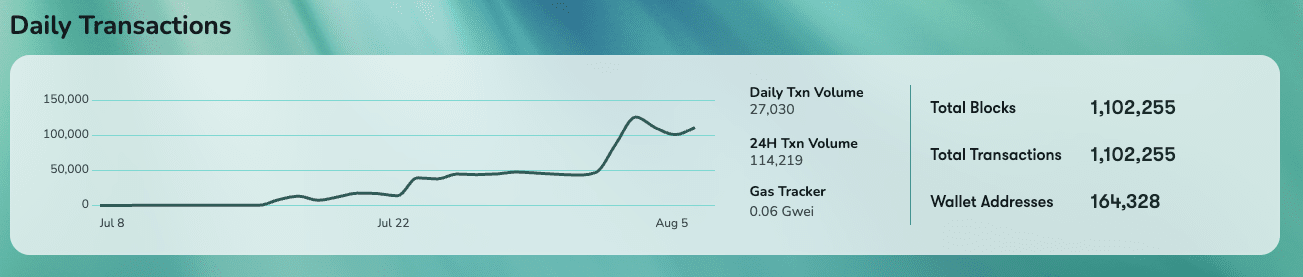
In recent days, there have been more than 100,000 daily transactions, the total number of wallet addresses is 160,000+, and the total transactions are 1.1 million+.
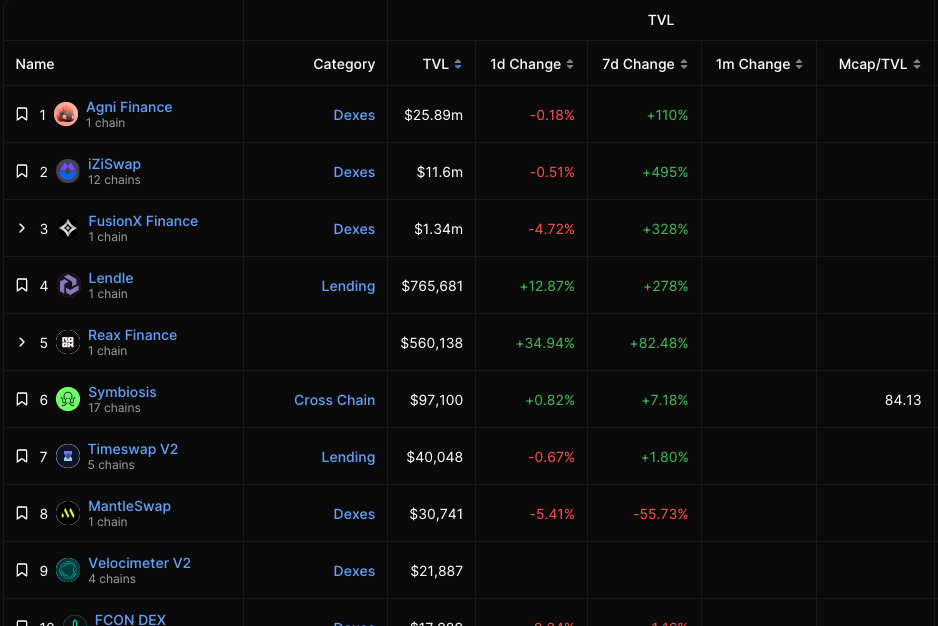
The top-ranked application in terms of TVL on the chain is its native Dex, Agni Finance, which uses the ve(3,3) mechanism, and TVL accounts for more than 63% of the top ten.
3. Future plans
(1) Technology roadmap:
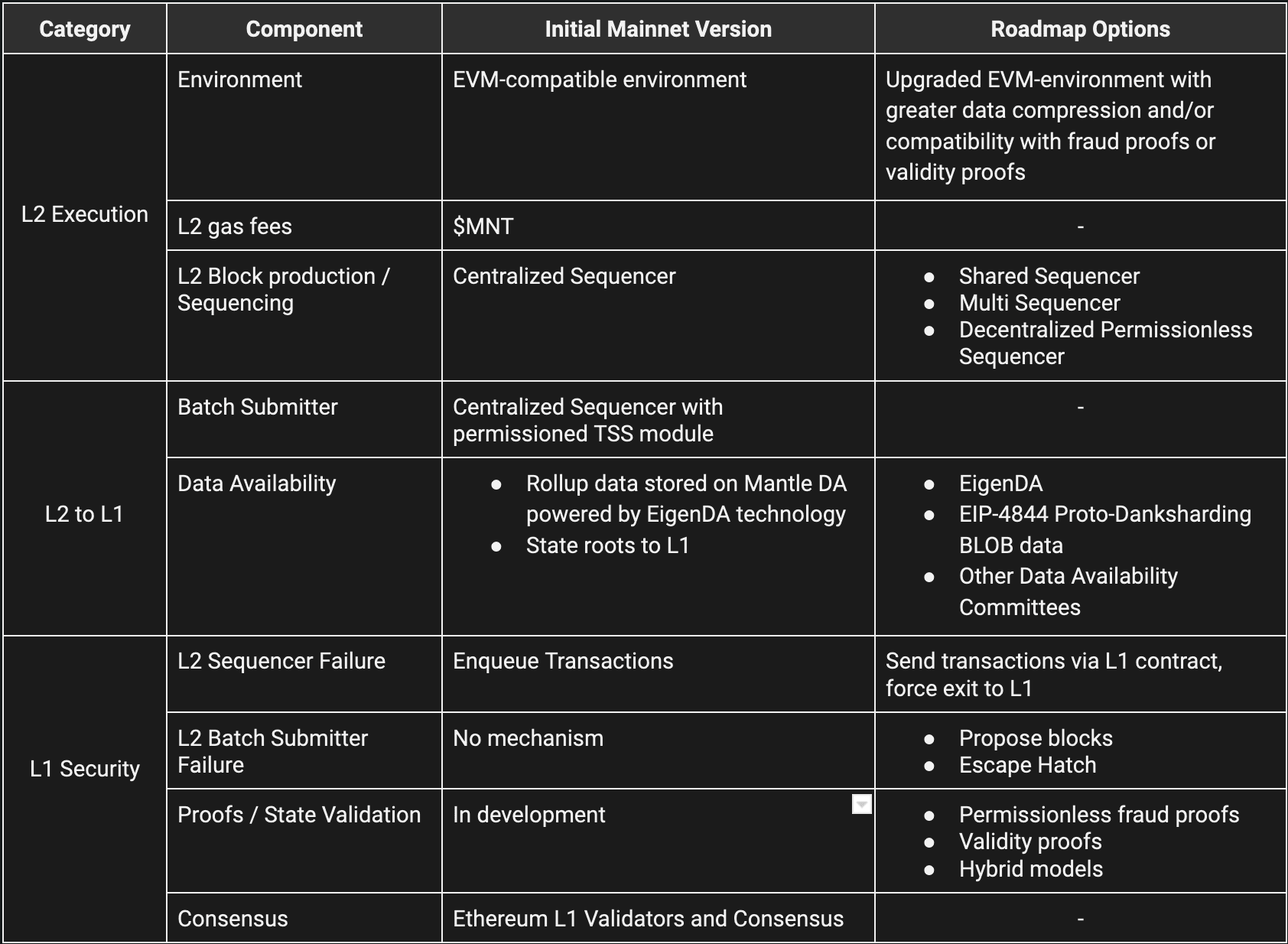
The official currently mainly discloses further technical plans. At the L1 level, it mainly optimizes fraud proofs, including optimizing the current method of authorizing nodes by core contributors into permissionless fraud proofs. The L2-L1 level mainly focuses on EIP-4844. Optimization, L2 level, the current version is EVM compatible, which will improve the EVM environment; upgrade the centralized sorter to a decentralized sorter.
4. Project characteristics
(1) Strong financial strength: BitDAO is currently one of the largest DAO organizations and also has one of the largest treasury, with currently US$3.8 billion in reserve assets. These assets are inseparable from the contribution of Bybit, which has donated more than $600 million in USDC/USDT and 177,000 ETH to the BitDAO treasury.
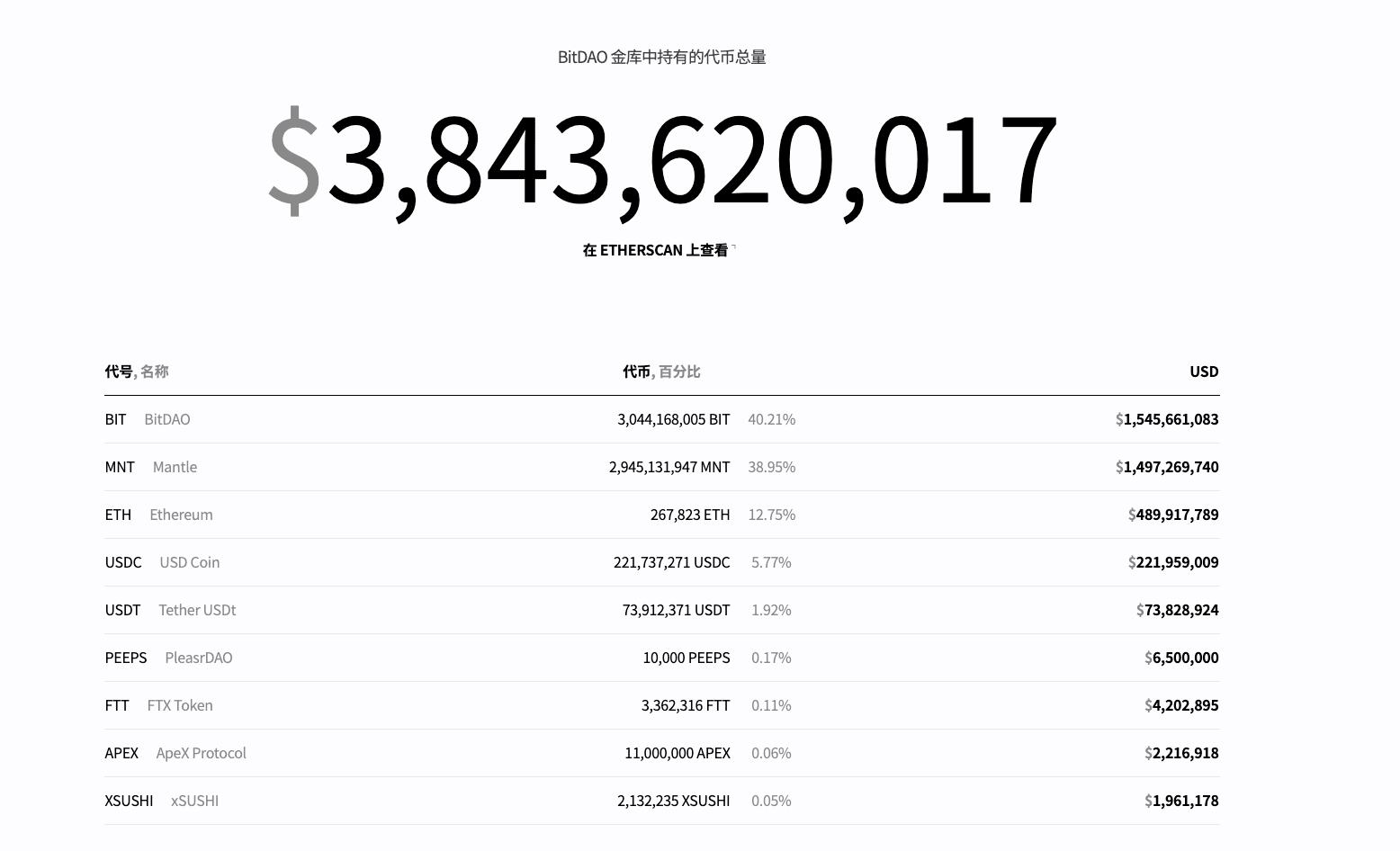
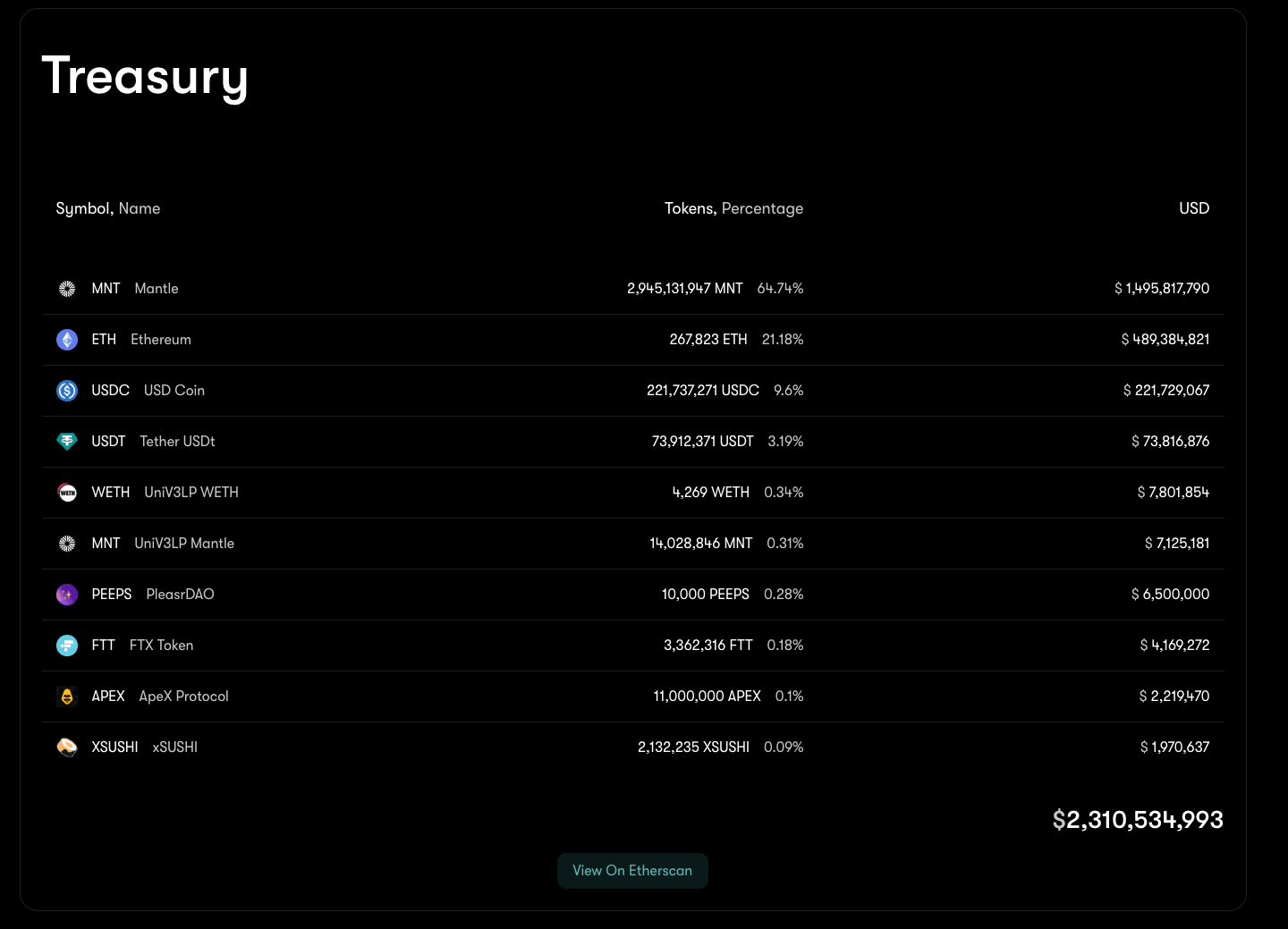
Through the merger of BitDao and Mantle, Mantle Network has inherited nearly US$300 million in stable currency reserves and nearly 270,000 ETH (*US$489 million) from BitDAO. These funds will be the core competitiveness to promote the ecological development of the entire chain.
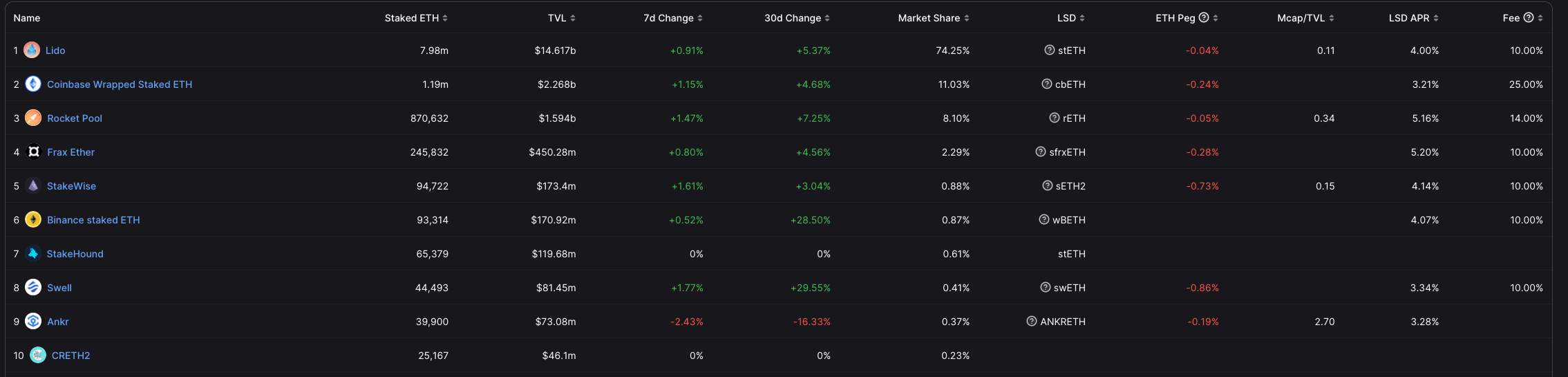
(2) Layout LSD: The Mantle community has proposed the introduction of Mantle LSD and mntETH. Users including Mantle Treasury can deposit ETH and receive profitable mntETH receipt tokens. Validation services are outsourced to external node operators.
Currently, Mantle’s vault holds nearly 270,000 ETH. Currently, Frax, which ranks fourth on the LSD track, has pledged 245,000 ETH, and StakeWise, which ranks fifth, has pledged 94,000 ETH. It can be seen that if Mantle wants to vigorously develop LSD, it will be faster To have a role to play.
3. BNB Chain-L2
Supported by BNB Chain and Binance, two L2 solutions, opBNB and zkBNB, are deployed based on BSC to expand the performance of the BSC chain. Currently, opBNB is developing faster, and opBNB also adopts OP Stack technology.
Technical overview
BNB Chain consists of two blockchains - BNB Beacon Chain (*BC) and BNB Smart Chain (*BSC). The BNB Beacon Chain is the blockchain component responsible for the governance of the BNB chain and manages staking and voting on the BNB chain. The BNB smart chain is a blockchain component that is compatible with EVM, has a consensus layer, and has a multi-chain hub.
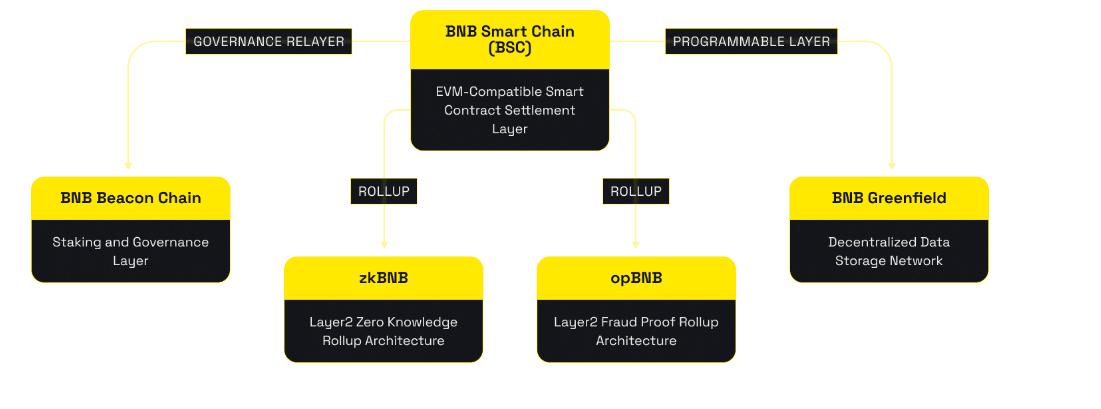
zkBNB and opBNB are BSC's second-layer expansion solutions. Unlike other L2s introduced in this article, zkBNB and opBNB are designed based on BSC as a layer, not Ethereum. Although BSC's speed is much higher than Ethereum, However, as a chain that hosts a large number of games, it is still very important to further improve scalability through L2.
zkBNB — zkBNB is an infrastructure built for developers based on the zk-Rollup architecture. It can help them build large-scale BSC-based applications with higher throughput and lower or even zero transaction fees in the future. It is currently in the testnet stage. Arnaud Bauer, senior solution architect of BNB Chain, said in an interview with The Block in the first half of the year that zkBNB is not yet compatible with EVM, so opBNB was launched first.
opBNB — The opBNB network is a layer 2 expansion solution for the BNB smart chain. It is technically supported by OP Stack and can achieve scalability while inheriting BSC's layer of security and EVM compatibility. (*OP Stack content will not be expanded here)
2. Current progress
(1) Timeline: 2023.2.14 BNBChain announced the 2023 technology roadmap, setting scalability as a long-term goal - 2023.6.19 announced the launch of the opBNB test network - 2023.08.02 announced the launch of the opBNB main network in mid-August, which will be the first Open to infrastructure providers and open to the public at the end of August or early September (*zkBNB was originally the focus of scalability this year, but there is no further progress yet)
(1) Data on the chain:
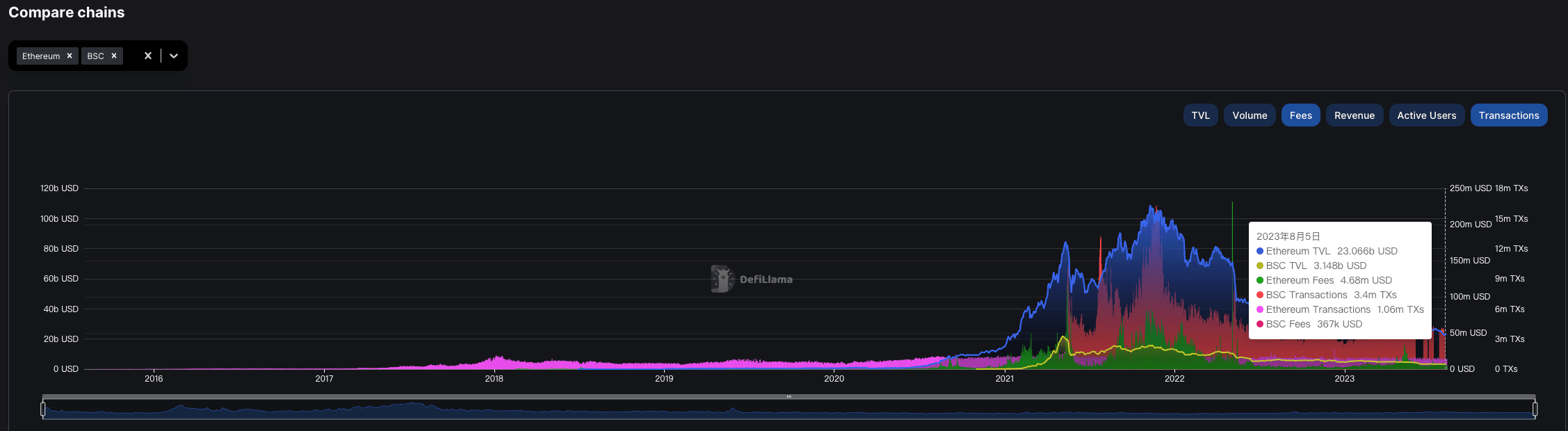
The current TVL of ETH is seven times that of BSC, the transaction volume of BSC is three times that of ETH, and the total fee is 7.7% of ETH. On L1, BSC has lower fee consumption than ETH, and ETH has the largest amount of funds. quantity.
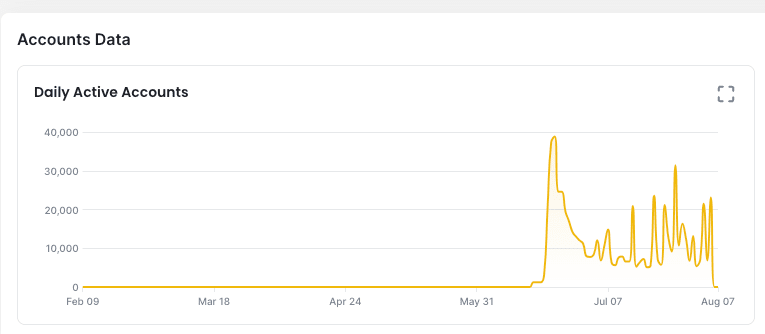
On L2, the average daily processing volume of the opBNB test network is around 100,000-150,000, the average block generation time is 1 second, the number of daily active accounts is around 6,000-20,000, and the cost of each transfer is approximately US$0.005.

3. Future plans
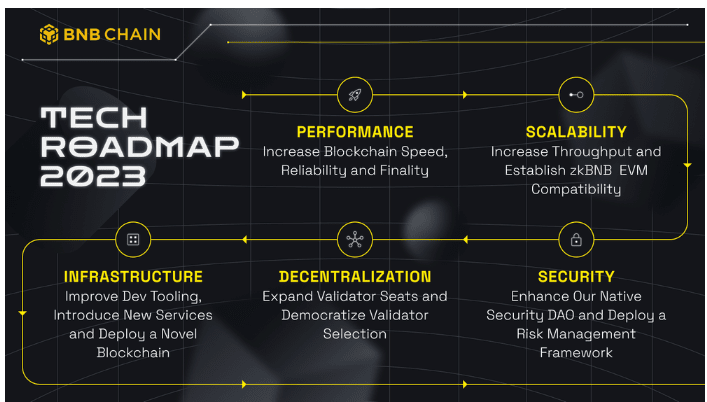
BNBChain’s technology roadmap in 2023 will be promoted in five aspects
(1) Improve the overall performance of the blockchain network: mainly through increasing block gas limits, implementing parallel EVM, upgrading BSC nodes and clients, etc.
(2) Improve scalability: To achieve the scalability of BSC through multi-chain strategies, the rollup solutions are mainly zkBNB and opBNB. Currently, opBNB is progressing faster, and zkBNB was originally planned to be launched this year.
(3) Build new infrastructure: Use more infrastructure. One of the focuses is decentralized storage. This year, BNB Greenfield was launched, where users and dApps can create, store and exchange data with full ownership, forming a new data economy, and storage is also a key link to further improve network performance.
(4) Improve decentralization: Increase the number of active validator seats from 29 to 100 by the end of 2023, and introduce more consensus mechanisms and on-chain governance.
(5) Improve BNB security: introduce new security services, security and risk management frameworks and improve the security of cross-chain components.
4. Project characteristics
(1) L2 built on BSC: BSC is superior to ETH in terms of processing speed and cost consumption. Through opBNB’s technology, the performance will be further improved through L2.
(2) The BNB Chain ecosystem is complete and mature: Binance is currently the largest cryptocurrency exchange and has the most users and funds. BNB Chain has built various infrastructures and applications in its own ecosystem, which can adapt to opBNB flexibly and efficiently, giving full play to the value of the ecosystem and tokens.
4. Conclusion
In the second half of this year, there will be more and more voices of L2, and perhaps L2 Summer will come. From a technical perspective, mainstream L2 technologies have converged, choosing a more scalable modular structure. Optimistic rollup is more adopted in terms of implementation, and OP Stack has gained more external cooperation.
Exchanges have deployed their own L2s. The main reason may be to build a Web3-native blockchain network based on existing CEX funds and users to accept the entry of more new users and new dapps, creating more diversity. business structure and incremental space. In the future, let us wait and see who can further consolidate their position or change the development ranking through L2.
Related Links:
Base official website: https://base.org
Mantle official website: https://www.mantle.xyz
BNBChain official website: https://www.bnbchain.org
Looking forward to the Cancun upgrade, is OP worthy of being "optimistic"? 1. Introduction | by LD Capital | Jun, 2023 | Medium