

Original translation: Bai Ze Research Institute
The original author is Tom Borgers, director of development and strategic planning at ConsenSys and founder of 3 mint. It was translated and compiled by Bai Ze Research Institute.
Last week, Nike announced its new Web 3 platform .SWOOSH, a new initiative of NIKE Virtual Studios that will serve as the “home base” for all digital asset creations at Nike. Following last year’s acquisition of RTFKT, this announcement marks another major step forward for Nike towards Web 3.
.SWOOSH was built with a unique intentionality, building on NIKE’s rich history and underpinned by a “vision to reimagine community, loyalty and co-creation through the lens of culture and sport.”
Similarly, “Why should my company use Web 3?” is a question we’re often asked. Typically this comes from consumer brands, consumer marketplaces, and many other “Web 2” companies.
Web 3 is still a relatively “young” technology, and many of its advantages are still years away from being realized. So why should brands care about Web 3 today?
We thought through questions like: What will the future of brand loyalty and community look like? and: How does Web 3 change the nature of customer engagement?
After more than 200 interviews and customer conversations, we have real confidence in answering this question.
What does Web 3 mean for consumers?
Web 3 represents ownership and interoperability of data, assets, and identities.
Let’s dissect this.
"Ownership": In the real world, if I buy an item, I get a receipt for proof, and I can physically "store" it, preventing others from taking and using it: my stuff is clearly mine. In contrast, replicating this concept of property rights on the Internet is essentially impossible, but Web 3 changes this paradigm. Specifically, NFTs are native records of data ownership. This data can be digital assets, transaction data, or even identity data.
With Web 3 I can prove that I own digital assets, I can prove my identity, “I am who I am”, and that I belong to a specific community. And I can do this independently of any Web 2 centralized platform (like Google or Facebook). This is important because it enables me to prove and protect my data — and potentially even commercialize that data myself. It enables me to prove who I am and what group I belong to without relying on a third party. It enables me to maintain control of my personal data without falling prey to corporate entities or malicious actors that could manipulate or corrupt it.
“Interoperability”: With Web 3, by sharing data, anyone can read and interact with everything from your ID to the assets associated with that ID.
Even if consumers don’t necessarily want the added responsibility of data ownership, it’s a better experience for them if they can transfer their identity and associated data without having to recreate it in every platform they want to interact with. Right now, from Amazon to Netflix to Target, recreating accounts every time consumers switch between platforms is like going to the doctor and having to fill out the same forms over and over again.
Web 3 creates a new world in which consumers’ identities are no longer stored in “islands” (unrelated platforms), but are owned by consumers and shared with others when needed.
So when we say Web 3 is important for brands, it comes down to this: we believe consumers increasingly want more ownership and control over their identity and data, and while this may result in brands giving consumers less control in the short term, Web 3 will give brands incredible advantages through its interoperability.
That said, a key question brands are grappling with today is how Web 3 can help them now — not three, five, or even ten years from now. In fact, many of Web 3’s advantages are still years away from being fully realized. Web 3 has the power to revolutionize the way consumers interact with brands, and the way brands interact with each other. But most brands don’t have enough time to think about such long-term issues. They are facing existential challenges and challenges from their peers right now.
NIKE further embraces Web 3
Last week, Nike announced its new Web 3 platform .SWOOSH, a new initiative of NIKE Virtual Studios that will serve as the “home base” for all digital asset creations at Nike. Following last year’s acquisition of RTFKT, this announcement marks another major step forward for Nike towards Web 3.
According to the .SWOOSH blog (slightly modified):
.SWOOSH is the home for all NIKE Virtual Creations, which are interactive digital objects (virtual shoes or apparel) that can be worn as wearables in video games or other immersive experiences.
.SWOOSH will initially be a "store" where consumers can collect their favorite virtual shoes, apparel or accessories. But over time, it will become the "home" for NIKE's entire consumer community to buy, trade and co-create virtual products.
On .SWOOSH, some in the community will have the opportunity to learn how to build virtual products that can be worn in video games and experiences, and for the few creators who win the community challenge, they can earn royalties from the virtual products they create with NIKE.
Essentially, .SWOOSH is a platform where NIKE, signed athletes, creators, and fans can come together to create and trade future digital assets. These assets will be wearable in games, unlock access to some offline events, and even unlock access to limited products.
While it’s still early days for .SWOOSH, we already know of 4 ways to interact with the platform:
Curated Virtual Creations: NIKE will launch its first line of virtual assets early next year; these products will be co-created by NIKE themselves, their partners (athletes, celebrities, etc.) or even specific users.
Buy, trade, sell through the market: The most important utility of .SWOOSH is that it allows consumers to collect virtual assets and trade them freely. This is similar to the Odyssey launched by Starbucks. For security reasons, users cannot transfer assets to their own digital wallets at first; but NIKE's goal is to be compatible with third-party wallets as soon as possible.
Community Creation: Over time, community engagement moves toward co-creation. Winners of the Community Challenge will have the opportunity to co-create assets and earn royalties from the sales of those assets. The potential for co-creation with high-profile athletes working with NIKE is very powerful.
Online Learning: Nike is investing in education and will be running tutorials and events around Web 3 and how to create virtual assets using software like Blender.
There are a few more details worth mentioning. First, NIKE will also launch .SWOOSH IDs, which provide access to the platform and represent your unique digital identity in the community. Based on some initial insights into the IDs, they appear to have timestamps, unique identifiers, and levels, suggesting that users can upgrade and gain more privileges.
Secondly, the first virtual products will most likely be related to the NIKE Air Force 1 sneaker, where community members can vote for their favorite shoes for NIKE to create virtual products.
Why did NIKE choose to bet on Web 3?
The importance of this platform has to do with NIKE’s distribution (not just its size, but how embedded it is in culture) and its status as a trendsetting brand. .SWOOSH has the potential to bring millions of users into the Web 3 world.
Fundamentally, NIKE recognizes that its relationship with consumers is changing and that with new technology, they have the opportunity to connect more closely with consumers, not just to consume NIKE, but to participate in it and co-create with it. This was simply not possible before, especially at the scale of a brand like NIKE.
Not only does NIKE have a massive online and offline distribution channel with truly global reach, but its brand also exists through athletes and other cultural icons. To name a few, NIKE has partnerships with well-known athletes such as Michael Jordan, Drake, Travis Scott, C Ronaldo, LeBron James, etc. These celebrities are role models and heroes admired by people all over the world. Being able to co-curate and create new products related to these celebrities with the community will make consumers more experiential and allow consumers to move from "static consumption" to "dynamic consumption." Virtual shoes are not just a pair of virtual shoes, it is also a product associated with a service - a product that develops with consumers.
As Ron Faris, head of Nike’s Virtual Studio, said: “For the first time in history, when a brand sells a product, the journey doesn’t end, it’s the beginning of the journey.”
NIKE has seized several advantages:
First, NIKE recognizes their role as an educator: helping users enter Web 3. NIKE is definitely more of a trusted spokesperson for Web 3 than most brands, and they are guiding their users on the right path to Web 3 through community meetings, tutorials, and more.
Secondly, Nike is rooted in its culture and puts community first. Nike Virtual Studio knows that Web 3 is community-based, and you can see it in how it invited athletes as partners and how it launched Air Force 1 s as its first collection.
Finally, NIKE understands their audience, and they demonstrate this by separating .SWOOSH, which is targeted at Web 3 newbies and the broad market, from RTFKT, which is more premium and deeply rooted in Web 3.
Overall, NIKE's creation of .SWOOSH has enabled them to build a new form of community engagement for consumers and add entirely new revenue streams and product lines to their existing business.
Why is Web 3 important for brands?
After looking at the NIKE case, we return to the question at the beginning of this article, that is, why is Web 3 important for brands?
“Decisions are driven by real problems that exist today.” Based on our interviews and research, brands are facing these problems today:
New consumers are maturing, spending more time on radically different platforms. American adults spend 7 hours a day online. The top three virtual (gaming) platforms have over 400 million monthly active users. 75% of American children aged 9 to 12 use Roblox regularly.
Consumer expectations for personalization are higher than ever: “83% of consumers expect personalized content and experiences from their favorite brands.”
And consumers have more choices than ever before. Since the pandemic, 77% of U.S. consumers have tried new shopping behaviors, including new channels, stores, and brands. And these choices are guided by more intent and motivation. Consumers care about a brand’s “cultural credibility as much as [the product].” For example, younger consumers are more likely to prioritize purchasing from brands that promote sustainability.
Technology is changing in ways that rely on programmatic marketing tools. With Apple’s privacy-centric changes in iOS 14 and Google considering similar changes, it’s becoming increasingly difficult to track individual user behavior. Some brands believe these changes have had a 10-35% impact on their revenue.
This isn’t just an assumption – the data is clear. The cost of acquiring a customer (CAC) has increased 222% over the past 8 years and 41% in the past year alone.
How can brands enter Web 3?
So how can brands get into Web 3? There are four main ways.
short term:
1. Build stronger, more invested communities
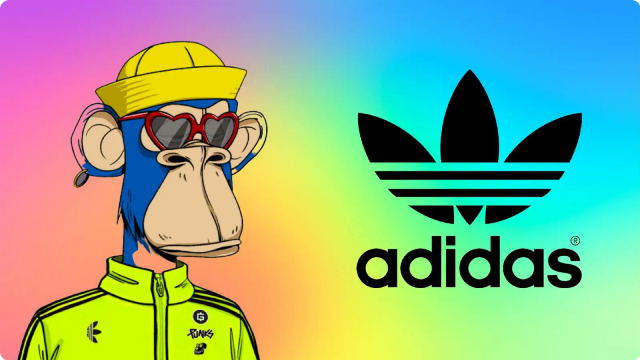
adidas Partners with BAYC and G Money to Create Web 3 Community
Brands can build and invest in communities, which can be both an engine and a fuel for sales. Communities represent loyalty, and consumer brands should value it.
One of the most effective ways to strengthen communities is to align incentives by providing a sense of ownership.
By adjusting the incentive mechanism between the brand and community members, the brand is actually redefining the relationship between the brand and consumers, collaborating to achieve common goals - in this experience, consumers will be more actively involved in the brand's future direction and decision-making. It can be a suggestion for the product roadmap; a new flavor or color selection; shaping the company's vision and values; or inviting community members to participate in exclusive online and offline activities.
It’s important that the community feels valued as a stakeholder and that when the brand wins, the community wins.
2. Composable Business
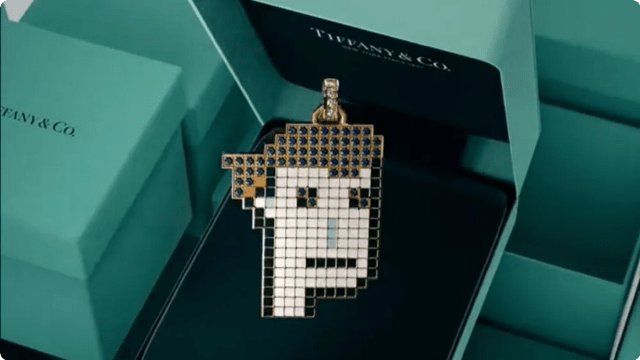
Tiffany & Co. Partners with Crypto Punks to Launch NFTiff Pendant
By building a decentralized, trustless data foundation layer, Web 3 transforms “adversarial games” into “coordination games” — competitive relationships can be transformed into collaborative ones. This has huge implications for brands, as they now have the opportunity to transform isolated communities and initiatives into full ecosystems where multiple brands and creators can collaborate and enhance each other to deliver better experiences for consumers.
Brands should be excited about this possibility. On the surface, this sounds like opening up your customer base to peers or other brands, but it actually represents a huge growth opportunity. Opting for “composable commerce” means gaining access to other creators, other brands’ customers.
long:
3. Leverage new distribution channels
If you want to benefit from the “embrace Web 3” traffic, rather than viewing it as a pure cost, think of it as an investment and an opportunity to monetize your IP in entirely new ways.
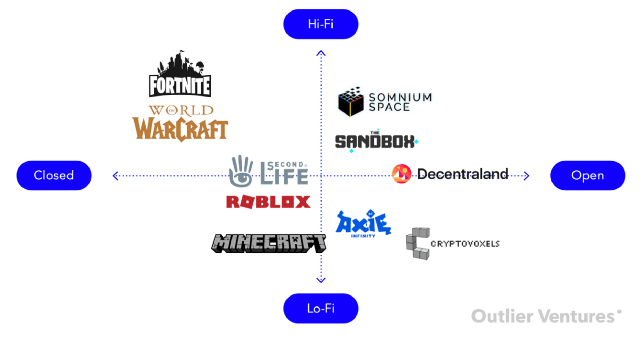
Different categories of Metaverse platforms
Emerging in Web 3 and the Metaverse is just the first step, what’s more interesting is that these platforms are also a new distribution channel. They are new places to sell (such as Metaverse platforms) with new distribution mechanisms (cryptocurrencies, publicly visible crypto wallets, etc.), so new creators have recognized the opportunity - giving new meaning to the creator economy.
4. Build a real, multi-dimensional business experience

NFT NYC on-site NFT graffiti casting experience
We’ve already seen a glimpse of the future: You buy some products in a physical store, which include virtual products, and you can participate in community-only events in an online virtual platform.
Today though, it still feels a bit disjointed and unconvincing. But open Metaverse platforms are reducing friction between our digital and physical worlds, enriching our experiences with more data. For businesses, this means expanded distribution channels and can significantly improve the user experience by providing more continuity, more convenience and more personalization.
NFTs are the first step because they not only represent a record of ownership of digital assets, they can also provide a corresponding physical good (often called a "digital twin"), and the connection between the physical and the digital will be the key to creating a seamless online + offline multi-dimensional experience. Through NFTs, consumers can prove their ownership of digital and physical products online, they can verify the authenticity of products, trade them or use them as collateral, and they can also bring these physical objects into the digital world, just like the Metaverse platform we mentioned above.
Summarize
Not every brand can create a platform like Nike’s .SWOOSH. But any brand can leverage the same underlying Web 3 infrastructure to benefit from new methods of distribution, community, and engagement while generating new revenue streams.
Web 3 is about ownership and interoperability of data, assets, and identities. Web 3 is important in the short term as a differentiation mechanism to allow brands to respond to changes in the business environment due to technological changes. Embracing Web 3 means building strong communities that can serve as powerful engines and fuel for distribution while embracing composable commerce.
In the long run, brands embracing Web 3 are preparing for more substantial distribution changes and business model obsolescence. Brands and consumer-facing Web 2 companies must prepare for this future and seize the benefits of multi-dimensional commerce powered by new distribution channels.