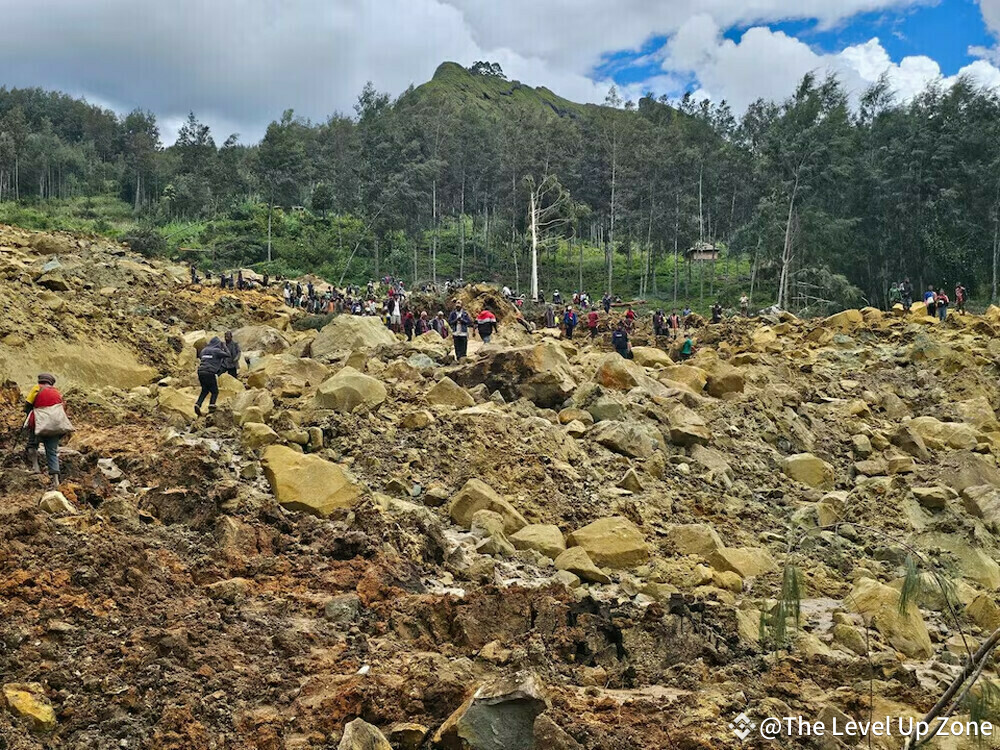
Devastating Landslide in Papua New Guinea Buries Entire Village
A massive landslide in Papua New Guinea has caused widespread devastation, burying an estimated 2,000 people alive. The disaster struck Yambali village in the remote Enga Province on Friday, leaving a path of destruction several football fields wide and nearly two stories high.
Rescue Efforts Hampered by Scale of Disaster
Survivors have been desperately digging through mud and debris with shovels and their bare hands, but hopes of finding survivors are fading. The remoteness of the area and the sheer scale of the landslide make rescue efforts extremely challenging.
Death Toll Uncertain
Estimates of the death toll vary significantly, with the government claiming over 2,000 buried, the UN estimating around 670 missing, and community leaders suggesting a figure closer to 200. Only six bodies have been recovered so far.
Prime Minister Blames Weather Patterns
Papua New Guinea's Prime Minister, James Marae, addressed parliament on Wednesday, attributing the landslide and other recent disasters to "extraordinary rainfall" and changing weather patterns.
Search for Survivors Continues
While the outlook for finding survivors is grim, rescue efforts persist. A single excavator has arrived at the site, but concerns about further landslides prevent its use. Geologists and specialists from Australia and New Zealand are on their way to assess the situation and potential risks.
Health Concerns Rise
The UN migration agency warns of a potential outbreak of infectious diseases due to decomposing bodies trapped beneath the debris. With water leaking into the area, the risk of contamination is growing.
The landslide in Yambali village serves as a stark reminder of the vulnerability of communities to natural disasters, especially in the face of a changing climate. International assistance and expertise are crucial in helping Papua New Guinea cope with this tragedy and prevent future ones.