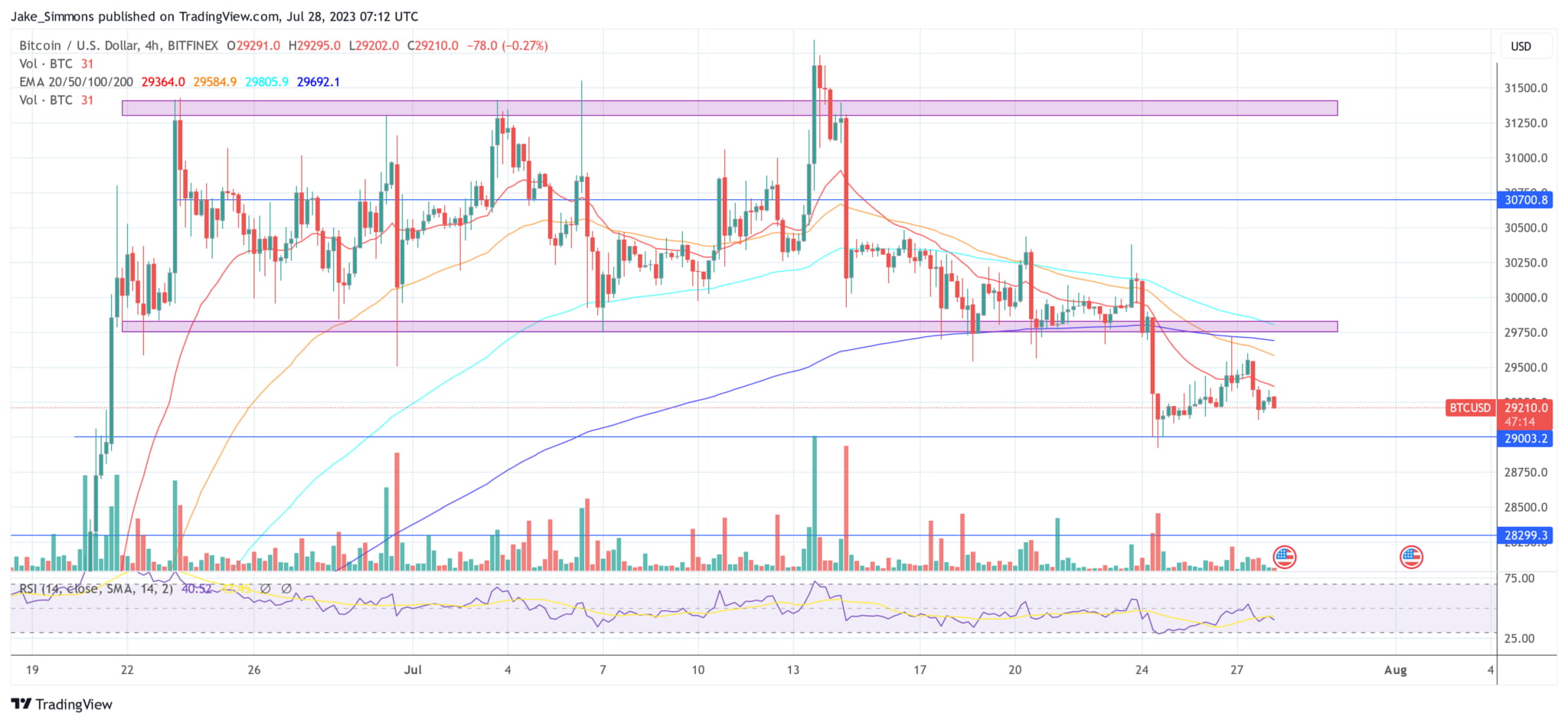
Bitcoin prices are currently in a state of uncertainty. After BTC fell below a one-month trading range between $29.800 and $31.500, bulls have so far failed to recapture the area. The first attempt failed at $29.725 on Wednesday and the second attempt on Thursday targeted $29.600.
On the other hand, the bears have also failed to push the price below the key support at $29.000 so far. As always, which direction the move will go next is pure speculation, but the data can give an indication.
Bullish Signal 1: Exchange BTC supply decreases
Renowned cryptocurrency analyst Ali Martinez shared an interesting bullish chart showing that only 2.25 million Bitcoins are currently held in known cryptocurrency exchange wallets. This is the lowest Bitcoin supply on the exchange since January 2018.
Data suggests that investors and long-term holders are no longer selling their Bitcoin, choosing instead to keep their coins off exchanges. This “hoarding” behavior indicates positive sentiment among BTC holders.
Bullish Signal 2: Insufficient Inflows to Bitcoin Whales
Another bullish sign was pointed out by Julio Moreno, head of research at CryptoQuant, who shared a chart showing a lack of funds flowing into exchanges from large investors holding 1,000 to 10,000 BTC (aka Bitcoin whales). “We’re not really seeing Bitcoin whales flowing into exchanges,” Moreno said.
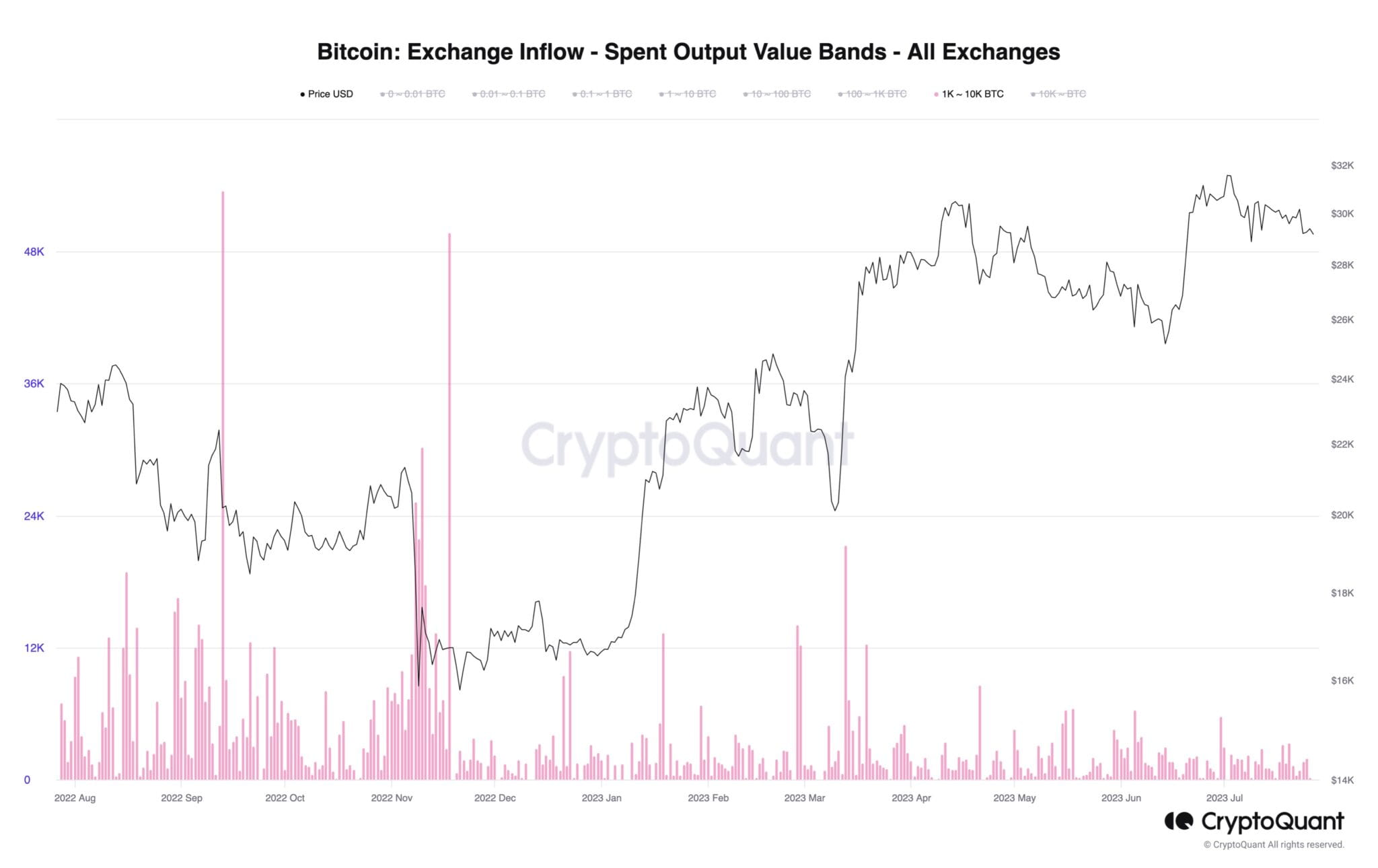
Furthermore, the same trend has been observed among small investors, indicating their reluctance to deposit Bitcoin on centralized exchanges. Commenting on the exchange deposit trade (7-day SMA) chart, Moreno added, “The fact is, no one seems willing to deposit to centralized exchanges.”
This behavior suggests that significant holders and institutions are holding on to their Bitcoin holdings and may be anticipating future price increases.
Bearish Signal: Short Term Holders (STH) MVRV Indicator
On-chain analyst Axel Adler Jr. said of the Short-Term Holder (STH) MVRV indicator: “STH MVRV is actively declining and we may see something similar to what happened in the previous two corrections.” Adler The chart shown shows that during the lows of the massive Bitcoin price correction in mid-March and mid-June, STH MVRV fell close to 0 or even below 0.
Currently, STH MVRV remains at a certain level, so a final pullback in Bitcoin price triggered by short-term holder selling may be necessary for MVRV to reset to 0.
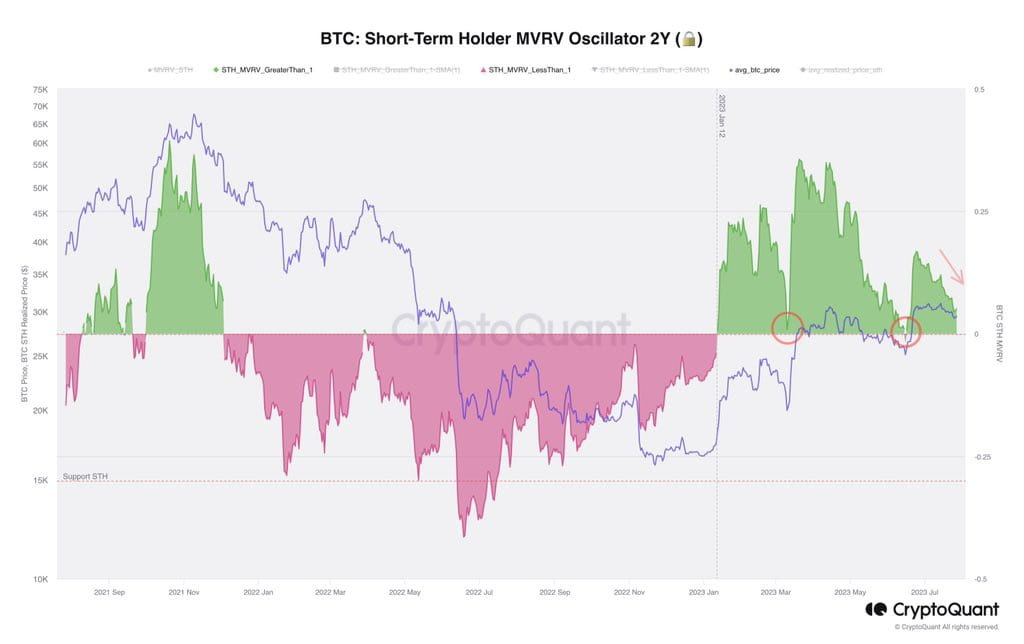
Adler also said there aren't currently large inflows into futures exchanges like there were in March and June. "Don't expect a big breakout to the upside or downside," Adler added.
BTC Binance Spot Liquidity Analysis
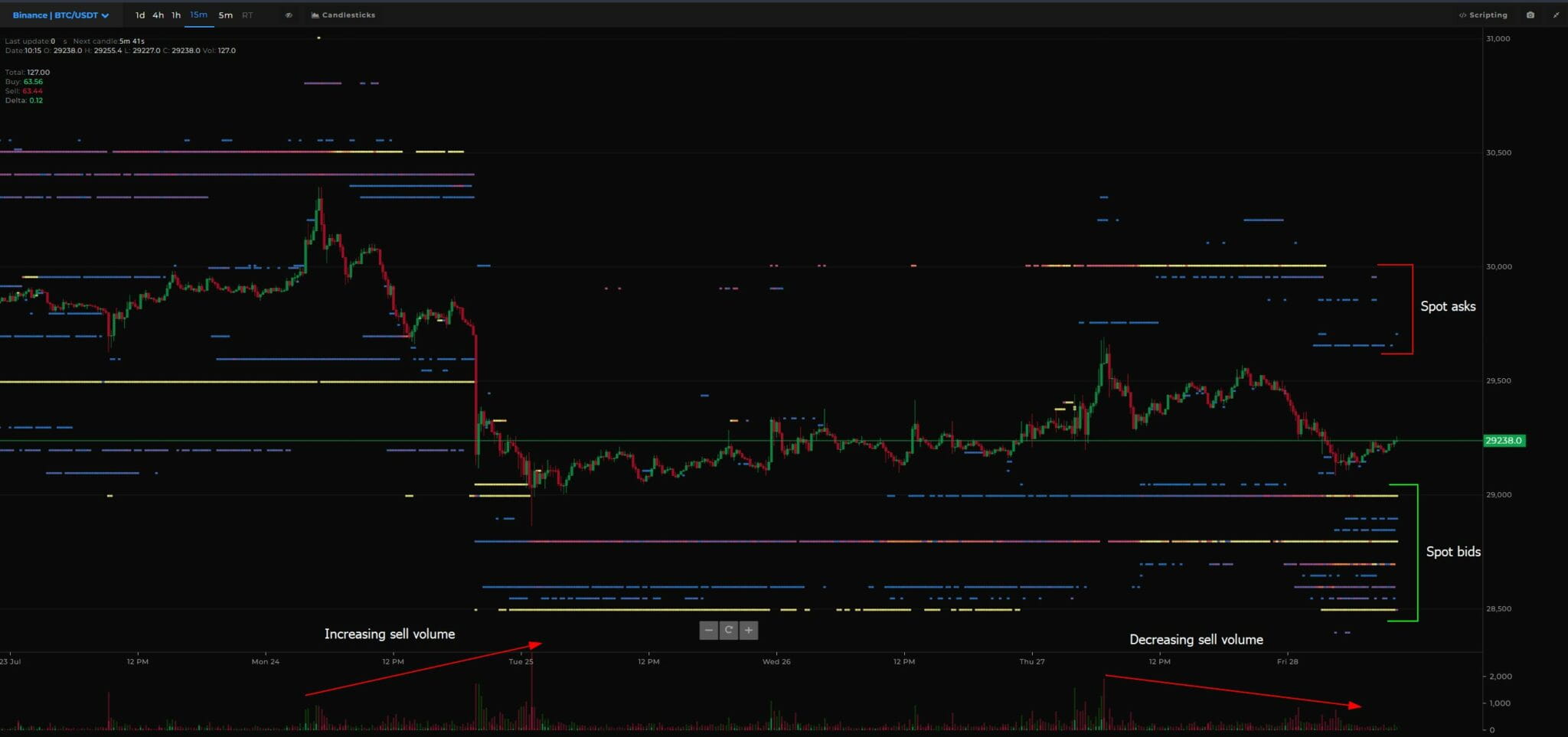
Analyst @52kskew shared a comprehensive analysis of BTC spot liquidity on Binance, highlighting an interesting observation. Bid liquidity (bid > ask) and spot ask move lower in the price direction due to lower volatility. He added, "Note the difference between the volume that led to the previous sell-off and the current volume drop and the minimal decline."
With bid liquidity between $29,000 and $28,500, this area could become a point for buyers to step in if BTC experiences a correction. In a bullish scenario, spot buying will occur in this area, followed by shorts rotating out. New longs are opened with spot supply approaching $30,000. In a sell-off situation, prices are affected by spot bid liquidity and forced selling occurs, Skew said.
The potential impact of economic data on Bitcoin Additionally, it is crucial to pay attention to macroeconomic factors that may affect the price of Bitcoin. Of particular interest is the Personal Consumption Expenditures Price Index (PCE), released today at 8:30 a.m. ET.
At Wednesday's FOMC press conference, Fed Chairman Jerome Powell emphasized the importance of core inflation, which has proven to be sticky. Therefore, core PCE in particular needs to continue falling to ease the Fed's inflation concerns. If core PCE exceeds expectations of 4.2%, expect a bullish reaction in Bitcoin.
At press time, Bitcoin was trading at $29,210.