

As the cryptocurrency landscape continues to evolve, one event, the Litecoin halving, has consistently sparked the interest of crypto enthusiasts globally. Also known as the “block reward halving event,” this pivotal event occurs approximately every four years and has the potential to trigger significant price movements in Litecoin. With eyes on the next Litecoin halving scheduled for 2023, the question on everyone's mind is: "Will this event spark the next Litecoin rally or dampen market sentiment?" Amidst the anticipations and speculations, a careful analysis of the LTC market conditions, the overall state of the crypto market, and the investment behavior of whale addresses will be paramount.
What is a block halving event?
A block halving event is a term used to describe the cyclical decrease in the block reward given to Litecoin miners under the Litecoin network. This event, which occurs at predetermined intervals, serves as a crucial mechanism in the functioning of numerous Cryptocurrencies, including Litecoin.
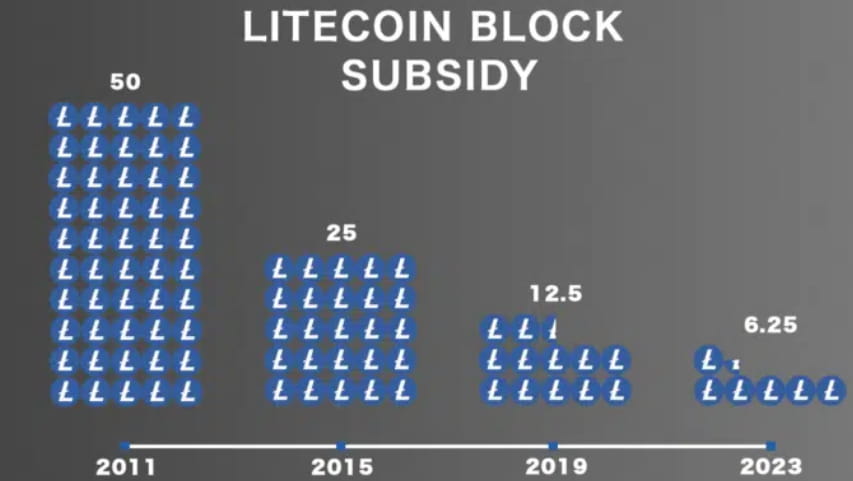
This process, often recognized as a significant event on the Litecoin blockchain, sees a new block being mined approximately every 2.5 minutes. Before each halving event, miners receive a certain number of Litecoins as a reward for successfully mining a new block. However, after the halving event, this reward is reduced by half.
What is the importance of the Litecoin halving?
A Litecoin halving is a vital event in the supply and price dynamics of the cryptocurrency. By trimming the block reward, Litecoin halvings effectively govern the speed at which new coins are created, preserving scarcity and influencing the balance between supply and demand.
The halving event, recurring every four years, decreases the reward block by block. This mechanism ensures a controlled supply and limits the inflation rate of Litecoin. With a finite supply, Litecoin's scarcity increases, improving its desirability and potentially creating upward price pressure. Historical data reveals that past Litecoin halvings have significantly influenced price performance. Block reward reduction often leads to spikes in the average price of the cryptocurrency. Investors and crypto analysts keep a close eye on these events, viewing them as potential catalysts for price movement.
Litecoin halvings underscore the importance of scarcity and controlled supply in the cryptocurrency market. By keeping a limited number of Litecoins available, this event can create opportunities for potential price increases, making Litecoin attractive.
Litecoin Halving Dates
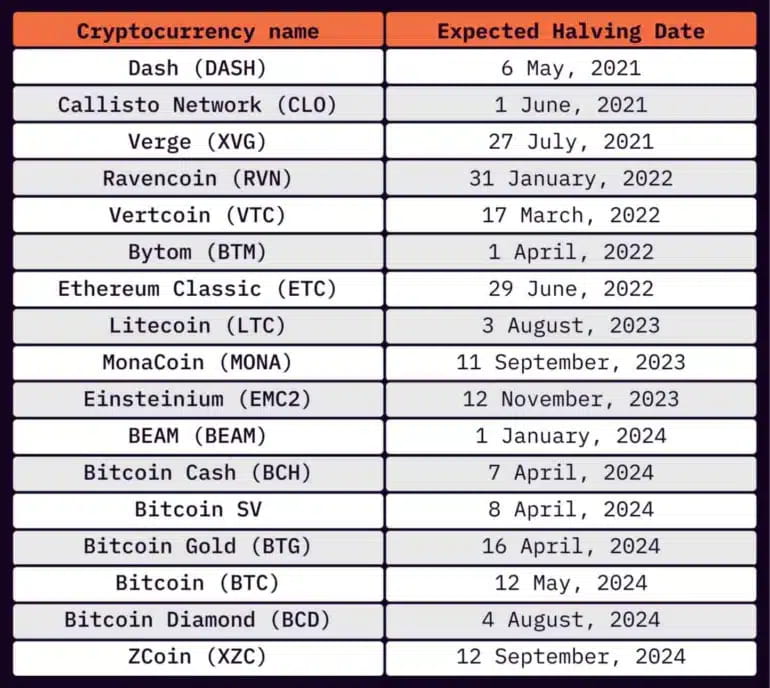
Litecoin halving dates are determined by a set number of blocks mined on the Litecoin blockchain. Programmed into the cryptocurrency code, halving events are triggered after every 840,000 blocks, which roughly corresponds to a four-year period. However, these dates are not exact. They may change slightly due to the dynamic nature of the Litecoin network's total computing power, or hash rate. This hash rate influences the speed at which blocks are discovered, meaning that the actual halving date may be slightly earlier or later than anticipated.
Therefore, while Litecoin's halving mechanism is written in stone, the specific dates of these events remain approximate, their estimates based on average block generation times and predetermined block heights in the that redundancies occur.