

Written by: Ignas.lens
Compiled by: TechFlow
Curve launched their stablecoin today, called LLAMMA (Lending and Liquidation AMM Algorithm). How does it work? This article can help you quickly understand the mechanism.
The problem with current CDP (collateral-debt position) stablecoins is that they must liquidate undercollateralized positions to maintain the peg. While partial liquidations help, they have two problems:
1. Expose CDP to bad debts;
2. Users are punished for liquidation;
The core idea of Curve is a continuously liquidating or de-liquidating AMM. This lending and liquidating AMM converts between collateral (ETH) and stablecoins. So when the collateral price is high, the user deposits all ETH, but when the price drops, ETH is converted to USD.
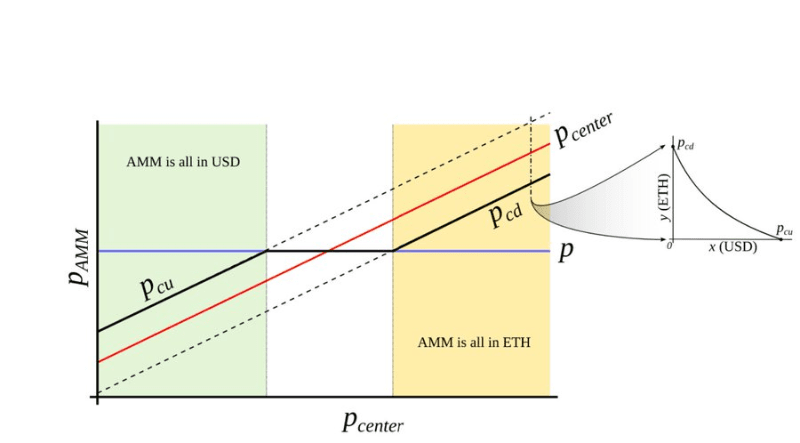
Explaining the chart, Pcenter is the price at which liquidity is formed. When the ETH price reaches Pcu, the AMM collateral is converted to USD. When the ETH price rises and reaches Pcd, the AMM collateral is converted to all ETH.
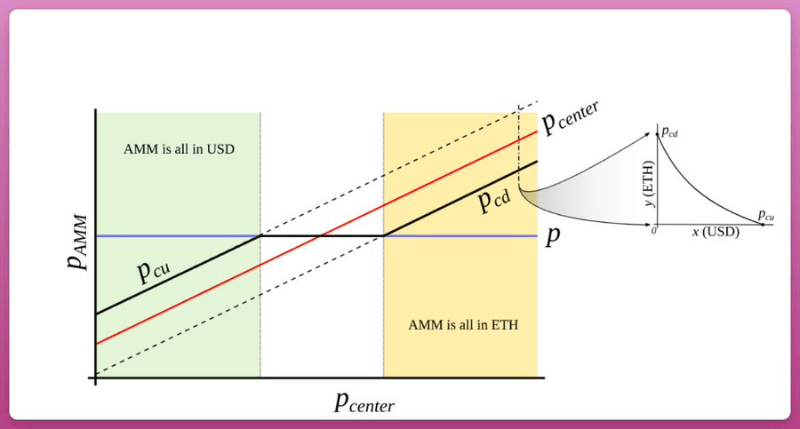
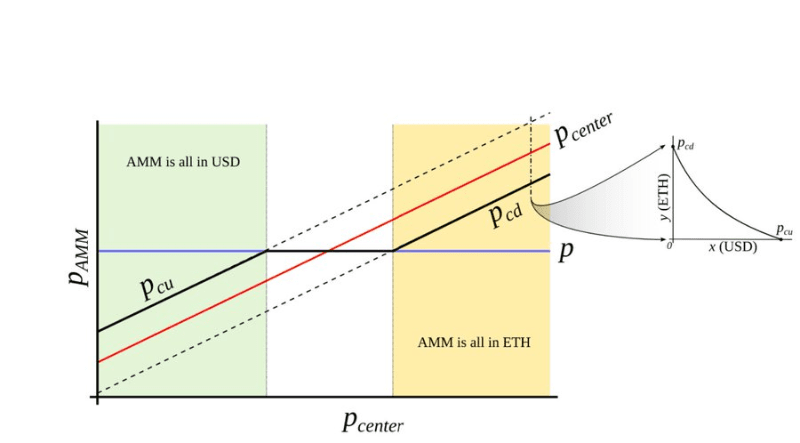
This model prevents the position from being liquidated (it is just closed) and has no bad debt risk. (By the way, does this mean that the collateral is subject to impermanent loss?)
Another important point is that LLAMMA uses ETH/USD as a price source, and $crvUSD can trade above or below the peg. If the price is above the peg, crvUSD will use an automatic stabilizer (similar to Frax's AMO).

This automatic stabilizer (PegKeeper) mints crvUSD and deposits it directly into the Curve pool. It increases the liquidity of crvUSD and generates transaction fees.
If the price falls below the peg, crvUSD is withdrawn from the pool and burned, reducing the supply of crvUSD.
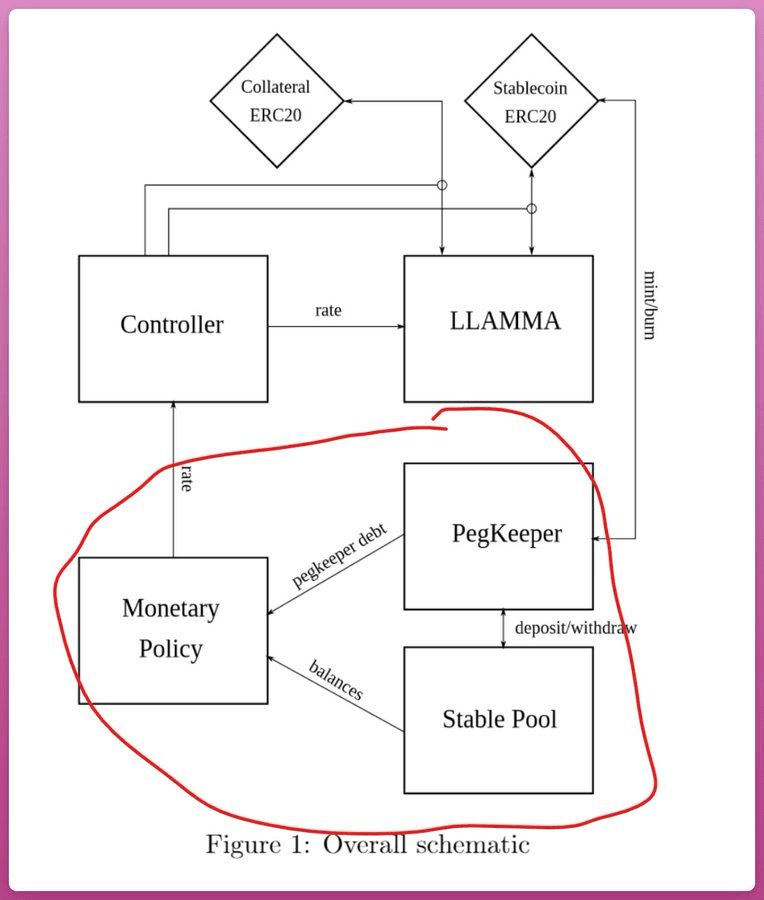
Some people may not like this because it places more responsibility/risk on the collateral holders, internalizing the AMM, which may bring the risk of a death spiral.
Also note that:
1. The white paper does not mention it explicitly, but it seems that the "stablecoin" they have in mind is crvUSD itself. So from what I understand, LLAMMA can have USDT/crvUSD or USDC/crvUSD, or even 3pool/crvUSD pool.
2. It doesn't seem to mention $CRV anywhere.
Original link