

Author: The DeFi Investor Compiled by: Cointime.com 237
In this article, we’ll cover everything you need to know about the upcoming Ethereum Layer 3 (L3).
First, to understand how L3 works, let’s start with a brief explanation of L2.
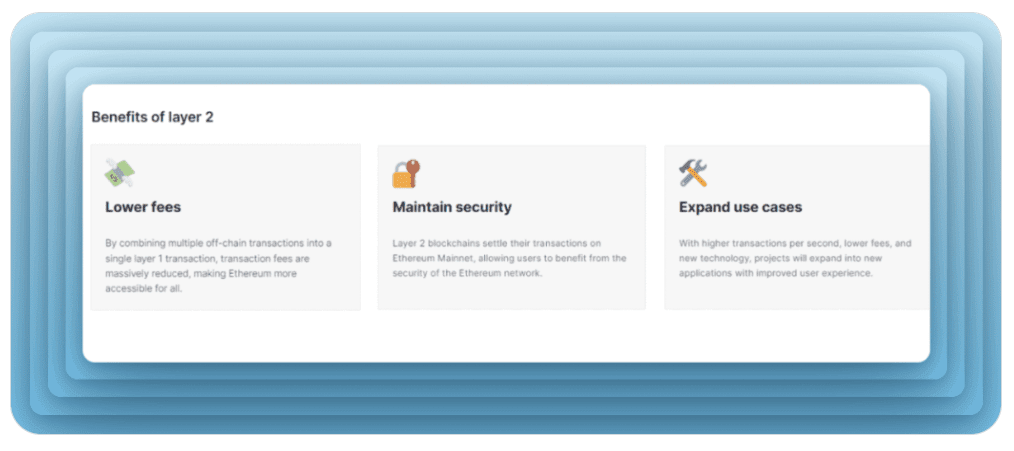
L2 is an independent blockchain that inherits the security guarantees of Ethereum. These blockchains regularly submit transaction packages to Ethereum L1 to obtain its security. At the same time, it provides cheaper and faster transactions by merging multiple off-chain transactions into a single L1 transaction.
While L2 users still need to pay gas fees to submit transaction packages to L1, these fees are much lower.
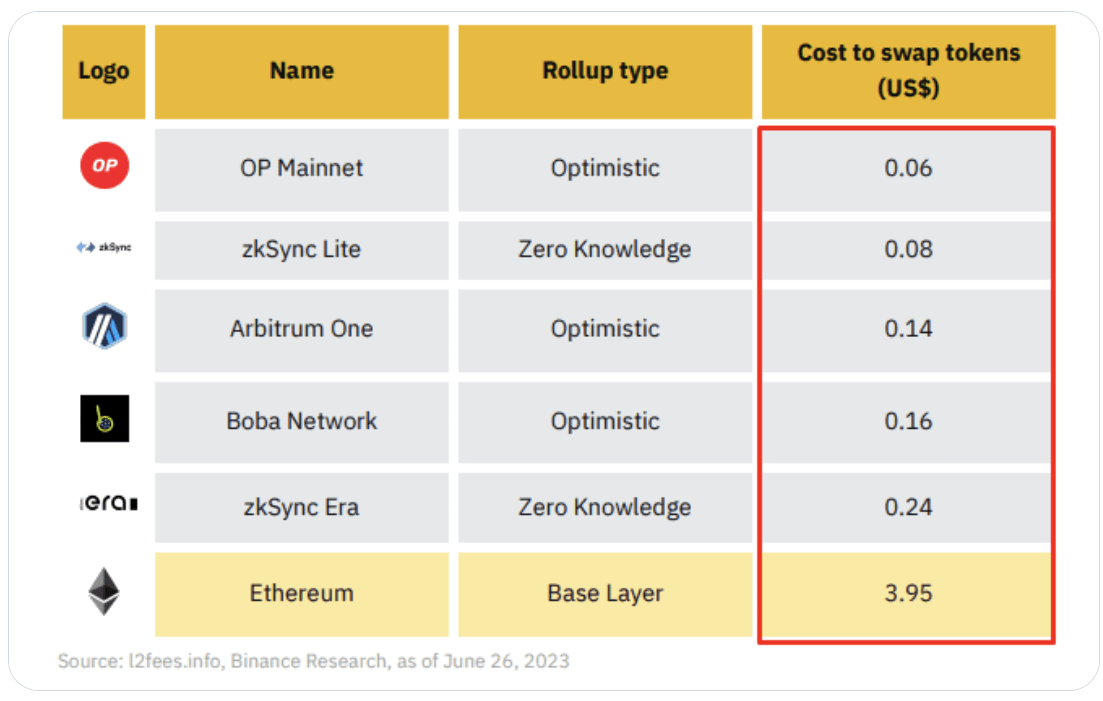
However, L2 scalability is not yet sufficient for various types of dApps.
Even if the next Ethereum upgrade will reduce L2 transaction fees by 5-10 times, it will still not be enough for some applications (such as games).
This is where L3 comes in.
L3s work similarly to L2s, but they submit transaction packages to L2s.
While L2 is at most as secure as L1, L3 is at most as secure as the L2 it is built on.
Storing transactions on L2 is very cheap, so the gas fees on L3 are negligible.
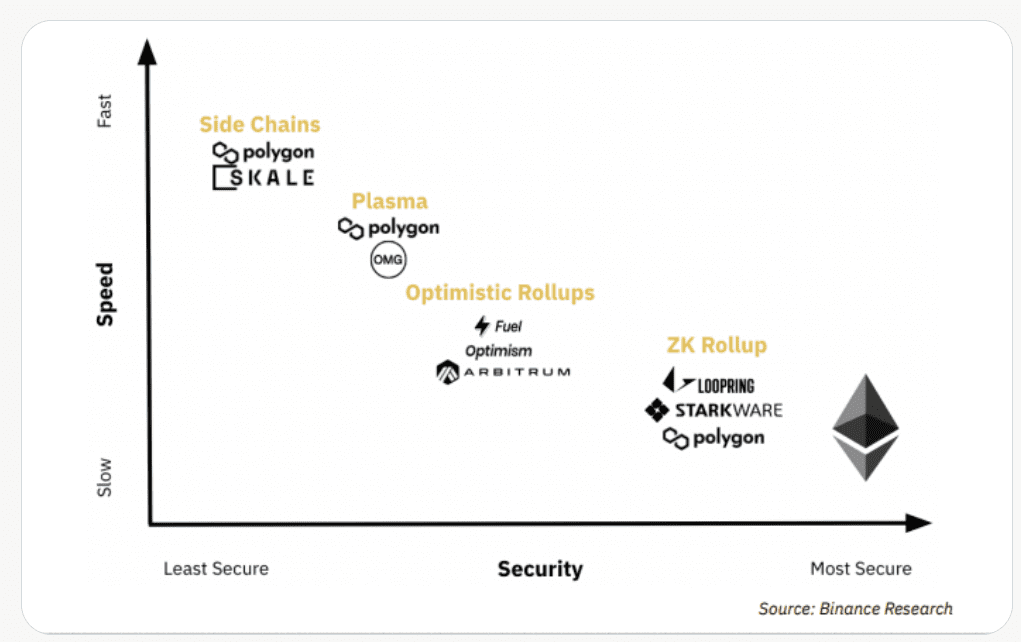
Most current second layer solutions are general purpose scaling solutions.
In other words, they are designed to support a variety of different applications.
L3, on the other hand, is an ideal scaling solution for applications that require a higher level of customizability, including:
• game
• Order book type decentralized exchange (DEX)
• Privacy-enabled dApps
All major centralized exchanges are based on the order book model. Due to this model, these exchanges are able to offer lower transaction fees than DEXs.
However, building a scalable order book DEX entirely on-chain is complex as it requires:
• Very high transaction throughput
• Extremely low transaction fees.
Neither Ethereum nor its L2 can provide such conditions. But for this type of application, L3 can be the perfect scaling solution.
Another question is, if L3 can provide higher scalability, what is the future of L2?
For 90% of dApps, I think L2 is still the ideal scaling solution for deployment.
L3s may be able to offer lower transaction fees and process more transactions, but they are also less secure.
In addition, L2 projects will also directly benefit from the adoption of L3. L3 regularly submits transaction packages to L2 to inherit its security and pays the Gas fees on L2.
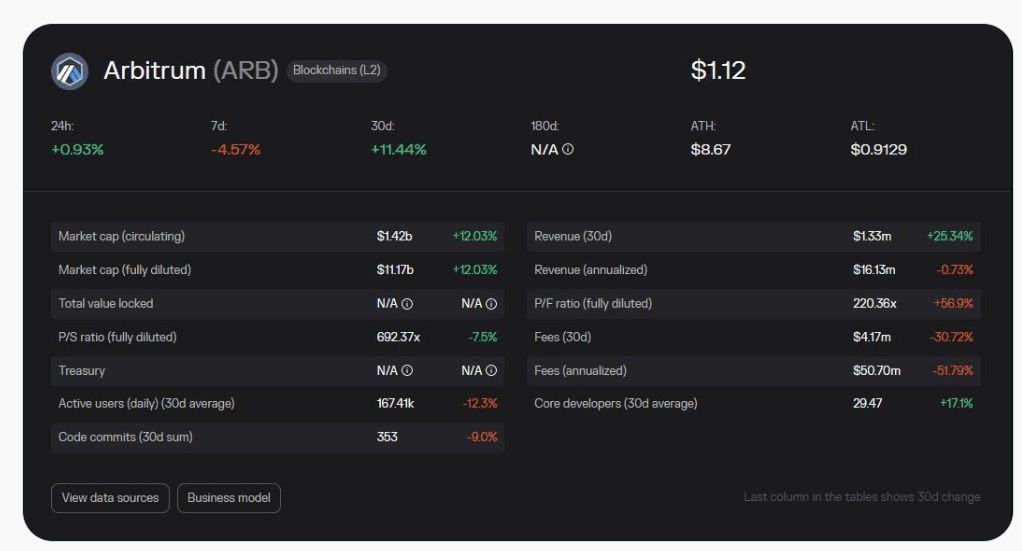
Arbitrum has generated $1.33 million in revenue from transaction fees in the last 30 days alone. Earlier this year, the release of Arbitrum Orbit was announced. This is a development framework for deploying custom L3 on top of Arbitrum.
With the help of recently released tools, it only takes minutes to deploy a chain on top of Arbitrum.
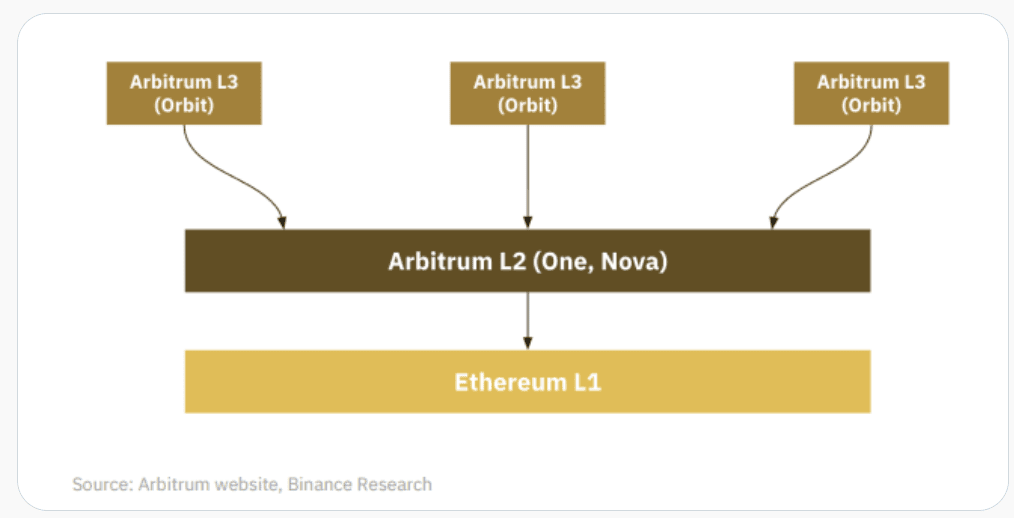
Offchain Labs itself, the creator of Arbitrum, is developing @XAI_GAMES using Orbit. XAI is one of the first Arbitrum L3s built for blockchain games.
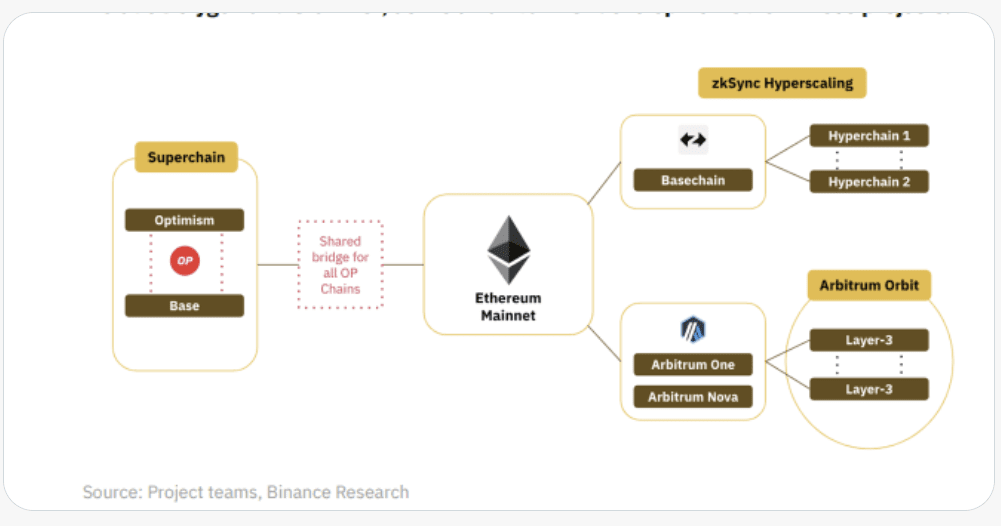
zkSync also recently launched a modular framework called ZK Stack for building ZK-powered L2 and L3, also known as Hyperchains.
Interestingly, all Hyperchains can communicate with each other seamlessly.
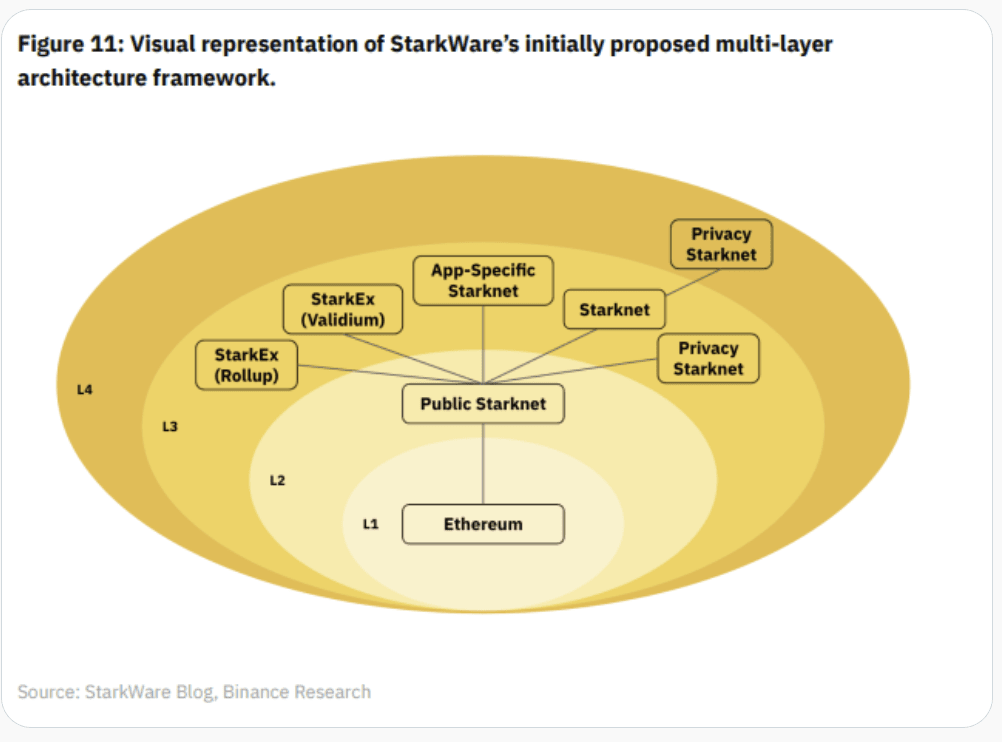
Another L2 project that has expressed interest in facilitating the creation of L3 is Starknet, which is already developing a software development kit for building zkEVM L3 on top of Starknet.