
History will not repeat itself, but it always has amazing similarities. The seeds of the future are deeply buried in the past. Whenever we stop and look back, we will find that many problems in reality have had basic answers in the past, but even so, you still know nothing about the future! This is my confusion about technology, and also my admiration for technology. At present, specifically, it is Web3.0, the next generation of the Internet. What should it look like? Is it evolution? Is it integration? Or is it a deeper level of domination?
Hello everyone, I am Nascyberber, a content creator who has independent thinking about the future of the Internet. In this issue, let’s talk about Web3.0 (hereinafter referred to as Web3). As the next generation of the Internet, what different changes can it bring us?
Before talking about this concept, let us first understand the relationship between the Internet and WWW. The former is a network that connects computer networks of different structures distributed all over the world with various transmission media. It connects all computer devices at the physical level. Today, it consists of PCs, PADs, and various smart phones. The main services provided by the Internet include the World Wide Web (WWW), file transfer (FTP), e-mail (E-mail), remote login (Telnet), etc. If your device has been authorized to access the network, then you have the ability to communicate equally with all nodes in the network.

After the WWW, Web1, Web2, and the currently hotly discussed Web3 appeared:
If we divide it by time, Web1 was probably from 1991 to 2004. This was an era when hosts produced content and hosts generated rights. Many well-known companies were born during this period. For them, this was the best era, an excellent opportunity to make money, and also an era when many heroes emerged and competed for the Internet! Netscape developed the first large-scale commercial browser, Yahoo proposed the Internet Yellow Pages, and Google came from behind and launched a popular search service; in contrast, in China, Sina started out as a technology platform, Sohu started out with search technology, Tencent started out with instant messaging technology, and Shanda started out with online games. They formed major portals through the display of various web page information, and then attracted users to click and watch, so as to customize advertisements and realize them through traffic. During this period, there were very few content creators!
The biggest feature of Web1 is read-only, that is, information is fed to users. Users can only passively receive information. Although it is "open" in spirit, it is isolated from the world in practice. People who want to publish content on the Internet must use their own servers to host websites. Most of these websites are read-only, and there is basically no operating interface that allows users to create content or participate in interactions. Among every thousand users browsing the Web, only a few have the technical skills to publish content. In other words, only early programmers can show web page content to everyone. As a novice user, you can only watch, but it is difficult to publish content. The vast majority of users are just consumers of content. But even so, this also allows us to see a completely different world, a world where you can see the world without leaving home!
This is the first time in human history, and it also marks that mankind has officially entered the information age! However, with the continuous increase in Internet users, the problems of Web1 have gradually become apparent, and Web2.0 began to appear on the historical stage. This concept began in 2004 at a brainstorming forum between publishers O'Reilly and Media Live International. Dale Dougherty, an Internet pioneer and vice president of O'Reilly, pointed out that "with the amazing regularity between exciting new programs and new websites, the Internet is not only far from "crashing", but is even more important than ever before. Furthermore, those companies that survived the bubble burst seem to have something in common. Could it be that the bursting of the Internet bubble marked a turning point for the Internet, leading to movements such as "Web2.0"? "
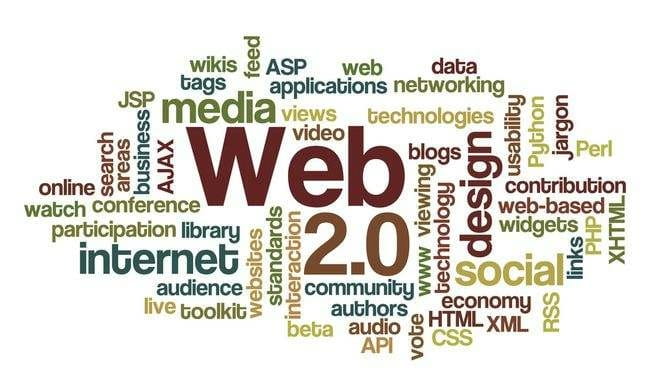
The concept of Web2.0 was born, and its biggest feature is interaction. Users are not only browsers of website content, but also creators of website content. We are not only readers, but also authors. We can not only surf the Internet, but also become wave makers. In terms of mode, it has developed from simple "reading" to "writing" and "joint construction", and from passively receiving Internet information to actively creating Internet information. In terms of basic structure, it has evolved from web pages to publishing/display tools, and web pages are interactive. In terms of tools, it has developed from Internet browsers to various browsers, RSS readers and other content. In terms of operating mechanism, it has changed from "Client Server?" to "Web Server". Overall, in the Web2.0 era, the creators of the Internet have changed from professionals to ordinary users, and everyone can participate in the construction of the Internet.
Following this concept, a large number of new products emerged in the time window from 2005 to 2009, including Facebook, Twitter, Youtube, etc. in foreign countries, Youku, Tudou, Ku6 and other video websites in China, download software such as Xunlei and Fengxing, Douban, Kaixin, Renren and other SNS communities, and 51 and other blogs. They all have one thing in common, that is, "users" are the protagonists of content creation, and the more important thing for the official to do is to manage and maintain the atmosphere.
This is a brand new era. The entire Internet has undergone a revolutionary baptism in terms of concepts and thought systems: it has changed from a top-down Internet system that was centralized and dominated by a few resource controllers to a bottom-up Internet system dominated by the collective wisdom and power of the vast number of users. As users, we can not only gain more and more voice, but also give full play to our abilities and creativity that have nowhere to be released. The entire Internet has become richer and more exciting!
Earlier we mentioned that almost all the companies that survived the Internet bubble have one thing in common, that is, they know how to use the power of the network to leverage collective wisdom. When users add new content and new websites, they will be limited to a specific network structure, which is discovered and linked by other users. Just like the synapses in the brain, as the connection between each other becomes stronger through replication and reinforcement, and as a direct result of all the activities of all network users, the interconnected network will grow organically.
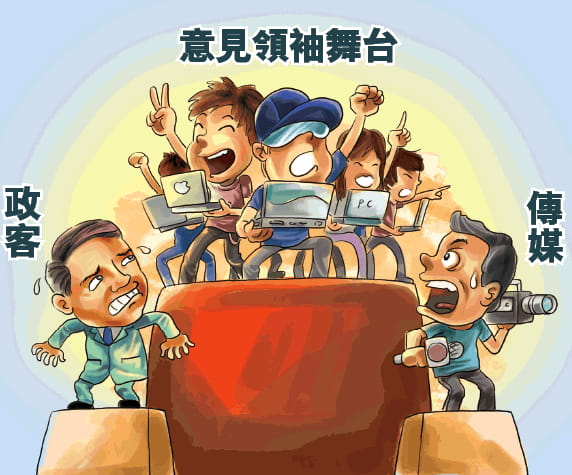
The most obvious example is that opinion leaders have become the backbone of voice. They exist in forums, are active in SNS communities, or are on blogs and video websites. Their voices gradually overwhelm or even lead traditional media. Hot online events emerge in endlessly, such as the Tianya Forum’s “Northern Latitude Zhou Gongzi vs. Yi Yeqing”, and Hu Ge’s spoof of the movie “The Promise”, “A bloodbath caused by a steamed bun”. During this period, with the power of blogs and countless online communities, the first batch of “Internet celebrities” in China were born, such as Ayawawa, Liumang Yan, Muzi Li, Dangnian Mingyue, Wen Yi in the food industry, etc. Later, with the help of the huge traffic behind these communities, network promoters and forum moderators also smelled the commercial value behind them. Recommendation, adding to the highlights, and pinning to the top are all very good monetization models, and it is also very easy to create one hot event after another. The well-known events such as Sister Furong, Sister Feng, Xiao Yueyue, Jia Junpeng, and Xilige all started in this era.
In general, the "user acquisition" of a large number of products during this period was indeed more dependent on "communication" rather than "promotion and delivery".
In terms of user retention, with the advent of the Web 2.0 era, there is a more mature set of logic and practices in terms of "user classification theory", "user data mining", and even "KOL management and retention". The leaders in this area are Maopu, Tianya, Sina, etc. Among them, the countless famous bloggers and KOL resources accumulated by Sina in the blog era directly determined the rapid rise of Sina Weibo.
Of course, this happened around 2009, and at this point in time, mobile Internet officially arrived!
The gradual popularization of smart phones and the arrival of the "mobile era" instantly opened up a new battlefield in the Internet world, which means that the original pattern and user habits may be broken and reconstructed, which means that people's fragmented time will also begin to be snatched and occupied, and it means many new opportunities. Therefore, in this era, countless people have achieved great success by relying on the bonus period of the "mobile Internet" era and the apps they developed themselves, from Plants vs. Zombies to Fishing Master, from Auntie to Mayu, from Lamamabang to Babytree, from Momo to WeChat, all rose in this time window.
It is impossible to skip Apple when telling this history. When the iPhone first appeared, Apple was just a company with a distinctive personality but not so important. However, in the era of mobile Internet, it has become a subversive existence. It can even be said that Apple has opened the entire mobile Internet era by itself! It is precisely because of Apple's series of decisions that various mobile devices have become popular later, making Internet access a commonplace in the true sense and entering the homes of ordinary people. Our parents may not be Apple users, but they are loyal users of Apps and spend their daily old age on them! In this process, Apple has greatly accelerated the progress of the Internet, making the Internet officially enter an era of stronger monopoly, better closure, but really super convenient!
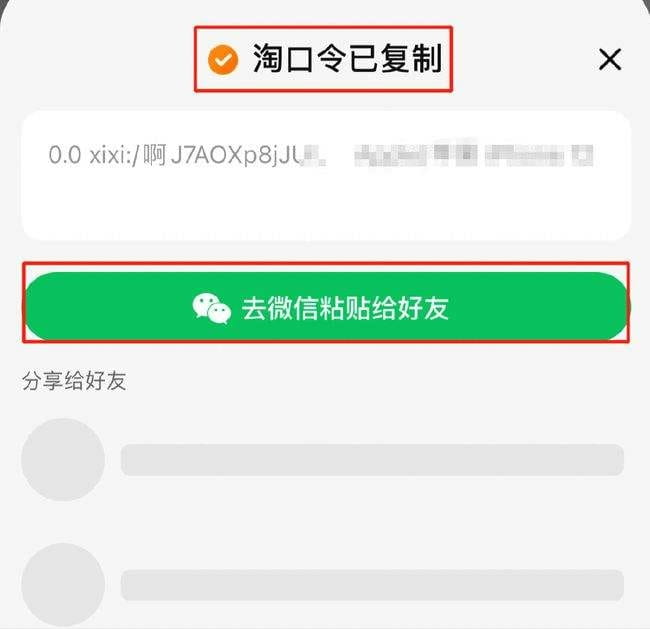
This is most evident in the fact that apps of different appearances have rendered traditional HTML and URL useless, turning the Internet into a series of information islands!
Perhaps most Internet users cannot feel this change, because they use mobile Internet every day and rely on smartphones to entertain themselves in their daily life and work, so many people think that mobile Internet is an extension of the Internet, but it is not. These are two completely different worlds, using completely different rules. As Internet practitioners, we often use desktop Internet and mobile Internet at the same time, and we can deeply understand that these are two worlds with completely different logics. The former still maintains the page + link mode, and users can freely filter the information they need and classify and combine it as needed. No matter which channel the information comes from, we can open it through the browser; but the latter is a series of apps, which are closed to each other and in a state of separation, and cannot achieve a real direct jump. Even if there are some application scenarios that can use links, they will be forced to interfere because of the extreme demands of manufacturers for data. In foreign countries, Twitter blocks Instagram links, Facebook/WhatsApp blocks Telegram links, and in China, WeChat blocks Taobao, Douyin and other measures. We often see that the weird passwords and Martian texts shared by friends are actually the result of big companies fighting each other.
For this reason, there was a big discussion in the industry at that time about the dispute between HTML5 and native apps. The core of the debate was who would be the future of the Internet. Of course, the result was obvious. As users, we accepted apps and abandoned the traditional Internet model of HTML pages + links and browsers. But now it seems that from Web1 to Web2, the goal was to break the data closure between each software era and move towards a more open and free Internet world. How come we followed the footsteps of history and regressed? This is a very interesting phenomenon and a question worth pondering and discussing. History always repeats itself, and the imprints left by each stage have the shadow of the future. This is the topic of Web3.0!
Robin Li once said that Chinese people are willing to give up privacy for convenience. Although we do not agree, it is very realistic. Even now, if we have to make a choice, we will still choose convenience. After all, the previous development of history started with solving the problem of food and clothing, and then there were higher spiritual pursuits. The more closed and monopolistic Internet we use today is the inevitable result of Internet history and the result of users' own choices. Even if history can be repeated, I believe that this result will not change. If Apple did not push to wake up the App, promote the App mode to suppress browsers, kill Flash and other extreme practices, the mobile Internet would not be able to open, nor would we see the series of criticisms brought by this era, and it would not trigger our thinking and exploration of Web3.
Web2 was originally intended to create an Internet world where users and platforms complement each other, but unfortunately, "the dragon slayer grew scales". In the process of the Internet replicating the social and economic structure that existed in the physical world, the technology giants firmly grasped the control and completely shelved the Internet spirit of "freedom, equality, openness, cooperation, and sharing". The upgrade from Web1 to Web2 did not solve the problem of centralization. On the contrary, with the online transmission of a large amount of information and data, the problem of centralization has become more prominent.
The problem this causes, in addition to cutting the Internet into information islands, is that each application is driven by a dedicated database. Jack Ma once said, "Data is Alibaba's most valuable asset." Alibaba is essentially a company that expands the value of data. Database management is the core competitiveness of Web 2.0 companies. Its importance makes us sometimes call these programs databases rather than just software.
Because Web1 is a read-only mode, the charm of data is hardly demonstrated; in the Web2 era, because users can greatly participate in the construction of the Internet and even become a part of the Internet, the centralization of the Internet, especially the App model in the mobile Internet era, has led to the concentration of data in the hands of Internet giants, resulting in data abuse and algorithmic hegemony. Everyone may not understand what is happening behind it, but everyone can vaguely feel that these giants are monitoring us all the time!
So, who should own the data? Who should have the ownership of the data?
This is the key issue that Web3 needs to think about. Although there is no standard definition for Web3 at present, it is conceivable that it must be an era in which data ownership is returned to the creators and value is reasonably distributed! Here, everyone will have their own unique digital identity and truly control their own data. Internet giants must first obtain user data with the user's permission. If they want to package and sell data to advertisers or make recommendation algorithms, they must pay "usage fees" to users, instead of being forced to give up their data by agreeing to the App's user agreement without any choice, as it is now! This is a dimensionality reduction attack on Web2. Just as printing technology changed and weakened the power structure of medieval guilds, Web3 has also fundamentally changed the traditional power structure of the Internet world.
In my opinion, it should have three characteristics:
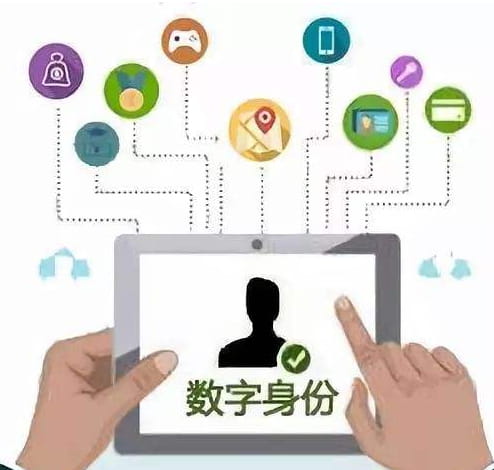
First of all, everyone has their own digital identity. In the world of Web3, your identity is composed of a "key pair", that is, a wallet. If you have been exposed to Bitcoin or used other cryptocurrency wallets, it is easier to understand this. Here, the only prerequisite for controlling your identity or wallet is that you must hold the "private key" in the key pair, that is, the mnemonic. At present, the best way is to write it down and physically store it in the safest place in the real world. Once you have a private key, you can prove to anyone that you have the "public key" associated with it, that is, the external identity, that is, the wallet address! With this identity, you will no longer have to repeatedly register accounts for different apps, nor do you need to rely on them to prove whether you are you; users can also encrypt information that only you can decrypt and read without communicating with you, and publish the encrypted information publicly. Only the holder of a specific private key can decrypt these messages; at the same time, you also sign any type of message, such as online voting or signing contracts! Although these may be very similar to the WeChat login and QQ login we usually use, the only difference is that this time you really use "you" to log in.
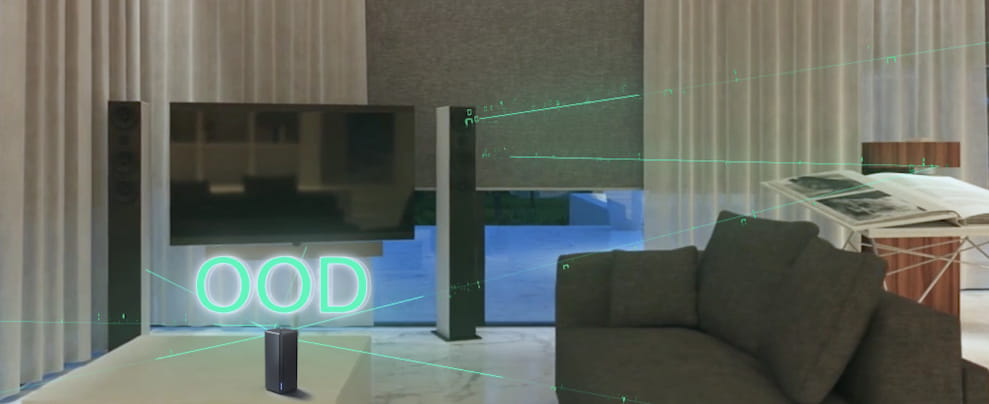
Secondly, storage. Everyone will have their own private cloud to store the data generated by the various applications you use and serve you exclusively. In the Web3 era, it is not only your private cloud, but also your data safe, and your personal server. It will become the core infrastructure of Web3. It only stores your memories from birth, instead of being stored on the cloud services of major Internet vendors like our data is now, which is completely controlled by them and recommends what they want us to see. These data will be bound to your digital identity, such as photos, videos, files in the physical world and avatars, game props, skins, etc. in the virtual world! At the same time, it will also manage all our smart devices in a unified way. In other words, our external communication will be connected to the outside world through the private server at home. For example, when you communicate with someone, you no longer send the message to Tencent's service, and then send it to your friend through Tencent, but you first send your message to your home server, and then your home server sends it to your friend's home server, and then your friend's home server sends it to your friend. This will ensure that all your data is no longer stored on a company's server, and ensure that you are always communicating with the same person, and ensure that the source of the information is credible and reliable!
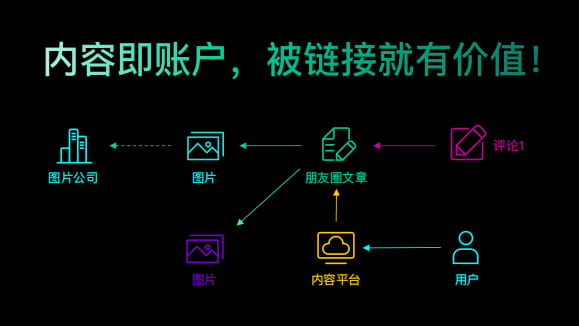
Finally, it is the transmission and distribution of value. Web2 mainly solves the transmission of information, but it cannot fundamentally realize the circulation of value, so it must rely on Internet giants to distribute value, which leads to the "corruption" phenomenon like the real world. In the previous video about "piracy", we said that we are not unwilling to pay, but we are unwilling to pay for inferior works, unwilling to pay for copyright hooligans, and unwilling to pay for evil capital. The key problem is that the value of content cannot be directly circulated. In the Web3 era, any content including works, pictures, texts, voices, etc. is an independent digital account, which is bound to the digital identity of the original author. The dissemination process of content itself is the process of value transfer. The size of the value is determined by the quality of the content. Every user is both a consumer and a value creator. Every dissemination may bring more benefits to the original author. So how to solve the problem of value distribution? That is DAO, that is, a decentralized autonomous organization. Here, everyone has the opportunity to become an organization manager and participate in the governance and decision-making of the organization, provided that they hold a certain number of tokens. The strength of the DAO organization will determine the value of the token, just like stocks. Since the members of the DAO organization are all holders of the token, it is in everyone’s common interest to increase the value that the organization provides to its members. This will form a virtuous circle, allowing the DAO organization to go further and longer.
Of course, all of the above are in the exploration stage. I believe that in the next few years there will be countless experiments to verify the feasibility of Web3. It is undeniable that these infrastructures and technologies will jointly build a protocol world on a platform. No technology has more potential power than coordinating people's actions towards a common goal. This is the greatest charm of Web3! We are discussing Web3 now just like we discussed Web2 twenty years ago. Subversion and turbulence usually indicate that a technology on an upward curve is ready to enter the stage of history. During this period, bubbles and those without strength will be washed out, and real success belongs to those with strength. As we approach a world that is increasingly controlled by technology, we need to keep a clear mind and the ability to think independently so as not to become slaves to technology!
This is a brand new future. We don’t know how long it will take, but it always needs someone to pull the wheel of history, to say something inappropriate, to fight against those seemingly unshakable behemoths! Bread is important, and convenience is naturally needed, but we cannot give up the right to think for the convenience of the moment! The entire Internet was born only 50 years ago, but the entire human history has undergone earth-shaking changes. I am extremely curious and full of expectations for the next generation of the Internet. If another 50 years pass, when the Internet celebrates its 100th anniversary, what will the world be like? Although the specific appearance is still unknown, it is certain that it must be an Internet world that can be truly owned by users!
Well, that’s all for this episode. I’m the new UP Nascyber, a creator who has independent thoughts on the future of the Internet. If you are satisfied with the content of the video, I hope you can pay more attention to it. If you want to know more about the future of the Internet, please leave a message in the comment area. Let’s learn and improve together.