


Disclaimer: Digital asset prices can be volatile. Do your own research. See the full terms here and the risk warning here. Binance Futures products are restricted in certain countries and for certain users. This content is not intended for users or countries where such restrictions apply.
Highlights
When a cryptocurrency reaches an overbought level, this suggests a high possibility of a correction.
On the contrary, if a crypto asset enters an oversold area, this indicates that there may be a reversal point nearby.
The RSI indicators and the stochastic oscillator range between 0 and 100, which can help identify when the cryptocurrency is in overbought or oversold price territory.
Cryptocurrency investors often use trading signals as indicators to enter or exit a trade. Two especially popular types are overbought and oversold signals. These can help traders determine whether the price of a cryptocurrency is in bullish or bearish momentum.
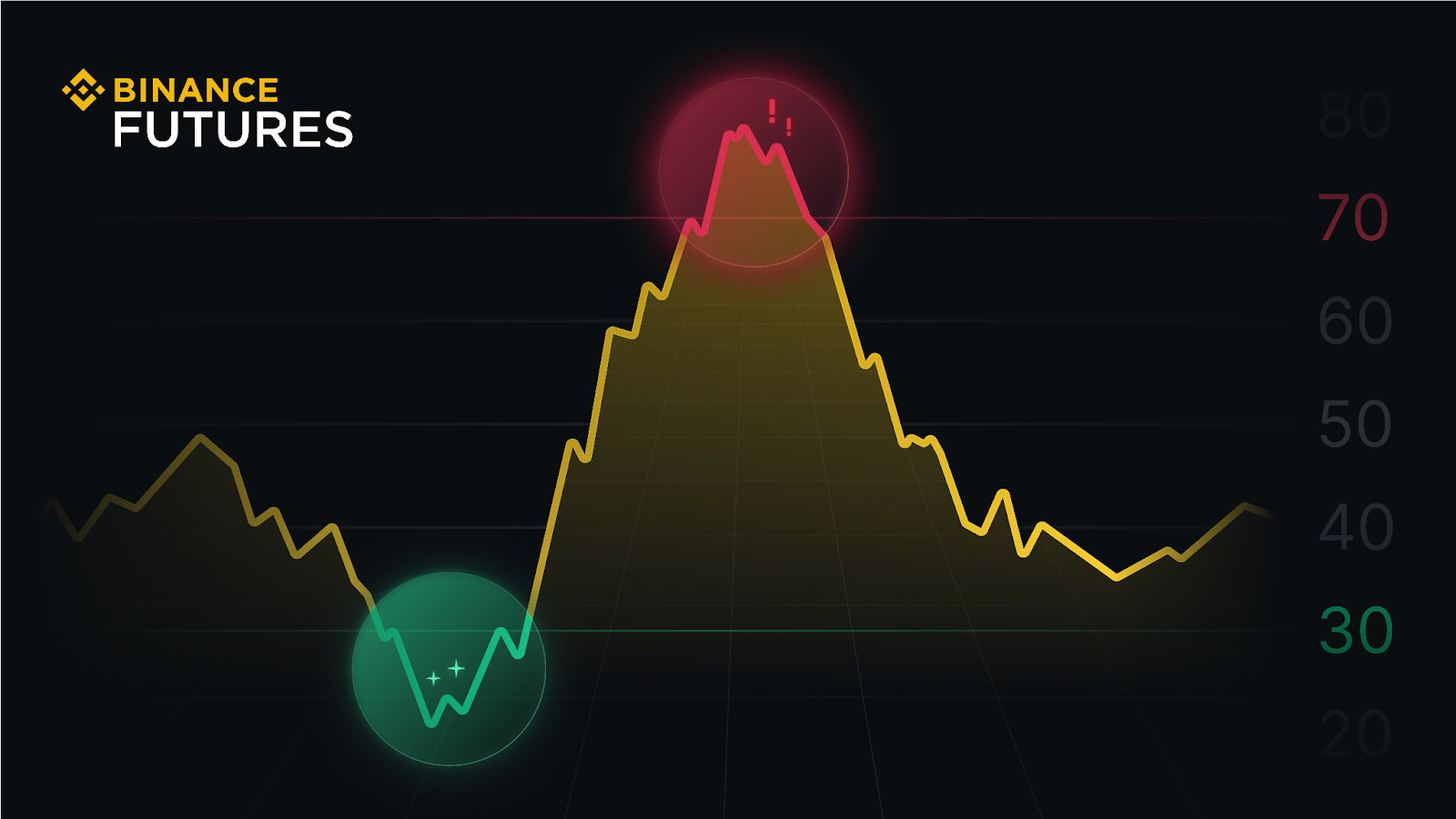
Two of the most common indicators used in technical analysis to establish overbought and oversold levels are the Relative Strength Index (RSI) and the stochastic oscillator. Both of these indicators are oscillators, which describe a broader group of technical indicators used by analysts.
What are overbought and oversold signals?
An overbought signal suggests that the price has been in bullish momentum for an extended period of time and is trading above its inherent value. Traders may infer that the cryptocurrency is more expensive than the asset's intrinsic price, and a potential sell-off may be on the horizon.
An oversold signal may indicate that the price of the cryptocurrency is trading below the true value of the asset, suggesting a bearish trend. However, since the cryptocurrency is selling at an undervalued price for a prolonged period, the momentum could shift upwards, potentially leading to a price reversal.
The Relative Strength Index (RSI)
The Relative Strength Index (RSI) is a technical analysis indicator commonly used to assess short-term market momentum, evaluating overvalued or undervalued conditions. It provides information on the trading strength of the cryptocurrency by measuring the speed and direction of recent price movements.
The RSI measures the change in cryptocurrency price momentum through a range-bound oscillator. The values in the RSI range between 0 and 100, and are calculated based on recent price changes and average profits and losses from previous periods.
Short-term traders often use the RSI to provide buy and sell signals and also in conjunction with other technical indicators to support trading strategies.
The stochastic oscillator
The stochastic oscillator compares the current price of a cryptocurrency with its range over a specific period of time. This indicator also provides information on the possible times to exit and enter a trade by determining whether the crypto asset is overbought or oversold.
Given the volatile nature of cryptocurrencies, traders use the stochastic oscillator because it allows more changes to be identified in sideways or choppy markets.
How to identify if a cryptocurrency is oversold or overbought
As mentioned, traders can take advantage of the RSI to identify a reversal in a trend or a corrective pullback in the price of the cryptocurrency. For example, an RSI reading above 70 usually indicates that the asset is in overbought territory, meaning the digital asset could suffer a pullback.

When the RSI shows a reading below 30, the cryptocurrency is in an oversold condition, suggesting that there could be a possible trend reversal and an upward rally.
With the stochastic oscillator, a value of 80 or higher is considered overbought, and levels less than 20 are considered oversold. If the indicator crosses these levels, it usually suggests a greater possibility of an upcoming trend reversal or price correction.

Identify divergences
Along with the overbought and oversold readings of the two indicators above, trend lines could also be useful in detecting divergences between the price and strength of the cryptocurrency.
Divergences usually indicate a bullish or bearish trend when used in conjunction with the trading chart and RSI.
A bullish divergence is when the RSI makes a higher low while the cryptocurrency price makes a lower low.

A bearish divergence occurs when the price of the crypto asset reaches a higher high, but the RSI reading indicates a lower high.

Conclusions
Overbought and oversold signals offer great insight to traders to help them decide at what levels to enter and exit the market. The RSI and Stochastic Oscillator are the most popular tools to identify these levels and see if there could be a price correction or reversal.
As with all types of technical indicators, the RSI and stochastic oscillator can provide useful information about upcoming digital asset trends, but it is best to use them in conjunction with other tools.
You might also be interested in:
What are bullish and bearish flags and how to trade with them
What is the long-short ratio and what does it indicate in cryptocurrency futures?
Two technical indicators to measure market trends on Binance Futures
Risk Warning: This content is presented “as is” for general information and educational purposes only, without representation or warranty of any kind. It should not be construed as financial or investment advice, nor is it intended to recommend the purchase of any specific product or service. Digital asset prices are volatile. The value of an investment may go down as well as up, and it may be the case that the user does not recover the amount invested. The user is solely responsible for his or her own investment decisions. Binance is not responsible for any losses you may incur. For more information, see our Terms of Use and Risk Warning.
The products and services referenced herein may be restricted in certain jurisdictions or regions and to certain users in accordance with applicable legal and regulatory requirements. It is the user's responsibility to inform themselves and be aware of the restrictions or requirements imposed with respect to the access and use of any products and services offered or available through Binance, or on its behalf, in each country or region from which the Binance is accessed. they. Binance reserves the right to change, modify or impose additional restrictions regarding access and use of any product or service offered, from time to time in its sole discretion and at any time, without prior notice.