
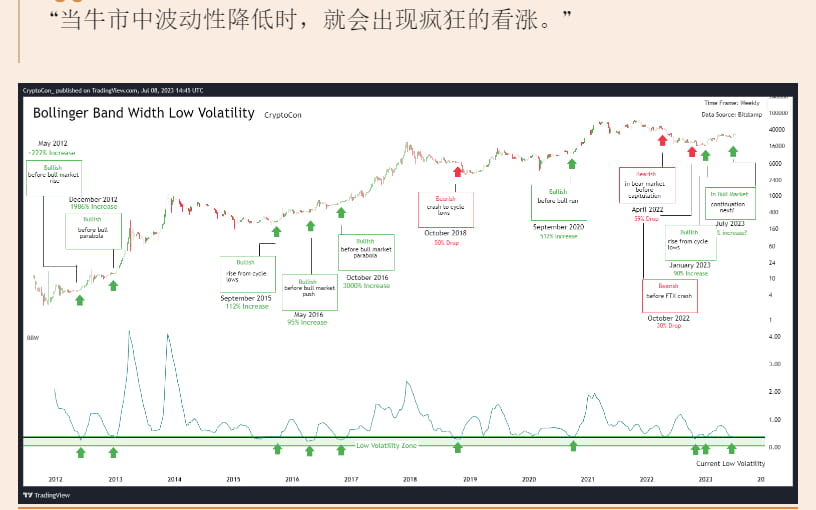
Bitcoin is entering a low volatility phase, reaching levels that history shows preceded the historic bull runs of 2017 and 2021.
The excitement in the cryptocurrency market has soared with the influx of applications for spot Bitcoin ETFs. The interest shown by the TradFi giant has reignited hopes among market participants for a BTC bull run.
Amid this enthusiasm, one technical analyst, CryptoCon, examined a key indicator and came up with a positive prediction. The analyst highlighted the trajectory of the Bollinger Bands width, an indicator often used to visualize periods of high and low volatility.
According to this indicator, BTC has entered a low volatility zone, reaching levels seen before the historic bull runs of 2017 and 2021. Analysts enthusiastically stated,
Are there any profits for holders?
According to CoinMarketCap, Bitcoin has risen 13% since the news of BlackRock’s application for a spot ETF became public. In the process, it also broke through $31,000, the highest level in more than a year.
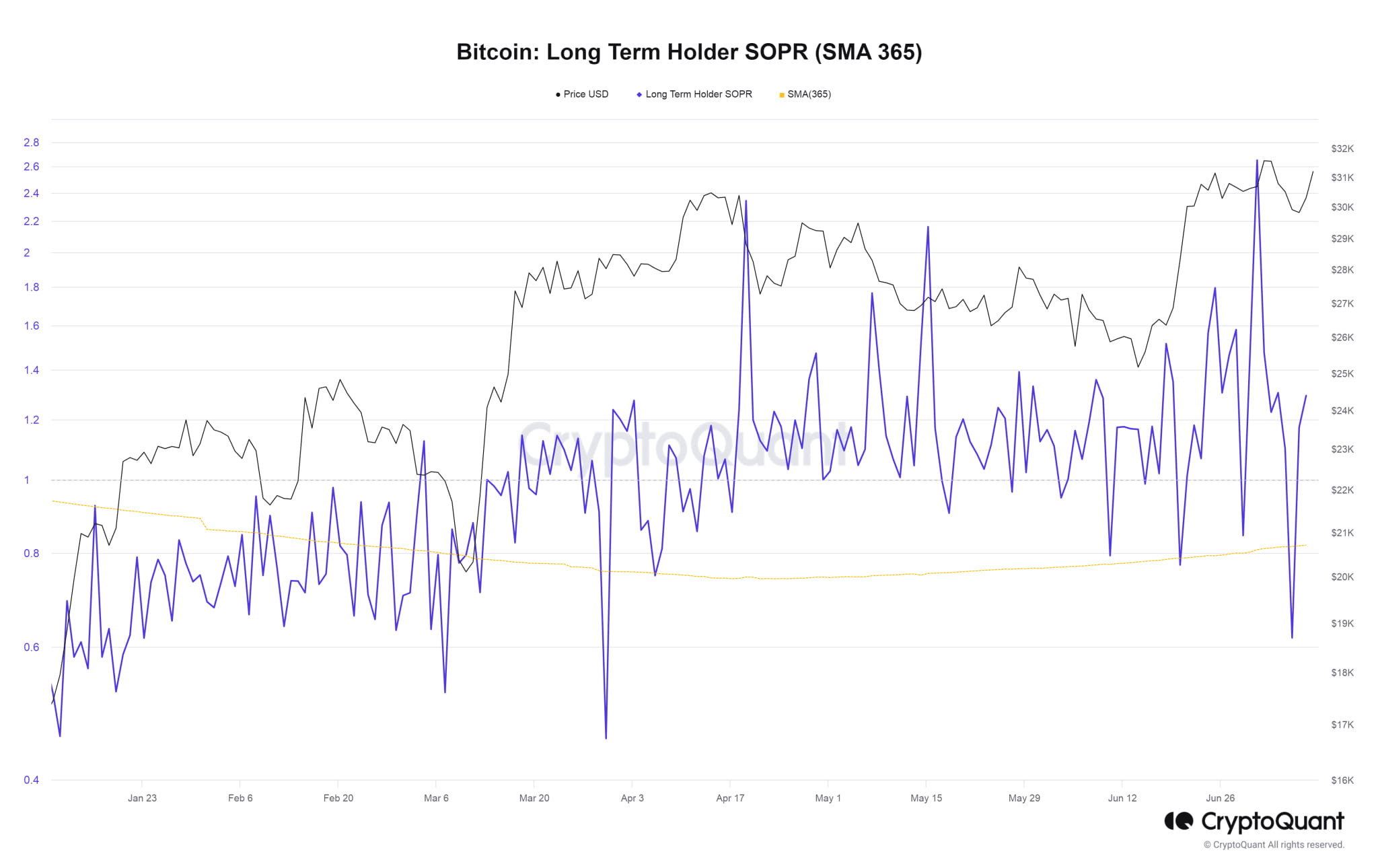
Bitcoin’s long-term holders SOPR, a measure of the profit rate of experienced Bitcoin investors, shows that most holders are selling BTC at a profit. According to CryptoQuant, the SOPR value is 1.29%, indicating that BTC may be in the early stages of a bull cycle.
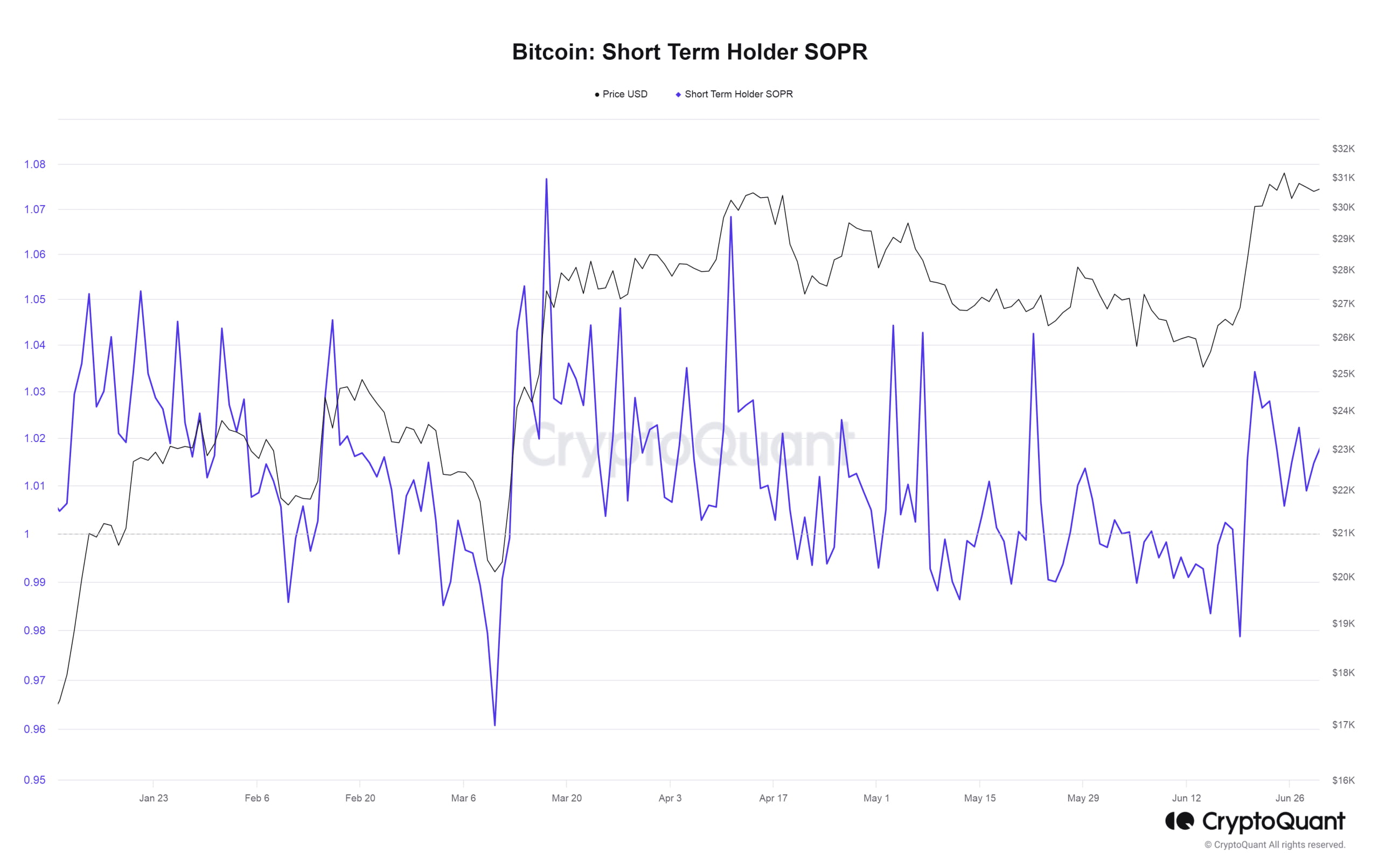
On the other hand, the profit rate of BTC short-term holders (STH) has dropped significantly. After surging to 3.4% on the day the rally started, the profit rate has been trending downward. This is in stark contrast to the bull market phase in March, when the average profit of STH was 7.6%.
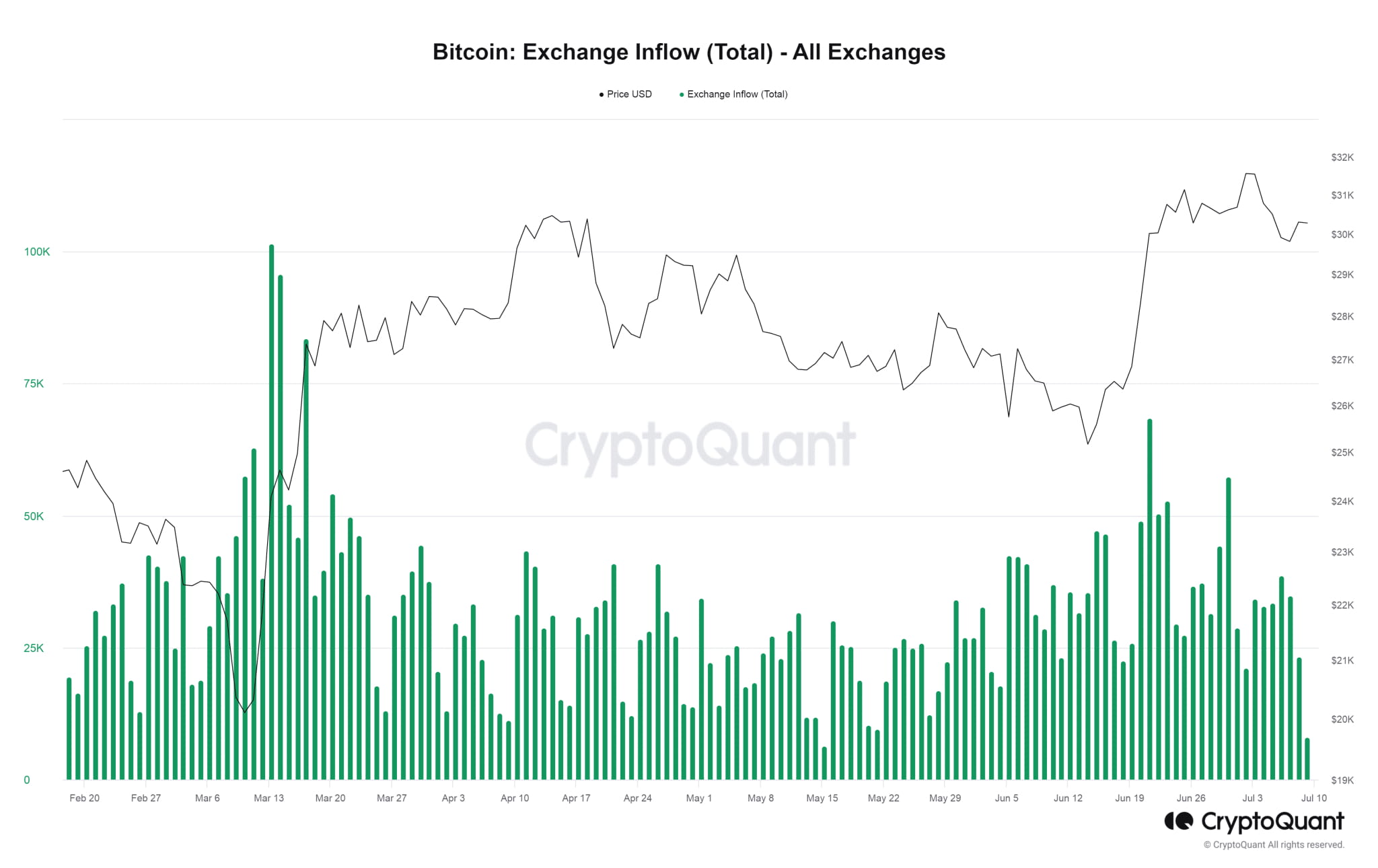
Despite the profit potential, Bitcoin’s transaction inflows have gradually slowed since the initial rally. A spike in this indicator means that selling pressure is increasing. Therefore, the accumulation phase means that holders are preparing for a bull run, which is consistent with the above prediction of CryptoCon.
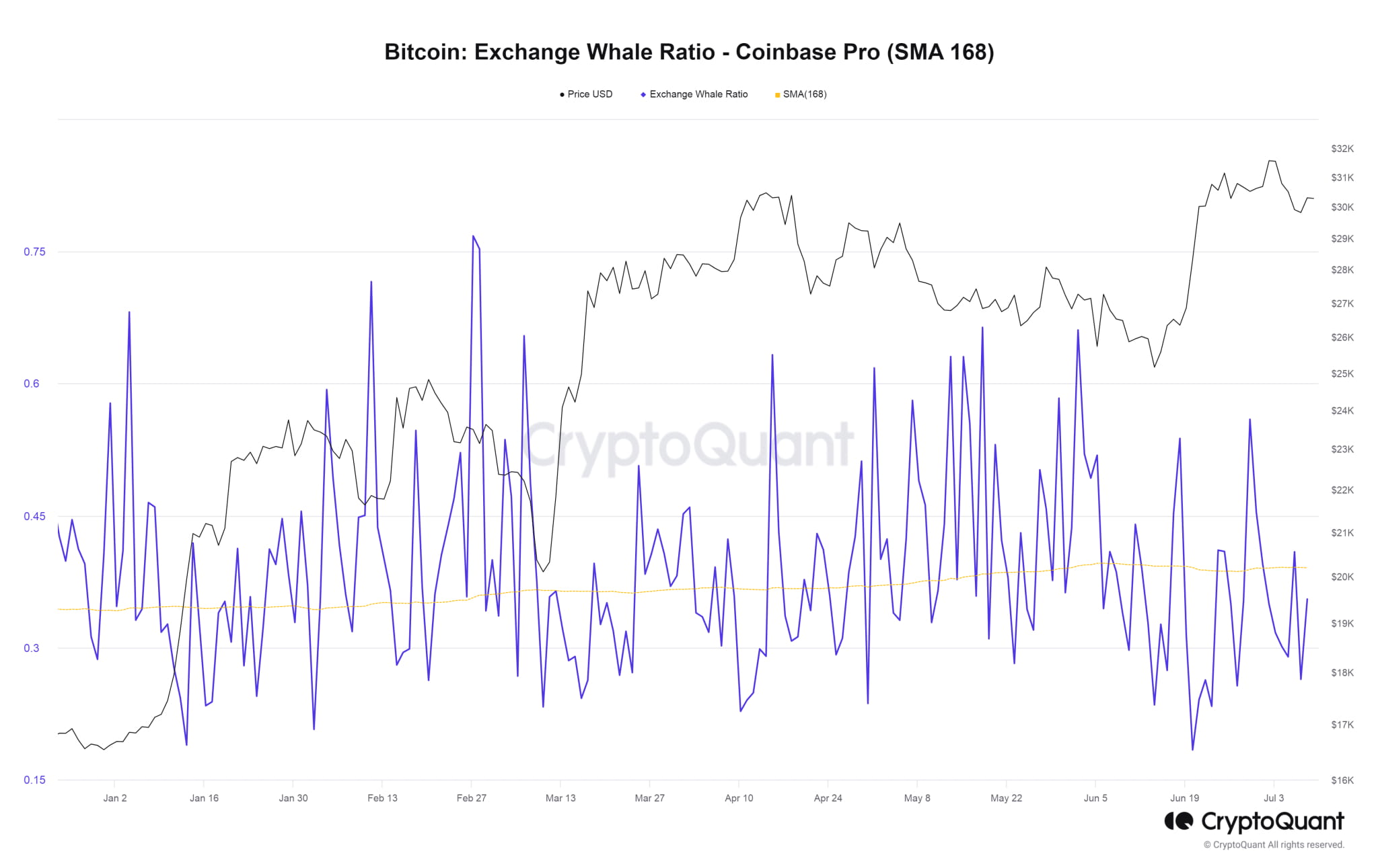
Whales not interested yet?
Large addresses also resisted the temptation, expressing confidence in Bitcoin’s long-term growth prospects. The exchange whale ratio (i.e., the relative size of the top 10 inflow transactions to total inflows) shows that whale interactions have dropped significantly over the past week.