
Bitcoin halving is a significant event in the Bitcoin network where the rewards for Bitcoin miners are halved. So, once every few years, the reward received by miners for validating transactions in the Bitcoin network is reduced to half of what it was before.
The main goal of this halving is to control the available supply of Bitcoins and keep Bitcoins scarce. By reducing the rewards received by miners, the number of new Bitcoins entering the market is also reduced. This helps maintain the stability of Bitcoin's value and can even potentially increase Bitcoin's value over time.
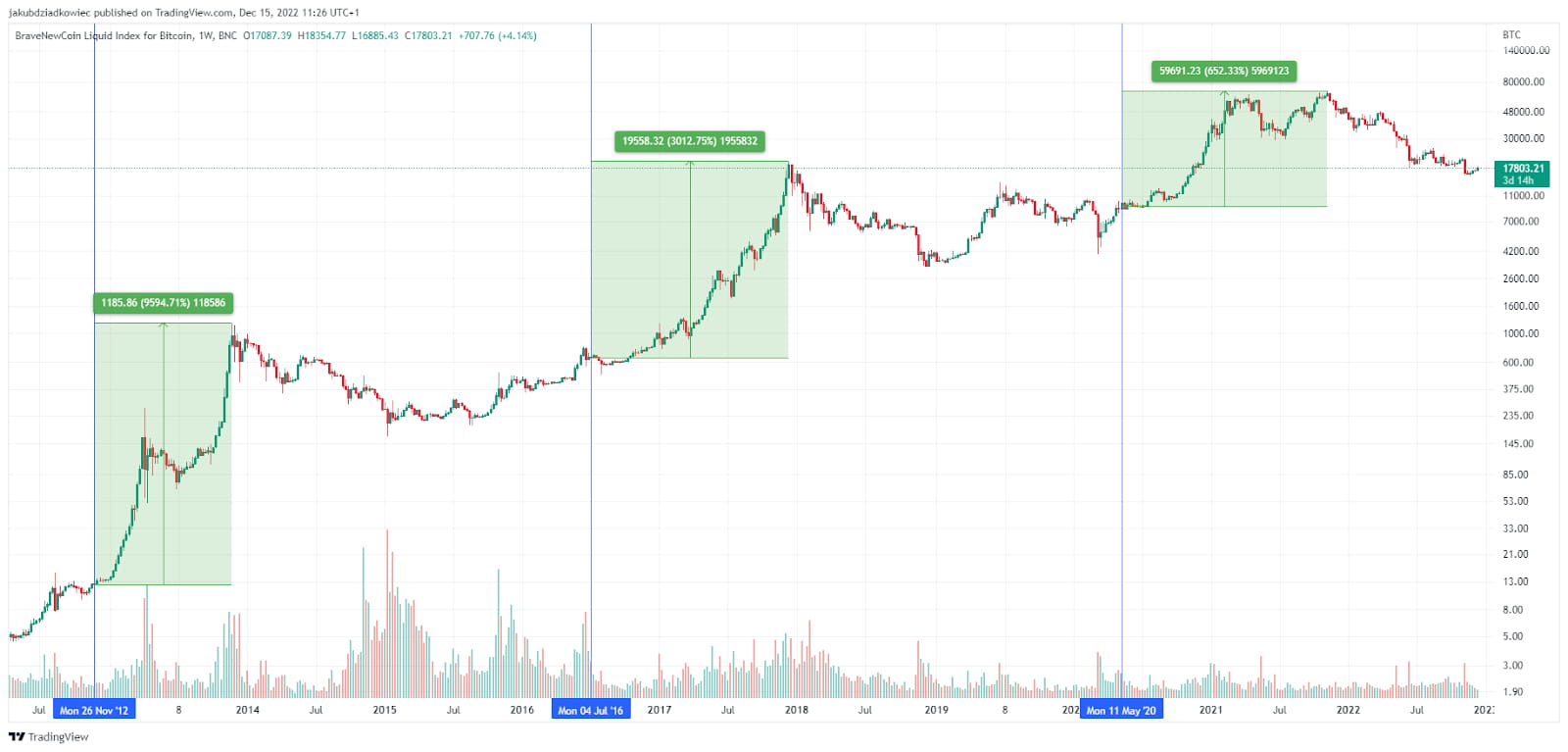
Halving can also impact the price of Bitcoin. Before the halving occurs, investors and traders often anticipate a reduction in the new supply of Bitcoin. This may lead to an increase in the price of Bitcoin before the halving. However, keep in mind that Bitcoin price reached its highest peak after the halving.
Why is the Bitcoin halving so important?
First, halving is a key part of Bitcoin's monetary policy and provides value to this digital asset as a whole. By reducing the number of new Bitcoins entering the market, halving helps maintain Bitcoin's scarcity and prevents inflation. The high demand for Bitcoin exceeds its limited supply, giving value to Bitcoin itself.
Second, halving also affects the profitability of Bitcoin mining. As rewards for miners decrease, miners must become more efficient and save on costs to remain profitable. This could lead to consolidation in the mining industry, with miners who are less efficient or have high operational costs being forced out of the mining business.
Third, halving also increases the security of the Bitcoin network as a whole. Miners receive less rewards for mining new Bitcoins after the halving. This can make mining less profitable, and this reduces the incentive to mine. However, halving also ensures that only miners with sufficient capabilities and resources remain operating in the Bitcoin mining industry. This in turn increases the security of the Bitcoin network.
Historically, halvings have occurred several times since the creation of Bitcoin in 2009. The initial reward for each block validated by a miner is 50 BTC. Each halving halves those rewards. The first halving occurred in 2012, which reduced the reward to 25 BTC per block. The second halving occurred in 2016, and the third occurred in 2020, resulting in rewards of 6.25 BTC per block. At the next halving which is expected to occur in March 2024, the reward will be 3,125 BTC per block.
While historical data provides insight into Bitcoin's cyclical patterns, keep in mind that Bitcoin and crypto assets are still relatively new, and the future cannot be predicted with certainty. Therefore, historical data is only one of the factors considered in halving event analysis.
In conclusion, Bitcoin halving is a significant event in the Bitcoin network where the rewards for miners are halved. This halving aims to control the supply of Bitcoin, maintain its scarcity, and potentially increase Bitcoin's value over time. Halvings also affect Bitcoin prices, mining profitability, and the overall security of the Bitcoin network.